
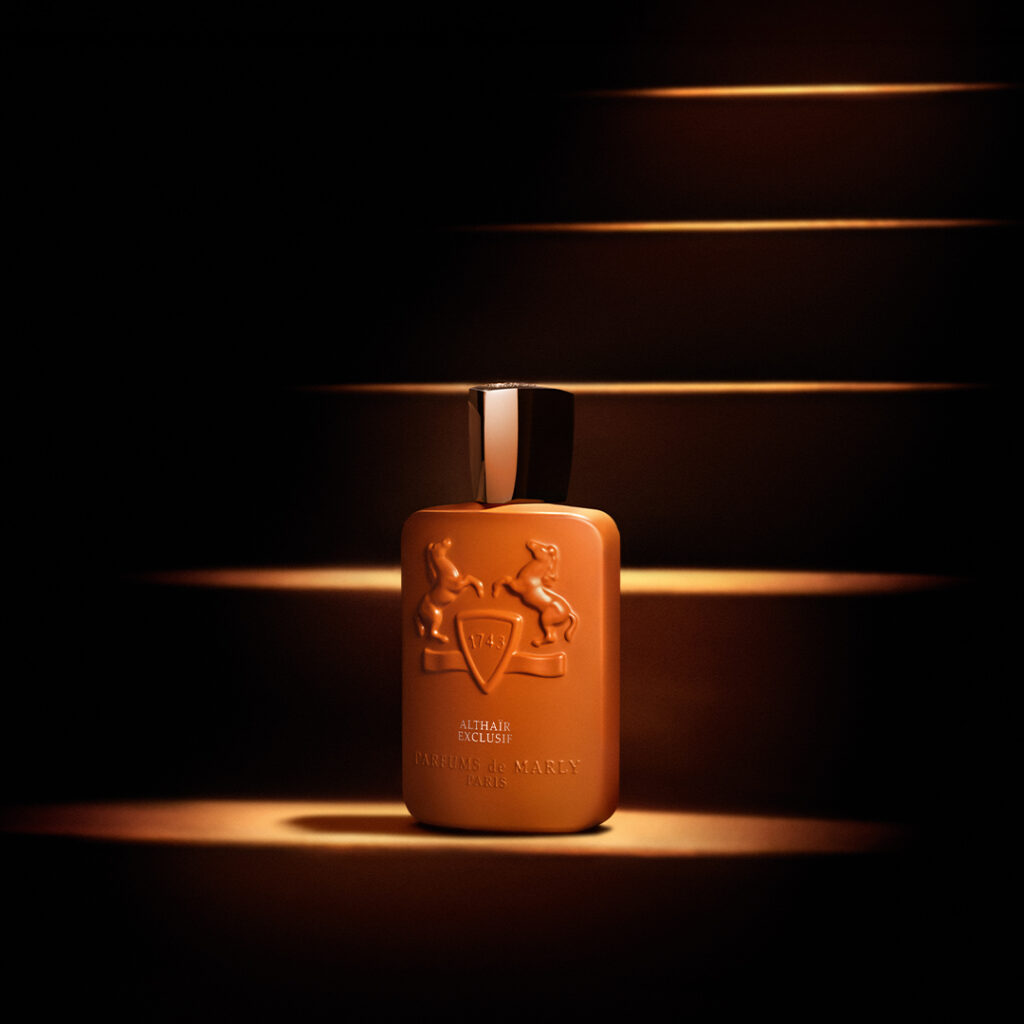
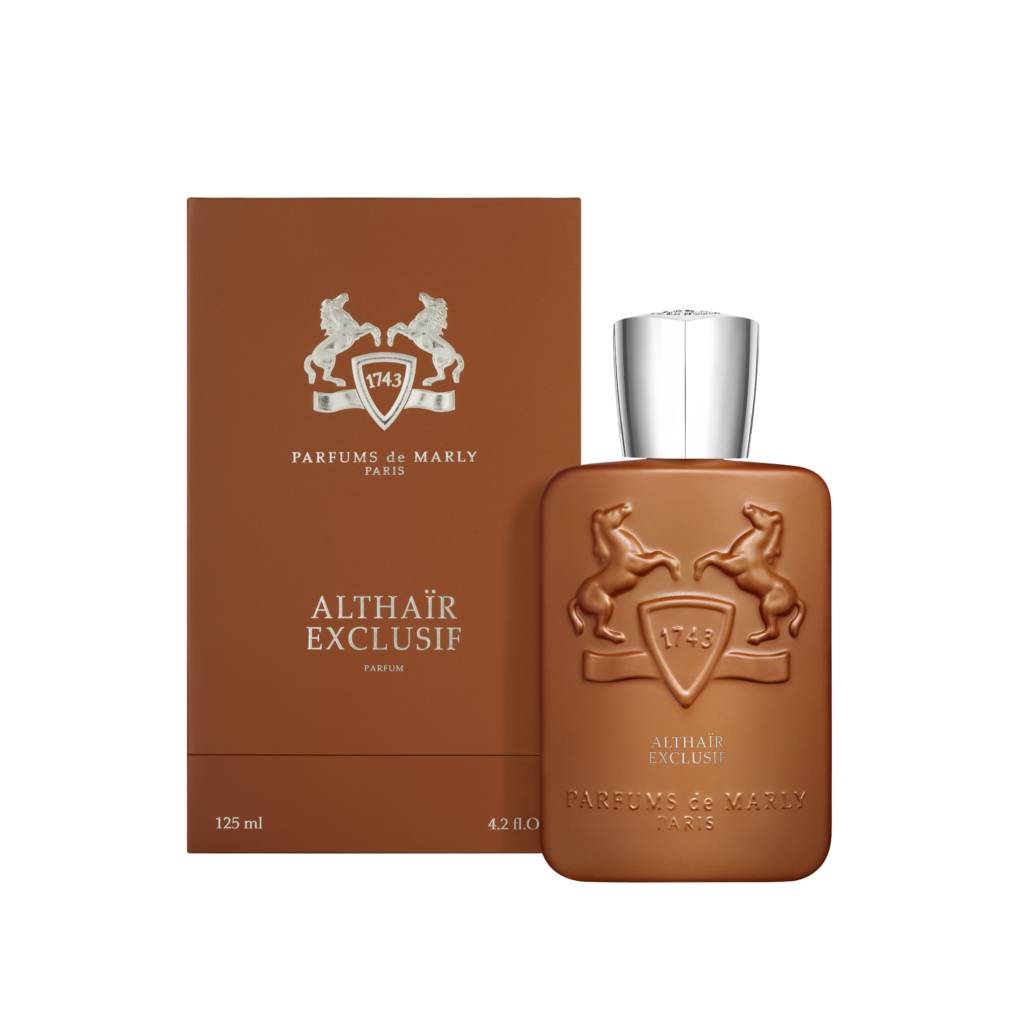
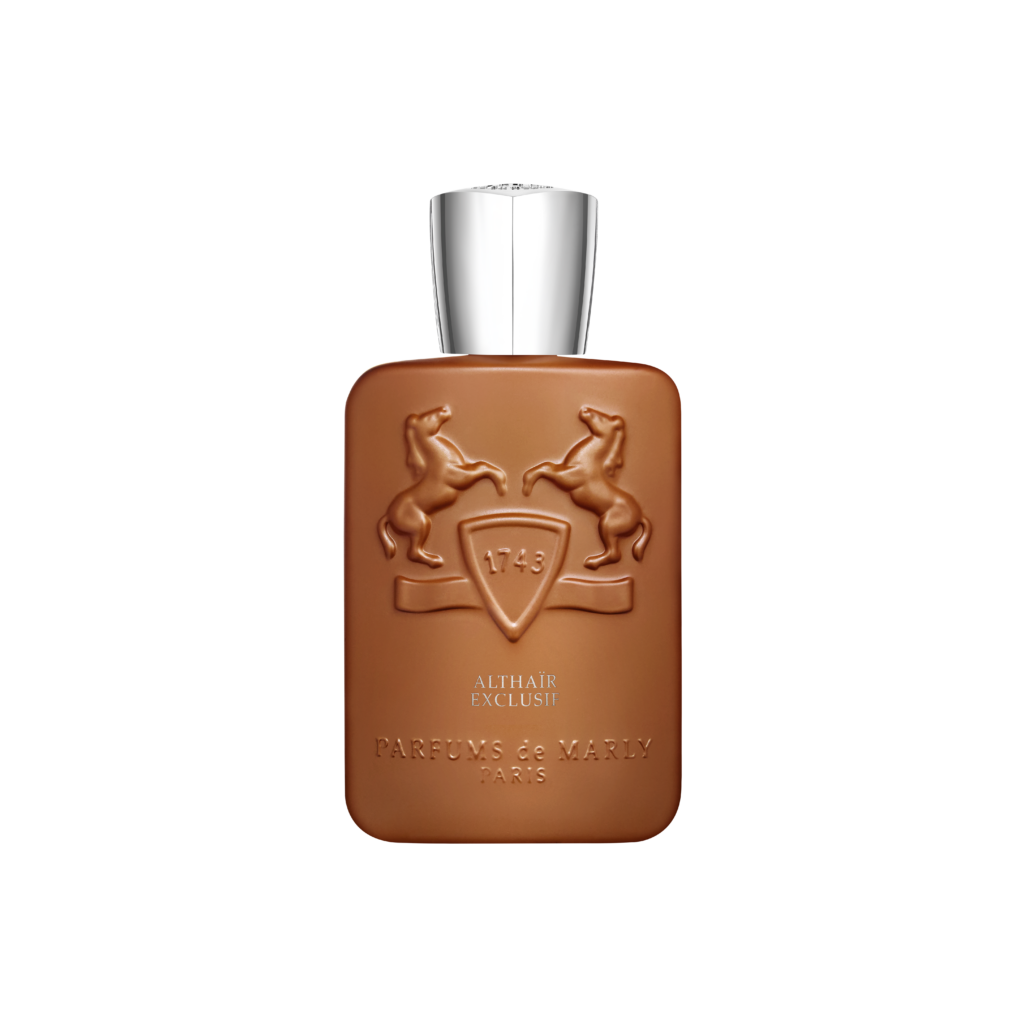
Almost nothing remains of the Château de Marly: a few foundations in a park west of Paris, and the memory of a residence that Louis XIV had wanted as a refuge far from the etiquette of Versailles. Yet it is on this architectural ghost that Julien Sprecher built his house of high perfumery — and it is still the château he summons to dress his new men’s fragrance, Althaïr Exclusif, available on 21 September.
Built at the end of the seventeenth century, the Château de Marly never had the vocation of Versailles: conceived as a pleasure residence reserved for a small circle of intimates, it embodied a freer, almost clandestine facet of court life. Demolished at the turn of the nineteenth century and sold off stone by stone, it left behind only gardens and the idea of a place where the French aristocracy allowed itself, for the length of a stay, to loosen protocol. It is this idea — more than the place itself — that Julien Sprecher chose to bring back to life by founding Parfums de Marly, a niche house that claims audacity and unbridled creativity as the direct heritage of a château that none of its customers has ever been able to visit.
Althaïr Exclusif continues this logic of sensory reconstitution by summoning, this time, another part of the eighteenth century: music, raised to a language in its own right. “I imagined a fragrance conceived as a concerto, with breadth, a richness of materials, but also a more restrained, refined and sensitive virtuosity,” explains Julien Sprecher, who built his composition like a score in three movements. The top notes combine amaretto, bergamot and saffron; the heart blends cinnamon, orange blossom, cardamom and praline; the base, finally, develops a Bourbon vanilla accompanied by guaiac wood and ambrox — an ultra-contemporary material that comes, in the house’s account, to make the eighteenth century speak with our own era.
The exercise is not new in niche perfumery, where history regularly serves as a guarantee for compositions that, without it, would be no more than gourmand woody ambers among others — Bourbon vanilla and saffron, however well handled here, remain widely used accords in contemporary men’s fragrance. What distinguishes Althaïr Exclusif is less the originality of its pyramid than the precision of its narrative: eighteenth-century music as a pretext for sensory power, presented as the heir to a court refinement that has now disappeared.
One question remains, which the press release does not dwell on: what is really being sold when a razed château and a bygone century are summoned to legitimise an autumn-season fragrance? A scent, certainly — vanilla, saffron, amber, technically irreproachable. But also, and perhaps above all, access to a memory that no one, beginning with the house itself, has ever known. It remains to be seen whether this invented nostalgia is still enough to stir the imagination of an audience that no longer needs a château to invent a history for itself.
Cette publication est également disponible en :


