
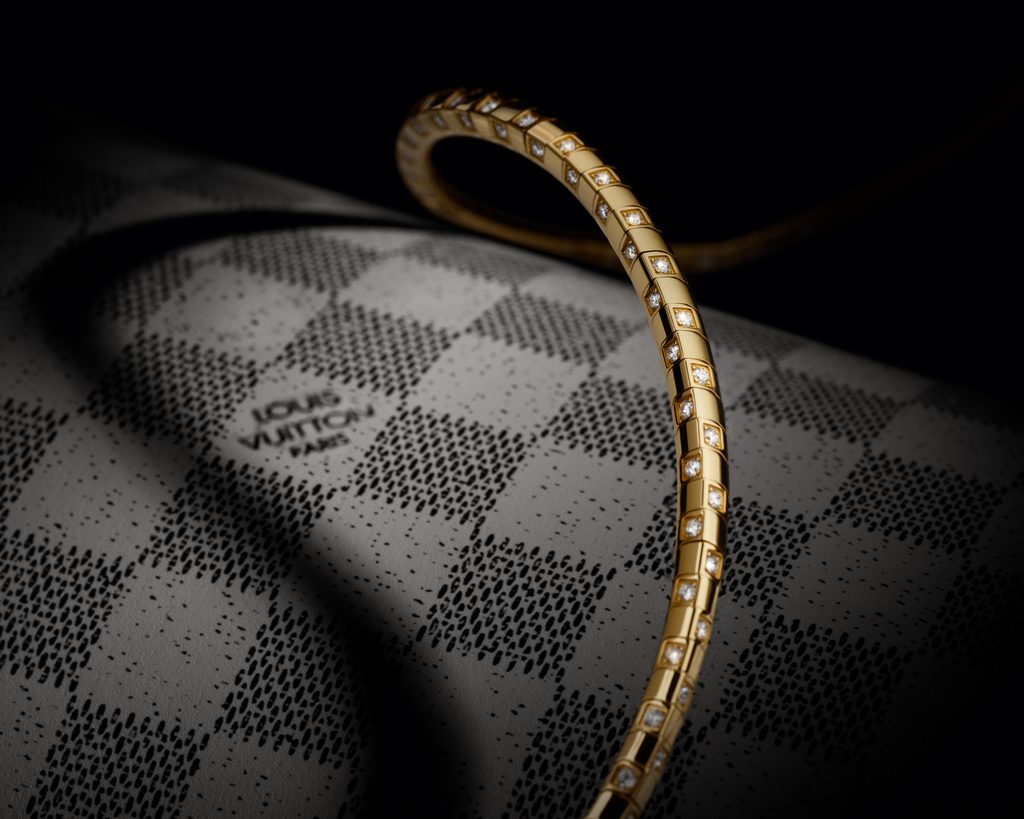
Two years after its launch, the Le Damier jewellery collection grows by eight pieces. On canvas, the 1888 motif stays flat. On a bracelet, the grid must follow the wrist.
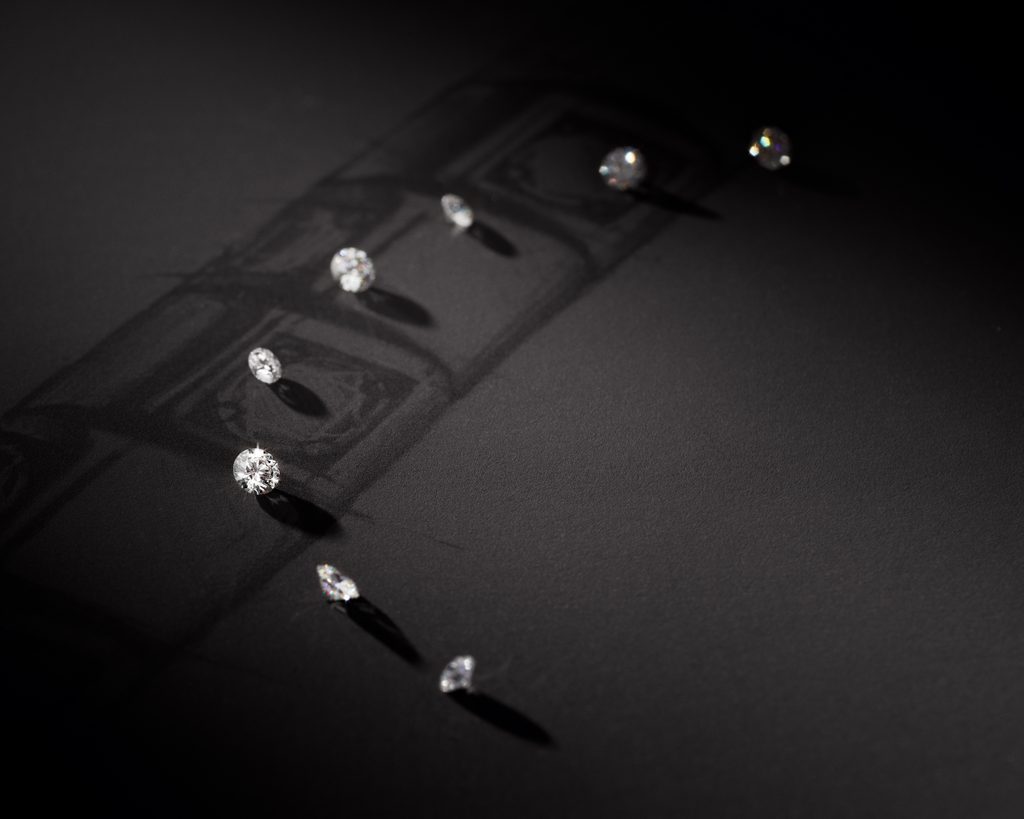
On canvas, the Damier is a surface: the squares are printed, nothing moves. In jewellery, Louis Vuitton entrusts it to round diamonds, each hand-set with four claws in a slightly oblique square, with a geometric central line to hold the symmetry. The motif rests on this gap between the circle of the stone and the square of its cell: it is the gold that draws the grid.
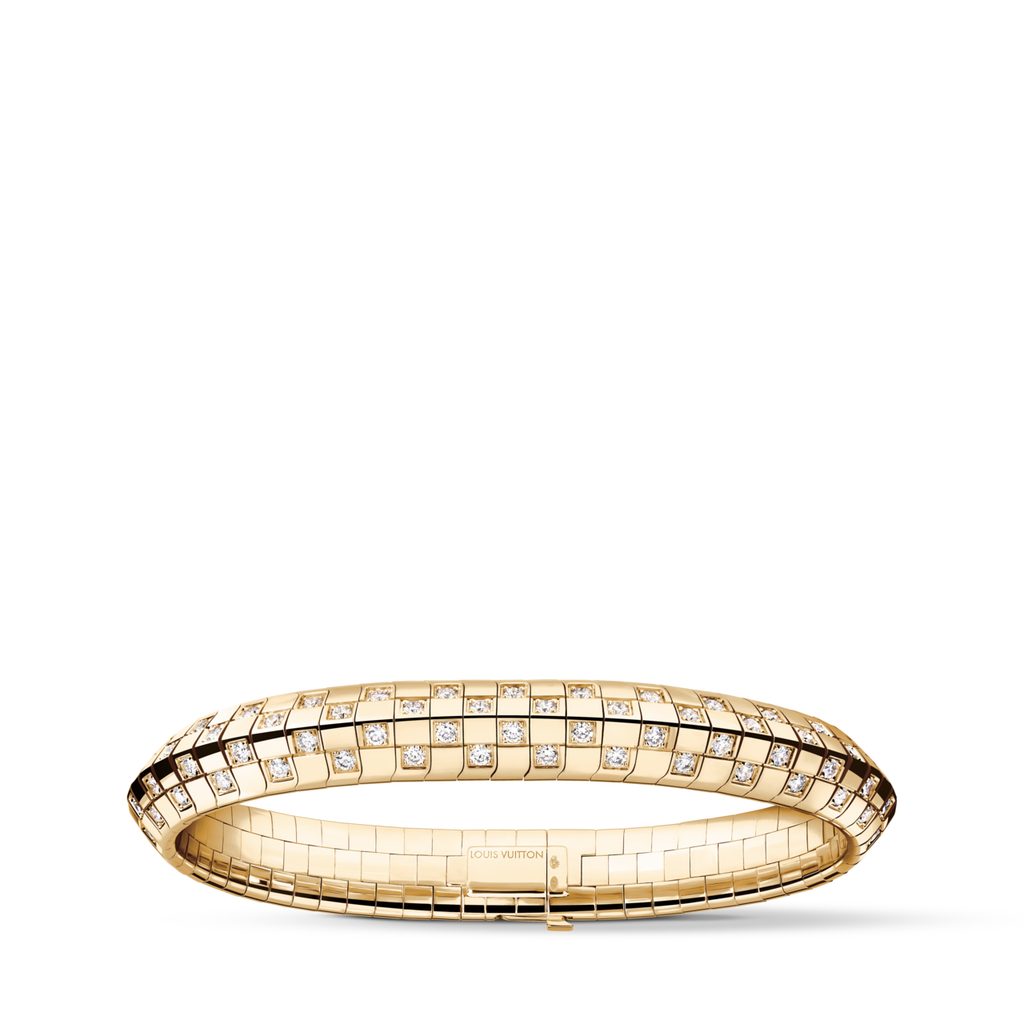
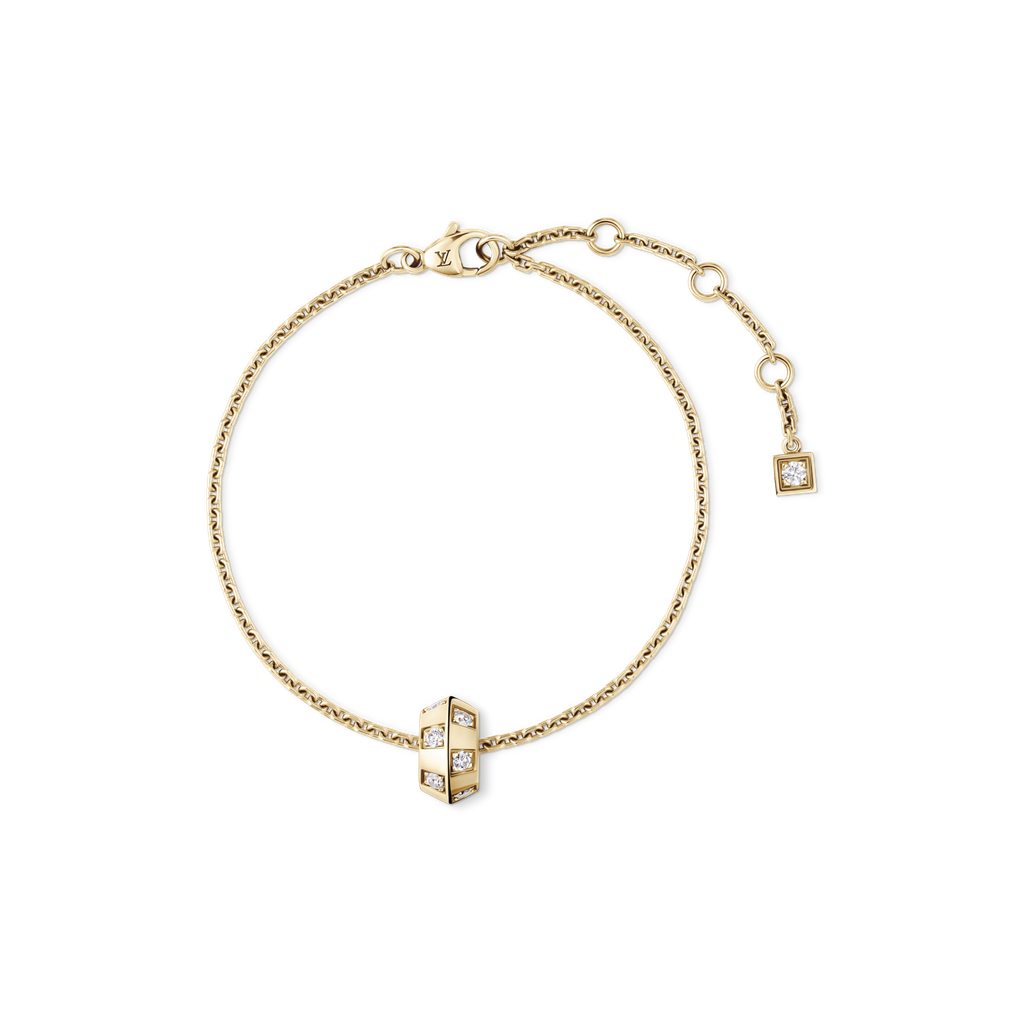
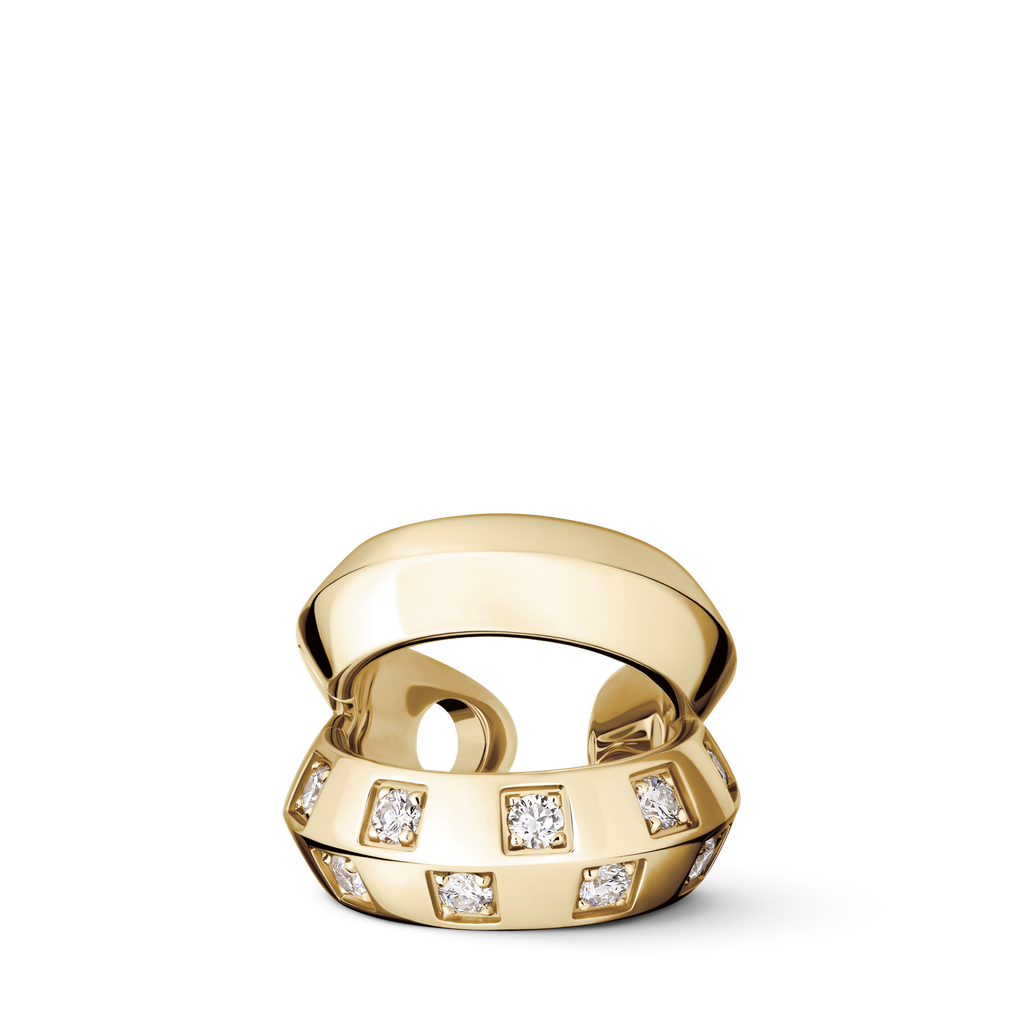
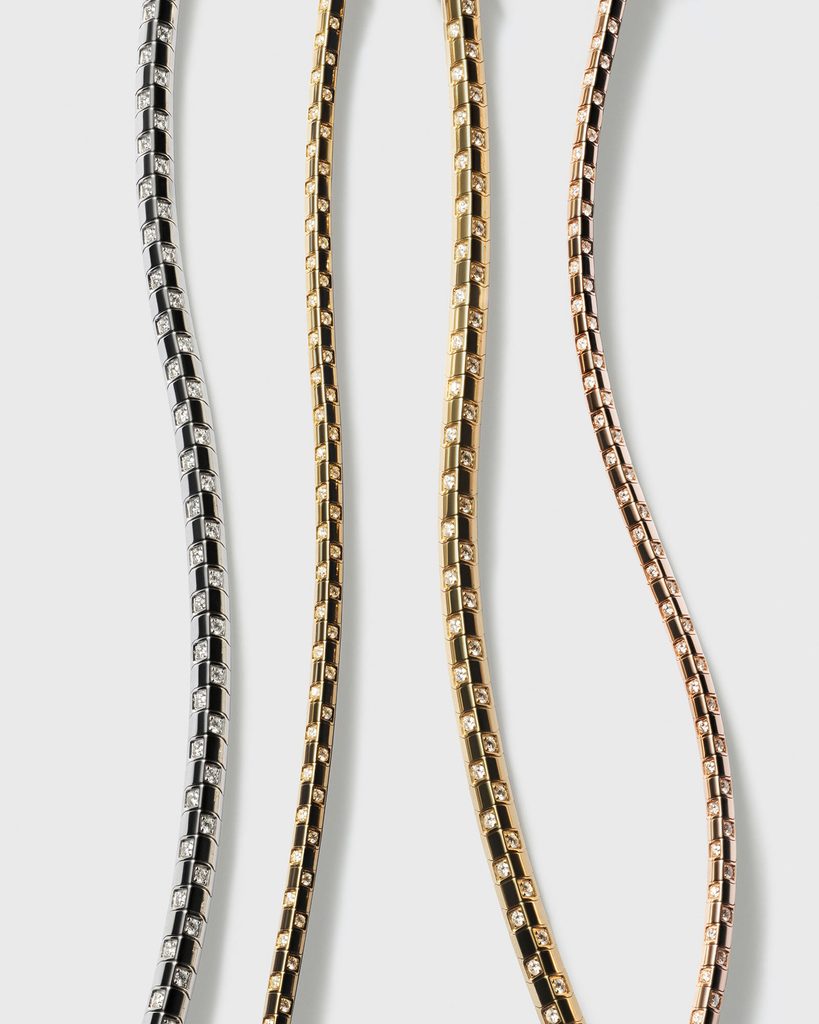
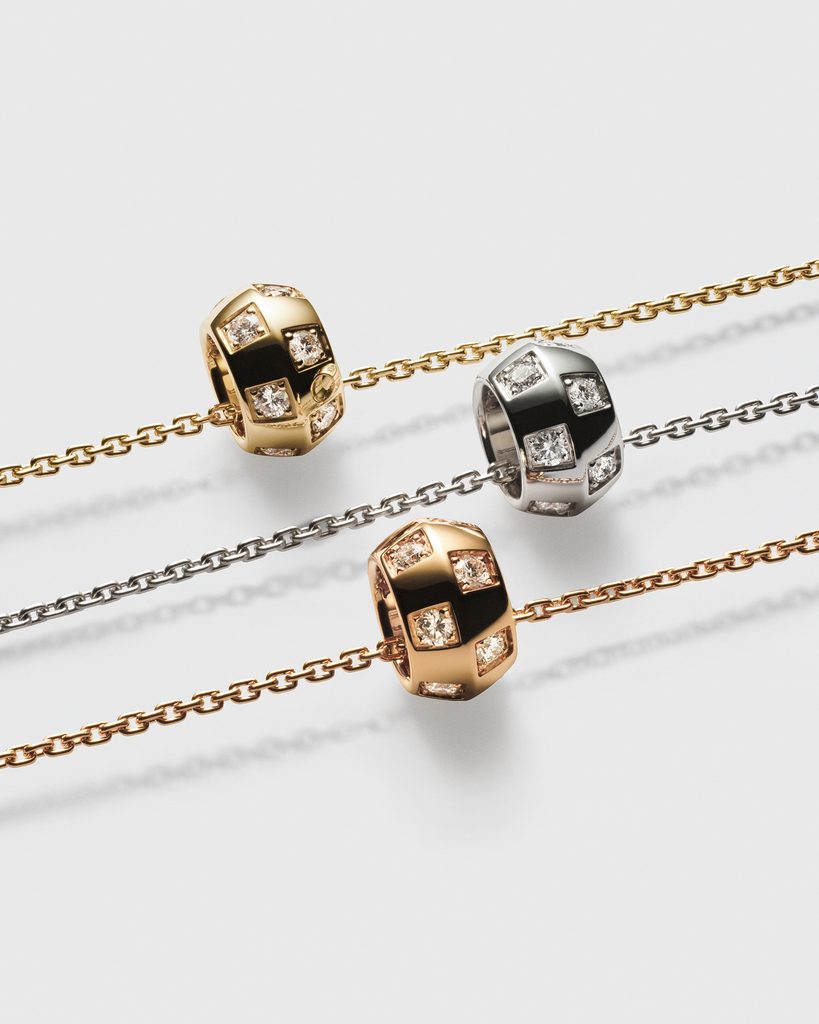
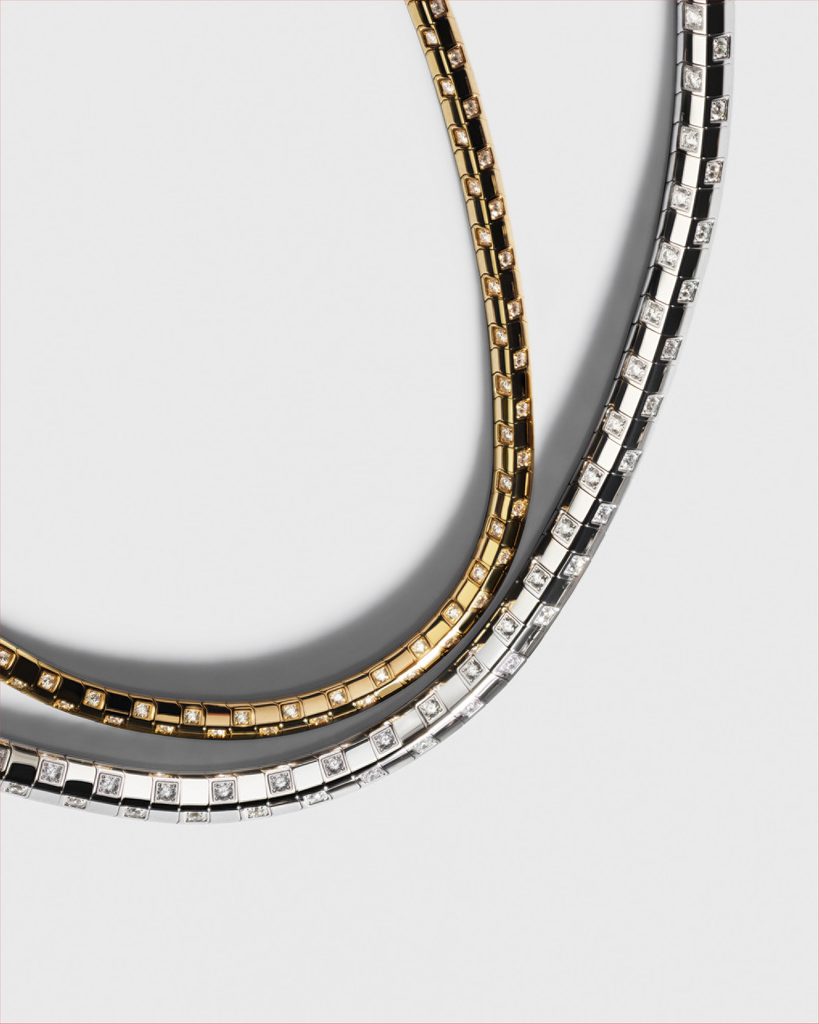
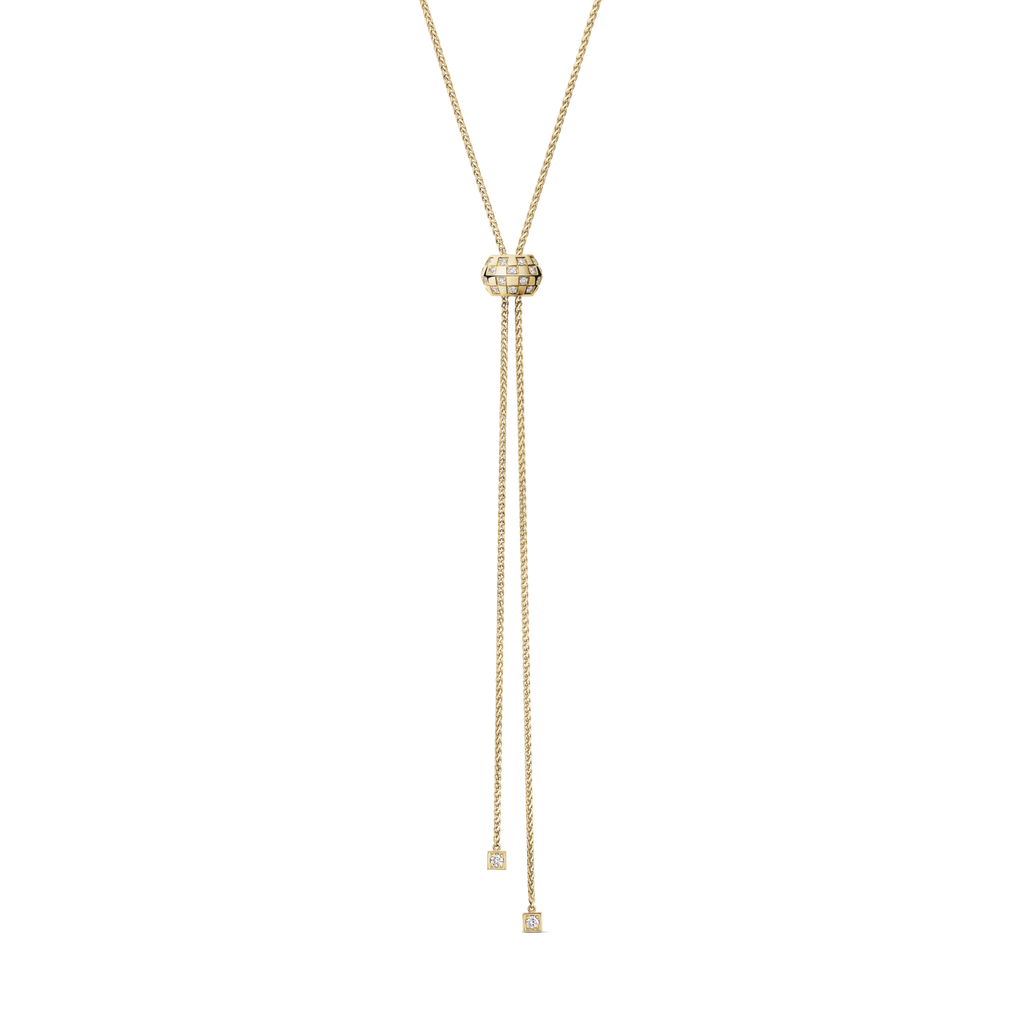
The eight new pieces break down as follows. For the ear, three hoops in yellow, white or rose gold, set with 96 diamonds (1.34 carats, according to the Maison), and two ear cuffs in single or double versions. For the neck, a necklace with a sliding pendant, adjustable to any length, which the Maison suggests can also be worn like a bolo tie. For the wrist, a yellow gold chain bracelet with a sliding pendant, and a two-row bracelet 9 mm wide, set with 120 diamonds for 2.8 carats. The collection now numbers more than 30 pieces.
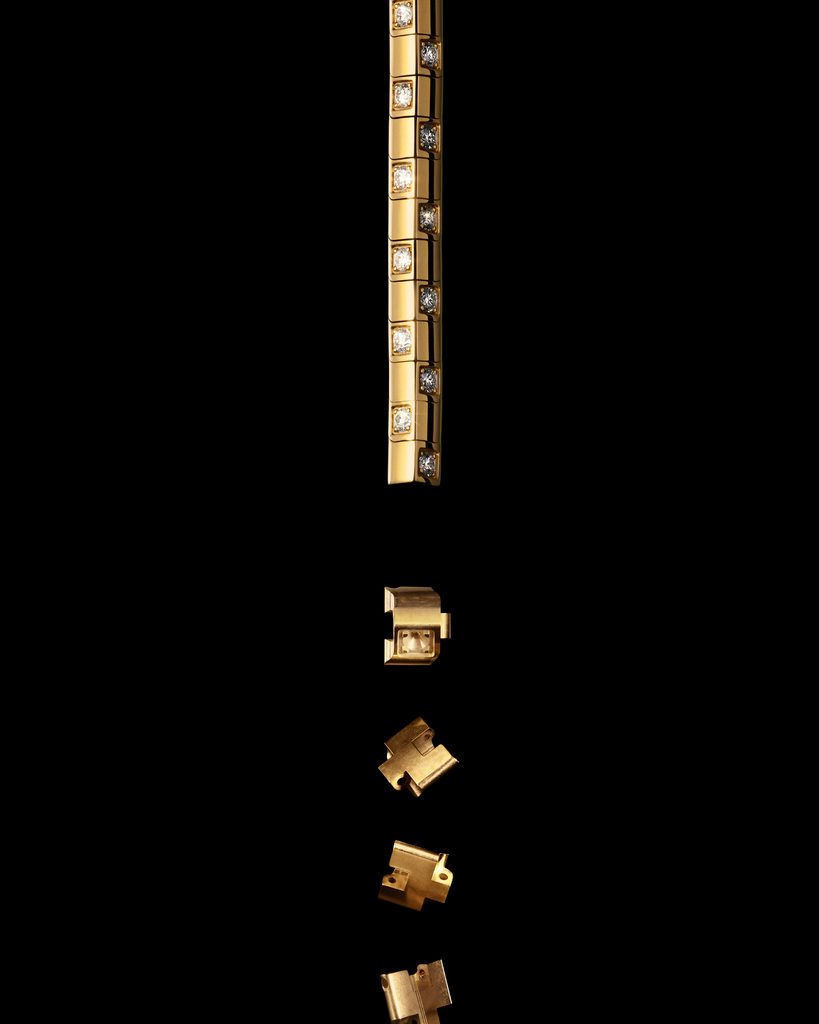
The bracelet is the piece that poses a real problem of craft. A grid of rigid stones must bend to a wrist, and each articulation is a possible interruption of the design. According to the Maison, 50 to 70 links, depending on the width and size, are assembled by hand, with an almost invisible space left between each, as on a watch bracelet. The polishing, also done by hand, gives a mirror finish. In this space one can read the condition for the motif’s legibility: if it shows, the Damier breaks.
The criterion of judgement is therefore simple. The grid must remain a grid when the jewel moves. It can be verified on the wrist, in motion, and cannot be settled from a studio image where the pieces are motionless. The hoops and ear cuffs, more rigid, pose the question differently: the grid is read there on a fixed curve.
What these eight pieces add to the collection is a displacement of the Damier, from the surface to the articulation. Their success will be measured by what cannot be seen: the space between two links.















Cette publication est également disponible en :


