
In Paris, the most interesting hotels no longer simply add comfort. They recast the memory of a neighbourhood and make it inhabitable.
With Le Magnifique, Vincent Darré turns rue de la Gaîté into an imagined setting, somewhere between decorative arts, theatre and a Left Bank dream.
The announced opening of Le Magnifique in early September 2026 is less a simple addition to Paris’s hotel offer than a sign of a return. For several years, Paris has been rediscovering the narrative power of neighbourhoods long treated as peripheral to luxury’s imagination. Montparnasse, rue de la Gaîté, its theatres and artists’ cafés, and memories of the 1930s through the 1950s offer material more distinctive than the expected prestige address.
The project first took shape in Jacques Blanc’s imagination in 2024, then developed with Vincent Darré. This matters. Darré has not merely been asked to decorate a hotel; he has been invited to give theatrical coherence to a place that claims excess, fantasy and artifice as its language. Where many Parisian addresses cultivate restraint, Le Magnifique embraces the act of appearing. It aims not to shut out the city but to extend its theatre.
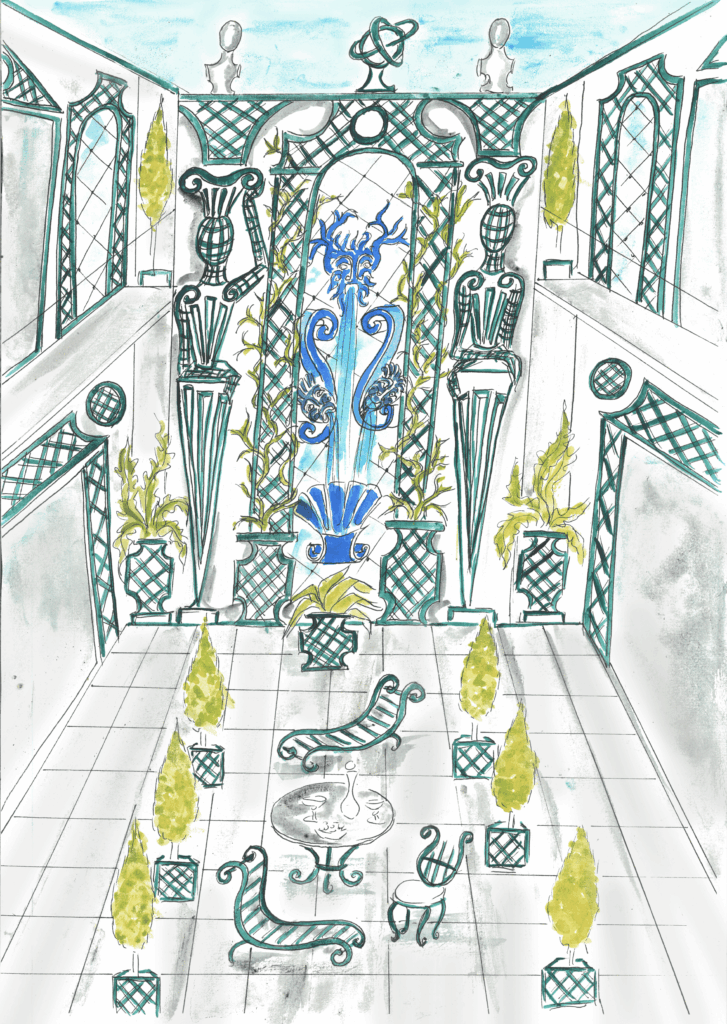
The concrete details are substantial. The address is 20 bis, rue de la Gaîté, in the 14th arrondissement. The building stands on the former site of Les Mille Colonnes, a theatre built in the early nineteenth century. The hotel will have 62 rooms across five floors and five distinct worlds: the Garden of Eden, Atlantis, the Utopian City, the Milky Way and the Artists’ Paradise. The rooms are presented as original creations by Vincent Darré, from furniture and ceramic tiles to lighting.
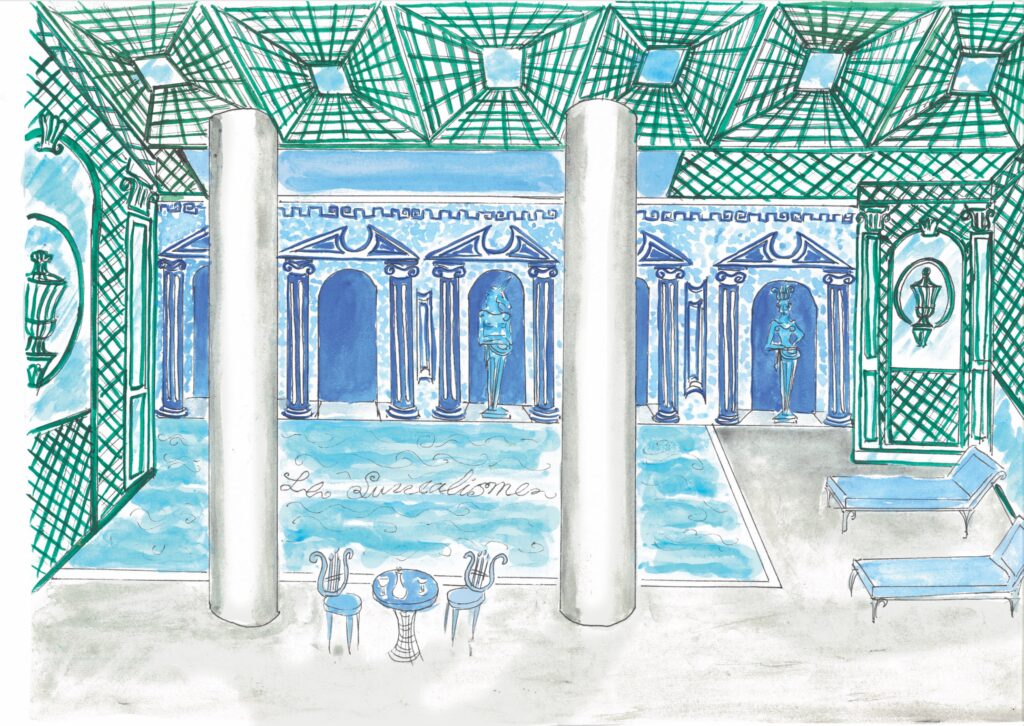
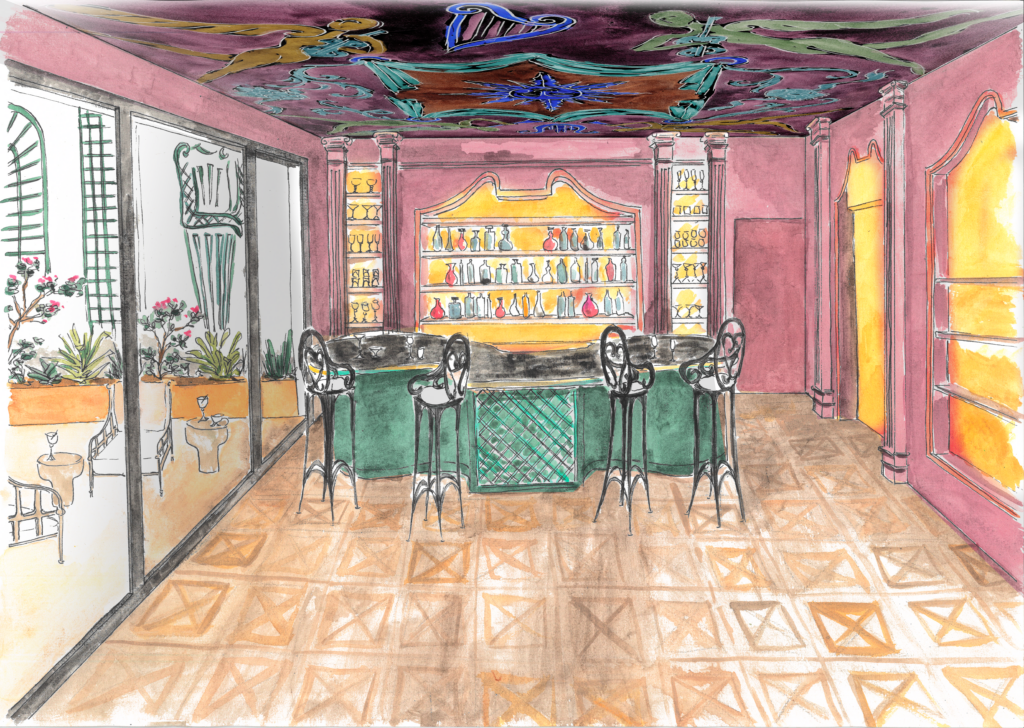
The staging begins in the lobby. Hand-painted columns recall La Coupole; a large fresco celebrates the arts and the circus; a reception desk adorned with collected old keys immediately suggests a passage elsewhere. The pool, with its mythological mosaics, opens onto a patio conceived as a Greek palace. Le Picabia bar, named for the Parisian painter, will follow the rhythm of neighbouring theatres, even ringing a bell for the start and end of intervals. This may be the most telling detail in the presentation: it places the hotel within the neighbourhood’s real time instead of closing it around its guests.
The address arrives as Parisian hospitality seeks to move beyond the familiar grammar of the palace hotel or the minimal boutique hotel. Luxury no longer ends with austerity of design, or even with service. It can also inhabit places willing to sustain a whole imaginary world, complete with references, extravagances and definite choices. Le Magnifique appears to embrace that possibility: the hotel not as a silent refuge, but as an immersive stage.
Vincent Darré’s words confirm that intention. He describes a place that is “more than a hotel,” an unconventional vision in which the arts come together to evoke an imaginary Paris. The language could tip into grandiosity, but it is consistent with the project: making an artistic memory inhabitable rather than selling comfortable neutrality.
What remains to be seen is how the experience withstands everyday use. A powerful setting can enchant, but it must also make room for tiredness, silence and the early morning. That is where Le Magnifique will truly be judged: in its ability to make the dream not merely a décor, but a lasting form of hospitality.
Cette publication est également disponible en :


