
In 1840, during his third and final stay in Venice, J.M.W. Turner was already painting almost nothing but palaces: he was painting light, humidity, the precise moment when stone dissolves into the lagoon. Nearly two centuries later, Jaeger-LeCoultre asked its Métiers Rares™ enamellers to hold that same instability within a surface of two square centimetres — the size of a postage stamp, fired fourteen times at 800°C.
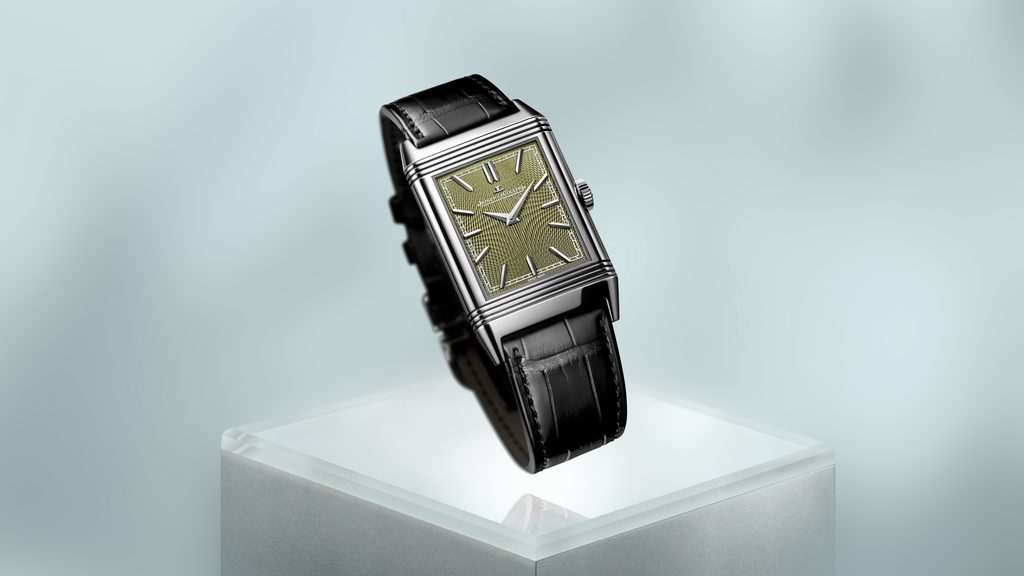
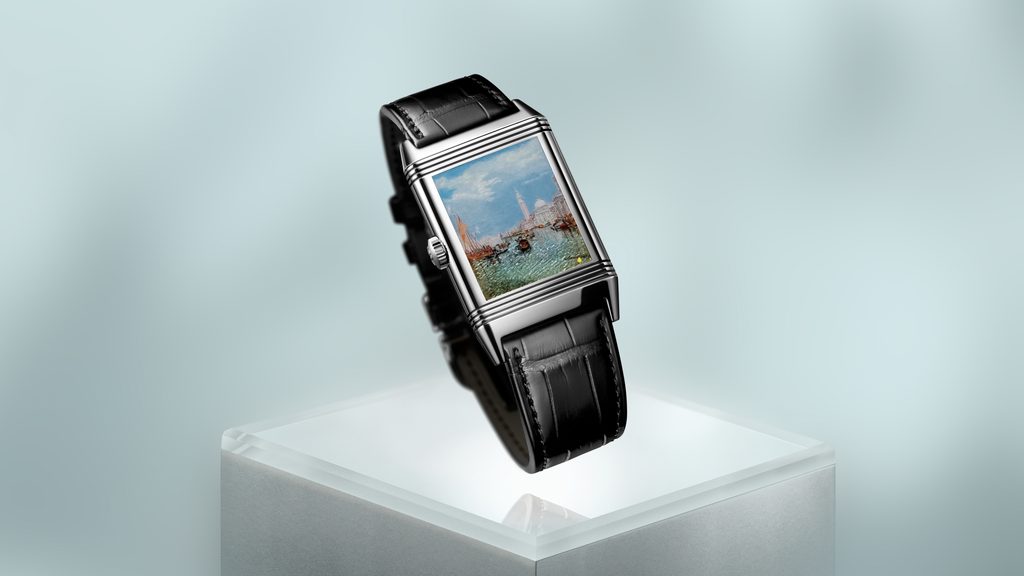
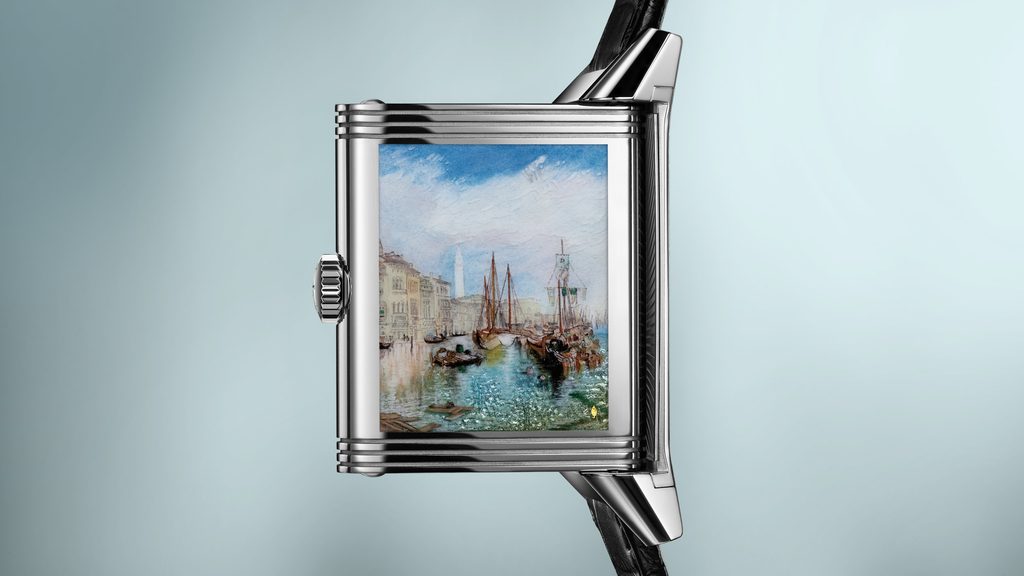
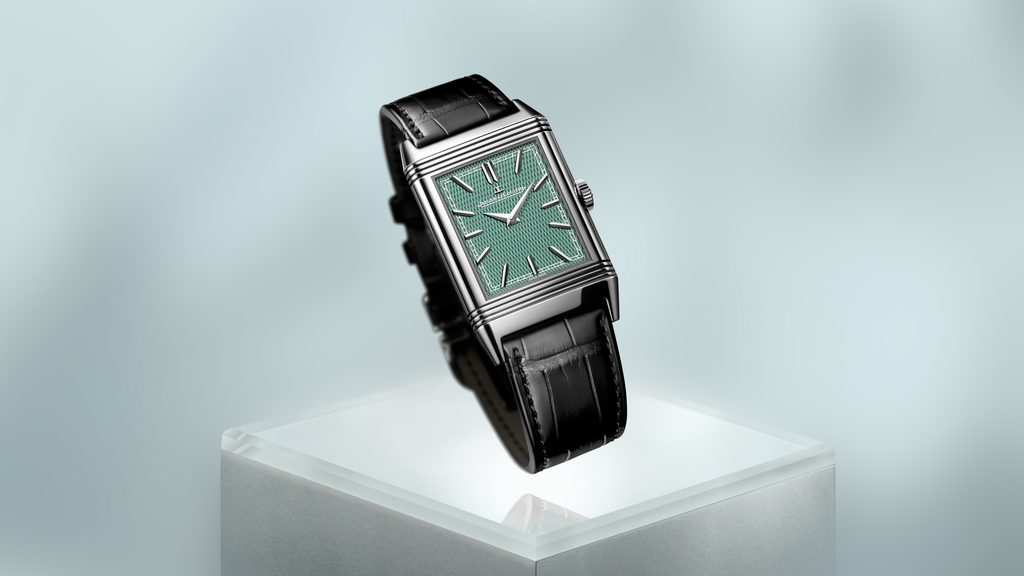
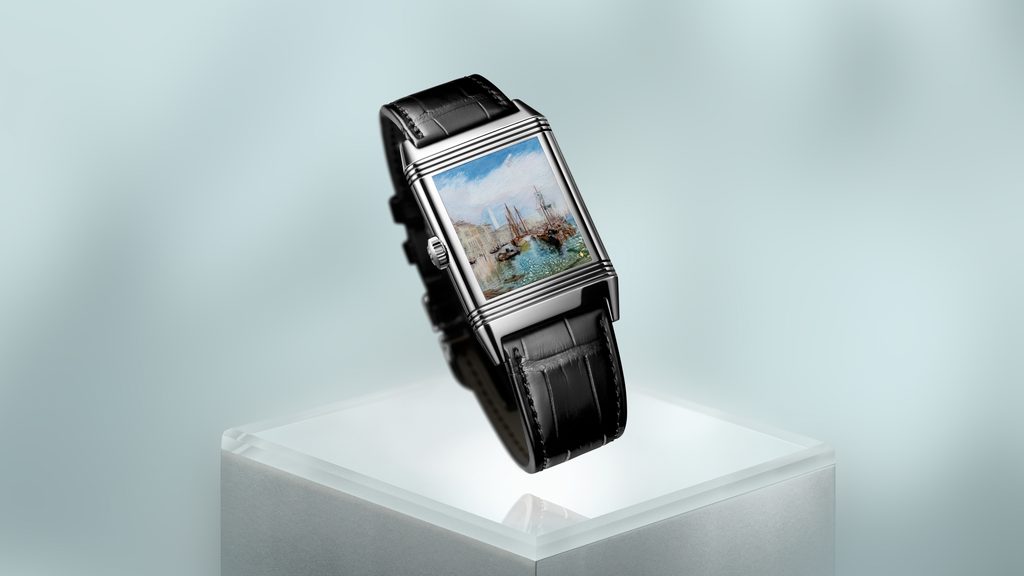
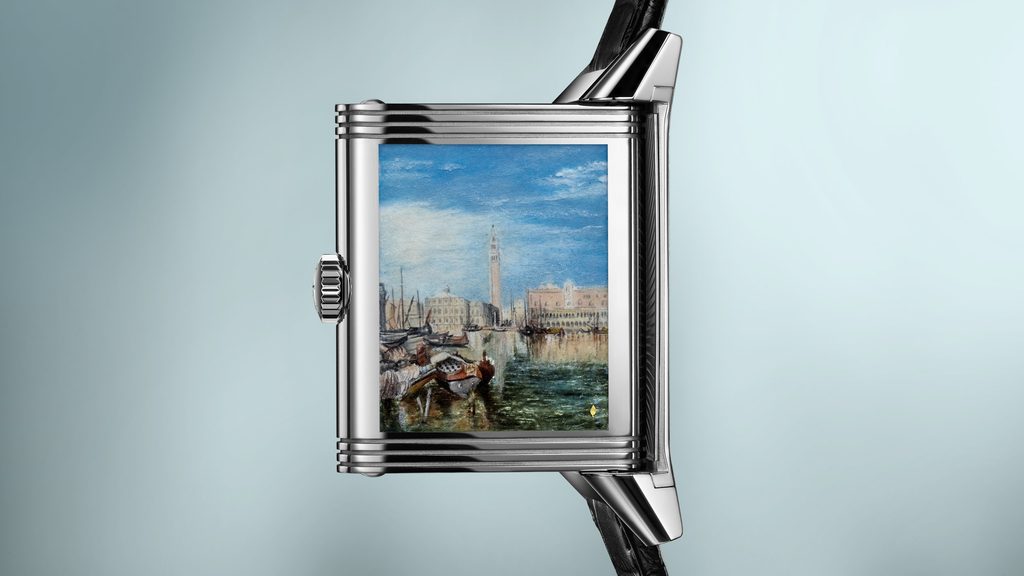
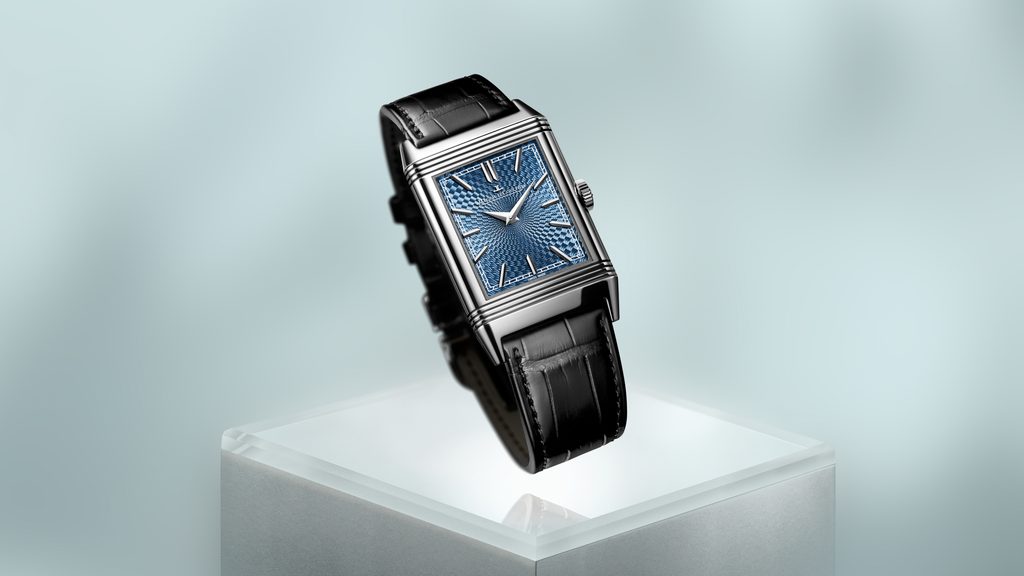
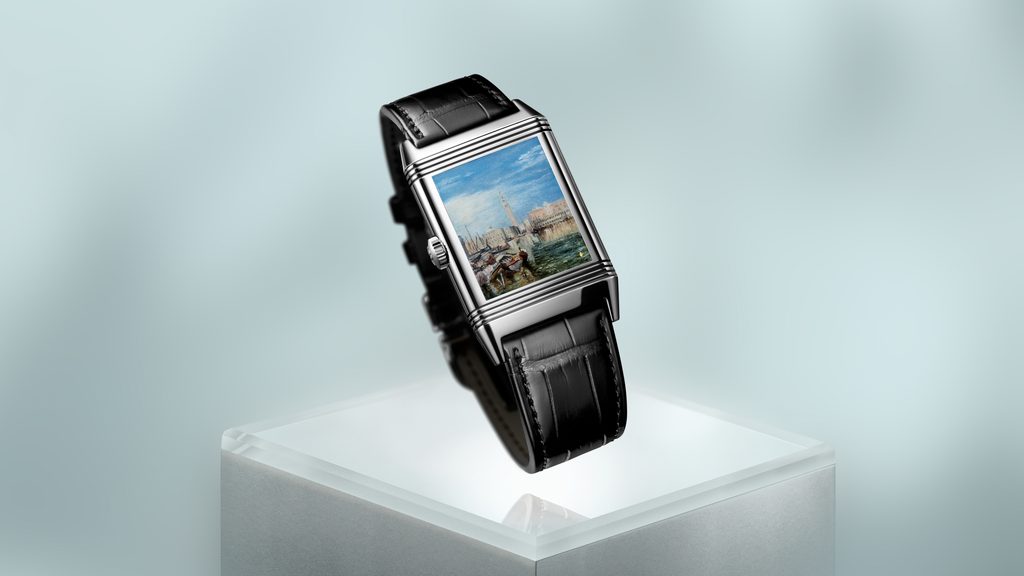
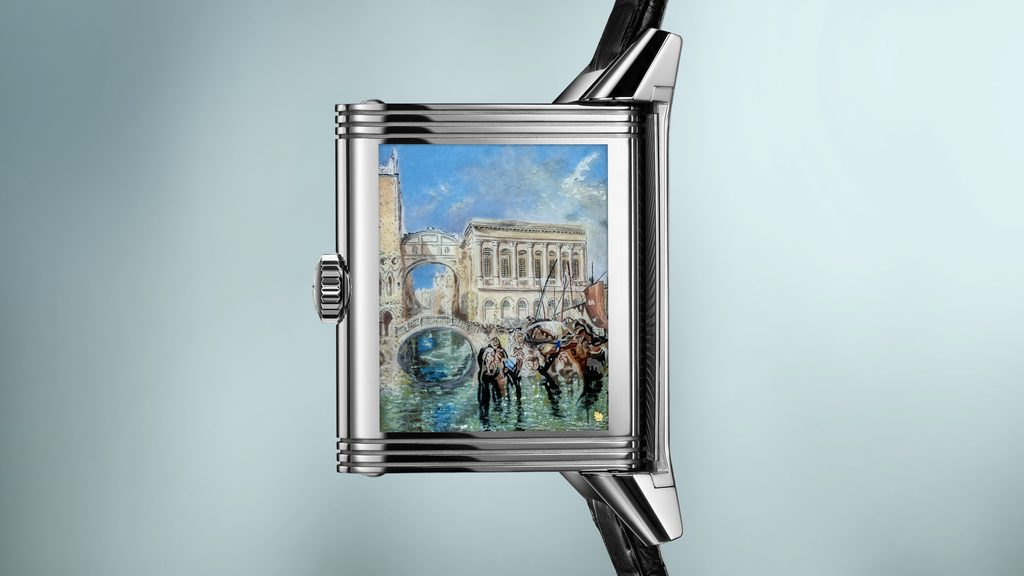
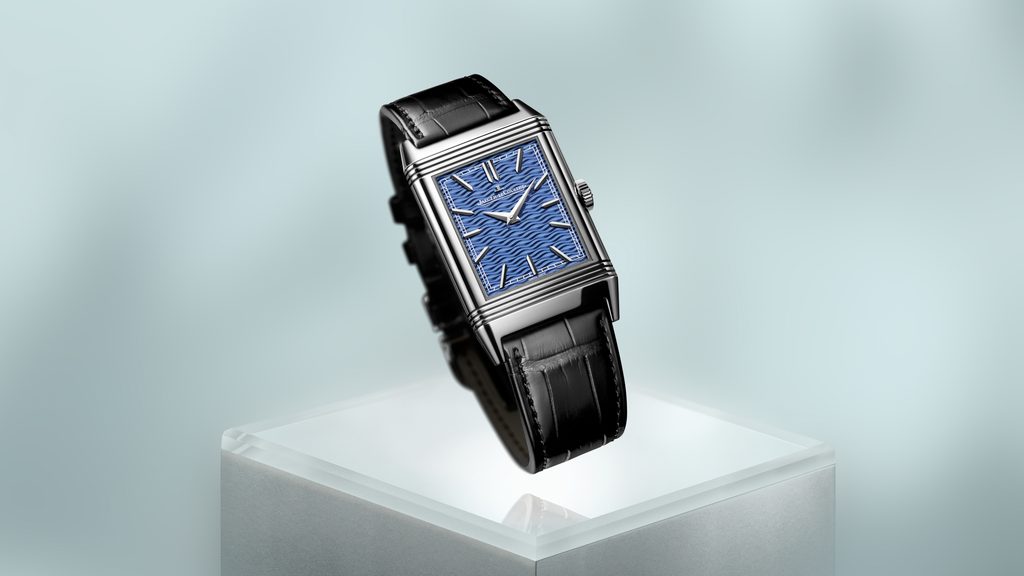
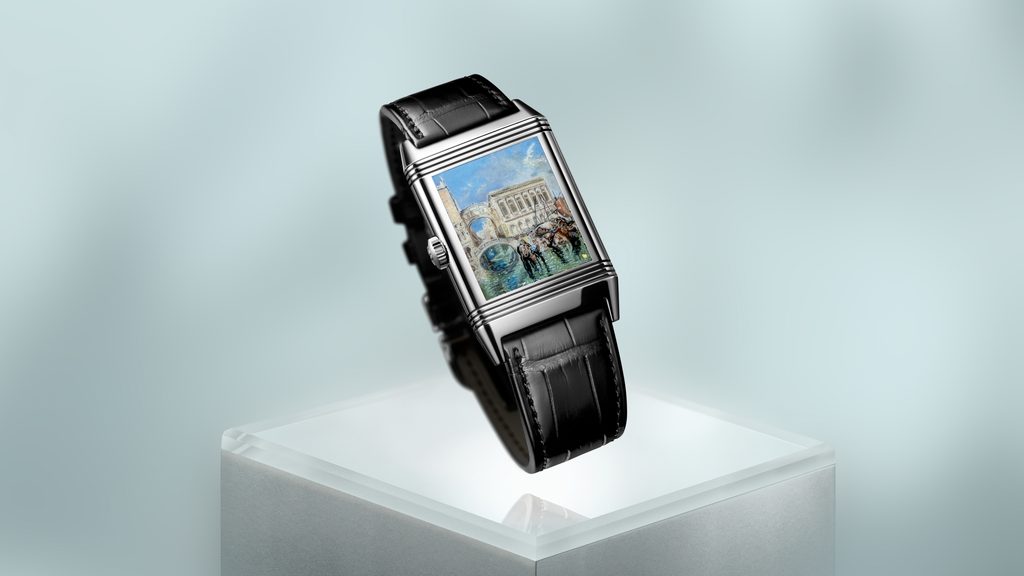
On the occasion of the Homo Faber Biennale, returning to Venice in September, the Manufacture presents four new limited editions of the Reverso Tribute Enamel, brought together under the name “Turner Series.” Each carries on its reverse a miniature reproduction of a painting the British artist devoted to the Serenissima, and on the dial side a hand-guilloché decoration whose tones echo those of the miniature. The Reverso, whose swivelling case has served as a decorative canvas since its debut, thus reclaims the role it has always held at Jaeger-LeCoultre: as much a vehicle for artistic expression as a horological instrument.
The choice of Turner is anything but incidental. Born in London in 1775, he travelled to Venice three times — in 1819, 1833 and 1840 — always at the end of summer, when mist envelops the canals and the palaces seem to float above the water. He exhibited only twenty-five Venetian canvases in his lifetime, yet produced, within a few weeks’ stay, some one hundred and fifty watercolours and nine hundred drawings; the oils themselves were only completed once he returned to his London studio. Considered a forerunner of modern art, he influenced both nascent Impressionism and twentieth-century abstract expressionism, building his compositions with loose brushstrokes, sometimes even with his thumb or a palette knife, favouring emotion over fidelity of line.
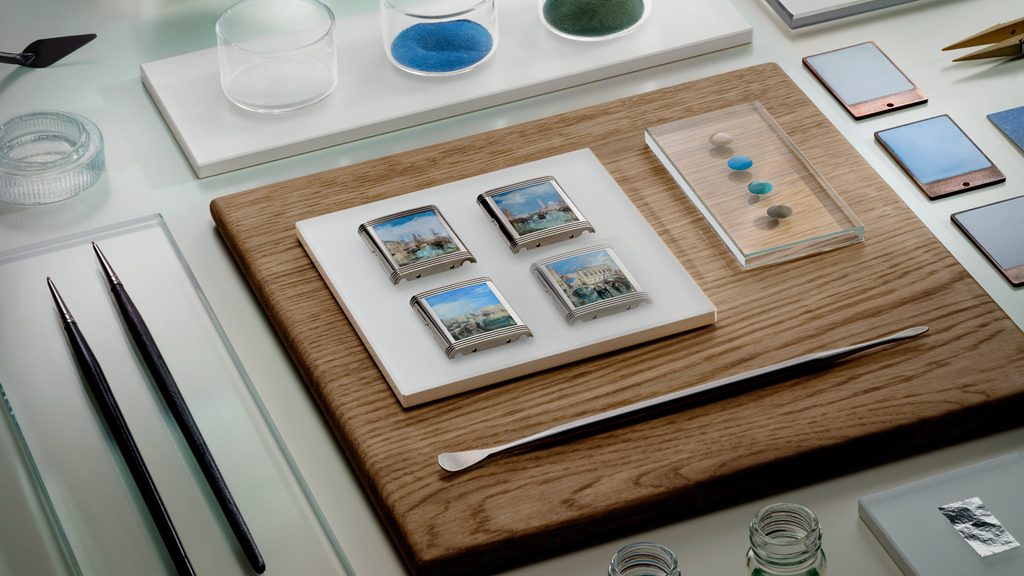
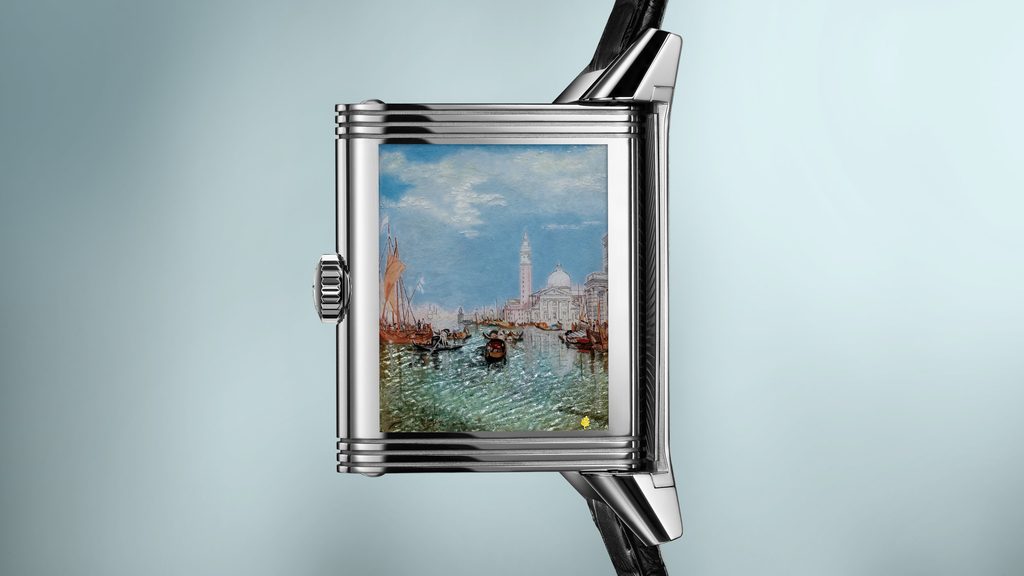
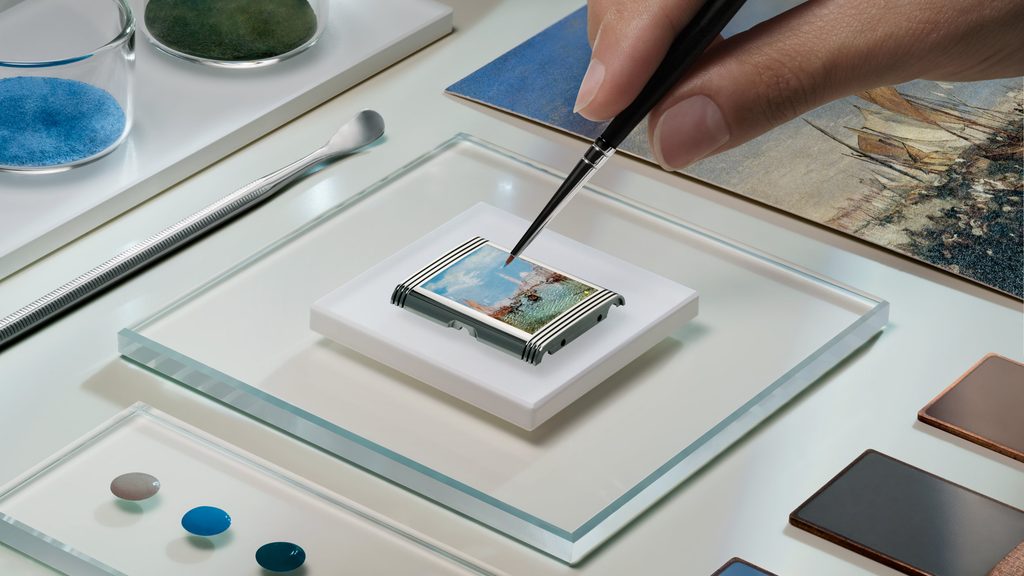
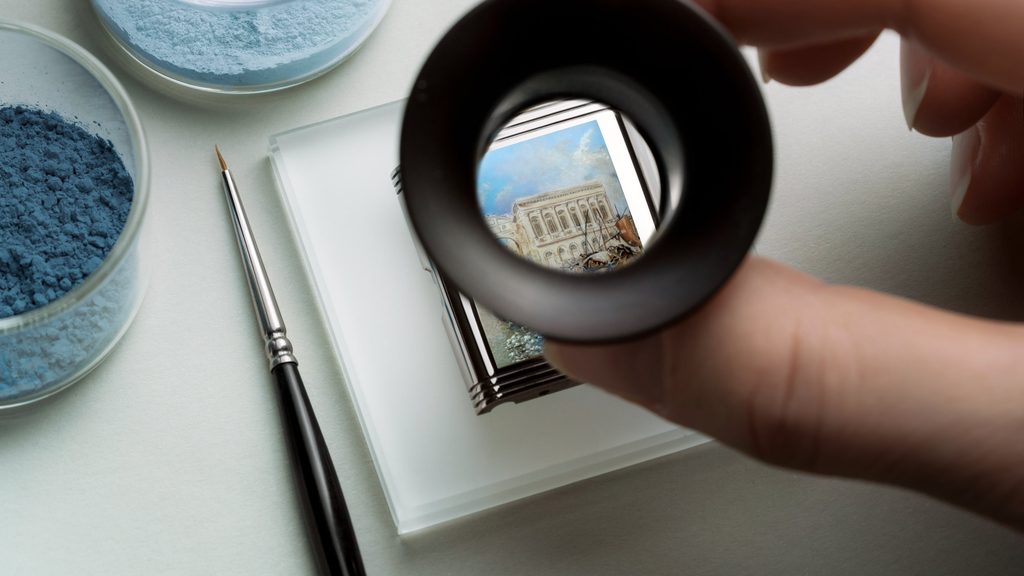
It is precisely this pictorial instability that Jaeger-LeCoultre’s workshop had to translate into a craft that, by nature, fixes things in place. The original paintings — the largest measuring 68 by 91 centimetres — were first reframed to fit the Reverso’s portrait format without losing their composition. Recreating the vaporous atmosphere of the clouds required work in several layers: the miniature painted in full, then covered and fired under two layers of translucent enamel over the cloud areas alone, themselves repainted before a final double layer of transparent enamel over the whole. For the shimmer of the water, the artisans used paillonné work — a fine sheet of silver foil placed beneath the translucent coloured enamel, which catches and reflects light with every movement of the wrist. In total, each miniature accumulates fourteen layers of enamel, each fired separately at 800°C, and close to eighty hours of work.
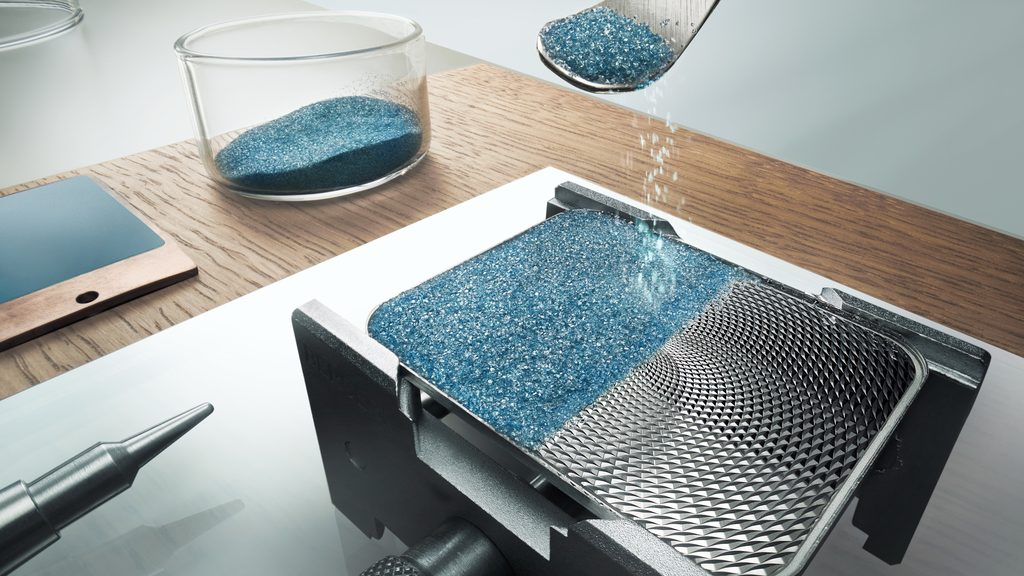
The dial side is no less demanding: the dials, hand-guillochéd under a pigmented translucent Grand Feu enamel, echo the tones of the miniatures on the reverse. The patterns, which vary from piece to piece — crossed sun, grain de riz, basket-weave, undulating waves — required up to 1,080 passes on a manual guilloché lathe, followed by five to nine additional hours of enamelling and several separate firings. Setting the faceted hour markers, which requires piercing the enamel without cracking it, closes a process in which every gesture remains irreversible.
The four pieces depict specific views. Venice, the Dogana and San Giorgio Maggiore, painted in 1834, portrays the very island that hosts the Homo Faber Biennale, facing St Mark’s Square. Venice, from the Porch of Madonna della Salute, from 1835, captures the moment when Turner carries his watercolour techniques over into oil painting, to the dismay of the traditionalists of his day. The Bridge of Sighs, Ducal Palace and Custom-House, Venice pays tribute to Canaletto, the eighteenth-century Venetian painter whose composition Turner revisits fourteen years after his first journey. Finally, Venice, the Bridge of Sighs, painted in 1840, was originally accompanied by two lines from a poem by Byron on the fall of the Venetian Republic — a melancholy Turner slips in behind the brilliance of the façades.
Each edition, powered by the hand-wound calibre 822, a mainstay of the Reverso Tribute collection for over twenty years, is produced in a run of ten pieces. Sixteen watches in all, for four paintings that a painter spent decades absorbing before setting them on canvas, and that an enameller today reproduces in a handful of weeks on a surface the size of a fingernail. It remains to be seen what Turner, who preferred the instability of light to the fixity of the motif, would have made of seeing it finally still — yet unsinkable — beneath the enamel.
Cette publication est également disponible en :


