
The most interesting aspect of A-POC ABLE ISSEY MIYAKE’s new phase is not just the final product, but the way the brand is redefining its aesthetic. With the TYPE-XIII project, developed in collaboration with atelier oi and presented in Copenhagen during 3daysofdesign, Issey Miyake explores a long-standing question: what can a piece of fabric do when it is no longer part of a garment?
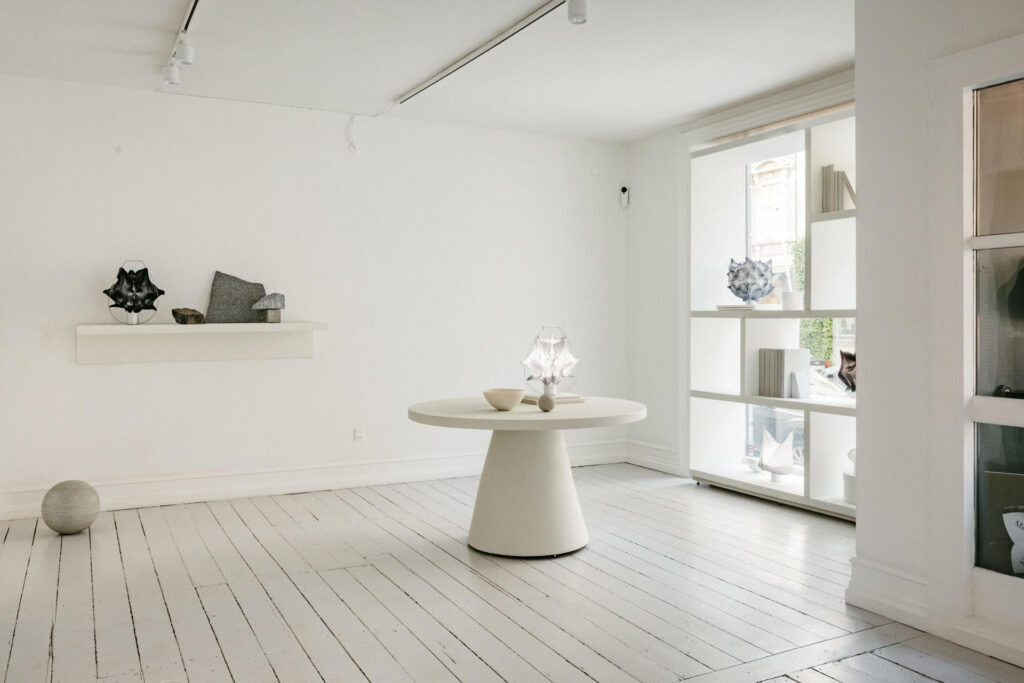
The collaboration with the Swiss studio atelier oi gives this swing a distinct form. First unveiled in Milan in April 2025, the project already combined a piece of cloth and a piece of wire. The second installment of the O Series, on display from June 10 to 12, 2026, at Gallery 2112, confirms that this is not merely a figure of speech. Here, the fabric ceases to serve as a covering and begins to structure light.
This is the point that deserves attention. A-POC ABLE has long explored the relationship between fabric and the body, conceiving clothing as a system of transformation. In the context of lighting, this same logic takes on an almost architectural quality. Lampshades are no longer merely surfaces, but active volumes that alter the atmosphere. The new shades, inspired by wood and stone, reinforce this organic interpretation.
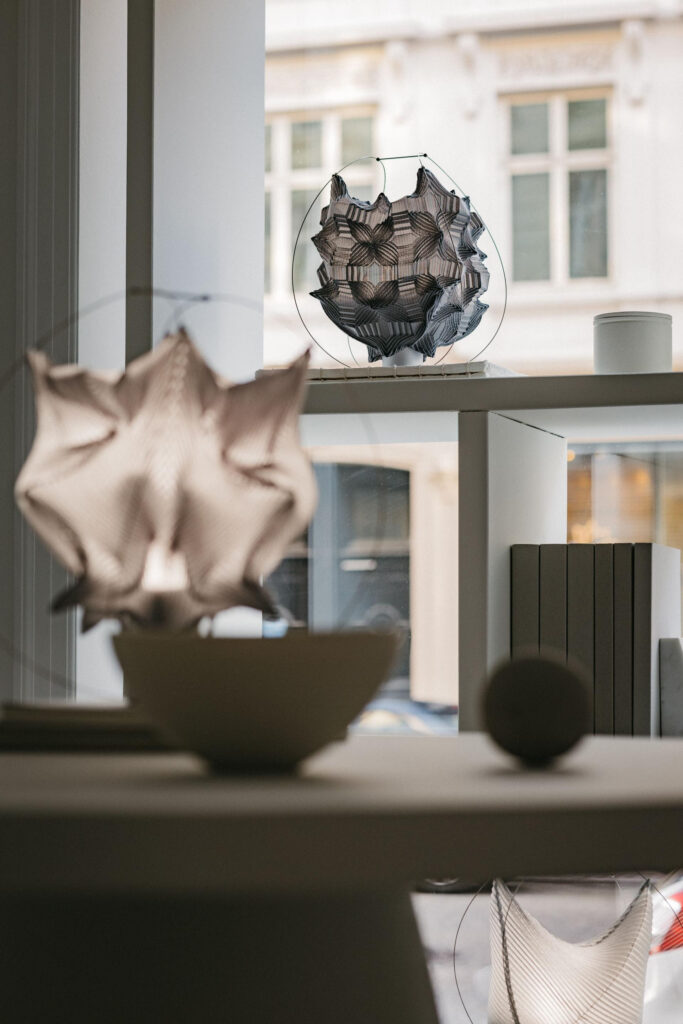
The partnership with atelier oi makes perfect sense. The Swiss studio is known for its interdisciplinary approach, at the intersection of design, architecture, and craftsmanship. At Issey Miyake, this collaboration is more than just a co-branding exercise. It reaffirms a more fundamental concept in contemporary luxury: innovation can also take the form of a transfer of craftsmanship.
The Steam Stretch workshops scheduled during the exhibition play an important role. They put the process back at the center, in keeping with the project’s stated principle of “Making Things.” At a time when design is often consumed as an image, showcasing the technique restores value to the act of making itself.
Why does this project matter now? Because it’s part of a broader trend among fashion houses seeking credible avenues beyond clothing. Many are trying their hand at it out of opportunism; few succeed with such a coherent vision. Here, the light fixture is not a spin-off product. It appears as the logical outcome of textile research pursued in a different direction.
Cette publication est également disponible en :

