
For a long time, dietary supplements have straddled two worlds: functional medicine and esoteric wellness. Today, adaptogenic mushrooms are blurring that line. Reishi, Lion’s Mane, Chaga, and Cordyceps are no longer confined to traditional Asian medicine or niche organic communities. They are entering the premium wellness market, where mental performance, stress management, and prevention are becoming cultural markers as much as physiological ones.
The BIEN brand is built precisely around this tipping point. Its press kit refers to “balance between body and mind,” but above all to fatigue that has become structural: cognitive overload, fragmented sleep, and chronic stress. According to figures cited by the brand, 59% of French people say they feel stressed, and 31% have already used adaptogenic herbs.
The significance of this phenomenon extends far beyond nutritional supplements. It reflects a shift in contemporary luxury: the pursuit of performance is no longer driven solely by outward appearance but by the ability to preserve one’s mental resources. In certain capital cities—London, Los Angeles, Seoul, and Paris—nootropic powders are gradually replacing the ritual of the energizing cup of coffee. Wellness is becoming a form of daily discipline.
BIEN takes a relatively understated approach in an industry often saturated with spectacular promises. The company touts formulations that are free of fillers, binders, and caffeine, developed in a French laboratory using active ingredients backed by clinical studies. The language used focuses on measured effectiveness: stress reduction, improved sleep, cognitive support, and physical endurance.
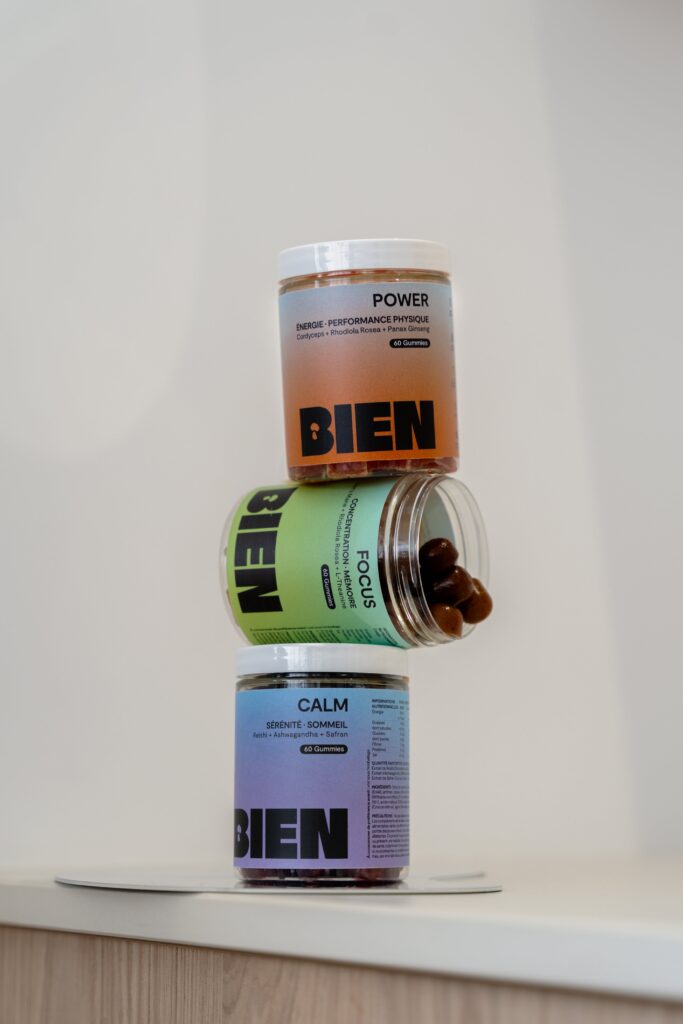
Focus gummies are a prime example of this contemporary concept of “calm performance.” Lion’s Mane, Rhodiola rosea, and L-theanine are combined in these gummies to support memory, attention, and concentration without causing a sudden surge in nervous stimulation. Lion’s Mane—or hedgehog mushroom—plays a central role in this new field of neurocosmetics. This nootropic mushroom is being studied for its potential effects on neurogenesis and cognition. BIEN specifically cites a 28% reduction in perceived stress.
Power gummies focus on physical and energy endurance. Cordyceps, Rhodiola, and Panax ginseng replace the classic stimulating effects of caffeine. Historically used in Tibetan and Chinese pharmacopoeias, Cordyceps is now making a comeback in Western wellness routines as an alternative to traditional energy boosters.
Perhaps the most revealing product is the Calm formula. Reishi, ashwagandha, and saffron come together to offer a modern solution to the pervasive anxiety caused by the fast pace of city life. Reishi, long known as the “mushroom of immortality” in certain Asian traditions, is repositioned here as an active ingredient that promotes emotional recovery and sleep.
With Mushglow, BIEN takes this fusion of beauty, cognition, and functional nutrition even further. The supermix combines egg membrane collagen, Lion’s Mane, Chaga, Cordyceps, L-theanine, and maca in a powder designed to be mixed as part of a daily ritual. The act is just as important as the formula: adding a spoonful to a latte or yogurt becomes a stylish expression of contemporary wellness.
Manufacturing in the Dordogne and distribution through Pilates studios, concept stores, and pharmacies are also part of a specific cultural repositioning. The dietary supplement is moving away from the austere shelves of drugstores and into new lifestyle spaces.
What’s at stake here, then, isn’t just about nutrition. Adaptogens are becoming tools for regulation in lives overwhelmed by demands. A form of slow, plant-based, almost meditative technology. The luxury of the future may not be visible accumulation, but the ability to maintain one’s focus.
Cette publication est également disponible en :

