
There are watches that we wear as an outward sign of style. Others seem to have been designed to accompany the silence of the deep, the biting cold, the patience of researchers, and that very Japanese determination to perfect a tool until it becomes almost self-evident. With two new Prospex Marinemaster 1968 Diver’s models—including a limited edition created in collaboration with JAMSTEC—Seiko isn’t simply adding a new model to its catalog: the brand is reviving a legacy that began in 1965, when the first Japanese diving watch was born.
At Seiko, this story has never been solely about watchmaking. It is linked to exploration, real-world use, and the field. The first Japanese diving watch accompanied members of the Japanese Antarctic Research Expedition to the South Pole from 1966 to 1969. In 1968, Seiko reached a new milestone with the first Japanese dive watch water-resistant to 300 meters. This symbolic depth now inspires the two new Marinemaster models, presented as the culmination of Seiko’s 300-meter water-resistant dive watch line.
The partnership with JAMSTEC, the Japan Agency for Marine-Earth Science and Technology, gives this new model an even more contemporary feel. Initiated in the 1980s, the partnership between Seiko and the Japanese institute dedicated to marine sciences is rooted in a spirit of research and exploration. In 1983, two professional diving watches water-resistant to 600 meters had already been successfully tested aboard the SHINKAI 2000, a manned research submersible operated by JAMSTEC. Four decades later, this technical legacy resurfaces in a Marinemaster designed not only as an instrument watch but also as a tribute to the sea, ice, and extreme scientific environments.
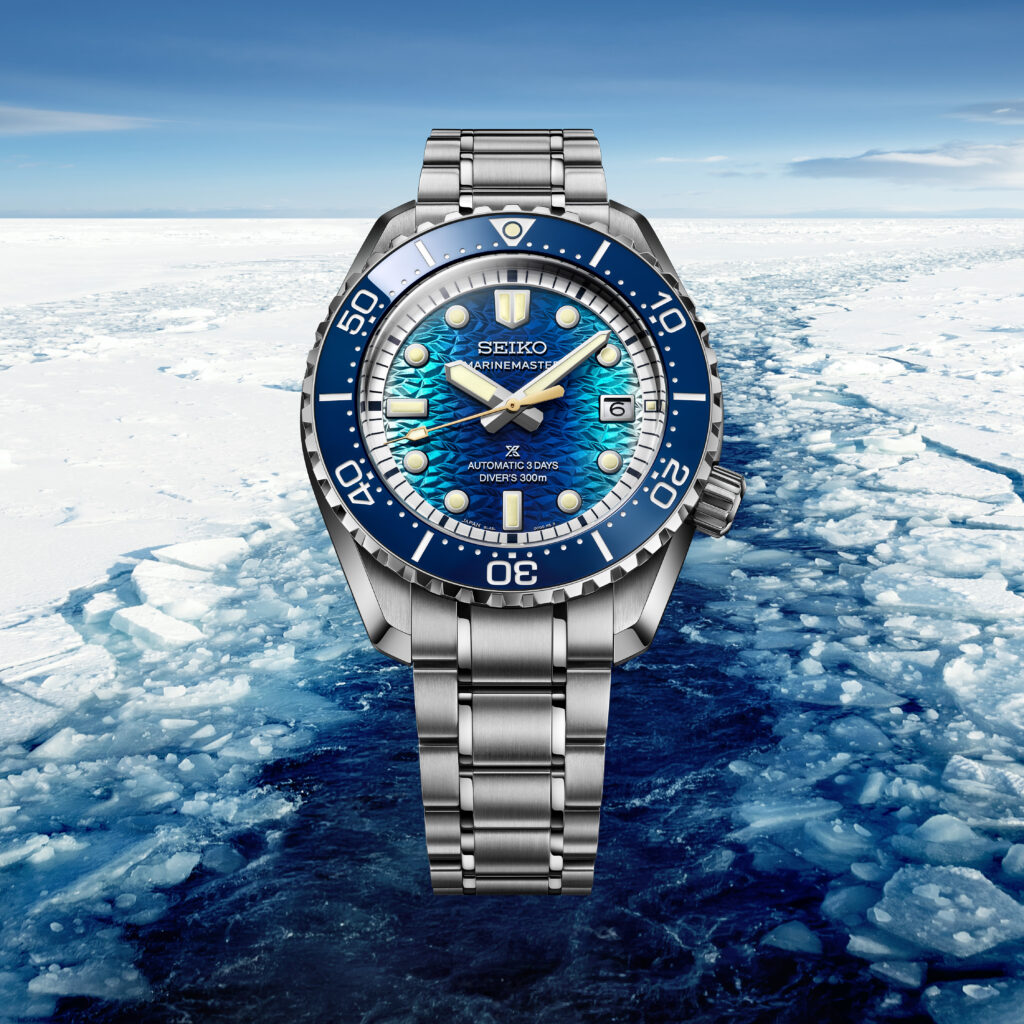
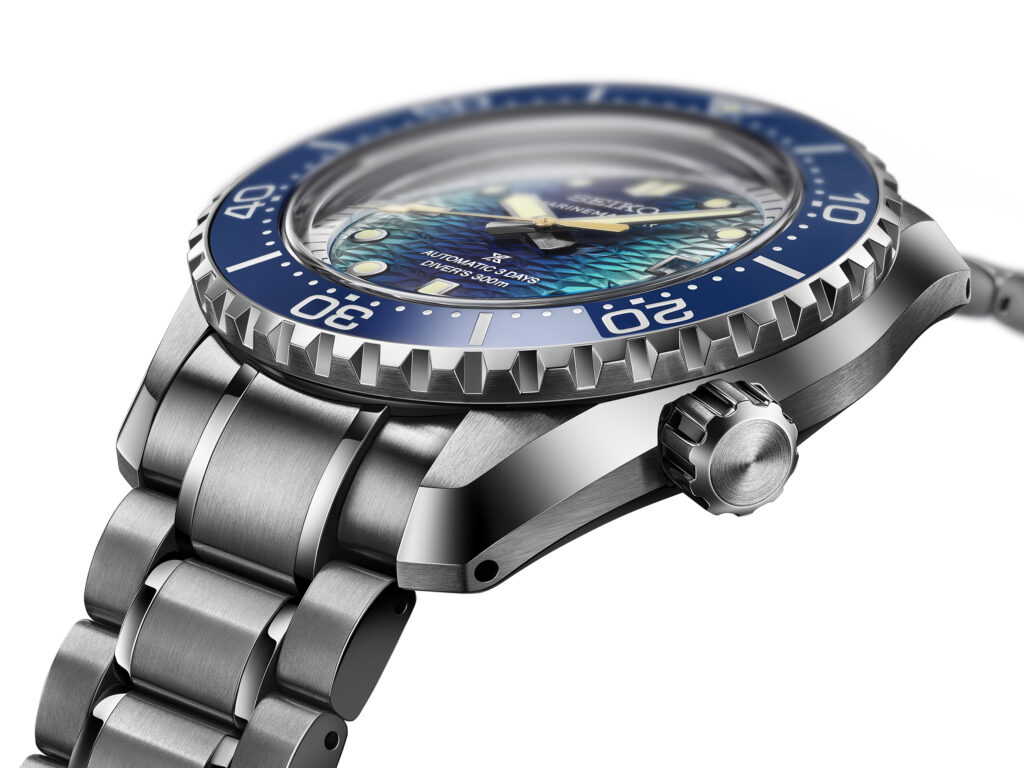
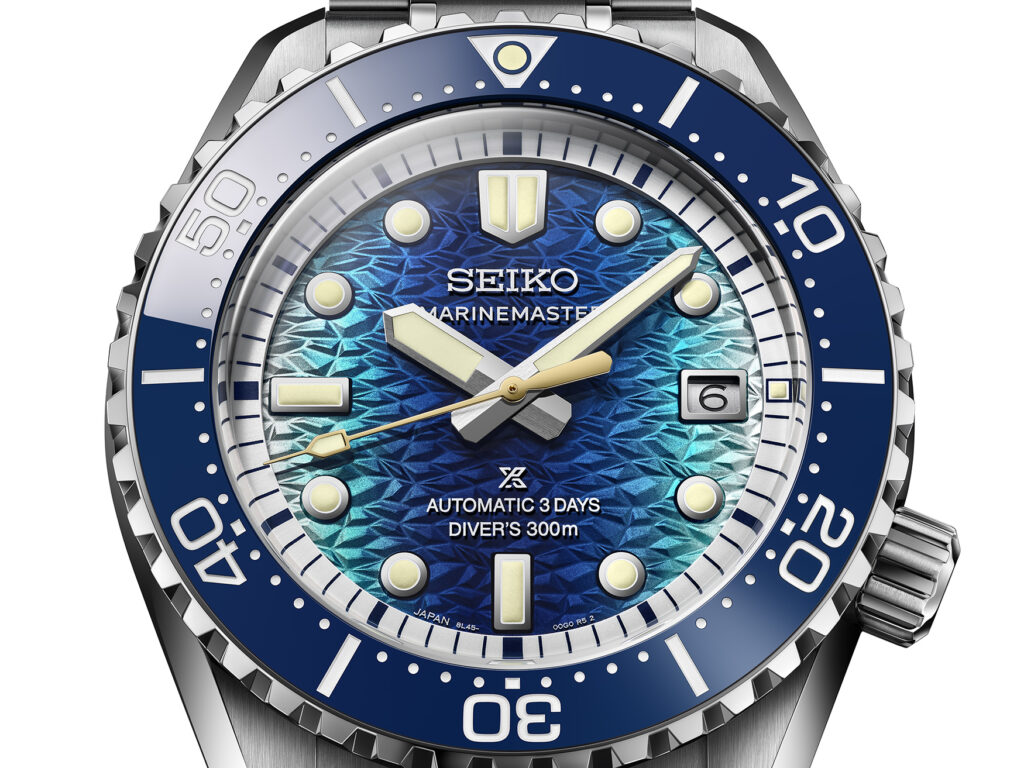
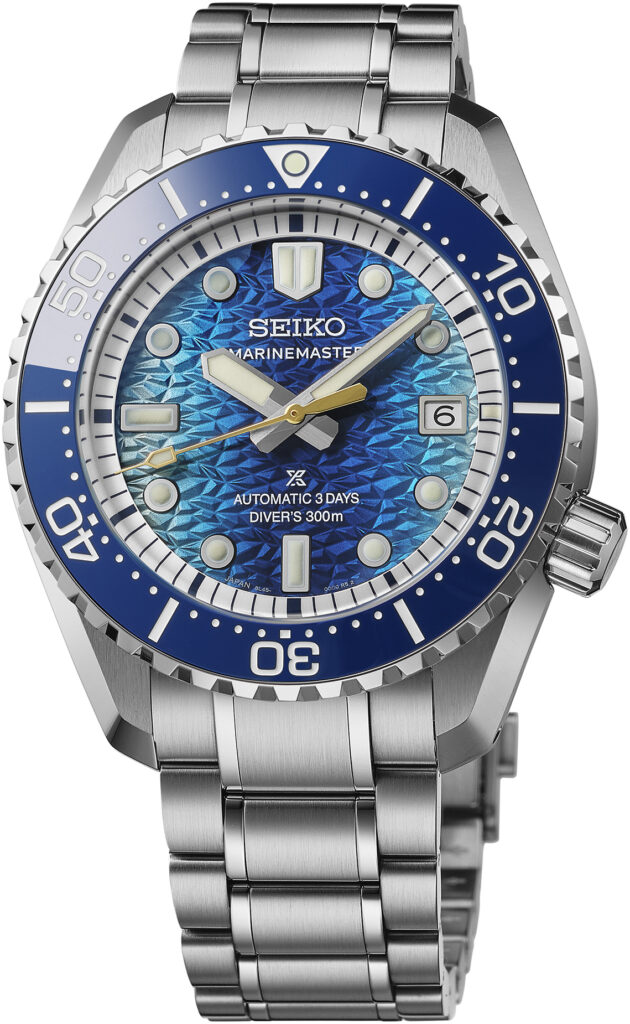
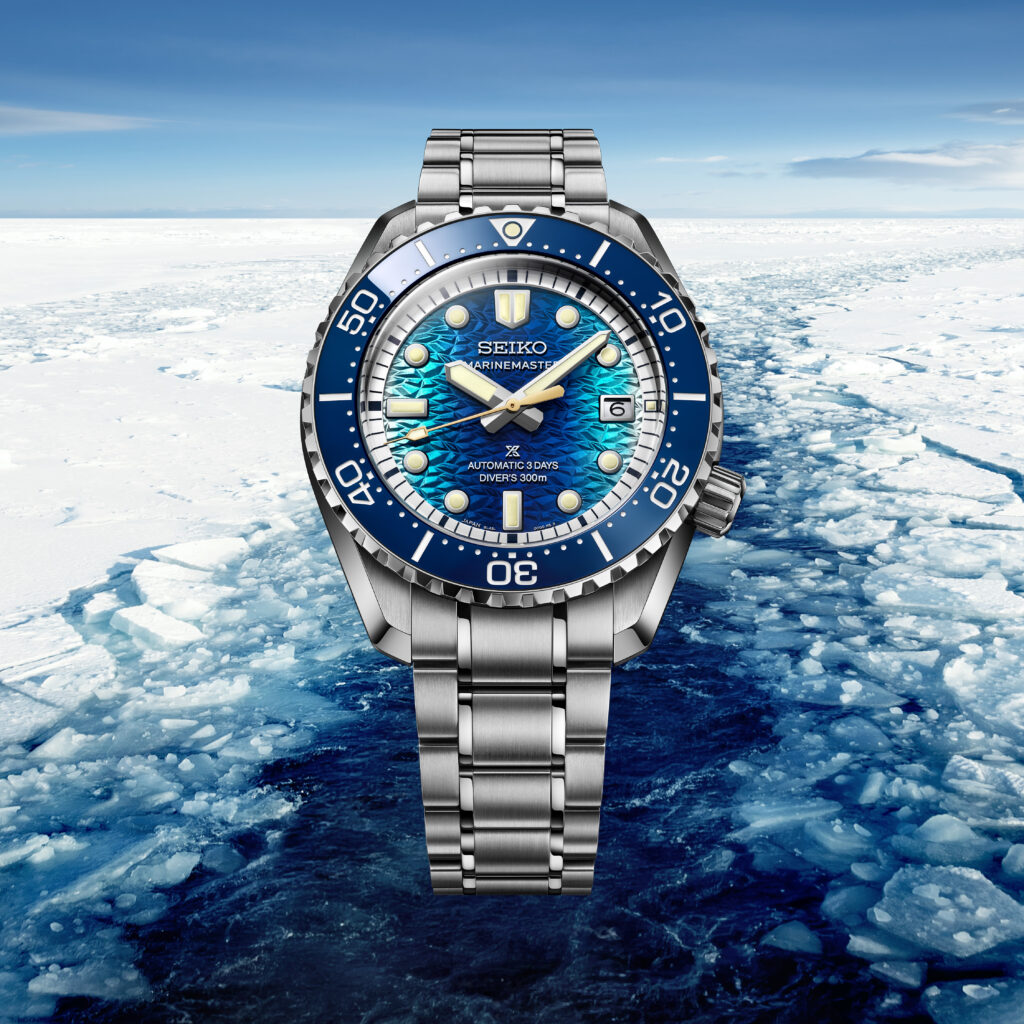
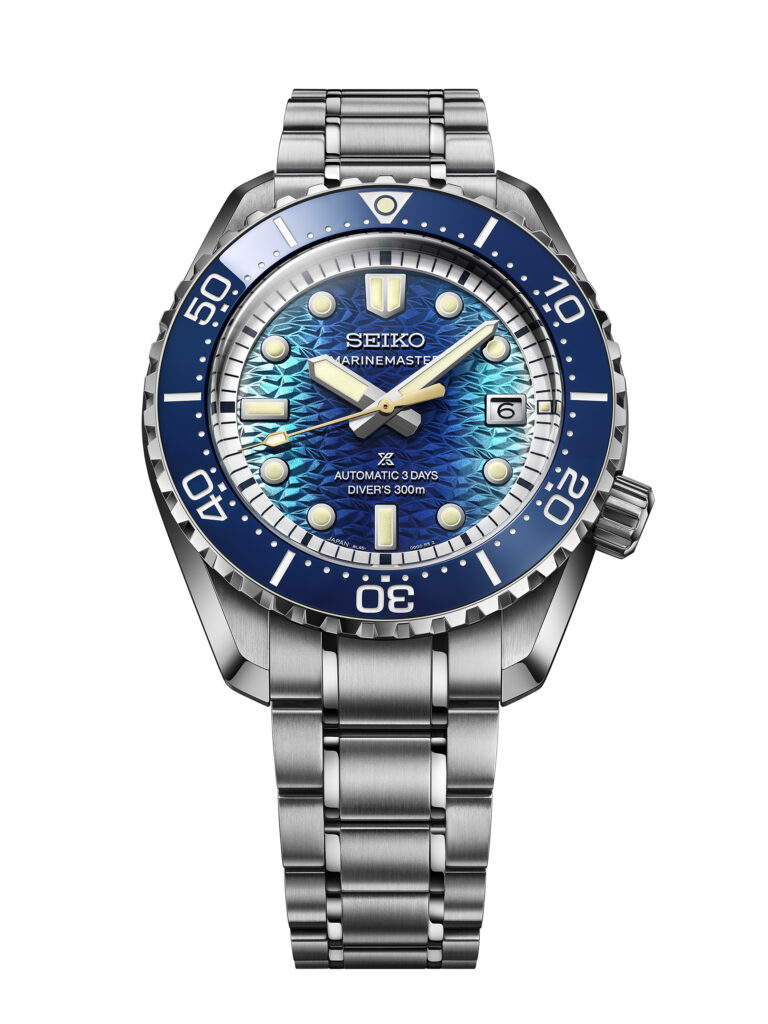
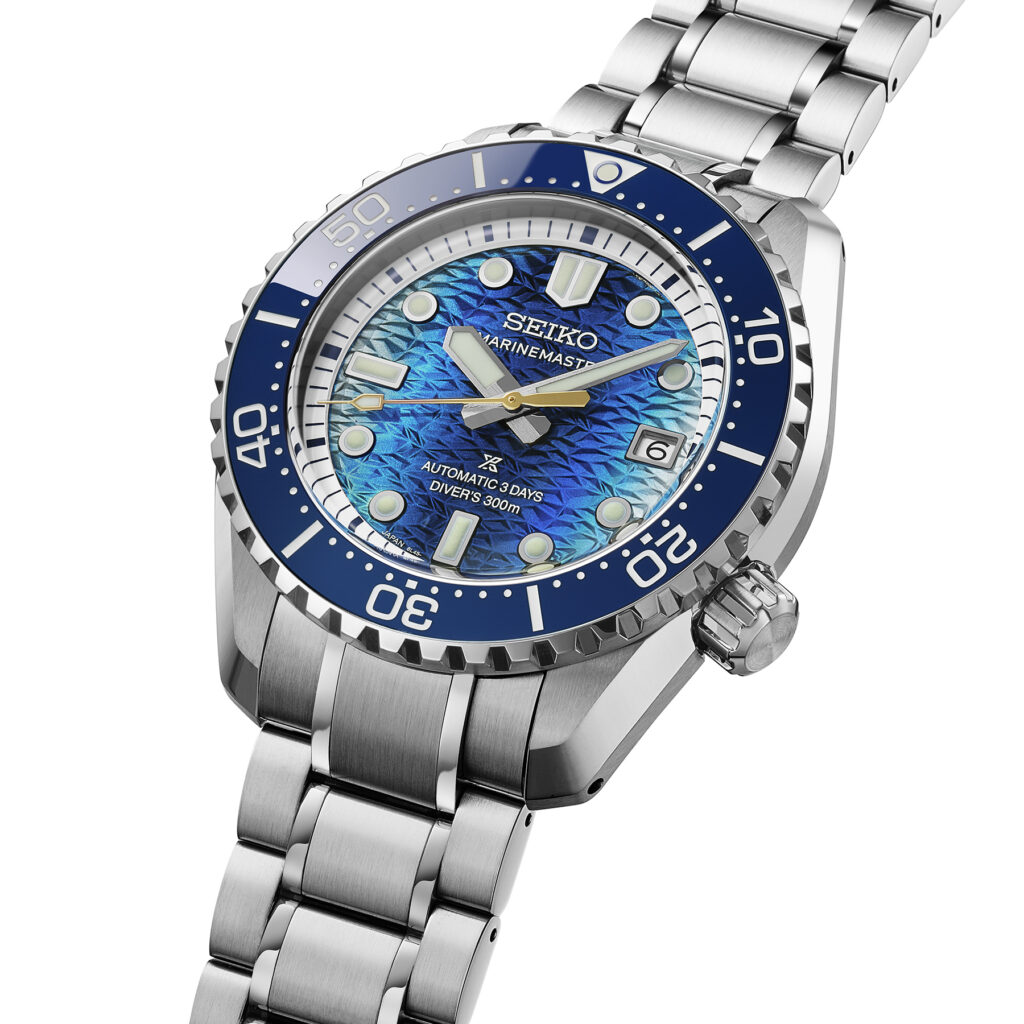
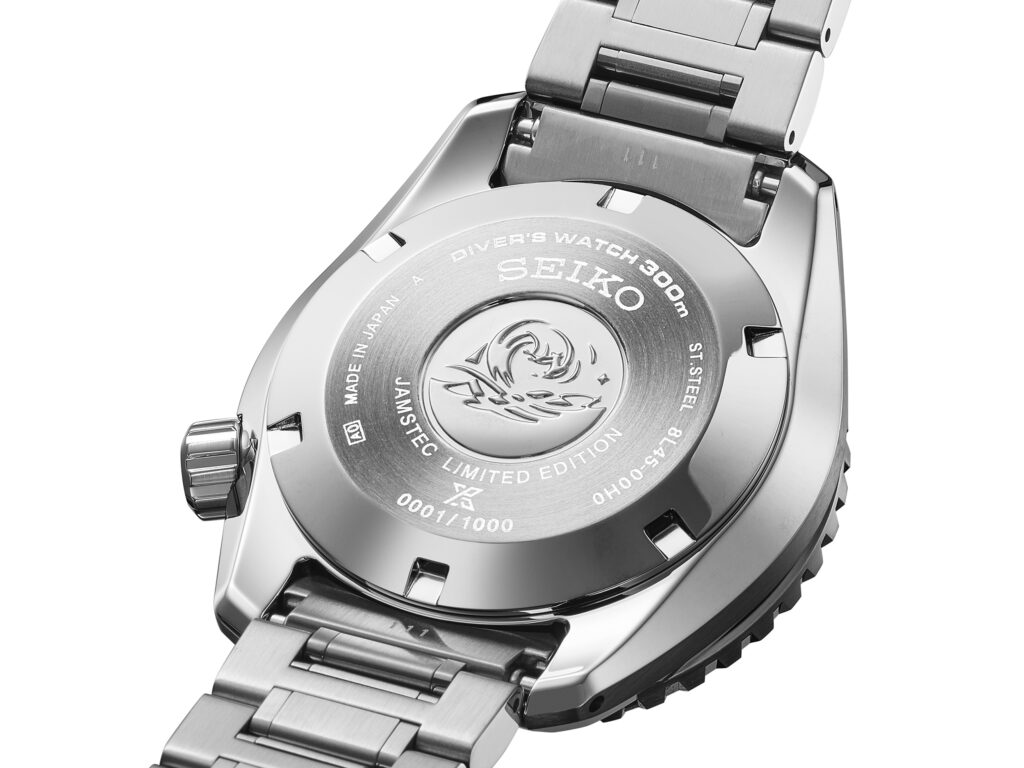
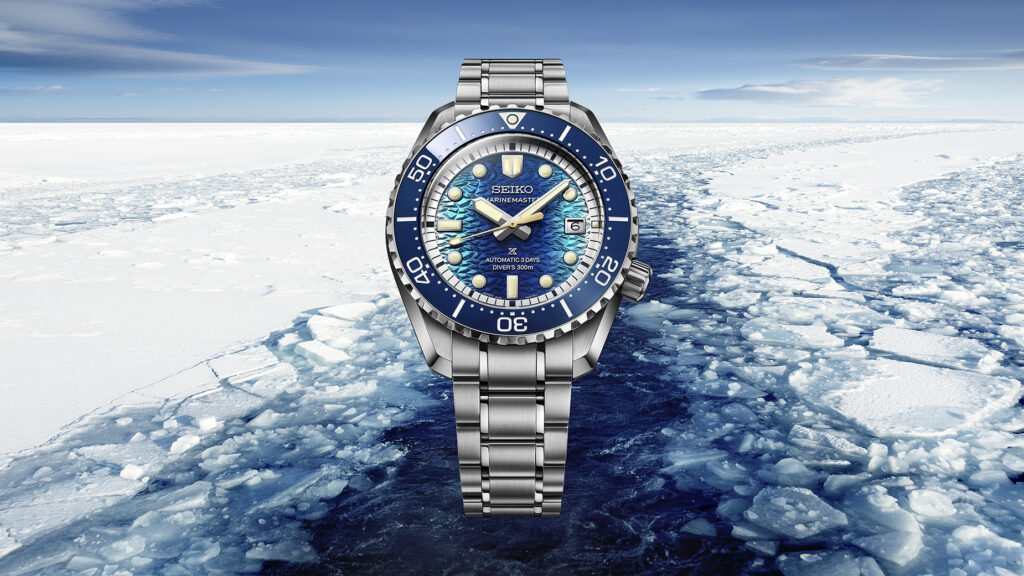
The most narrative model is, of course, the JAMSTEC limited edition. Its textured dial evokes the trail left by an icebreaker making its way through the pack ice—a powerful, almost cinematic image of a ship carving a path into the unknown. The vertical blue gradient, which becomes more intense toward the center, is coated with a thick, polished clear varnish, designed to evoke the crystalline depths of the Arctic Ocean. The blue ceramic bezel extends this maritime theme while providing high scratch resistance. On the back, the case back is engraved with “JAMSTEC LIMITED EDITION” and numbered out of 1,000 pieces, anchoring the timepiece within the collection’s lineage.
This reference relates to one of JAMSTEC’s Arctic research programs. The Mirai II, Japan’s first research vessel equipped with icebreaking capabilities—“mirai” meaning “future” in Japanese—is designed to collect data in icy seas. The symbolism is quite powerful: a diving watch inspired by the past but focused on the science of the future. Here, Seiko strikes a valuable balance between watchmaking heritage, environmental exploration, and technological innovation.
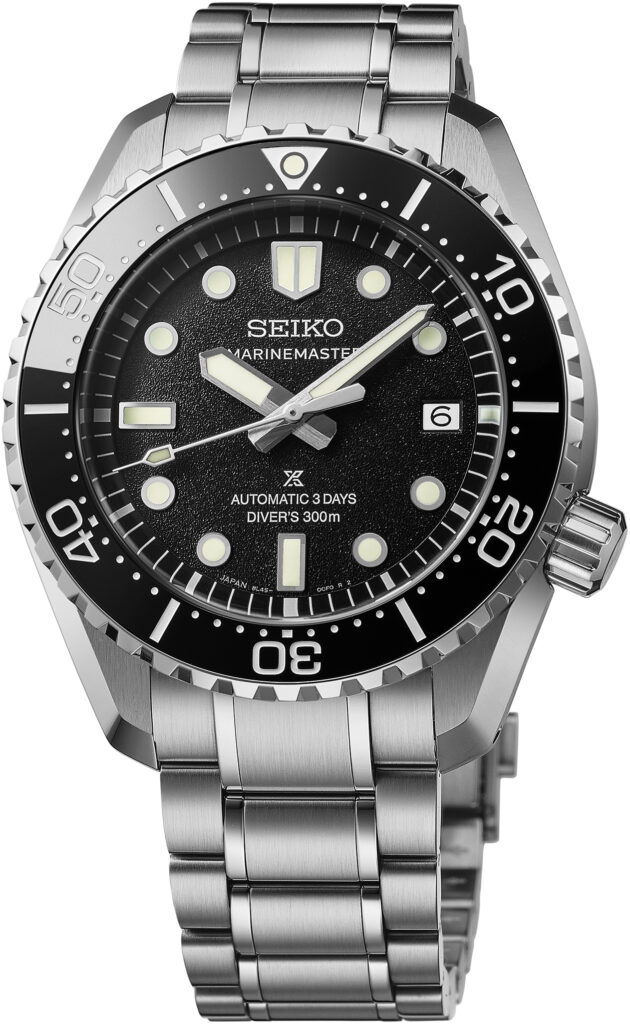
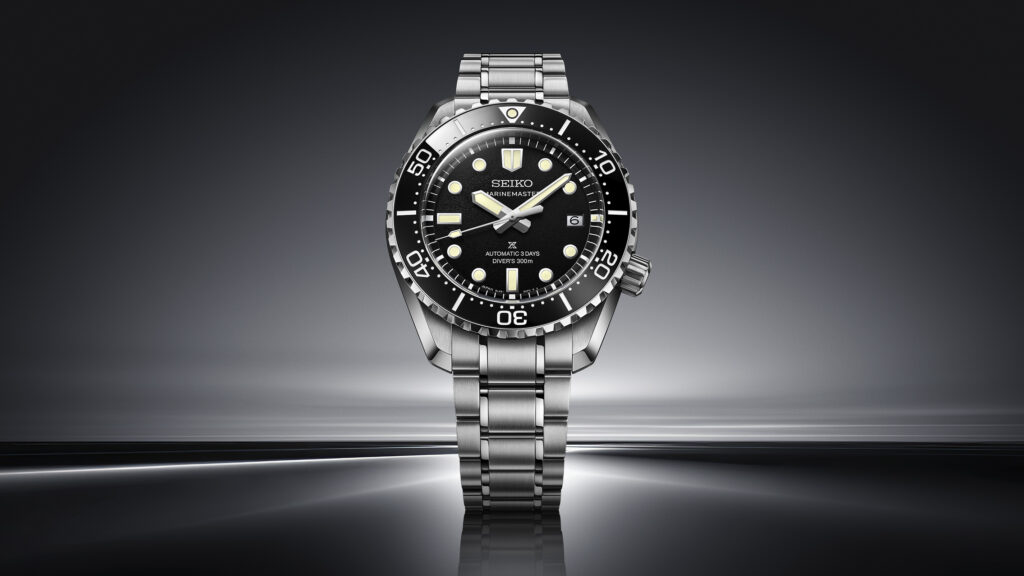
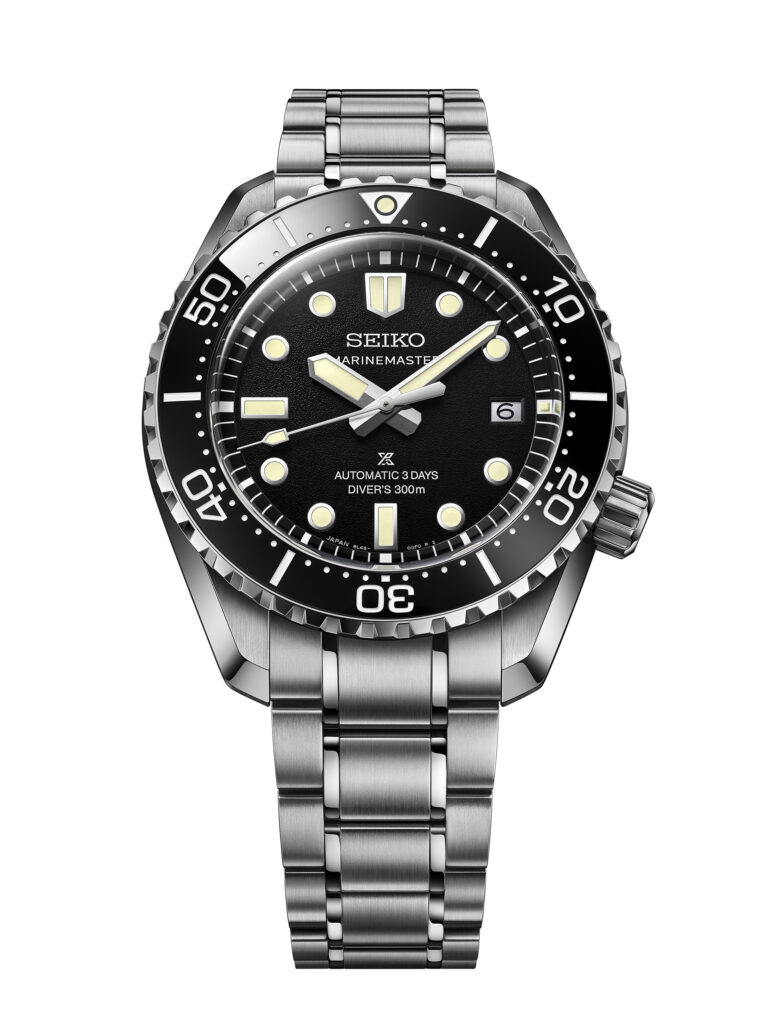
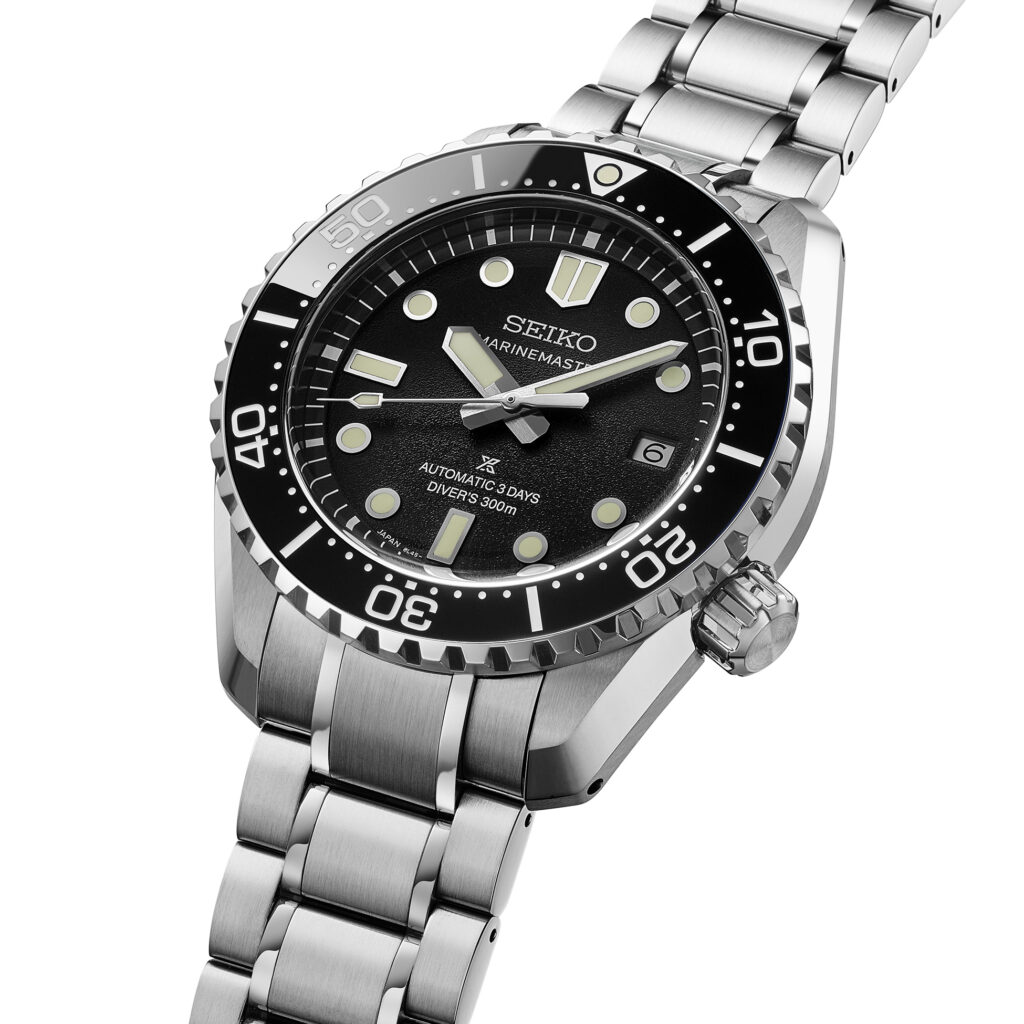
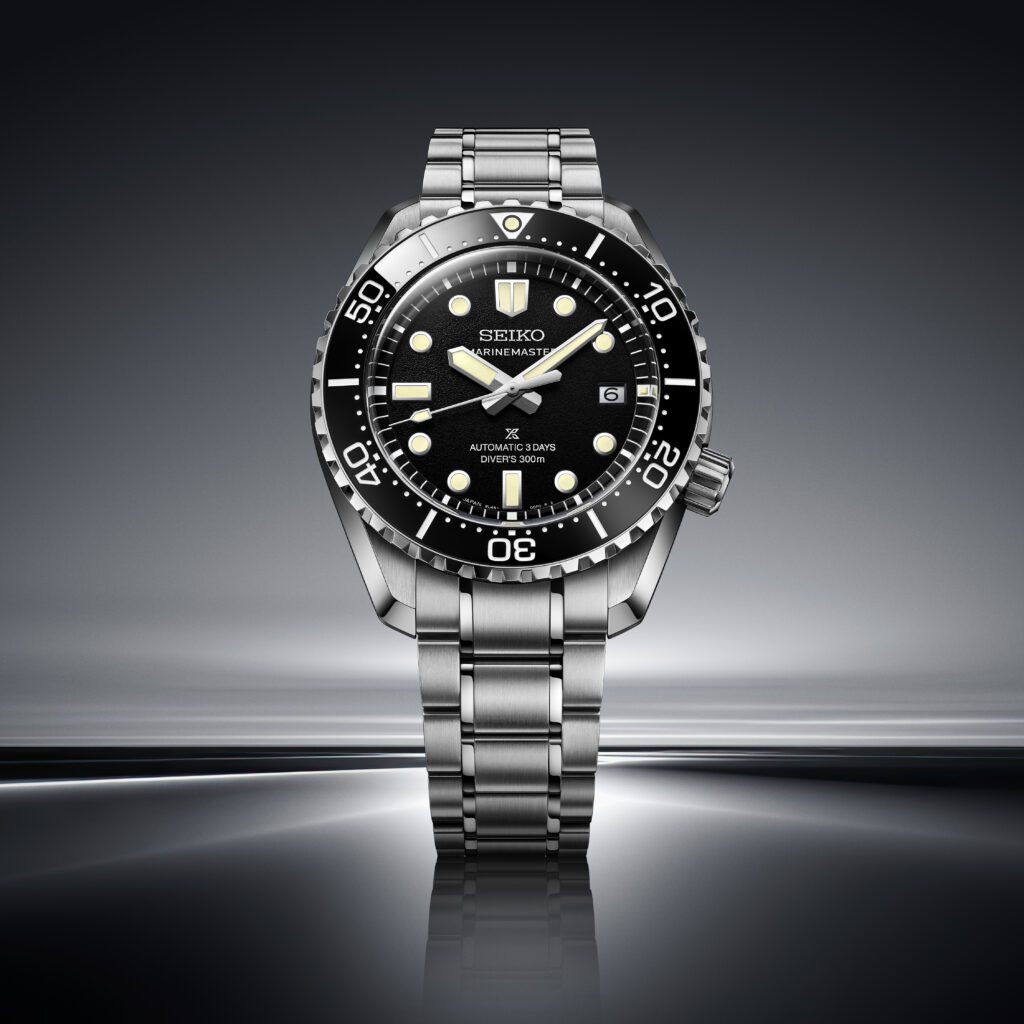
The second model, intended to become part of the permanent collection, features a more understated, purely functional design. Its black dial evokes the spirit of the 1968 diving watch, with absolute priority given to underwater readability. The deep black hue and fine-grained texture minimize glare, while the beveled edges of the hour markers catch the light from different angles. Whereas the JAMSTEC edition tells the story of the ice floes and scientific adventure, this black version reaffirms the fundamental language of the tool watch: efficiency, contrast, and ruggedness.
Both models are powered by the 8L45 automatic caliber, touted as one of Seiko’s most sophisticated mechanical movements. It beats at 4 Hz—or 28,800 vibrations per hour—features 35 jewels, and offers a 72-hour power reserve. With a stated accuracy of +10 to -5 seconds per day, these Marinemaster models represent a serious and demanding offering, true to Seiko’s tradition of never compromising the precision of a mechanical watch for the sake of a sporty design.
The movement uses Spron, an alloy developed by Seiko, for the mainspring and balance spring. This technical detail—far from being trivial—serves as a reminder that the Japanese manufacturer has a deeply ingrained culture of innovation. At a time when the dive watch industry is sometimes seduced by vintage aesthetics alone, Seiko maintains this commitment to discreet, almost internal engineering—the very quality that distinguishes true professional watches from mere objects inspired by adventure.
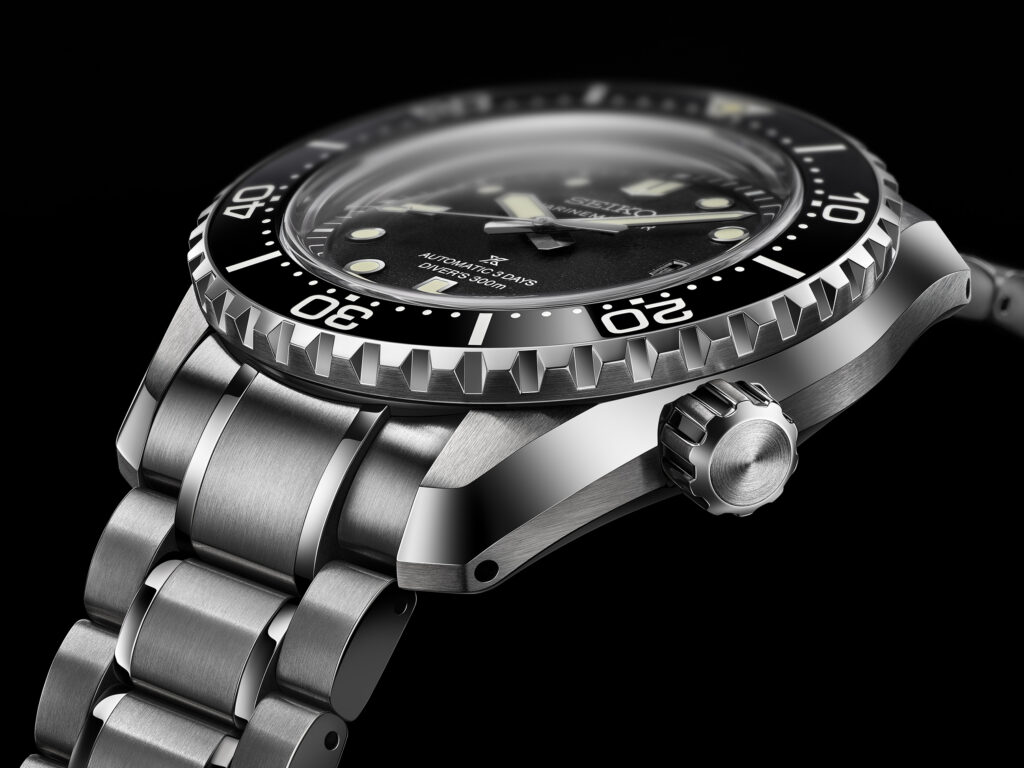
The evolution of the Marinemaster is also evident in its construction. Both models feature the familiar contours of the 1968 diver’s watch, notably its fluid silhouette and screw-down crown at the 4 o’clock position—a signature immediately recognizable to Seiko enthusiasts. However, the crown is not screwed directly into the case; instead, it is attached to a separate integrated component to facilitate replacement and enhance the watch’s durability. This kind of detail isn’t immediately apparent, but it speaks volumes about a philosophy: viewing the watch as an object meant to last, to be maintained, repaired, and passed down.
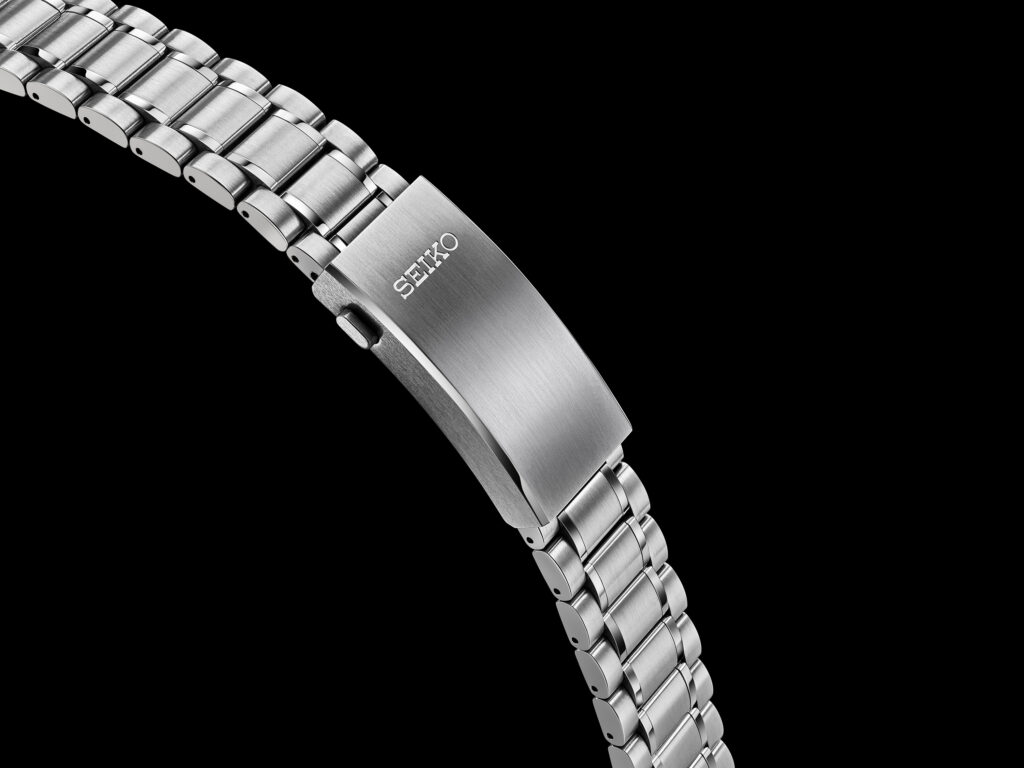
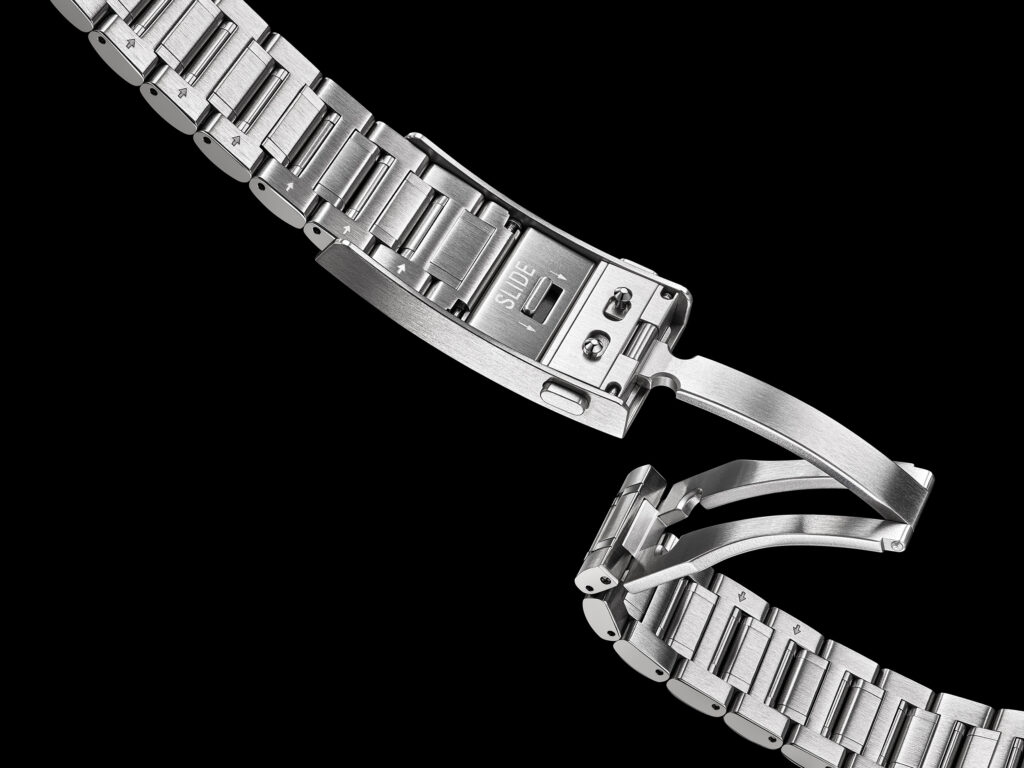
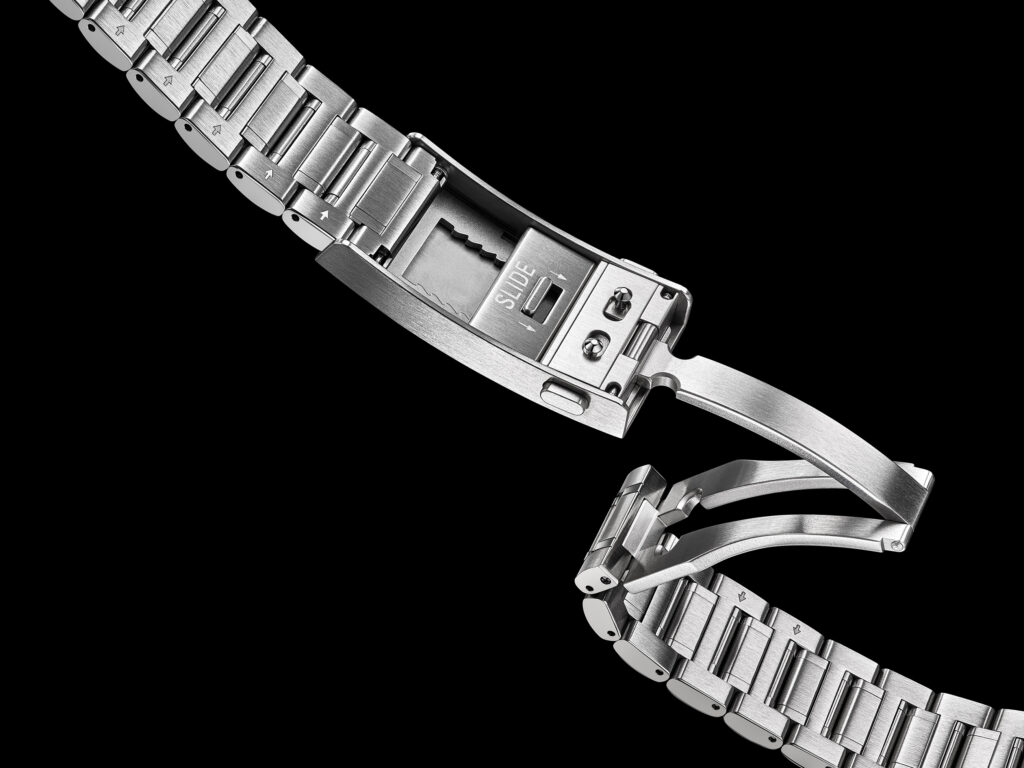
The strap has also been improved. Its clasp allows for easy adjustment up to 16 mm, in 2-mm increments, thanks to a built-in adjustment system. Even when the clasp is closed, the extension can be retracted, ensuring a more comfortable fit. For a dive watch, this adaptability is not a luxury—it’s a functional necessity, whether you wear the watch on bare skin, over a wetsuit, or simply as part of your everyday look.
From a technical standpoint, both models share a solid foundation: a stainless steel case with an ultra-durable coating, a stainless steel bracelet with the same coating, a folding clasp with a safety push-button and sliding adjustment, a domed sapphire crystal with an anti-reflective coating on the inner surface, a bezel with a ceramic insert, a screw-down case back, a screw-down crown, and Lumibrite on the hands and hour markers. The diameter is 42.6 mm with a thickness of 14.1 mm, offering water resistance to 300 meters and magnetic resistance of 4,800 A/m.
The prices clearly position these Marinemaster models in the premium segment, but they are consistent with their technical specifications. The HBF001 model is priced at 3,800 euros, while the HBF002, a limited-edition JAMSTEC model, is priced at 4,100 euros. Both models will be available starting in July 2026 at Seiko boutiques and authorized retailers. The limited-edition JAMSTEC model will be produced in a run of 1,000 pieces.
In the world of dive watches, competition is fierce, and the market is sometimes saturated with heritage models. Seiko’s strength lies elsewhere: in a credibility that wasn’t built solely in store windows, but in the field, among divers, expedition teams, researchers, and enthusiasts who expect a watch to be beautiful, certainly, but above all reliable. These new Prospex Marinemaster models do not seek to appeal solely through nostalgia. They embrace the legacy of 1968 while grounding it in today’s scientific realities: marine exploration, Arctic research, ocean conservation, and our understanding of life.
There is something very Seiko-like about this way of linking a watch to an icebreaker, an automatic movement to a scientific institute, and a ceramic bezel to the surface of a frozen ocean. The object remains, of course, a timepiece. But it carries with it a broader vision: that of a Japan that is technical and precise, capable of creating a dialogue between the instrument and the landscape, mechanics and science, the wrist and the depths.
With these Prospex Marinemaster 1968 Diver’s watches, Seiko reminds us that a true diver’s watch is more than just a graphic icon. It is a structure built on trust. A timepiece designed to withstand, accompany, measure, and endure. And sometimes, when the blue dial seems to capture the trace of a ship in the ice, it silently tells a story of the future.
Cette publication est également disponible en :

