
3.8K
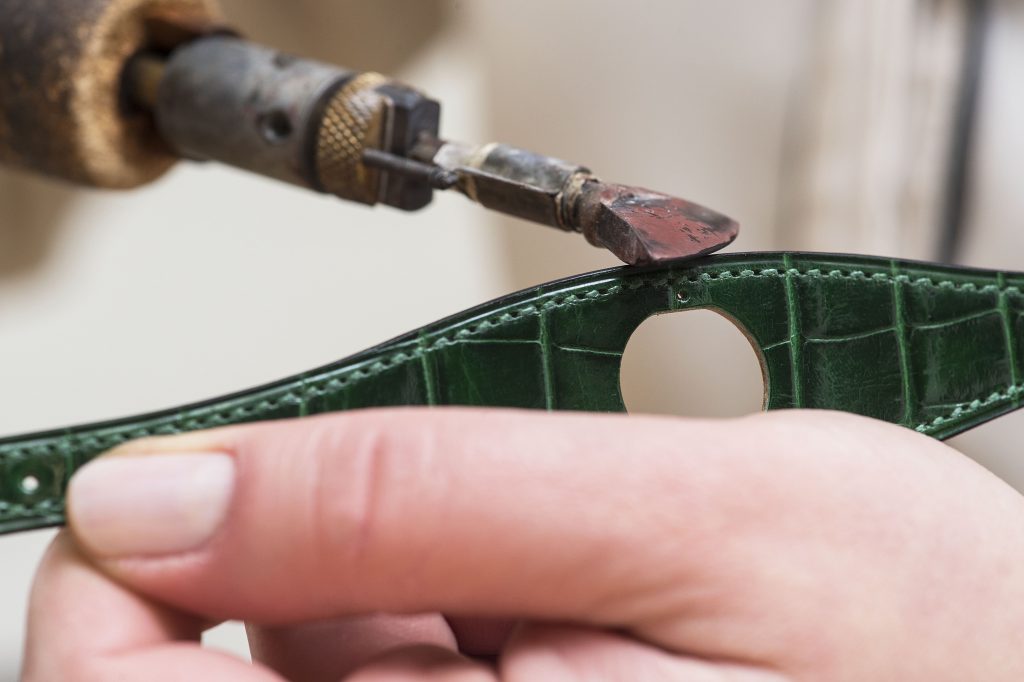
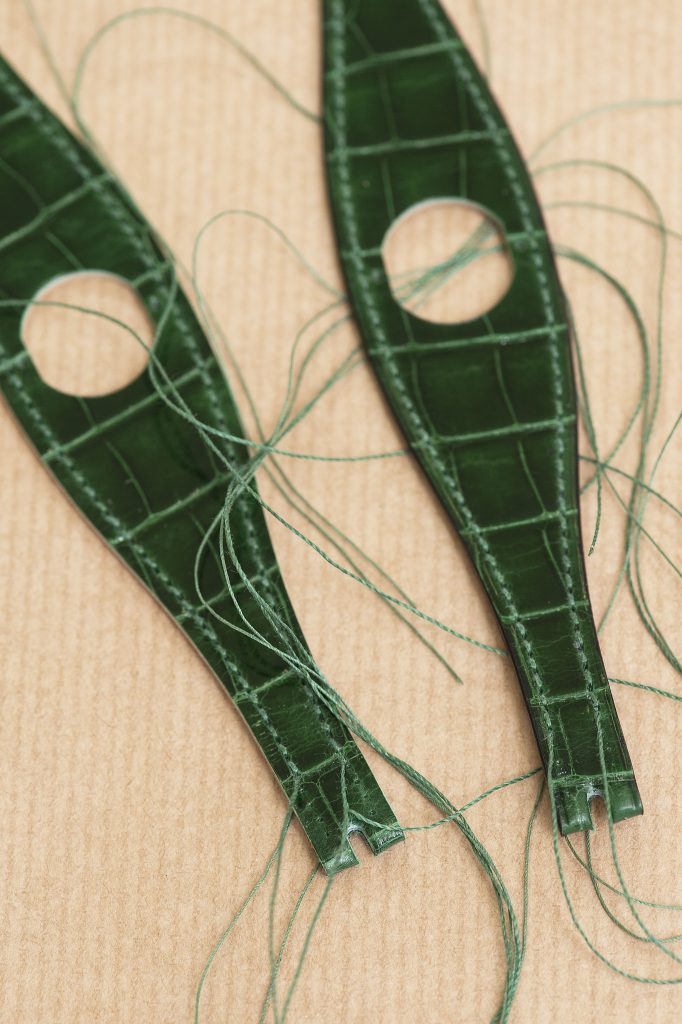
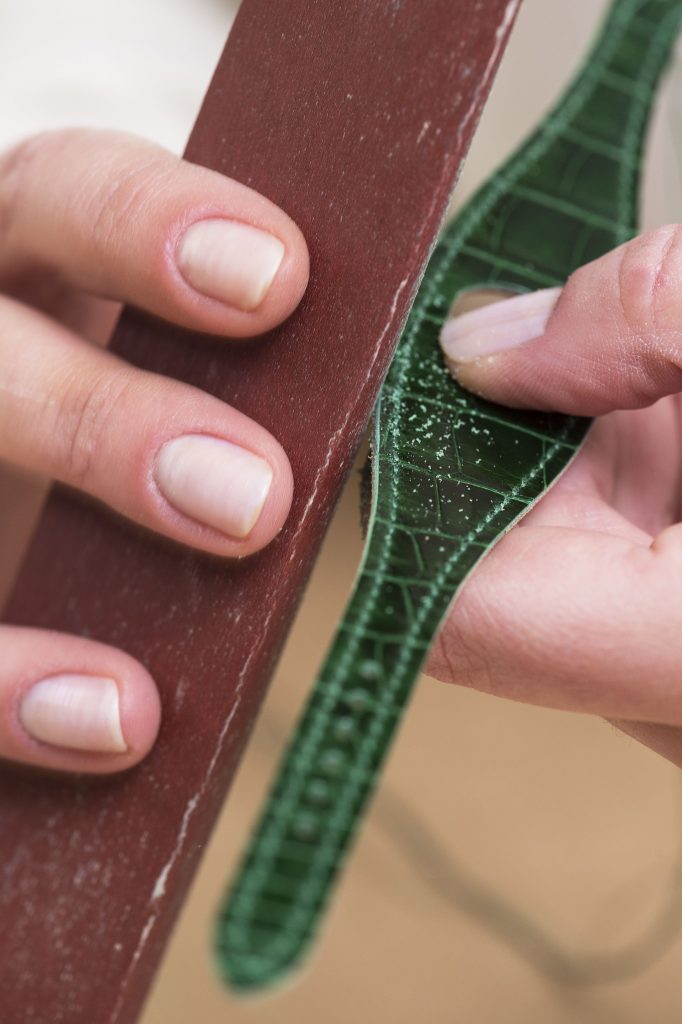
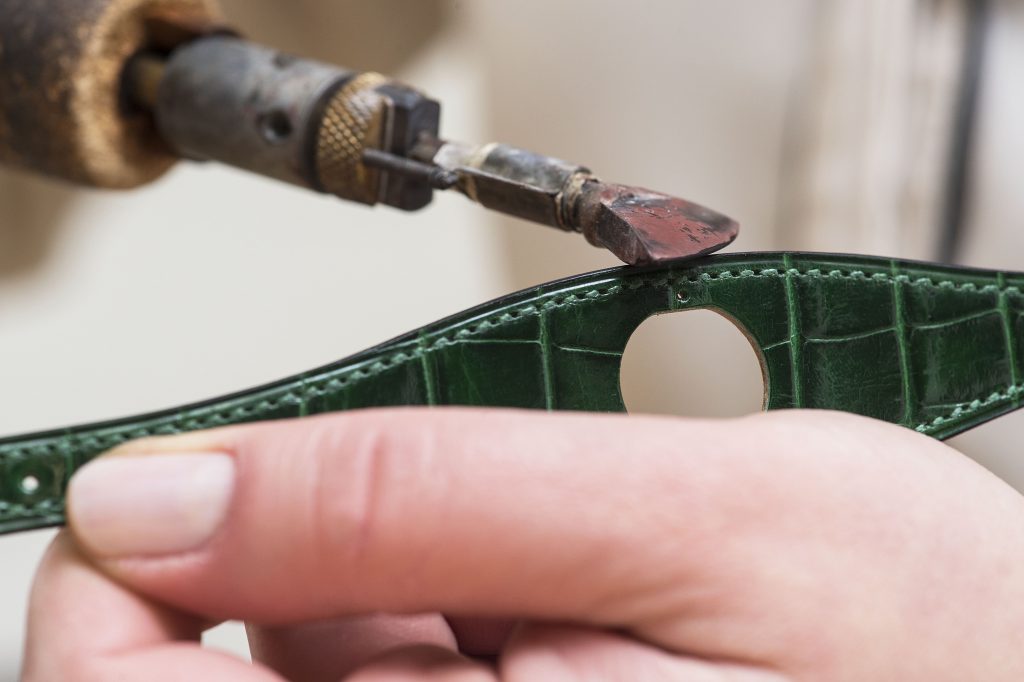
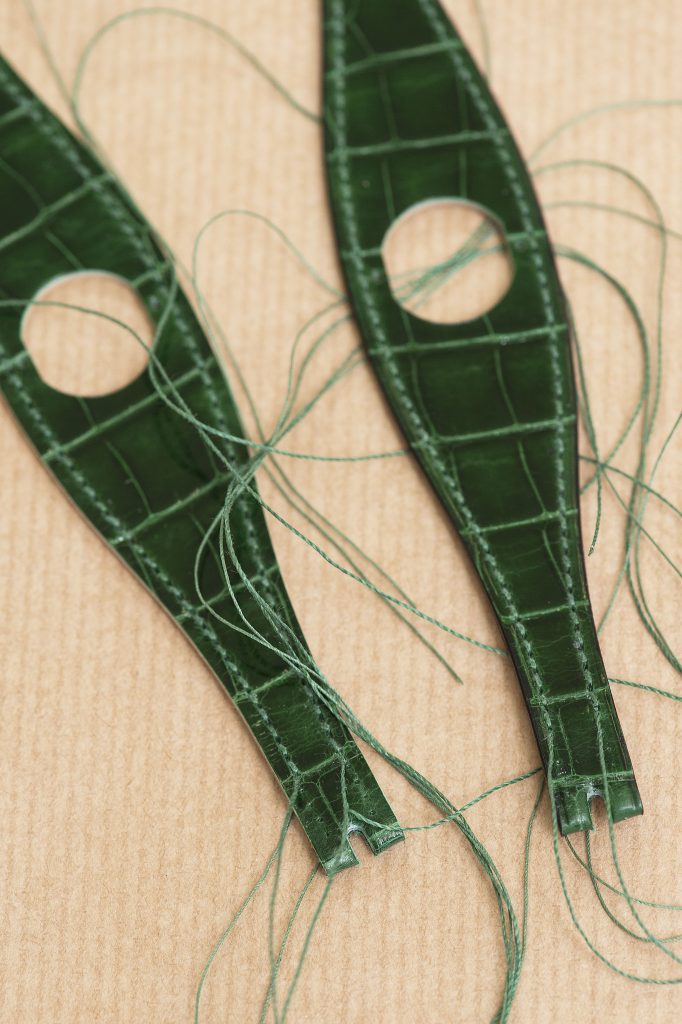
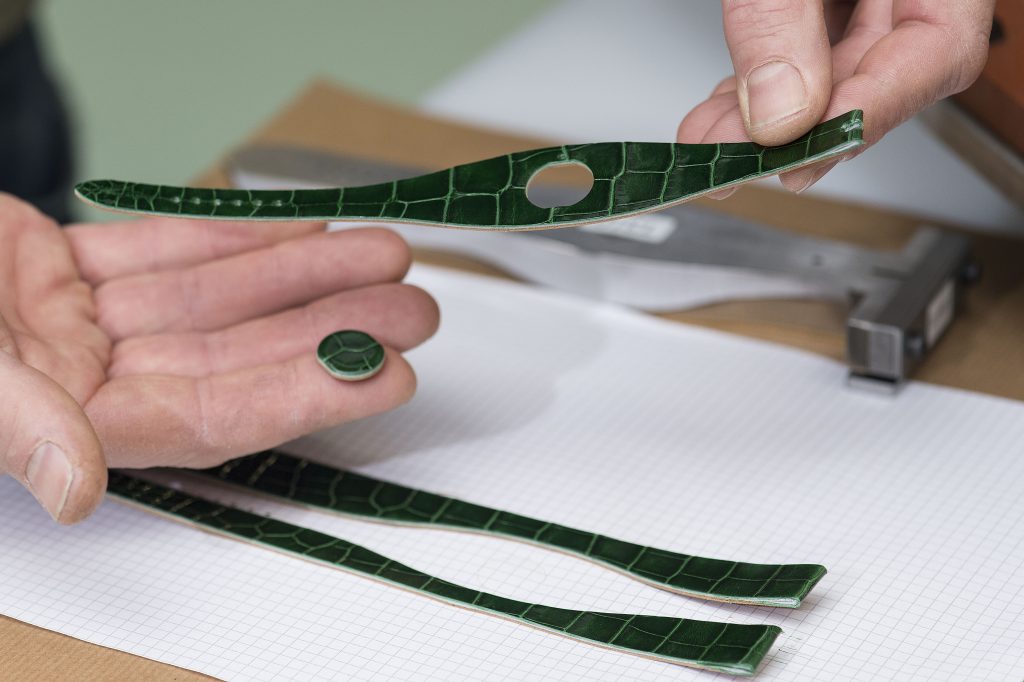
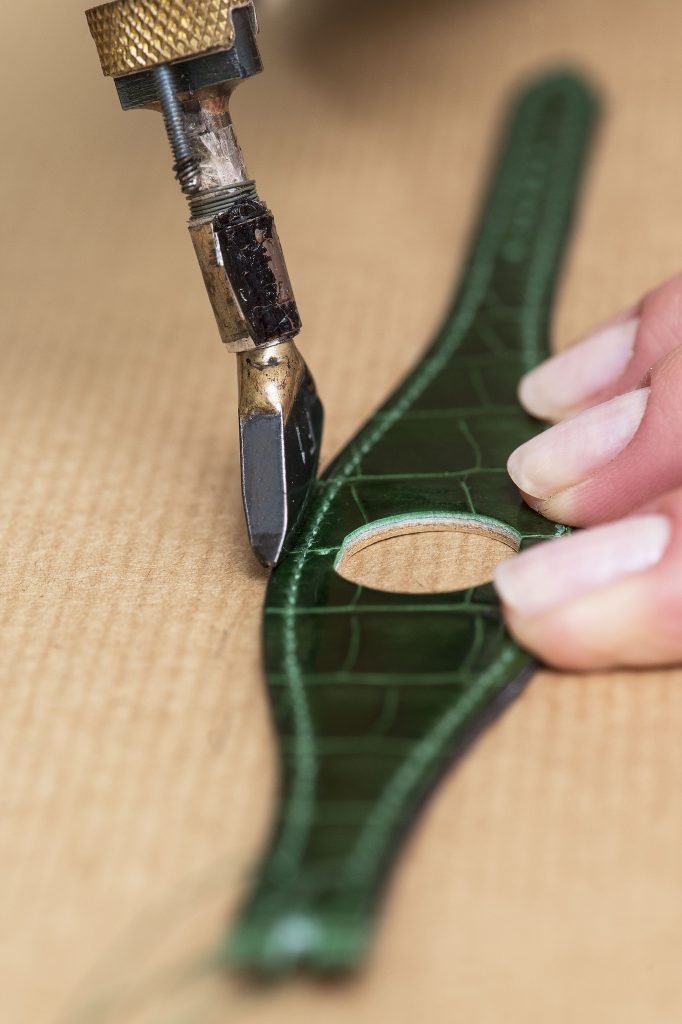
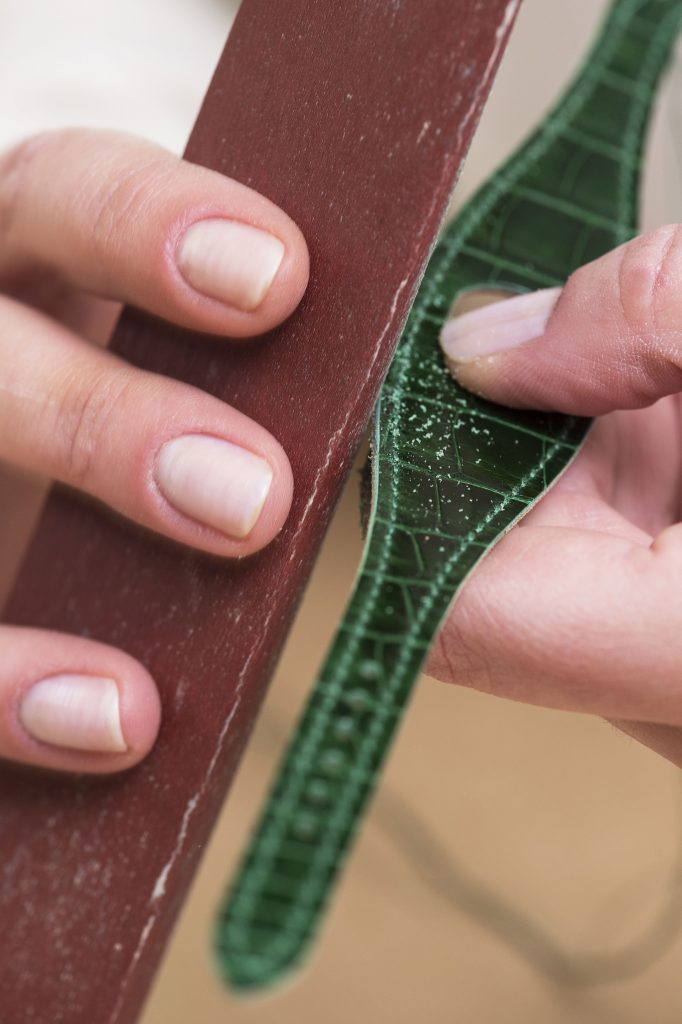
In the purest Hermès tradition, the leatherworker then assembles the cuff bracelet using the famous cousu-sellier technique, doubling three stitches at the ends of the seam to ensure strength. The edge is then sanded to a fine finish before it is lapped, marking it with a groove between the seam and the edge of the leather. The slice is then dyed, then smoothed with a hot iron tip in an operation called astiquage. Finally, it is waterproofed with beeswax.
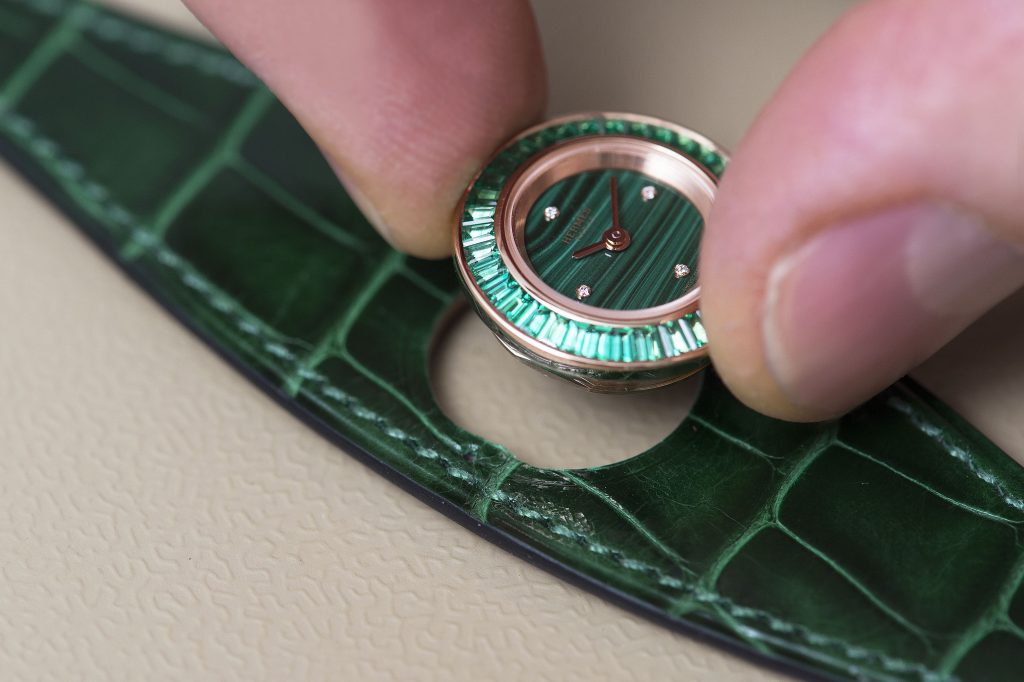
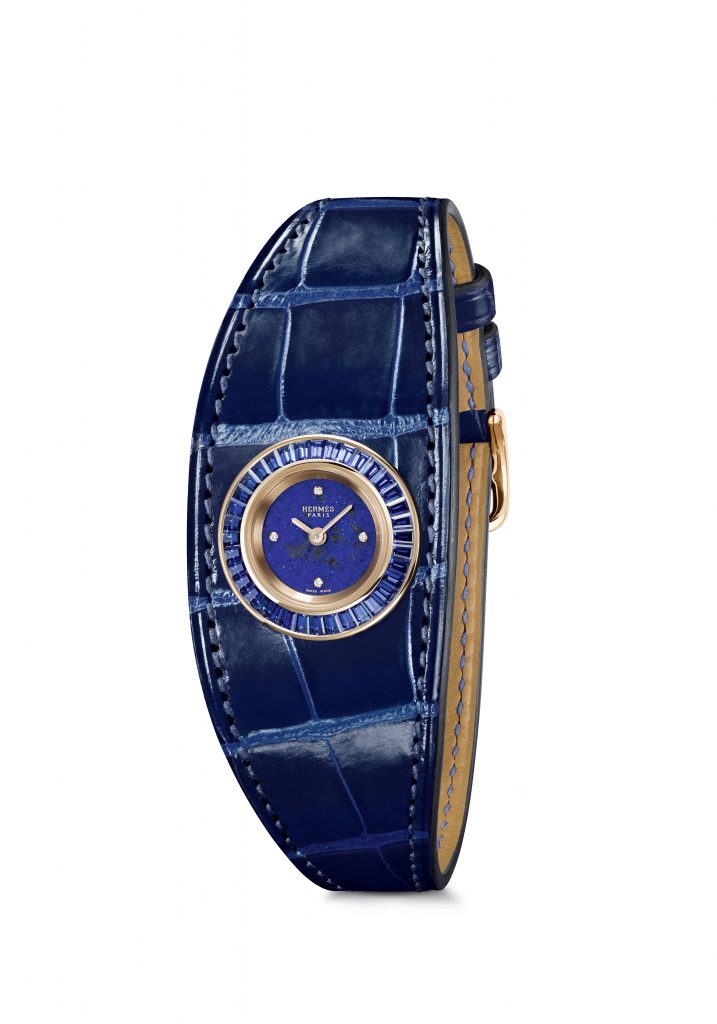
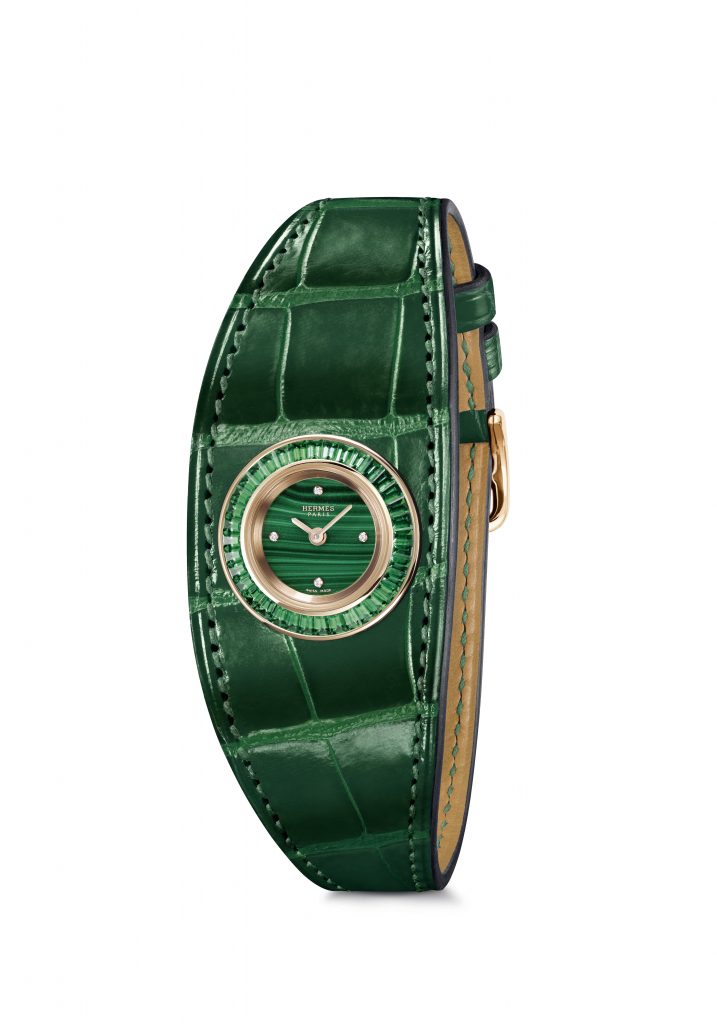
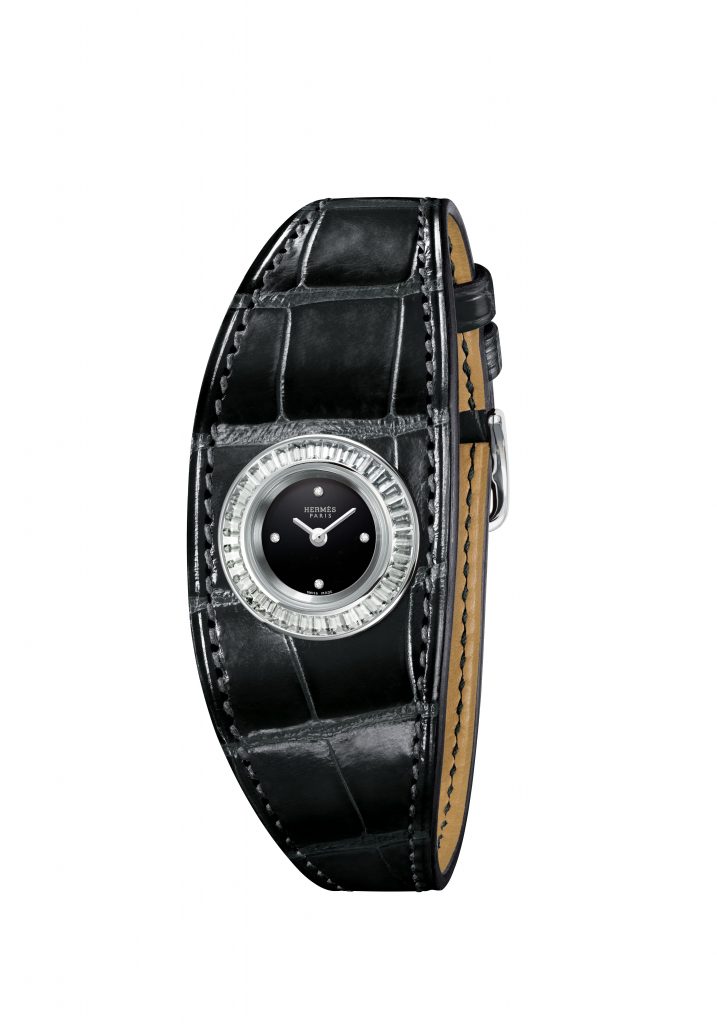
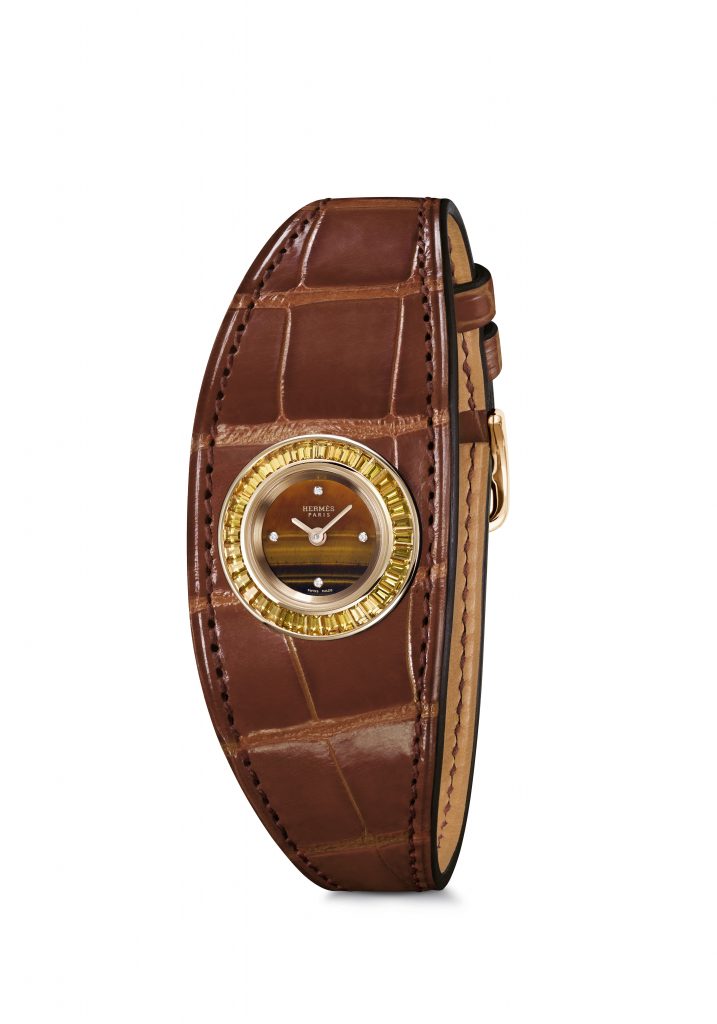
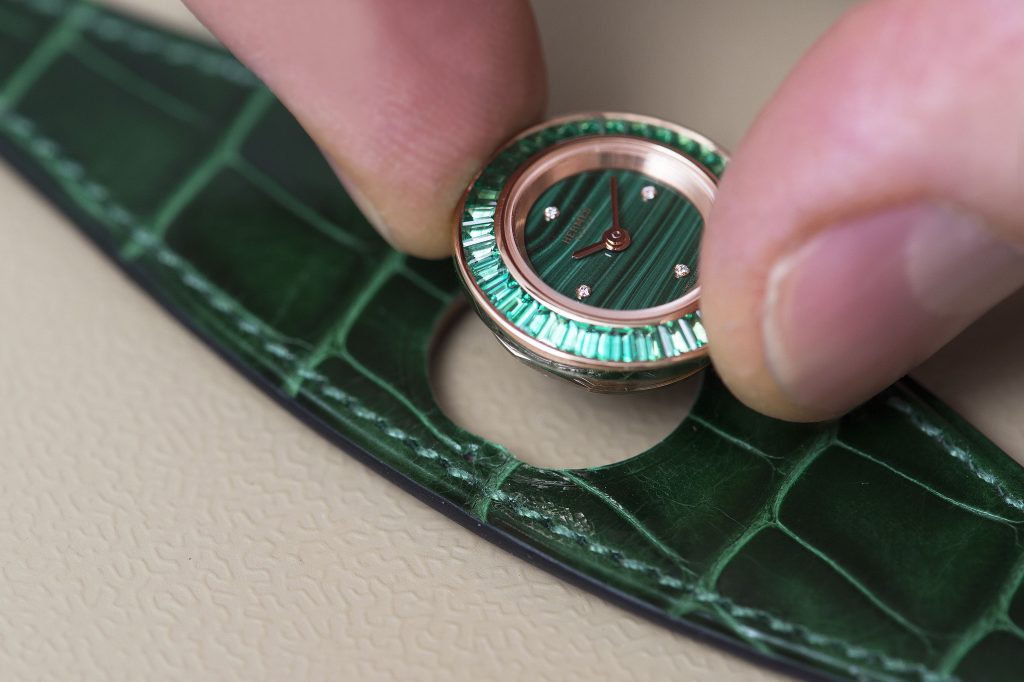
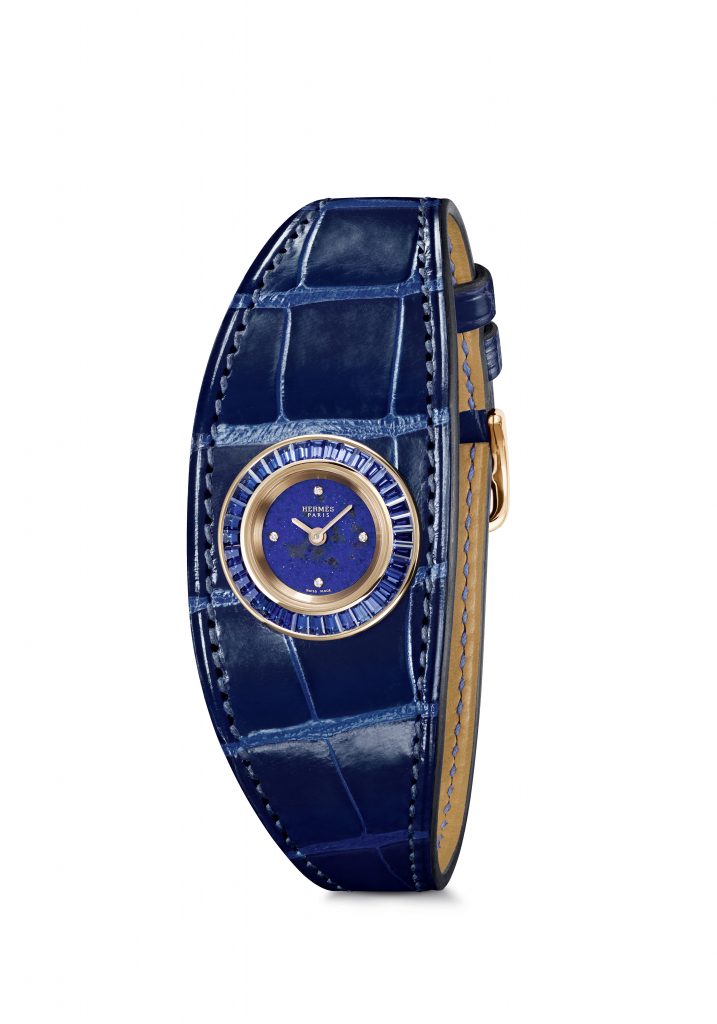
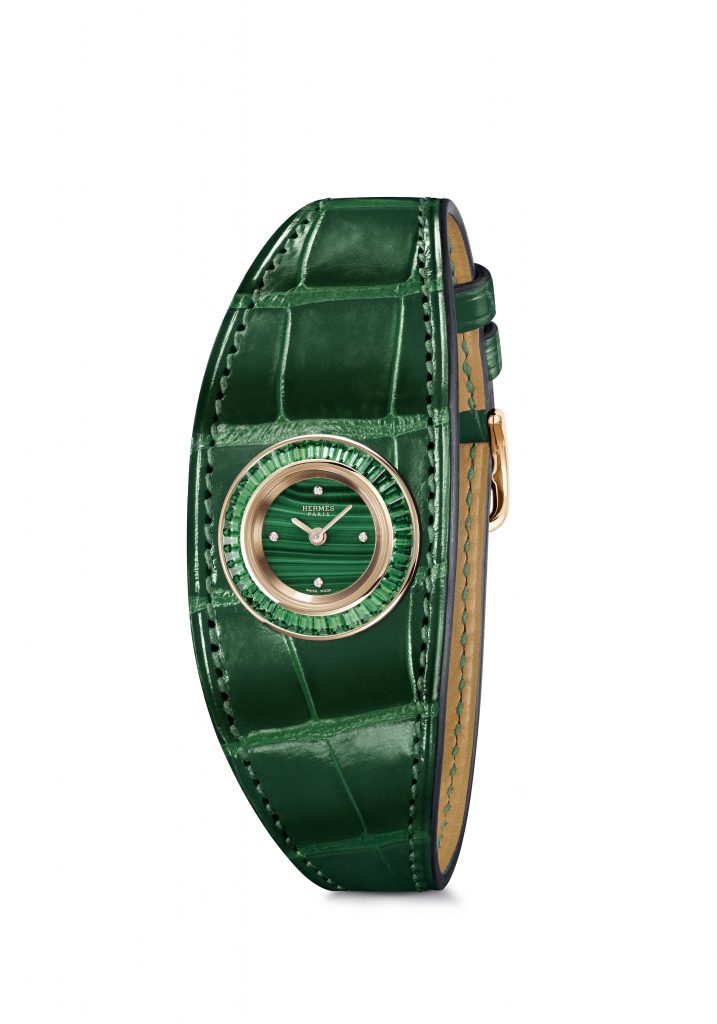
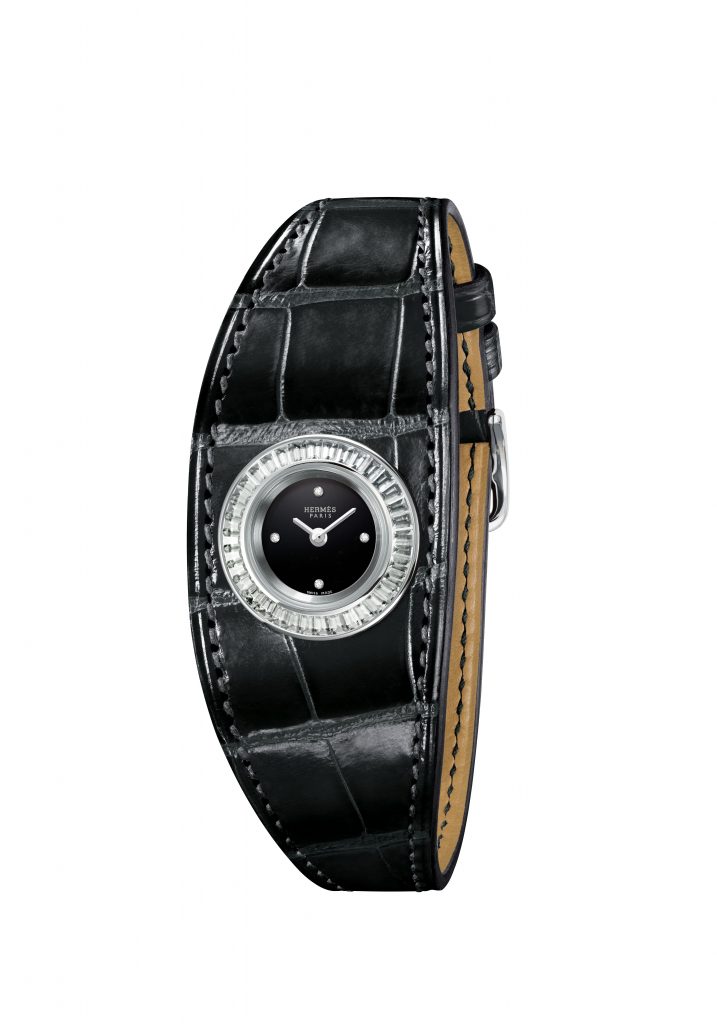
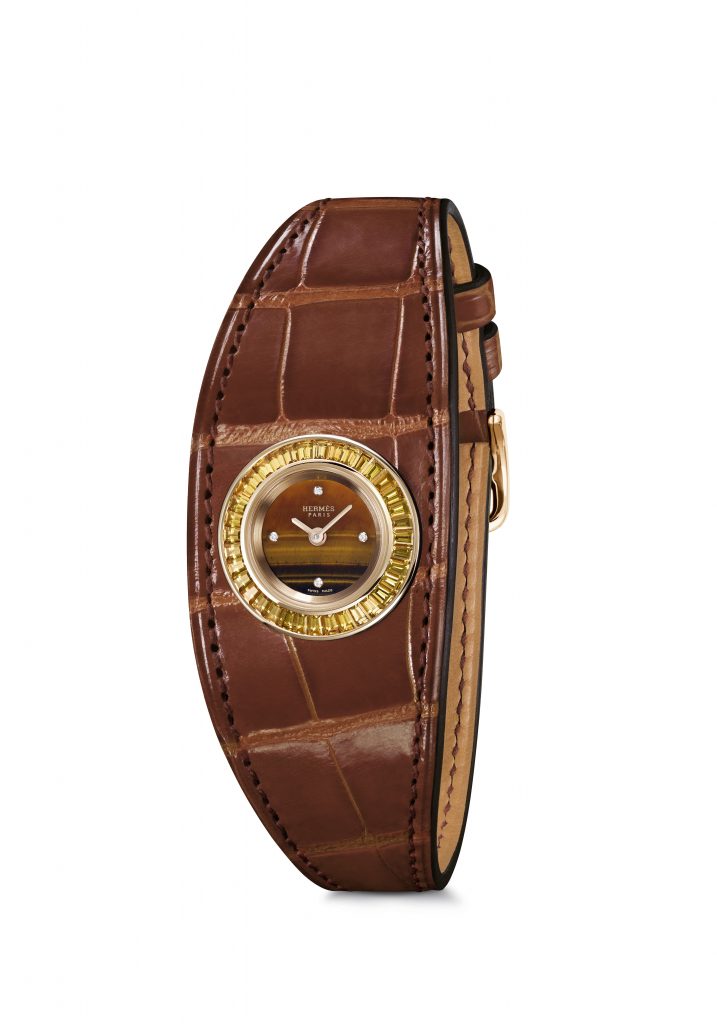
The leather becomes a second skin, melting around the wrist like an extension of the case. Fashioned in gold by the Hermès watchmaking factory, the case is enhanced by a fascinating baguette setting of 36 gems, entirely hand-crafted. Diamonds, emeralds, blue or brown sapphires, the lapidary first cuts the stones one by one with infinite precision. The gem-setter then fits them into the bezel’s seats, before pushing the material all around with a scoop and hammering until the stones fit perfectly. A final polish is then applied to highlight the composition’s brilliance.
In 2014, Hermès dresses up the time with a new composition of skin-deep femininity. Buoyed by the elegance of its miniature silhouette, the Faubourg watch leaves the workshops for the first time and is presented in a variety of variations. In 2015, dressed all in leather, it becomes a cuff, as a tribute to Hermès’ original harness-maker-saddler expertise. It sublimates leatherwork by combining it with the art of gem-setting to metamorphose into the Faubourg Manchette Joaillerie.
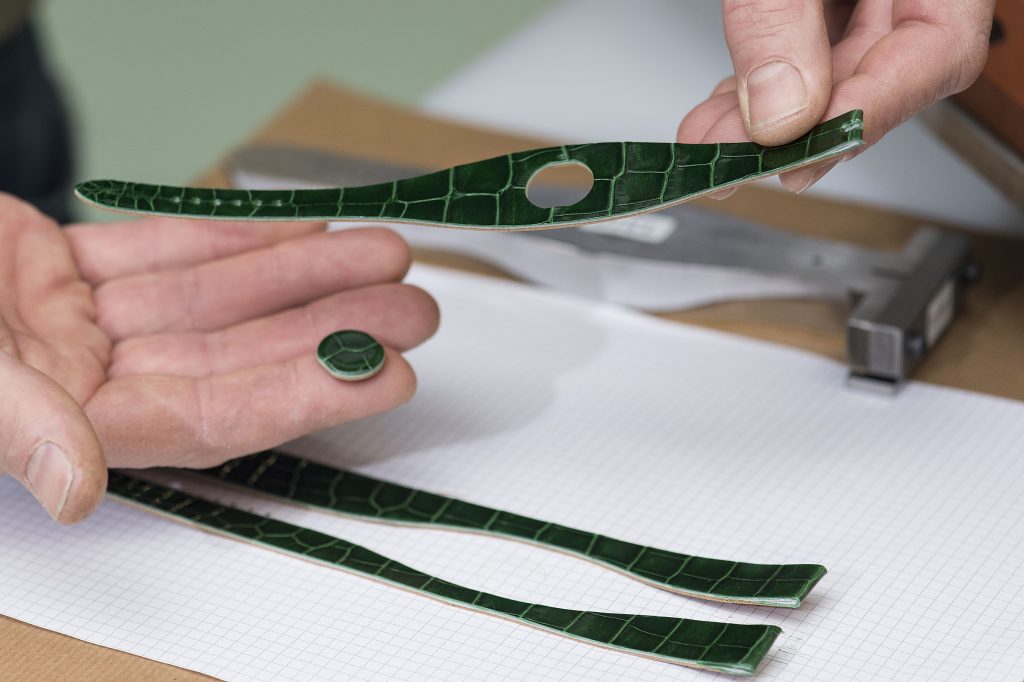
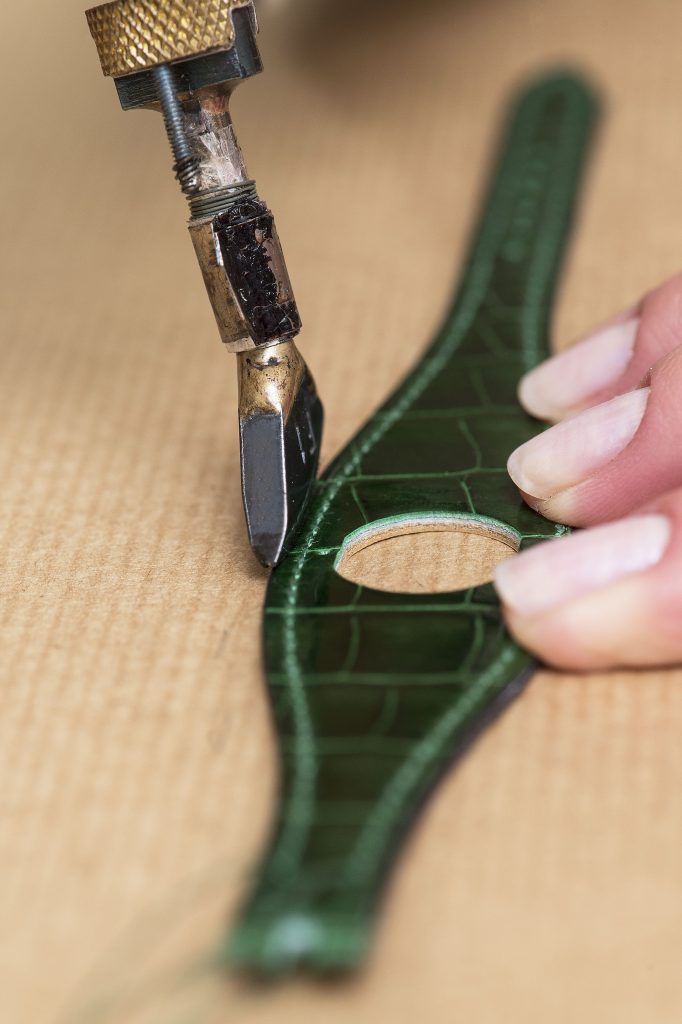
In the company’s workshops, the artisan cutter extracts from the skin the pieces of leather needed to make the cuff bracelet.
-

- La Montre Hermes, savoir-faire cuir, a Brugg BE ce mardi 19 janvier 2016 Photo Sandro Campardo
-
- La Montre Hermes, savoir-faire cuir, a Brugg BE ce mardi 19 janvier 2016 Photo Sandro Campardo
-

- La Montre Hermes, savoir-faire cuir, a Brugg BE ce mardi 19 janvier 2016 Photo Sandro Campardo
-
- La Montre Hermes, savoir-faire cuir, a Brugg BE ce mardi 19 janvier 2016 Photo Sandro Campardo
-
- La Montre Hermes, savoir-faire cuir, a Brugg BE ce mardi 19 janvier 2016 Photo Sandro Campardo
-
- La Montre Hermes, savoir-faire cuir, a Brugg BE ce mardi 19 janvier 2016 Photo Sandro Campardo
-
- La Montre Hermes, savoir-faire cuir, a Brugg BE ce mardi 19 janvier 2016 Photo Sandro Campardo
-
- La Montre Hermes, savoir-faire cuir, a Brugg BE ce mardi 19 janvier 2016 Photo Sandro Campardo
-
- La Montre Hermes, savoir-faire cuir, a Brugg BE ce mardi 19 janvier 2016 Photo Sandro Campardo
-
- La Montre Hermes, savoir-faire cuir, a Brugg BE ce mardi 19 janvier 2016 Photo Sandro Campardo
-
- La Montre Hermes, savoir-faire cuir, a Brugg BE ce mardi 19 janvier 2016 Photo Sandro Campardo
-
- La Montre Hermes, savoir-faire cuir, a Brugg BE ce mardi 19 janvier 2016 Photo Sandro Campardo
In the purest Hermès tradition, the leatherworker then assembles the cuff bracelet using the famous cousu-sellier technique, doubling three stitches at the ends of the seam to ensure strength. The edge is then sanded to a fine finish before it is lapped, marking it with a groove between the seam and the edge of the leather. The slice is then dyed, then smoothed with a hot iron tip in an operation called astiquage. Finally, it is waterproofed with beeswax.
The leather becomes a second skin, melting around the wrist like an extension of the case. Fashioned in gold by the Hermès watchmaking factory, the case is enhanced by a fascinating baguette setting of 36 gems, entirely hand-crafted. Diamonds, emeralds, blue or brown sapphires, the lapidary first cuts the stones one by one with infinite precision. The gem-setter then fits them into the bezel’s seats, before pushing the material all around with a scoop and hammering until the stones fit perfectly. A final polish is then applied to highlight the composition’s brilliance.
Cette publication est également disponible en :

