
Does everyone know Gotham City? New York City’s alter ego and the setting for Batman’s adventures, Gotham City is so much a part of the comic-book universe that it needs no introduction. A metropolis built on a swamp, Gotham City represents the urban fantasy world par excellence. And what about Metropolis, the city where Superman appears and disappears?
Futuristic, dreamlike, gothic, modern metropolis or fantasy, the city has always played a major role in comics. Whether a simple urban setting or a character in its own right, “[…] the rom the very beginnings of the genre, the city has been one of the most popular motifs in comics, an inexhaustible source of inspiration that invades the panels, occupies the boards and feeds the scenarios of many an albumn. From the ligne claire to Japanese manga and superhero comics, the “City of Comics” offers so many architectural utopias on paper […]. “says Frédéric Mitterrand, French Minister of Culture and Communication.
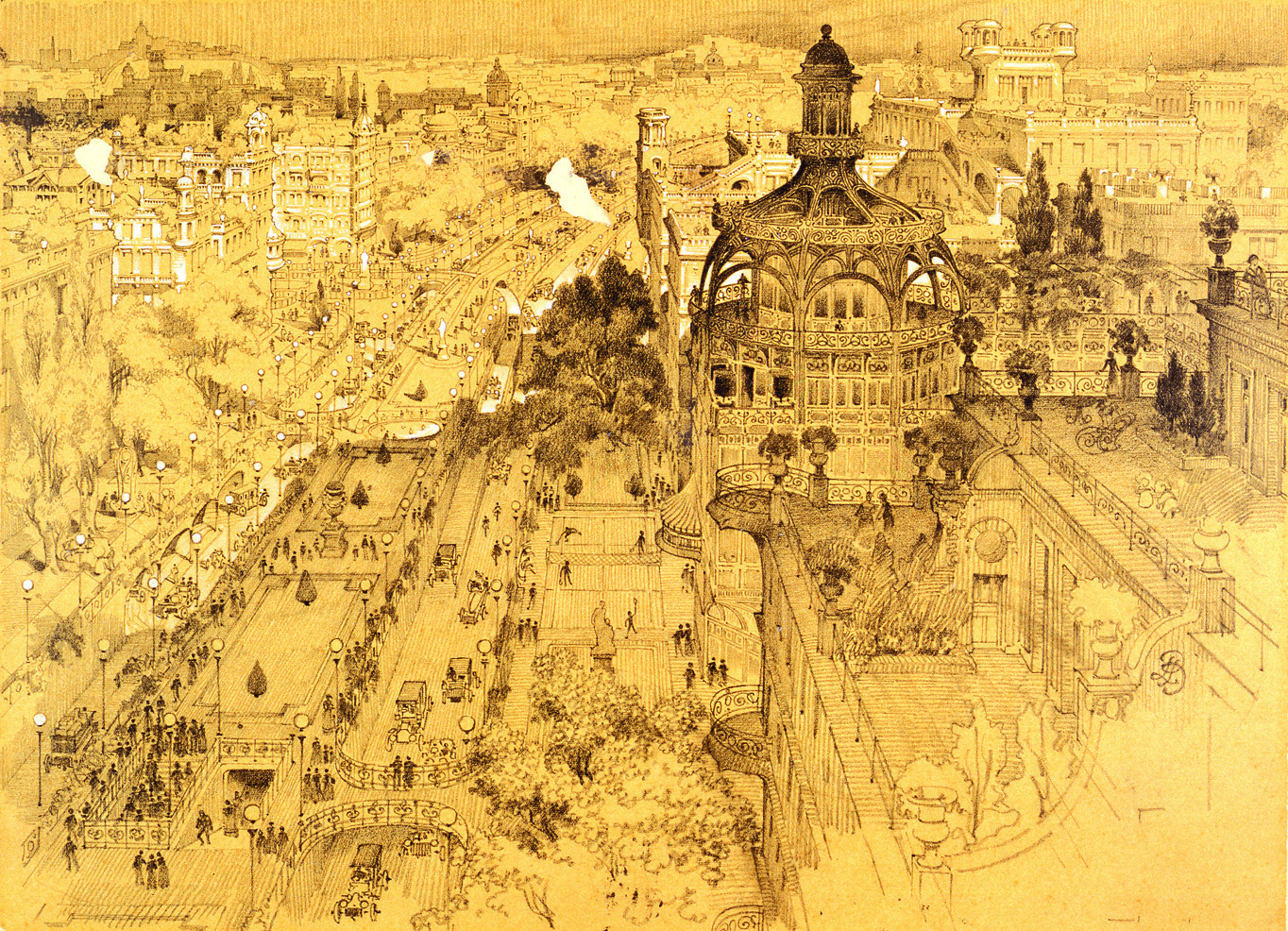
Boulevard à deux niveaux de circulation Louis Bonnier © SIAF / Cité de l'Architecture et du Patrimoine / Archives d’architecture du XXème siècle
An art form born in the pages of early twentieth-century newspapers, comics quickly took over the representation of cities. Whether in comics, manga or more traditional comic strips, cities put down on paper make an edifying observation of the fusional relationship between man and architecture. The“Archi & BD, la Ville Dessinée” exhibition at the Palais de Chaillot runs until November 28, 2010, exploring the relationship between comics and architecture, and detailing the ways in which authors interpret and use the city in their work.
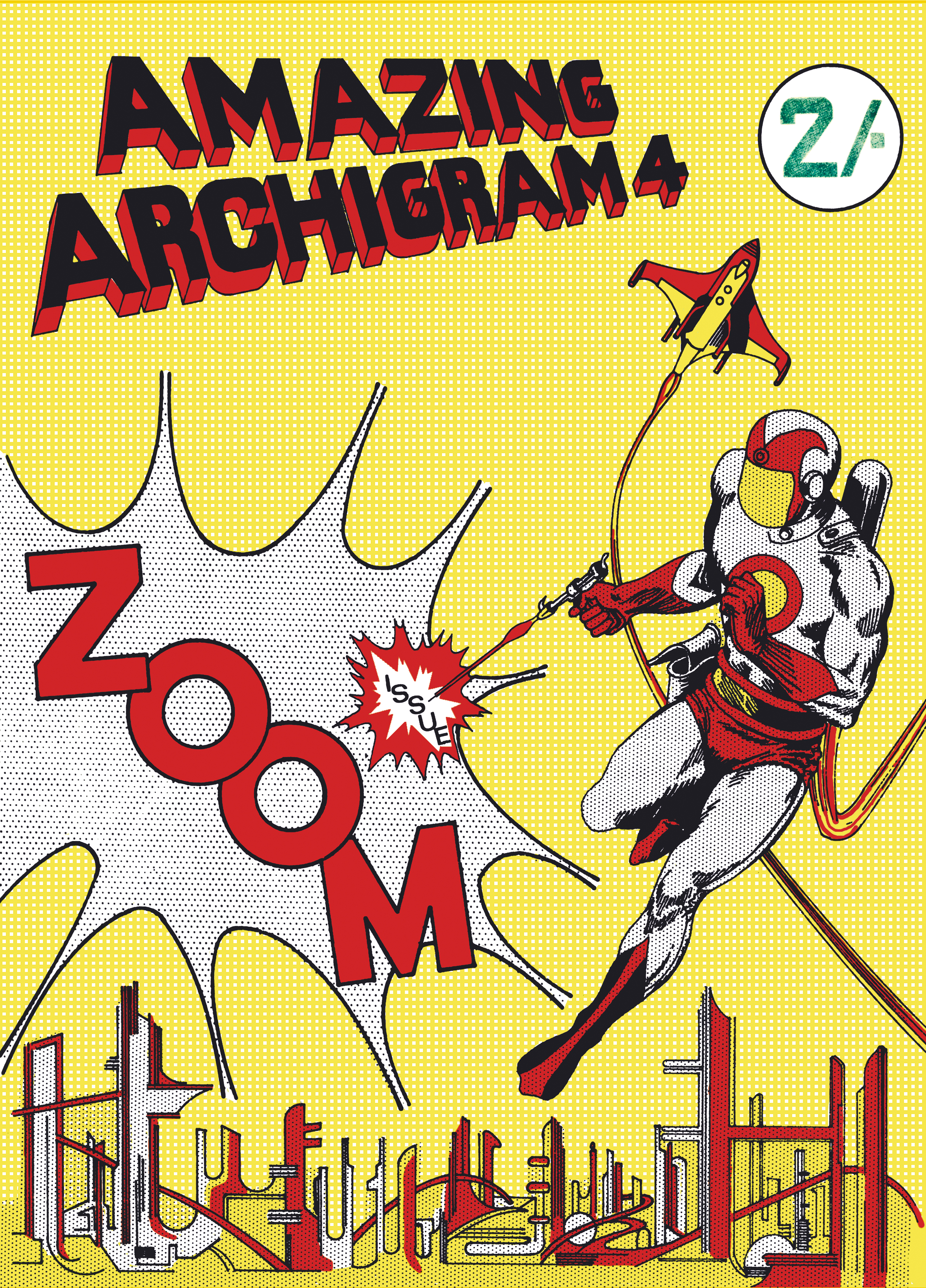
Amazing Archigram Couverture, numéro 4, Warren Chalk, Archigram 1954 © The Archigram Archives
The Cité de l’Architecture et du Patrimoine offers us a dialogue between architecture and comics, through models, sketches, projects or realizations of cities, public buildings or villas, utopias drawn by the greatest architects to which respond comic strip authors’ plates, where the city is the heroine. Drawing is of course fundamental to both arts, which also have a visionary side for the most talented, but far from limiting themselves to this similarity alone, comics and architecture don’t hesitate to merge, much to our delight. Some architects have used comics to convey their ideas, while other designers construct their drawings as if they were designing a facade.
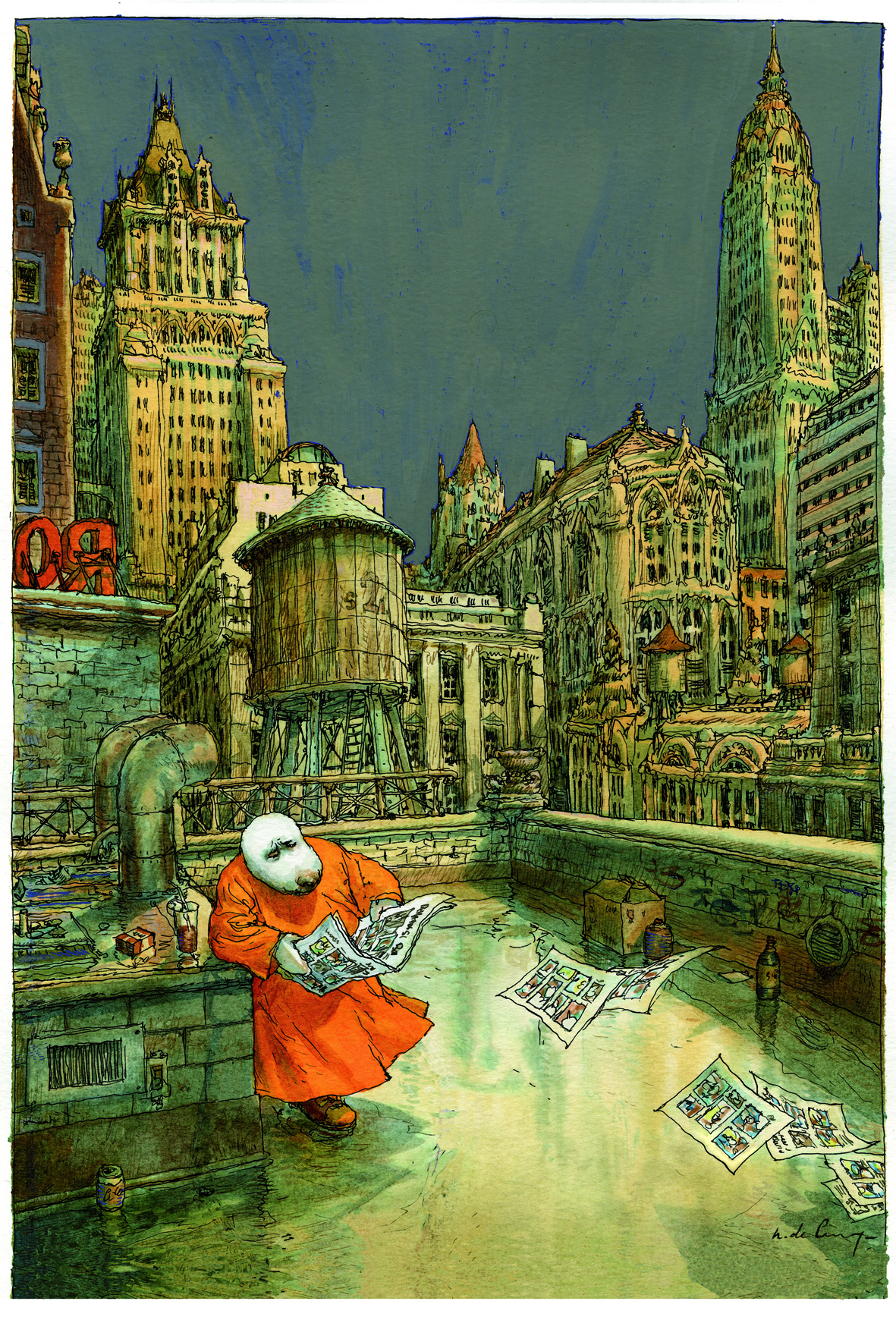
Nicolas de Crécy, affiche de l'exposition © Nicolas de Crécy, 2010
This exhibition highlights the various aspects of the representation of the city in comics through a chronological journey from the end of the 19th century to the present day, presenting no fewer than 150 authors and 350 works in the form of plates, illustrations, photographs or films. The exhibition gives full meaning to the “9th art” by placing it in its own time, offering us a century of architecture in a century of comics. Fantastic or fantasized cities drawn by the greatest authors (Enki Bilal, François Schuiten or Benoît Peeters) who have drawn the city as they dreamed it. Under their pencil strokes, the city often becomes vertiginous, with gigantic, sleek buildings.
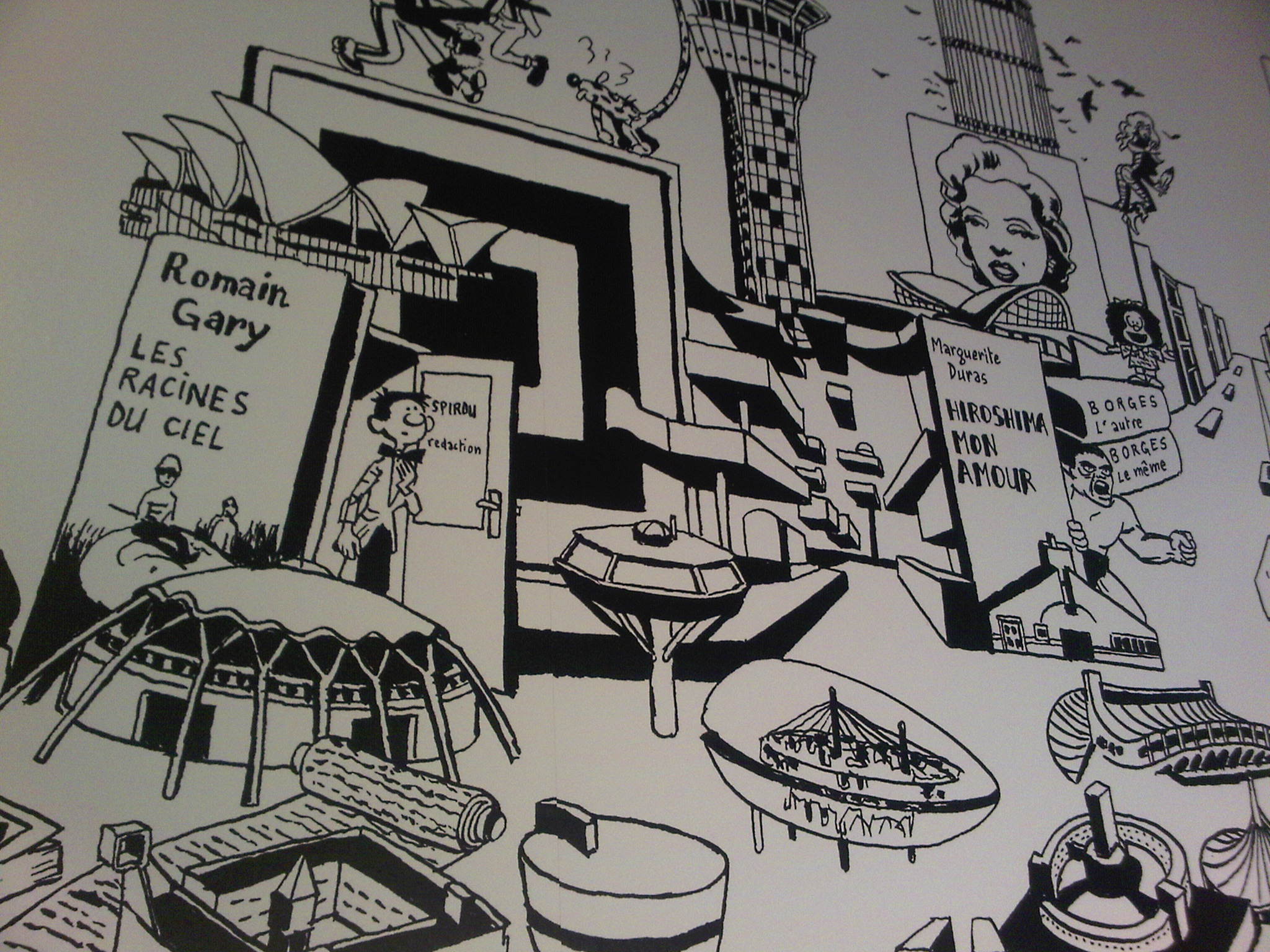
Extrait de la fresque réalisée par François Olislaeger, 2010
As soon as you enter the exhibition, the tone is set by a long frieze drawn by François Olislaeger summarizing the history of comics through cultural and architectural events.
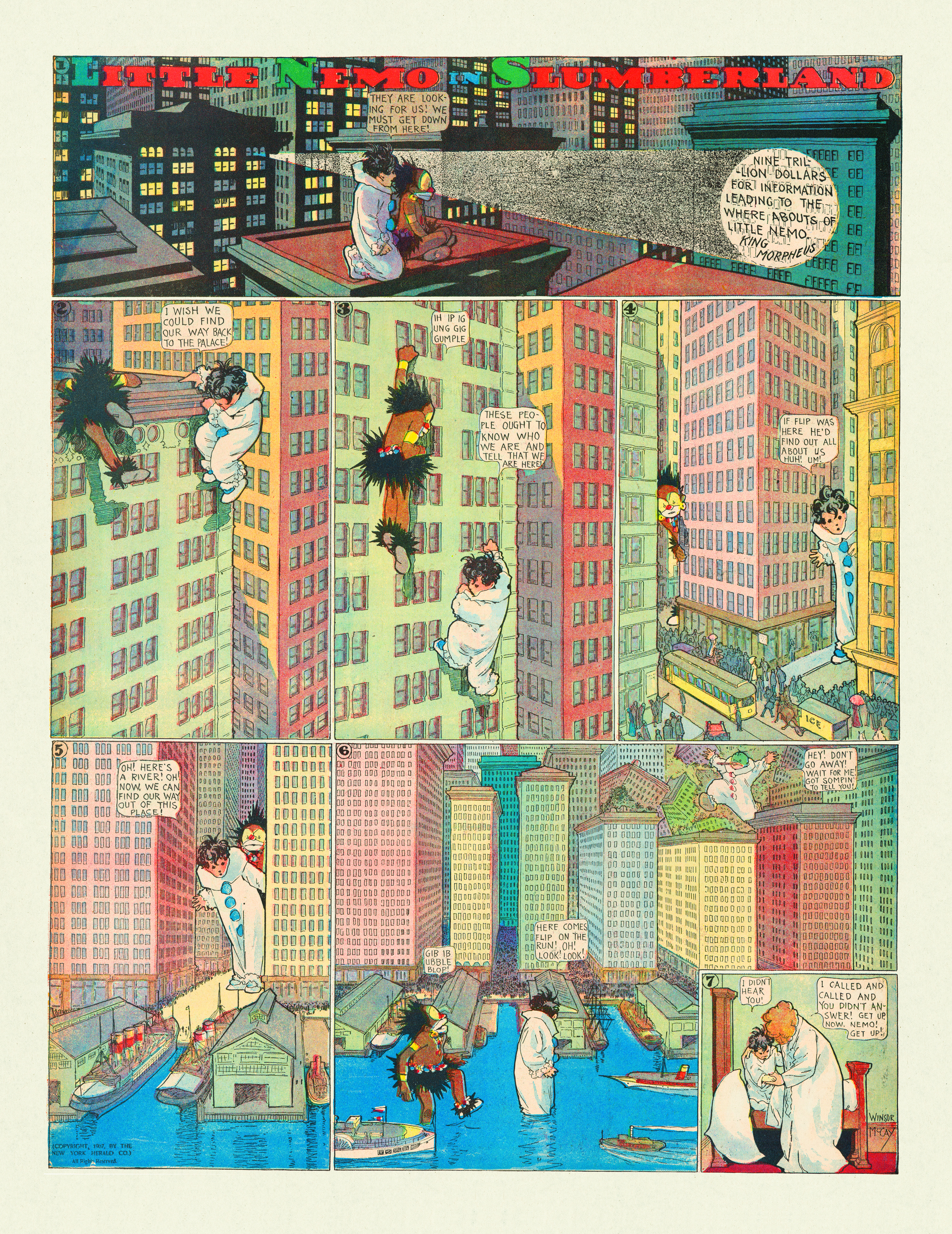
Little Nemo 1907 © Peter Maresca and Sunday Press Books
The exhibition begins with a tribute to the father of the genre, featuring plates from Winsor Mc Kay’s famous Little Nemo, in which a little boy in pyjamas glides along miniature buildings, relaying the birth of New York’s skyscrapers around 1905. Winsor Mc Kay’s perfect handling of perspective allows us to question man’s place in the city, through a confrontation between man and the gigantism of the metropolis.
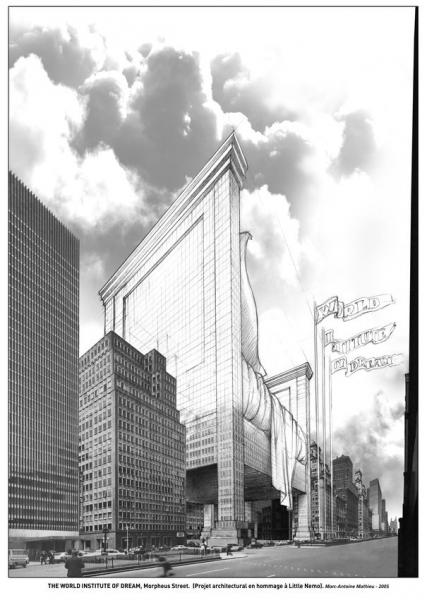
The World Institute of Dream, Morpheus Street 2005 © Marc-Antoine Mathieu - Les Impressions Nouvelles
Particular attention was paid to New York, the iconic city of the genre, a city of fantasy and unparalleled architecture. The city’s power to fascinate generations of authors such as George McManus, Alain St-Ogan, Hermann, Guarnido and, more recently, Riad Satouff, remains undiminished. Windsor McCay’s Little Nemo sets the ball rolling on many representations of New York, right up to the unconcealed evocations that have appeared in comic books. Gotham City, where Batman reigns, and Superman’s Metropolis, to name but the most emblematic, appeared in the late 1930s.
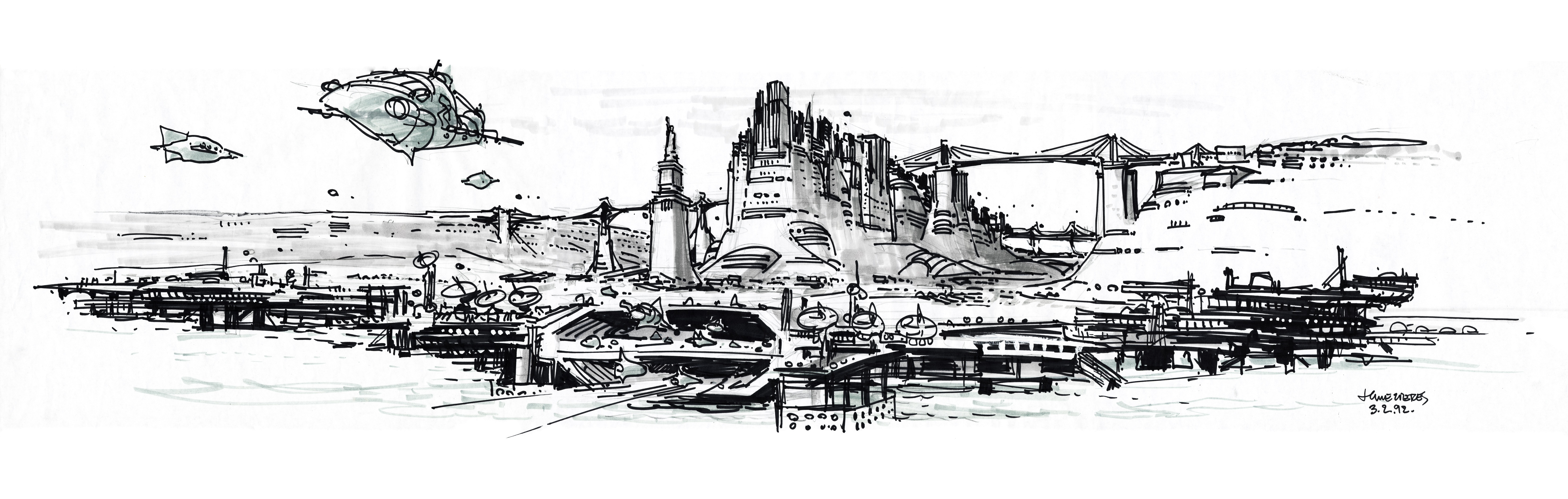
Vue de New York au 23e siècle © Mézières, 1992
The second part of the exhibition opens with the 1958 World’s Fair, the golden age of the Belgian school. In the post-war period, the spirit of modernity emerged, and the notion of progress imperceptibly changed our relationship with architecture. Through the Atomium, the perfect symbol of the development of a “modern” aesthetic, the taste of designers like André Franquin and Maurice Thillieux for graphic arts and design exploded, giving rise to the atome style. La Ligne Claire, the refined graphic style transcended by Hergé, is an opportunity to see works by the great masters of Belgian comics as they relate to the city. Urban utopias, chimeras of ideal cities (cities on water, suspended or in the air) are also explored via authors such as Moebius or Jean-Claude Mezières (whose vision of the city inspired Luc Besson’s Fifth Element ) or imagined by architects such as Archigram or Yona Friedman. The emergence of suburban cities gave cartoonists such as Margerin and his famous Lucien the opportunity to show a more realistic style. This section concludes with a stroll through Paris, another of cartoonists’ favorite cities, taking in the streets of the past by artists such as Tardi and Eisner, and those of the present by Dupuy & Berberian and Peeters.
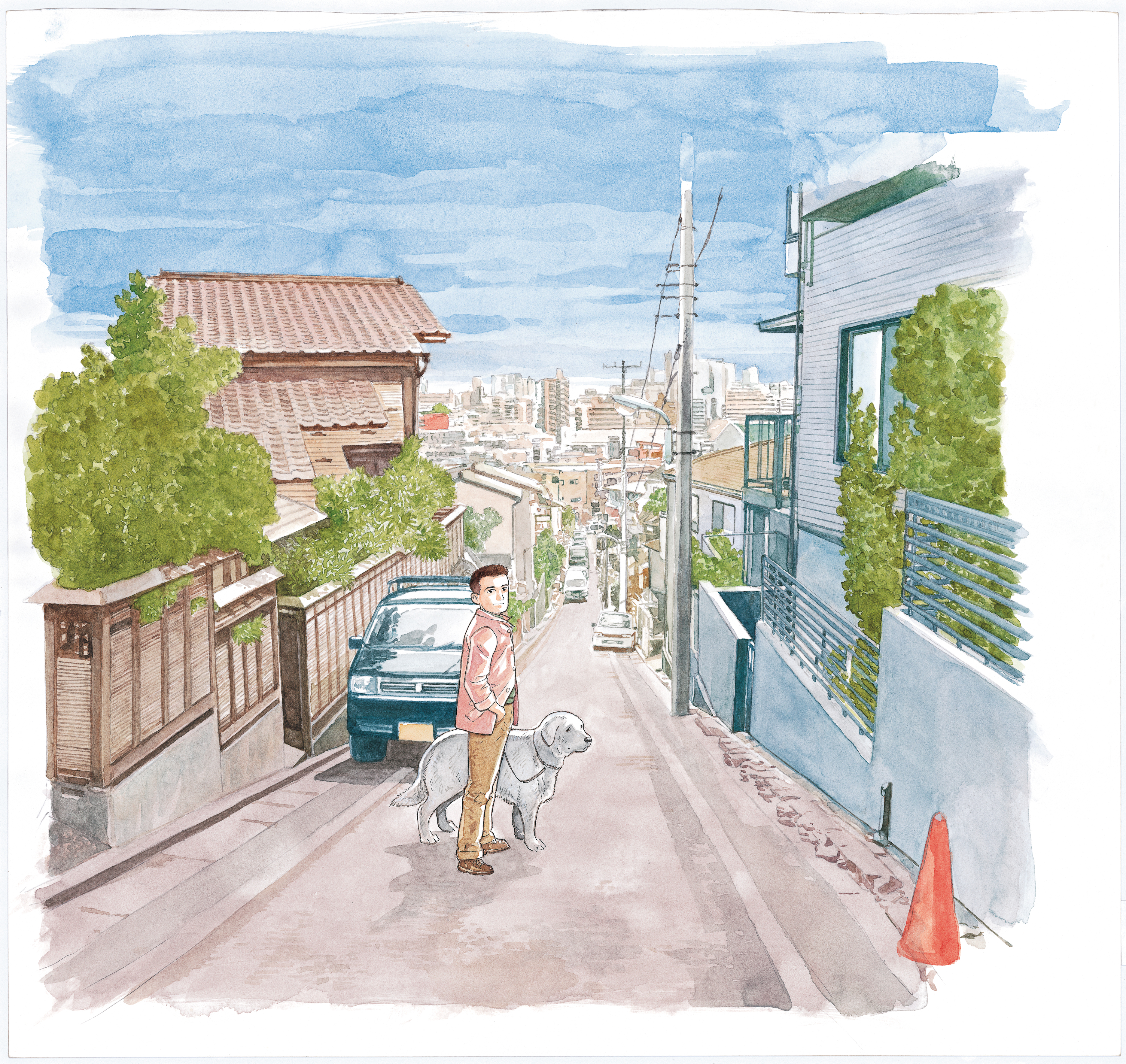
Le Promeneur © Casterman Taniguchi / Kusumi, 2008
The third part of the exhibition takes a more intimate look at the city. And here, Tokyo is grandiose. The development of manga coincided with the explosion of Japanese culture, and Tokyo is the city of manga par excellence. The exhibition presents two distinct genres. On the one hand, urban chronicles of the Tokyo of villages, everyday life and conviviality, with Taniguchi and the Boilet-Peeters duo. On the other, the mangas of Urasawa(20th Century Boys) and Matsumoto(Amer Béton), which deal with the other side of the coin, social problems, violence and chaos.
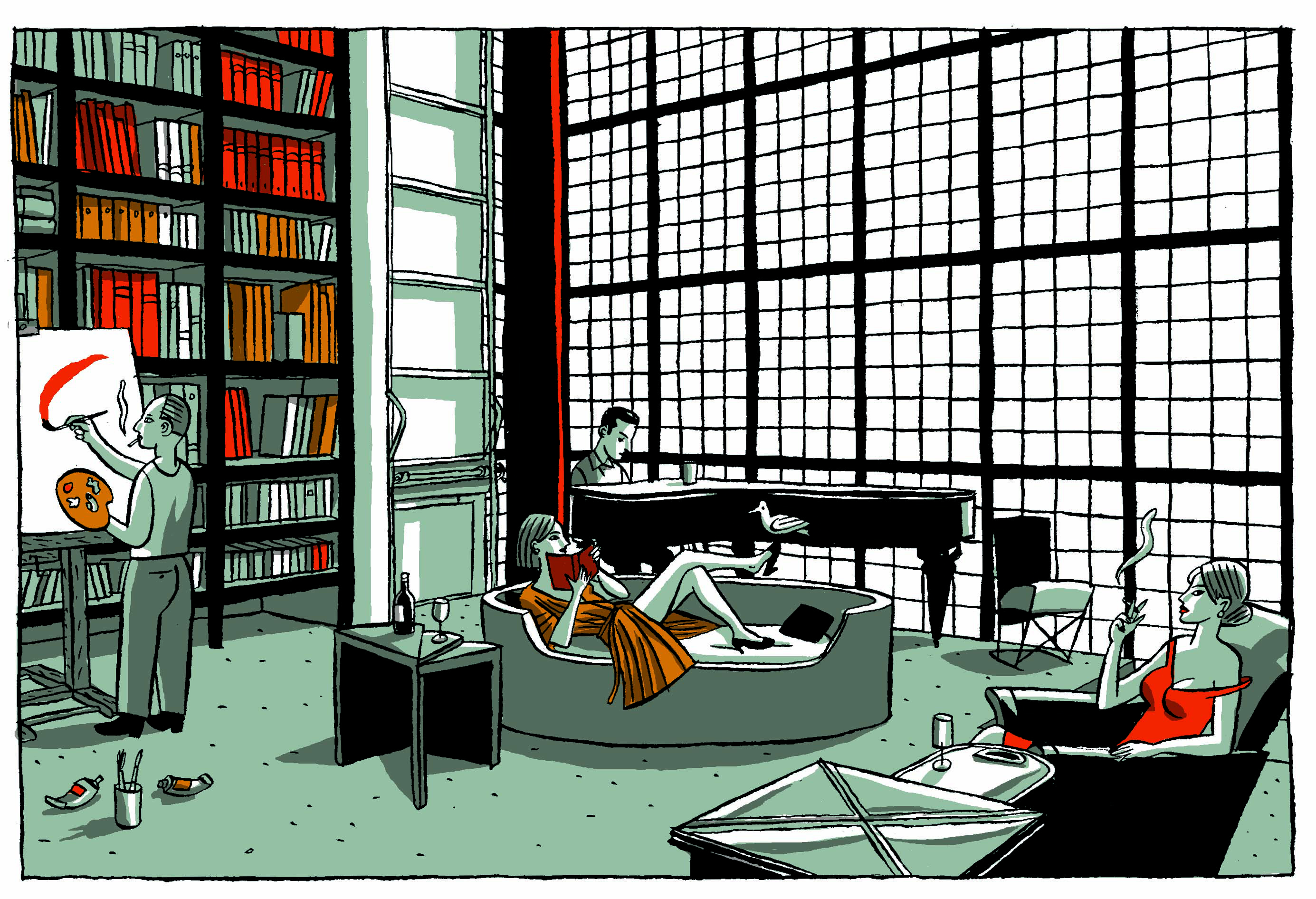
La maison de verre © Jacques de Loustal, 2007
The final section of the exhibition blends architecture and comics to a greater extent, through cross-views in small alcoves, whereas some of the architects’ works were subtly mixed with cartoonists’ drawings in the previous sections. Here, visitors can admire La Ville Rouge by Michaël Matthys, the Villemole project by Requins Marteaux and Pierre Chareau’s La Maison de verre via the portfolio of drawings by Jacques de Loustal, Jean-Claude Götting, Ted Benoit, André Juillard and François Avril.
You leave the exhibition with the feeling of having taken a gigantic journey through time and space. The game of hide-and-seek between comics and architecture works wonders, showing how comics can transcend architecture, but also how architecture follows everyday life, bearing witness to its times and shaping our imaginations for a long time to come. The blend of the two is so powerful that it’s easy to mistake an architect’s work for a comic strip. The opposite is also true…
ARCHI & BD, LA VILLE DESSINÉE
until November 28, 2010
Open daily from 11am to 7pm except Tuesdays. Nocturne Thursdays until 9pm
PRICE
Full price: €8 – Reduced price: €5 (free for children under 12)
Cité de l’architecture & du patrimoine
Palais de Chaillot – 1 place du Trocadéro – Paris 16e
www.citechaillot.fr
Marie-Odile Radom
Cette publication est également disponible en :

