
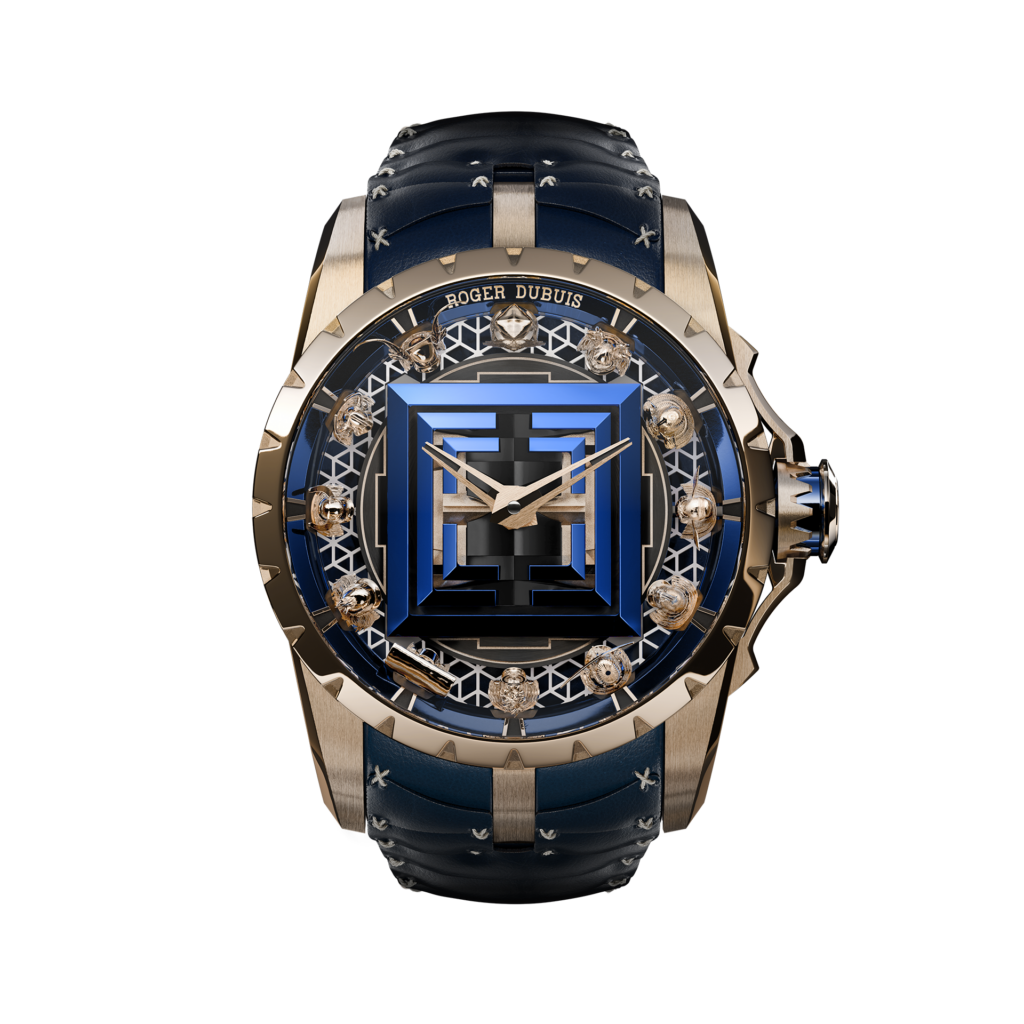
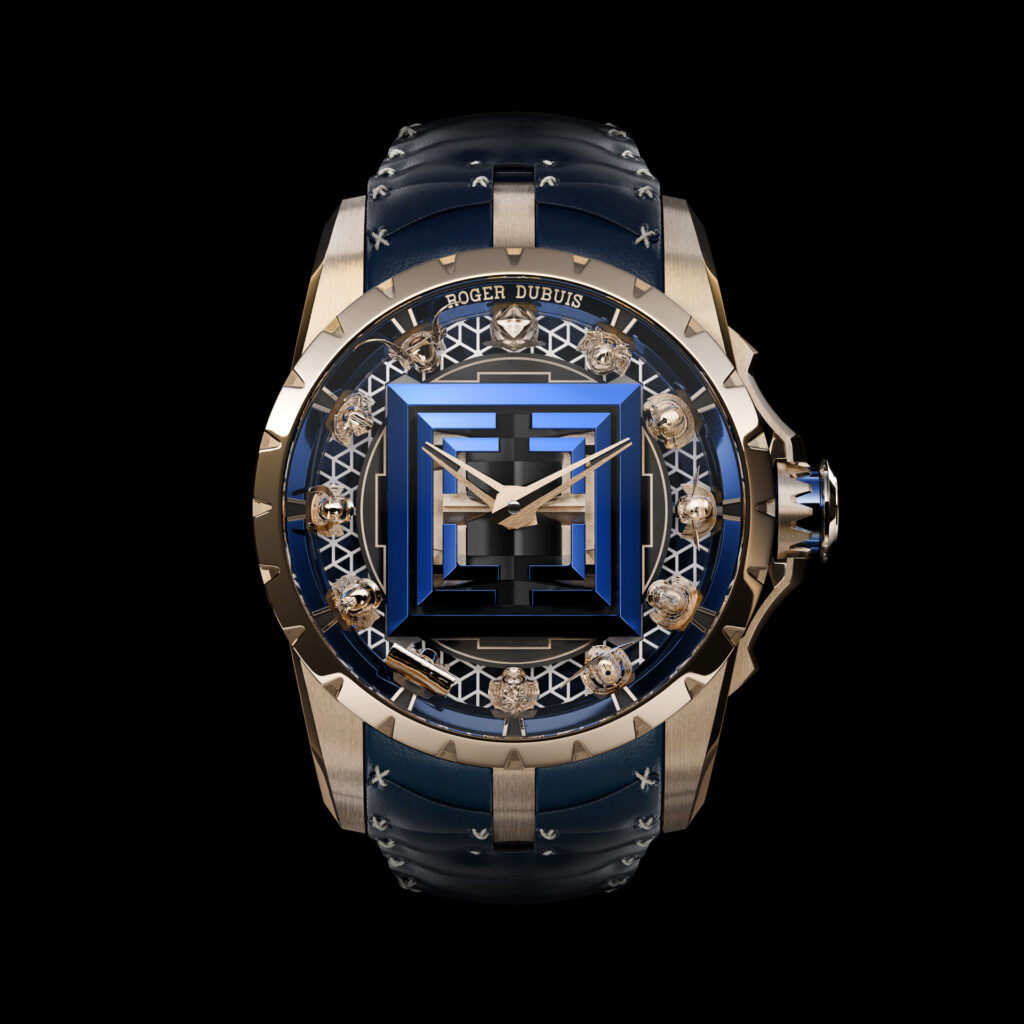
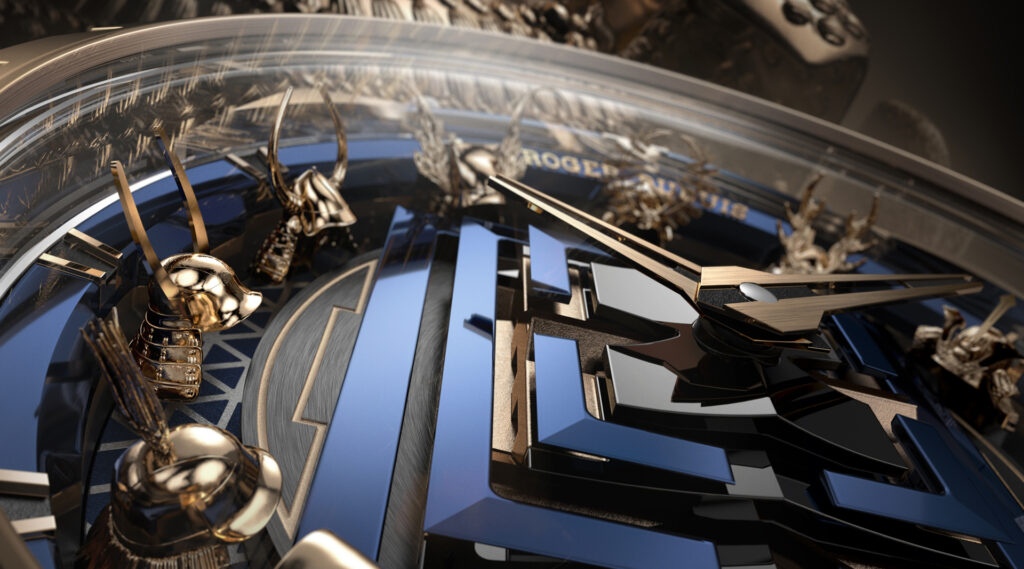
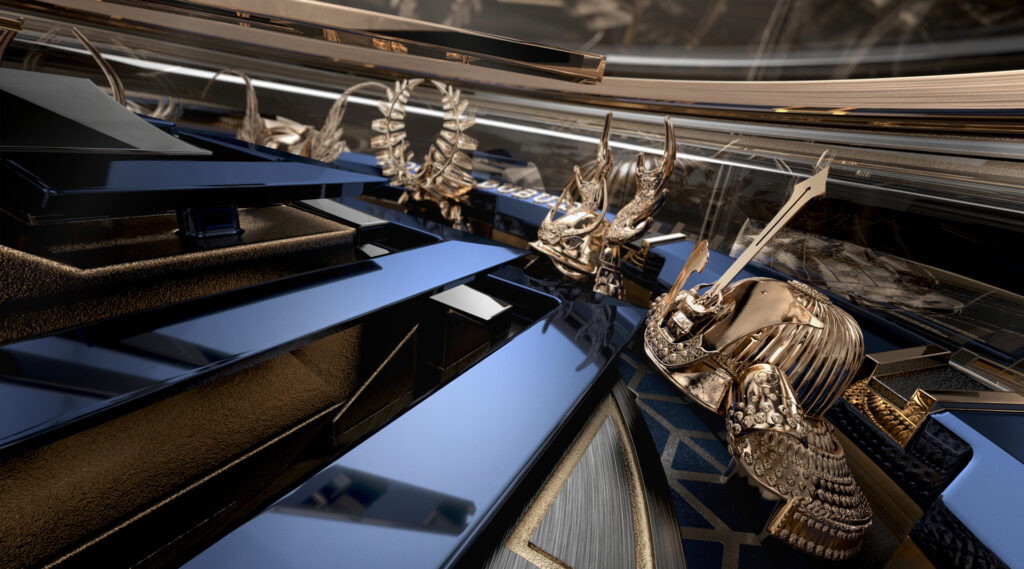
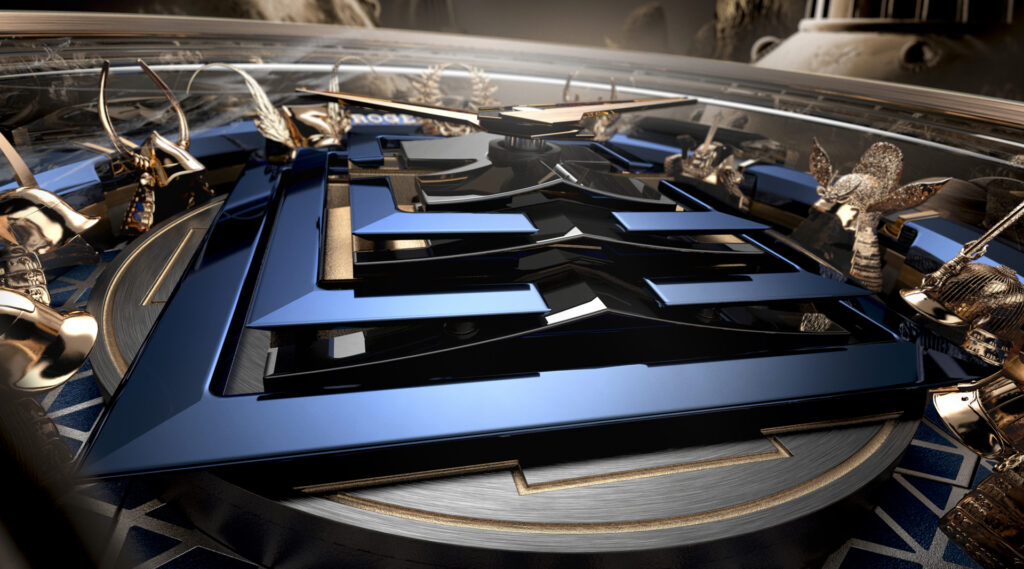
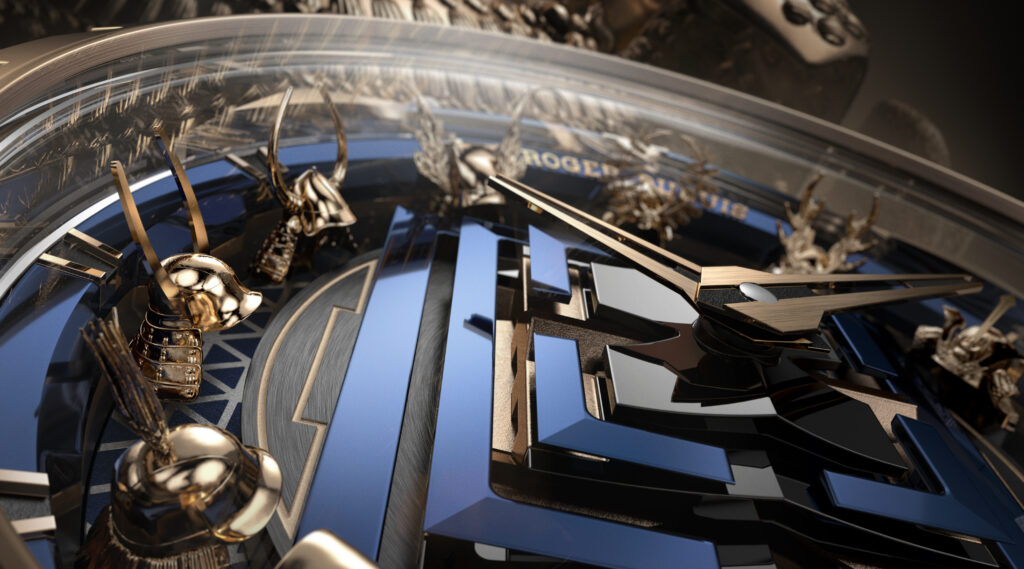
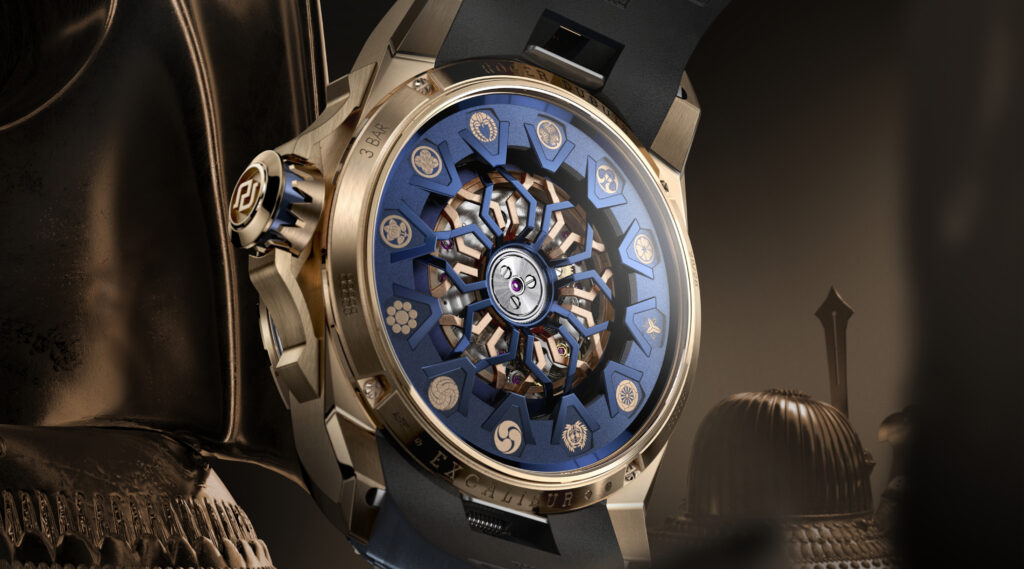
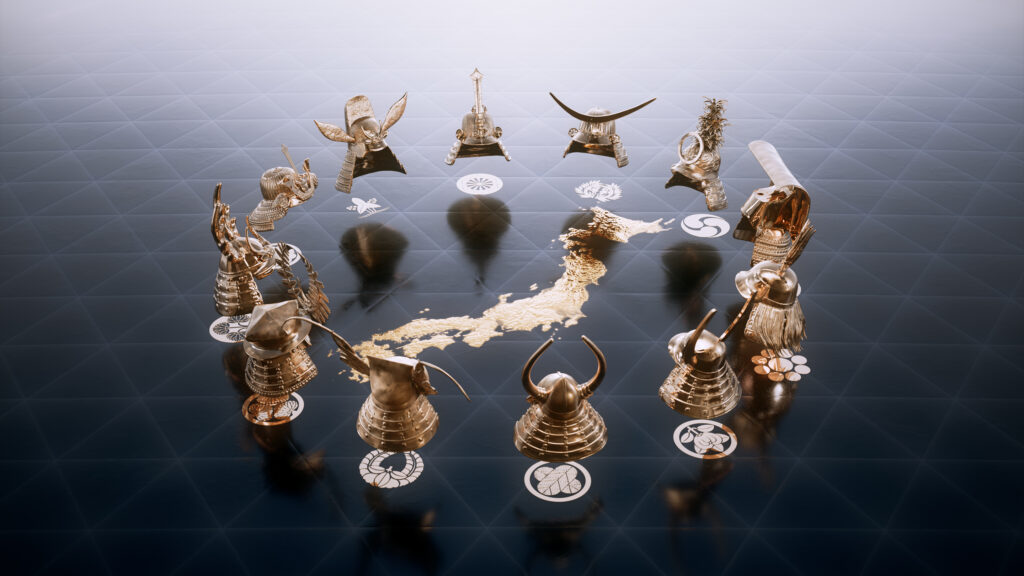
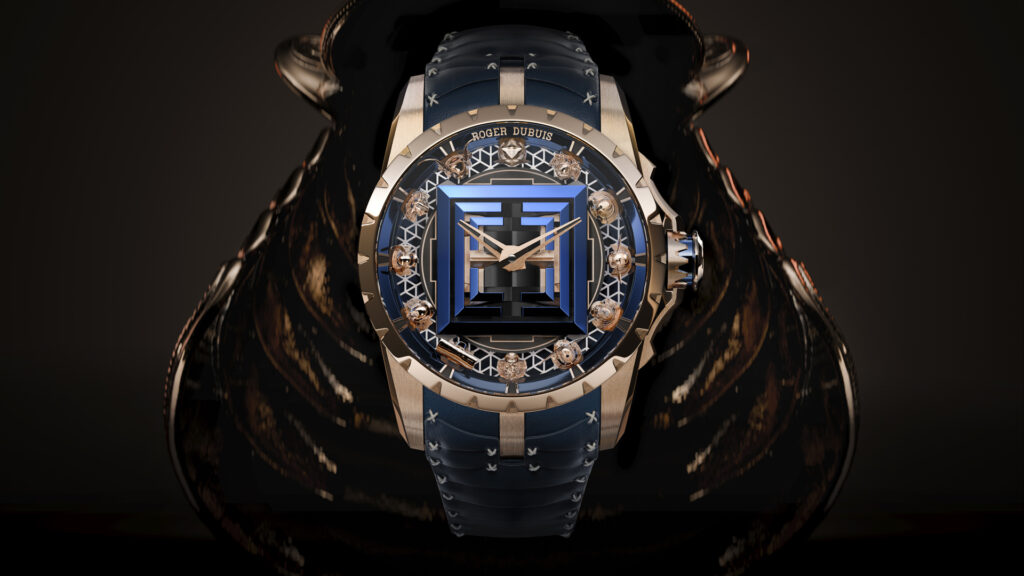
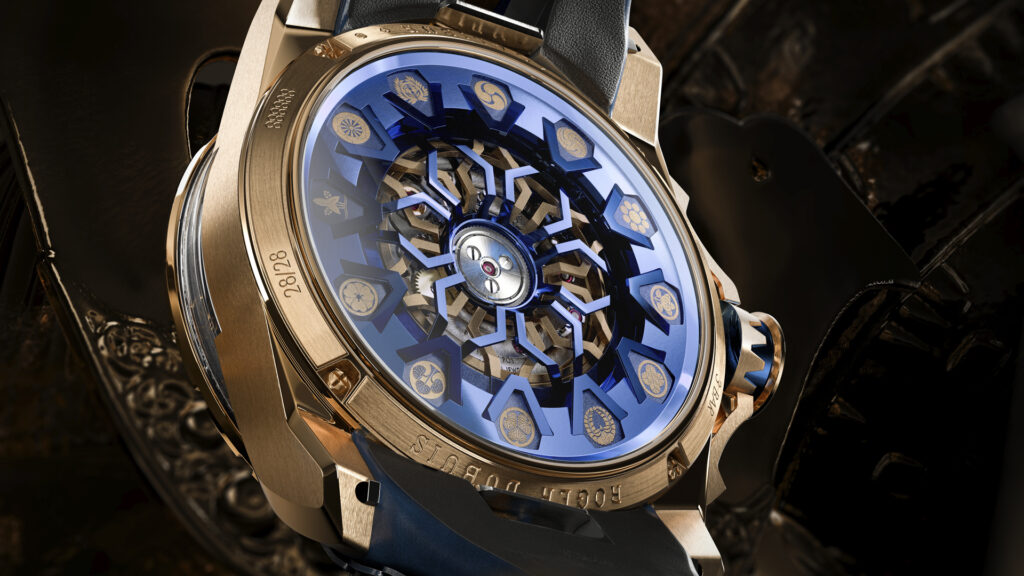
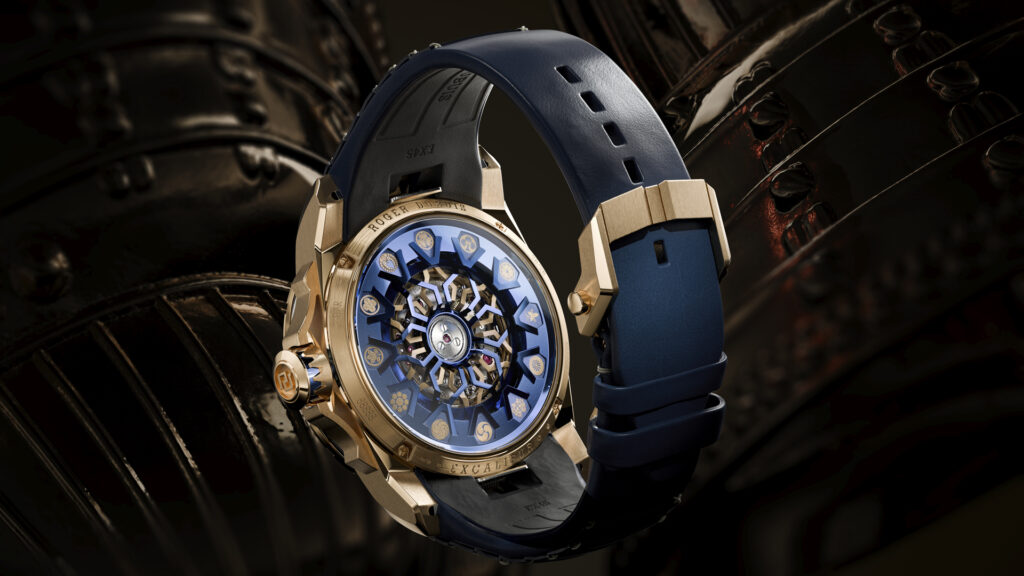
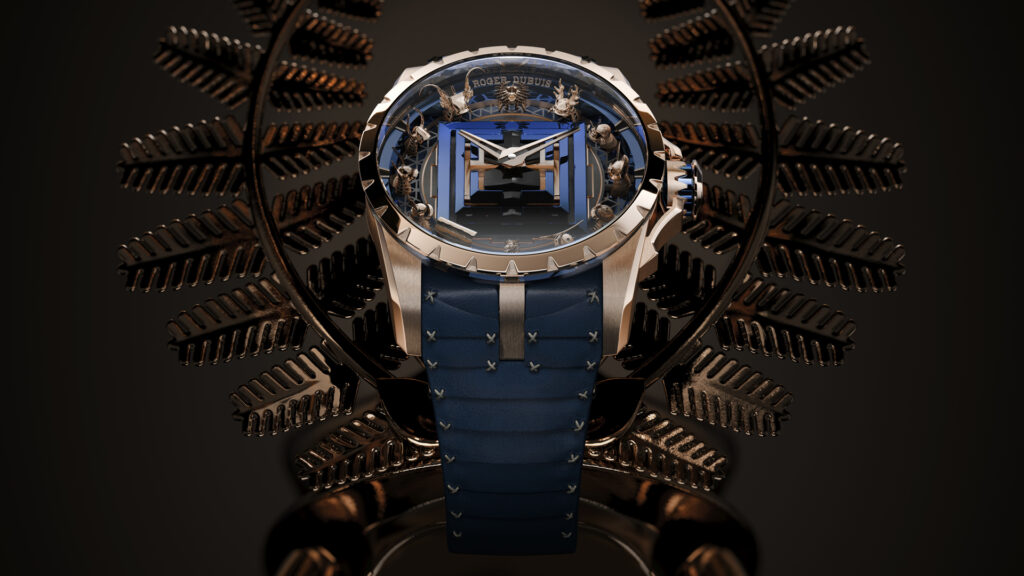
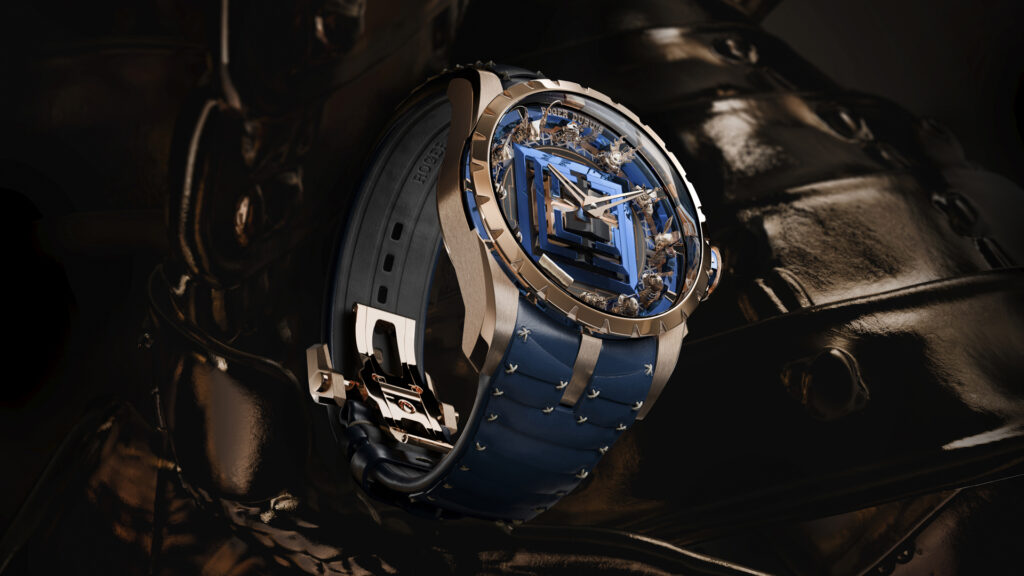
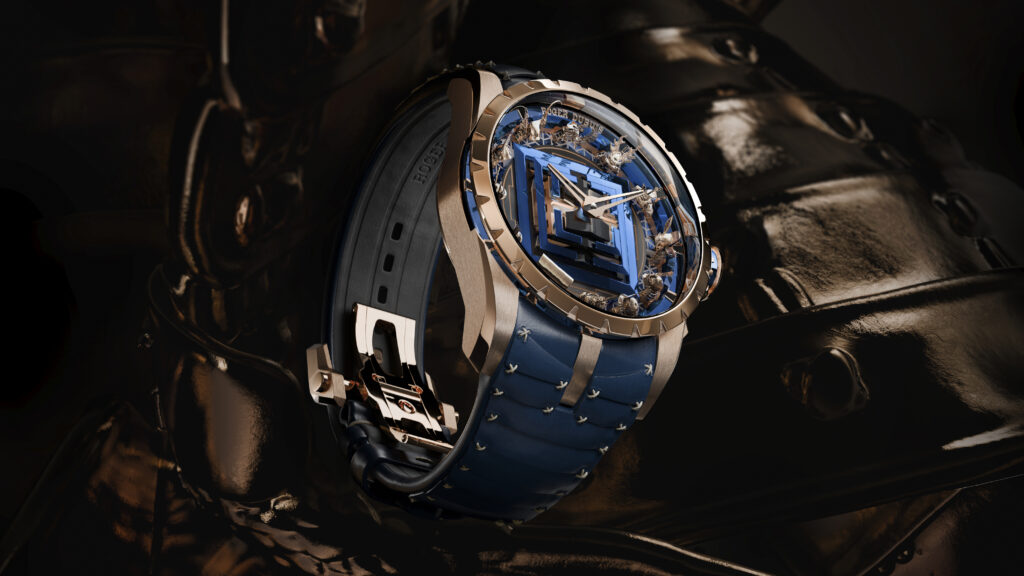
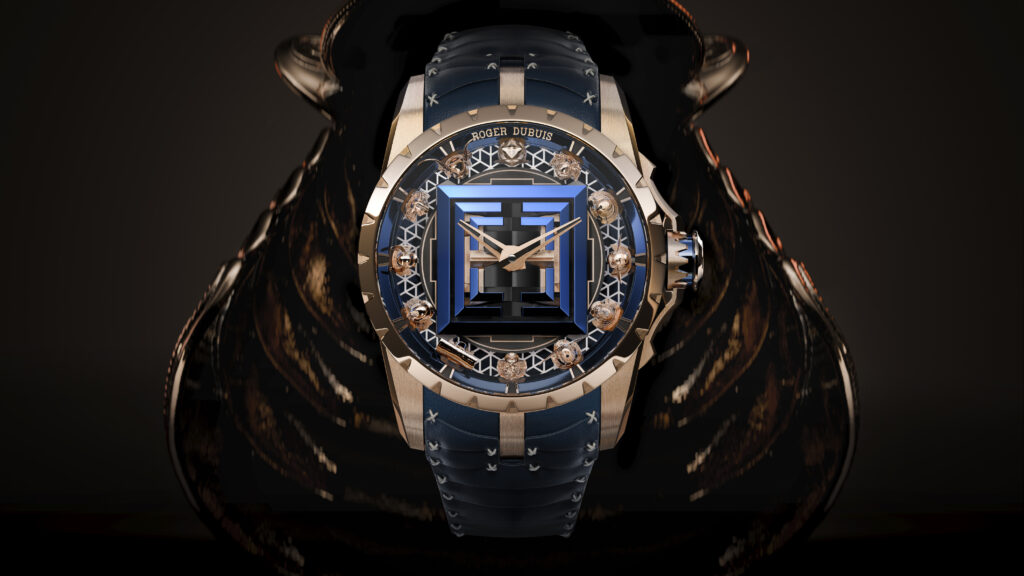
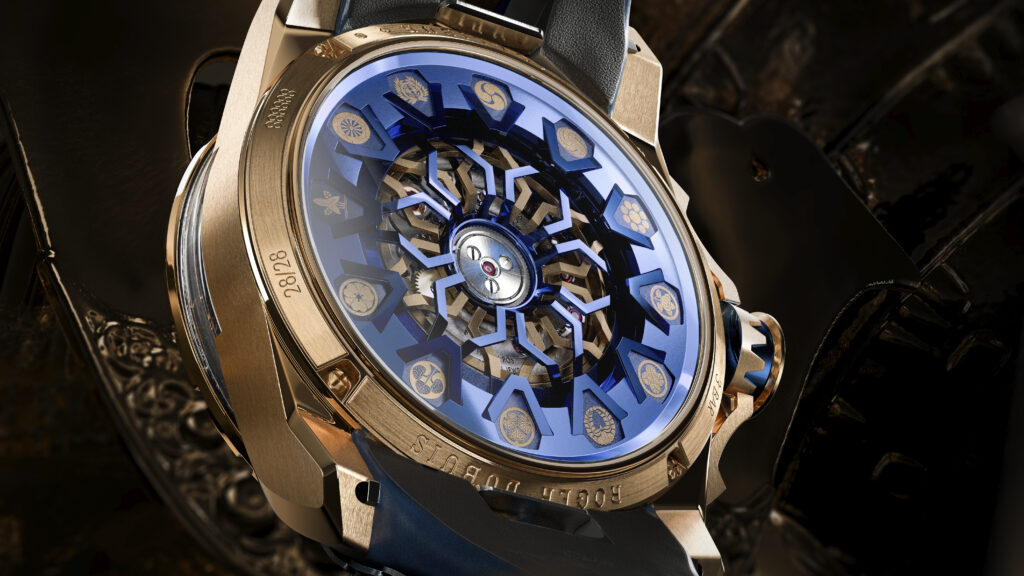
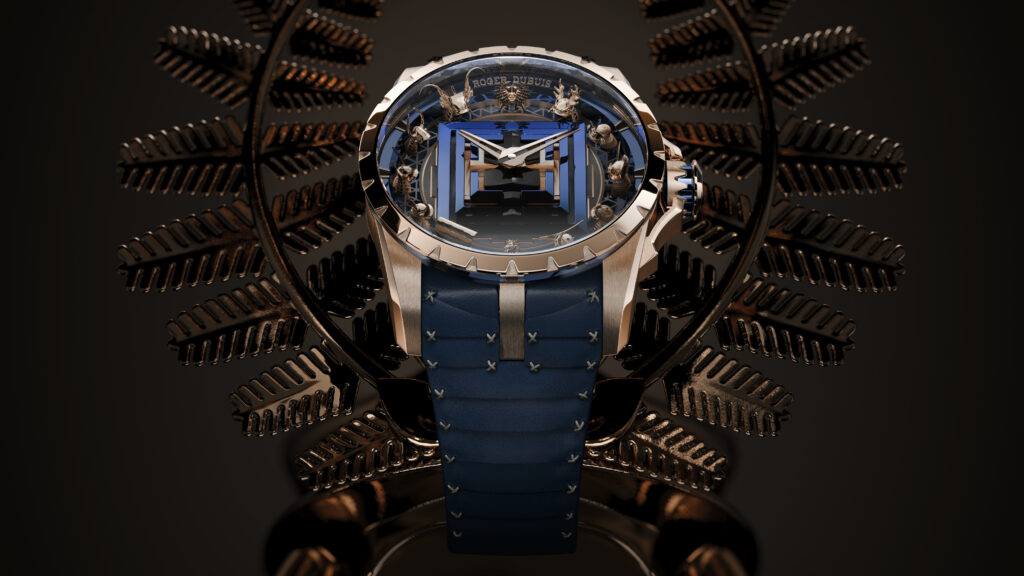
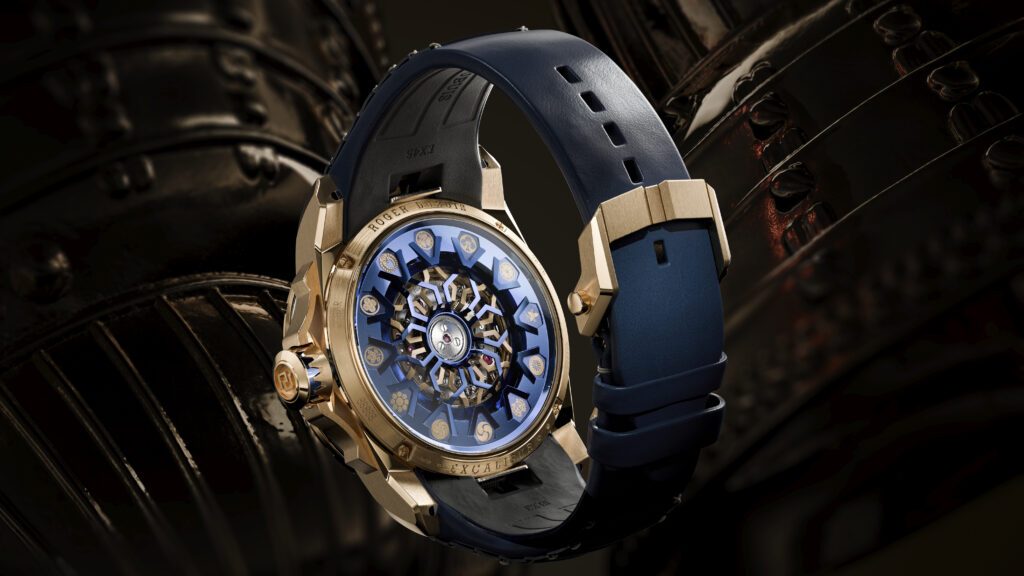
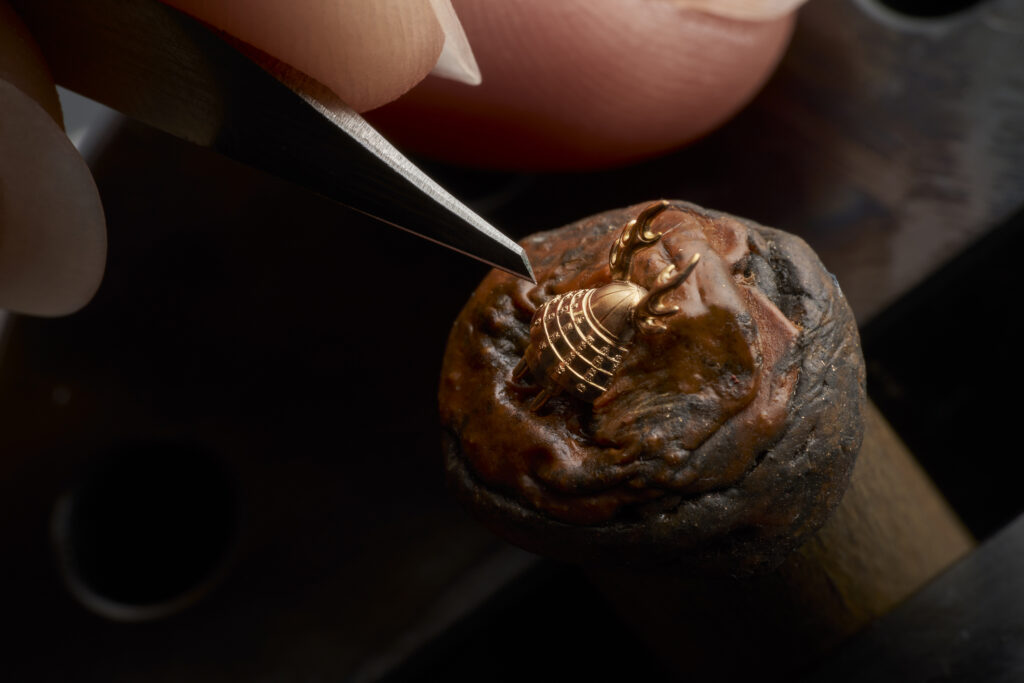
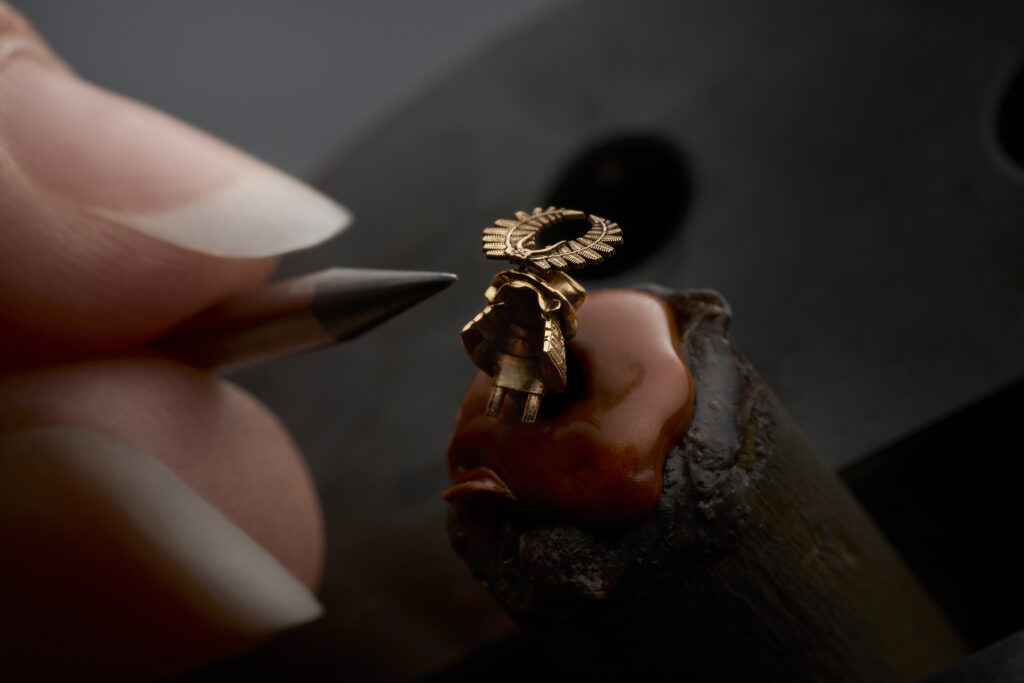
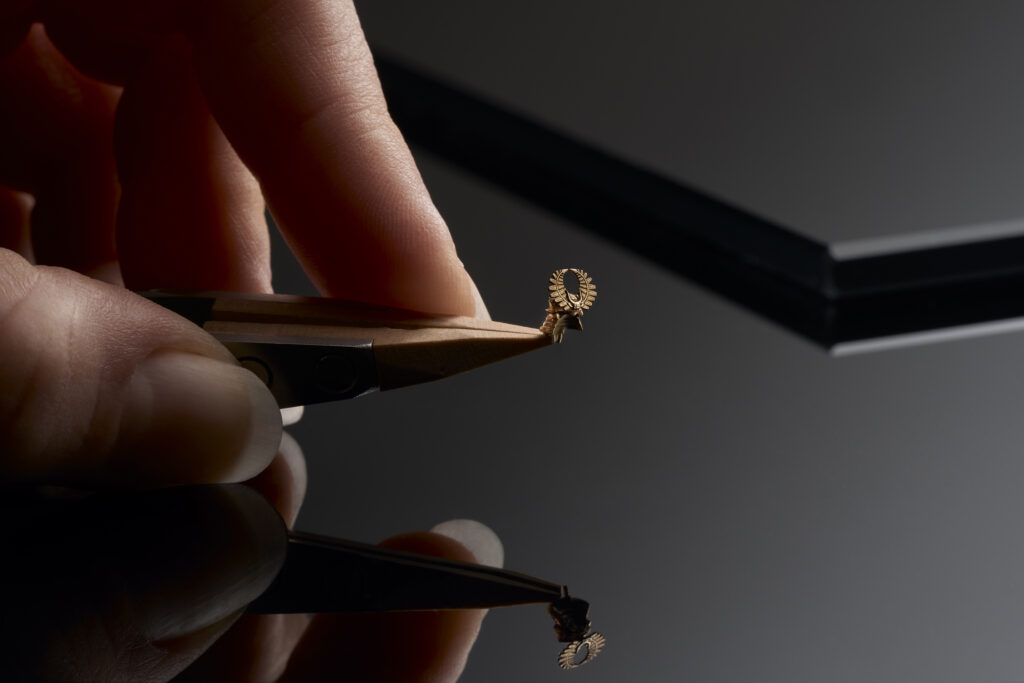
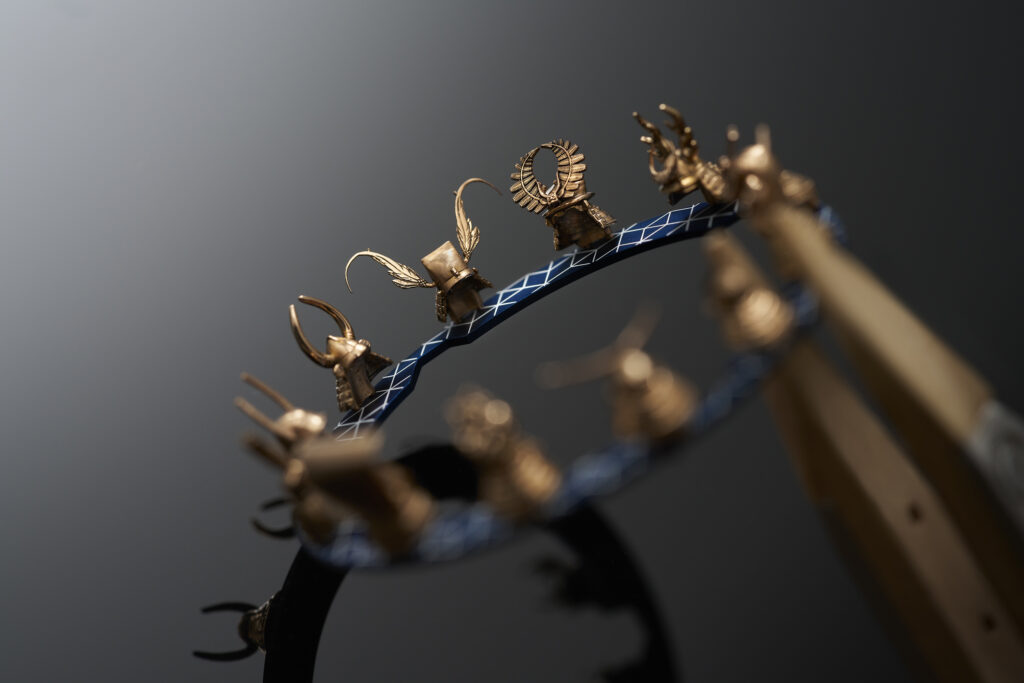
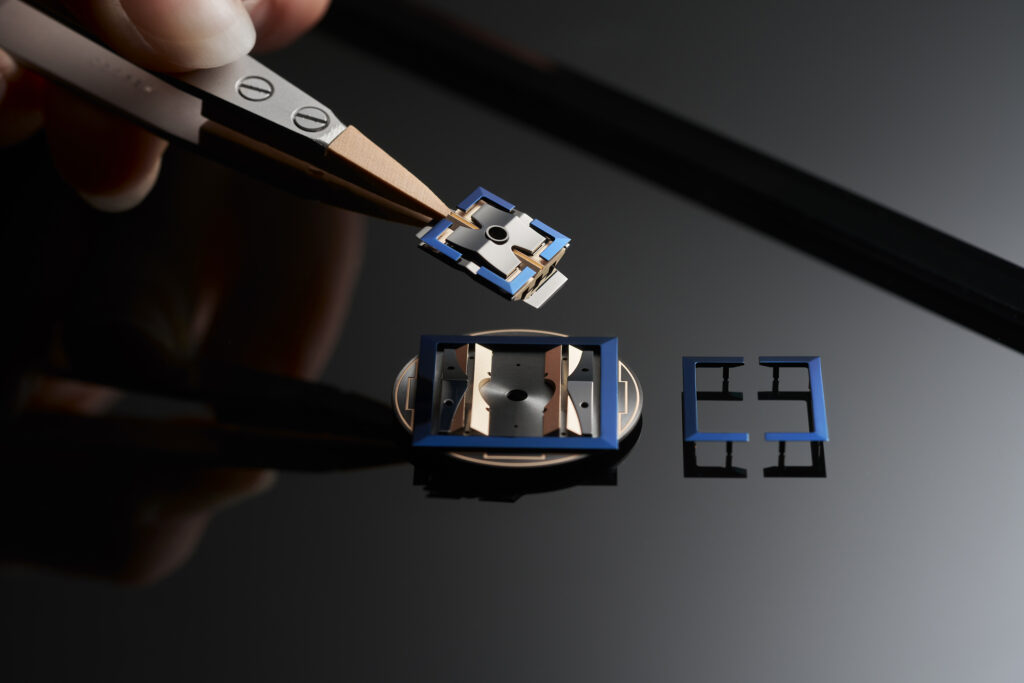
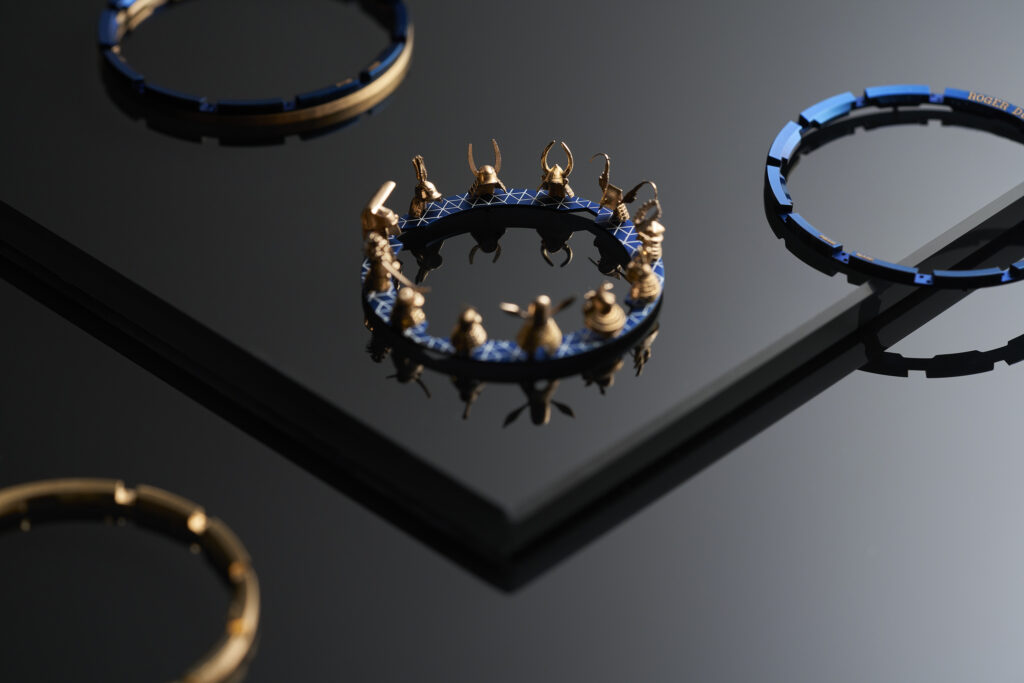
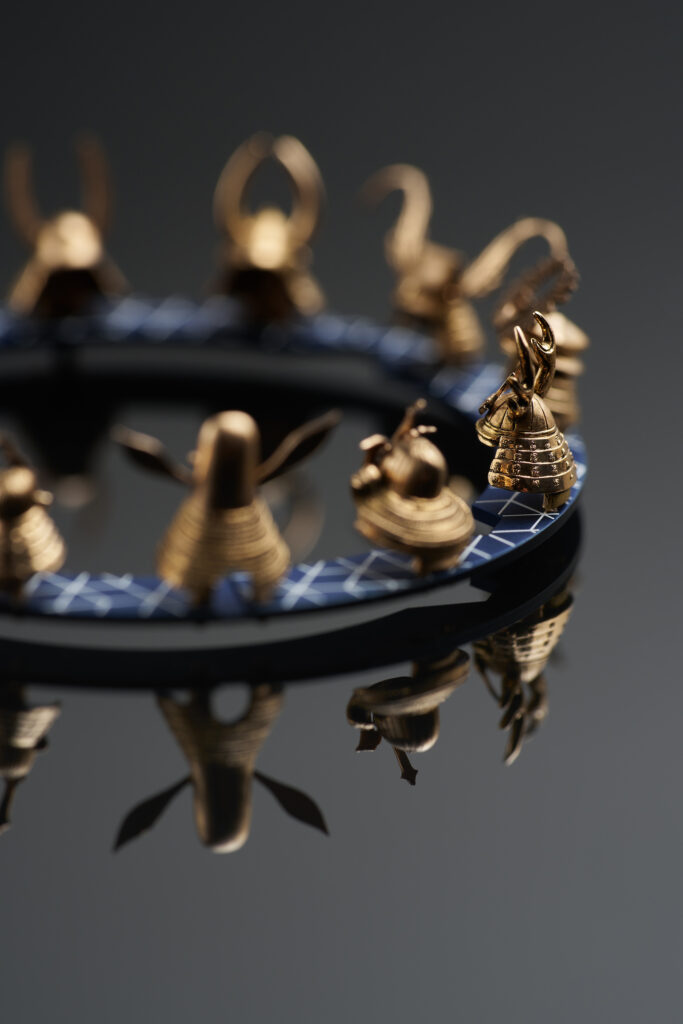
Twelve commanders of Edo’s army, identified by their helmets and crests, are engraved on the wrist in a calibre certified by the Poinçon de Genève. The Excalibur The Kabuto Legacy brings a Japanese heraldic grammar into the vocabulary of Geneva’s Métiers d’Art.
One castle, twelve crests
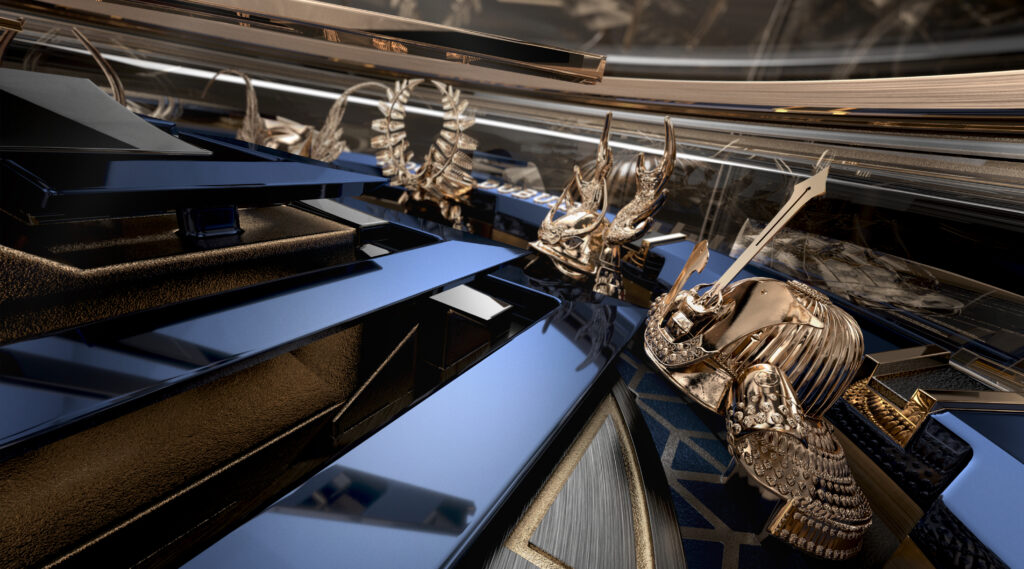
Seventeenth-century Japan organised its military power around Edo Castle and the figure of the samurai commander, identifiable by two attributes: the kabuto, a ceremonial and battle helmet, and the kamon, the family crest engraved or painted on the armour. Twelve of these legendary commanders form the corpus from which Roger Dubuis draws for its Excalibur The Kabuto Legacy. The Manufacture does not merely illustrate a scene: it transposes a system of signs — a crest, an identity, a hierarchy — into the language of watchmaking Métiers d’Art, where engraving, marquetry and enamelling traditionally serve to depict European heraldic or naturalistic motifs.
The movement as signature
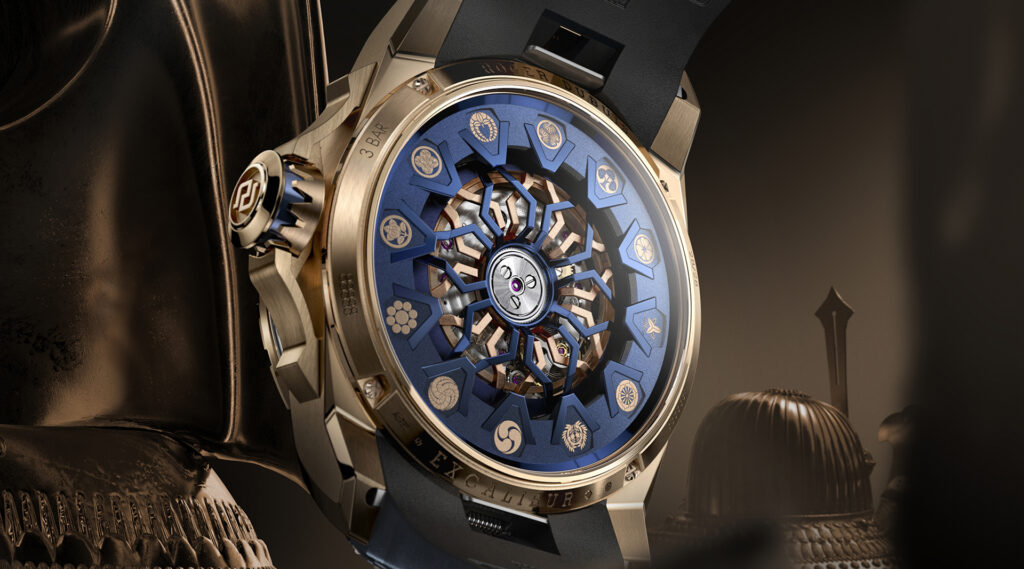
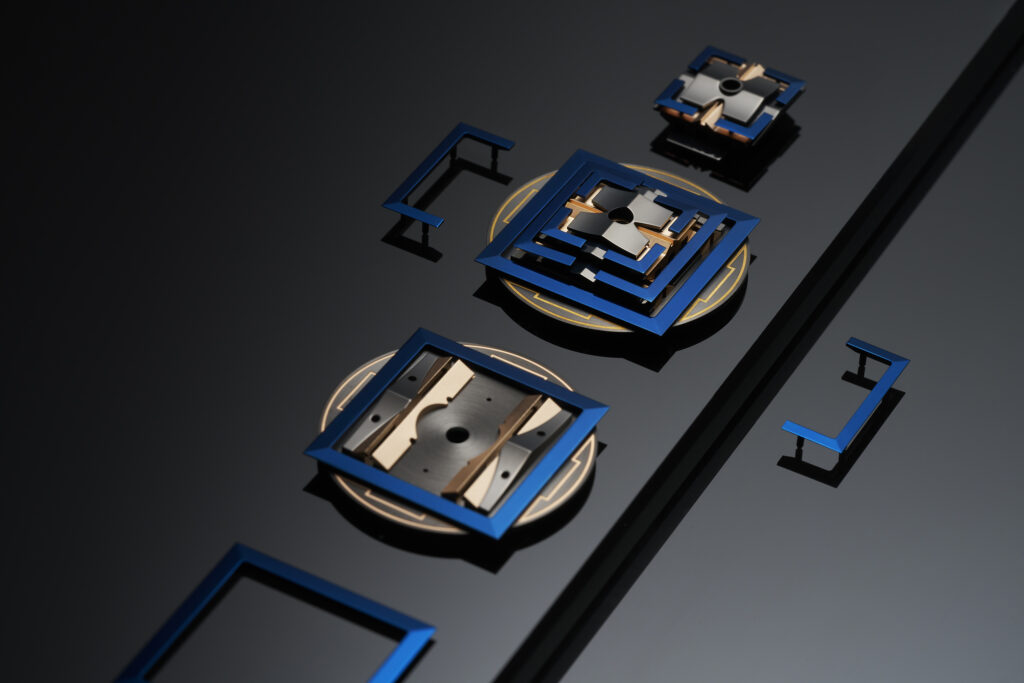
At the centre of the piece, the automatic RD821 calibre bears the Poinçon de Genève certification, a quality standard imposing precise criteria of finishing and operation on movements made in the canton. This certification places the Excalibur The Kabuto Legacy in a distinctly Genevan continuity: that of a Manufacture combining local mechanical rigour with an imported cultural motif, without either taking precedence over the other. The movement remains the technical foundation of the decorative exercise; without it, the crest would be only an image.
A Western blade for an Eastern guard
The very name of the Excalibur collection borrows from Arthurian legend the vocabulary of a Western heroic blade. Pairing this name with samurai commanders brings together, on a single dial, two distinct martial imaginaries — the European legend of King Arthur and the documented history of Edo Japan. The Manufacture embraces this cultural gap without comment, allowing the RD821 calibre and its certification to connect the two worlds.
Two grammars of the crest
The connection between the Japanese kamon and the European heraldic crest is not incidental. Both systems fulfil the same function — signalling affiliation, lineage and allegiance — through a codified graphic vocabulary of colours, forms, animal and vegetal symbols. By transposing the kamon into the craft of watchmaking, Roger Dubuis sets two traditions of representing power through emblems alongside one another, one forged in European courts, the other in Edo castles. The exercise requires a subtle command of both grammars to avoid ornamental misunderstanding.
What the kabuto says about watchmaking
Choosing the samurai helmet as the central motif shifts the usual focus of Métiers d’Art, more often devoted to Western mythological figures or animal scenes. By selecting a precise military object, dated and attached to historically identifiable figures, the Maison enters terrain that leaves little room for decorative approximation: every kabuto depicted refers to an actual commander, every kamon to a precise lineage. It is an exercise in fidelity as much as ornament, placing the piece in a lineage of Genevan excursions beyond its own decorative references — it remains to be seen whether the twelve commanders will invite a sequel.

Cette publication est également disponible en :


