
Priced at 8,295 euros, the 2026 Trident 660 is equipped with a six-axis inertial measurement unit—a technology previously reserved for track-derived sport bikes. This shift toward the lower end of the price spectrum says something about the state of the British motorcycle market.
Triumph Motorcycles has weathered 124 years of industry cycles while maintaining one constant: the belief that the entry-level model in a lineup doesn’t have to be a compromise. The Trident 660, launched in 2021 from the Hinckley factory in Leicestershire, was already a testament to this. The 2026 model takes it a step further in an area where few manufacturers dare to venture at this price point: precision onboard electronics.
The six-axis inertial measurement unit—which calculates the motorcycle’s roll, pitch, and yaw in real time—now controls two cascaded systems on this Trident: cornering-optimized ABS and switchable cornering traction control. These two assist systems are not mere crutches. On a motorcycle with a seat height of 810 mm and a curb weight of 195 kg, they ensure that the available power — 95 chevaux at 11,250 revolutions per minute, fourteen more than on the previous generation — remains accessible to the rider, regardless of road conditions.
The Engine as a Mark of Authenticity
The mechanical upgrades are based on measurable internal changes: three individual 44-mm throttle bodies (compared to a single throttle body on the previous model), an enlarged air filter housing, and a redesigned cylinder head. The redline has been extended to 12,650 revolutions per minute, representing a 20% increase. Torque of 68 Nm peaks at 8,250 rpm, with 80% of this reserve available between 3,000 and 12,000 rpm—a range that covers virtually all real-world driving situations without forcing the engine to rev too high.
This three-cylinder engine has a distinctive sound: neither the harshness of a two-cylinder nor the smoothness of a four-cylinder. With the new throttle bodies and reconfigured intake, the sound signature gains more depth. It’s a detail that spec sheets don’t capture, but one that matters in the long-term relationship between a motorcycle and its rider.
Technical details: The braided brake lines, Nissin two-piston calipers on 310-mm front rotors, and standard Michelin Road 5 tires provide a braking and grip package that matches the engine’s performance. On a roadster priced under 9,000 euros, this level of overall coherence is unusual.
Electronics as a Leveling-Up Feature
The standard cruise control, the Triumph Shift Assist—clutchless upshifts and downshifts—and the color TFT display with turn-by-turn navigation via MyTriumph connectivity: five years ago, this list would have belonged in the spec sheet of a €14,000 motorcycle. Its shift to a roadster priced under 9,000 euros is no small matter. It reflects the maturity of the electronics supply chain, but also a strategic positioning choice: Triumph no longer reserves its technologies for its higher-end segments.
The three driving modes—Sport, Road, and Rain—adjust the ride-by-wire throttle response as well as the intervention thresholds for the ABS and traction control. This isn’t just a list of features: it’s an adaptive riding architecture that fundamentally changes the experience depending on the context. Rain mode is not the same as Sport mode, even though it’s the same motorcycle.
The chassis, the fork, and consistency
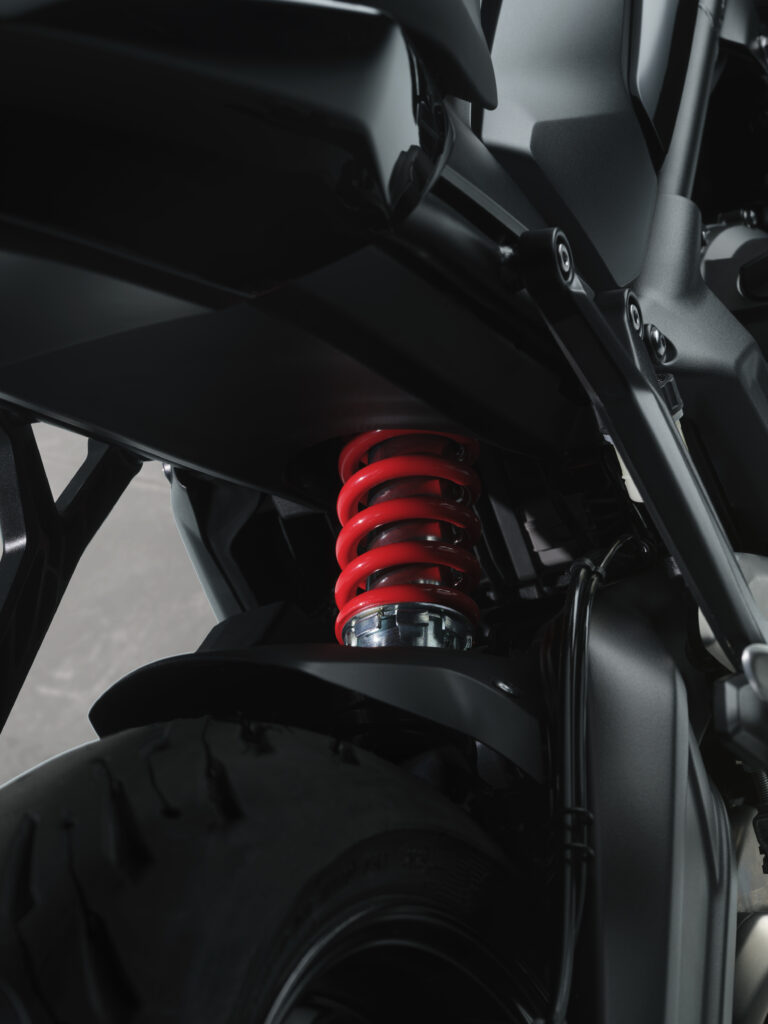
The revised frame features a Showa rear shock absorber with preload and rebound adjustment. The 41-mm Showa inverted fork with a large piston offers 120 mm of travel. Together, these two components make the Trident 660 a motorcycle that responds—correcting, absorbing, and instilling confidence—with a level of handling precision that elevates it from its price class to the next tier up.
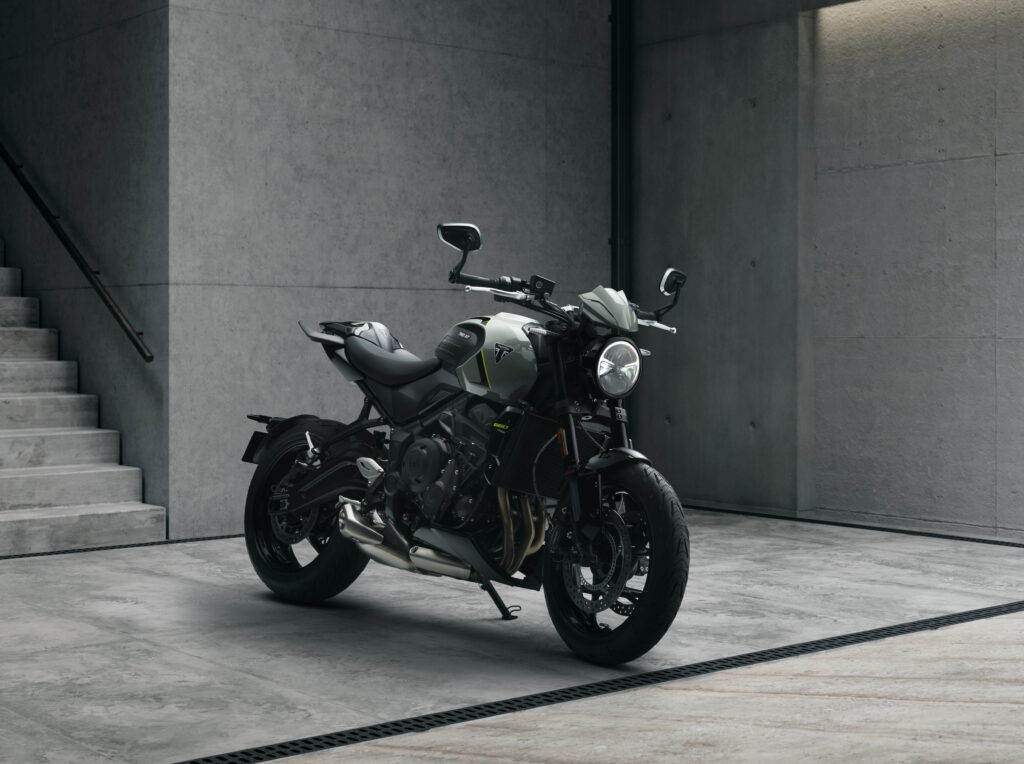
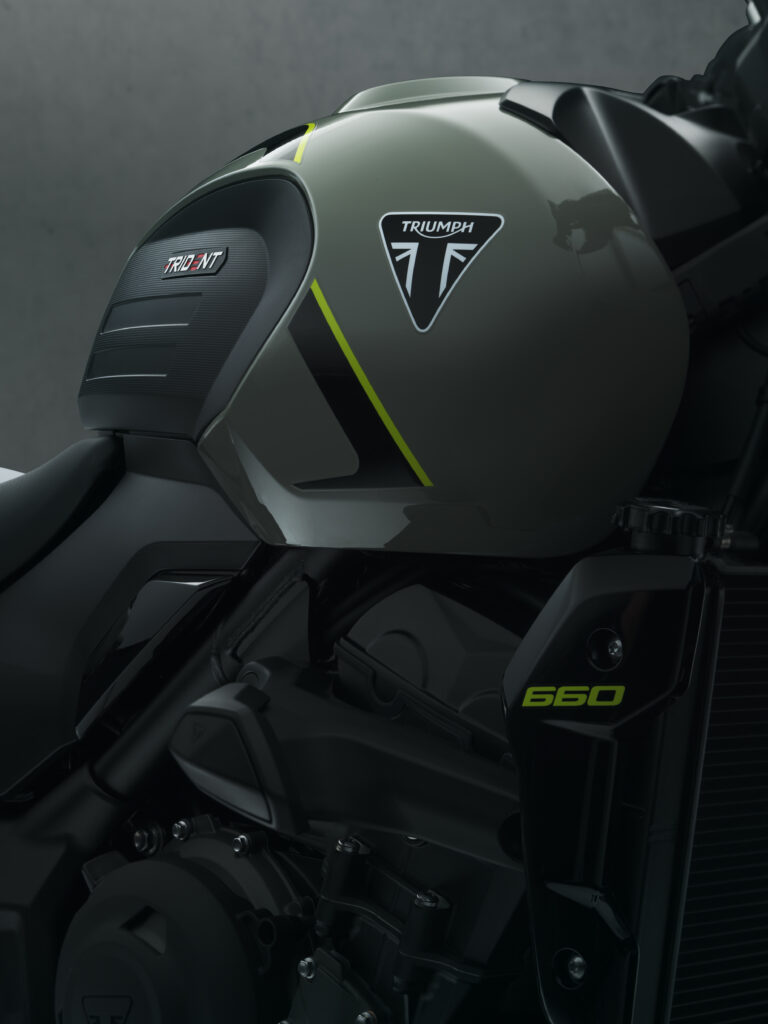
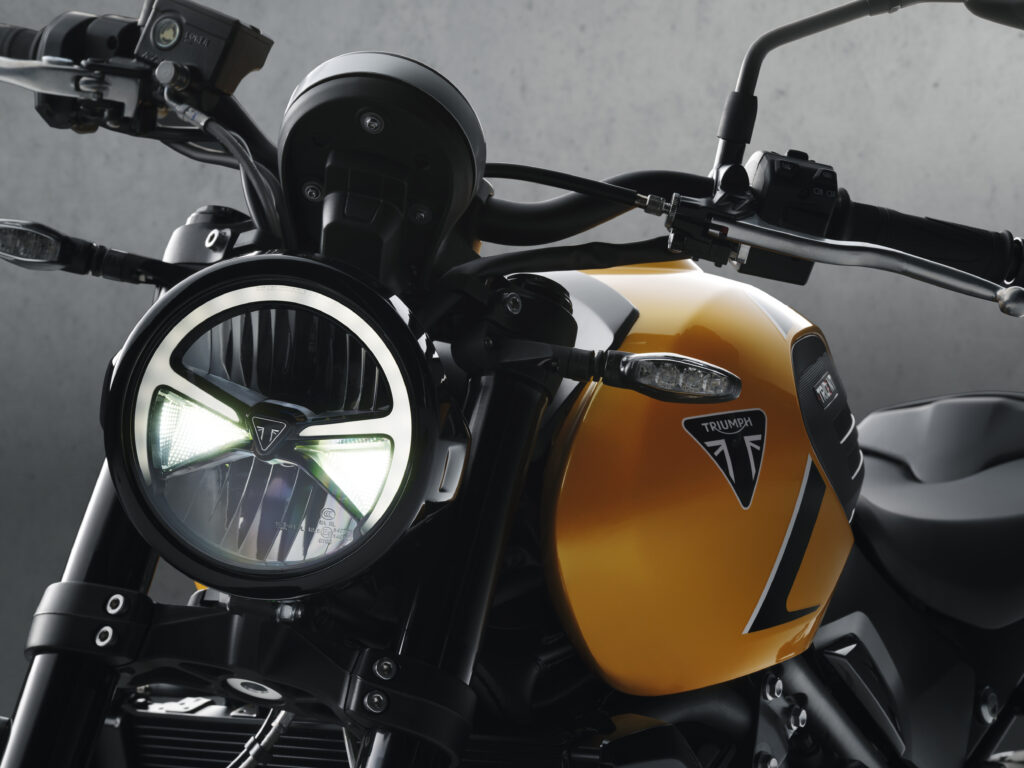
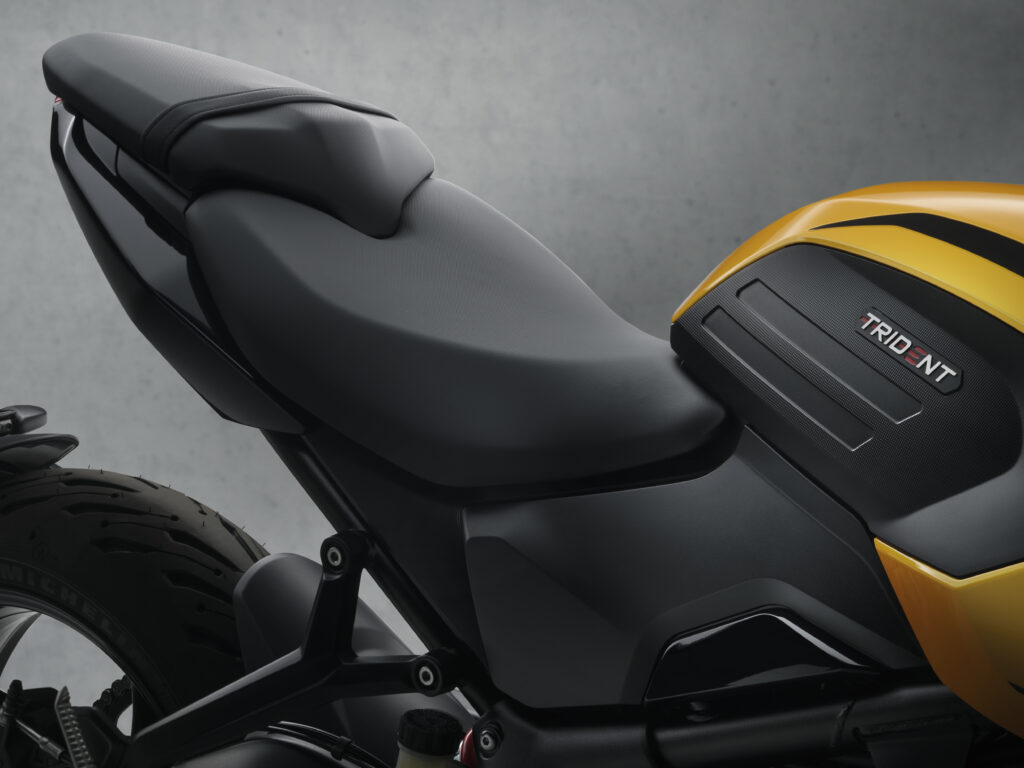
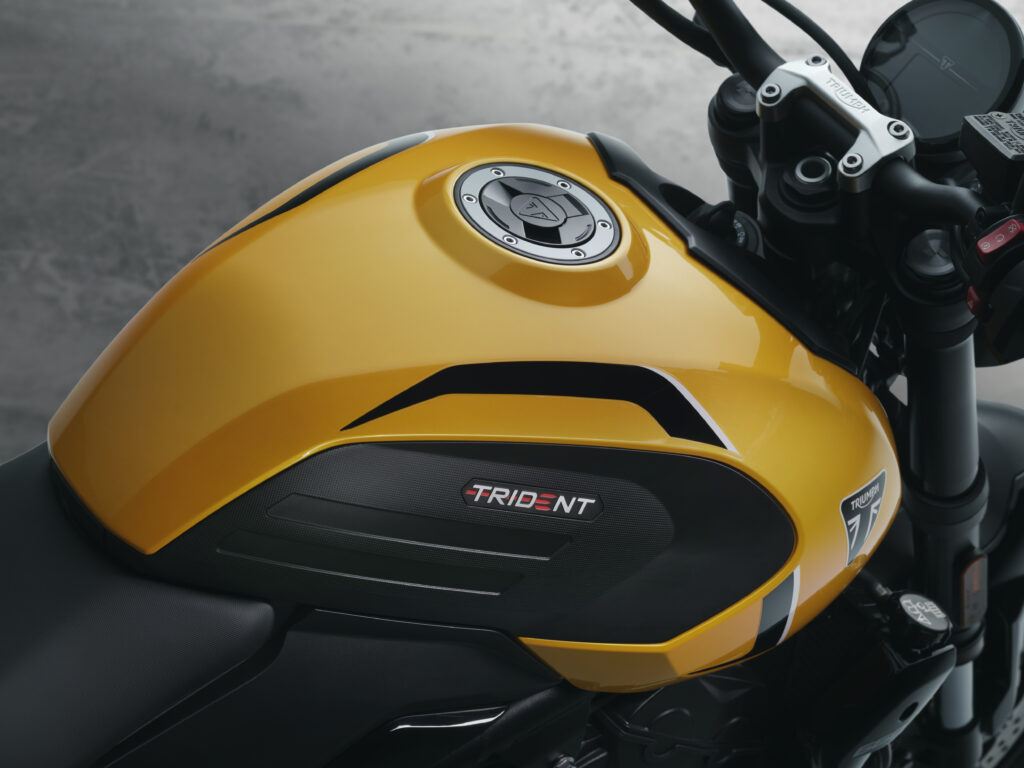
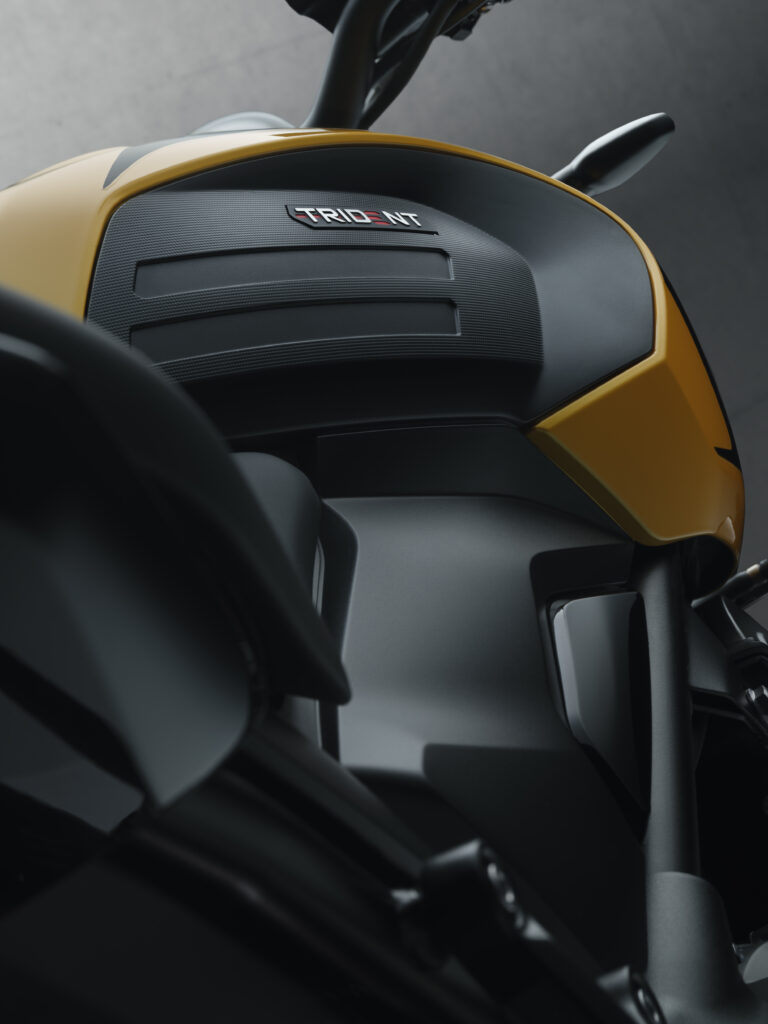
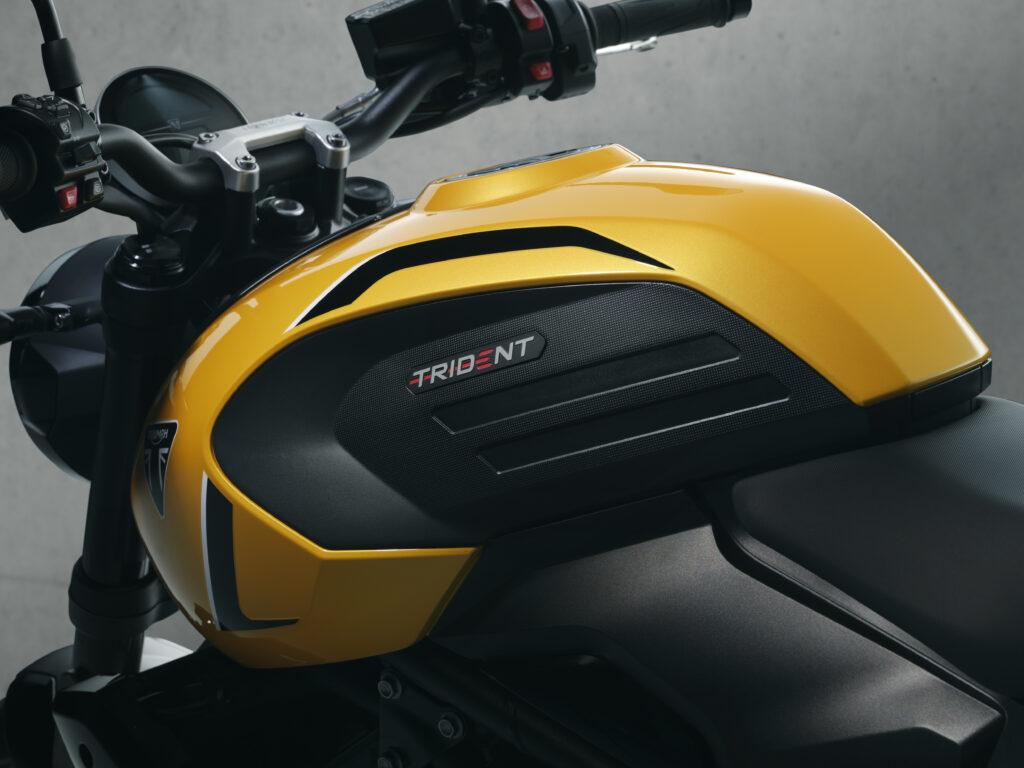
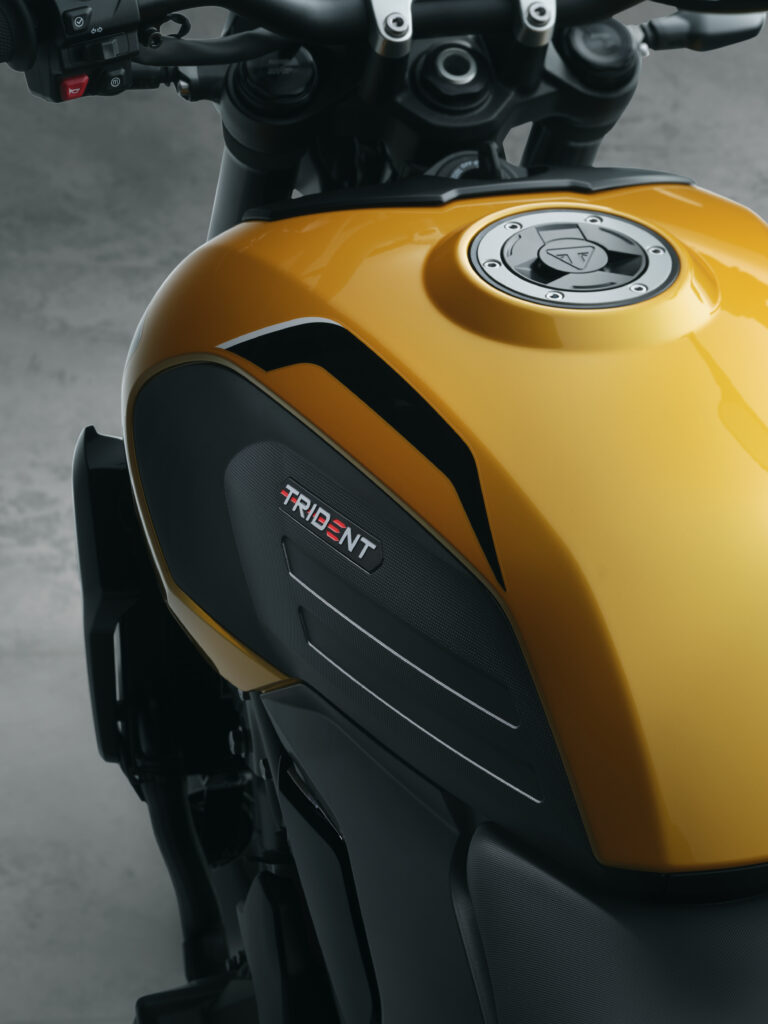
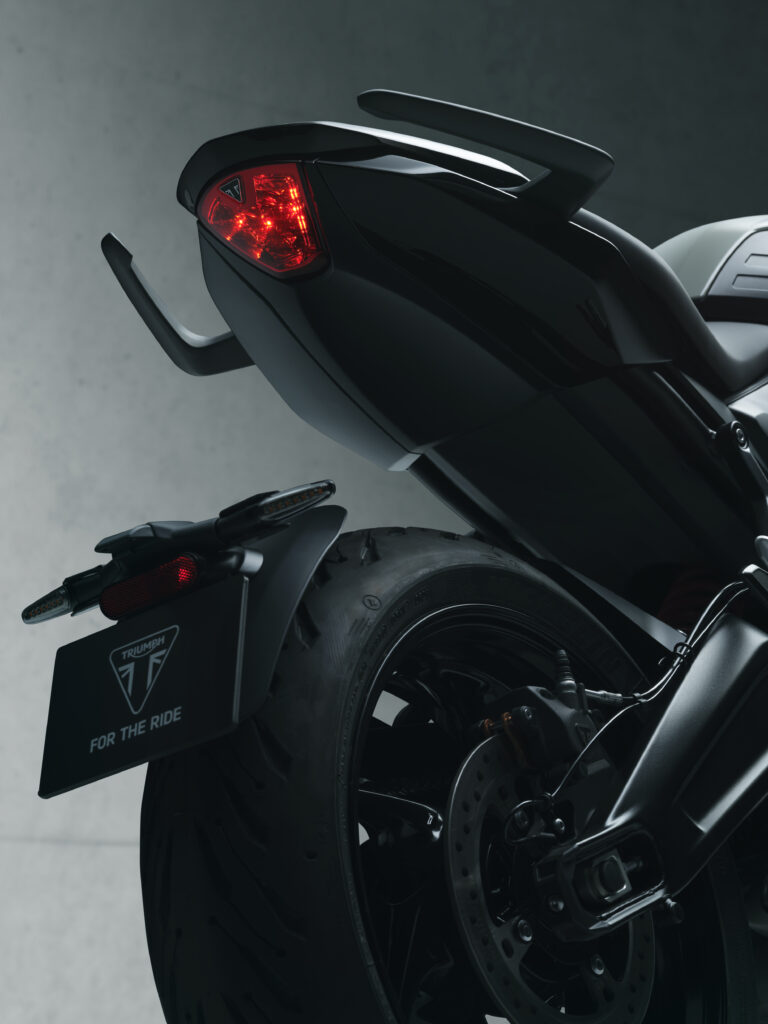
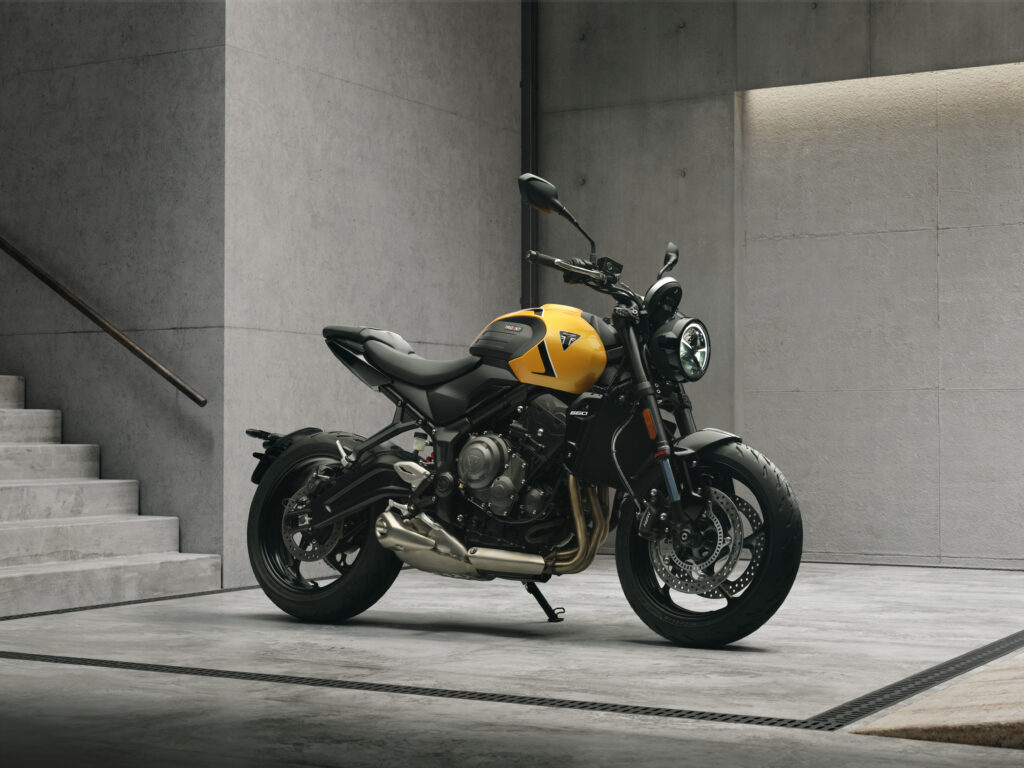
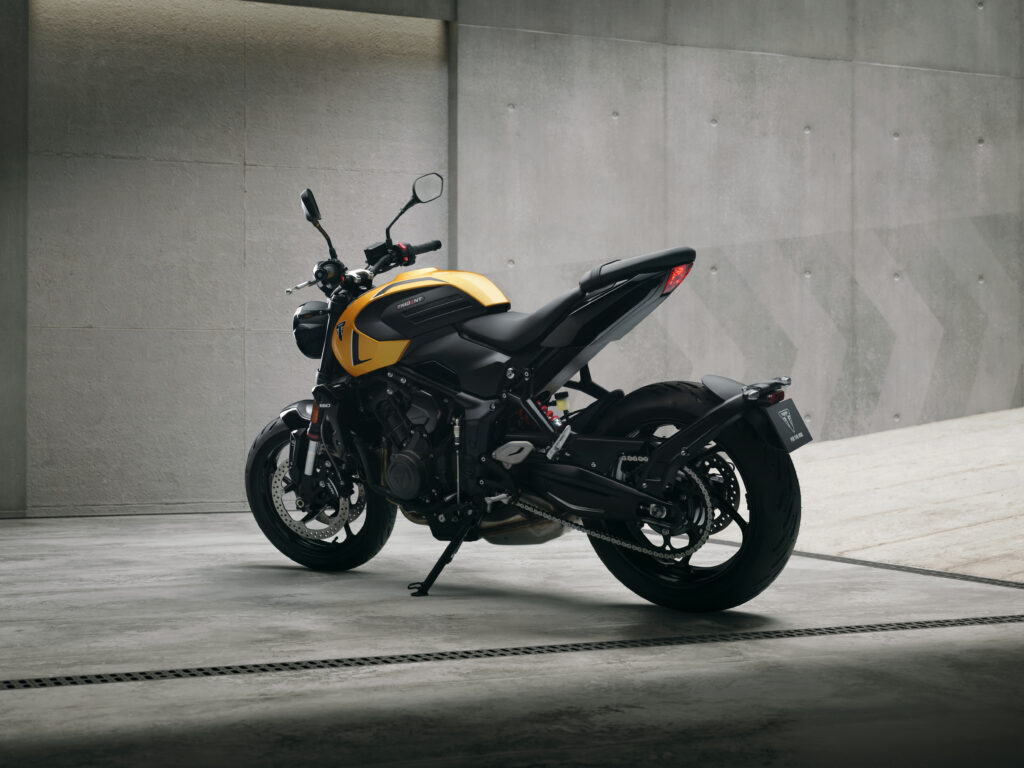
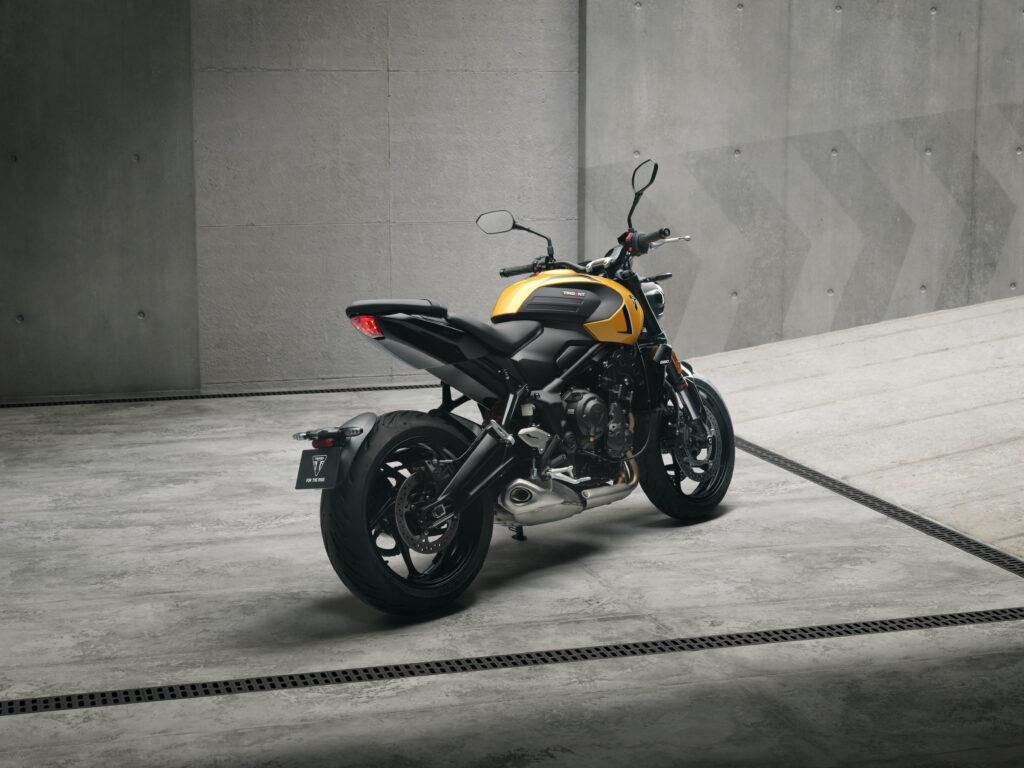
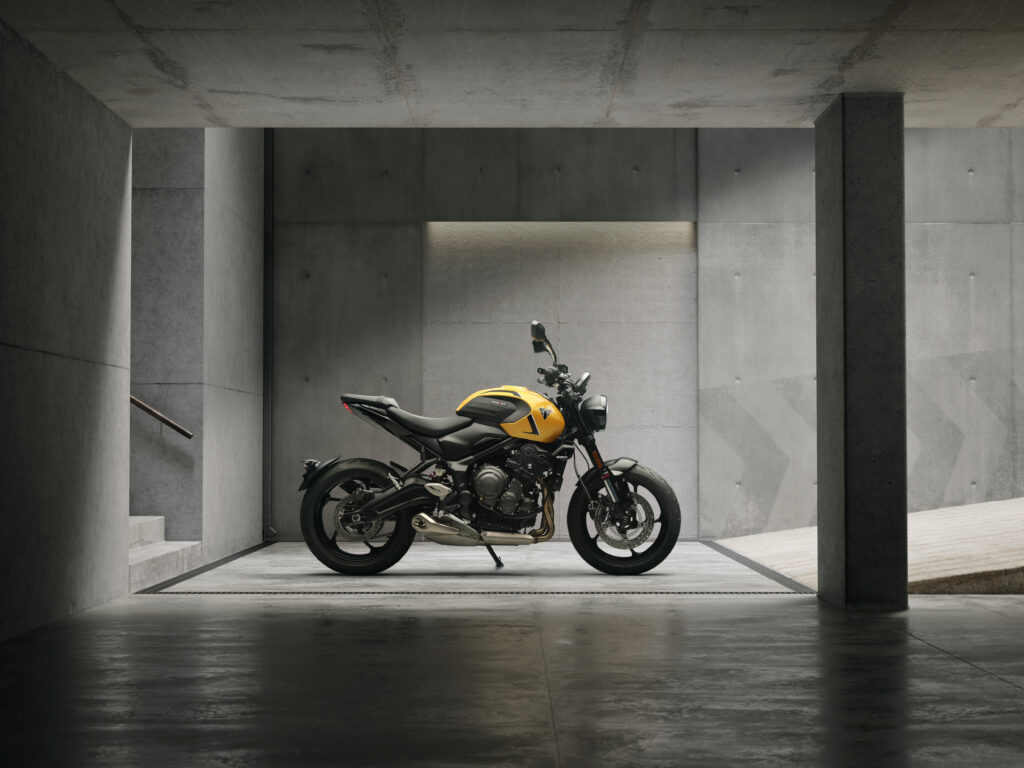
The 2026 Trident 660 is available in three colors: Cosmic Yellow, Stone Gray (for an additional 150 euros), and Snowdonia White. The redesigned fuel tank with its knee cutouts, the split rider-passenger seat, and the cables hidden behind the side fairings: the design strikes a balance without coming across as overly aggressive.
The simultaneous launch of the Trident 800 —announced at the same time—indicates that Triumph views this lineup as a long-term investment, not merely a means to boost sales volume. What the 660 demonstrates is that affordability is no longer a euphemism for compromise. For some manufacturers, it has become the constraint that forces them to make choices—and those choices can be good ones.
Cette publication est également disponible en :

