
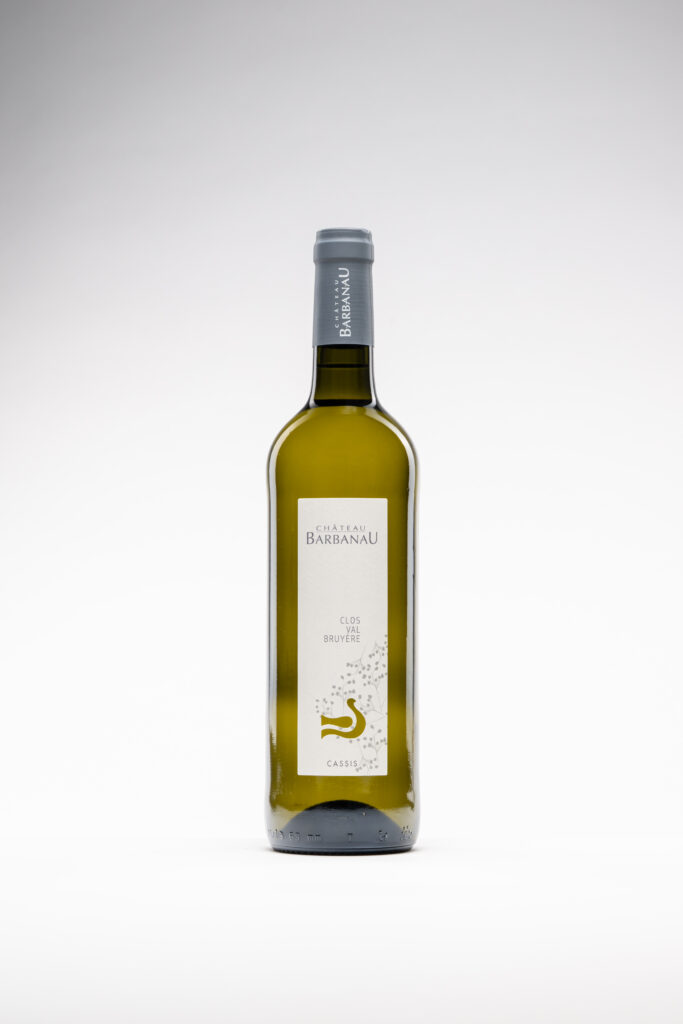
Just a few kilometers from the Calanques, Clos Val Bruyère reminds us that the winemaking history of the French Mediterranean isn’t all about rosé. This wine from Château Barbanau is part of an older tradition: that of the great white wines of Cassis, shaped by limestone, sea breezes, and ever-present sunlight.
In the collective imagination, Provence has become synonymous with rosé. Yet some appellations built their reputations on white wines long before the recent boom in summer wines. Cassis is part of this lesser-known region.
Clos Val Bruyère originates from a five-hectare vineyard situated on clay-limestone soils near the sea. The technical profile emphasizes this constant interplay between the soil, the sun, and the maritime influence. More than just a marketing point, this characteristic sheds light on the very nature of the wine: a white wine built around freshness despite a particularly sun-drenched Mediterranean environment.
The blend combines Clairette, Marsanne, Sauvignon, and Ugni Blanc. Each variety plays a specific role here. Clairette provides its Mediterranean backbone; Marsanne contributes to the texture; Sauvignon adds aromatic tension; and Ugni Blanc retains its historic role in many vineyards in the South.
The winemaking process emphasizes technical restraint. The Clairette undergoes skin contact maceration before fermentation in temperature-controlled stainless steel tanks. This approach allows for the extraction of more aromatic compounds while preserving a clear expression of the fruit. No attempt is made at showy aging, and no wood is used: precision takes precedence.
Another notable aspect concerns vineyard management. The estate practices biodynamic viticulture, and the grapes are harvested by hand. In a region facing increasing climatic challenges, this approach reflects a commitment to maintaining a close connection with the vine’s natural rhythm rather than systematically correcting its variations.
Details
Terroir: clay-limestone, direct maritime influence.
Area: five hectares.
Cultivation: biodynamic farming and hand-harvesting.
Winemaking: skin contact maceration using Clairette, followed by fermentation in temperature-controlled stainless steel tanks.
Production: ten thousand bottles.
Beyond the tasting experience, Clos Val Bruyère serves above all as a reminder that part of Provence’s wine heritage remains deeply rooted in terroir-driven white wines. In a region often reduced to a single color, Cassis continues to offer a different perspective on the Mediterranean landscape: saltier, more mineral, and deeply connected to the sea that surrounds it.
Cette publication est également disponible en :

