
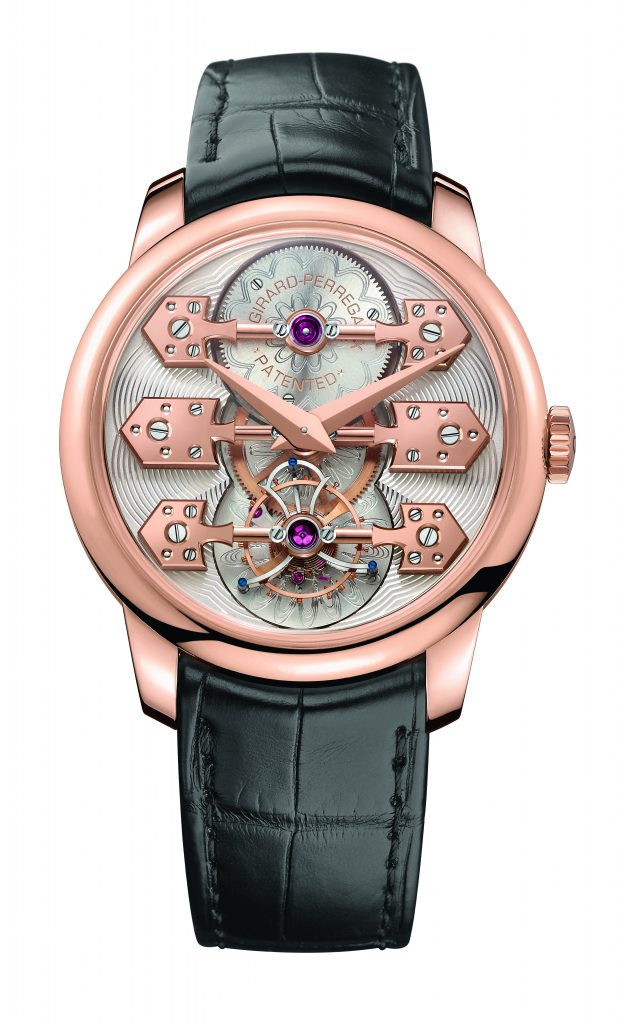
To celebrate its 225th anniversary, Girard-Perregaux is proud to present an exceptional Esmeralda Tourbillon in pink gold, inspired by the Tourbillon pocket chronometer with three gold bridges that won the gold medal at the 1889 Paris Universal Exhibition. Majestic, it is the mechanical expression of an aesthetic quest for the ultimate precision that the Maison strives for.
Girard-Perregaux’s history has always been marked by innovation and technical prowess. Renowned for the quality of its complicated timepieces and for its meticulous finishing, the Manufacture pays particular attention to the aesthetics of its creations.
The Tourbillon sous Trois Ponts, a reflection of the Manufacture’s expertise
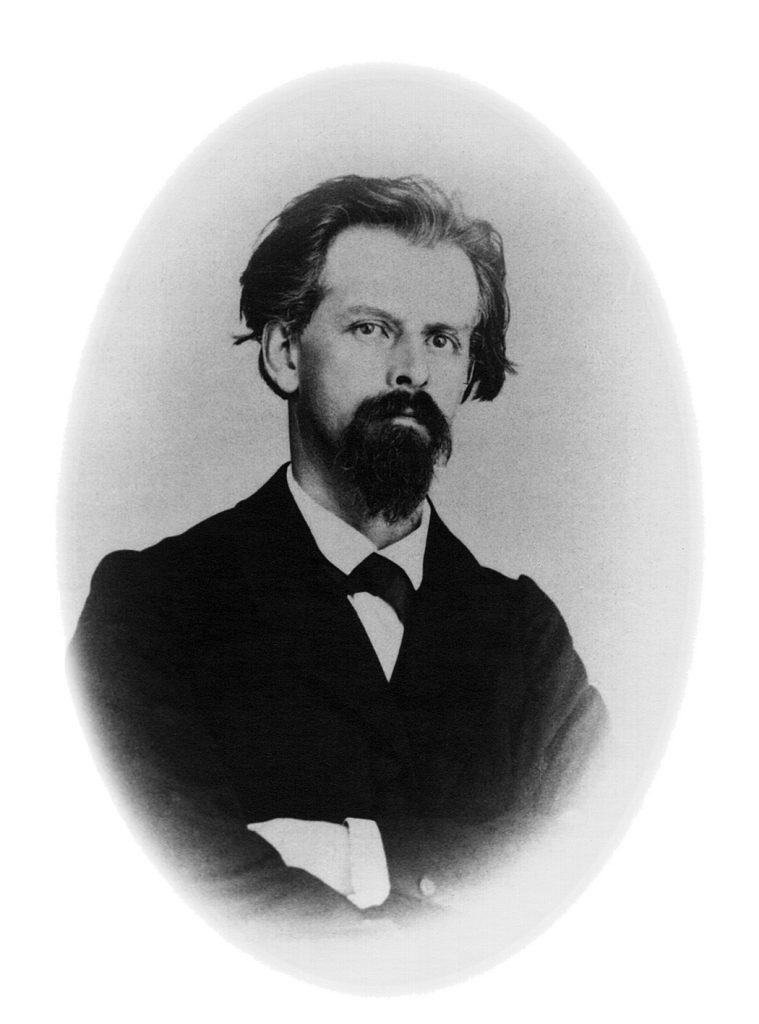
Ever since the founding of his manufactory, and even more so with the development of his first Tourbillon sous Trois Ponts watch in 1860, Constant Girard has been approaching watchmaking perfection. By designing a reference caliber with a unique architecture, Constant Girard-Perregaux immediately distinguished himself by inventing the theatricalization of mechanics. Thanks to the ambitious staging of its components, Constant Girard-Perregaux was able to give an artistic dimension to the tourbillon, previously seen as a purely technical mechanism. This almost minimalist construction won Girard-Perregaux a first prize in chronometry at the Neuchâtel Observatory in 1867, and once patented in 1884, the airy complication of the Tourbillon sous Trois Ponts d’or became a unique signature.
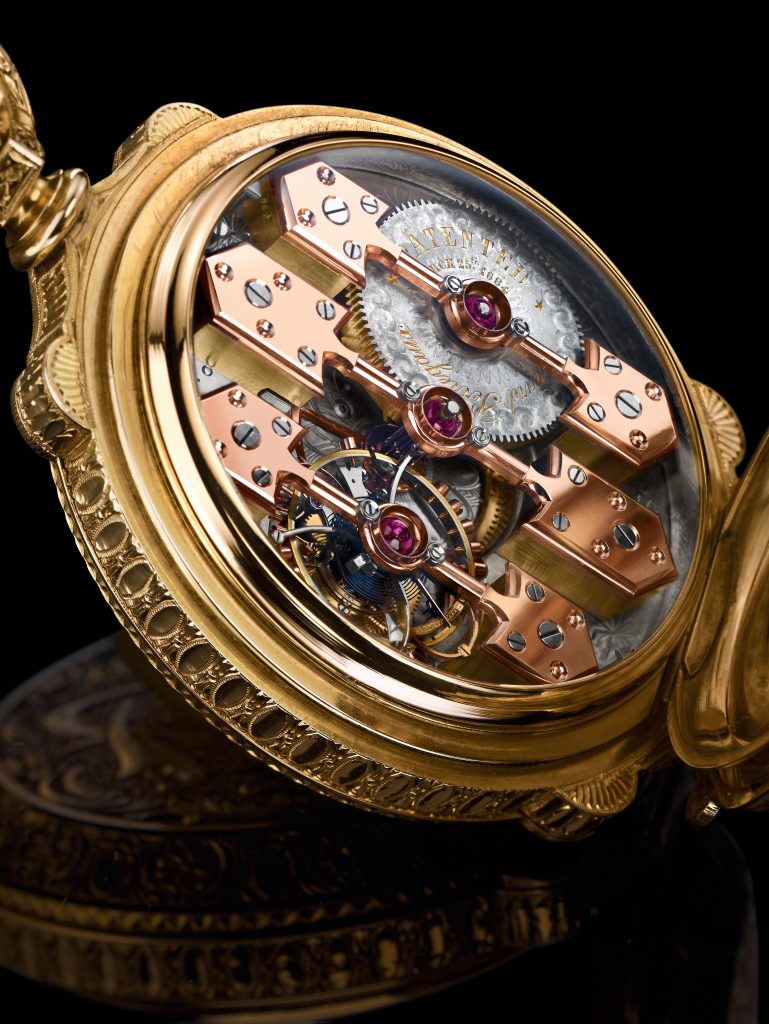
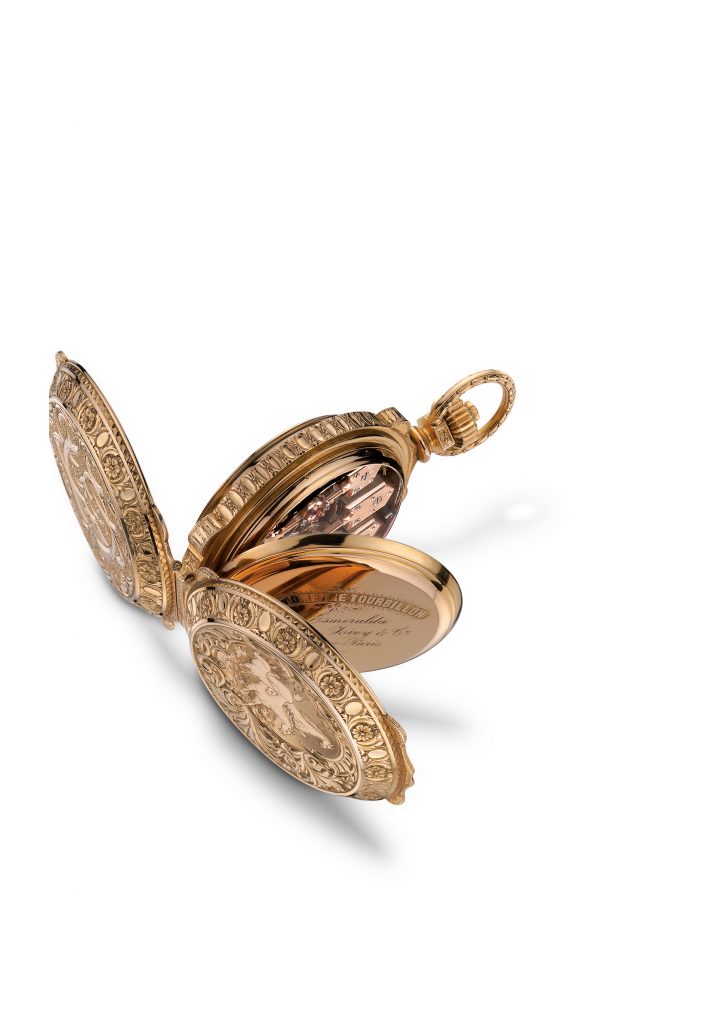
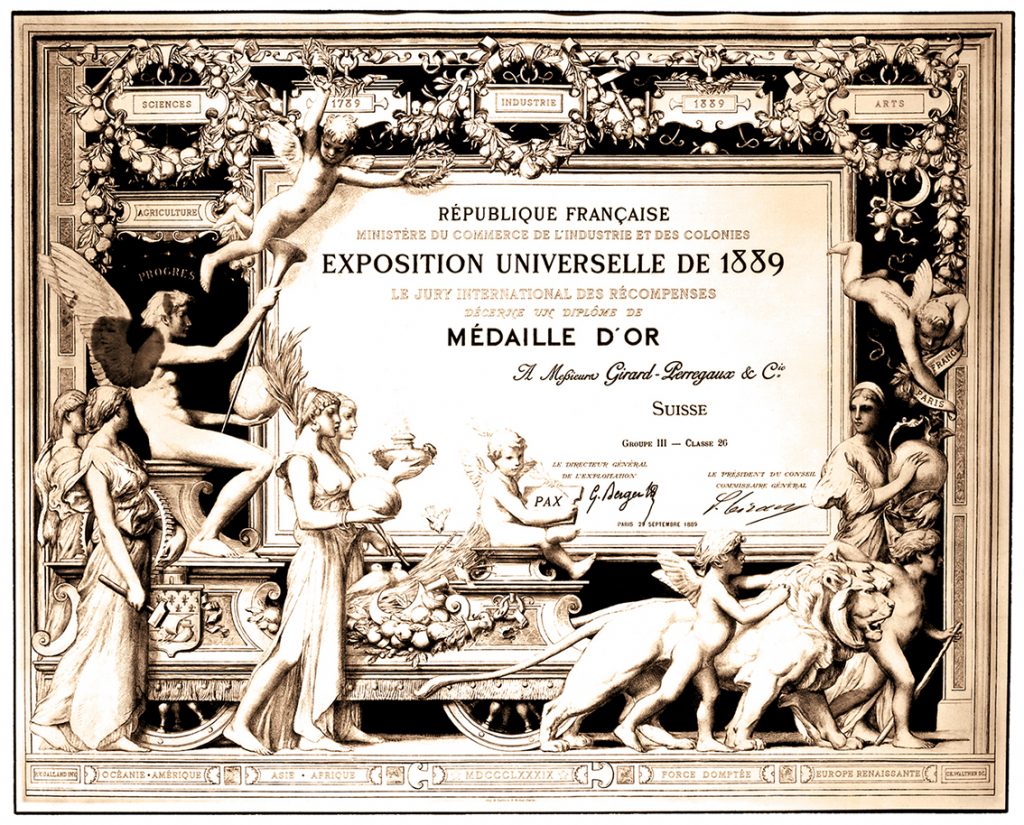
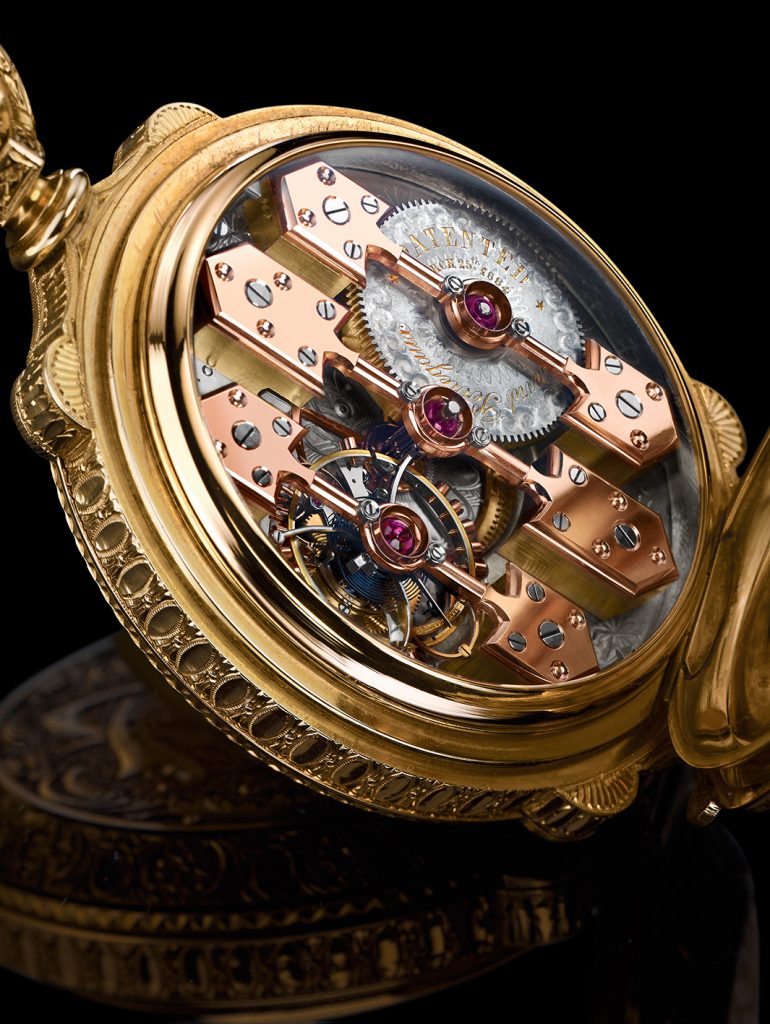
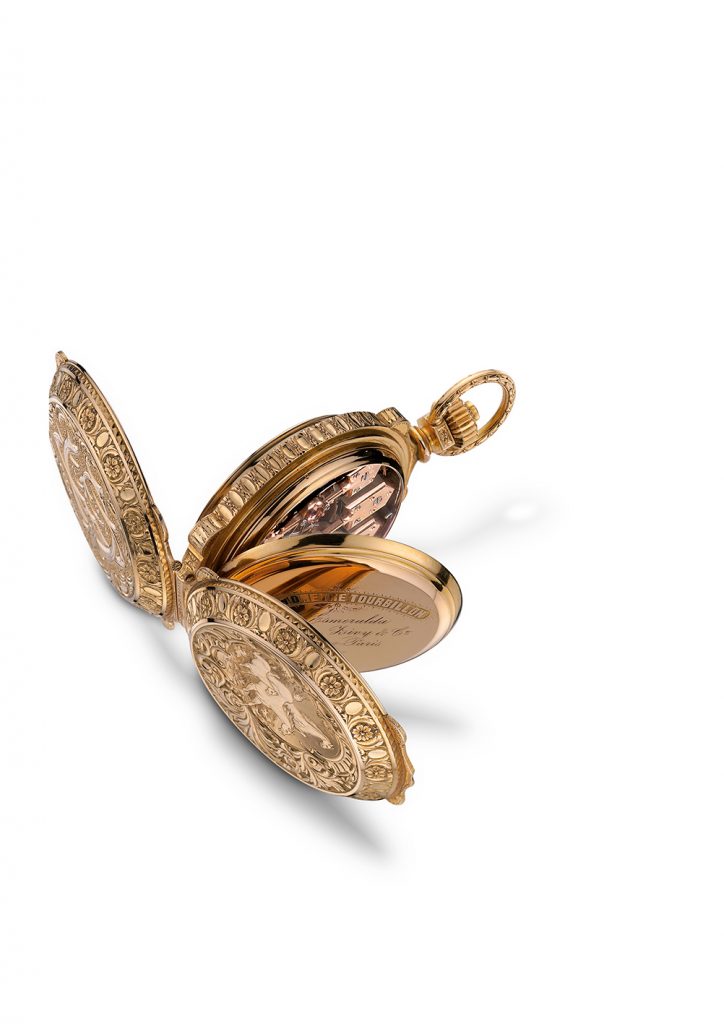
This watchmaking composition, already considered visionary in its day, gave the pocket watch with tourbillon, pivoted trigger and three gold bridges, presented at the 1889 Paris World’s Fair, the ability to carry off the gold medal in its category. Magnificent with its case engraved by the renowned artist Fritz Kundert, then at the peak of his art, this timepiece, whose name “la Esmeralda” was inherited from that of the Paris and Mexico City boutiques of the famous jeweler and watch retailer Hauser, Zivy & Cie, was to become the property of General Porfirio Diaz, then President of Mexico.
This marvel of exemplary finishing, a kind of watchmaking high point in terms of graphic balance and a master benchmark in terms of finishing and attention to detail, returned to the Girard-Perregaux Manufacture Museum collection in 1970 by a fortuitous coincidence. Transcendent and majestic with its unmistakable, unrivalled design, the Tourbillon sous Trois Ponts caliber goes down in history as the oldest watch movement still in production, since its general structure has remained unchanged since 1860.
The qualities of a Tourbillon caliber with Three Bridges
The stylistic minimalism of the Tourbillon sous Trois Ponts caliber has always been in keeping with the canons of haute horlogerie. This accomplished work of art, whose architecture respects codes based on the golden ratio, is assembled from start to finish by a master watchmaker, with components finished and embellished by craftsmen who are experts in their art.
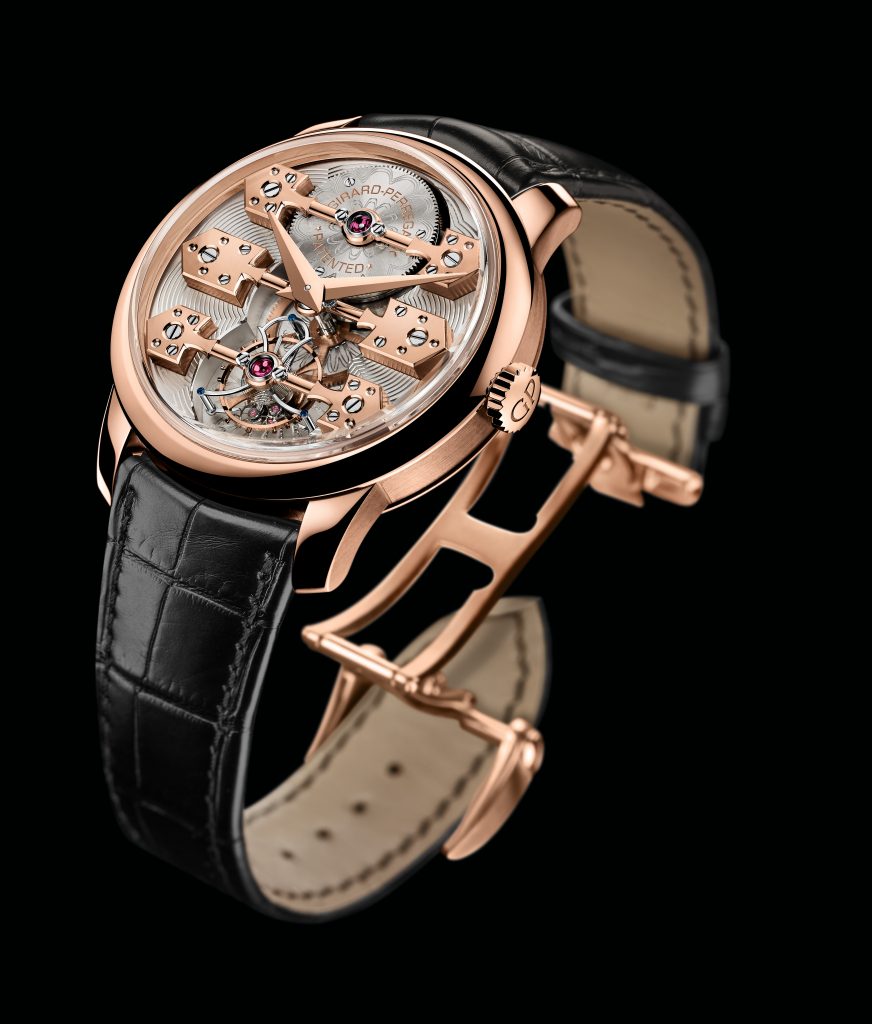
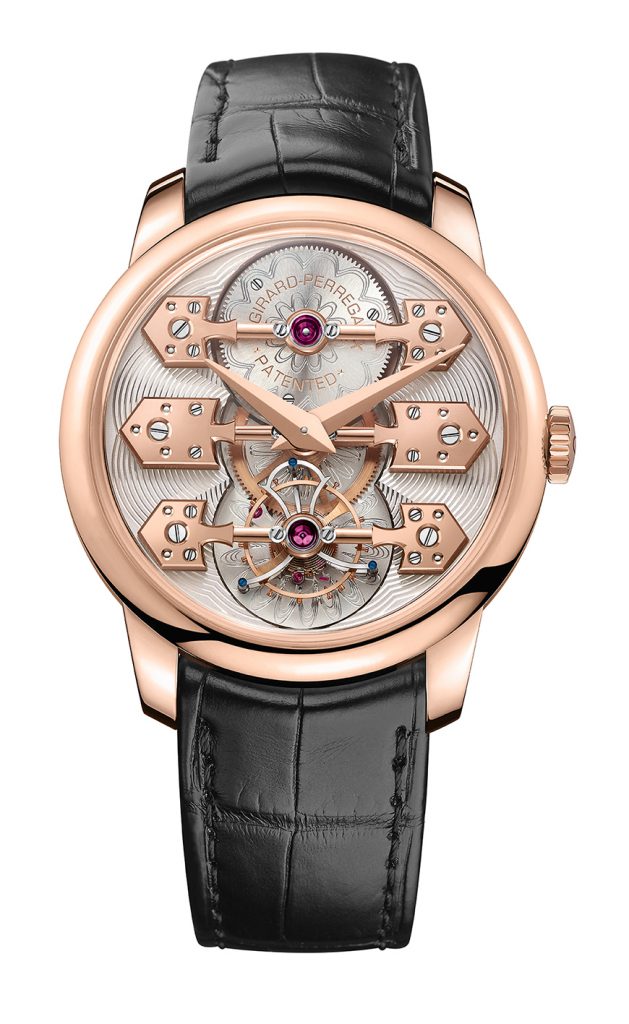
A true synthesis of aesthetic, technical and symbolic principles, the mainplate houses solid gold barrel, wheel and tourbillon bridges. Their double-arrow design is entirely hand-decorated and perfectly inspired by the bridges of the historic Esmeralda. The surfaces of the arrows are mirror-polished, the edges are hand-bevelled and the flanks are stretched. To enhance visual contrast and catch the light, the arms of the bridges are delicately cradled, in other words hand-rounded with care using a burnisher. Within this rigorous spatial organization, the three bridges arranged in parallel appeal to the eye.
At their center, diamond chatons, held in place by two screws, ensure that the barrel, center wheel and tourbillon cage are aligned on the same plane.
This 80-component cage is entirely hand-finished, requiring the extreme skill of the watchmaker who assembles it. With its characteristic hand-polished lyre, the Manufacture’s signature, this perfectly balanced organ, whose timed roundness has a bewitching quality, houses a high-moment-of-inertia balance oscillating at 21,600 vibrations per hour (3Hz).
This 16-line caliber (36.60 mm in diameter) is 8.41 mm thick, requiring two months’ work to assemble its 310 components, including 27 rubies.
The ternary structure of the mainplate is obvious at first glance. From the gold bridges to the organs visible from the front, right down to the number of arms in the tourbillon cage, all these elements deliver a message. A message reminding us that the number three and its multiples are the basis for measuring time past, present and future.
At the heart of the Esmeralda Tourbillon
Heir to the 27 Tourbillons sous Trois Ponts deposited by Girard-Perregaux at the Neuchâtel Observatory from 1865 to 1911, the Esmeralda Tourbillon tells the story of a passion for aesthetics and precision.
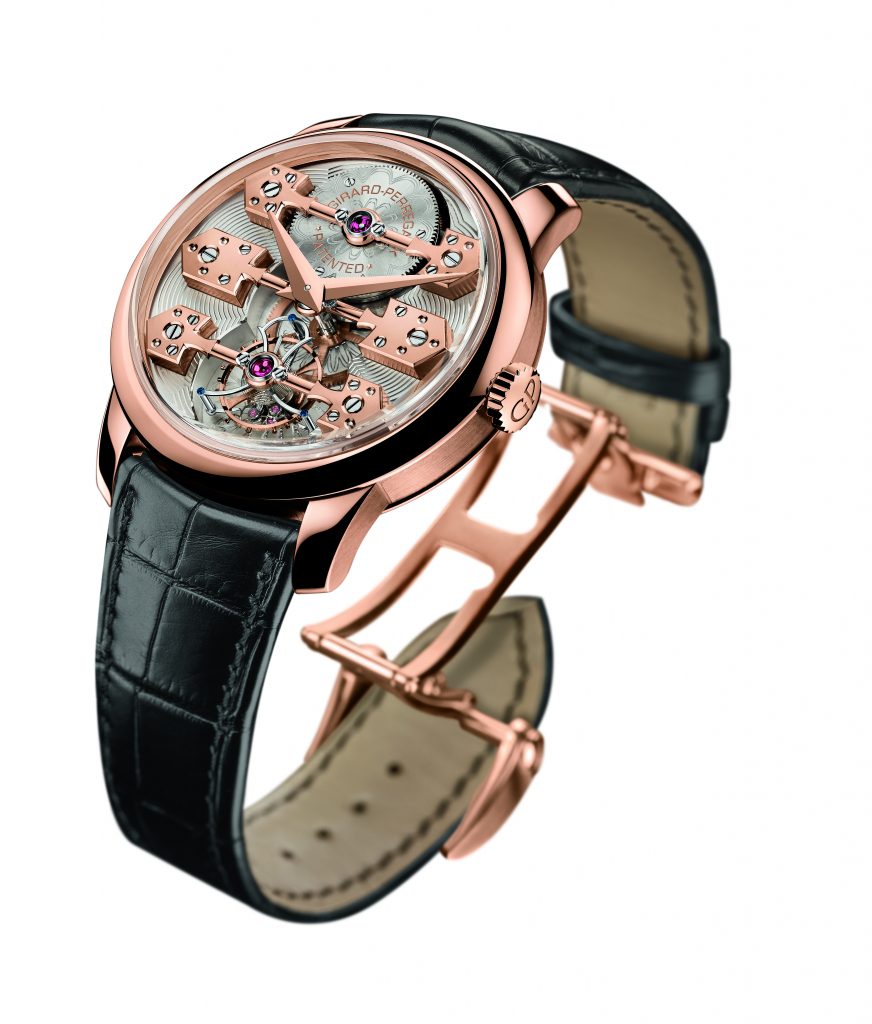
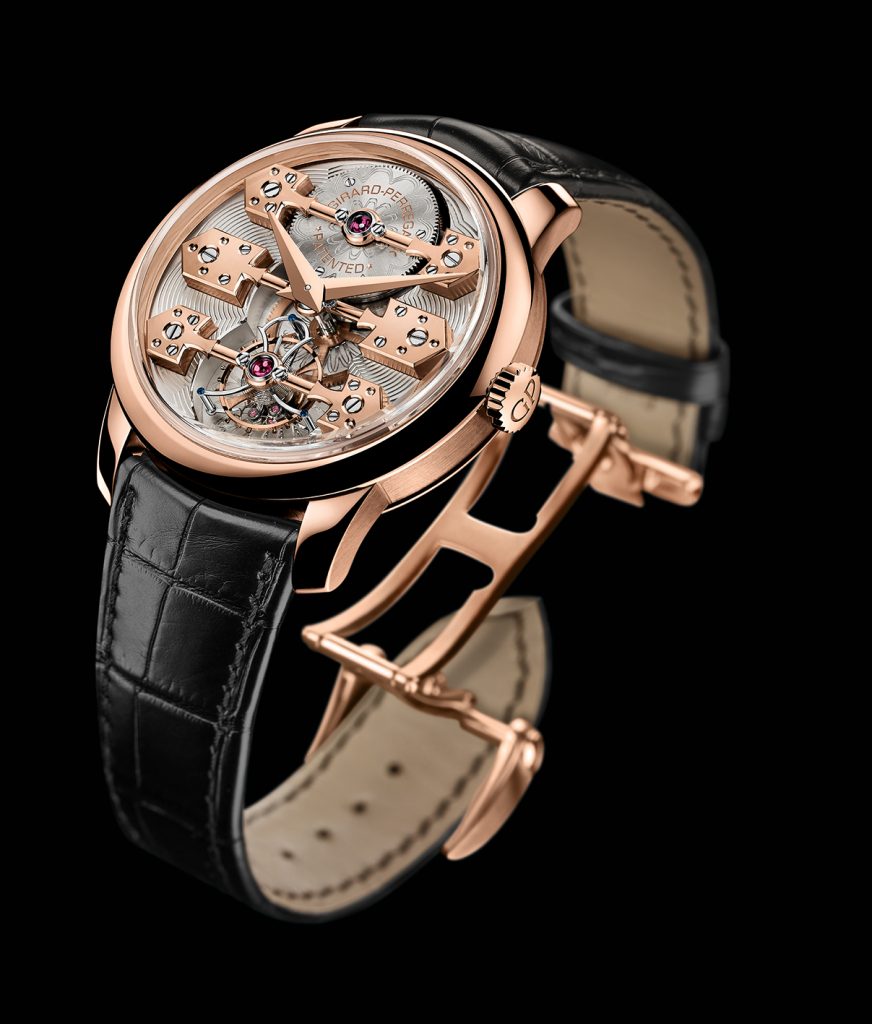
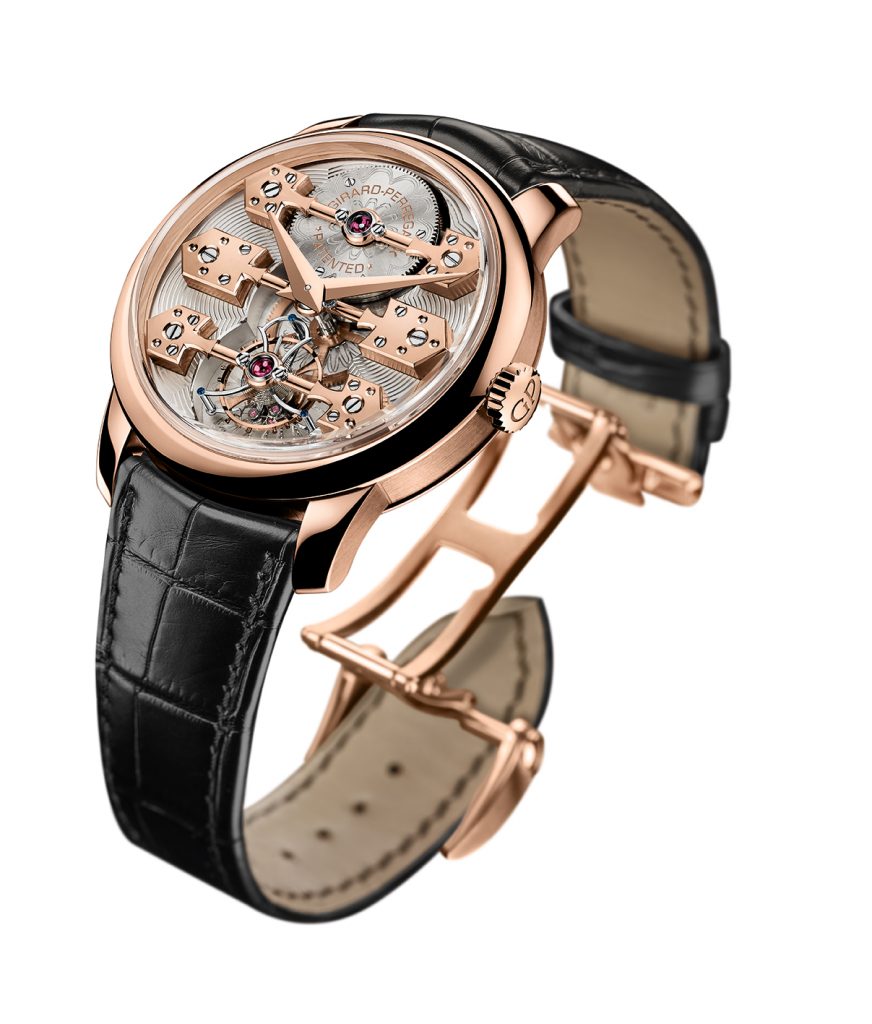
Its 18-carat pink gold case, 44 mm in diameter, houses the mechanical self-winding caliber Tourbillon sous Trois Ponts . Referenced GP09400, this generous 16-line movement, developed and manufactured in-house, perfectly occupies all the space in the case middle and is equipped, for the occasion, with a tourbillon cage 14.3 mm in diameter and a balance 10.5 mm in diameter.
In the same spirit, the unidirectional automatic winding system developed by Girard-Perregaux has been innovated and now uses a rotor concentrically placed under the barrel rather than on its periphery. Thanks to this ingenious construction, the watchmakers were able to increase the diameter of the barrel drum and thus extend the length of the spring, guaranteeing the timepiece a power reserve of at least 60 hours, compared with 48 hours previously.
This tourbillon watch features a cage with pure lines whose lyre-shaped geometry echoes that developed by Constant Girard-Perregaux. Traditional and contemporary, this marvel of a watch inspired by one of the most emblematic models in watchmaking history, is worn on a black alligator leather strap fastened at the wrist by a triple folding buckle in pink gold.
Cette publication est également disponible en :

