
The House of BOUCHERON has always had a special bond with India, a land of inspiration and fascination. Since Louis Boucheron’s first trip there in 1909, the architecture of its palaces and the colors of its cities have never ceased to inspire the House in its creations.
-

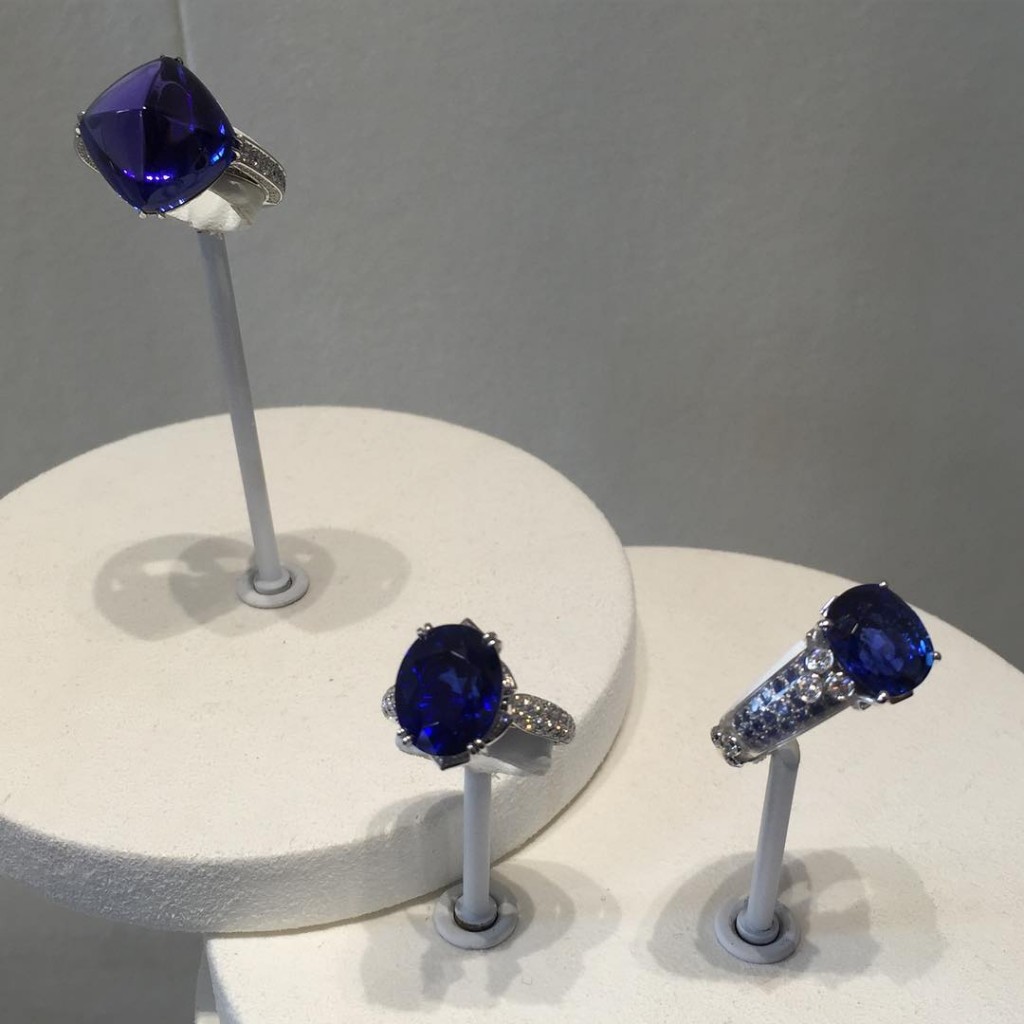
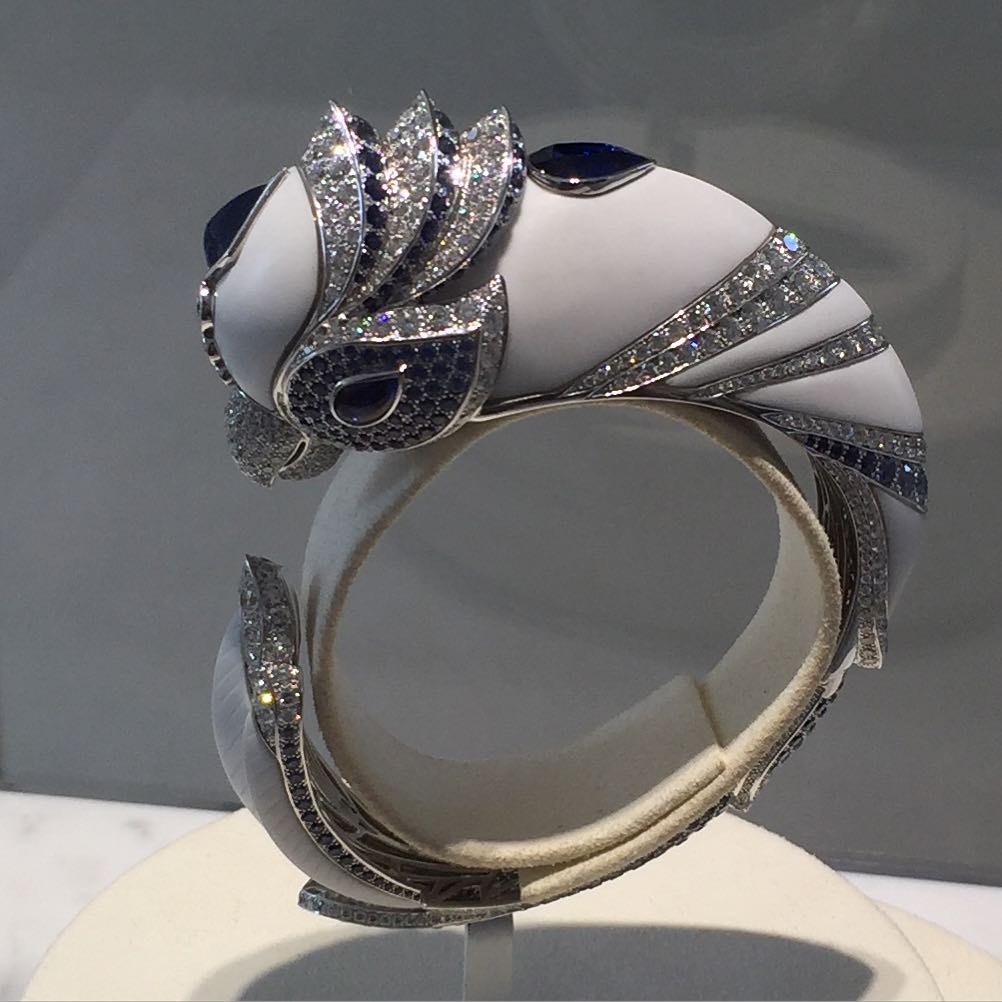
- Bague Jodhpur, or blanc 750 ‰, diamants, saphirs et cristal de roche.
-
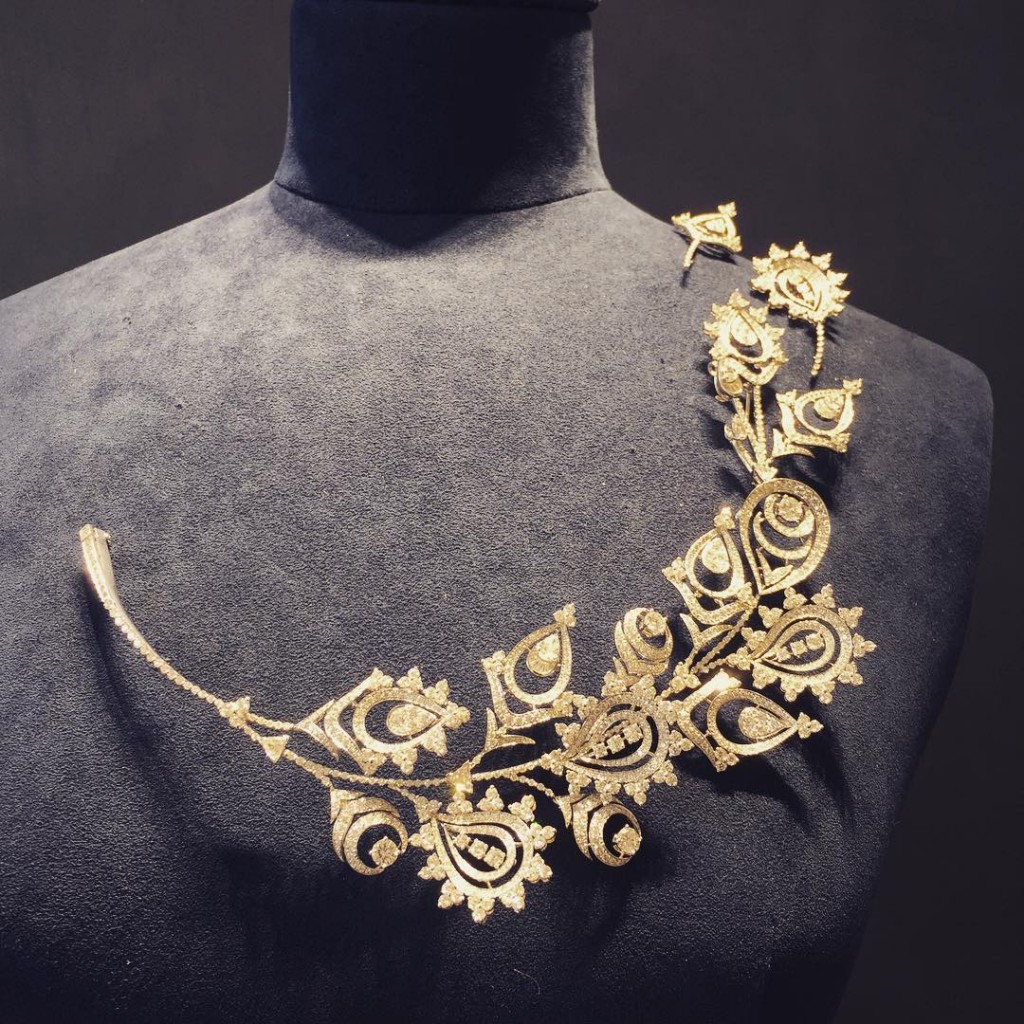
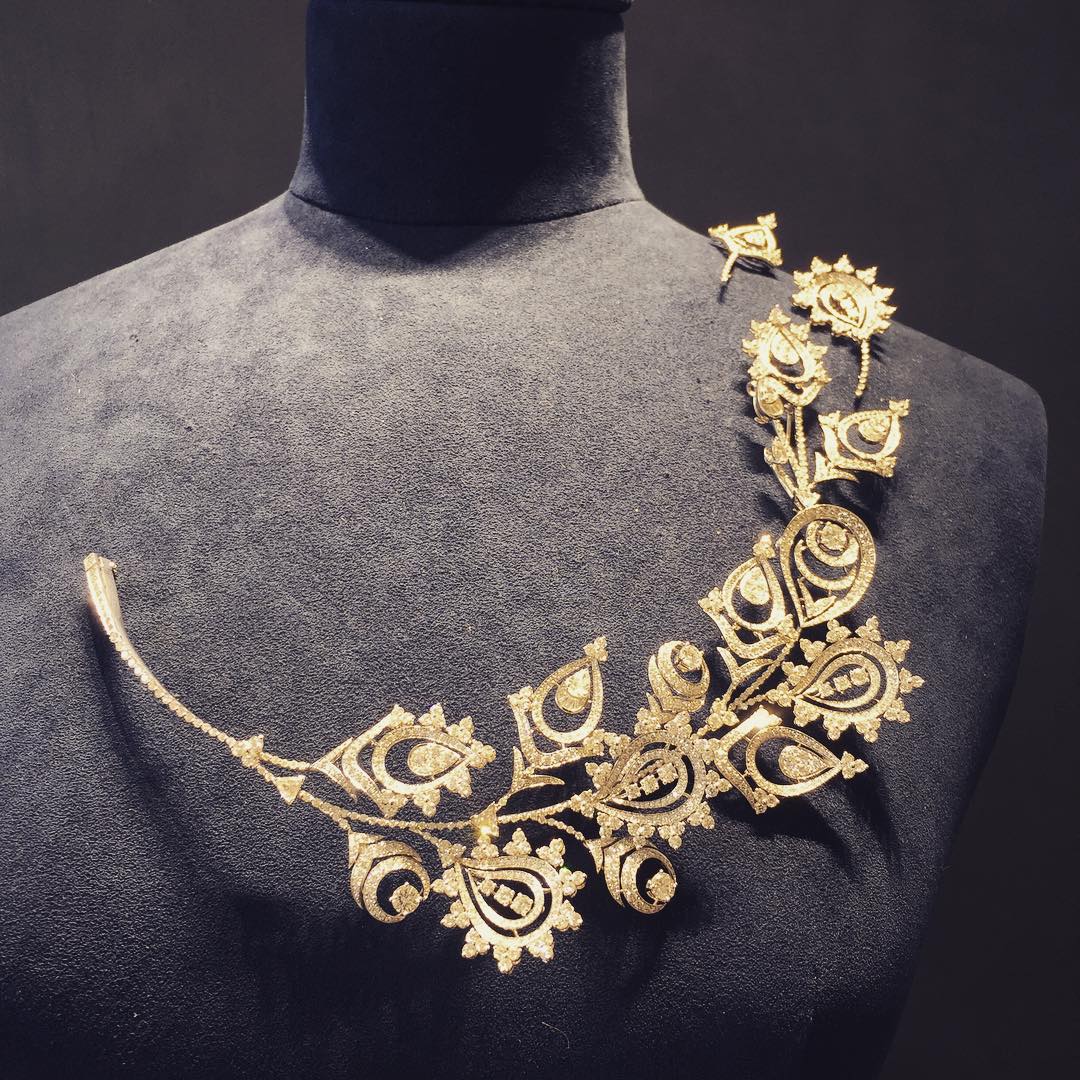
- Boucheron : Parure ( collier et deux broches ) Mendhi ; or blanc et diamants; preview collection haute joaillerie Bleu de Jodhpur
-
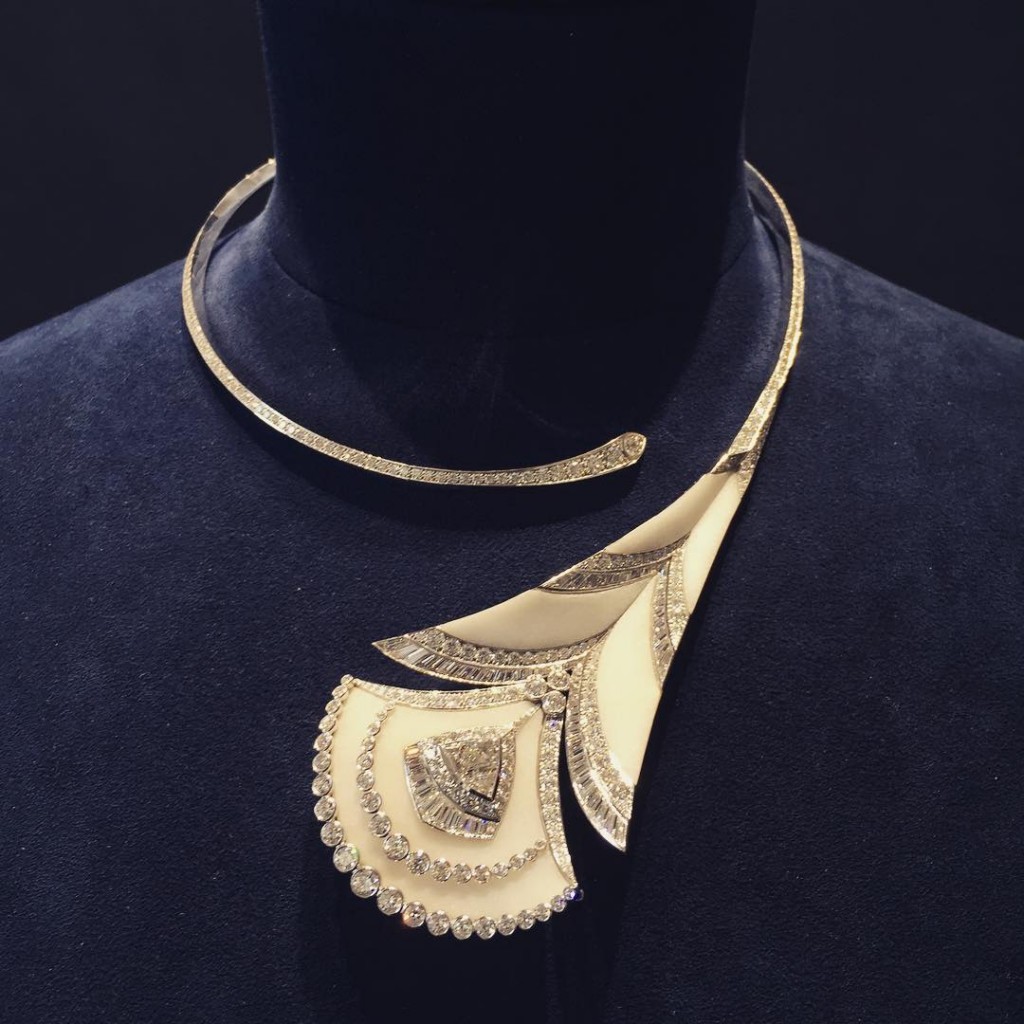
- Collier Plume de Paon, or 750 ‰, diamants et marbre de Makrana.
-
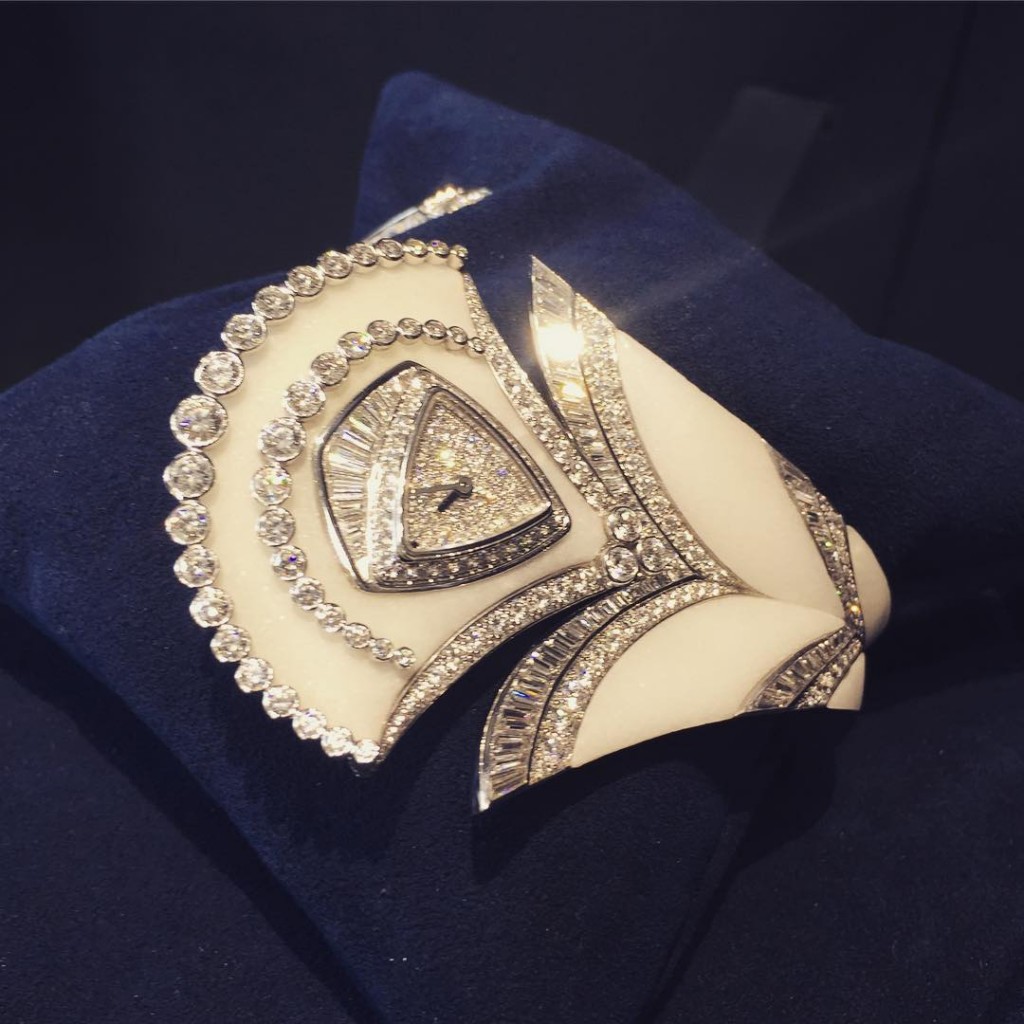
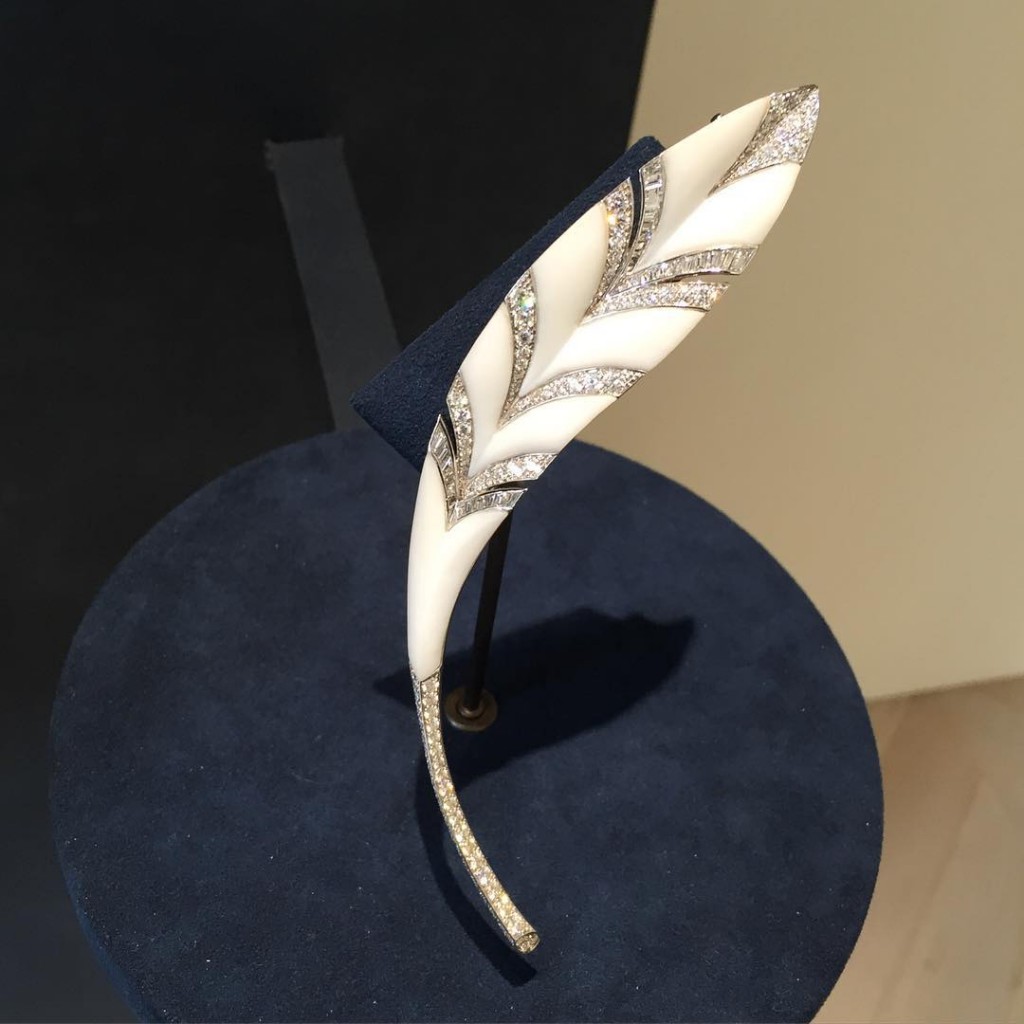
- Broche Aigle de Jodhpur, or 750 ‰, diamants et marbre de Makrana
-
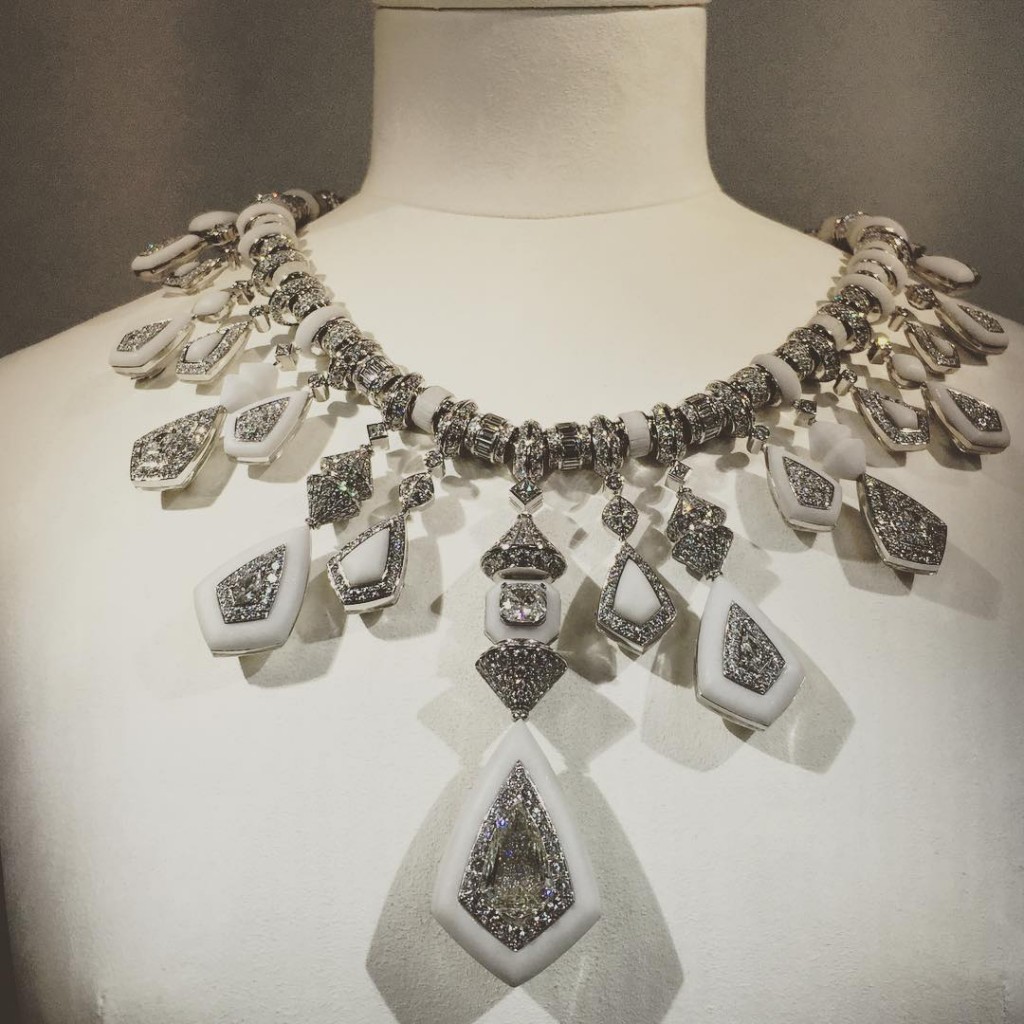
- le collier Jodhpur est une remarquable pièce réversible comme le montrent les photos. Or blanc 750 ‰, diamants dont centre de 6,01 cts, saphirs, cristal de roche, marbre de Makrana.
-

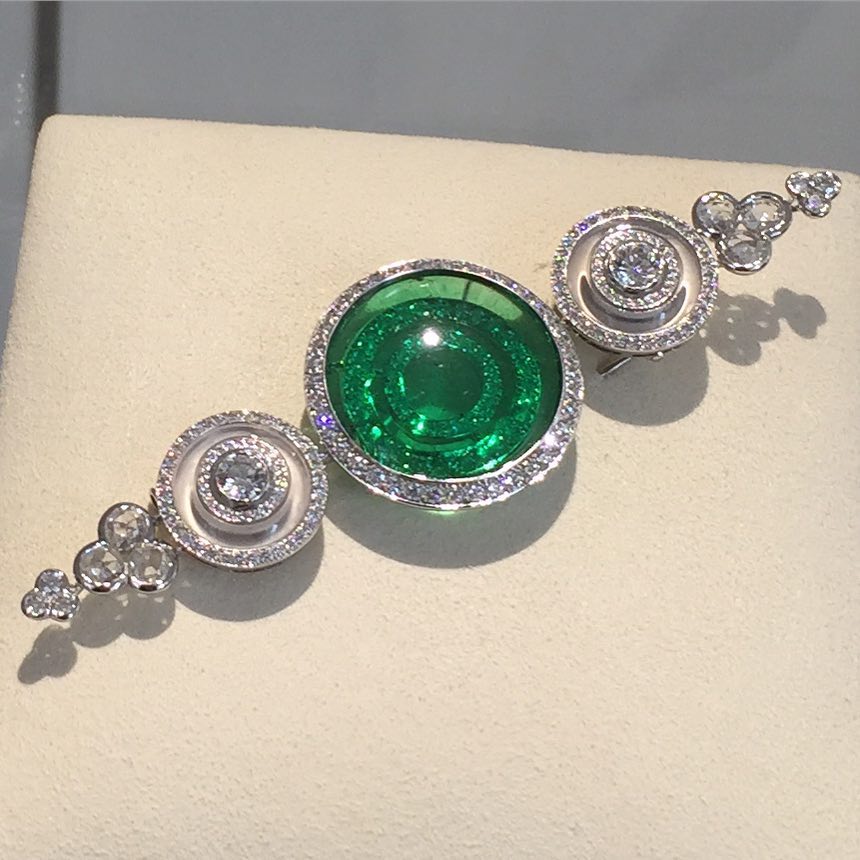
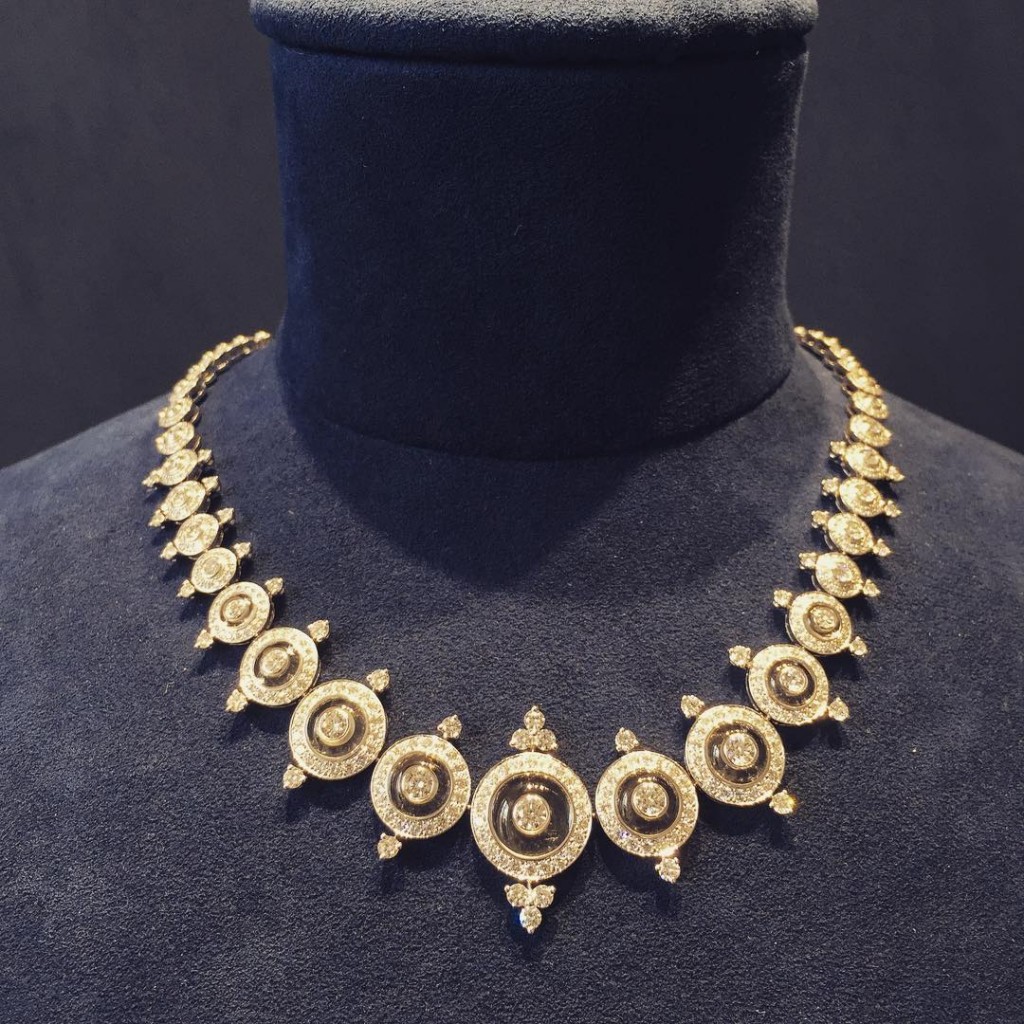
- Broche Maharani, or blanc 750 ‰, diamants, cristal de roche et centre émeraude de Colombie de 19,87 cts
-
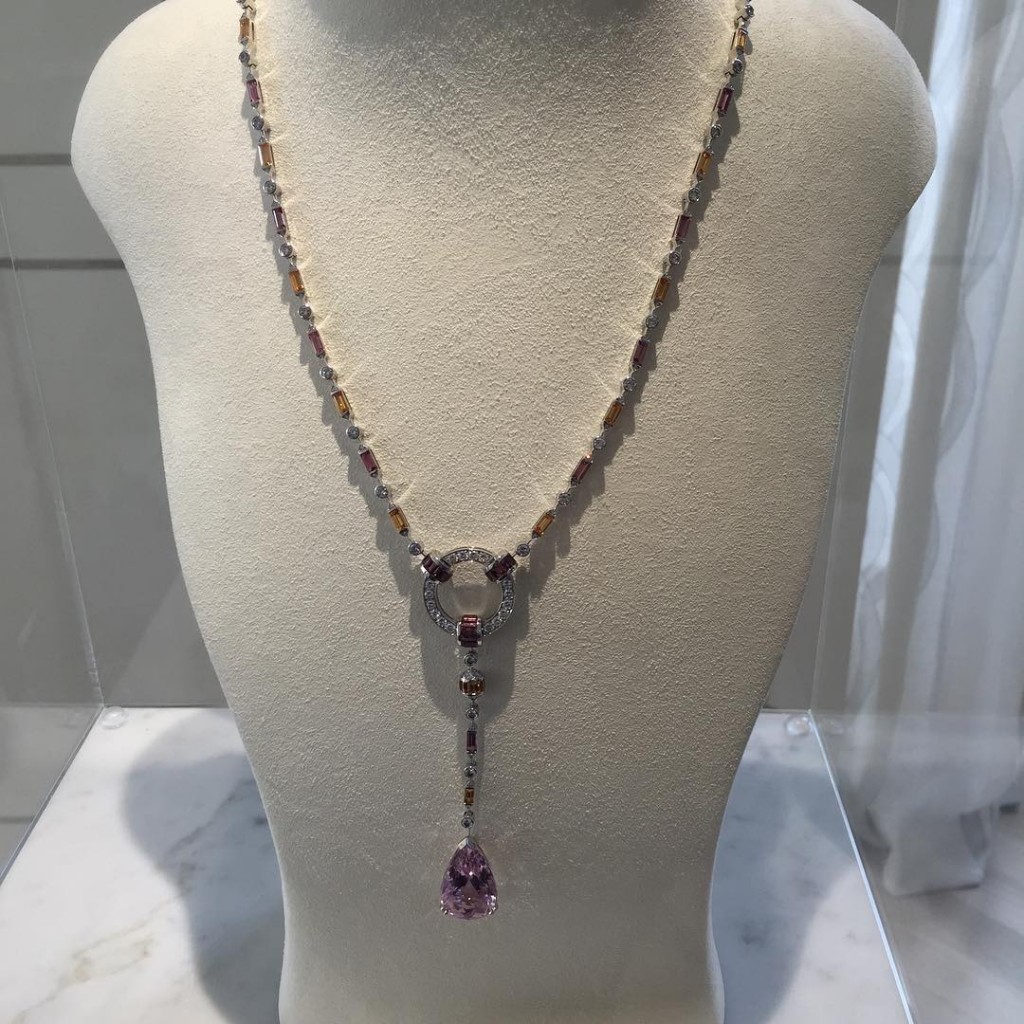
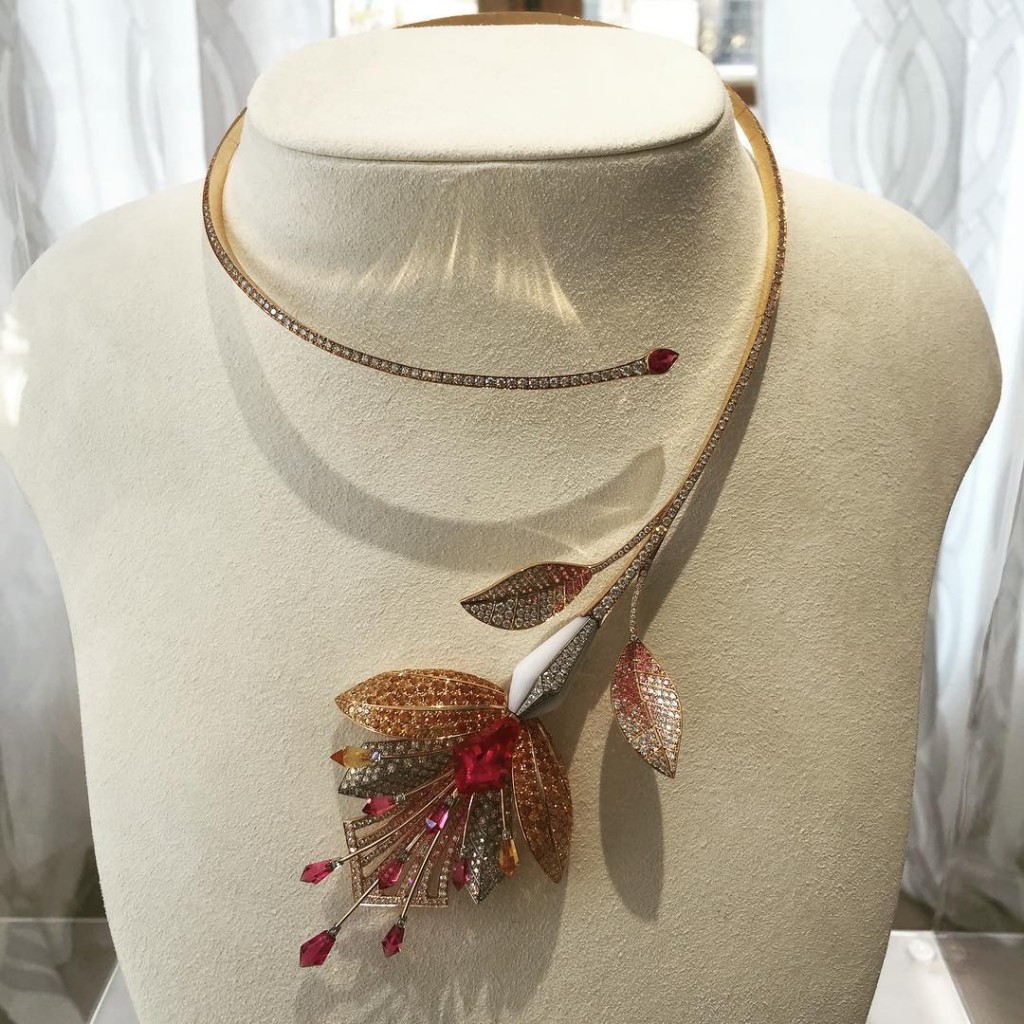
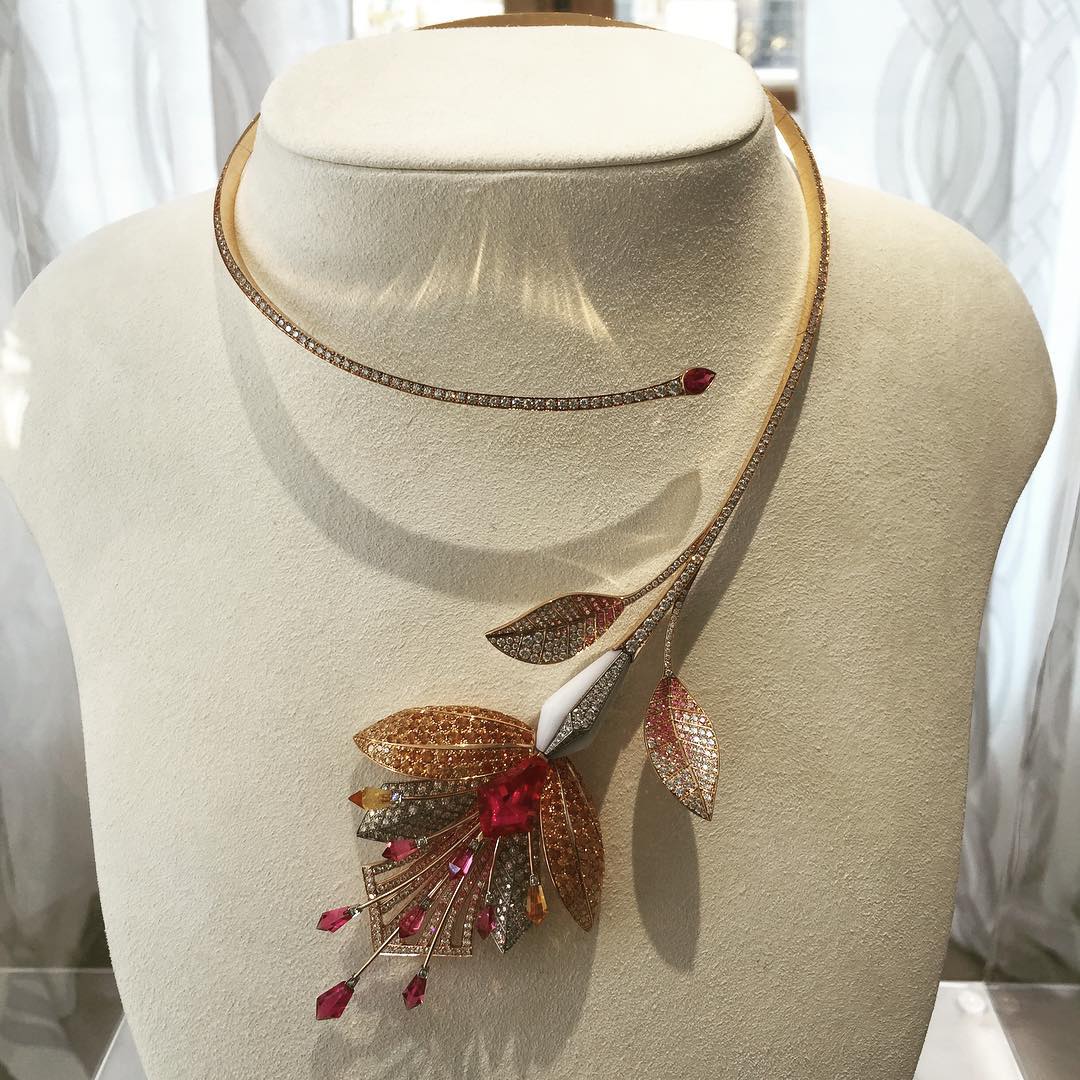
- Collier Fleur de Lotus : Tourmalines, rubellites et grenats sur or blanc; collection haute joaillerie Bleu de Joghpur, Boucheron
The Bleu de Jodhpur high jewelry collection is a bold jewelry interpretation of the blue city.
JODHPUR
The House’s first fully reversible necklace, the Jodhpur necklace is a contemporary transcription of the white and blue lights of the Indian city.
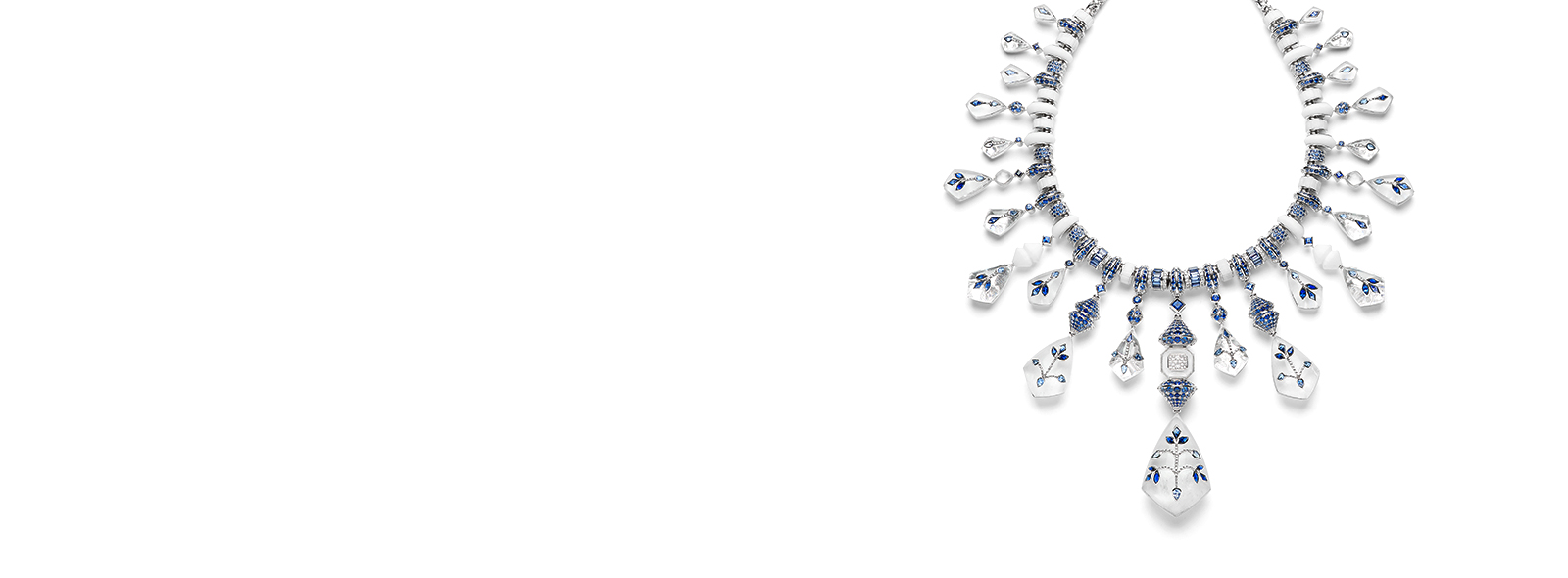
The Jodhpur necklace is directly inspired by a necklace from the most fabulous order ever placed with a Place Vendôme jeweler by the Maharajah of Patiala in 1928. BOUCHERON created this necklace, whose structure is typical of traditional Mughal jewelry. This jewel is as precious upside down as it is right side up, the reverse side being exclusively for the pleasure of the owner’s eyes.
To create the Jodhpur necklace, Boucheron’s craftsmen sourced the most precious and sought-after Makrana marble. Extracted from the city’s quarries, the stone has the same origin as that used to build the Taj Mahal palace.
The 6.01-carat diamond set in the necklace’s central motif was selected for its kite-like shape and ideal proportions.
The Jodhpur necklace is in the tradition of the great Indian princely jewels, featuring an extremely elaborate lining.
The Maison has taken this particularity a step further to make it an entirely reversible object, making it part of the multi-wear tradition. Accustomed to the excellence of a perfect finish, where the back of the jewel is always as good as the front, Mains de Lumière nonetheless had to rise to the major challenge of an imposing piece that had to remain supple, light and comfortable to wear.
In this theme dedicated to Jodhpur, the figurative dimension of the city fades away to preserve only its spirit.
On the back of the necklace, enchanting light plays and is reflected in the myriad of small blue and white houses. In this way, the inlaid jewellery reflects the memory and wonder of Jodhpur, while the place retains the contours and brilliance of its immaculate marble palaces.
NAGAUR
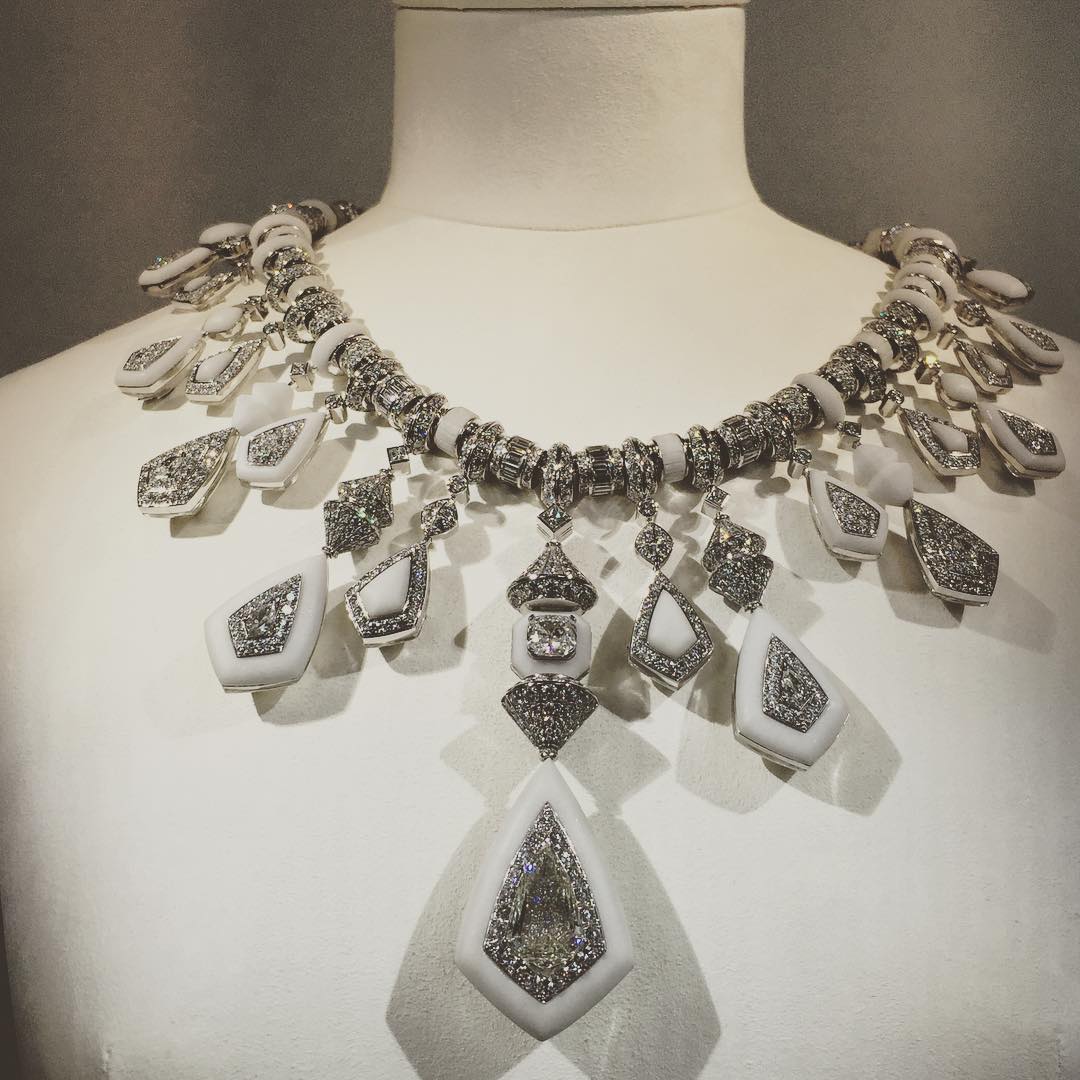
Necklace Talisman, Nagaur is inspired by the fortress city, a miracle in the middle of the Thar desert, whose contours shelter delicate palaces, pavilions and sun-drenched gardens, transcribed in dazzling jeweled whiteness.
Like a precious souvenir, the House has brought back a bit of Rajasthan. A few grains of sand from the Thar desert, forever frozen in Nagaur within the rock crystal. 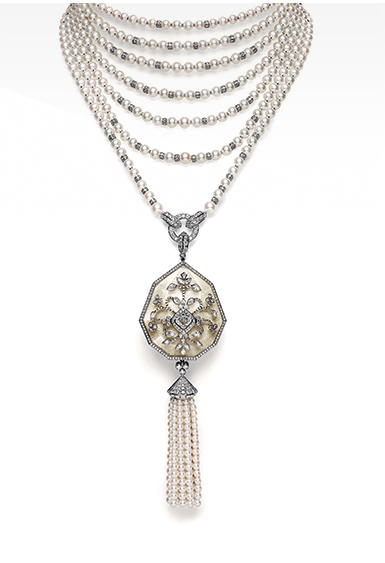
The Design Studio drew its inspiration from the ceremonial necklaces of the most prolific period of the Great Moghuls, illustrating the grandeur and splendor of the Rajput princes.
In addition to the shapes and materials traditionally used, the House uses gold, a sacred metal in India, diamonds and pearls, to which it adds the modernity of rock crystal, which depicts the contours of the Ahhichatragarh citadel.
The diamonds encrusted in rock crystal symbolize the flowers that grow in the middle of the desert. The Artisan became a sculptor to endiamentize the necklace motif with extreme precision.
The Nagaur necklace is traditionally strung on silk thread. One by one, the pearls have been interspersed with small diamond-paved gold cylinders that contribute to the flexibility of the multi-row design. An all-diamond light ring with three attachments joins the necklace to its central motif. The central motif is delicately encrusted with diamonds that, in the form of a stylized arabesque, depict desert flowers. The symmetrical set is organized around a 2-carat cushion diamond water feature, a princely miracle in the middle of the desert.
The strings of pearls are seven in number, an explicit reference to this sacred number for Indians. Seven” – or “saptan” in Sanskrit – carries many meanings, including infinite plurality. It is found in Hindu cosmogony: 7 spheres of the earth, 7 seas, 7 states of consciousness, 7 subtle energies, etc. Marriage is consecrated if the spouses have walked around a fire 7 times; they will then be united for 7 lives…
LOTUS FLOWER
The richness of the Fleur de Lotus necklace lies in the talent of the gem-searcher, who has sourced tourmaline, rubellites and spessartite garnets whose gradations of color imitate lotus petals to perfection.
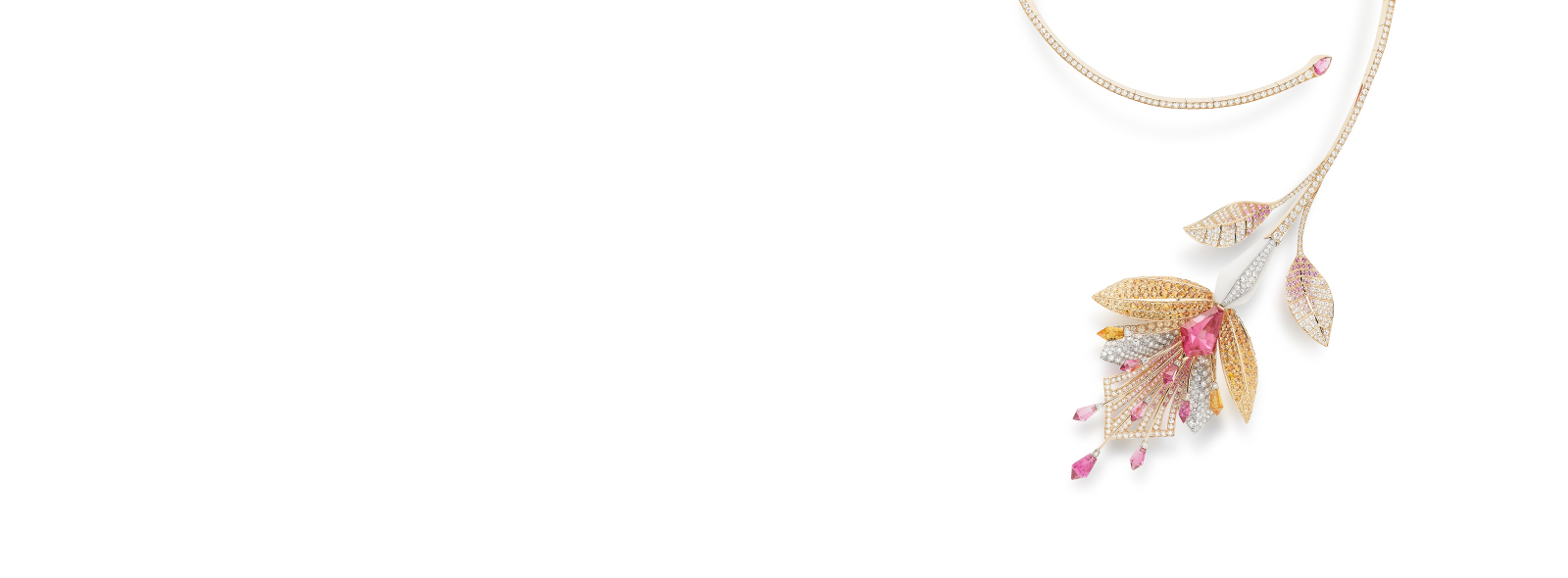
The House was inspired by the “Garden & Cosmos” artistic movement and celebrates the richness of two distinct painting styles born in Jodhpur and commissioned by three generations of Maharajahs from the 17th to the 19th century. Among the tones sought for the Fleur de Lotus set, the stone finder selected a deep pink tourmaline, as if it had escaped from one of the royal paintings of Jodhpur. Les Mains de Lumière meticulously worked every detail of the central motif to bring the flower to life. The craftsmen’s know-how is also expressed in the work on the flower’s volume, which is not fixed but expresses its liveliness. As usual, nature is triumphant at Boucheron. The Fleur de Lotus set is the only one in the collection to be set in rose gold. This perfectly matches the sand, peach, orange and pink tones of the stones, bringing them light and energy.
MEHNDI
The Mehndi set celebrates the legendary elegance, delicacy and beauty of the Rajput woman. This creation has been crafted in the purest jewellery tradition. The delicate openwork motifs are delicately assembled for an airy effect where the metal seems to disappear.
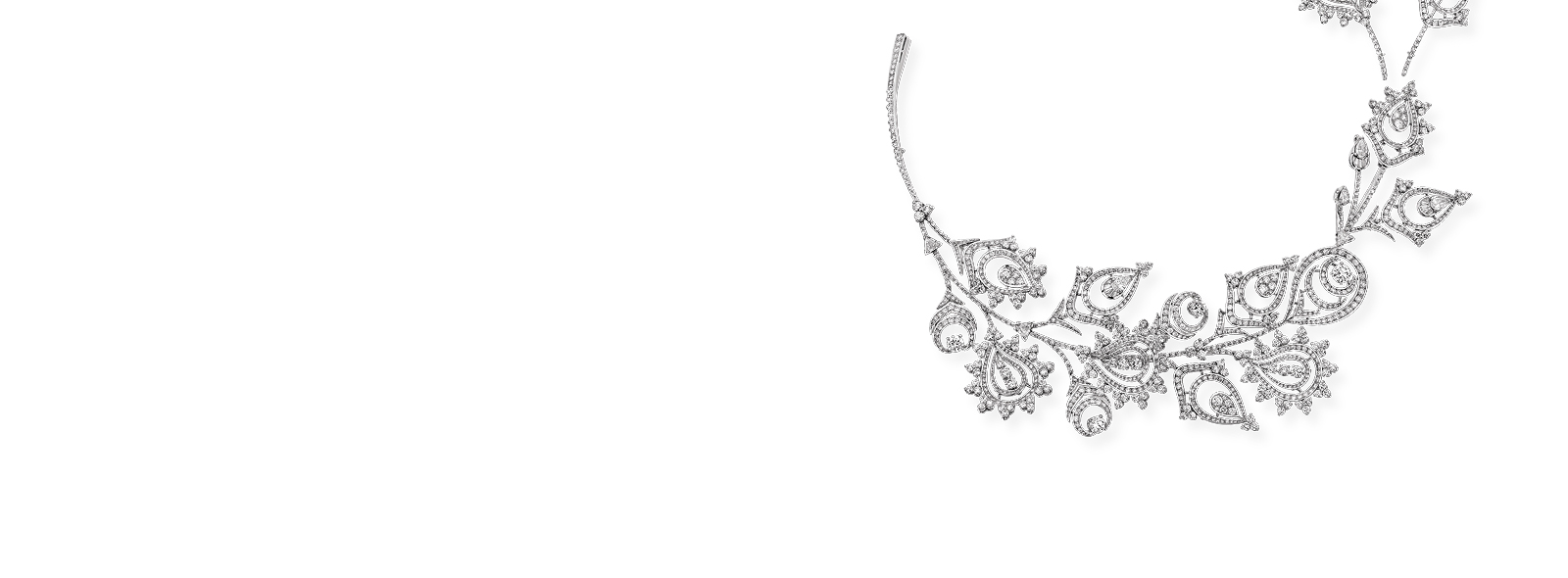
In 1905, the Maharajah of Kapurthala commissioned this “Paisley” turban aigrette, adorned in its center with a 22-carat briolette diamond. The Mehndi brooch, which can be transformed into a necklace, takes its inspiration from this and is immediately in line with the BOUCHERON tradition of multi-wear jewelry.
A challenge like so many others for Mains de Lumière…
To achieve this diamond embroidery, the dream artisans created openwork motifs around the center stones.
Cette publication est également disponible en :

