
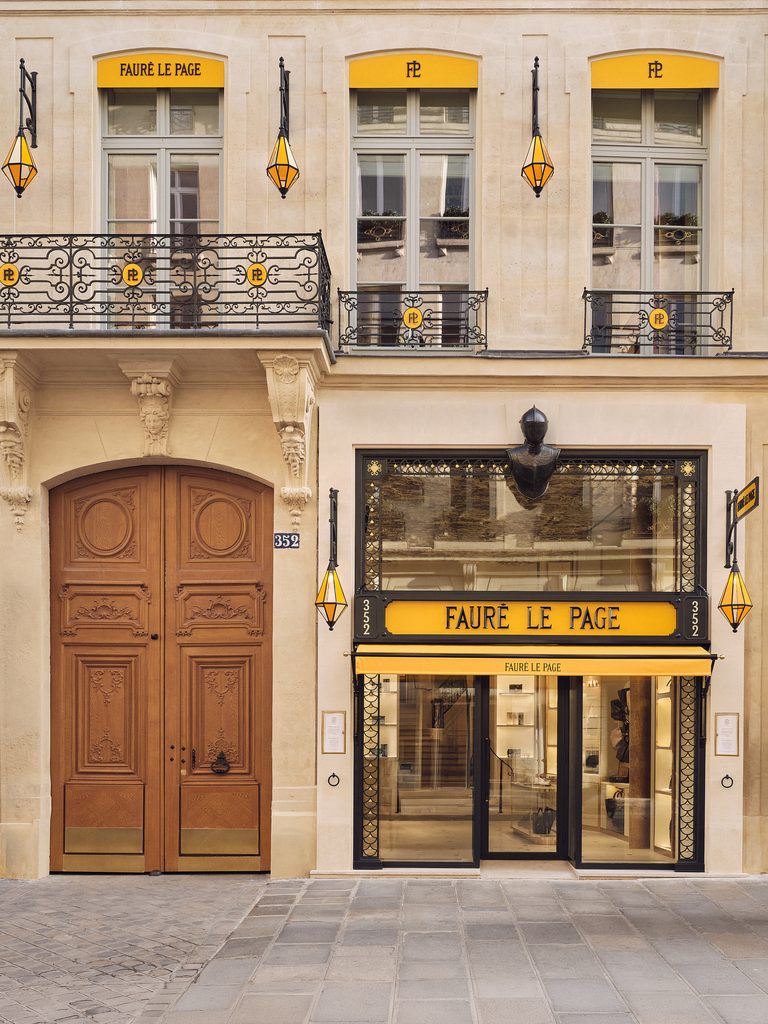
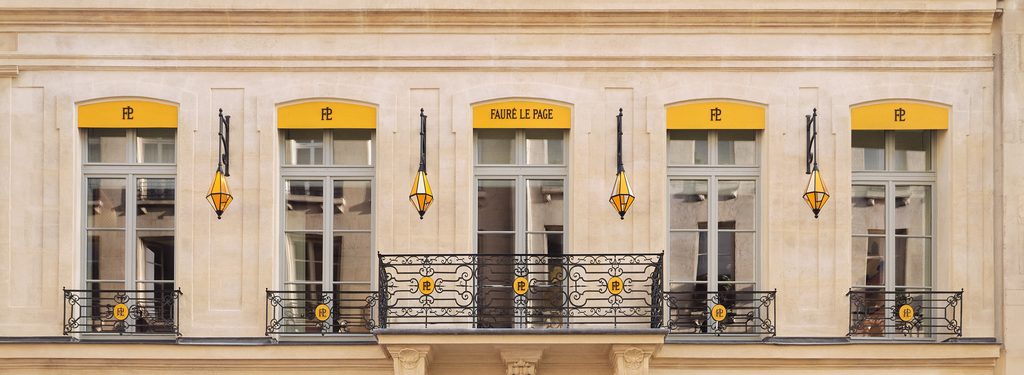
At 352 rue Saint-Honoré, Fauré Le Page opens the Maison Saint-Honoré in a townhouse whose construction began in 1708. The leather-goods House places its collections there alongside an armoury, a library and its archives as an arquebusier. This is how the House, born in 2009, presents itself with its eighteenth-century elder.
Two Houses under one roof
Fauré Le Page tells its story in the plural. A first House was born in Paris in the eighteenth century, at the start of Louis XV’s reign: seven generations of the same family worked there as arquebusiers to Kings and Princes, with weapons that the House describes as “more for show than for fighting”. The second was born in 2009 at 21 rue Cambon, a few steps from place Vendôme, and makes bags and accessories. It has eleven points of sale, two of them in Paris. The Maison Saint-Honoré brings the total to twelve, and the House presents it as “a House for the House”.
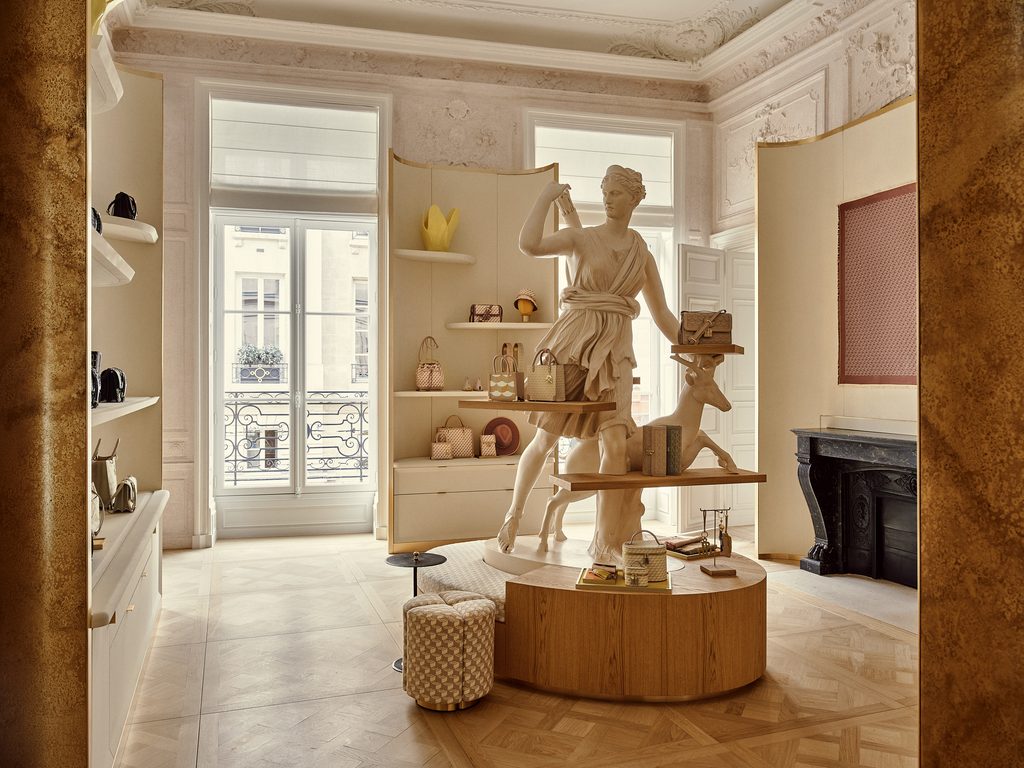
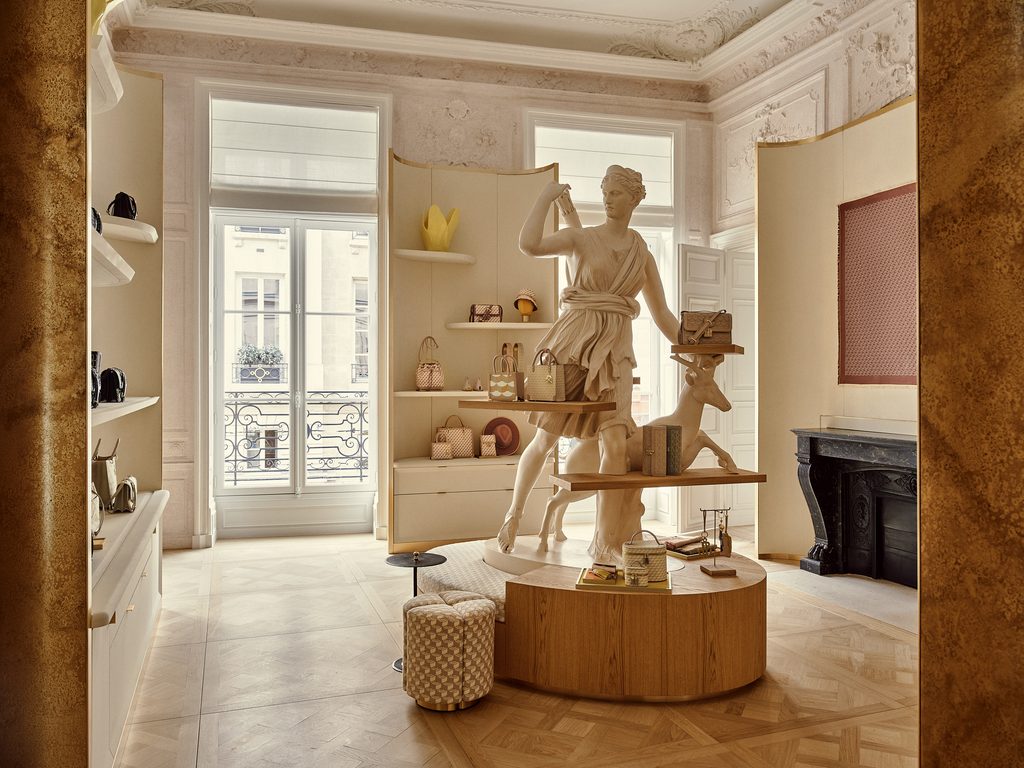
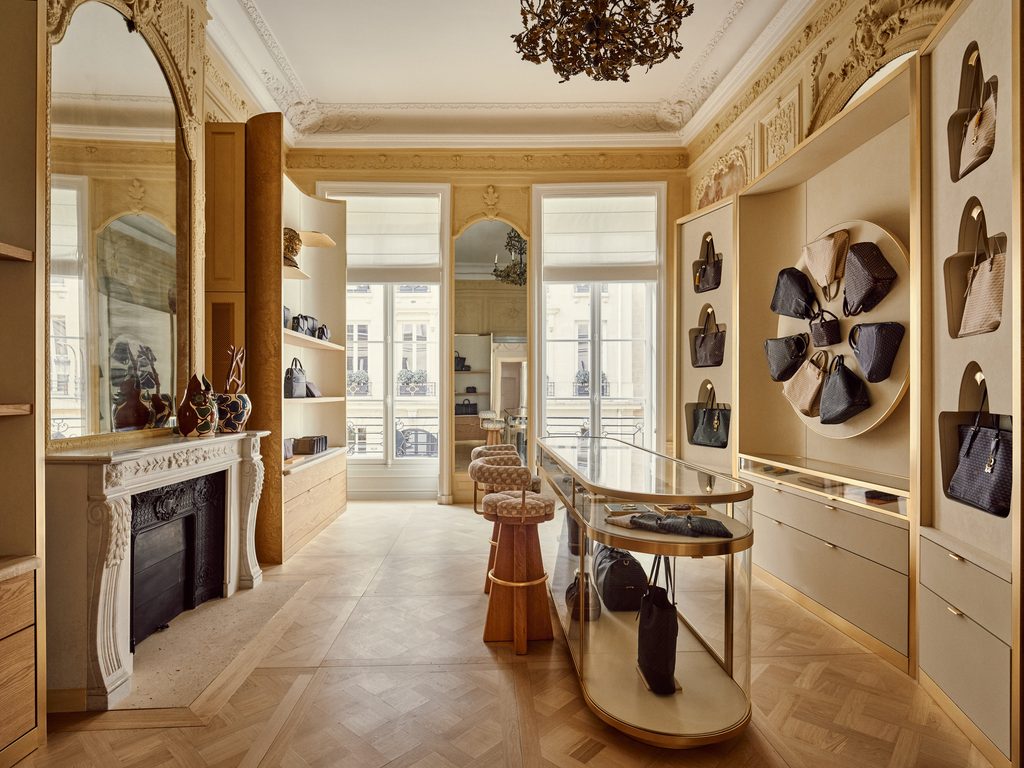
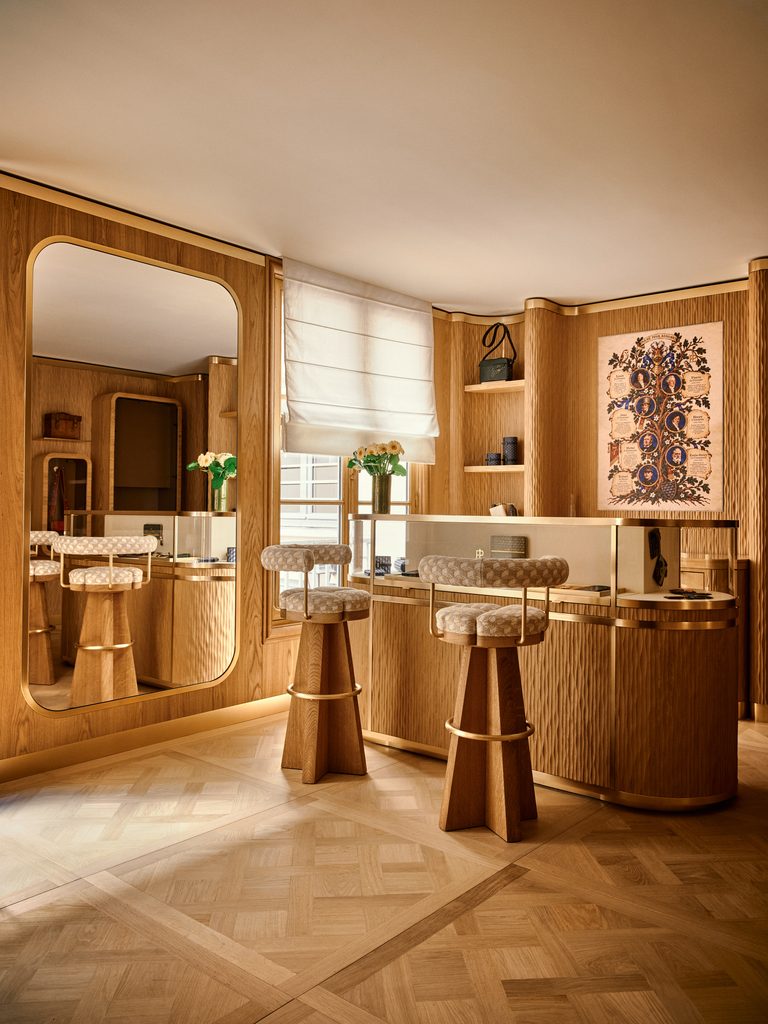
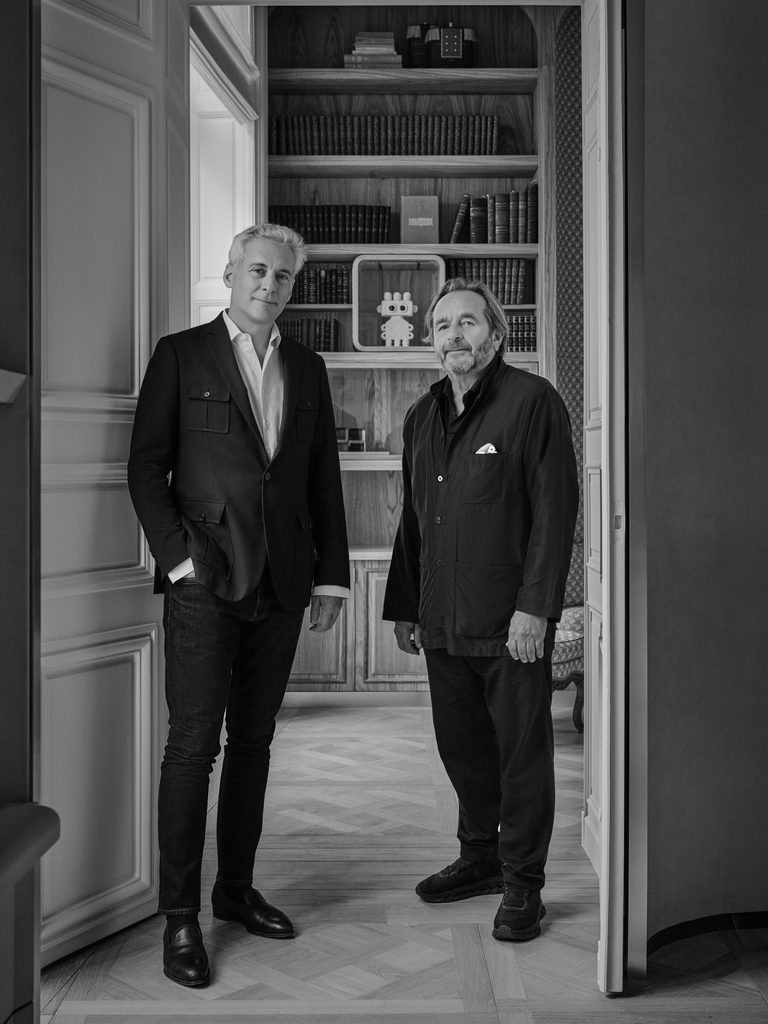
The building, listed as a historic monument, extends over three levels and nearly 500 m². Versailles parquet, mouldings, fireplaces and original volumes have been restored. The architect Jean de Gastines, who designed all the House’s boutiques worldwide, signs the project. The furniture is made to measure, wood serves as the common thread, and new visual openings guide the eye towards the collections.
A canvas printed in Annecy, a range whose formulas remain secret
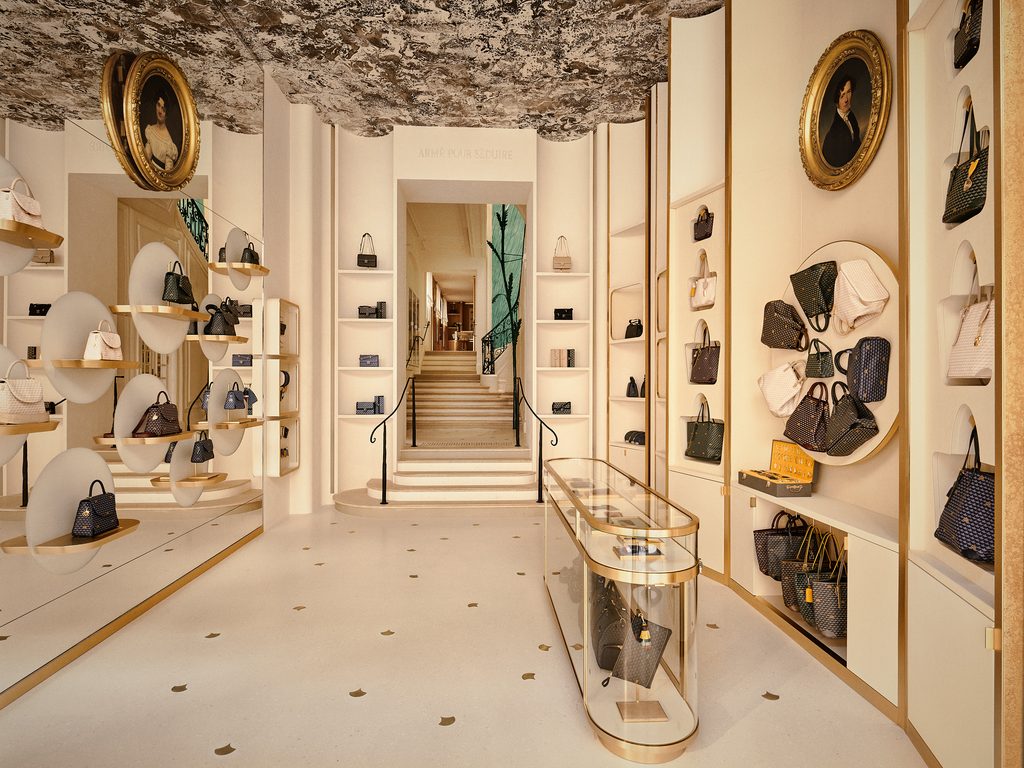
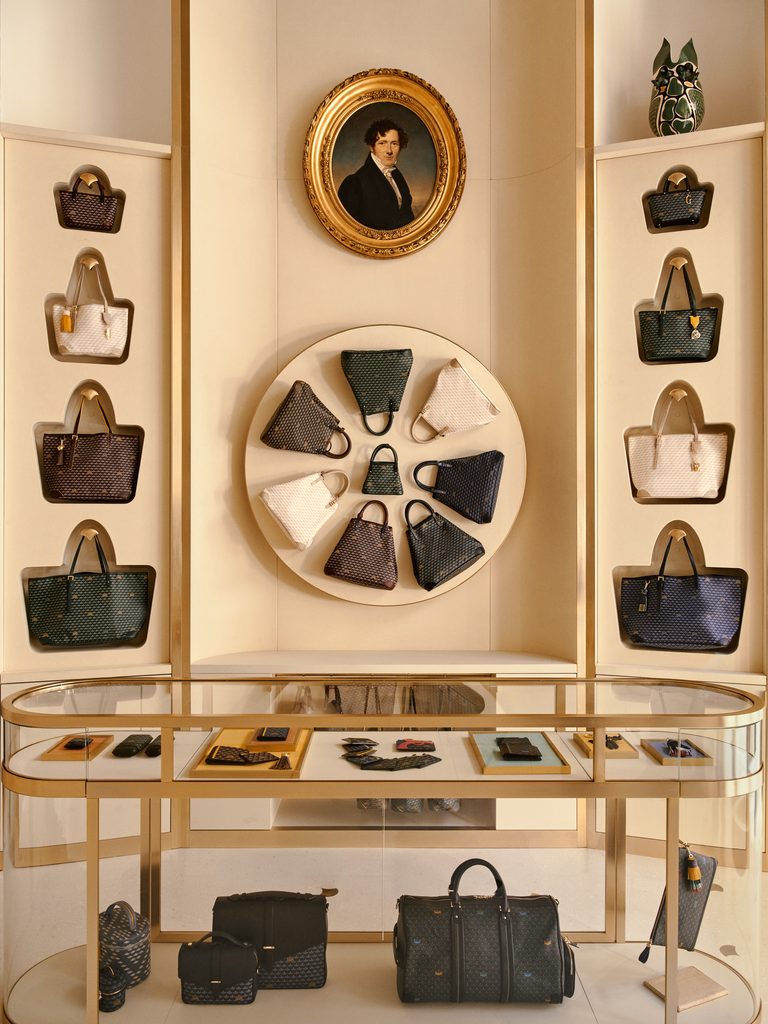
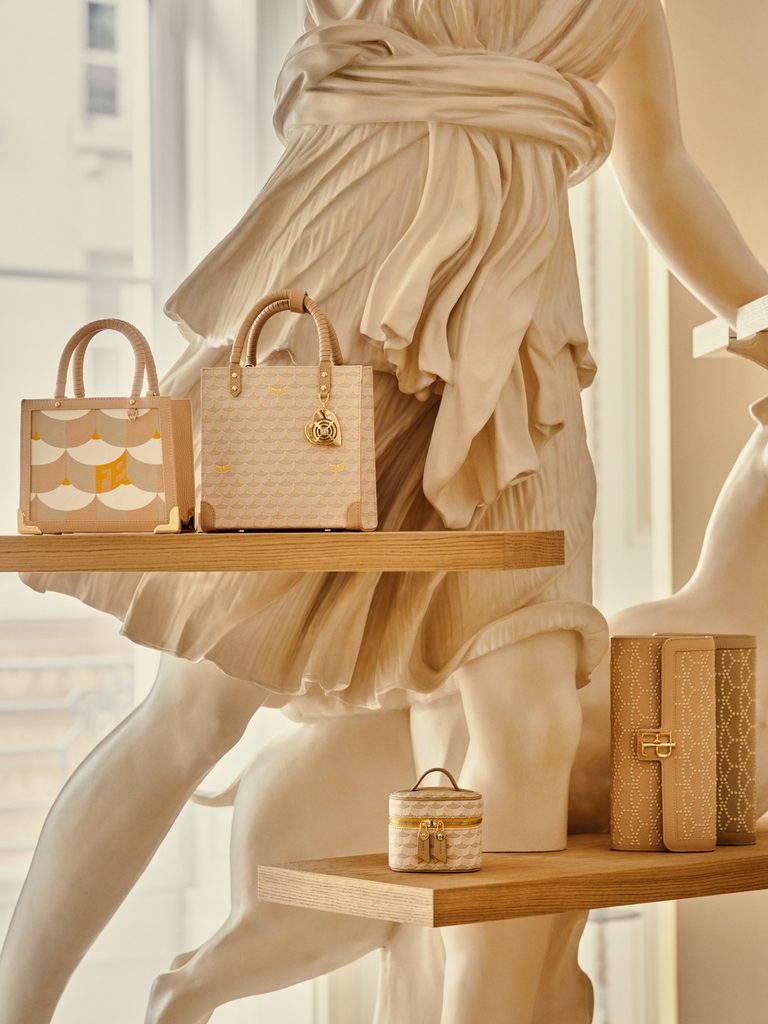
The Vestibule, on the ground floor, is devoted to tote bags: from the Daily Battle to the most recent Double Battle, which is modular. All bear the Écailles motif, which the House regards as a symbol of strength and seduction. The Toile Écailles is screen-printed in Annecy, on the frame, colour by colour, in four stages, by a process close to that of silk known as “à la lyonnaise”. It is then grained and varnished, which gives it suppleness, water resistance and durability.
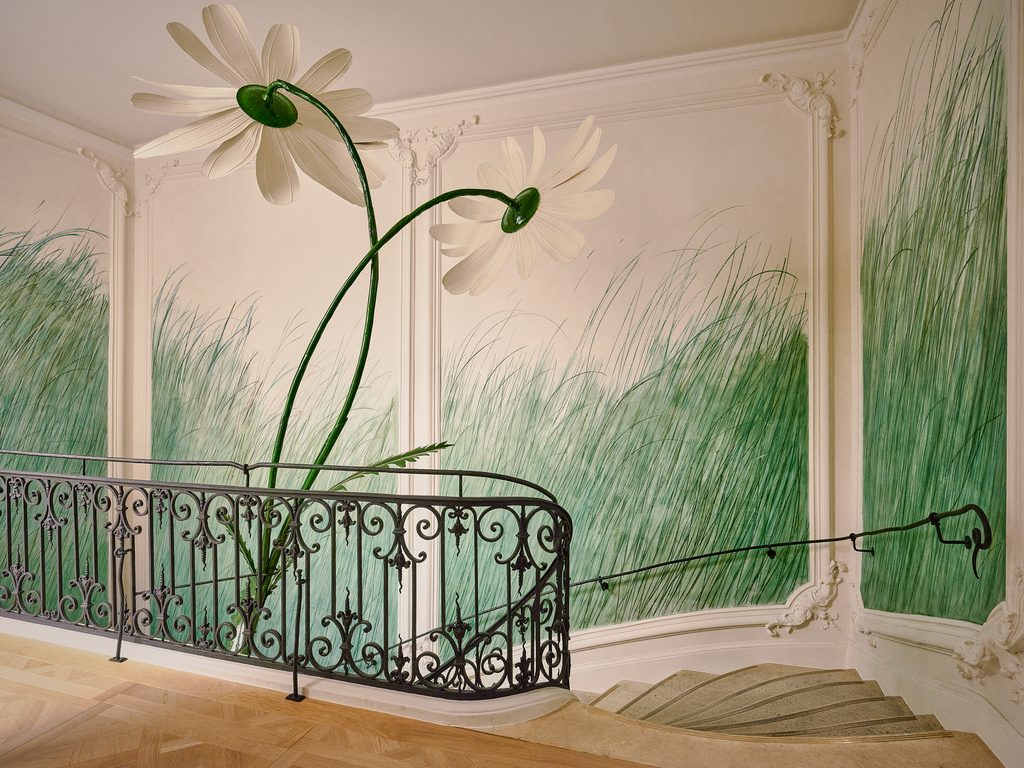
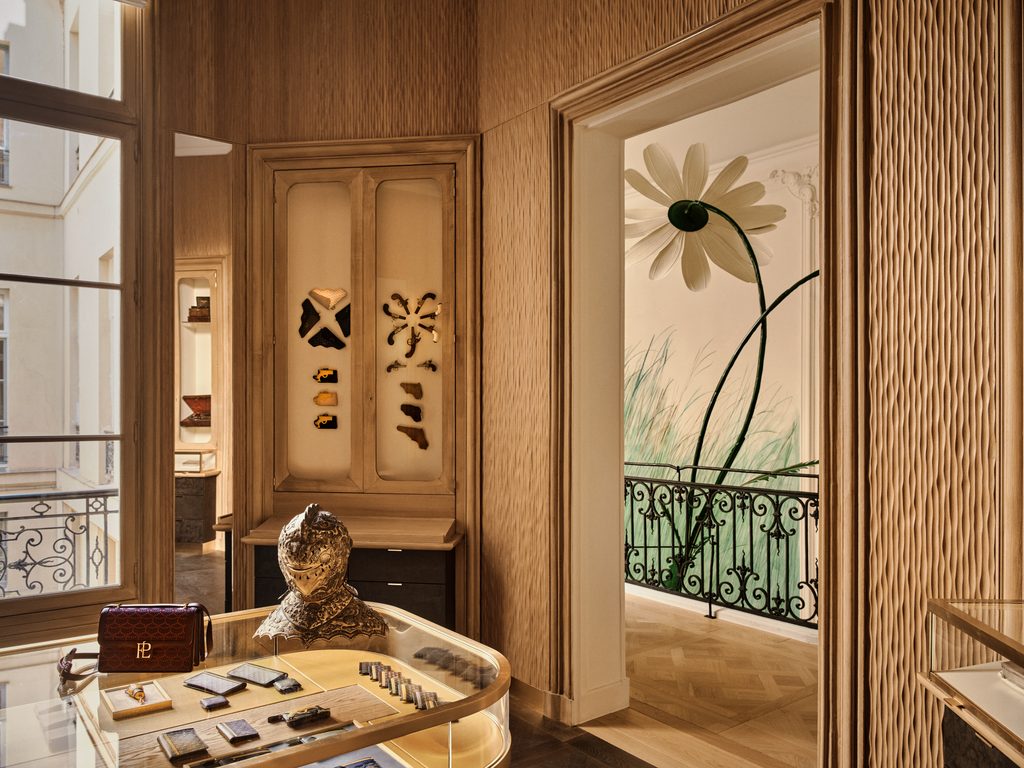
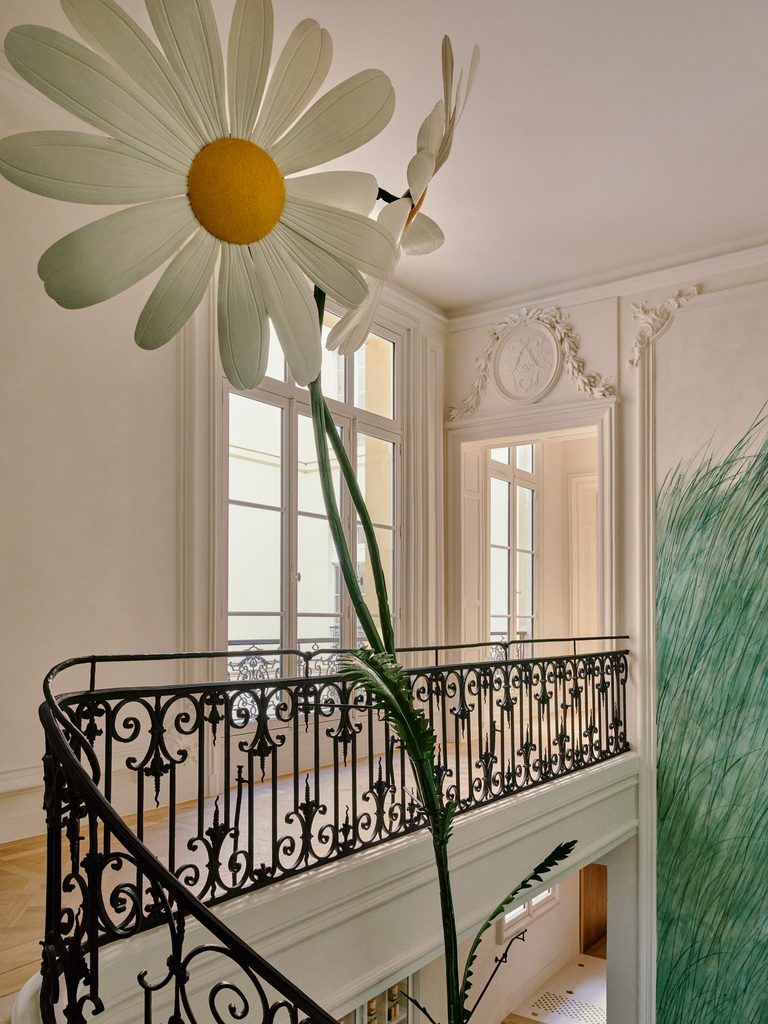
On the ceiling, a “cloud of powder” by the decorative painters Dominique and Noé Bouillon, father and son. The same two sign a fresco of the Normandy meadows, where the Le Page family comes from, in the Grand Escalier. The ironworker Romain Barré, assisted by the coppersmith and sculptor Elie Hirsch, designed a monumental daisy there. The flower belongs to the House’s codes: a Mars ochre yellow heart, the victory of spring over winter, and the “he loves me, a little, passionately, madly” of petal-plucking. Romain Barré also made the balustrade.
It is in this staircase that the Orgue à Couleurs is found, where the shades of the House’s colour range are presented. The tints can be seen. The formulations that produce them remain kept secret by the master artisans.
Weapons, books, living artists
Upstairs, a suite of salons displays the collections: masculine lines, travel and business in the Salon des Quatre Saisons, feminine lines in the Salon de Diane. Exclusive creations are added, including “From Paris with Love”, a limited edition in the capital’s blue and red and the Eiffel Tower.
The Salle d’Armes houses the “Le Page à Paris” rifle of Jérôme Bonaparte, dated 1807, a wedding gift from King Frederick I of Württemberg to his son-in-law, King of Westphalia and brother of Napoleon. Overlooking the courtyard, the Galerie de Mars hosts the Défi de Mars, a game of skill that the House presents as a contemporary reading of the Parisian shooting salons of the eighteenth and nineteenth centuries. The Salon Honoré receives friends of the House for meetings devoted to savoir-faire, the arts and culture.
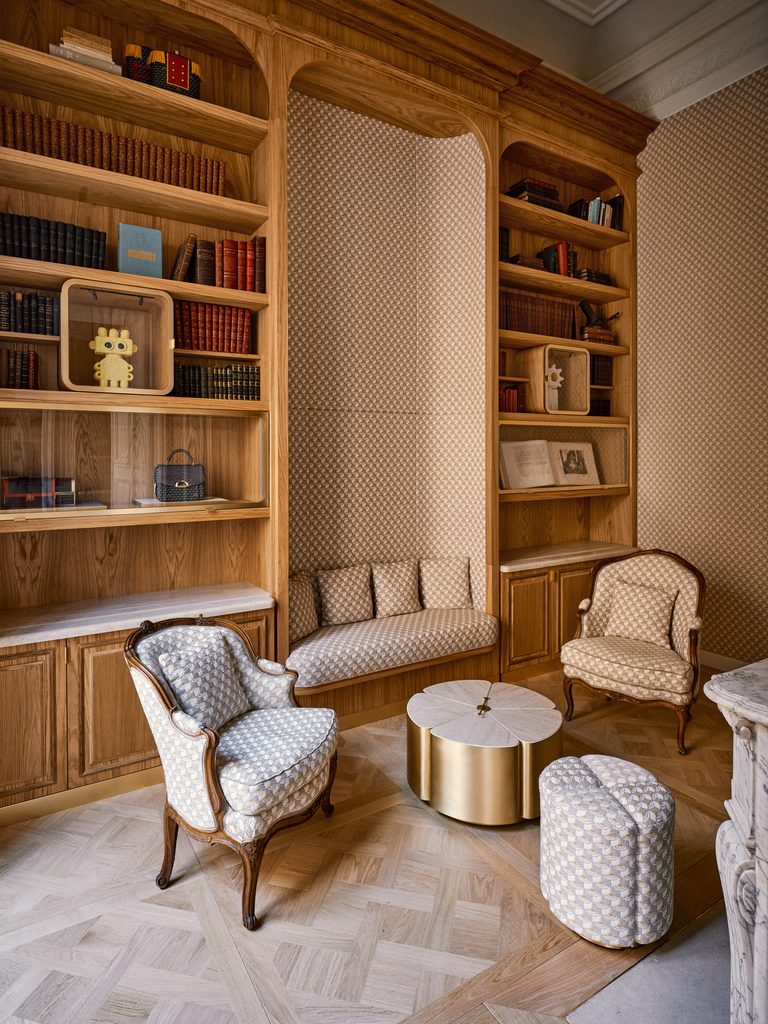
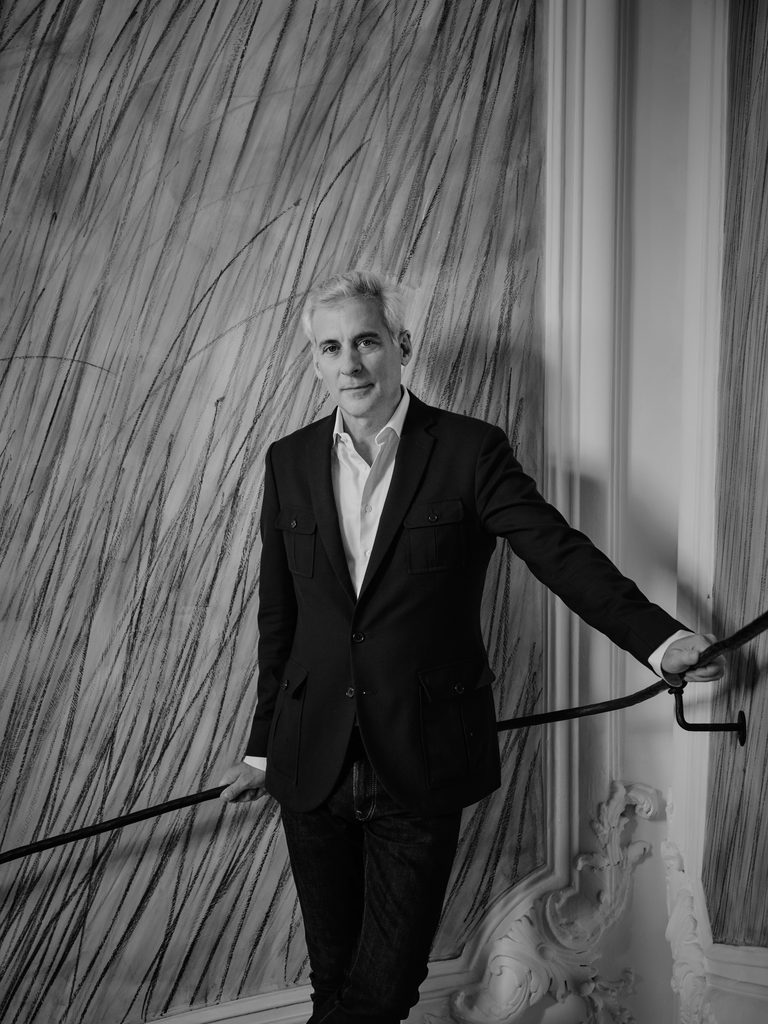
The Library, which overlooks rue Saint-Honoré, gathers works in which the arquebusier to Kings and Princes is cited by Balzac, Pushkin, Dumas, Chateaubriand or Musset. Augustin de Buffévent, creative director, invites contemporary artists there to design works for the House: the animal sculptures of the ceramist Agnès Soustiel, the robots of Arnaud Le Calvé, the flowers of the ceramist Henriëtte H Jansen, a photograph by Juliette Agnel. The House announces that other talents will follow over the seasons.
What the House chooses to show
A lineage is better demonstrated with dated objects than with adjectives. The itinerary includes several: a rifle of 1807, portraits of Marie-Adélaïde and Jean-André Prosper Henry Le Page painted by Henri-François Riesener in 1820, the helmet-shaped sign that dressed the rue de Richelieu shop in the eighteenth century, the awards received at the nineteenth-century Universal Exhibitions. Facing them, commissions placed with artists who work today, and a canvas that is still printed by hand, in a French workshop.
The House does not claim that the second is the legal successor of the first: it speaks of two Houses. Its reasoning lies elsewhere. The weapons of the past served to present oneself at court more than to fight, and the House calls its bags “weapons of seduction”. What one carries to show oneself links the two eras, and the townhouse on rue Saint-Honoré gives this argument a setting from the same century as the first House.
In the order in which the House unfolds its rooms, the last is that of the archives, on the mezzanine: the sign, documents, the medals. The itinerary closes on the eighteenth century.
Also read
- Karl Lagerfeld opens its first café, far from the runways
- Anrealage: six dresses whose colour changes without light
- Elie Saab spring-summer 2027: Jean Harlow, lingerie and a knotted trench
Also on Luxsure: Fauré Le Page: Built for Love limited-edition collection · FAURE LE PAGE pays tribute to Chinese New Year 2018, year of the Dog Roustam
Cette publication est également disponible en :


