
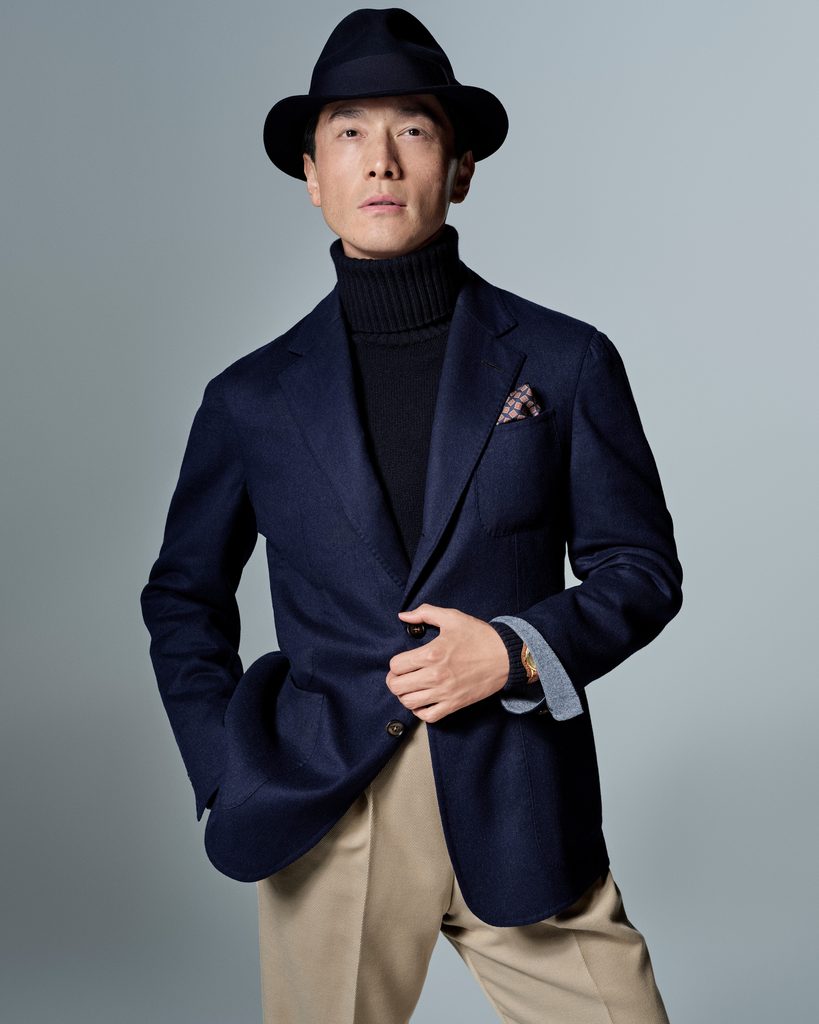
dunhill is not presenting an autumn-winter 2026 collection: it is carrying out a close examination of a single garment. A Study of the Blazer takes the English tailored jacket apart seam by seam, from the gun club check woven for one hundred and twenty-five years to buttonholes hand-sewn in silk thread.
Savile Row meets King’s Road
Creative director Simon Holloway places his inspiration in the London of the 1960s, at the precise spot where the rigorous codes of Savile Row crossed the freer style then emerging on King’s Road. From this meeting comes a restrained, almost cinematic palette: layered greys that slide towards winter browns and midnight tones, never yielding to ostentation. It is a wardrobe conceived for nuance more than for effect.
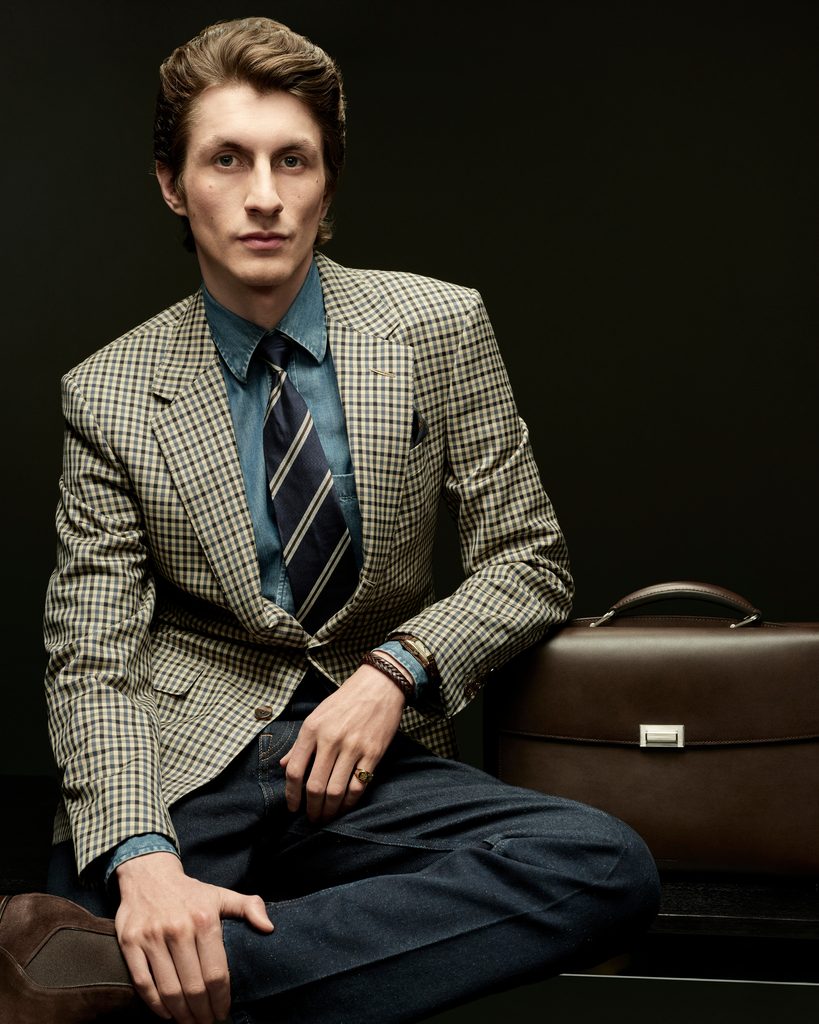
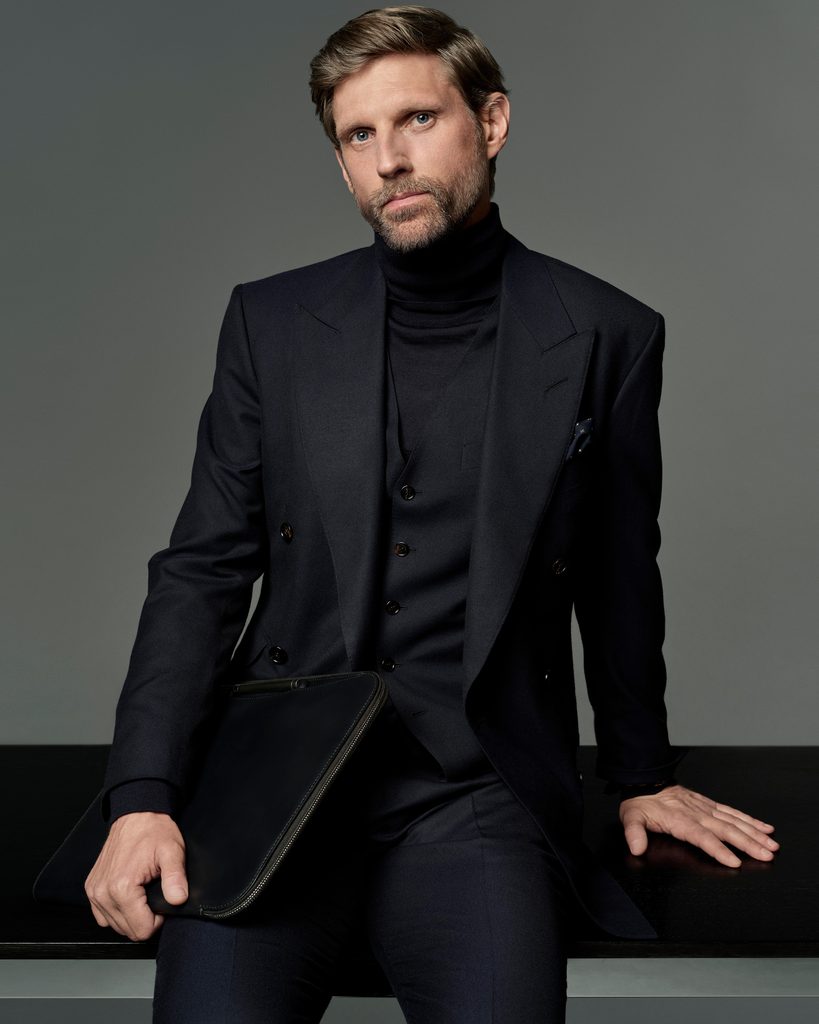
The blazer comes in two distinct cuts, the Cavendish, with a softer construction, and the Bourdon, more structured, which allow the garment to move without a break between the formal and the informal. The pockets and the spacing of the buttons, taken directly from the house’s archives, anchor these contemporary silhouettes in historical continuity rather than in a one-off quotation.
The gesture before the pattern
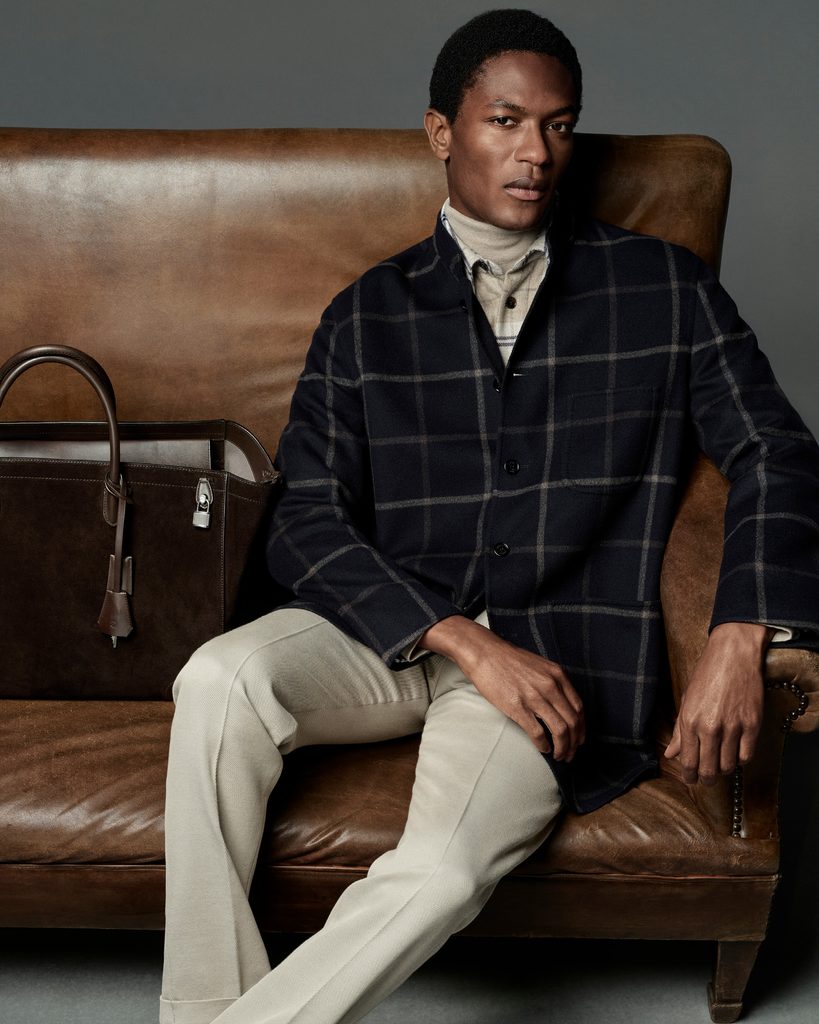
It is the materials that carry most of this campaign’s argument. A gun club check in wool and cashmere is woven by a British mill whose know-how goes back more than a century and a quarter, while a bespoke houndstooth and a lightweight windowpane flannel draw on the Yorkshire wool tradition. A double-faced indigo wool and silk cloth, formed of two woven layers whose surfaces are finished separately, requires more than twenty-four hours of specialised work — a figure the house states without grandiloquence, as a technical fact rather than a marketing argument.
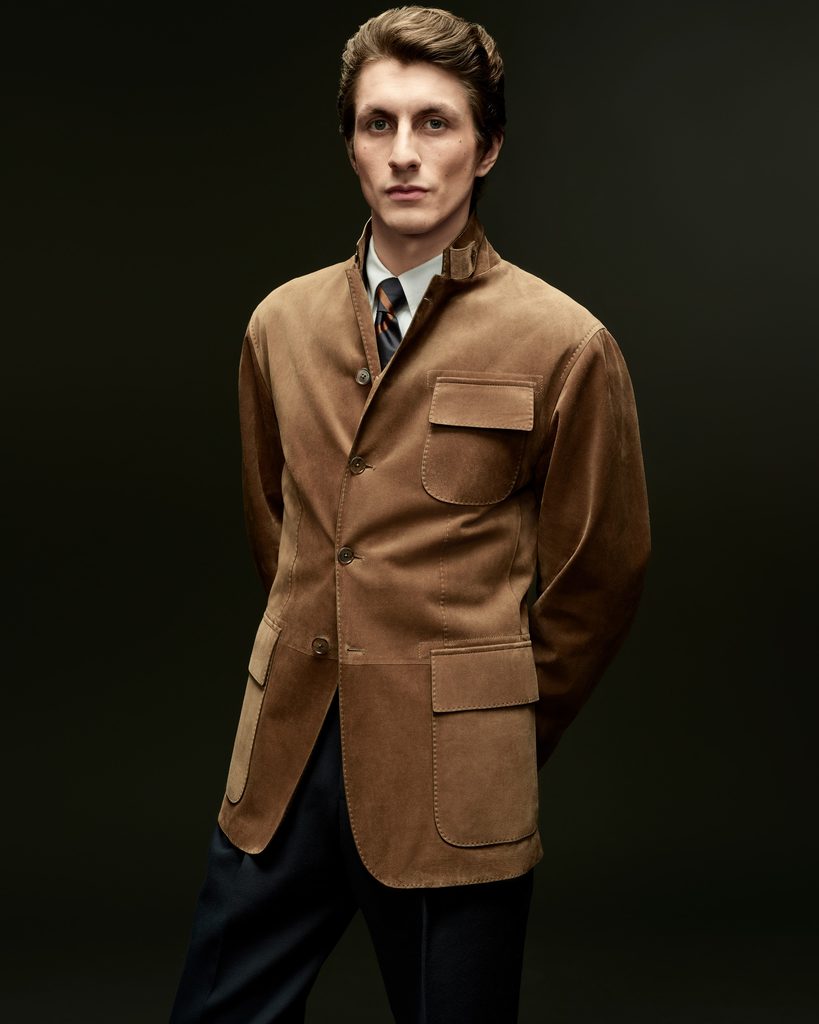
Calf suede introduces a sportier reading of the wardrobe through the Driving Blazer: body and sleeves are left unlined to preserve the natural feel of the leather, a bonded construction and hand-painted edges ensure a clean finish, and an action back borrowed from motoring clothing frees movement. The house, founded by Alfred Dunhill more than one hundred and thirty years ago in the world of the automobile before that of ready-to-wear, thus closes a discreet loop between its history and its present.
Five faces for one garment
Photographed by Ethan James Green, the campaign brings together Henry Kitcher, Daisuke Ueda, RJ Rogenski, Colin Otto and Hamid Onifade in tight studio portraits, far from the spectacular stagings usual in the genre. The lens lingers on the grain of the suede, the seams, the metalwork of the buttons, as much as on the full silhouettes — a way of treating the garment as a subject of study rather than a mere support for an image.
By choosing to devote an entire campaign to a single piece, dunhill makes a bet against the logic of collections that multiply propositions to saturate attention. A Study of the Blazer wagers on the opposite: the repetition of one gesture, varied in materials and cuts, until the garment reveals everything it has to say about contemporary English elegance.

Also on Luxsure: dunhill extends its motoring heritage into footwear · The architecture of driving clothing: dunhill and the permanence of the gesture · Hiroyuki Sanada in Dunhill for the 36th Producers Guild Awards · Dunhill & BAFTA celebrate the excellence of British cinema with The Film Makers Dinner
Cette publication est également disponible en :


