
The minute repeater is often described as a prestige complication. Here the subject is more precise: how to remove material so that time can be heard better. On the new Geneva Répétition Minutes Obsidienne Dorée, Gérald Genta treats the case as a resonance chamber, reducing some walls to six tenths of a millimetre.
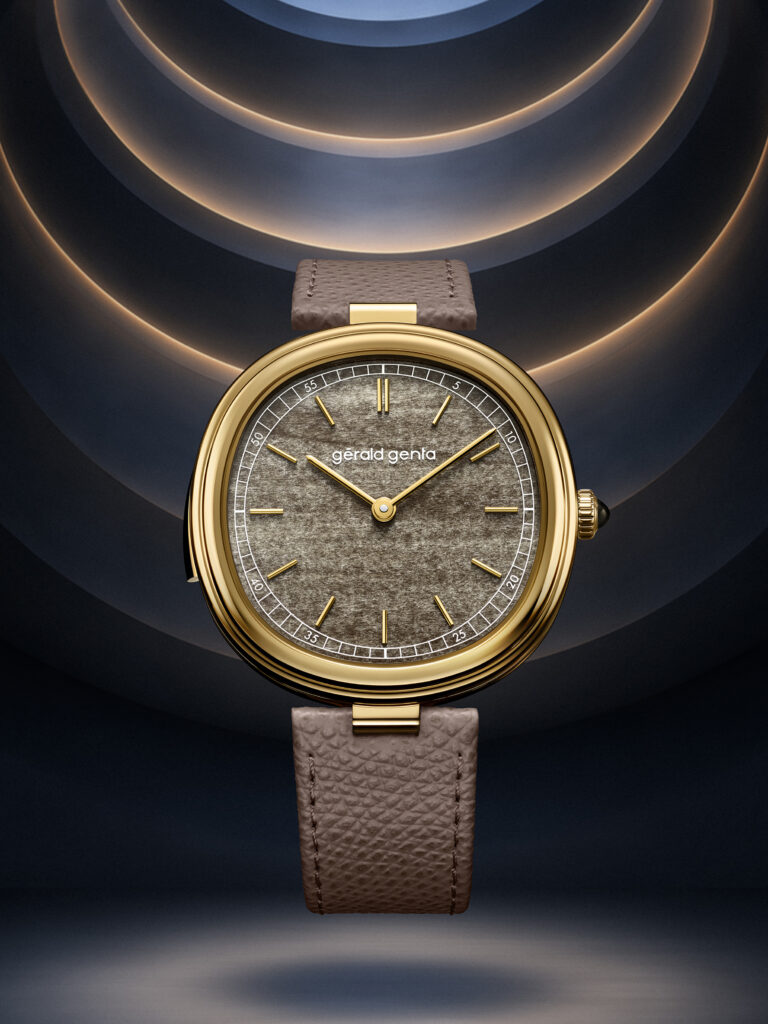
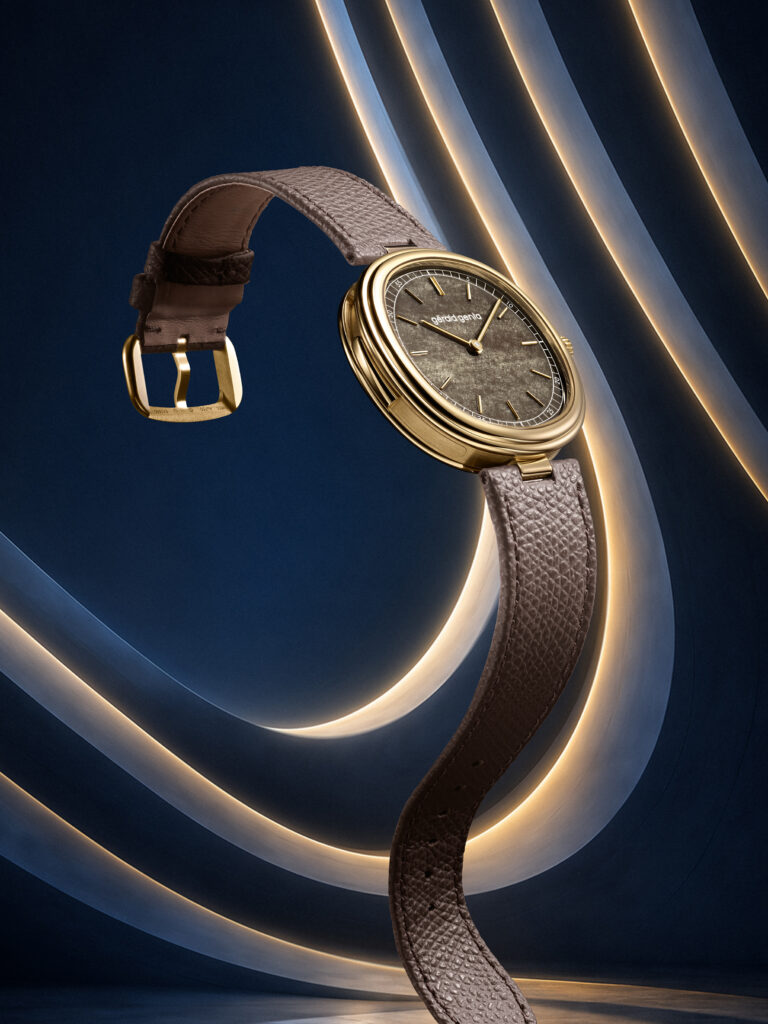
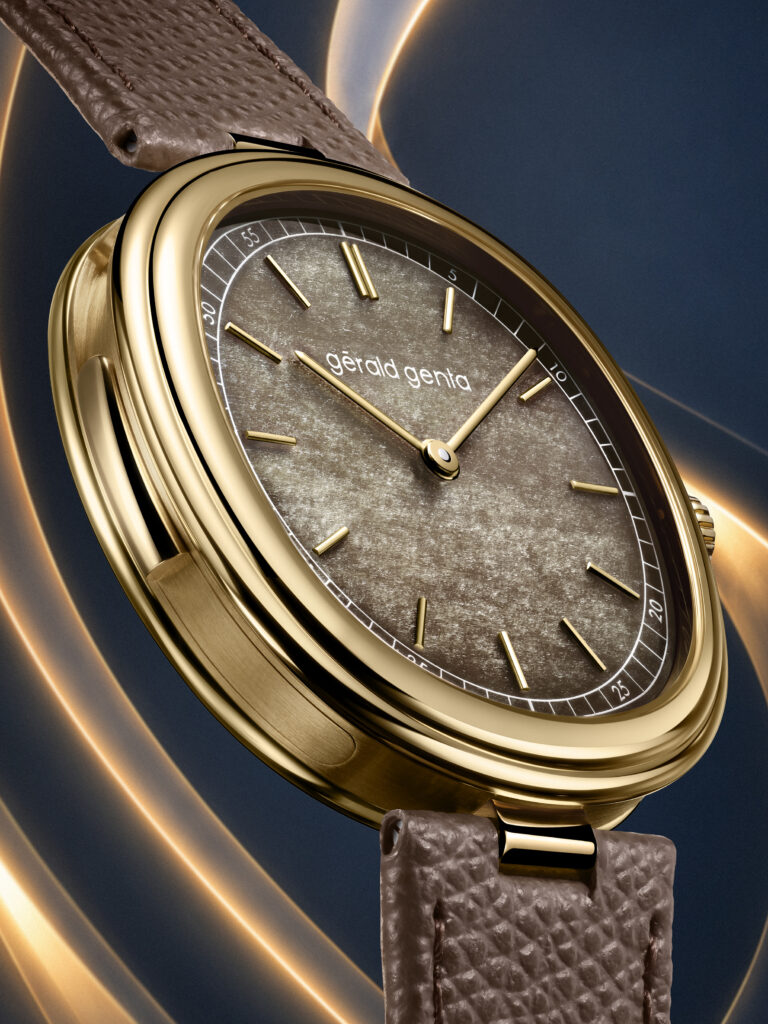
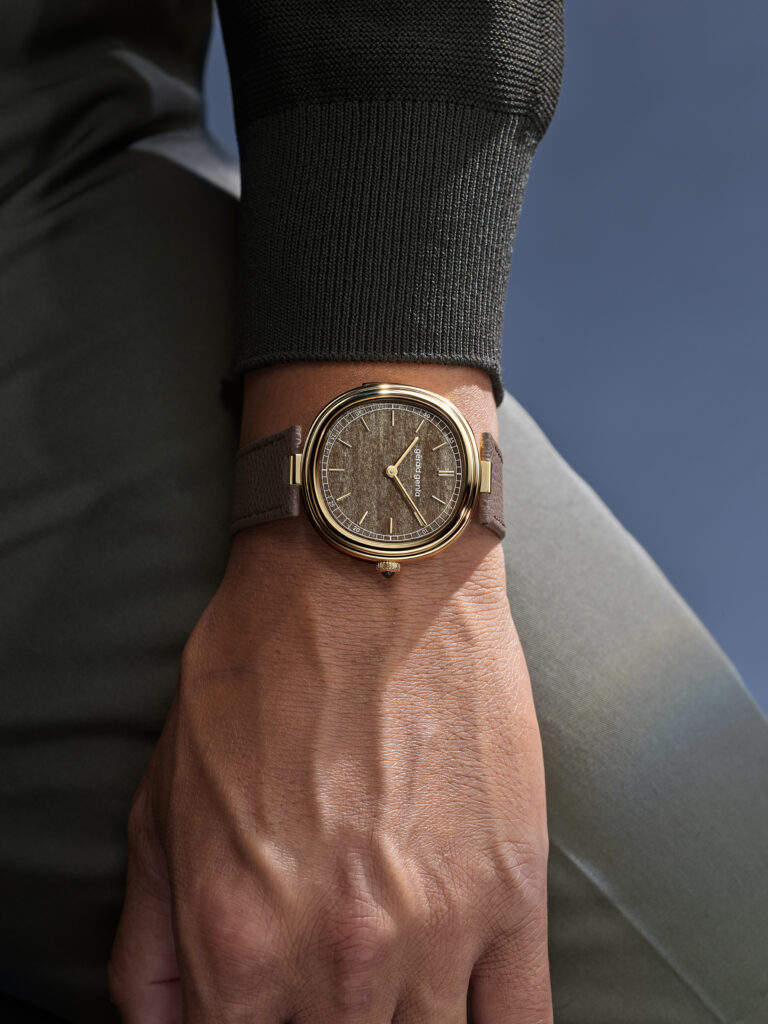
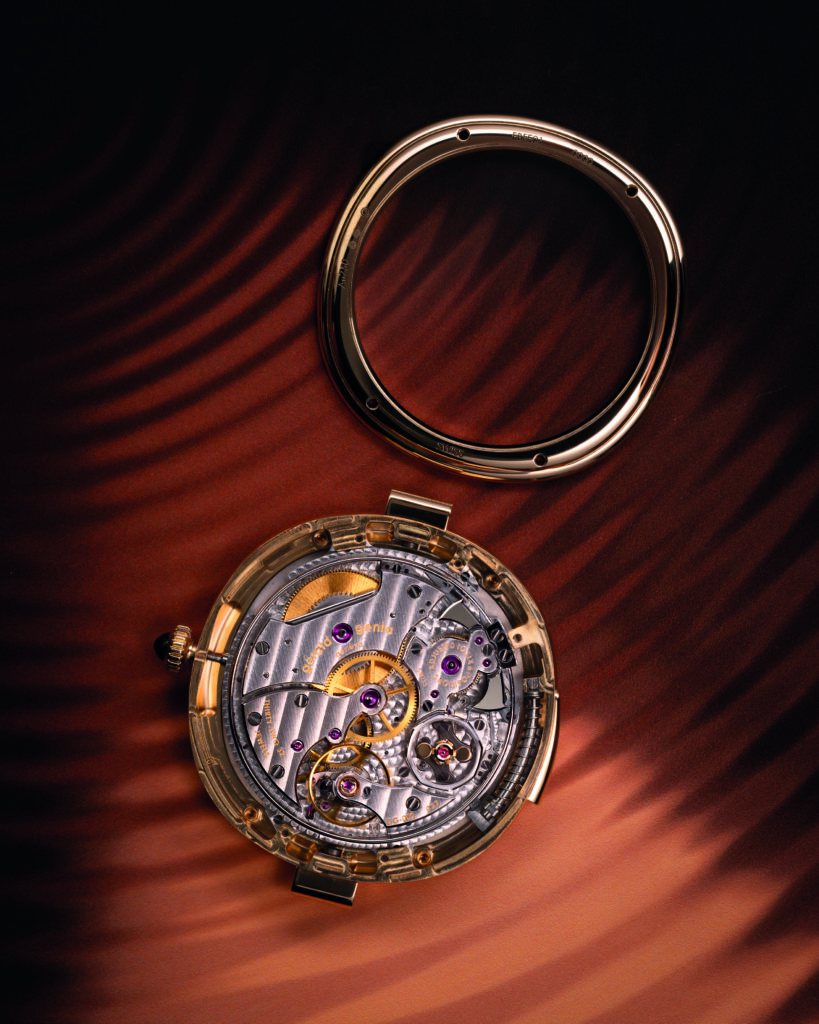
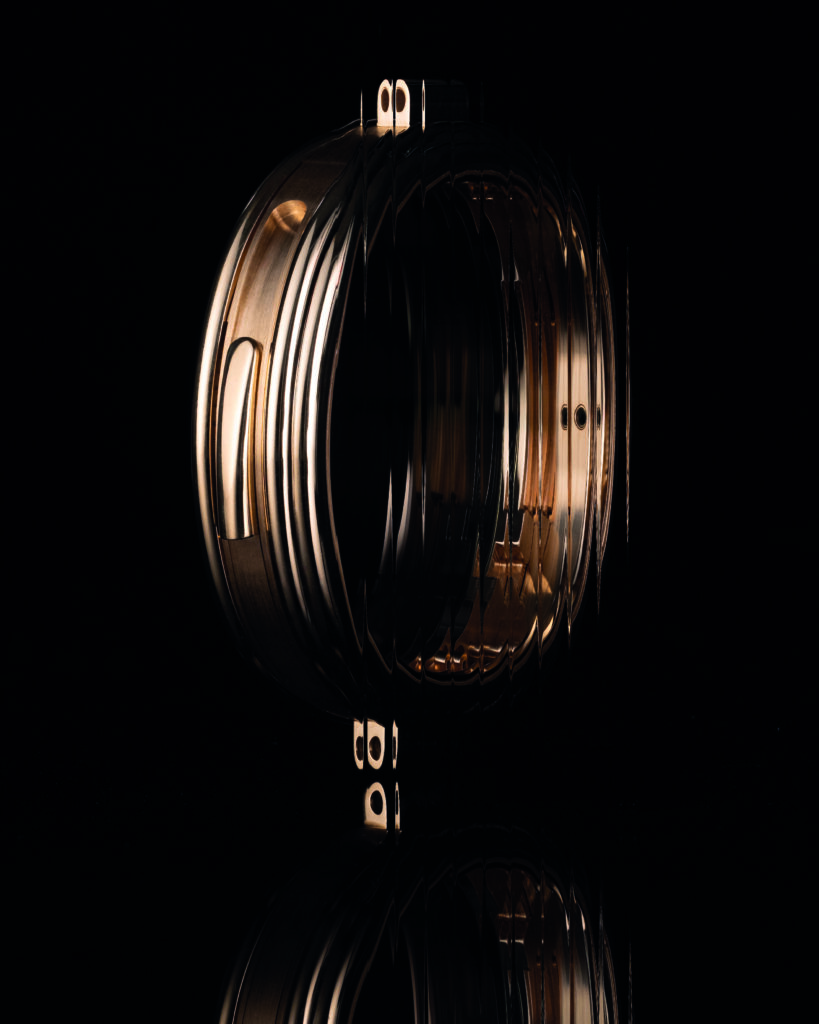
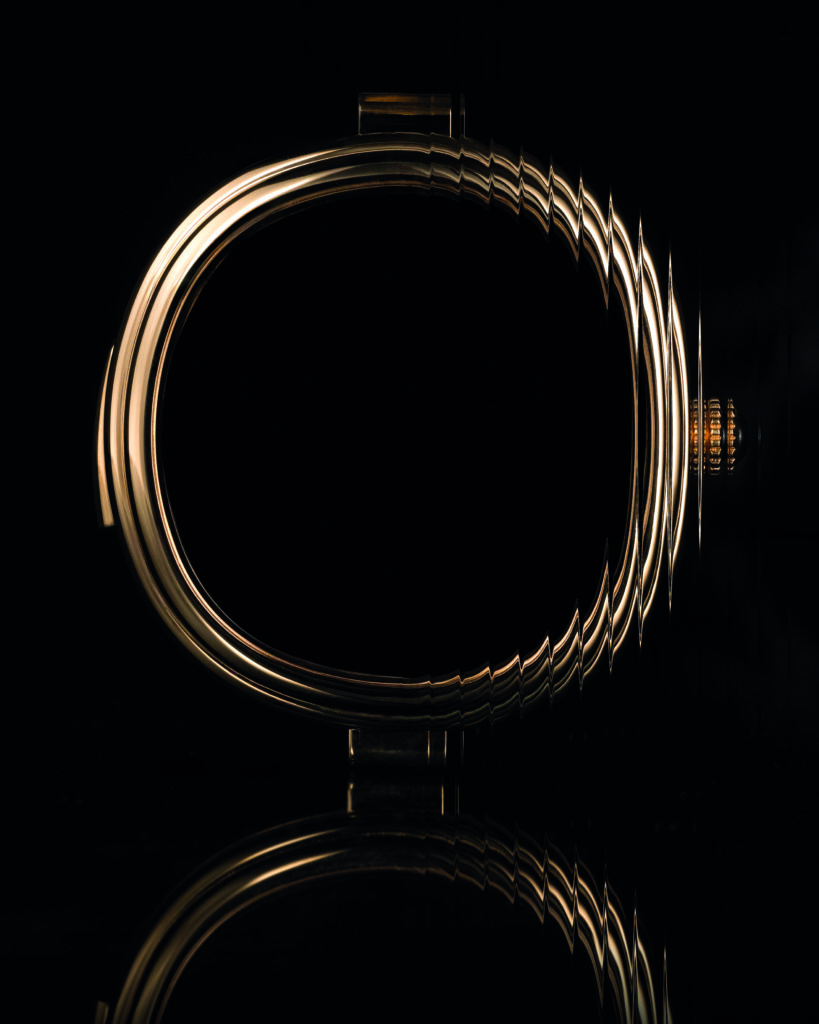
This acoustic research gives the piece its real singularity. The forty-millimetre cushion case, made of 3N yellow gold, is 9.60 mm thick. Its inner architecture was designed by Matthieu Hegi, artistic director of La Fabrique du Temps Louis Vuitton, in order to limit the mass and the obstacles likely to absorb vibrations. The bezel and caseback are hollowed out by circular perforations; they are screwed directly together to reduce the number of screws. Even the sapphire crystal is thinned to 0.8 mm, compared with the roughly one millimetre usual.
This degree of reduction is not an engineer’s affectation. In a minute repeater, the perceived volume depends as much on the movement as on the case’s ability to transmit the vibrations produced by the gongs. Gérald Genta thus recalls a fact sometimes obscured by the decorative discourse of haute horlogerie: a striking watch is also an acoustic object.
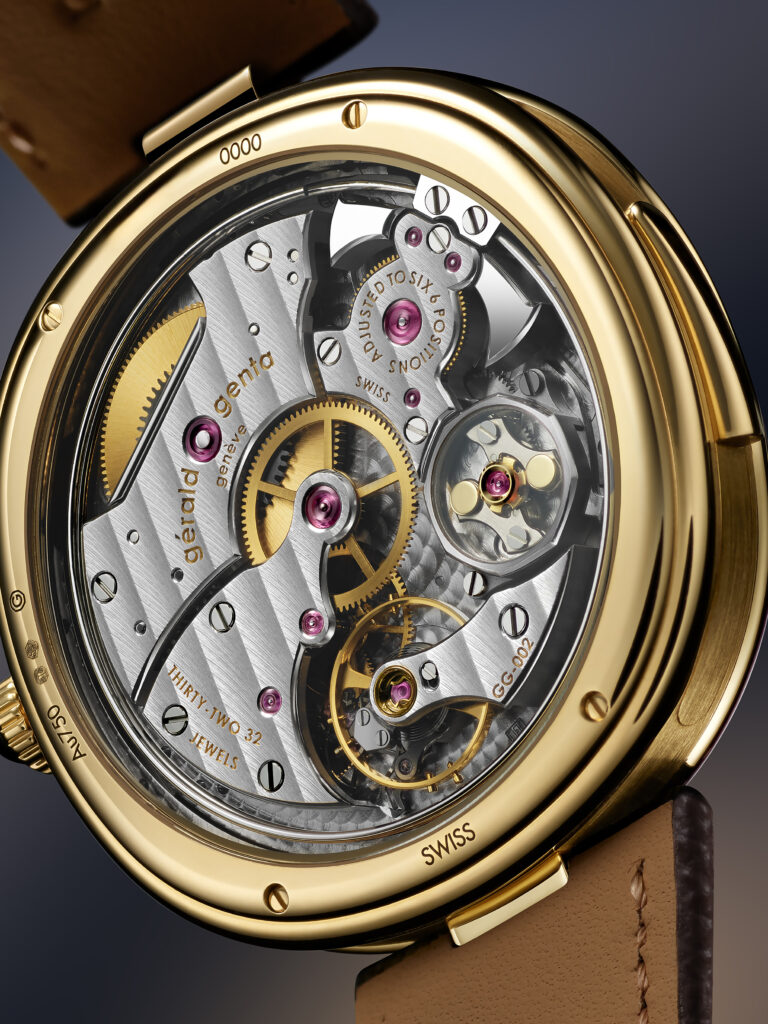
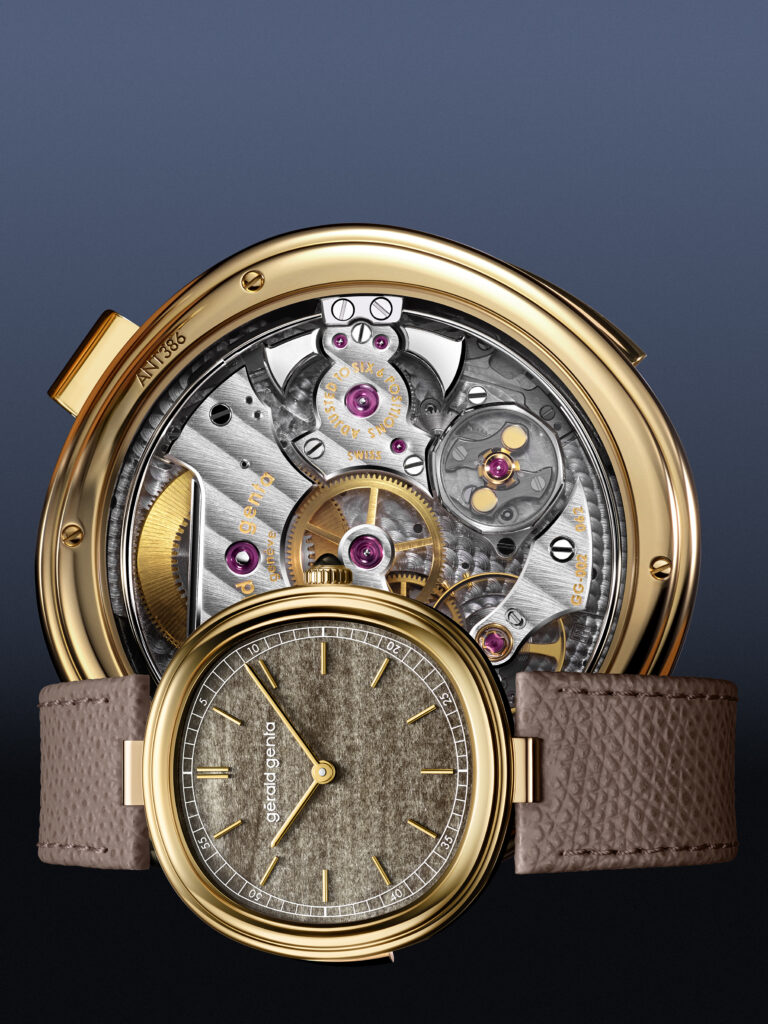
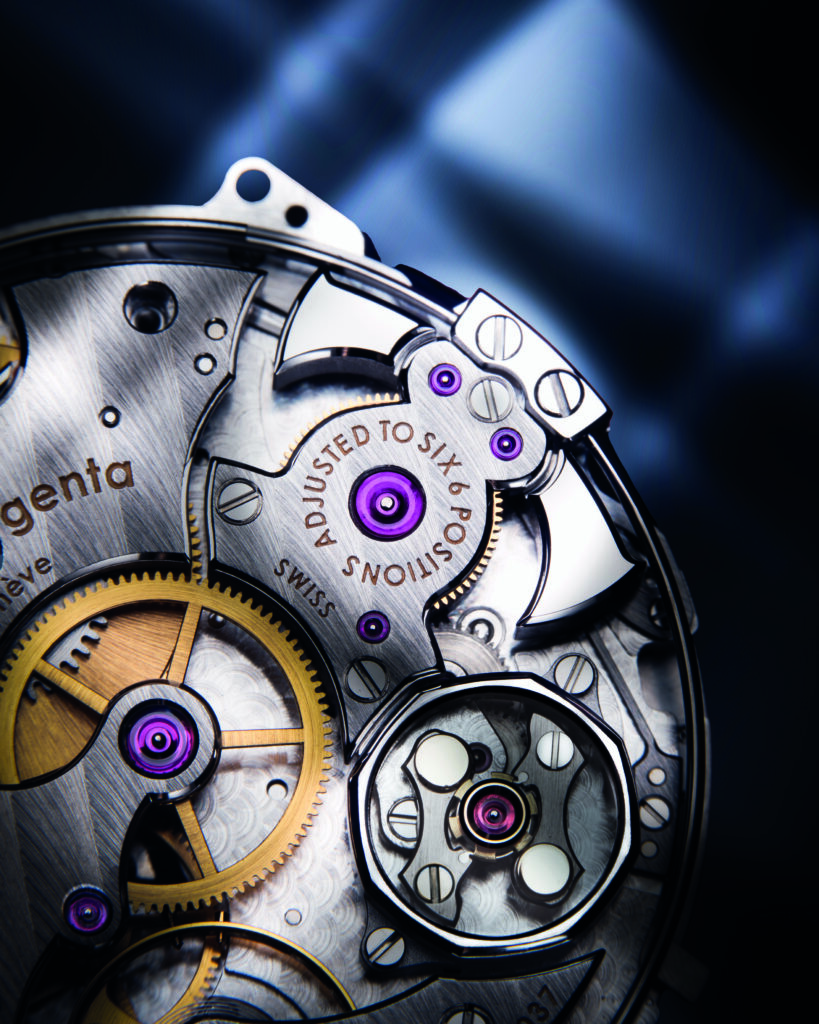
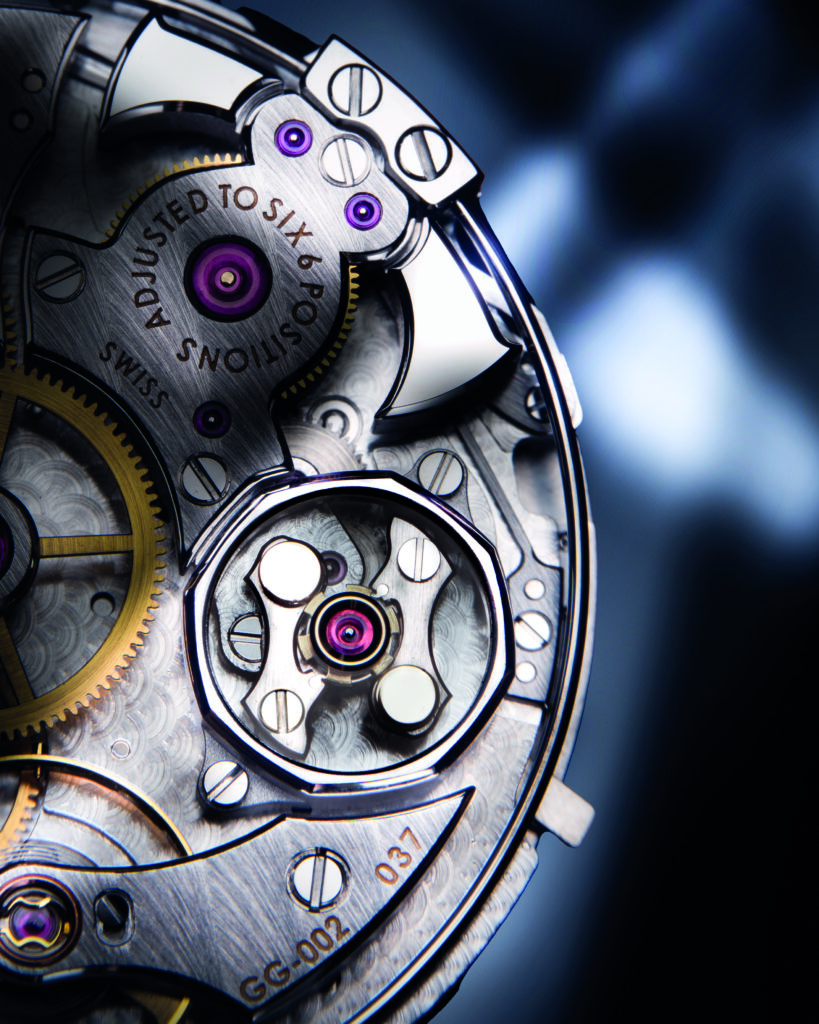
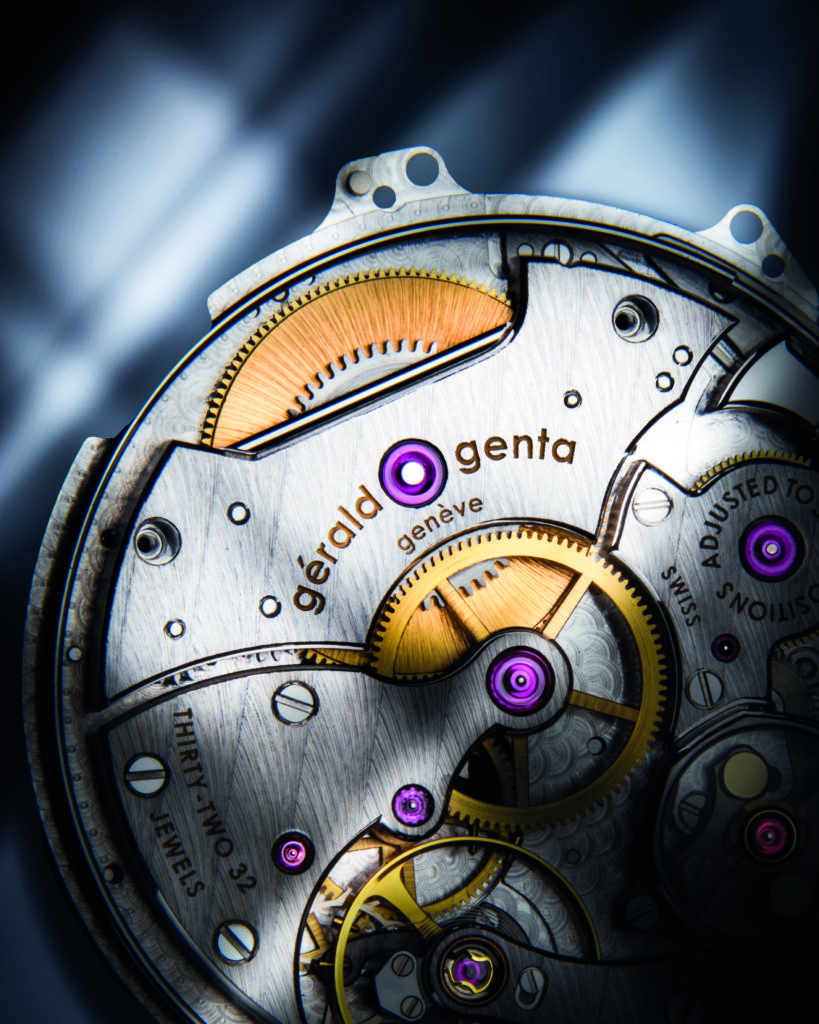
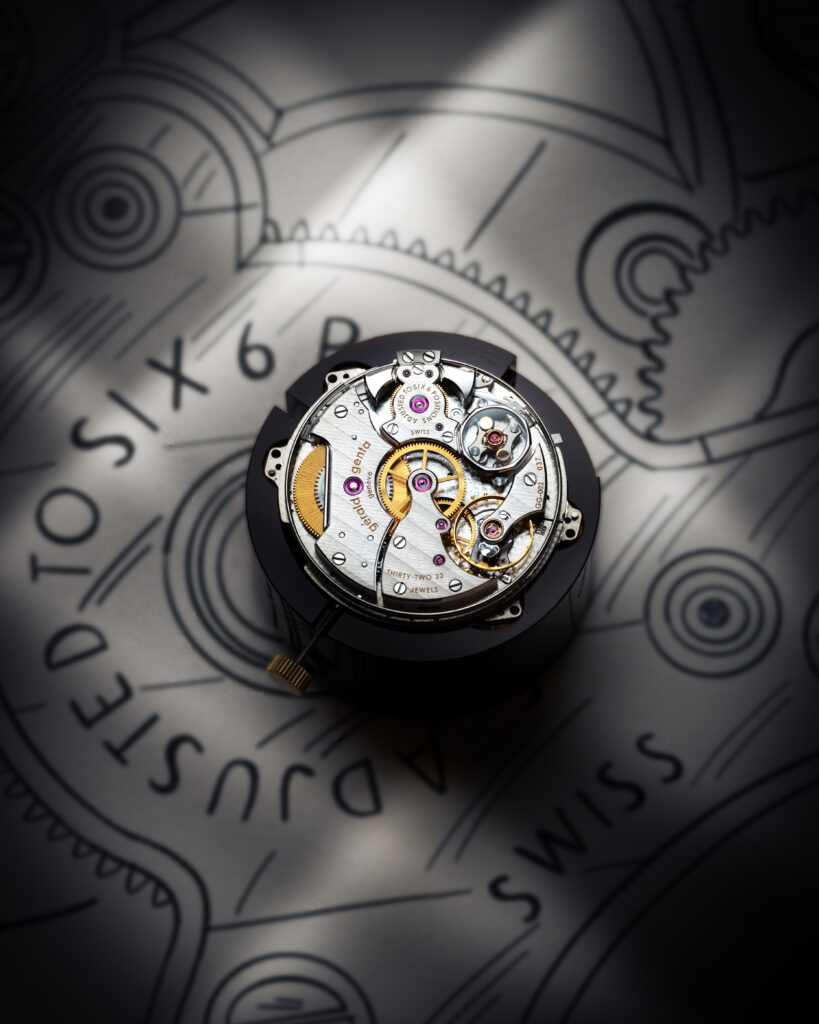
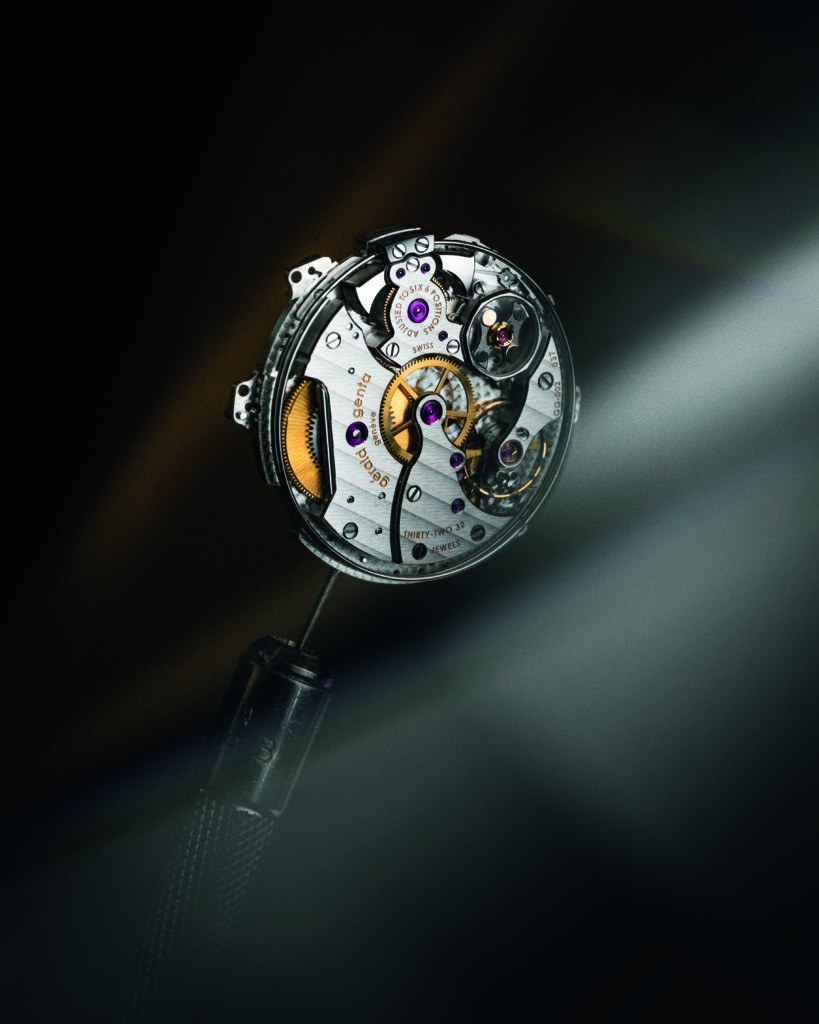
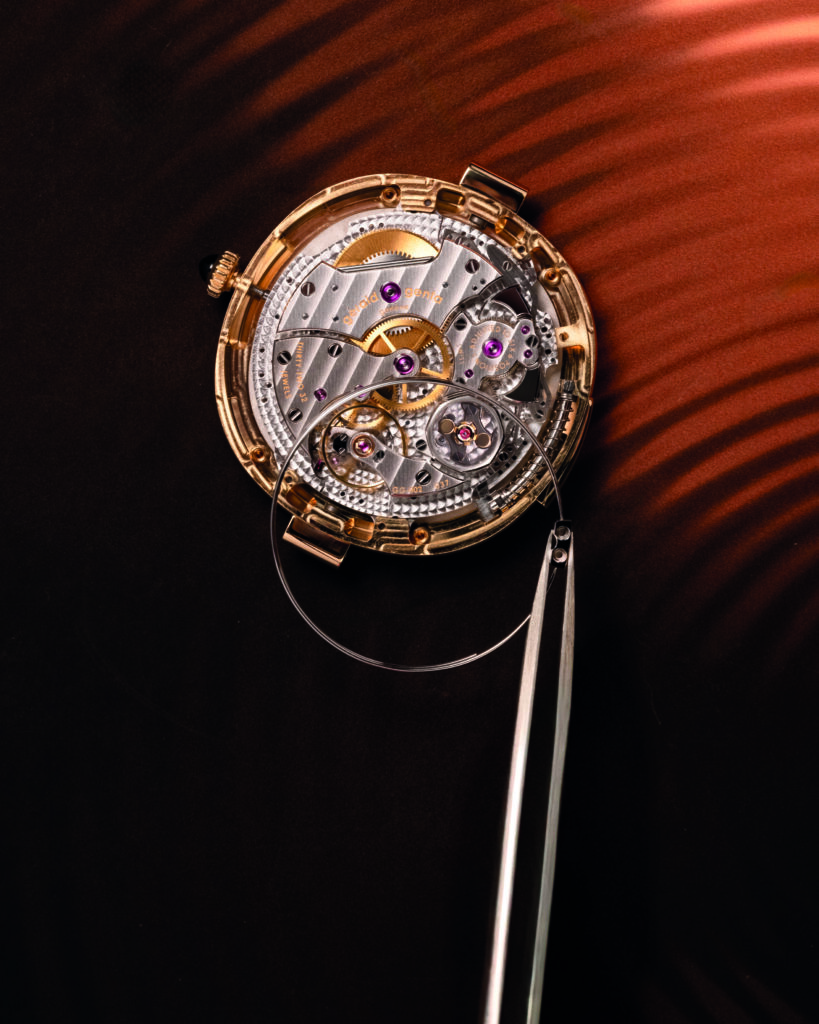
The GG-002 manufacture calibre, hand-wound, was developed at La Fabrique du Temps Louis Vuitton by Enrico Barbasini and Michel Navas. Each gong is cut individually, tuned by ear and by hand, then adjusted to the desired amplitude. The movement offers eighty hours of power reserve and receives traditional finishing: Côtes de Genève, perlage on the mainplate and hand-executed bevelling. The polished gold weights of the balance make it possible to adjust its inertia precisely.
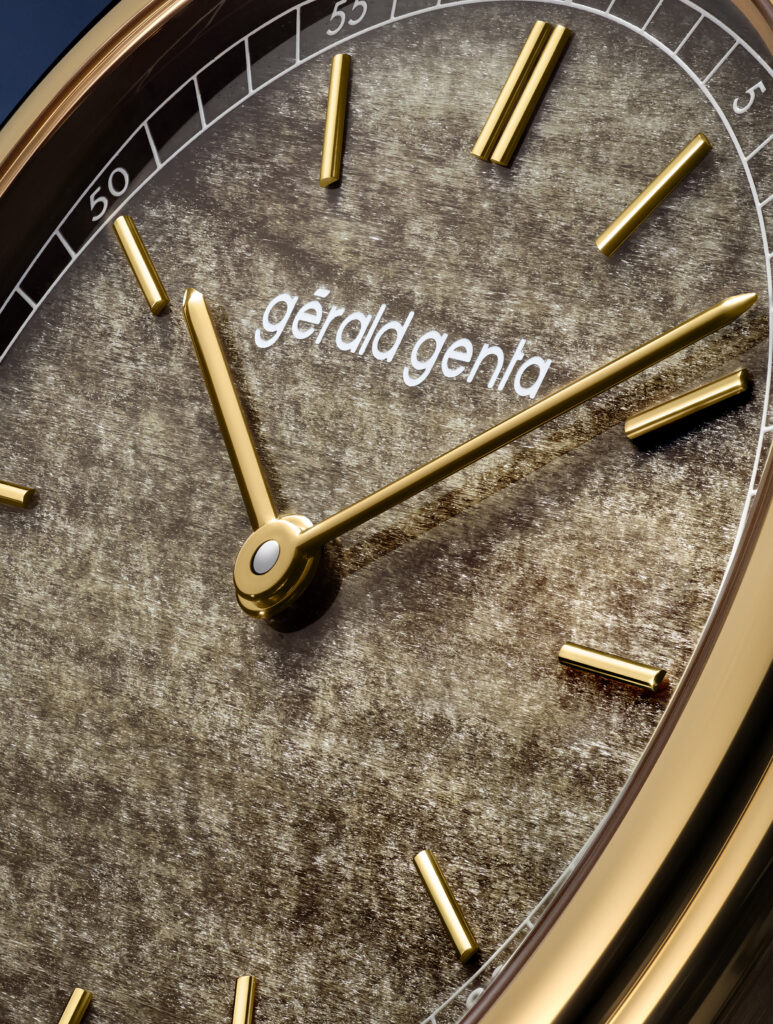
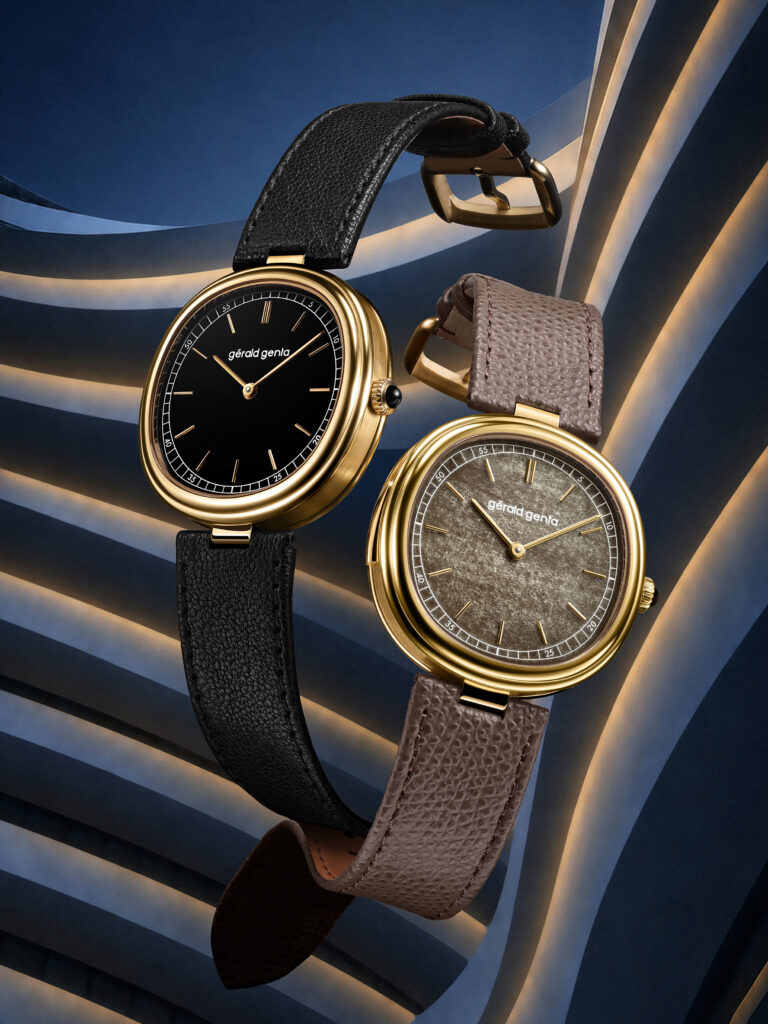
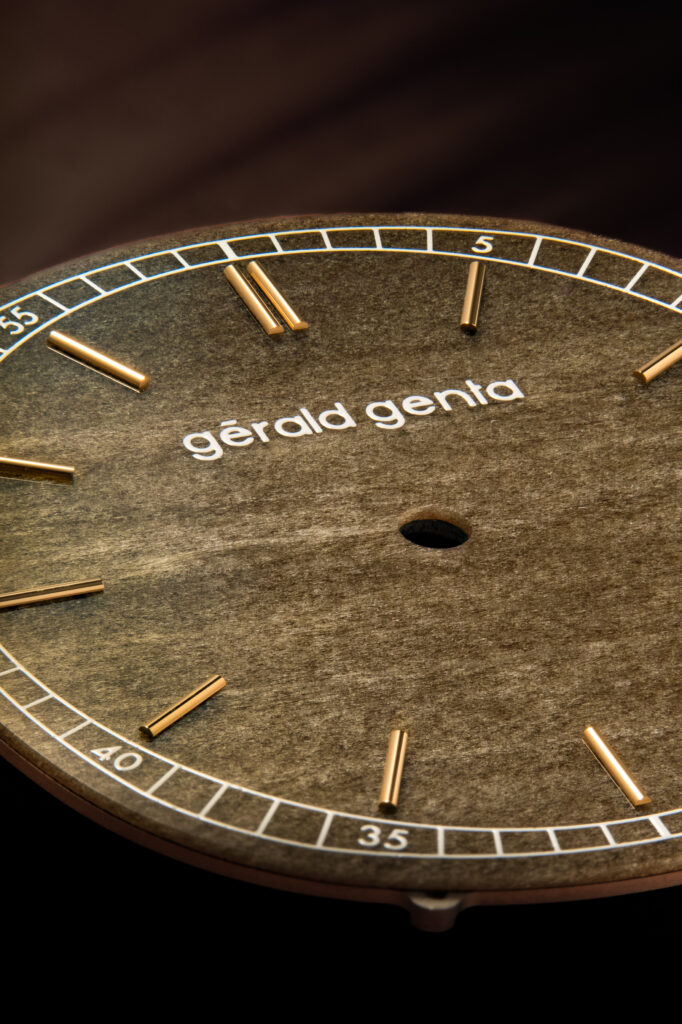
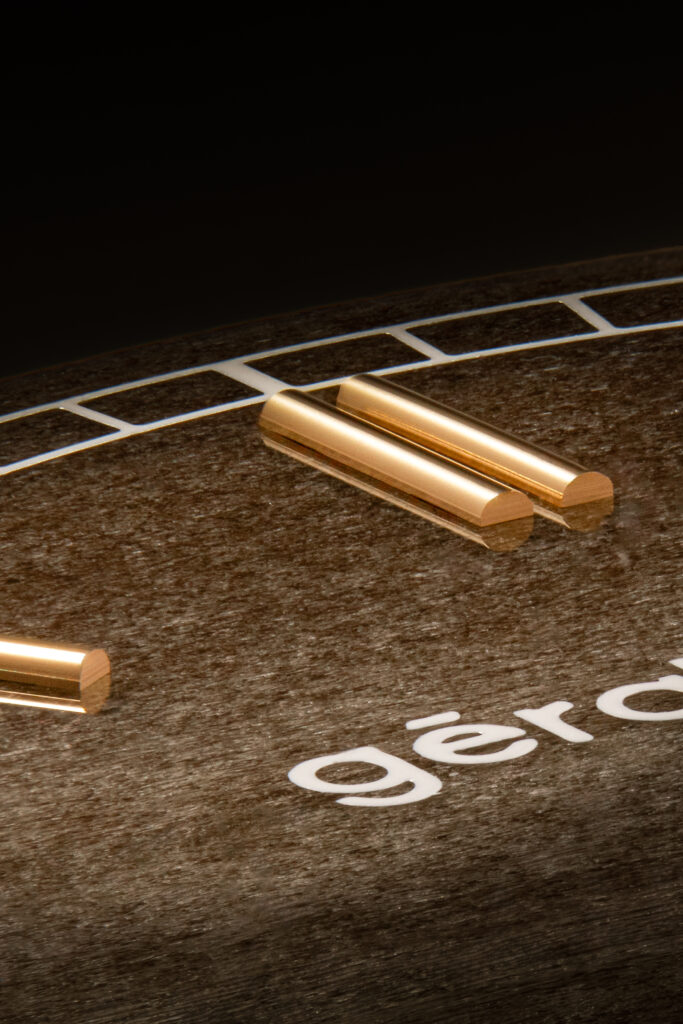
The dial introduces another form of uniqueness. Golden obsidian, a volcanic rock formed by the rapid cooling of lava, presents inclusions that vary from one stone to another. Matthieu Hegi insists on this absence of exact repetition: each dial has its own brown and golden nuances. Here, the material does not try to imitate the mechanism; it answers it with a natural irregularity.
The historical lineage is acknowledged. Gérald Genta had long worked on the minute repeater with the master watchmaker Pierre-Michel Golay, whose musical culture and passion for opera had nourished his approach to acoustics. The new Geneva does not literally reproduce these earlier pieces; it reactivates their logic: considering sound as a design criterion in its own right.
In a market where haute horlogerie often seeks to make complexity visible, this watch takes another path. An essential part of its work disappears precisely so that it can be heard better. That may be where its modernity lies: making lightening, hollowing out and manual tuning not technical details but the very structure of the Object.
Cette publication est également disponible en :


