
For Spring-Summer 2027, Maison Margiela’s experimental line takes on the unspoken rules that govern every garment — where a collar begins, where a waist ends — and moves those boundaries rather than abolishing them.
A garment always carries, without anyone writing it down anywhere, an implicit set of instructions. A shirt sits on the torso. A skirt begins at the waist. The neckline encircles the neck; the shoulder line rests on the shoulders. For Spring-Summer 2027, MM6 Maison Margiela questions these rules through clothes designed for everyday life and for people on the move, putting womenswear and menswear to the same practical question: what happens when familiar objects are worn differently?
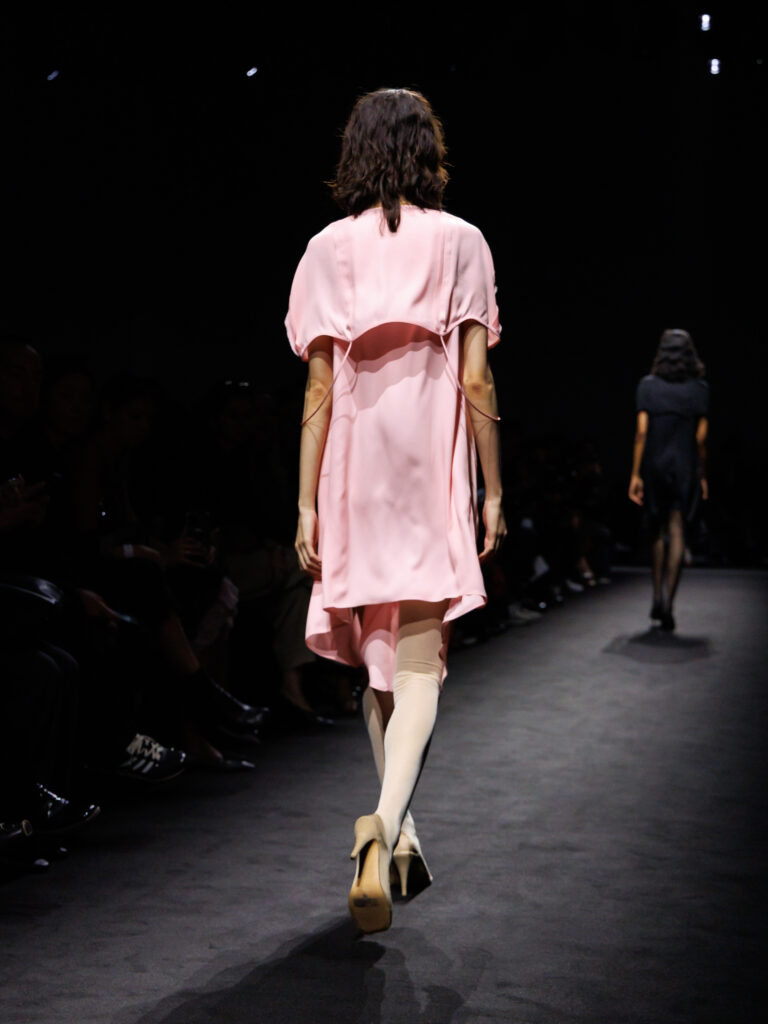
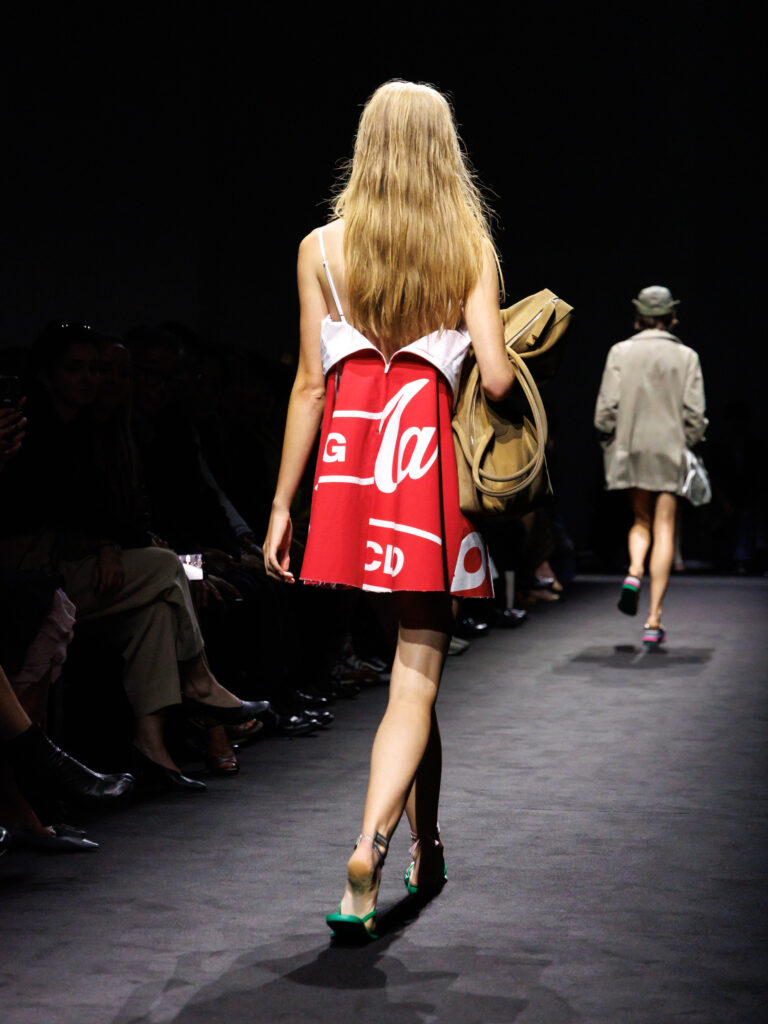
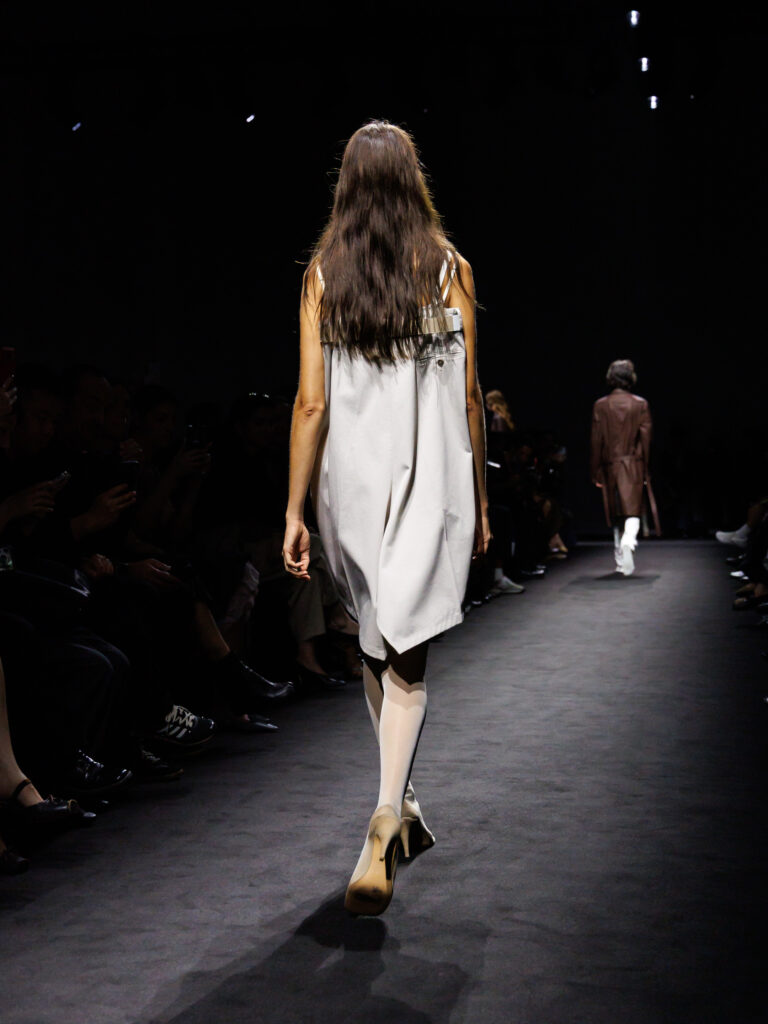
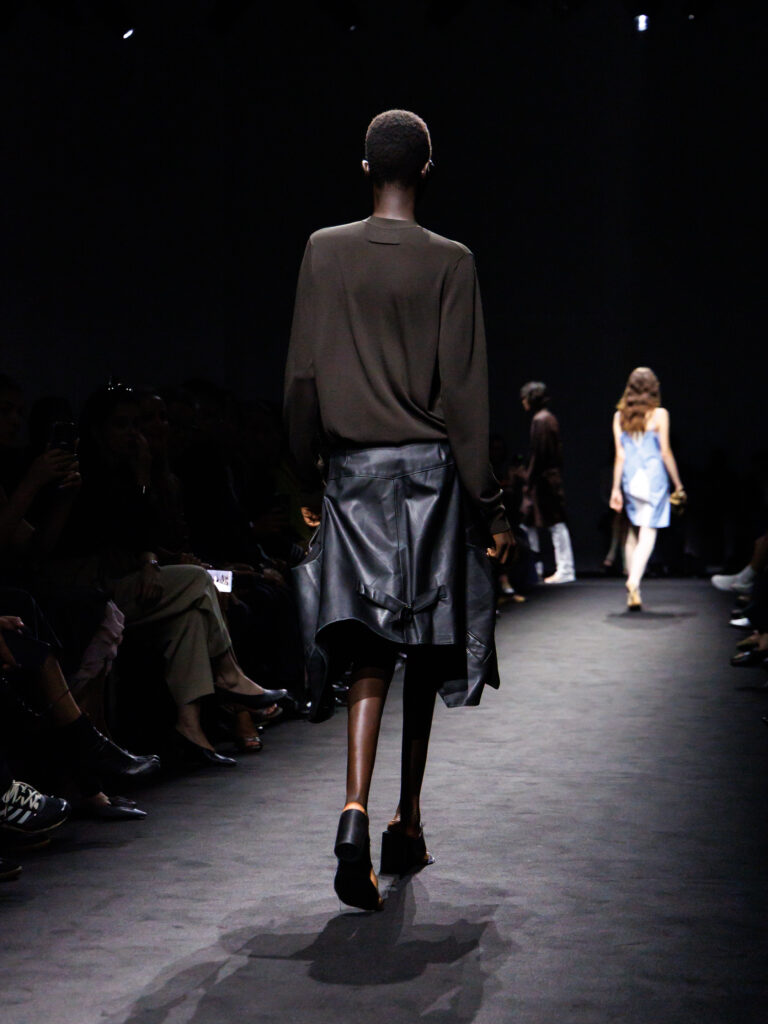
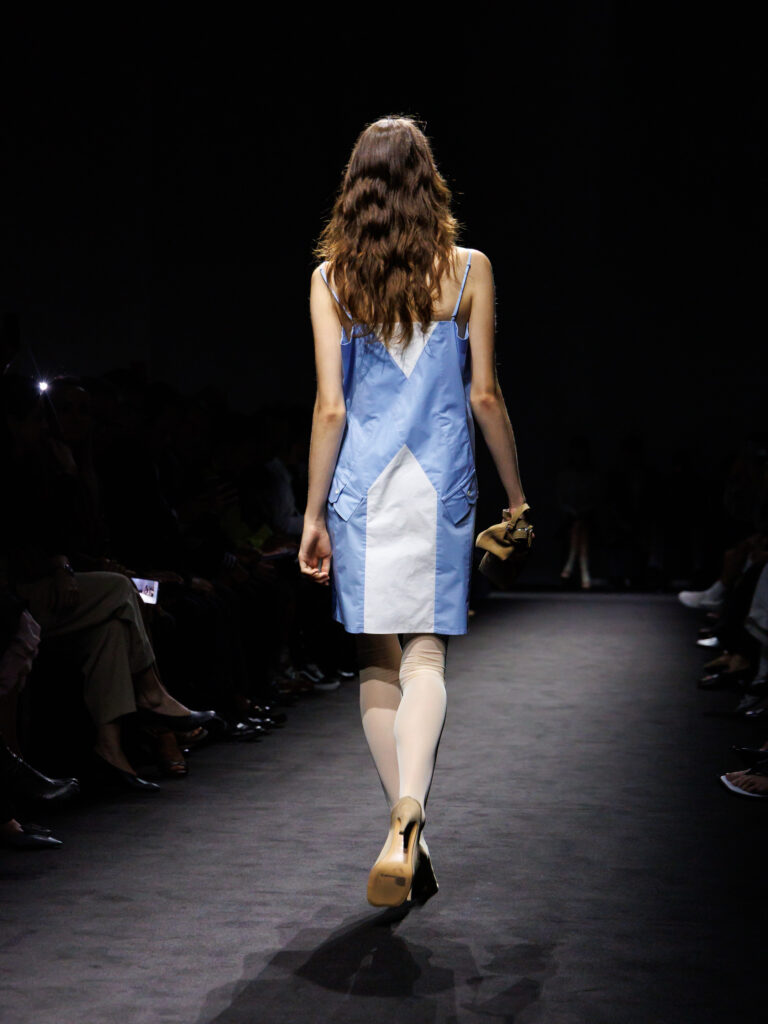
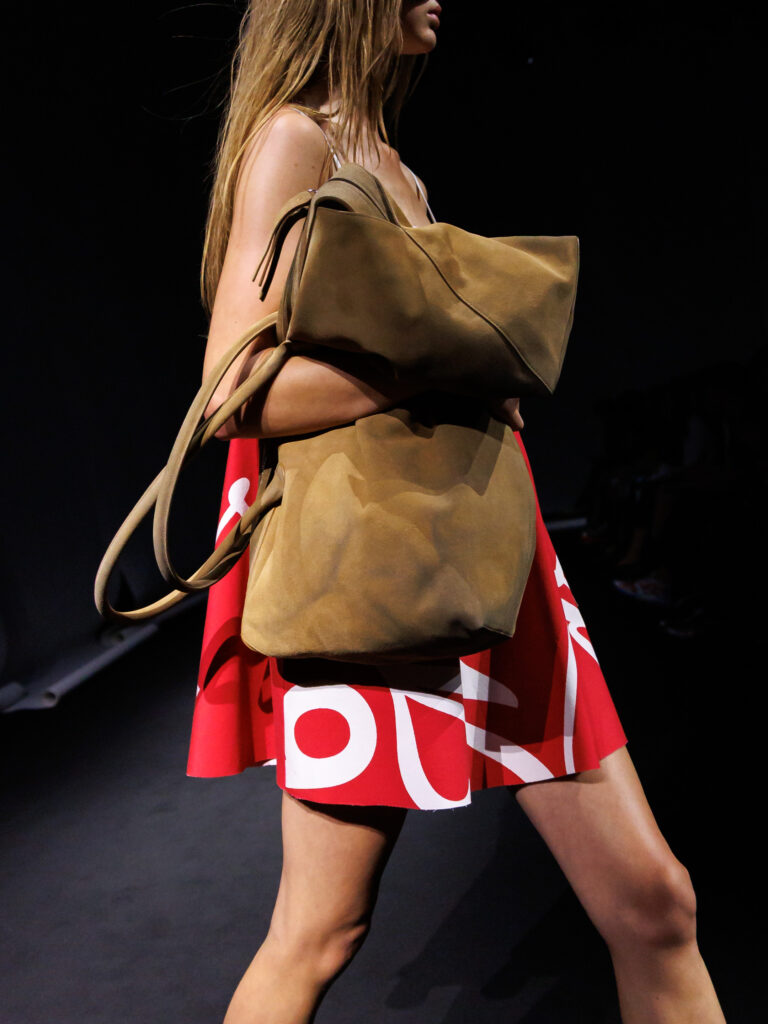
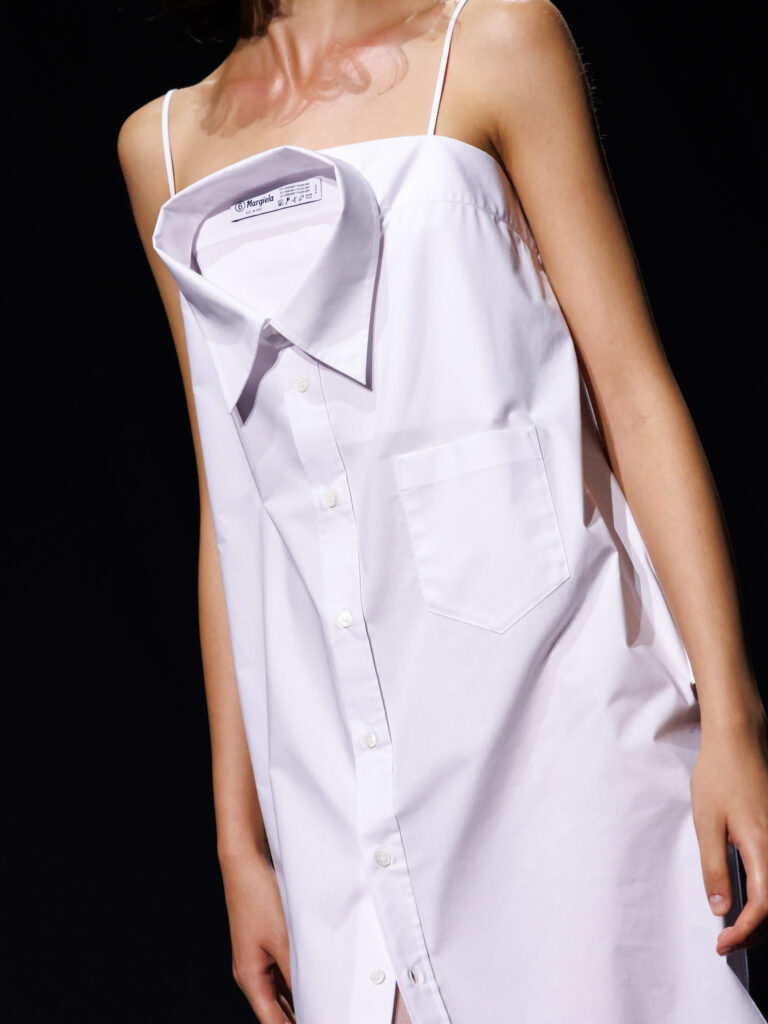
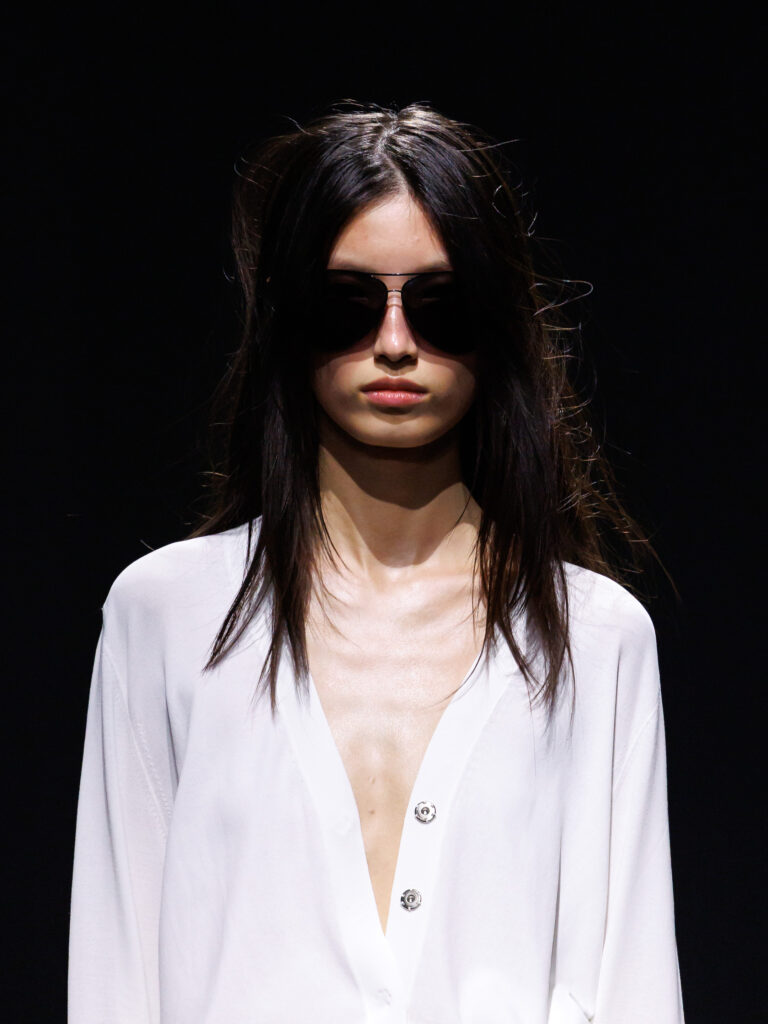
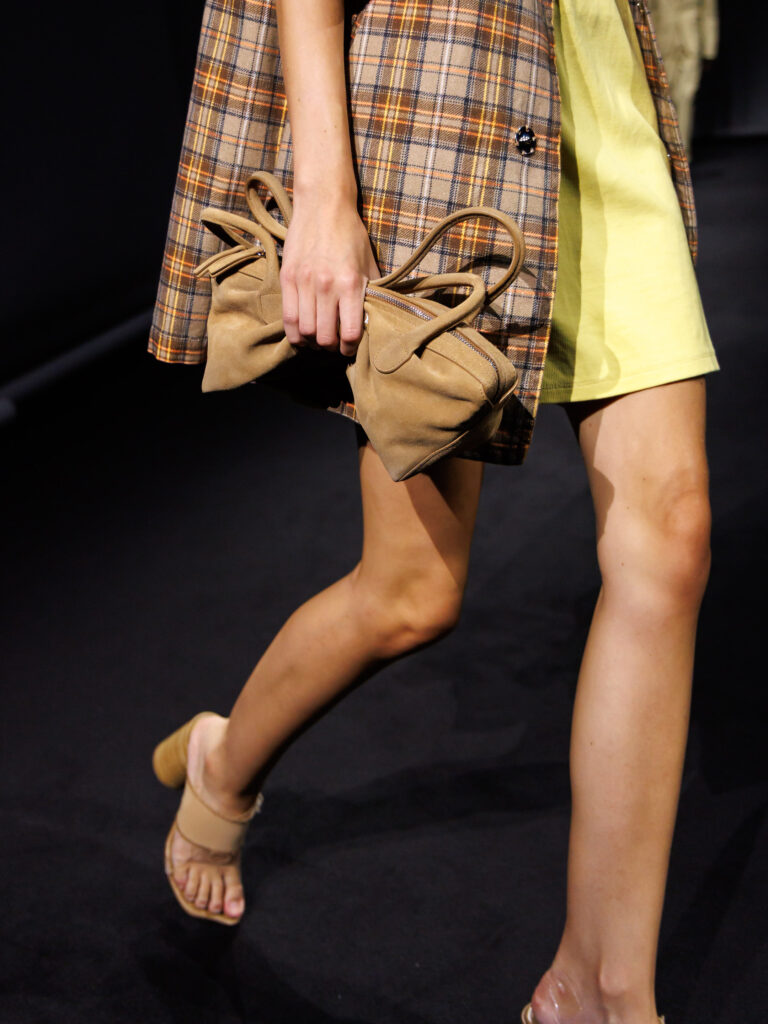
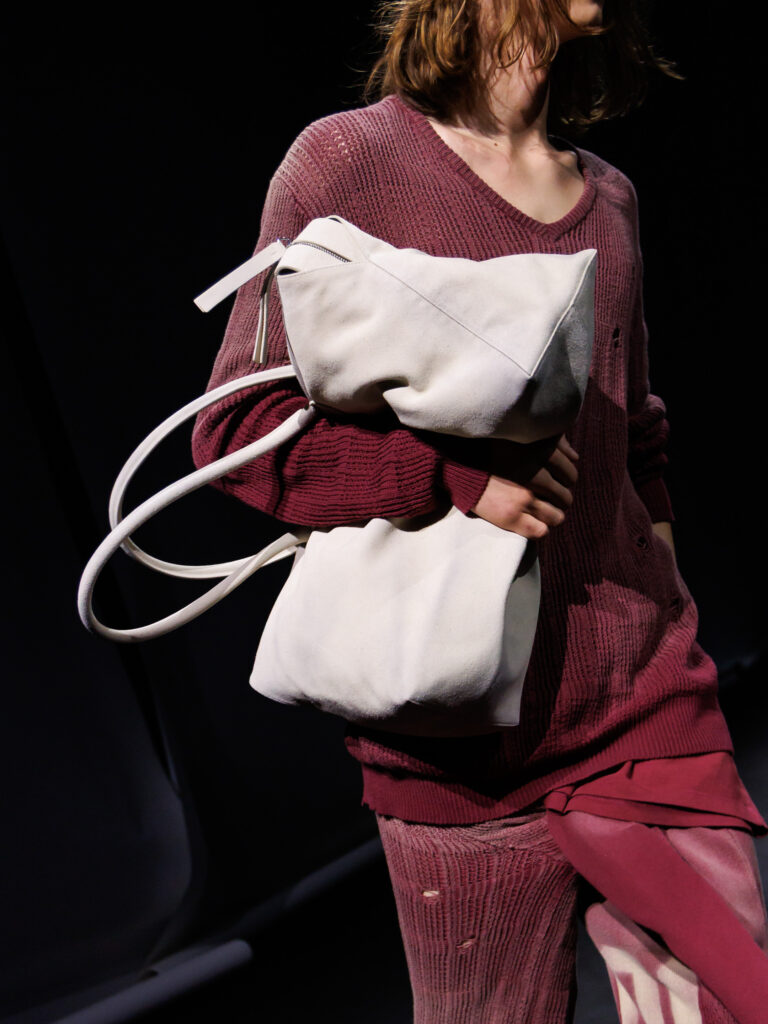
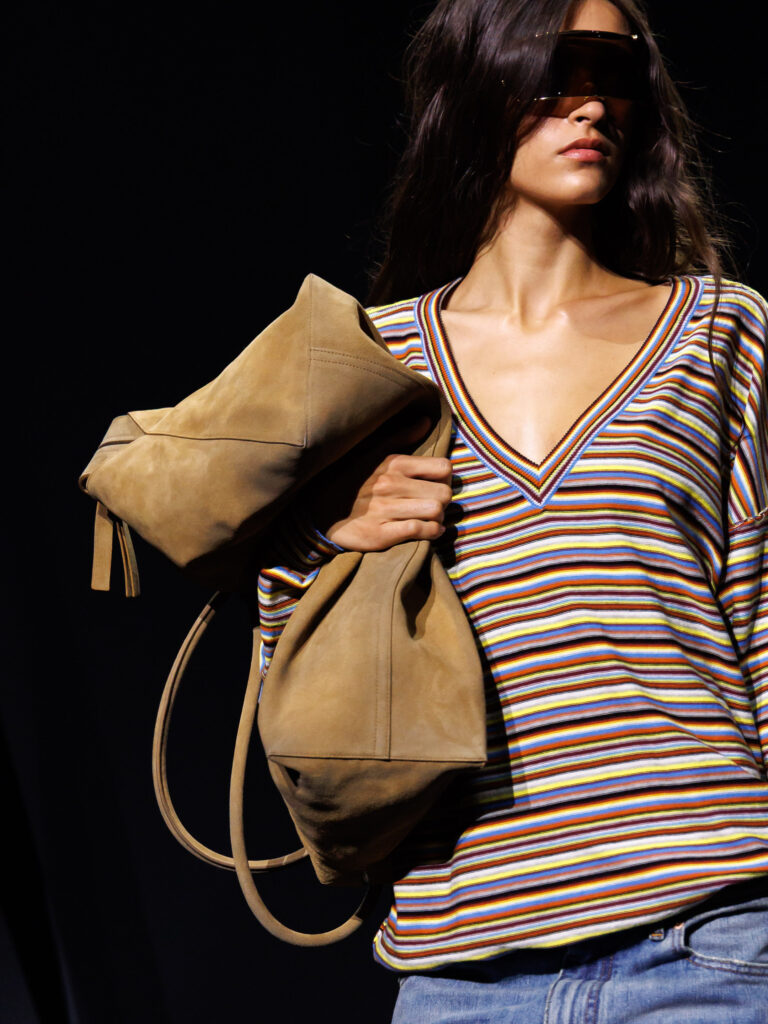
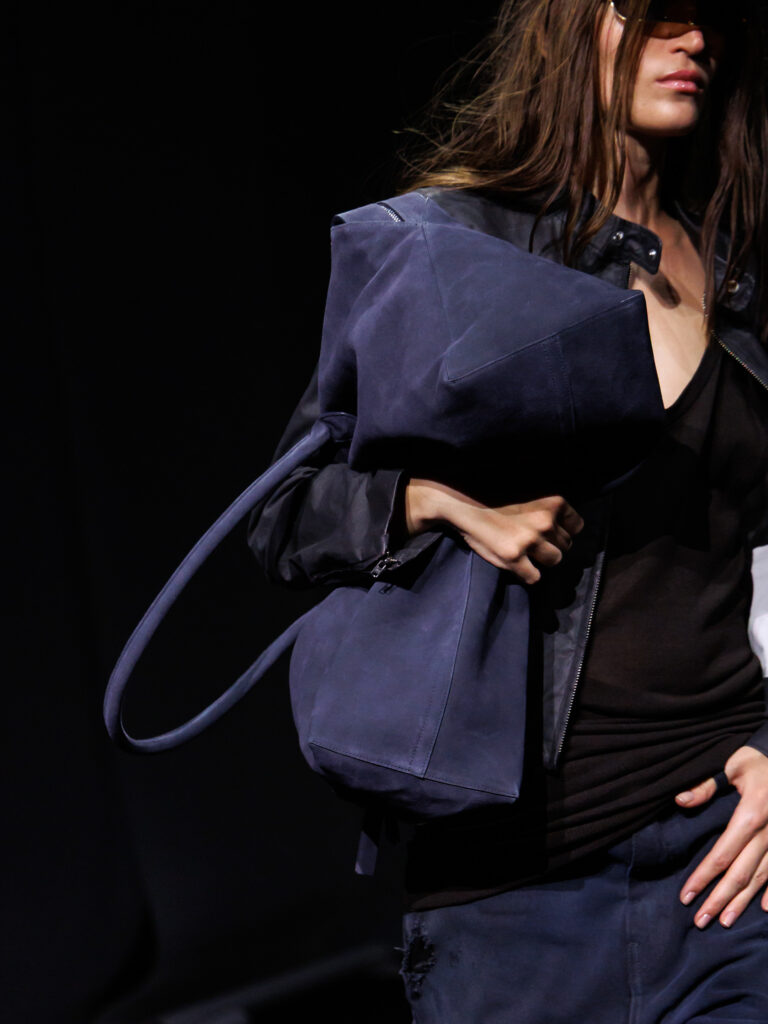
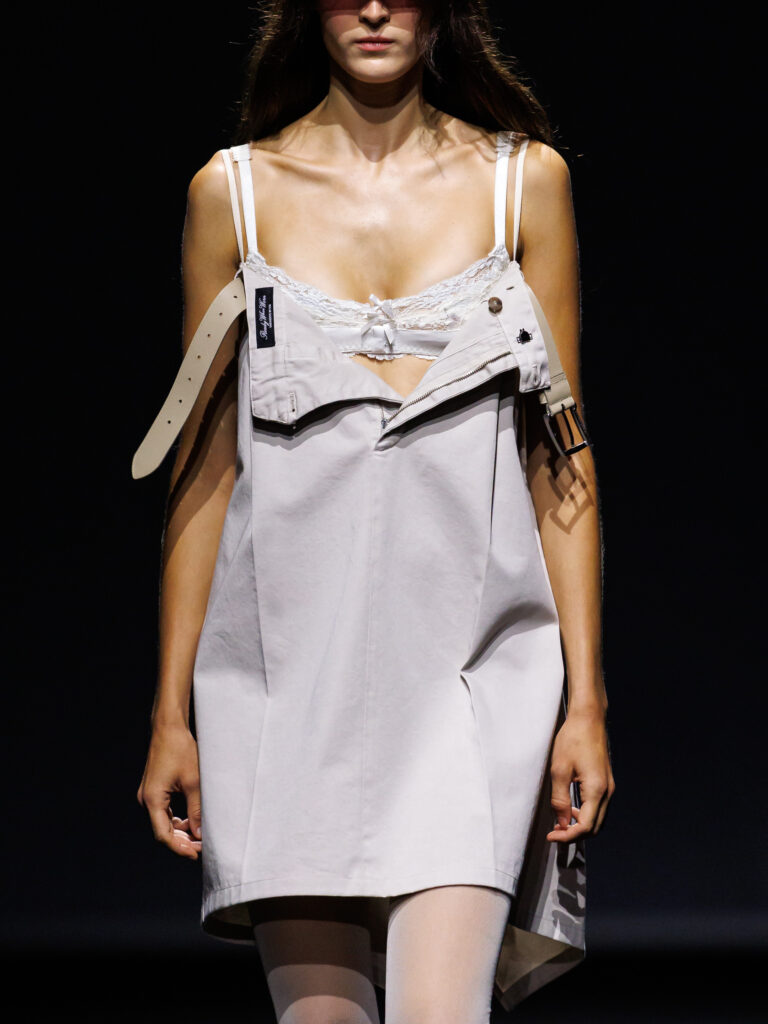
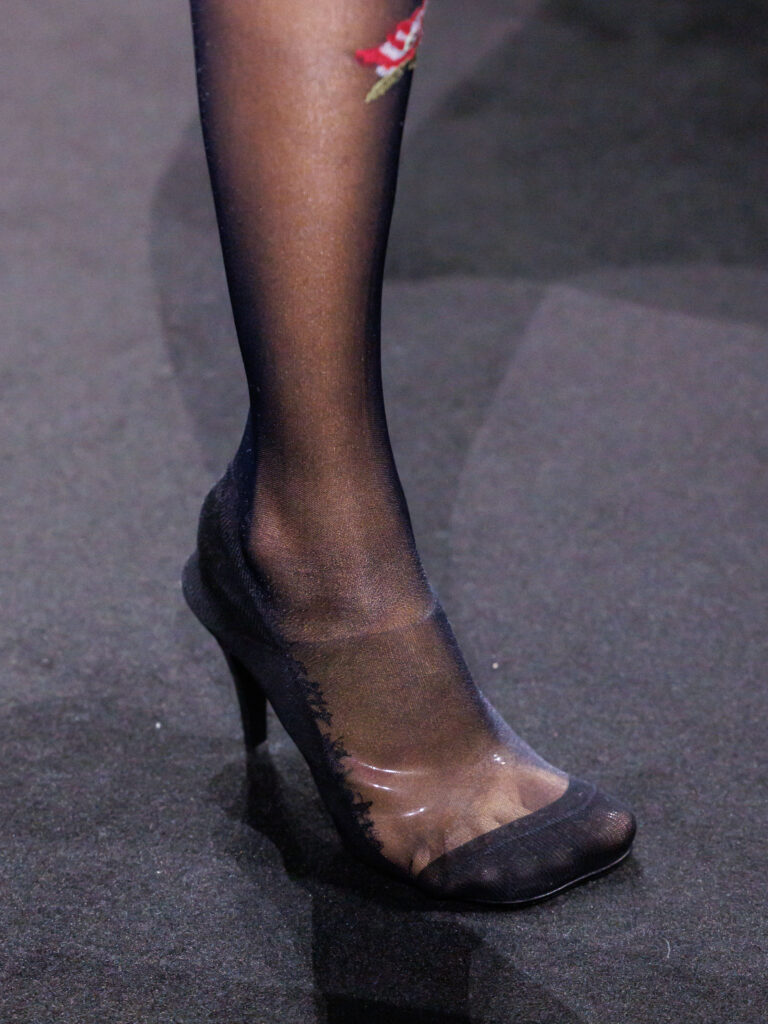
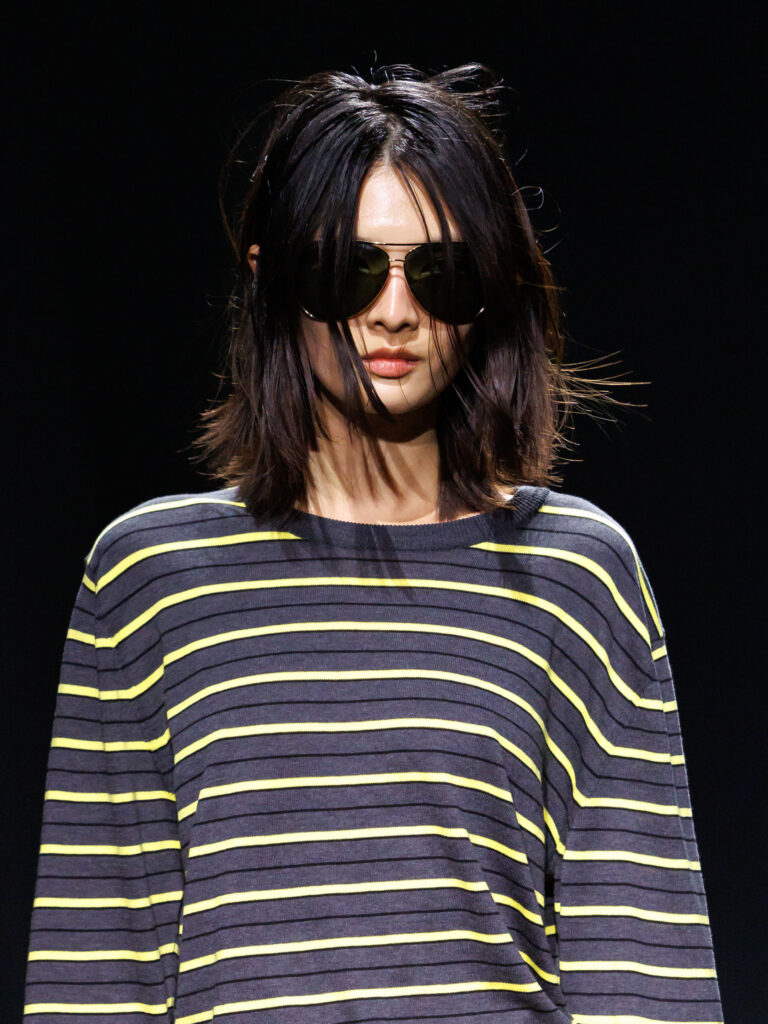
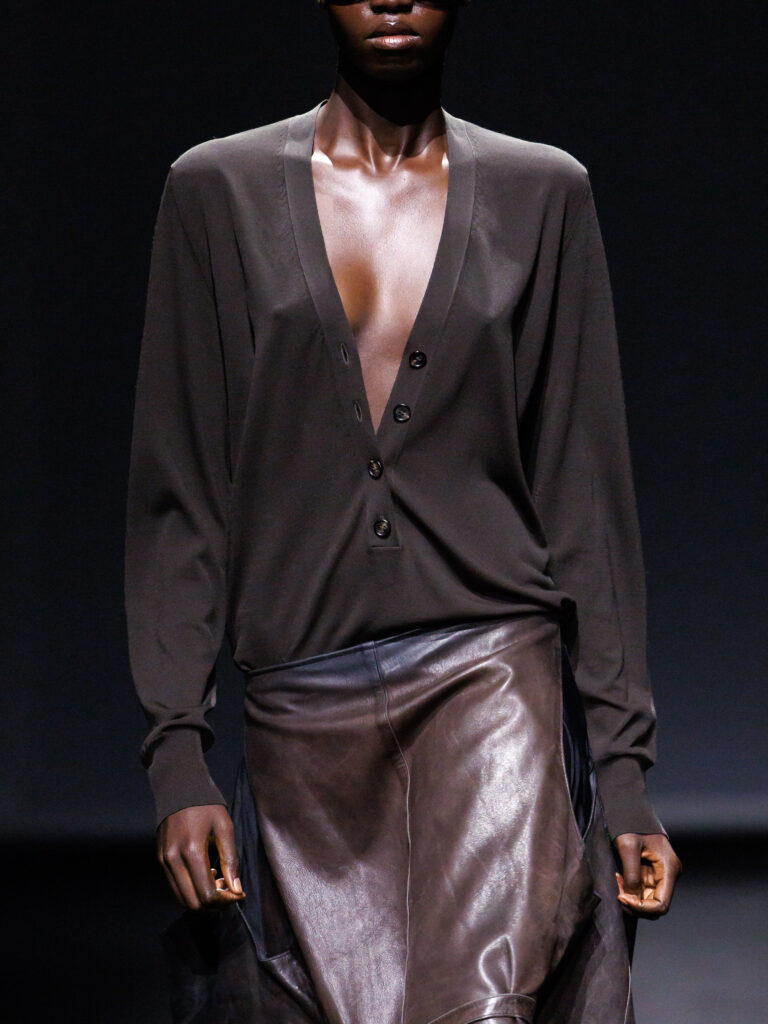
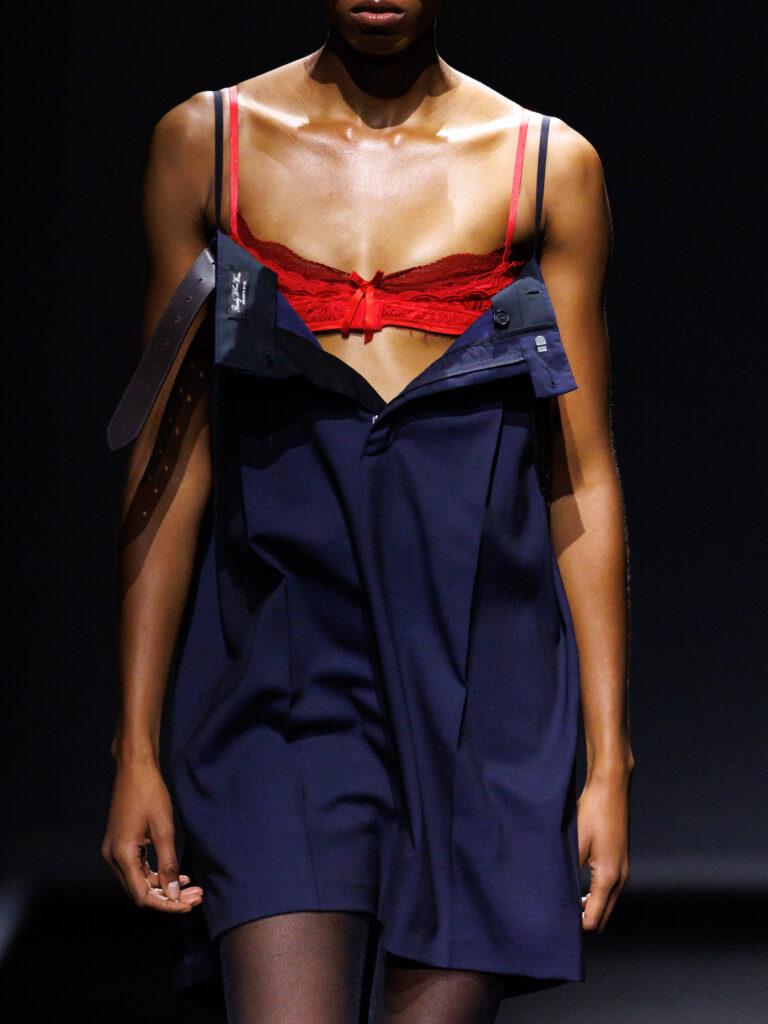
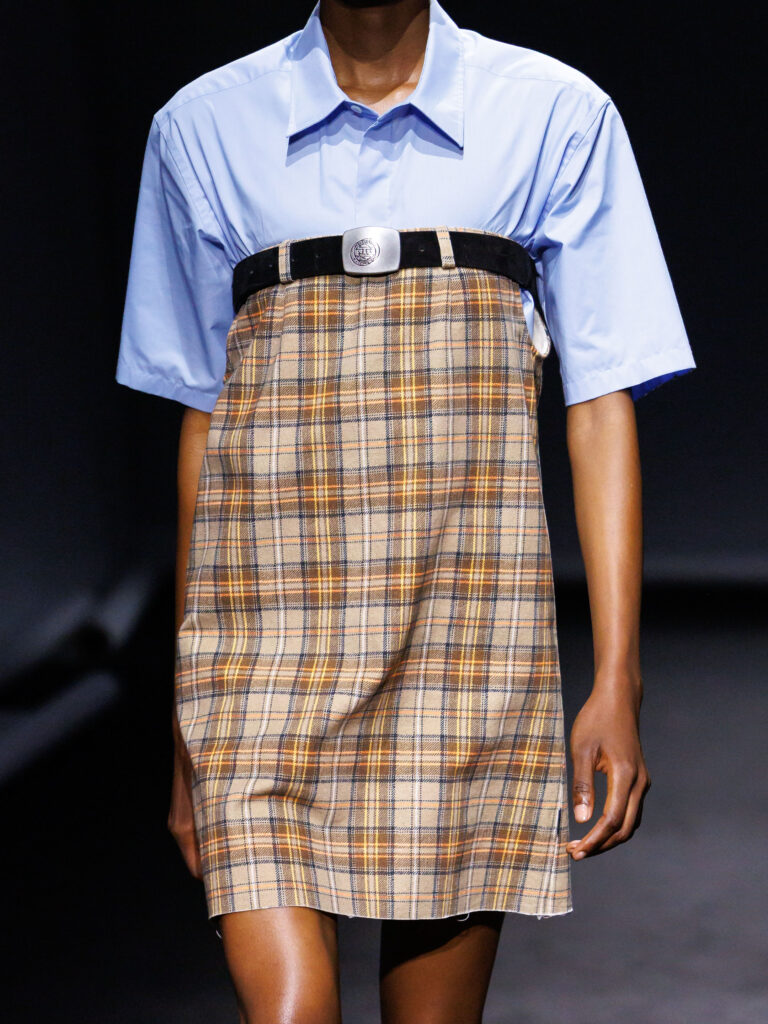
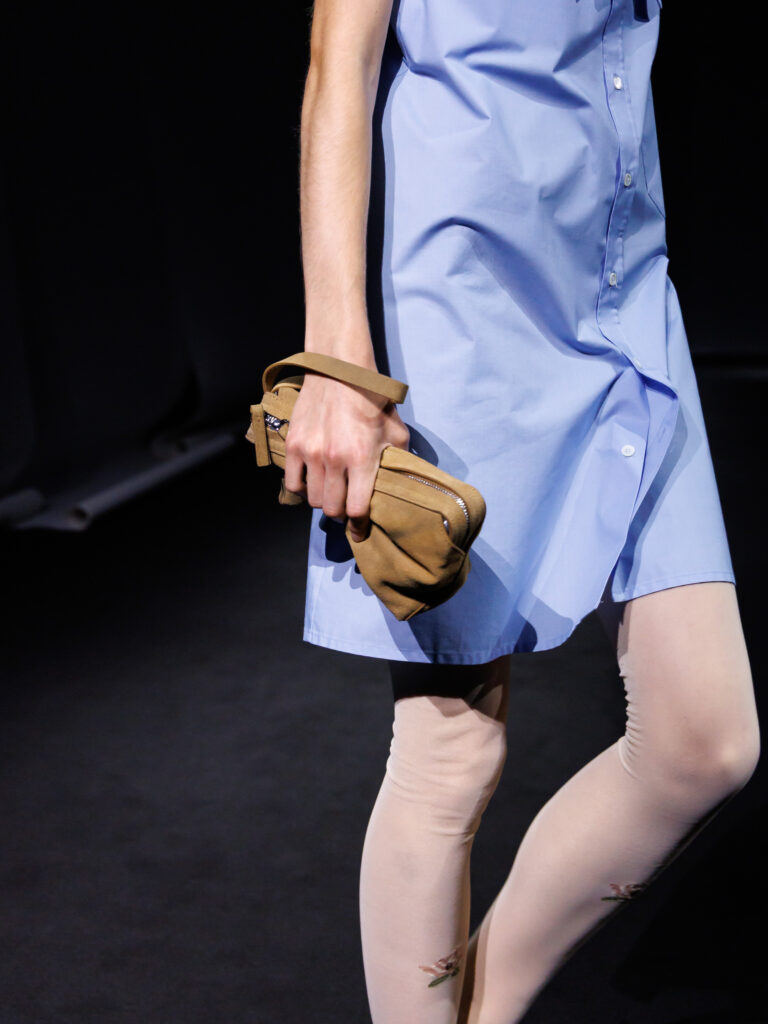
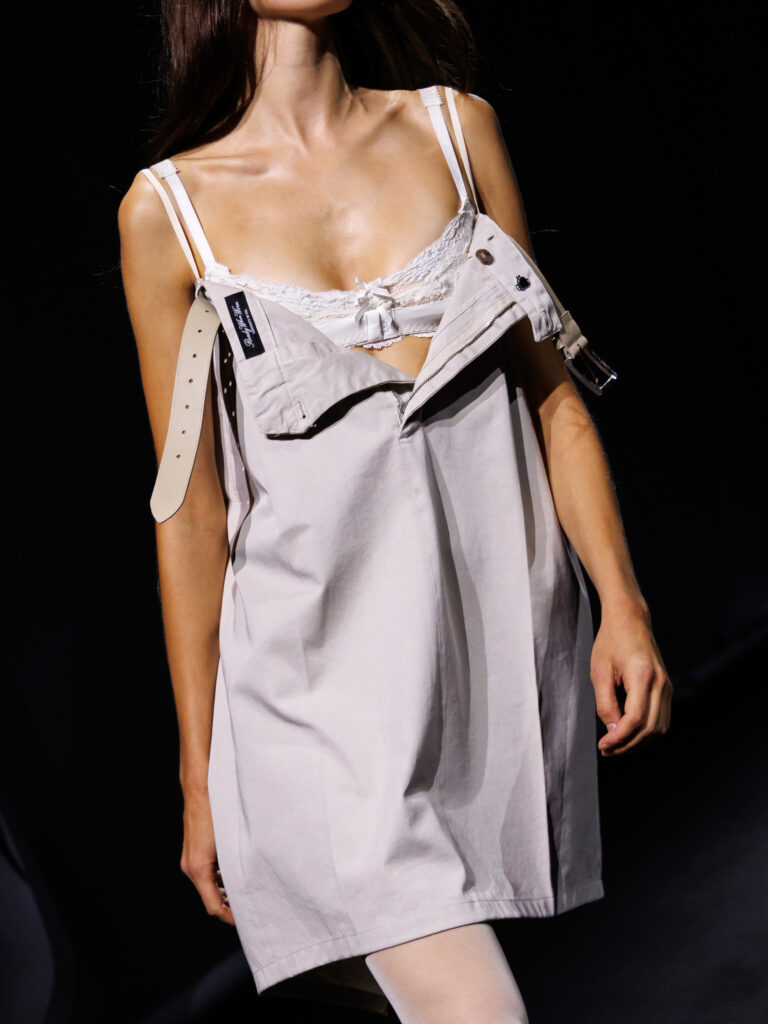
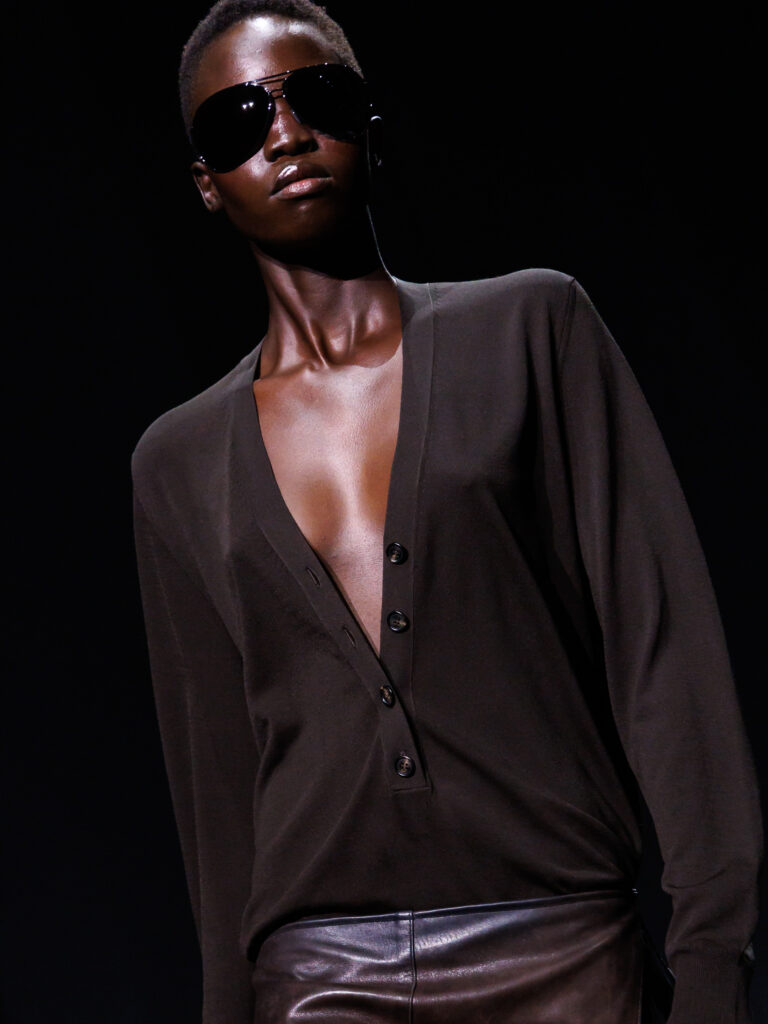
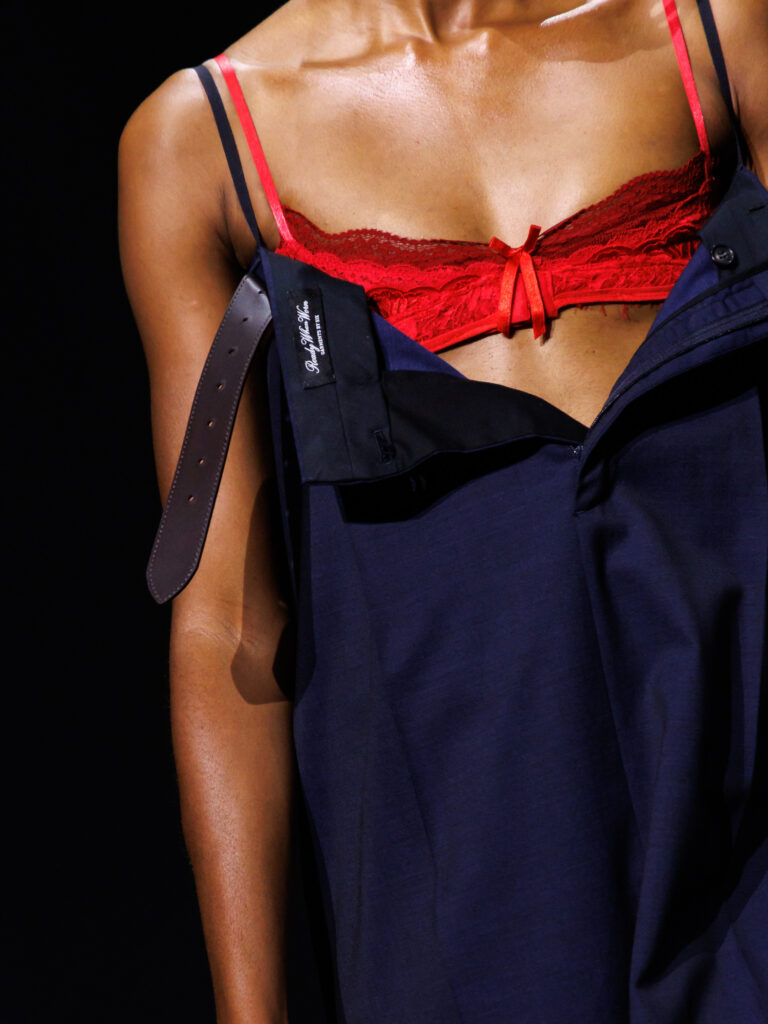
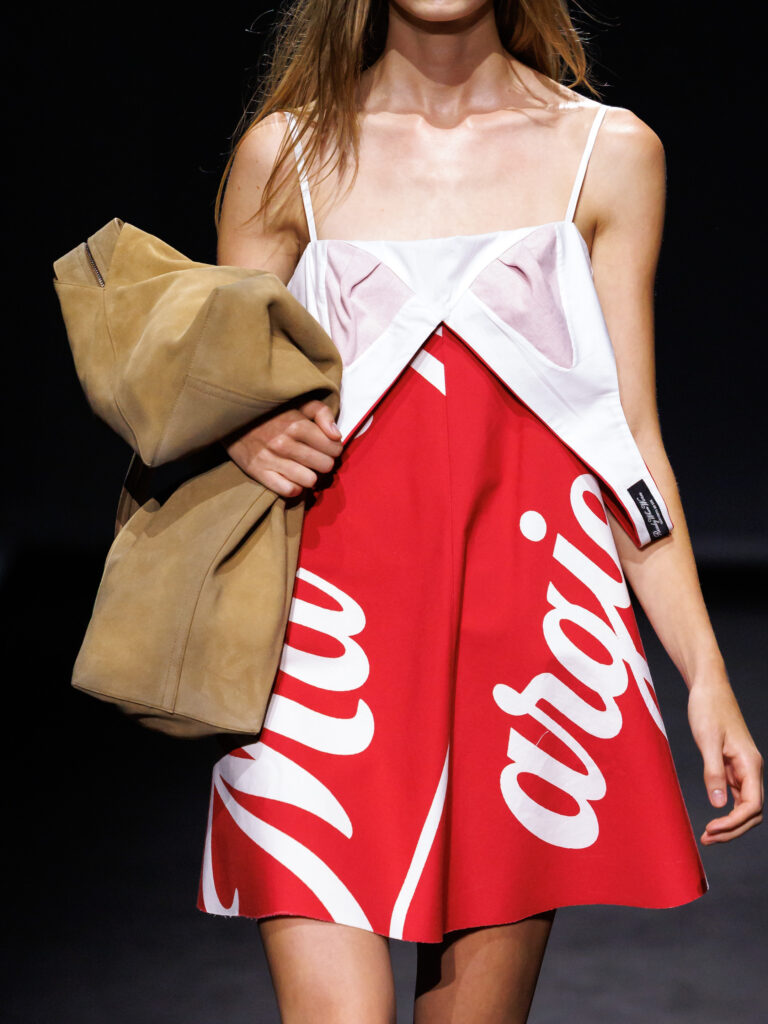
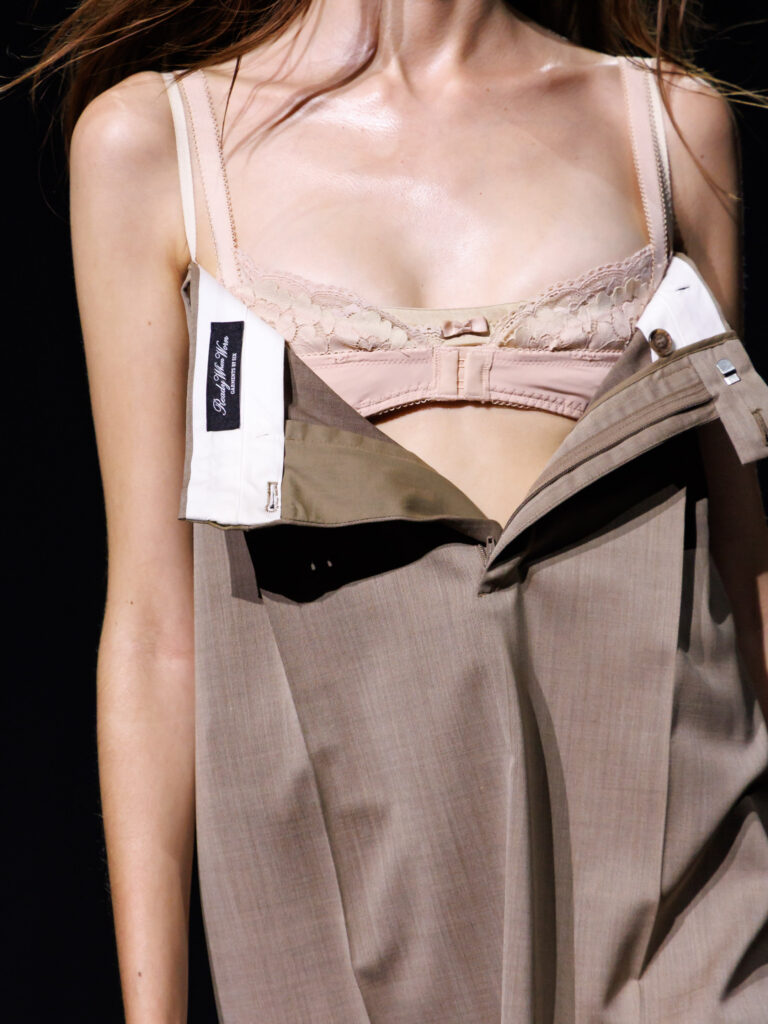
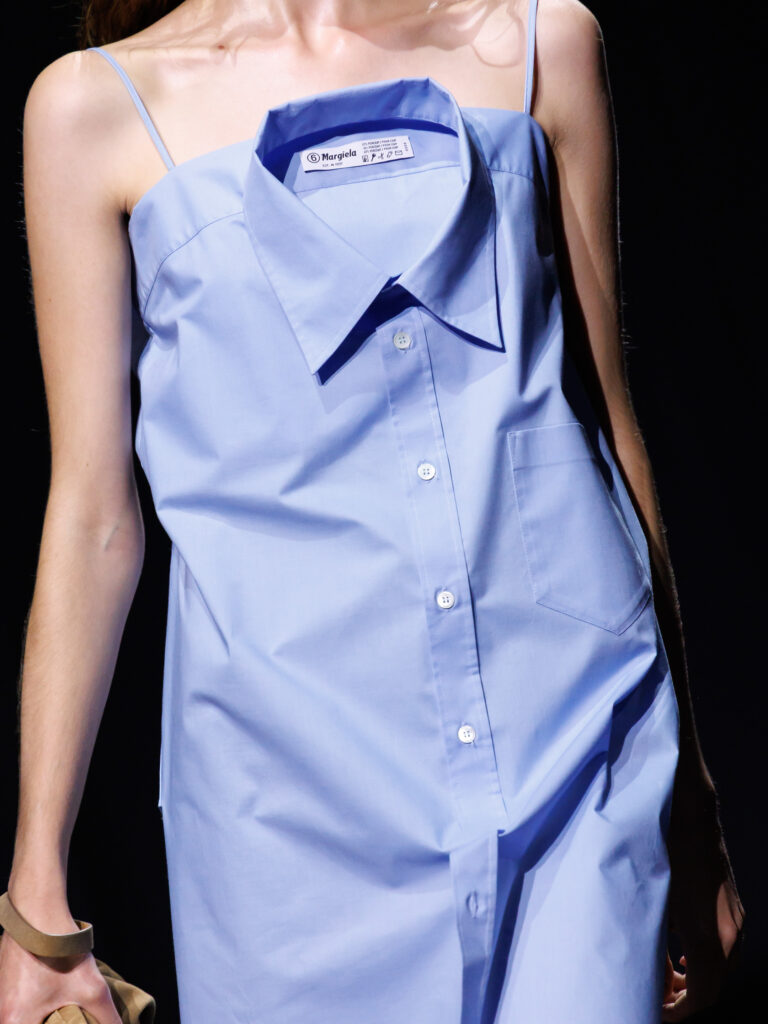
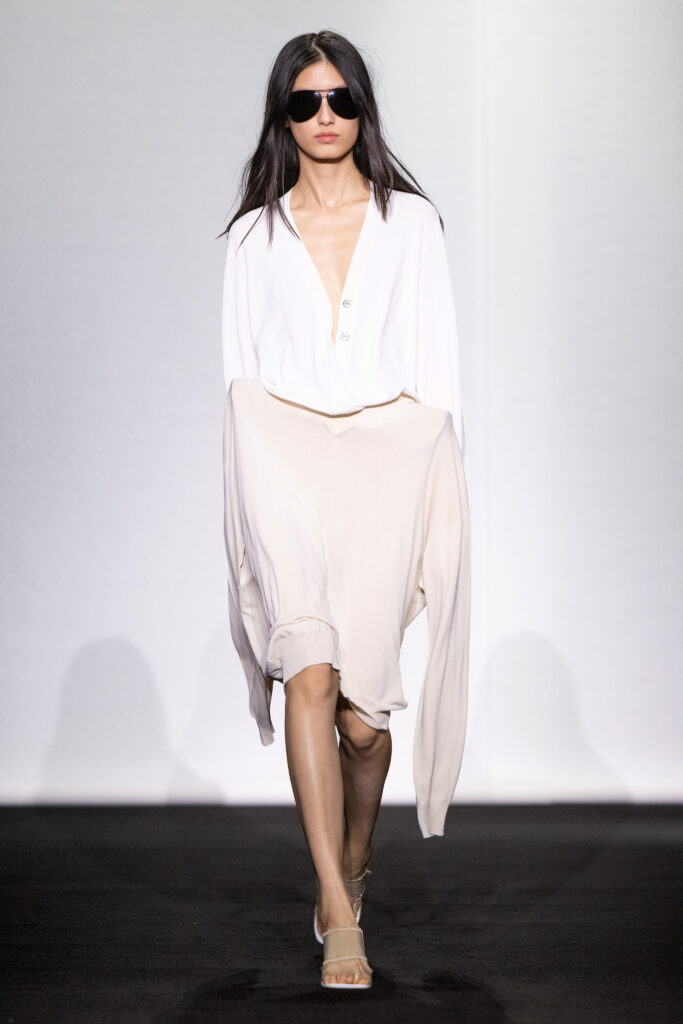
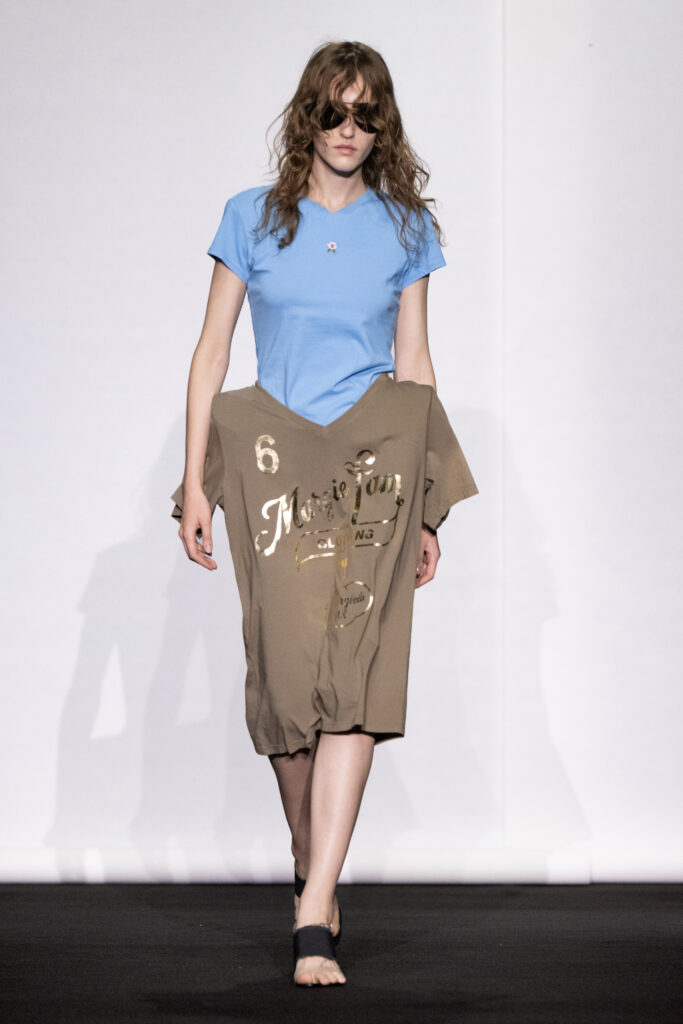
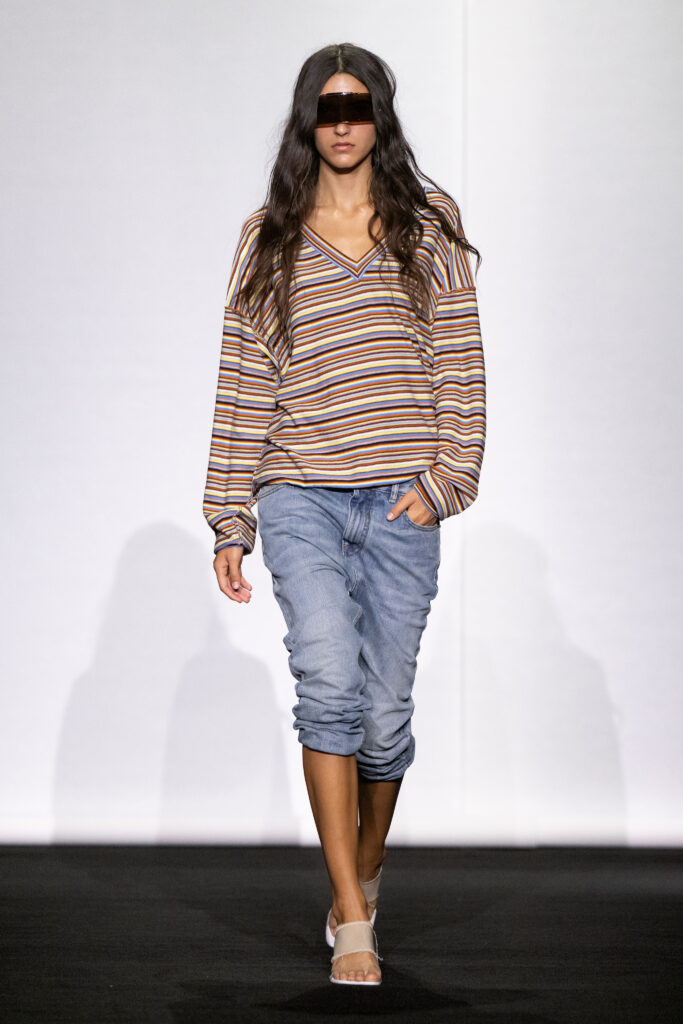
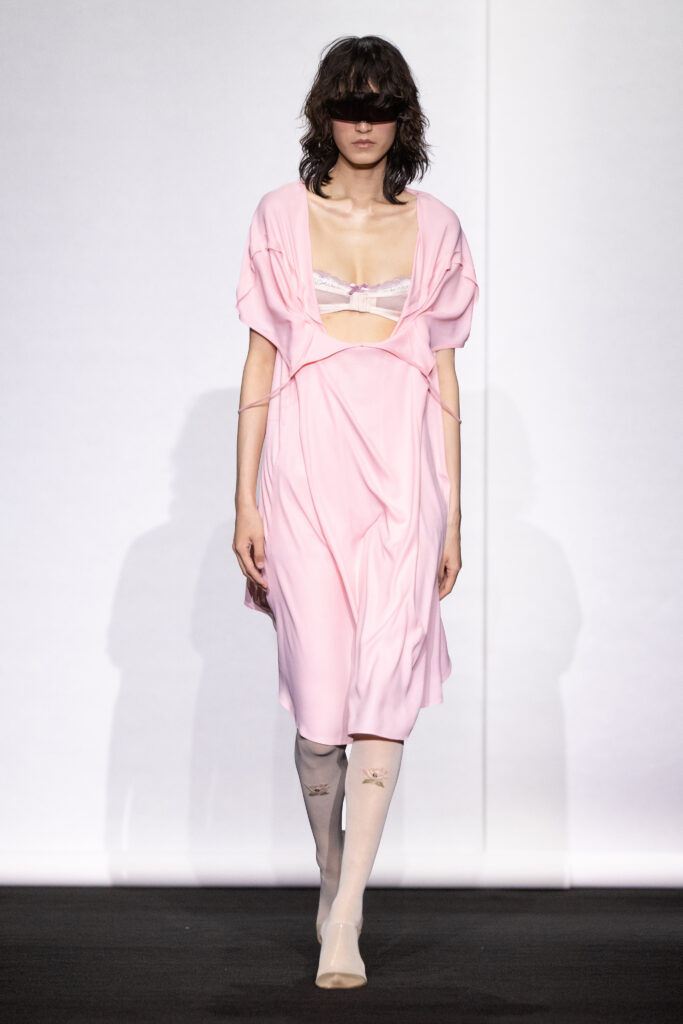
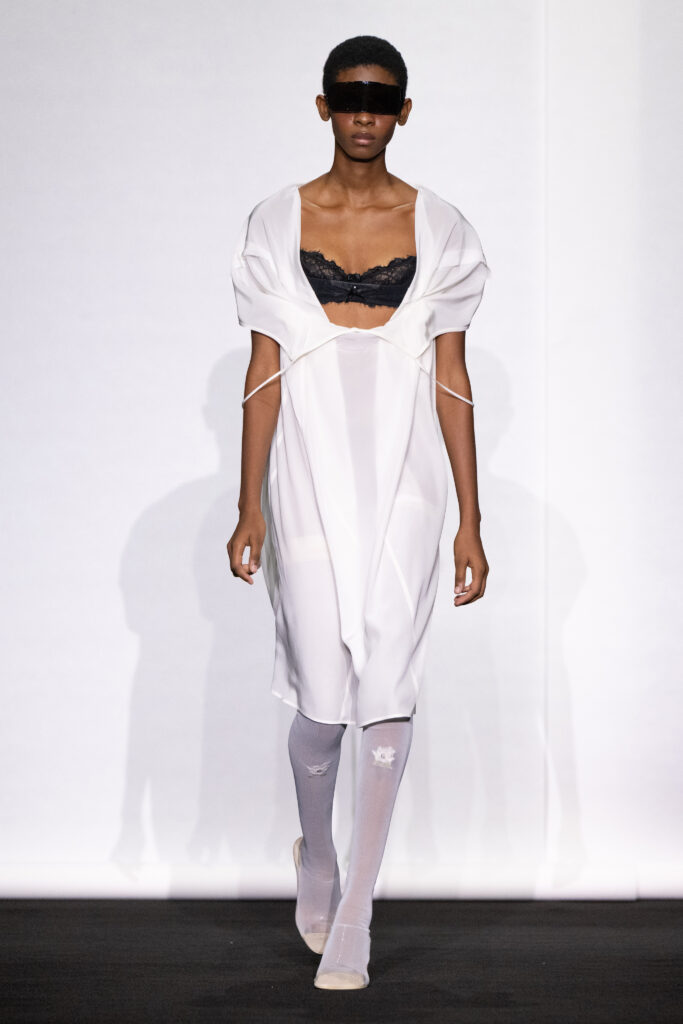
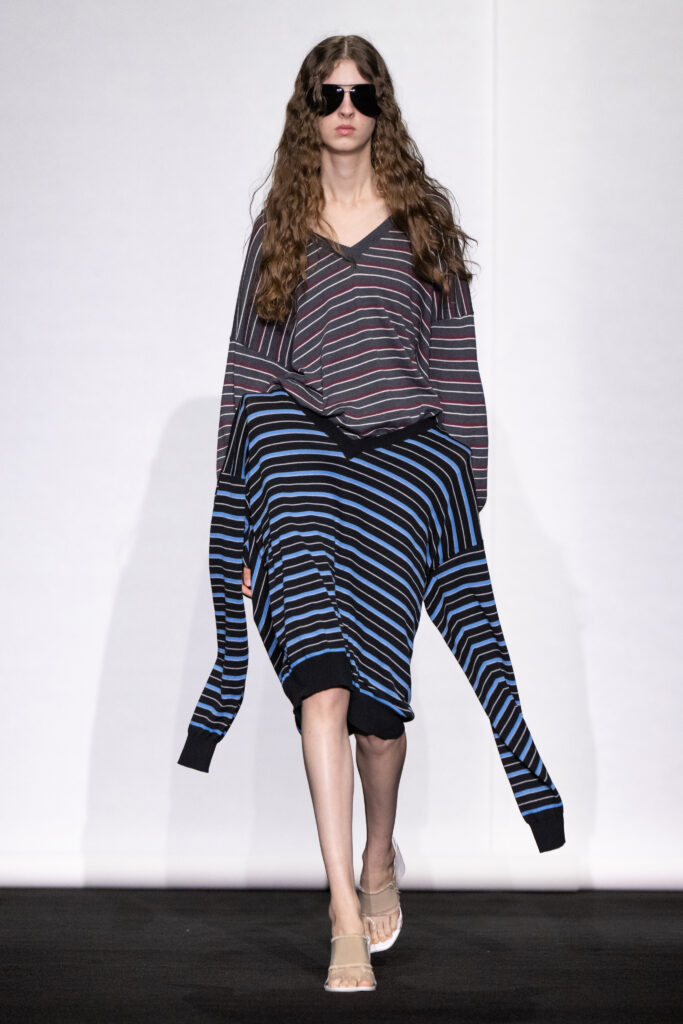
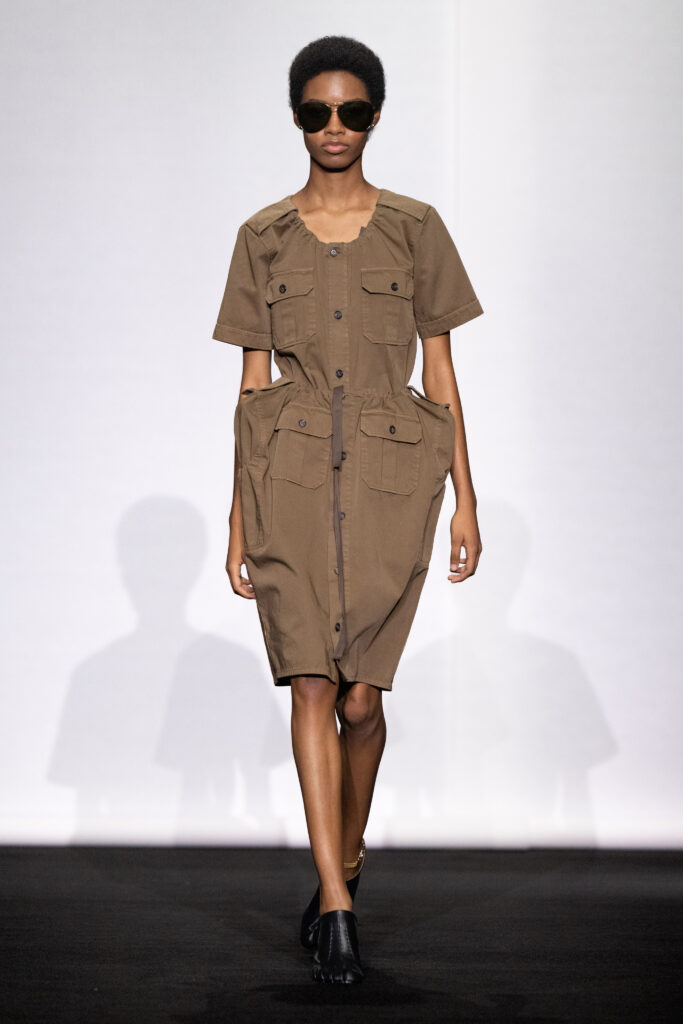
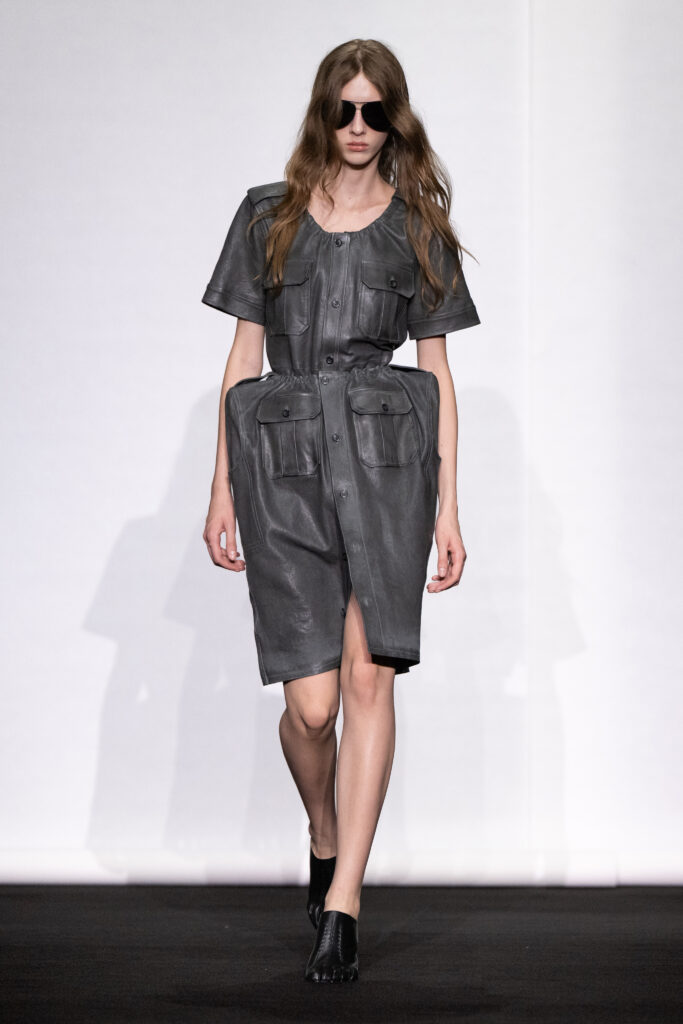
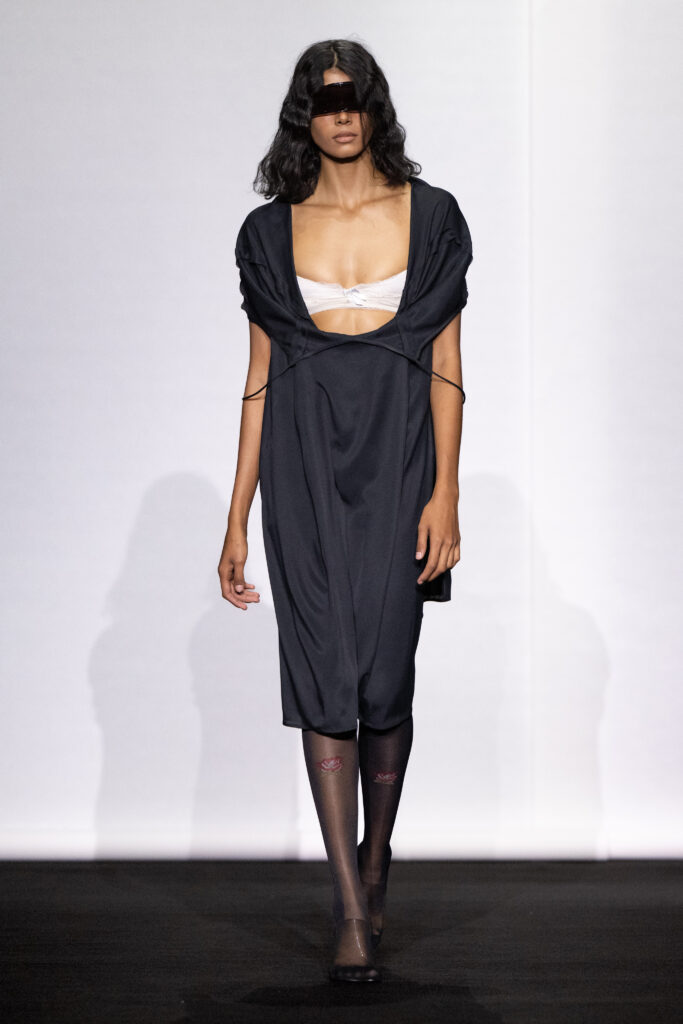
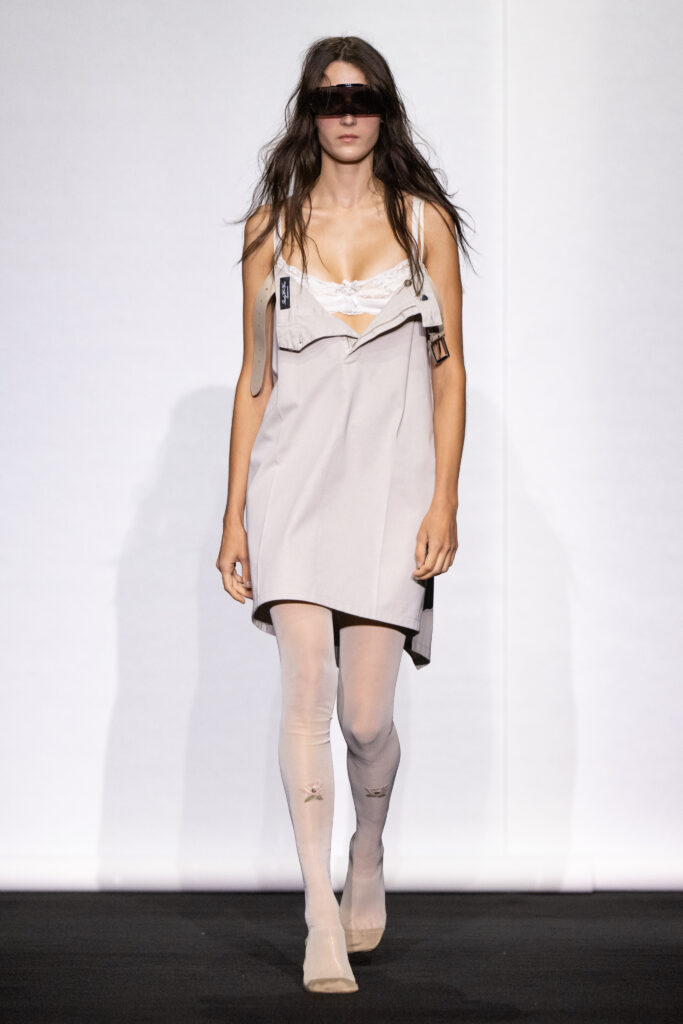
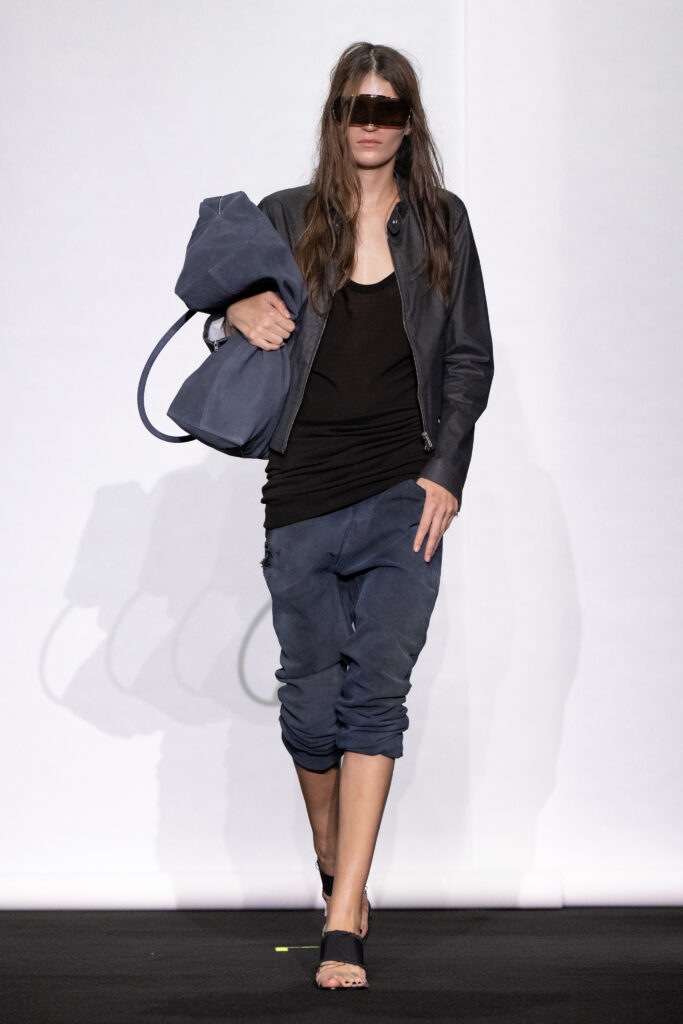
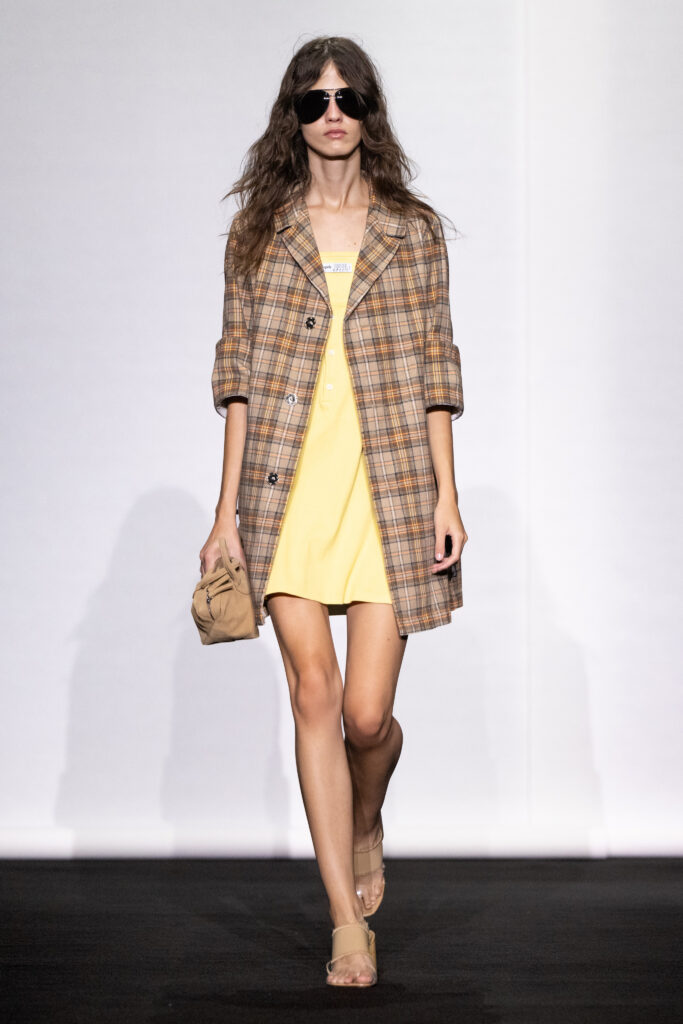
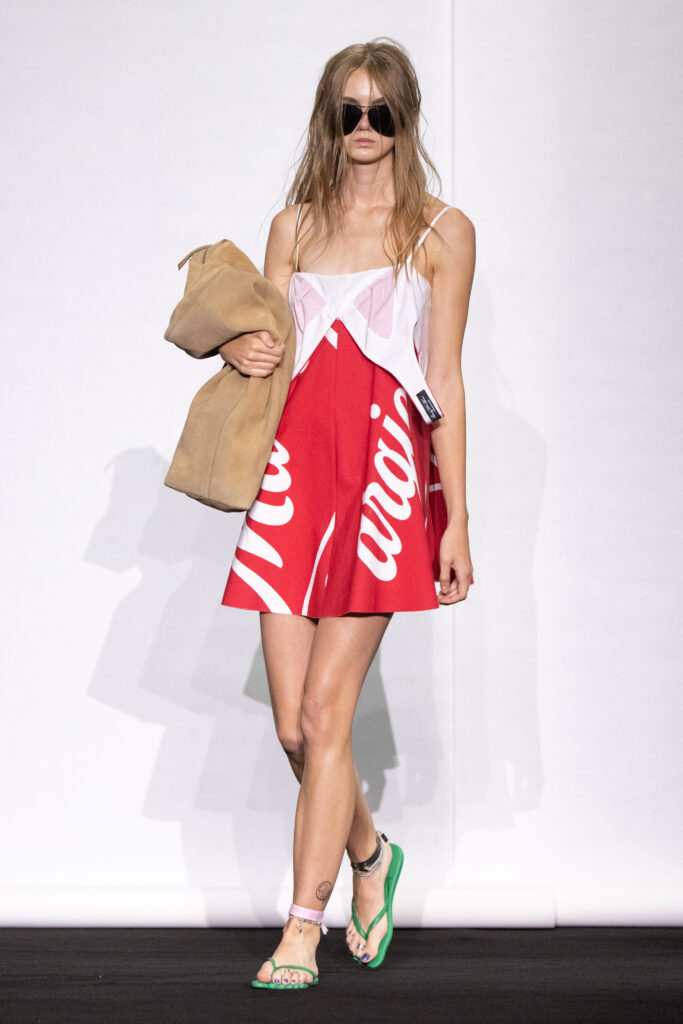
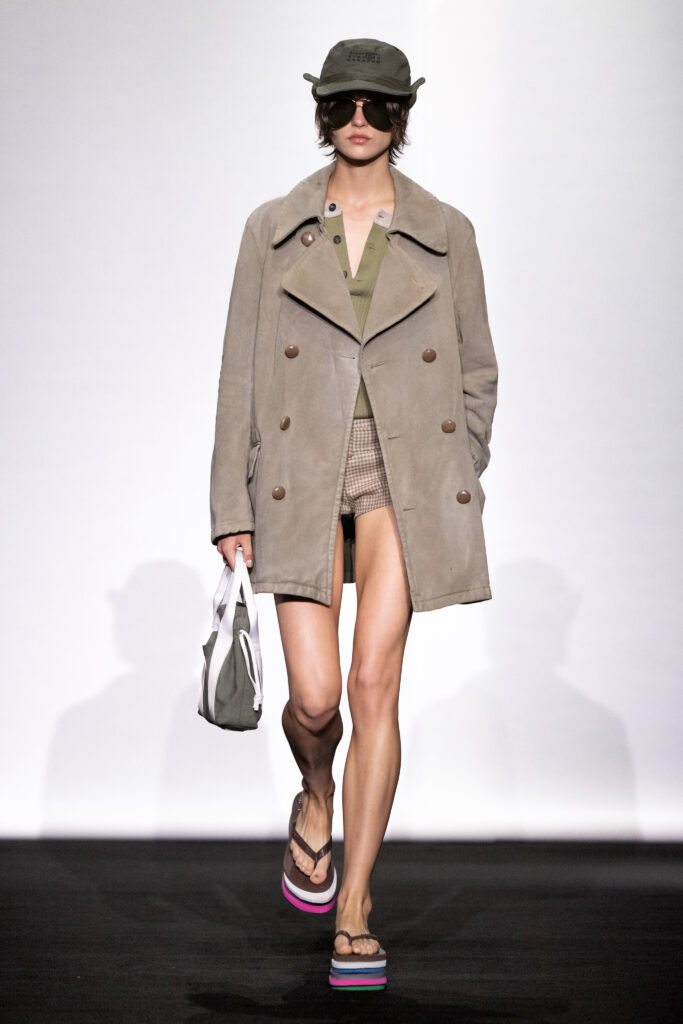
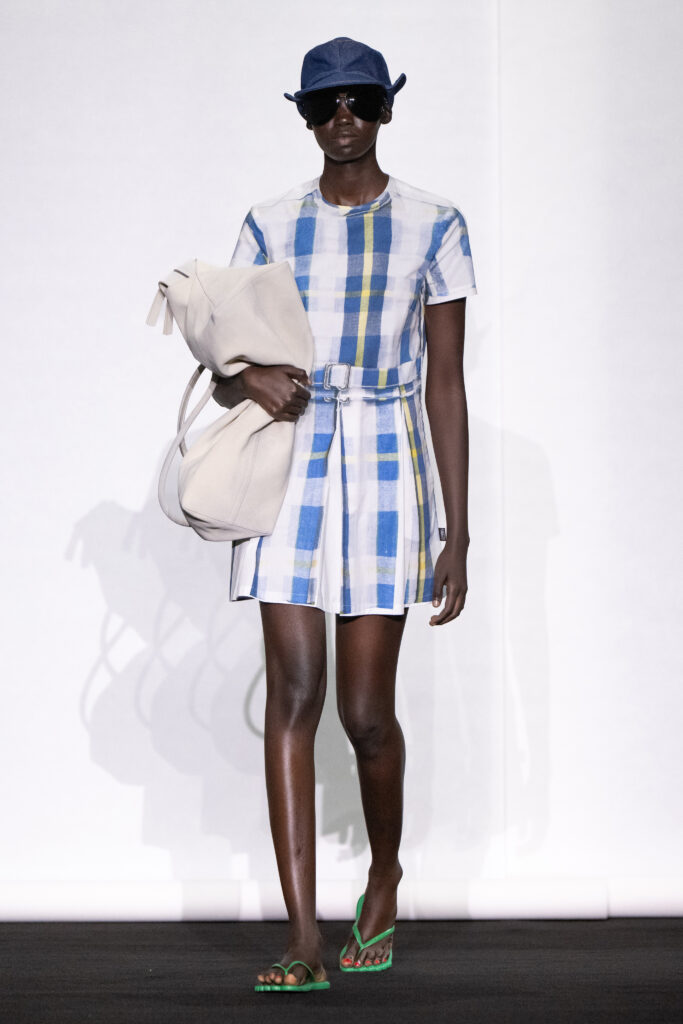
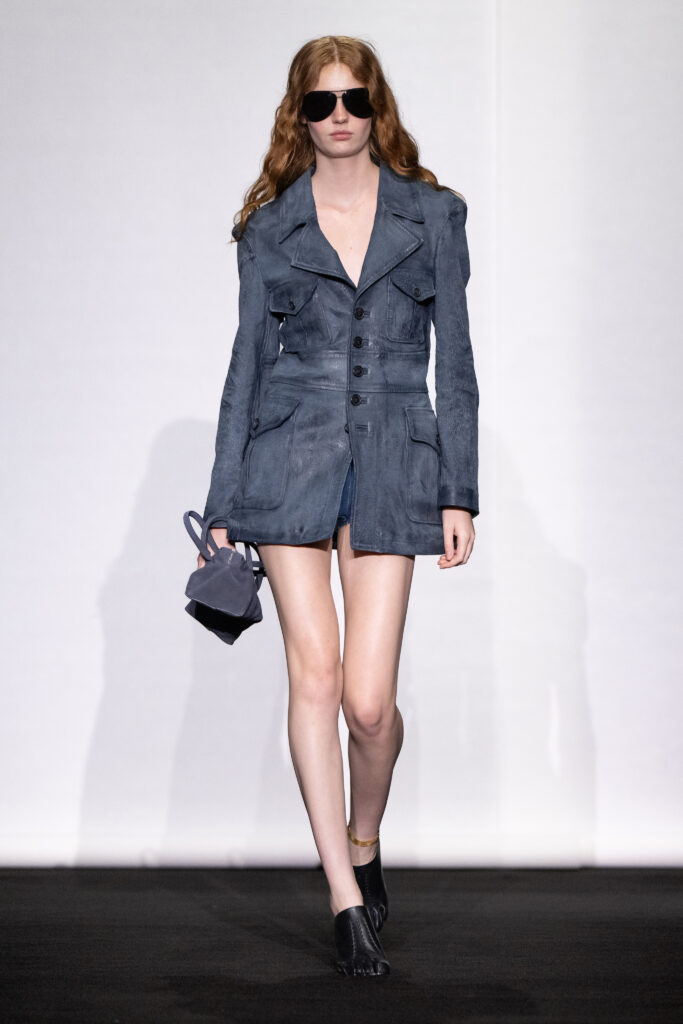
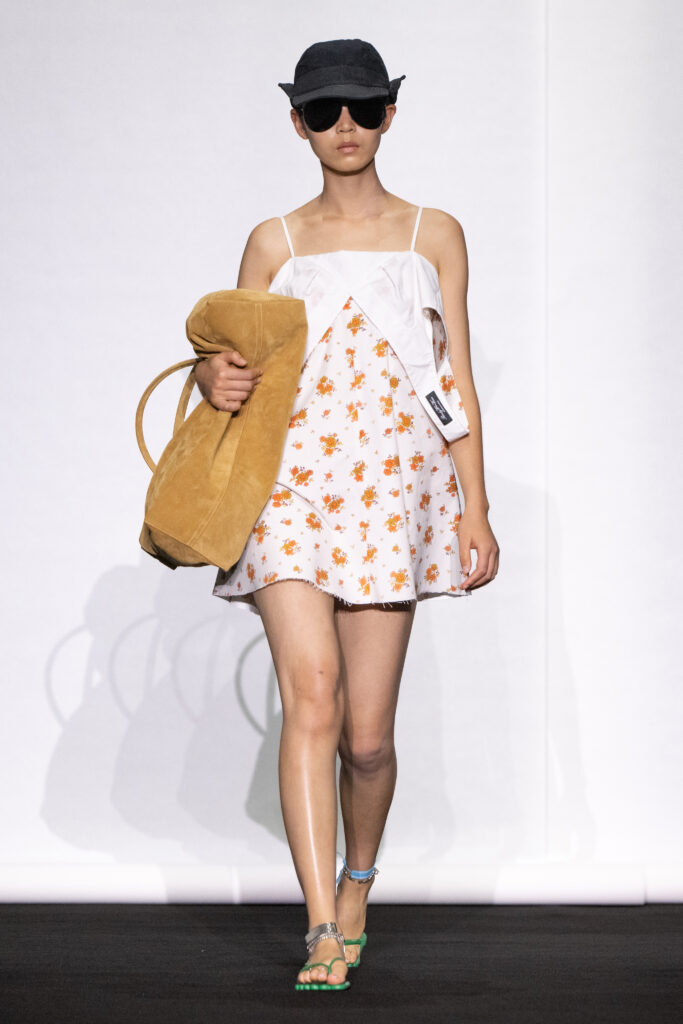
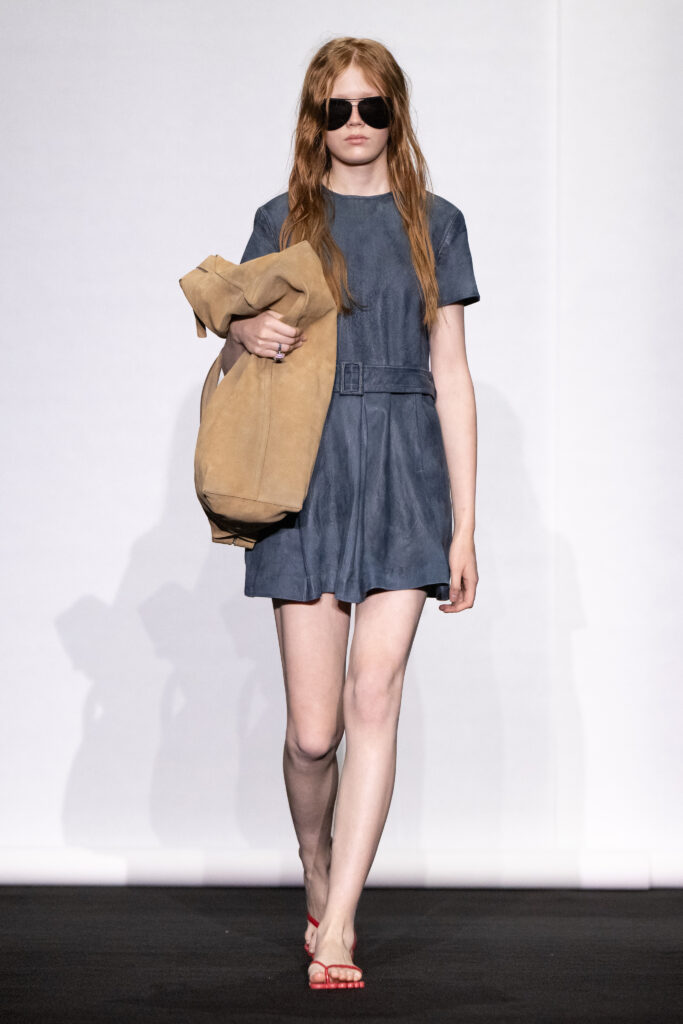
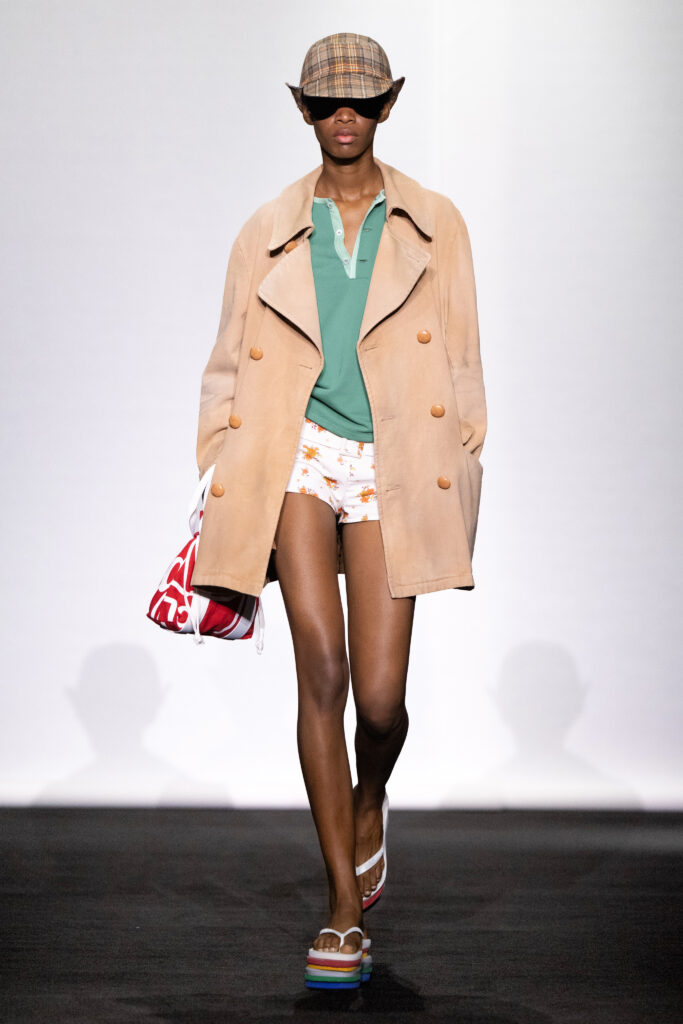
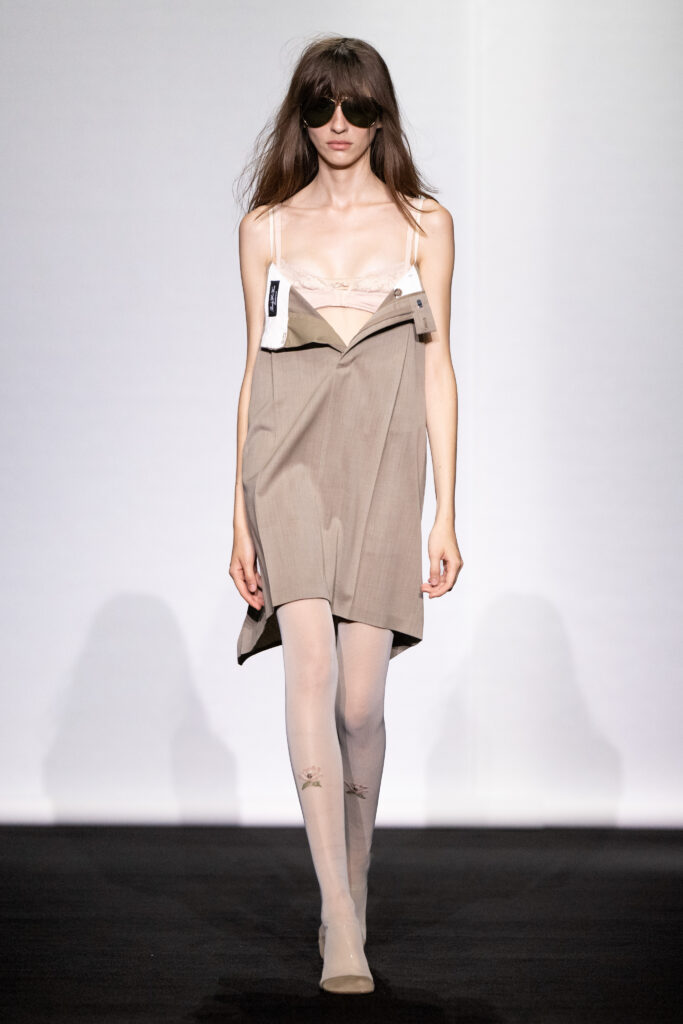
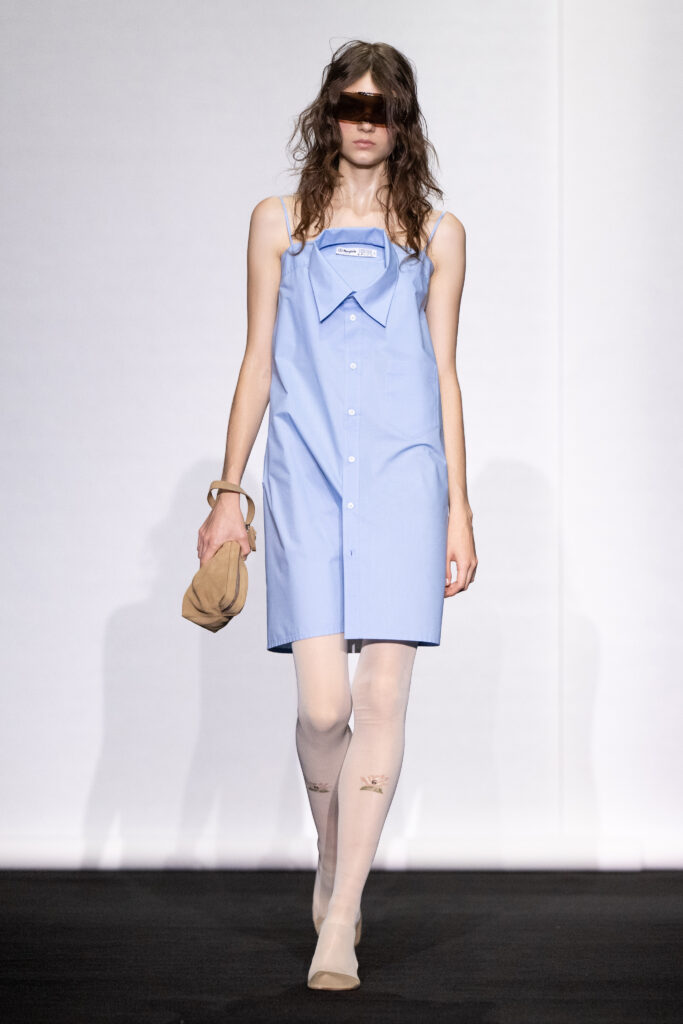
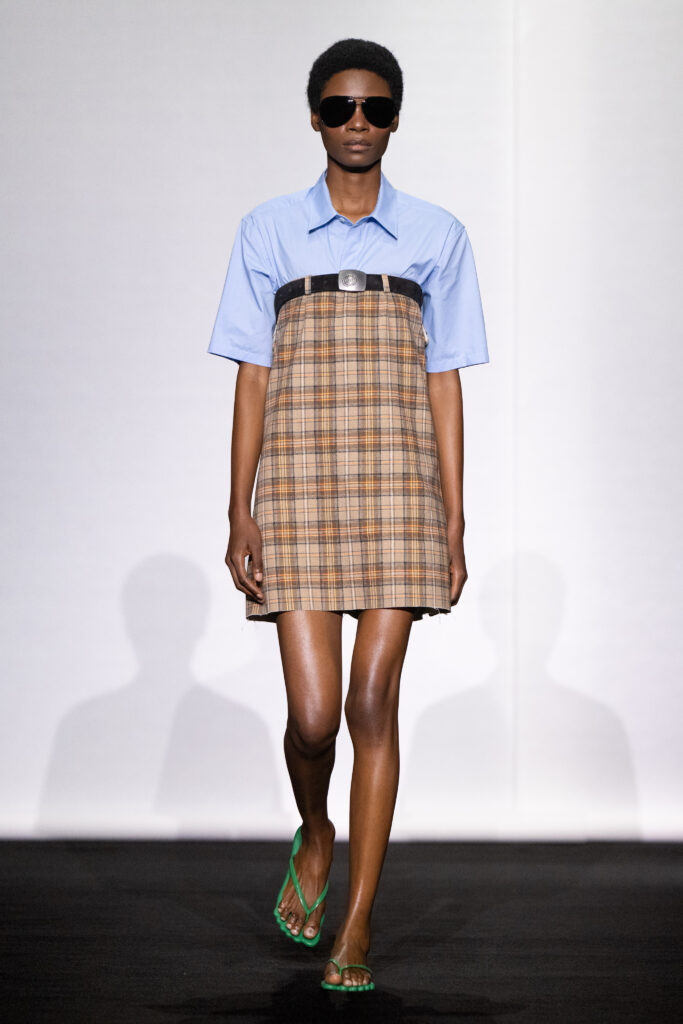
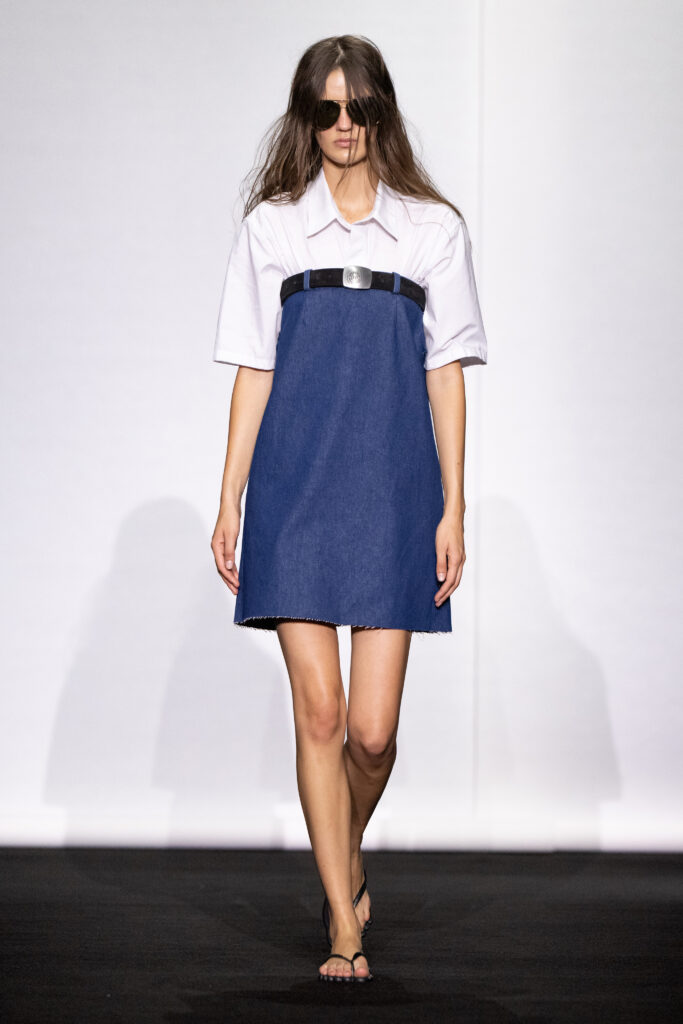
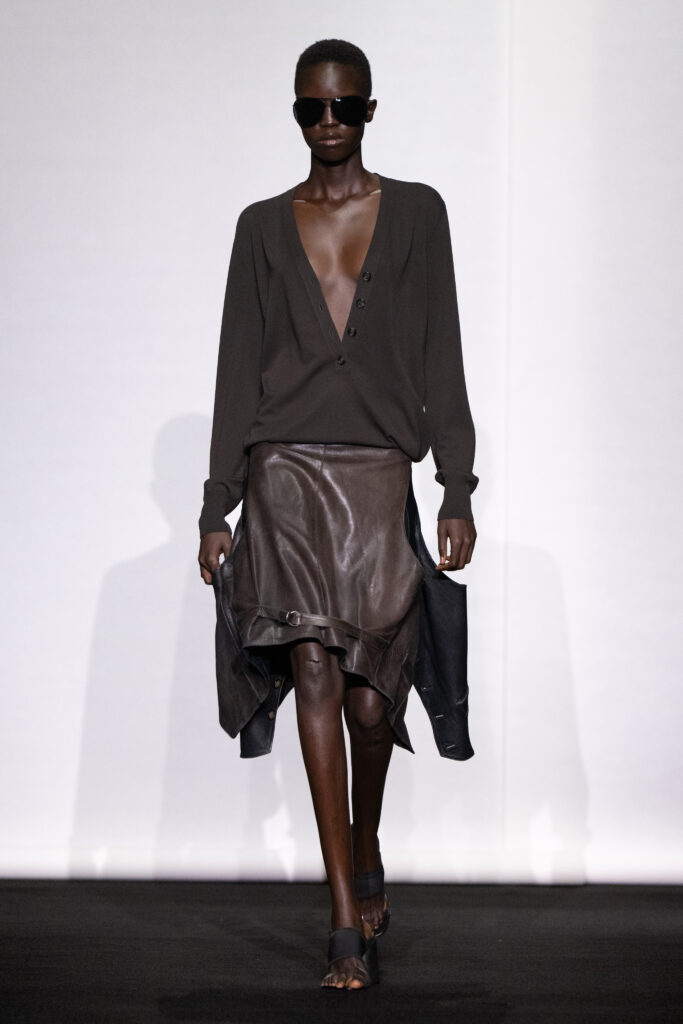
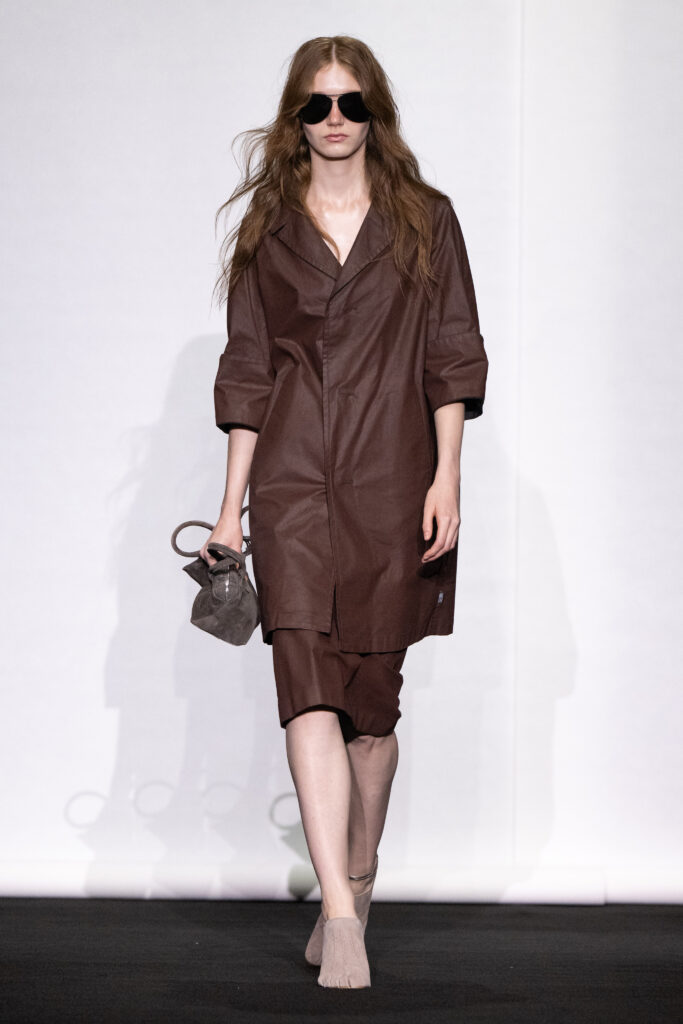
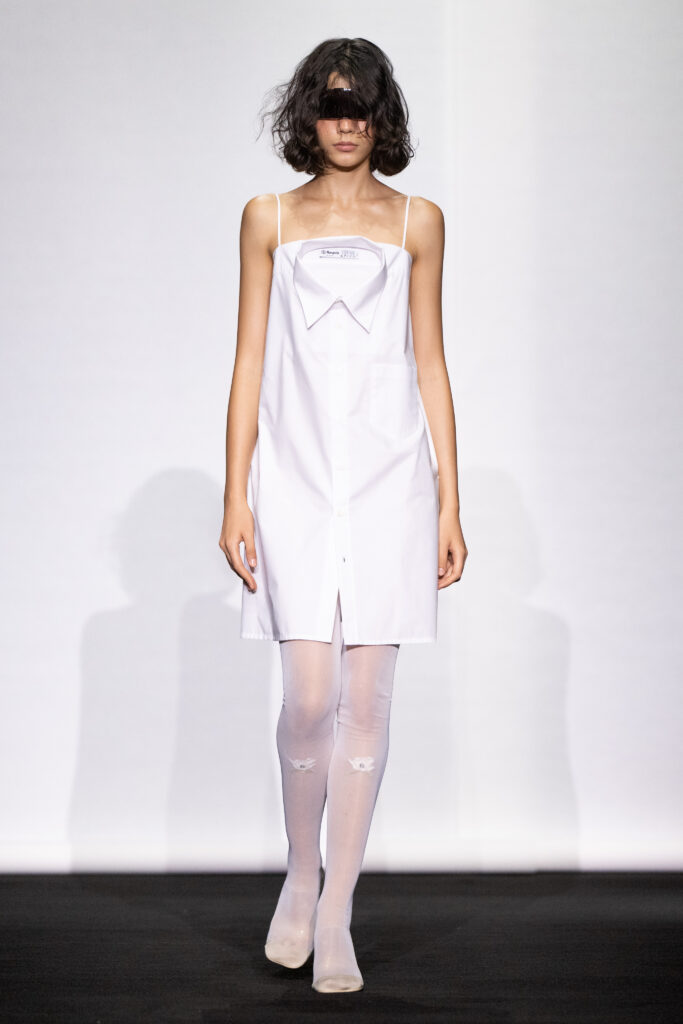
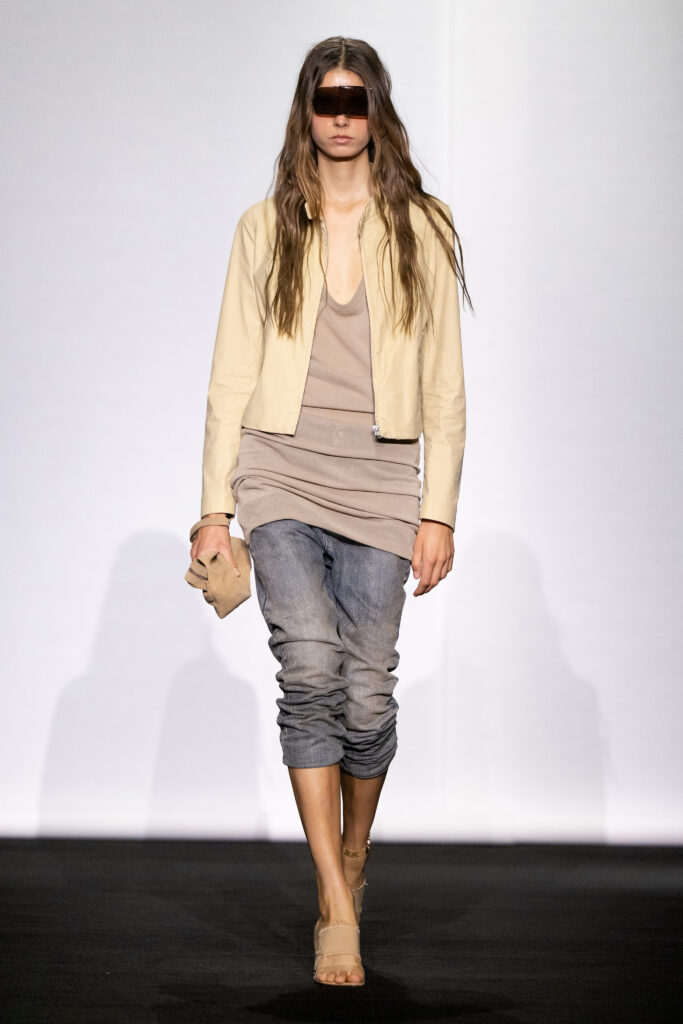
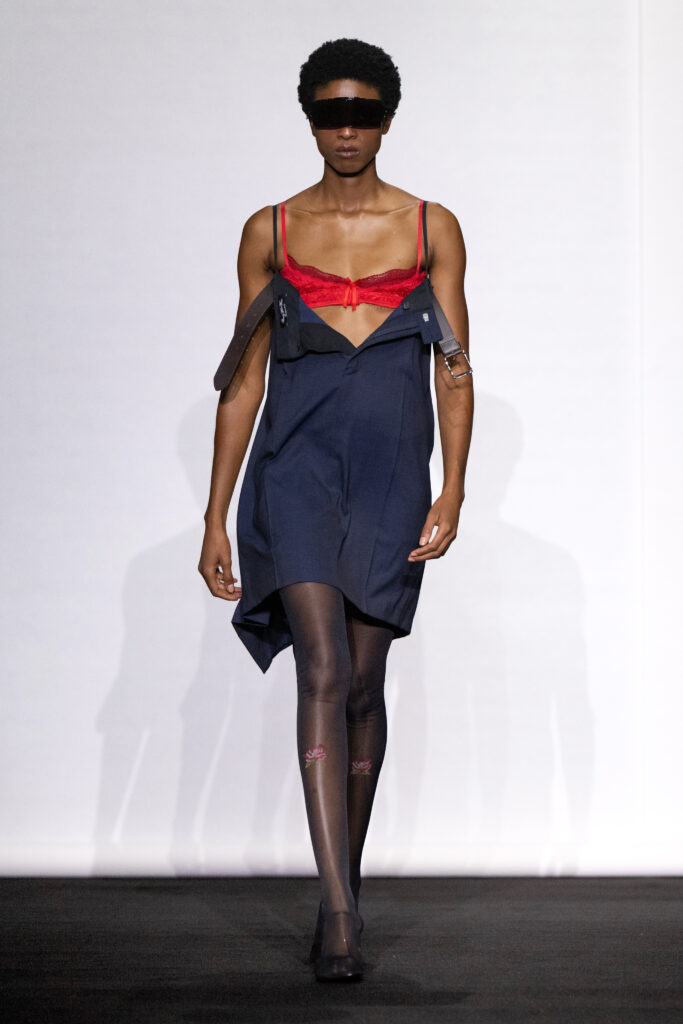
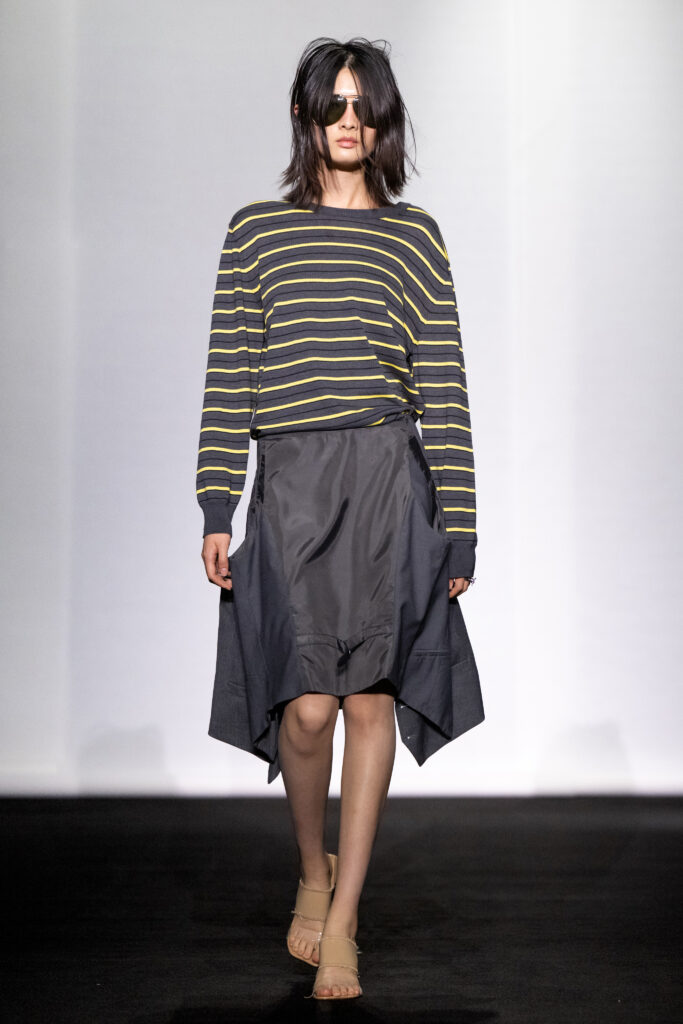
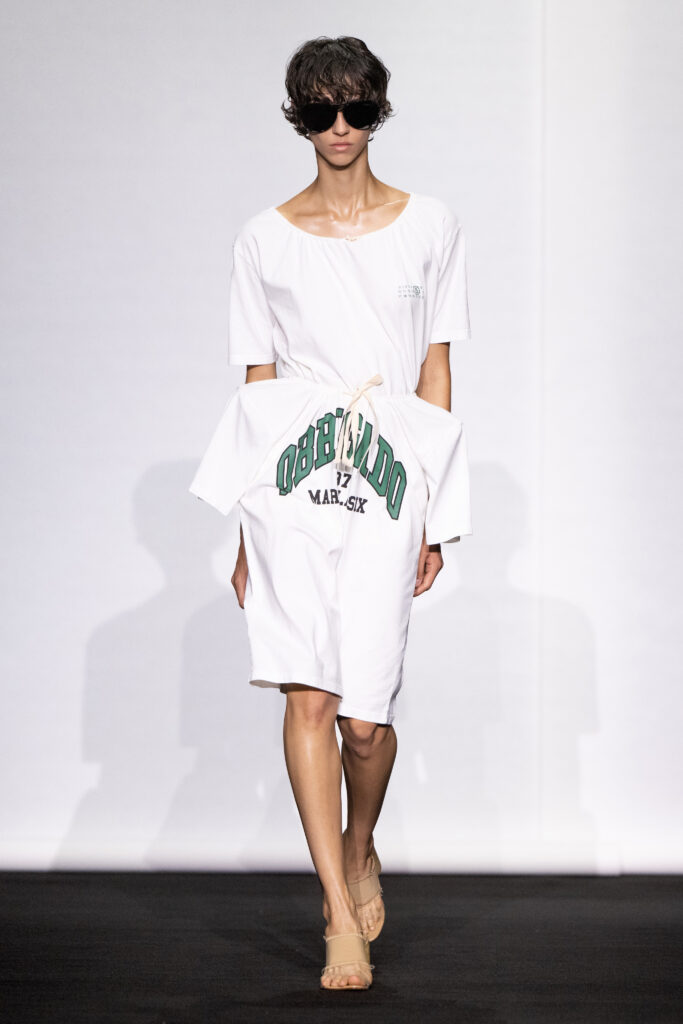
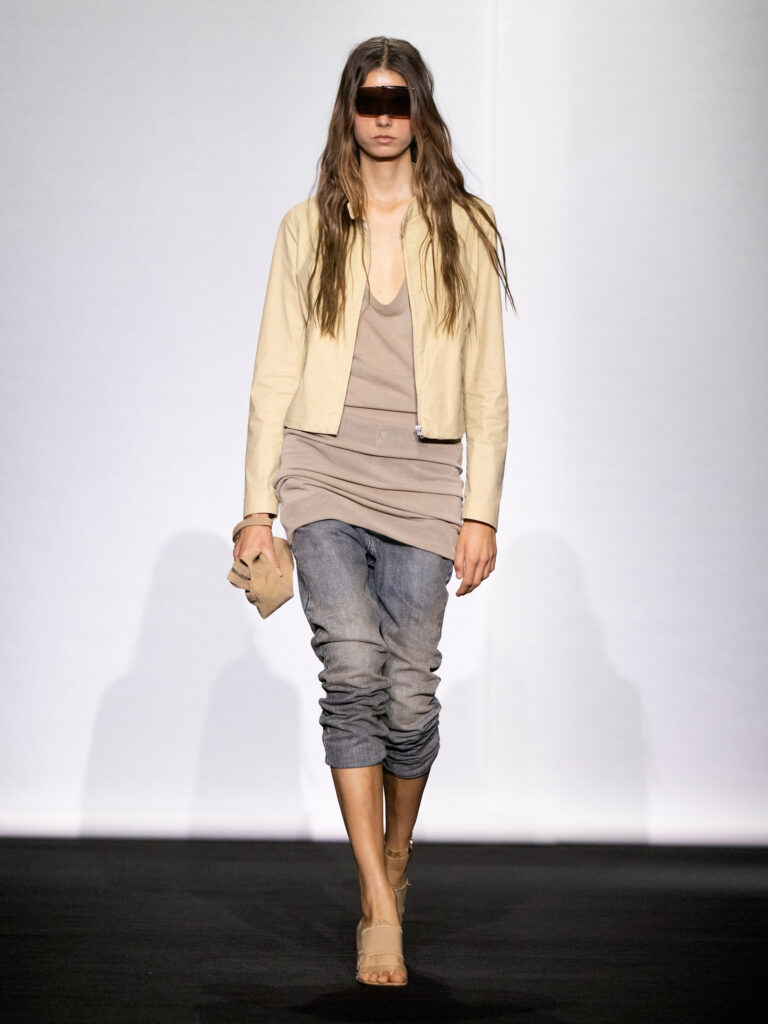
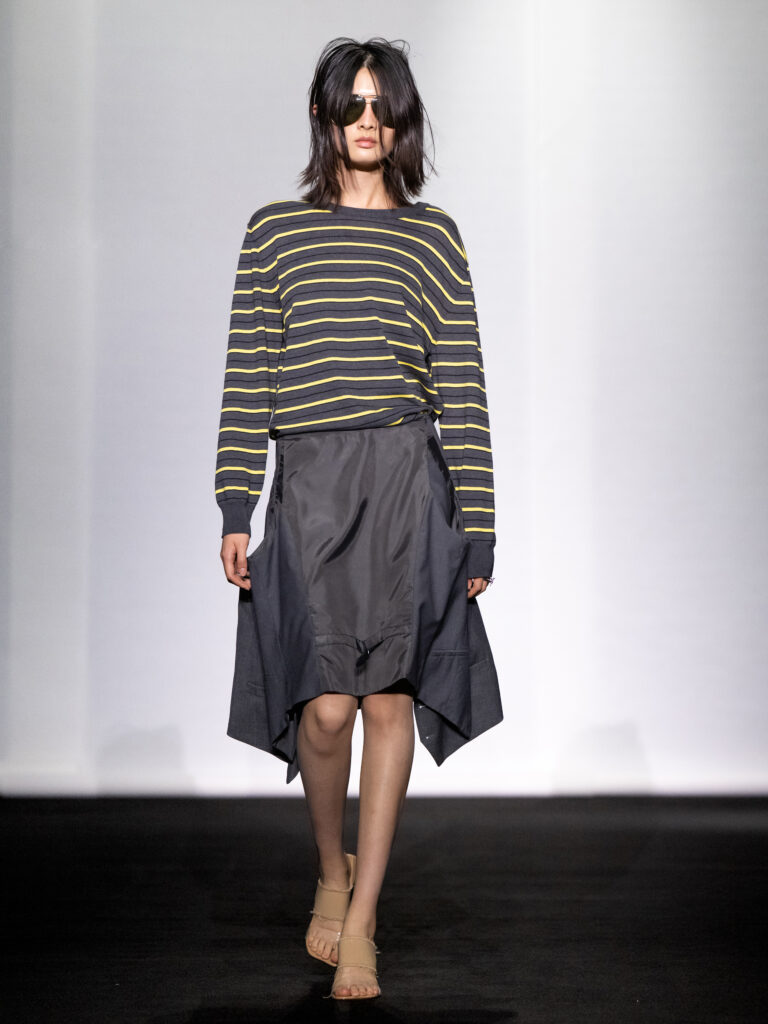
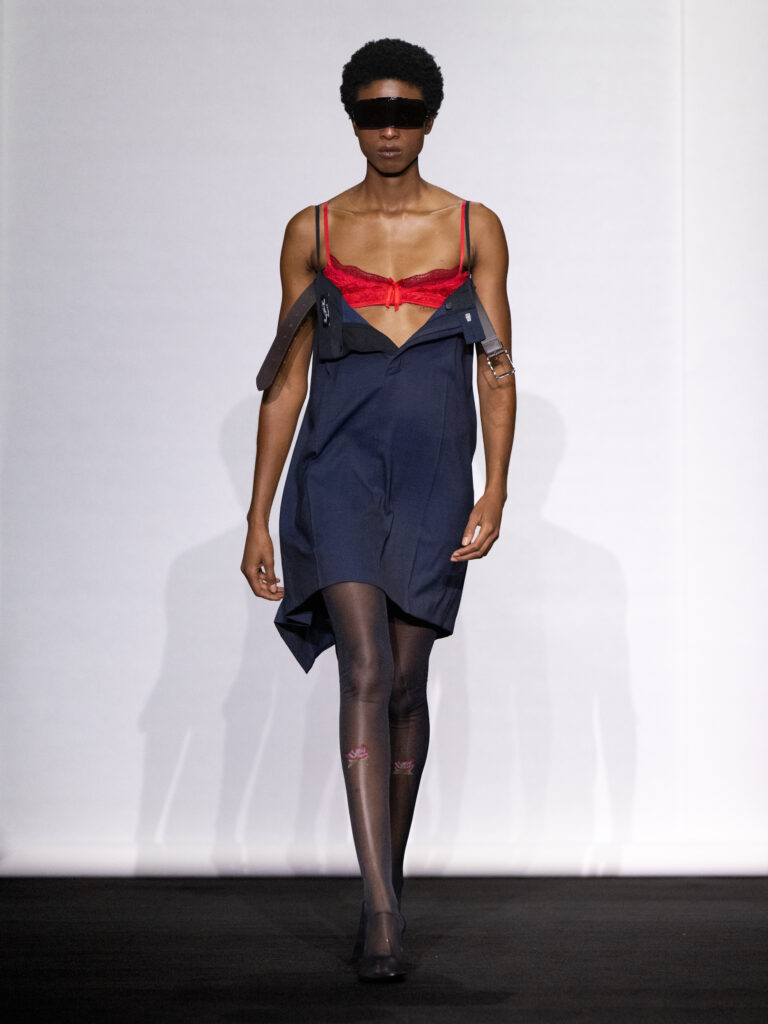
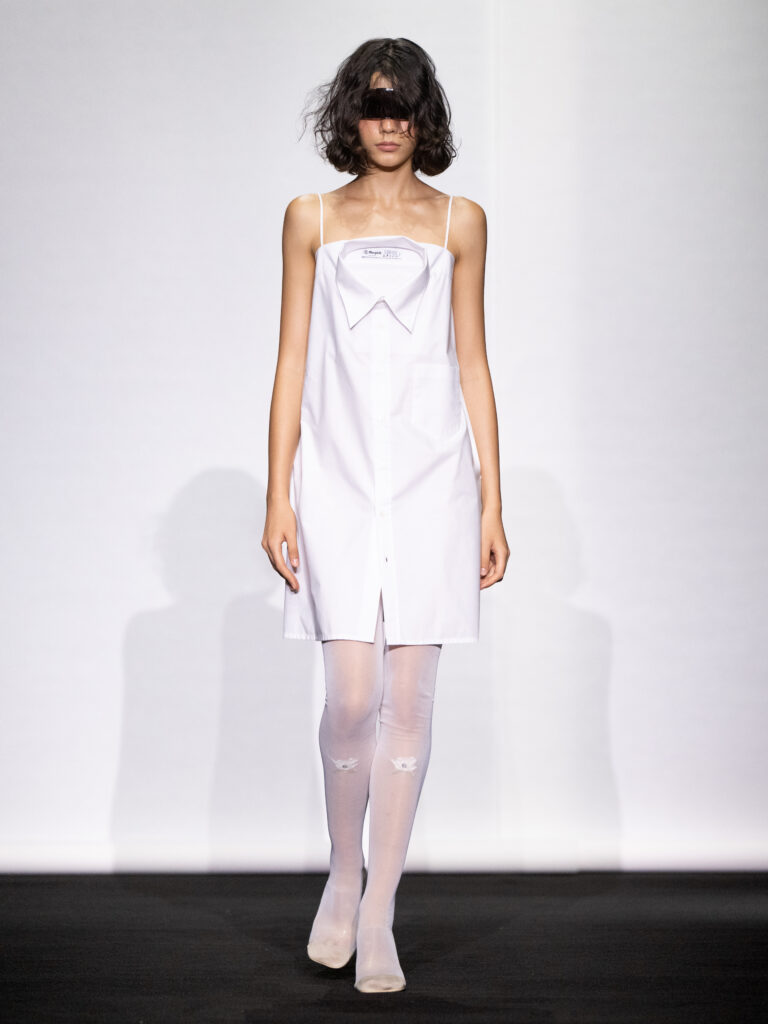
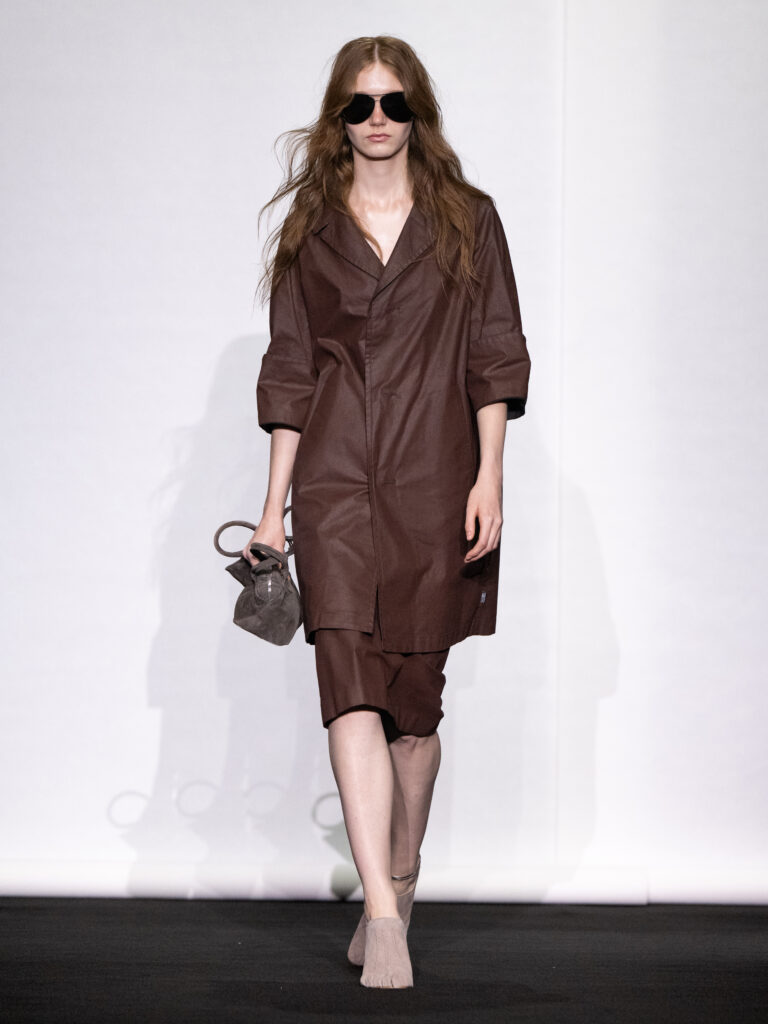
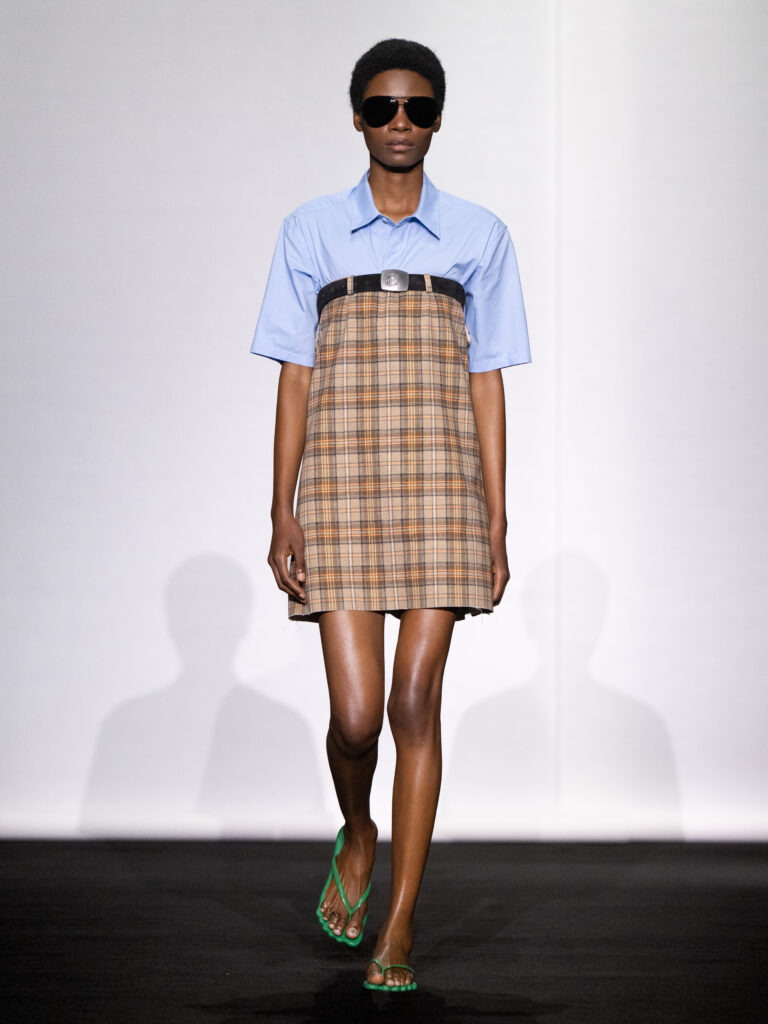
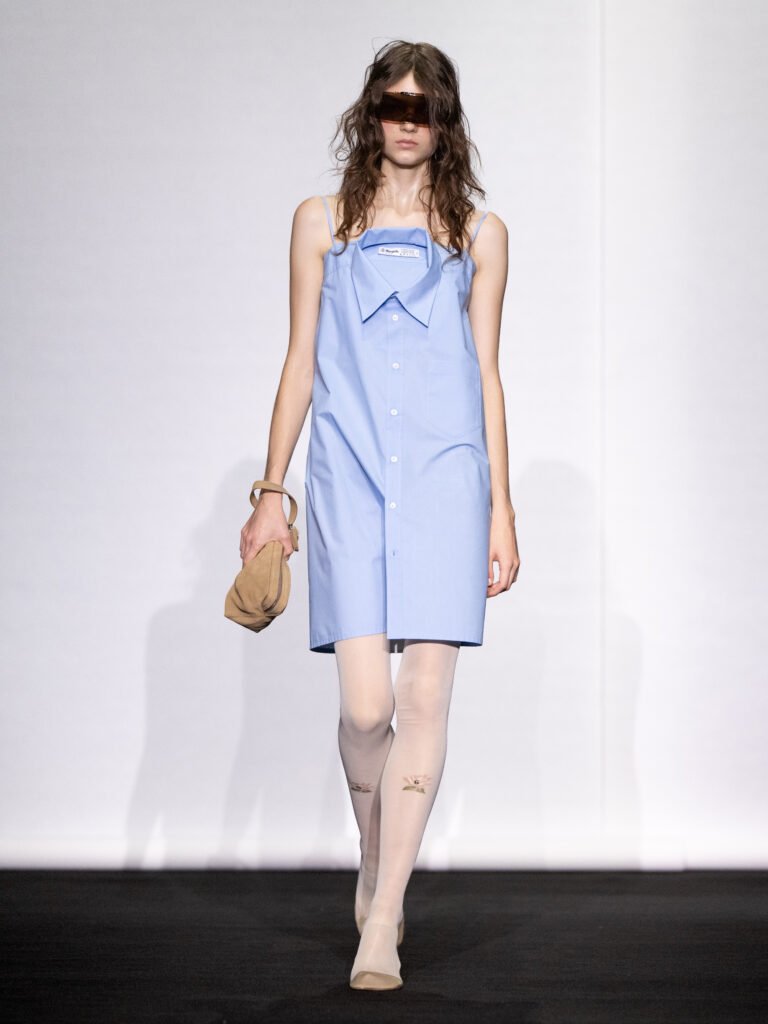
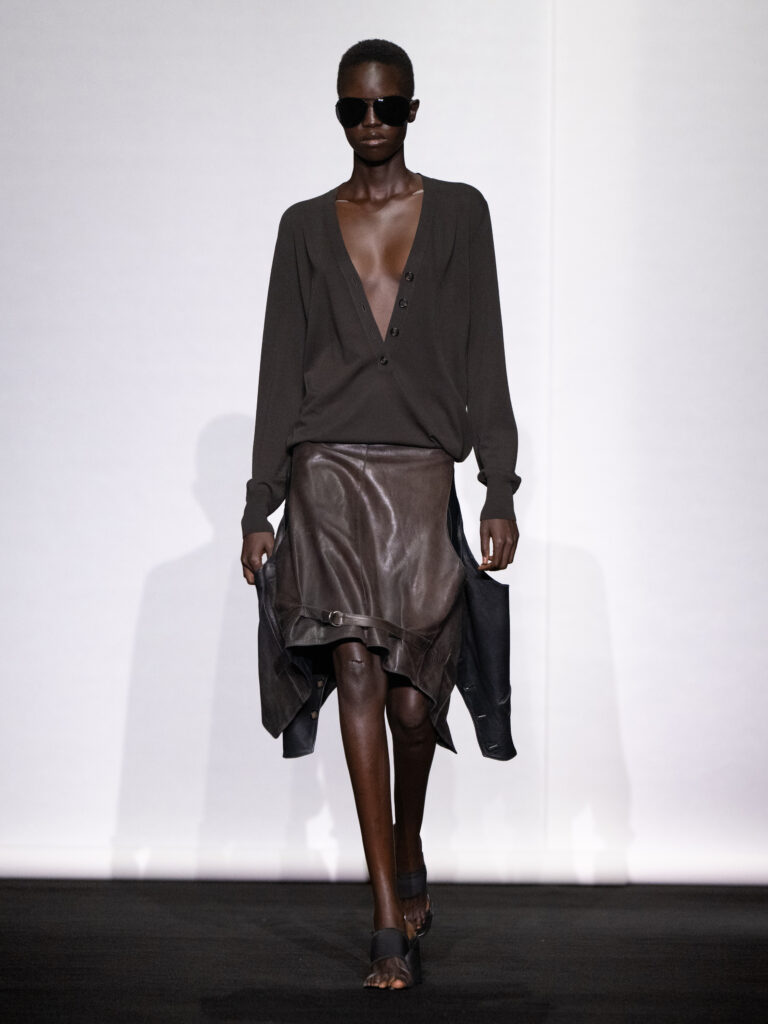
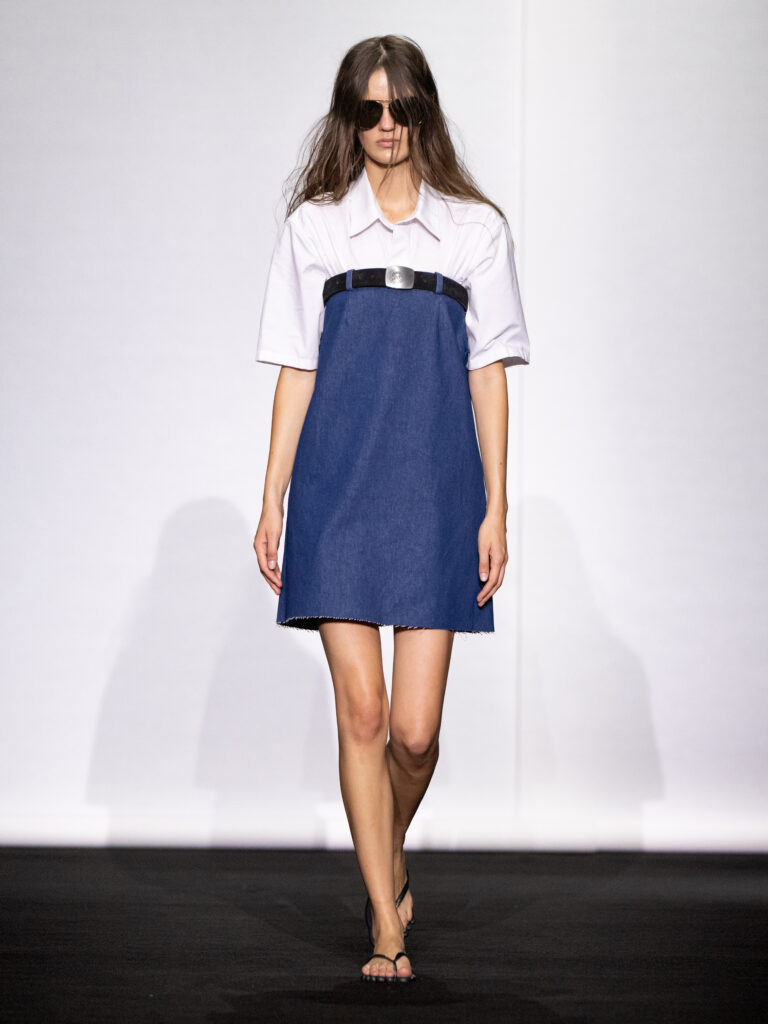
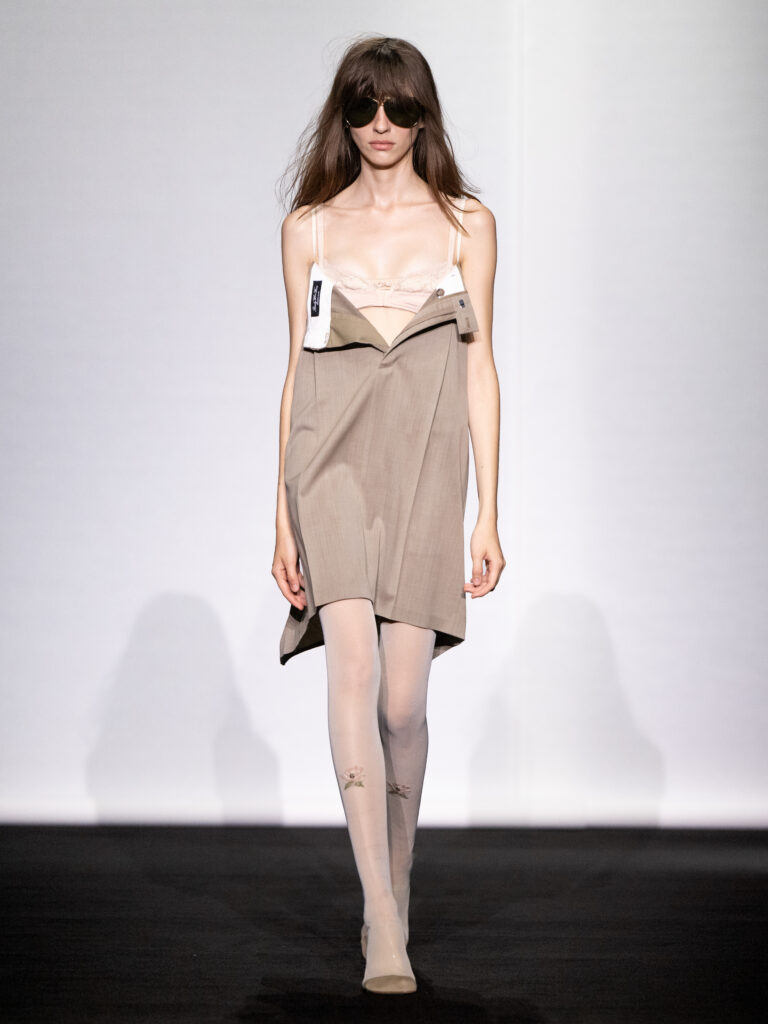
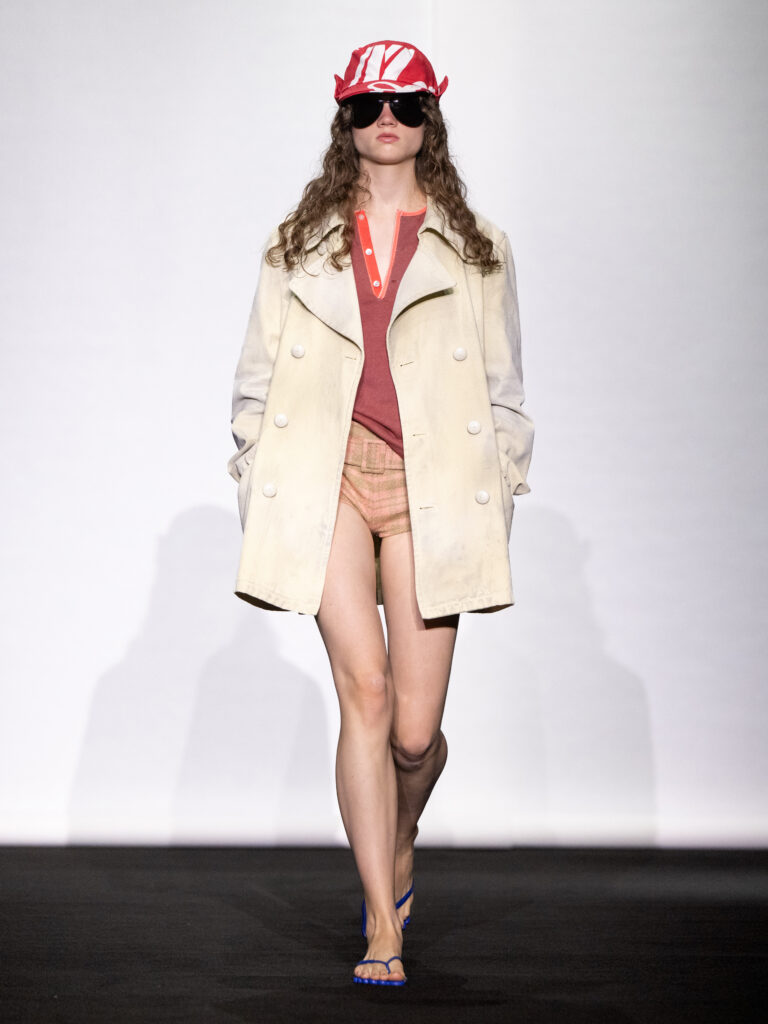
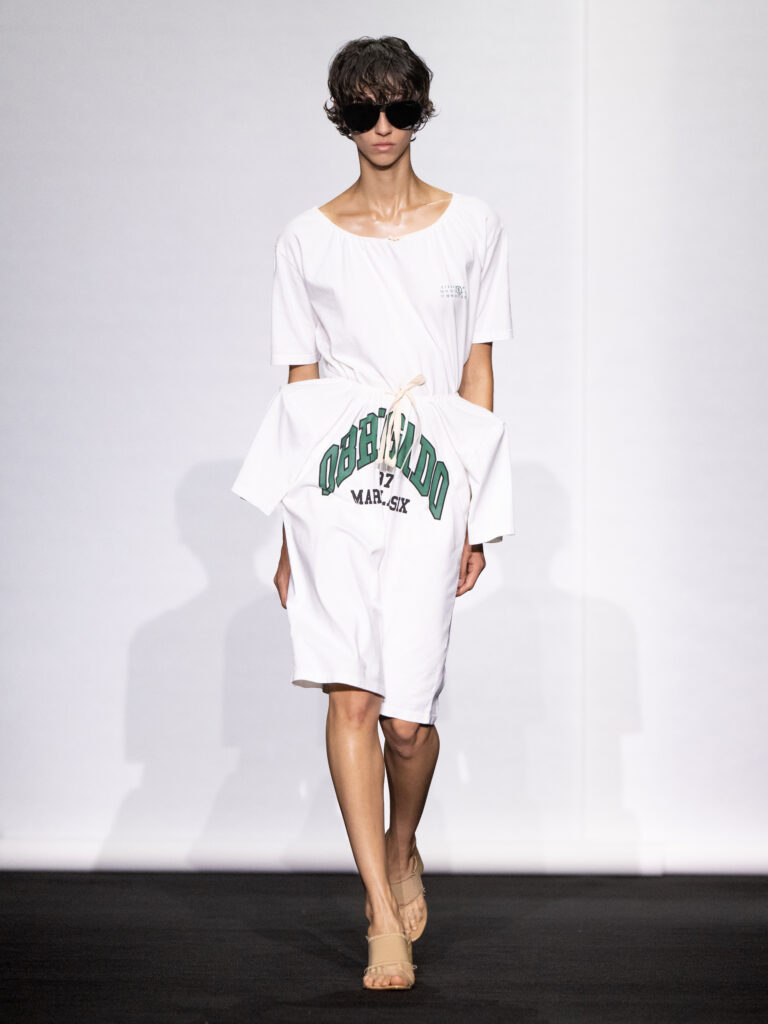
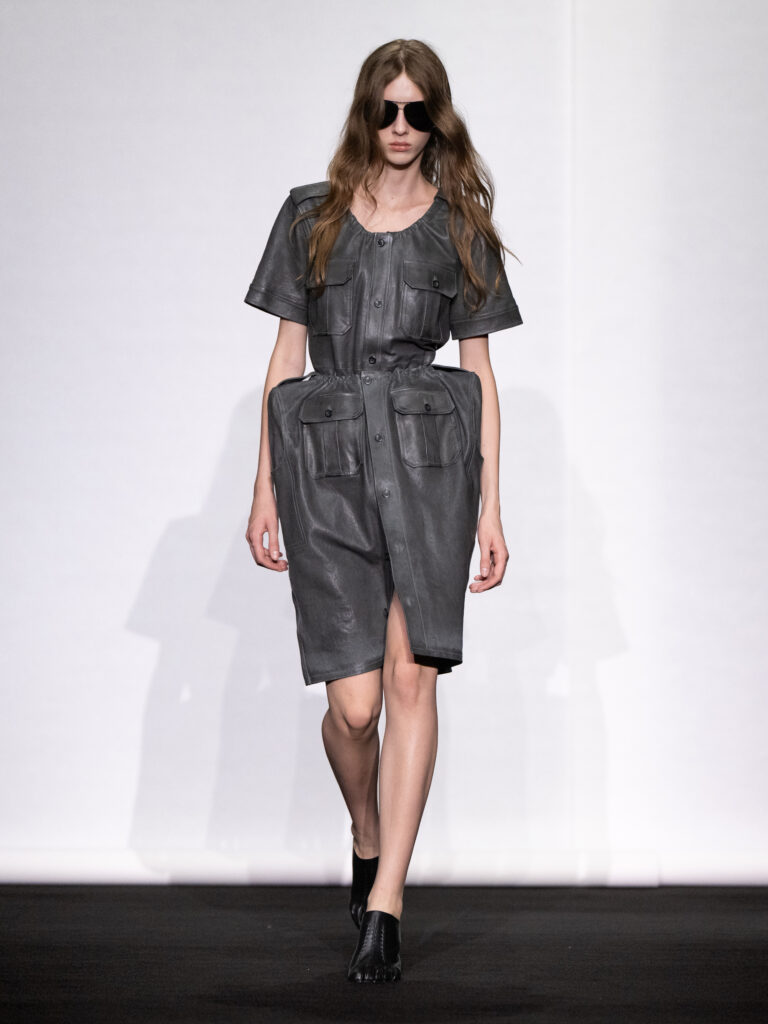
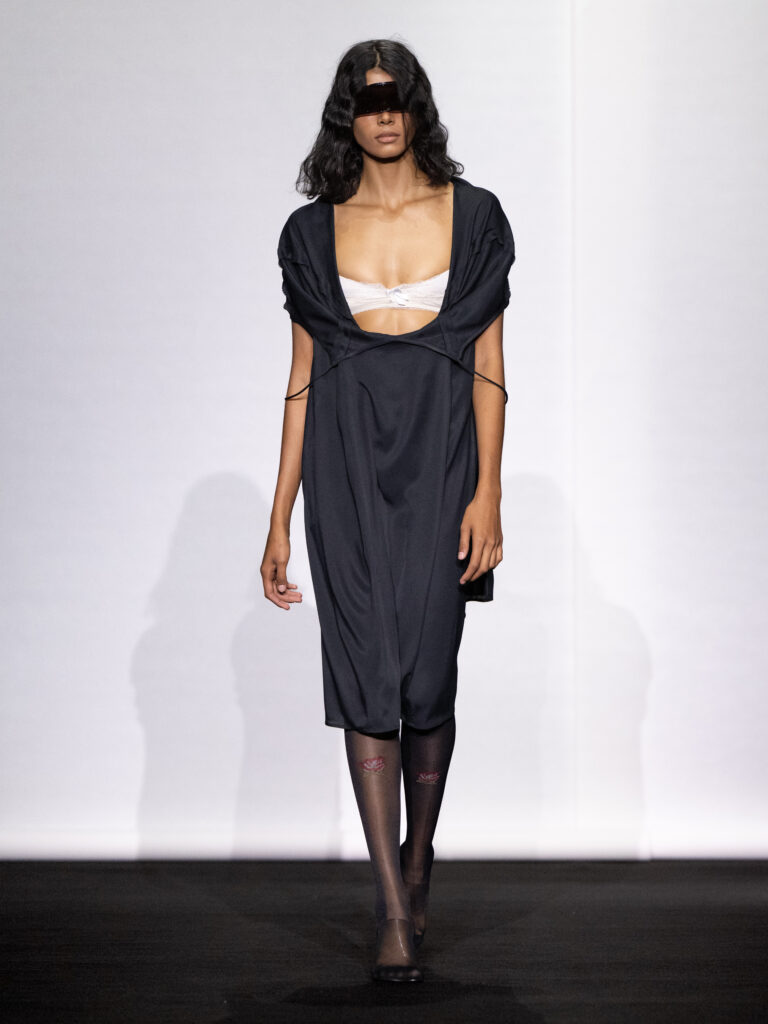
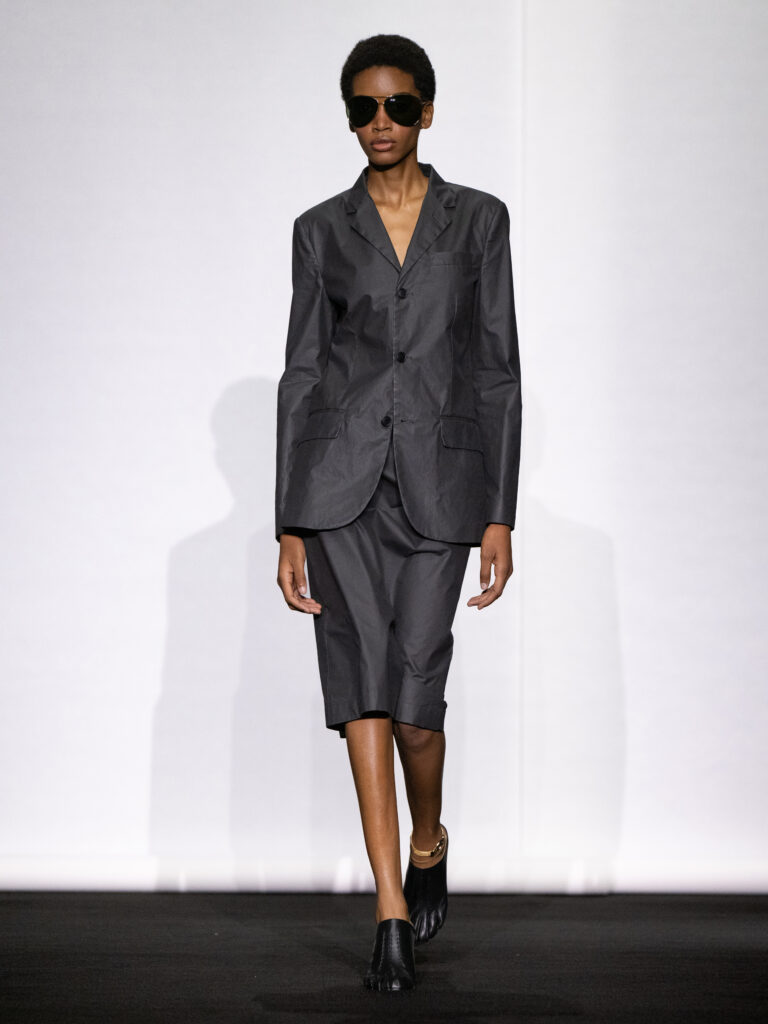
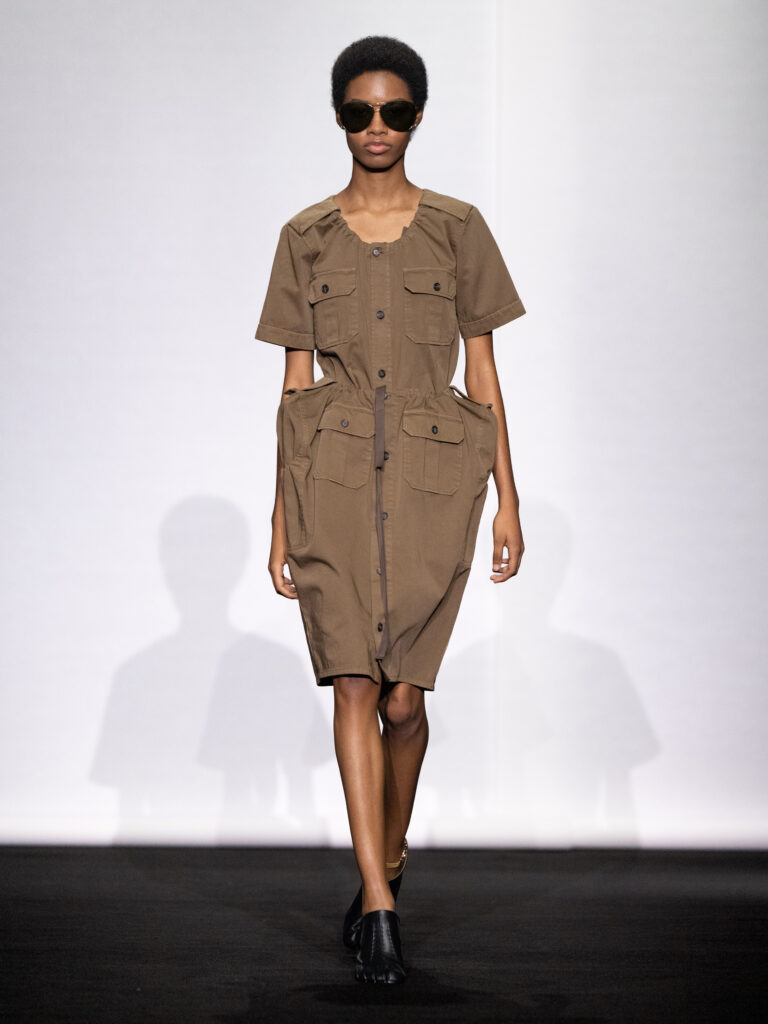
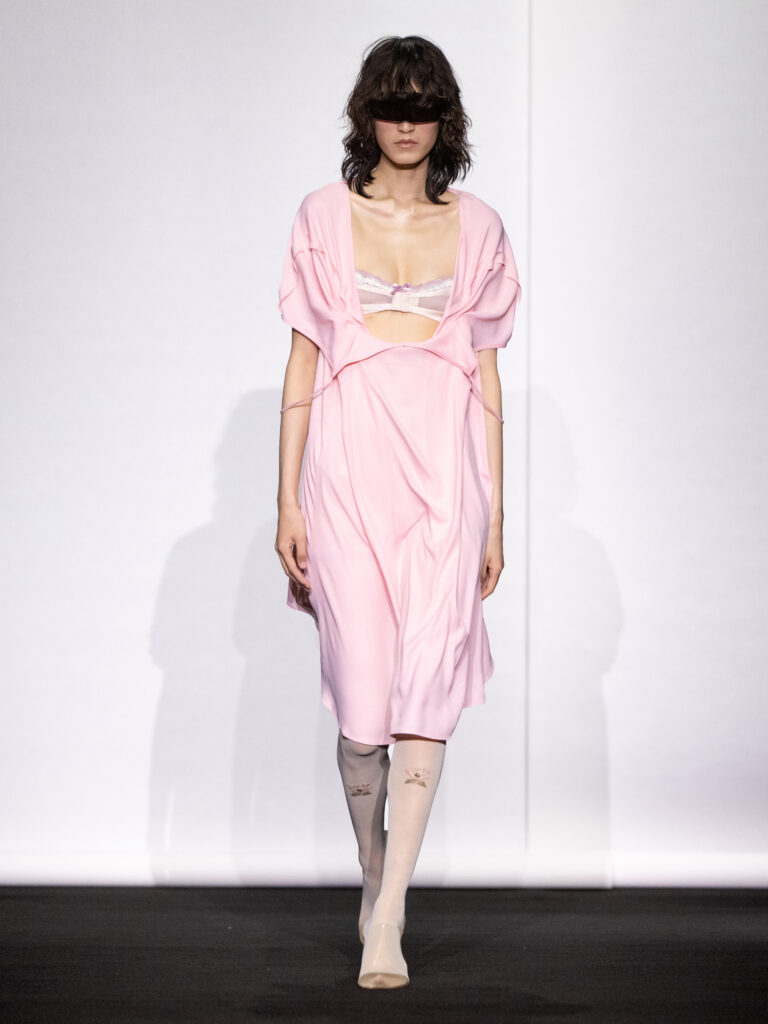
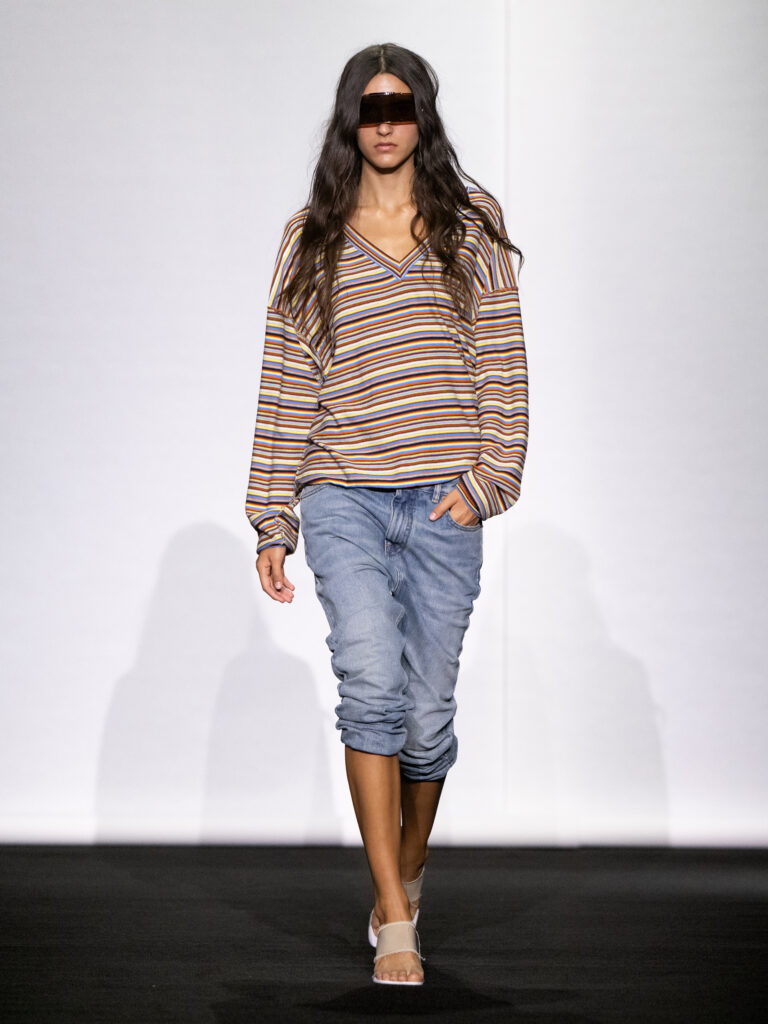
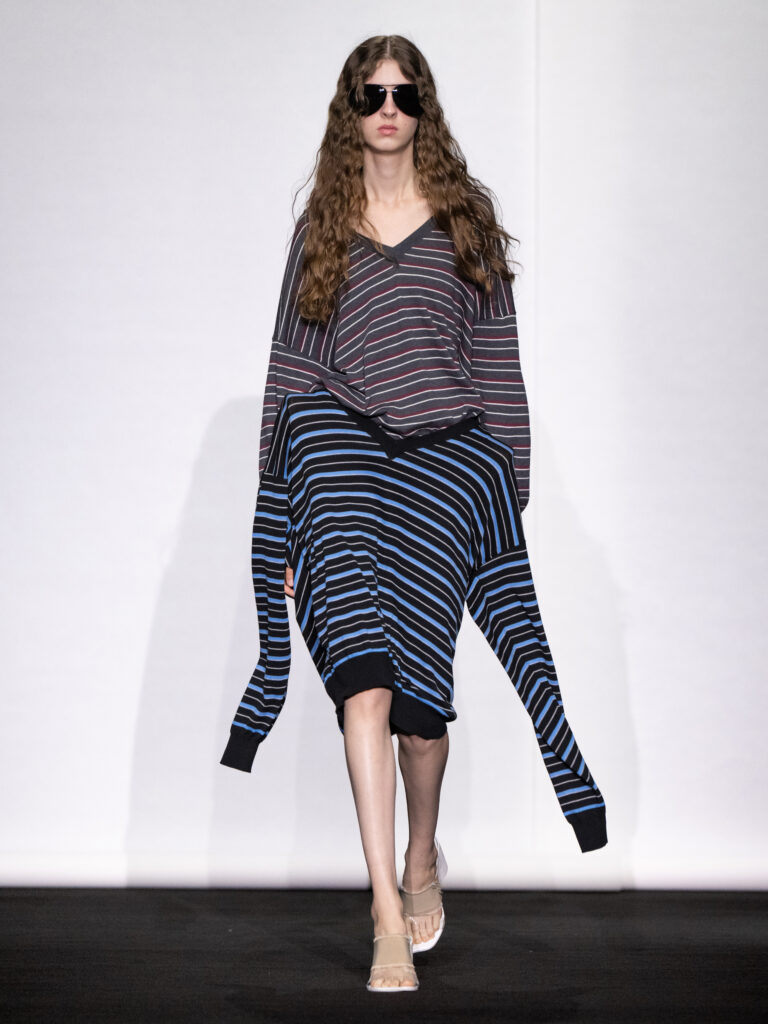
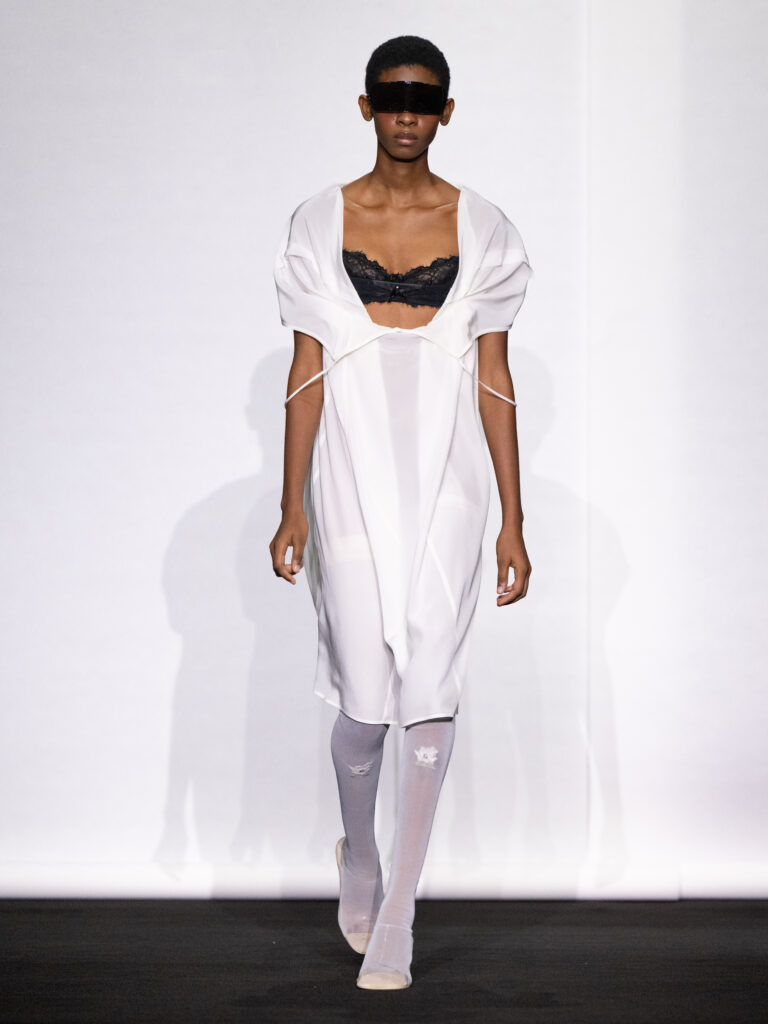
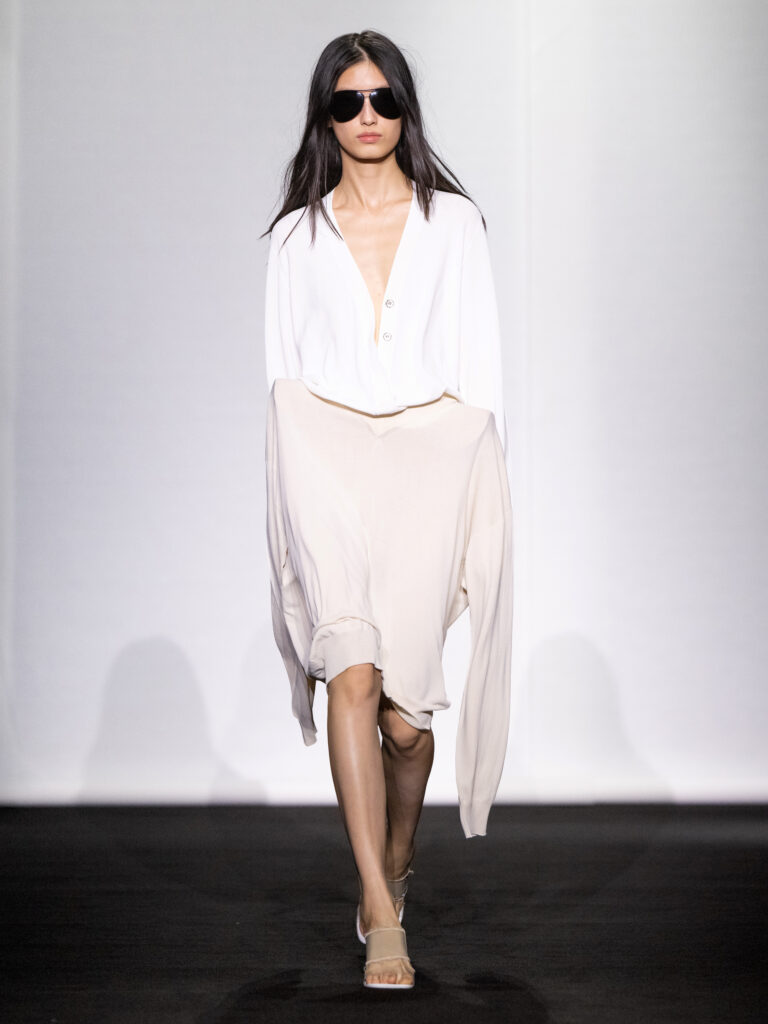
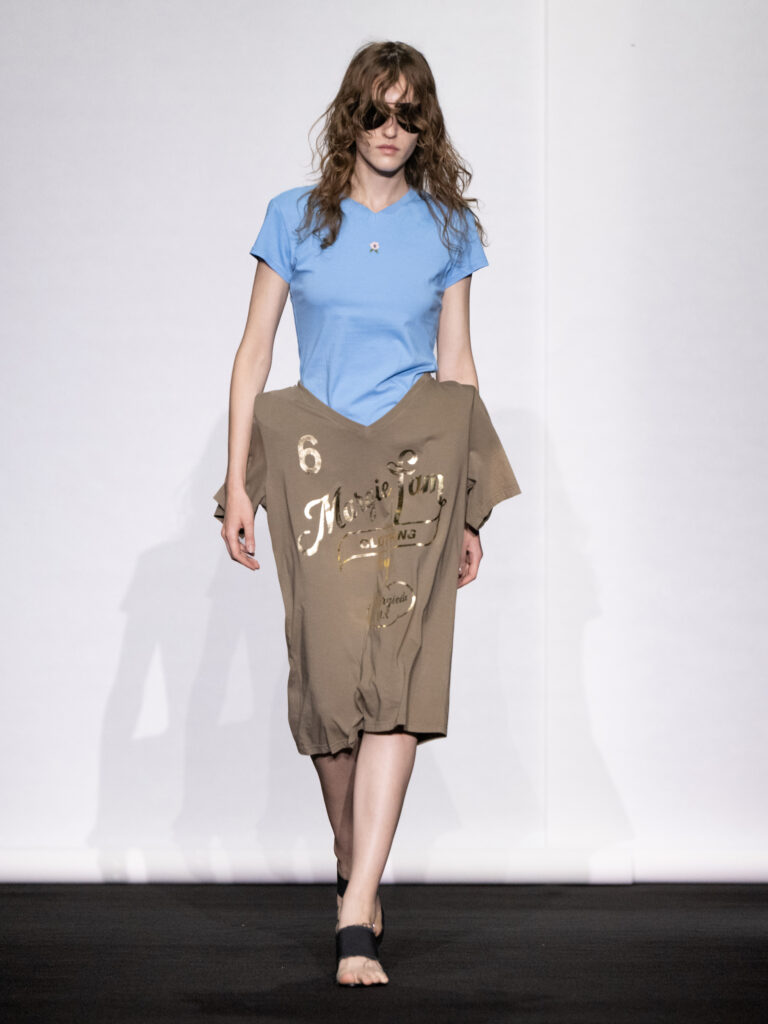
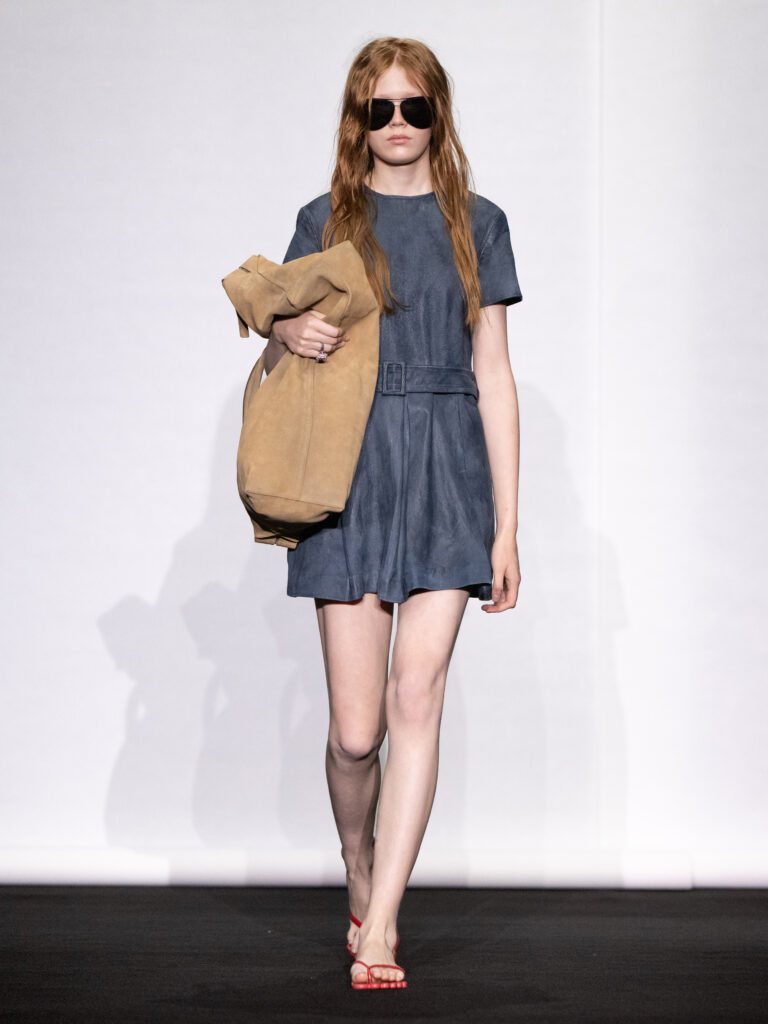
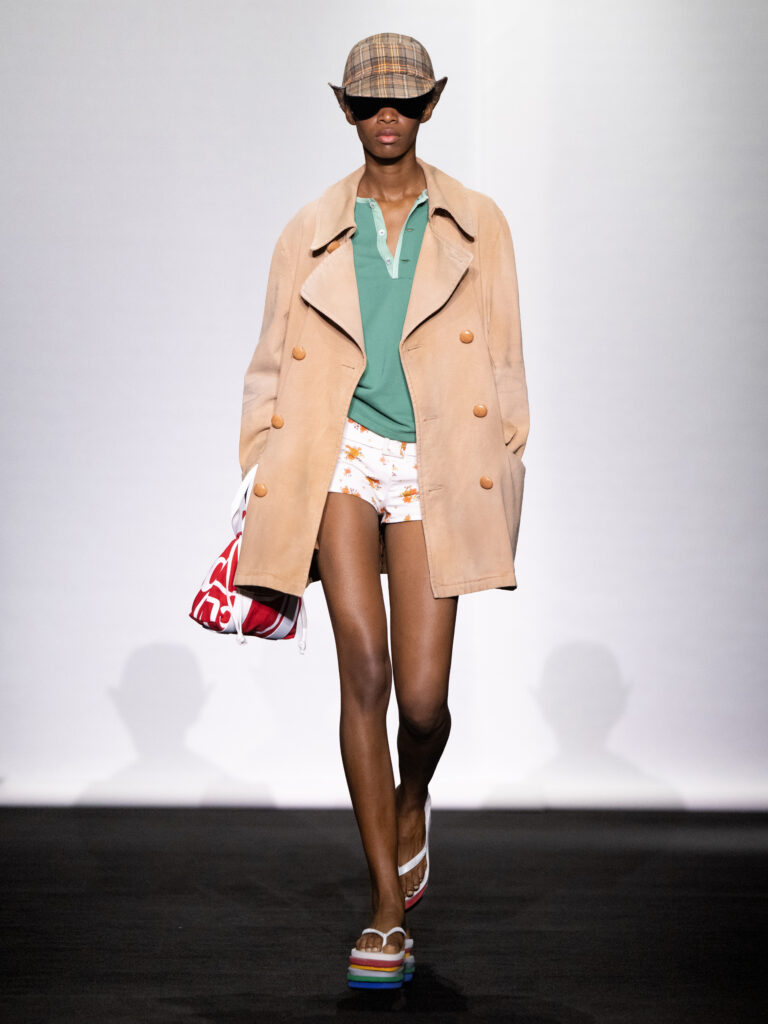
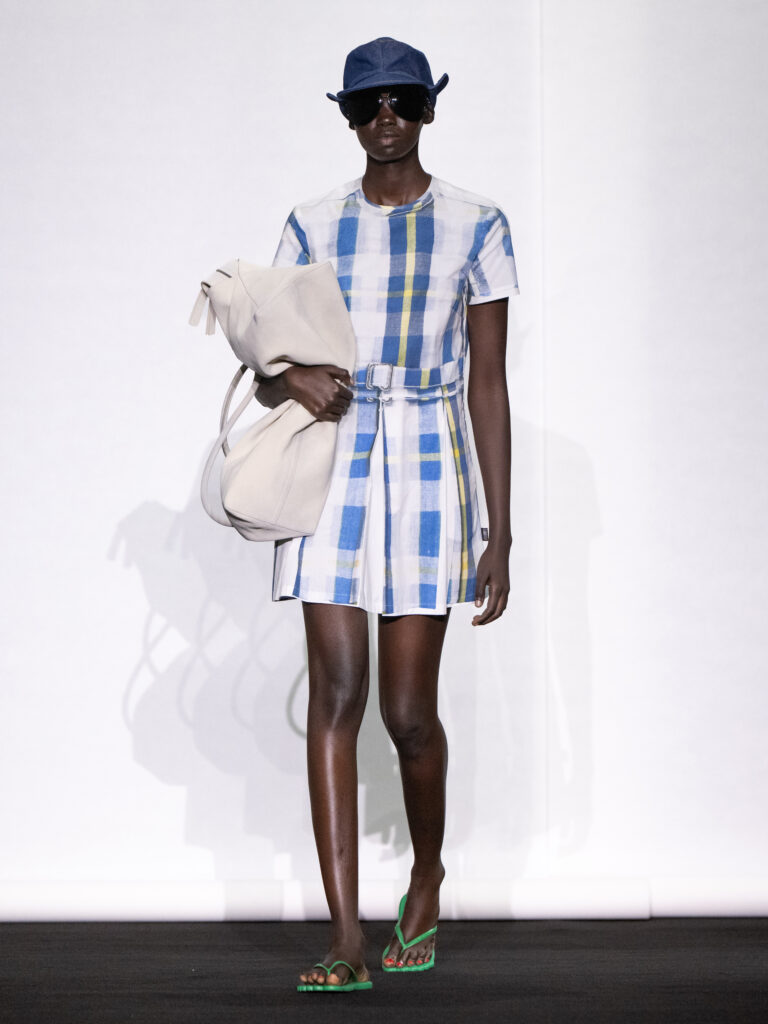
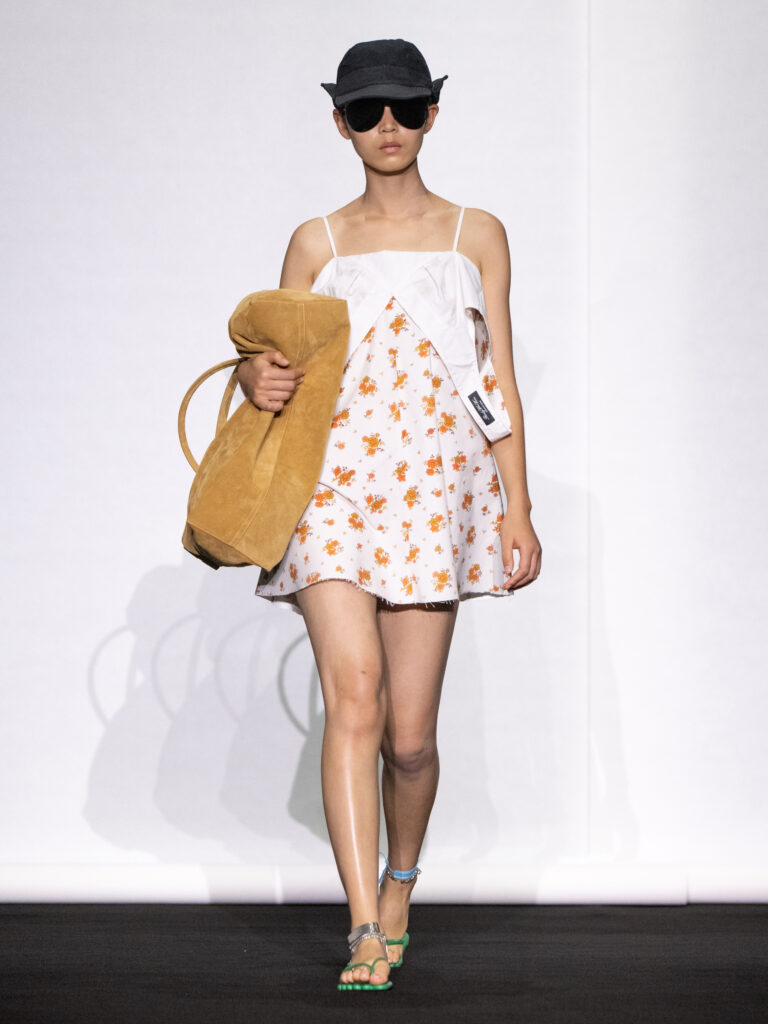
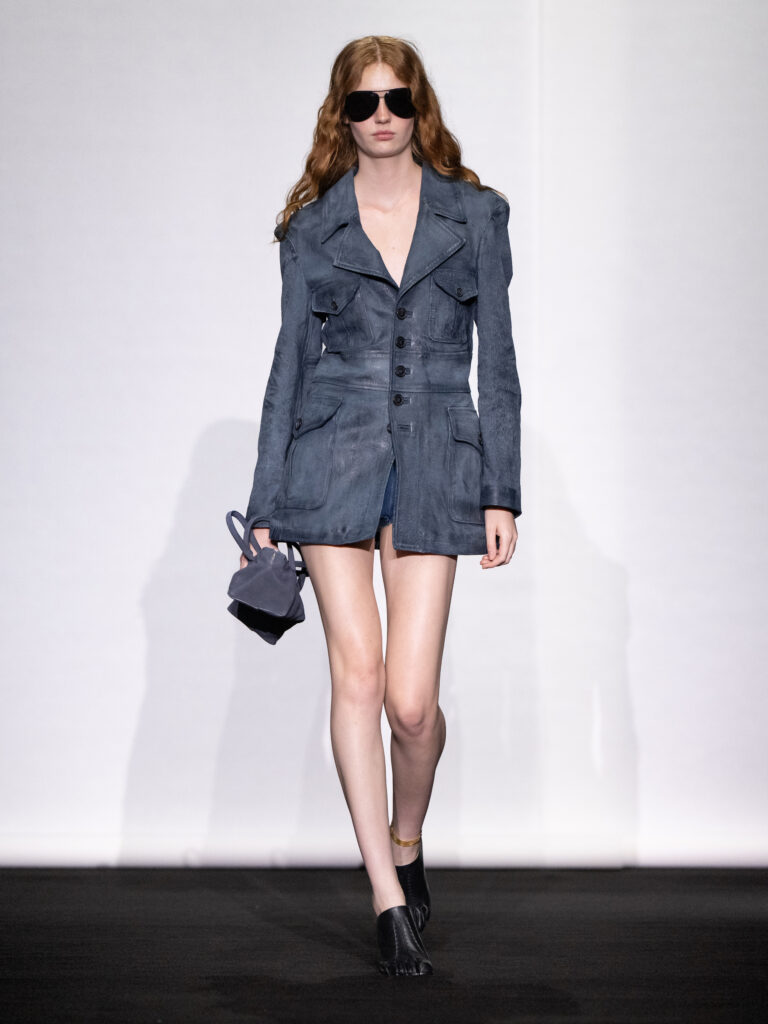
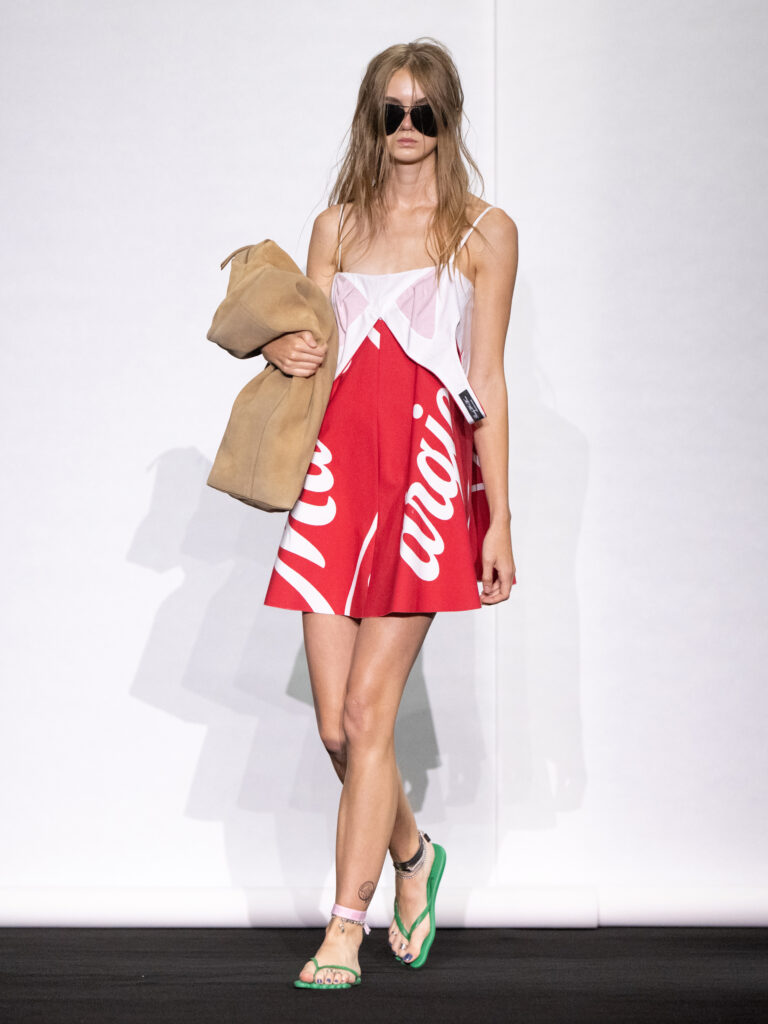
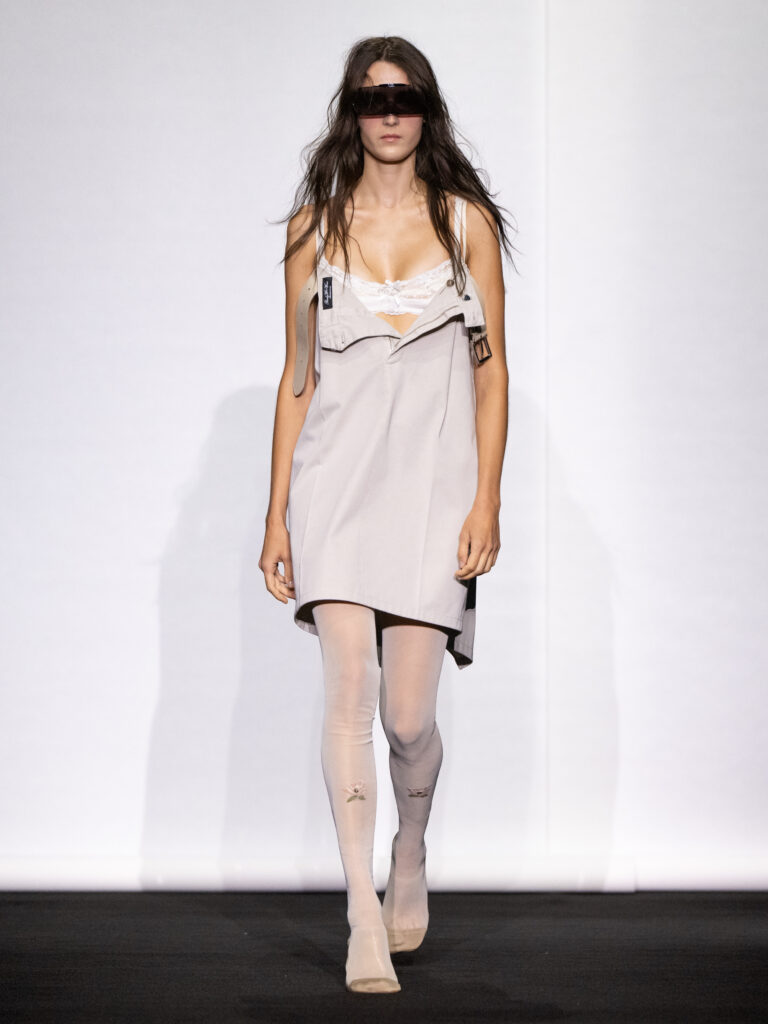
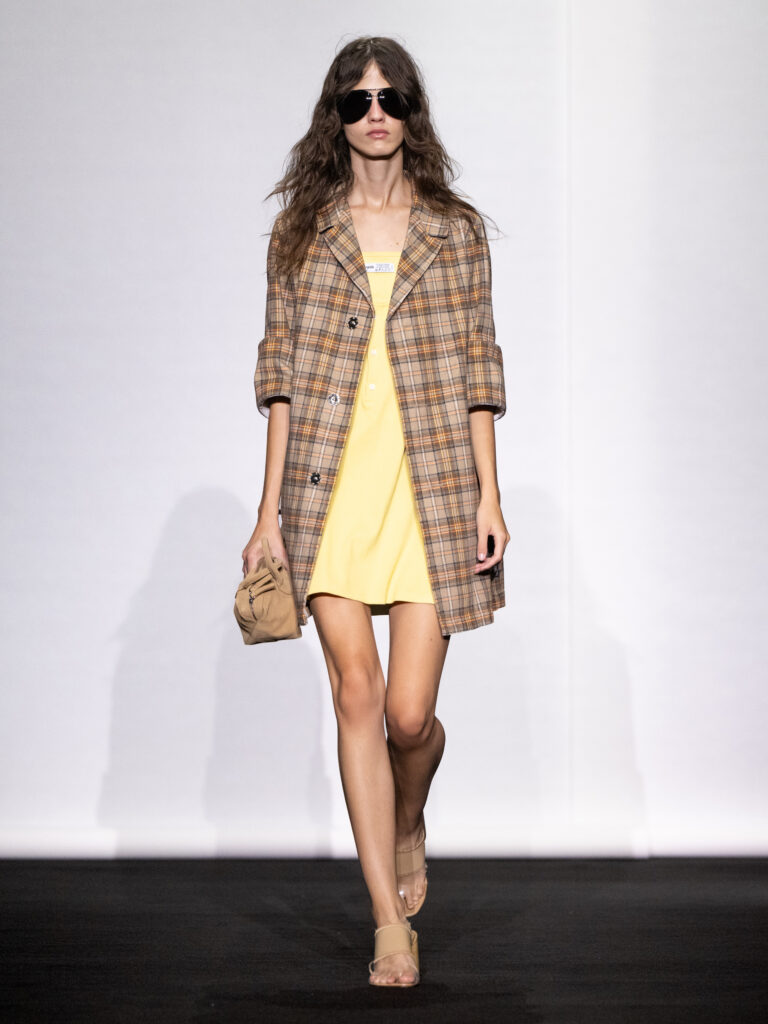
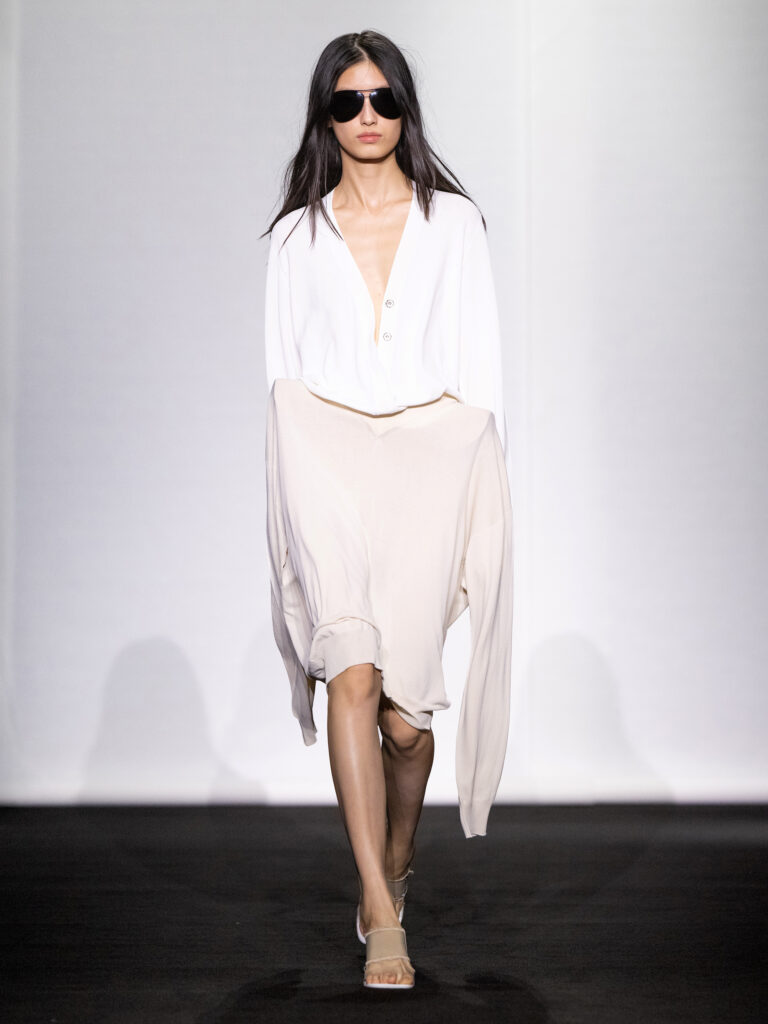
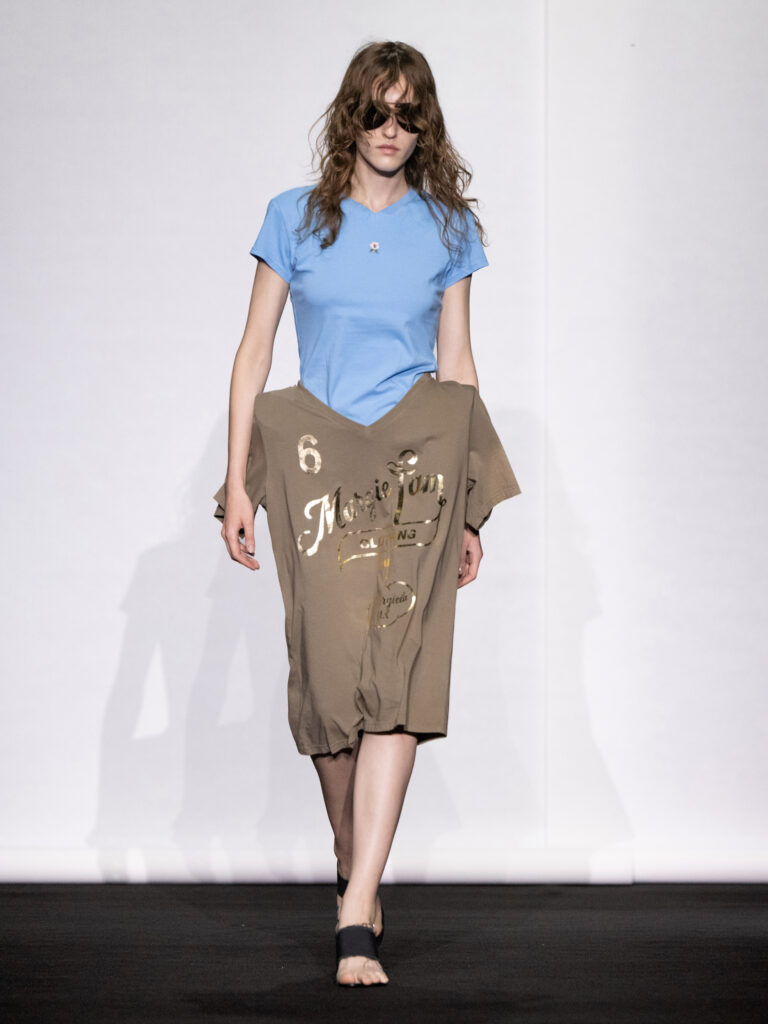
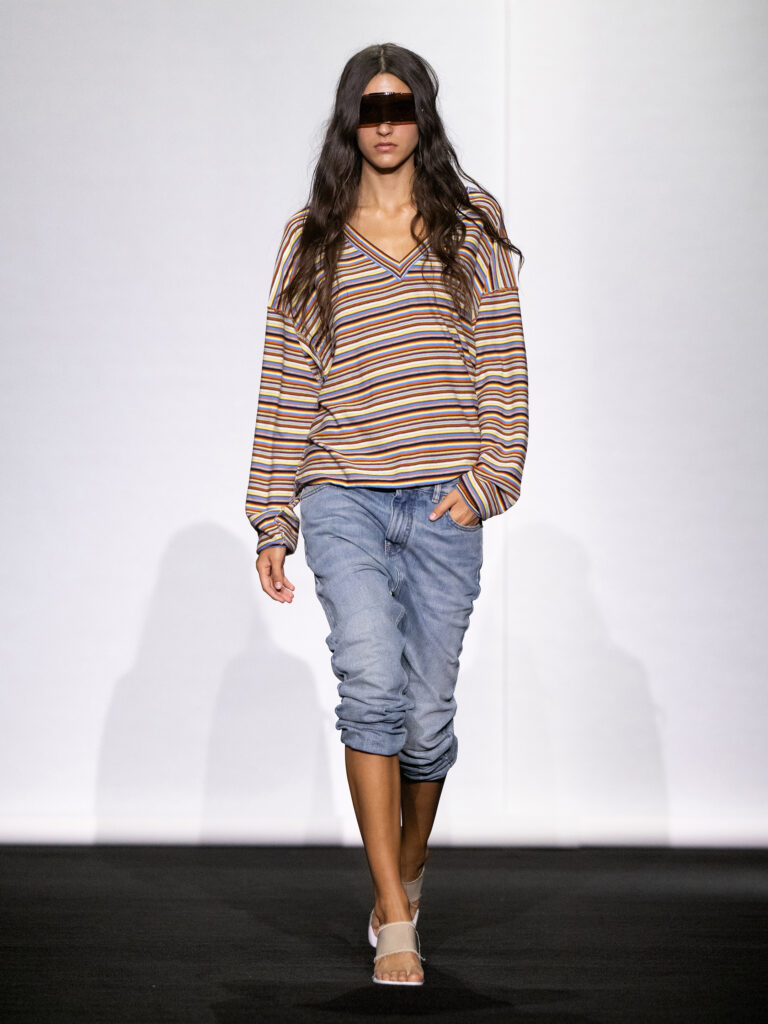
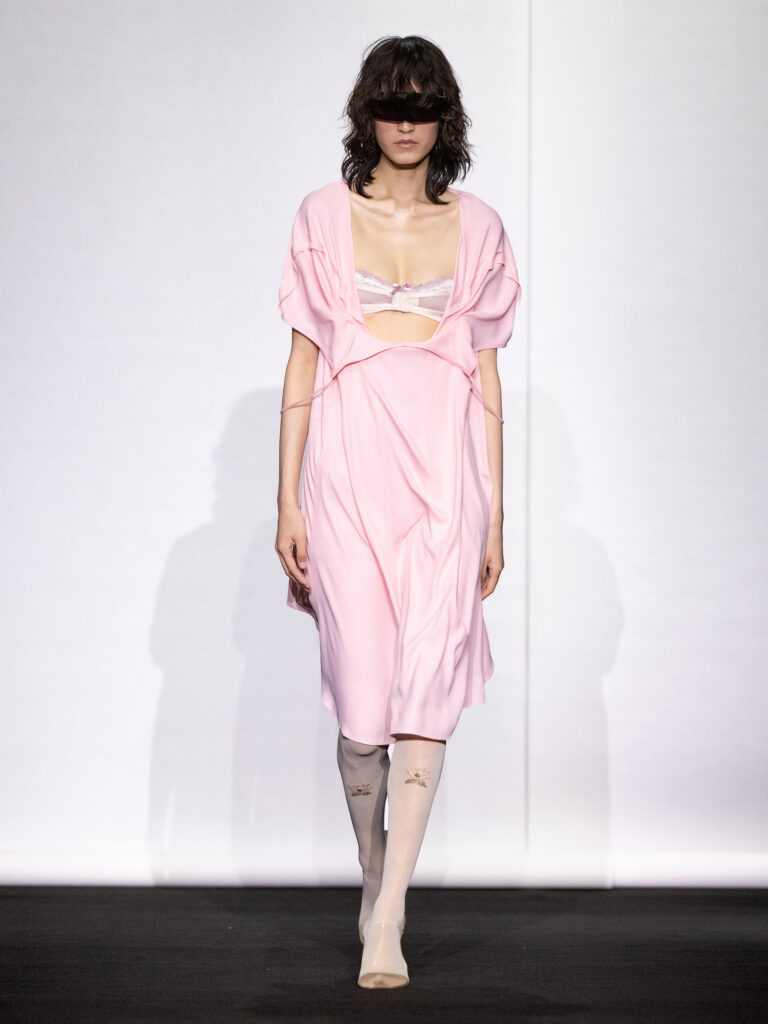
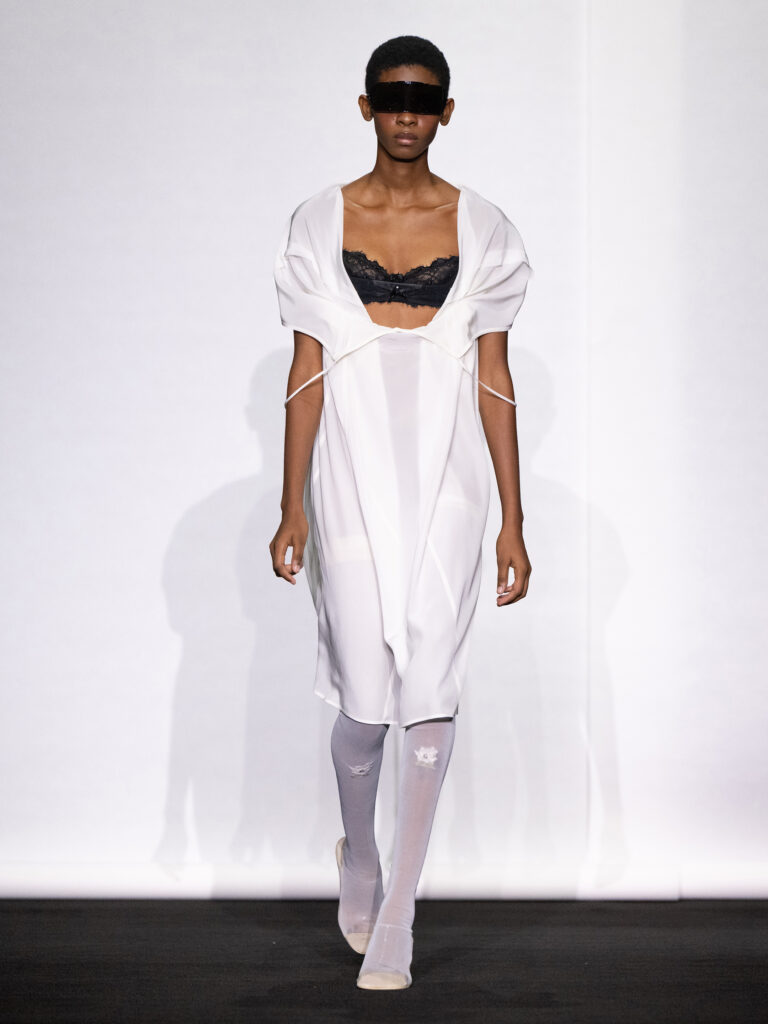
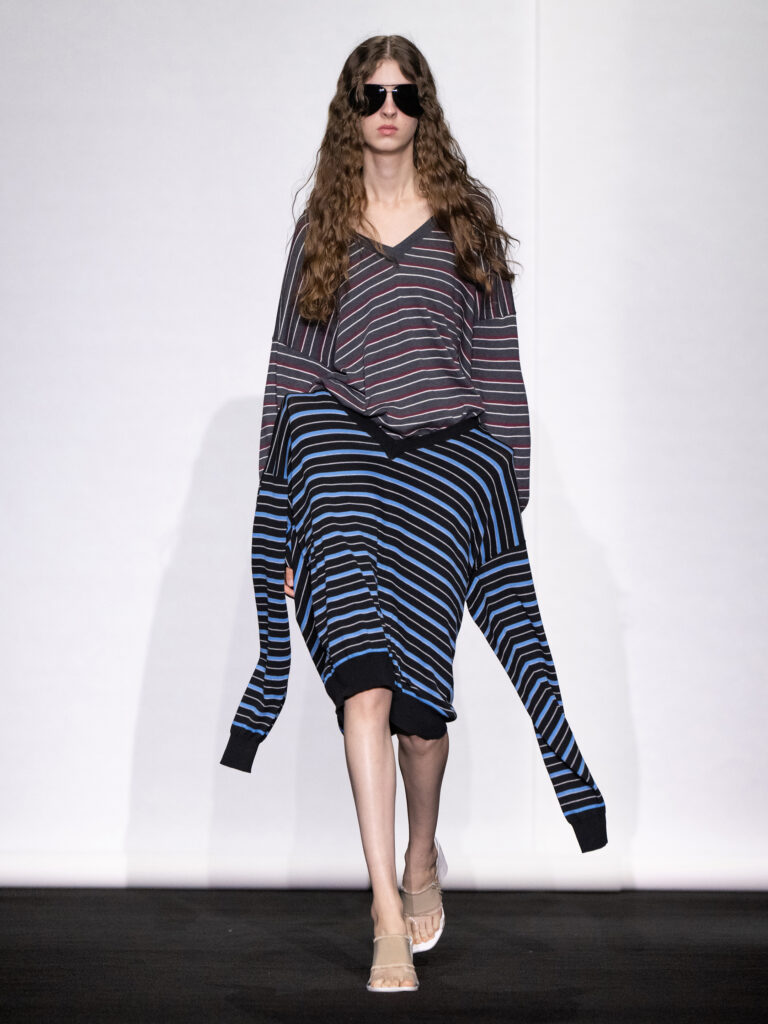
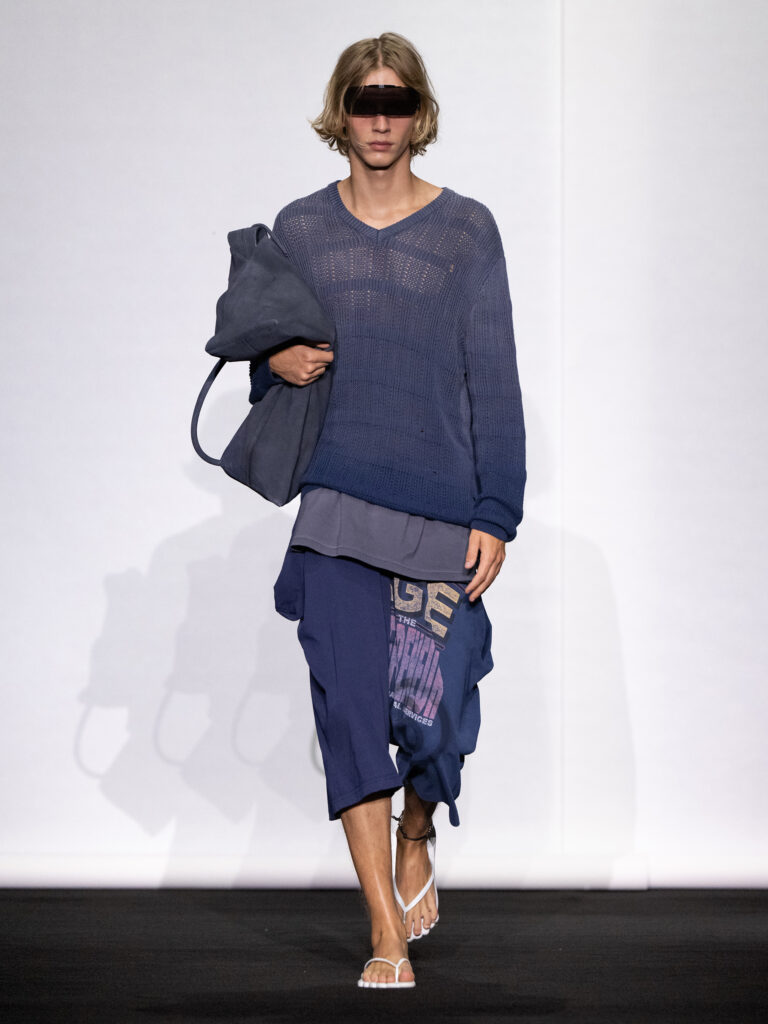
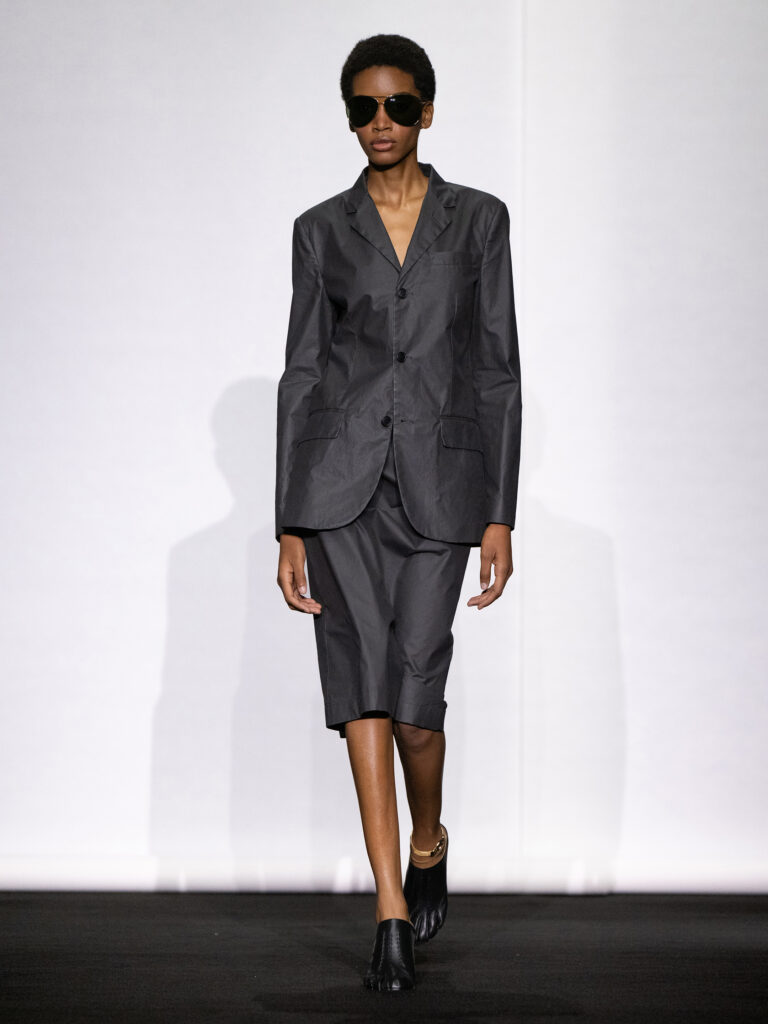
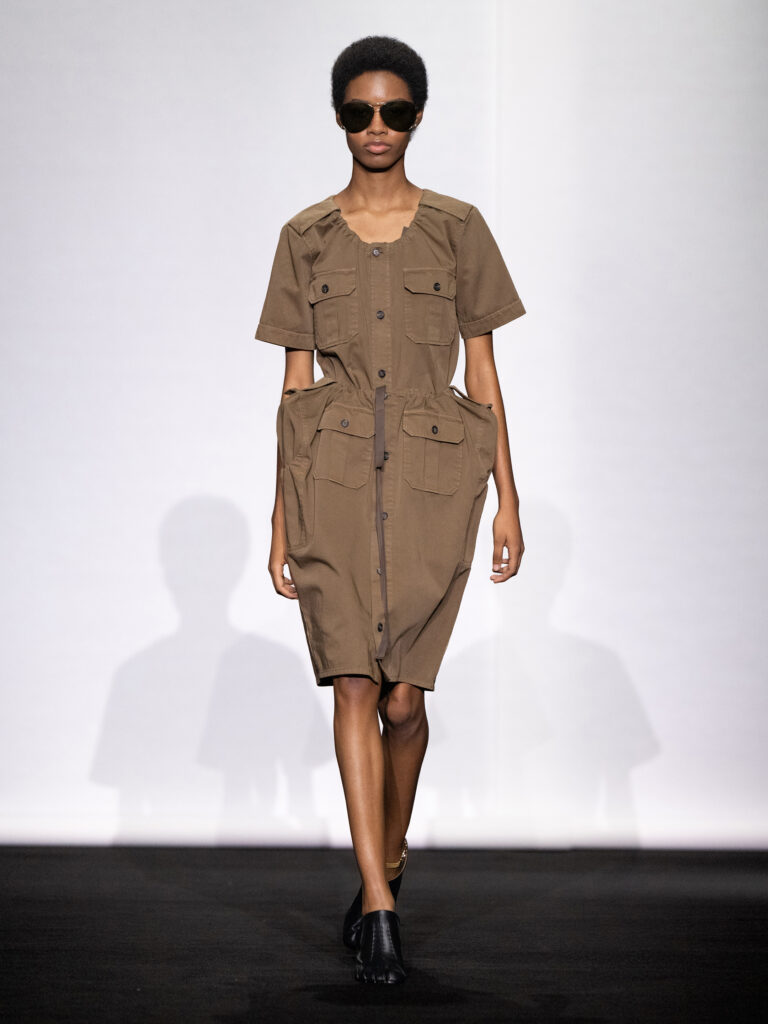
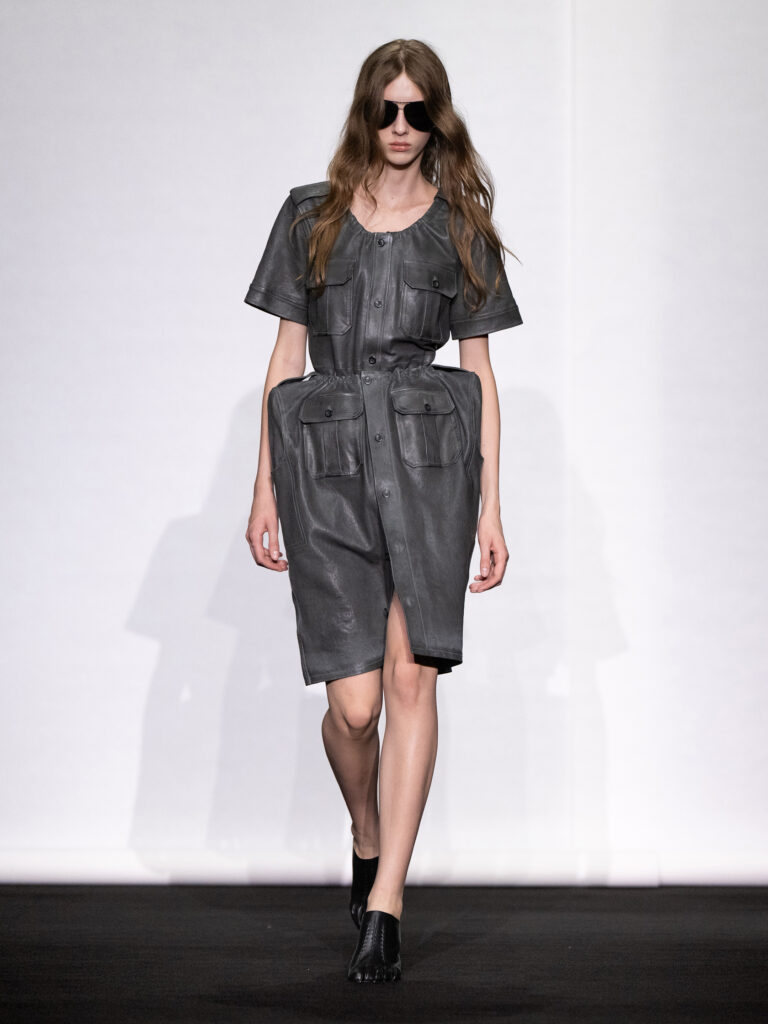
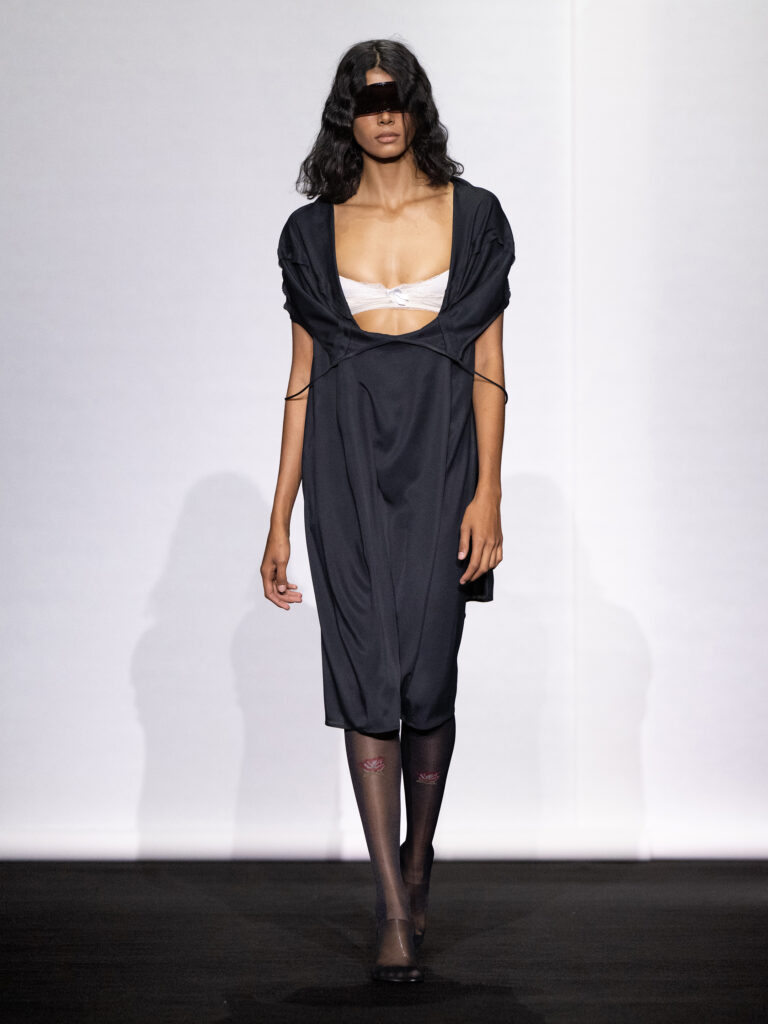
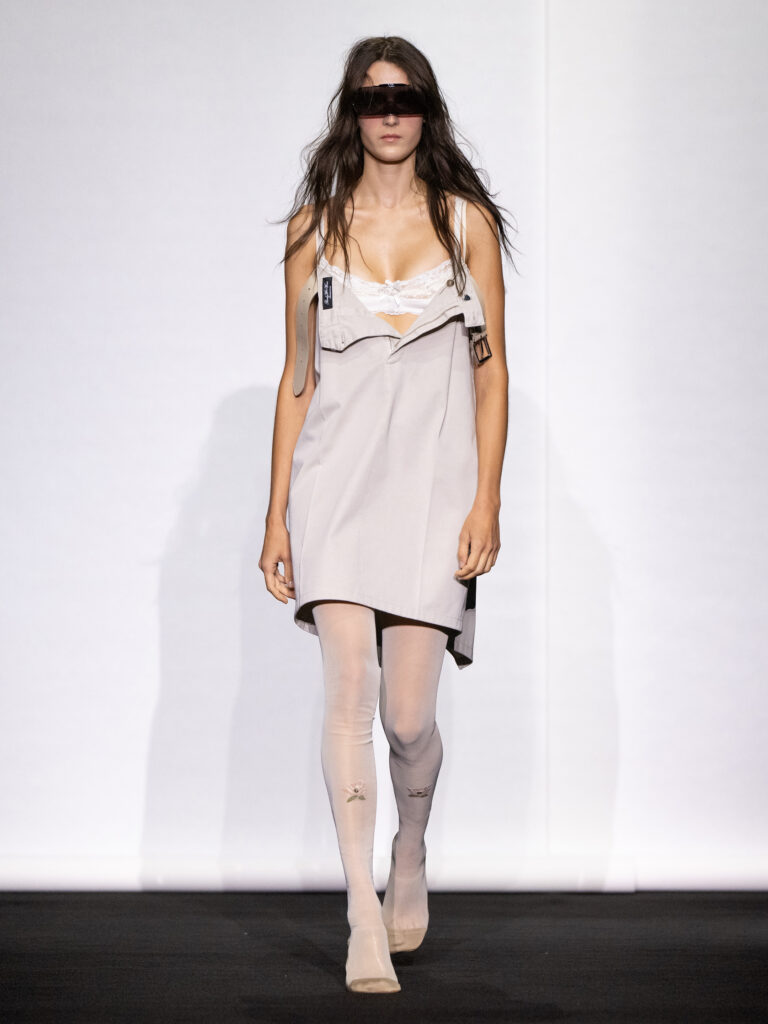
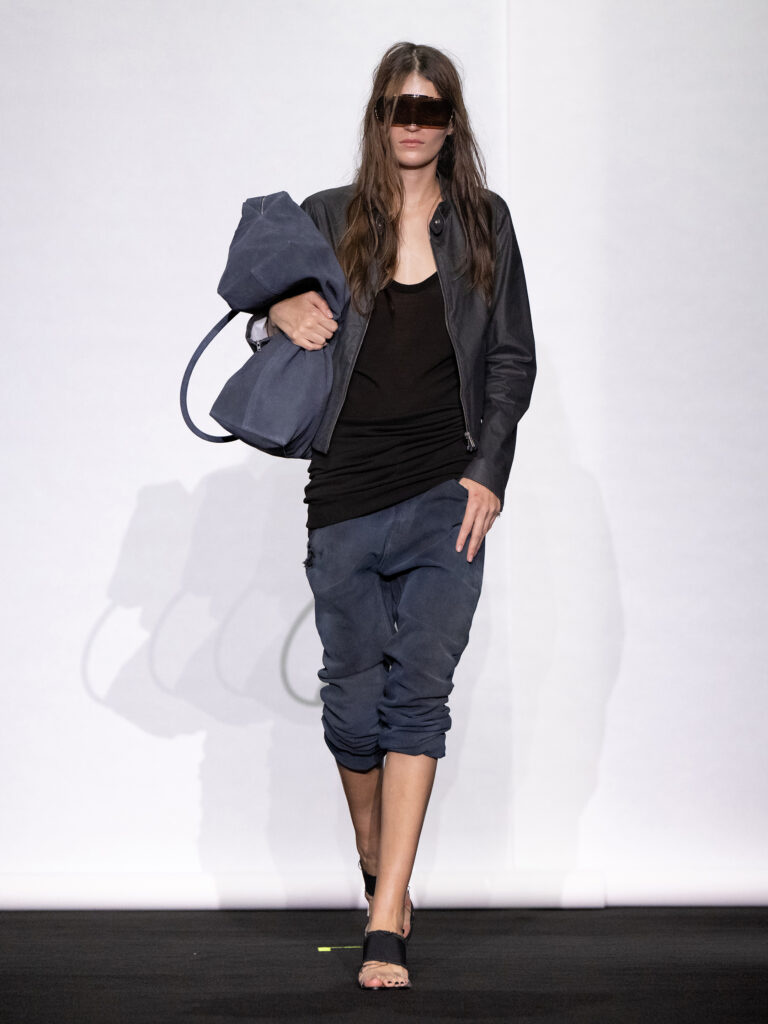
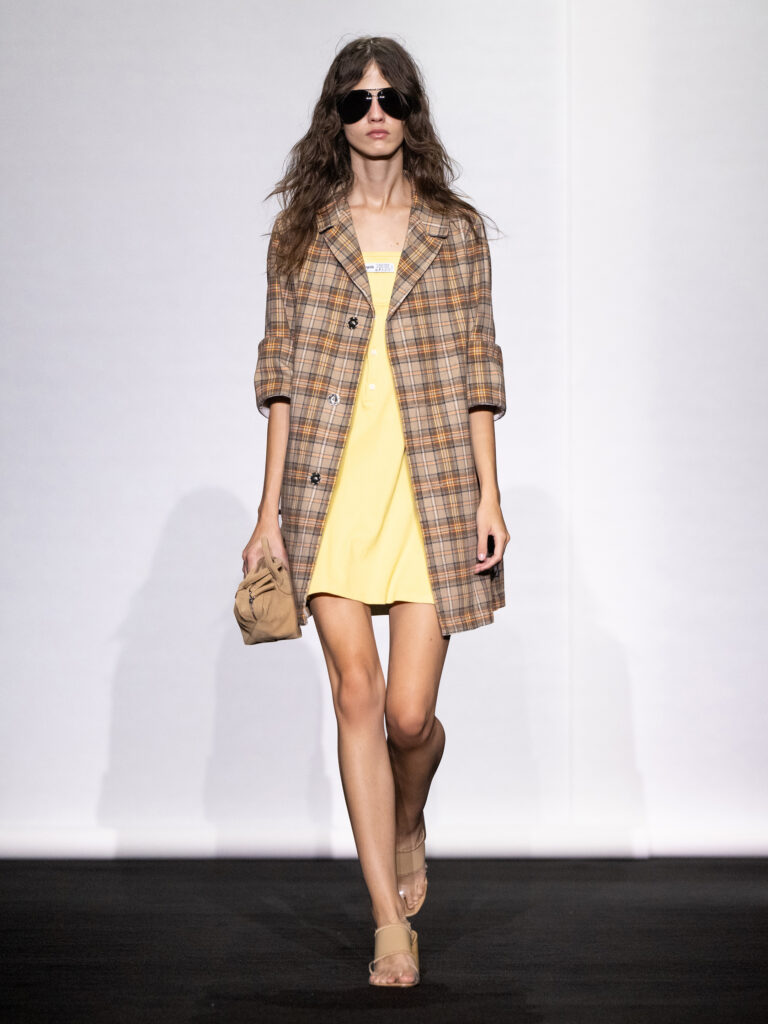
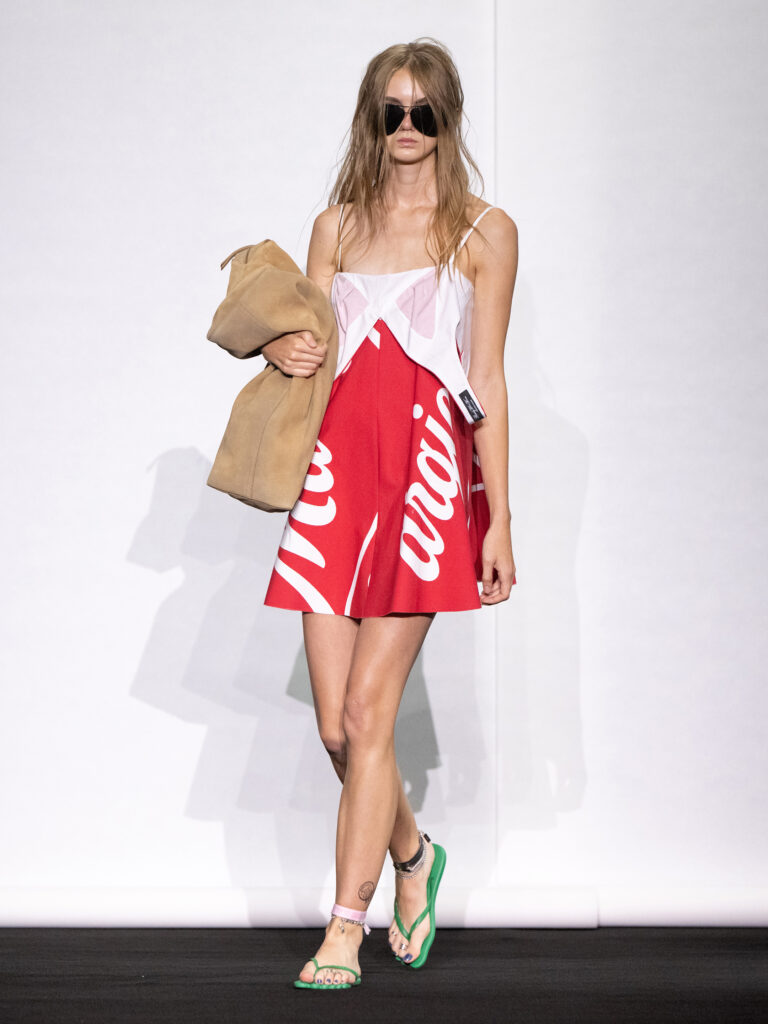
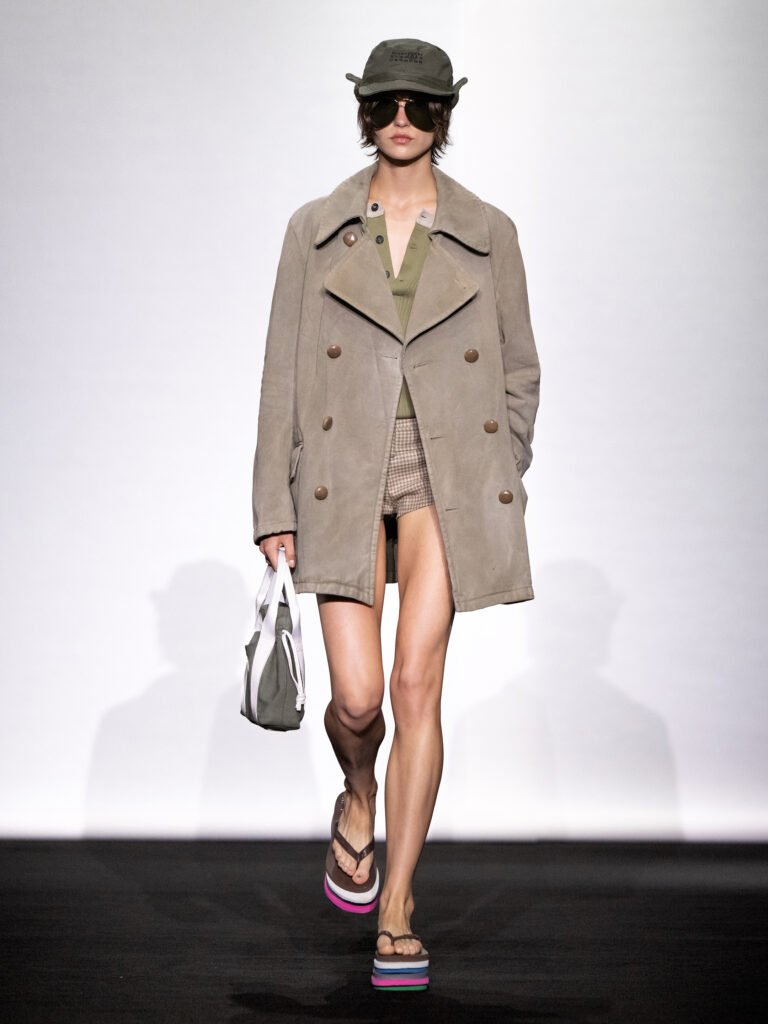
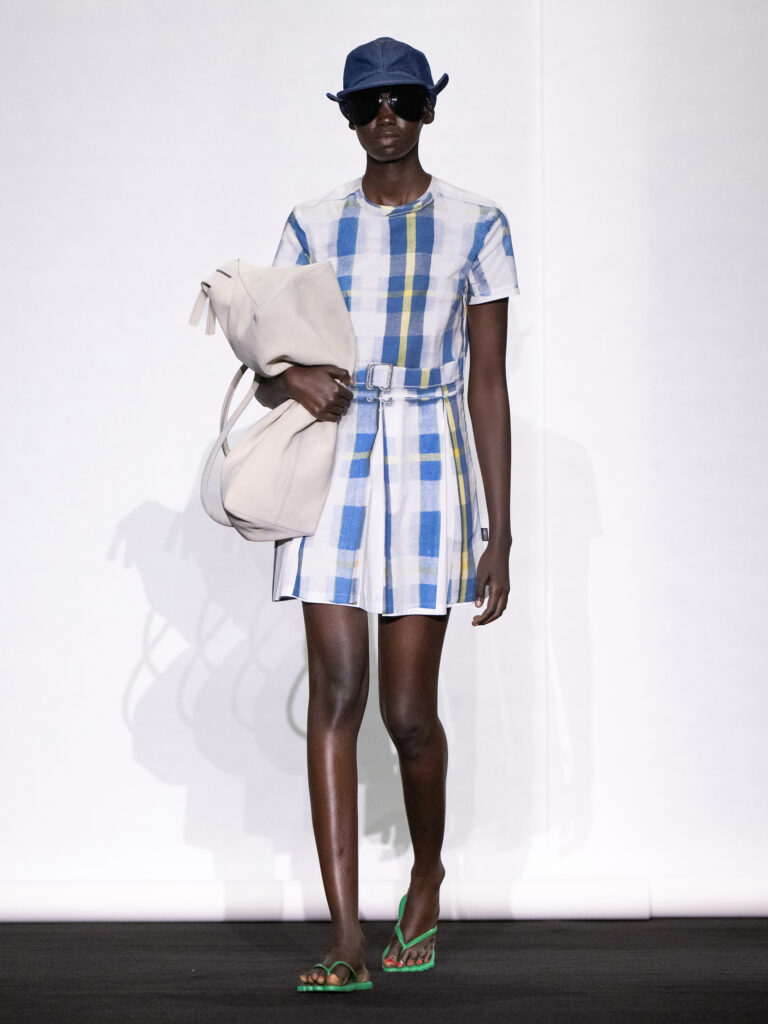
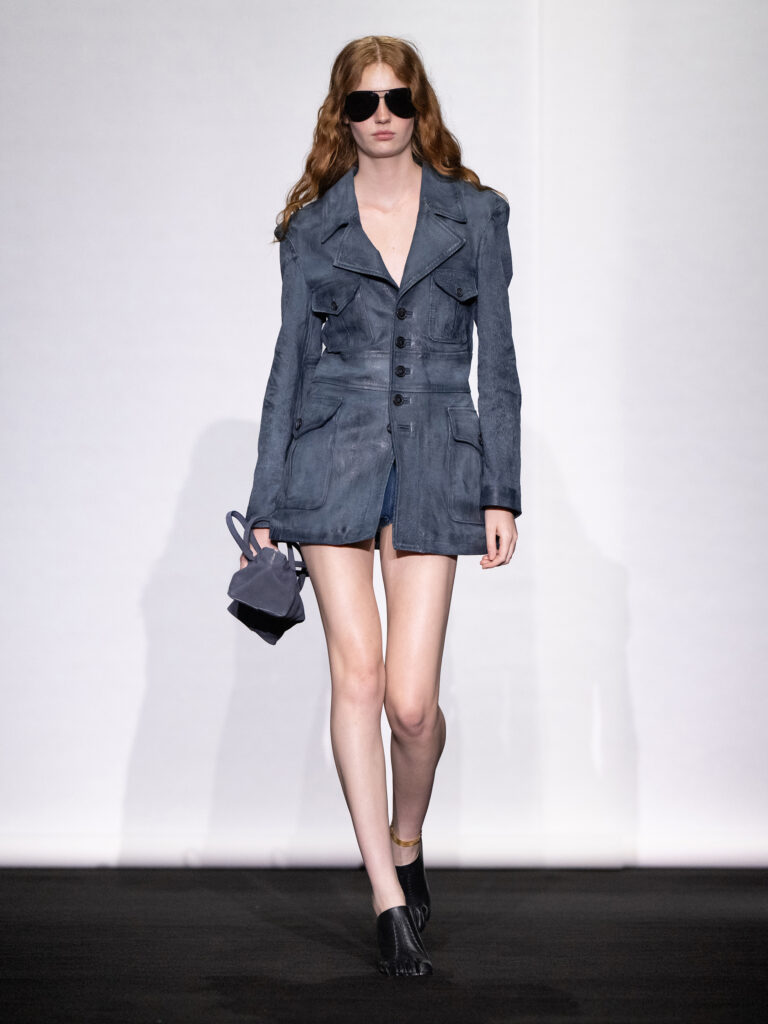
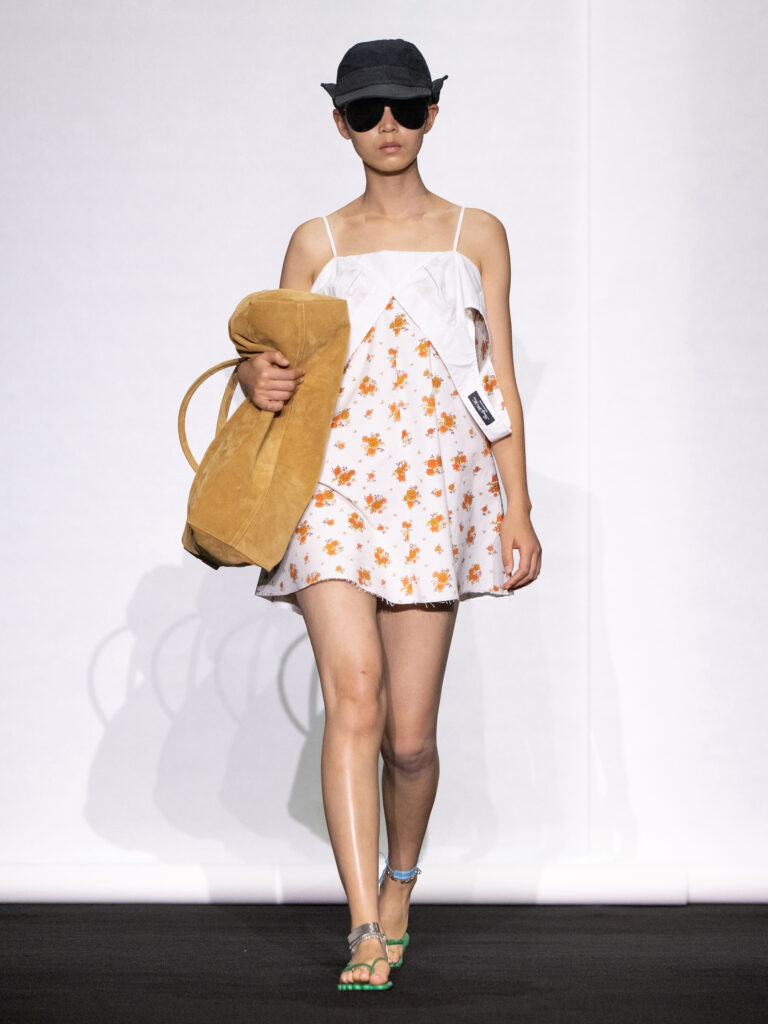
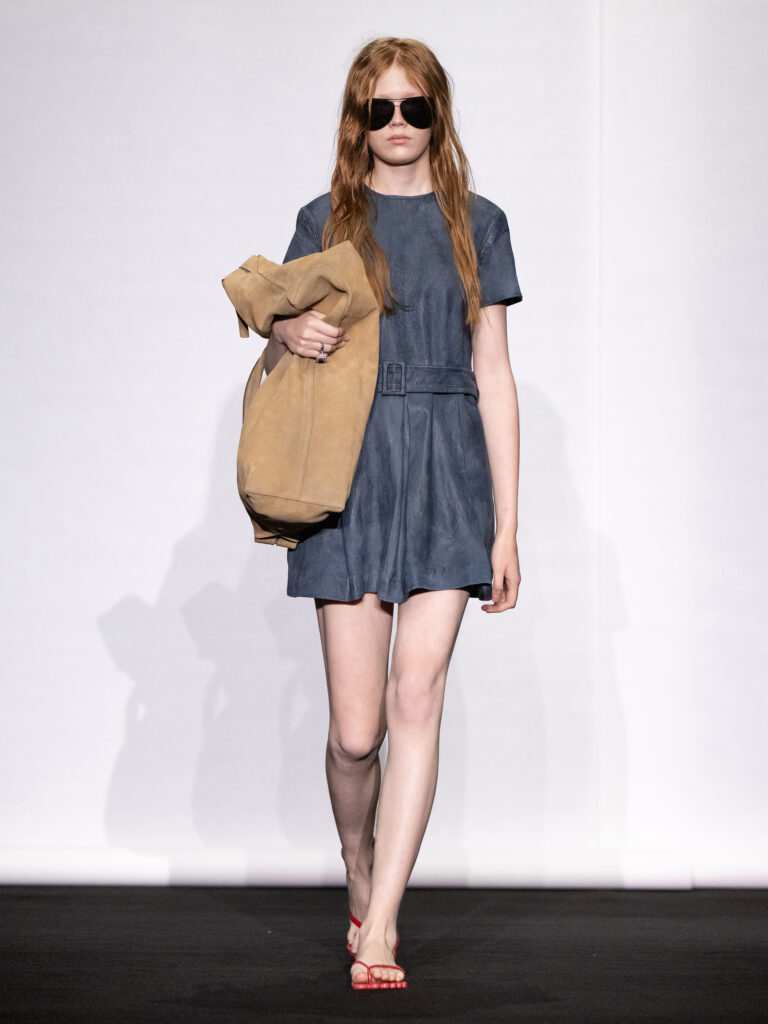
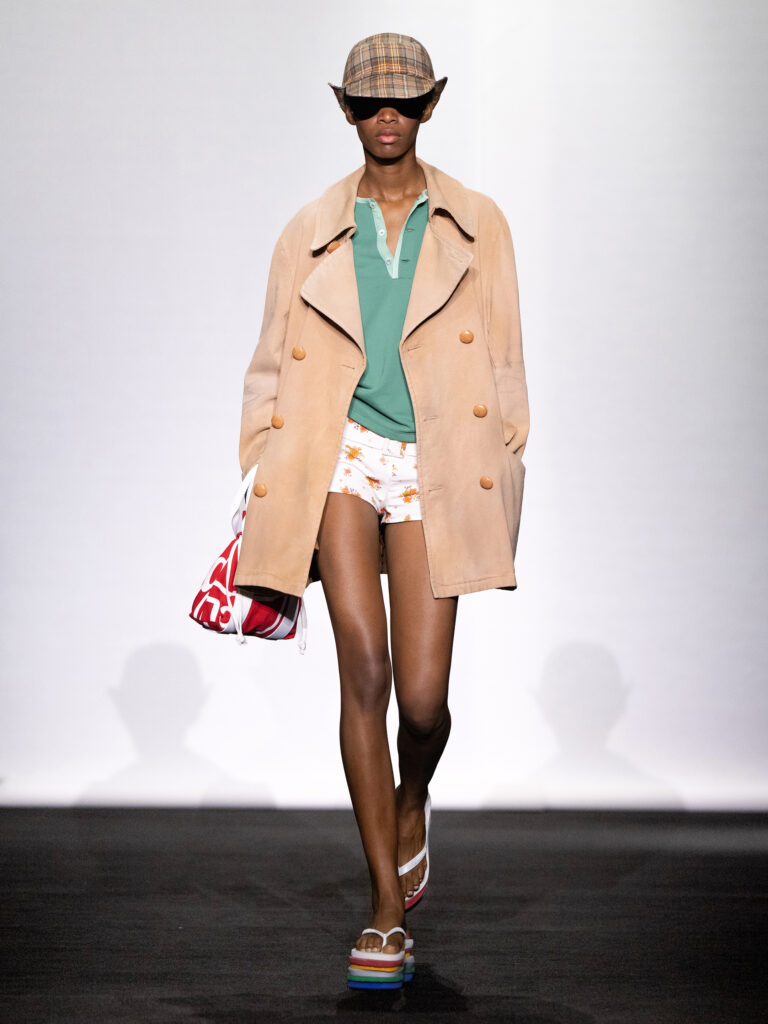
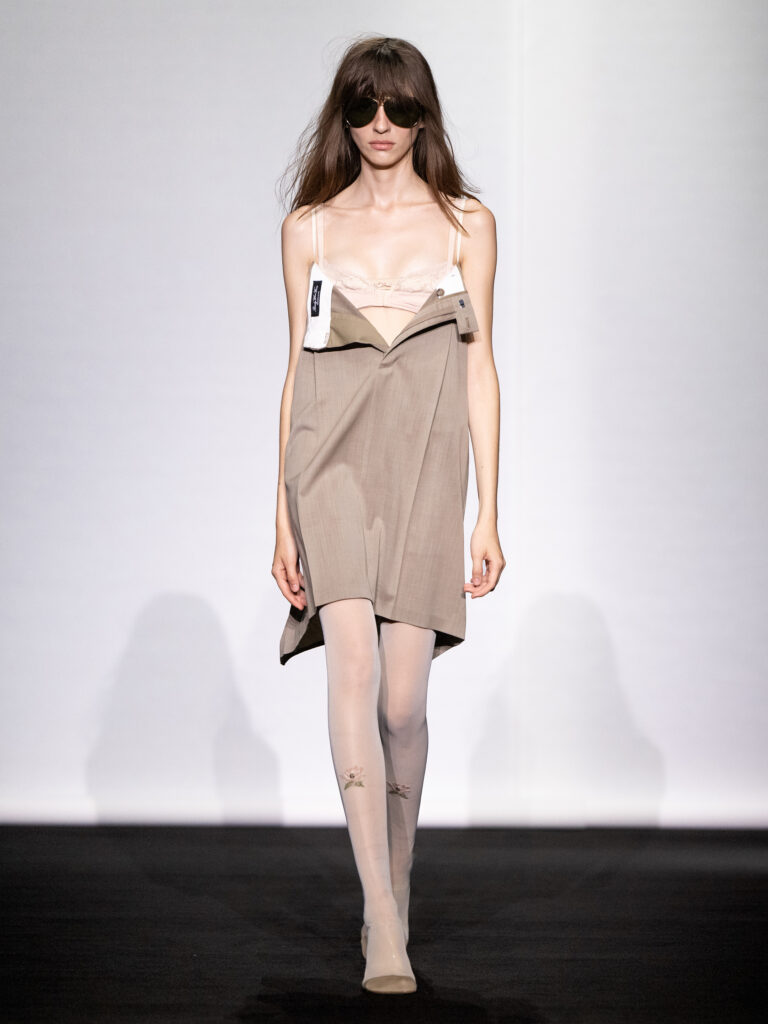
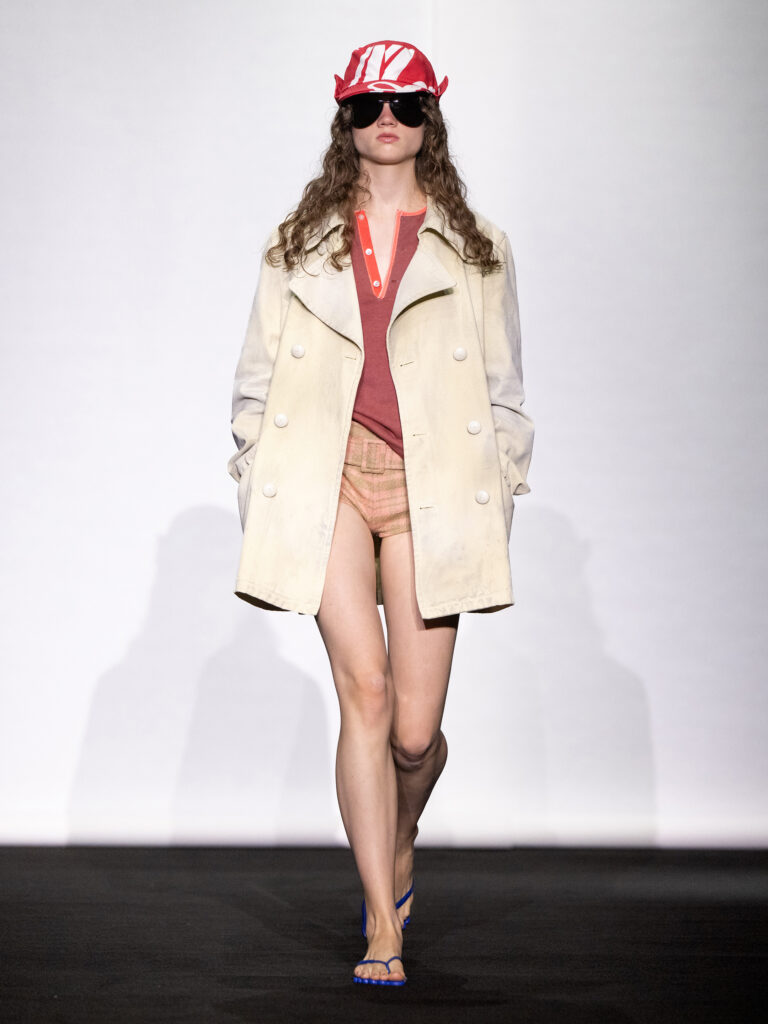
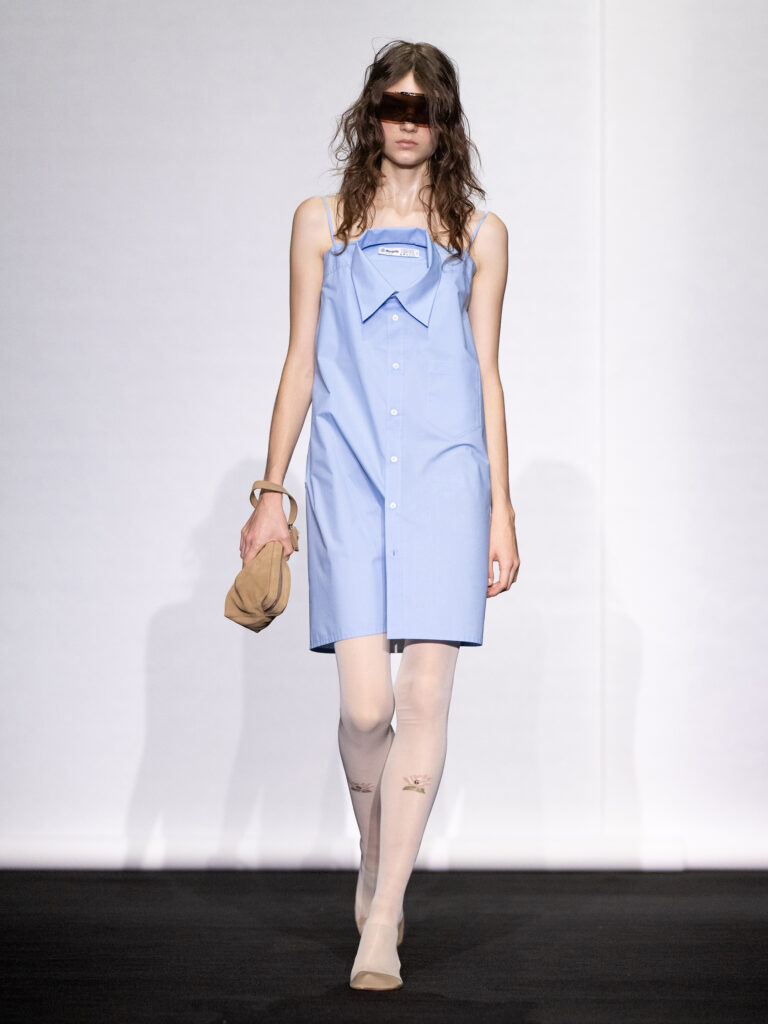
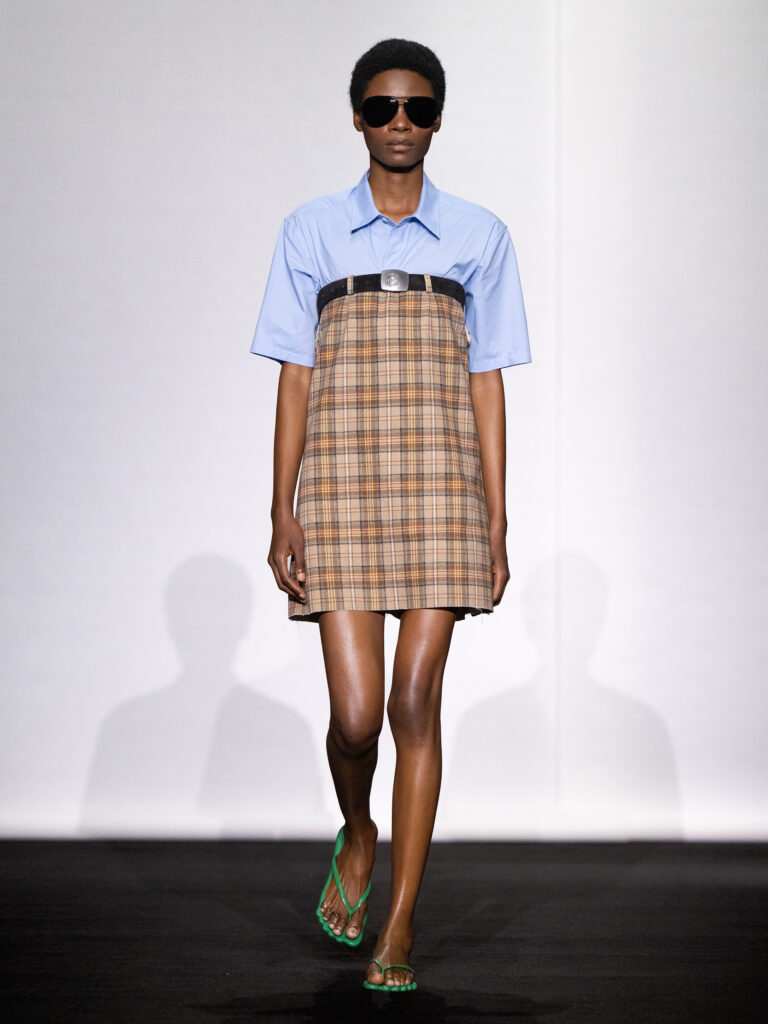
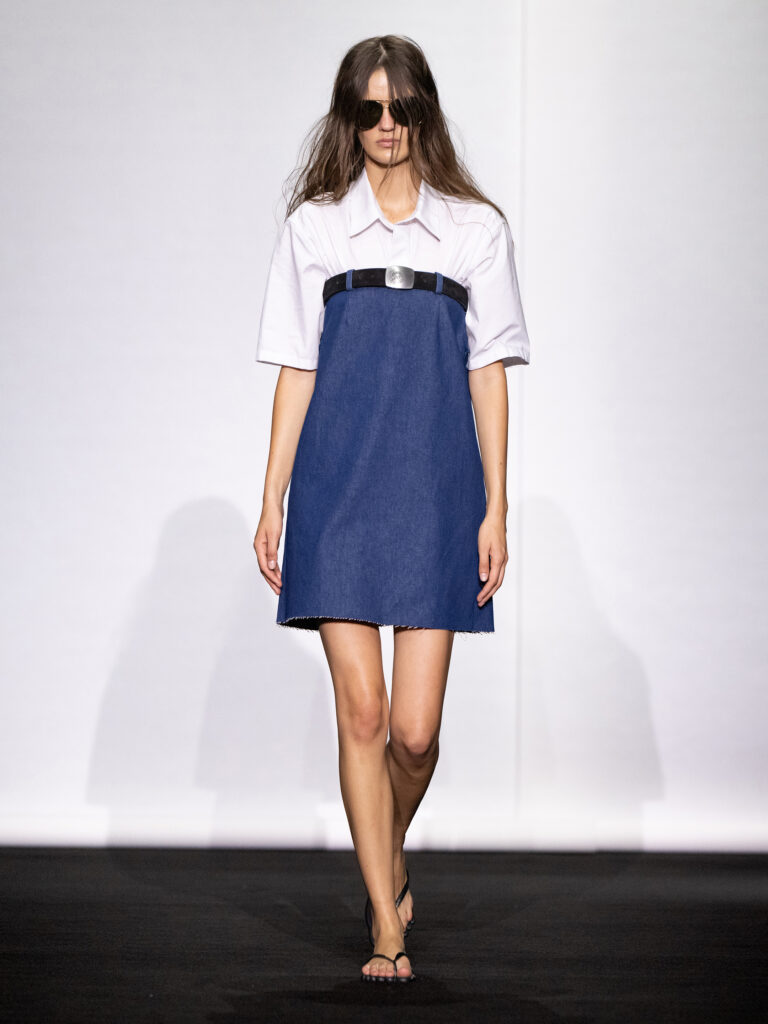
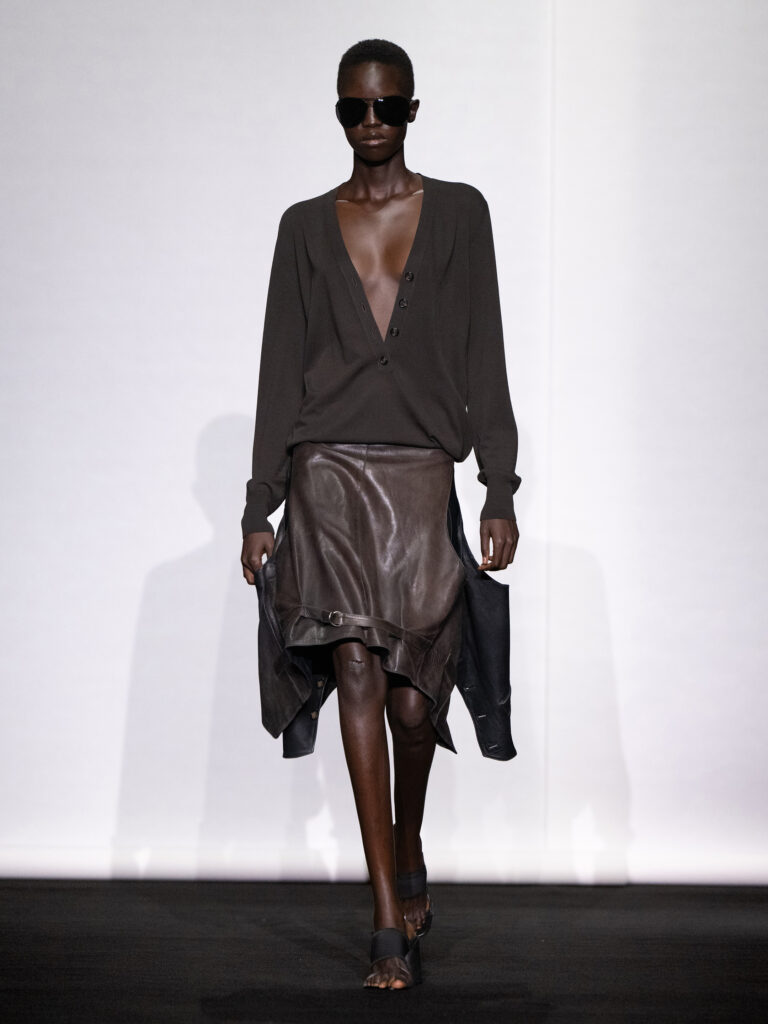
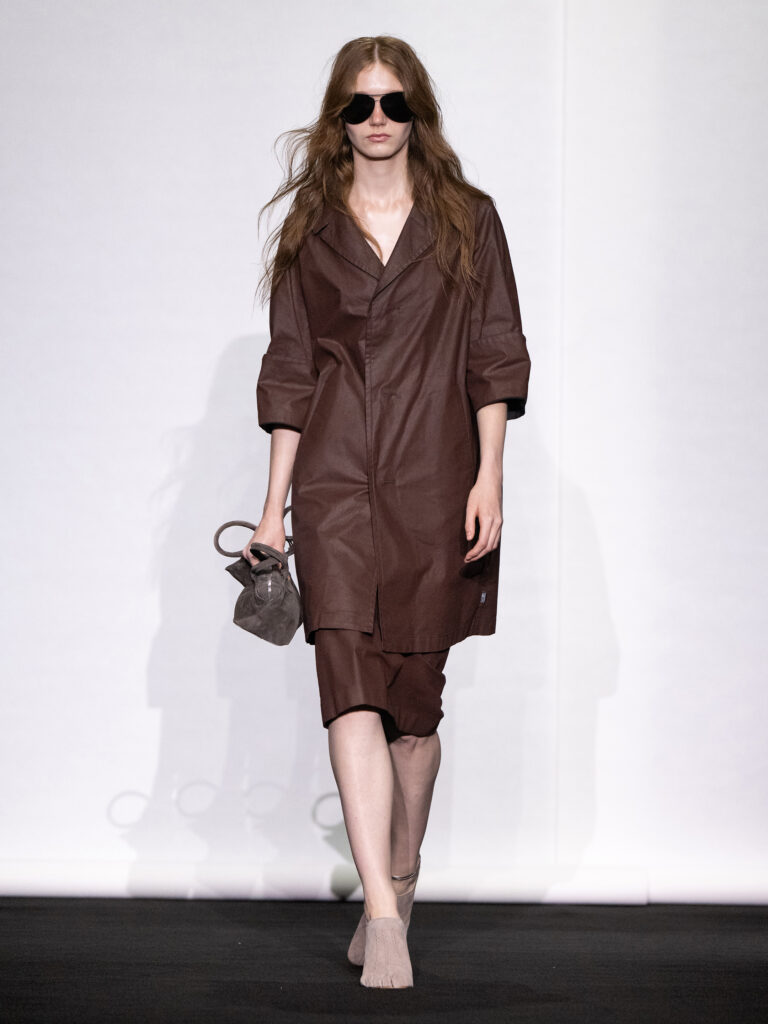
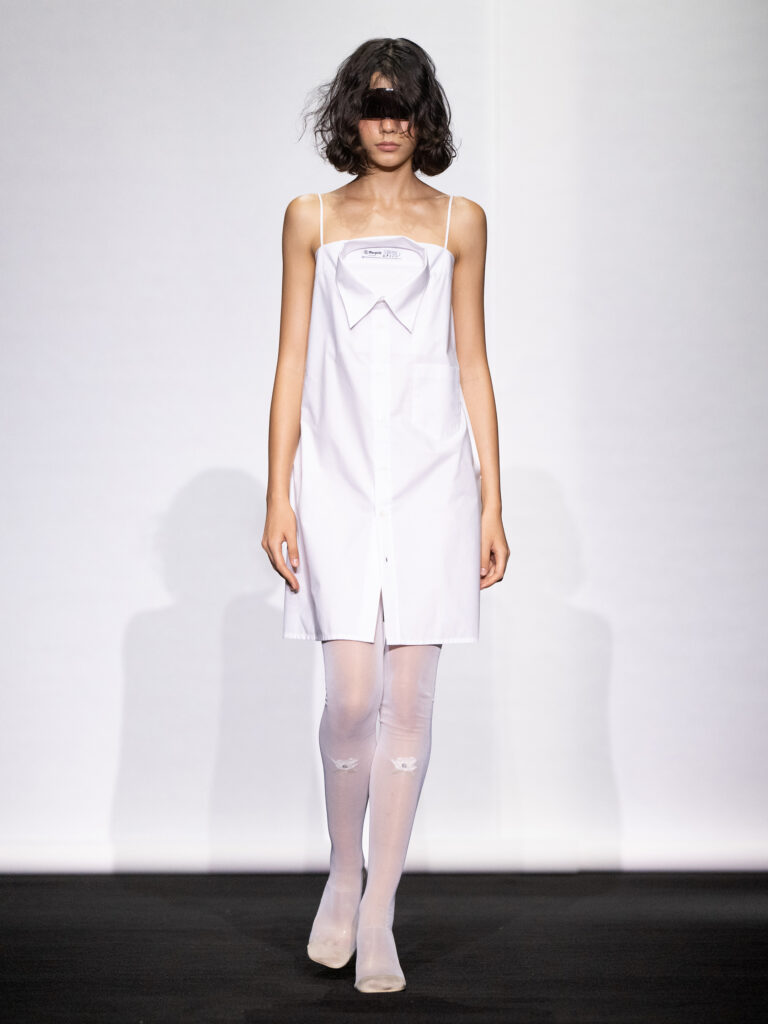
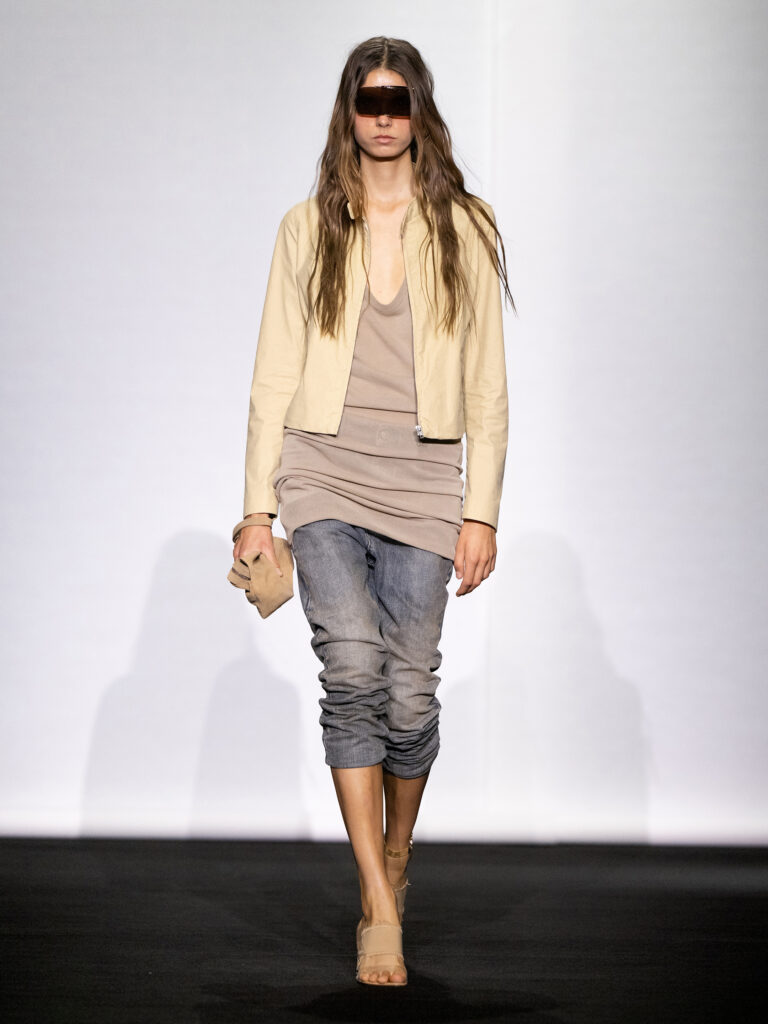
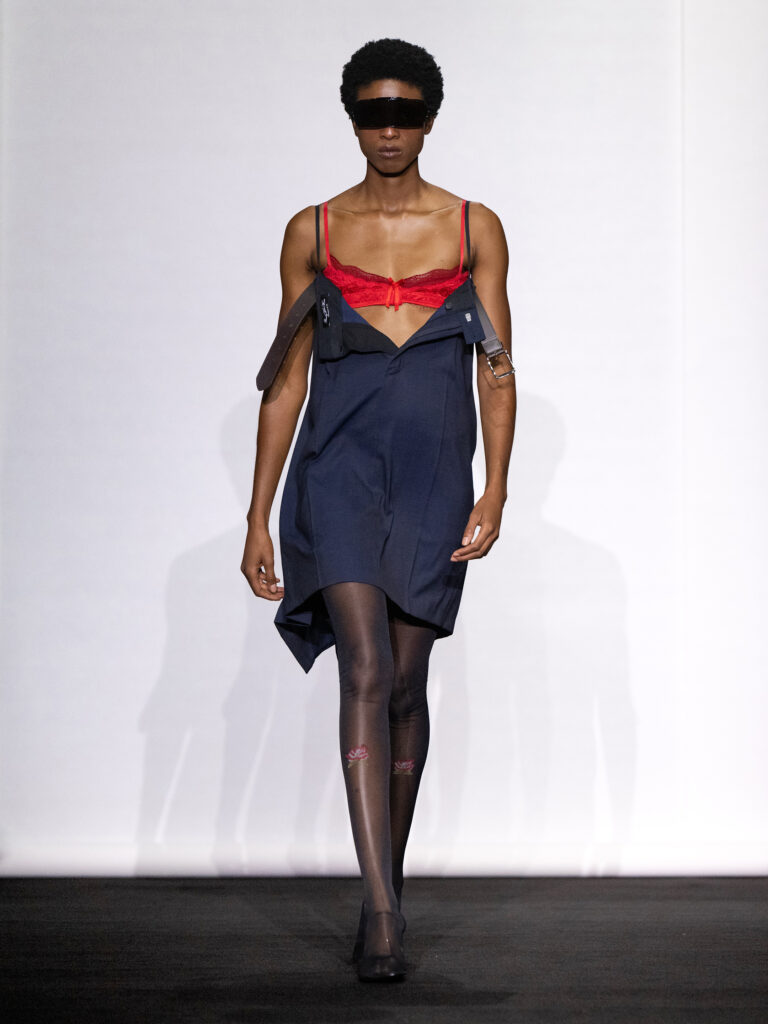
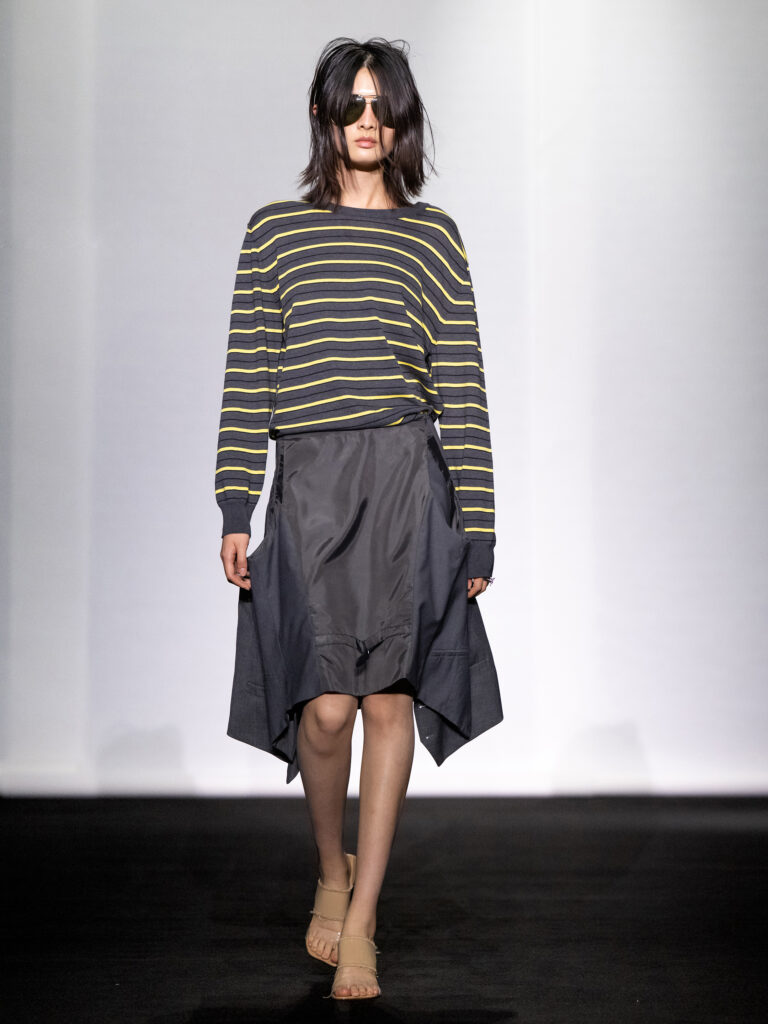
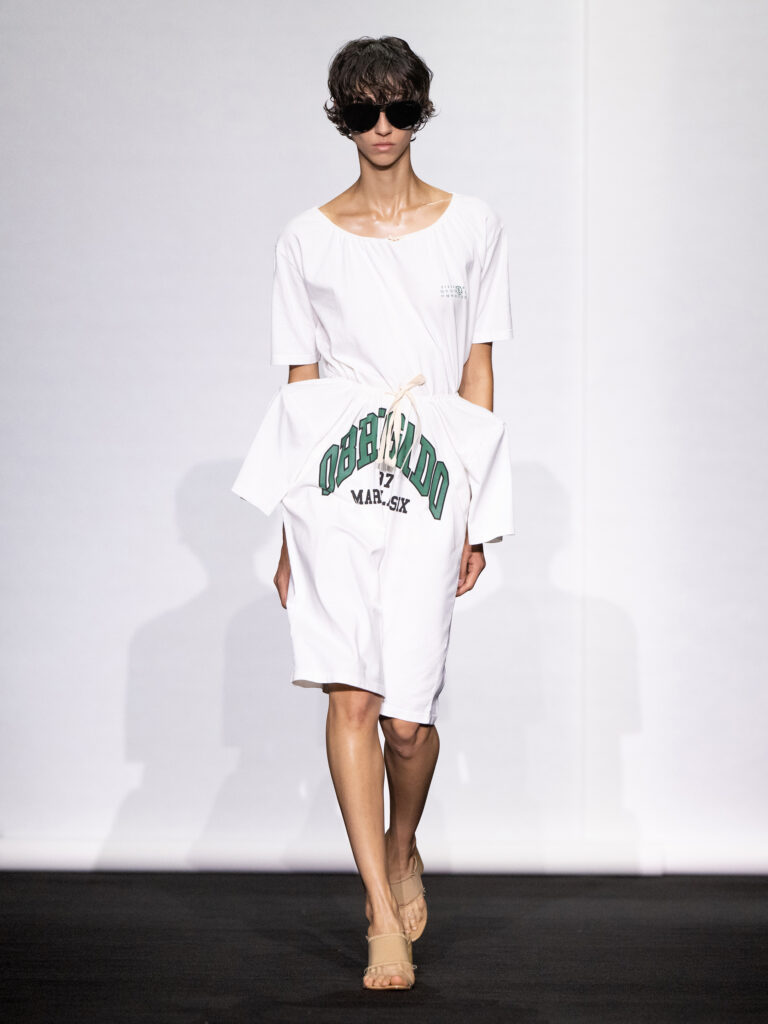
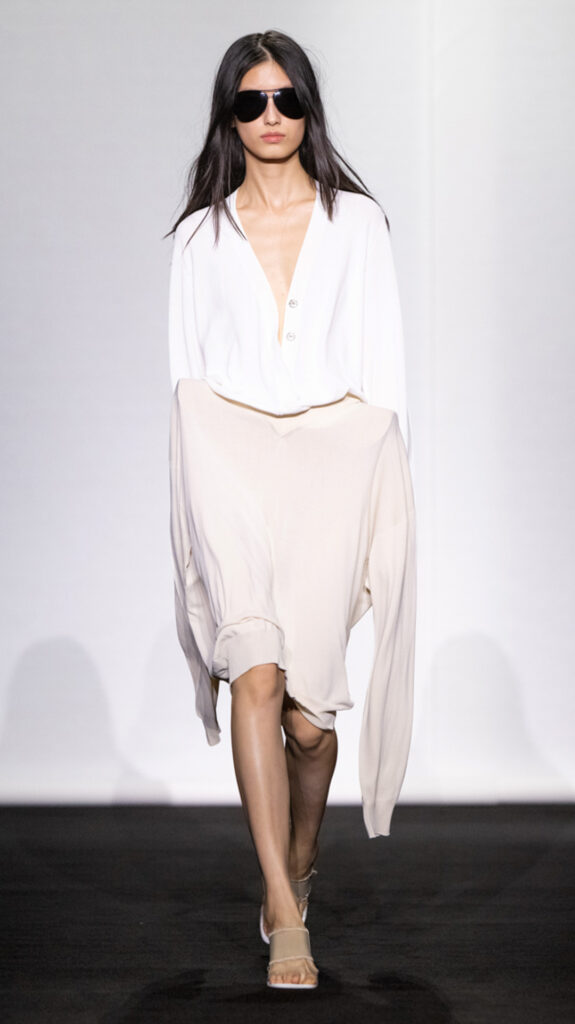
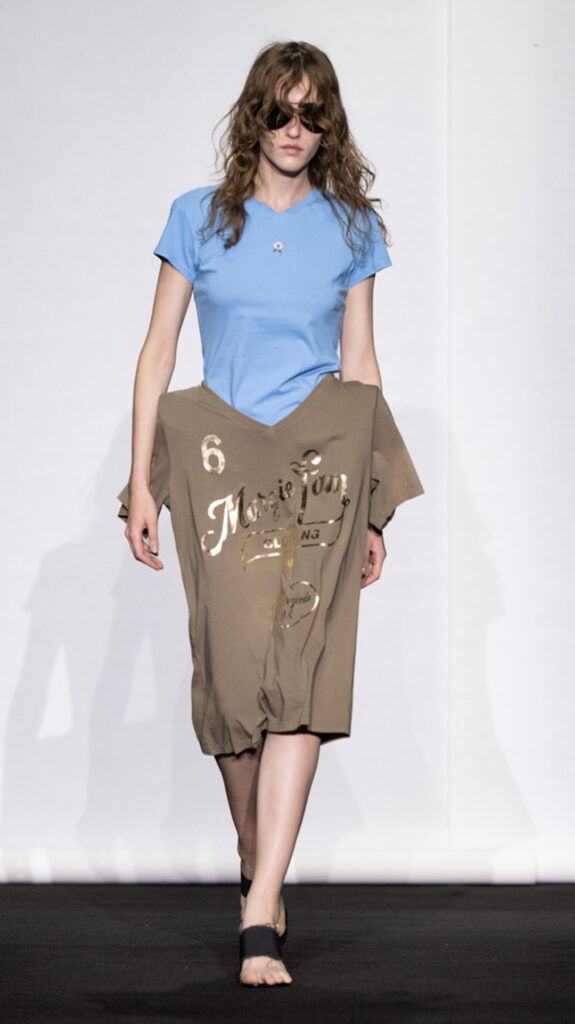
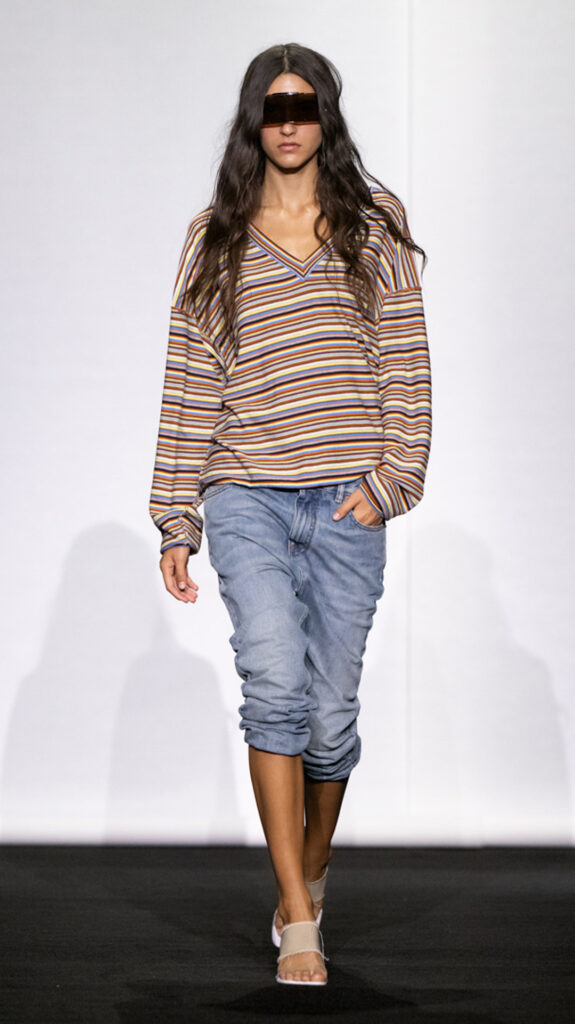
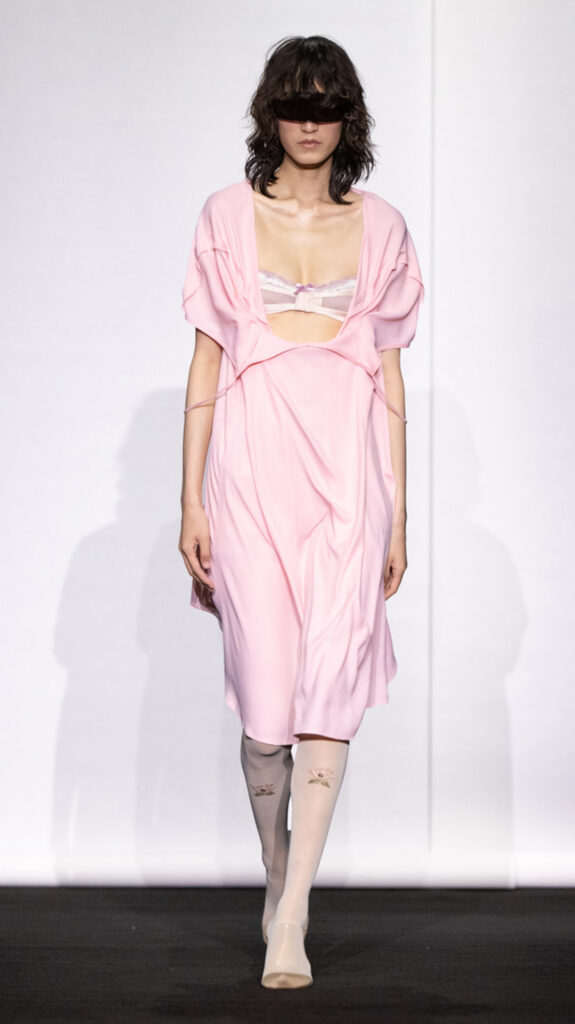
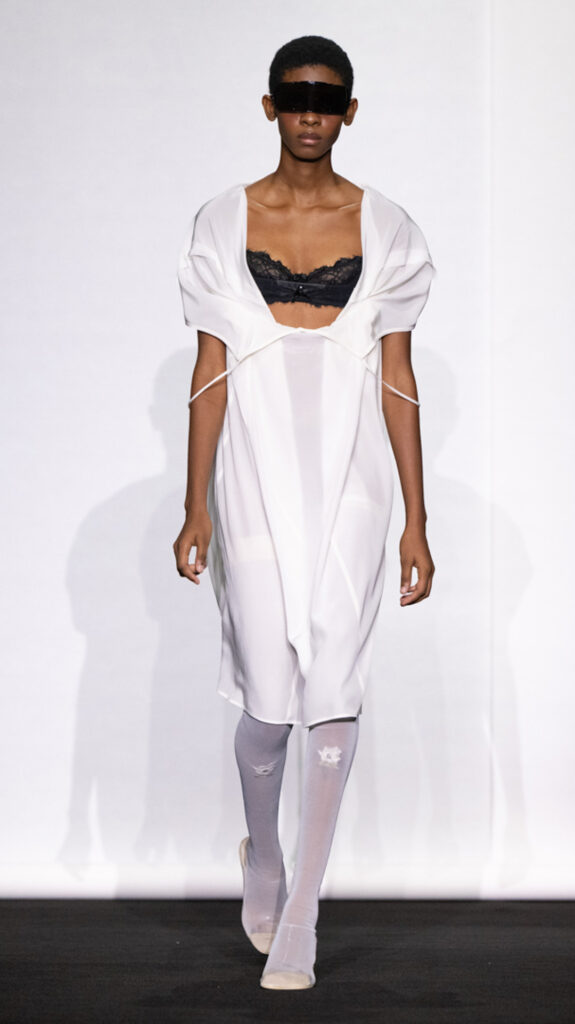
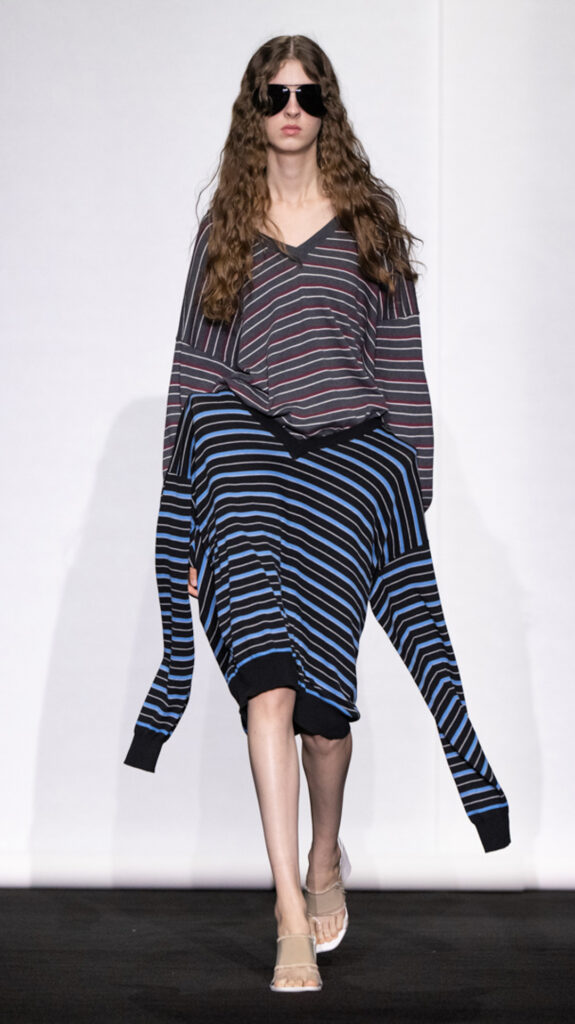
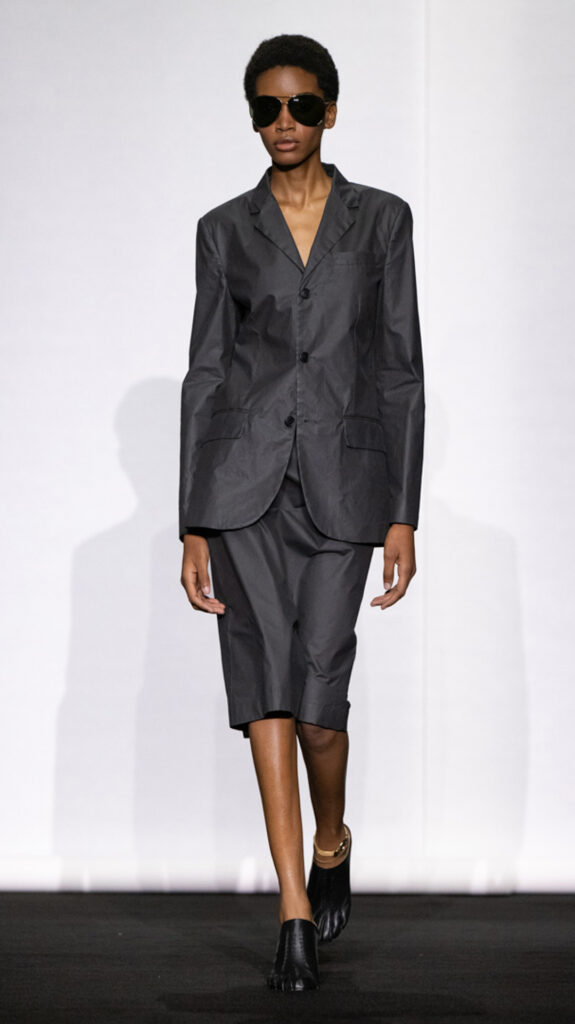
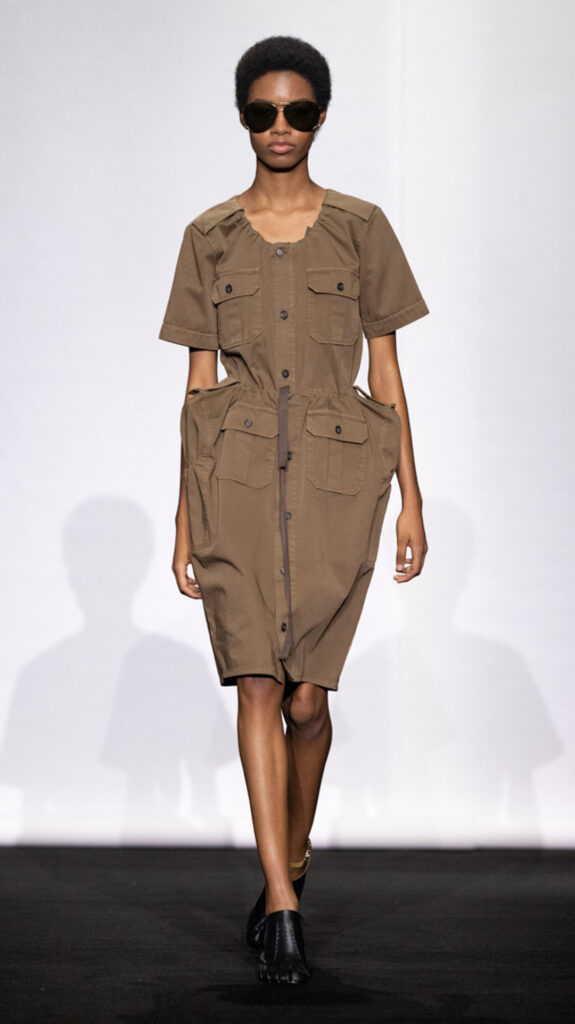
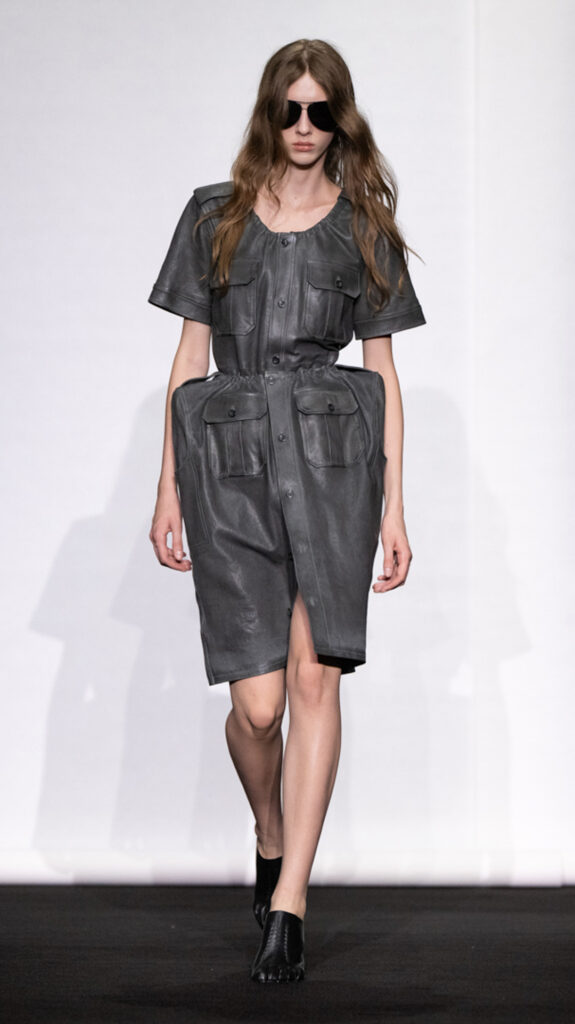
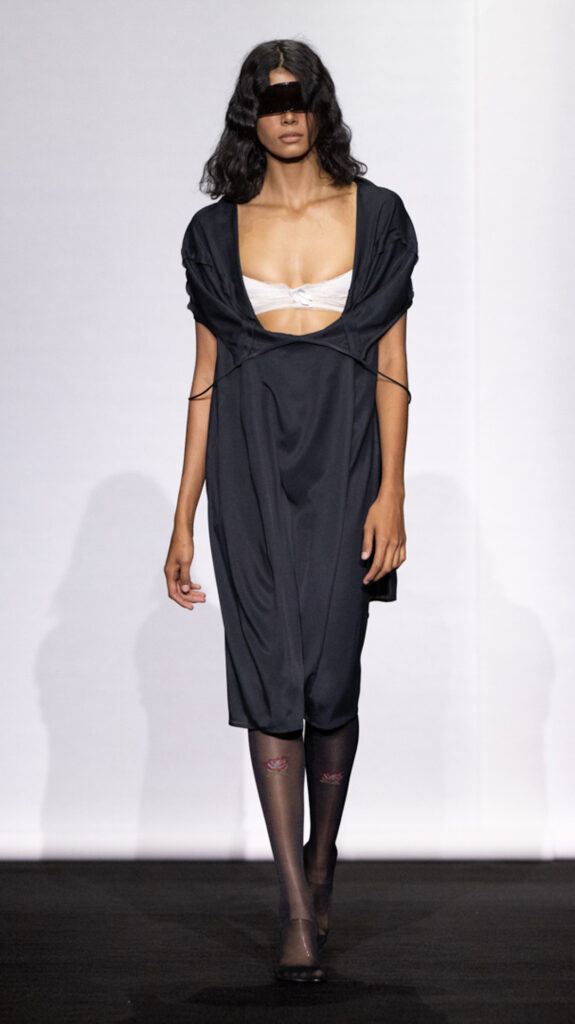
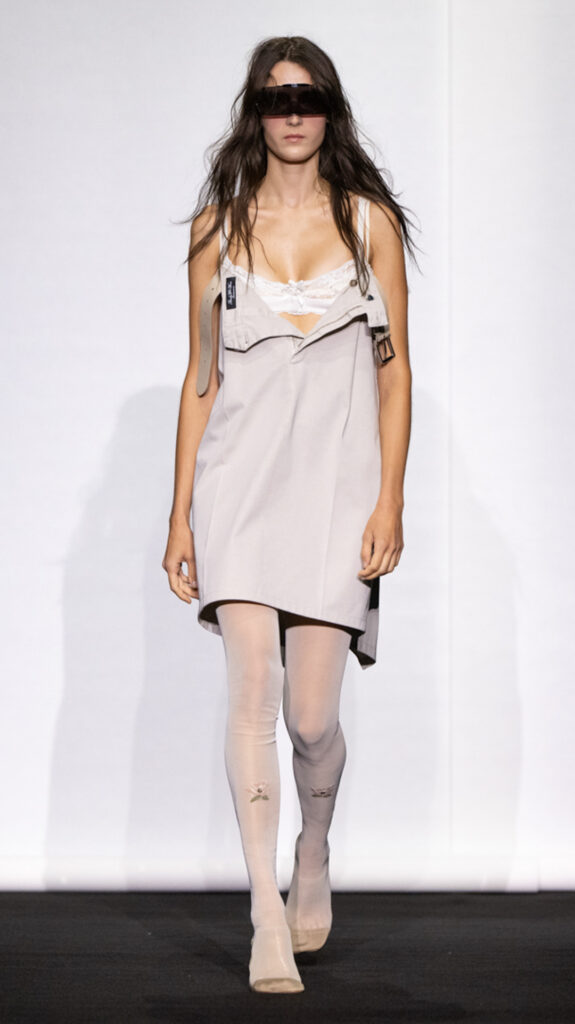
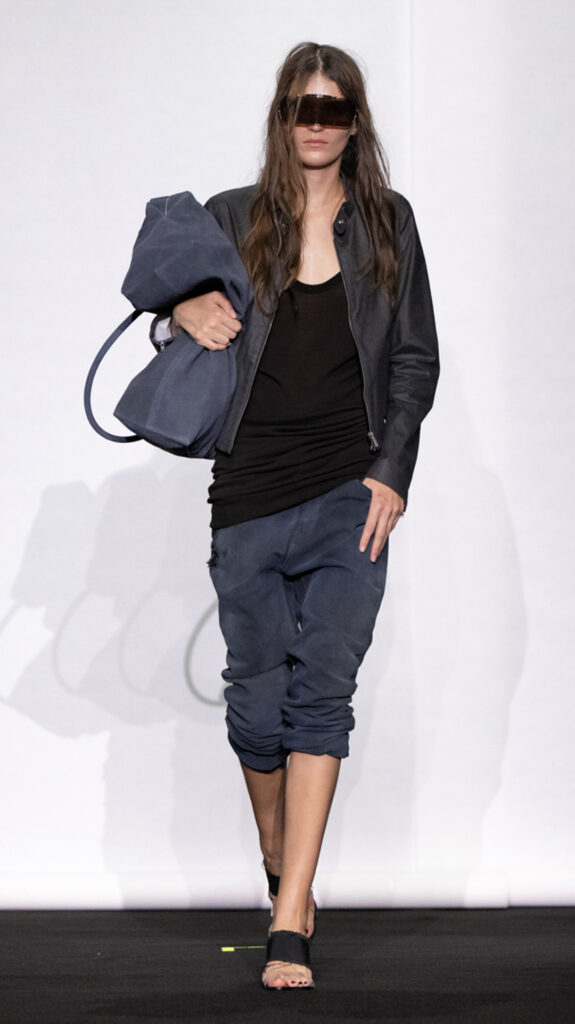
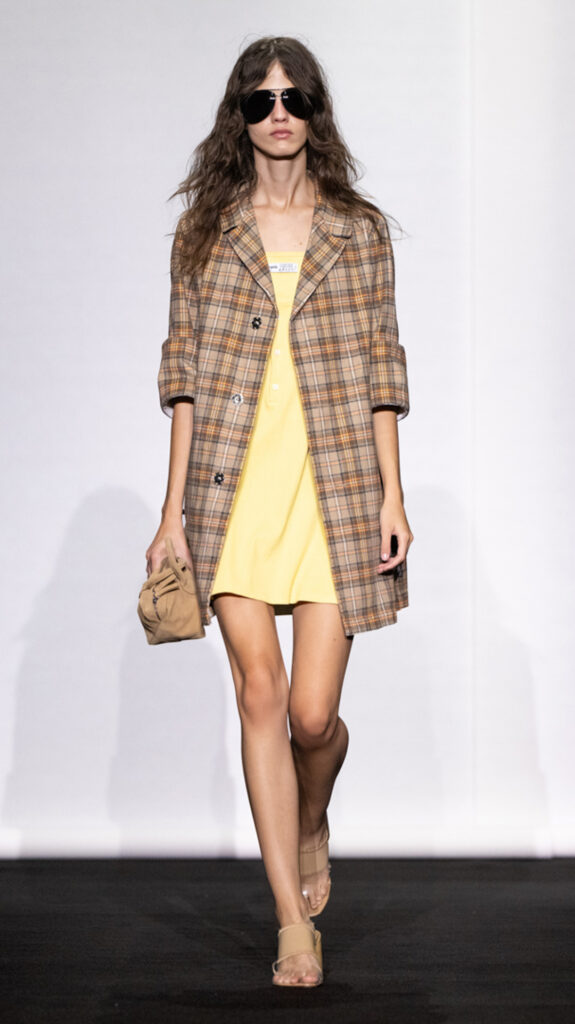
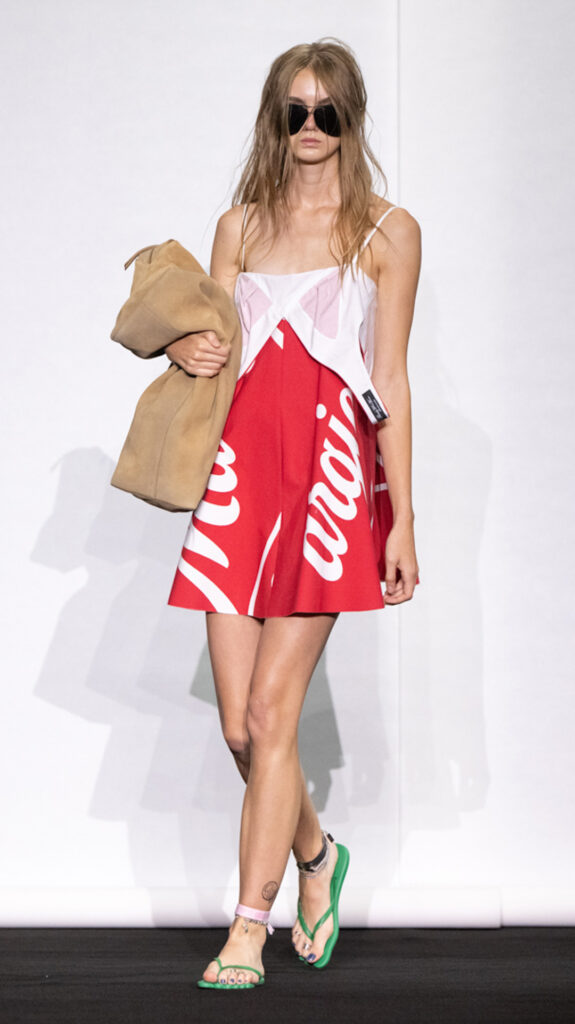
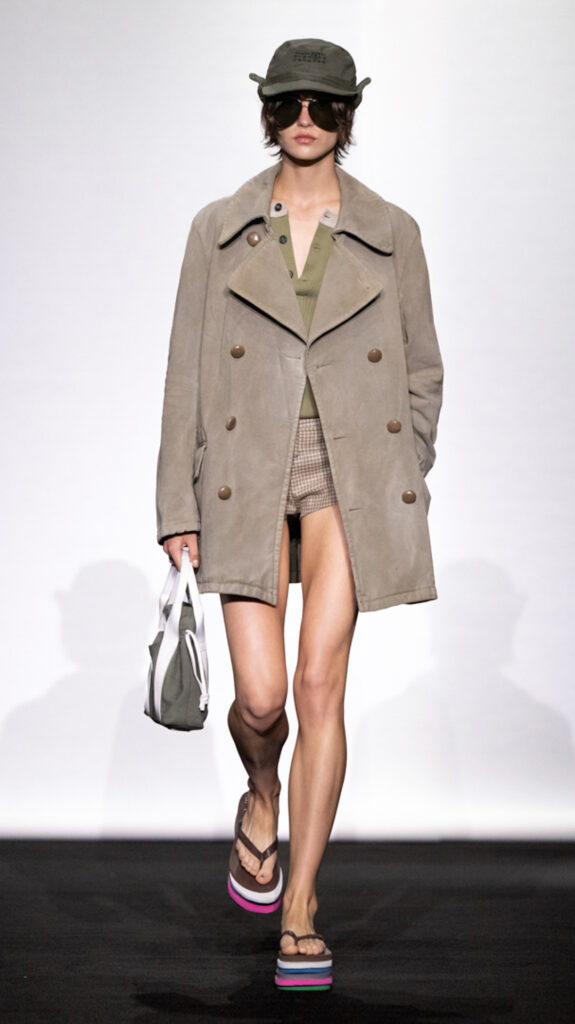
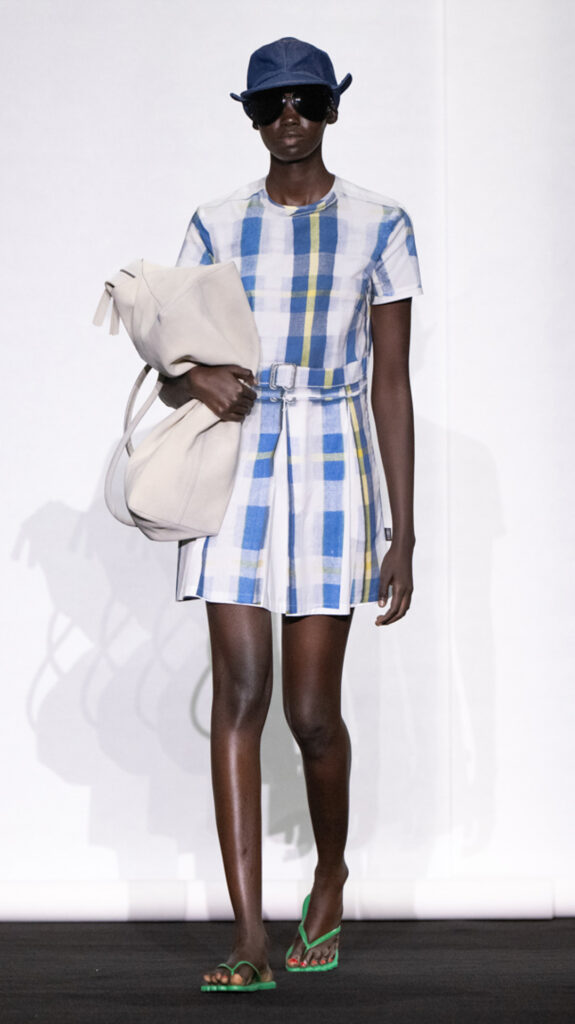
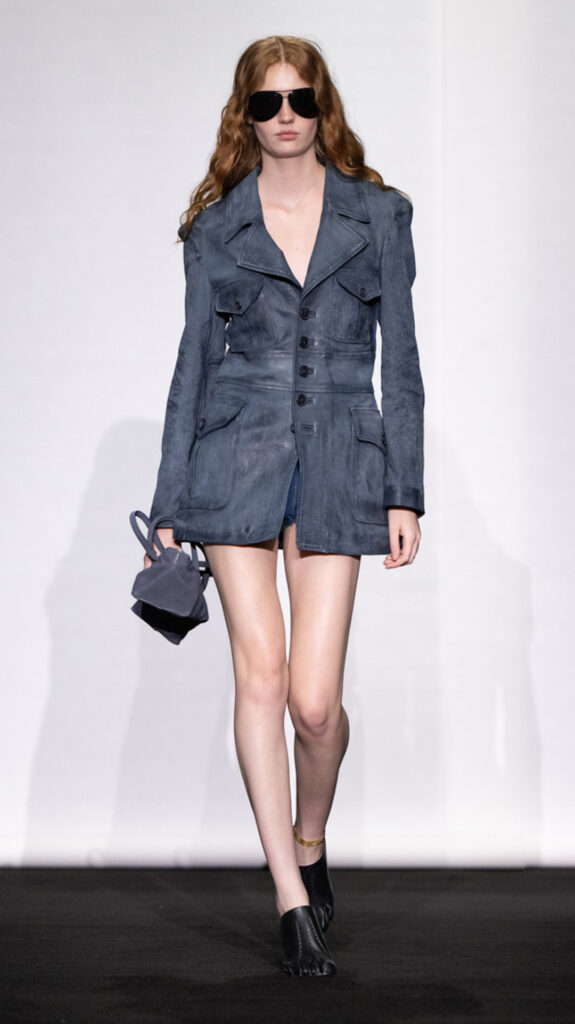
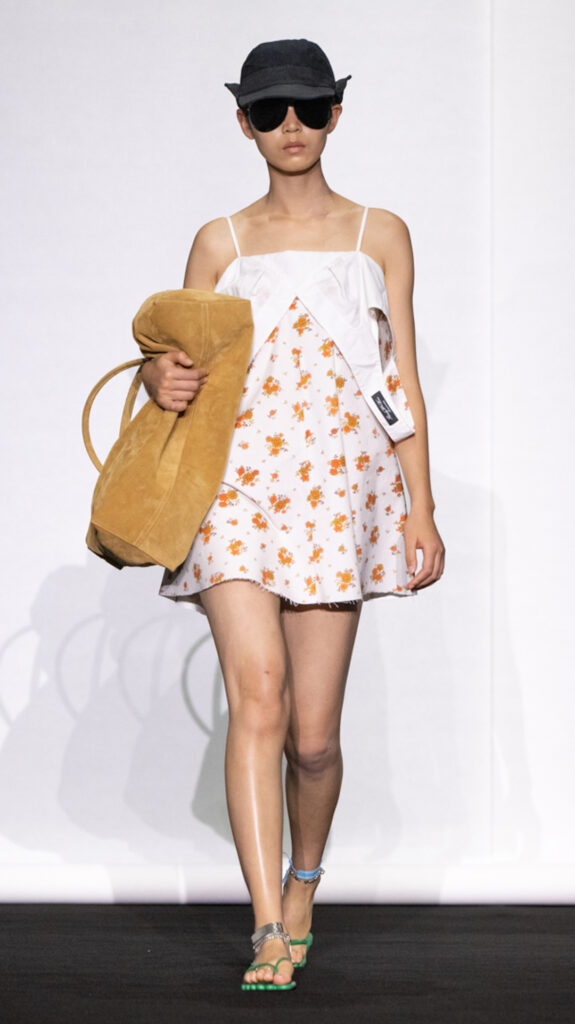
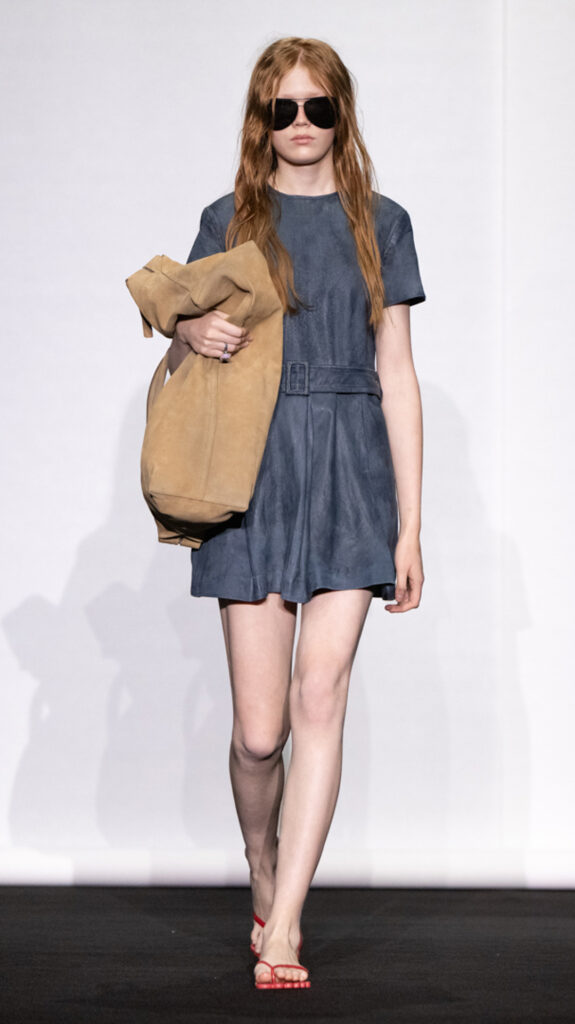
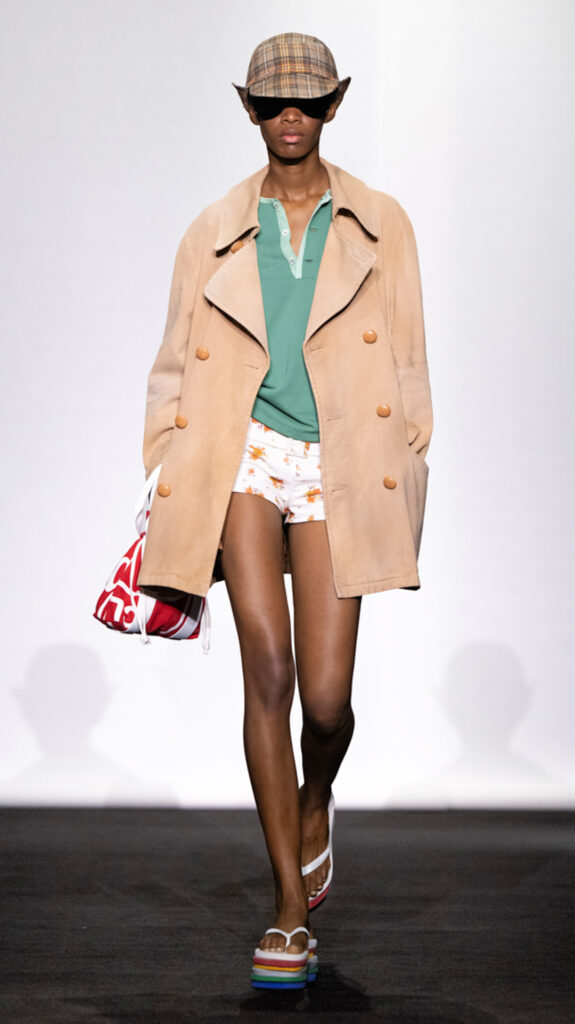
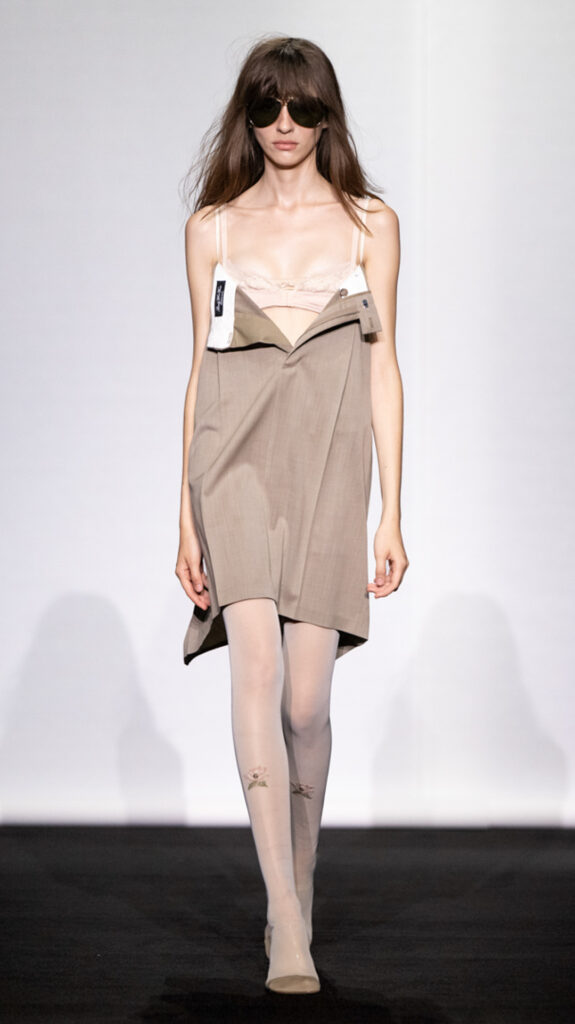
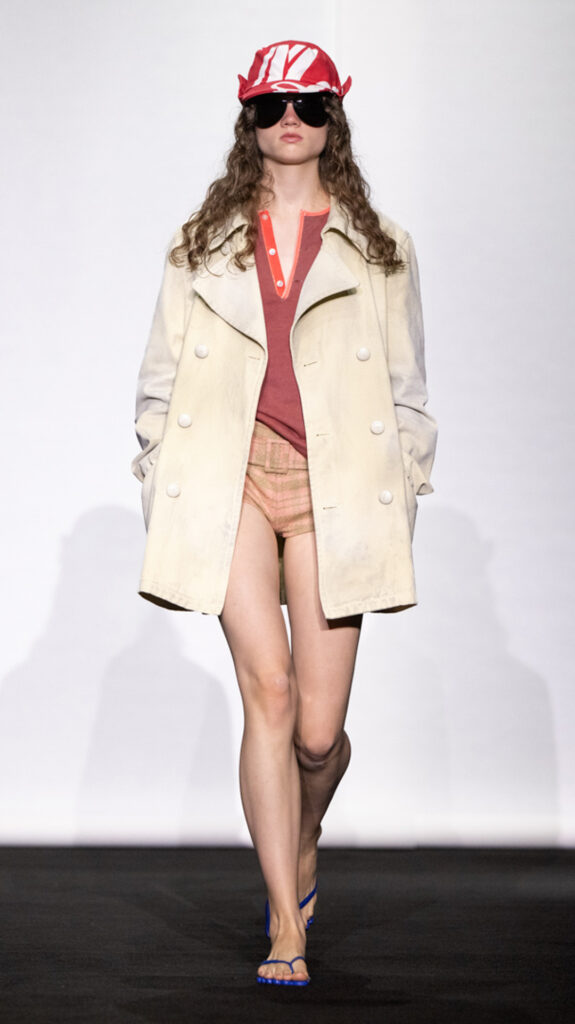
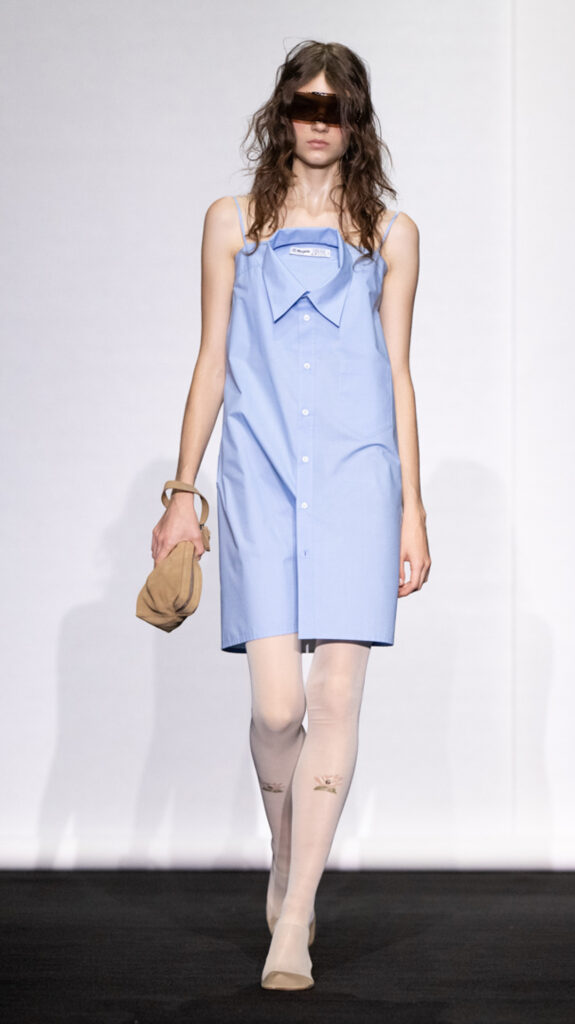
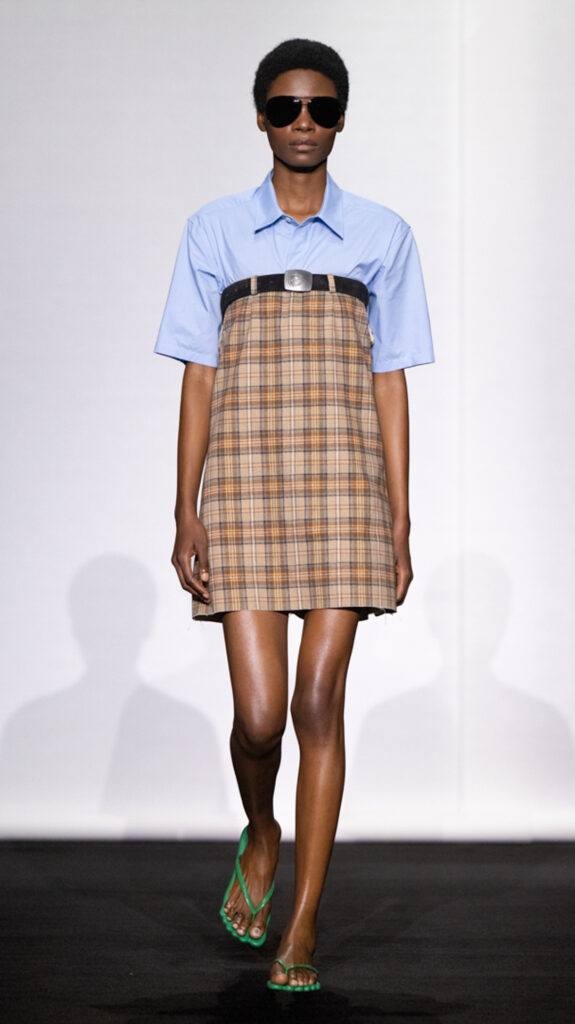
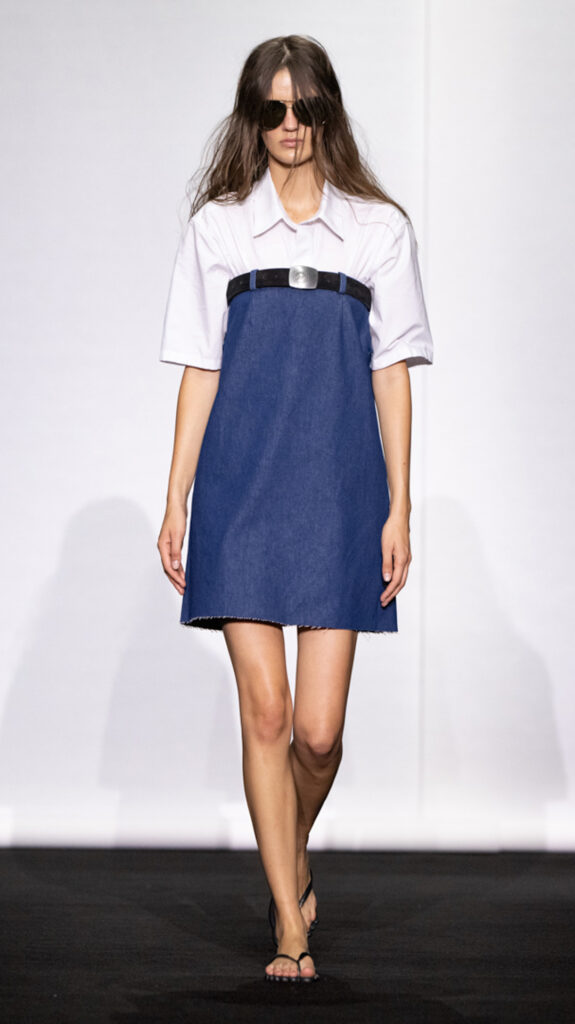
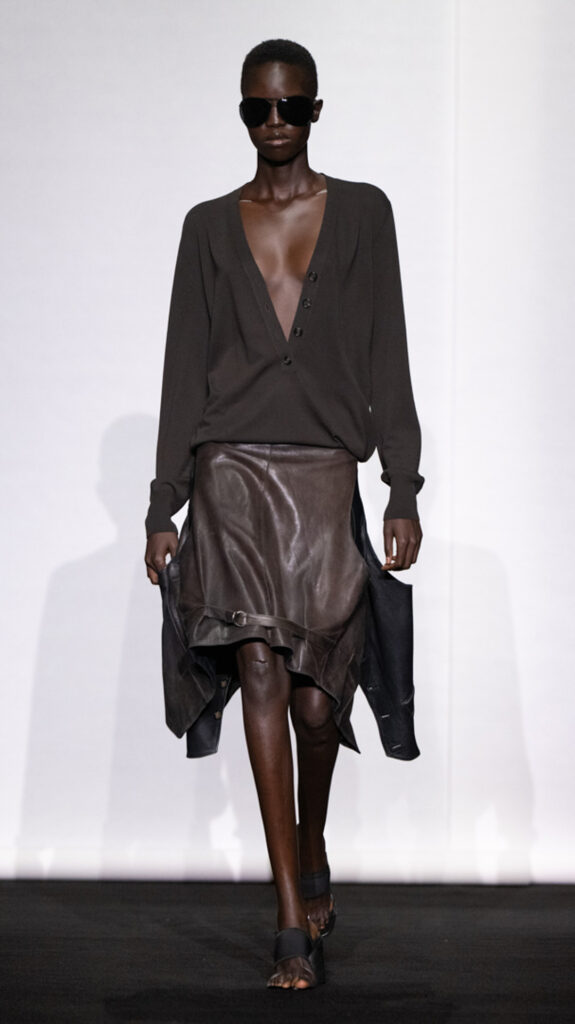
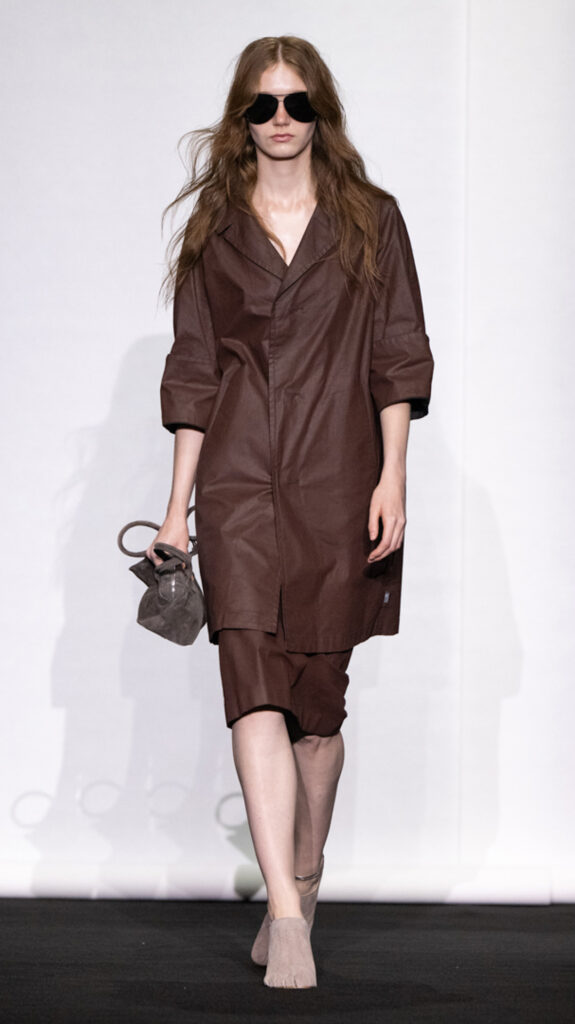
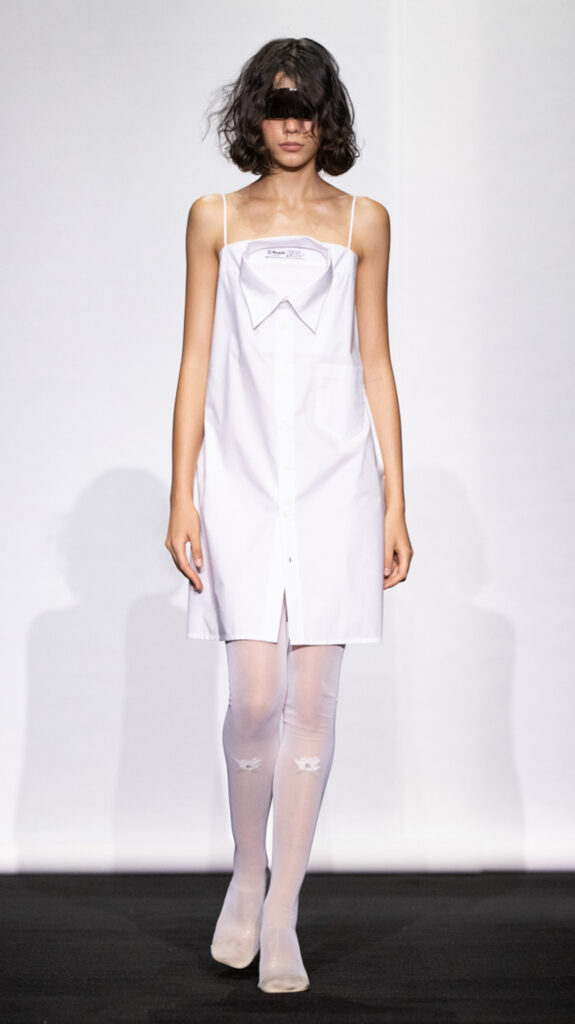
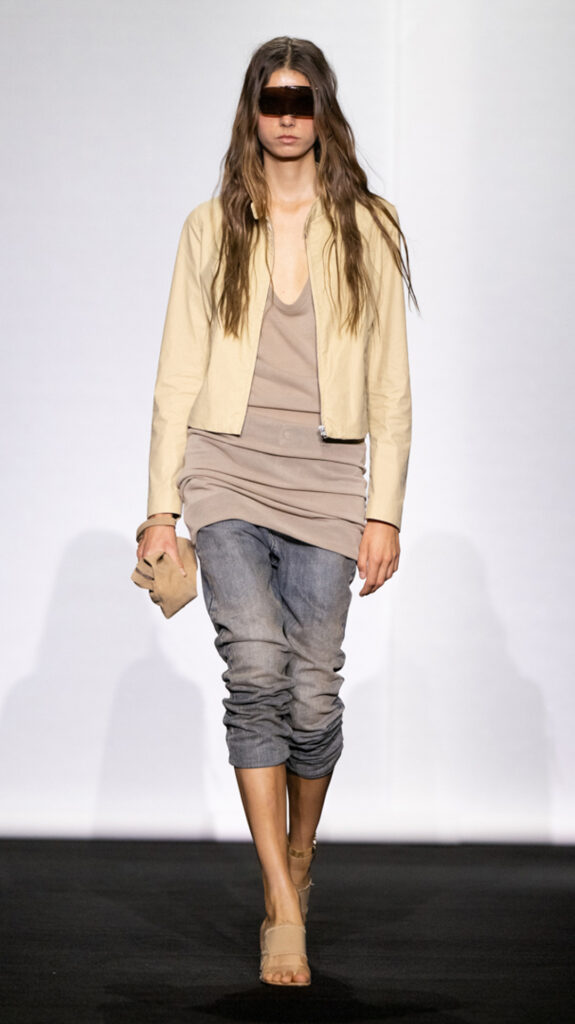
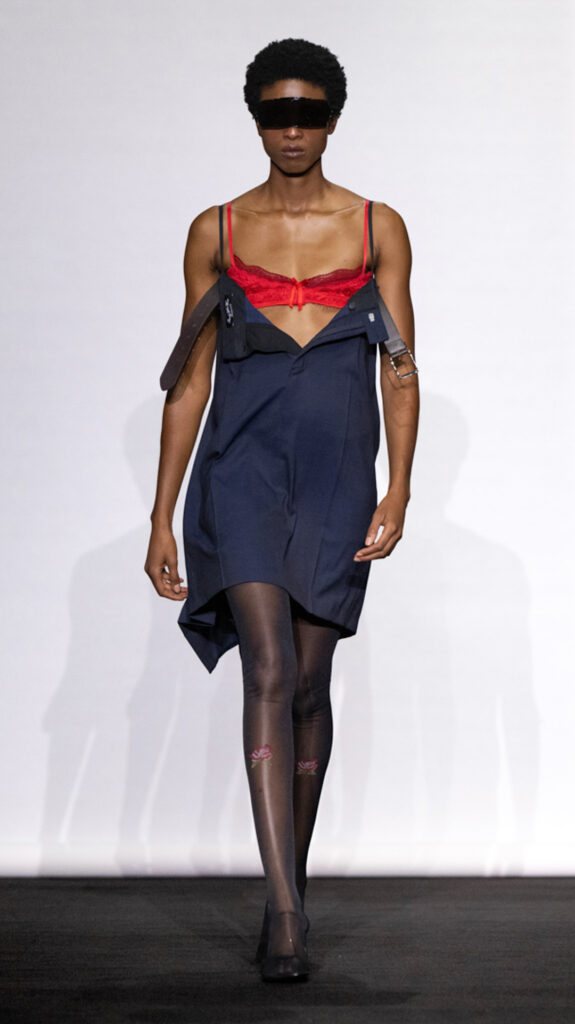
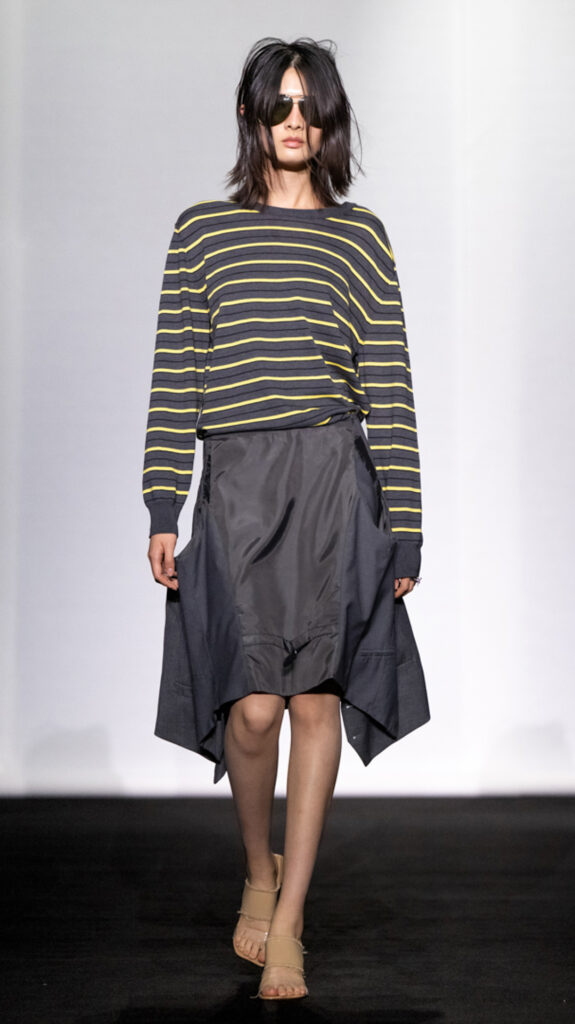
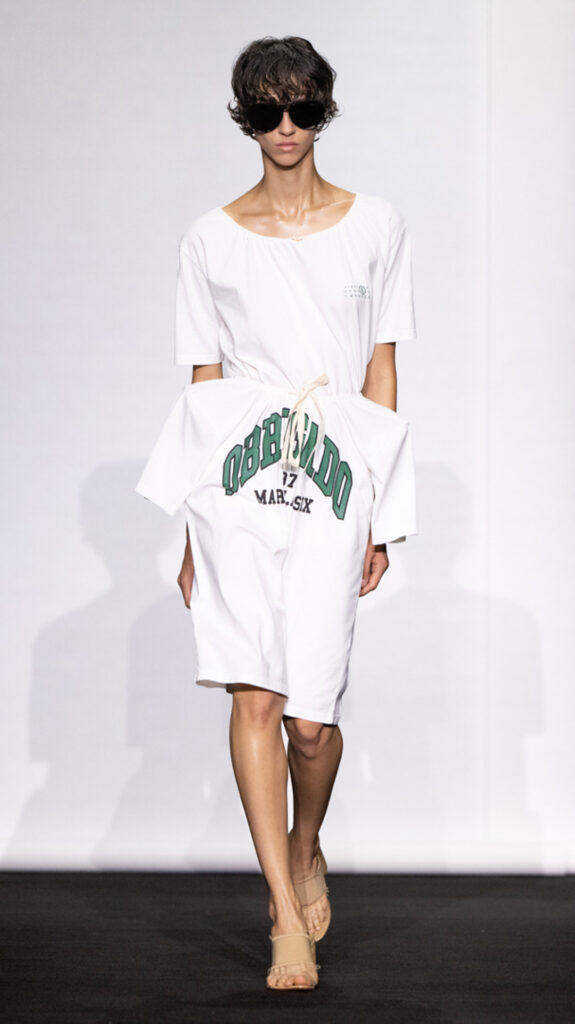
In womenswear, pieces literally travel around the body. A shirt becomes a skirt, its shoulder line now resting on the hips. A V-neck top can be worn as a bottom, or remain a top. A skirt turns into a dress, the waistline raised very high. Pieces are folded, shifted and closed again, their original construction remaining visible. The aim is not to make a shirt stop looking like a shirt, but to see what else it can do. At times, two versions of the same garment are joined to form a single look; elsewhere, an archetype simply moves to another part of the body, with panels added where needed. The enlarged disproportions of doll clothes offer another starting point, with simplified fastenings and silhouettes that appear shrunken.
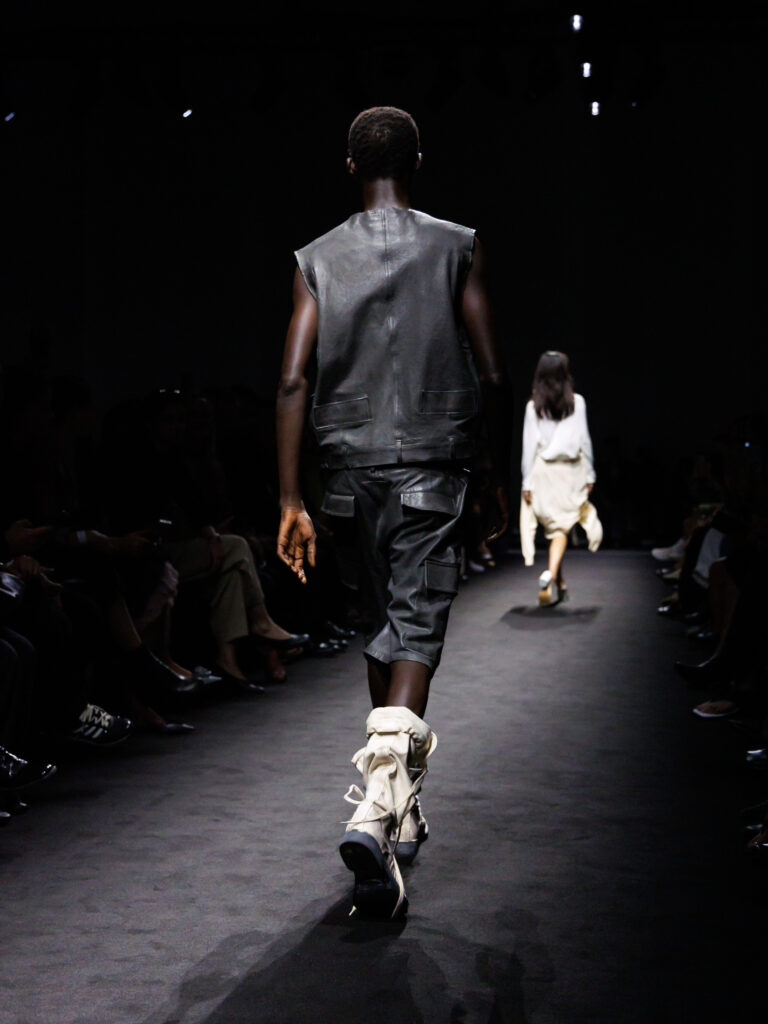
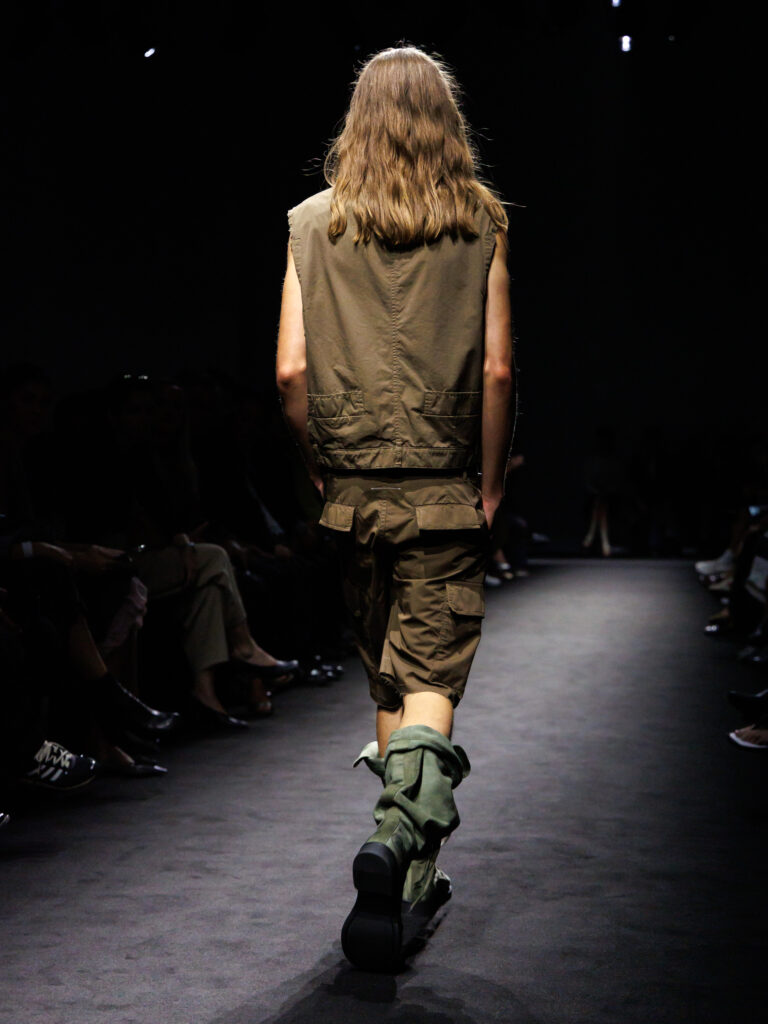
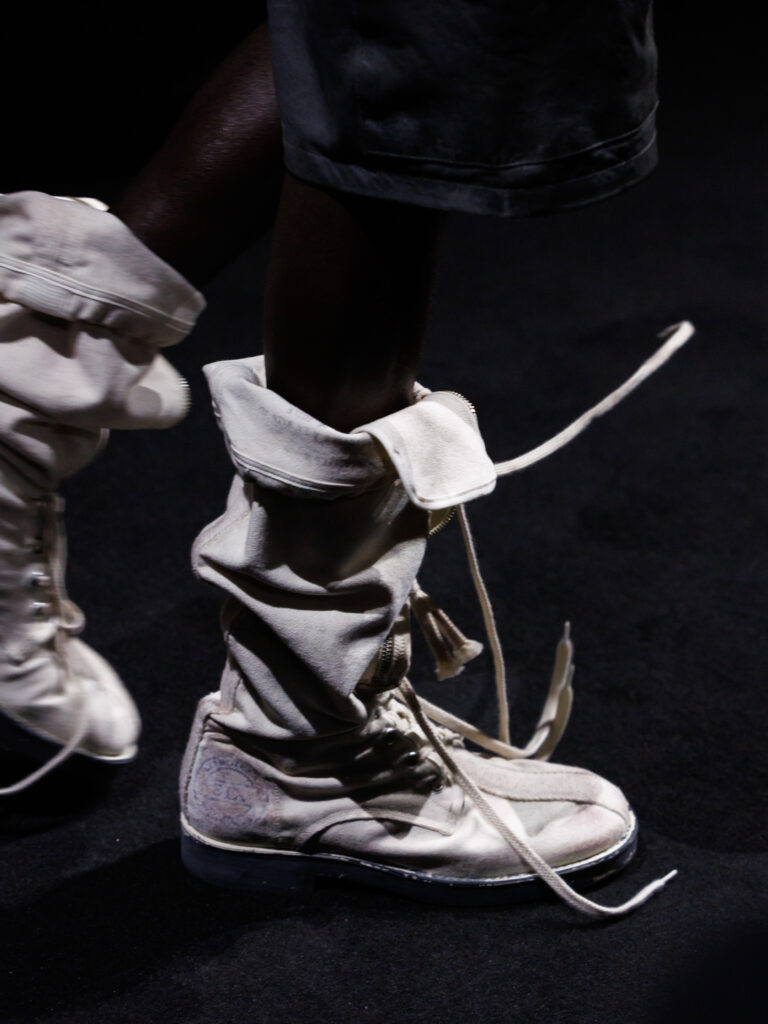
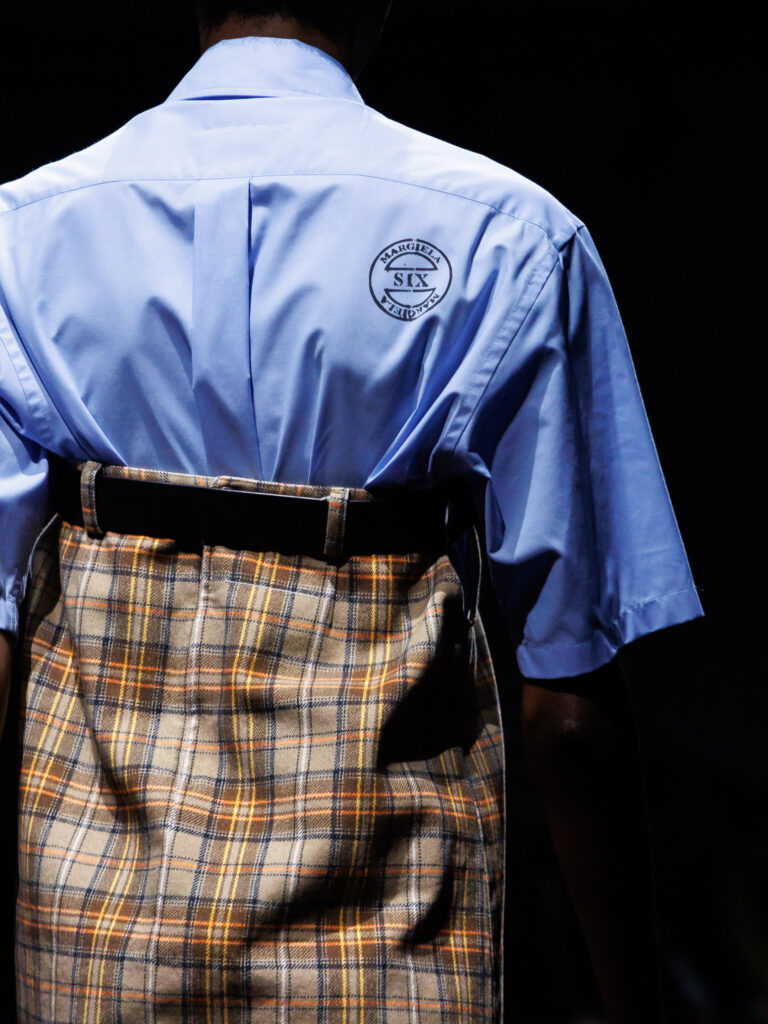
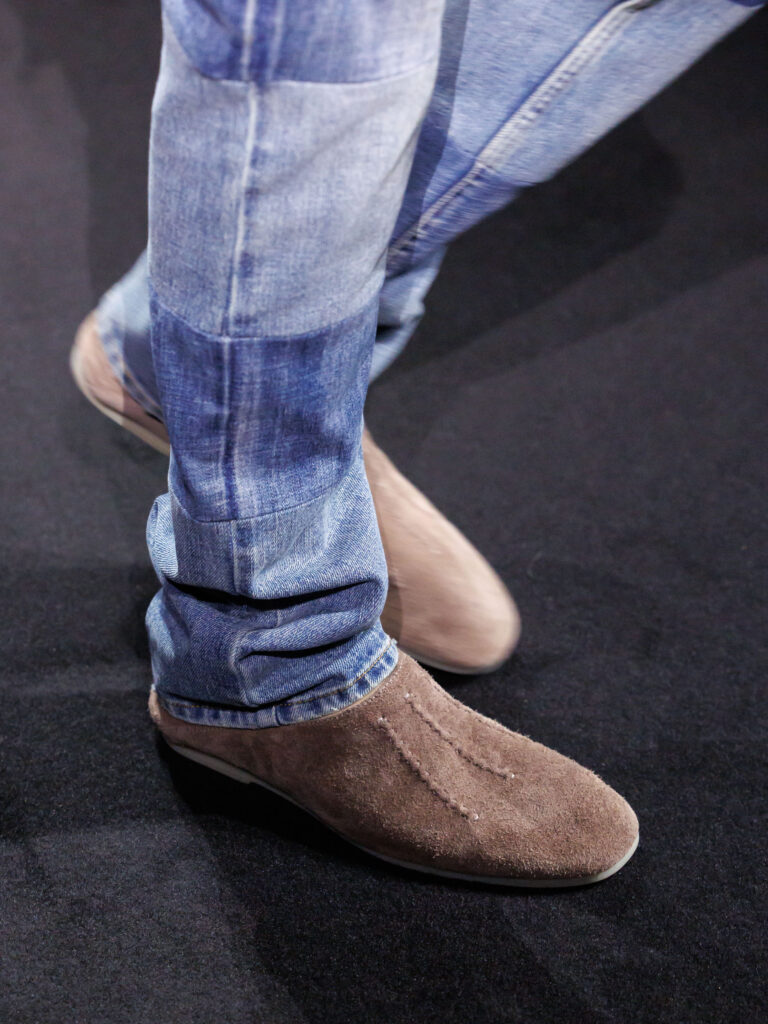
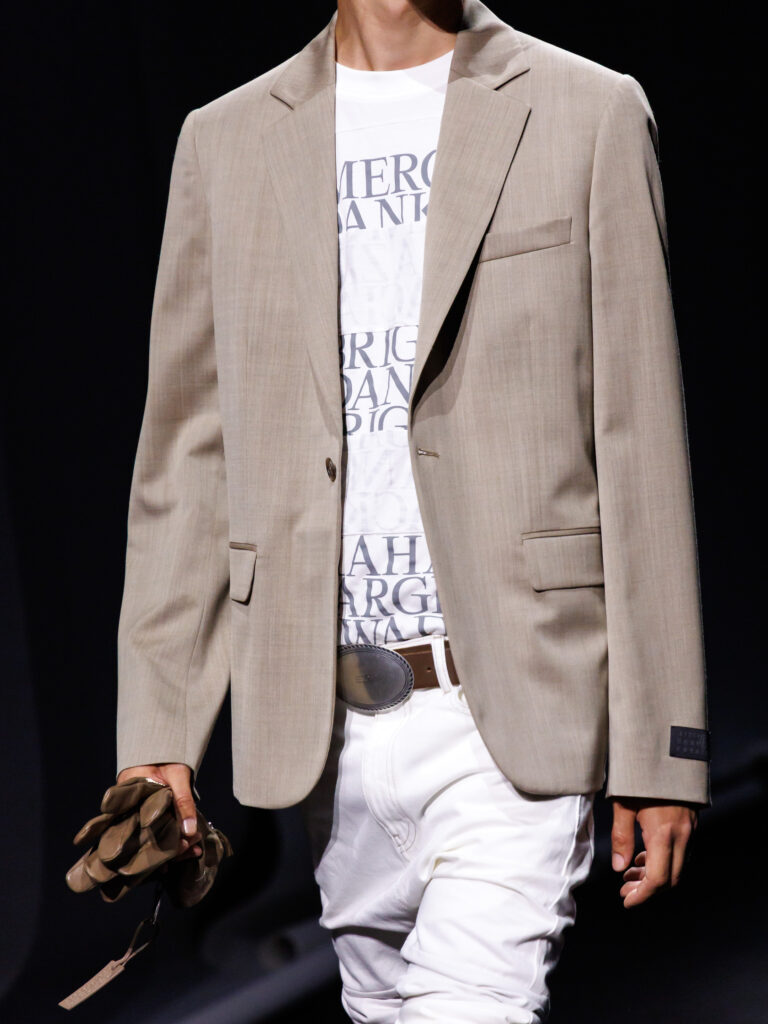
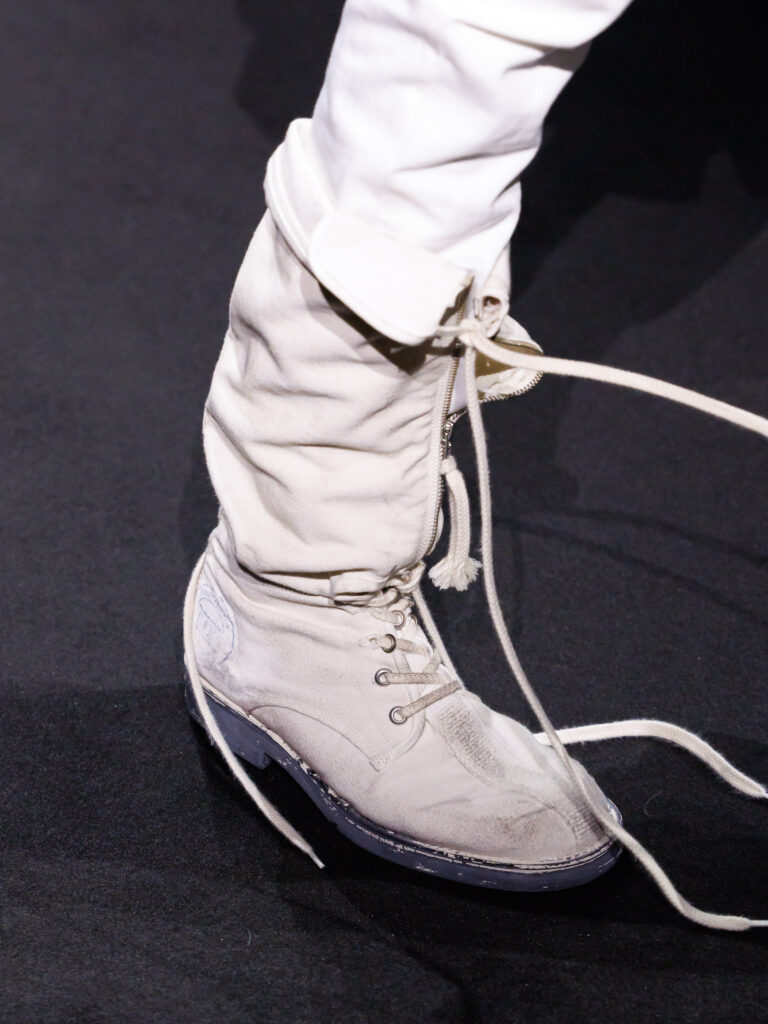
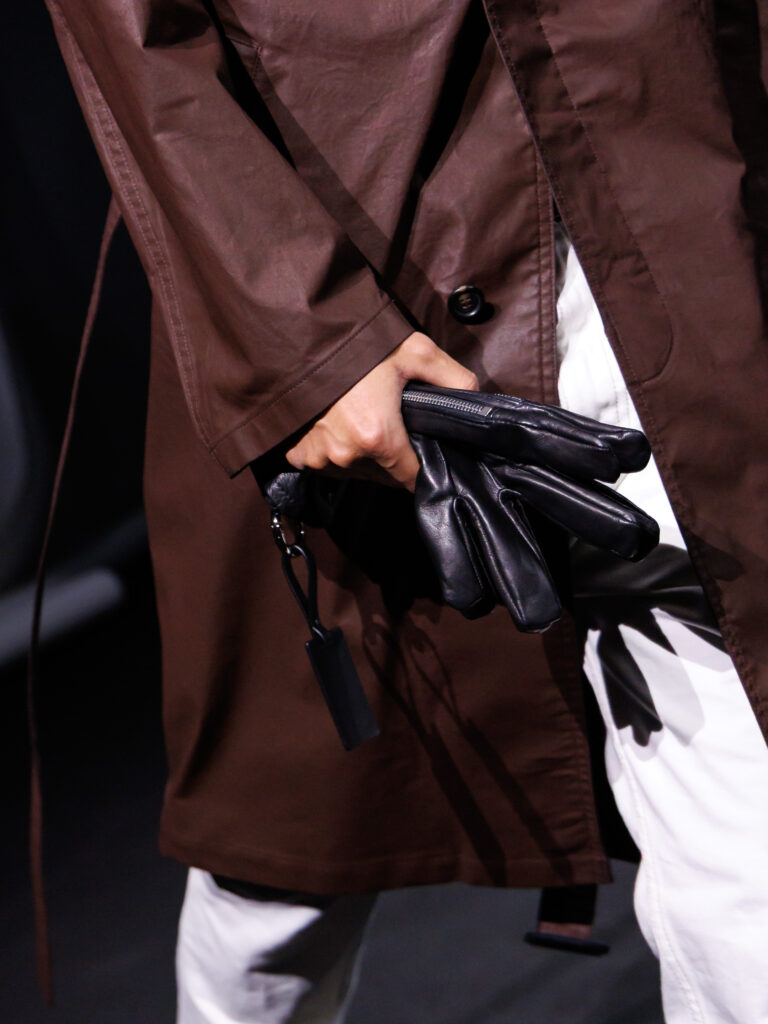
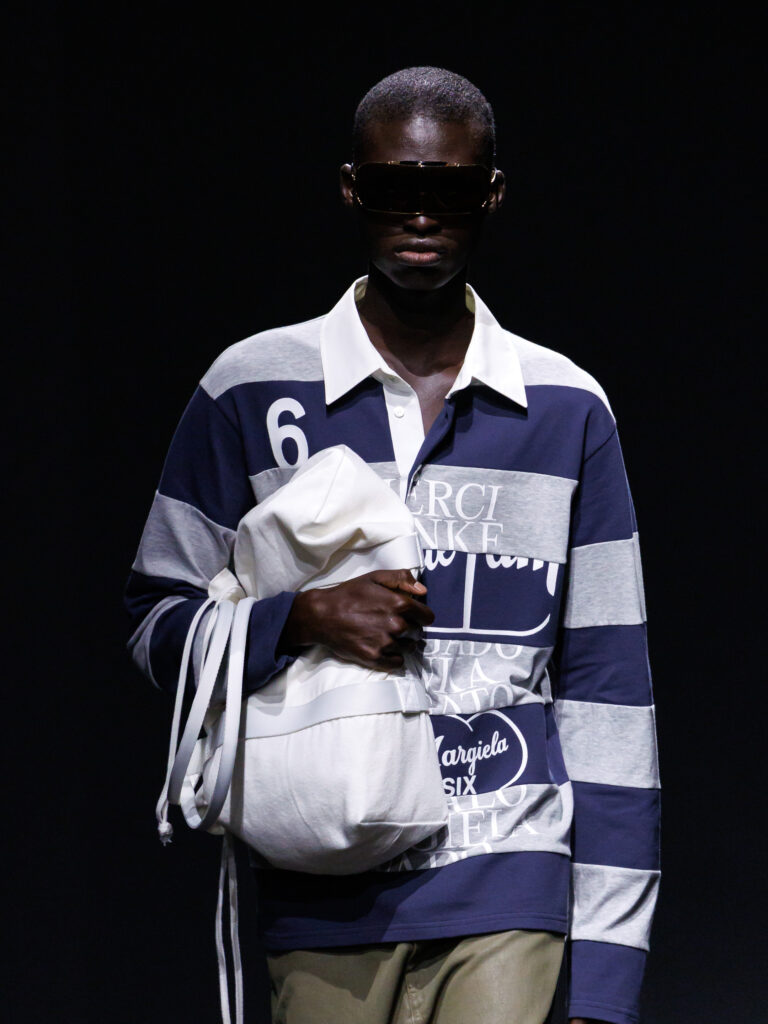
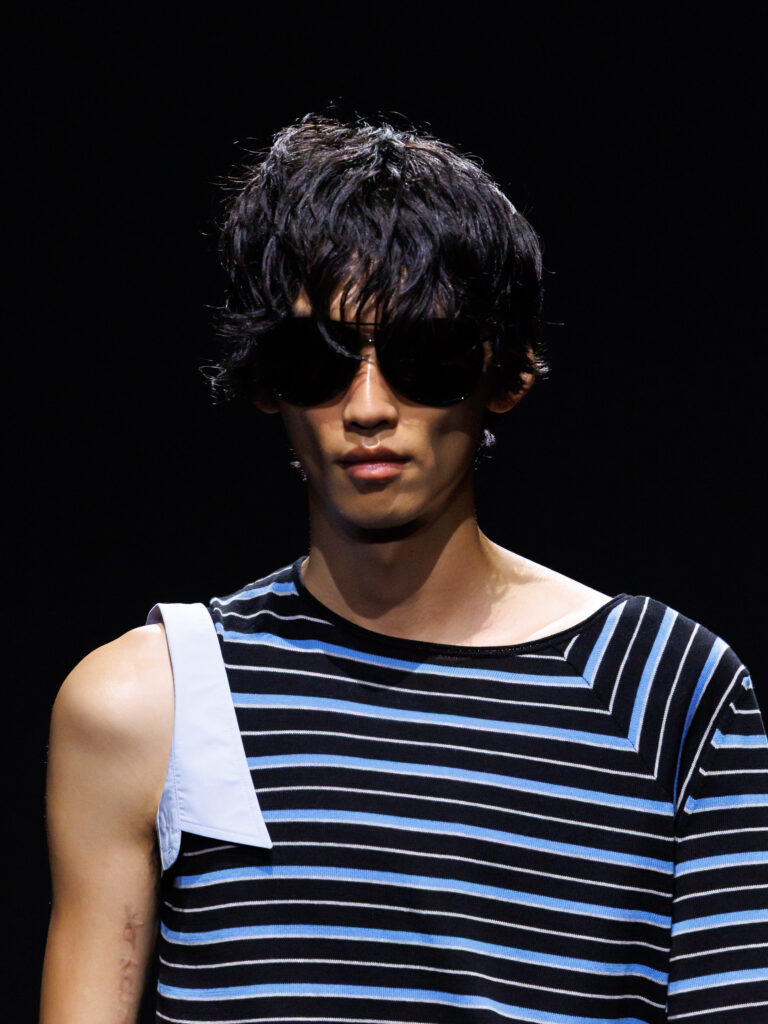
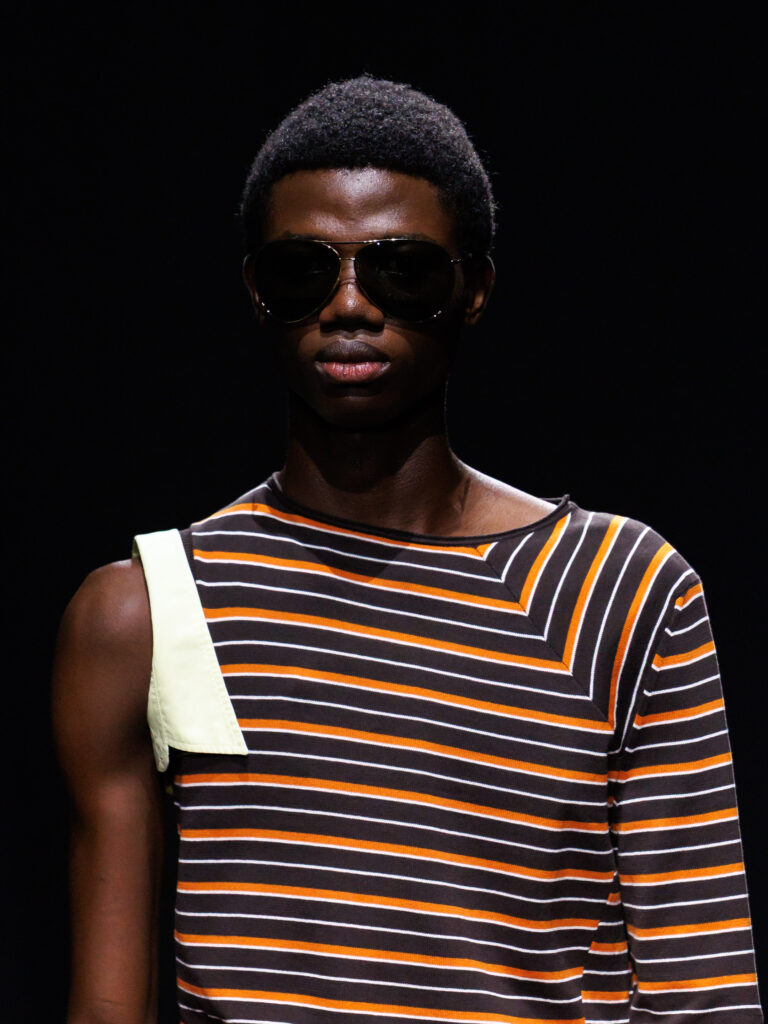
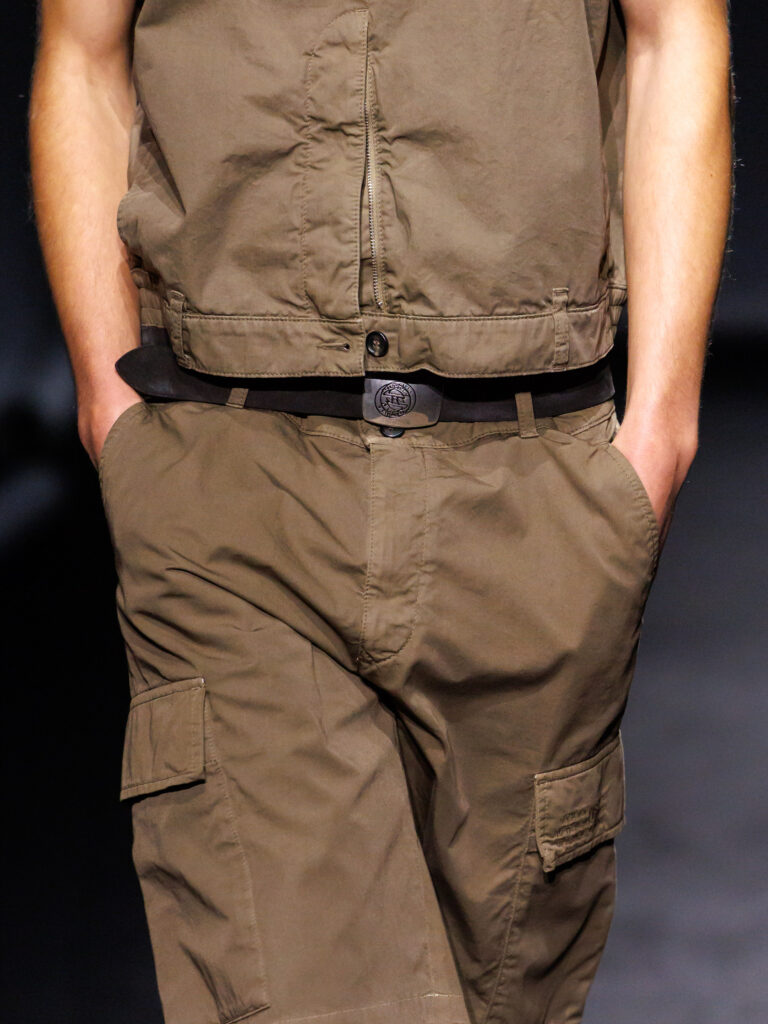
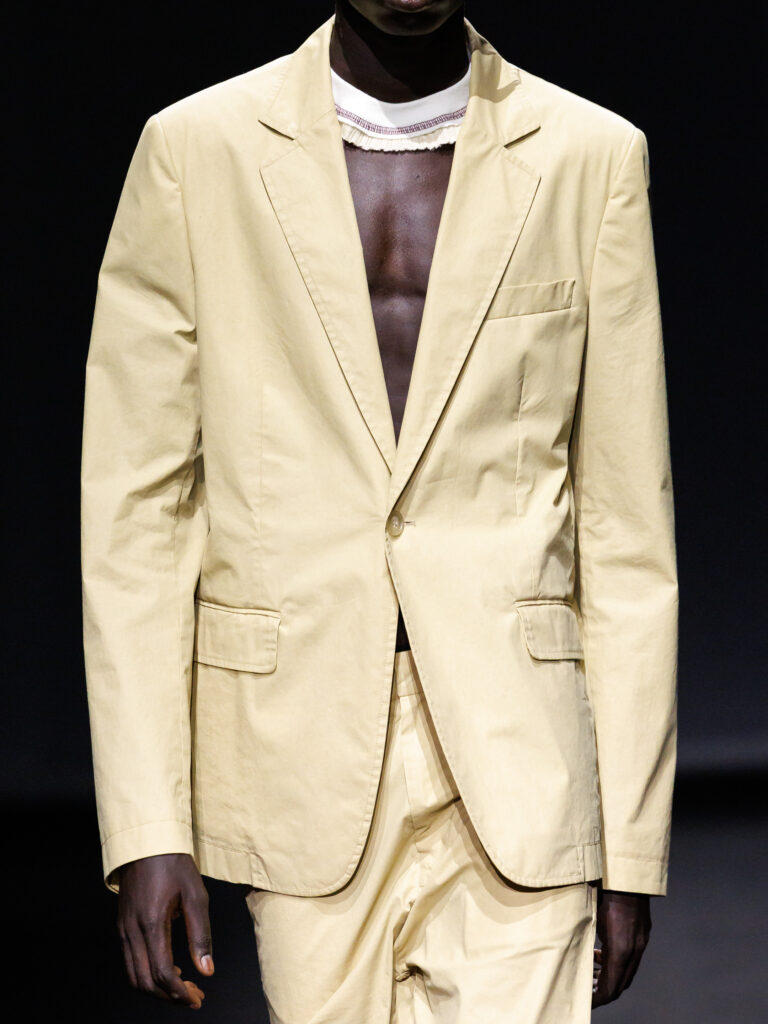
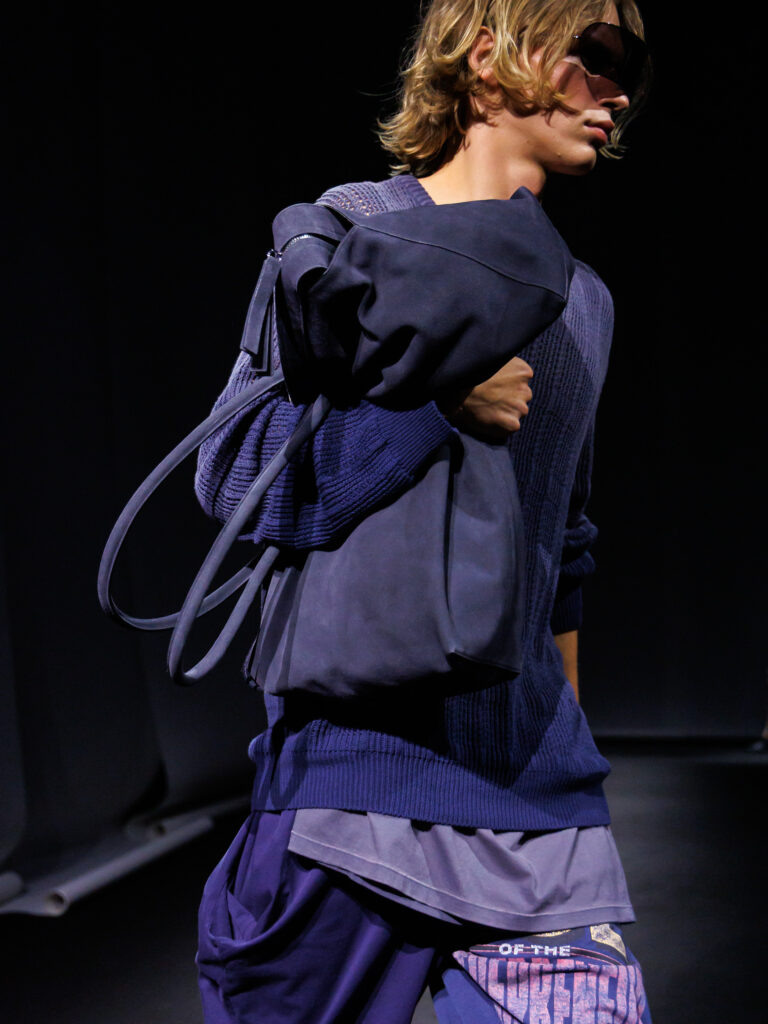
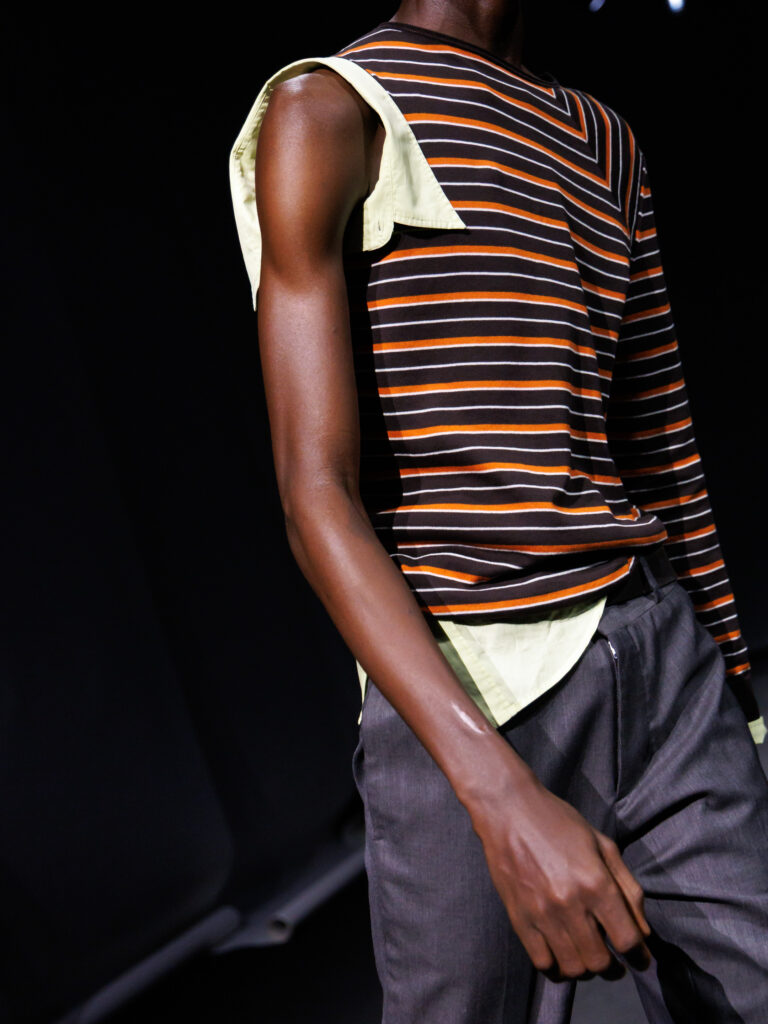
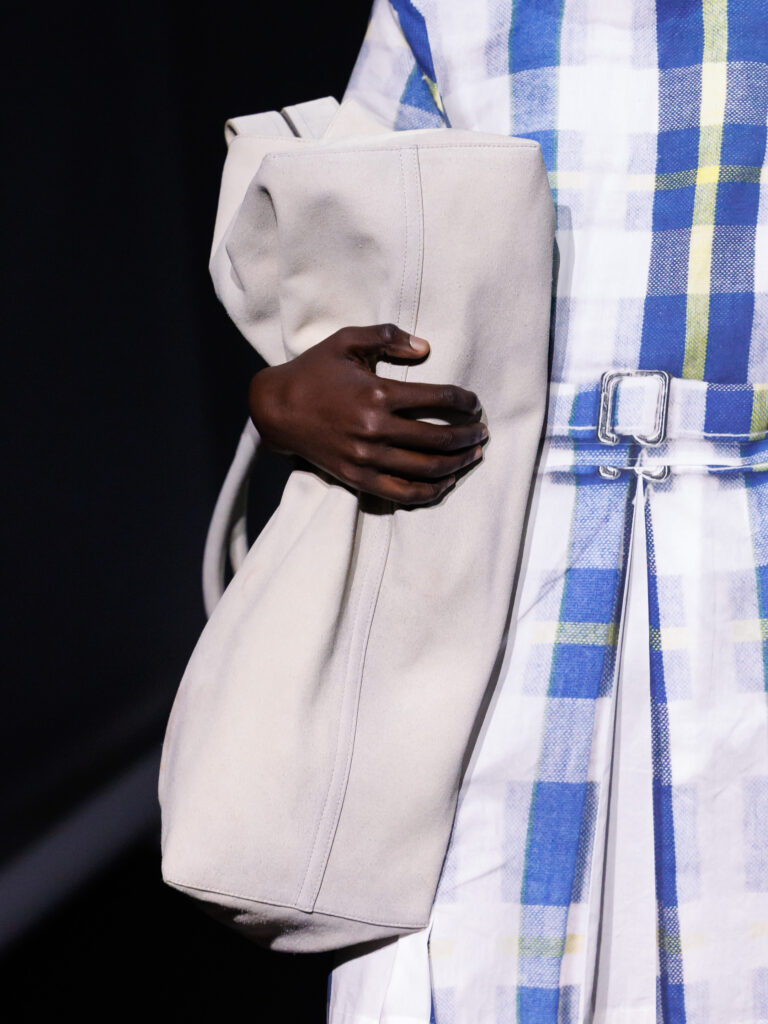
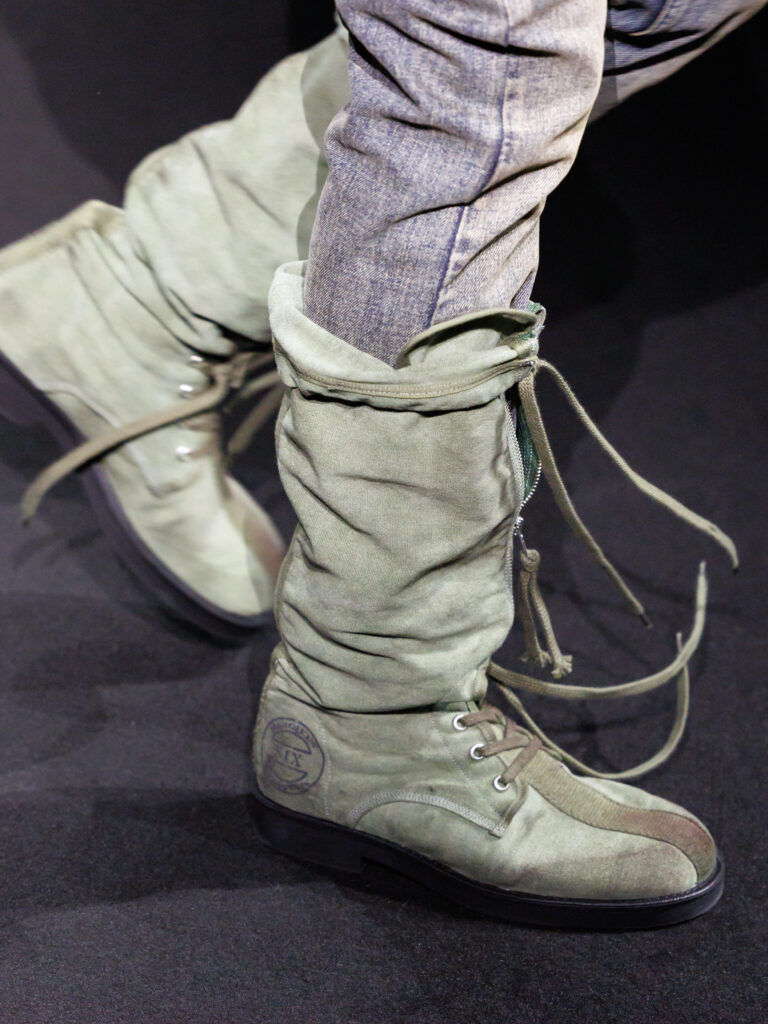
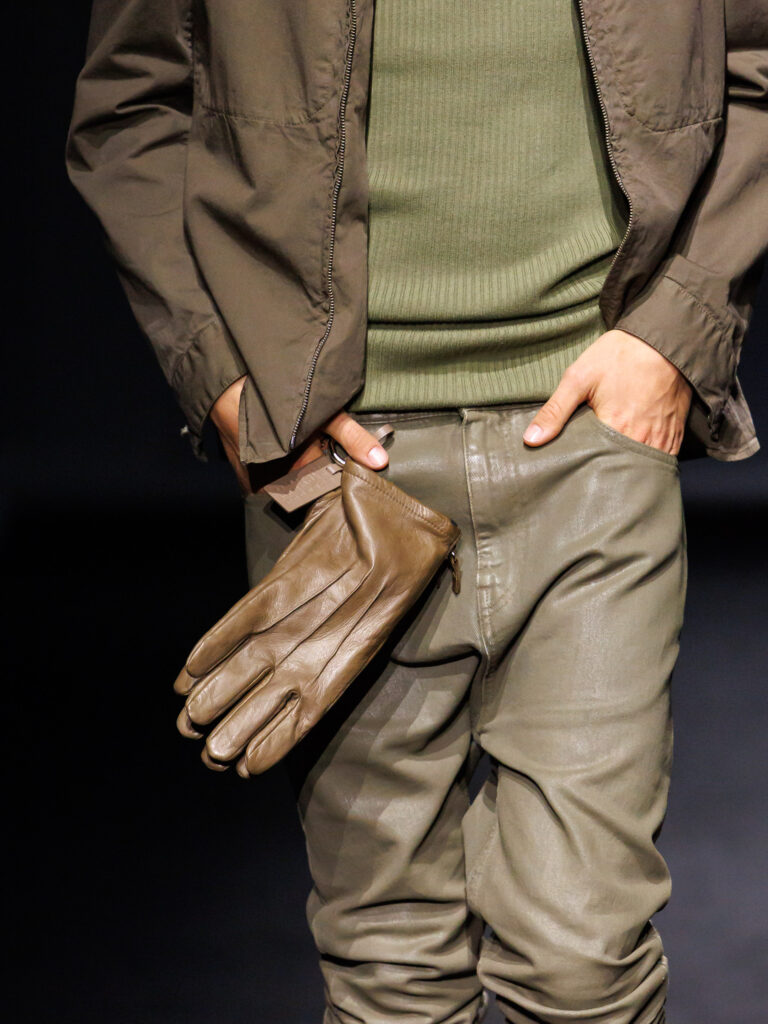
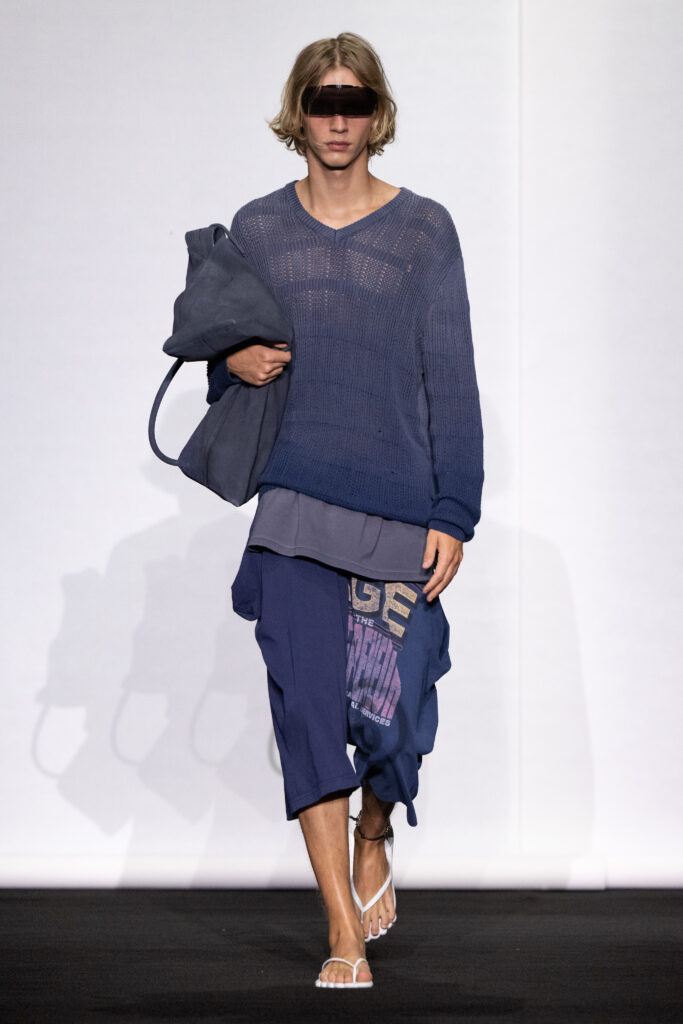
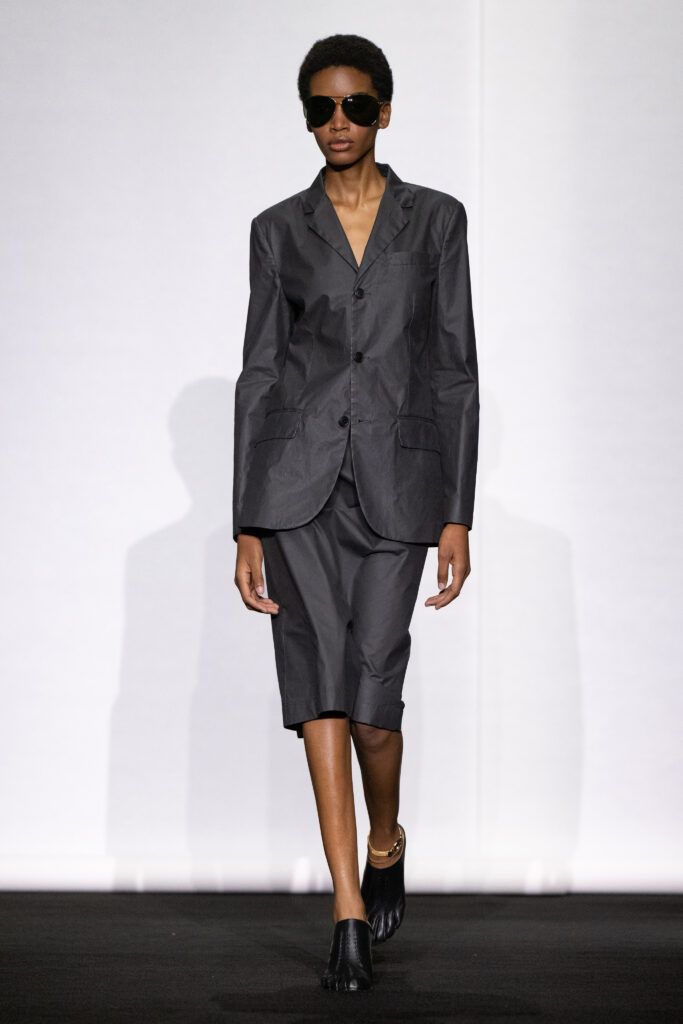
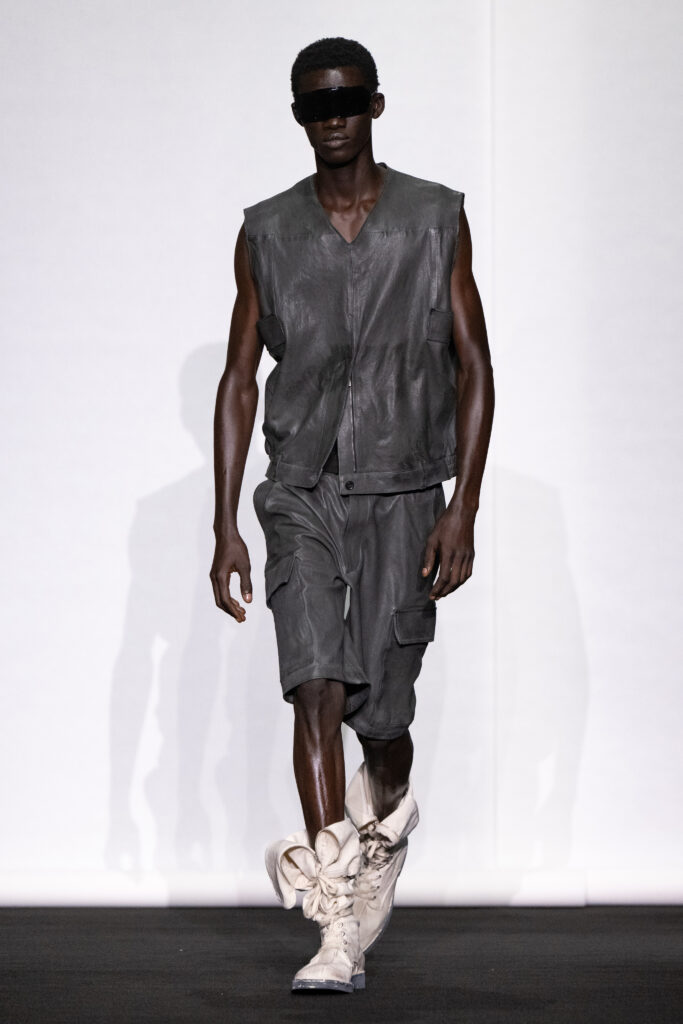
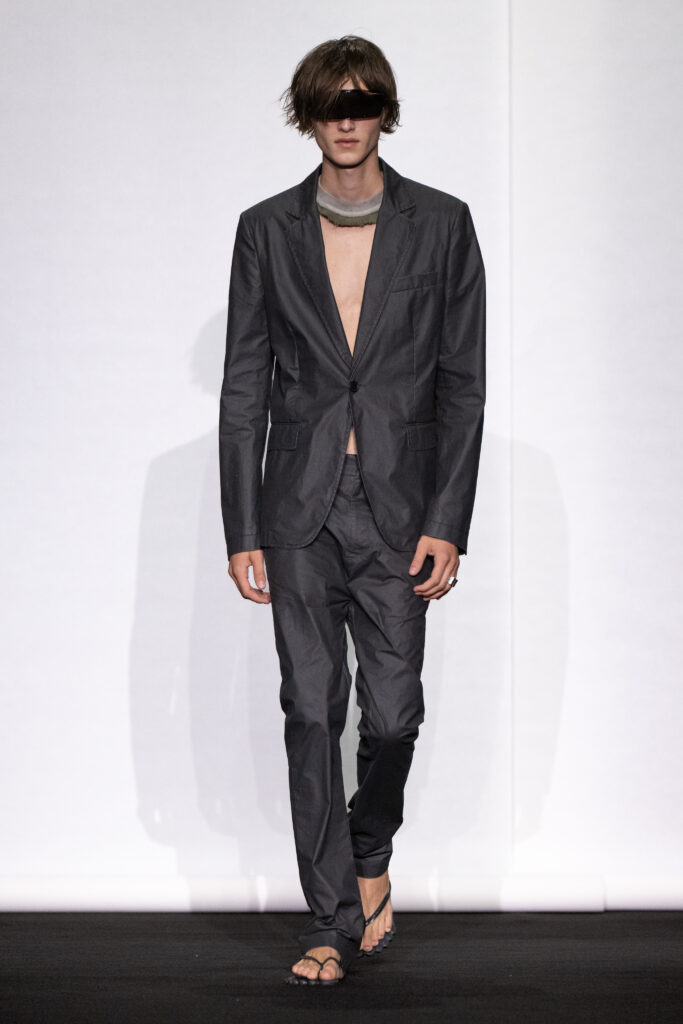
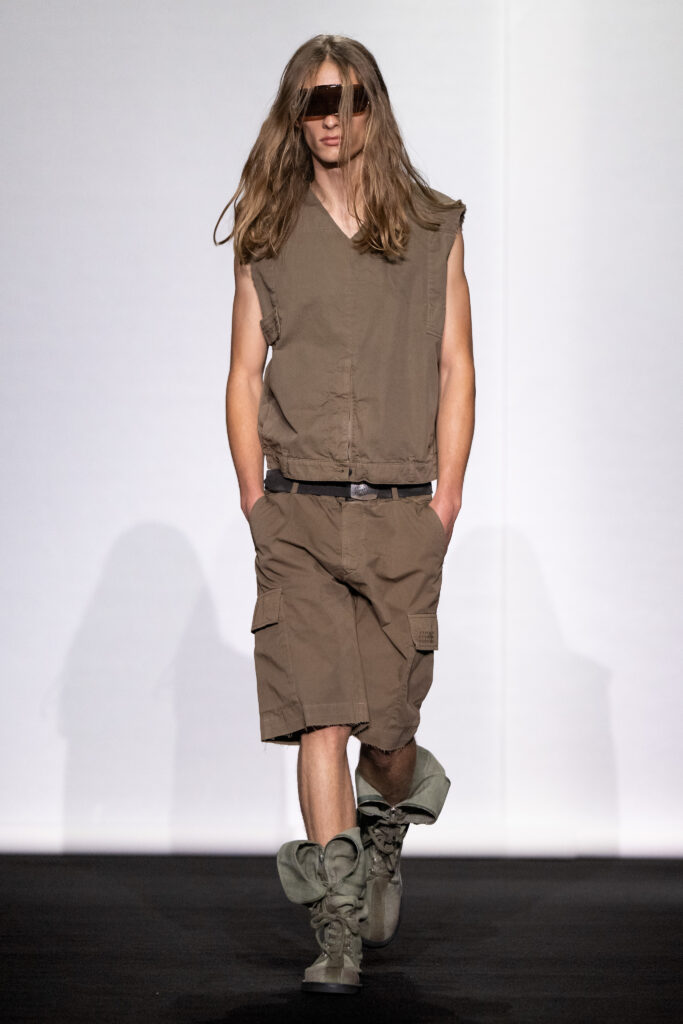
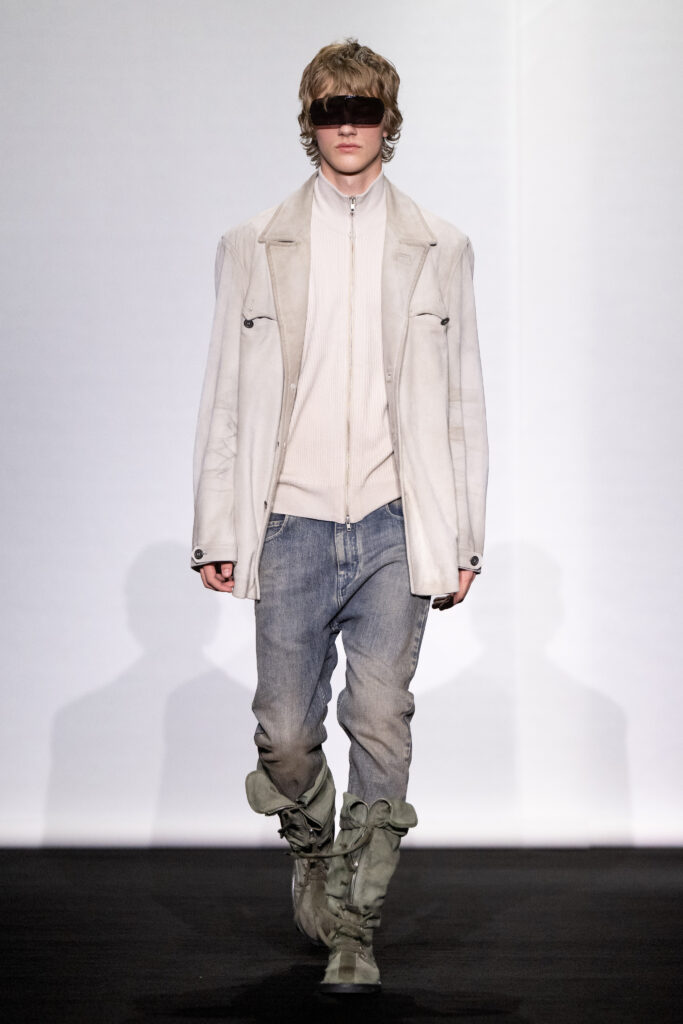
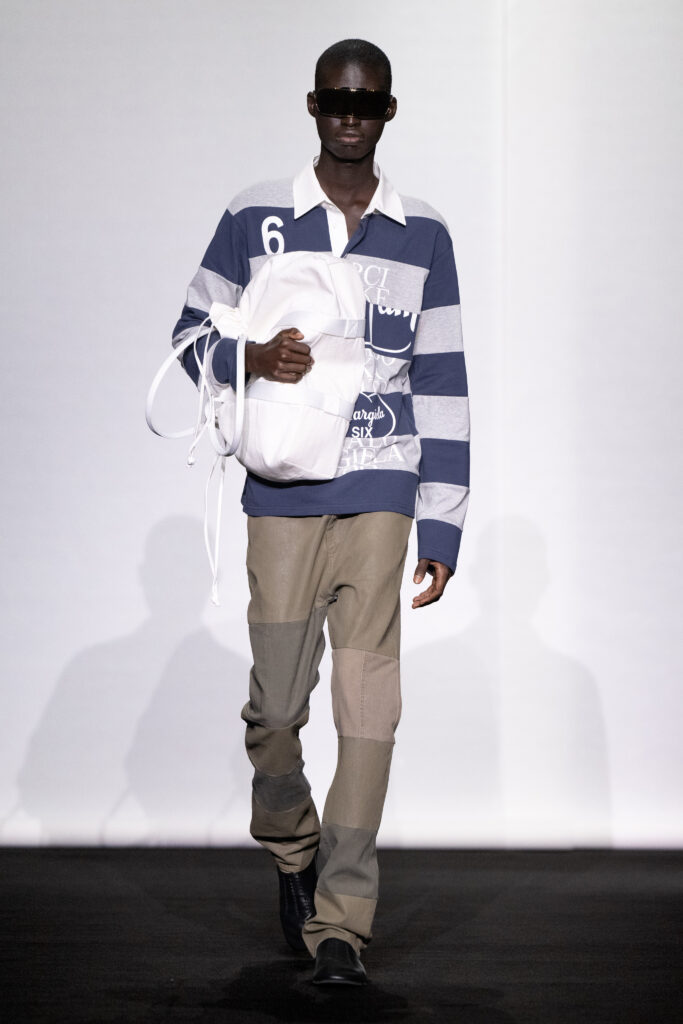
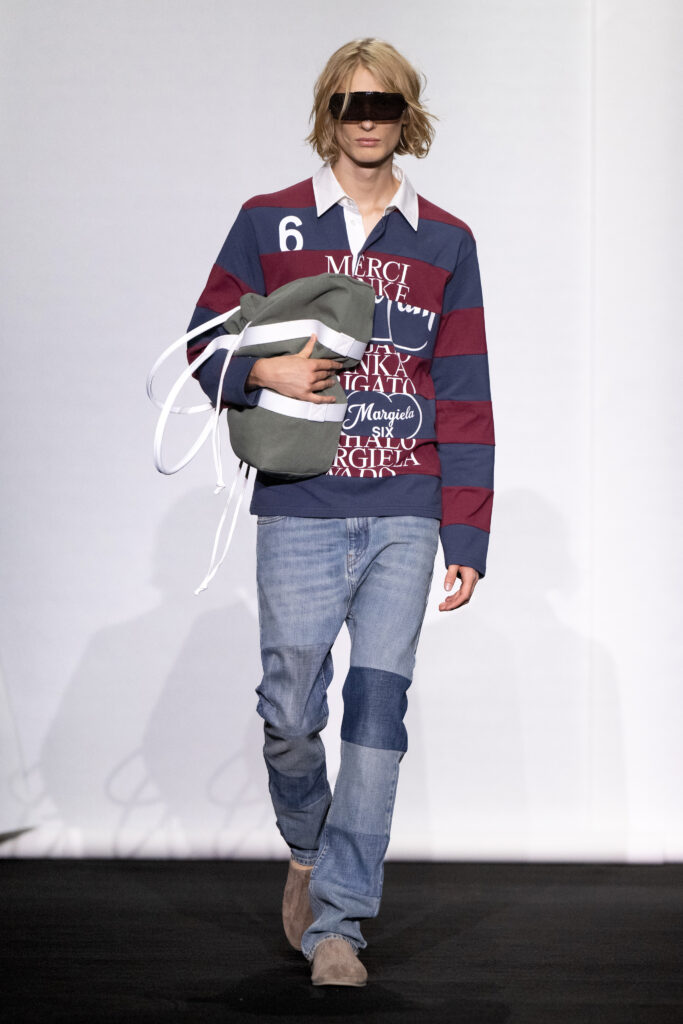
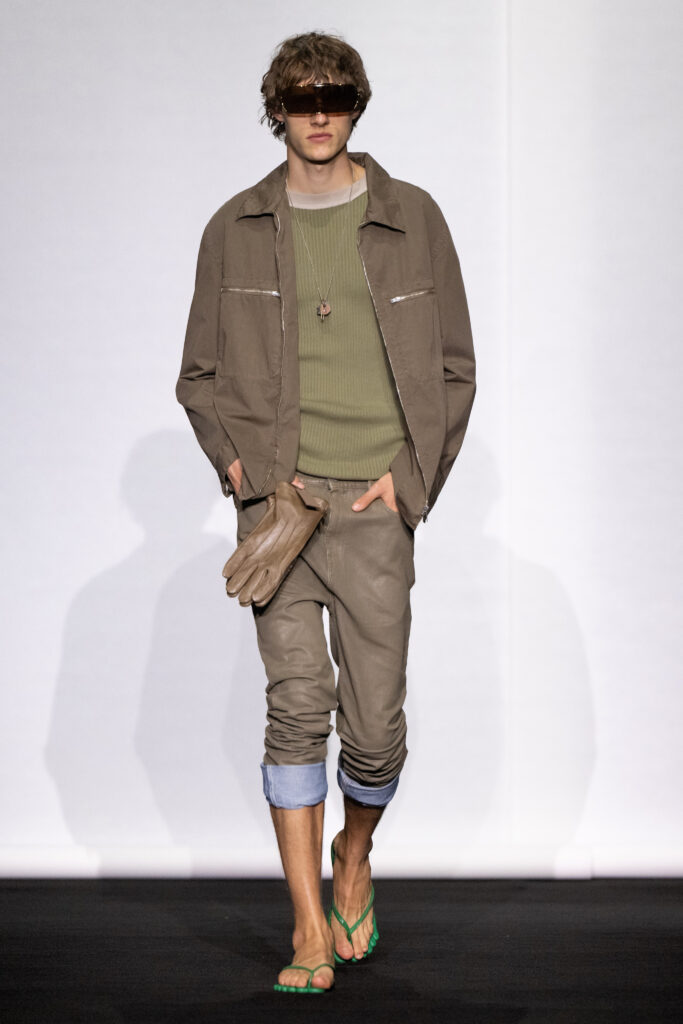
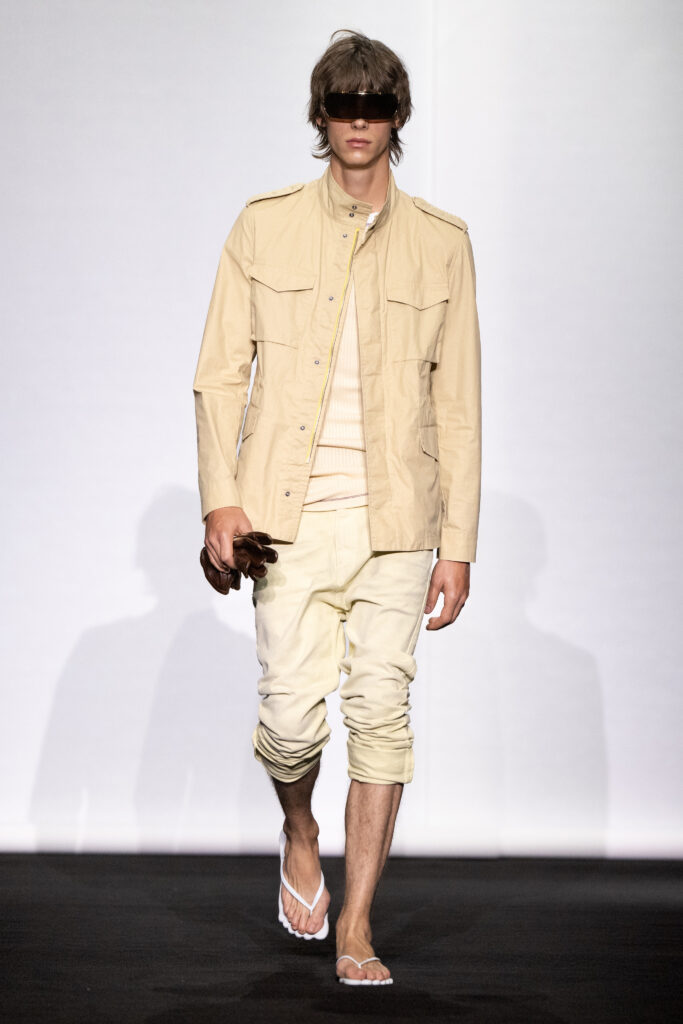
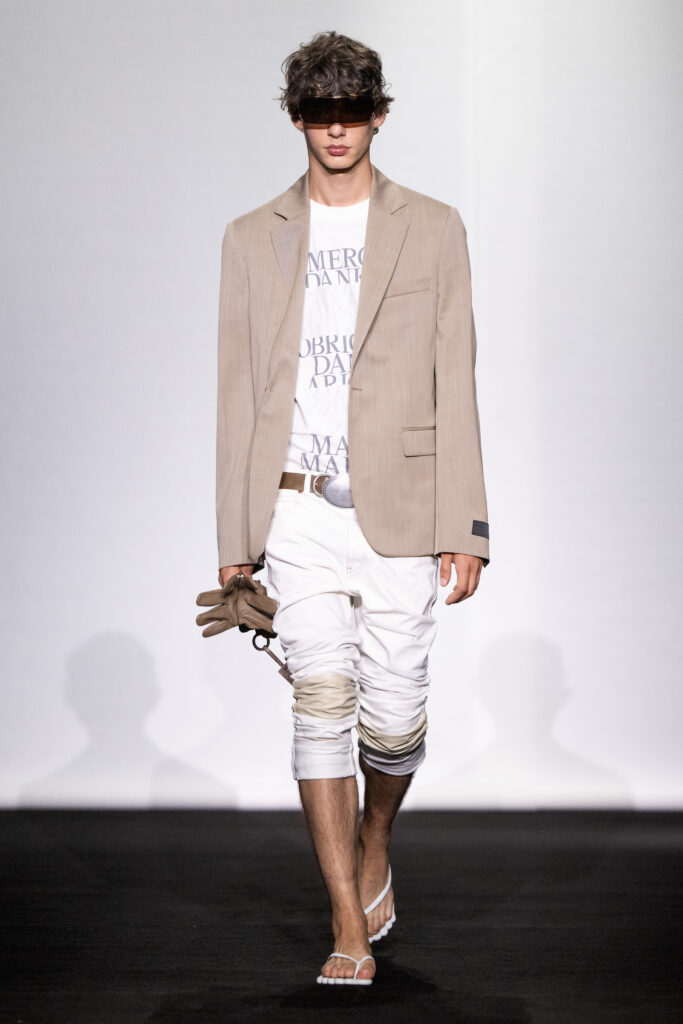
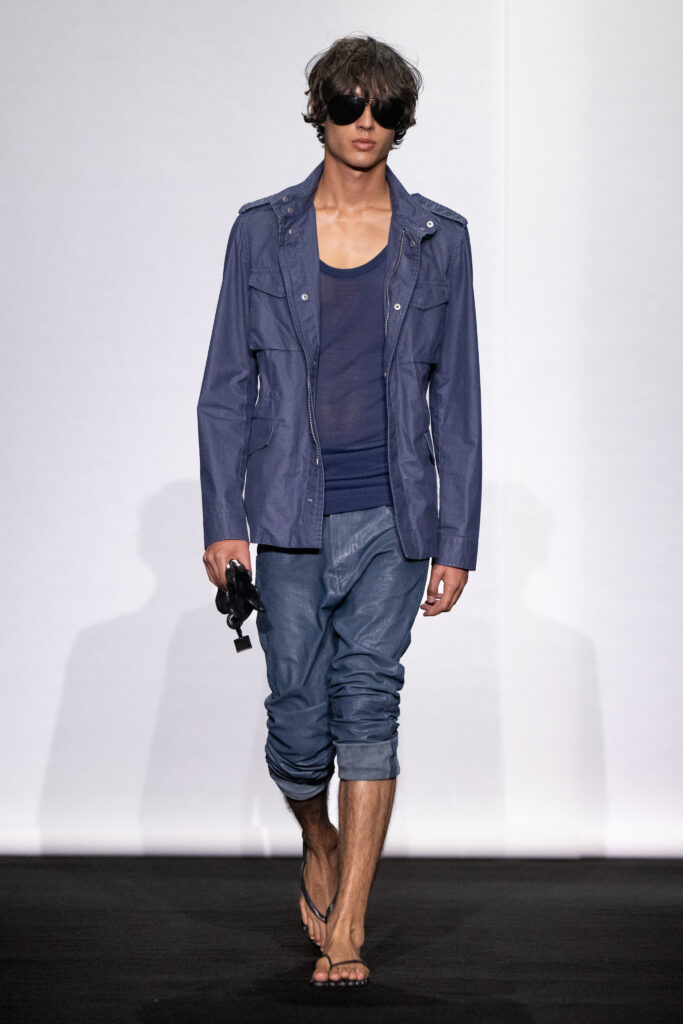
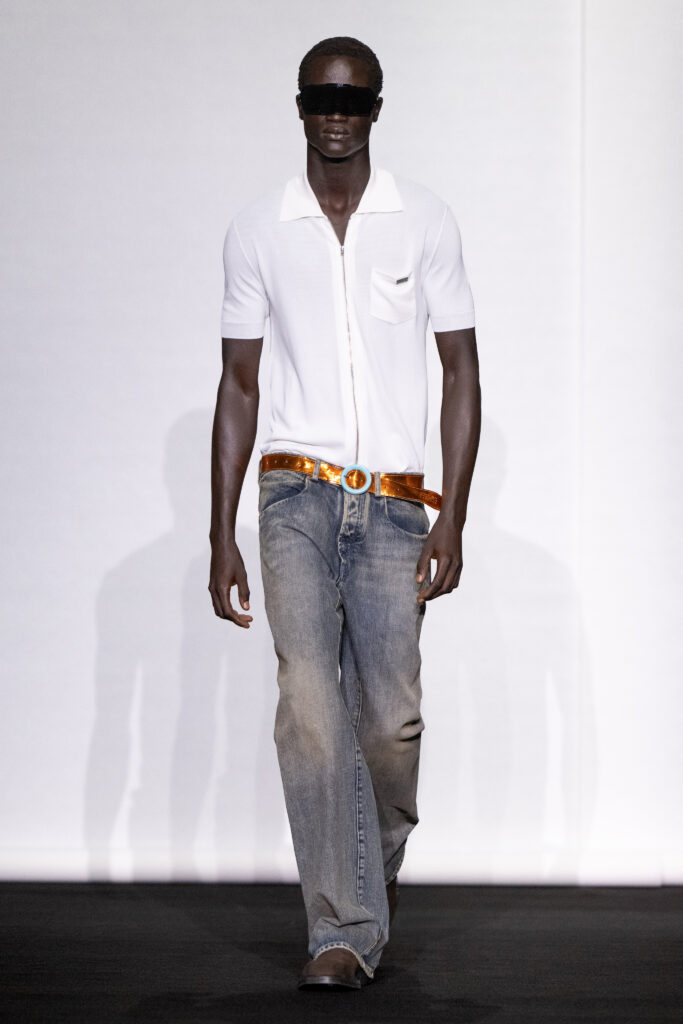
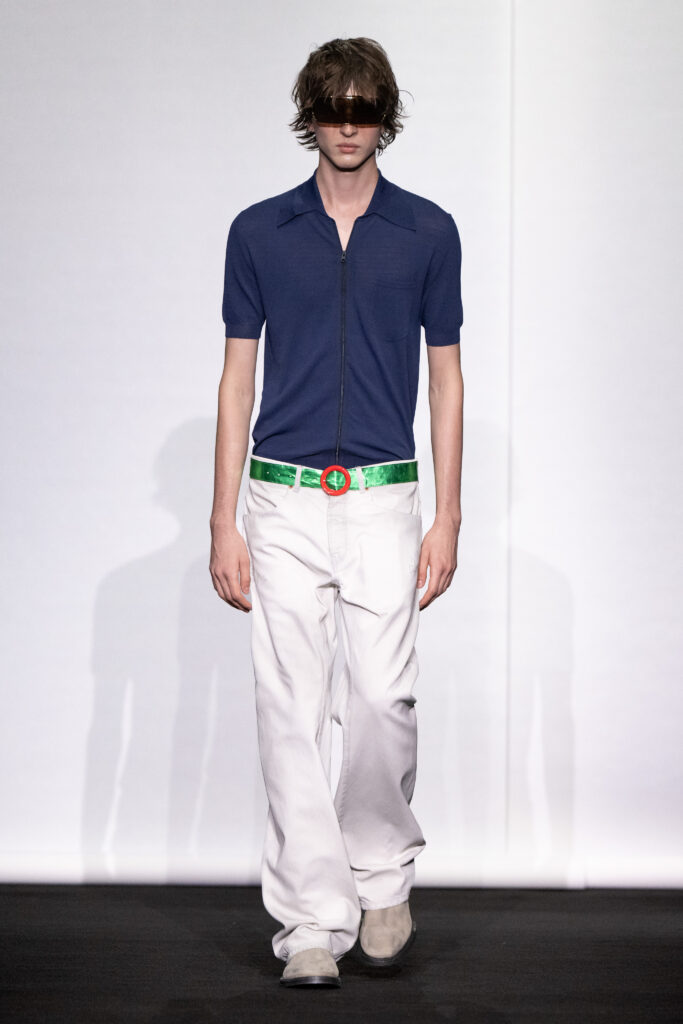
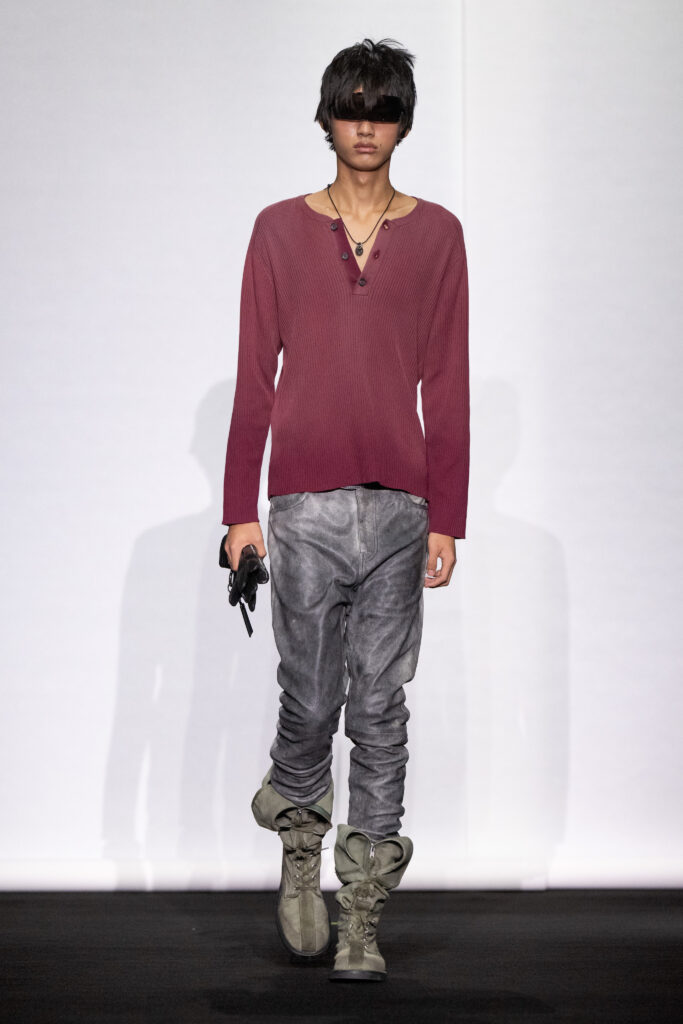
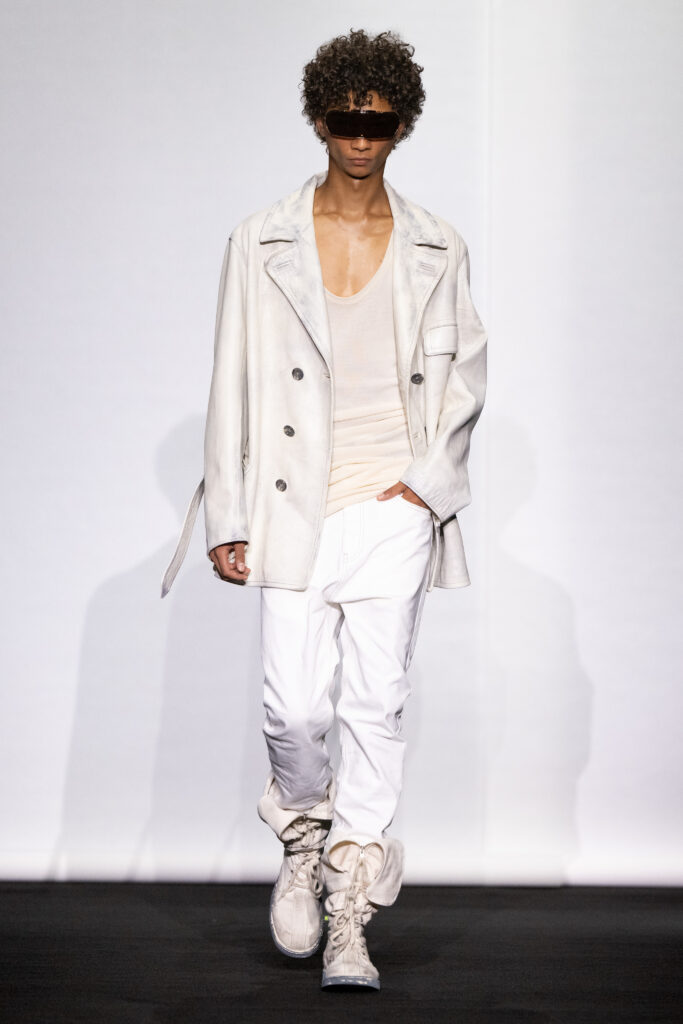
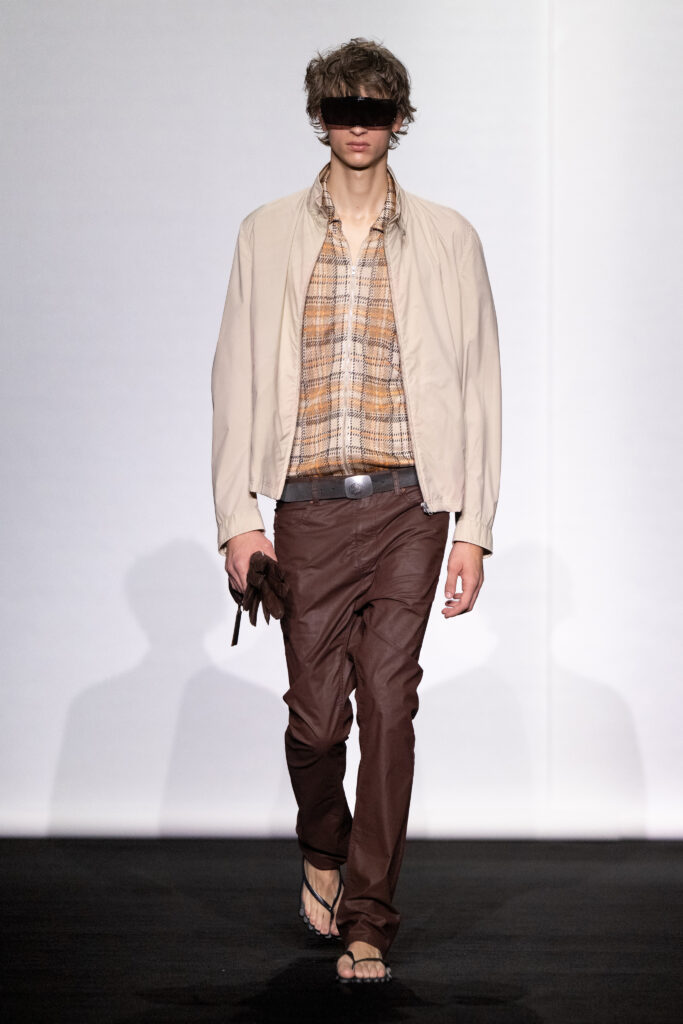
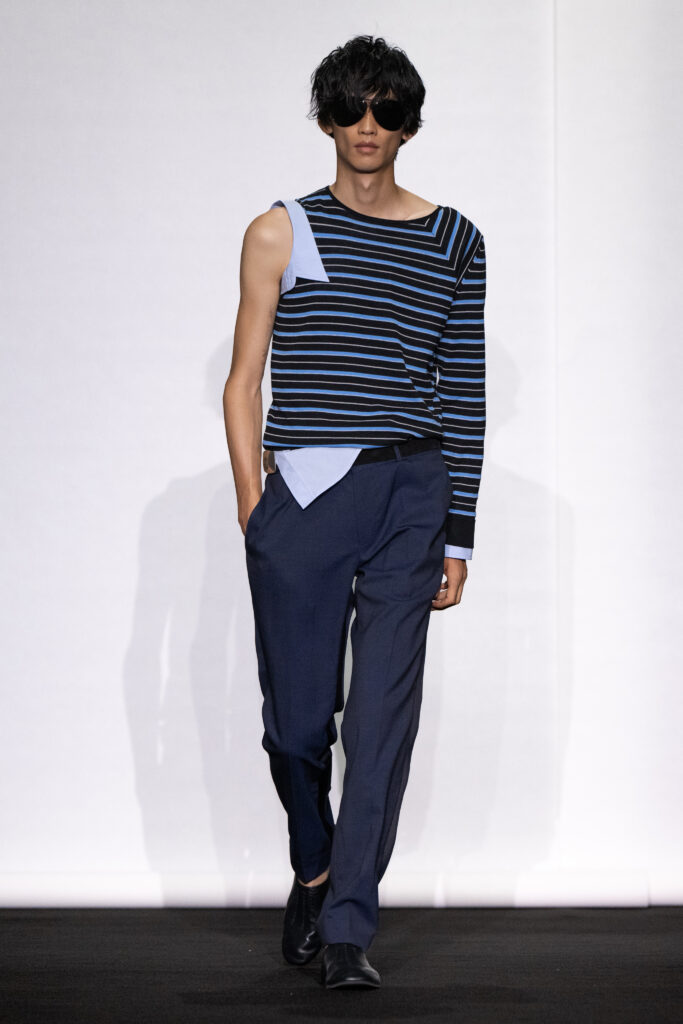
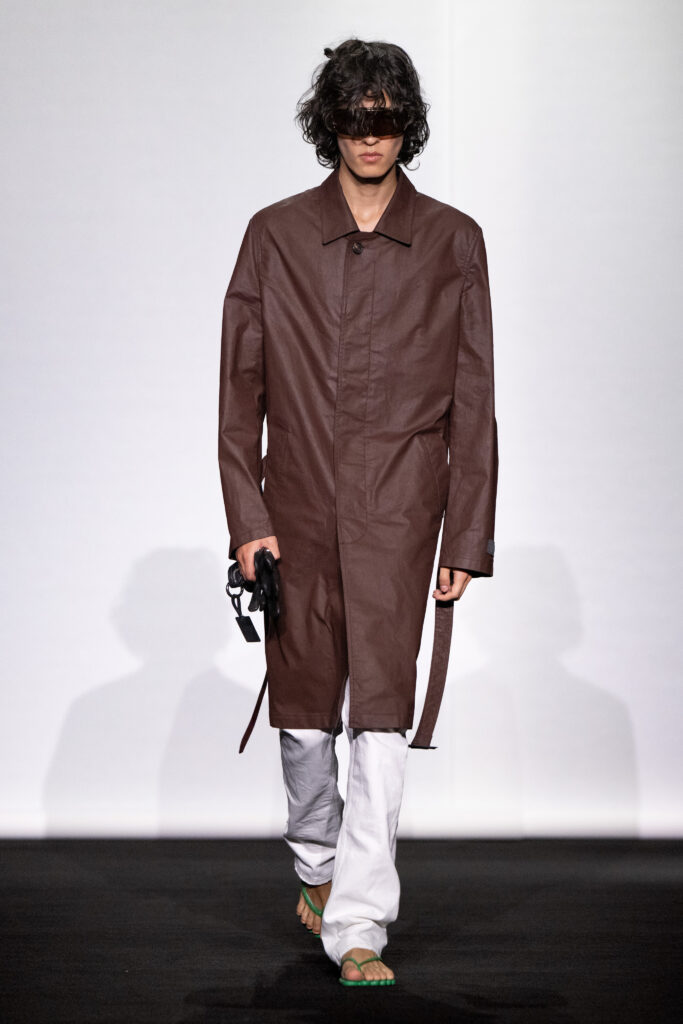
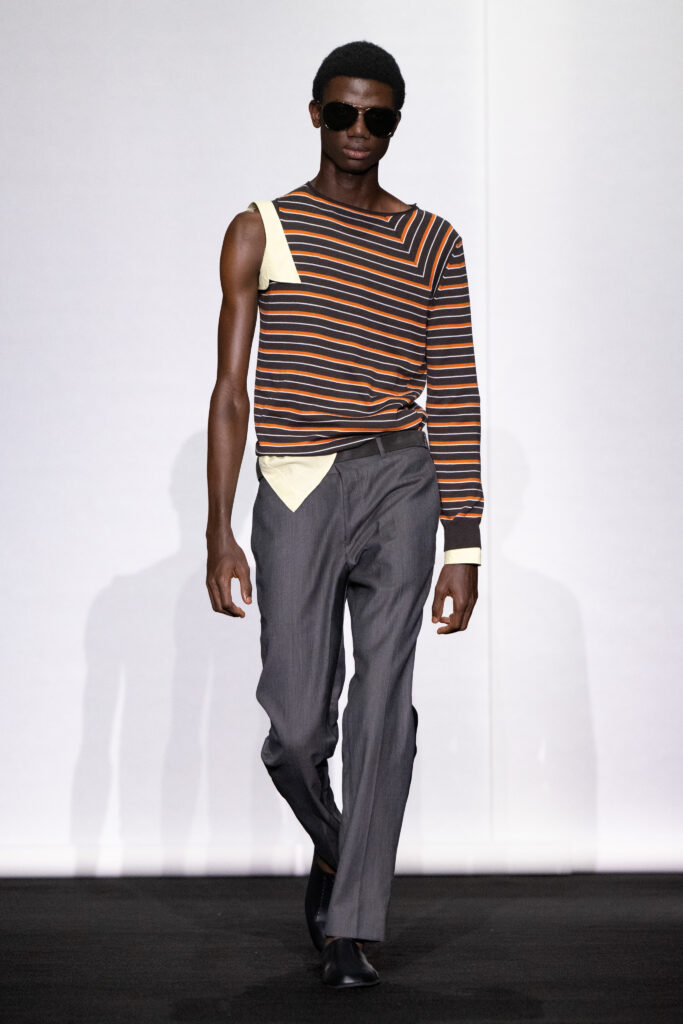
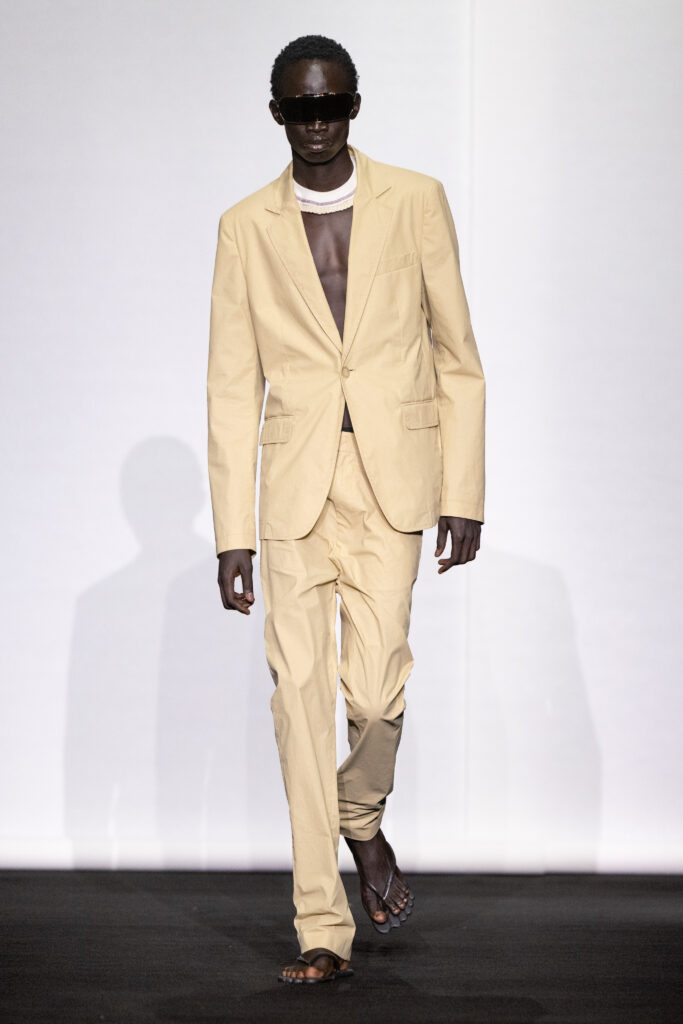
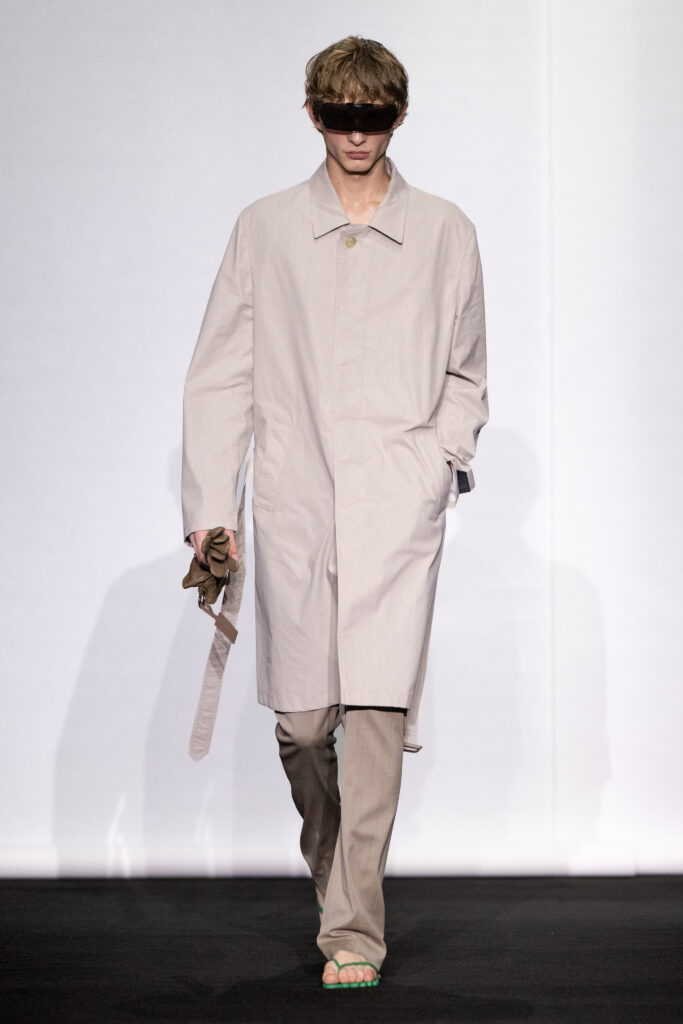
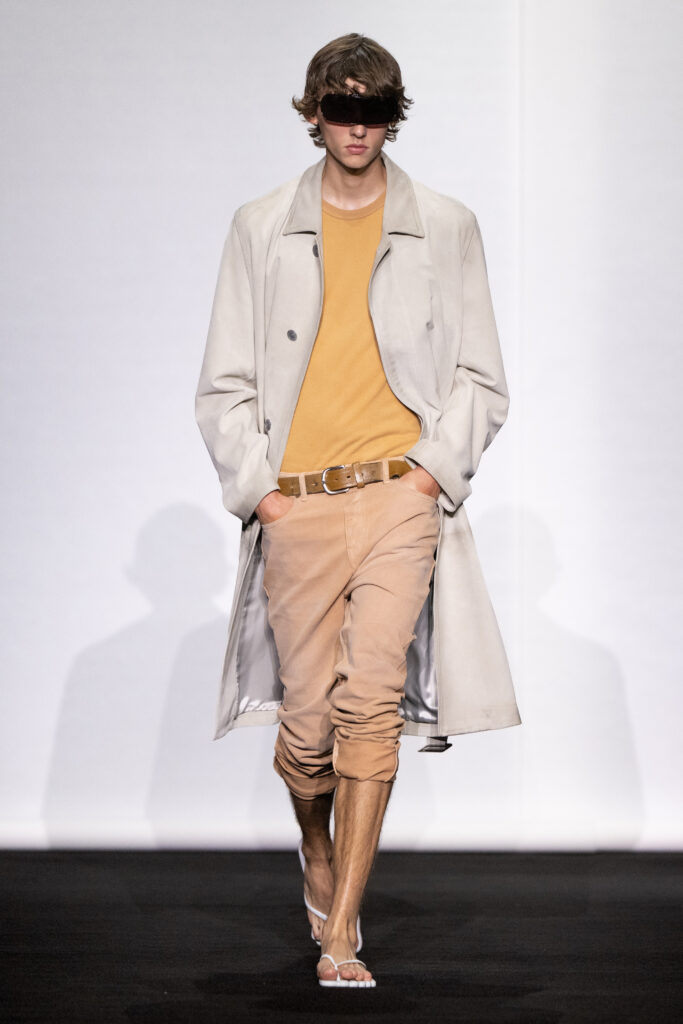
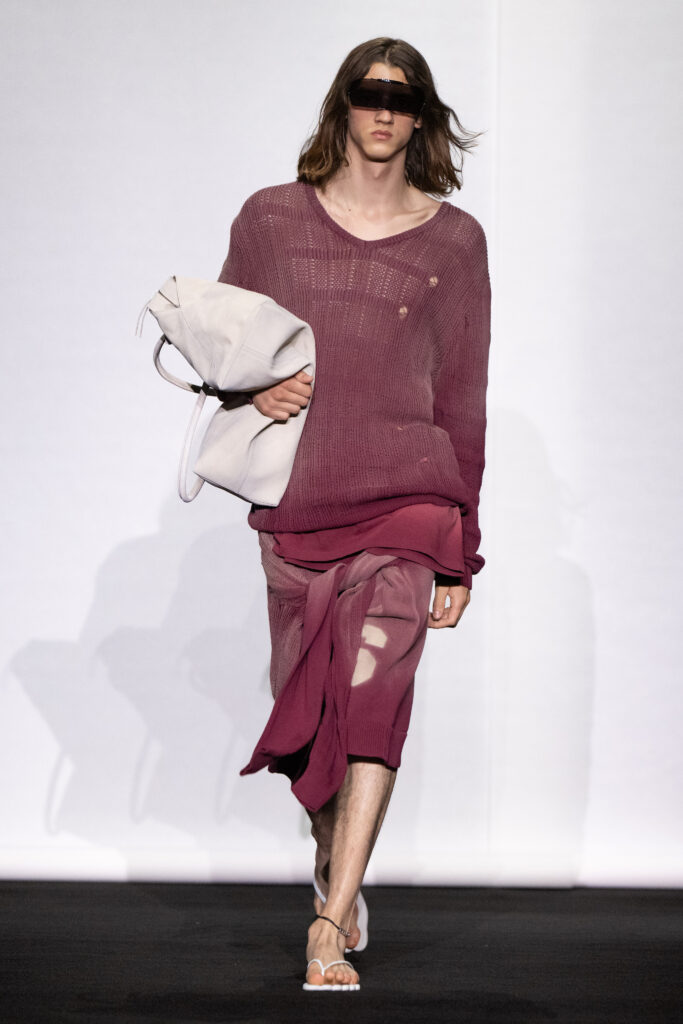
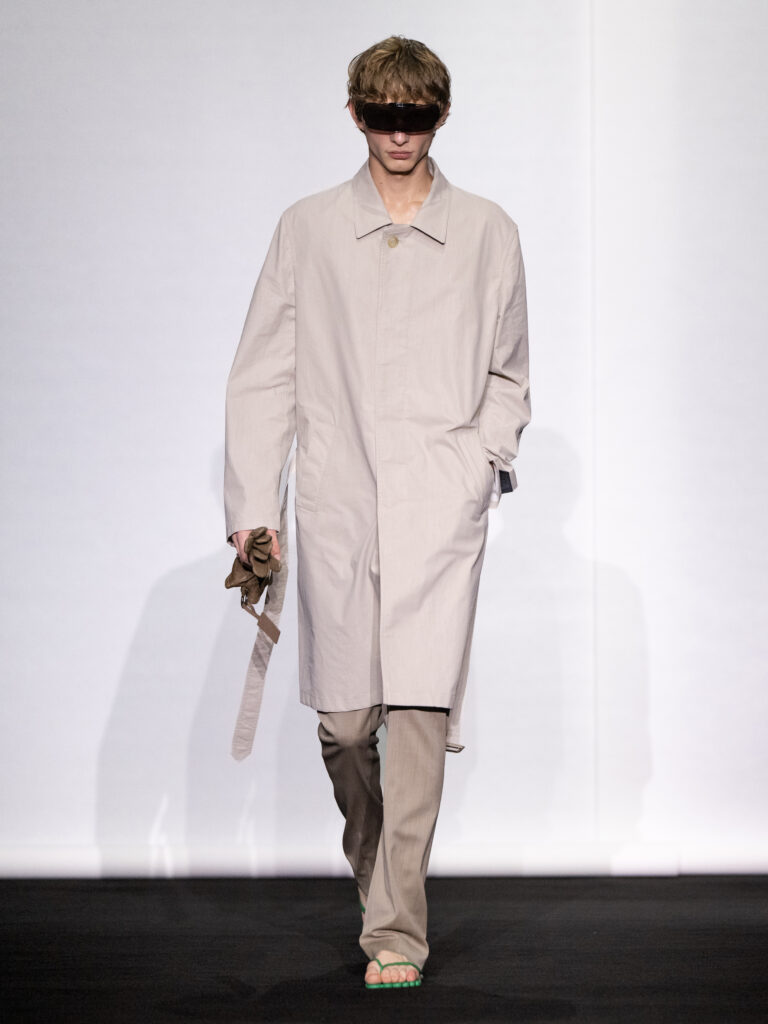
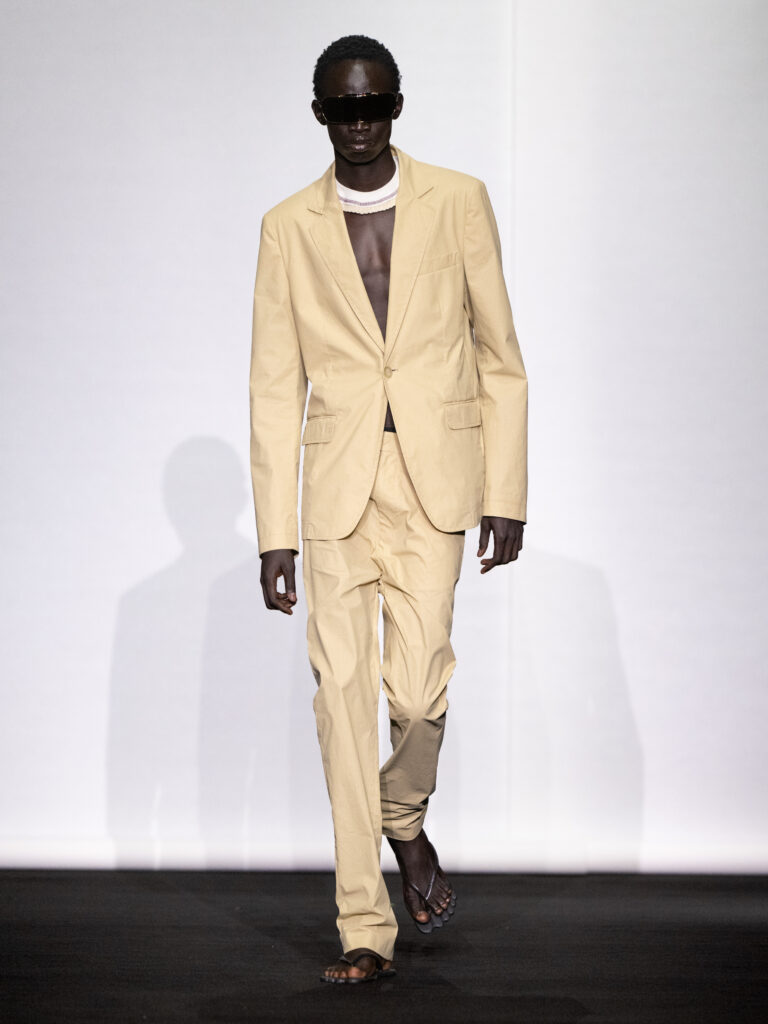
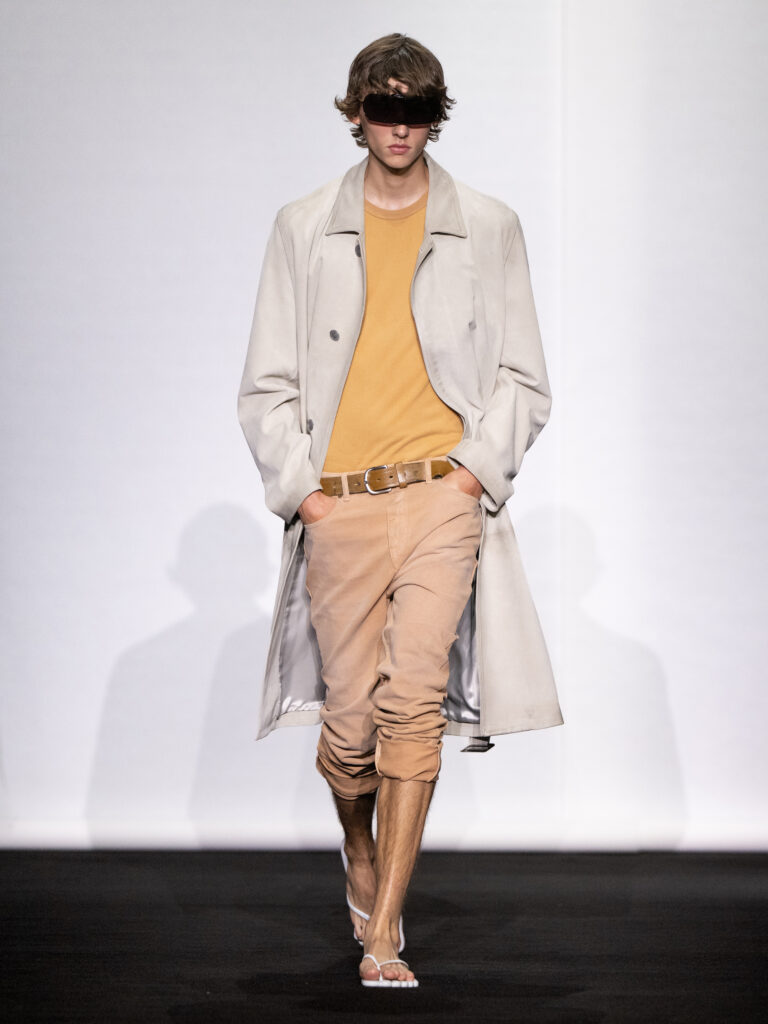
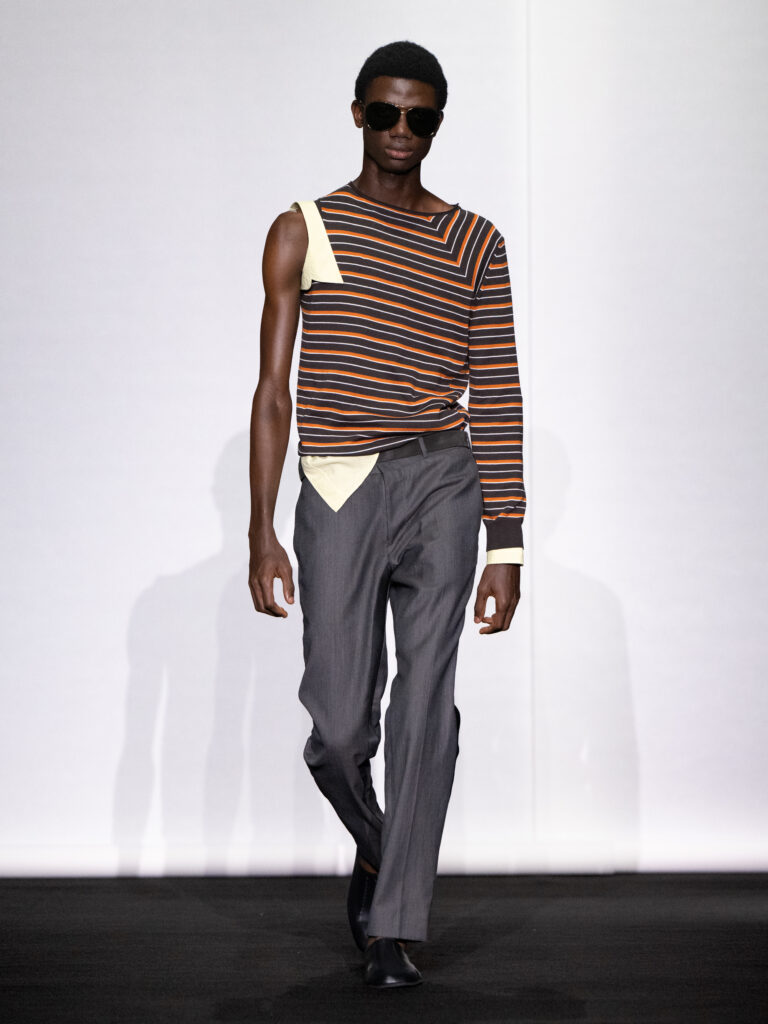
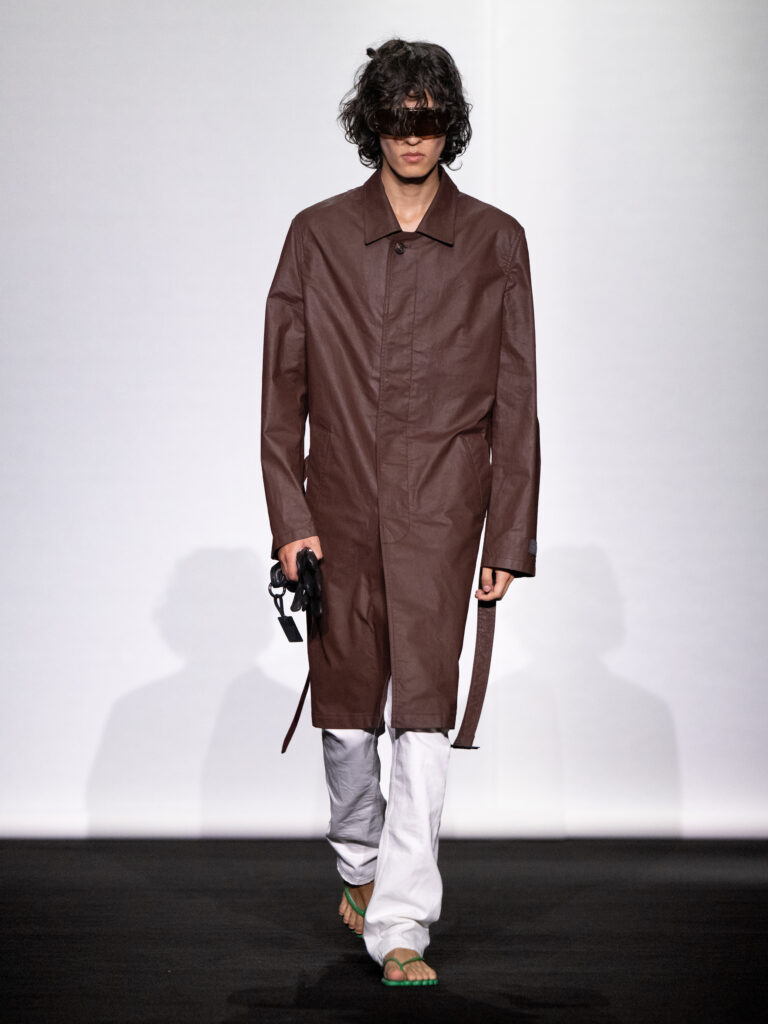
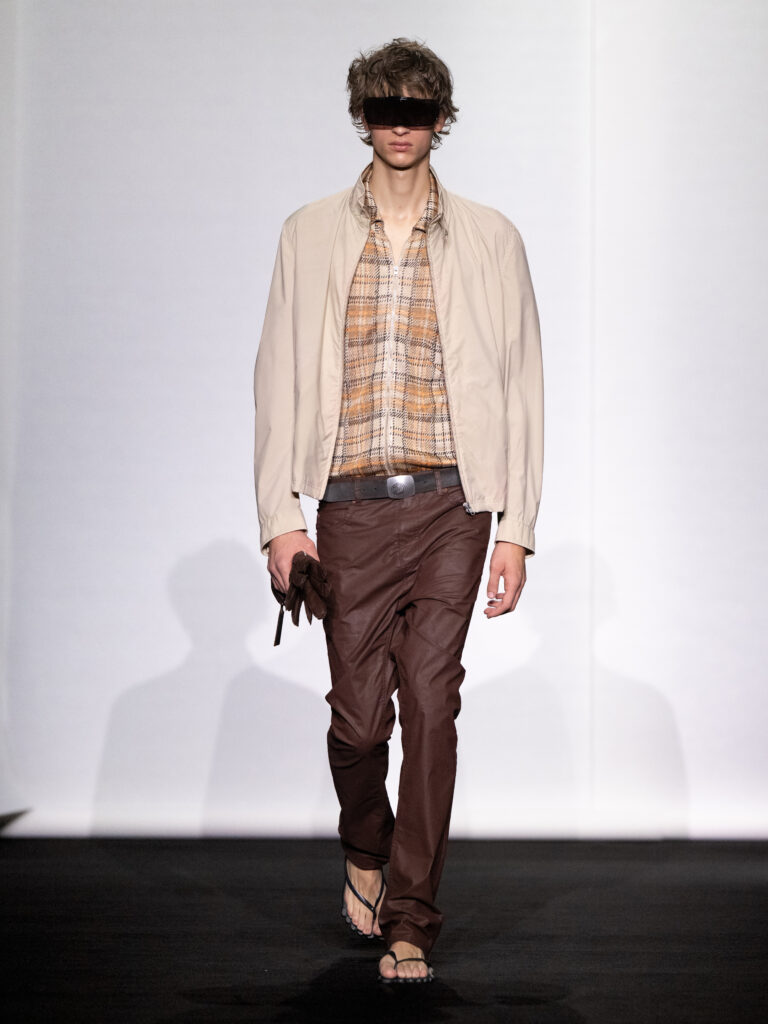
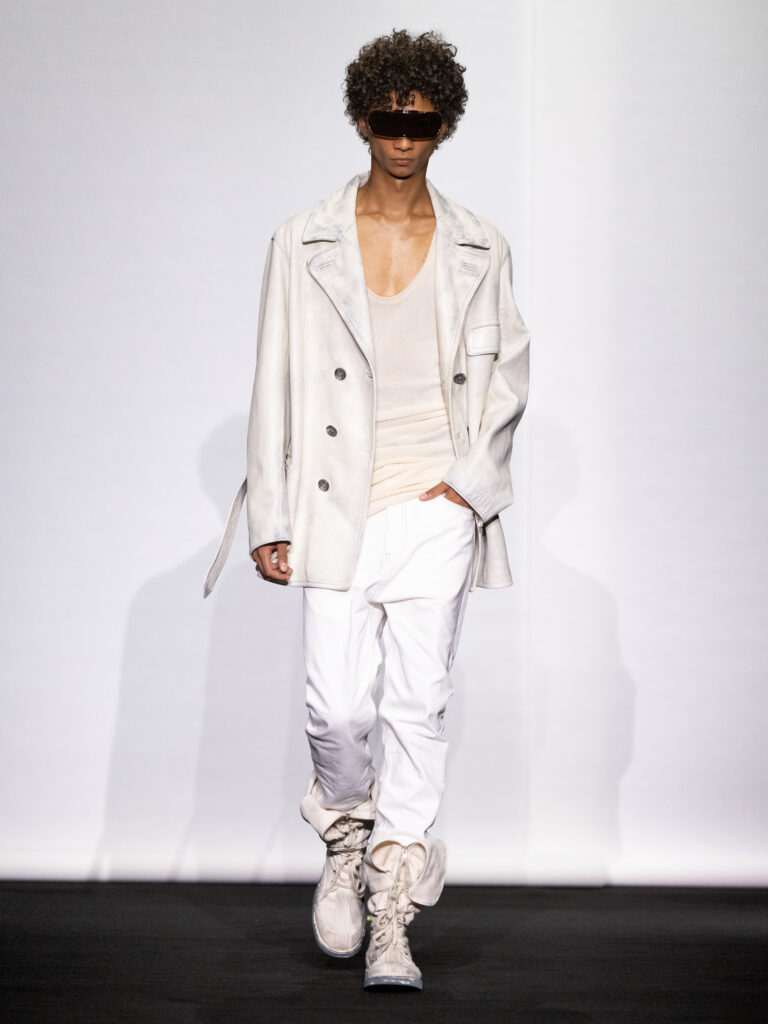
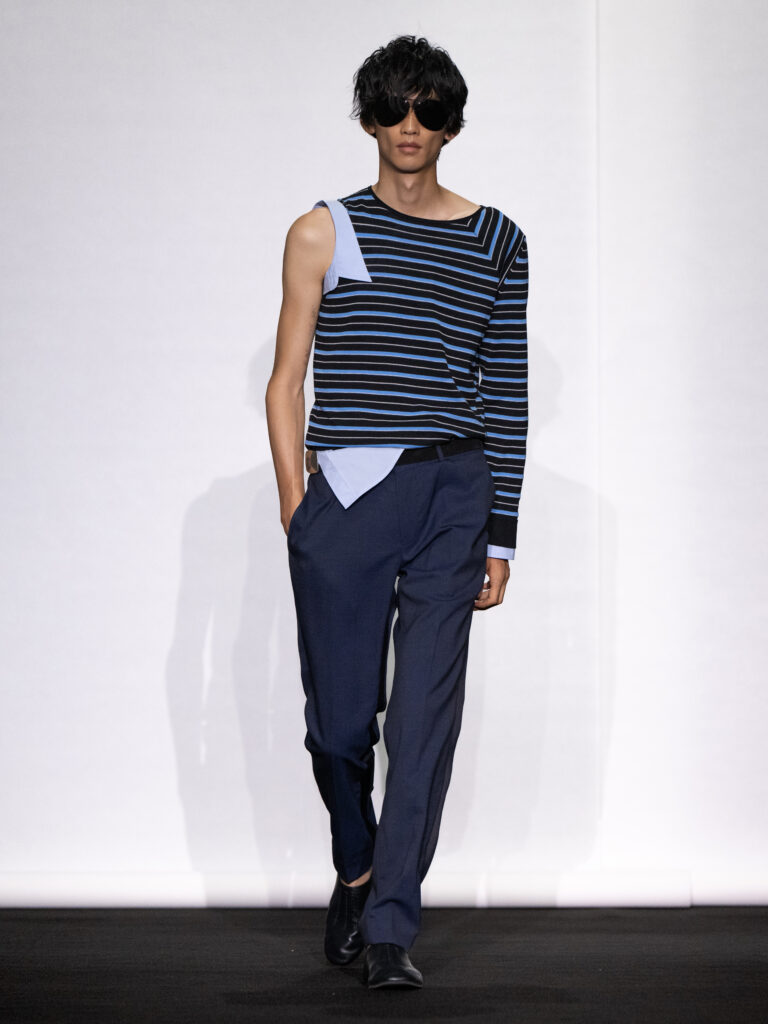
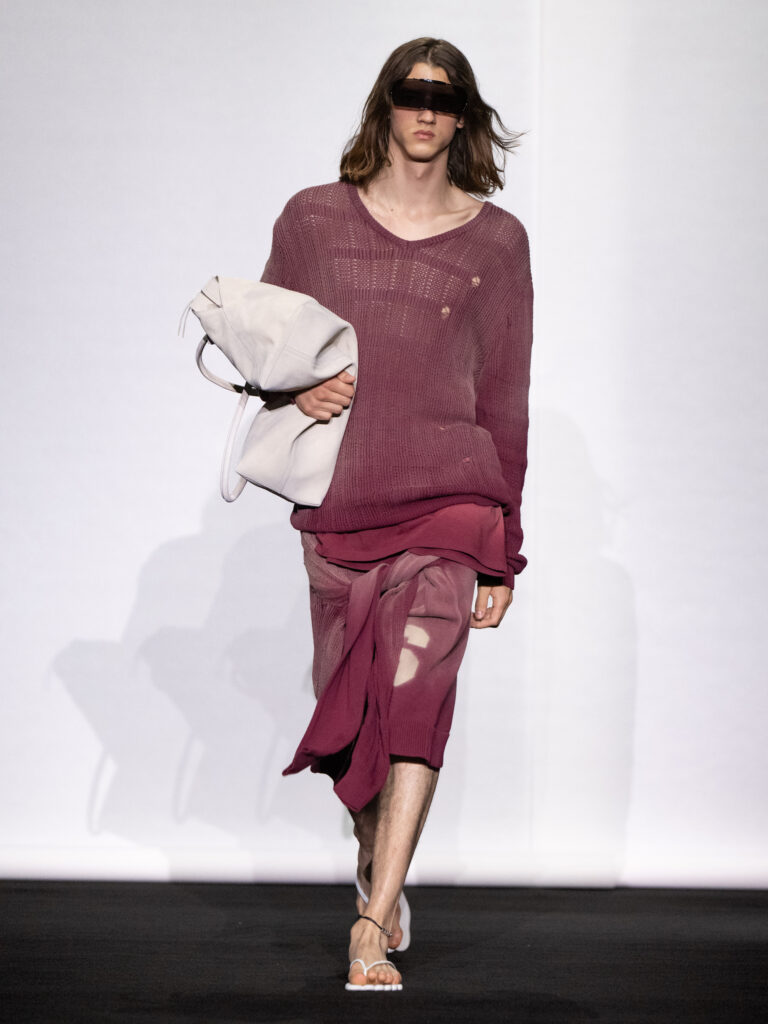
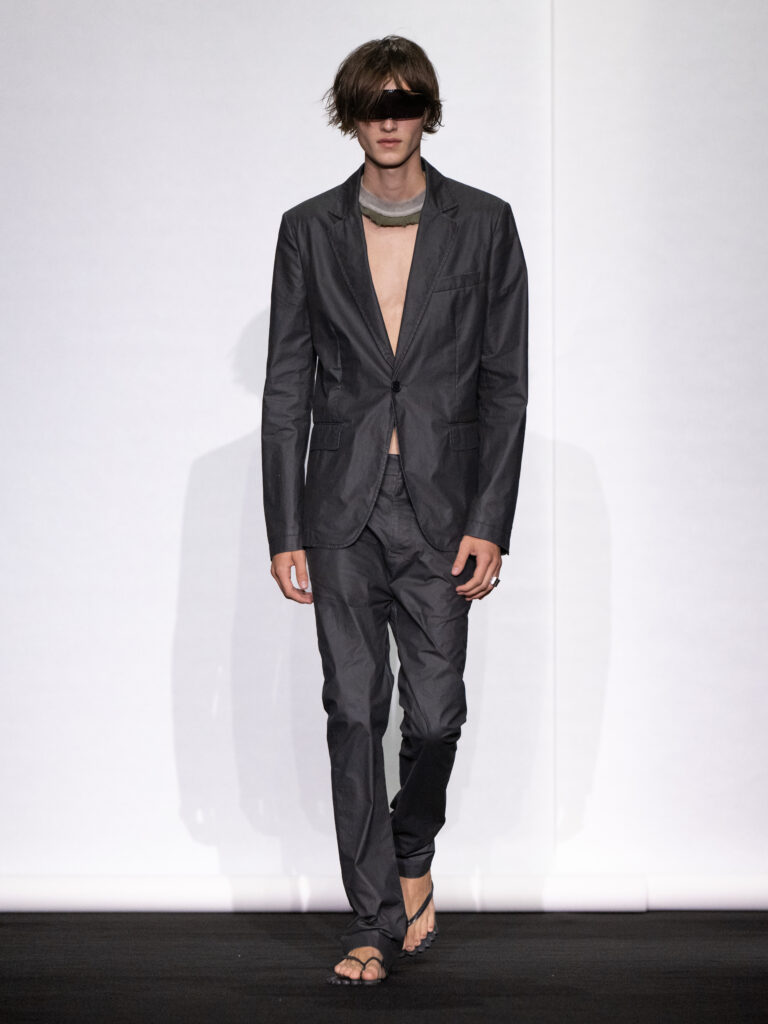
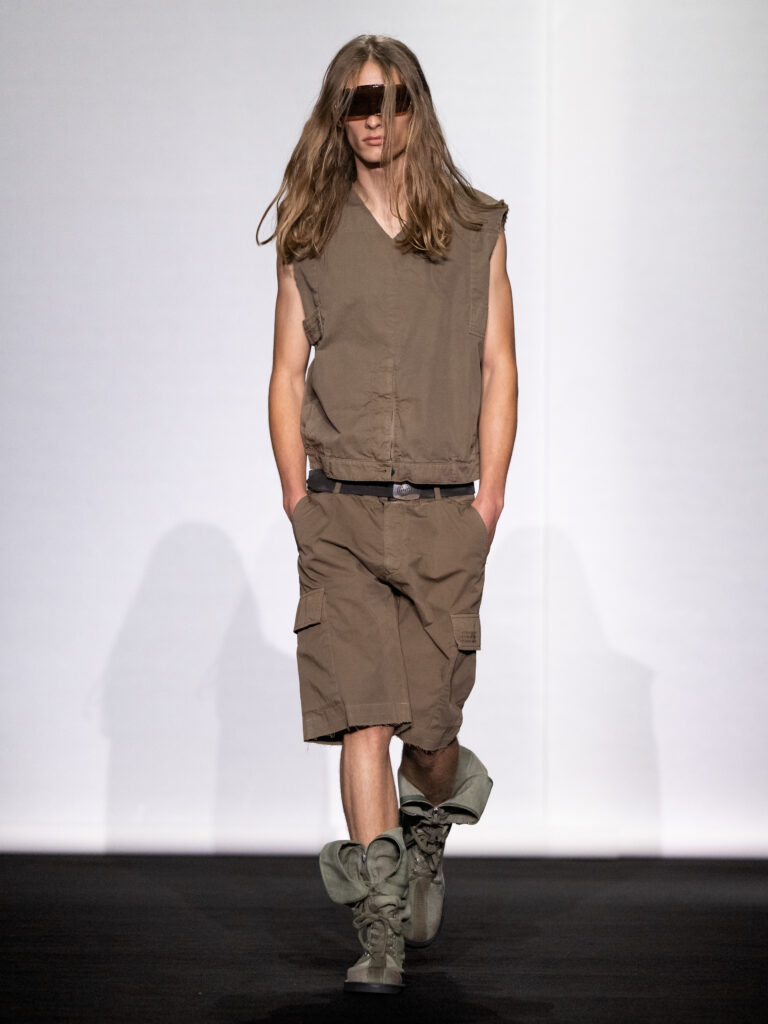
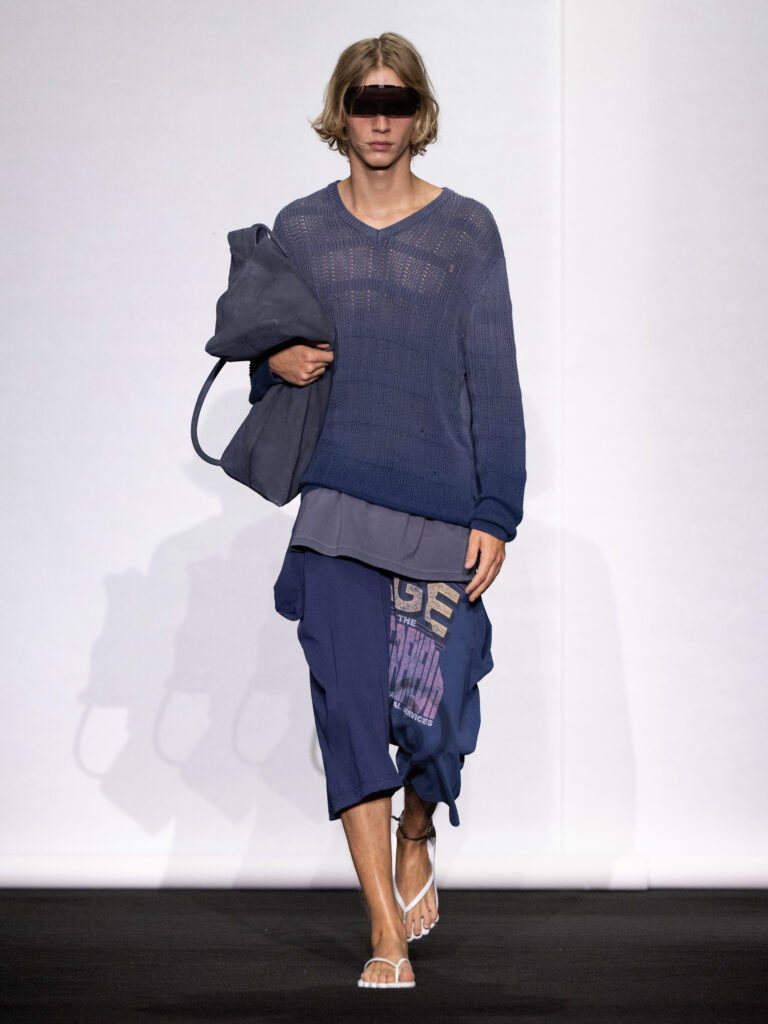
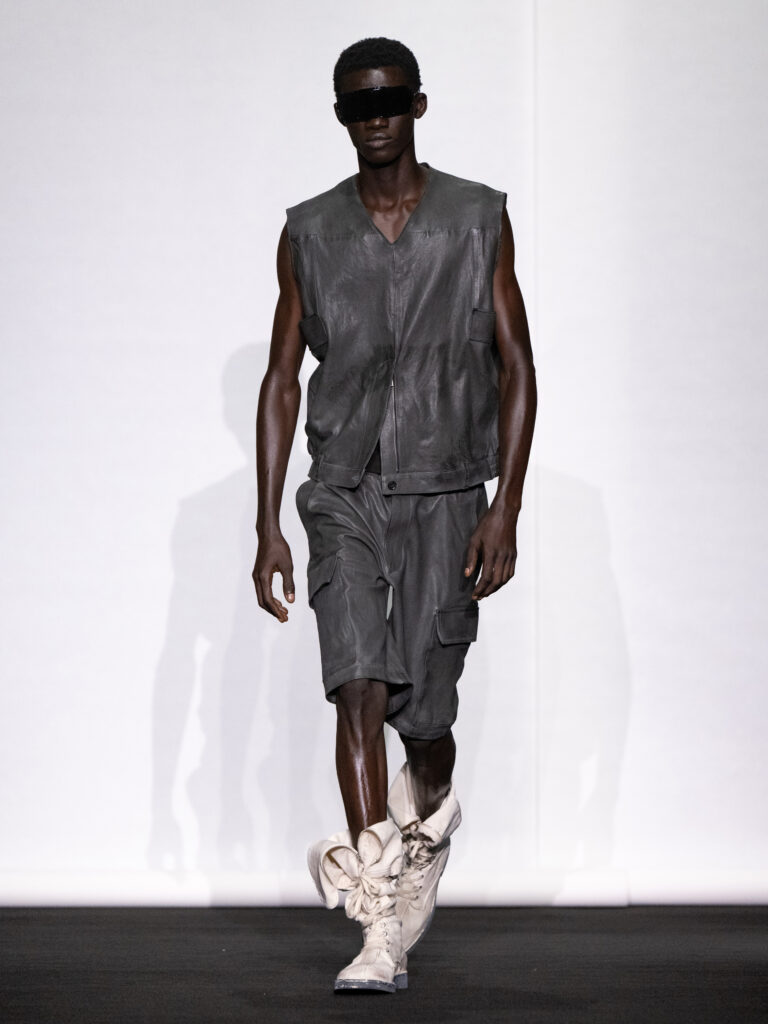
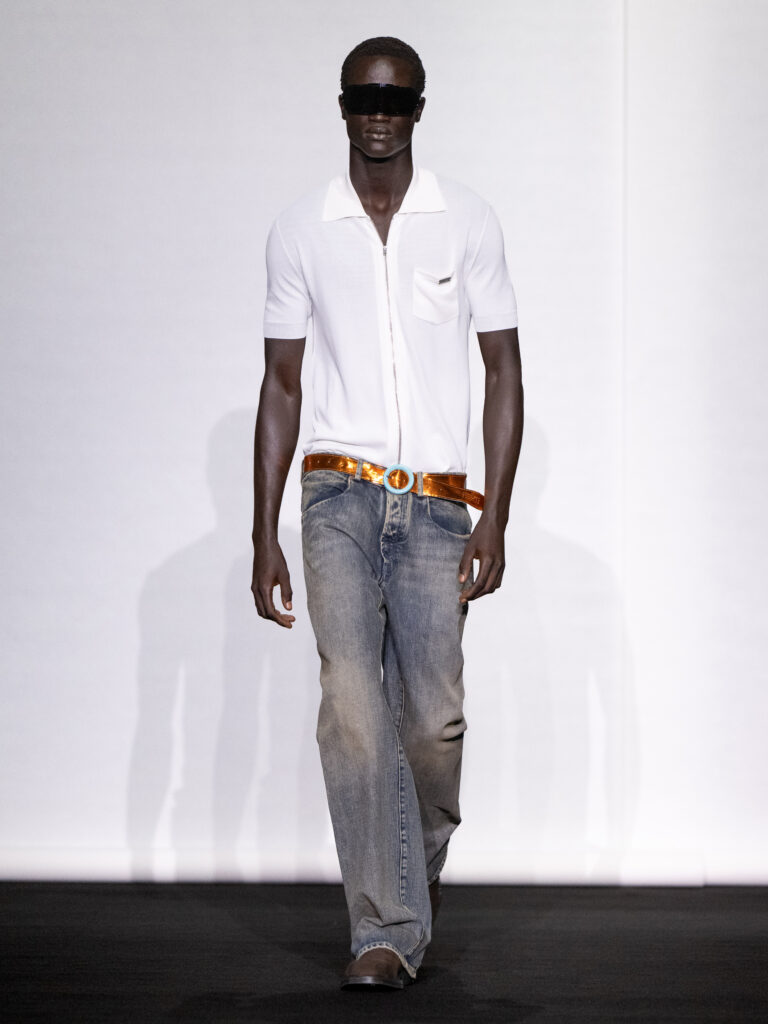
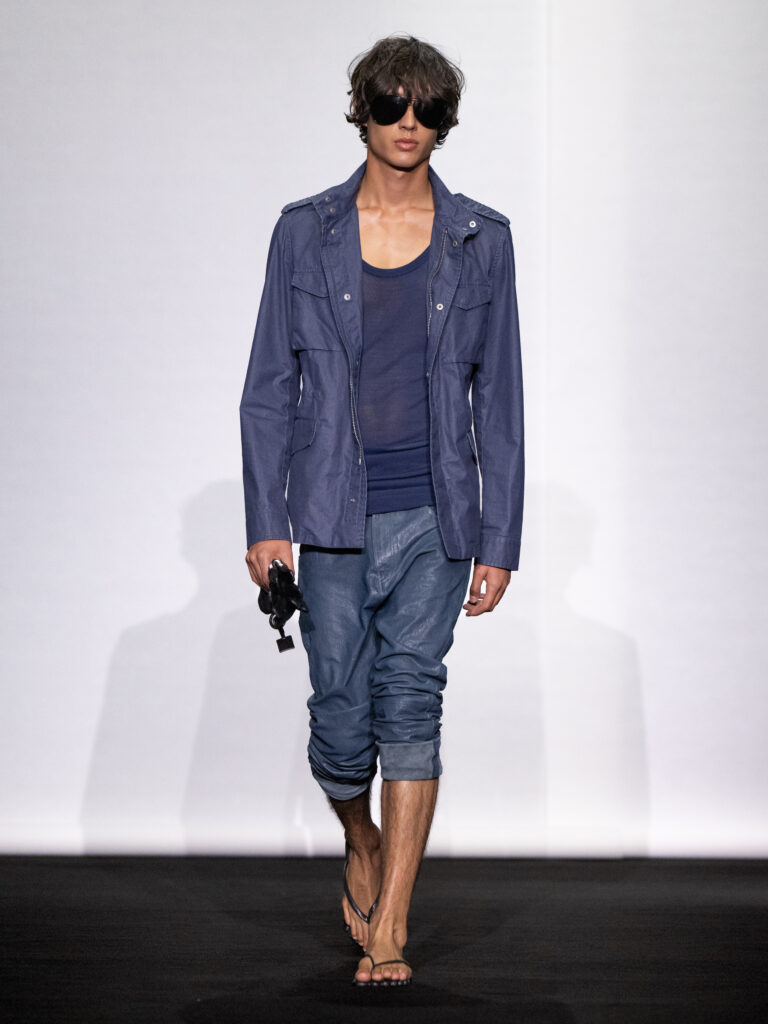
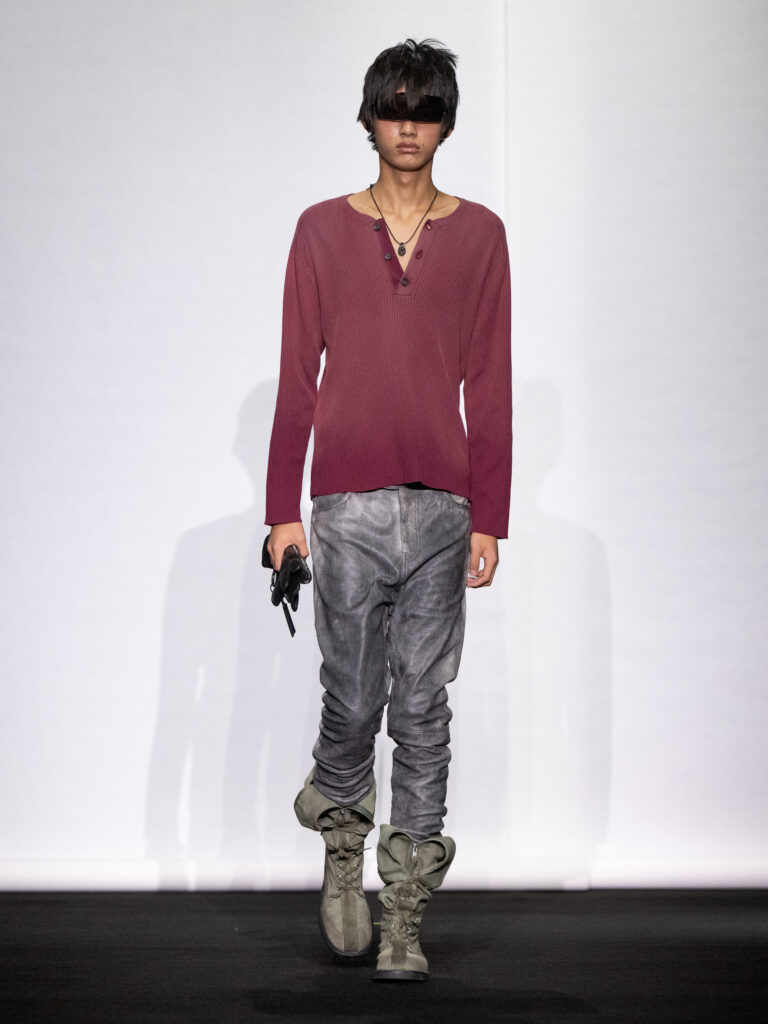
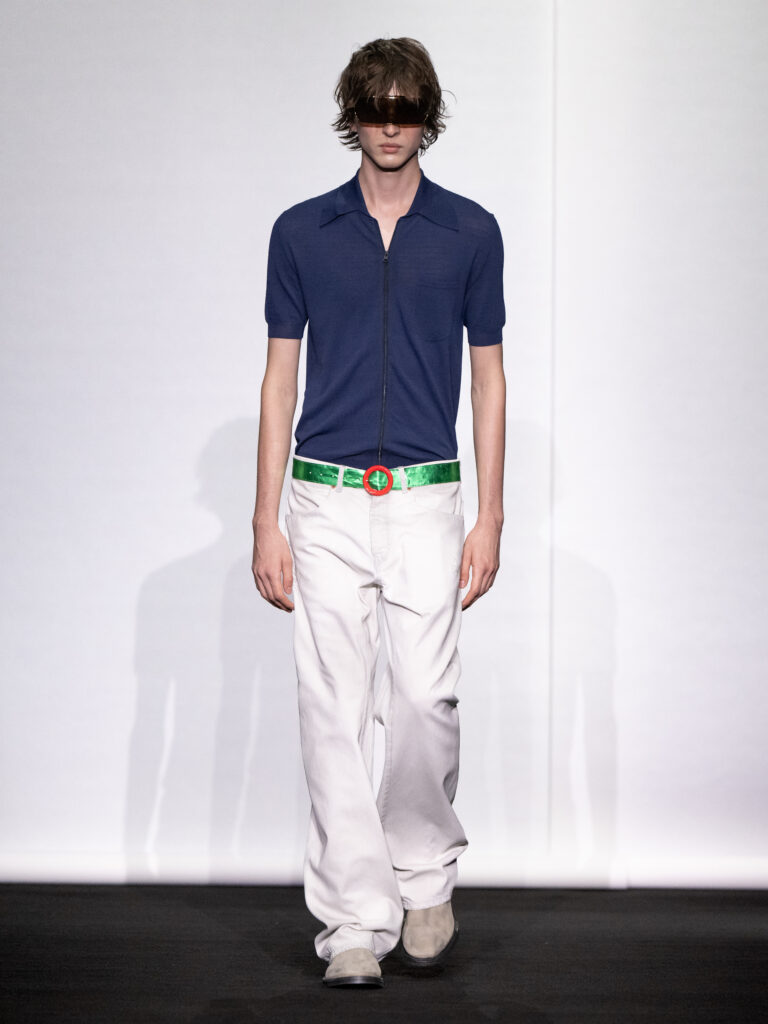
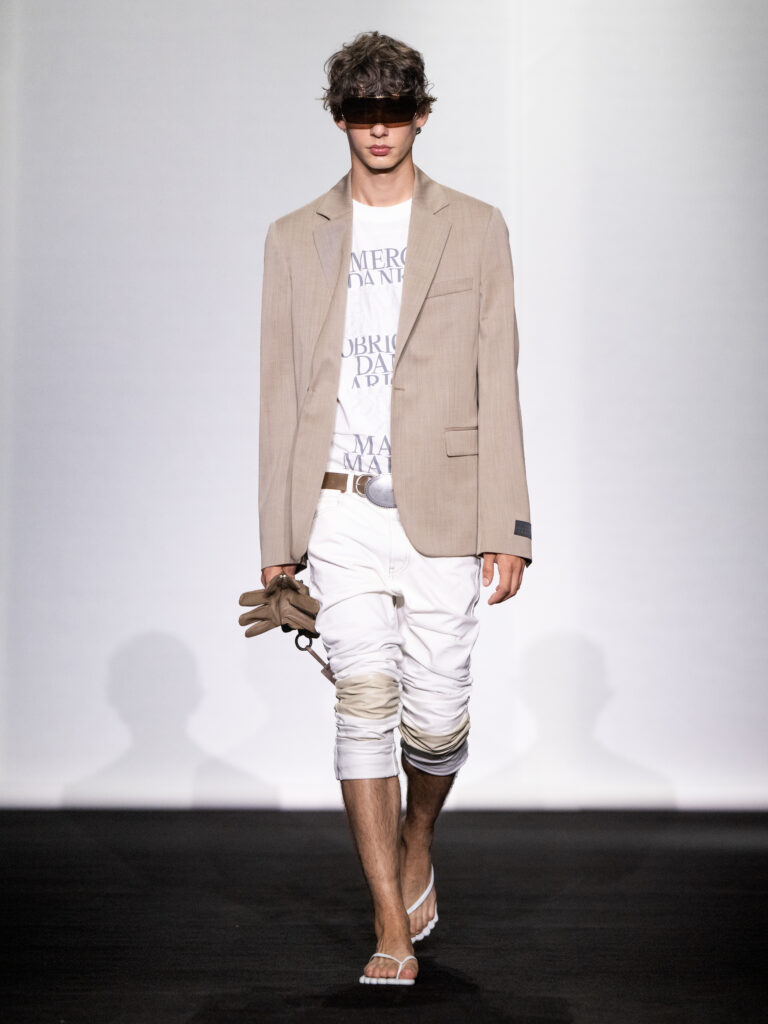
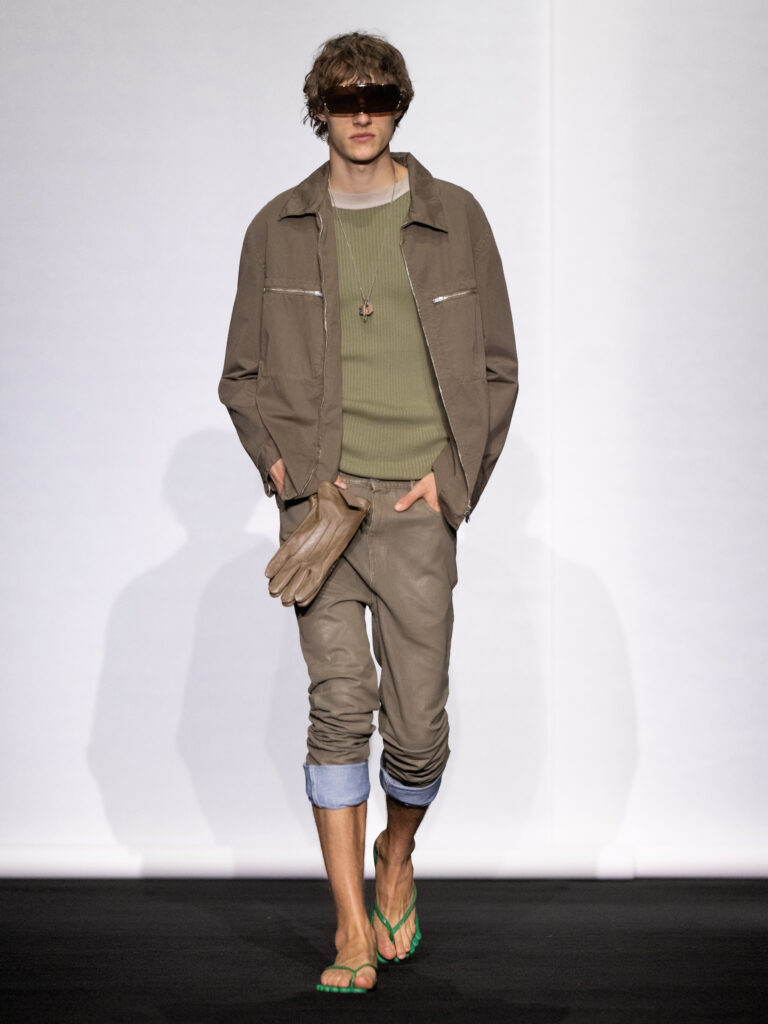
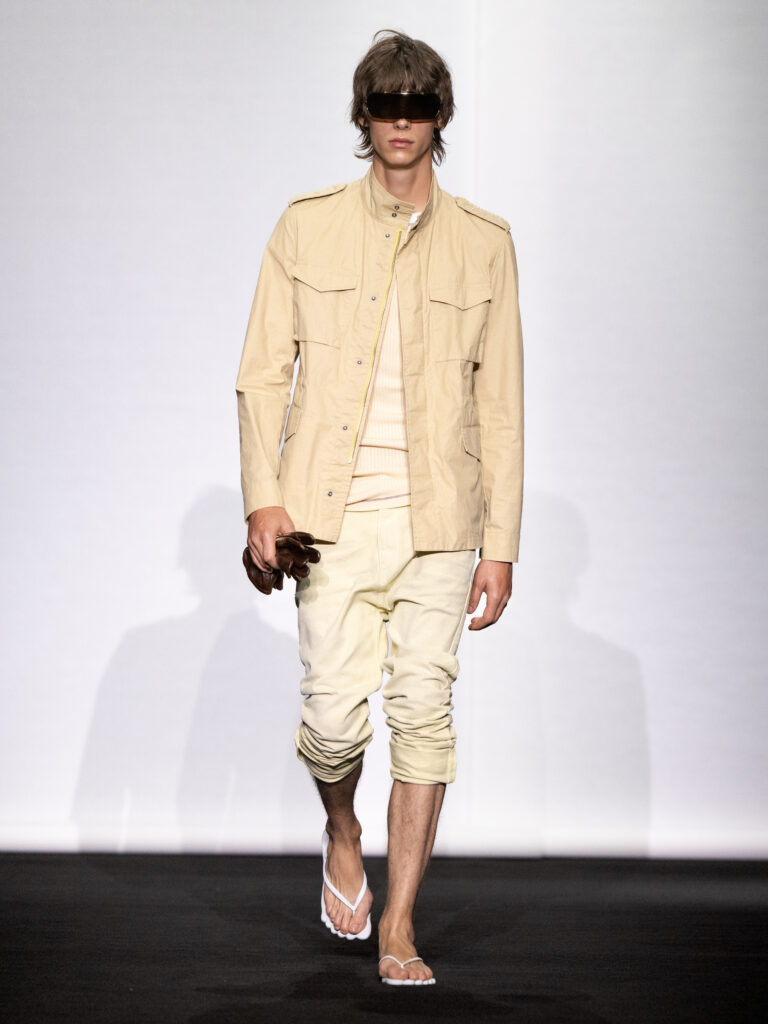
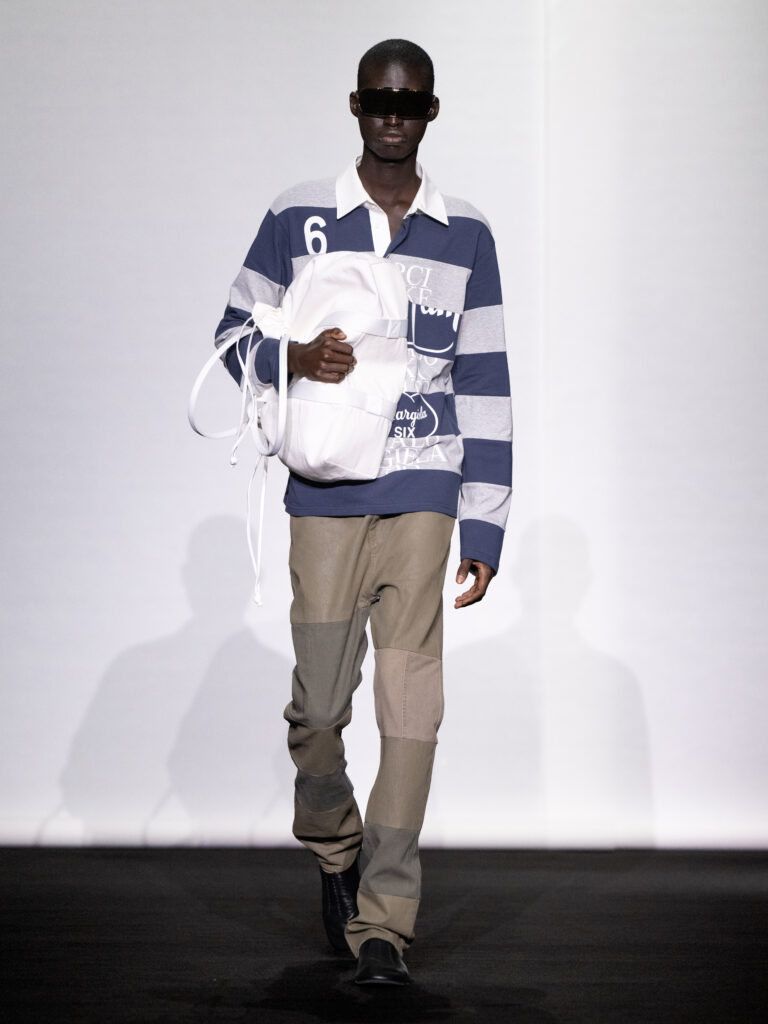
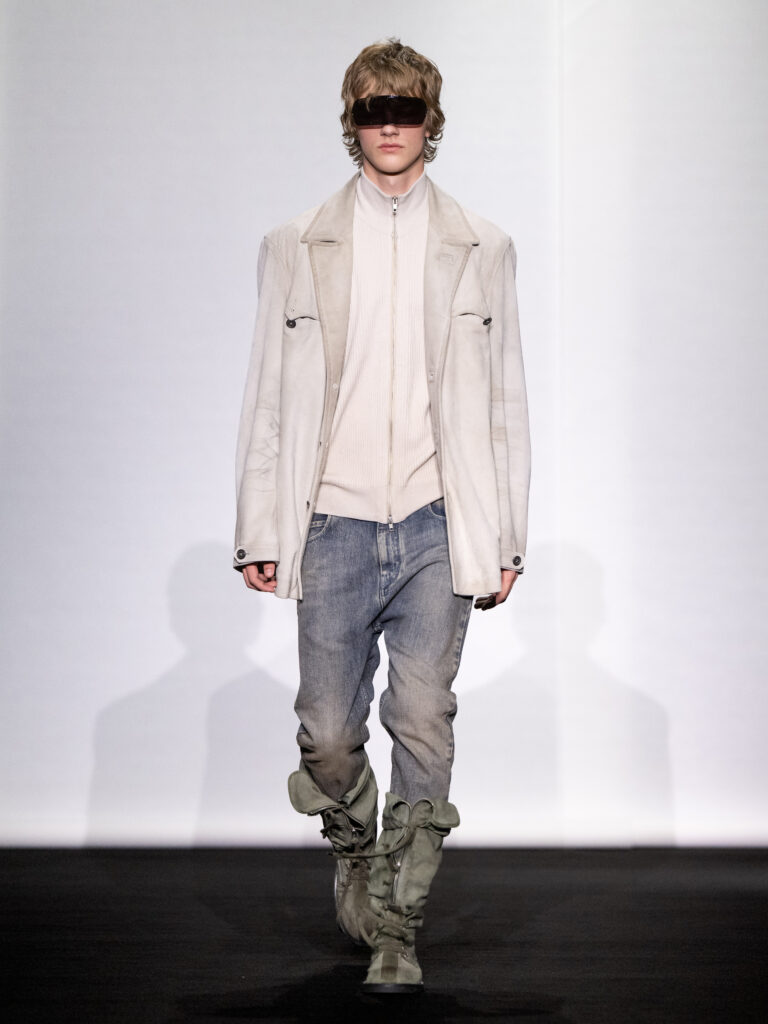
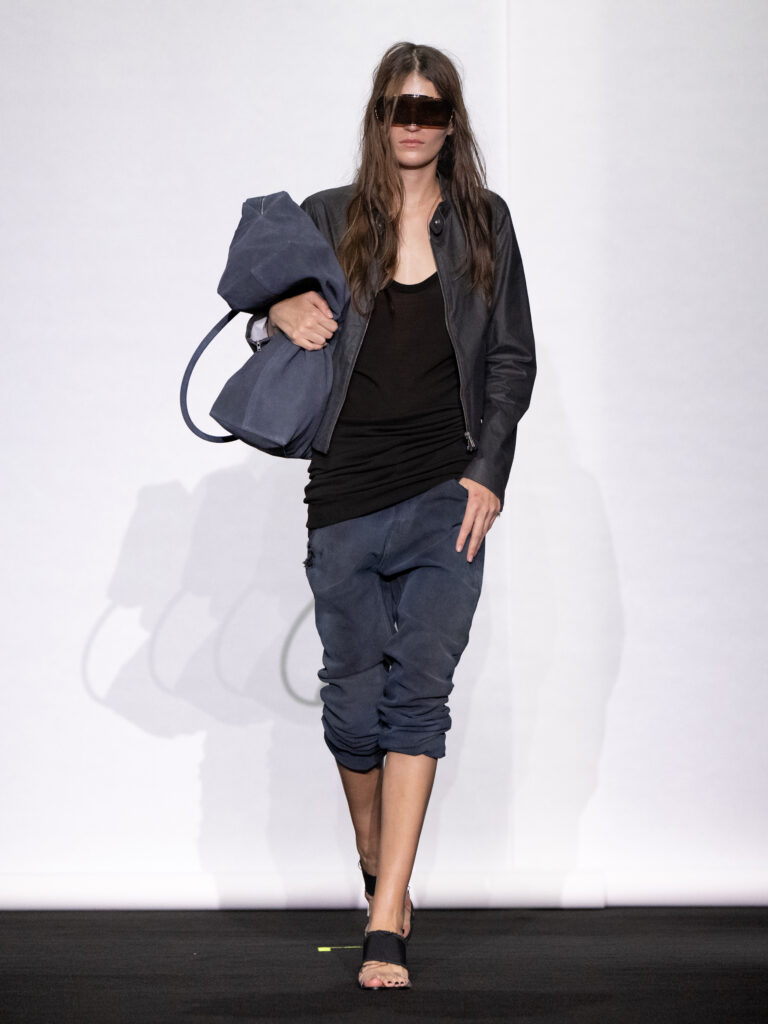
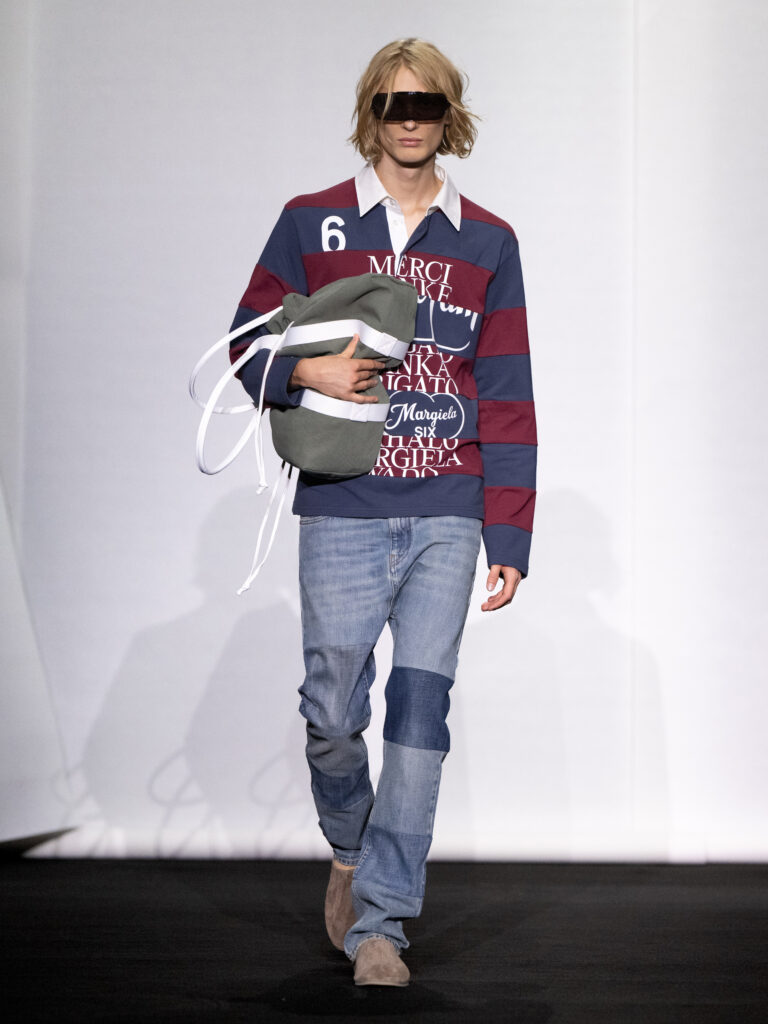
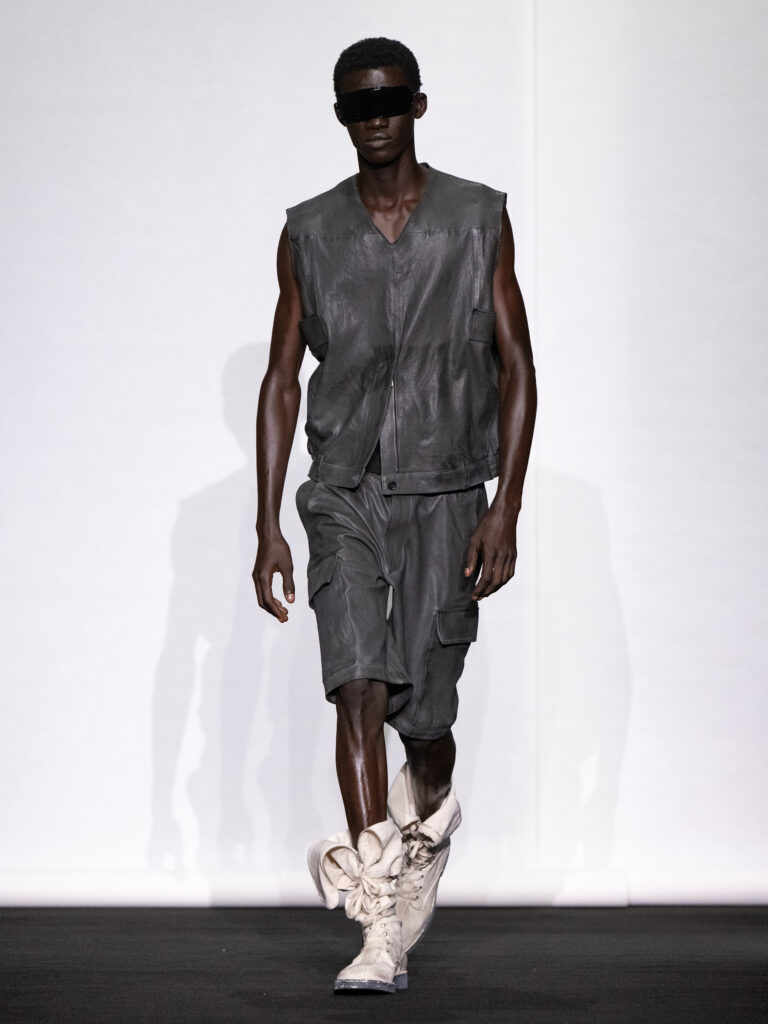
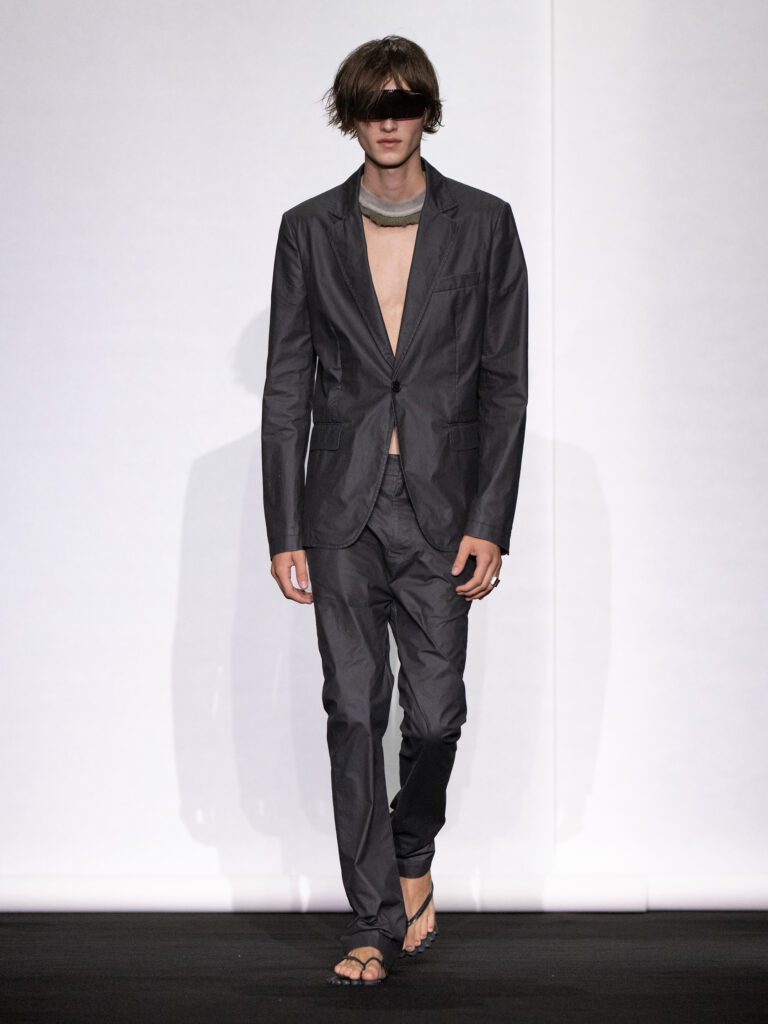
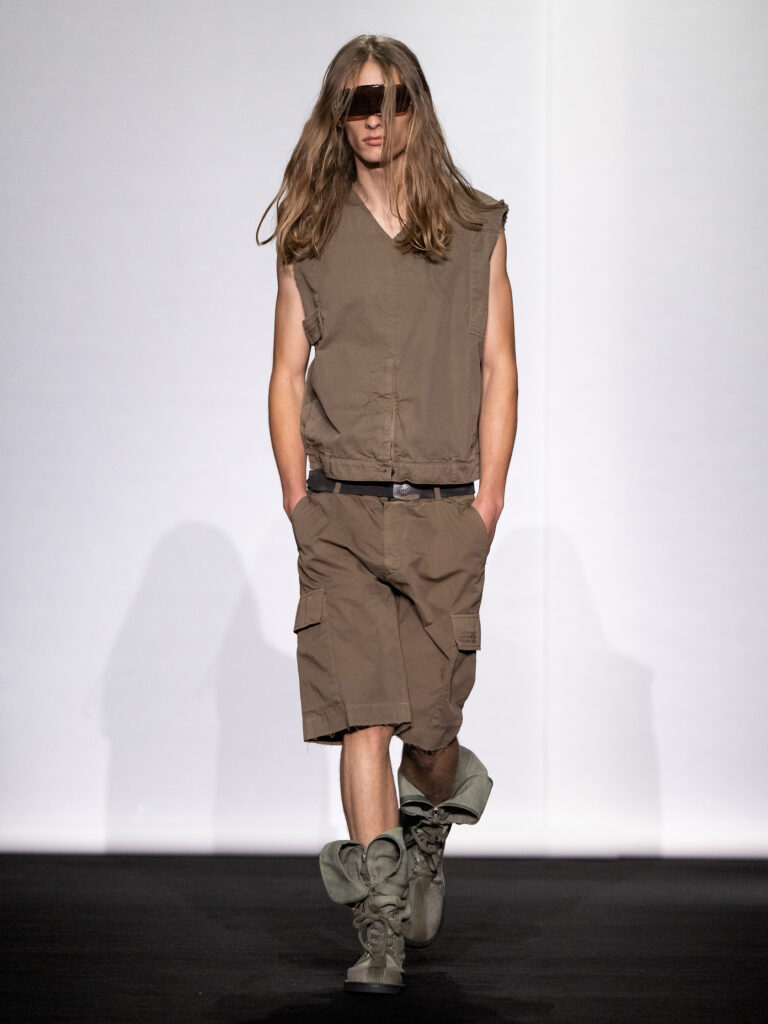
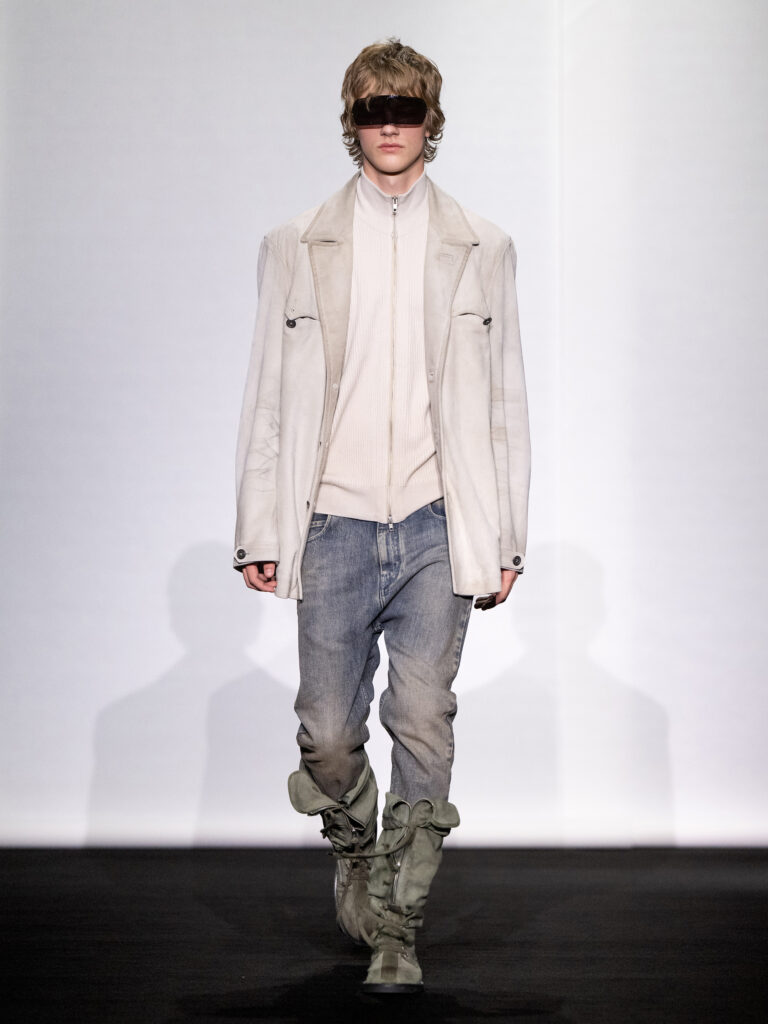
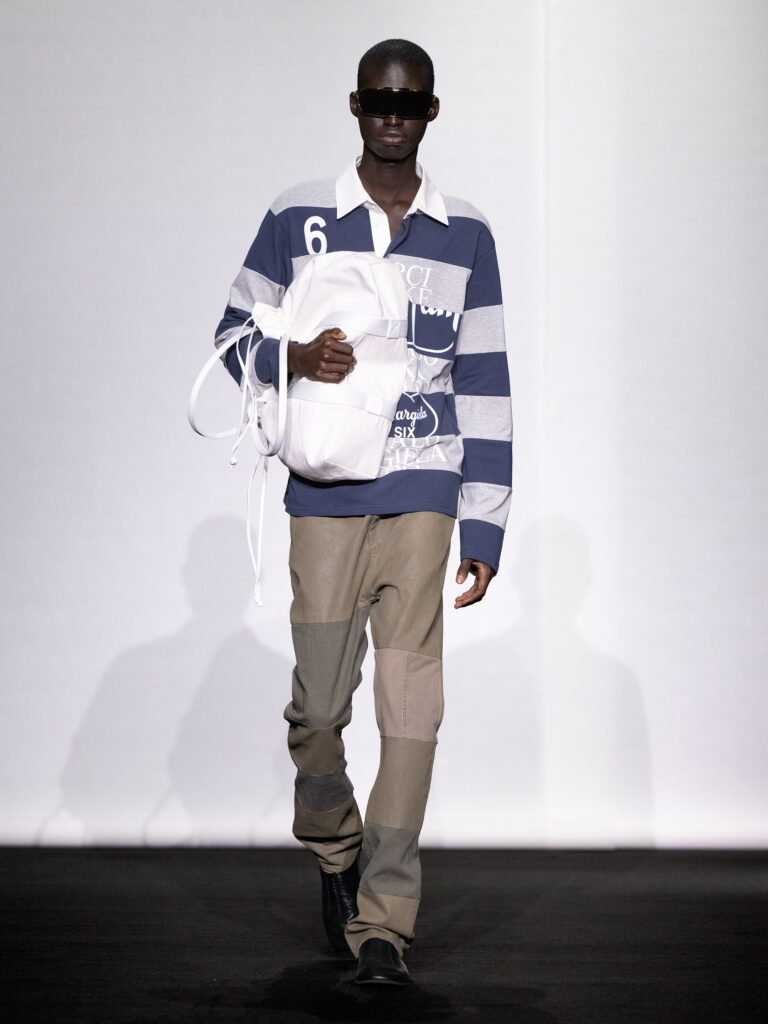
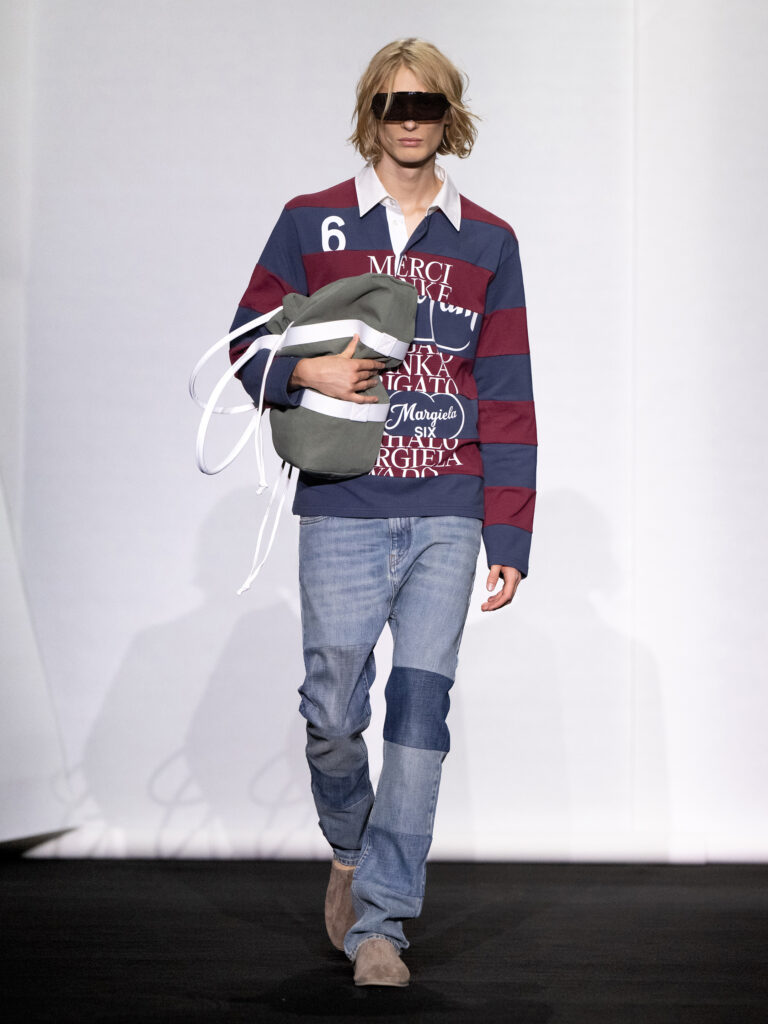
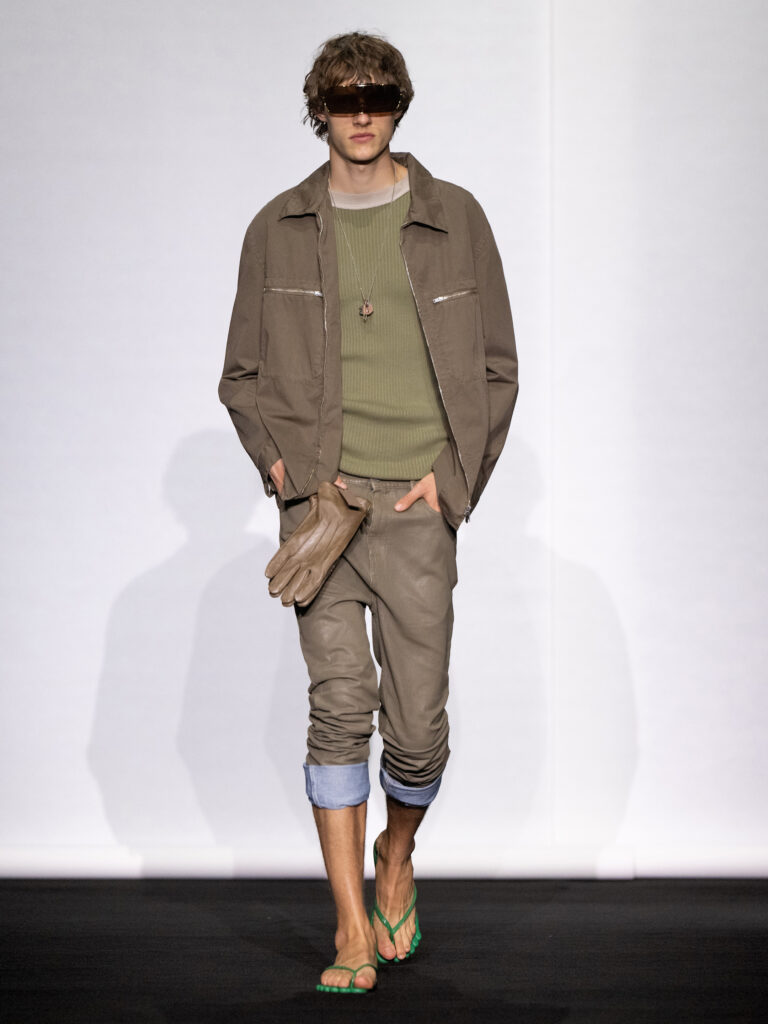
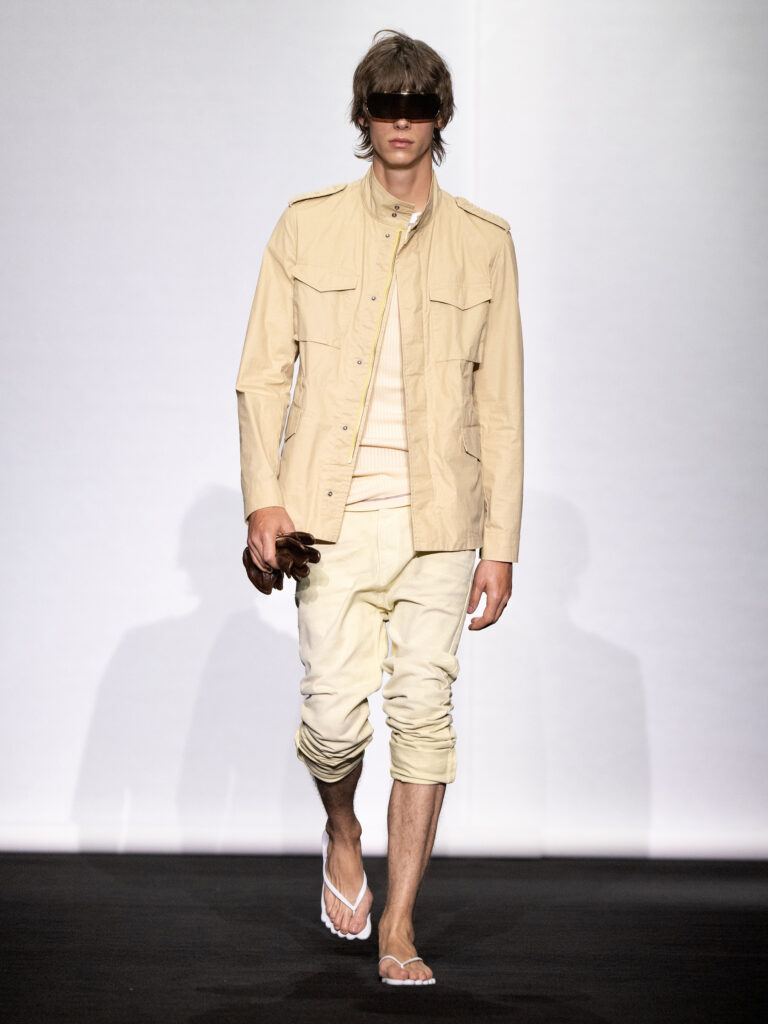
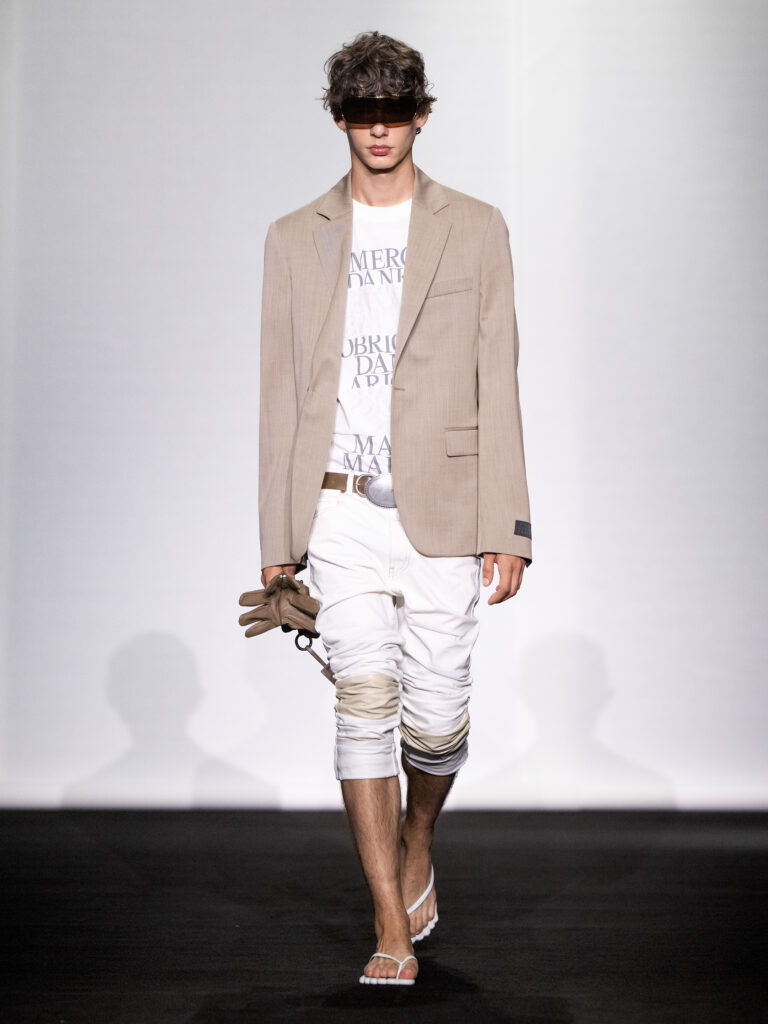
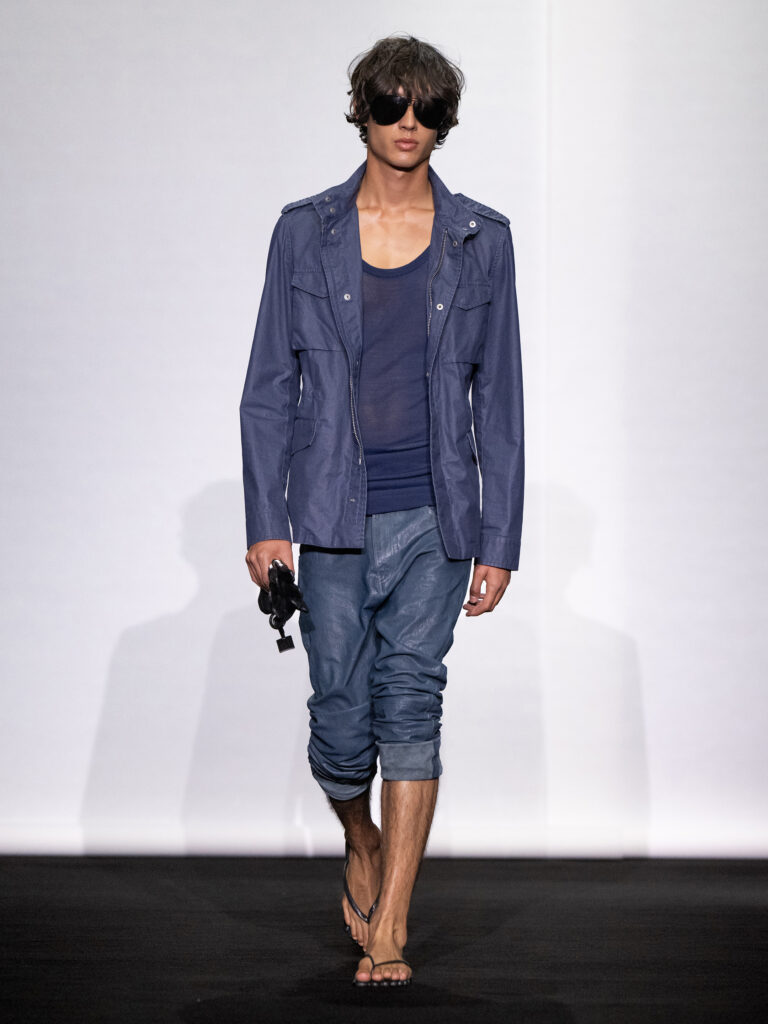
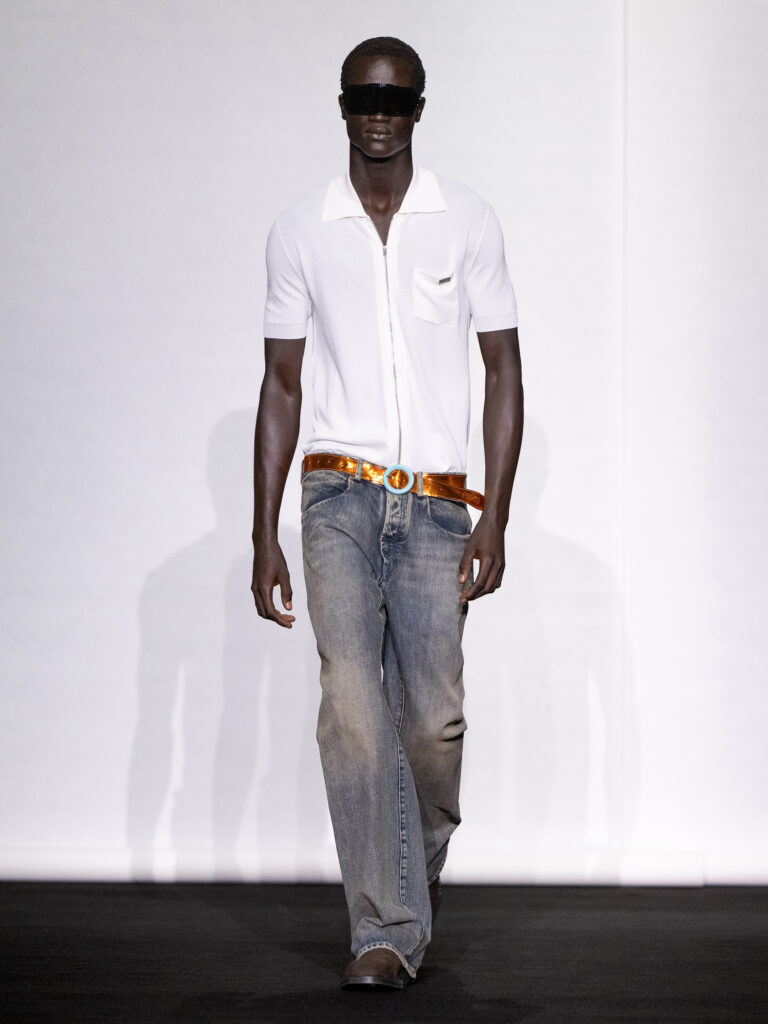
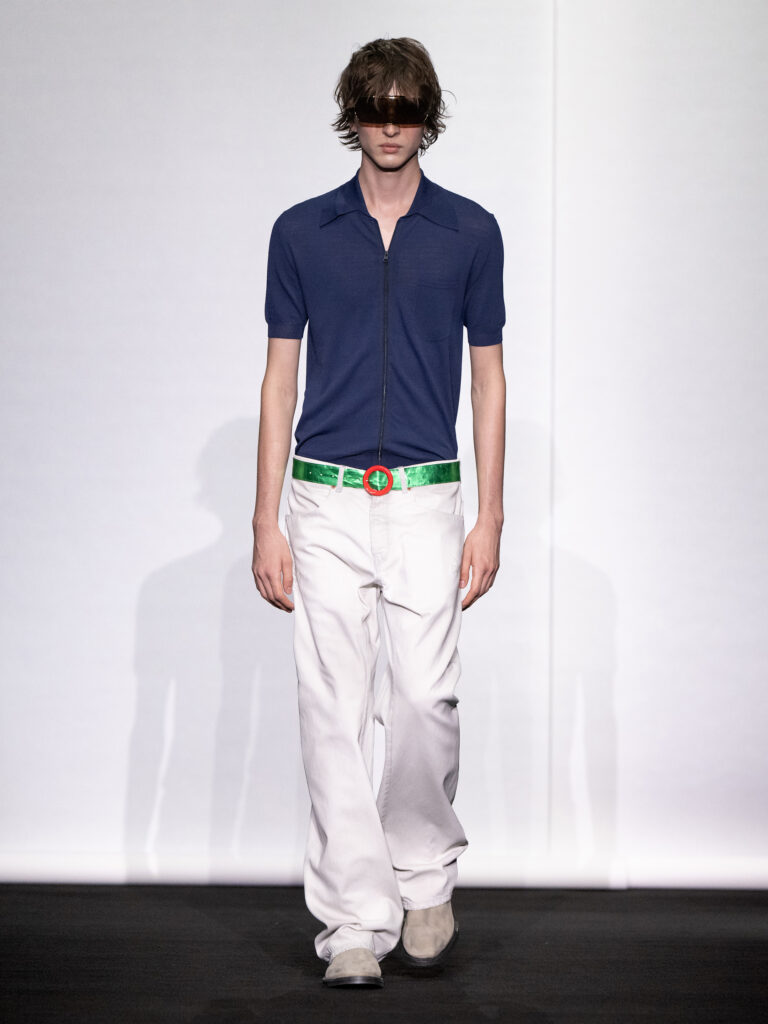
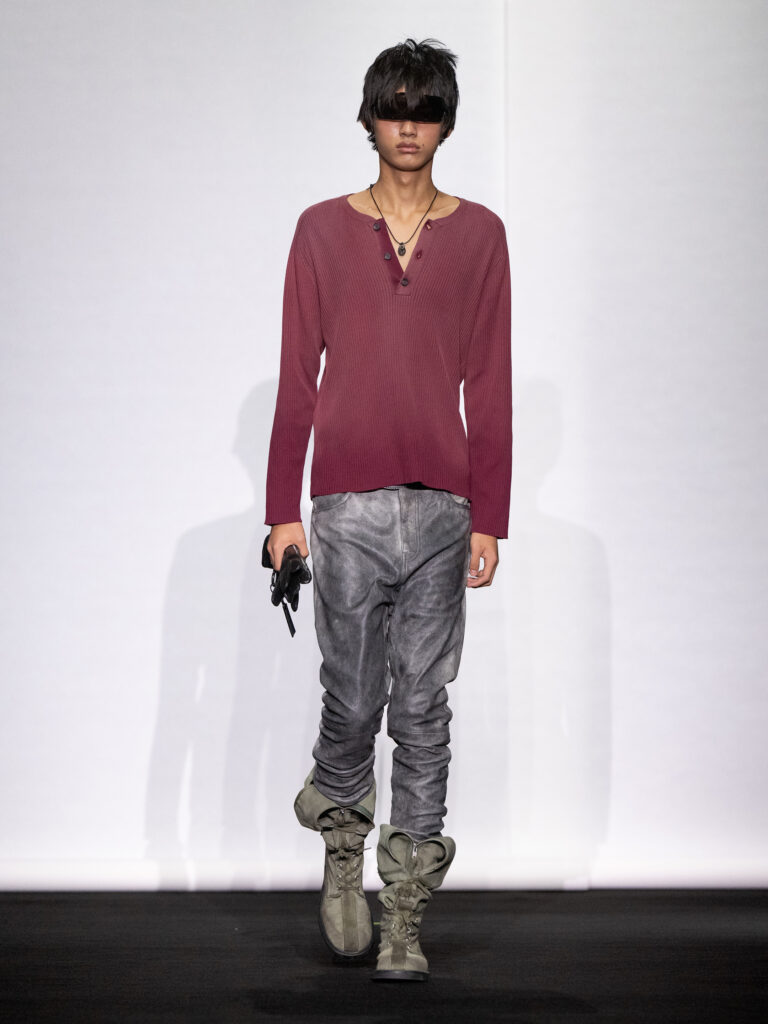
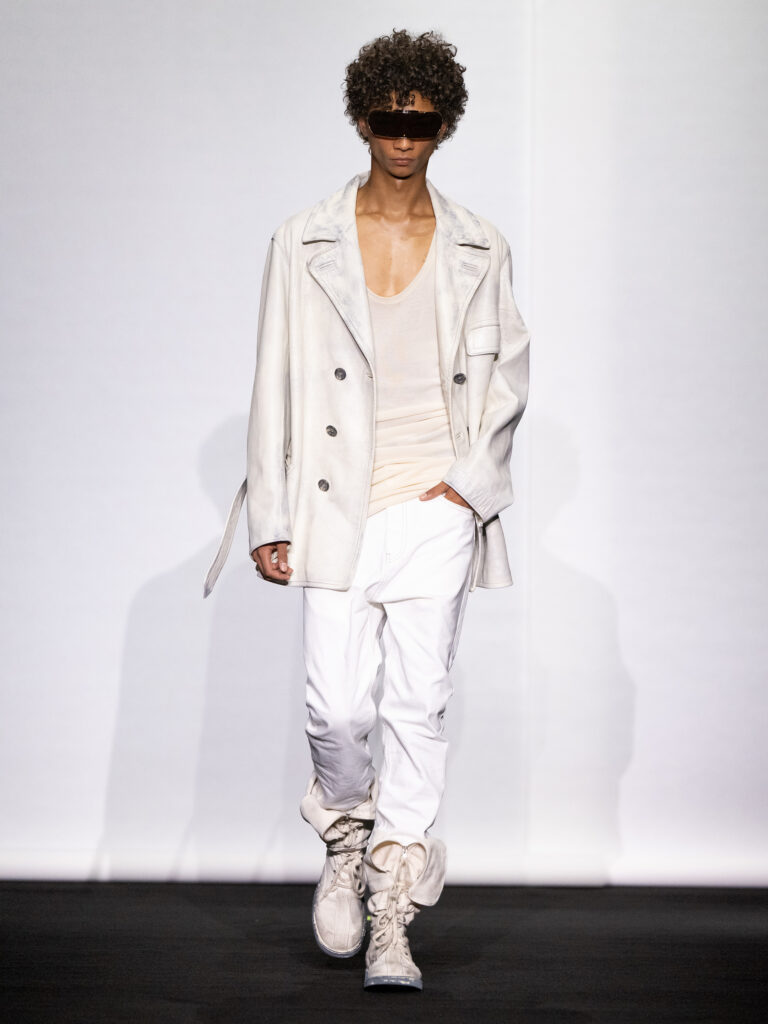
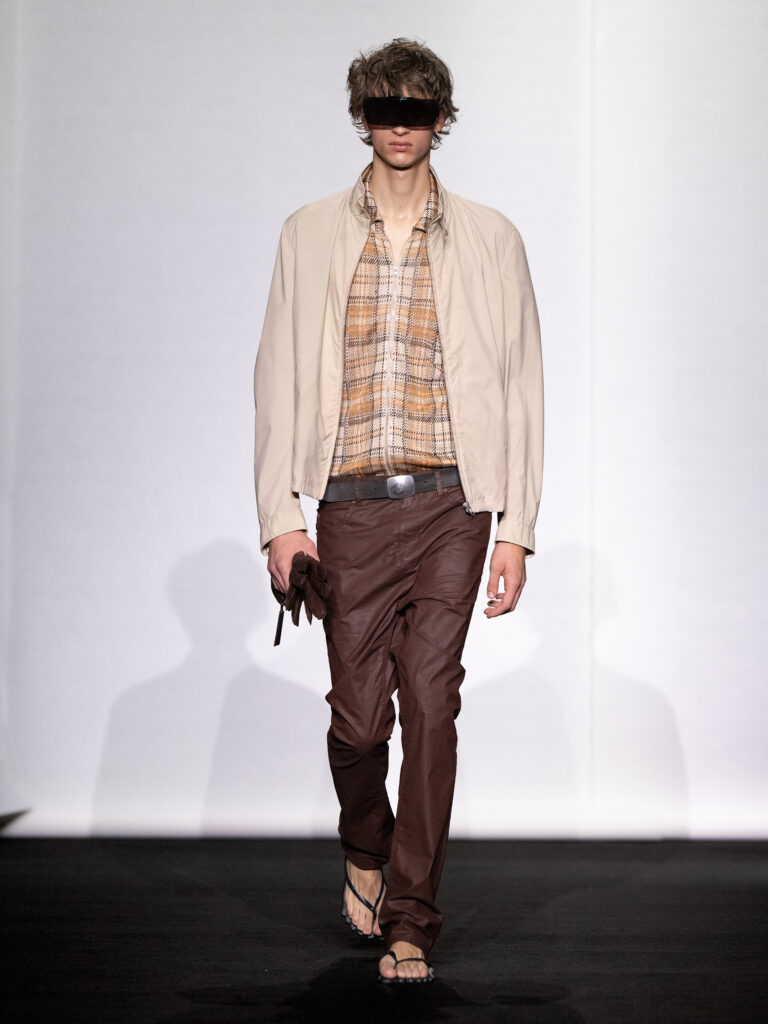
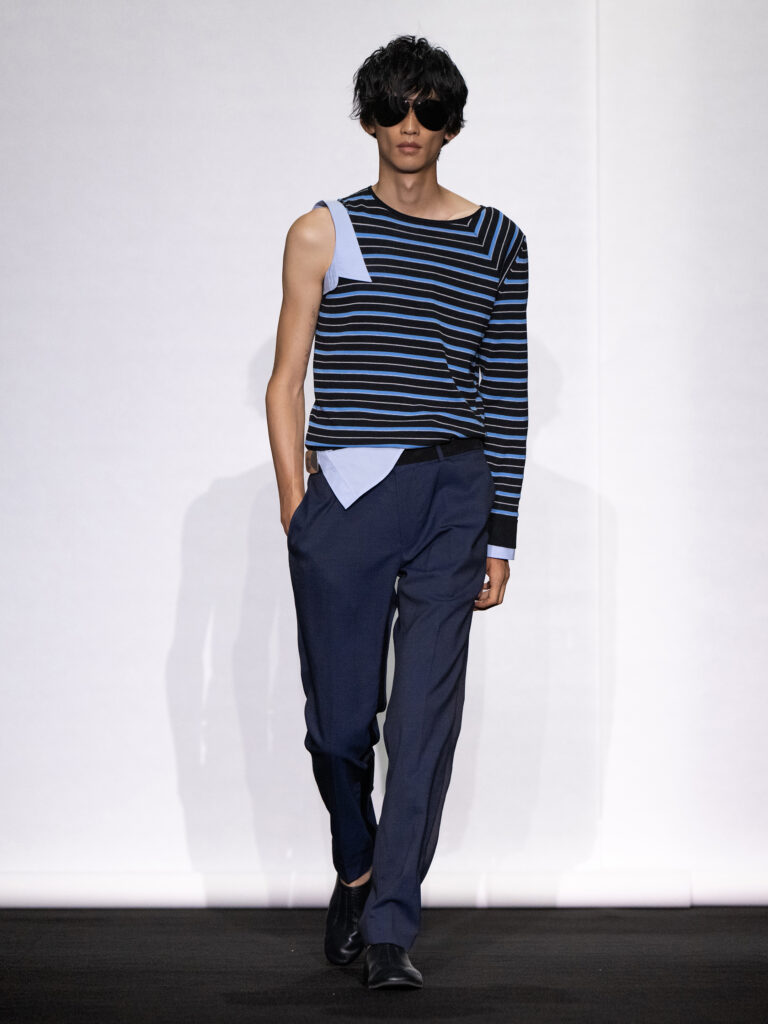
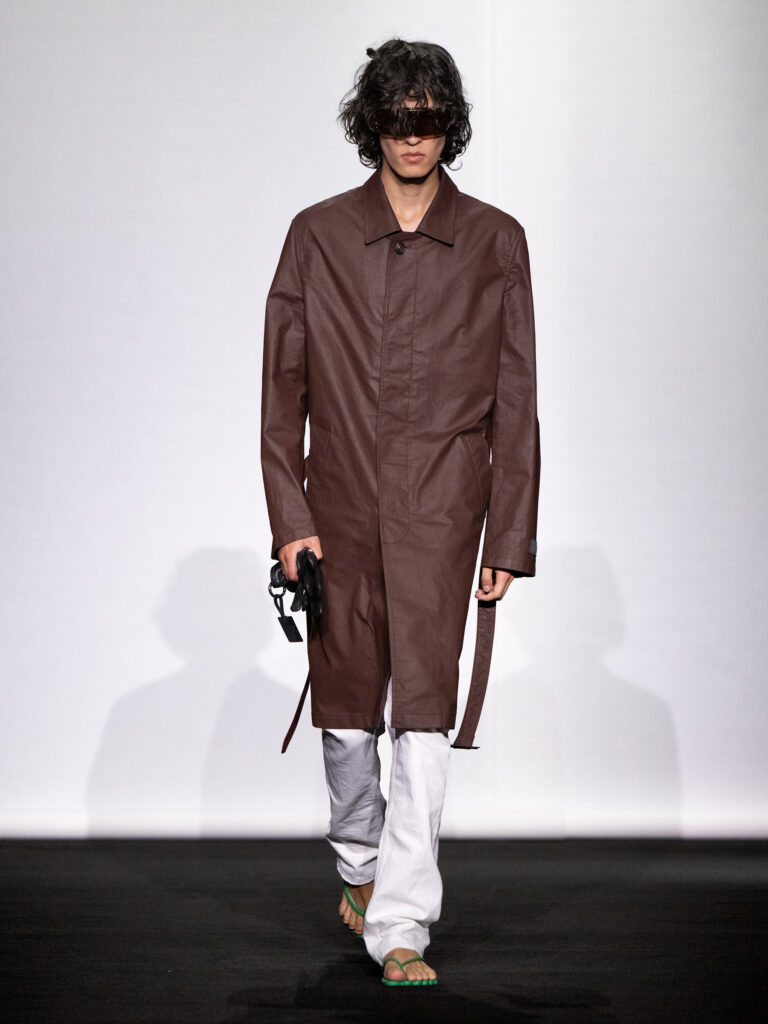
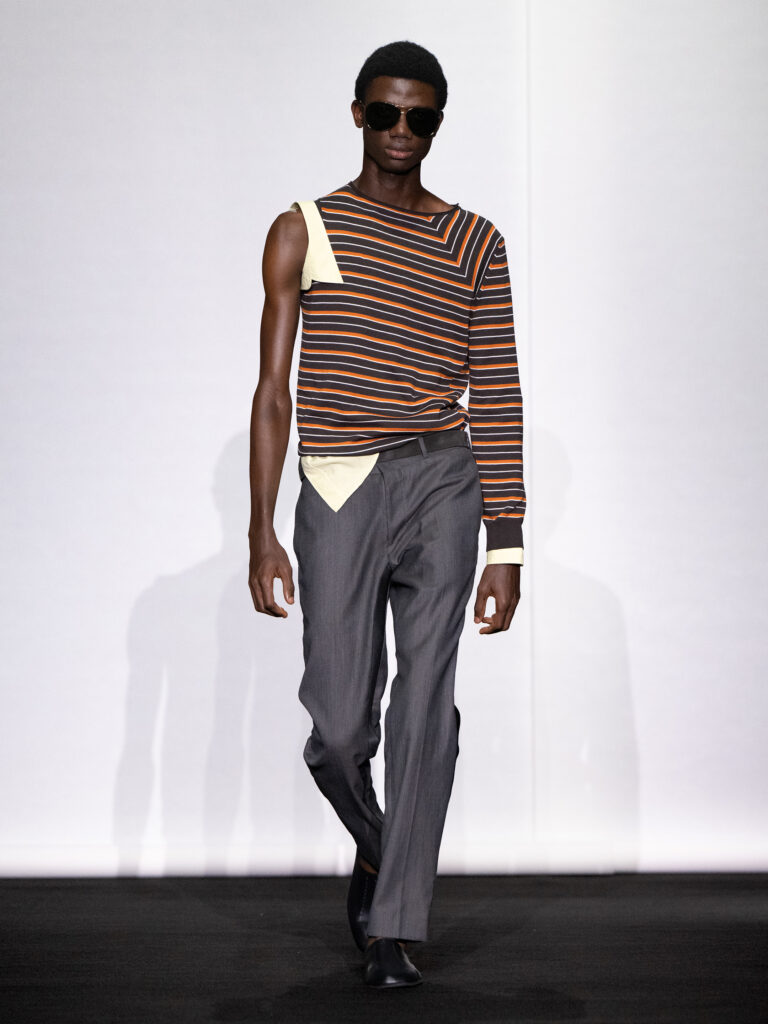
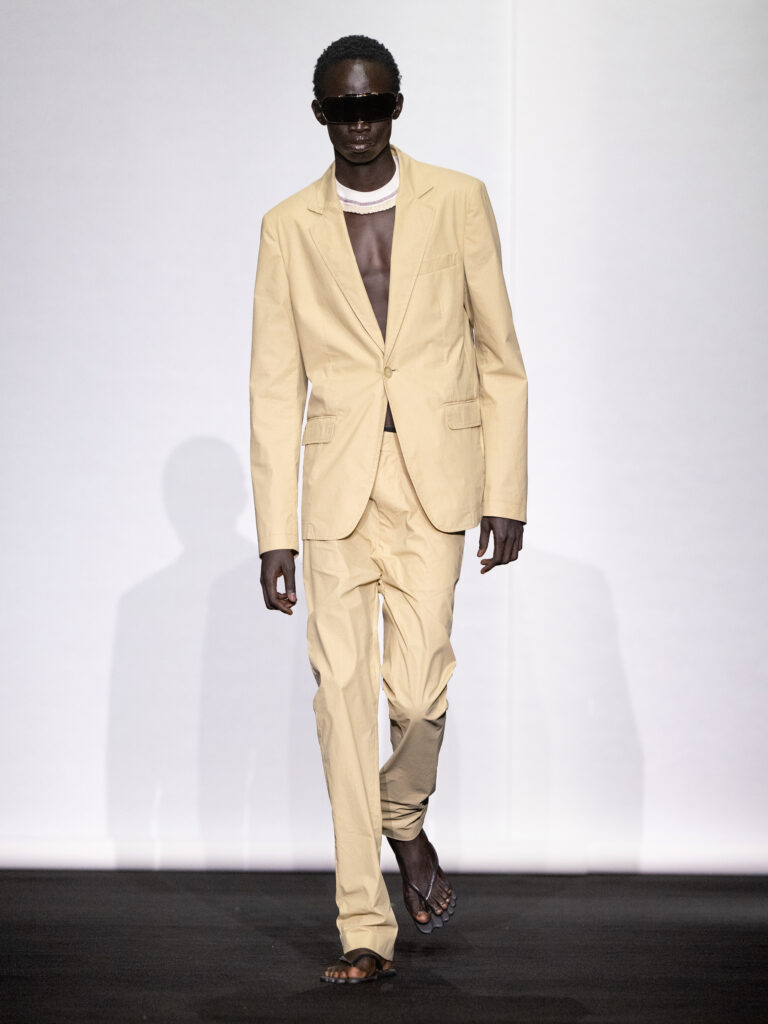
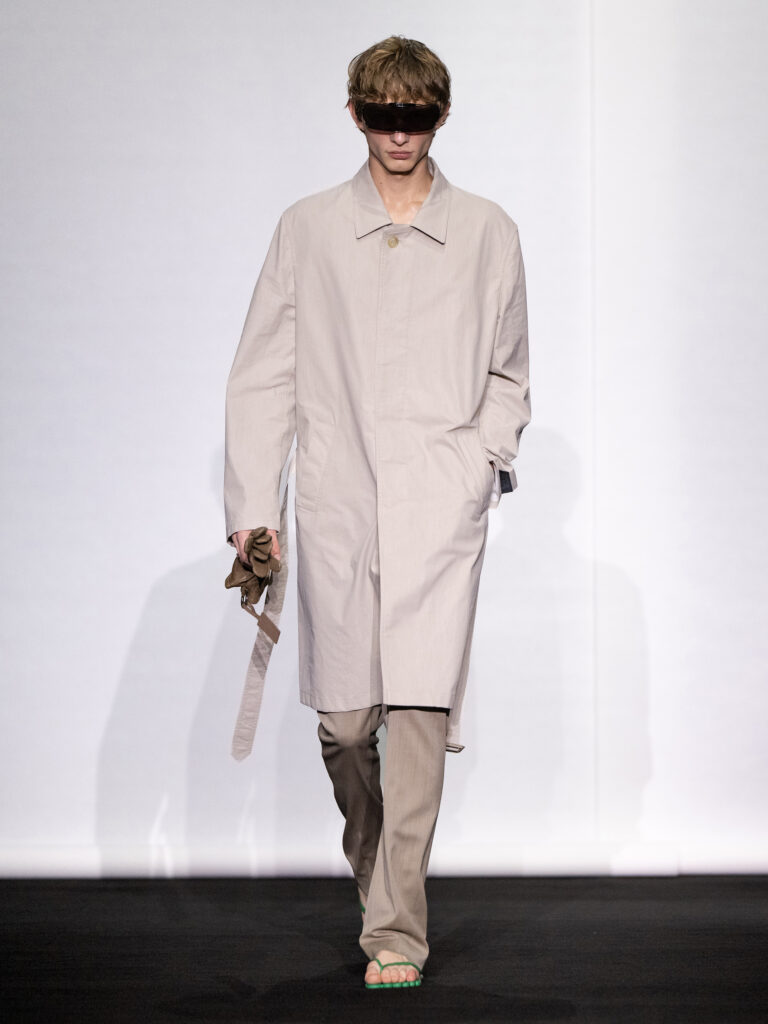
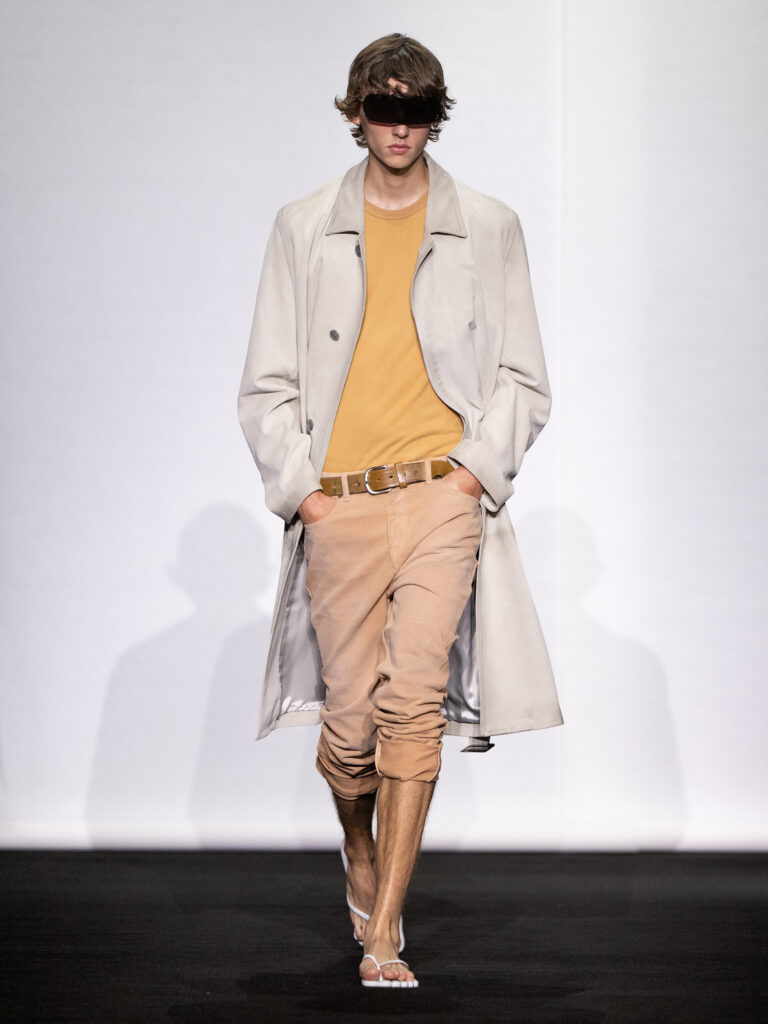
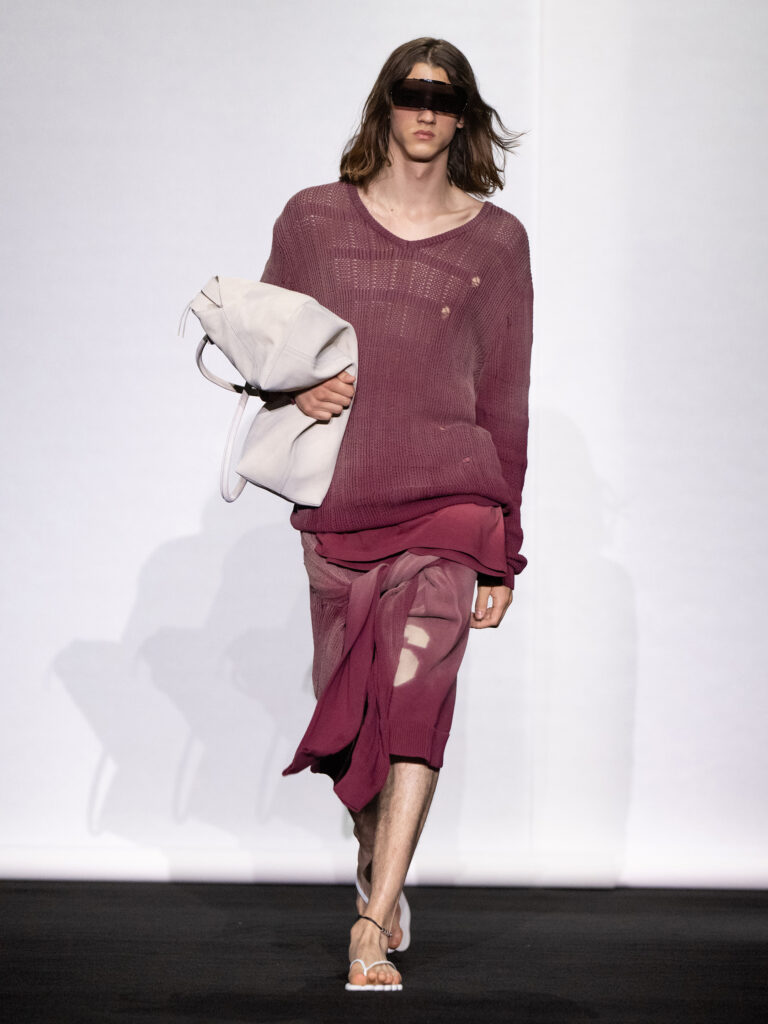
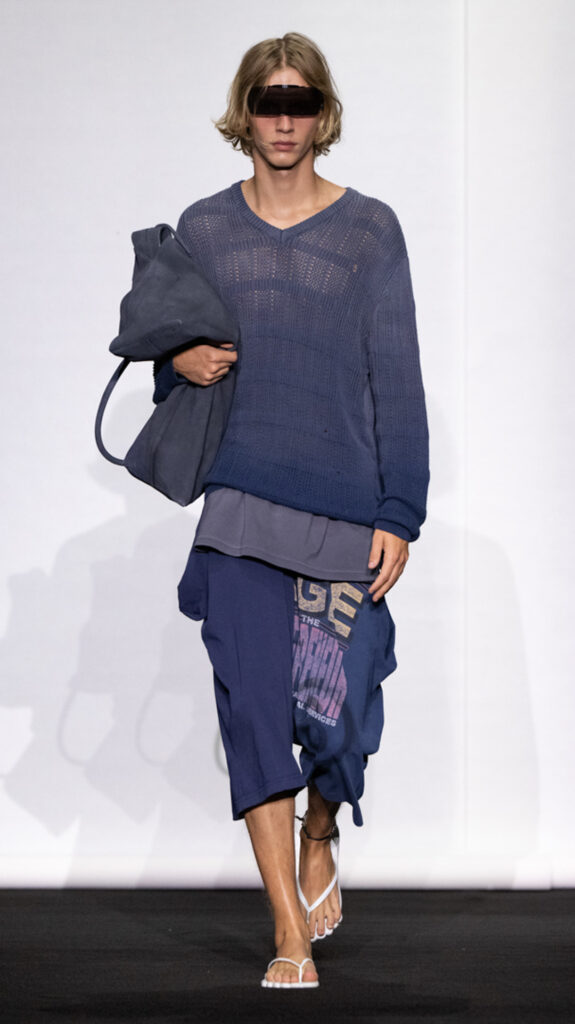
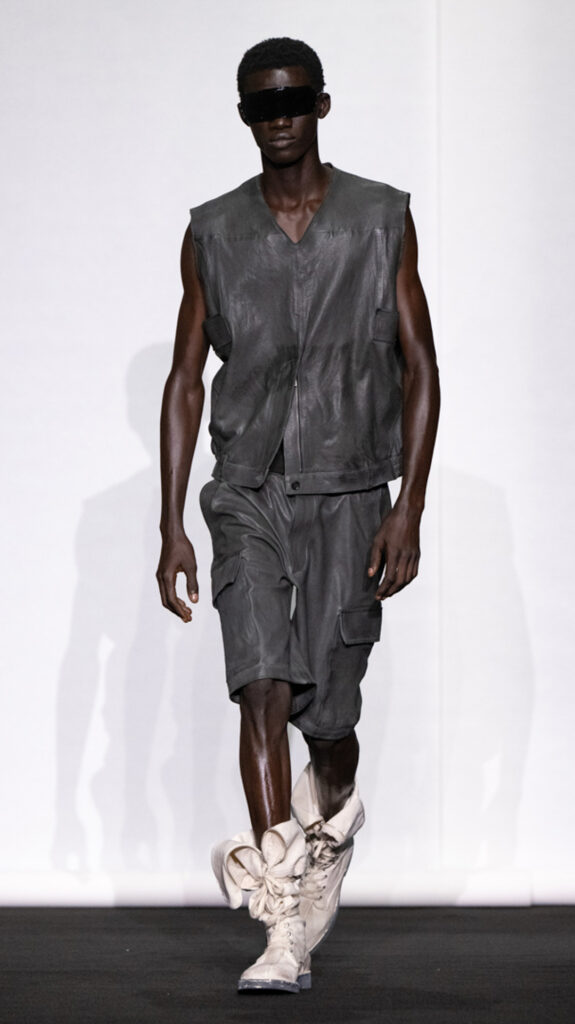
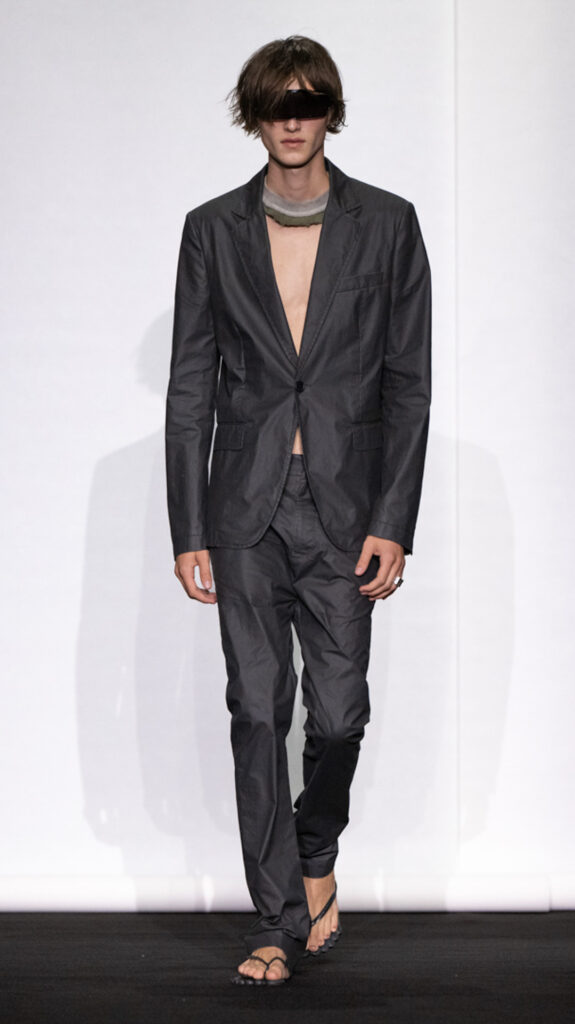
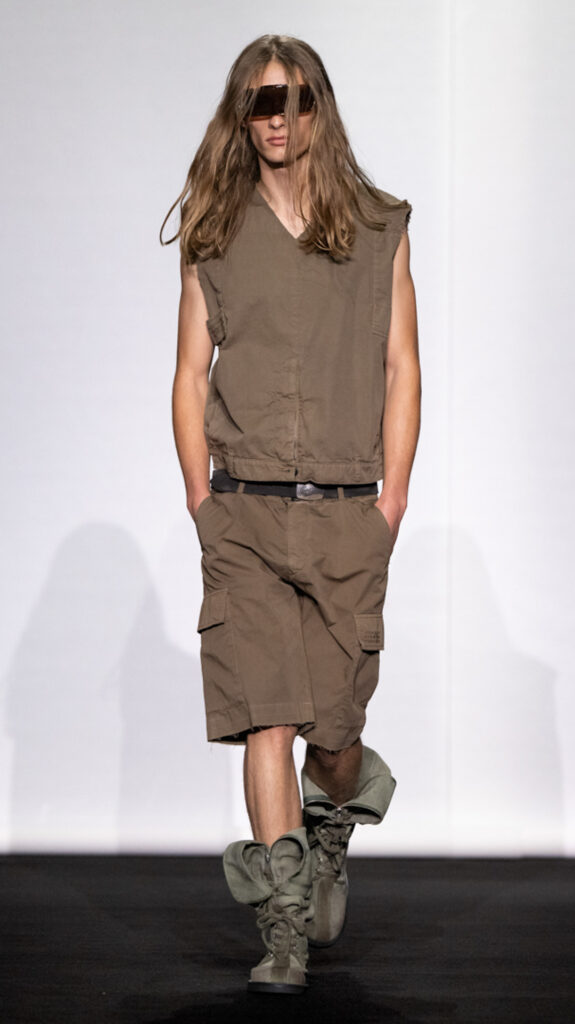
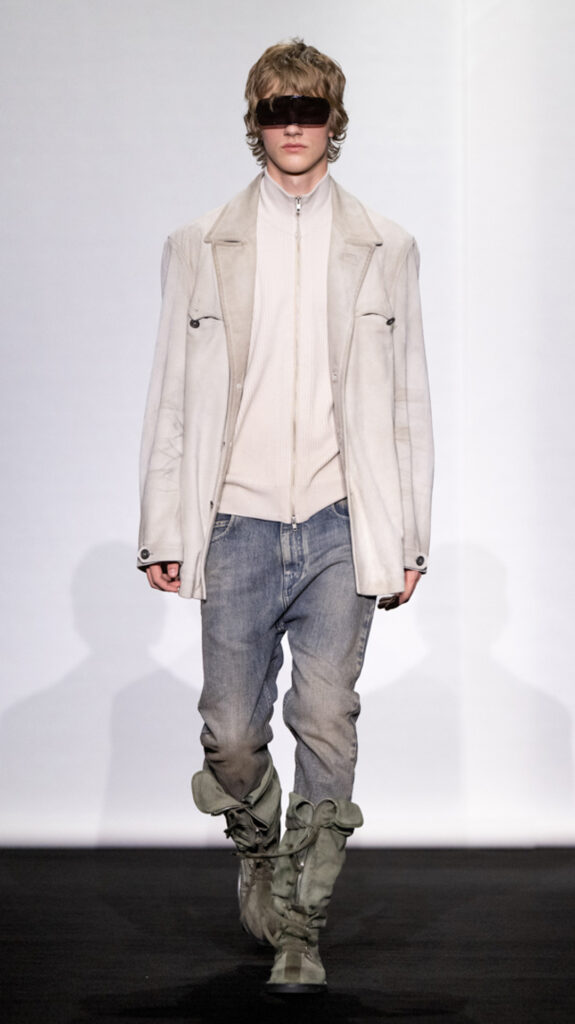
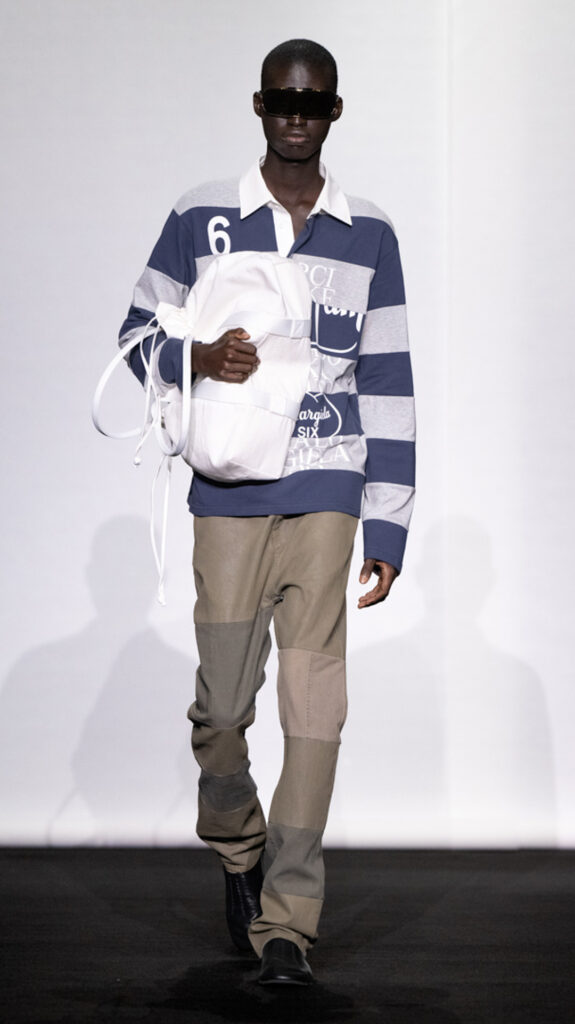
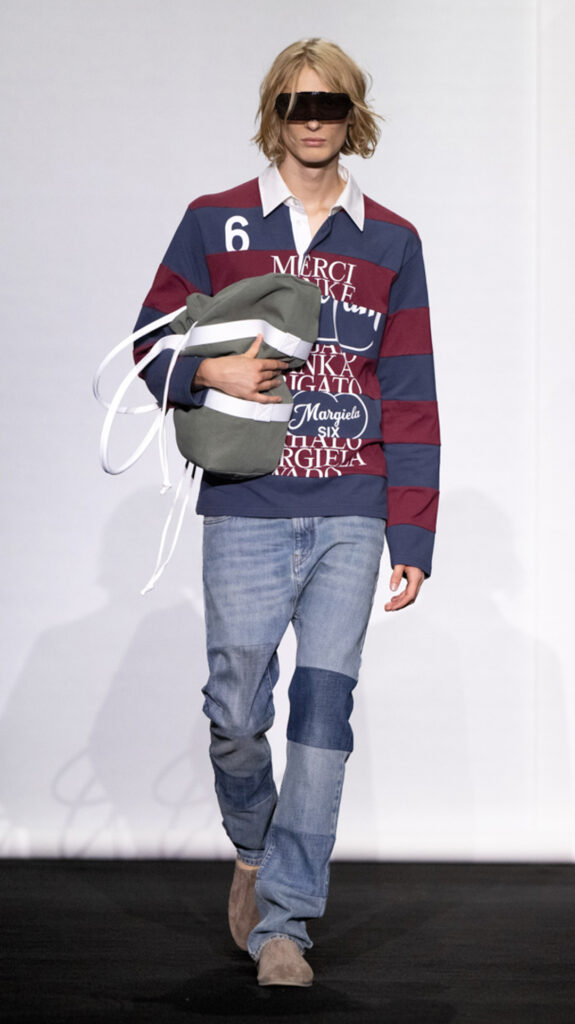
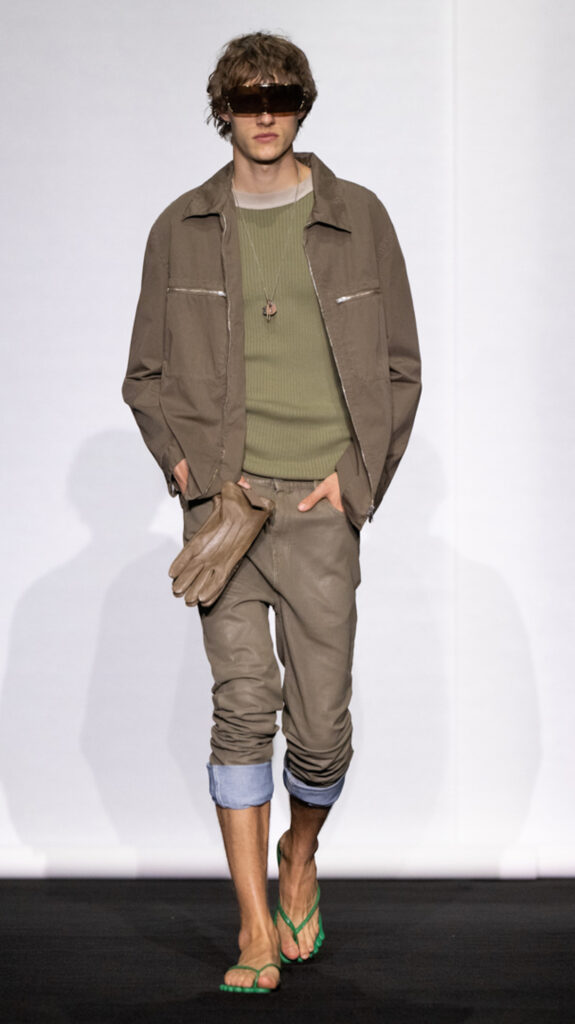
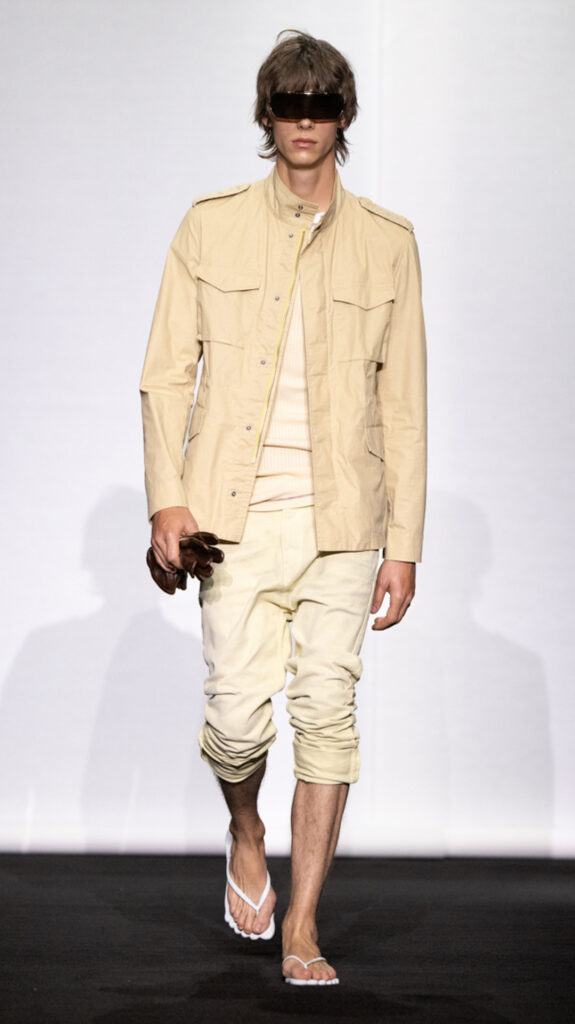
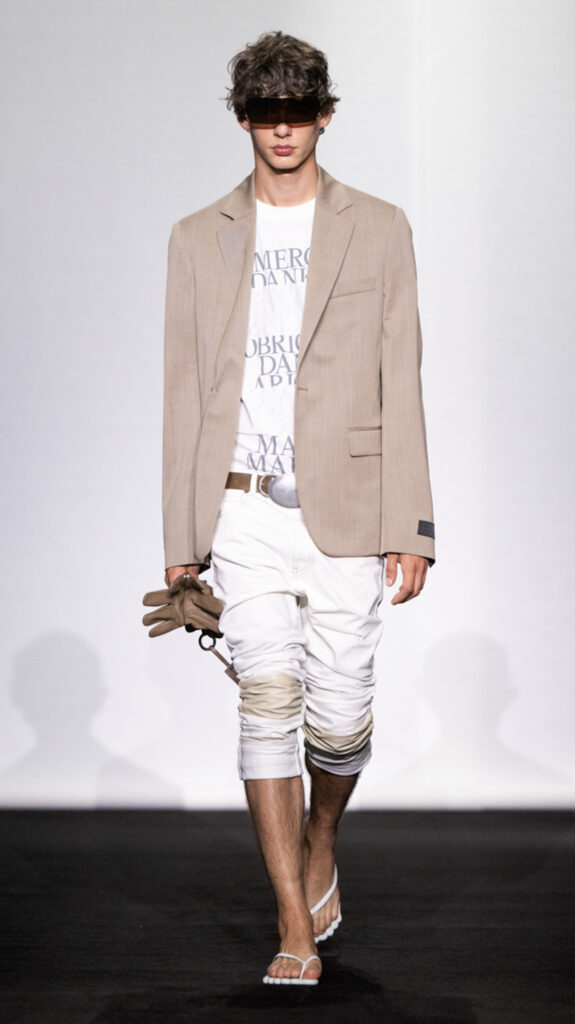
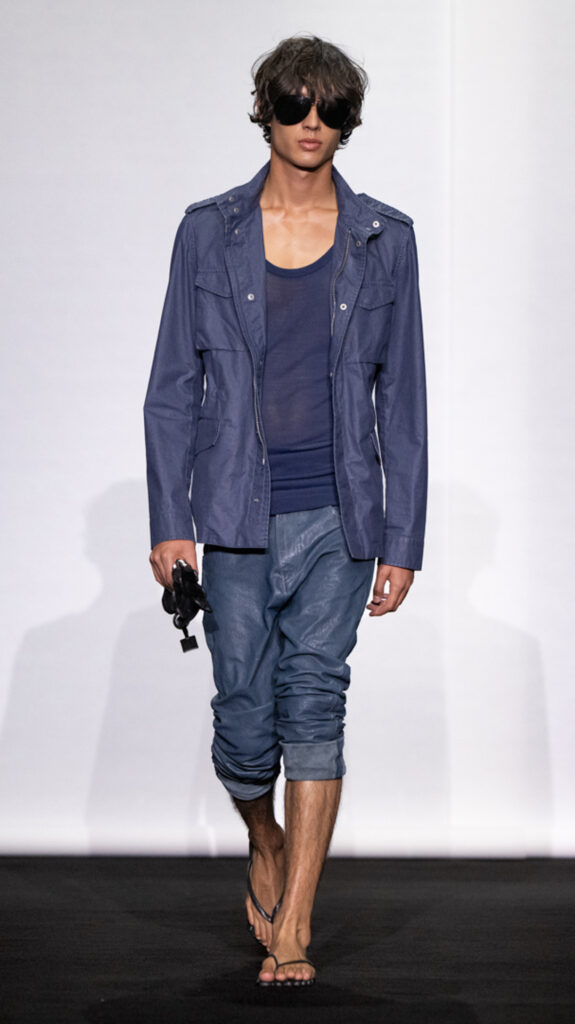
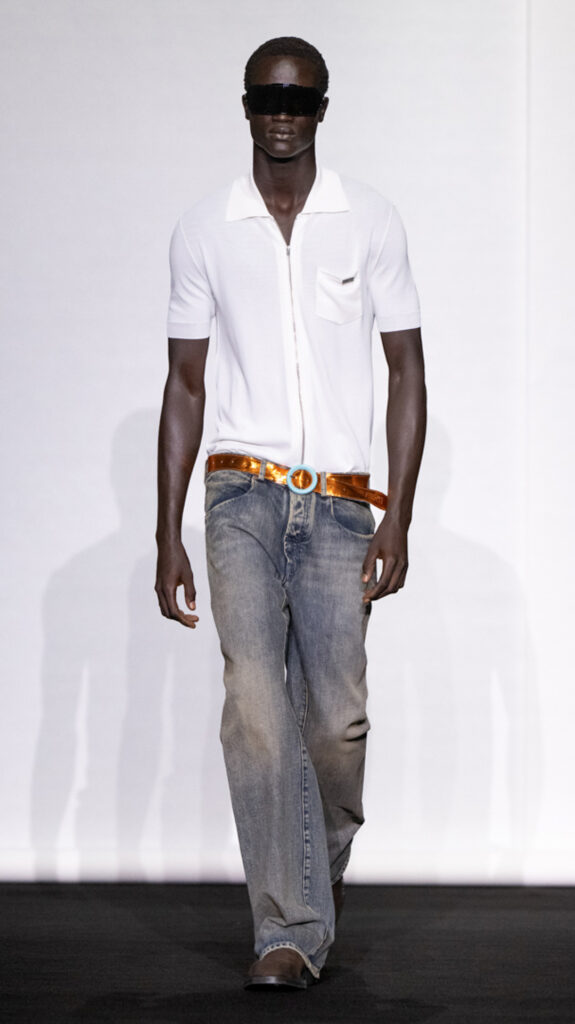
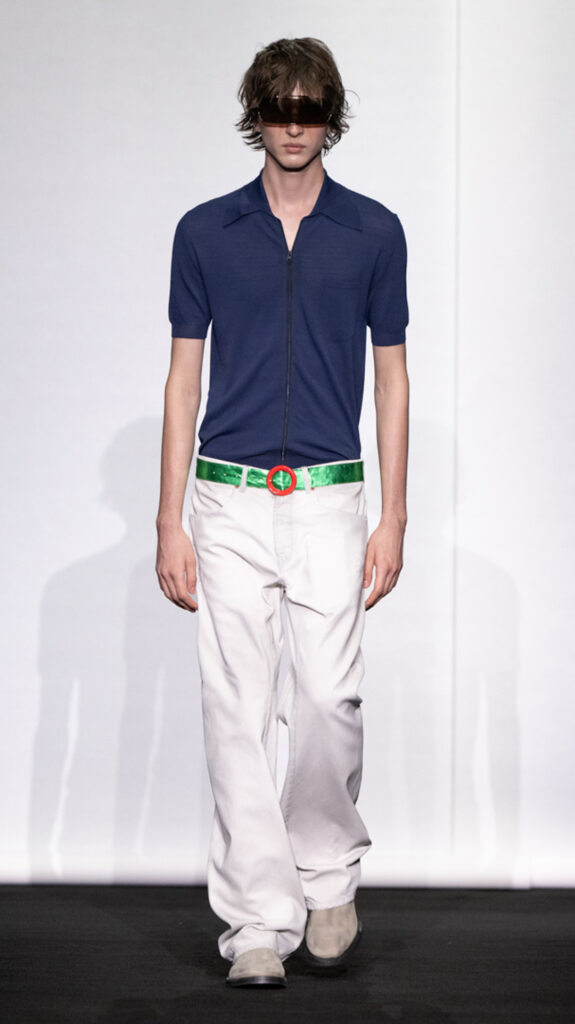
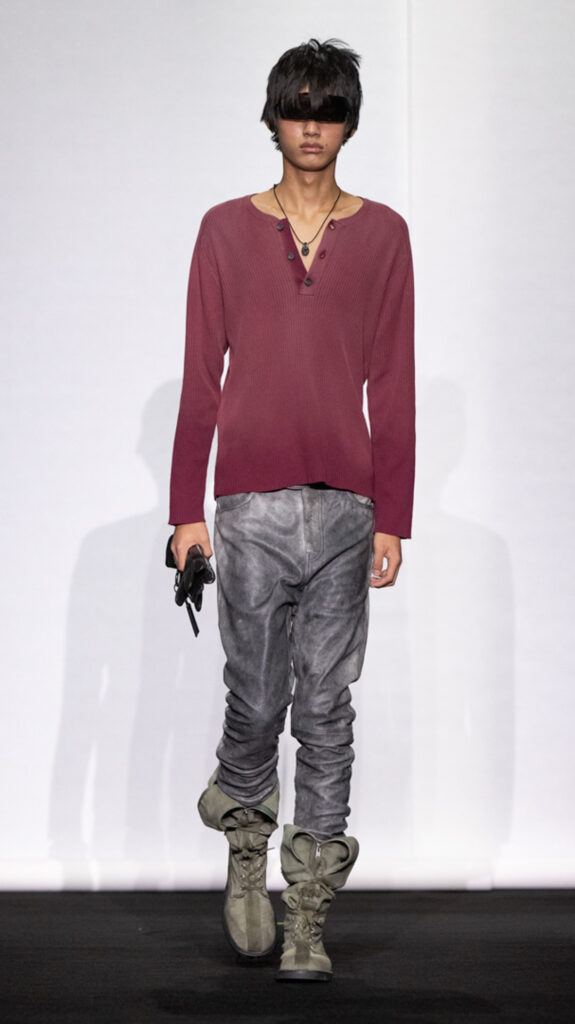
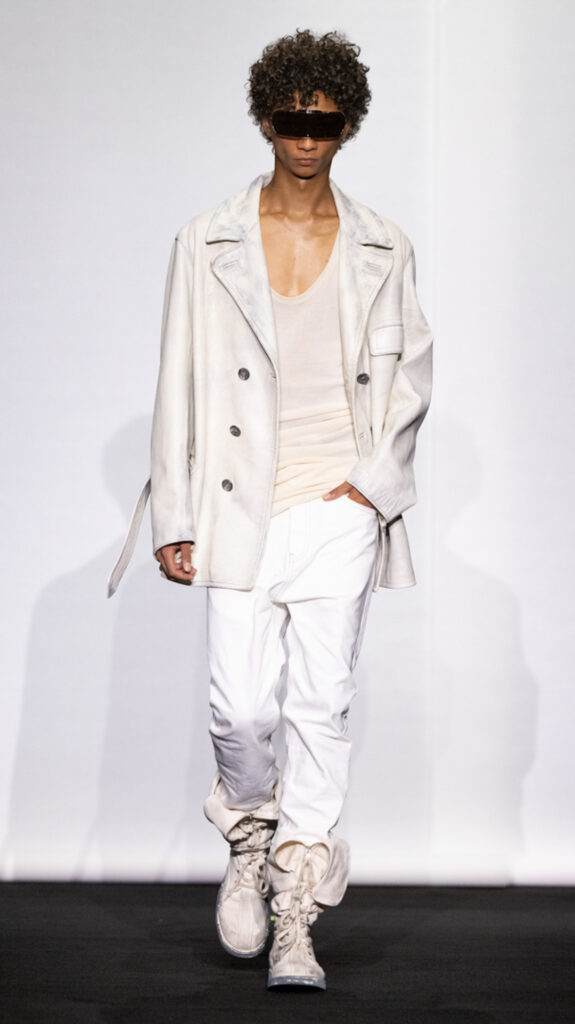
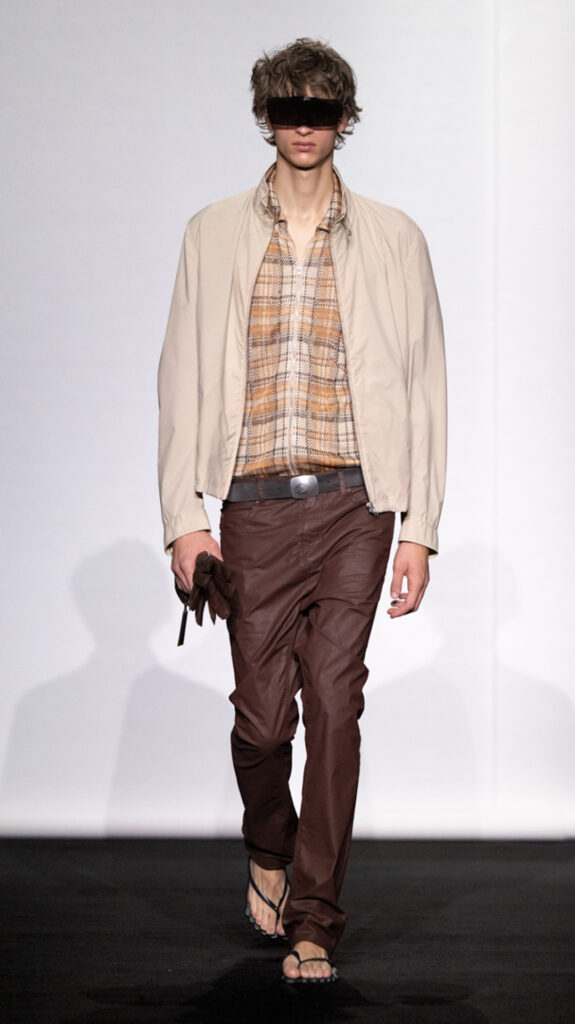
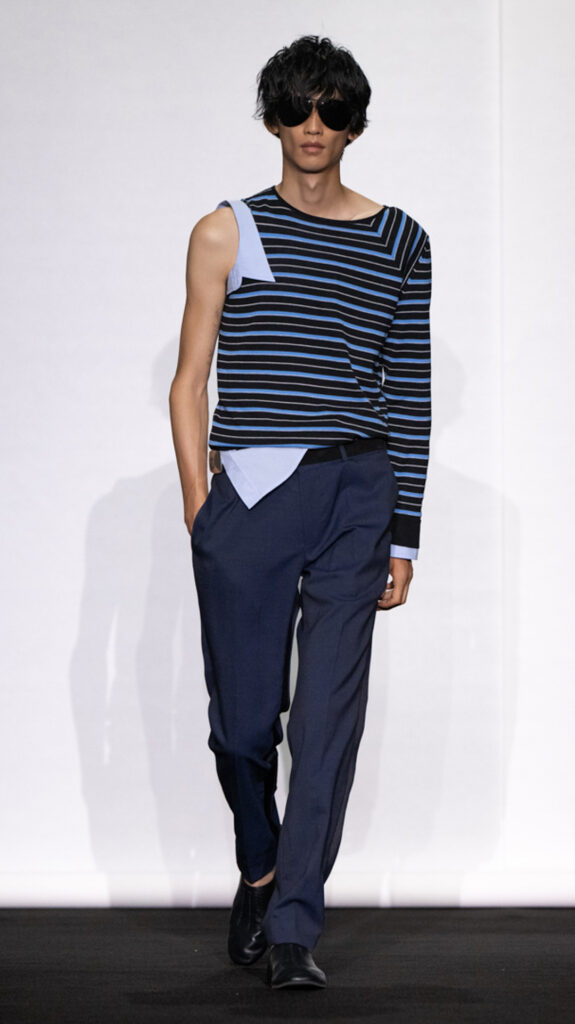
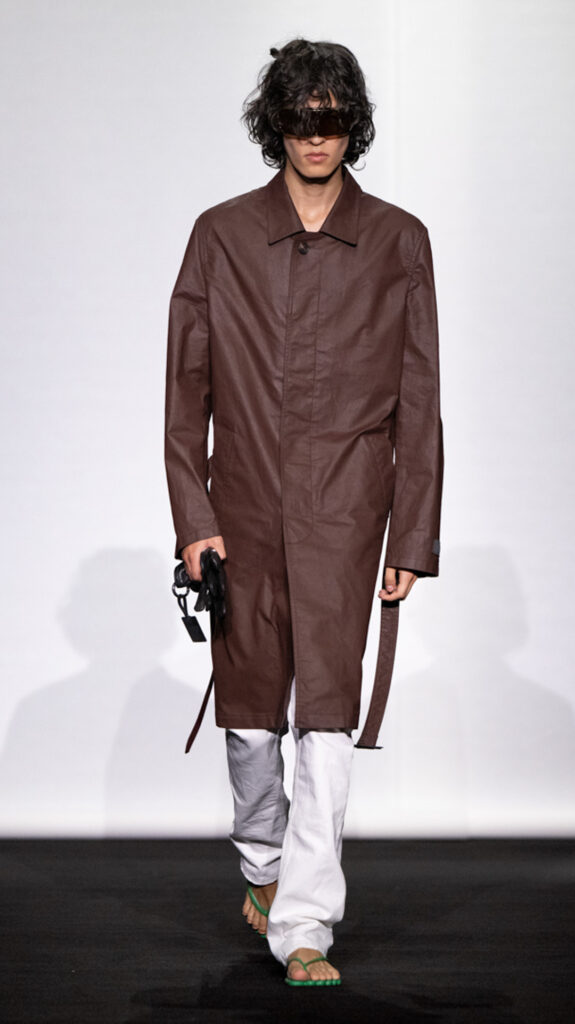
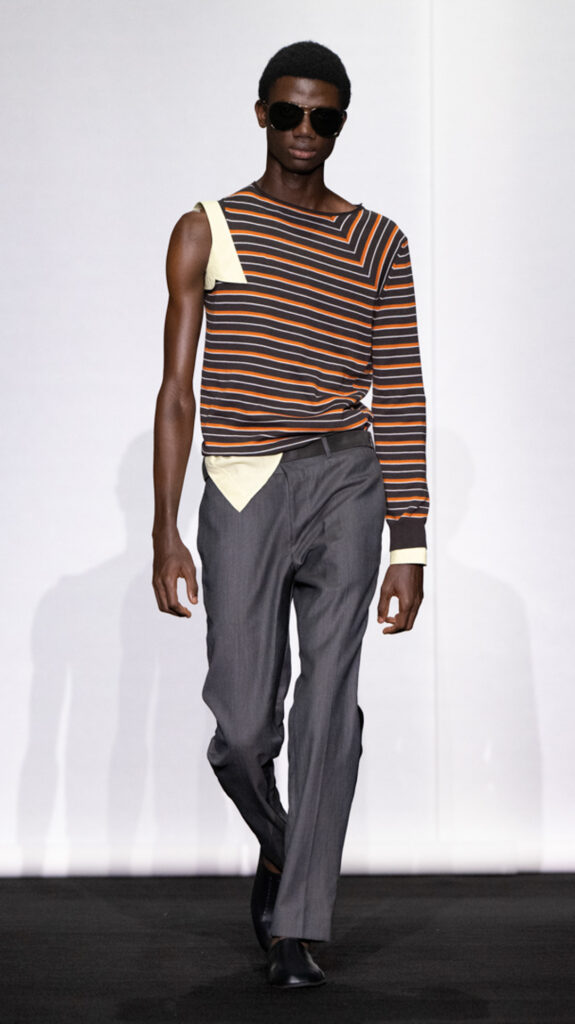
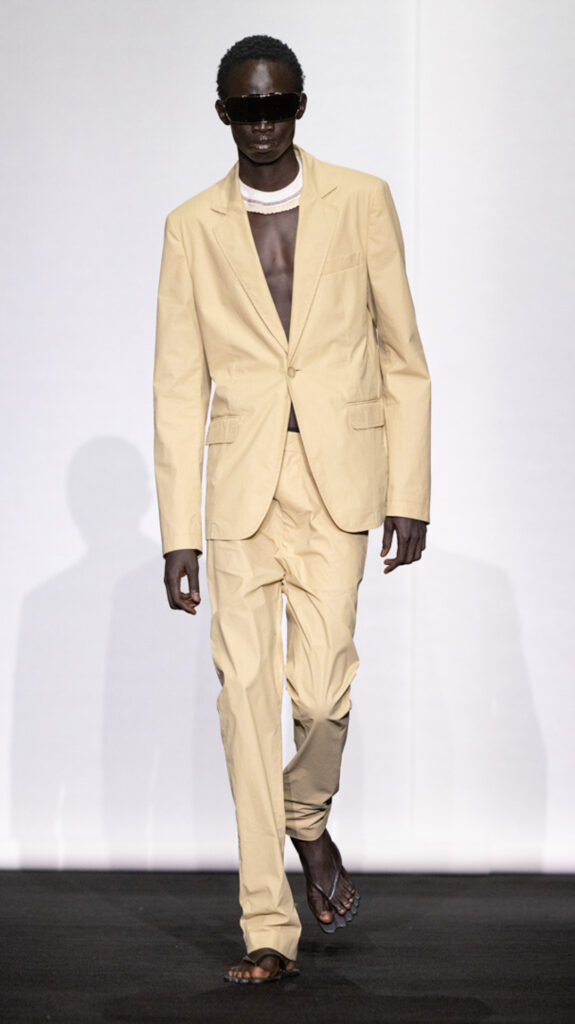
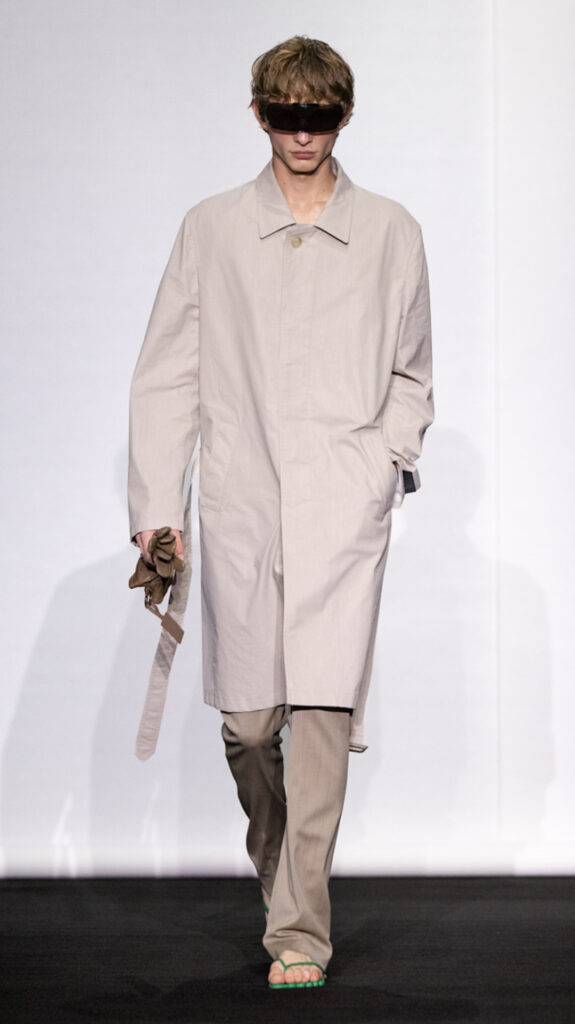
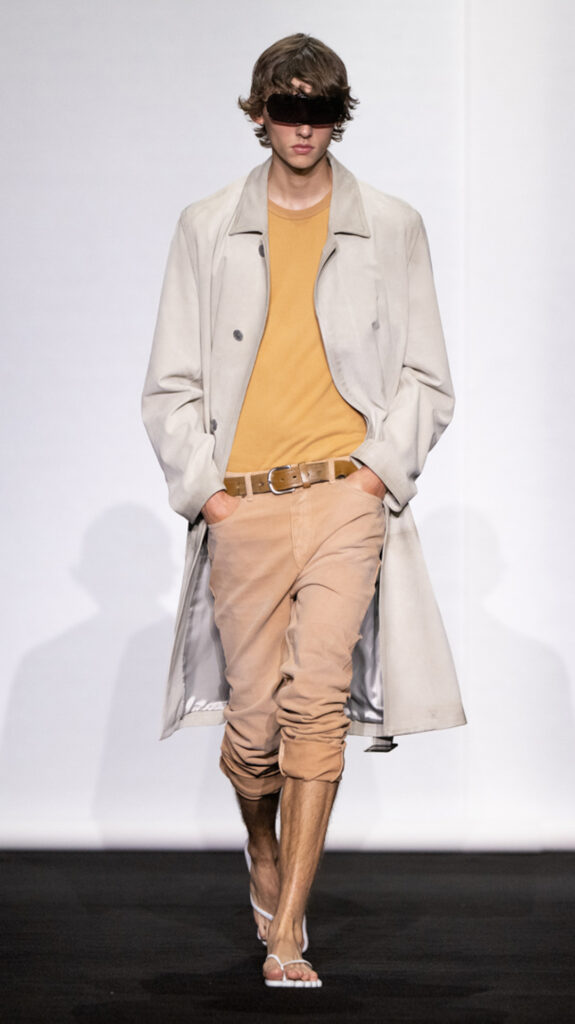
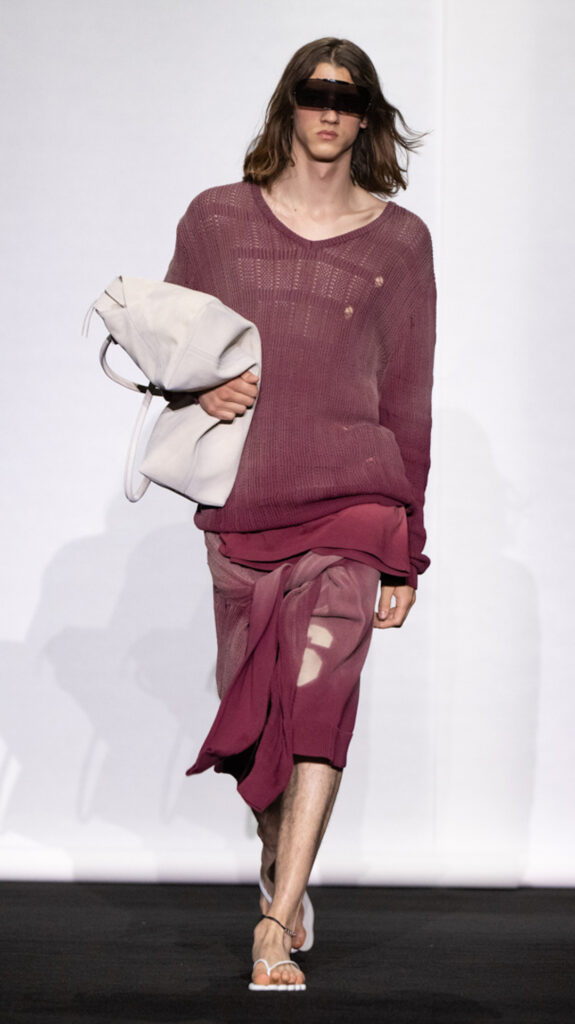
In menswear, the same logic unfolds sideways. On shirts, collars and button plackets shift from the centre to the side of the body. The wardrobe itself remains simple and utilitarian — tailored suits, biker jackets, shirts, T-shirts, trousers — but what changes is where things begin and end. Construction is simplified as well: reduced fastenings, snap buttons, shrunken proportions and easy fabrics make the clothes quick to put on, take off and reposition. Overdyeing, starch treatments and painted, paper-like surfaces alter materials that are otherwise familiar.
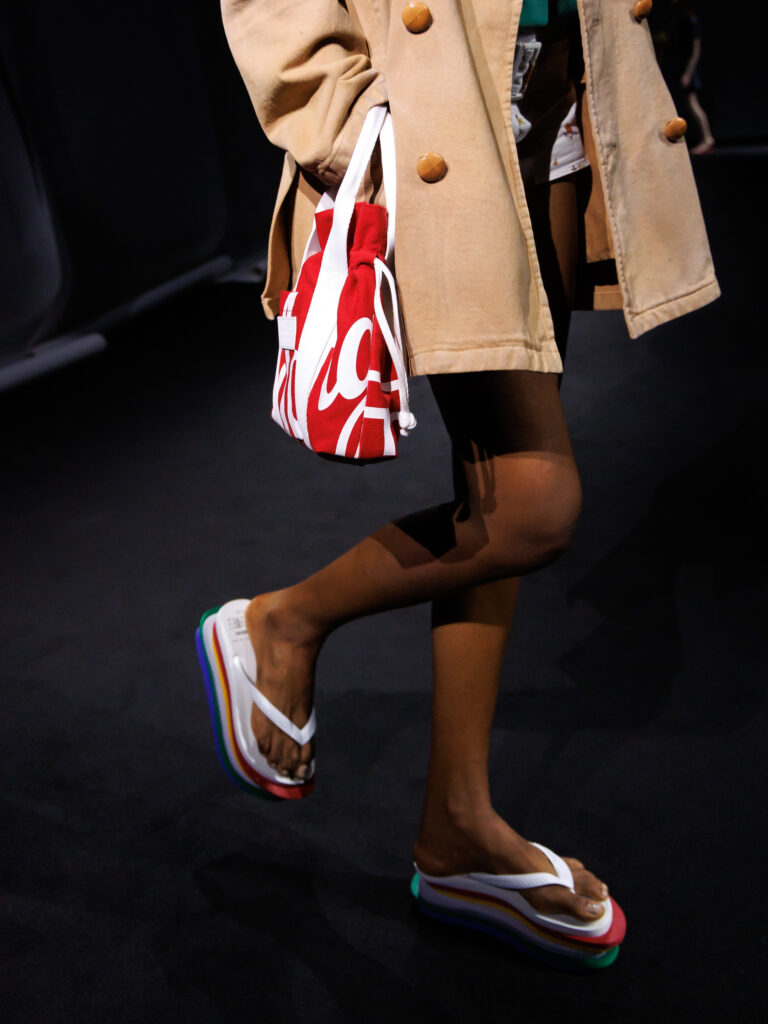
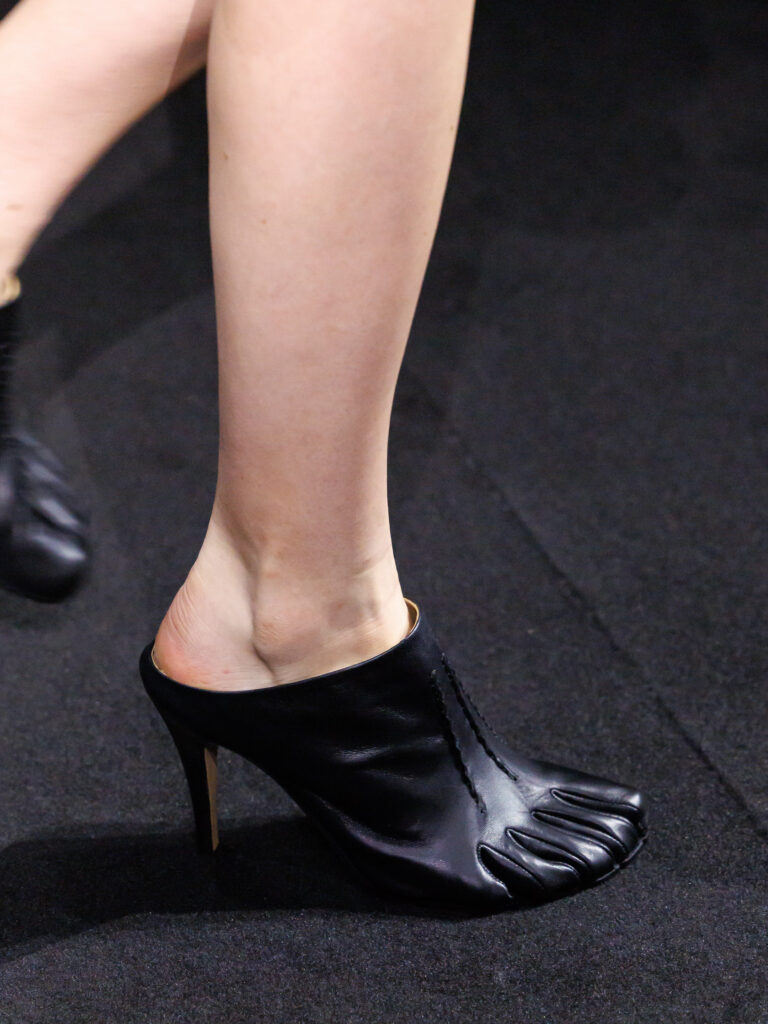
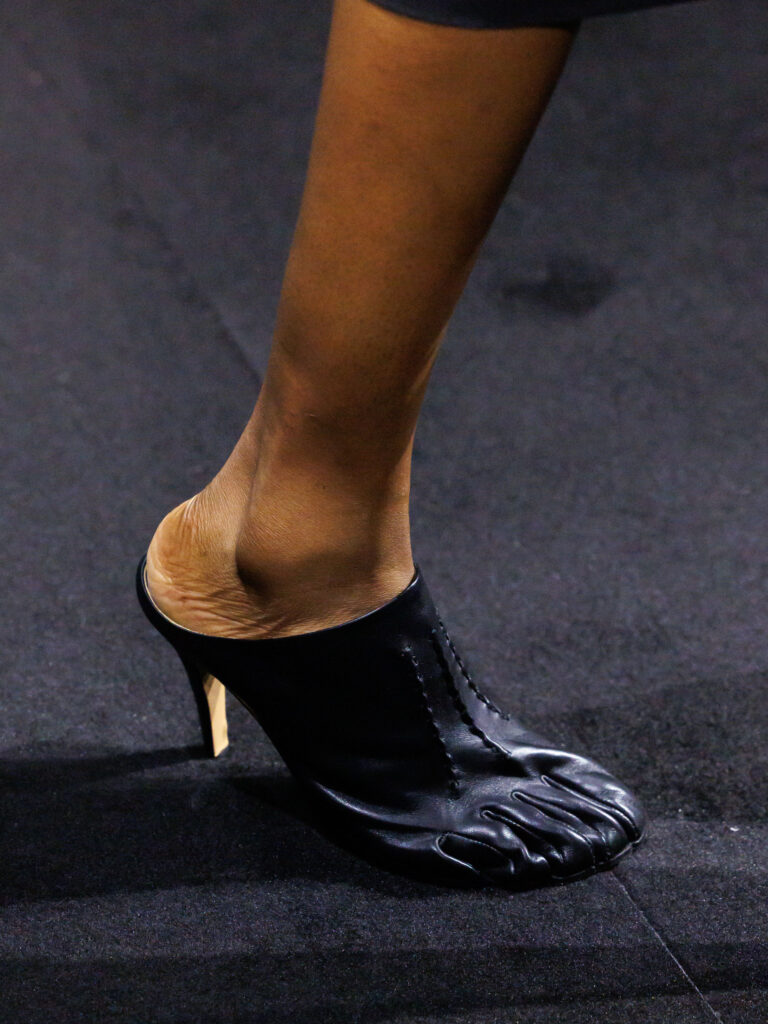
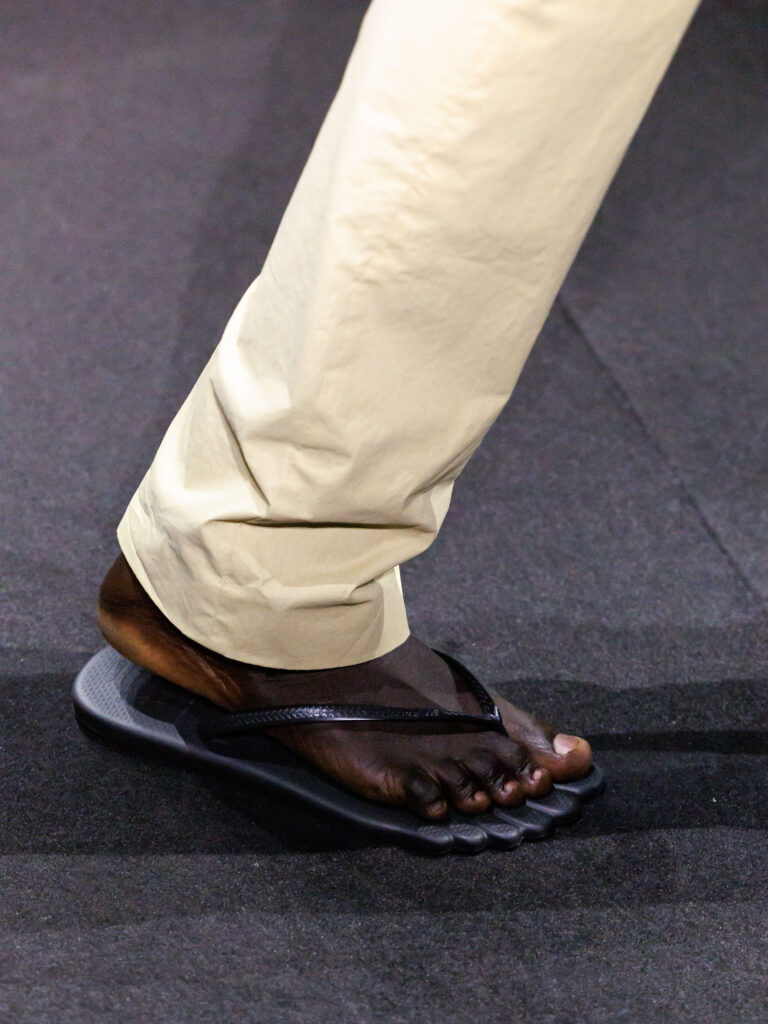
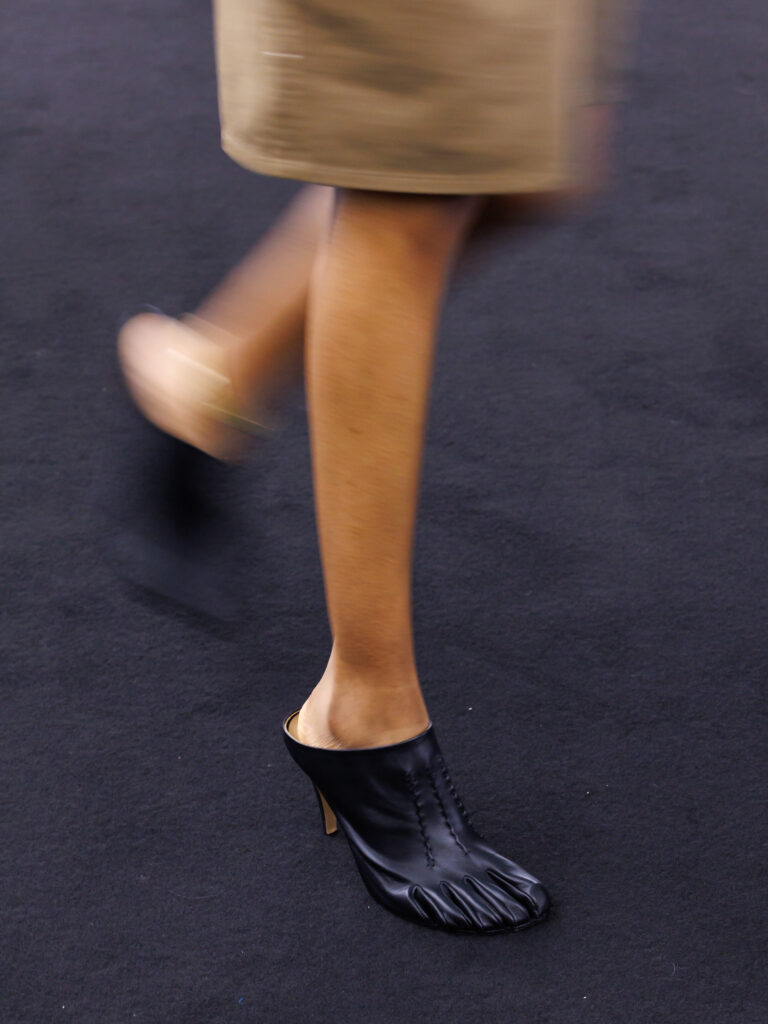
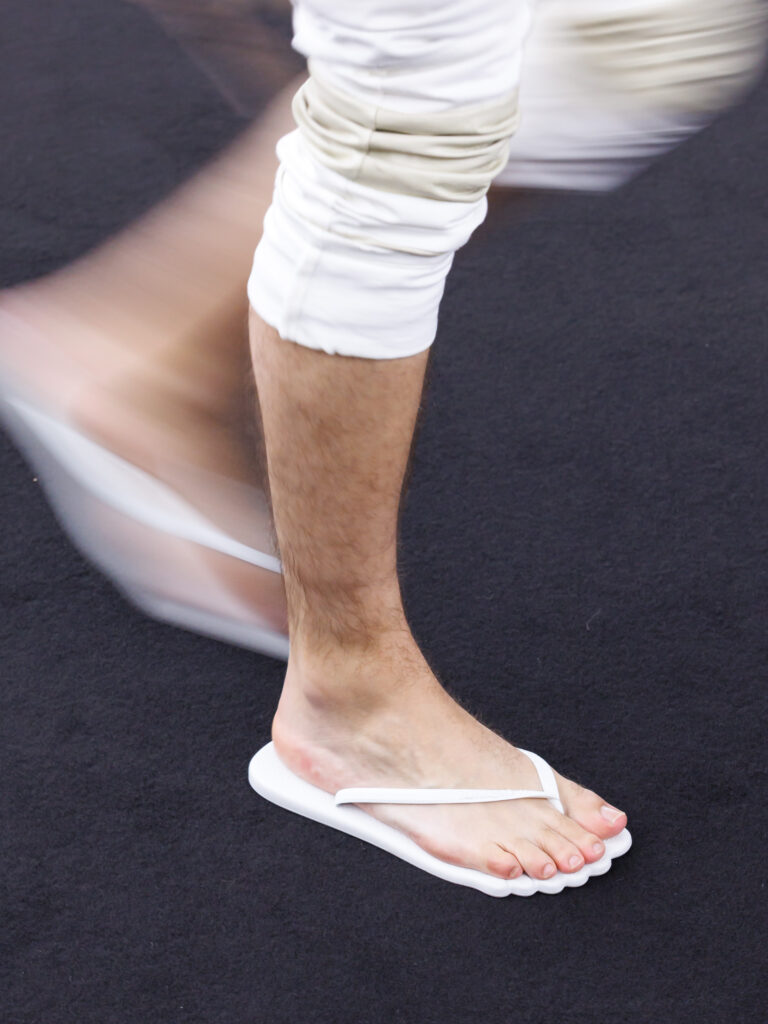
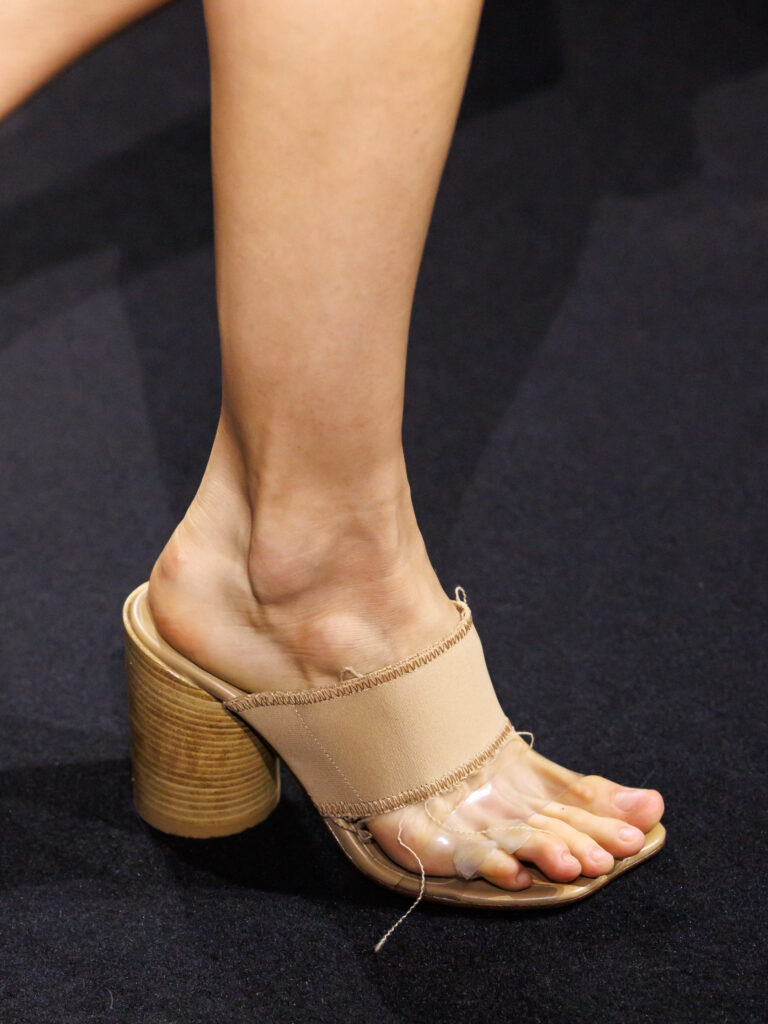
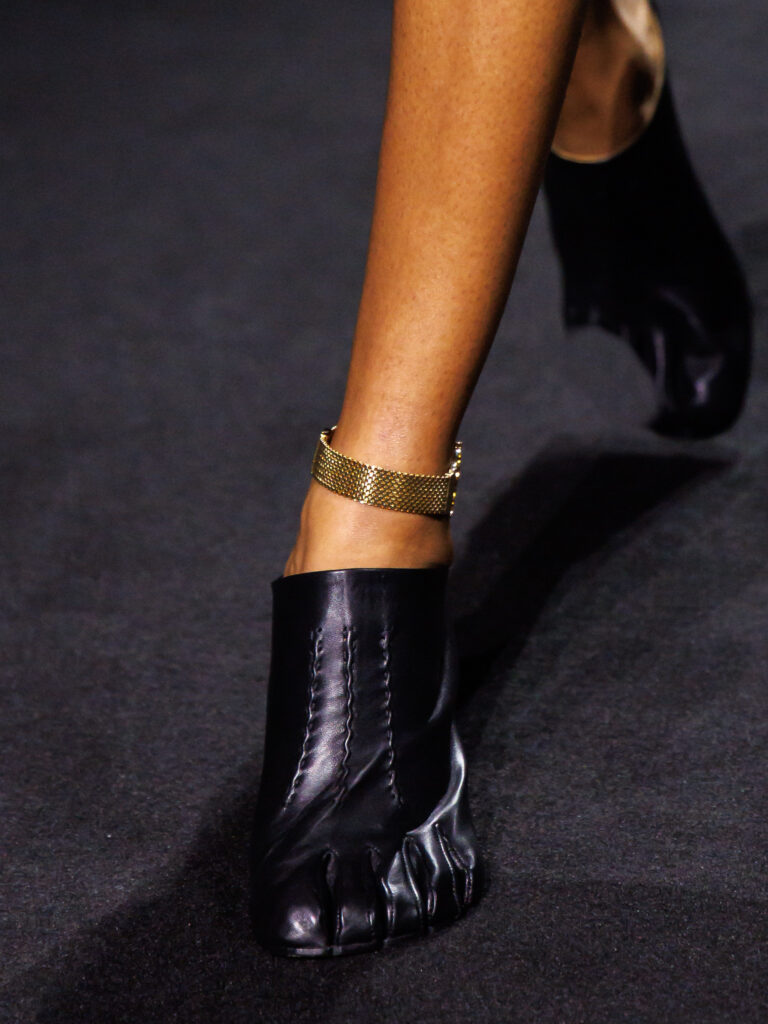
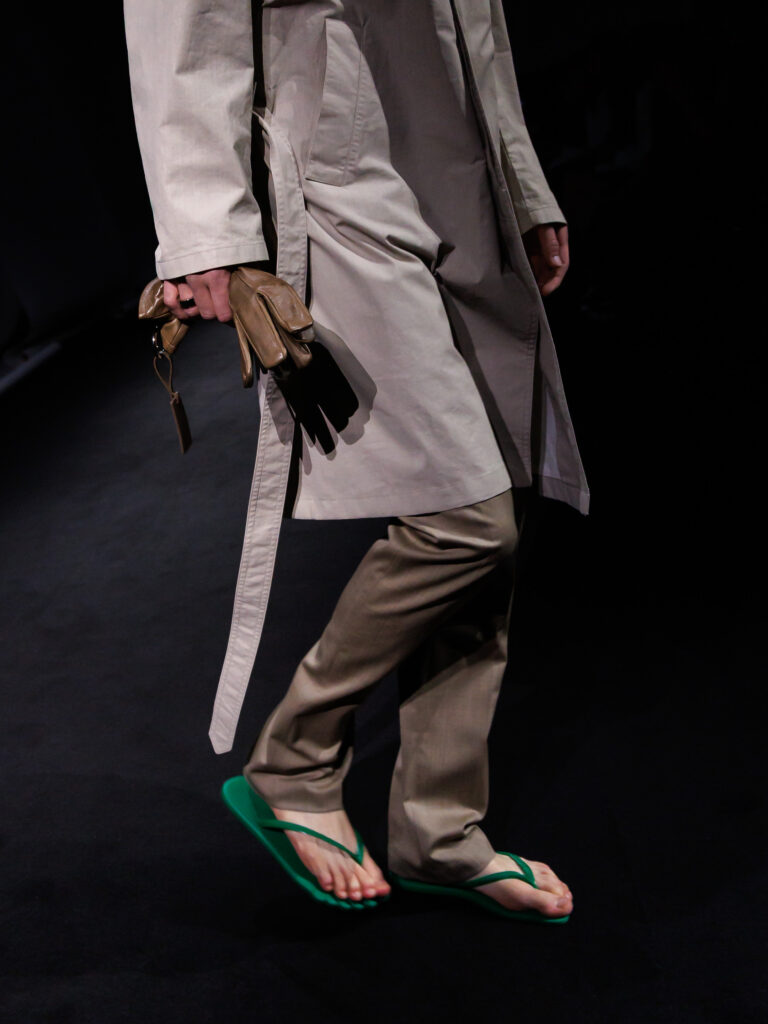
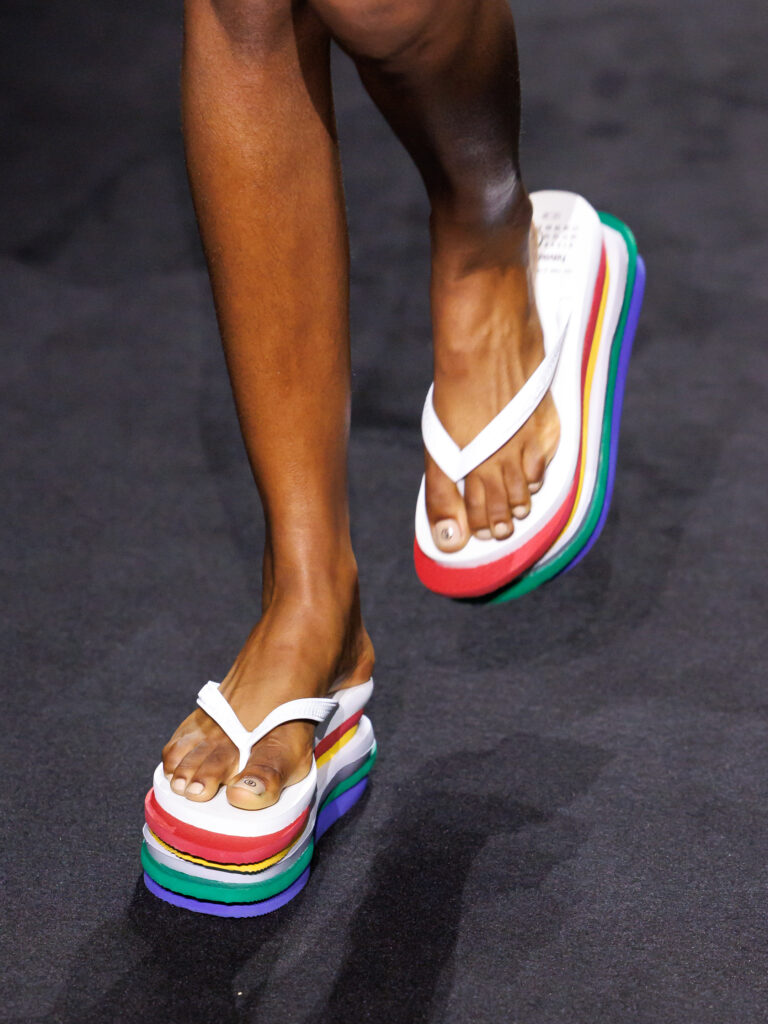
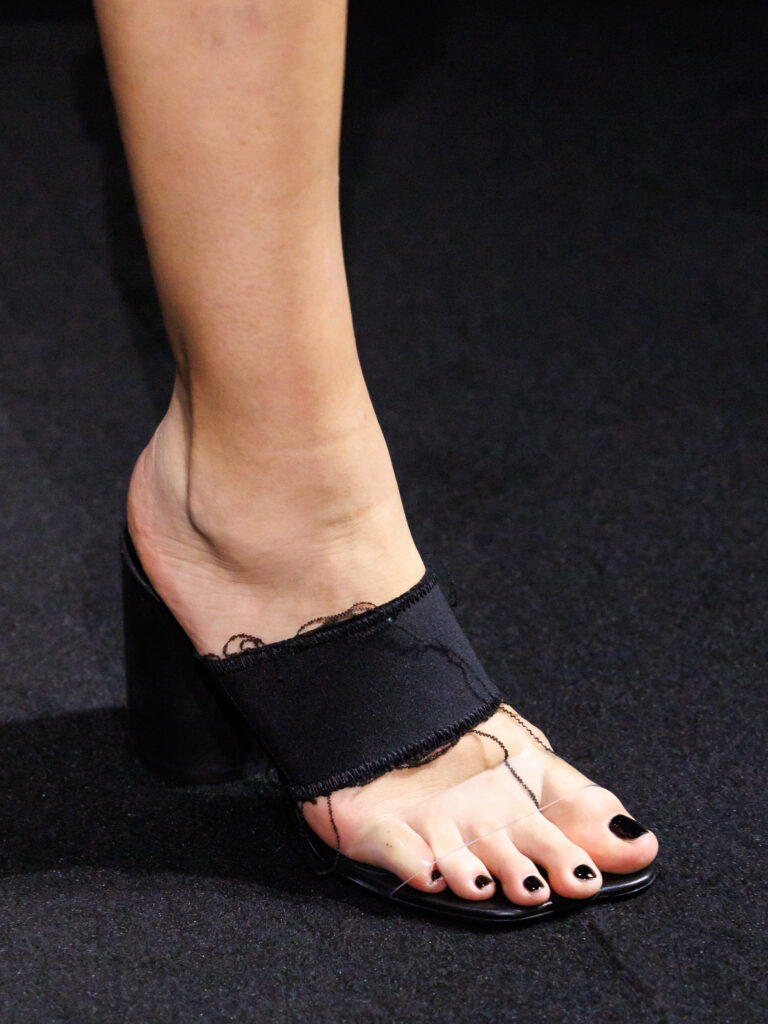
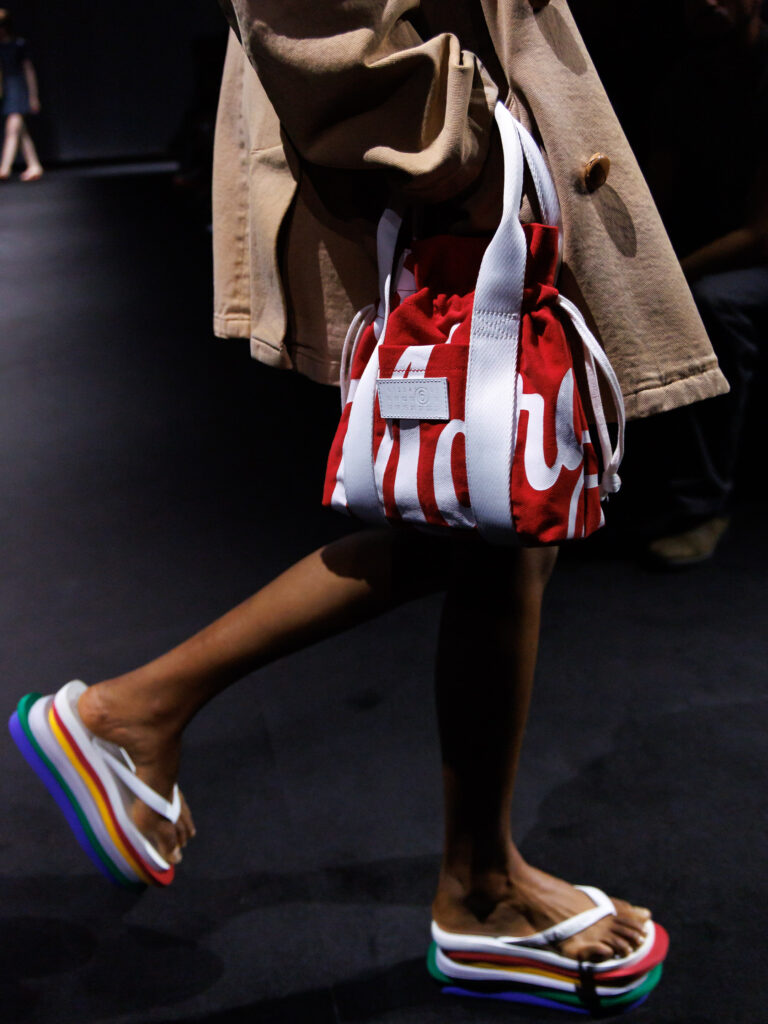
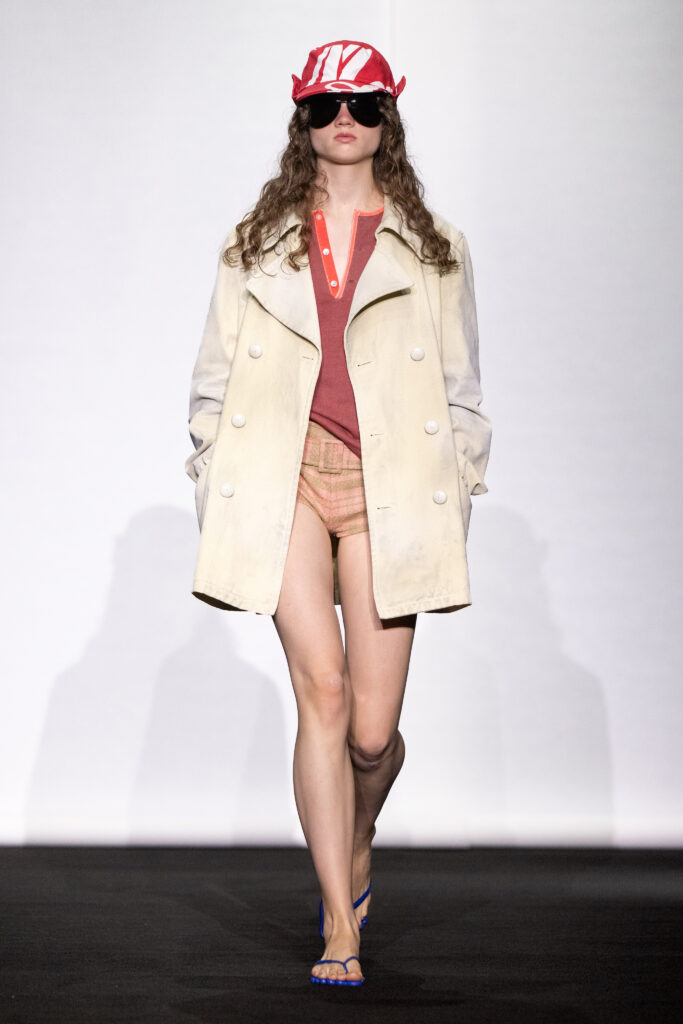
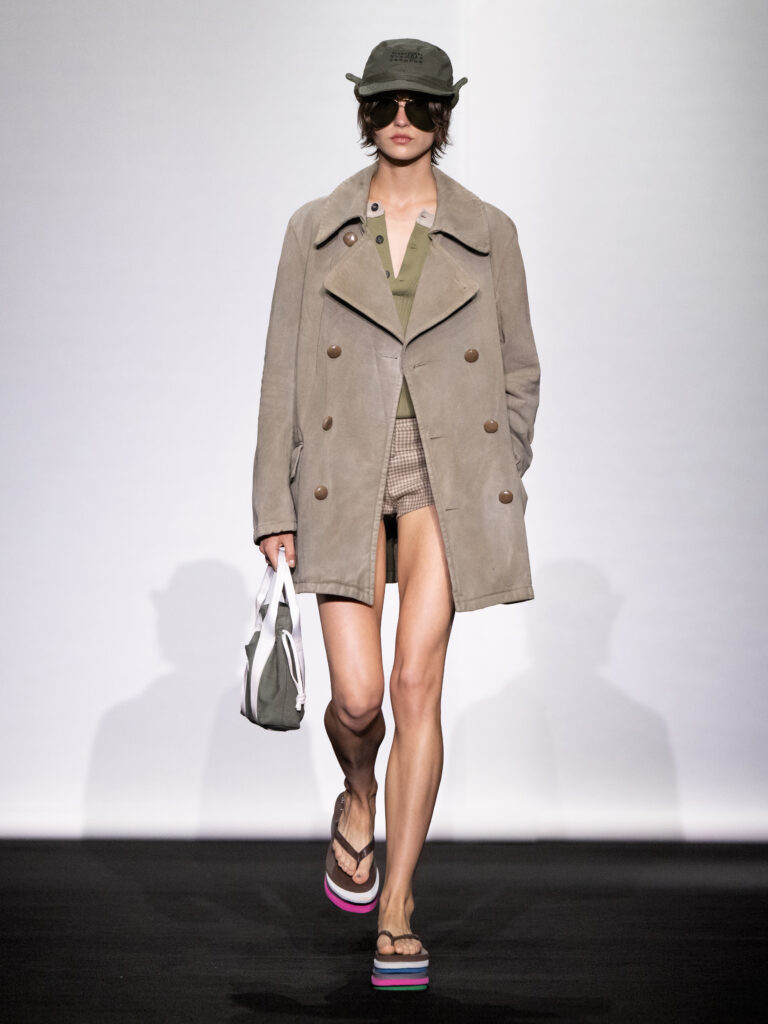
The collection comes with a collaboration with Havaianas, which applies the same principle to an archetype worn by millions of people: the flip-flop. The number six becomes a design mechanism here rather than a mere figure — the flip-flop splits into toes, grows an extra toe, or multiplies into six soles of different shapes stacked on top of one another.
By choosing to move garments rather than reinvent them, MM6 Maison Margiela remains faithful to the experimental spirit that has characterised the line since its creation: a practical question before a conceptual one, put to archetypes that everyone recognises without ever wondering about their unspoken rules.
Cette publication est également disponible en :


