
A custodian of leatherworking expertise since 1872, the house builds its new line around an entirely manual process rather than a new silhouette.
The gesture before the form
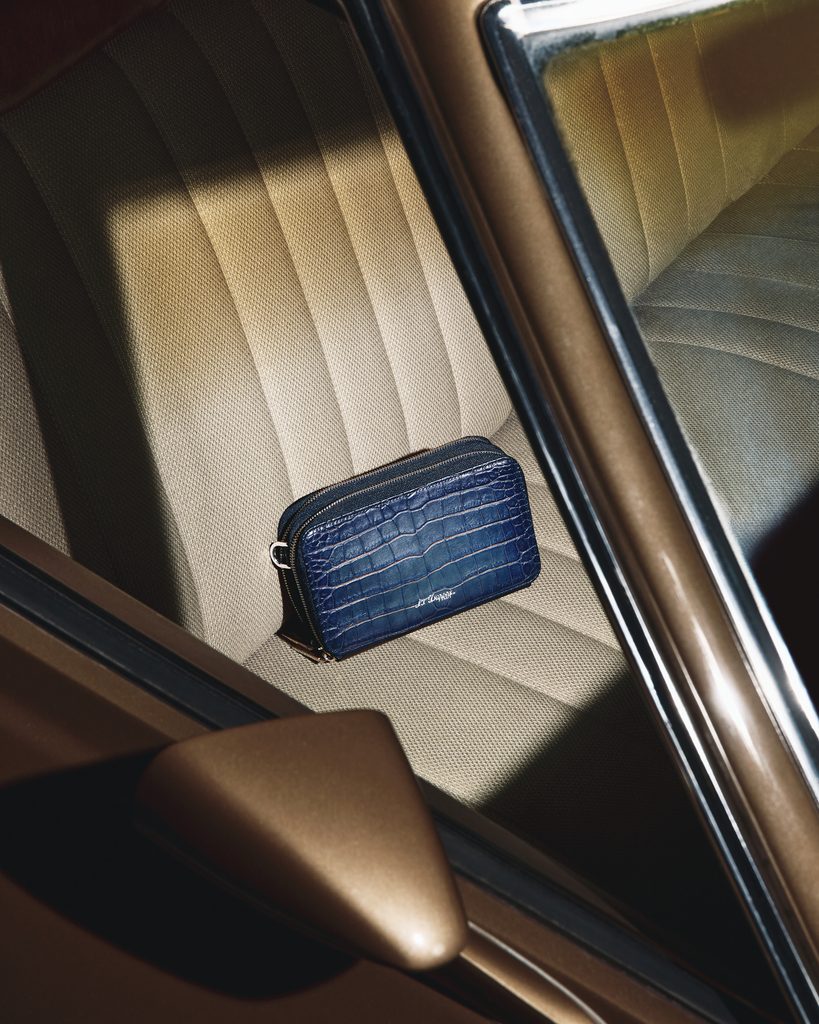
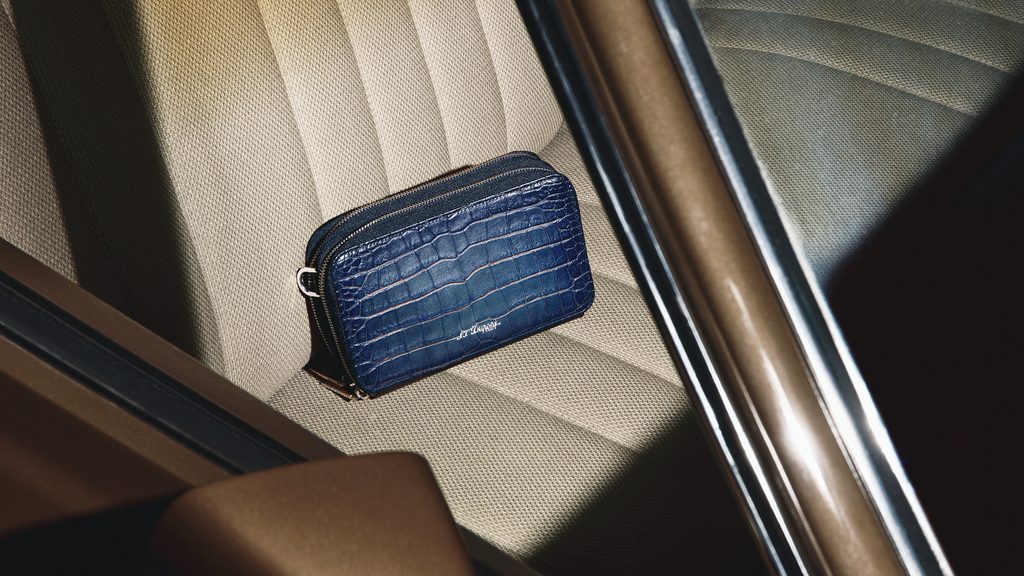
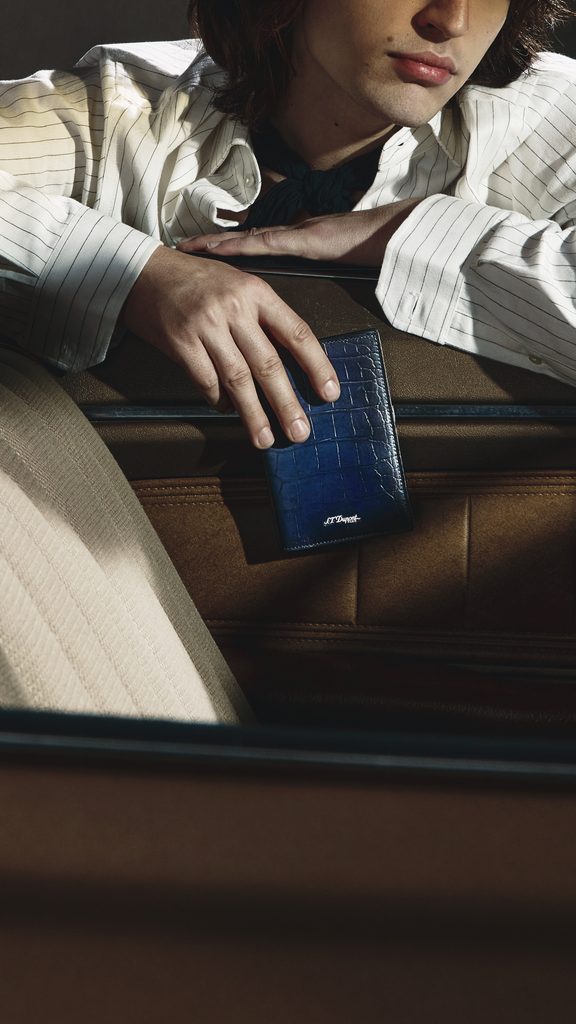
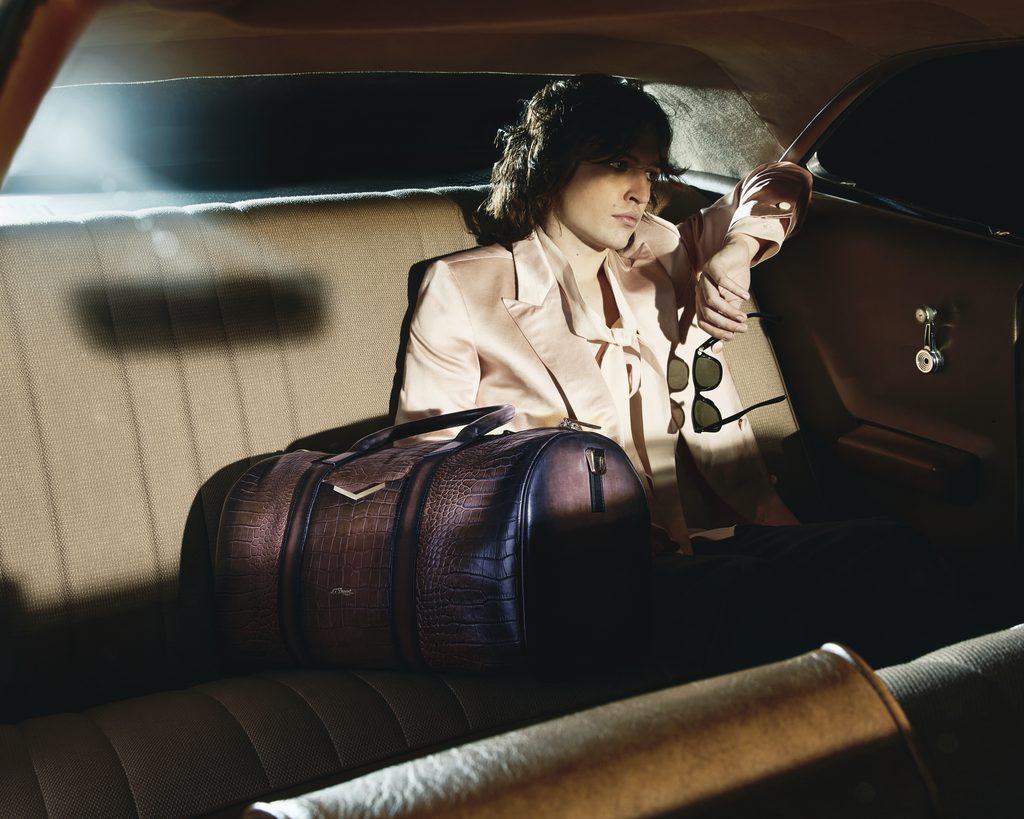
Since 1872, leather goods have held an essential place in the history of S.T. Dupont. With Le Grand Atelier, the house celebrates this expertise through a collection in full-grain leather embossed with a crocodile pattern. At its heart lies the art of patina, applied entirely by hand: pigments and waxes are layered successively to reveal the leather’s depth and create shades and reflections unique to each piece, so that, in theory, no example is strictly identical to another.
Highlighting a technique rather than a new bag or briefcase silhouette places the collection within a different logic from luxury leather goods’ usual seasonal renewal: here, novelty lies in the material and its treatment, not in the shape of the objects themselves.
Three shades, a structured design
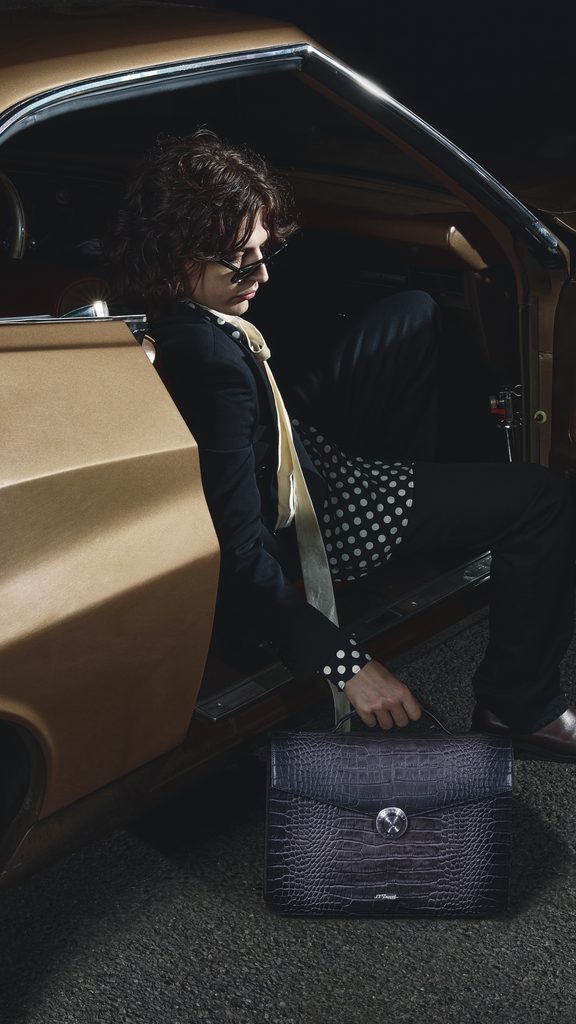
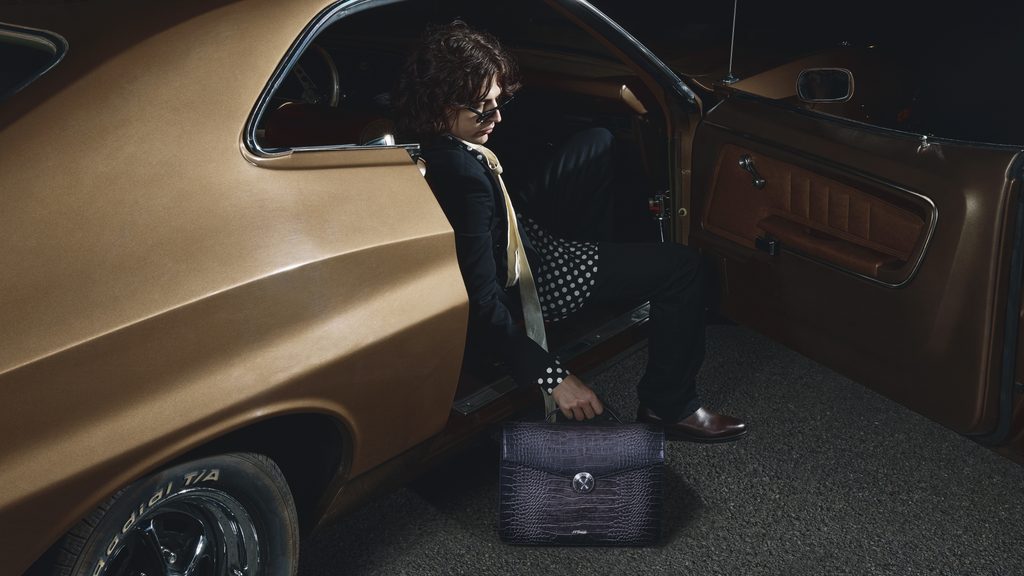
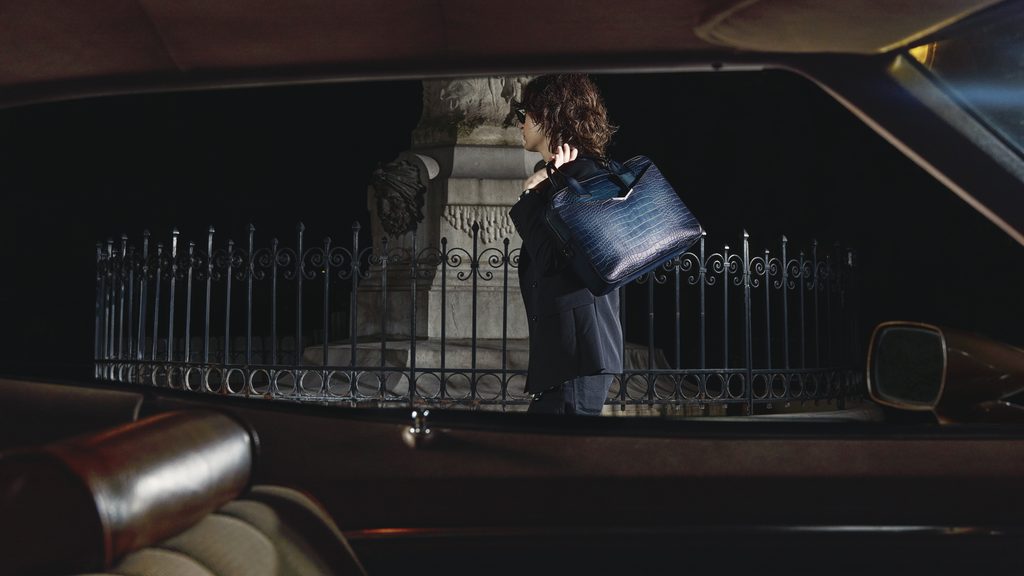
The collection comes in Smoky Black, Navy Blue and Havana Brown, with a modern, minimalist design: structured cuts, oblique lines and V-shaped details lend character to the whole, while the briefcase stands out for a clasp inspired by safe doors, named “Vault Lock” — a functional as well as aesthetic nod to security and value, consistent with the house’s heritage positioning.
A campaign, a face
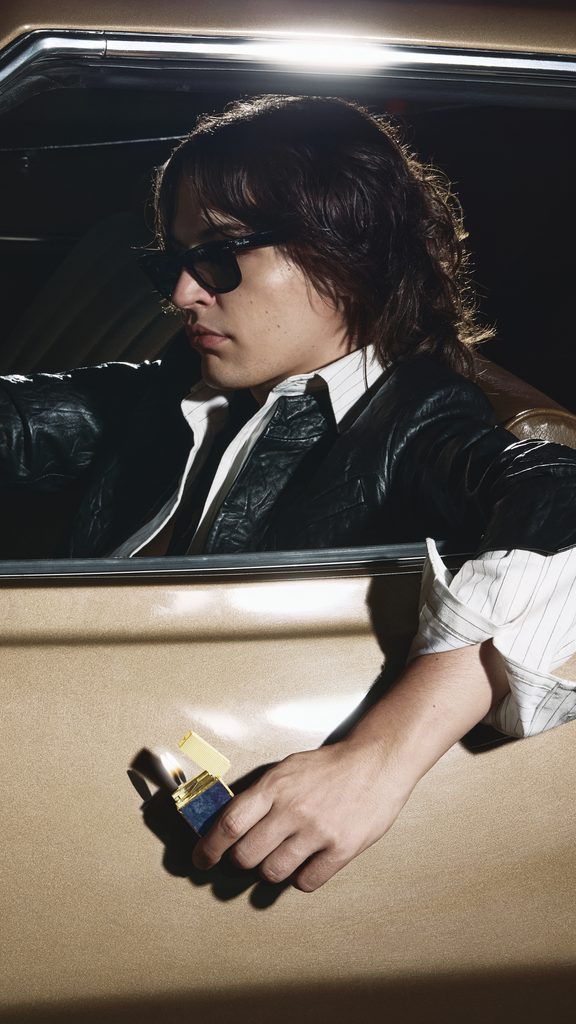
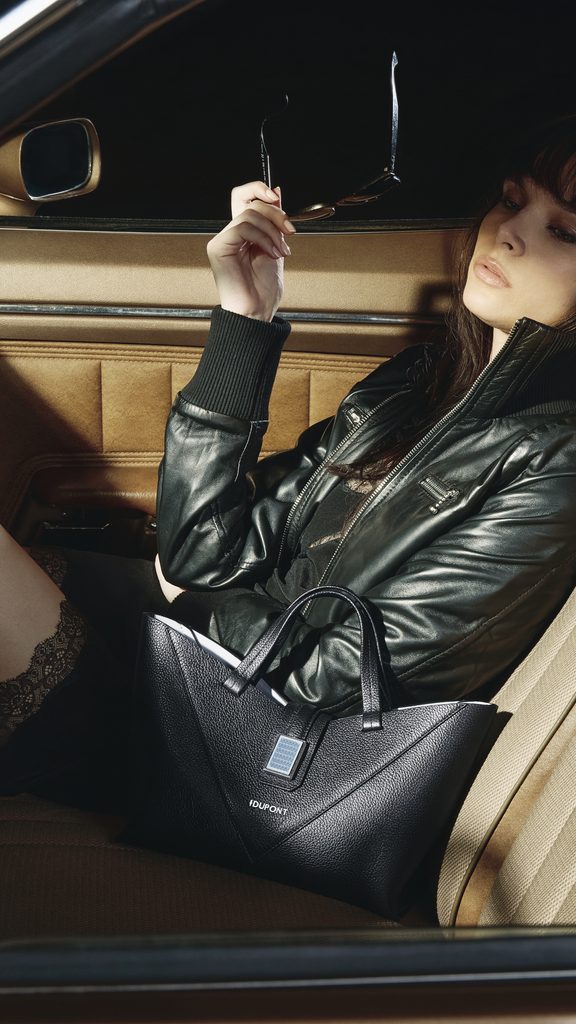
To accompany this new chapter, S.T. Dupont chose artist and musician Pacôme Denim as the face of its campaign. Filmed in a nocturnal Paris charged with electricity, driving a vintage car through the capital to the rhythm of the city lights, he embodies a blend of sophistication and rock ’n’ roll energy that echoes the patina’s deep shades rather than the more classic, static image often associated with high-end men’s leather goods.
What the patina does not yet document
The press release elevates hand-applied patina to the collection’s central artistic gesture, without specifying which workshop performs it, how many hours each piece requires, or even a price range for the bag or briefcase. The craftsmanship claim thus remains asserted rather than documented through verifiable evidence, a reservation worth noting for a collection that makes artisanal production its main selling point.
Another revealing choice: the house uses full-grain leather embossed with a crocodile pattern rather than genuine exotic skin, a decision that sidesteps the traceability and animal-welfare debates specific to exotic leathers while continuing to reference them visually — a compromise fairly representative of the choices luxury leather goods must now make between aesthetic heritage and contemporary requirements.
Patina as a point of difference
In a men’s leather goods market where most houses communicate first about the shape and function of their bags, S.T. Dupont’s decision to put patina technique at the centre of its message is an unusual communications wager, closer to the codes of watchmaking or haute couture, where the craft gesture itself becomes an independent selling point.
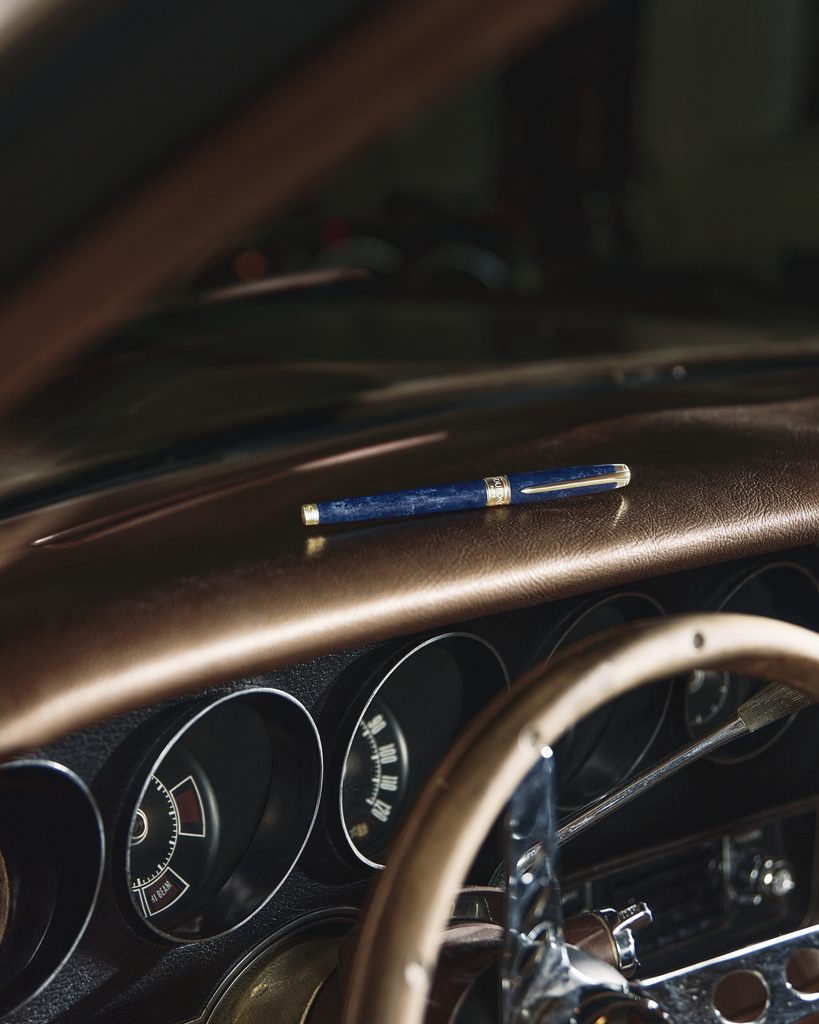
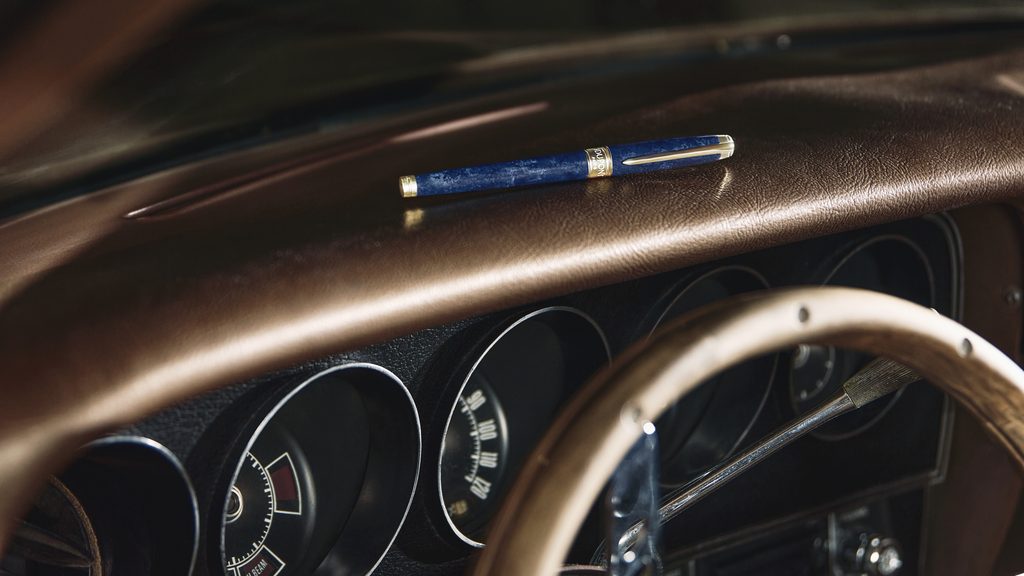
This positioning also connects with the house’s history, long known for lacquer-finished lighters and pens, where hand finishing has always mattered as much as the object’s function — a brand consistency that Le Grand Atelier seems to seek to extend into leather goods.
The house also leaves unclear whether Le Grand Atelier will remain a permanent catalogue collection or a time-limited series, information that nevertheless has a substantial bearing on how a prospective buyer should approach this new offering.
Cette publication est également disponible en :


