
The Saudi Arabian west coast did not appear on hotel maps in 2022. Today, The Red Sea destination spans 28,000 km², encompasses an archipelago of more than ninety islands, and ranks among the most closely watched tourism initiatives in the world—not for what it promises, but for what it reveals about how a nation is reshaping its image by building swimming pools.
Three resorts, three interpretations of geography
The architectural concept behind The Red Sea is based on a principle rarely followed in luxury tourism: each property must be unrecognizable without its setting. Shebara Resort, on Sheybarah Island, exemplifies this with a divisive material—stainless steel. The villas on stilts capture and reflect the lagoon’s light as the hours change, producing a chromatic effect that glass or concrete would not have allowed. The architectural quality of the surface, often considered cold, is turned into an advantage here: resistance to marine corrosion, durability in an extreme saline environment, and reduced maintenance on structures that are inaccessible at high tide.
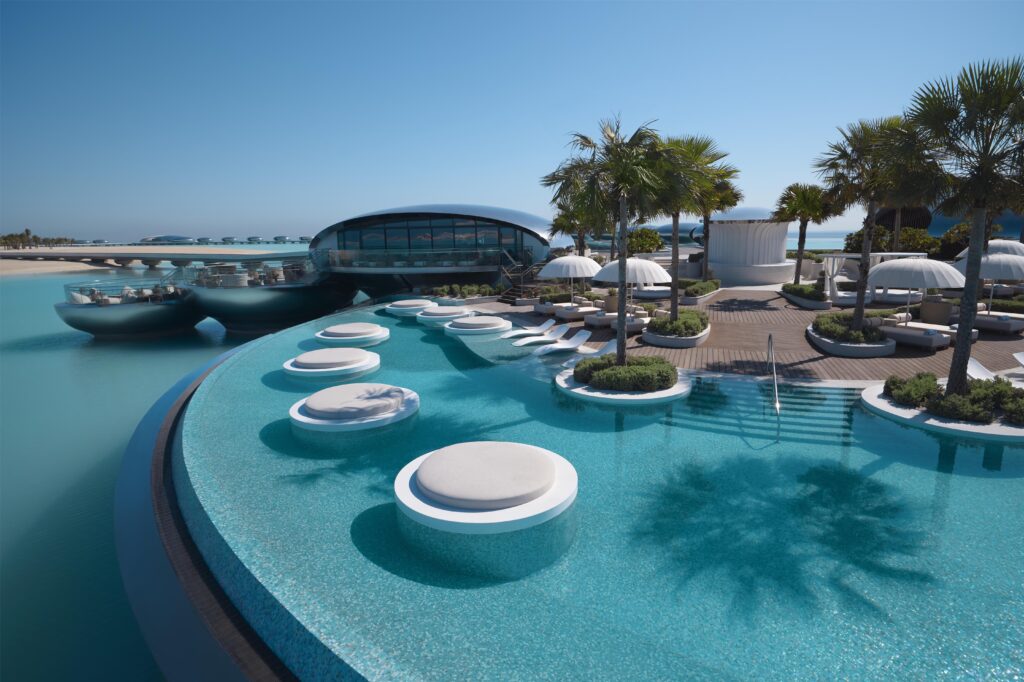
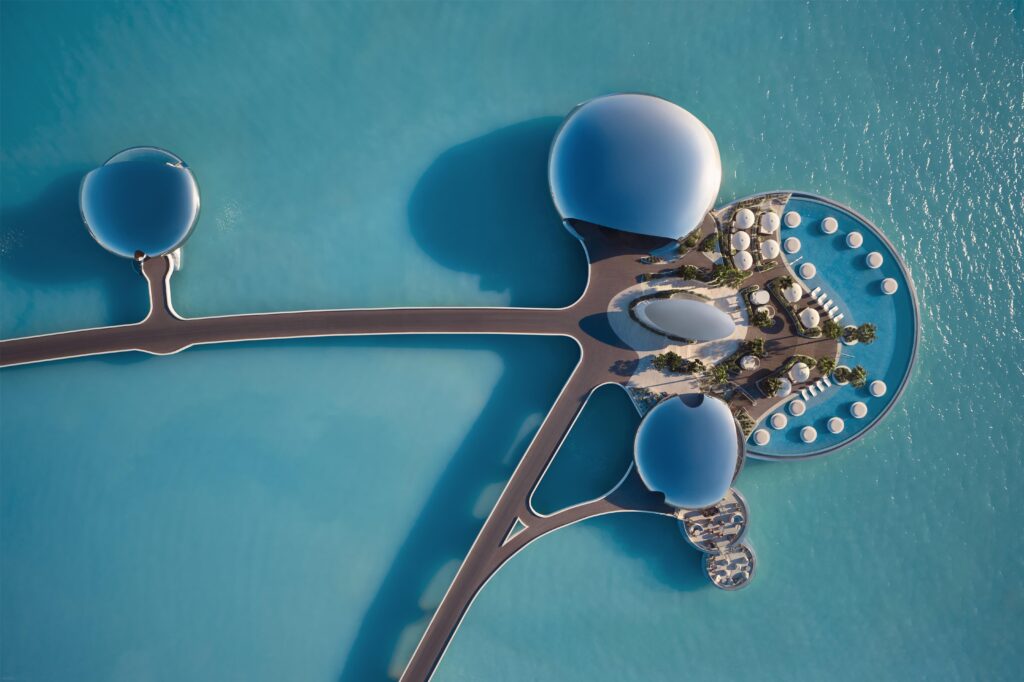
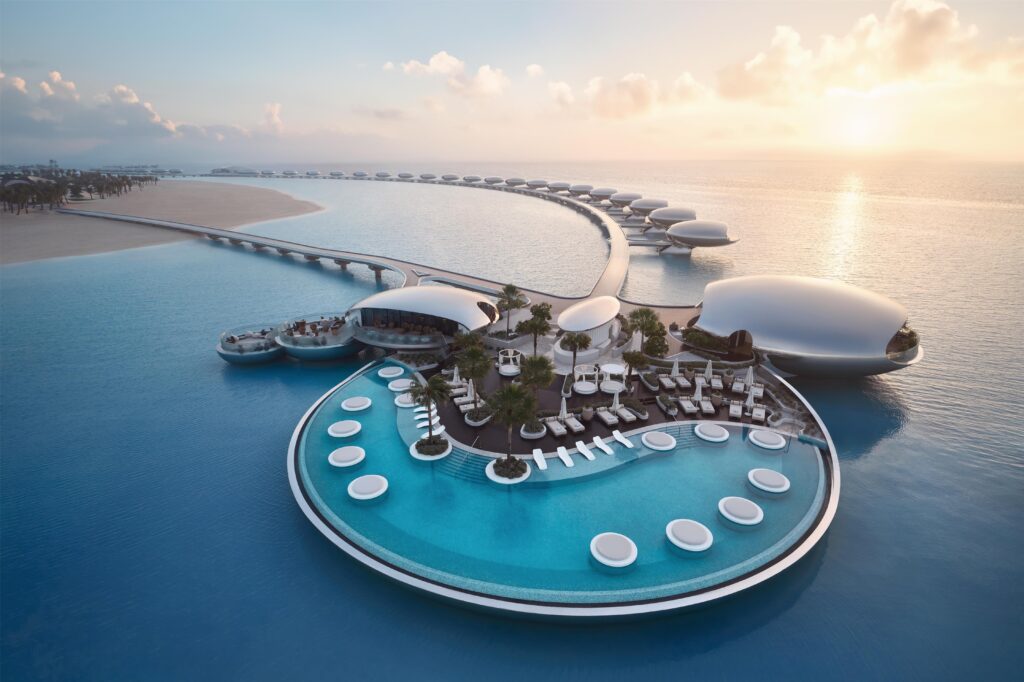
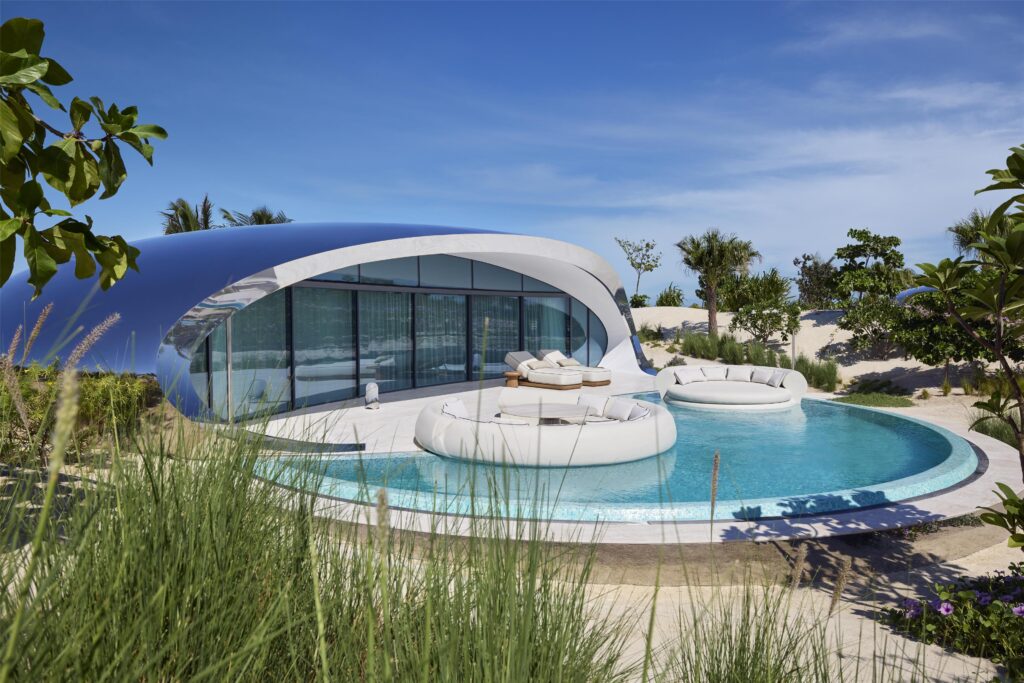
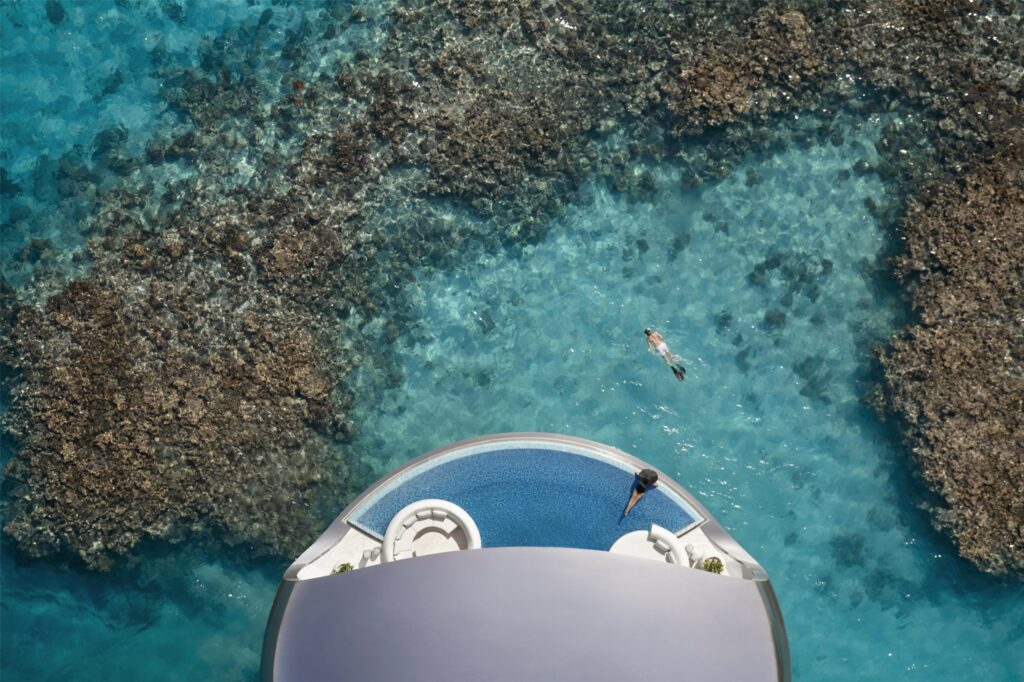
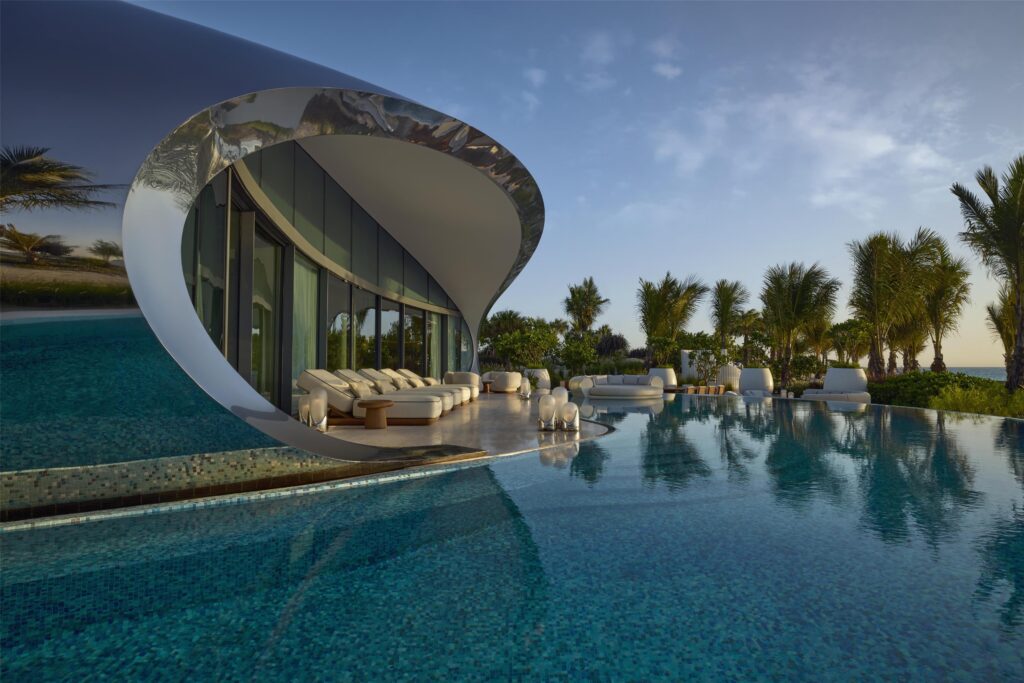
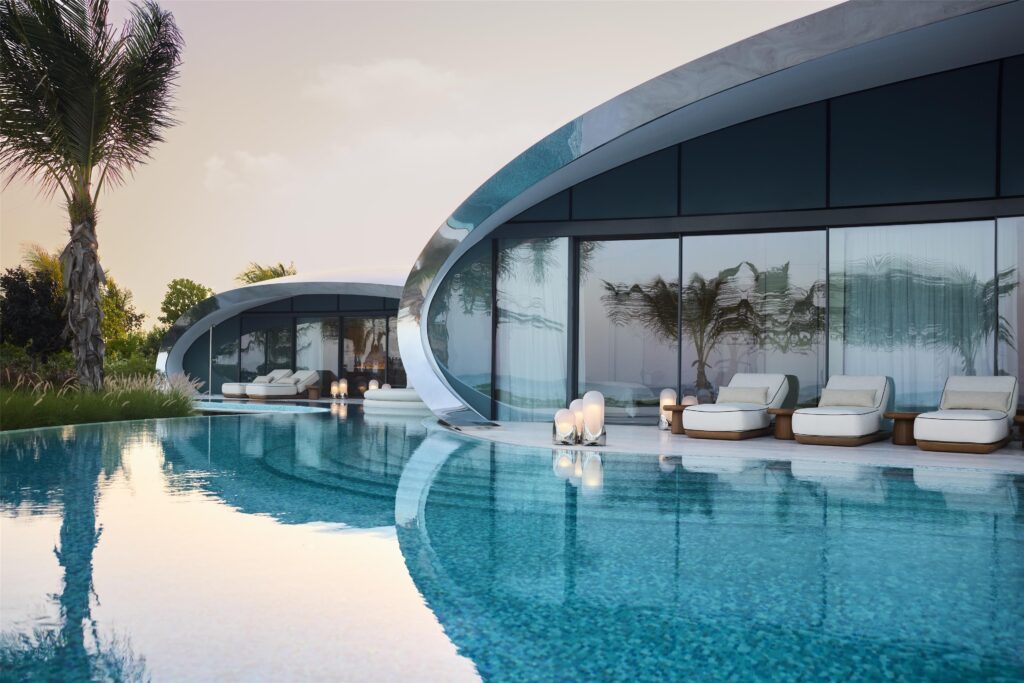
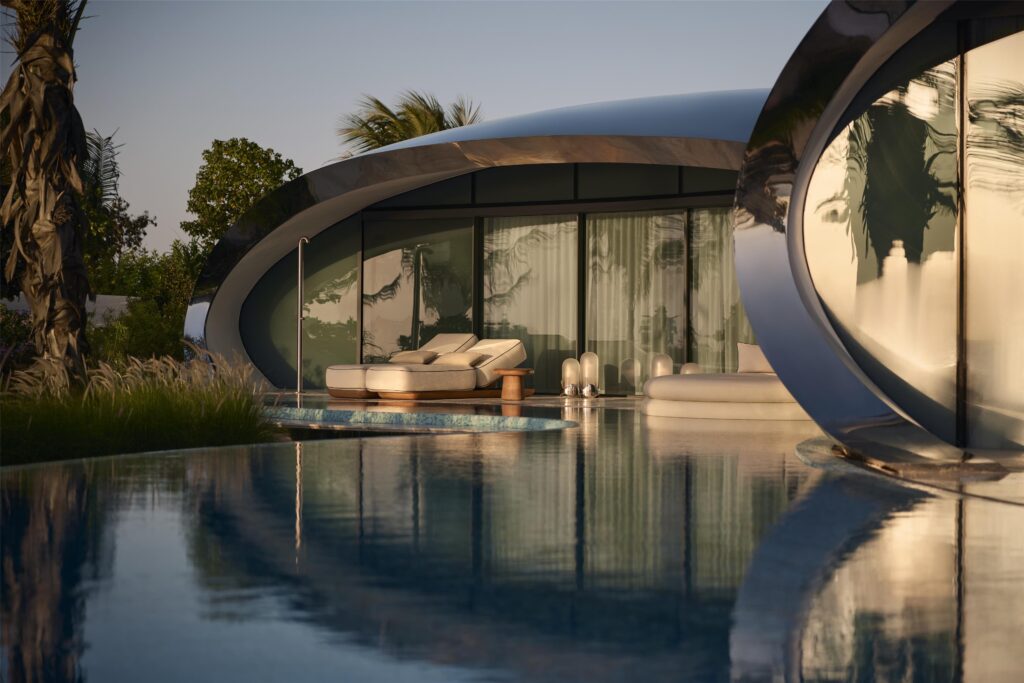
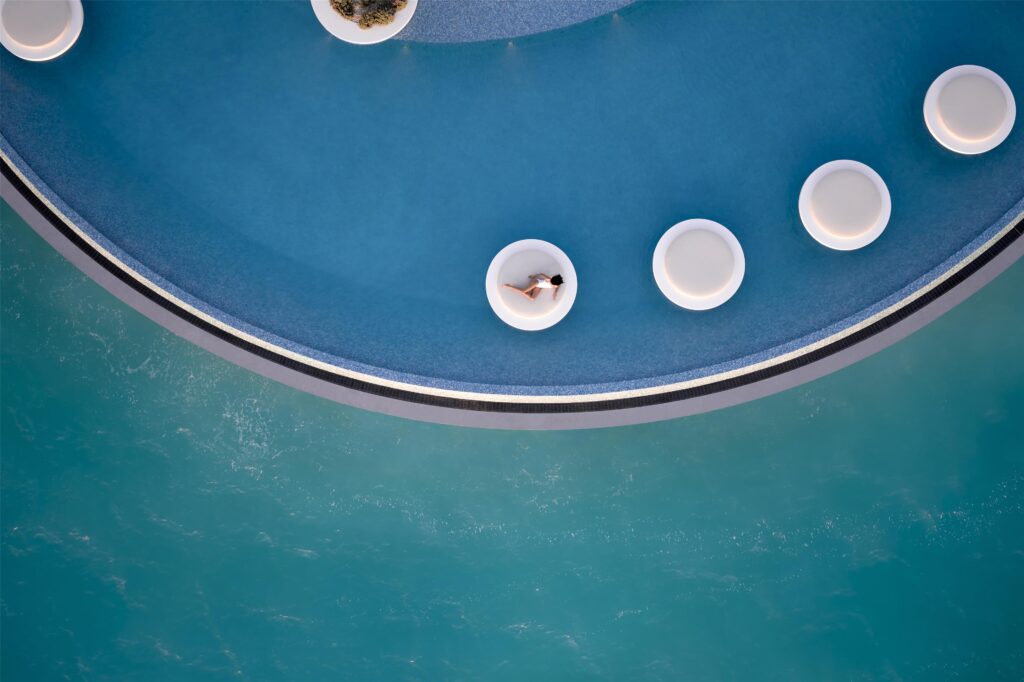
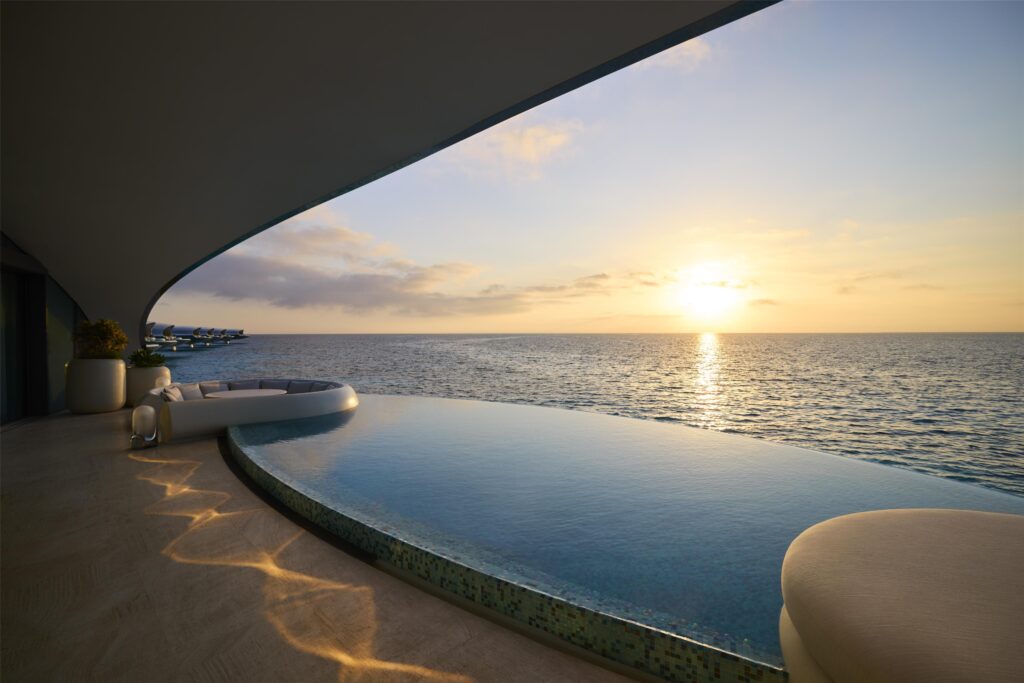
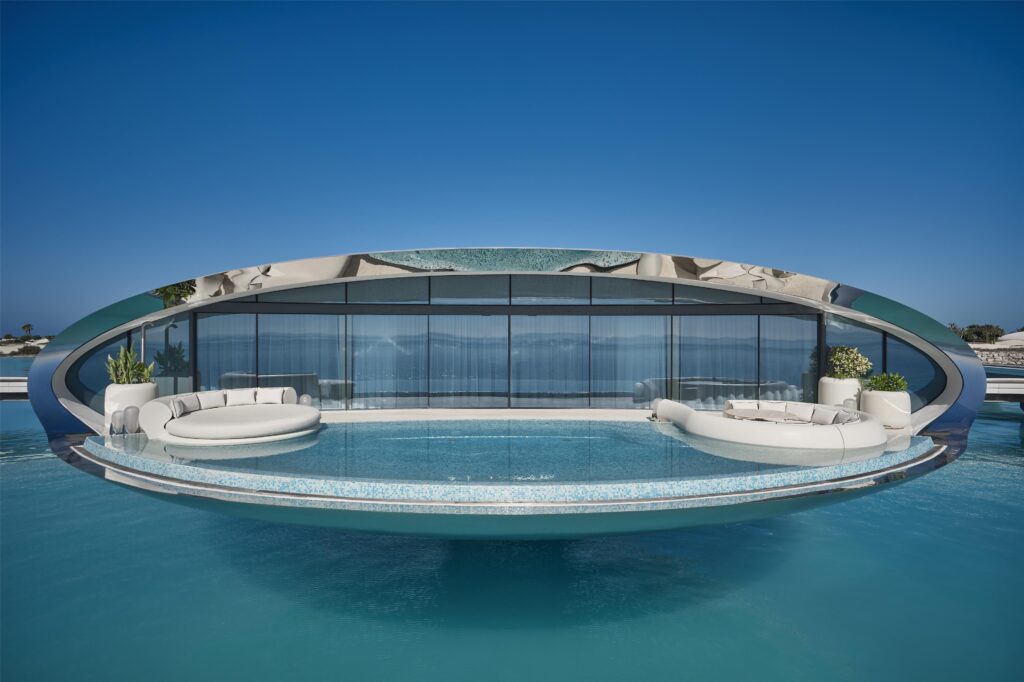
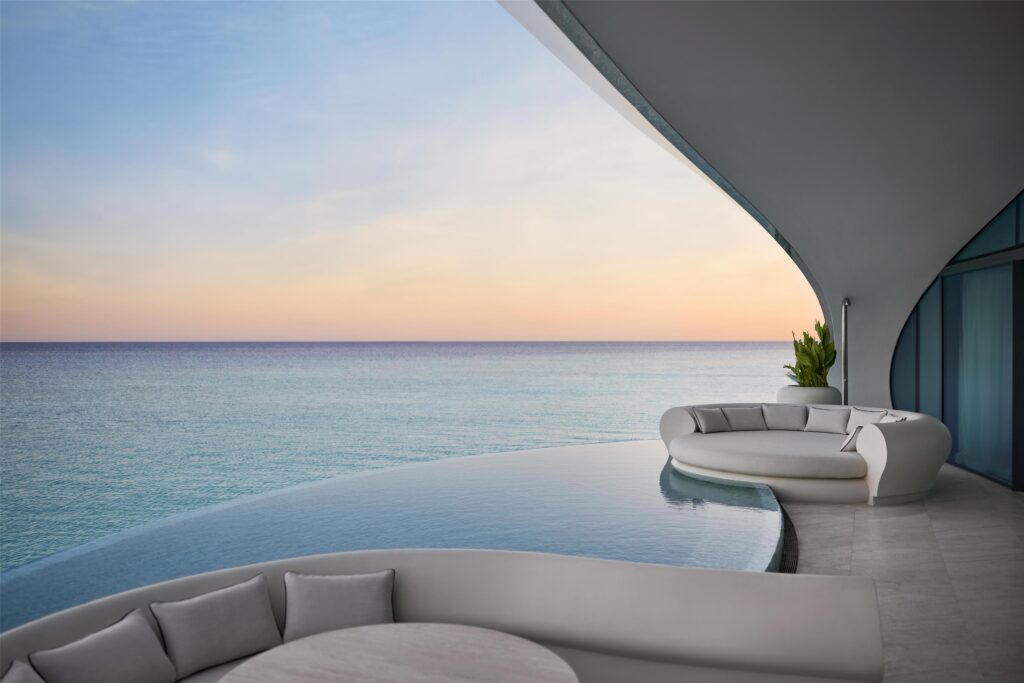
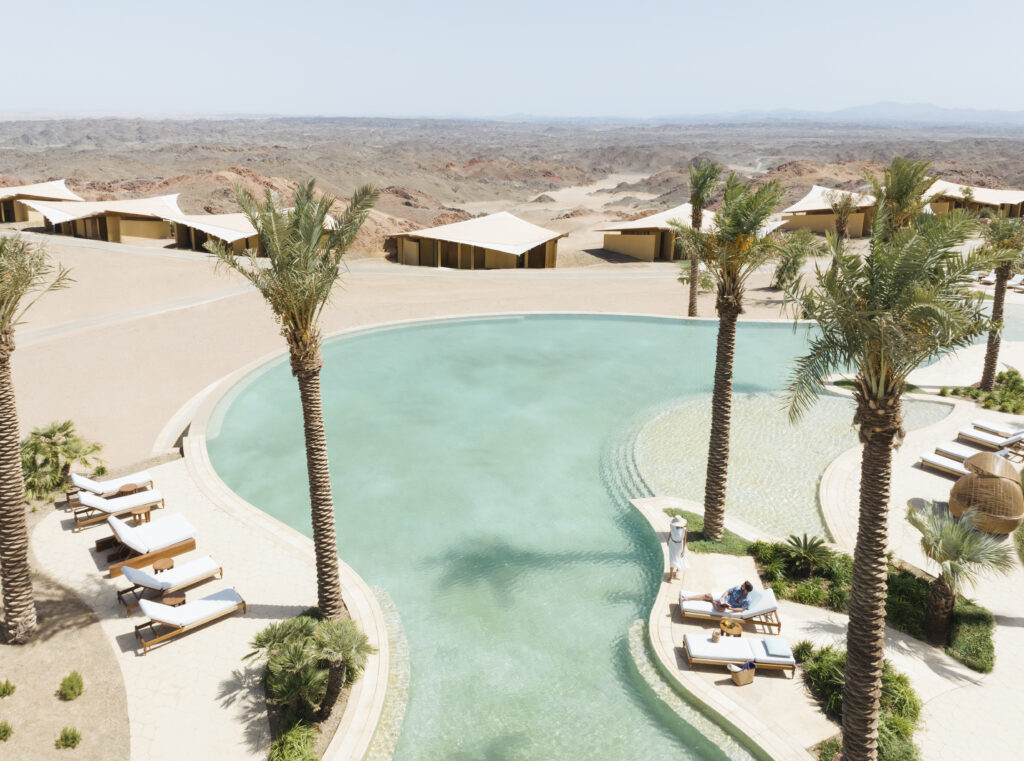
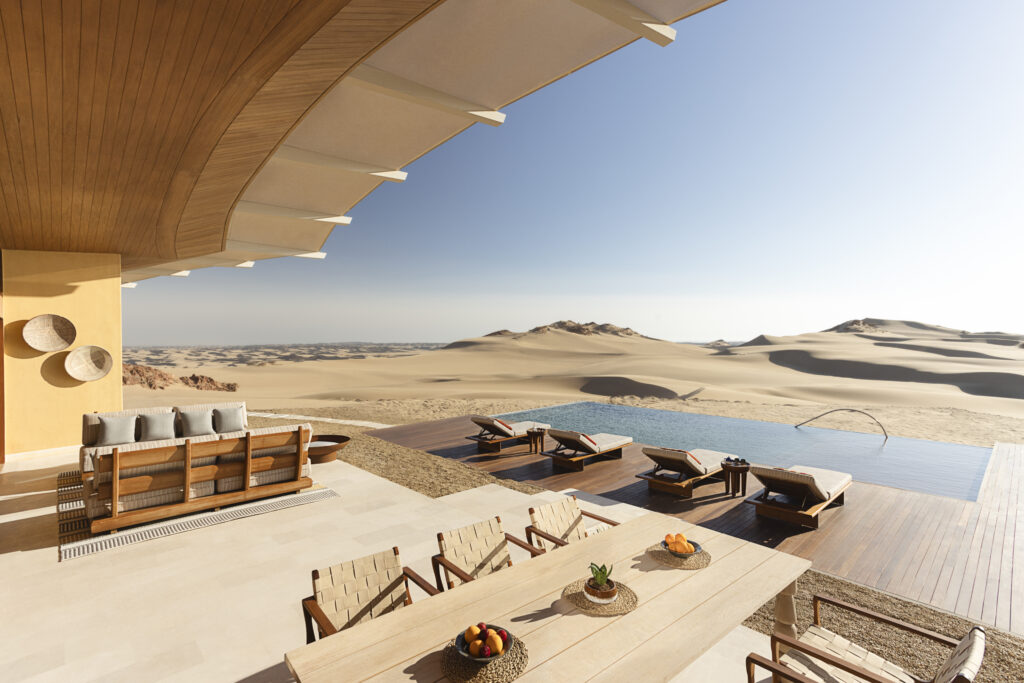
Desert Rock takes the opposite approach. Nestled among the rock formations of the Saudi mountains, the resort was built by subtraction rather than addition—volumes carved out of the rock, spaces hollowed out rather than built up. The pools appear suspended between two stone walls, offering a view of the horizon that is radically different from that of a classic infinity pool: rather than the waterline blending into the sea, the view is a close-up frame of the desert stretching as far as the eye can see. Vernacular rock architecture is no longer a stylistic reference but an accepted structural constraint.
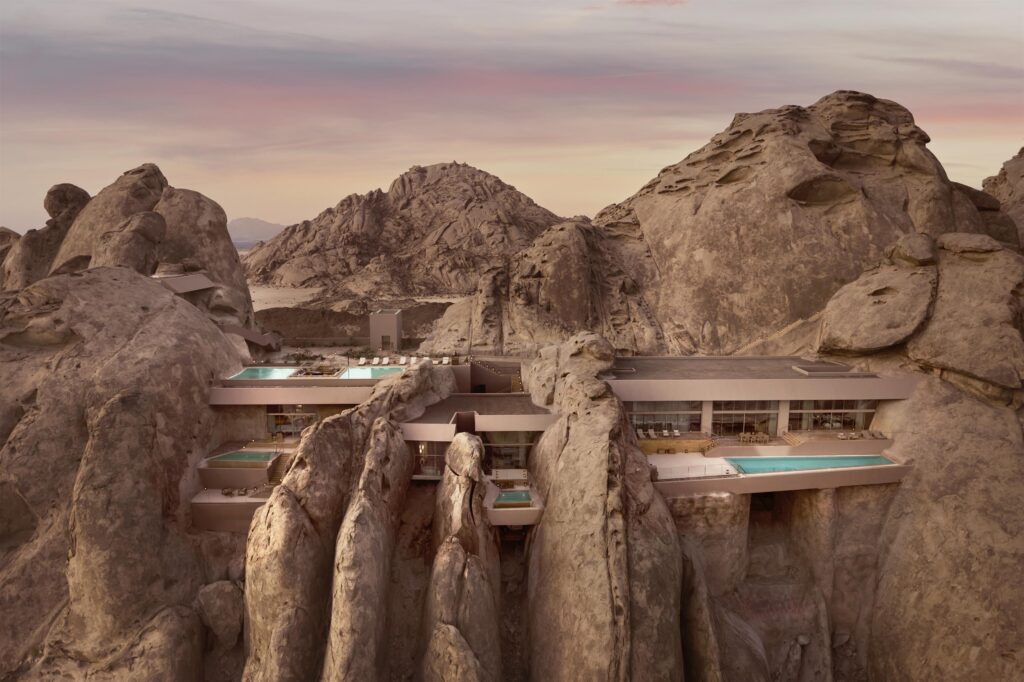
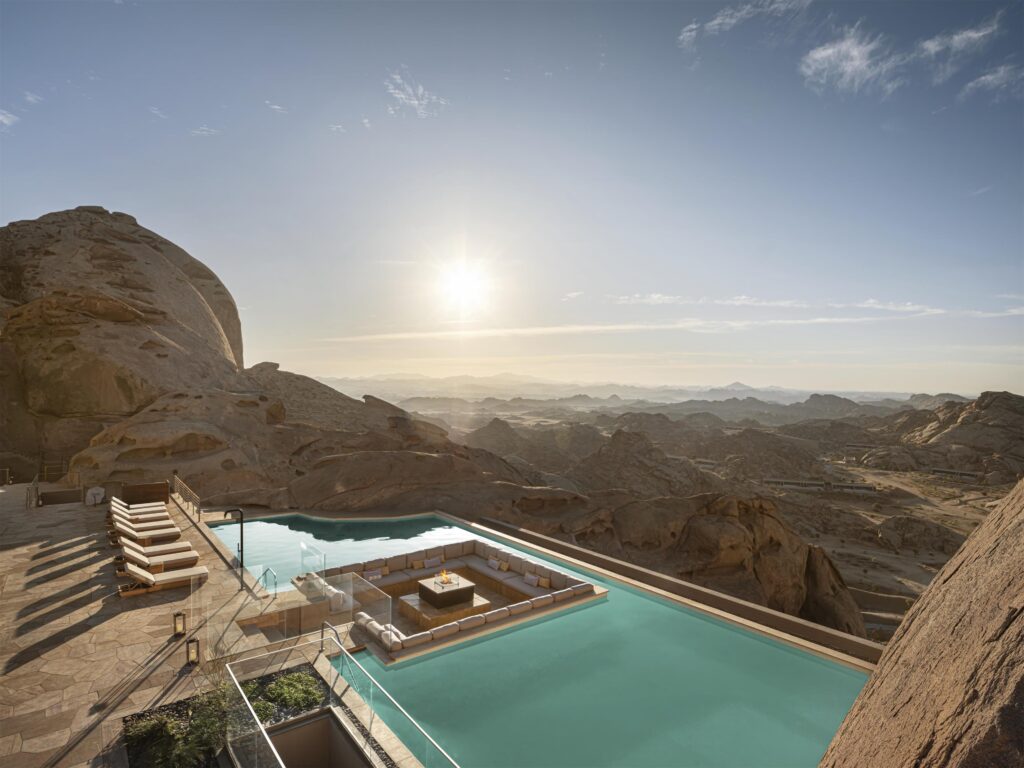
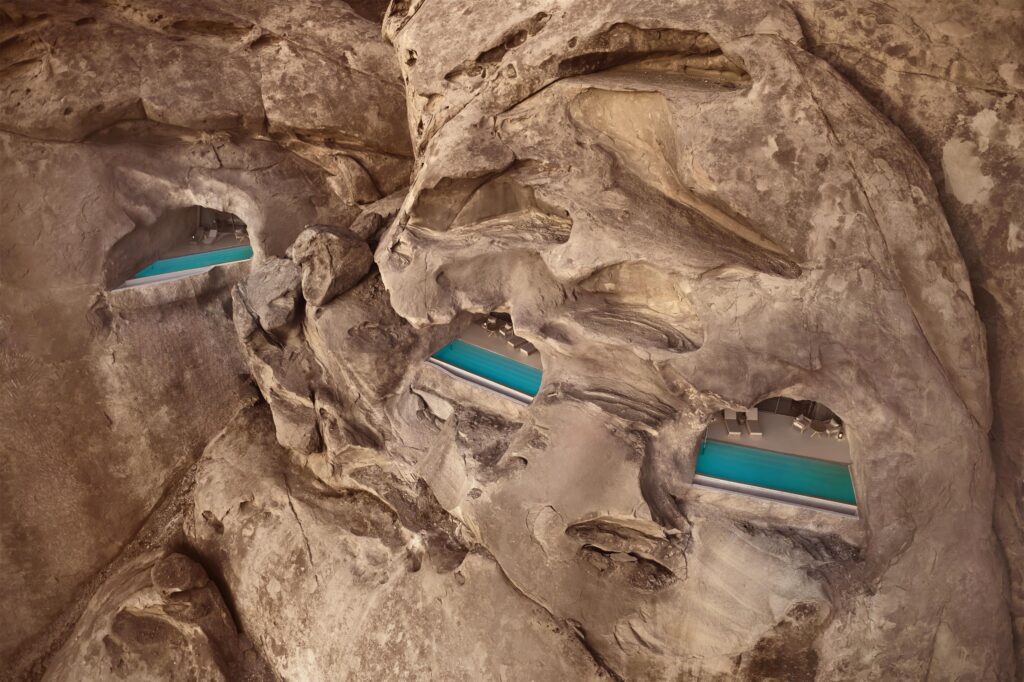
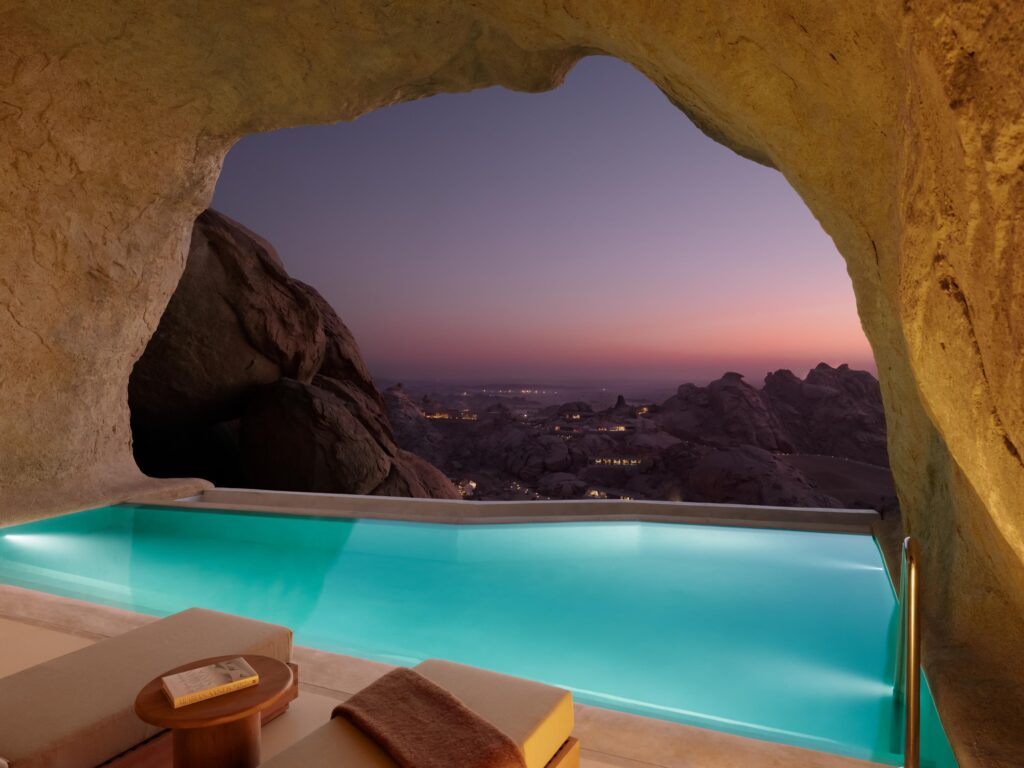
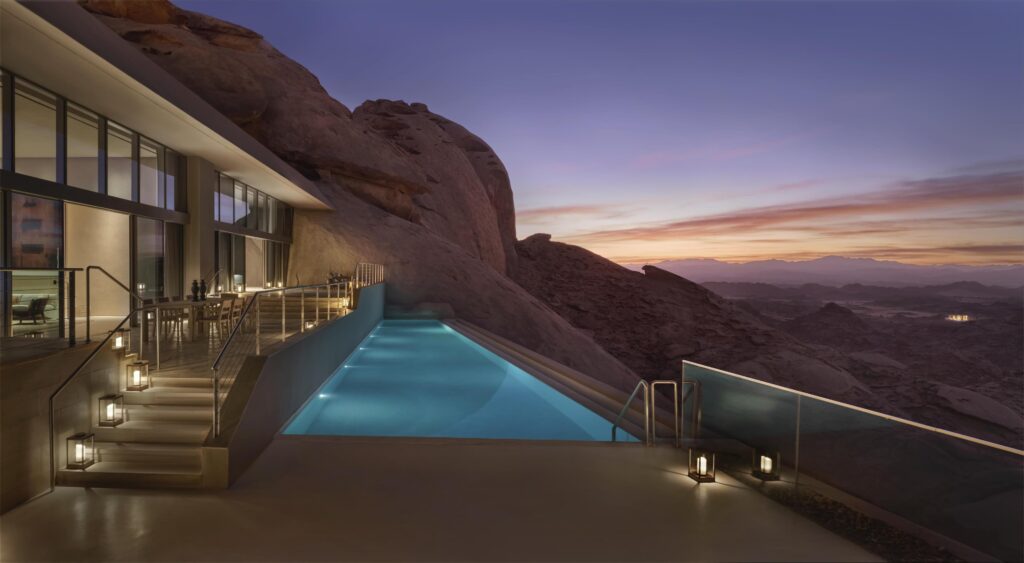
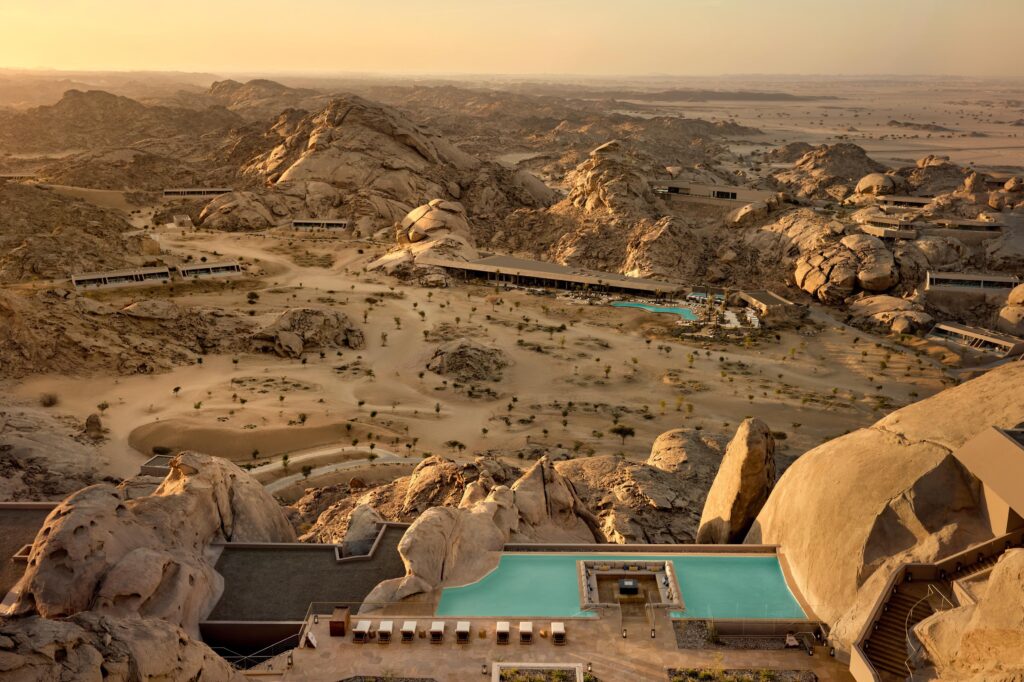
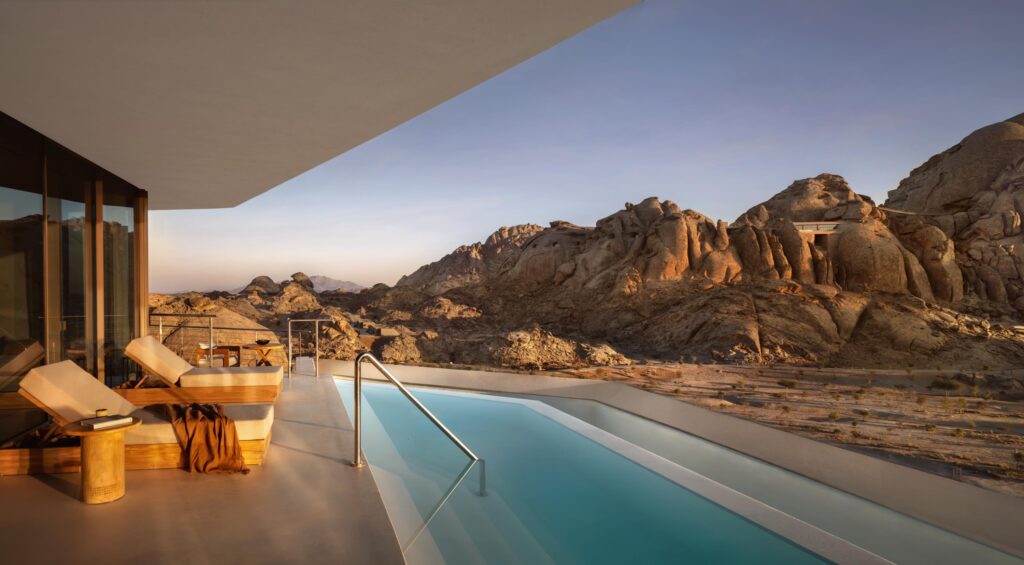
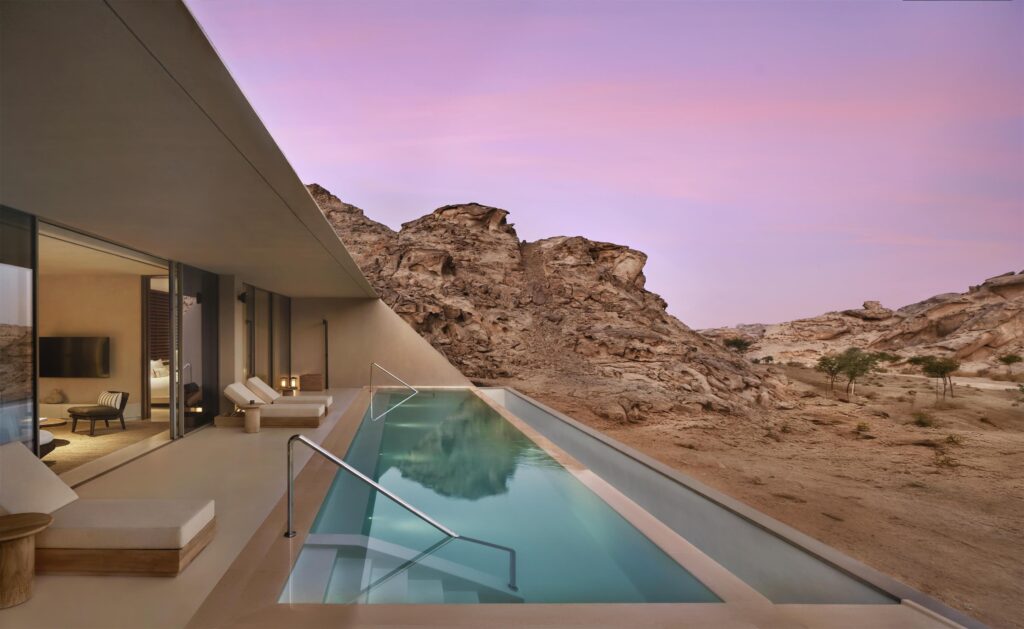
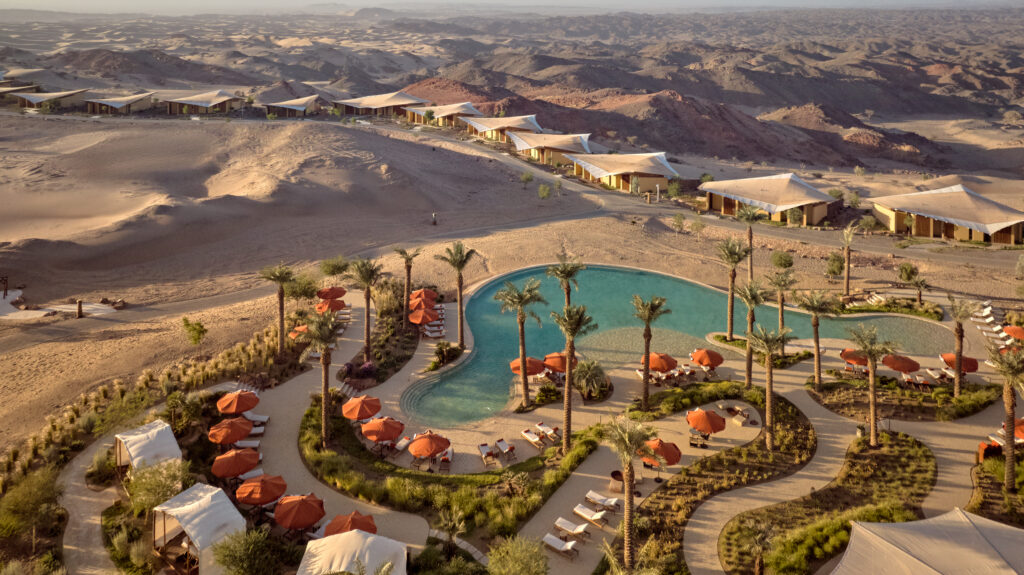
Six Senses Southern Dunes is rooted in a long-standing relationship with the landscape—that of the Nabataeans, a trading people who transformed rock and sand into defensive and commercial architecture. This connection is not merely decorative: it determines the orientation of the buildings, their mass, and the depth of the awnings that regulate sunlight without relying systematically on air conditioning. The pool at the heart of the dunes is not a design statement—it is a thermal challenge solved through the creation of a pool.
Constraint as a Program
What sets The Red Sea apart from other luxury tourism destinations launched over the past decade is not its aesthetic ambition. It is the deliberately low cap on visitor numbers: one million visitors per year, a threshold set not by the resorts’ capacity but by the tolerance of the marine ecosystems. The archipelago is home to some of the best-preserved coral reefs on the planet—a natural asset that the project’s designers have decided to protect through urban planning regulations, not just rhetoric.
A 100% renewable energy supply is not a marketing pitch; it is a prerequisite for operations in an area where connecting to the national grid would have required infrastructure that could not be deployed without spoiling the sites. This logistical constraint gives rise to the environmental argument. By 2040, Red Sea Global has committed to a net conservation benefit target of 30%—a formulation that does not mean zero impact but rather a positive balance between what the development destroys and what it restores.
Total area: 28,000 km². Archipelago: more than 90 islands. Resorts by 2030: 50 properties, more than 8,000 rooms. Shura Island: 11 resorts, Shura Links golf course, marina—set to open in 2026. Energy: 100% renewable. Visitor capacity: 1 million visitors per year. Red Sea International Airport: a 3-hour flight for 250 million people. Developer: Red Sea Global, a subsidiary of the Saudi Public Investment Fund.
What the destination says about its sponsor
The Red Sea is a subsidiary of the Public Investment Fund, Saudi Arabia’s sovereign wealth fund. This background changes the perspective. Whereas an international hotel group would seek to maximize occupancy rates, Red Sea Global is managing a national image. Regenerative tourism is not the end goal—it is a tool for economic diversification that the kingdom has formalized under the name Vision 2030.
The choice of international operators (Six Senses and other brands in the same category) is no accident: the goal is less about attracting travelers than about catching their eye—and that of the specialized media outlets that recommend them. The destination is not yet seeking maximum volume—it is seeking the legitimacy that comes from a discerning and high-profile clientele.
We will likely have to wait until 2026, when Shura Island is fully operational with its eleven resorts, marinas, and golf course, to see whether the architecture of constraints can hold up against the economics of traffic flow. For now, the west coast of Saudi Arabia is a construction site with a vision—and that, in itself, is already rare.
Cette publication est également disponible en :

