
Jaeger-LeCoultre isn’t just unveiling new watches in Shanghai in September 2026: the brand is also telling the story of the region that made them possible. The Valley of Inventions traces 190 years of history that began in a small valley in the Swiss Jura, where both the climate and human determination have shaped a culture of precision.
The choice of venue is no mere coincidence. Before delving into calibers and tourbillons, the exhibition “The Valley of Inventions,” which will open in Shanghai from September 10 to 23, 2026, begins with a setting: a recreation of the winter landscape of the Vallée de Joux, with dense forests and biting cold, dominated by a fir tree carved from ice. This scenographic choice is not merely an aesthetic flourish—it sets the stage for the exhibition’s central argument: that Jaeger-LeCoultre’s horological precision did not arise from an abstract laboratory but from a hostile terrain that, out of necessity, shaped the rigor of its inhabitants.
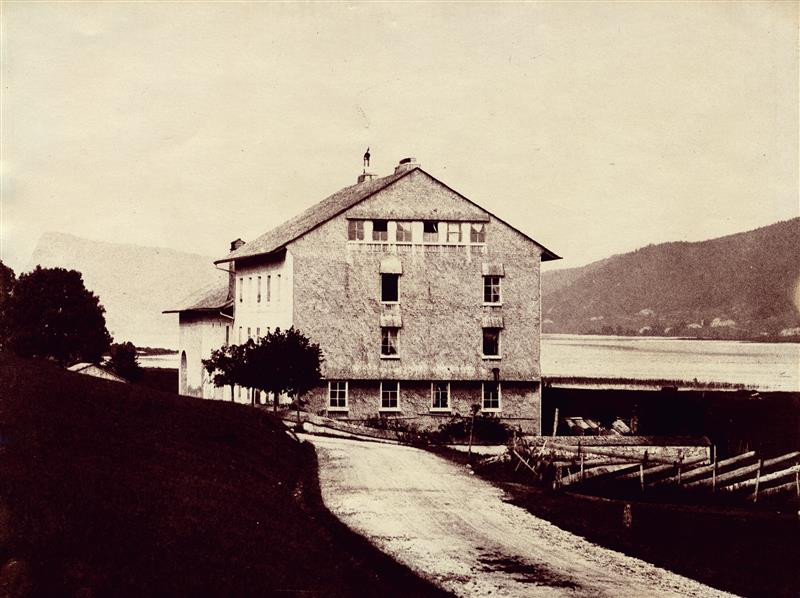
The story, as told by the House, begins in the 16th century with the settlement of Huguenot refugees in this remote valley of the Swiss Alps. Eking out a living in such a harsh landscape required, generation after generation, a resilience that gradually evolved into technical ingenuity—culminating in the founding of the LeCoultre watchmaking workshop in 1833. More than 430 patents later, the Manufacture now boasts 82 workshops, 108 crafts, and 235 techniques all under one roof, including 69 signature techniques that only it has mastered.
The exhibition organizes this narrative into four thematic chapters. “Precision and Chronometry” traces the quest for mechanical accuracy, from chronometer-certified pocket watches produced in the 19th century for maritime exploration to the Master Control Chronometre collection launched in April 2026, which is certified by both the COSC and the brand’s new High Precision Guarantee (HPG) seal. “Precision and Tourbillon” looks back at the Caliber 170 from 1946, winner of the Neuchâtel Observatory chronometry competition with a deviation of barely one second per day, and the direct predecessor of the Master Grande Tradition Tourbillon Jumping Date unveiled this year.
The third chapter, “Precision and Multi-Axis Tourbillons,” focuses on the Gyrotourbillon 1 from 2004, the Maison’s first response to a structural limitation of the traditional tourbillon—its ability, once mounted in a wristwatch, to effectively compensate for the effects of gravity. Twenty years of refinement led to the 2026 Master Hybris Inventiva Gyrotourbillon à Stratosphère, whose triple-axis architecture—featuring three titanium cages rotating at different speeds—compensates for gravity in 98% of positions. The final chapter, “Precision and Complications,” presents the Duometre system, designed in 2007 to isolate the regulating organ from additional energy-consuming functions—a technical solution applied this year to a new iteration of Caliber 362.
Beyond the movements themselves, the exhibition showcases craftsmanship through hands-on demonstrations: hand-beveling, enameling, pearl-graining, and the assembly of a Master Control Chronometer movement by a Complications artisan, as well as a laboratory dedicated to the HPG protocol where visitors can follow the stages of the shock, pressure, and temperature tests that certify each watch. Three limited-edition timepieces will make their world debuts there, alongside an exclusive Asian presentation of the new Reverso Tribute Enamel models. Open to the public free of charge from 11 a.m. to 8 p.m., “The Valley of Inventions” brings a Swiss valley to the heart of Shanghai for two weeks—not as a marketing ploy, but as a story of origin.








Cette publication est également disponible en :

