
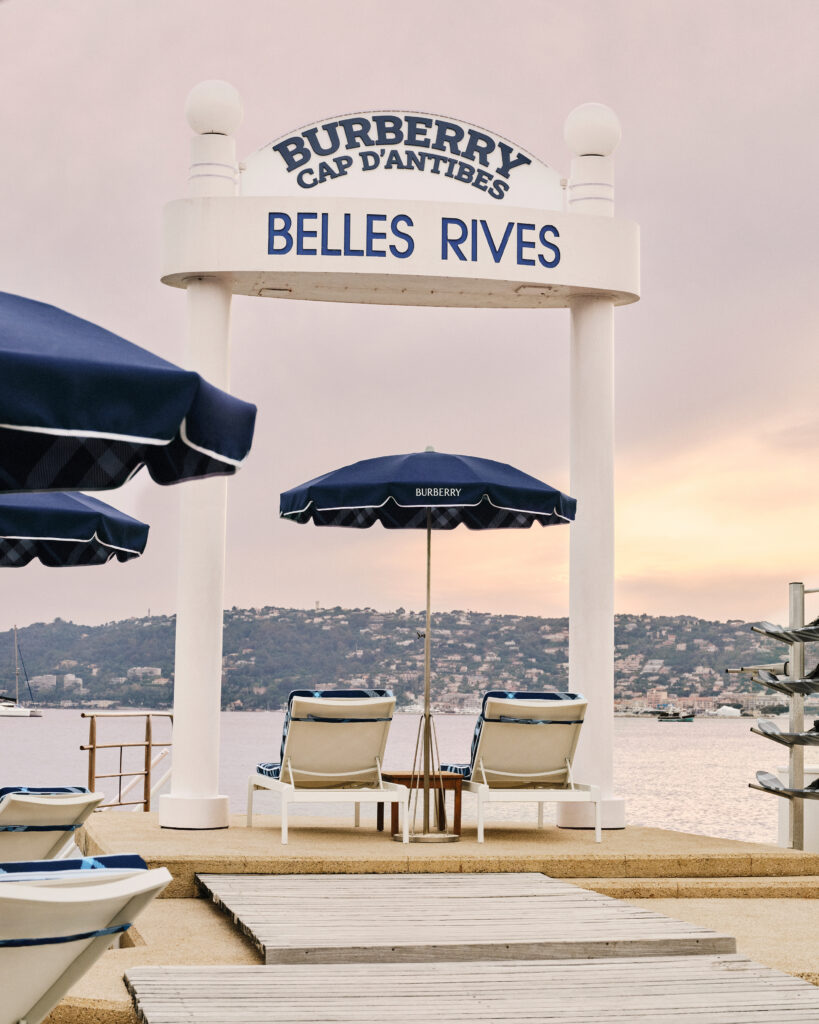
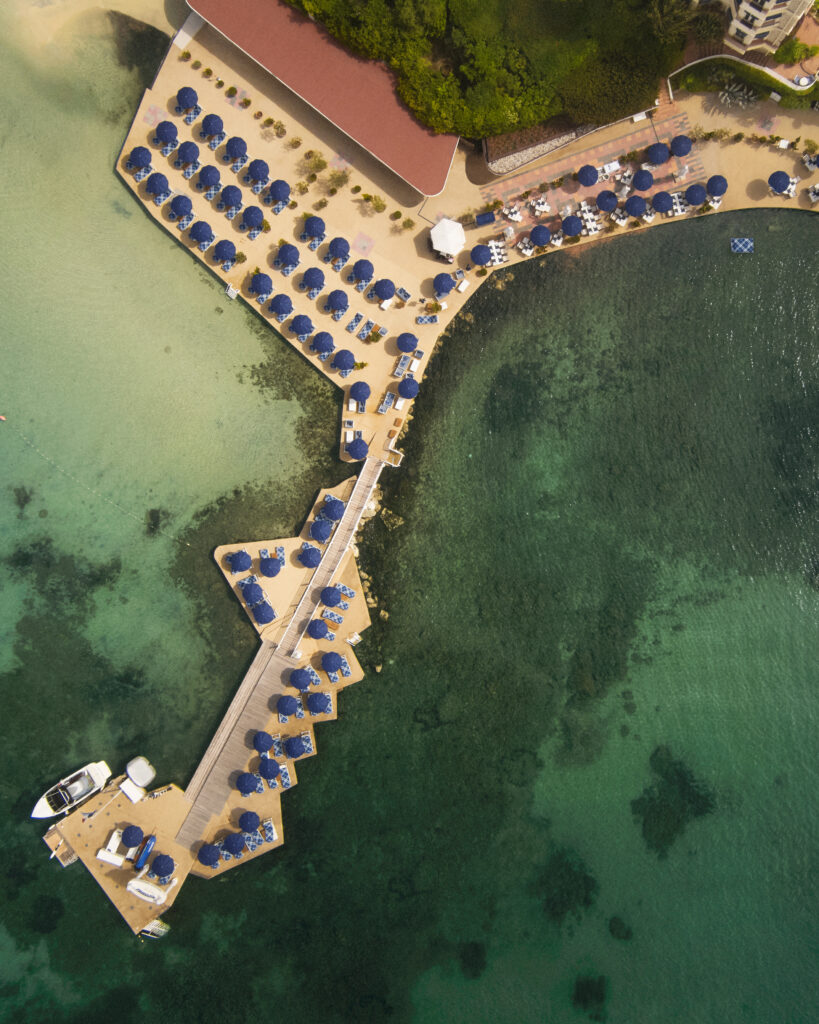
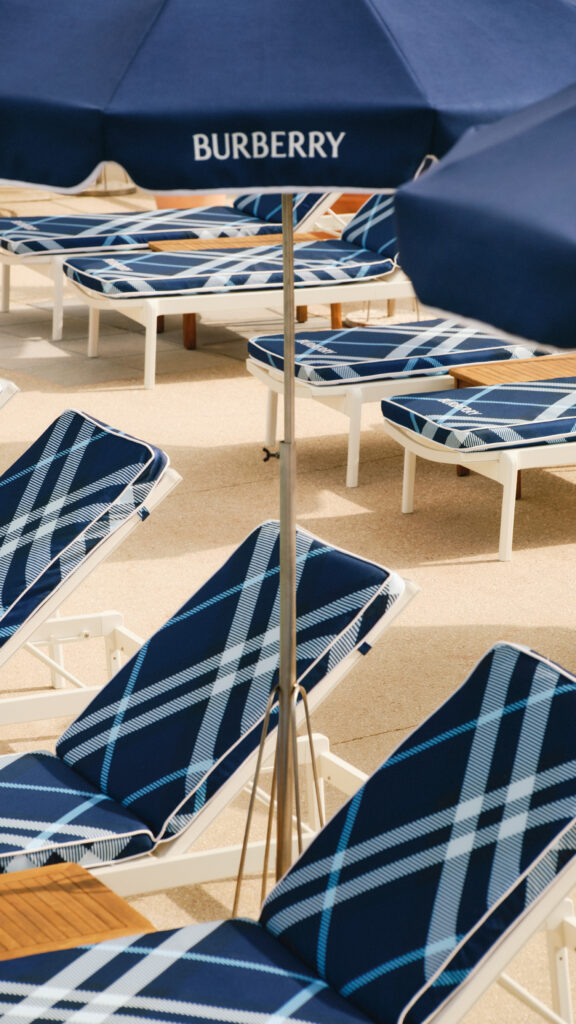
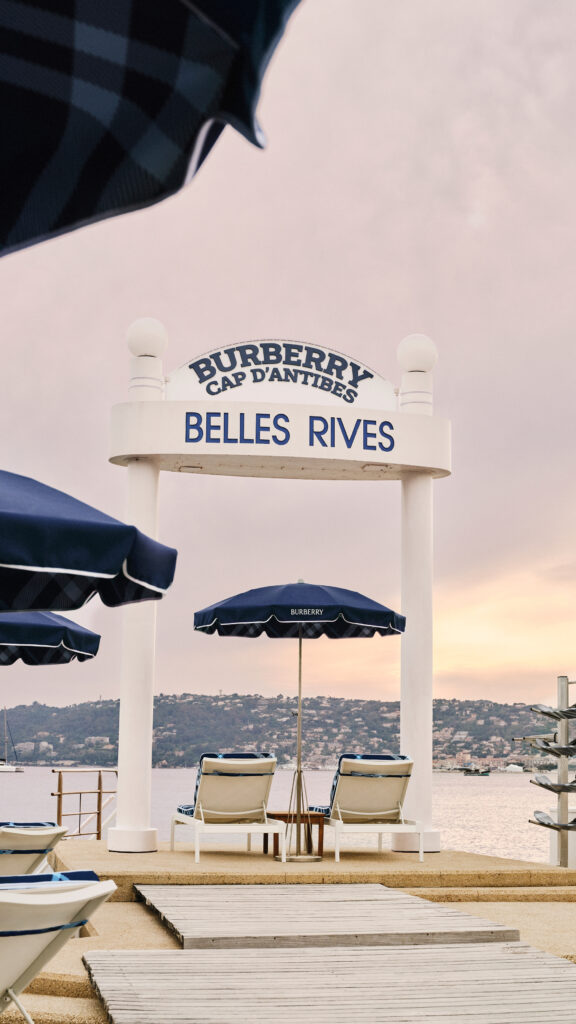
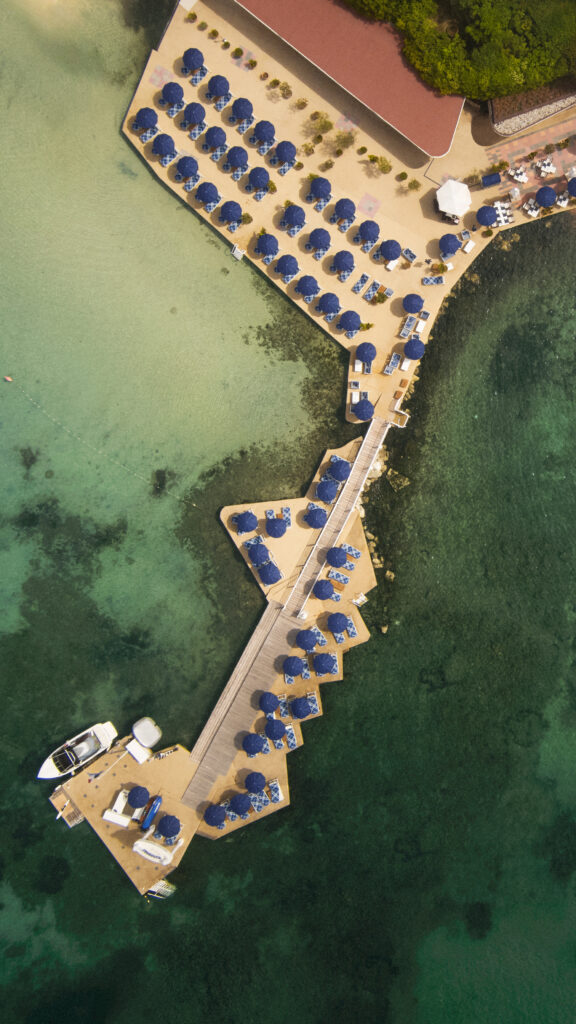
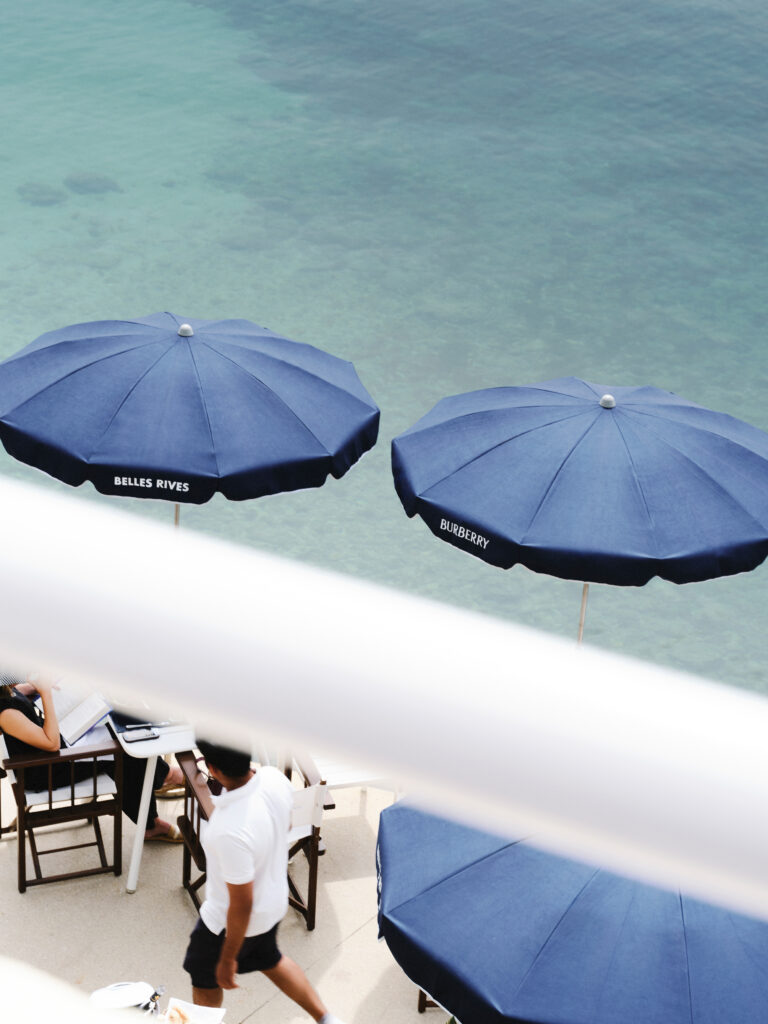
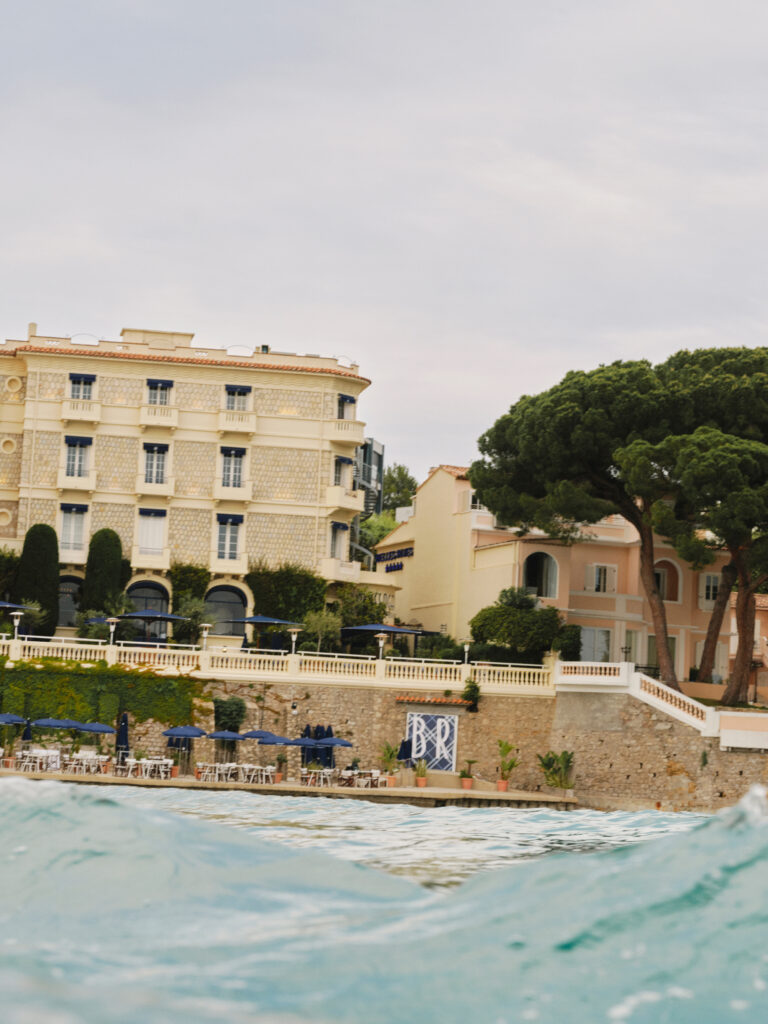
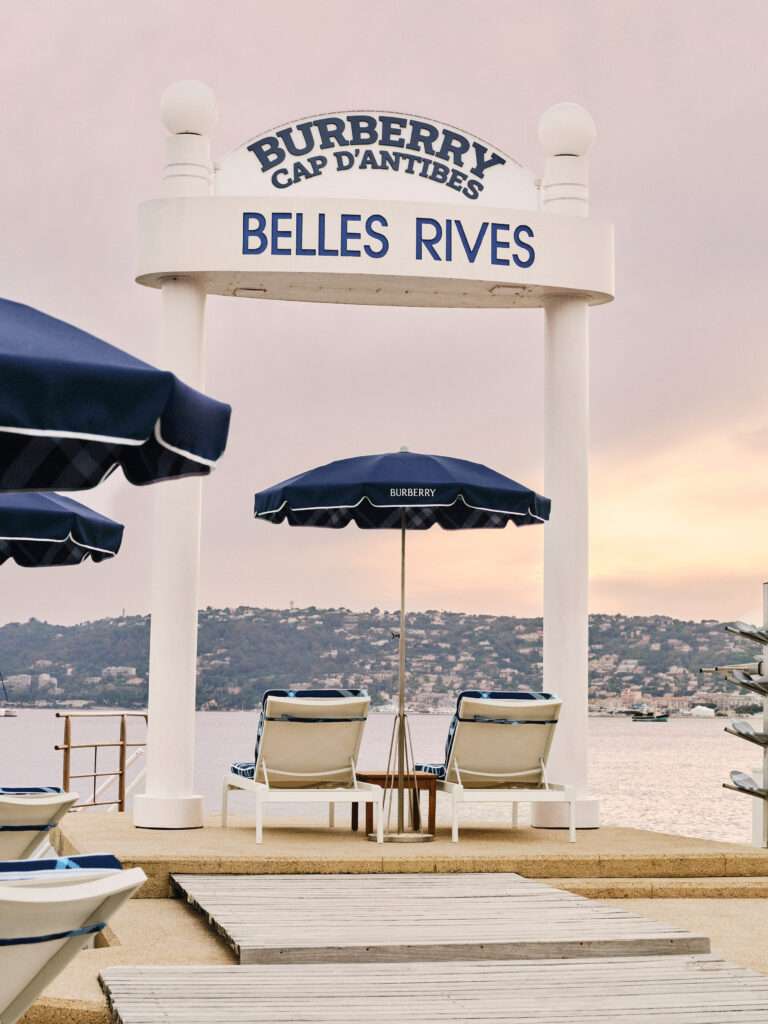
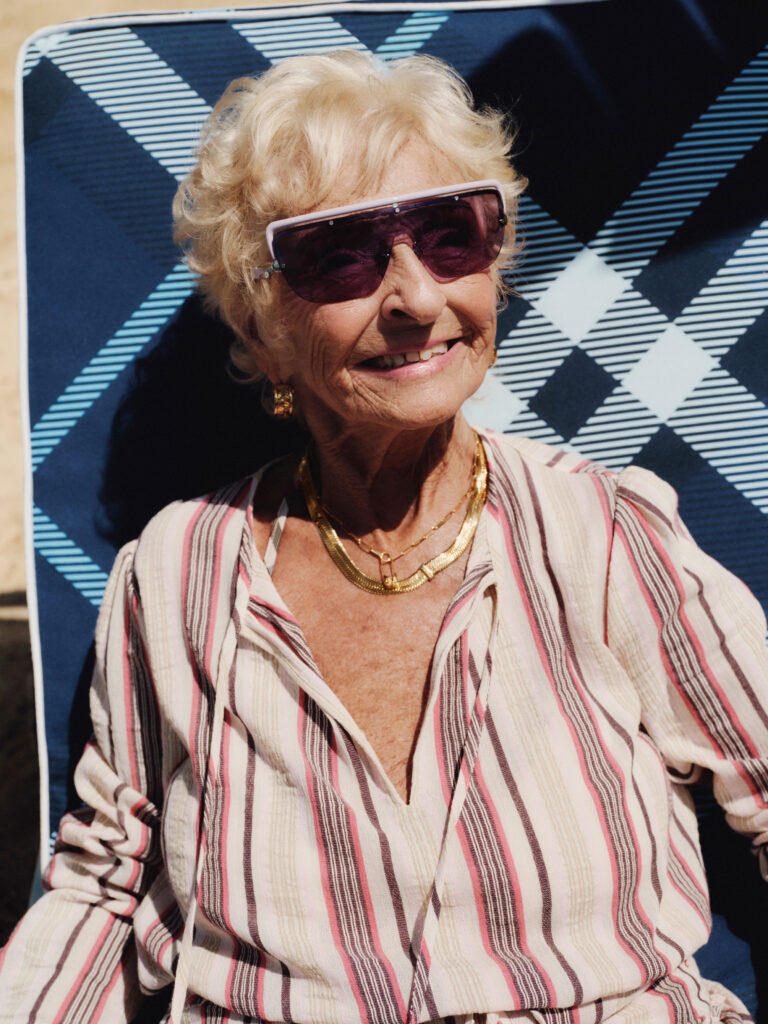
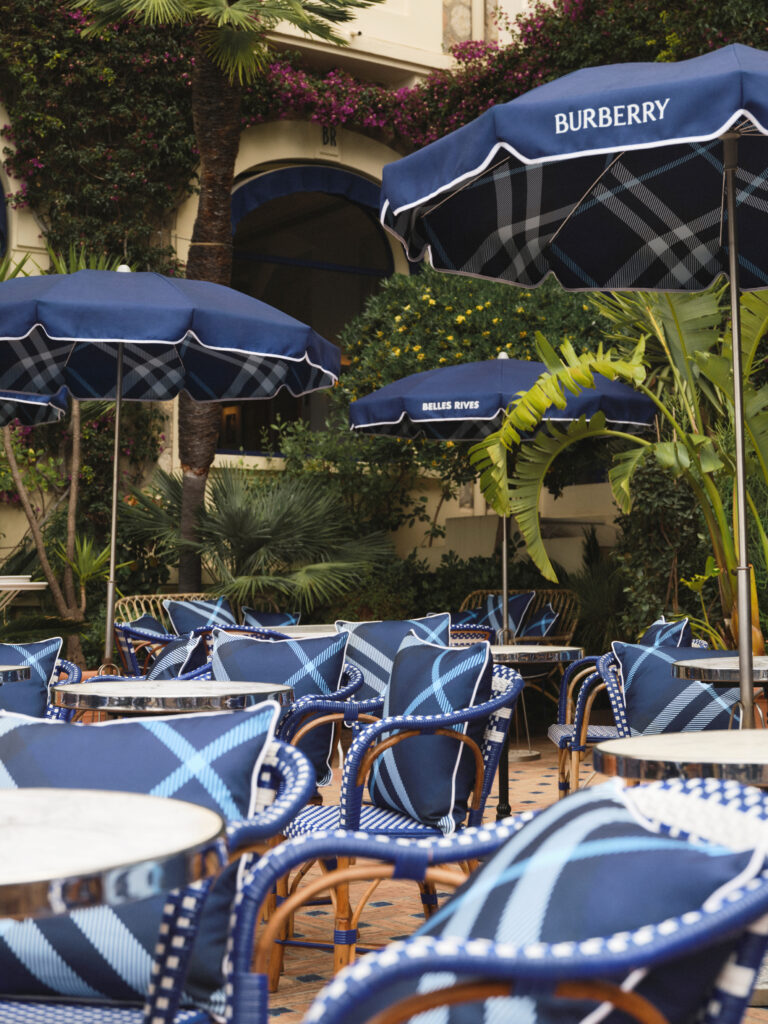
In Cap d’Antibes, certain places remain unchanged through the changing seasons. The Hôtel Belles Rives belongs to this rare category: a place whose history predates its existence as a hotel. Formerly the villa of F. Scott and Zelda Fitzgerald in the 1920s, the hotel retains something of the literary Riviera that existed before the standardization of seaside resorts. This summer, Burberry is launching a seasonal residency there through September 30, 2026, adorning the private beach and several areas of the hotel with an azure blue variation of its Check pattern.
The initiative might be nothing more than yet another coastal branding exercise. Yet it tells a different story: how fashion houses are now using historic hotels as temporary cultural spaces. In recent years, the beaches of the Mediterranean have become summer extensions of fashion houses seeking not so much immediate visibility as the creation of a vision. Dior in Portofino, Jacquemus in Monte Carlo, Loro Piana in Saint-Tropez: contemporary luxury is no longer content merely to dress the body; it stages the setting.
Here, Burberry has chosen a location whose history resonates naturally with its own British heritage. When Thomas Burberry invented gabardine in the late 19th century, he was responding to a practical need: to protect against the weather without making the garment stiff. A few decades later, Fitzgerald wrote *Tender Is the Night* on this coast, which was still frequented by a cosmopolitan artistic aristocracy. Between the London rain and the light of Cap d’Antibes, a single narrative emerges: that of a luxury tied to travel, mobility, and a certain vision of elegance on the move.
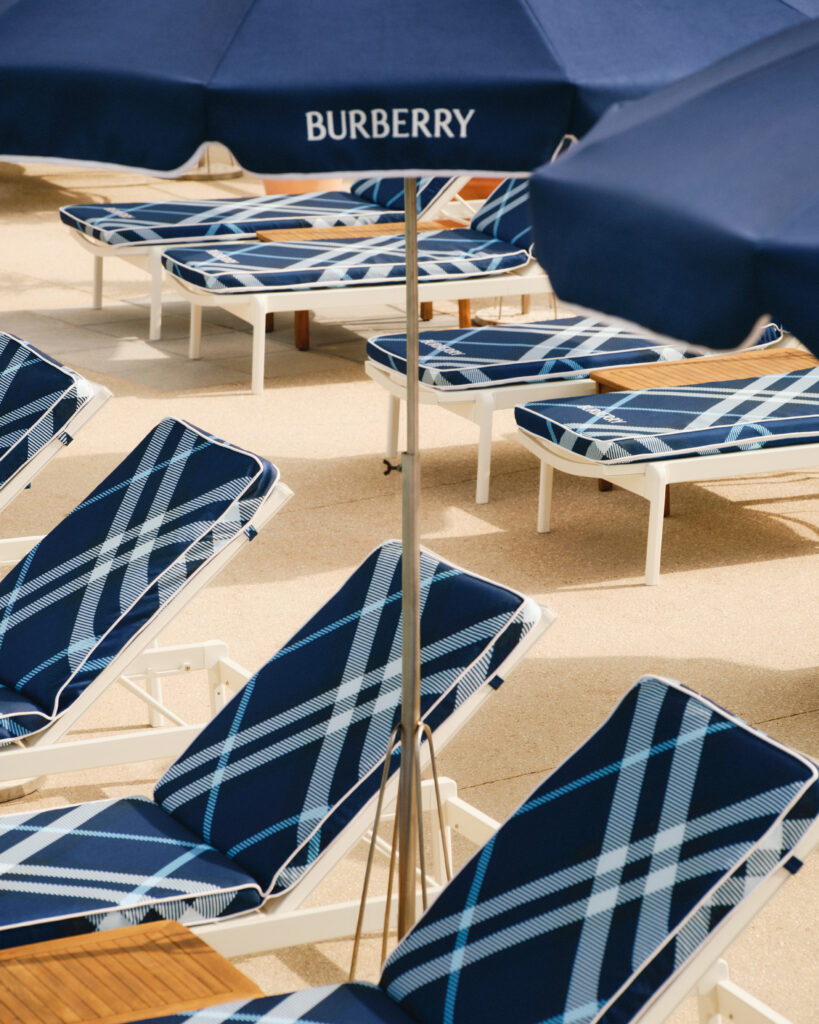
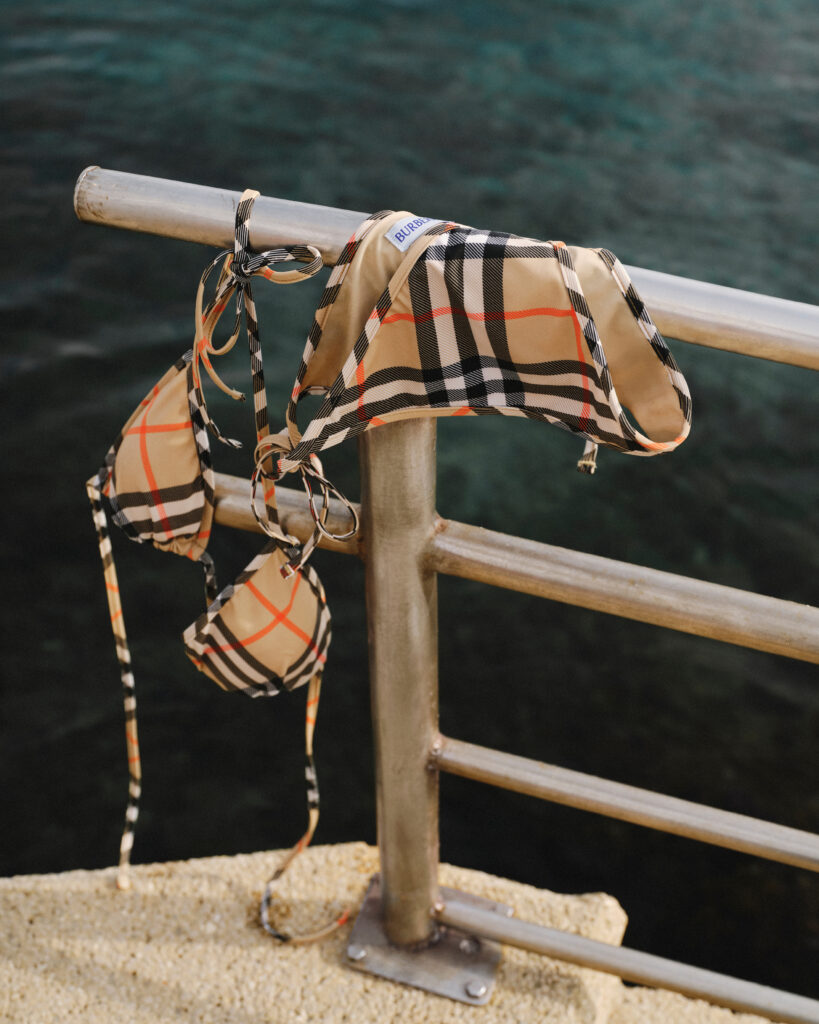
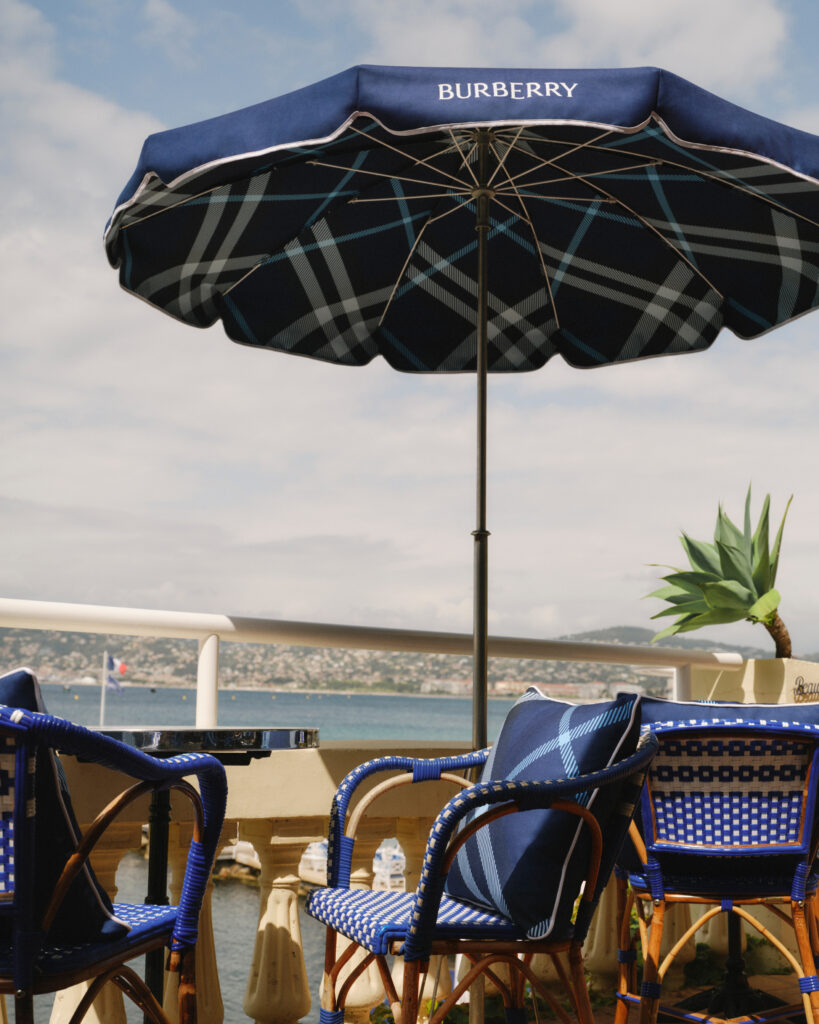
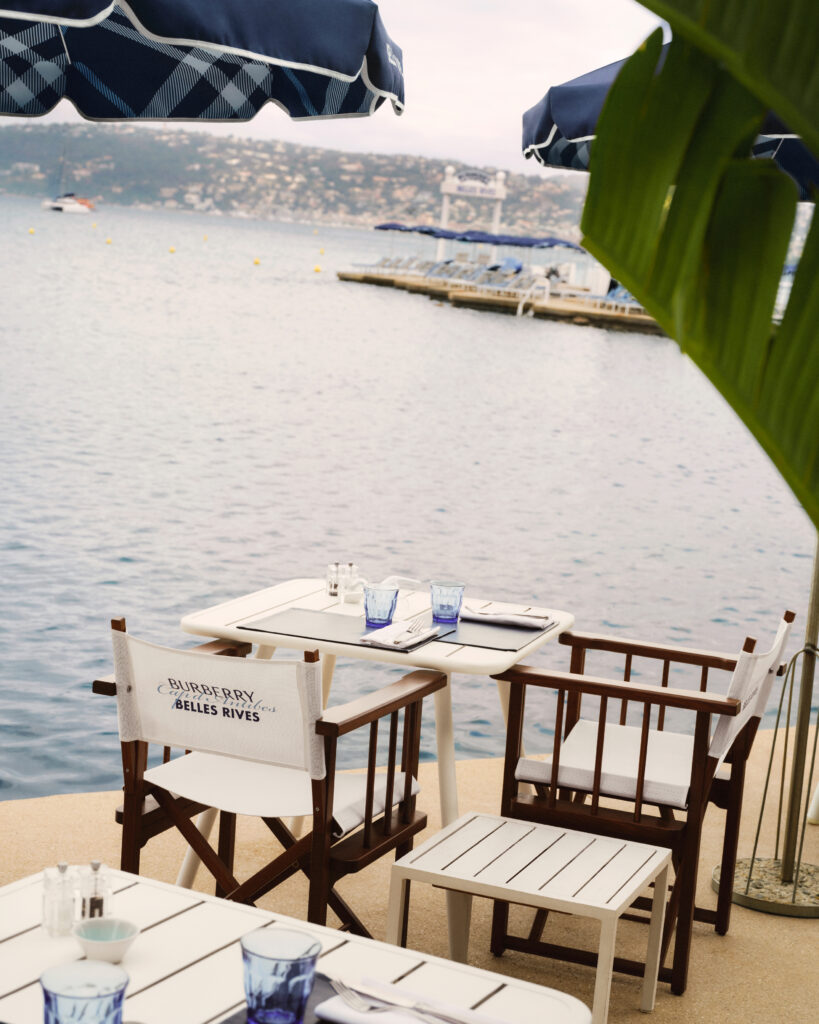
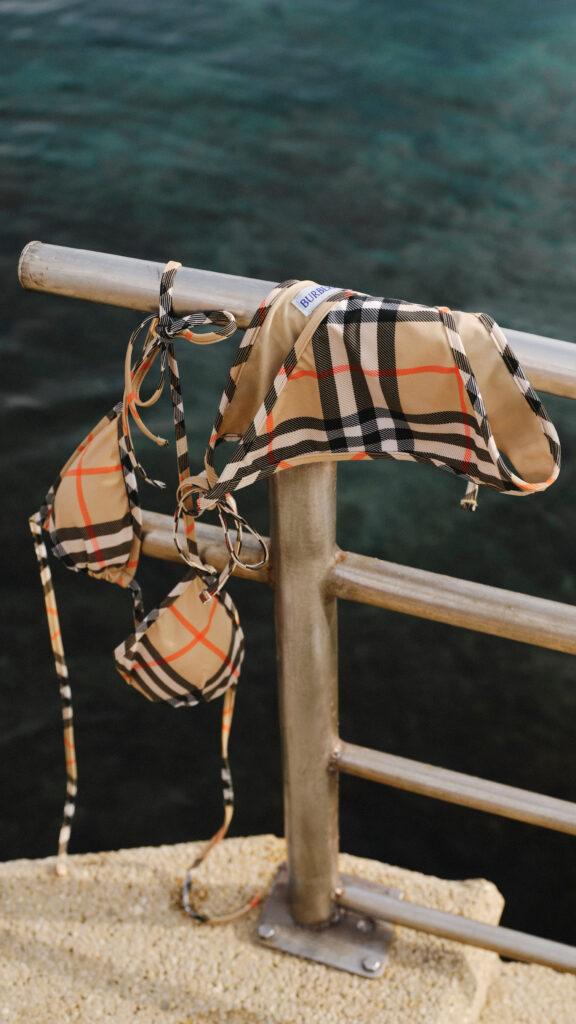
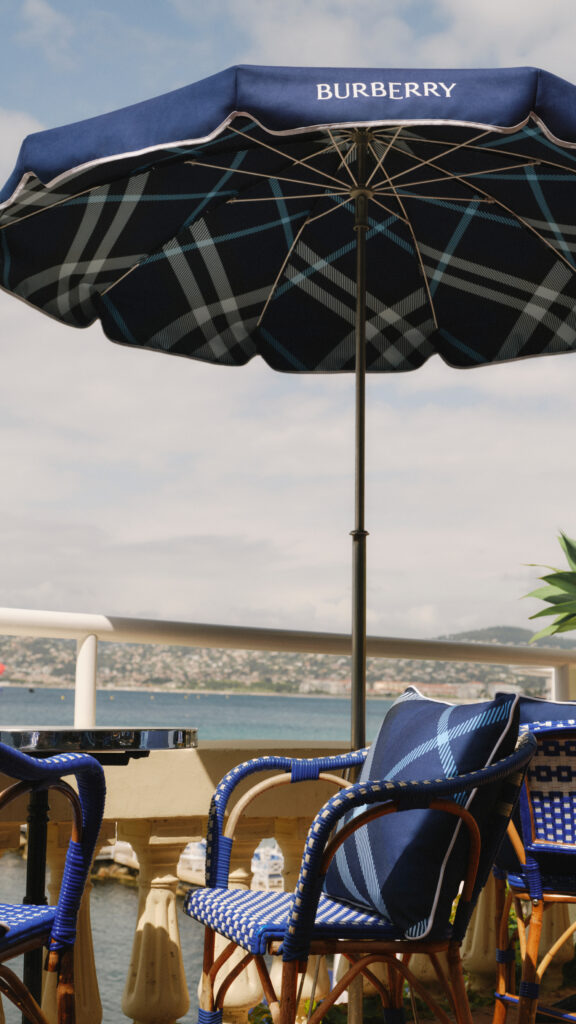
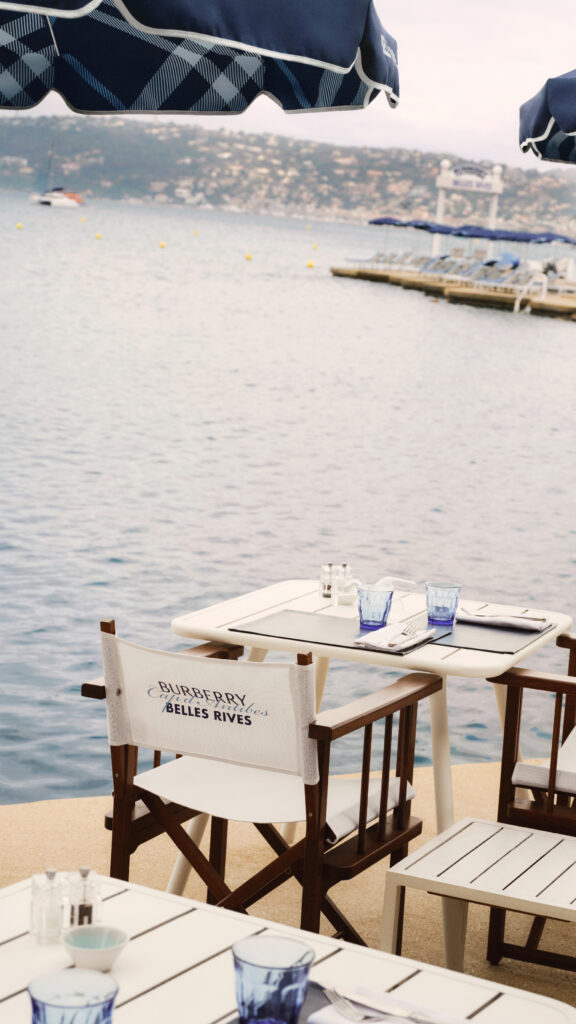
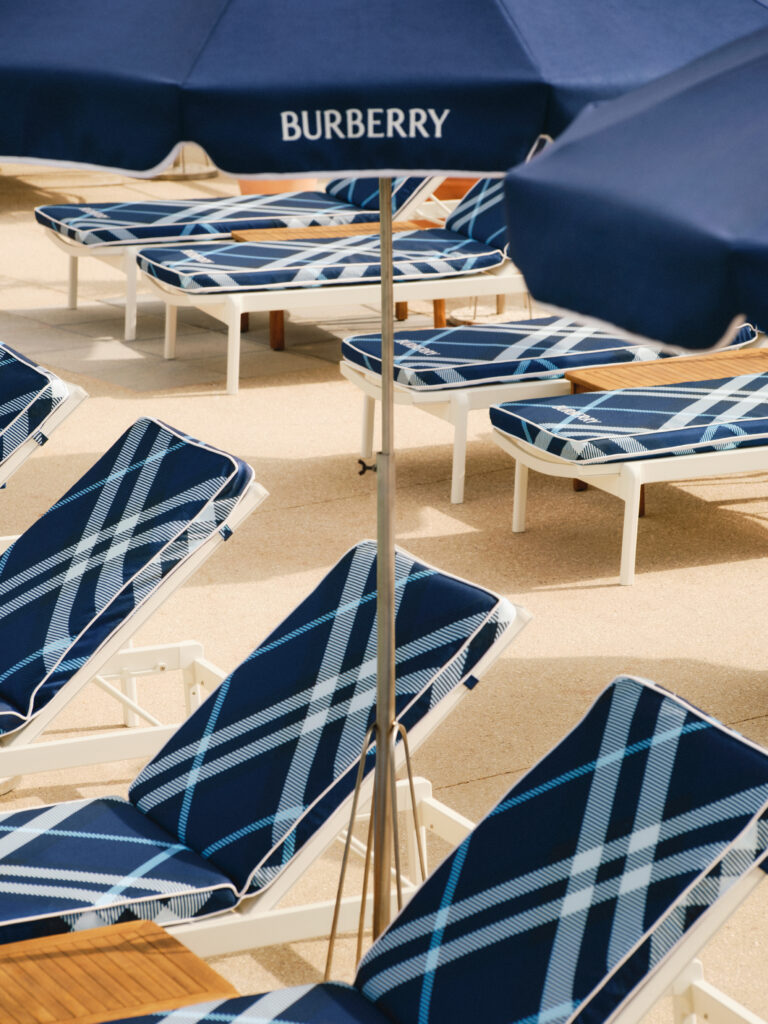
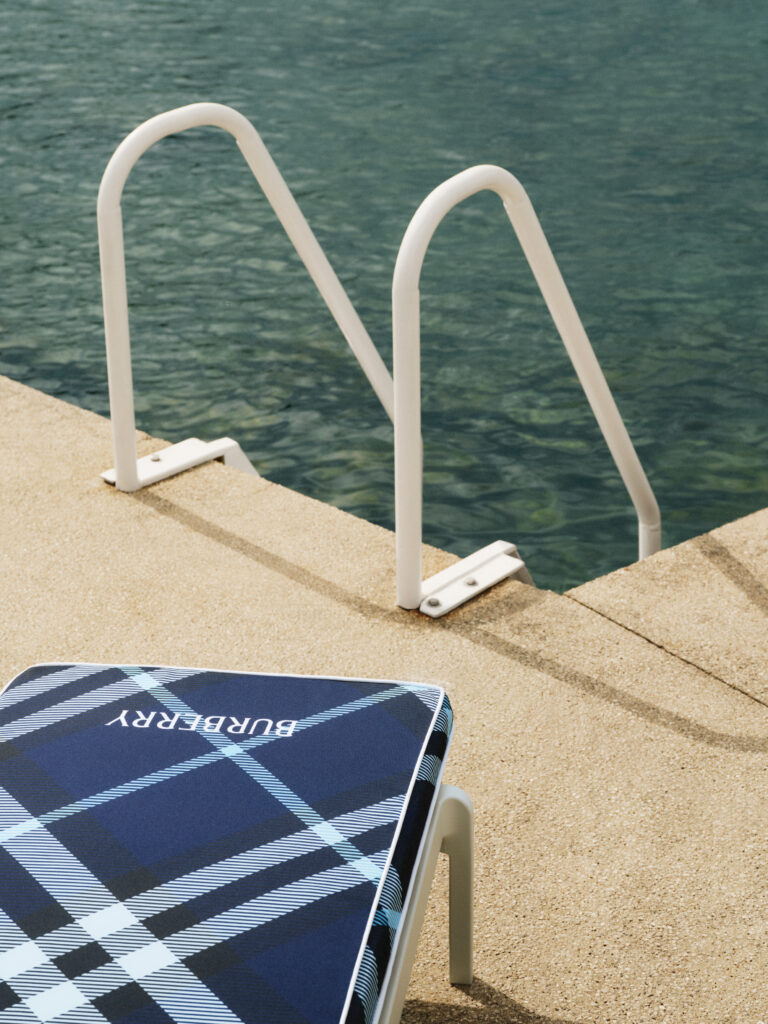
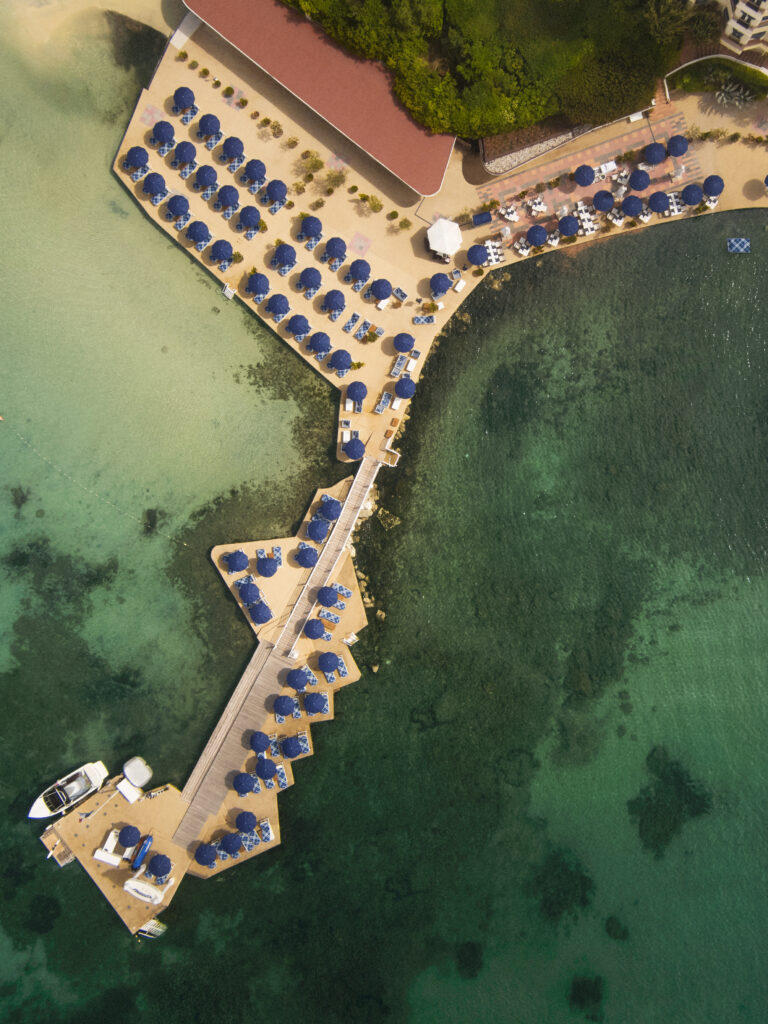
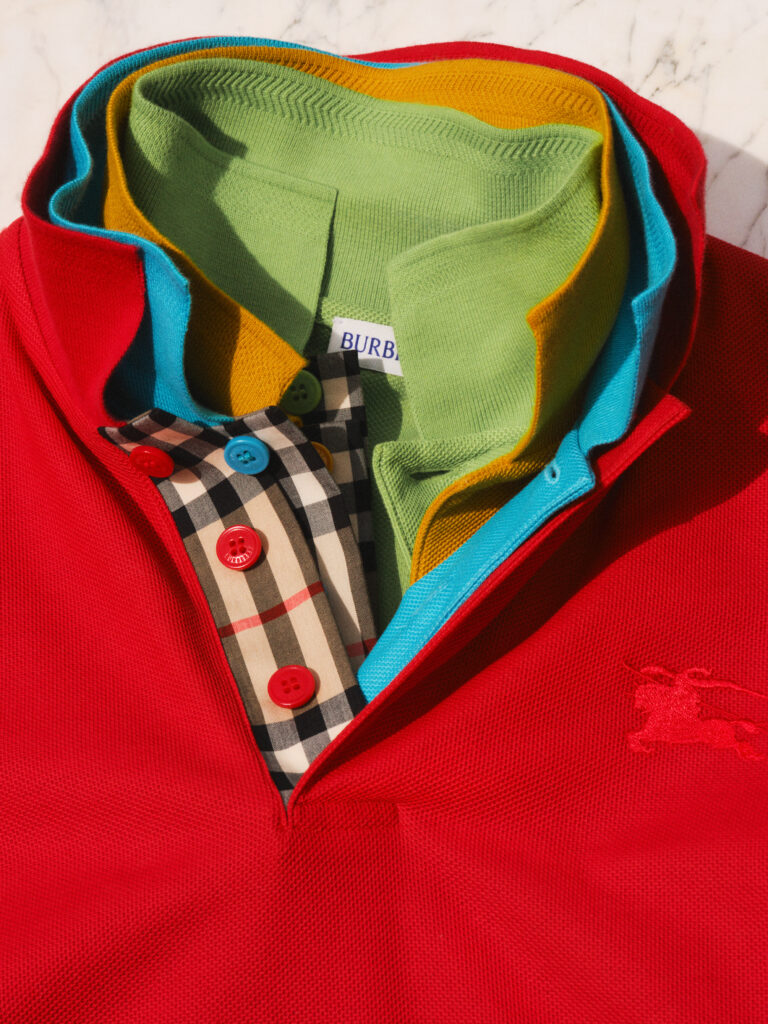
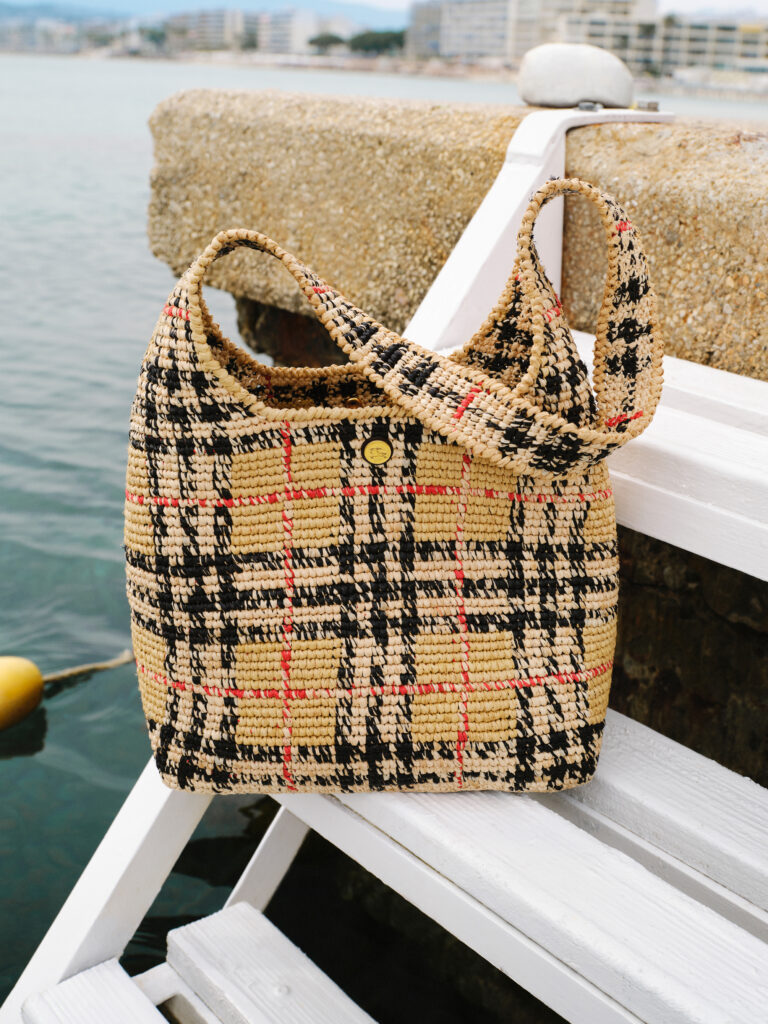
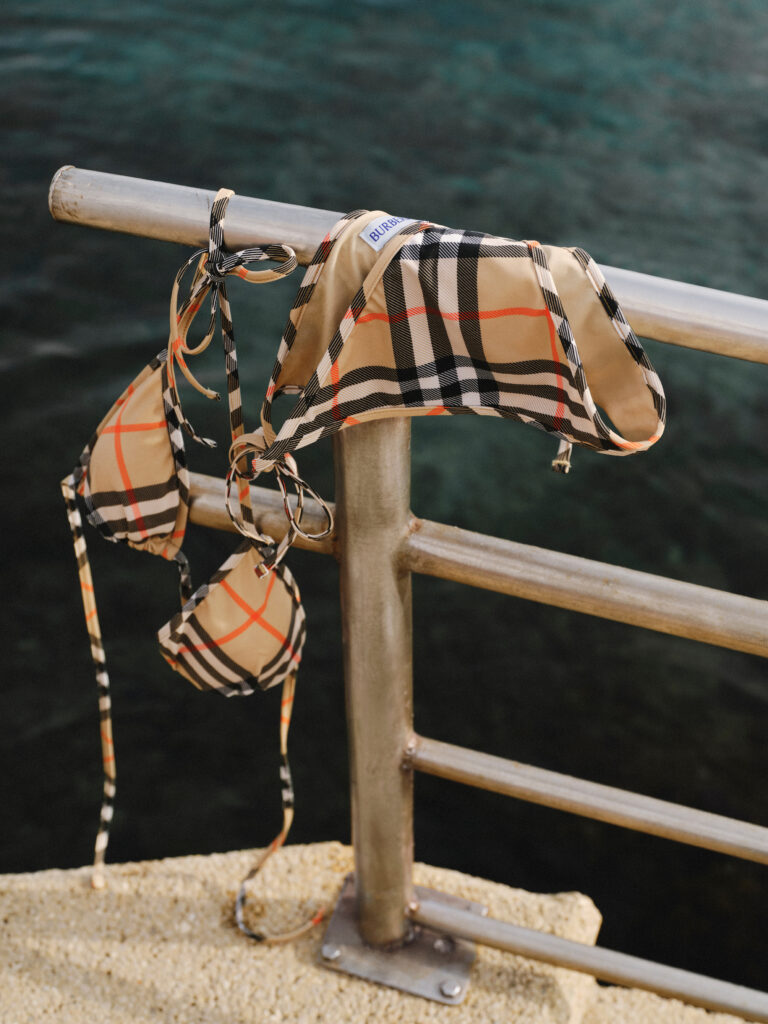
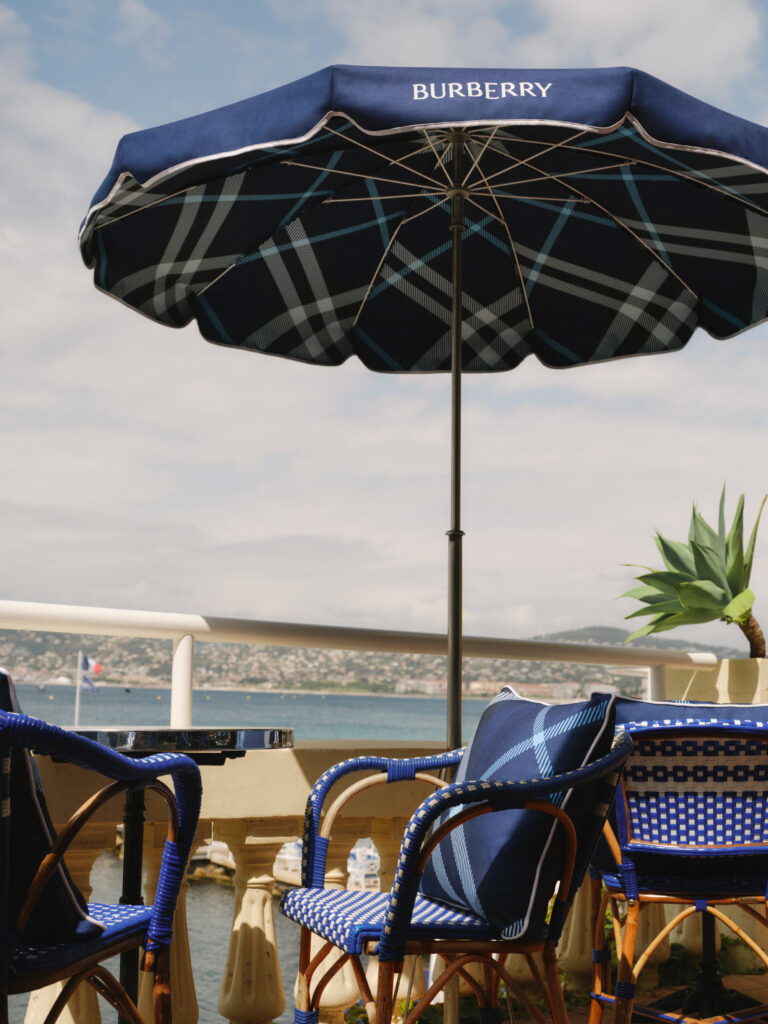
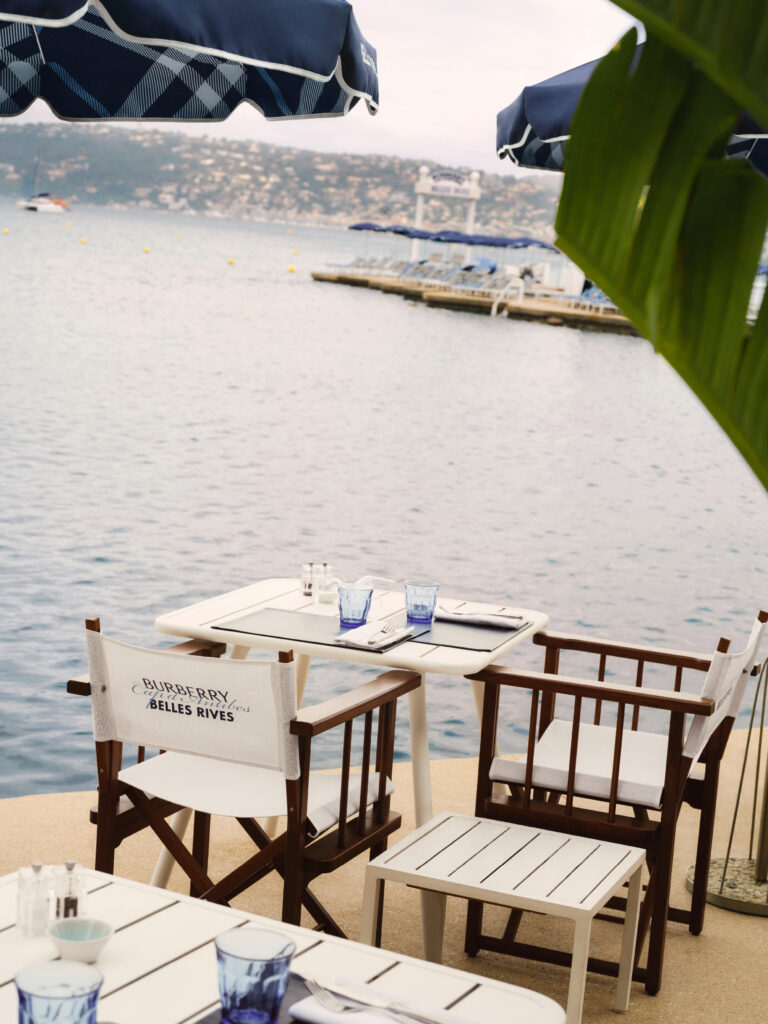
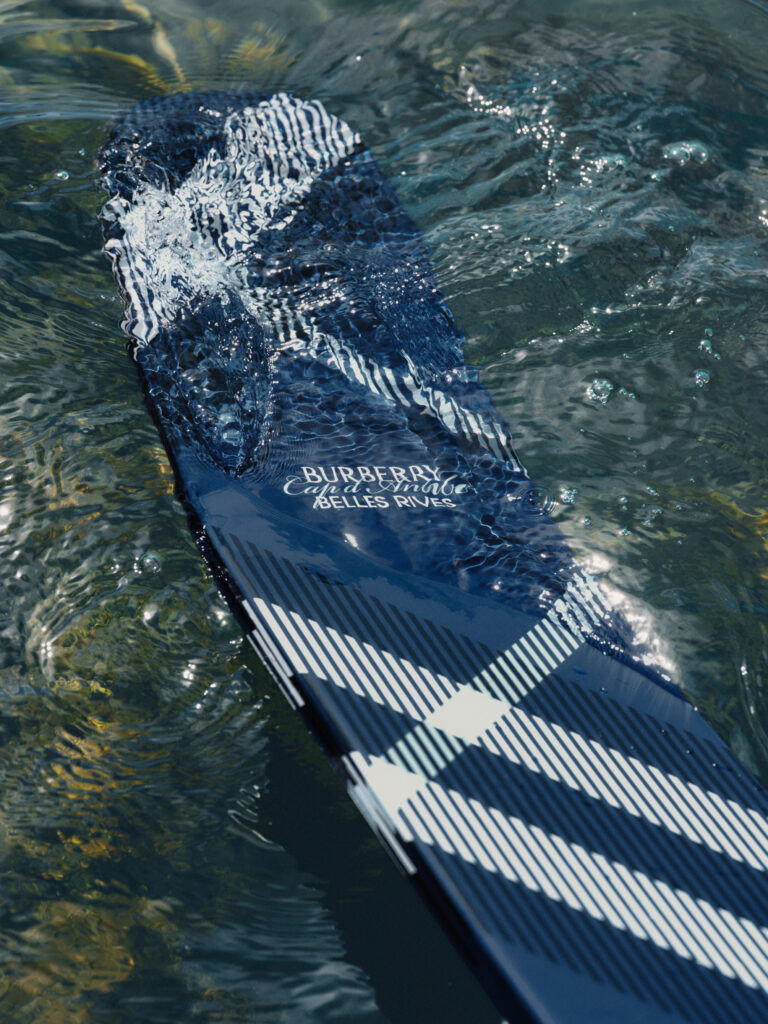
The collaboration is based on a color detail that’s more interesting than it seems at first glance. The Check pattern, first introduced as a lining for trench coats in the 1920s, here abandons its traditional camel color palette in favor of a blue inspired by the facades and shutters of Belles Rives. Striped umbrellas, lounge chairs, patio armchairs, cushions at the Fitzgerald Bar, and signage on the pier: the graphic identity extends all the way into the hotel’s historic elevator. This type of intervention reveals an evolution in experiential luxury: luxury brands no longer seek merely to impose their own codes, but to absorb those of the places they occupy.
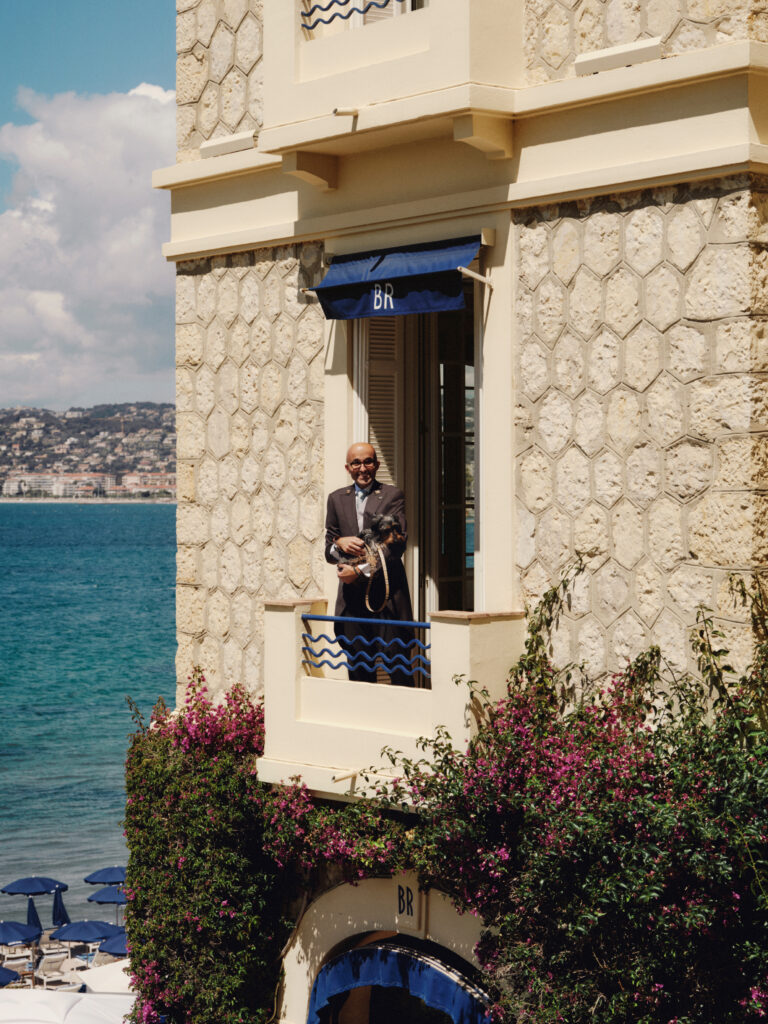
Another appealing aspect of the project is that it partly avoids the generic Mediterranean aesthetic that has become ubiquitous on the Riviera. Belles Rives retains its still-recognizable Art Deco architecture, with its geometric lines, white railings, and terraces overlooking the bay of Juan-les-Pins. Burberry isn’t transforming the hotel; the brand is integrating itself into the space with restraint. This is an important distinction at a time when certain summer collaborations resemble ephemeral set designs more than genuine aesthetic dialogues.
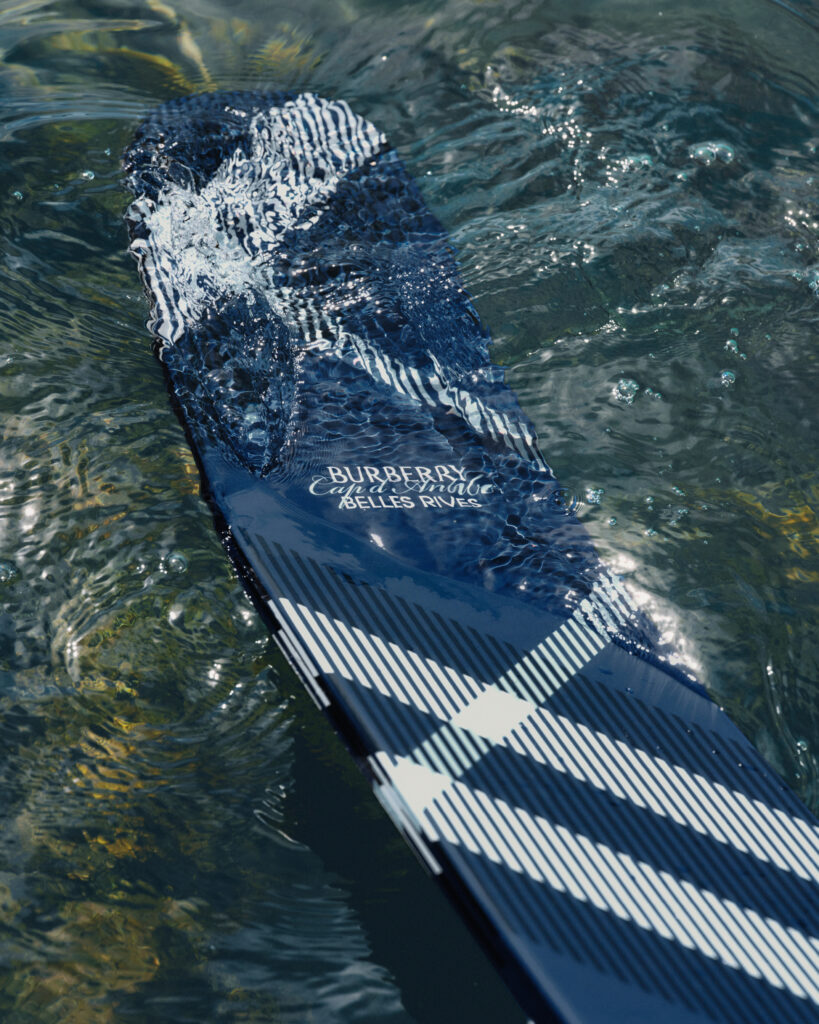
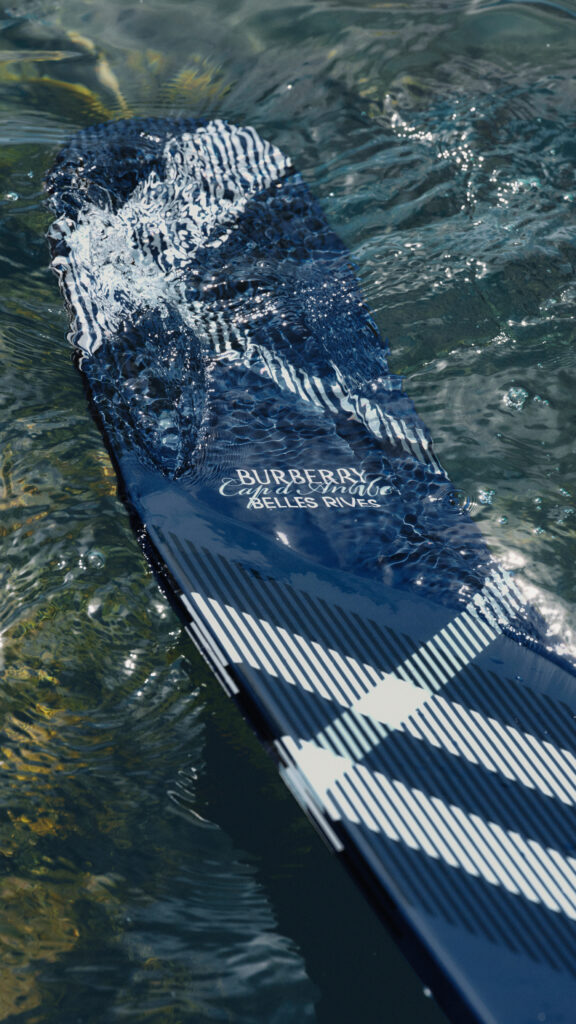
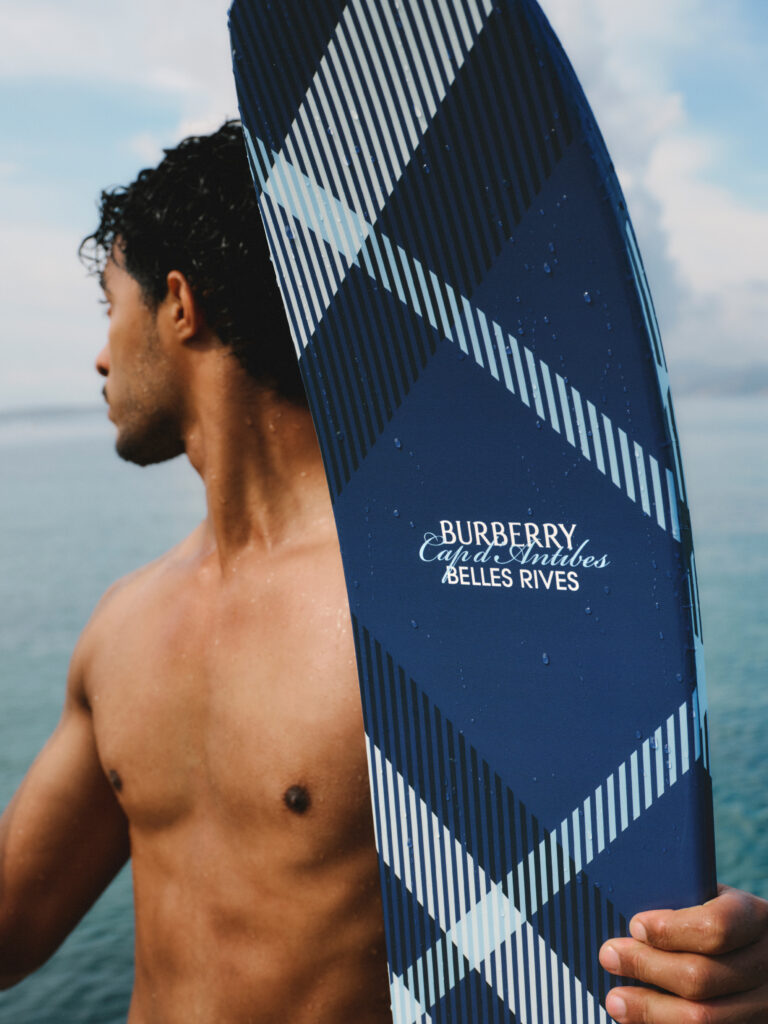
The choice of water skiing as an experience associated with the campaign is no coincidence either. The Belles Rives Water Ski Club claims to have introduced this sport to the bay in the 1930s. Once again, the collaboration seeks to build on a local legacy rather than add an artificial program designed for social media. This attention to context has become a strategic priority for luxury brands: today’s era values not so much pure ostentation as the ability to fit into a credible cultural continuity.
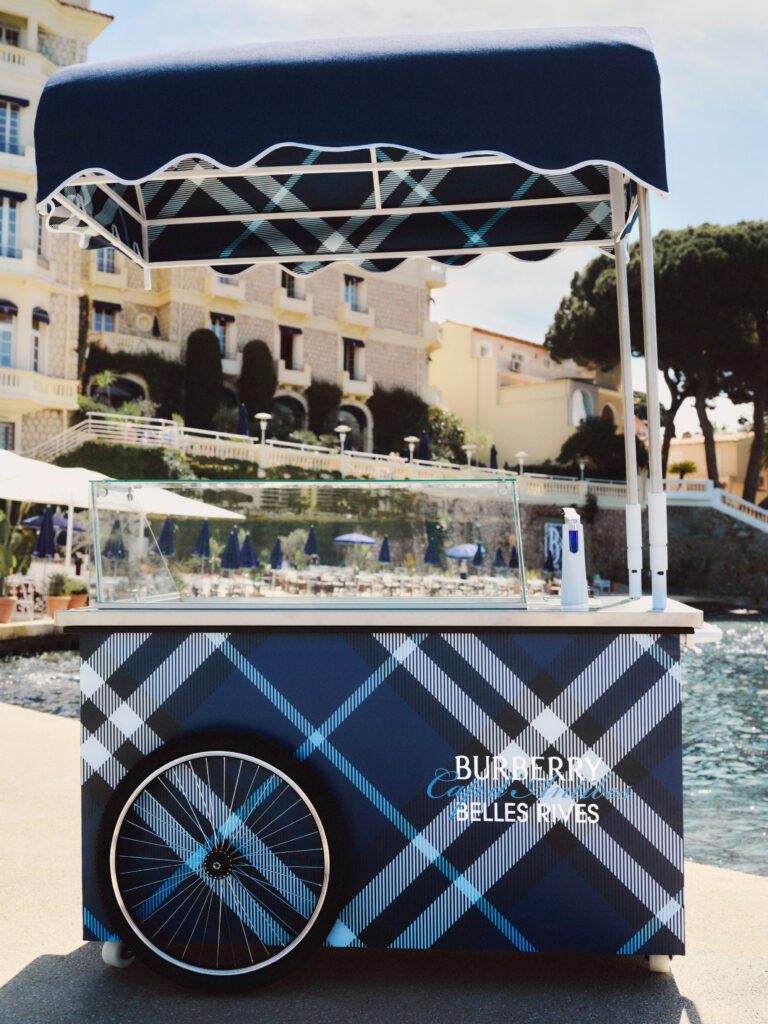
Inside the hotel, the restaurant La Passagère follows its own distinct path under the direction of Chef Aurélien Véquaud, while the recently renovated Bar Fitzgerald remains one of the few places on the French Riviera where the word “Riviera” still carries deep historical significance. Burberry adds branded ice cream, a few textiles, and a subtle visual presence. Nothing spectacular. And that’s precisely what works.
In an industry saturated with interchangeable seasonal installations, this installation serves as a reminder that a place sometimes possesses enough history to impose its own rhythm on the brands that come to occupy it.

Cette publication est également disponible en :

