
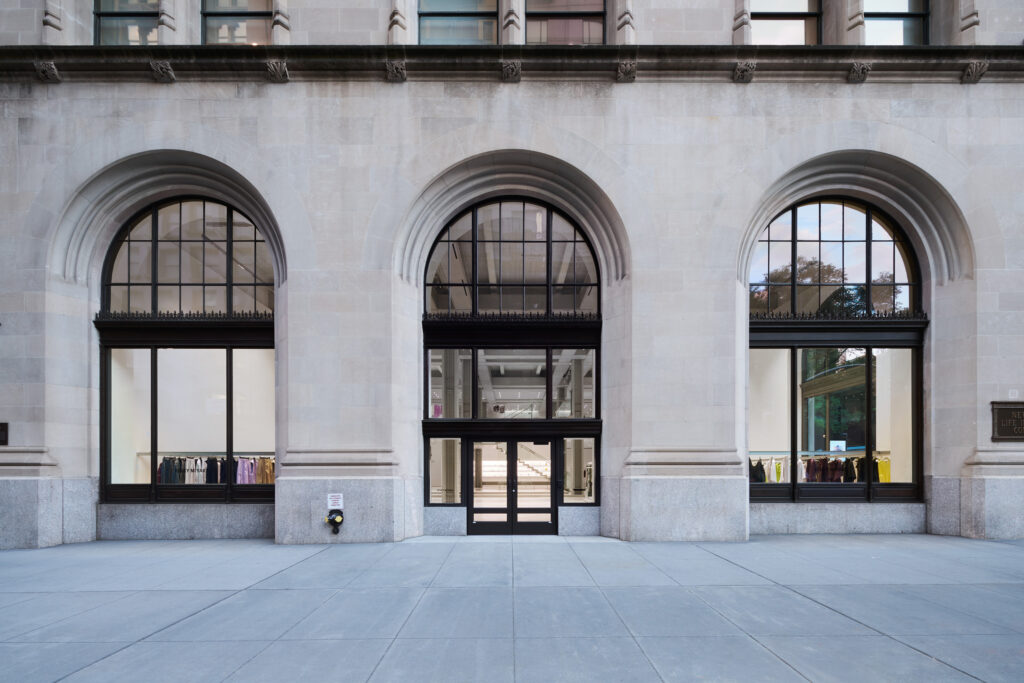
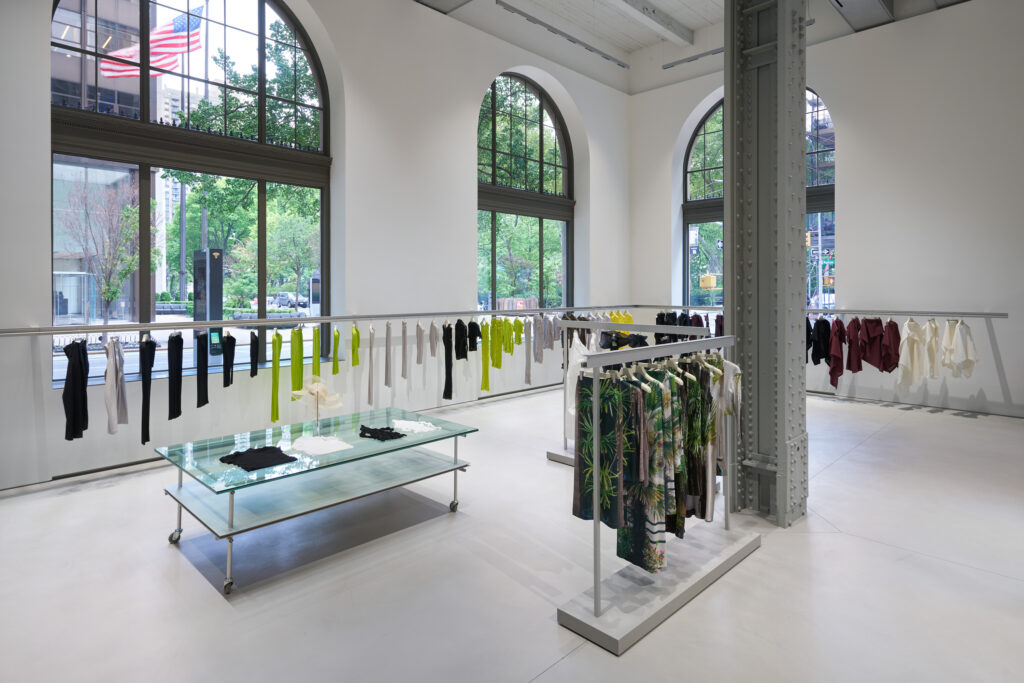
At the corner of Madison Avenue and 26th Street, in a building that Cass Gilbert completed in 1899 for the New York Life Insurance Company, ISSEY MIYAKE has just opened a 1,200-square-meter store spread over two floors. The location is no coincidence: across from Madison Square Park, just a few blocks from the Flatiron Building and the neighborhood that was long home to New York’s men’s fashion showrooms, the choice says something about how the brand now intends to establish itself in Manhattan—no longer in the realm of Tribeca-style luxury, but through a more direct dialogue with the city.
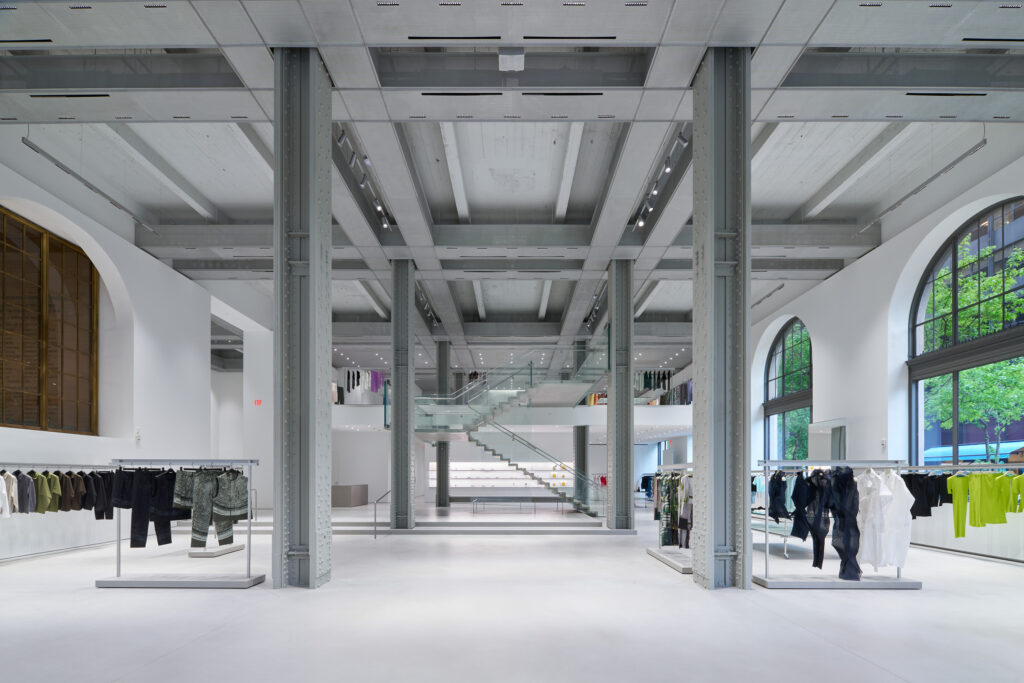
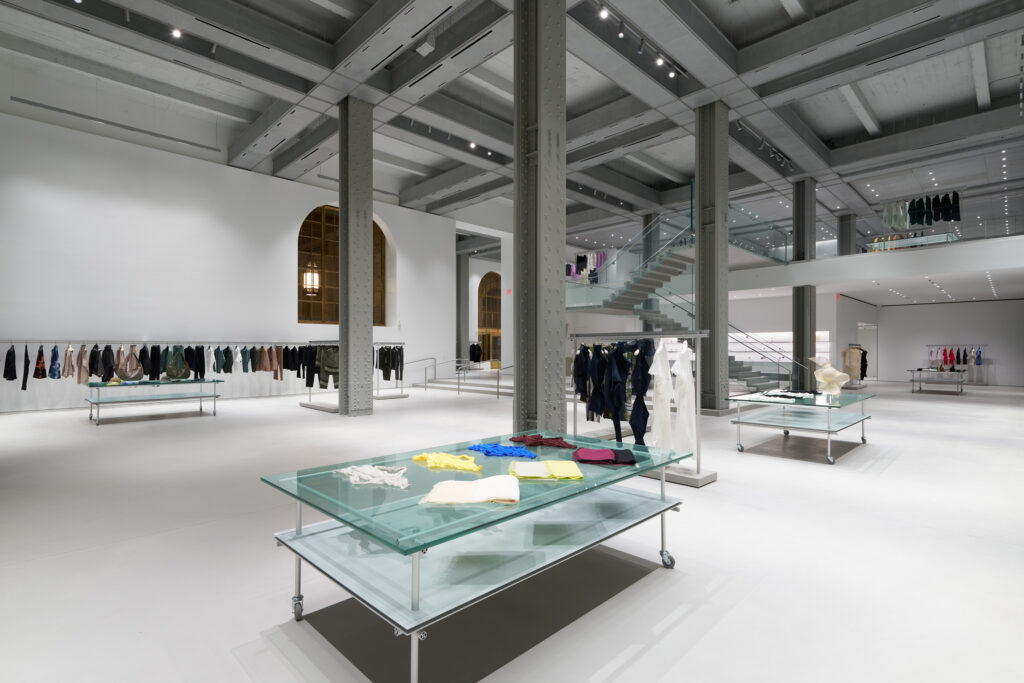
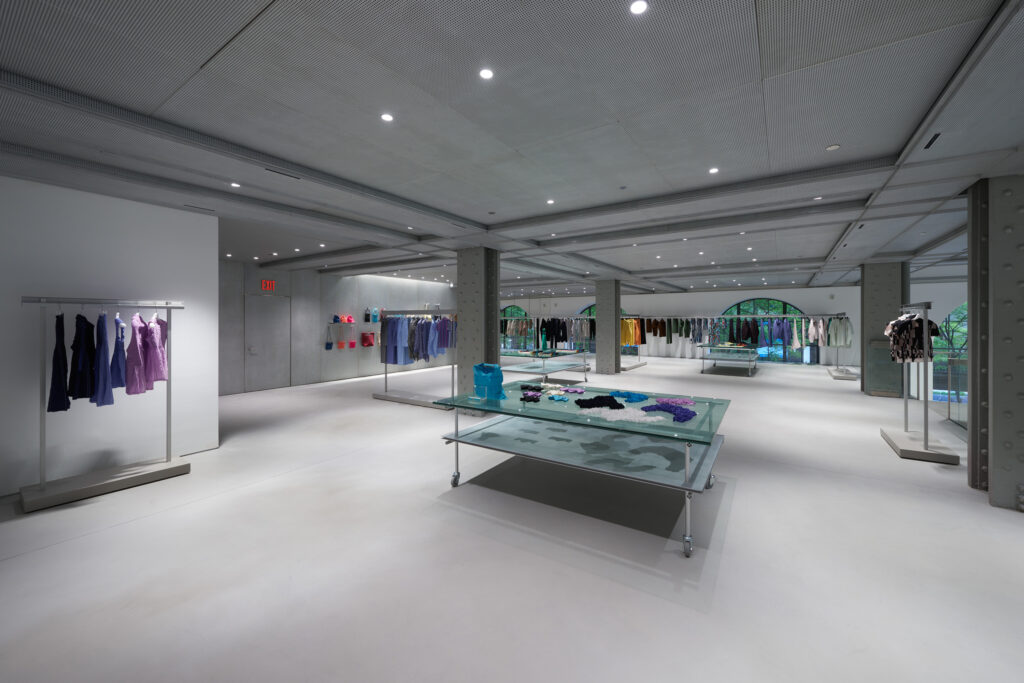
The New York-based firm Solid Objectives Idenburg Liu designed the interior. Their approach is evident from the moment you enter: the original Beaux-Arts elements—molding, ceiling heights, and window proportions—have been preserved and set in contrast with custom-made aluminum and stainless steel surfaces. Neither restoration nor a clean slate. A central staircase made of transparent structural glass connects the two levels. Here, glass is treated as a load-bearing material rather than a decorative one—a concept that echoes the mechanical properties of Miyake textiles: strength where one would expect fragility.
Details: The glass panels from the former Tribeca flagship store—which was closed for this opening—have been transformed into display areas for accessories and folded pieces. The speed with which this repurposing was integrated into the architectural project reflects a commitment to circularity that is not merely a marketing pitch here, but a design constraint embraced from the outset.
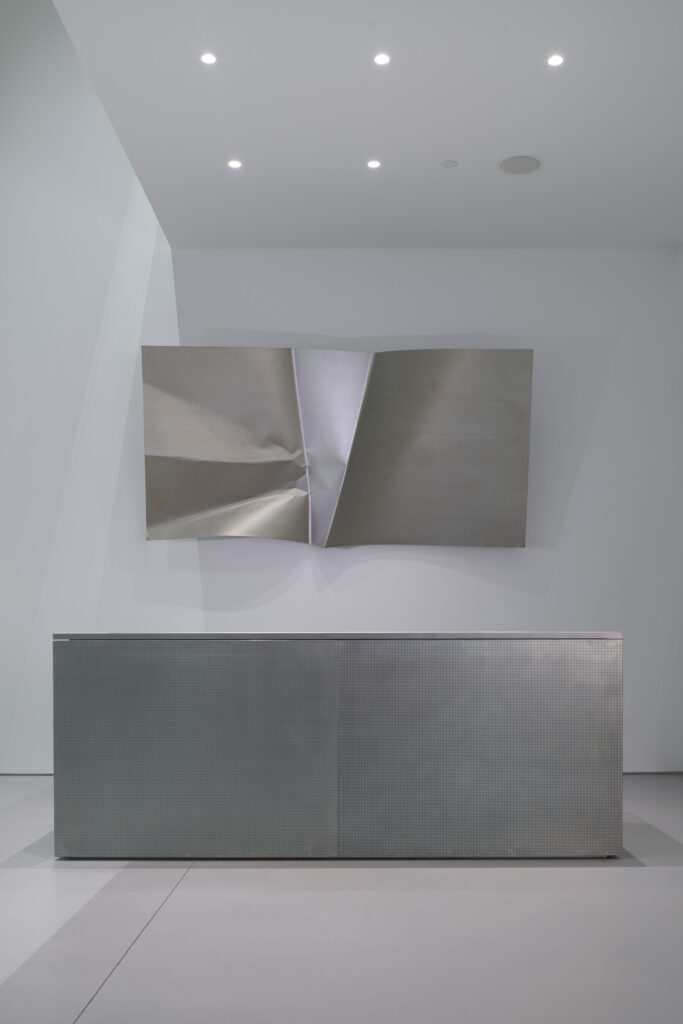
At the center of the space, a titanium panel marks Frank Gehry’s presence. The friendship between the architect, who died in 2024, and Issey Miyake—who died in 2022 — had led, among other things, to their collaboration on the Guggenheim Museum Bilbao, where the pleated fabrics of one and the titanium surfaces of the other had already engaged in a formal dialogue. The panel is not a static memorial: it functions as a spatial landmark, a fragment of titanium in an environment where brushed aluminum and polished steel shape the light.
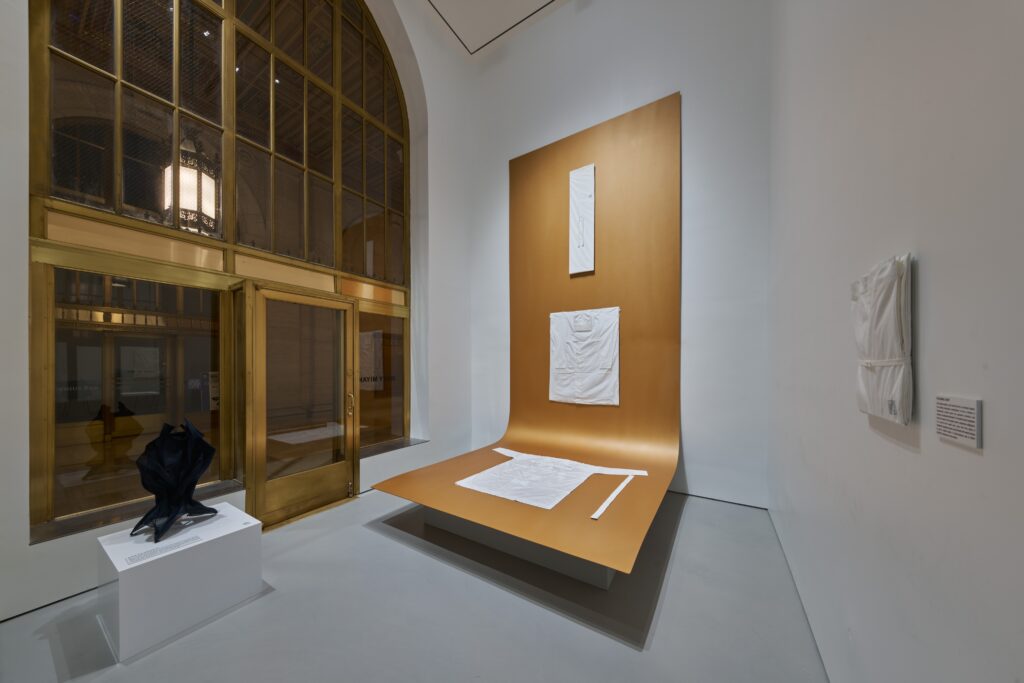
The three glass-enclosed sides of the ground floor bring Madison Square Park into the design. The view of the trees, the traffic, and the surrounding facades is not merely a picturesque backdrop but a design element: the interior space changes with the time of day and the season, which alters the way the exhibited pieces are perceived. For a fashion house whose entire history is rooted in the ability of a fabric to transform incident light—the Pleats Please pleats being the best-known example—this openness to the outside world is entirely consistent.
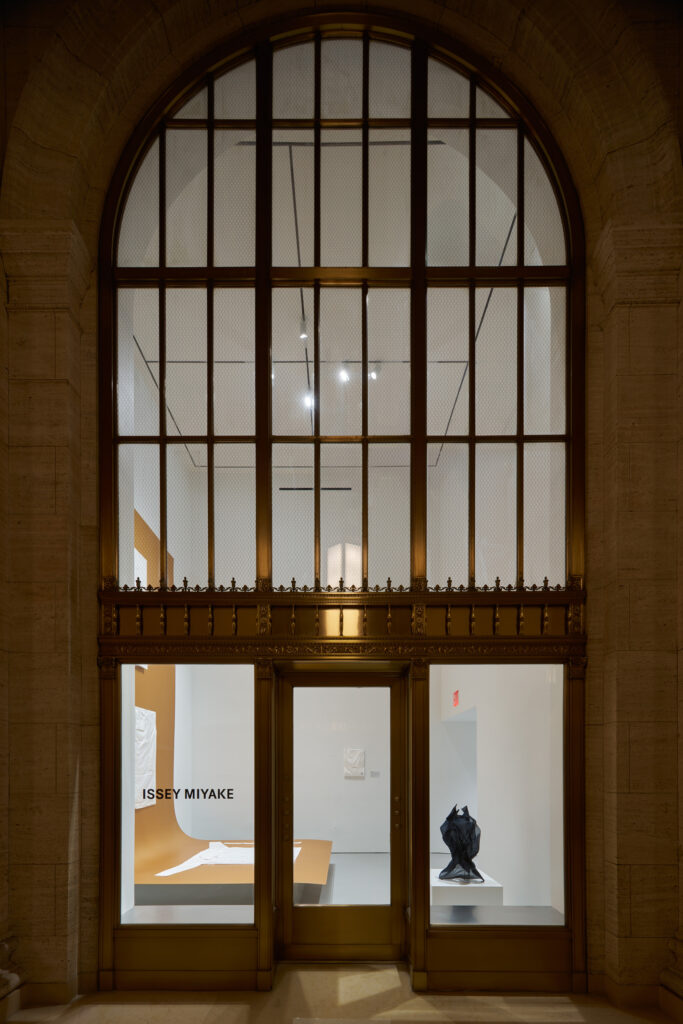
At the rear of the second level, MADO is the most interesting design feature of the entire complex. This gallery space—the Japanese word means “window”—will be dedicated to rotating exhibitions, collaborations, and special projects. This is the first time ISSEY MIYAKE has incorporated such a feature into a store outside of Japan. Here, the retail space serves as a platform—a concept that is neither new in the luxury sector (Hermès has been theorizing it for decades) nor insignificant coming from a House whose relationship with exhibitions has always been forged outside conventional channels: the Musée des Arts Décoratifs in Paris, the Vitra Design Museum, and the 21_21 Design Sight in Tokyo, co-founded by Miyake.
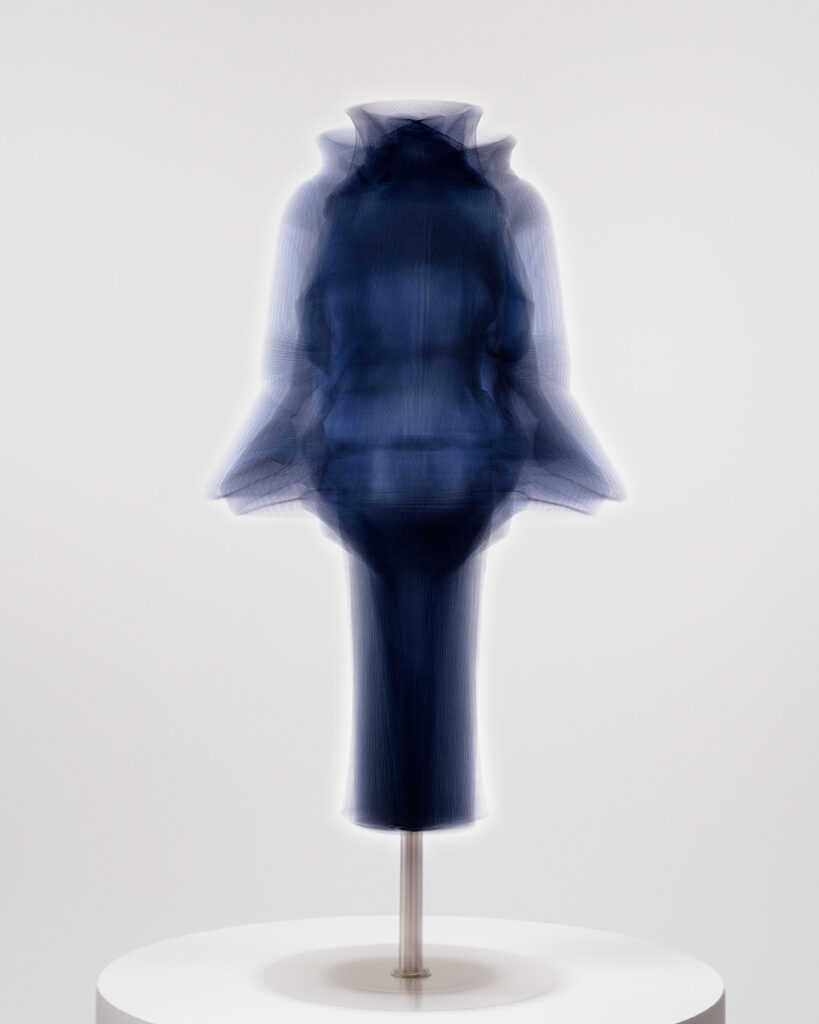
For the opening, several pieces were designed exclusively for this flagship store. The FOLDING COAT features a hand-applied Rakkan—the traditional Japanese seal that identifies the creator of a work. THE UNBOUND HAT, crafted from abaca fiber, continues the House’s exploration of plant-based materials with distinct textures, a theme it has been developing since its A-POC collections of the 1990s. The SHADE and SHADED_NY series—two dresses, a skirt, and a pleated top—embody in their very names the tension between the universal motif and its New York roots.
What 45 Madison Avenue reveals is less an opening than a spatial repositioning: ISSEY MIYAKE has chosen a historic building, a neighborhood undergoing transformation, and a focus on recycled materials to establish a gallery that is not a museum but is not quite a store either. The next step will be to see whether MADO produces exhibitions that live up to the space’s potential, or whether the window remains, for now, primarily a well-framed display.
Cette publication est également disponible en :

