
For the summer of 2027, Caruso isn’t looking for seasonal flair but rather the precision of presence.
The reference to Irving Penn gives the collection a unique perspective: reducing to better reveal.
In a men’s fashion scene saturated with imagery, this restraint almost becomes a statement in itself.
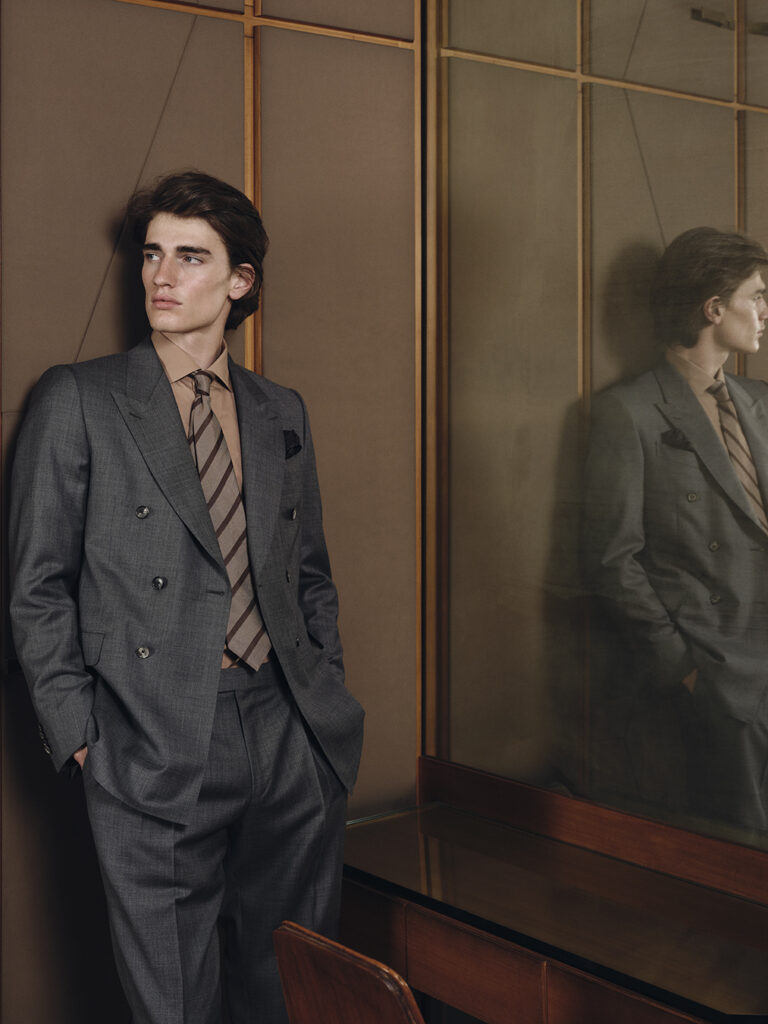
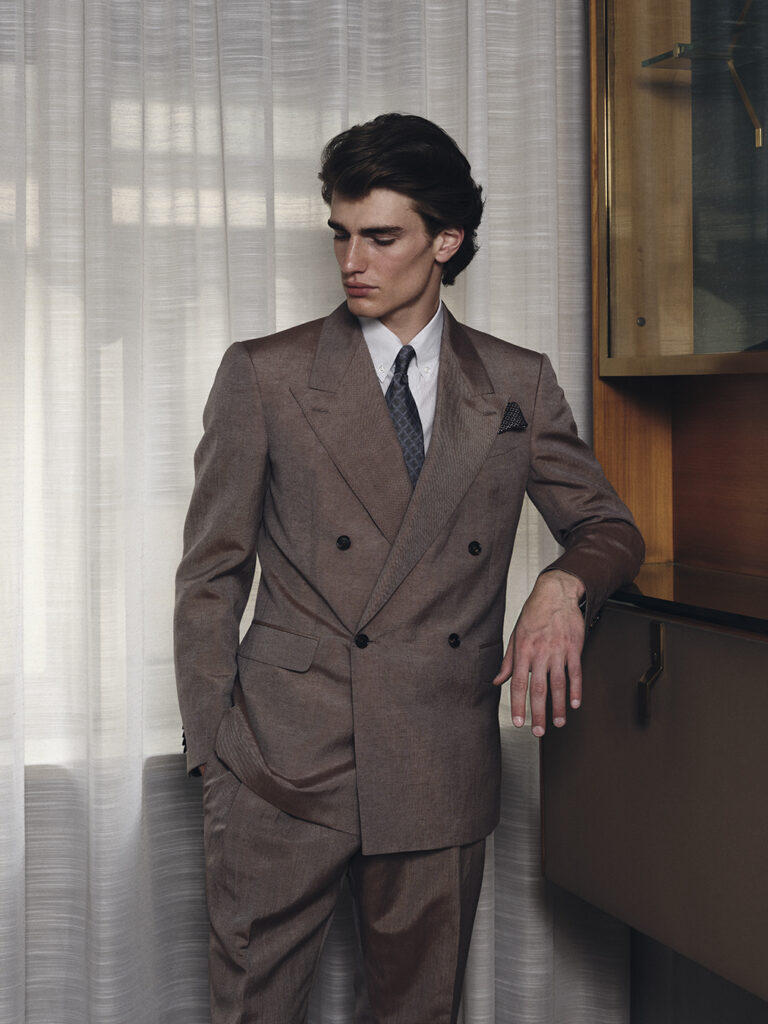
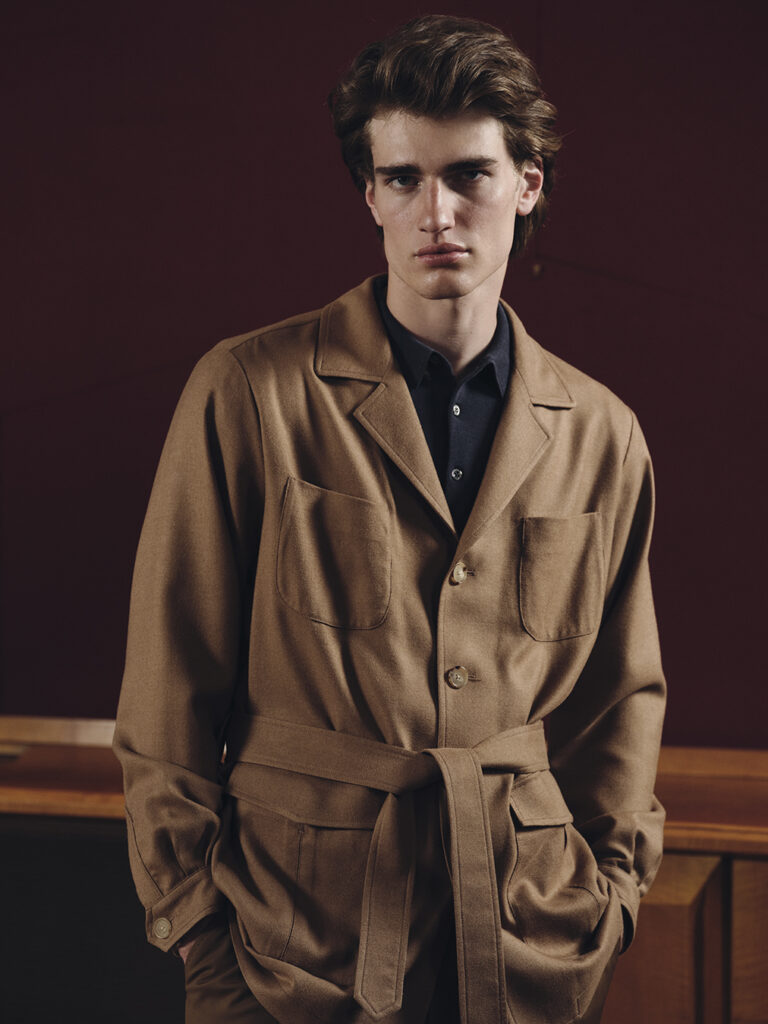
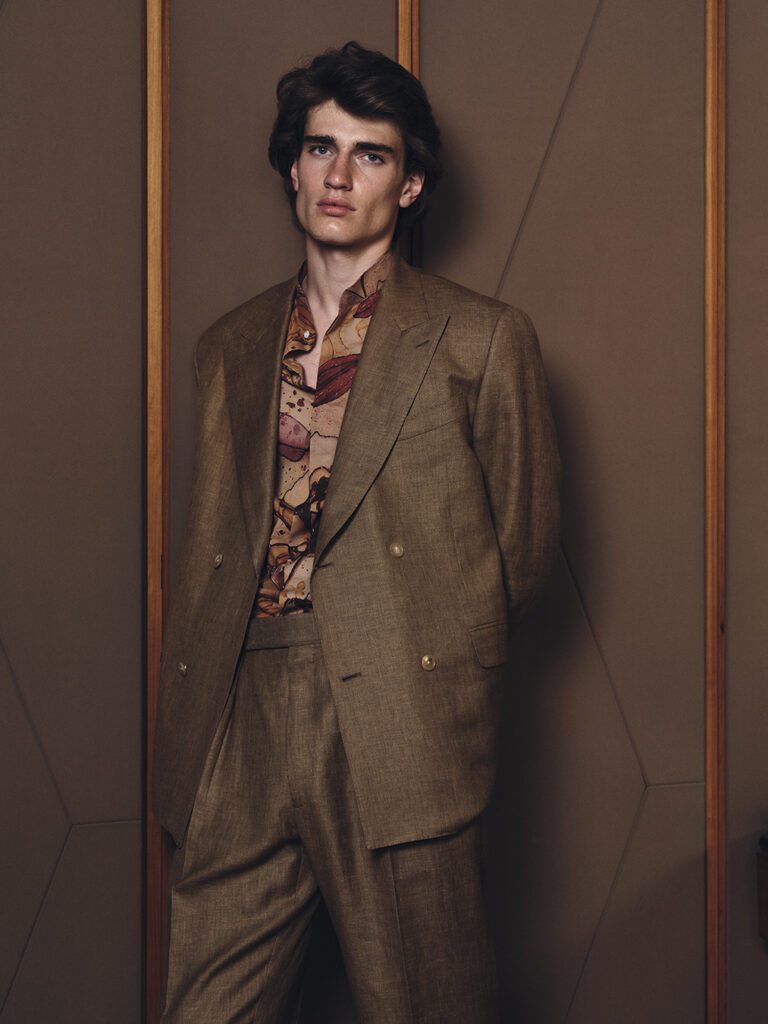
Presented in Milan, Caruso’s Spring-Summer 2027 collection is based on a simple and compelling idea: masculine elegance lies less in visible novelty than in the precision of proportions. The collection evokes the photographic world of Irving Penn, not as a decorative reference, but as a method. For Penn, the removal of all superfluous elements allowed a person’s personality to emerge. At Caruso, this same principle translates into a more defined silhouette, structured shoulders, and a design that seeks a balance between precision and fluidity.
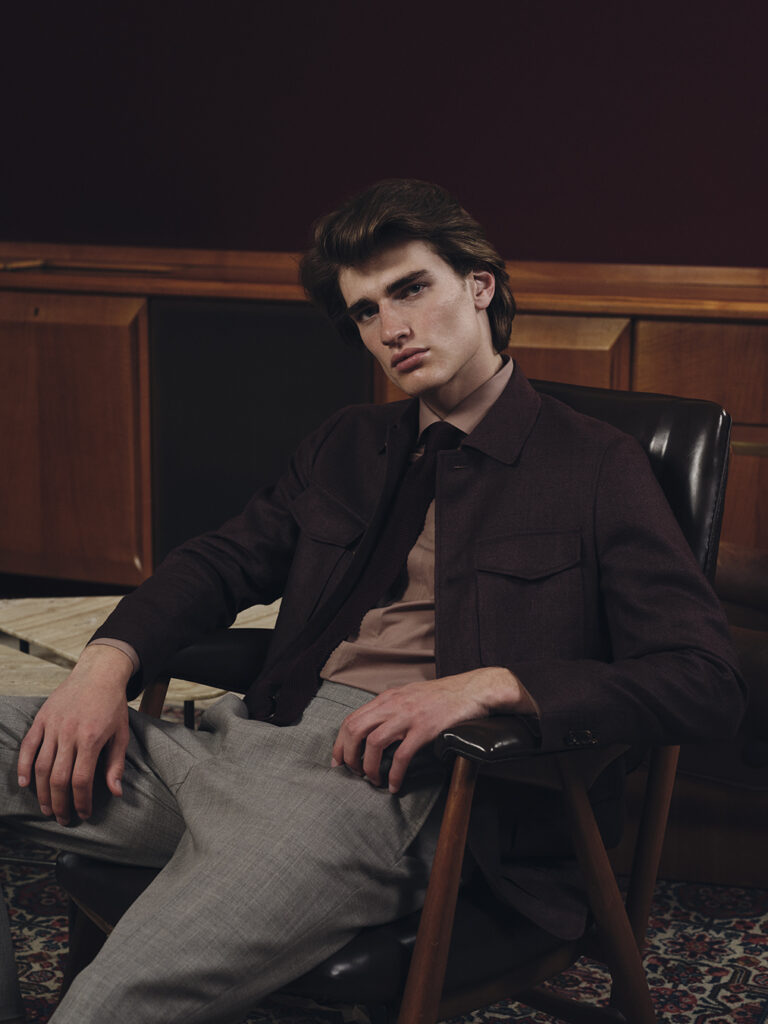
The essence of the collection lies precisely in this design vocabulary. The *FLY* jacket and the *Nabucco* structure enrich the House’s repertoire, while established pieces continue to evolve: the *Caruso Jacket* in checked cotton and linen, with British accents, and the *Butterfly*, an unstructured jacket with a stand-up collar that has become one of the hallmarks of the Caruso wardrobe. These names provide a foundation for the narrative. They prevent the season from being reduced to a string of adjectives describing Italian elegance.
The color palette contributes to this aesthetic. Deep grays, intense greens, powdery shades, and natural tones come together to form a range that eschews flashiness. Floral prints, which have been present for several seasons, are becoming more abstract: flowers on muslin, enlarged motifs on poplin, and textural effects that shift the ornamentation toward depth. This choice is culturally interesting, as it signals a contemporary approach to exploring masculine softness without compromising structure.
The collection isn’t limited to the main garment. Conceived as a complete look, it gives accessories a role in fine-tuning the ensemble. Ties, pocket squares, scarves, and shirts in poplin, cotton-silk, muslin, or linen enhance the look without weighing it down. Here, the accessory is not merely a decorative addition; it becomes a tool for nuance, almost a way to fine-tune one’s presence.
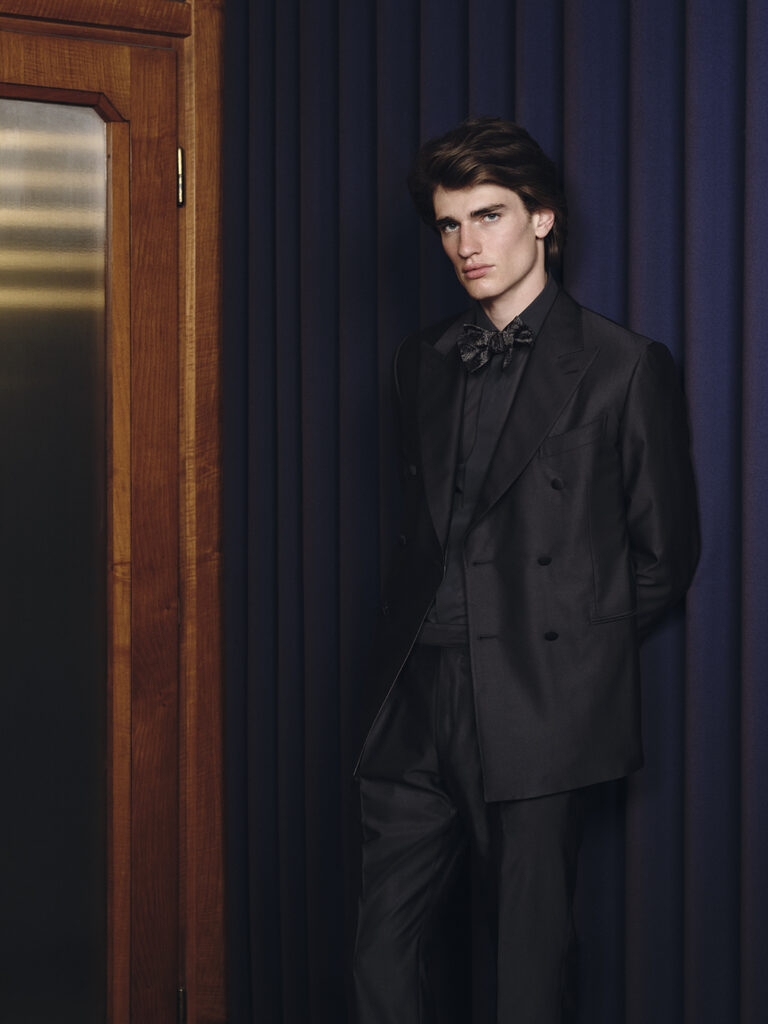
The eveningwear section features the most formal pieces in the collection. White, black, midnight blue, and brown—the signature colors of Caruso’s eveningwear collection—accompany a coat inspired by the *Carmen* style with a double-breasted closure and shawl collar, a jacket with dusty burgundy sequins, a *Baratea* jacket in a dense, resilient fabric, as well as a tailcoat and morning coat. This return to ceremonial pieces might seem conservative. It becomes more relevant when viewed as an attempt to reintroduce formality into a world that often confuses casualness with sloppiness.
Textile research remains the foundation. Light yet structured wools, refined cottons, and *Solaro* are reimagined in summery blends. Here again, precision matters: lightness does not mean a lack of form. On the contrary, it seeks a silhouette suited to the climate, to movement, and to the way in which the contemporary man wishes to occupy space without dominating it.
The book’s limitation lies in the absence of figures, production times, and workshop voices. The artisan’s touch is implied, but it is not yet embodied by a named craftsman. Nevertheless, Caruso provides sufficiently solid material for an examination of the evolution of Italian tailoring. At a time when many men’s fashion houses are seeking to appear younger by watering down their signature styles, Caruso seems to be taking a different path: making precision less rigid without compromising on craftsmanship. The future of men’s elegance may well hinge on this ability to lighten the look without simplifying it.
Cette publication est également disponible en :

