
Some watches strive for complexity through an accumulation of features. The Ingenieur Perpetual Calendar 41 from IWC Schaffhausen takes a different approach: it combines two of the Manufacture’s highly distinctive design languages into a timepiece with an almost monolithic appearance. On one hand, the Ingenieur’s integrated design, inherited from Gérald Genta’s work in the 1970s. On the other, the perpetual calendar designed by Kurt Klaus in the early 1980s—one of the most legible and practical complications ever produced by IWC. Between the two lies a single material: Grade 5 titanium.
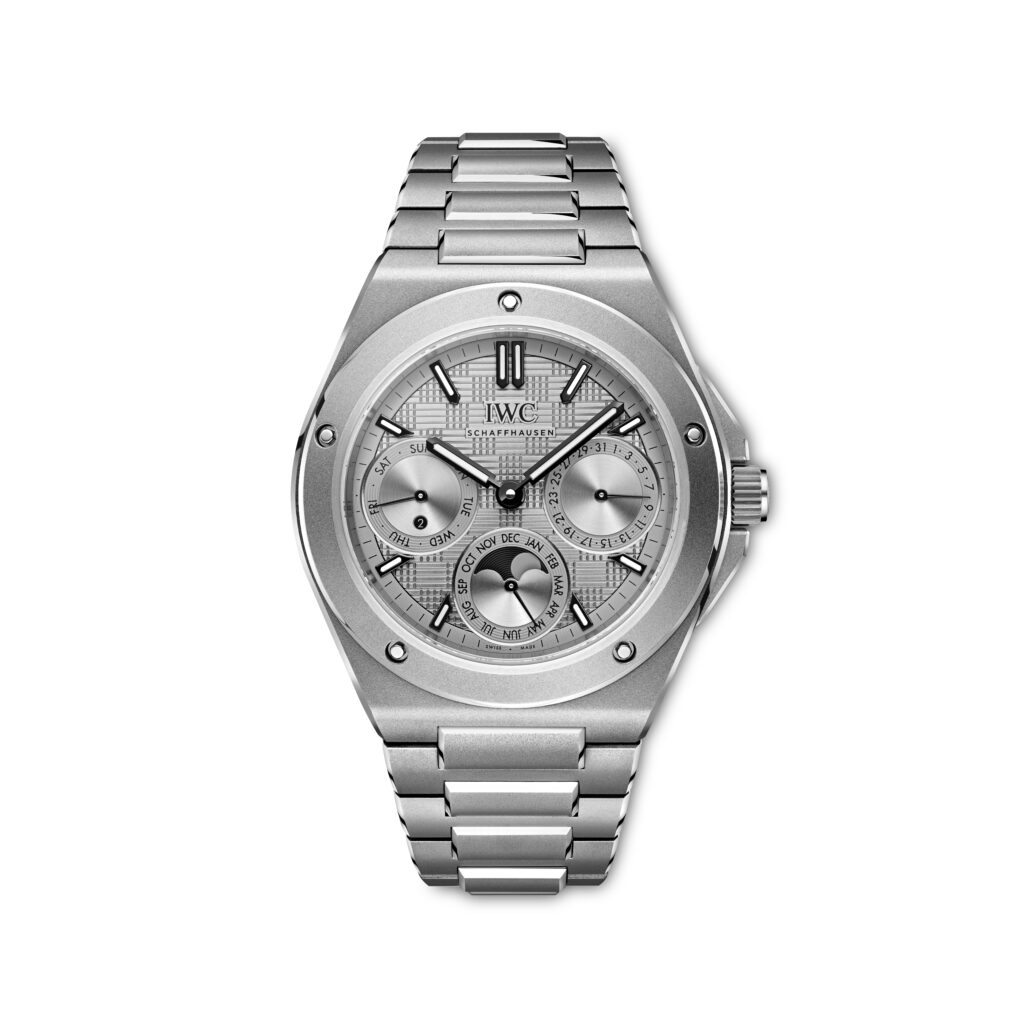
Unveiled at Watches and Wonders Geneva 2026, the Ingenieur Perpetual Calendar 41 (reference IW344904) features a 41.6-mm case paired with an integrated titanium bracelet. IWC describes it as its lightest perpetual calendar watch. The choice of titanium is not just a matter of weight. Its matte finish, corrosion resistance, and lightness—about 45% lighter than steel, according to the Manufacture—give this timepiece a different presence than that of a steel watch: less shiny, more technical, almost architectural.
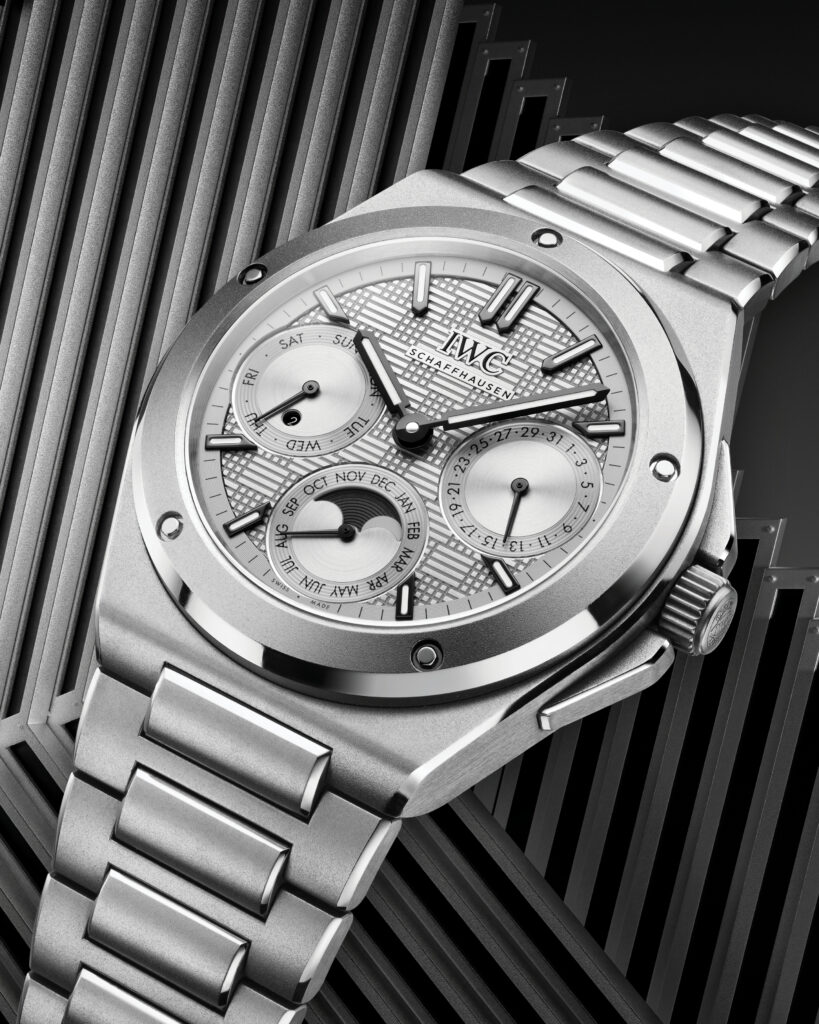
The design draws on the architecture of the contemporary Ingenieur, which was itself relaunched in 2023 as a modernized interpretation of the Ingenieur SL, reference 1832, designed by Gérald Genta. At that time, IWC had reintroduced the model’s essential design elements from the 1970s: a round bezel secured by five functional screws, an integrated bracelet, clean lines, and a greater focus on ergonomics and finishing. On this perpetual calendar version, the bracelet is attached to the case via its central links to enhance comfort on the wrist. The case, bezel, crown guard, and links feature a combination of sandblasting, light edge polishing, and side satin finishing.
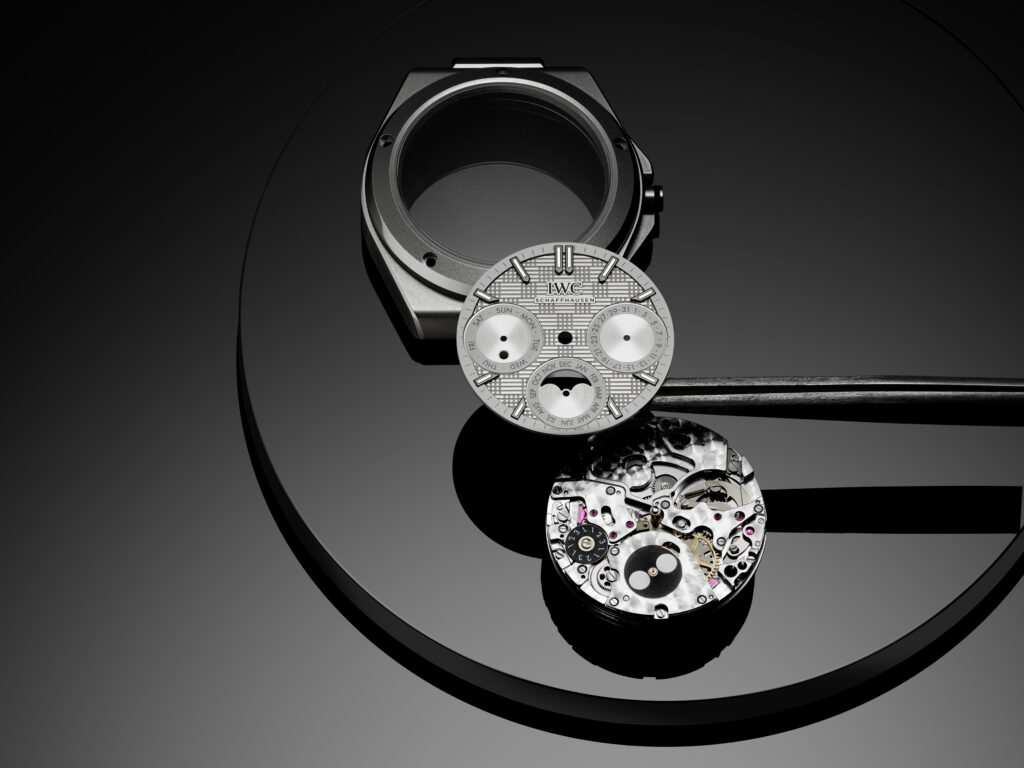
This surface finish matters. On an integrated watch, the metal isn’t just structural—it sets the rhythm. Here, the titanium absorbs more light than it reflects. The matte gray dial, finished in the same shade as the case and bracelet, reinforces the impression of an object carved from a single block. IWC retains the “Grid” pattern unique to the Ingenieur, composed of small lines and squares, which gives the dial a subtle sense of depth. The calendar sub-dials feature a circular satin finish and azure-finished edges; at 6 o’clock, the moon phase is set against an azure background. The applied hour markers and hands are coated with Super-LumiNova®, a feature that reinforces the line’s instrumental character.
The complication, for its part, introduces a different relationship to time. Kurt Klaus’s perpetual calendar is one of IWC’s great technical milestones. Developed in the early 1980s and introduced on the Da Vinci Perpetual Calendar in 1985, it translates the irregularities of the Gregorian calendar into a mechanical system capable of automatically displaying the date, the day, the month, the leap year, and the moon phase. IWC notes that this mechanism is distinguished in particular by its crown-operated adjustment, a major simplification for the daily use of a complication that is traditionally intimidating.
On the Ingenieur Perpetual Calendar 41, the date appears at 3 o’clock, the month at 6 o’clock, and the day of the week at 9 o’clock. The moon phase is integrated into the 6 o’clock sub-dial and deviates from the actual lunar cycle by only one day after 577.5 years, thanks to a dedicated reduction gear train. The small leap year indicator is located on the 9 o’clock sub-dial. The overall design remains compact, yet avoids being overly showy. This may be the true genius of this timepiece: incorporating a long-term mechanical mechanism into a design that, historically, belongs more to everyday engineering than to a display watch.
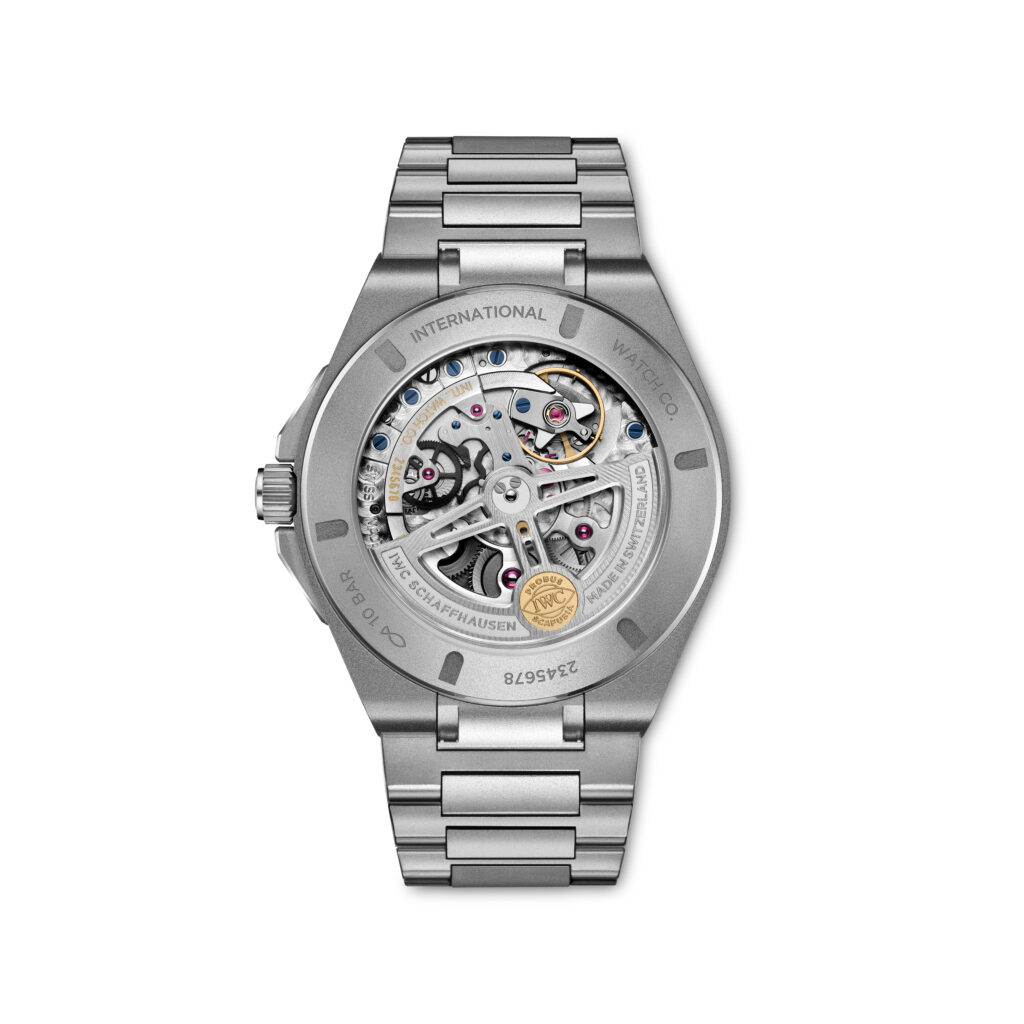
The 82600 in-house caliber powers this timepiece. This automatic movement features a Pellaton winding system, which uses the oscillating weight’s movements in both directions to wind the mainspring. It offers a 60-hour power reserve, beats at 28,800 vibrations per hour, and contains 46 jewels. Components subject to high stress, particularly the automatic wheel and the pawls, are made of zirconium oxide ceramic, a hard and virtually wear-resistant material. The movement, visible through the sapphire case back, features Côtes de Genève, circular graining, and blued screws.
The combination of titanium and ceramic is consistent with IWC’s recent history. The Manufacture has often approached watchmaking through materials, from its work with ceramic to Ceratanium® and the developments of its XPL division. Here, titanium isn’t meant to make a splash; it serves a practical purpose. It makes a historically noble—and sometimes formal—complication wearable in an integrated watch that is 13.2 mm thick and water-resistant to 10 bar. The watch retains the visual solidity of the Ingenieur, but is slightly lighter.
This shift is significant for contemporary watchmaking. Watches with integrated bracelets are often treated as status symbols, with their polished surfaces, instantly recognizable proportions, and ability to make a statement. IWC takes a more understated, technical, almost silent approach. The gray dial does not seek to dazzle. The titanium does not catch the light. The perpetual calendar is presented not as a decorative feat, but as a self-contained tool.
The Ingenieur Perpetual Calendar 41 is therefore not simply a new complication housed within a famous design. It is more like a refinement: how can the passage of time be made more wearable, more understated, more suited to everyday life? IWC’s answer is a watch that does not romanticize engineering. It simply lets it do its job.
Cette publication est également disponible en :

