
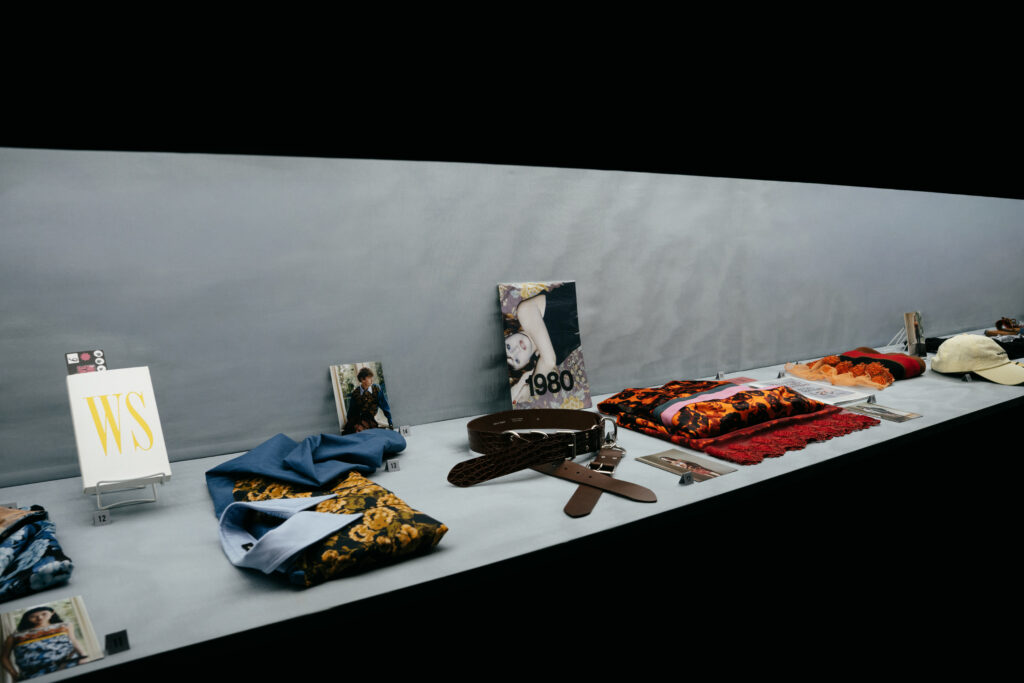
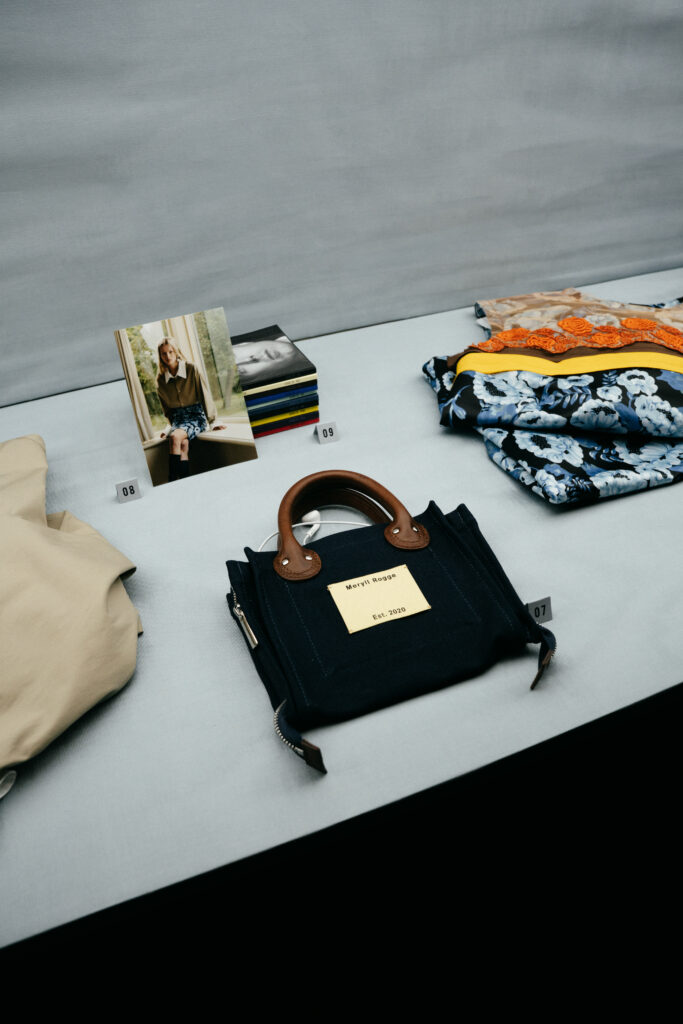
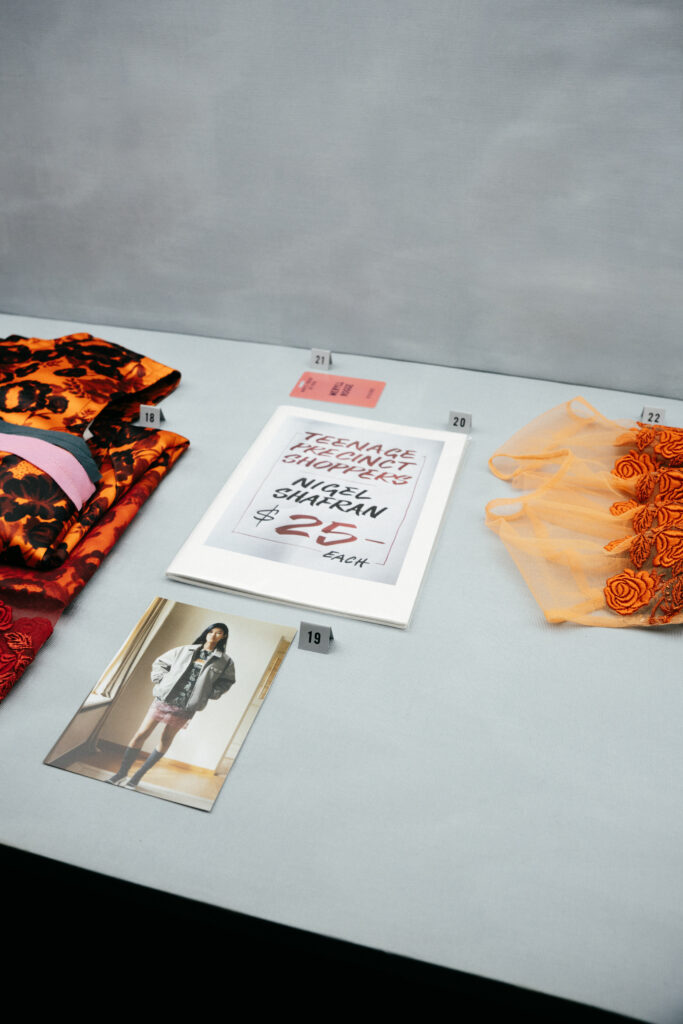
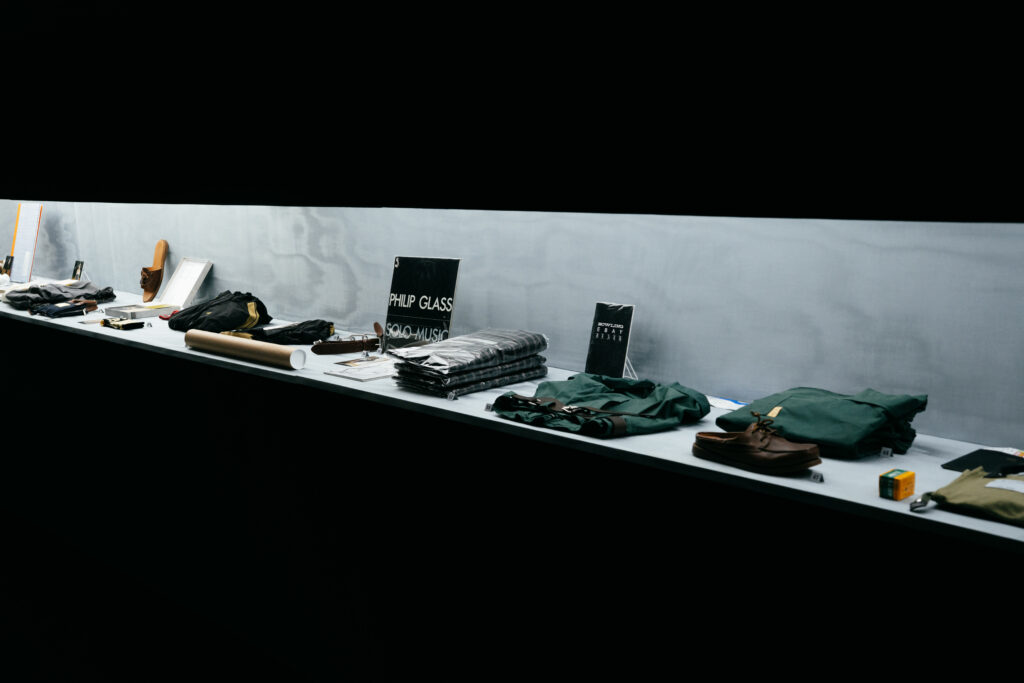
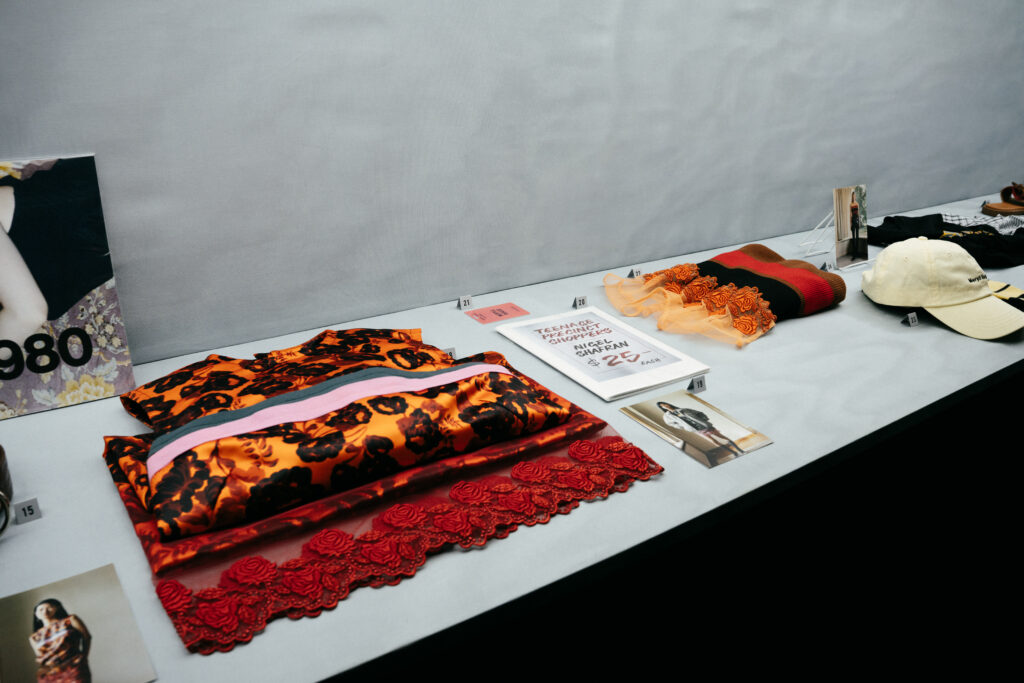
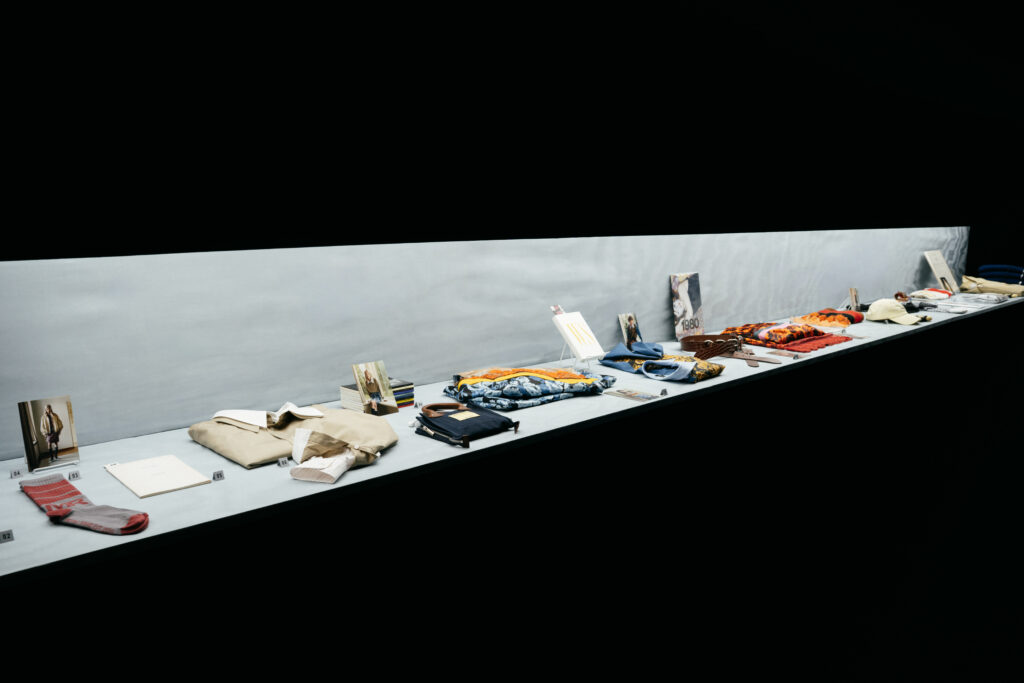
At Paris Fashion Week, Meryll Rogge never just showcases clothing. With her SS27 collection, the Belgian designer also unveils a selection of books that shed light on her work with the precision of a commentary. It’s a way of saying that fashion, when taken seriously, is as much meant to be read as it is to be worn.
The library before the coat check
Some designers explain their work through four-page design statements, Spotify playlists, and carefully curated mood boards. Meryll Rogge prefers books. Her SS27 selection—available online at the same time as the collection—is not just a marketing gimmick. It serves as a user’s guide: these books are the software that was running in the background while she was designing the pieces.
This practice reveals something essential about her approach. Rogge belongs to a generation of designers trained in theory as well as patternmaking—she studied at the Royal Academy of Fine Arts in Antwerp before working at Marc Jacobs and Louis Vuitton. The library isn’t just an intellectual pose: it’s a sign that the clothes have a lineage, that they come from somewhere, and that you can trace their origins.
SS27 as a Space of Embraced Tensions
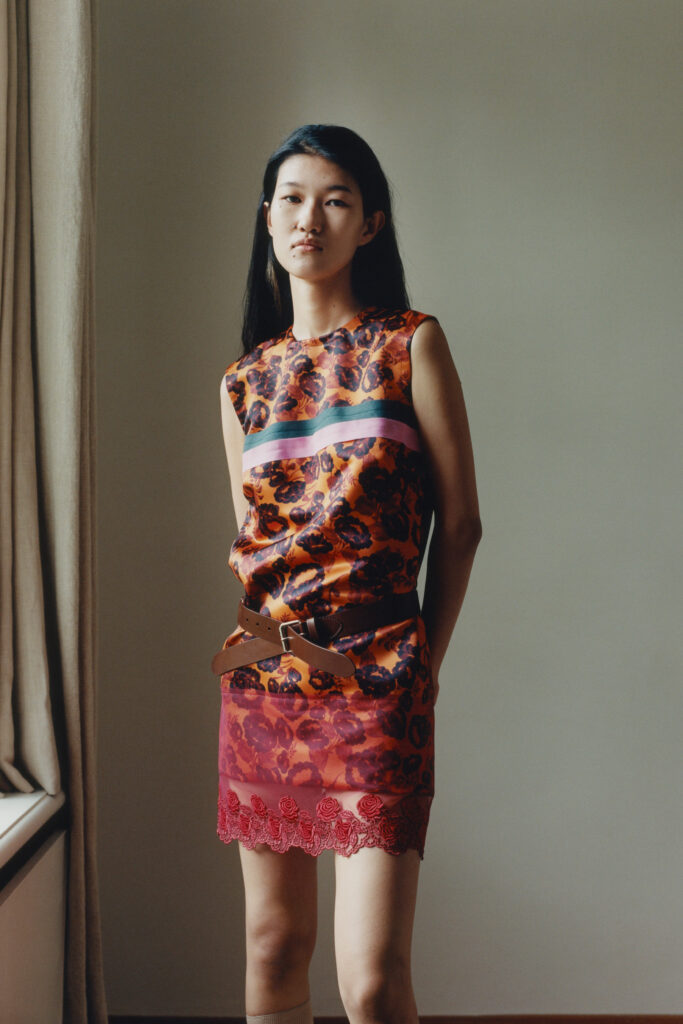
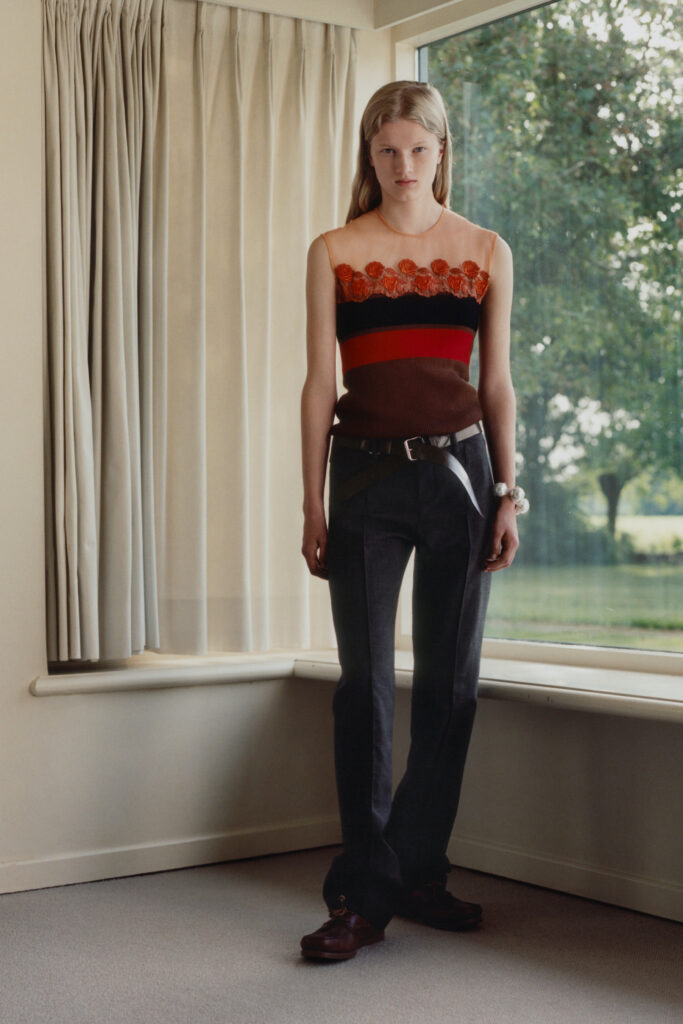
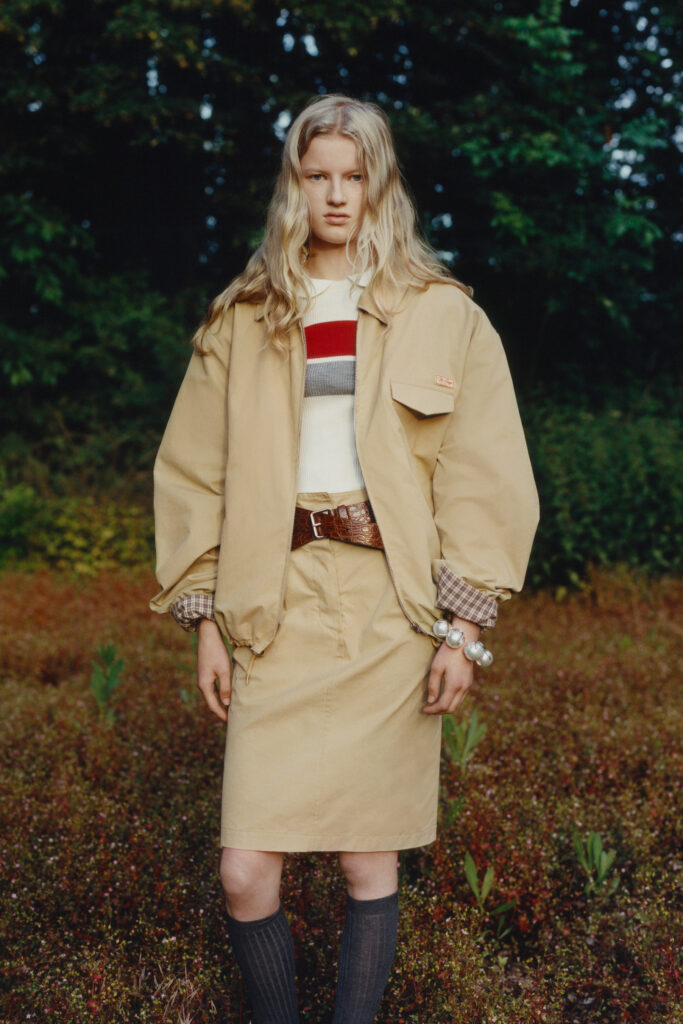
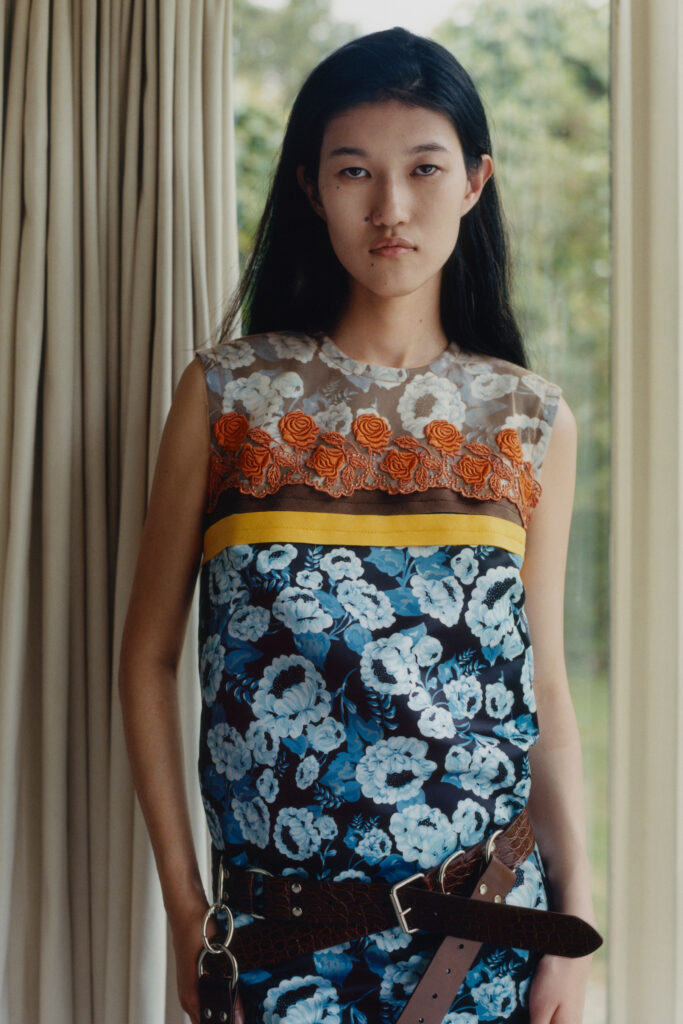
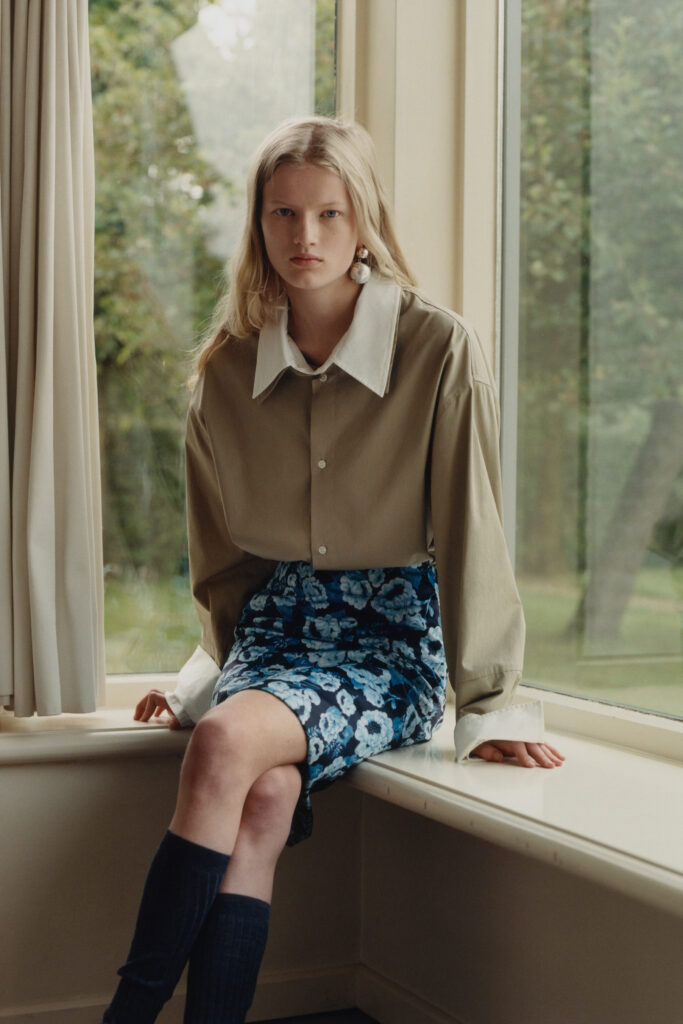
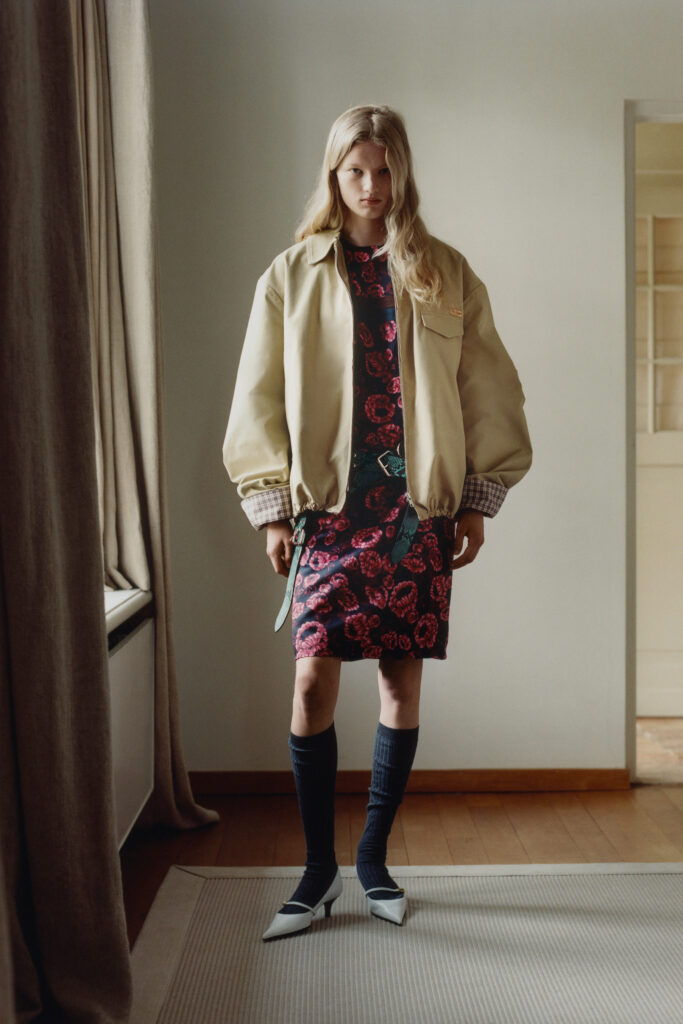
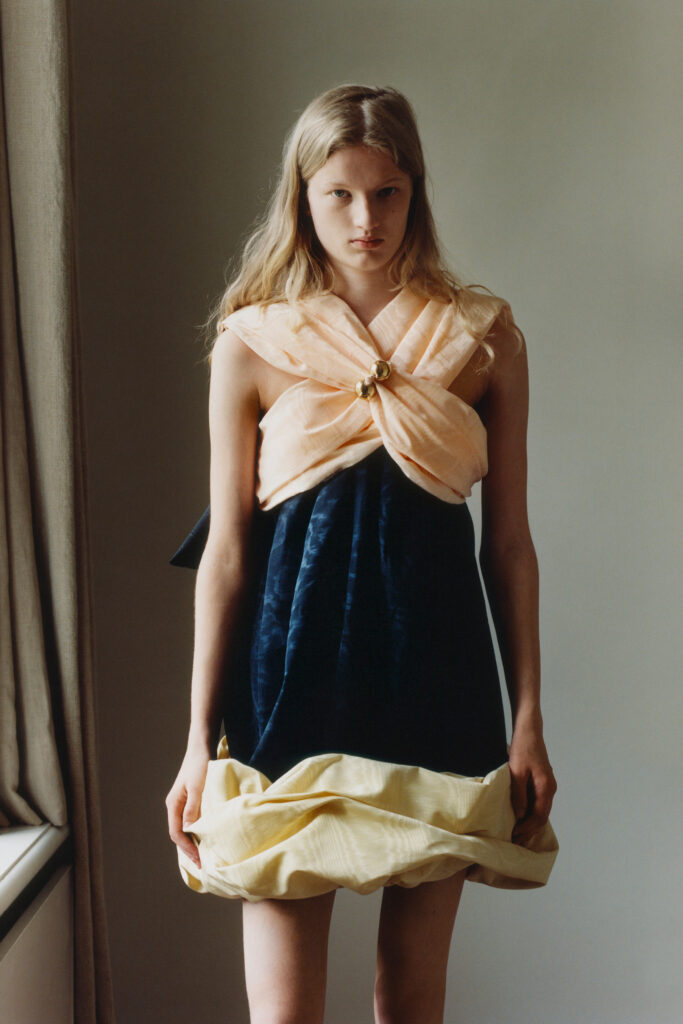
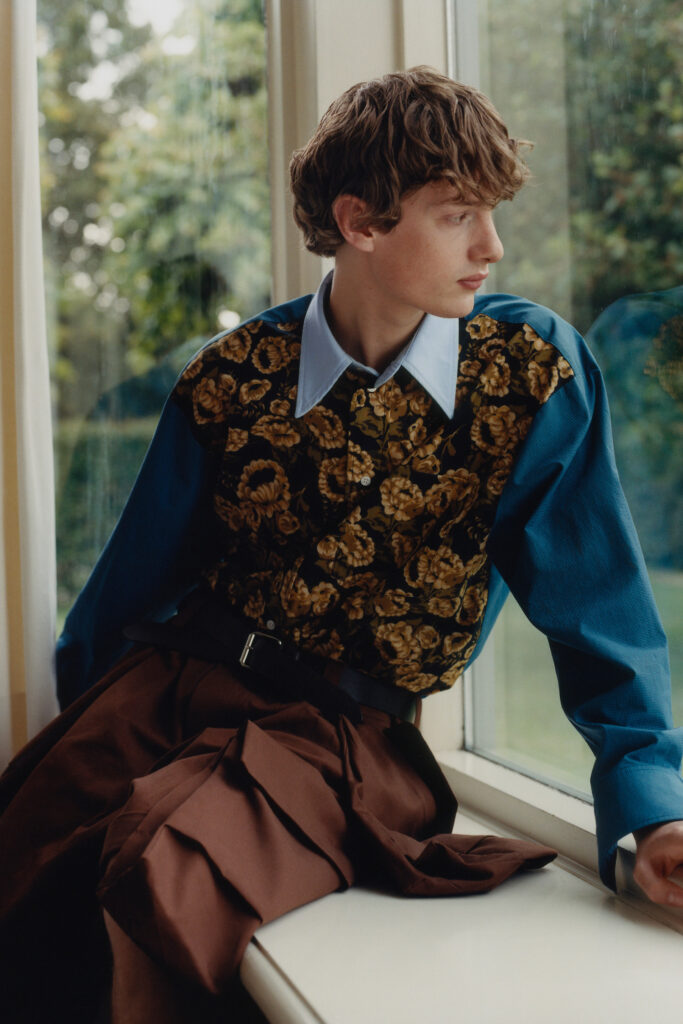
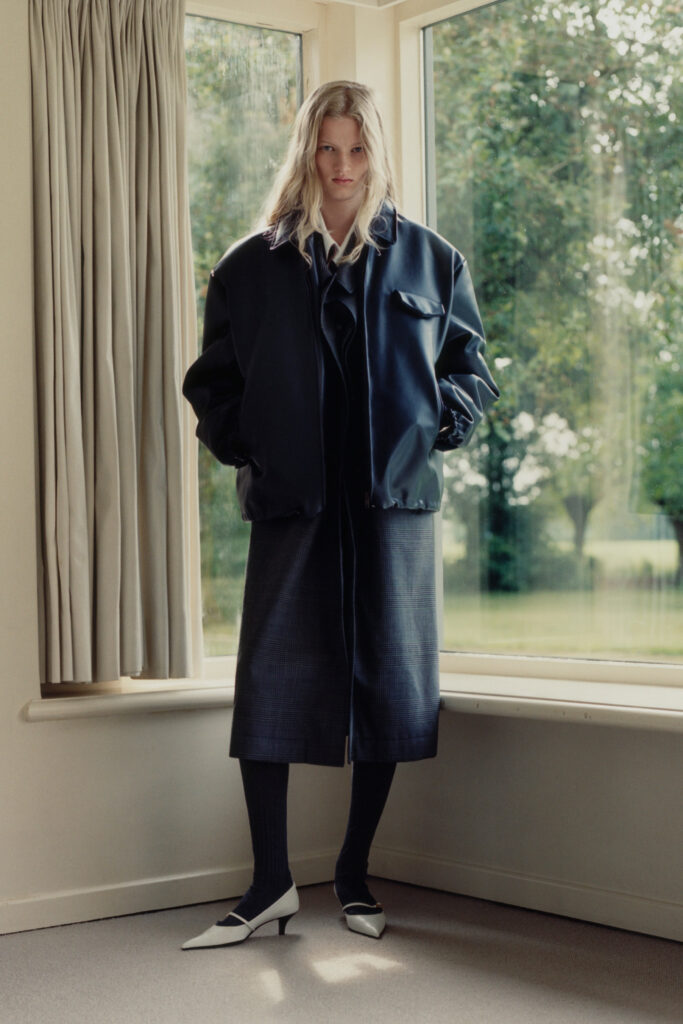
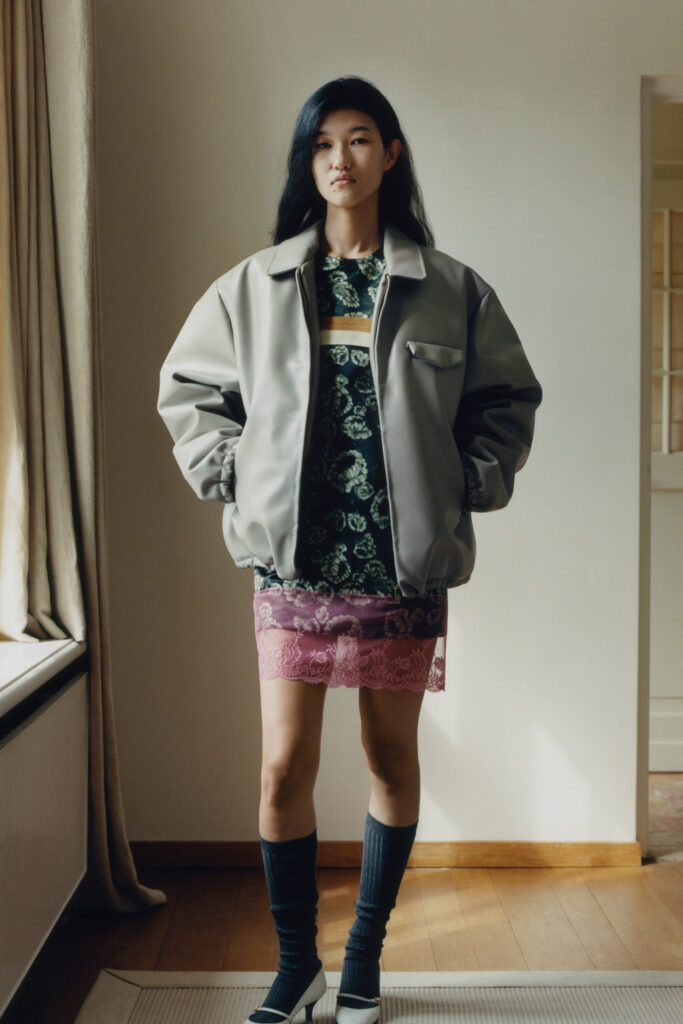
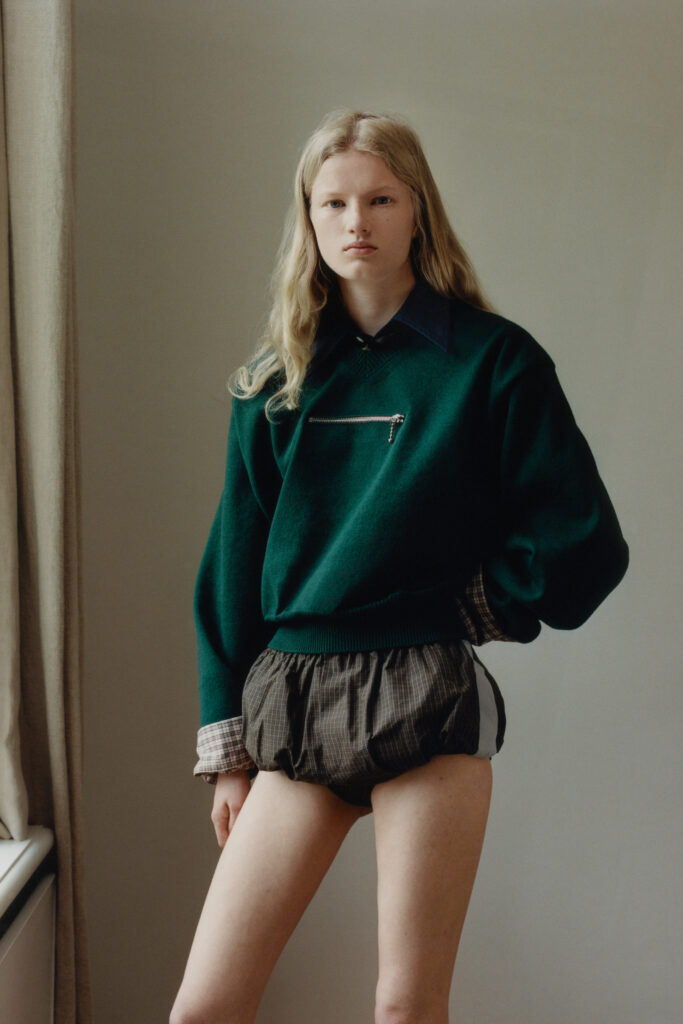
The Spring-Summer 2027 collection presented at Paris Fashion Week builds on what Rogge has been developing season after season: garments that seem to hover between several styles of elegance and draw their strength precisely from this hesitation. A jacket that’s almost a coat, a dress that’s almost an apron, prints that come from somewhere we can’t quite put our finger on.
This ambiguity isn’t indecision—it’s a method. Rogge works in the space between categories, where garments can no longer be defined by their silhouette or occasion. The SS27 collection, available online, extends this approach, offering customers the opportunity to experience the pieces in their own context, without the mediation of the runway show.




The Exhibition as an Extension
By combining an exhibition with the presentation of the collection, Meryll Rogge asserts that clothing needs space—not just the physical garment, but the idea of clothing, its conceptual lifespan. The exhibition is not a showcase; it is a proposal: to view the pieces as one would view an installation—that is, with the time they deserve.
This approach to presenting work is becoming increasingly rare in an industry that has made speed its core value. Rogge sets a different pace—one of reading, contemplation, and attention to detail. This is not a step backward: it is active resistance to the logic of scrolling.
Why Rogge Matters
In the contemporary fashion landscape, fashion houses that manage to combine a coherent vision, a loyal clientele, and a strong editorial presence without the backing of an industrial group are extremely rare. Meryll Rogge is one of them. Her ability to weave together fashion and culture—in the broadest sense: books, exhibitions, and carefully curated references—places her in a tradition not of spectacular luxury but of cultivated luxury.
SS27 isn’t a break from the past. It’s a confirmation. Rogge continues to build a world, and that world is worth reading.
Cette publication est également disponible en :

