
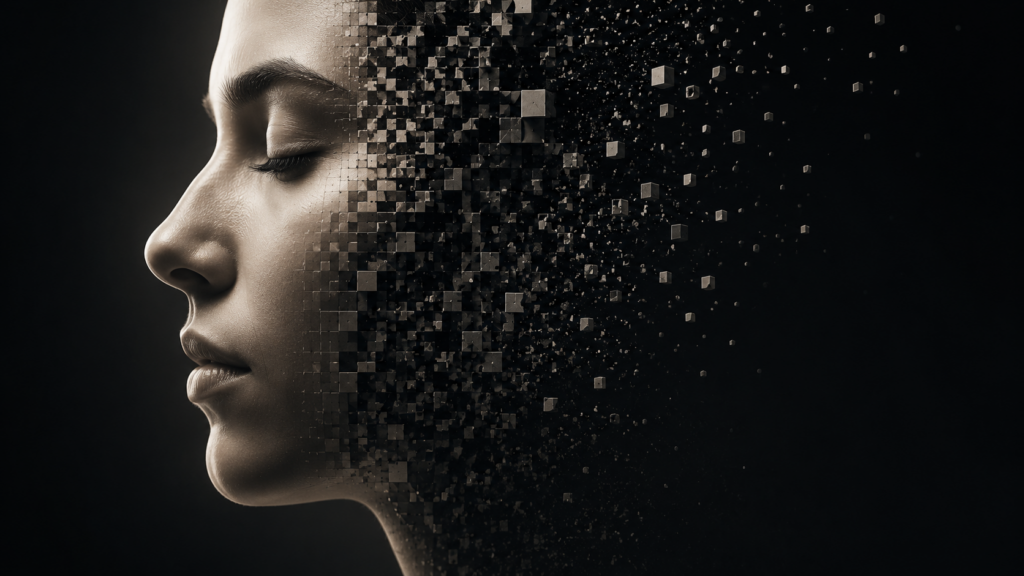
Smart glasses, neural implants: On stage at VivaTech, four wearable technology companies outlined a shared vision. No longer is the goal to enhance our perception of the body, but to fade from our consciousness. This shift changes the very question that every wearable device must now ask itself.
The Eye: The Entry Point
At Essilor Luxottica, they talk about a base of 500 million target customers each year in the eye care market alone. Jean Saler, who leads research on embedded sensing solutions in the group’s smart glasses, draws a simple conclusion from this: the eye is the body’s most exposed organ, and therefore the best vantage point. Proof of concept already exists. Stellest glasses, marketed for children ages six and up to slow the progression of myopia, have no buttons, cameras, or microphones. They simply measure wear time and report this data to parents and ophthalmologists. This is not just a cosmetic issue: slowing the progression of myopia also reduces the future risk of glaucoma.
The gesture that is no longer visible
For Matt Sanders, who leads the social impact of wearables at Meta, the recent history of technology is one of a body that has bent to the tool: backs hunched over screens, eyes drawn to a glowing rectangle that, according to the data he cites, is checked approximately 166 times a day. The Ray-Ban Meta glasses, designed in collaboration with Essilor Luxottica, reverse this dynamic: it is the device that must fit into an already established routine—that of putting on one’s glasses in the morning. The product, however, did not originate from a marketing plan. It first existed under the name Ray-Ban Stories, a simple on-board camera without artificial intelligence. It was a visually impaired Meta employee who, during an internal hackathon, suggested adding a voice description of the immediate surroundings: a landmark on the table, the label on a can, or the translation of a menu. This lineage mirrors that of the relay phone or the typewriter—two devices designed for a niche audience before becoming mainstream standards. The question of trust remains: Meta has chosen to make an indicator light flash as soon as a recording begins—a feature reminiscent of the mandatory shutter sound on early smartphone cameras, before widespread use rendered it unnecessary.
Who Owns Oblivion
The concept of erasure goes even further at InBrain Neuroelectronics, where Carolina Aguilar developed technology based on graphene and semiconductors to implant interfaces—in the brain or on the chest—designed for the central and peripheral nervous systems. The first targeted indication is Parkinson’s disease, with partnerships established with Merck in Europe, the Mayo Clinic in the United States, and, more recently, Microsoft on the data front. The statistical argument she puts forward is on a massive scale: one in three people worldwide—or about three billion people—lives with a neurological disorder. It also cites a glaring lack of access, such as the shortage of cardiologists on the African continent, where pacemaker implantation remains rare due to a lack of available specialists. But the implant raises a question that smart glasses do not address with the same intensity: who owns data that resides under the skin?
Details. At InBrain Neuroelectronics, the data generated by the implant belongs, by contract, to the patient and the patient alone. If the patient wishes, the device can be removed at any time—and the data is erased along with it.
What Remains When the Object Disappears
The four industrialists present each describe, in their own way, the same shift: the luxury item is no longer one that is on display, but one that is most quickly forgotten when worn. A pair of glasses you no longer feel, an implant you no longer notice. But an object we forget remains an object that continues to act—to measure, and sometimes to decide. The question that arises, then, is no longer one of the technology’s visibility, but of its silent governance: who decides, once we’ve stopped looking?
Cette publication est également disponible en :

