
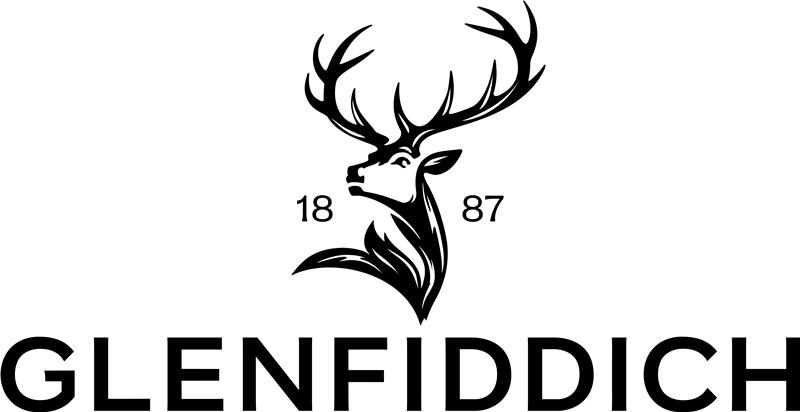
A redesigned stag, two digits framing a date – 1887 – and readjusted typography. At Glenfiddich, the redesign announced for April 2026 is no mere graphic exercise. It comes at a precise moment when a family-run company, still operated by the fifth generation Grant-Gordon, adjusts its visual language without altering its technical architecture or its founding story.
The distillery, founded in Dufftown on Speyside in 1887 by William Grant, built its place in whisky history around a decisive move: the marketing of single malt as an identifiable category in 1963. This precedent sheds light on the current logic: formalize what already existed, rather than introduce a rupture.
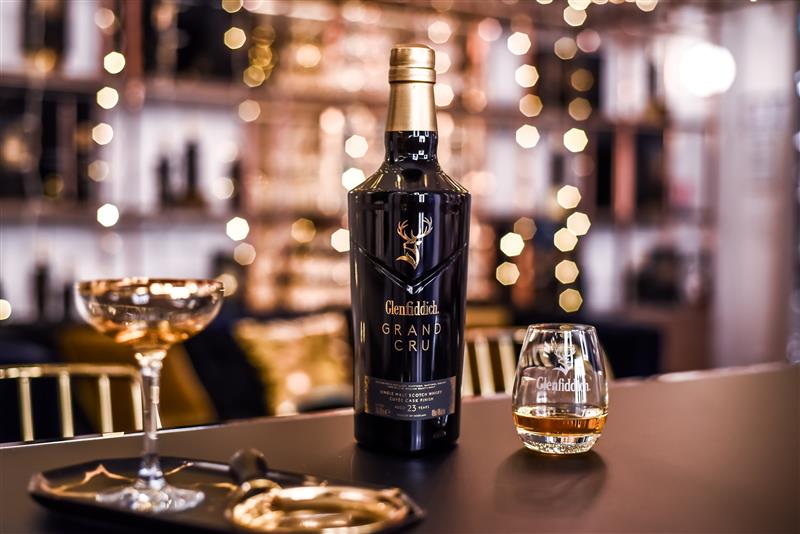
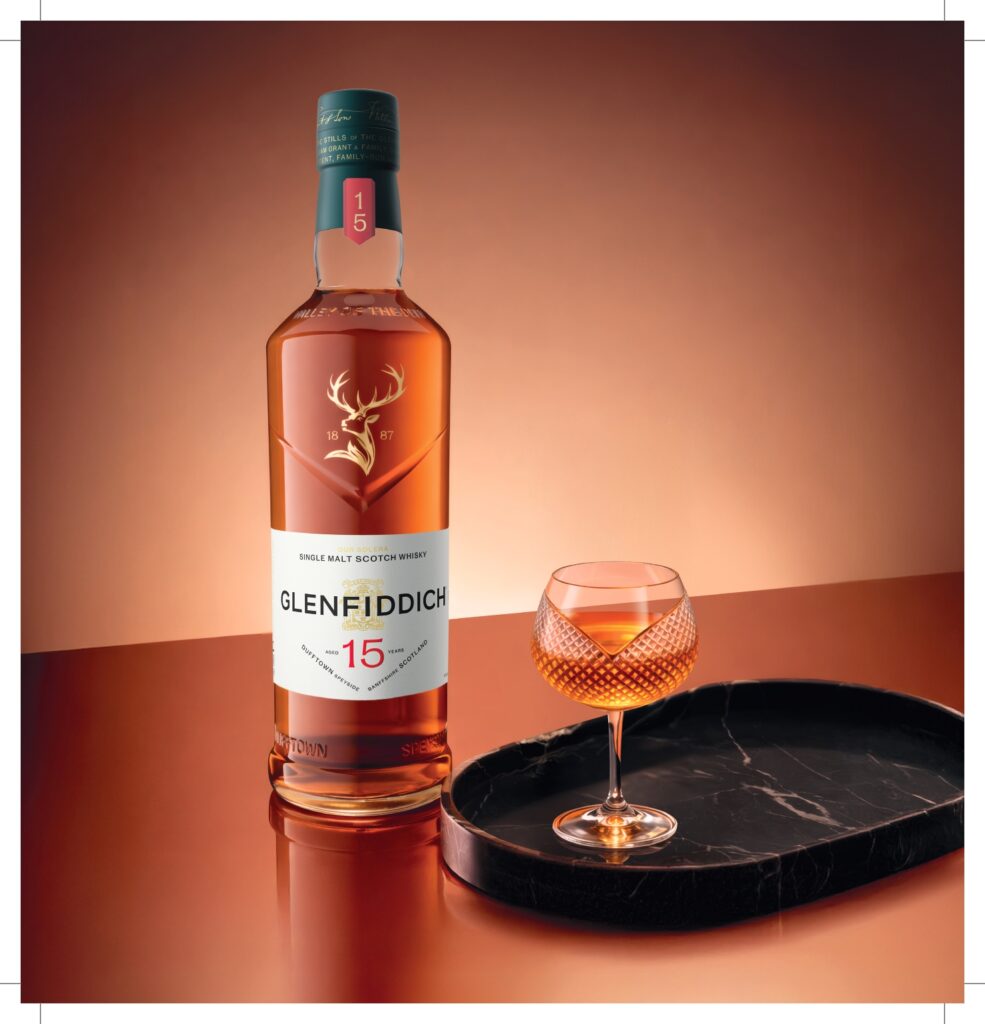
The starting point for this new identity is to be found in the company’s internal archives, spanning more than five generations. The triangular bottle introduced in 1963 – a structural element of the Glenfiddich language – serves as a reference. The redesign does not alter this geometry, but acts on its surfaces: increased legibility of the label, typographic hierarchization, repositioning of historical signs.
The deer, present since the 1960s, is the central element of this new interpretation. Inspired by Sir Edwin Landseer’s painting The Monarch of the Glen (1851), it acts as a territorial marker for Speyside. In its new version, it has been reworked to accentuate relief and suggest movement. This modification is not decorative: it introduces a notion of dynamics into a traditionally static universe, that of barrel aging.
Around this motif, the inscription of the date 1887 acts as an anchoring device. It visually frames the stag and sets an explicit temporal reference point. In a sector where the notion of the age of the liquid – twelve, fifteen, eighteen years – structures the reading, this reminder of the founding date operates a displacement: it’s no longer just a question of measuring the time of the whisky, but that of the House.
The typography, meanwhile, borrows from British tradition while simplifying its forms. The design of the letters is intended to improve legibility on the shelf, but also to be consistent with the archives of the 1960s. This choice reveals a deliberate tension: maintaining graphic continuity while responding to contemporary distribution constraints.
This is where the redesign takes on a more strategic dimension. Particularly in France, the new packaging is designed to boost distribution visibility and support premium channels. The issue is not just aesthetic: it concerns the ability of a single malt to exist in an environment saturated with similar visual codes.
This evolution is part of a wider trajectory. For several decades, Glenfiddich has been exploring technical variations – specific barrel finishes, aging experiments, international collaborations. The visual redesign doesn’t announce these innovations; it makes them more legible, by proposing a more stable graphic framework.
“Innovation is an integral part of Glenfiddich’s DNA… it’s what keeps us the most award-winning Scottish single malt in the world,” recalls Brian Kinsman, Master of Wine. This statement, taken from the press release, underlines continuity rather than a turning point.
Basically, this new identity isn’t about modernizing whisky. It attempts to solve a more complex equation: how to visually translate 139 years of history without freezing the gaze. It’s a precision operation, in which every line – from the deer drawing to the spacing of the letters – becomes a transmission tool.





Cette publication est également disponible en :

