
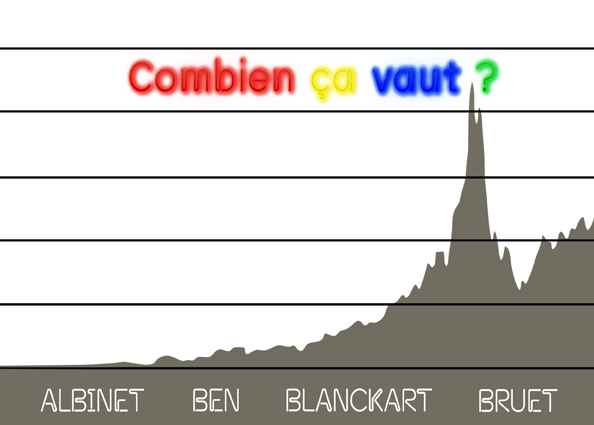
 Rush to the Galerie Taiss on Wednesday, May 2. The gallery is holding an opening, and the theme of the exhibition is very topical: Combien çà vaut, ? The challenge is to grasp the attitude of our times towards ancient and contemporary art. At other times, art has been considered for its intrinsic value, linked to talent and pure creation. Leonardo da Vinci, for example, warned the artist of the primacy of the artistic gift over gain. More recently, Gogol, in The Portrait, stigmatized the behavior of a painter ready to corrupt his art to achieve fame and its corollary, financial success.
A phrase by Egon Schiele helps us to envisage the subject in all its diversity. A work of art has no price, yet it can be purchased. Is art a market in its own right, or is it governed by the same simple law of supply and demand as other sectors? We live in a pragmatic age, in which everything has a price. Andy Warhol was convinced that ‘Being good in business is the most fascinating kind of art’.
The only Question would therefore be Combien çà Vaut? equivalent to Combien çà coute, and undoubtedly translatable as Combien çà côte, ?
Four artists tackle the question, tracking down the ambiguities of the subject. Ben, Jean-Paul Albinet, Olivier Blanckart and Thierry Bruet ask questions, taking stock of the situation like a corrosive snapshot. No real answer is imposed on the visitor. More subtly, they suggest an awareness and call for reflection. The catharsis effect should be felt by all.
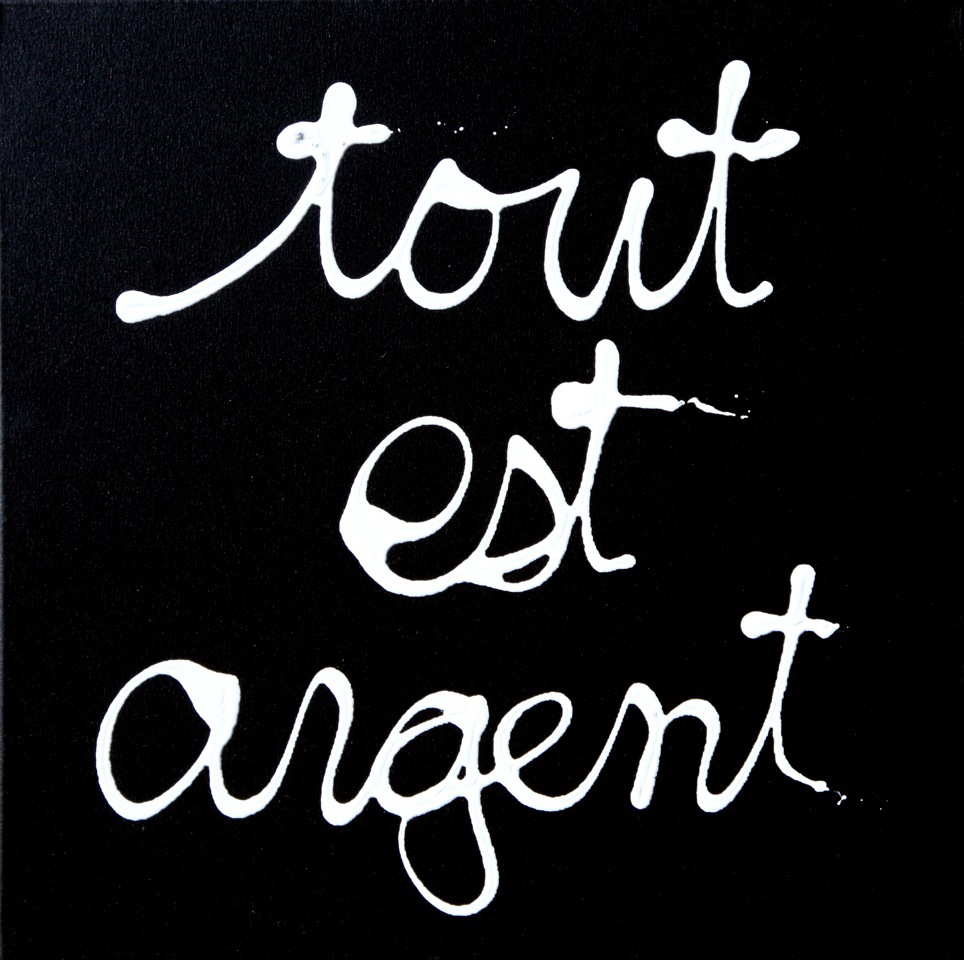
Ben, with his trademark white writing on a black background, repeats over and over again, Combien çà vaut (How much is it worth?), going as far as the usual çà vaut combien (How much is it worth?). Art becomes ‘demystified’, reduced to denouncing the absurd.
Doesn’t the viewer reduce himself, consciously or not, to this demand?
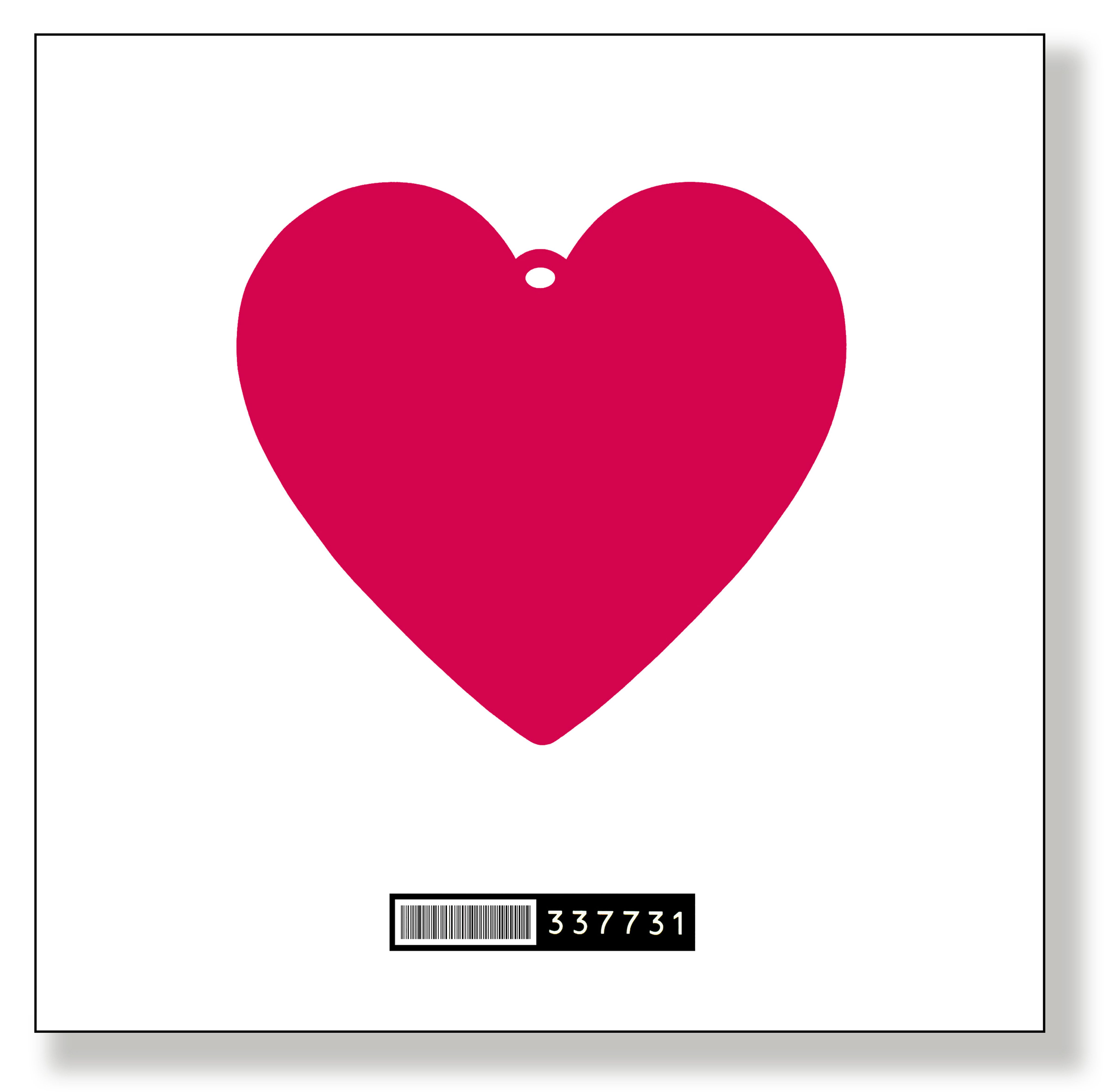
Jean-Paul Albinet signs with a barcode, barcode 337731. From now on, everything is bar code, art included. The acronym has become a kind of international language, taking precedence over all other pre-existing ones. Is art still art or simply merchandise?
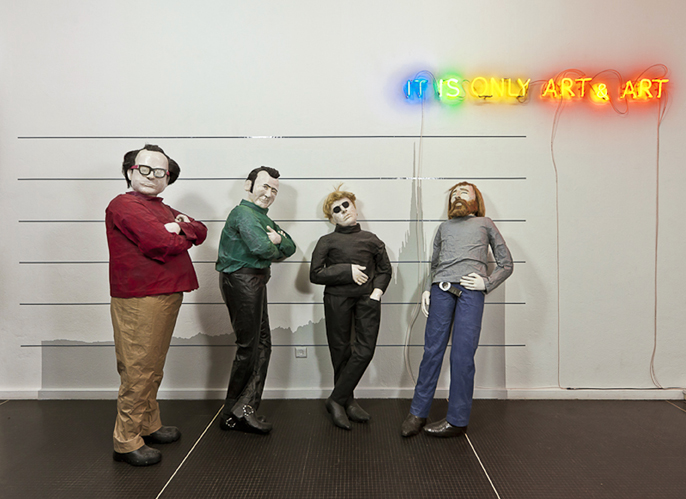
Olivier Blanckart invests the premises with an installation. The imposing sculpture was created from recycled materials. It is a reminder of the relativity and volatility of values. To underline his point, he pairs four figures from conceptual art, four characters, with the NASDAQ standard.
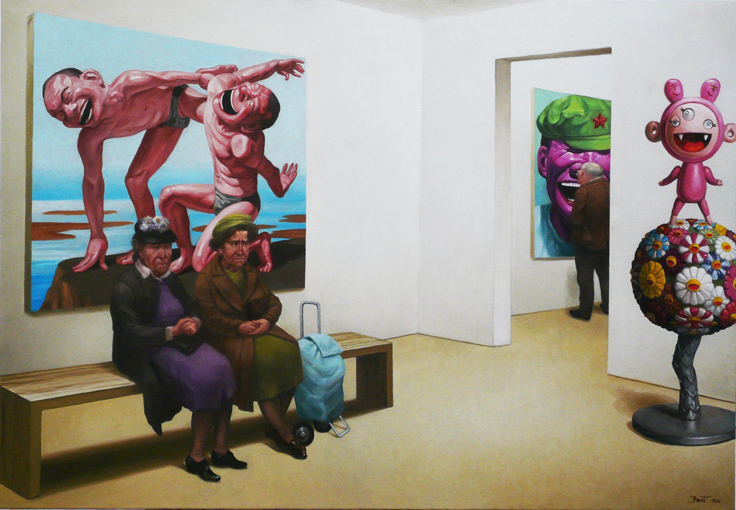
Thierry Bruet highlights the discrepancies between the work, the artist and the public, collectors or otherwise. Pushing the inadequacy of this relationship to its extreme, or even the lack of osmosis, he allows us to catch a glimpse of a certain public’s lack of understanding of the real, aesthetic value of art. Who sets the prices? Only the professionals, the insiders? An underlying question is whether certain amateurs or uninitiated collectors are content to acquire a work without understanding it, grasping its nuances and subtleties. The notion of the notorious investment comes to the fore. Is investing in art better or safer than investing in the stock market?
The four artists and the exhibition call for other possibilities.
Galerie Taiss
14 rue Debelleyme
75003 Paris
www.taissgalerie.com
Cette publication est également disponible en :

