
“Today, photography is part of my life. It closes the circle of my artistic and professional concerns. I no longer see life without its vision. I look at the world and fashion through the eye of the camera. This gives my basic work a critical detachment that helps more than I ever imagined. “Karl Lagerfeld
The famous fashion designer Karl Lagerfeld is a great lover of art and a passionate photographer. Since 1987, the artist has been expressing himself through his lens, producing photo shoots for leading fashion magazines including Vogue and Numéro, and advertising campaigns for Chanel and Fendi, among others. But he also captures more personal images during his travels and strolls around Paris, highlighting his taste for architecture, from the landscapes of Versailles to the facades of New York.
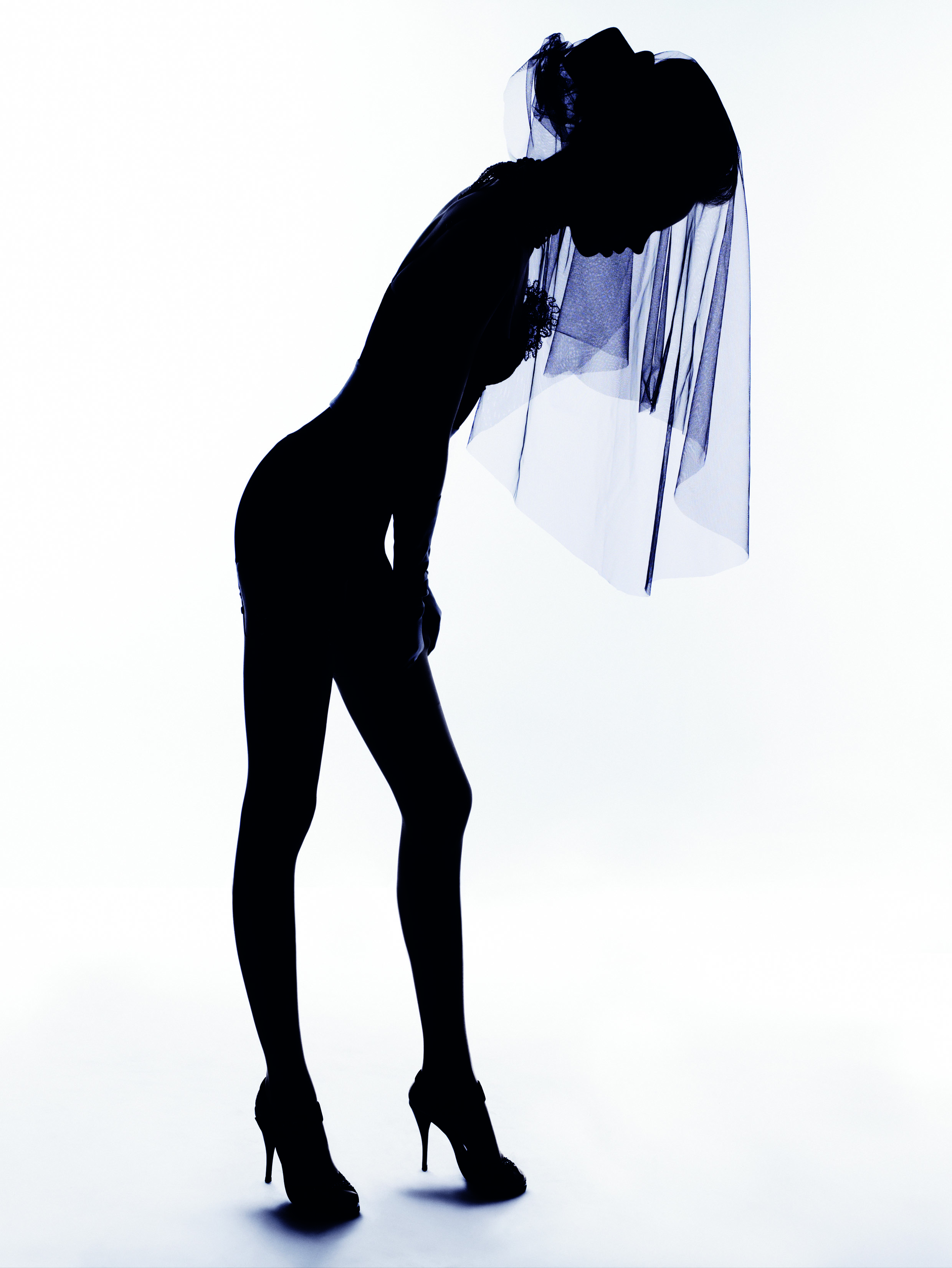
Schwarzkopf Freja Beha, juin 2009 © Karl Lagerfeld
The Maison Européenne de la Photographie is bringing together some 150 of the designer’s photographs for the first time, and until October 31, 2010, is offering you the chance to discover his world through the exhibition “Karl Lagerfeld: Parcours de travail”, which subtly blends fashion photos with more personal works and successful experiments with prints. We’re all familiar with the designer’s instantly recognizable silhouette (catogan, dark glasses and white gloves), which can be seen – but not touched – in a blue neon halo in a corner of the Galerie Contemporaine. But what do we really know about his soul, about what he loves, about his vision of the world irremediably imprinted with the calque of the fashion world, about his relationship with the passing of time, the damage to which he strives to hide? In truth, very little, as this exhibition reminds us.
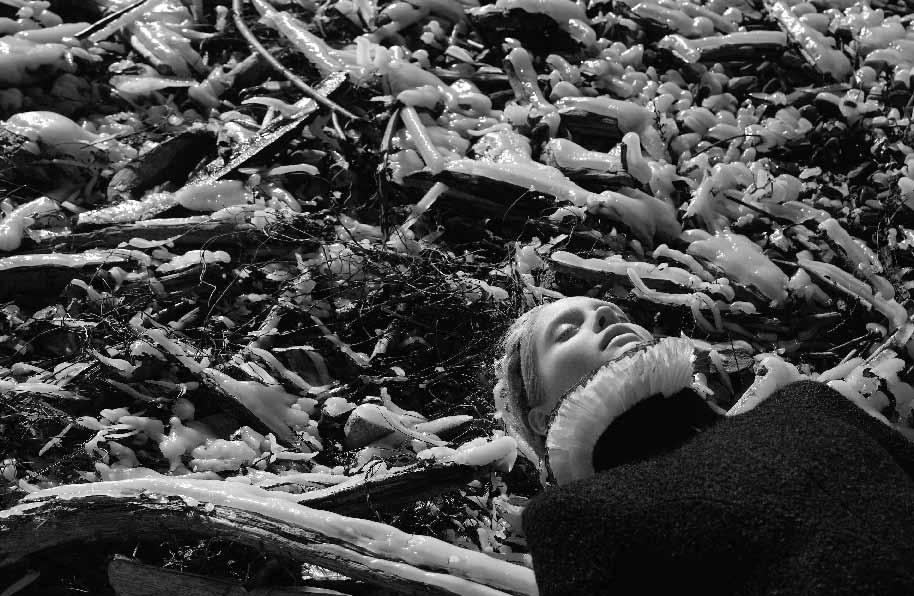
Chanel, campagne PAP AH 2009/10, Heidi Mount © Karl Lagerfeld
The most eagerly-awaited retrospective of the new cultural season in Paris is divided into two parts, one devoted to the photographer’s strong themes (portraiture, fashion, landscape and architecture), the other to his more experimental work with prints and serigraphs. For Karl LAgerfeld, photographic creation is not just about shooting, but also includes the laboratory, development and printing:“Paper is my favorite material, it is the starting point for a drawing and the final result of a photo“.
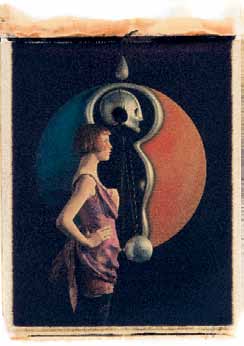
Hommage à Oscar Schlemmer © Karl Lagerfeld
Graphic or contrasting matte black and white prints alternate with soft, faded color prints in pure painterly style, as in the Casa Malaparte series in Capri, the villa in which Jean-Luc Godard‘s Le Mépris was filmed. The artist uses a wide range of modern printing techniques, from digital prints and silkscreens to classic silver prints and Polaroid transfers. He also uses resinotypes and Fresson prints on 6×6 color slides to accentuate the pictorial effect of these landscapes.

Façade, New York, Mars 2005 © Karl Lagerfeld
From the outset, his work on the architecture of Versailles is surprisingly classical, not to say academic, and a little too detached from the subject. Only the silkscreen treatment on Arches gives a semblance of life to this unexpected series. The Figurative Abstractions, printed on huge white canvas panels covering a section of corridor, render a hailstorm in Rome unrecognizable, so close-up was the shot. His vision of New York’s “fire escape” facades is resolutely innovative, the artist having chosen both rough and more elaborate metal staircases, it’s easy to imagine the artist raising his head in awe of the vision before him. before immortalizing the moment.
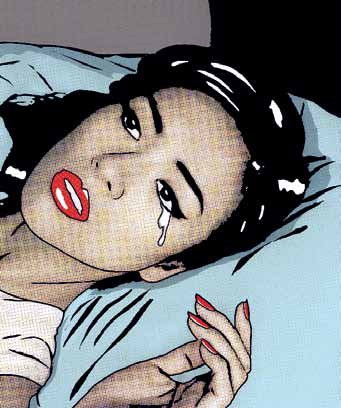
Interview, Zang Ziyi, Novembre 2006 © Karl Lagerfeld
His fashion work is soon on the agenda, alternating between fashion series, advertising and celebrity portraits in a second room. And it’s here that his influences and tributes are most apparent. How can we fail to recognize Roy Lichtenstein ‘s style in this silkscreen by Zhang Ziyi? The original Metropolis series commissioned by Vogue magazine remains captivating, with a glittering print of the utmost beauty, a true work of goldsmiths. Although it seems to be straight out of Fritz Lang‘s world, it manages to stand out from this heavy comparison through the treatment it receives. The“Homage to Oskar Schlemmer” series is a fine example of color transfers, in which the artist has fixed color onto certain prints with make-up pigments or blended dry pigments to accentuate the pictorial effect. The Bahaus painter is also one of Karl Lagerfeld’s favorite artists, and remains one of the first artists to excel in multiple disciplines, echoing Karl Lagerfeld’s love of tackling and mastering every art form that comes his way.
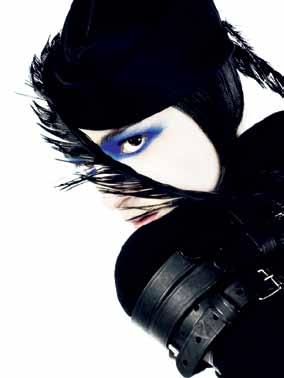
Interview, Maria Carla Boscono, Juillet 2001 © Karl Lagerfeld
It’s interesting to discover Baptiste Giabiconi’s more personal work in the series The Beauty of Violence, in which the artist depicts his double in the emotional throes of a modern Dionysus, a much less polished work in which we discover a more human Baptiste, far from a perpetual and illusory perfection. In fact, this is what emerges from his fashion series: perfect, almost inhuman silhouettes, while he excels in the art of expressing emotions when he takes on the delicate art of celebrity portraiture. One wonders what the point is of exhibiting his advertising photographs, a professional work that has been shown many times in magazines, until we come across this Fendi campaign in shades of blue, obviously inspired by the paintings ofEdward Hopper, in which he knows how to set the scene.
The exhibition also puts into perspective two similar yet different treatments: that of one of her favorite models, Claudia Schiffer, and that of her muse, Baptiste Giabiconi. Claudia Schiffer is just as present as Baptiste, but is constantly staged in very different roles. The photo of the muse that caused such a scandal recently, in which the supermodel appears transformed into a black woman, is conspicuously absent, while the one featuring one of the fleshy actresses from the film Tournée appears in several fashion series.
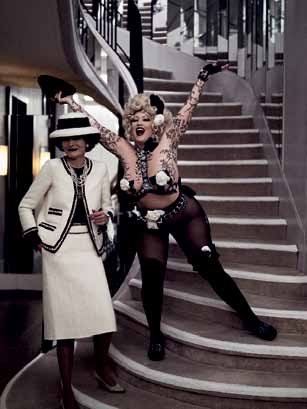
VMAG, Dirty Martini, Novembre 2009 © Karl Lagerfeld
The lack of information on the prints and techniques used, which are detailed in the exhibition catalog, is regrettable, but despite this, this exhibition remains an event not to be missed. But it’s up to you to make up your own mind about what the artist has given us a glimpse of…
Photo credit: Karl Lagerfeld with the courtesy of Maison Européenne de la Photographie
European House of Photography
5 rue de Fourcy 75004 Paris
Open daily 11am-8pm except Mondays, Tuesdays and public holidays.
Price: 7 euros
www.mep-fr.org
Marie-Odile Radom
Cette publication est également disponible en :

