
From 2 October 2026 to 2 May 2027, the Musée des Arts Décoratifs devotes its first monographic exhibition to the Brazilian photographer who, within a few years, has become a reference in contemporary fashion imagery.
One hundred and thirty prints, a decade of covers
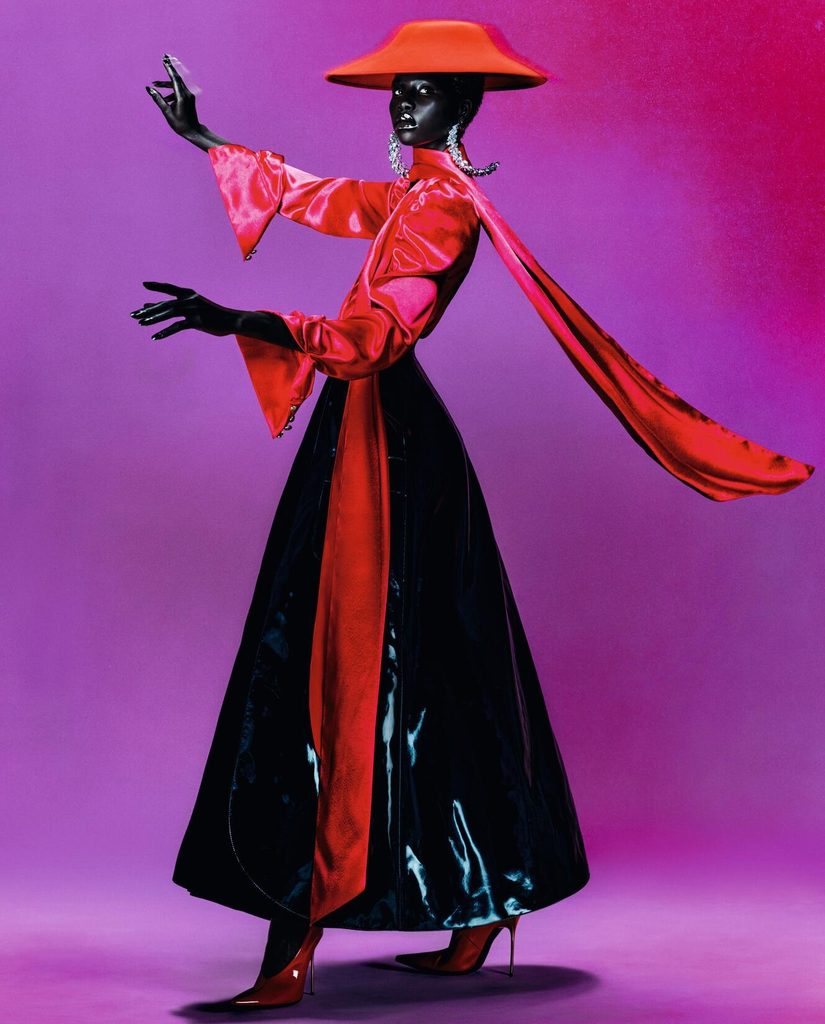
The exhibition “Rafael Pavarotti, photographer” brings together more than one hundred and thirty prints, from fashion magazine covers to portraits of pop culture figures — Rihanna, Harry Styles, Beyoncé. The choice of number is telling: one hundred and thirty images to cover a still-young trajectory, which places the exhibition less on the side of a career retrospective than of the early institutional recognition of an already identifiable visual signature.
A collection curator, a confidant of the artist
The curatorship is handled by Sébastien Quéquet, curatorial attaché in charge of the museum’s photography collections, while the scenography falls to Ibby Njoya, described as a longtime collaborator of the photographer. This double signature — the institution on one side, Pavarotti’s usual working circle on the other — places the exhibition at the junction of two legitimacies: that of the museum which classifies, and that of the studio which produced the images.
Colour as language, not as decor
Rafael Pavarotti’s work stands out through colourful, sensual images, deeply inspired by Afro-Indigenous Brazilian cultures. There, colour does not function as an aesthetic add-on but as a vector of identity assertion — a way of holding together light, texture and the claim of an origin, within a medium, fashion photography, that has long treated colour as a mere tool of commercial seduction.
Brazil at the heart of a French museum
By devoting an exhibition to this body of work, the Musée des Arts Décoratifs — an institution historically oriented towards the applied arts and European decorative arts — opens its walls to an iconography born outside its usual geographical and cultural perimeter. The juxtaposition of international fashion covers and portraits of globally recognisable pop stars with an avowed anchoring in Afro-Brazilian cultures turns this exhibition into a test case: that of how a French institution of the decorative absorbs an image that does not come from its own canon.
What the exhibition does not close off
One question remains, which the exhibition, however documented, leaves open: that of how a visual vocabulary born of a specific cultural identity then circulates through the pages of the leading fashion titles, until it becomes a recognisable language independent of its origin. One hundred and thirty prints are enough to raise the question; they are not enough to answer it.
Cette publication est également disponible en :


