
The Roussillon region receives between 500 and 600 mm of rain per year, concentrated over a few weeks. The rest of the time, the Tramontane wind dries everything out. The Lafage family’s vineyards, situated on the alluvial terraces of the Têt River near Perpignan, have been coping with this harsh water cycle for decades. Moutou 2022 was born out of a decision to no longer simply endure it.
The Crest vineyard, planted on black marl—a clayey sedimentary rock with high water-retention capacity but whose structure compacts under dry, hot conditions—is now managed according to a regenerative agriculture protocol. No tilling, to preserve the structure of the topsoil and microbial activity. Low-density cover crops, to limit surface evaporation without competing with the vines for available water. And above all: biochar.
Biochar is produced through the pyrolysis of green waste—the controlled combustion of organic matter (wood, straw, agricultural residues) in an oxygen-poor atmosphere, which produces a stable, porous, chemically inert form of carbon. When incorporated into the soil, it does not decompose like compost: it persists for decades, sometimes centuries. Its microporous structure retains water and nutrients, increases the surface area available for microorganisms, and improves the permeability of compacted soil. In the context of structural drought, this is an attempt to modify the soil’s water-holding capacity at the source—“cultivating water,” as the estate puts it—rather than bringing it in from outside.
The winemaking process reflects a parallel focus on preserving the early-harvested fruit. Early harvesting limits the overripeness that Grenache quickly develops in intense heat. Winemaking with 50% whole clusters—with the stems left on and no destemming—slows the extraction of anthocyanins and tannins, producing a wine that is structurally fresher, with a lower perceived alcohol content. The 36-day maceration period is long: it allows for gradual extraction through daily, pressure-free pumping over of the grapes, which heat might otherwise have concentrated excessively. Aging in 50-hl casks for eighteen months—large volume, neutral wood, slow gas exchange—does not impart woody notes to the wine; it simply gives it time.
Pyrolysis and Biochar
Pyrolysis is a thermochemical process carried out at temperatures between 300 and 700°C in the absence of oxygen. It transforms organic matter into three products: biochar (solid), bio-oil (liquid recoverable as energy), and syngas (combustible gas). The carbon in biochar is in a stable aromatic form that is not biodegradable under normal soil conditions. Its surface-to-volume ratio is approximately 200 to 400 m² per gram—comparable to certain activated carbons. Soil amended with biochar does not need to be re-inoculated each season: the amendment provides long-term benefits.
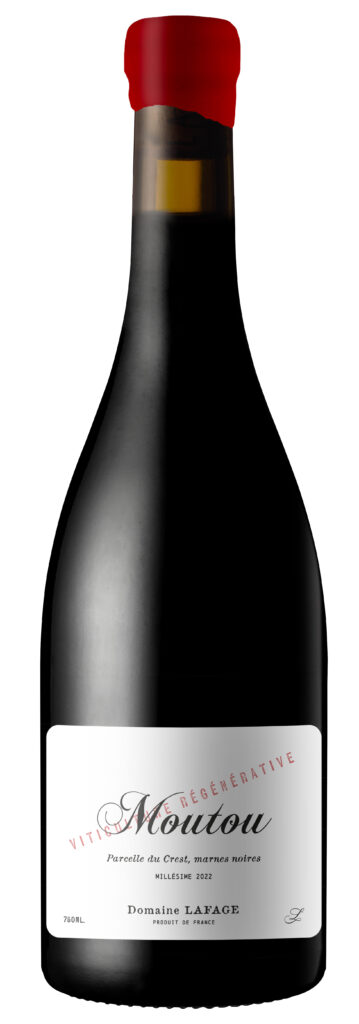
What Domaine Lafage is testing on the Crest plot is not yet a commercial solution—it is a protocol currently under observation. Agronomic results from several vintages will make it possible to determine whether water retention capacity has actually improved, and to what extent this translates into harvest quality. Moutou In this sense, 2022 is as much a wine as it is a field survey. The question that will shape the coming years for Roussillon’s wine industry is whether these “enhanced soil” experiments can alter the water balance at the appellation level—or whether they will remain individual experiments on select plots.
Cette publication est également disponible en :

