
Sauvignon is a grape variety that demands precision. When harvested in a cool vintage, it can produce lively, sometimes austere wines in which acidity dominates the aromatic profile. The challenge, then, is to preserve that tension without letting it take over.
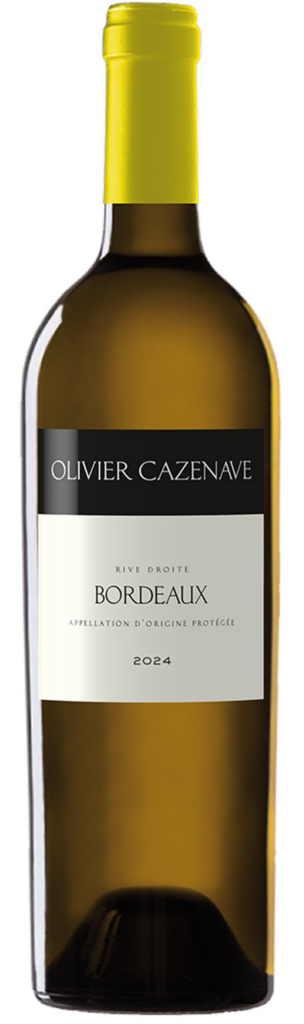
Olivier Cazenave’s 2024 Bordeaux Blanc is the result of this quest for balance.
The wine comes from two hectares planted on clay-limestone soils on the slopes of the Entre-deux-Mers. The decision to use a single grape variety is deliberate: 100 percent Sauvignon, without the traditional support of Sémillon, which is often used in Bordeaux blends to add body and roundness.
The winemaking process emphasizes the expression of the fruit. After direct pressing, the juices are clarified and then fermented in stainless steel tanks. The estate uses selected oak staves to preserve the wine’s aromatic expression while protecting the wines during aging. But above all, it is the regular work on the lees that lies at the heart of the project here. Stirring the lees accompanies the wine until it is bottled the following spring, adding body and depth to a vintage naturally characterized by acidity.
This approach is clearly evident in the winemaker’s comments. Olivier Cazenave refers to his “first pure Sauvignon” and acknowledges that he approached the vintage with caution: the grapes, in his own words, were marked by high acidity, and the risk was that the wine would turn out too tight. The result, he believes, owes much to the aging process on the lees.
On tasting, the winery describes the wine as having a golden color with green highlights—crystalline and unfiltered. The aromatic profile leans toward white fruits and fresh herbal notes reminiscent of boxwood or spearmint. On the palate, the appeal lies less in aromatic intensity than in the coexistence of two often-opposing characteristics: a pronounced freshness and a sensation of sweetness that softens the wine’s overall structure.
Aging on lees involves keeping the wine in contact with the dead yeast cells produced during fermentation. These cells are regularly resuspended through stirring, adding texture, body, and aromatic stability. In cooler vintages, this technique often helps balance the natural liveliness of Sauvignon without resorting to more aggressive extraction or aging methods.
With an alcohol content of 12.5% and a recommended aging period of five years, this white Bordeaux isn’t meant to show off its power. Instead, it is part of a broader trend in the Bordeaux region: wines designed to pair with everyday meals—seafood, grilled fish, or spring vegetables—rather than to impress with their intensity.
What makes this cuvée interesting, therefore, goes beyond the mere expression of Sauvignon. It shows how a winemaker can use aging not to transform a wine, but to reveal what the vintage allows it to be. It’s a subtle, almost artisanal approach that reminds us that in winemaking, technique is never an end in itself. It is a way of engaging with the limits imposed by nature.
Cette publication est également disponible en :

