
Some districts resist standardisation. The Marais is the most obvious Parisian example: despite decades of gentrification, it retains something irreducible — a porosity between eras, an ability to make the 17th century and the 21st coexist, the contemporary art gallery and the centuries-old synagogue, the concept store and the neighbourhood pharmacy. It is into this particular fabric that Parfums de Marly has just opened its third Parisian address, at 45 Rue Vieille-du-Temple.
The house had already established its presence on two of the most emblematic arteries of Parisian luxury: Rue Saint-Honoré, historic territory of perfumery and haute couture; and Rue François 1er, in the 8th arrondissement, heart of the golden triangle. These two addresses speak to those who seek luxury where it has always shown itself. Rue Vieille-du-Temple speaks to those who seek it where it is being invented.
An equestrian heritage as a through-line
Parfums de Marly takes its name and inspiration from the Marly estate — Louis XV’s hunting residence, famous for its royal stables and exceptional equestrian culture. This heritage runs through the house’s entire aesthetic: the bottles, the packaging, the visual signatures evoke saddle leather, brass bridles, the slightly rugged nobility of the world of horses.
Seen in this light, the move into the Marais takes on a particular symbolic dimension. The Marais is the district of the hôtels particuliers — those aristocratic mansions built in the 16th and 17th centuries by the French nobility who, after the Fronde, had decided to make Paris their playground. The aristocracy of perfume and the aristocracy of stone meet in this district, which is literally a conservatory of French nobility.
The boutique as a total experience
The choice of Rue Vieille-du-Temple — one of the liveliest streets in the Marais, halfway between Place des Vosges and Rue de Bretagne — is not merely strategic. It is a choice of neighbourhood. Parfums de Marly is settling into a street that hosts a multitude of cultural and commercial offerings: galleries, restination-worthy restaurants, sharp fashion brands.
This diversity is perhaps exactly what a niche perfume house is looking for in 2026. Niche perfume needs an audience that accepts complexity, that seeks distinction without ostentation, that prefers discovery to the badge. That audience is precisely that of the contemporary Marais.
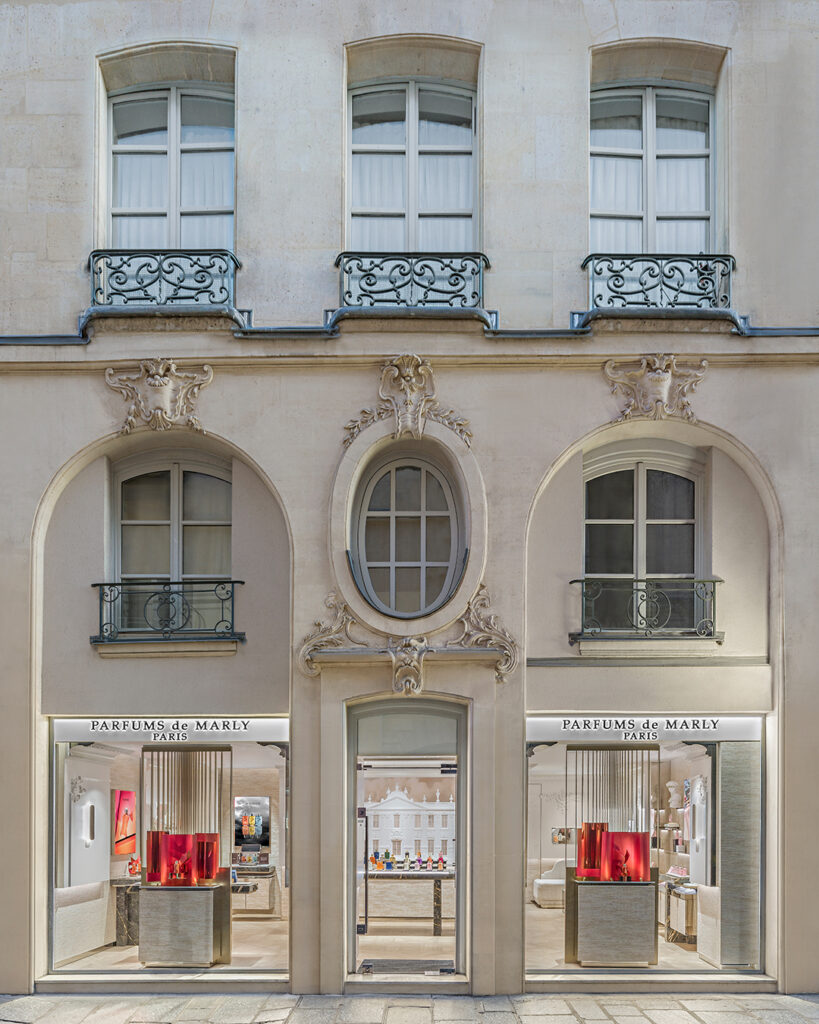
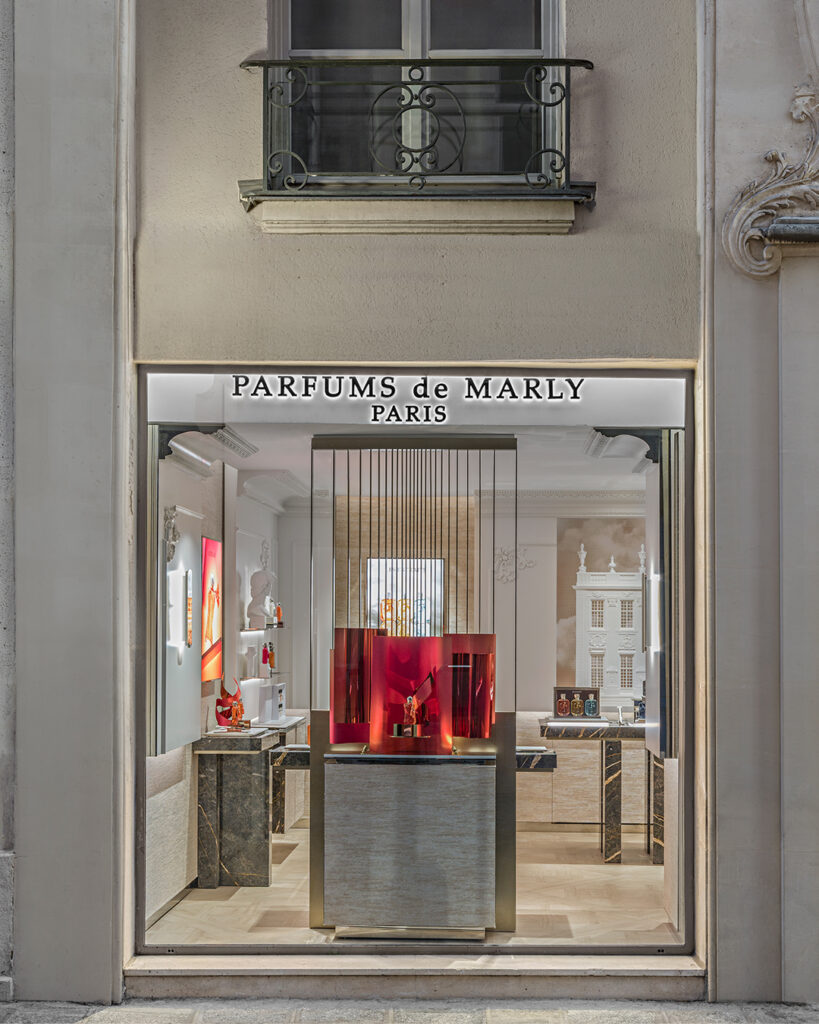
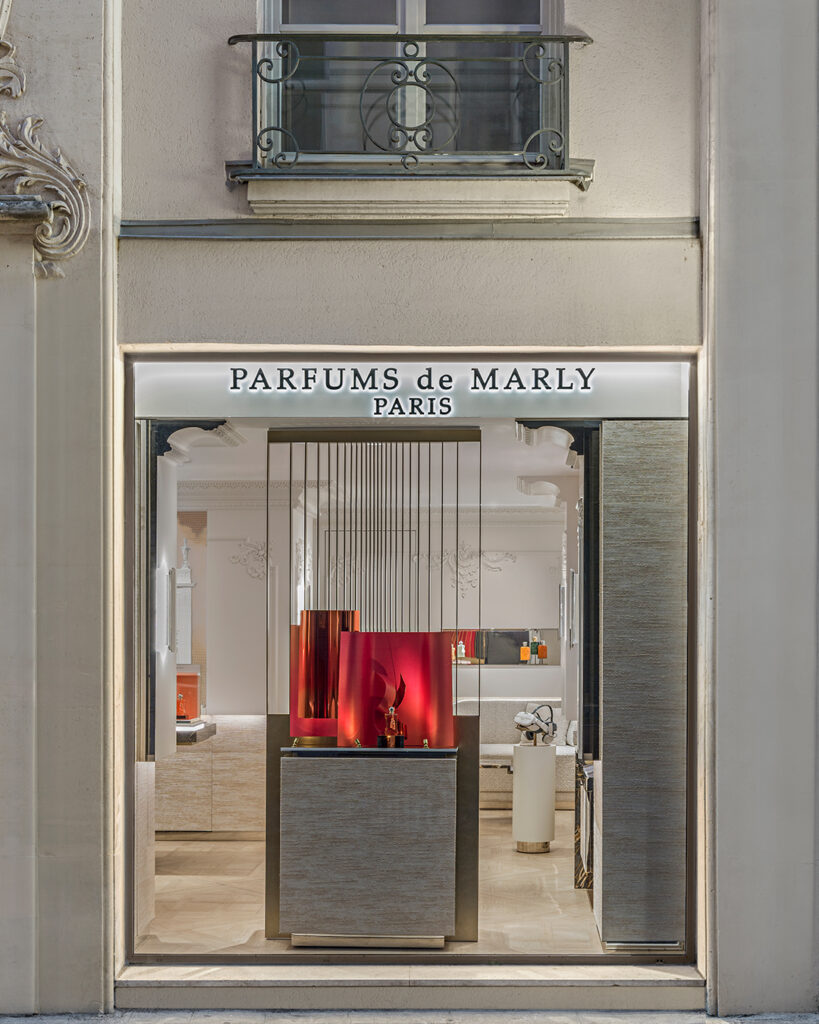
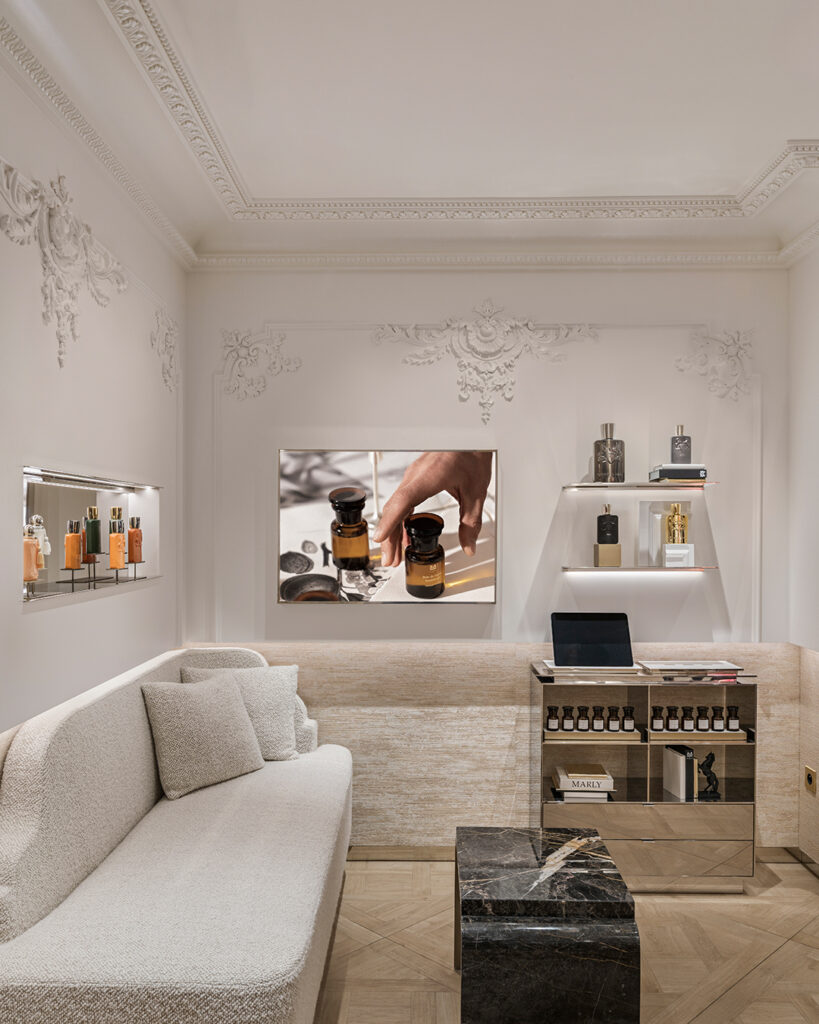
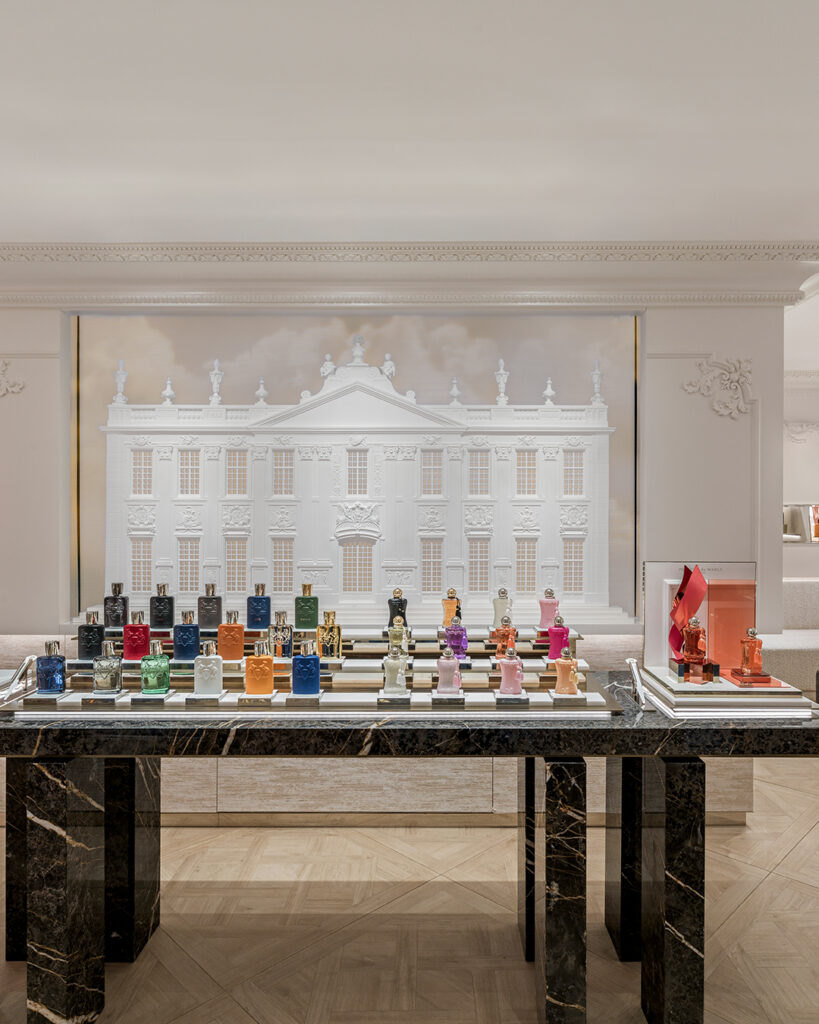
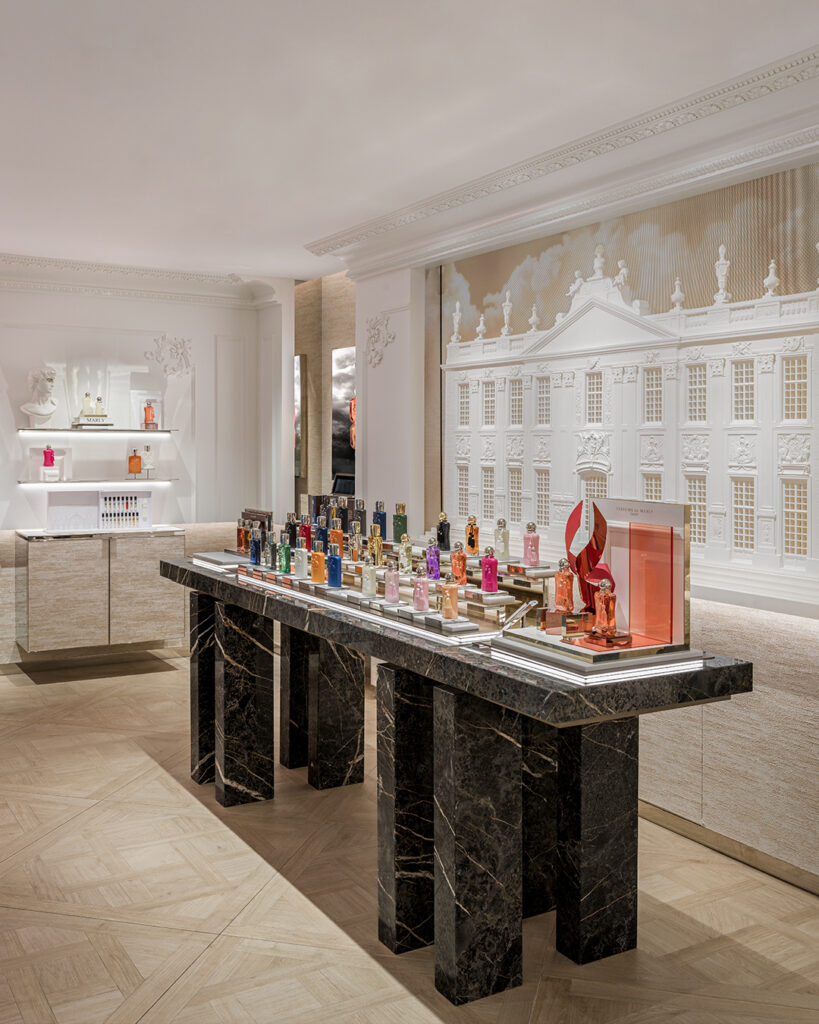
Three addresses, one single identity
What is interesting in Parfums de Marly’s expansion strategy is its coherence. Each Parisian address represents a different facet of the house’s public: Rue Saint-Honoré for those seeking the traditional legitimacy of luxury; Rue François 1er for those who belong to the circles of fashion luxury and commercial creativity; and Rue Vieille-du-Temple for those building their relationship to luxury off the beaten path.
This Parisian trinity is a reading of the contemporary geography of desire. It says something about how a house can grow without diluting itself — by choosing its locations not to maximise visibility, but to multiply the possible encounters with audiences who each deserve to be sought out where they are. Rue Vieille-du-Temple. The Marais. The ideal place for a perfume that has something to say.
Cette publication est également disponible en :


