
The skin, long described by the cosmetics industry as a surface to be corrected, becomes here a realm of balance. With Neo-Serum, Payot seeks not only to smooth or brighten the skin: it frames its message within the more contemporary vocabulary of skin longevity—that realm where beauty meets cellular biology, urban stress, and fatigue that has become almost structural.
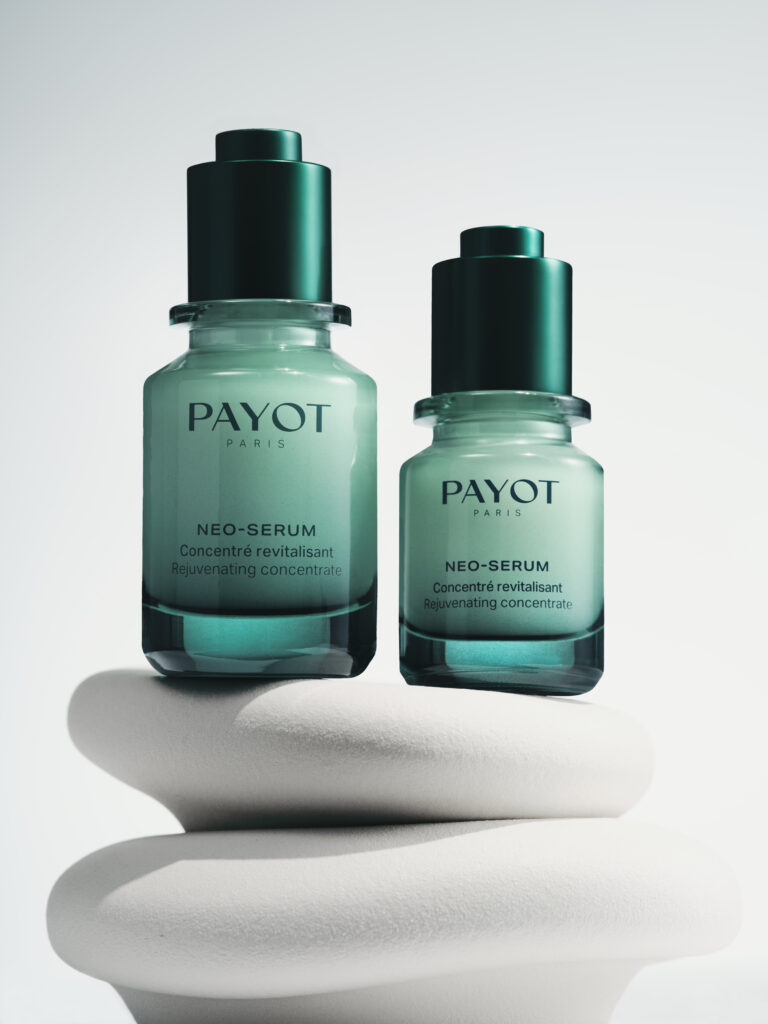
This topic comes at a specific time. The serum, which was launched a year ago according to the materials provided, is now available in a 50-ml size, alongside the original 30-ml bottle. The marketing move is less important than what it reveals: the serum is no longer presented as an occasional treatment, but as a staple of the skincare routine, to be applied morning and/or evening to the face and neck before your usual moisturizer. Payot thus positions it as an everyday essential, almost a foundational element in the skincare regimen.
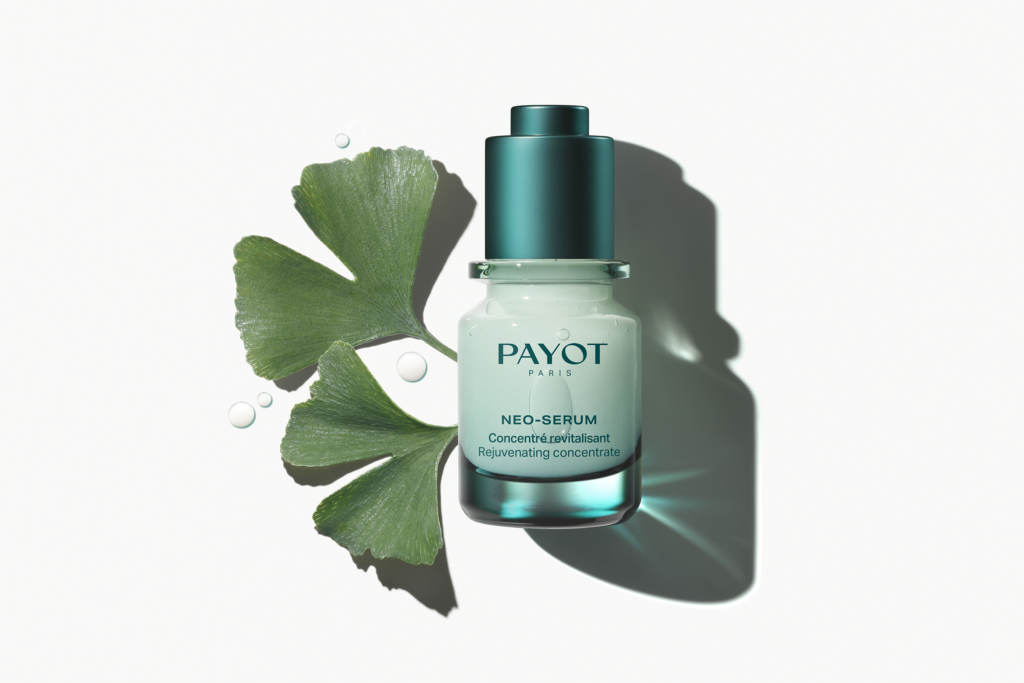
At the heart of the formula is a patented extract of Ginkgo biloba leaves, rich in cyclitols. The product information states that the leaves come from French organic farms and are hand-harvested to select only the young green leaves. Payot combines this with hyaluronic acid, pro-collagen, and niacinamide: four areas of action, including hydration, firming, even skin tone, and support for skin vitality. The official Payot website confirms this formula composition and describes the Neo-Serum as a facial treatment combining niacinamide, hyaluronic acid, pro-collagen, and a patented Ginkgo biloba extract.
The choice of Ginkgo biloba is no accident. The tree, often described as an ancient species, serves here as a biological metaphor: not for eternal youth—a slippery concept in the world of cosmetics—but for resilience, adaptability, and renewal. Payot cites an ex vivo test on a 2D model of reconstructed epidermis indicating that the skin regenerates twice as fast. The results from actual use, meanwhile, are based on a dermatologically controlled test conducted on 50 volunteers over 45 days, with two daily applications and a multiethnic panel. The report notably mentions that 96% of volunteers perceived smoother skin, 90% noticed a more even skin tone, and 86% observed a radiant complexion.
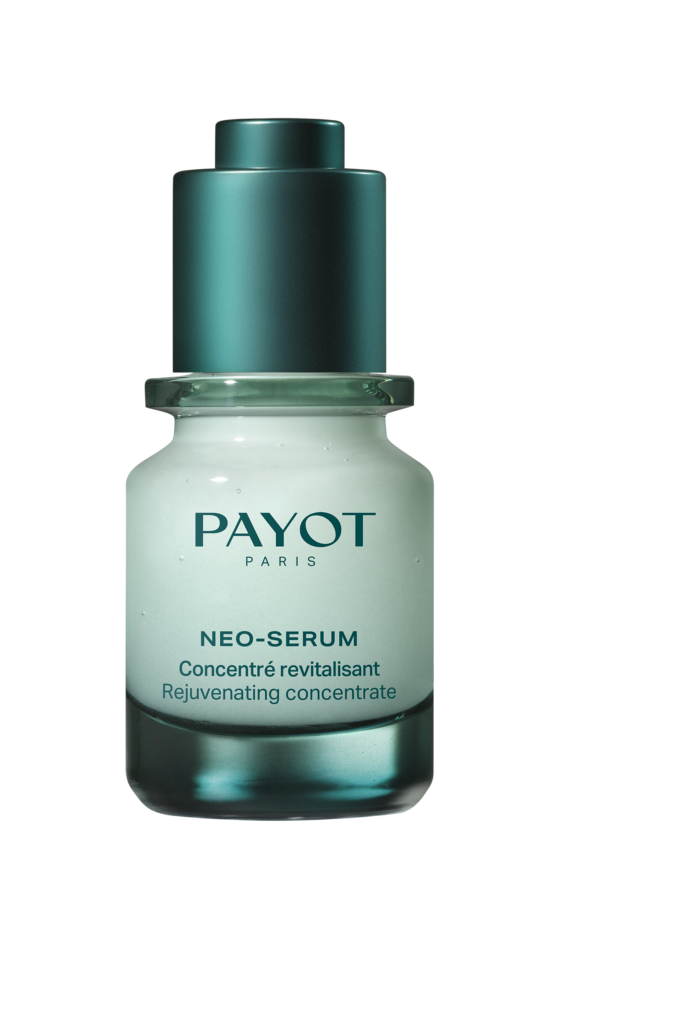
Perhaps the most interesting part isn’t the promise itself, but the way Payot presents it. The bottle features an apothecary-style design, a deliberate tribute to Nadia Payot, the physician and founder of the brand in the 1920s. This connection is not merely decorative: Payot has historically built its reputation on in-salon treatments, manual techniques, and a vision of beauty where the technique matters just as much as the formula. The brand also highlights this aspect on its official website, linking its treatments to a tradition of movement and facial massage.
Sensory experience, often relegated to the role of an emotional enhancement, plays a more strategic role here. The fragrance opens with bergamot, evolves into gardenia, and settles on musky notes. The biomimetic texture incorporates naturally derived squalane, designed to provide immediate softness. Once again, Payot is working in a very contemporary realm: that of performance-driven beauty, yet one that refuses to be reduced to mere clinical results. The skincare product must produce a visible effect, but also offer a ritual that is pleasant enough to be repeated.
The 50-ml size makes this ambition clearer. It transforms Neo-Serum into a product of continuity rather than a novelty. In a market saturated with rapid product launches, this expansion of the product line signals a more measured strategy: establishing a product for the long term, rather than constantly introducing new ones. It’s not spectacular. Perhaps that’s precisely why it deserves attention.

Cette publication est également disponible en :

