
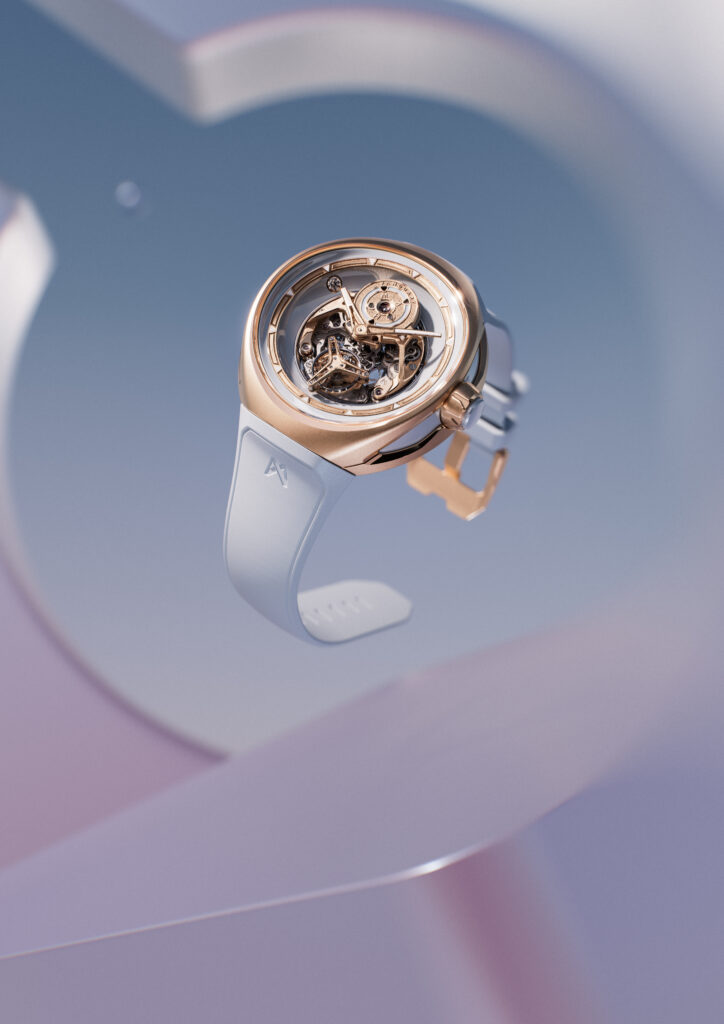
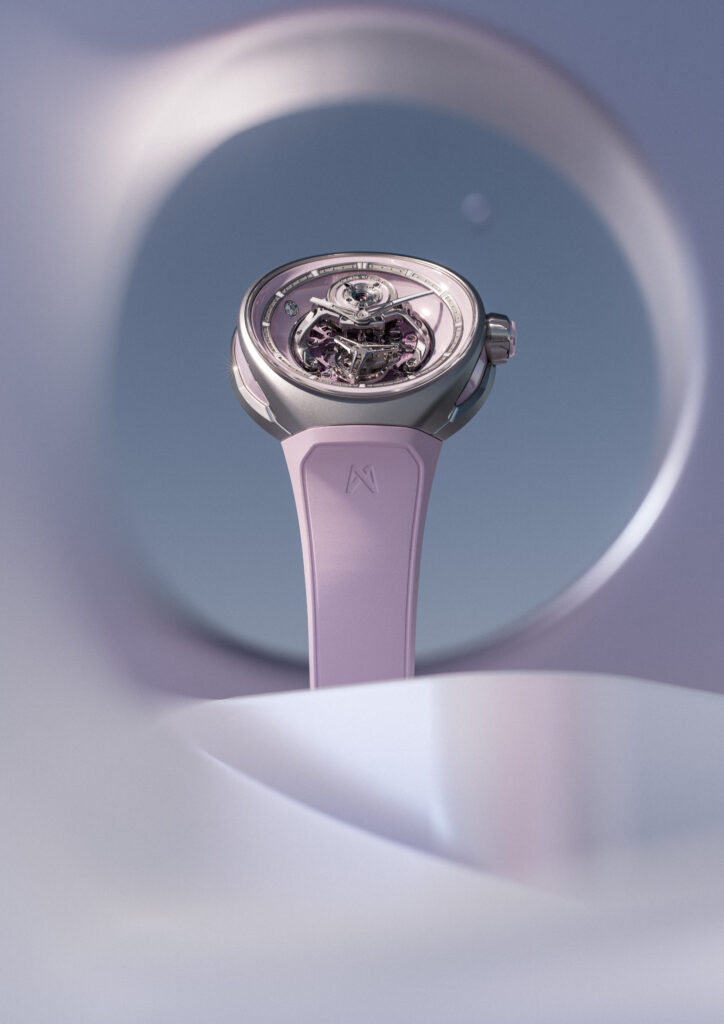
The independent haute horlogerie sector has long cultivated a certain air of solemnity: dark cases, ostentatious designs, and complications presented as proof of virtuosity. With the new Vanguart Orb Pink Ceramic Titanium and Vanguart Orb Blue Ceramic Rose Gold, Maison Vanguart is attempting a more subtle shift: retaining the complexity of the flying tourbillon, but integrating it into a watch designed with the wrist, color, and everyday wear in mind—almost with a sense of lightness.
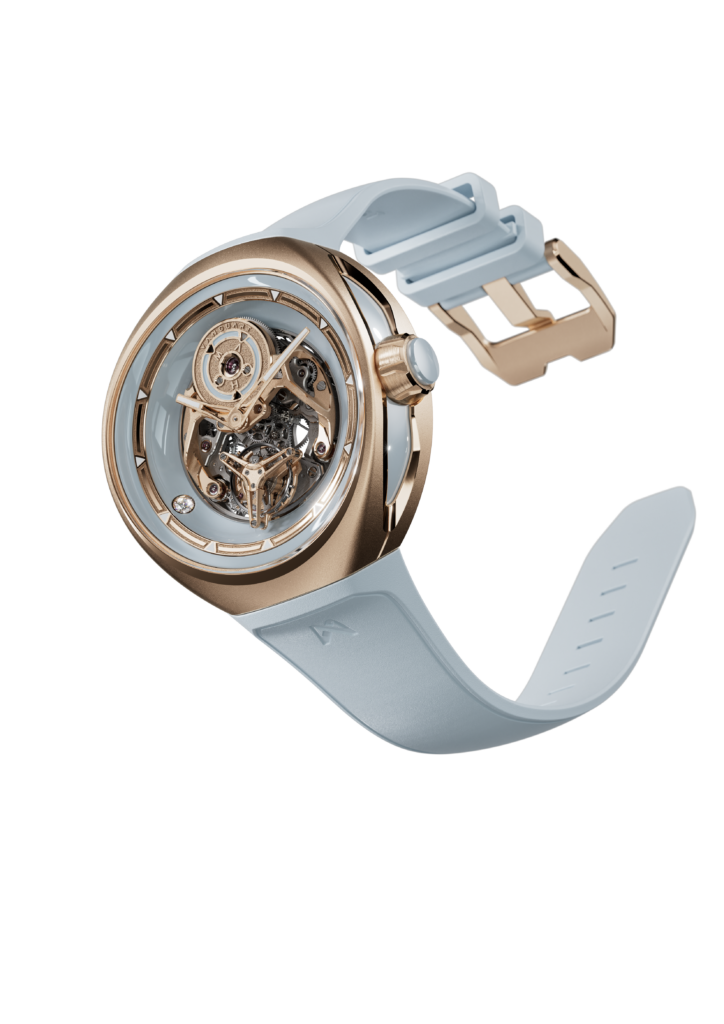
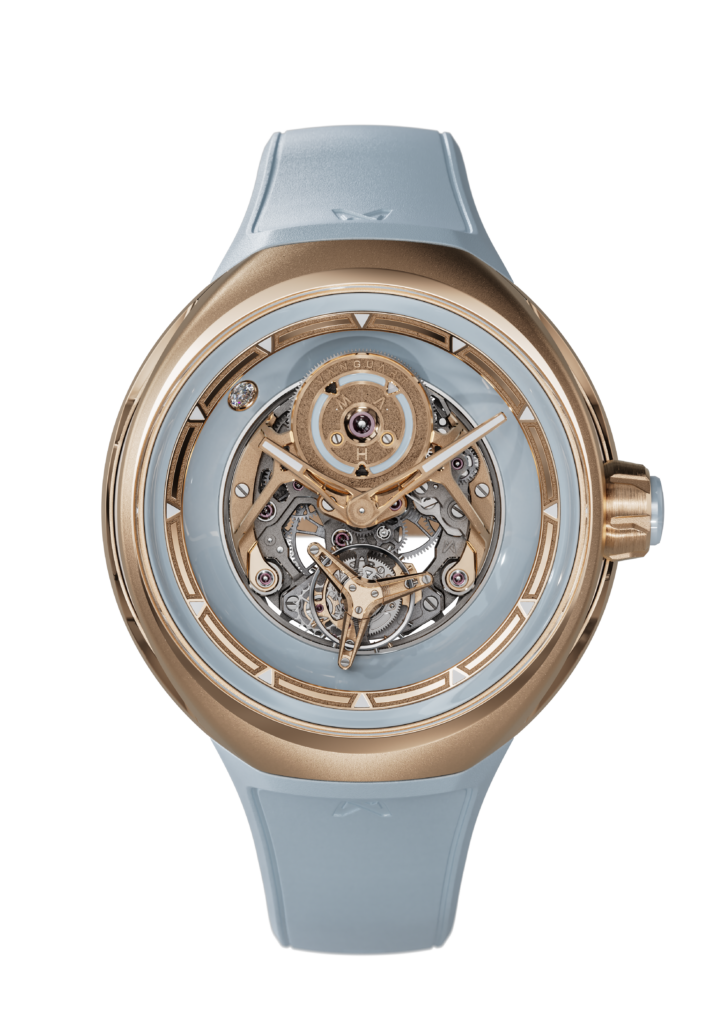
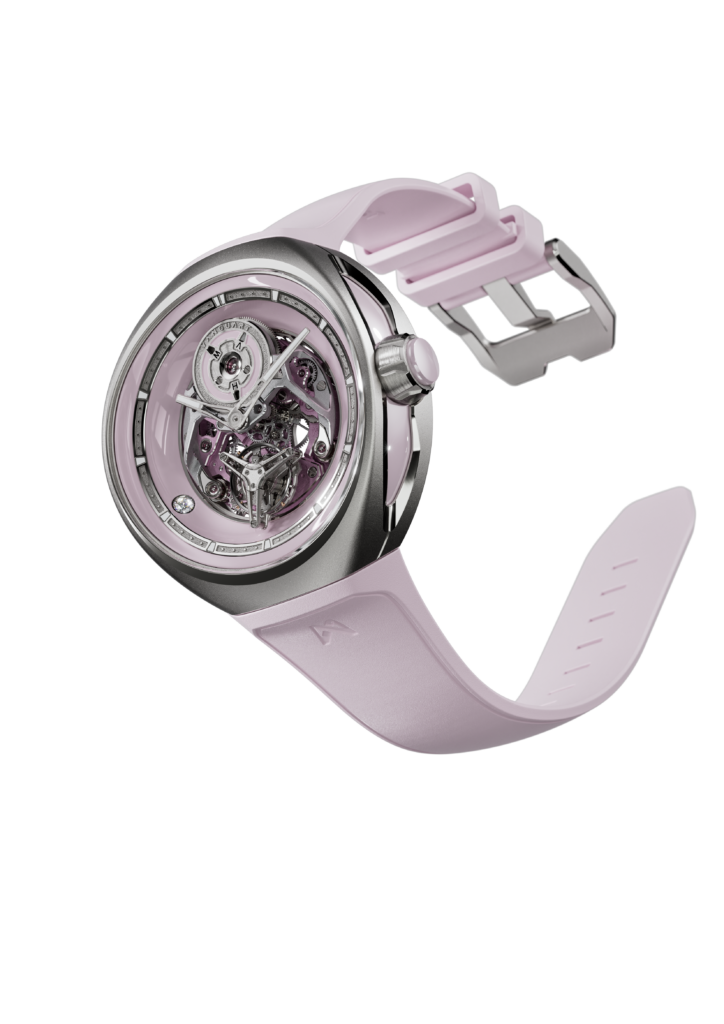
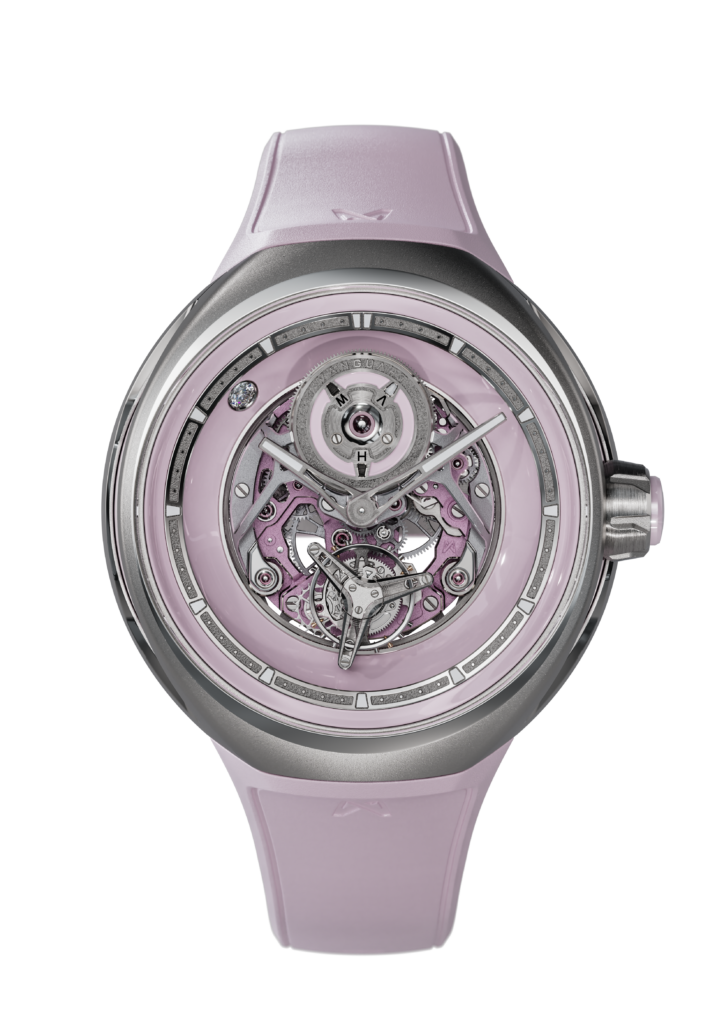
Unveiled during Geneva Watch Week 2026, from April 12 to 17, these two models feature the same design as the Orb, launched in 2024, with its 41-mm case that is 10.5 mm thick, its flying tourbillon, and, most notably, its function selector, which allows the wearer to switch between manual winding, automatic winding, and time setting. The selection is made via a pusher integrated into the crown; three windows indicate the active mode: M, A, or H.
The concept might seem theoretical. Most automatic watches already allow for manual winding. Here, Vanguart turns it into a visible mechanical action: in manual mode, the oscillating weight is locked in place; in automatic mode, it is released and begins to rotate. The wearer is no longer merely the one who winds or sets the watch, but the one who decides how energy flows. It’s an almost philosophical detail, but one approached with engineering logic.
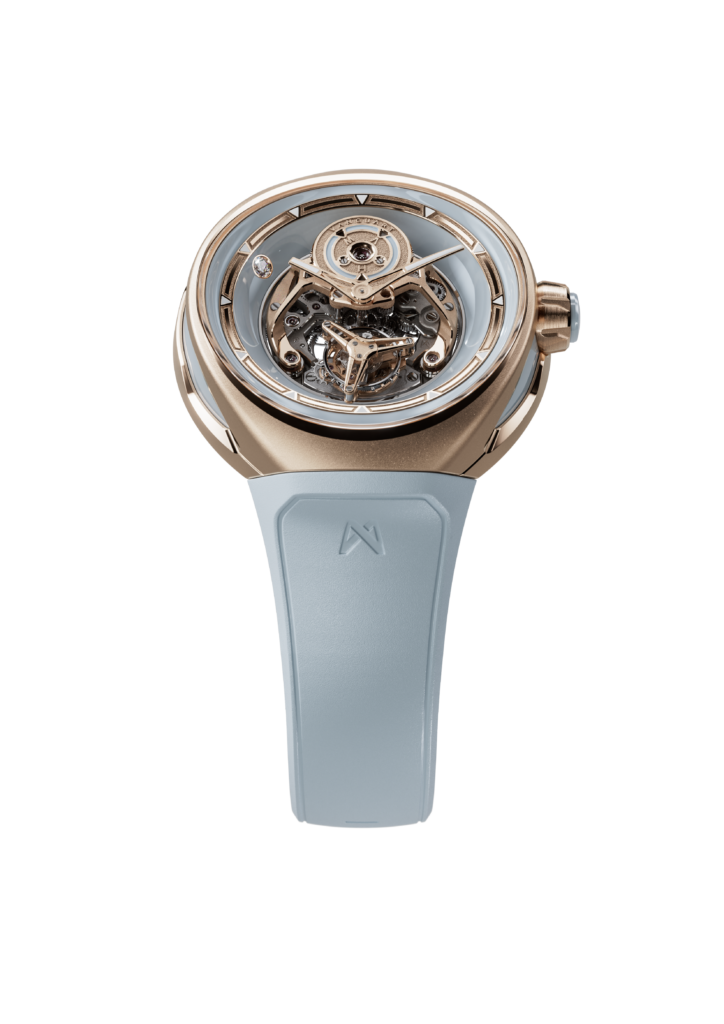
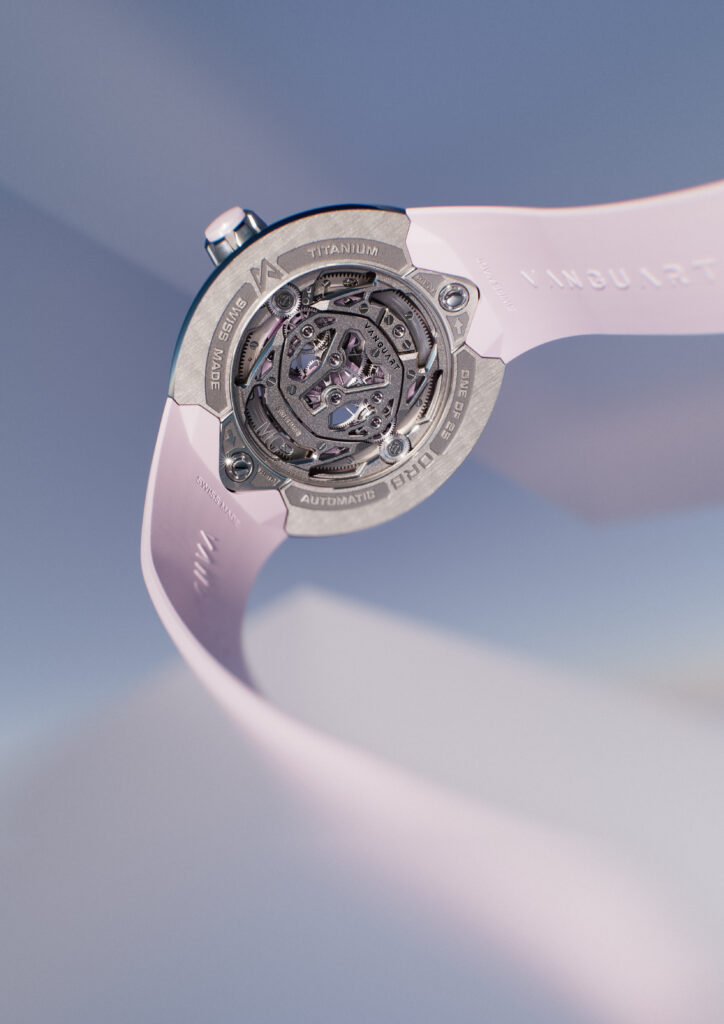
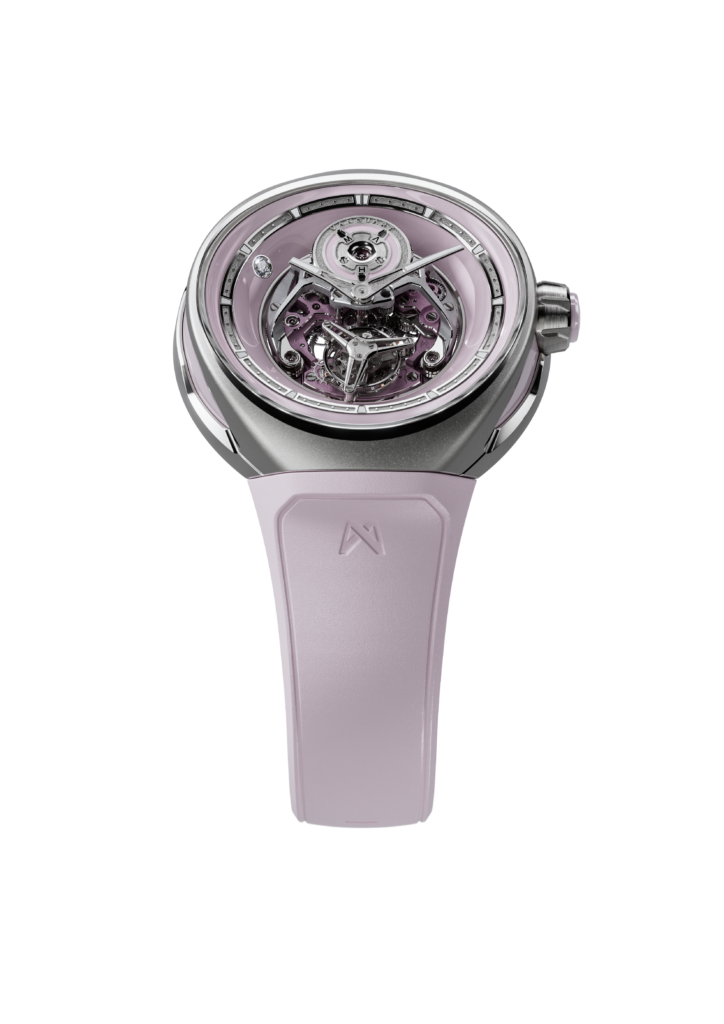
This new series features ceramic on the case sides and the crown push-button. Pink on the titanium version and blue on the 18-karat rose gold version, it creates an interesting contrast between a technical material and a soft hue. Ceramic is not used here as a symbol of black-and-white sportiness, but rather as a chromatic surface. It offers scratch resistance, color stability, and a distinct tactile sensation.
The integration is no small feat. According to Vanguart, the development required a year of research and specialized tooling to adapt the ceramic to the Orb’s complex curves without compromising either the finish or performance. The concave flange and oscillating weight, meanwhile, undergo a treatment derived from the automotive industry, applied using high-precision micro-painting, to visually extend the effect of the ceramic onto shapes that are more difficult to achieve with this material.
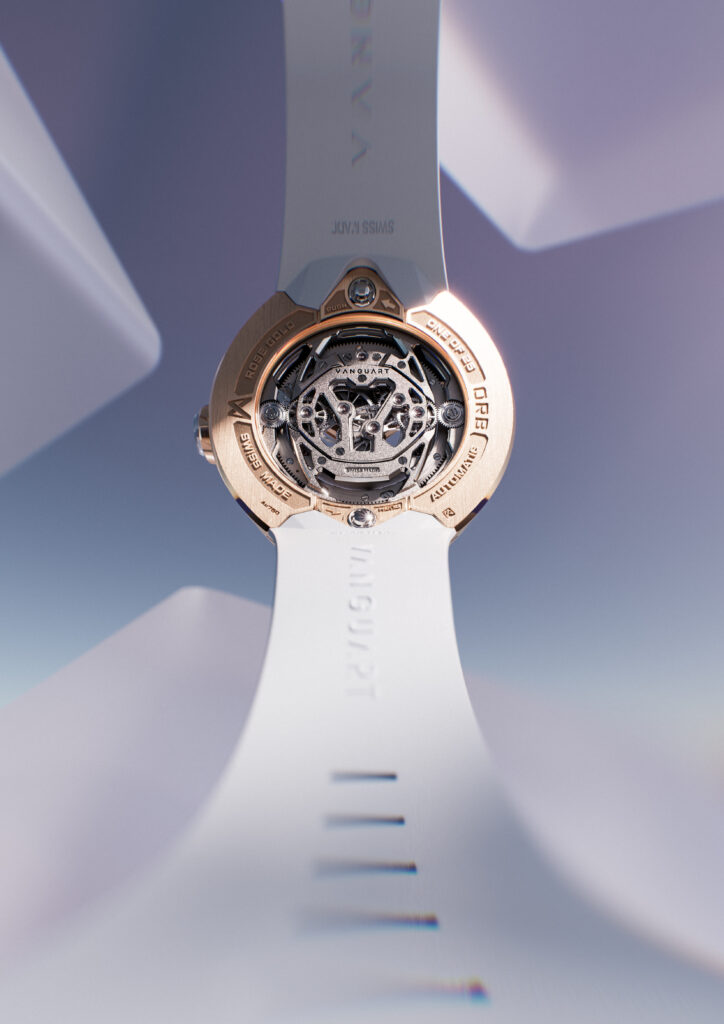
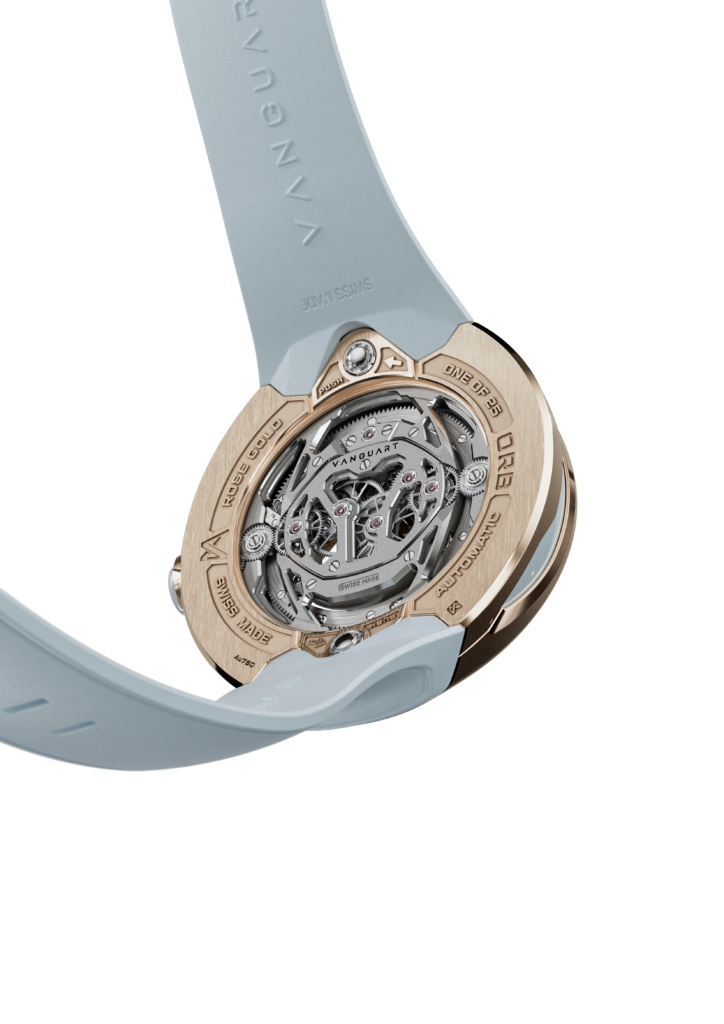
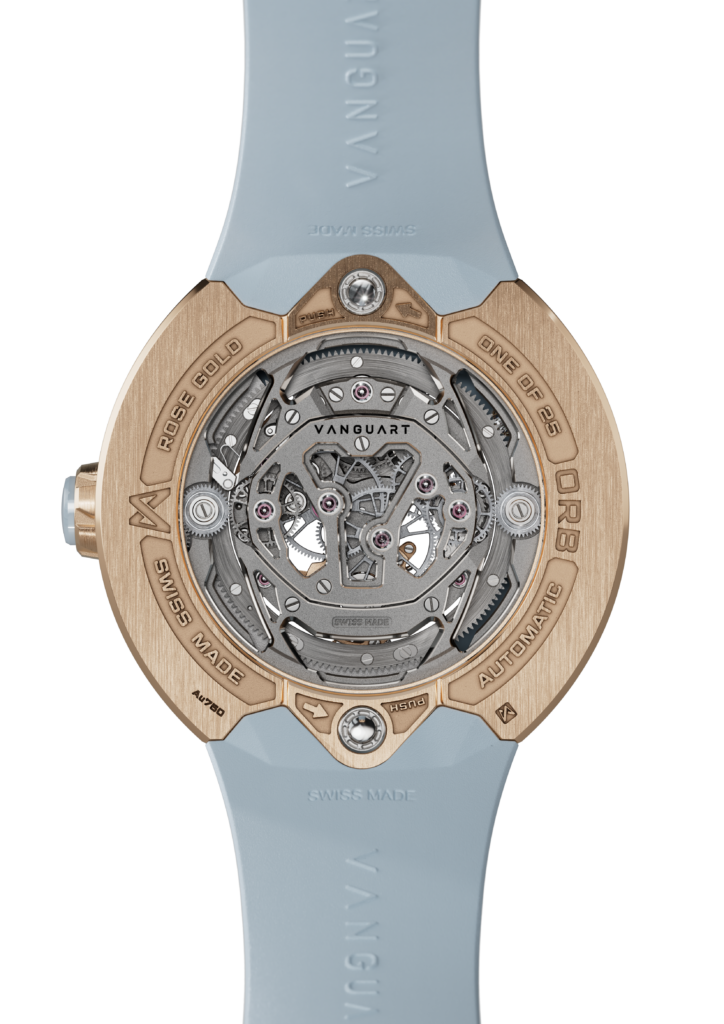
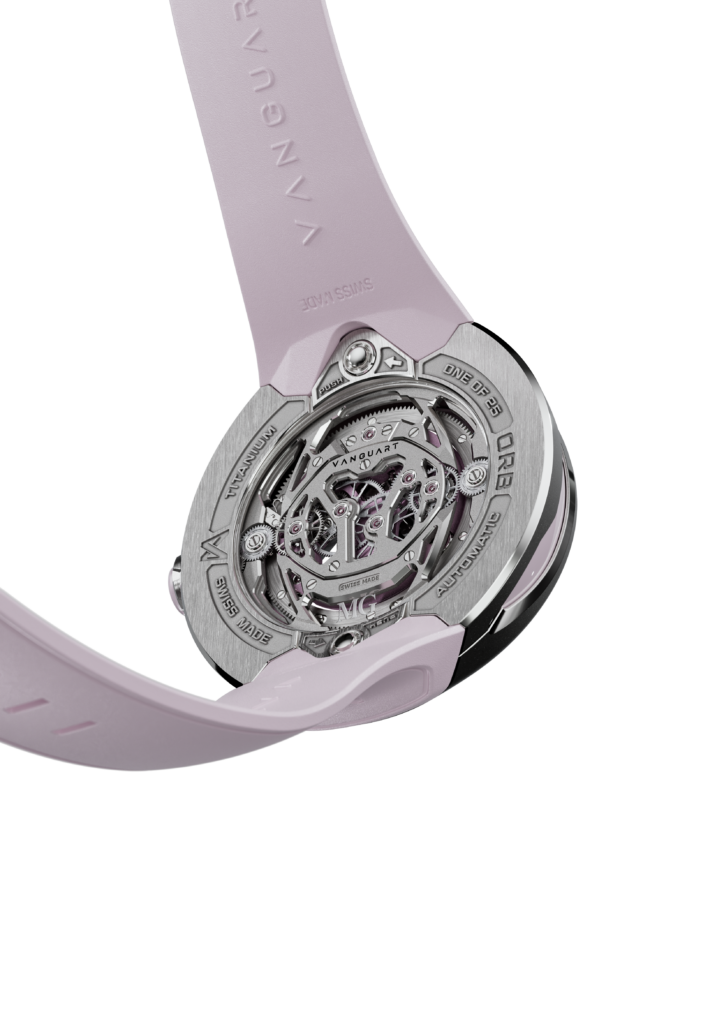
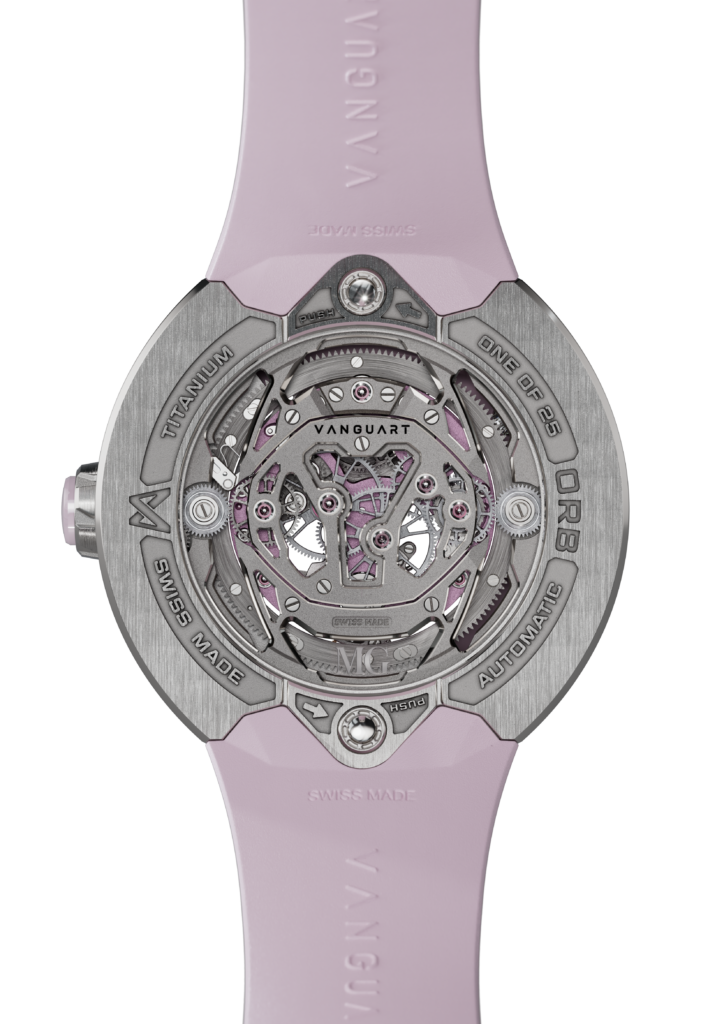
Inside, the movement remains a highly complicated timepiece: 395 components, a frequency of 3 Hz, a 60-hour power reserve, and a mainplate, bridges, and tourbillon cage made of Grade 5 titanium. The finishes combine microbeading, satin finishing, blocked polishing, and hand-finished bevels. The central bridge retains its polished three-dimensional beveling, a visual signature of the Orb, while the luminescent hour markers and partially openworked satin-finished hands ensure clear readability despite the movement’s open design.
This initiative is part of a journey that is still in its early stages. Vanguart made a name for itself with the Black Hole Tourbillon, launched in 2021—a watch featuring a central flying tourbillon and a linear digital display, which, according to the Grand Prix d’Horlogerie de Genève, was produced in a limited edition of 24 pieces. The Orb, which followed, marked a shift: a design less visually radical than the Black Hole, yet still highly conceptual in its approach to winding and mechanical time-reading. Vanguart’s official website, in fact, presents the brand around a clear concept: bringing complex mechanisms to life through a combination of traditional craftsmanship, contemporary technology, and a unique vision.
These new Orb models also reflect a broader shift in the world of independent watchmaking. Collectors are no longer simply seeking rare pieces to keep locked away in a safe or to show off at a dinner party among connoisseurs. They now expect watches that can fit into real life—offering comfort, presence, and ergonomic design. Vanguart states it explicitly: the Orb is becoming a “flying tourbillon for everyday wear.” The concept is ambitious, almost paradoxical, but the slim case, the curved caseback, the matching rubber strap, and the quick-change system integrated into the caseback provide a solid foundation for this vision.
However, the distribution confirms that the model remains highly exclusive. Each version is limited to 25 numbered pieces. The Orb Pink Ceramic Titanium will be available exclusively at Material Good, the American retailer involved in the watch’s development, with an “MG” monogram engraved on the caseback. The Orb Blue Ceramic Rose Gold will be available at Material Good, at Ahmed Seddiqi in the Middle East, and directly from Vanguart.
Quotes from company executives shed light on this strategy. Mehmet Koruturk, president of Vanguart, sees ceramics as a way to bring versatility to the Orb without altering its identity. Axel Leuenberger, CEO, describes a watch “designed to be worn and experienced every day .” Thierry Fischer, creative director, emphasizes the subjectivity of color, especially as it is conveyed through the depth of the ceramic. These remarks suggest not so much a break with tradition as an adjustment: making the avant-garde less distant, without diluting it.
The success of these two pieces lies precisely in this tension. The Orb retains both its complex mechanics and its futuristic design language. It takes on color, softens, and becomes more tactile. In an industry where ceramics are often used to emphasize performance, Vanguart employs them as a tool for nuance. The flying tourbillon doesn’t leave the stage; it simply learns to coexist with daylight.
Cette publication est également disponible en :

