
Since 1994, Estée Lauder has linked part of the price of its Pink Ribbon editions to breast cancer research. In 2026, the gesture is repeated across three objects and three different budgets — a sign of a well-established model rather than a novelty.
A history older than the collection
The Pink Ribbon was born in 1992, created by Evelyn Lauder as an international symbol of the fight against breast cancer. The Maison’s press kit recalls this plainly: “the history of the Pink Ribbon is inseparable from Estée Lauder Companies.” In France, it was in 1994 that Estée Lauder and the magazine Marie Claire launched the campaign “Breast Cancer: Let’s Talk About It!”, which became an association in 2003 before being renamed Ruban Rose in 2020. Thirty-two years therefore separate this French launch from the 2026 edition — long enough for a communications commitment to become a structure: the association now carries out two stated missions, informing the public through Pink October, and funding research through the Ruban Rose Awards, which have already supported nearly 120 projects for more than 12 million euros.
These figures, more than the products themselves, give the 2026 edition its measure: it does not launch a cause, it extends one, at an annual rhythm now established.
The serum, offered in a limited edition
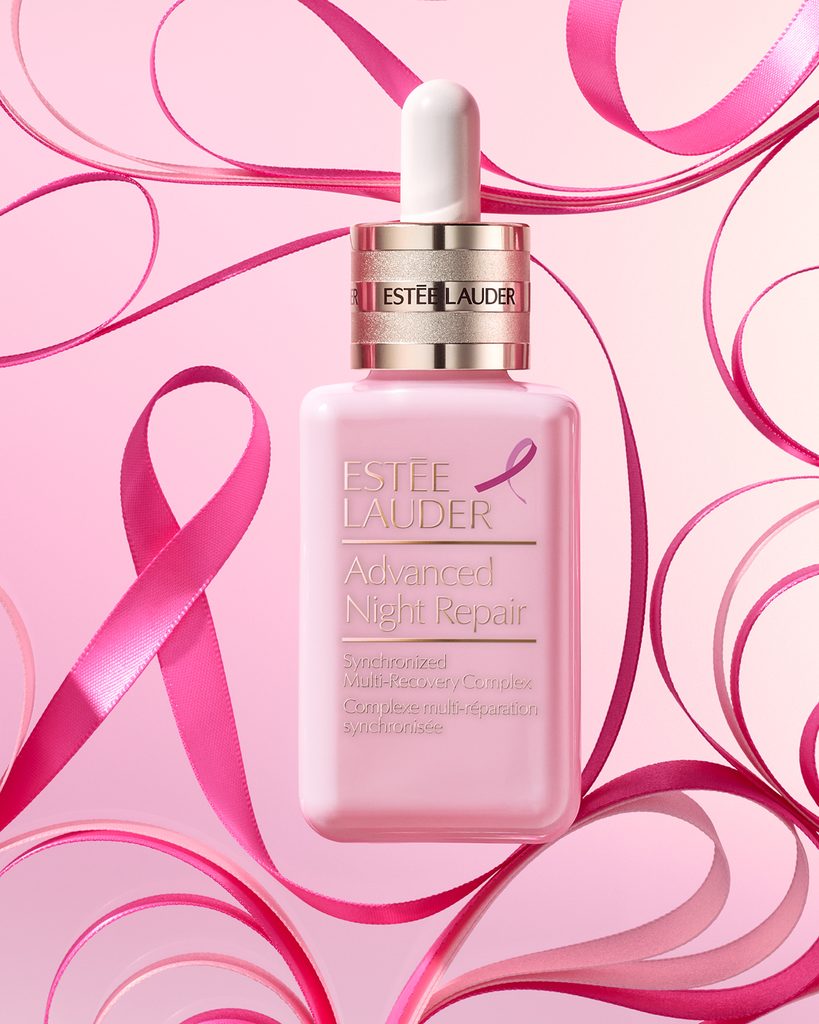
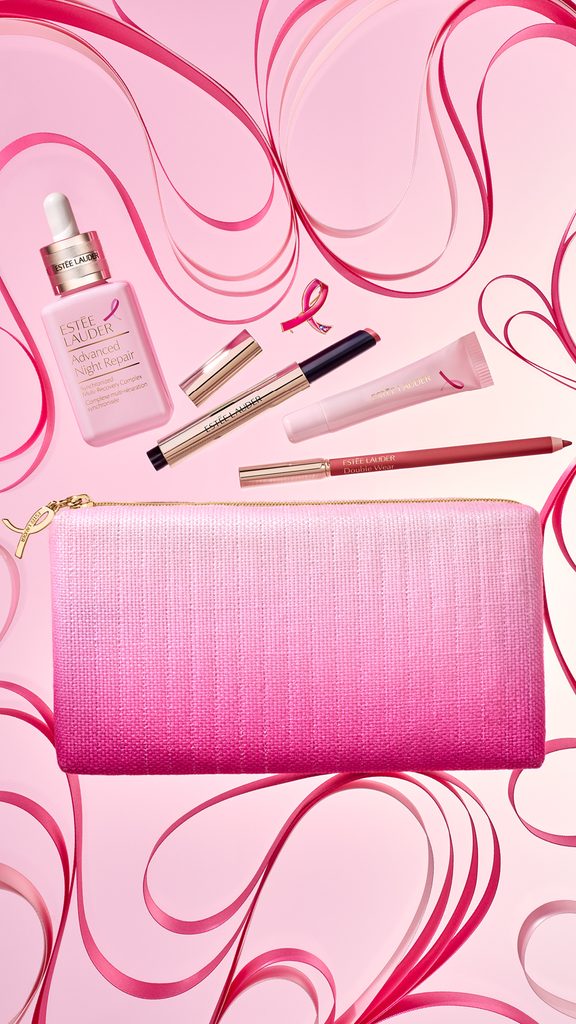
The central piece of the scheme, the Advanced Night Repair 50 ml, comes for the occasion in an exclusive limited-edition case. On this reference, as on the two other objects in the collection, 20% of the price excluding tax is donated to the Ruban Rose association. The serum will be available from 1 October 2026, at an indicative retail price of 146 euros.
Make-up and an accessory join the gesture
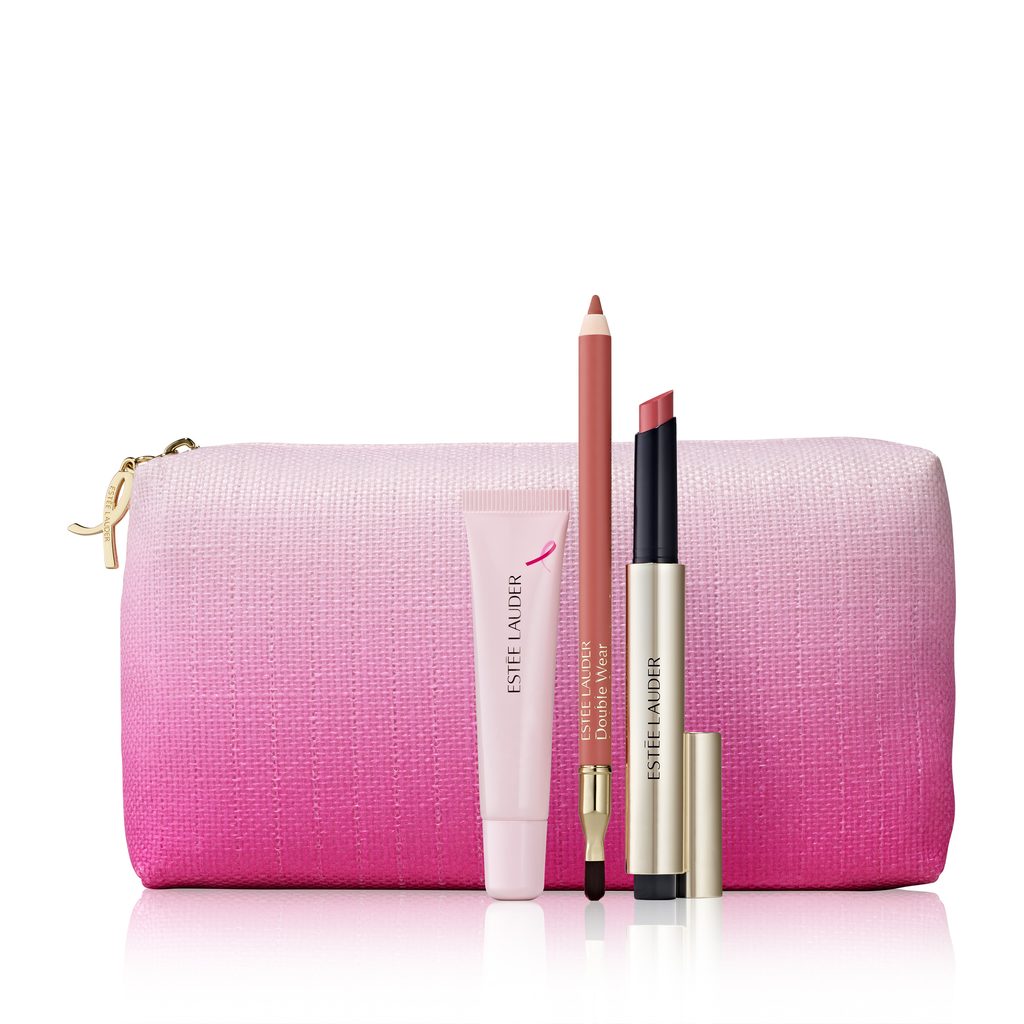
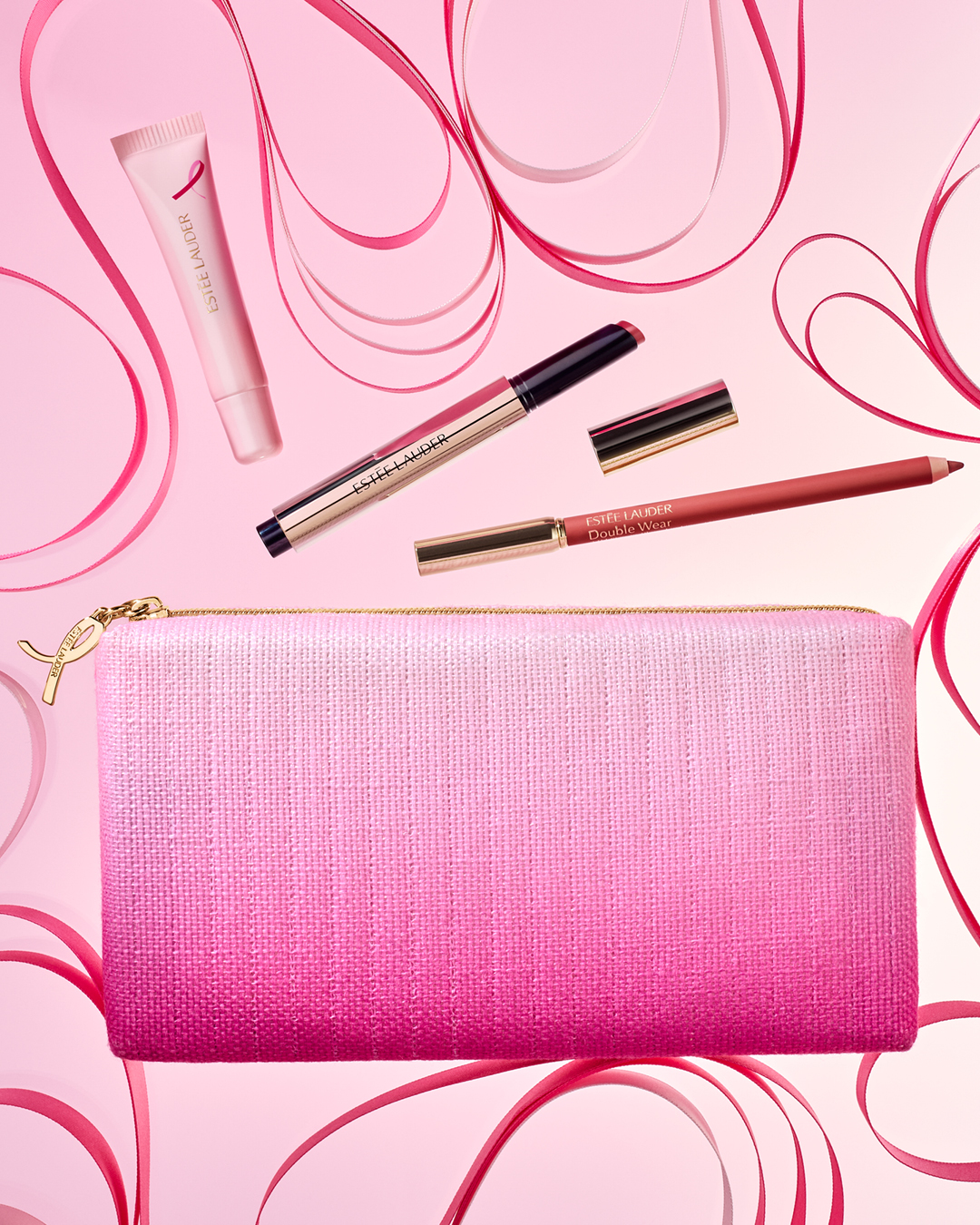
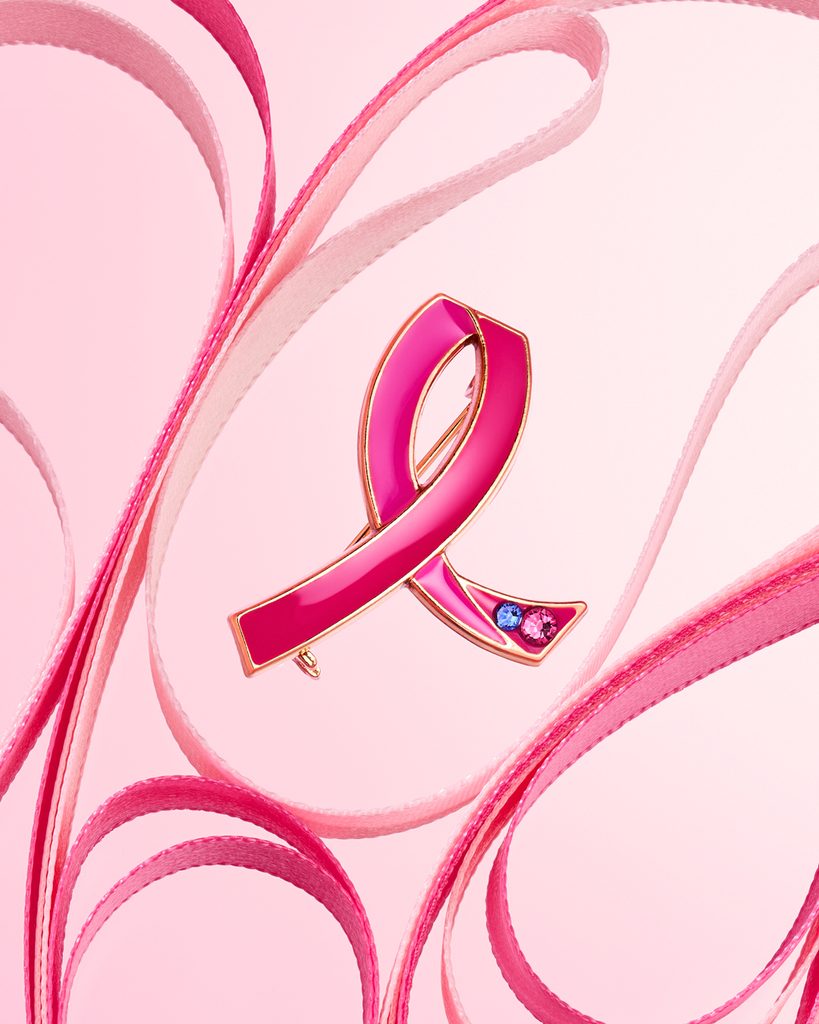
The collection extends to a make-up line comprising a Double Wear 24H Stay-In-Place lip pencil in the shade Blush, a Pure Color Click Stick gloss in the shade Melted Melon, and a stick blush in the shade Rose, the latter in limited edition — all accompanied by a cosmetic pouch in a pink gradient designed for the occasion. This collection, also subject to a donation of 20% of the price excluding tax, will be available from 1 October 2026 at an indicative price of 44 euros. Completing the scheme is a Pin Ruban Rose, an accessory with a purely symbolic purpose, sold for 13.50 euros from the same date, with the same donation mechanism.
Three objects, three prices — 146, 44 and 13.50 euros — for one and the same gesture spread across the whole budget range of the Maison. The serum is aimed at a clientele already committed to the brand; the pin, for its part, requires no prior loyalty to take part symbolically in the campaign. This is perhaps what the press release does not state explicitly: generosity, at Estée Lauder, is conceived as a lead-in product as much as a commitment, accessible to someone who would never buy the serum.
What repeats, what changes
Each October, a new case, a new shade, a new visual. But the architecture does not move: inform on one side, fund on the other, a fixed percentage donated across three price points. After more than thirty years, the question raised by the 2026 edition is no longer whether Estée Lauder will renew the exercise next year, but what this format — a percentage, a fixed date, a rotating catalogue — says about how the cosmetics industry has ended up making seasonal philanthropy an appointment as eagerly awaited as the Christmas collection.
Cette publication est également disponible en :


