
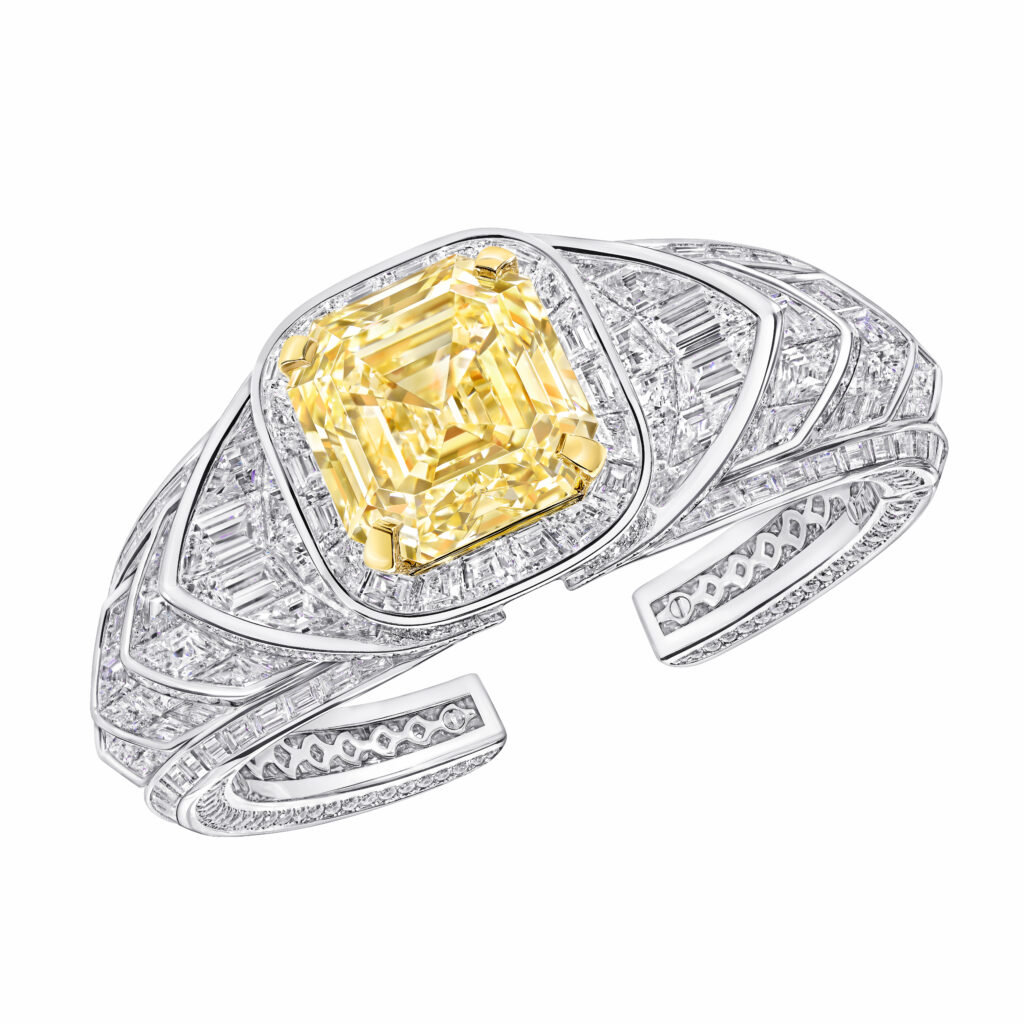
High jewelry often begins with a sketch. At Graff, it can begin with a stone whose size dictates its own logic. A cuff bracelet featuring a 40-carat emerald-cut yellow diamond serves as a reminder here that design is not always a sovereign act: sometimes it becomes a response to the material itself.
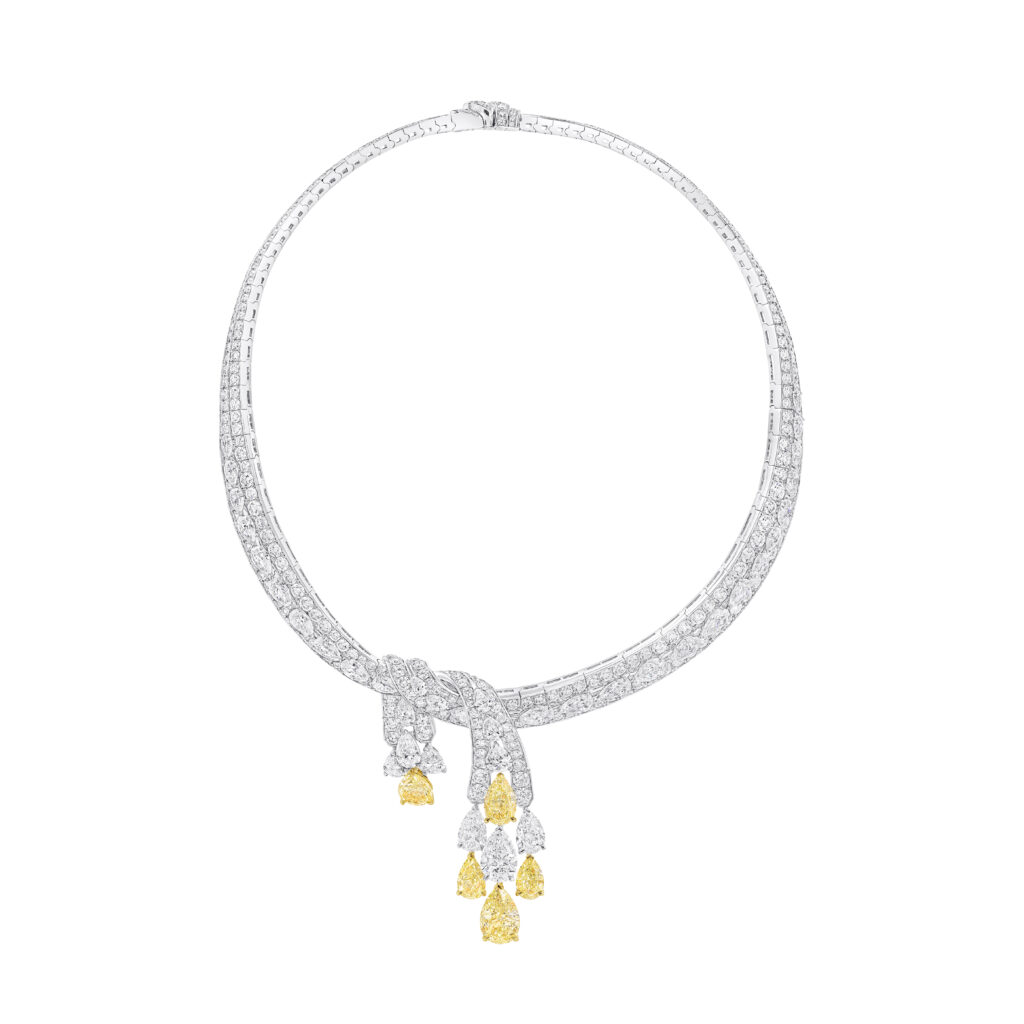
The House’s new campaign, unveiled in London in August 2026, features several designs centered around white and yellow diamonds. The most striking piece is this yellow and white gold cuff bracelet. Surrounding the center stone, more than forty-five carats of baguette- and brilliant-cut diamonds form a geometric pattern inspired by a chevron. The design is graphic, almost architectural, yet it remains subordinate to the main diamond.
This sense of scale distinguishes the Pièce from a mere decorative exercise. A forty-carat diamond is not simply a focal point added to an existing composition. It determines the proportions, the distribution of volume, the strength of the setting, and the way light flows. The structure must support the stone without giving the impression of restraining it. It must also preserve the flexibility of a bracelet designed to conform to the wrist.
Anne-Eva Geffroy, Graff’s design director, emphasizes that every line, every pattern, and every setting must respect the unique character of the diamonds used. Behind this corporate statement lies a concrete principle: the design is adapted to the stone, not the other way around. This is where the true art of fine jewelry lies—in the ability to transform a gemmological constraint into formal coherence.
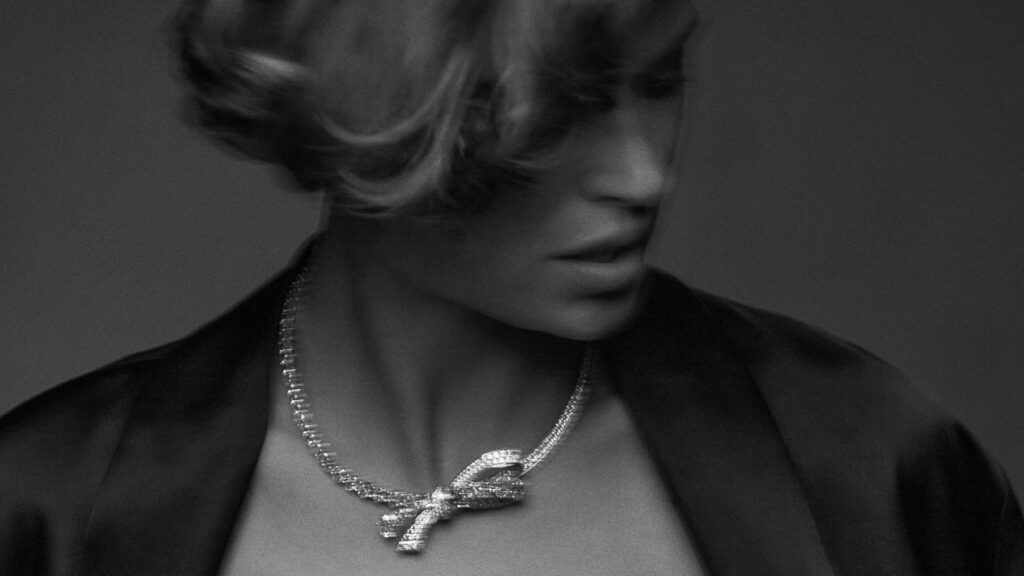
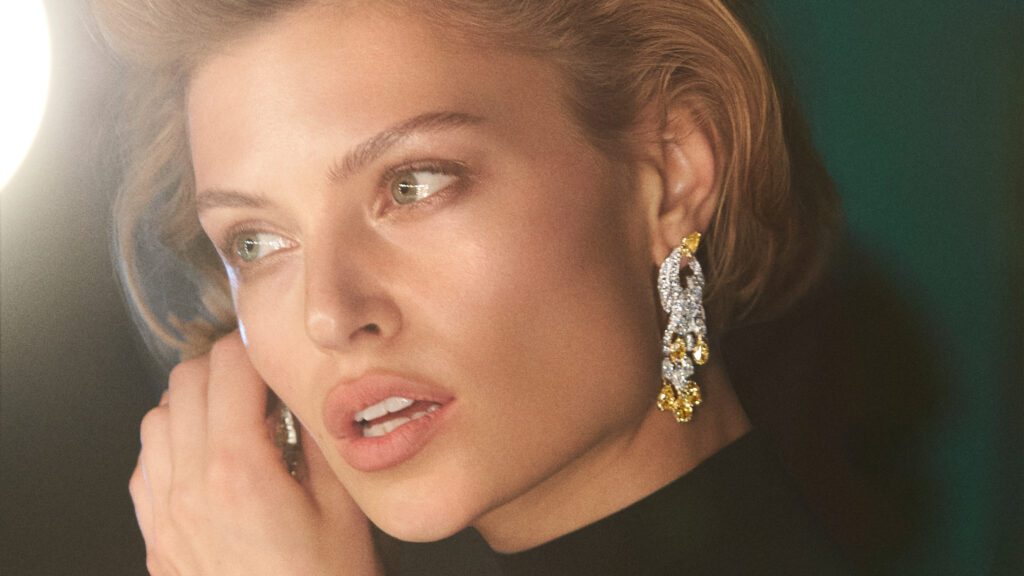
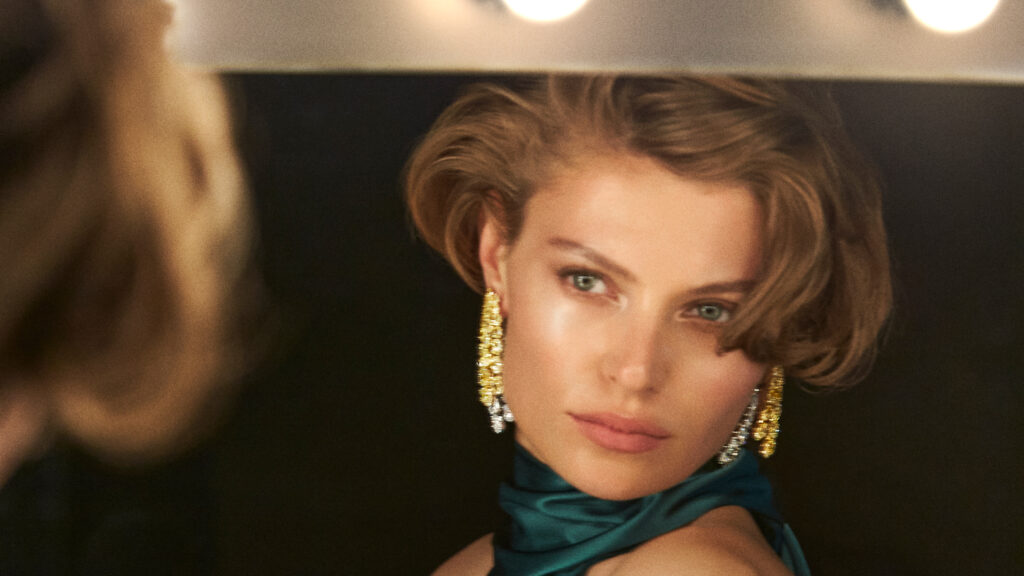
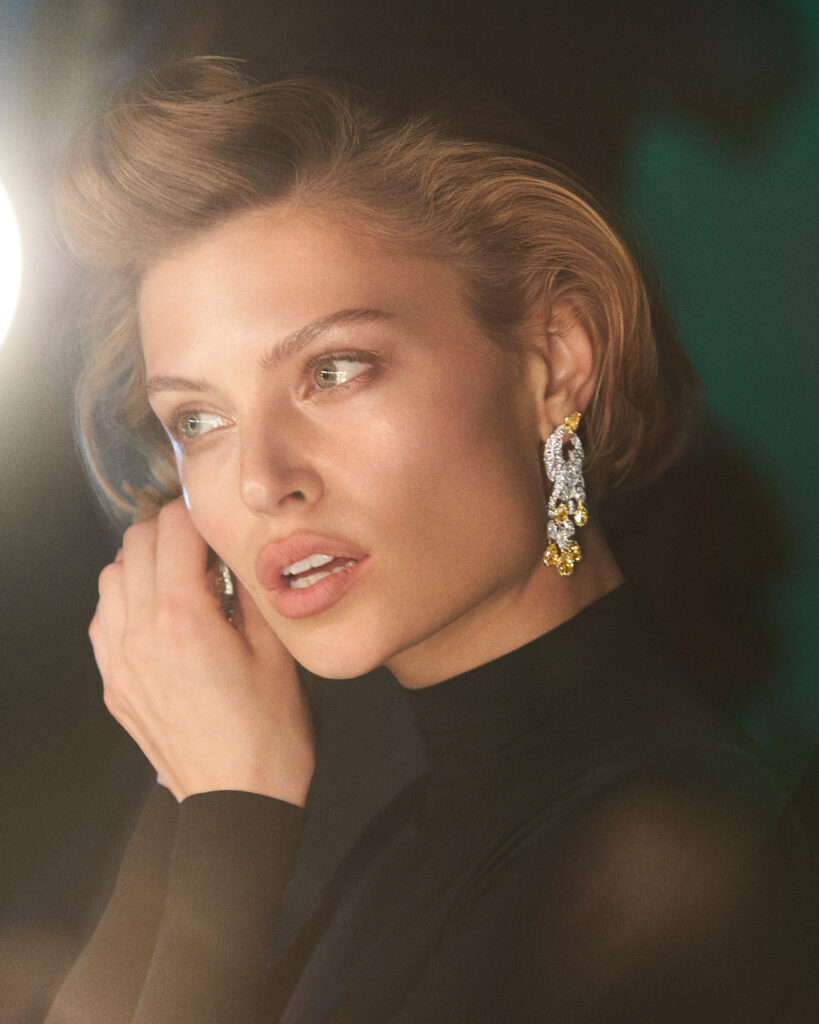
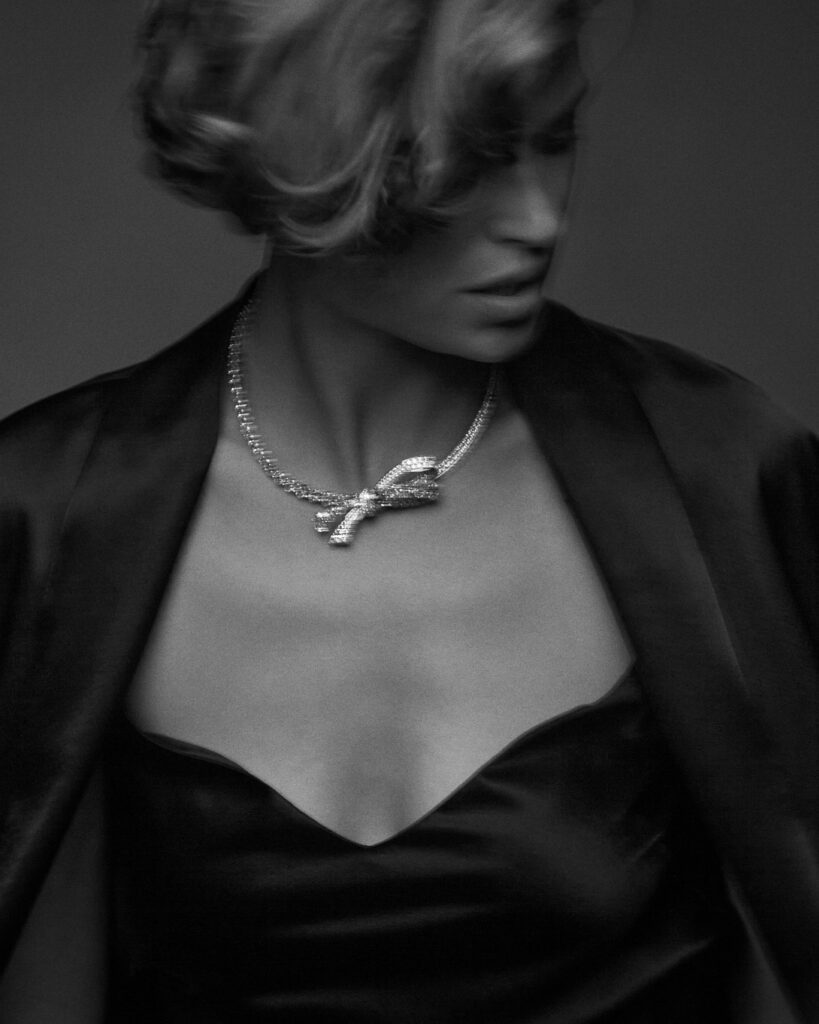
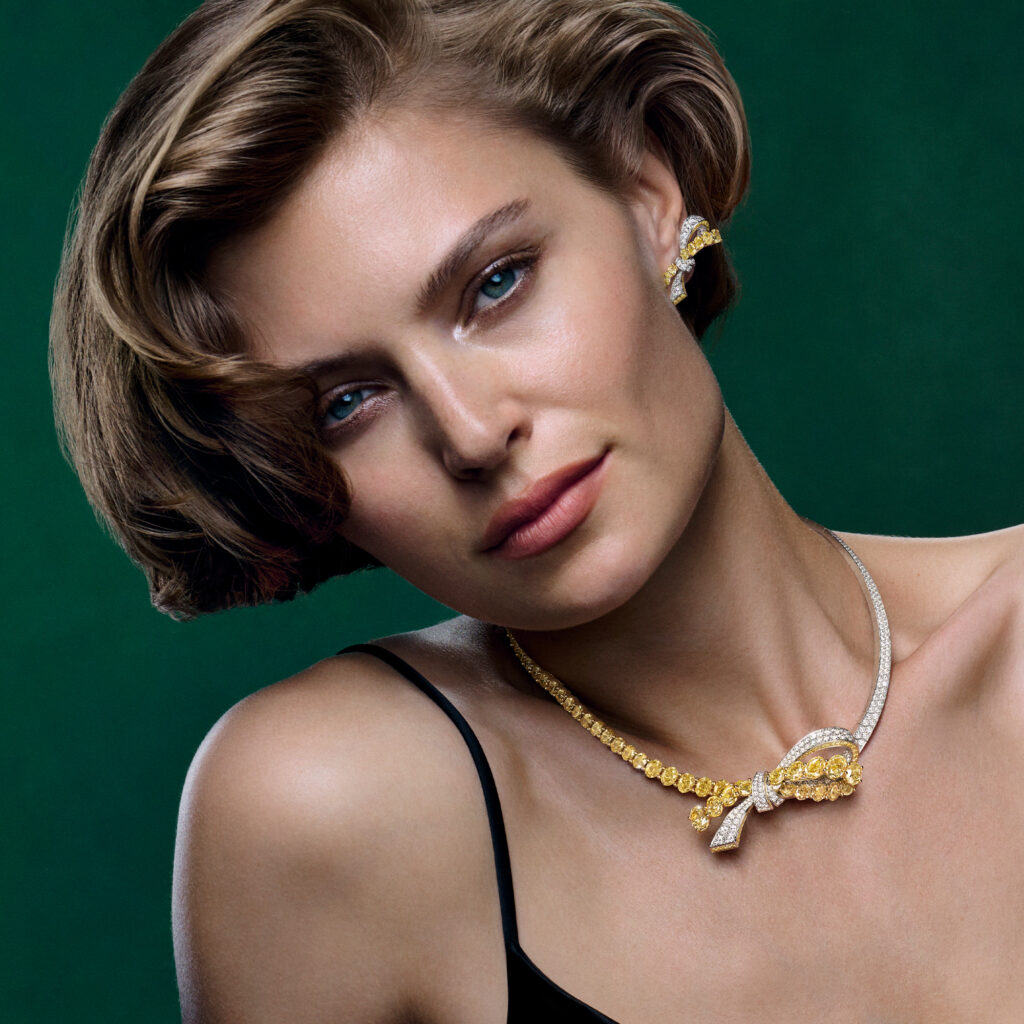
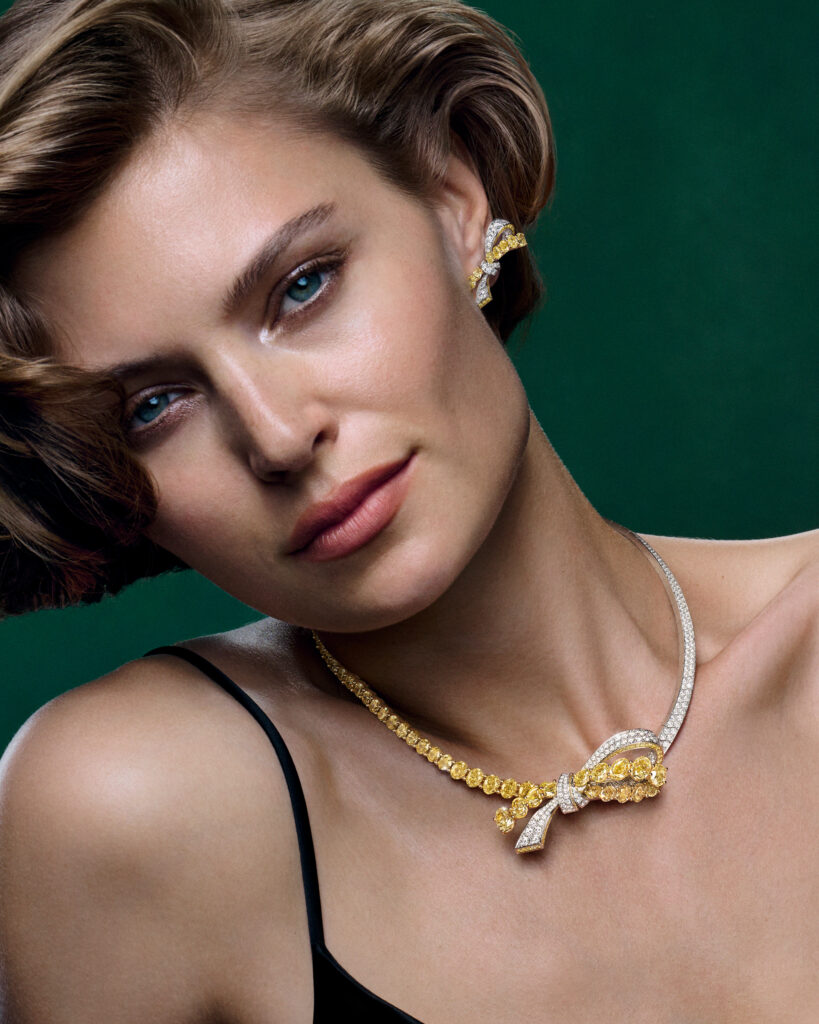
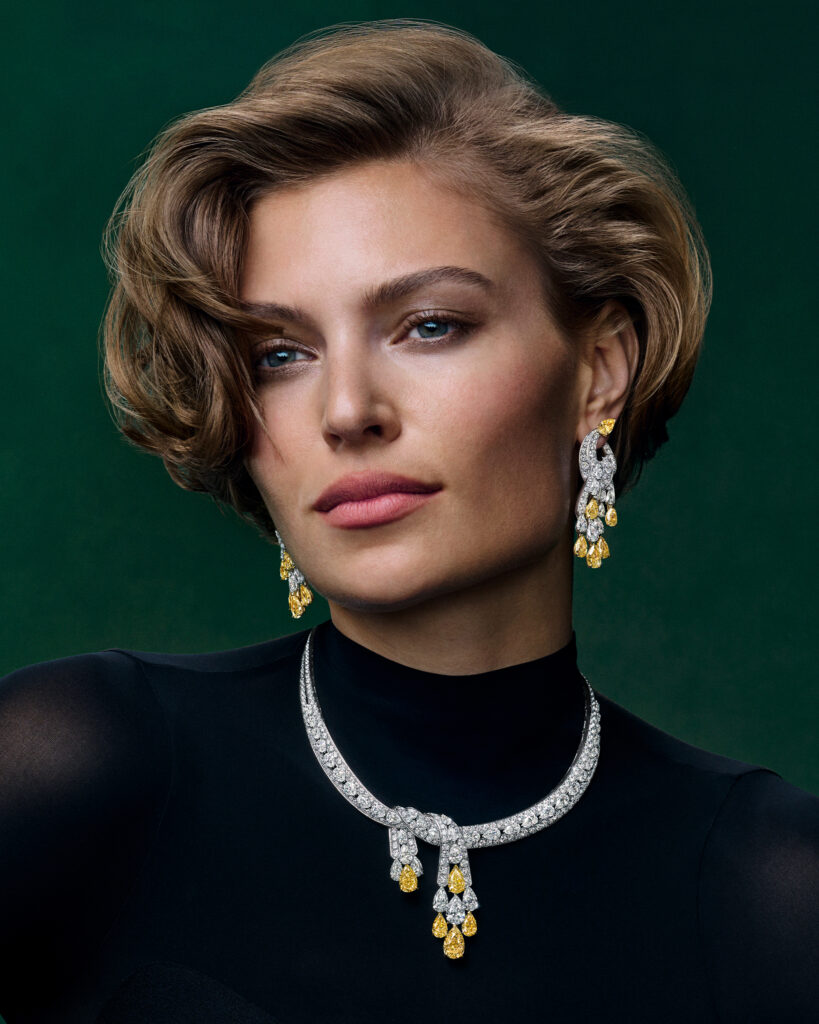
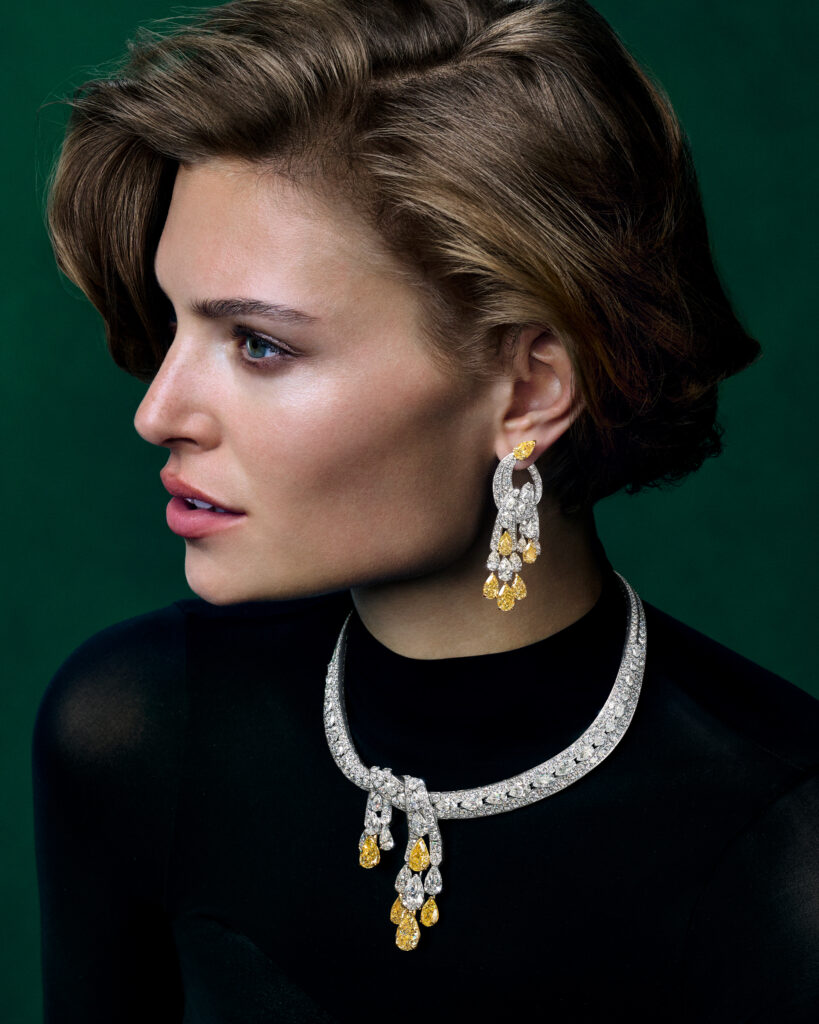
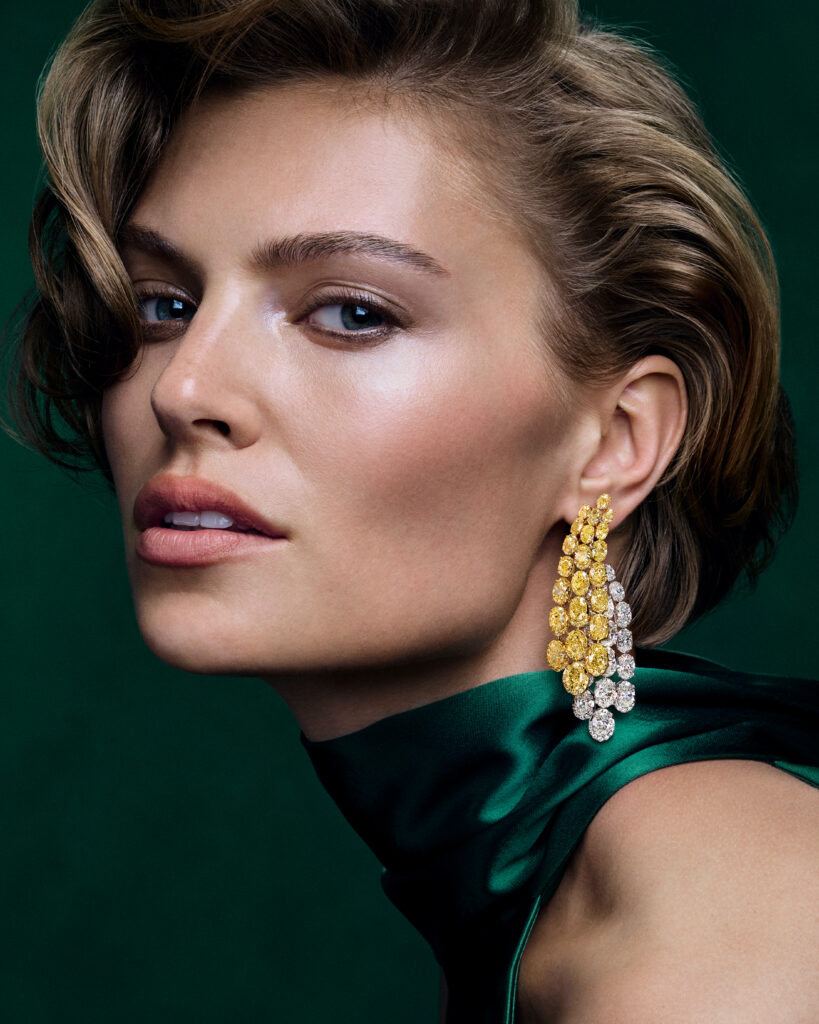
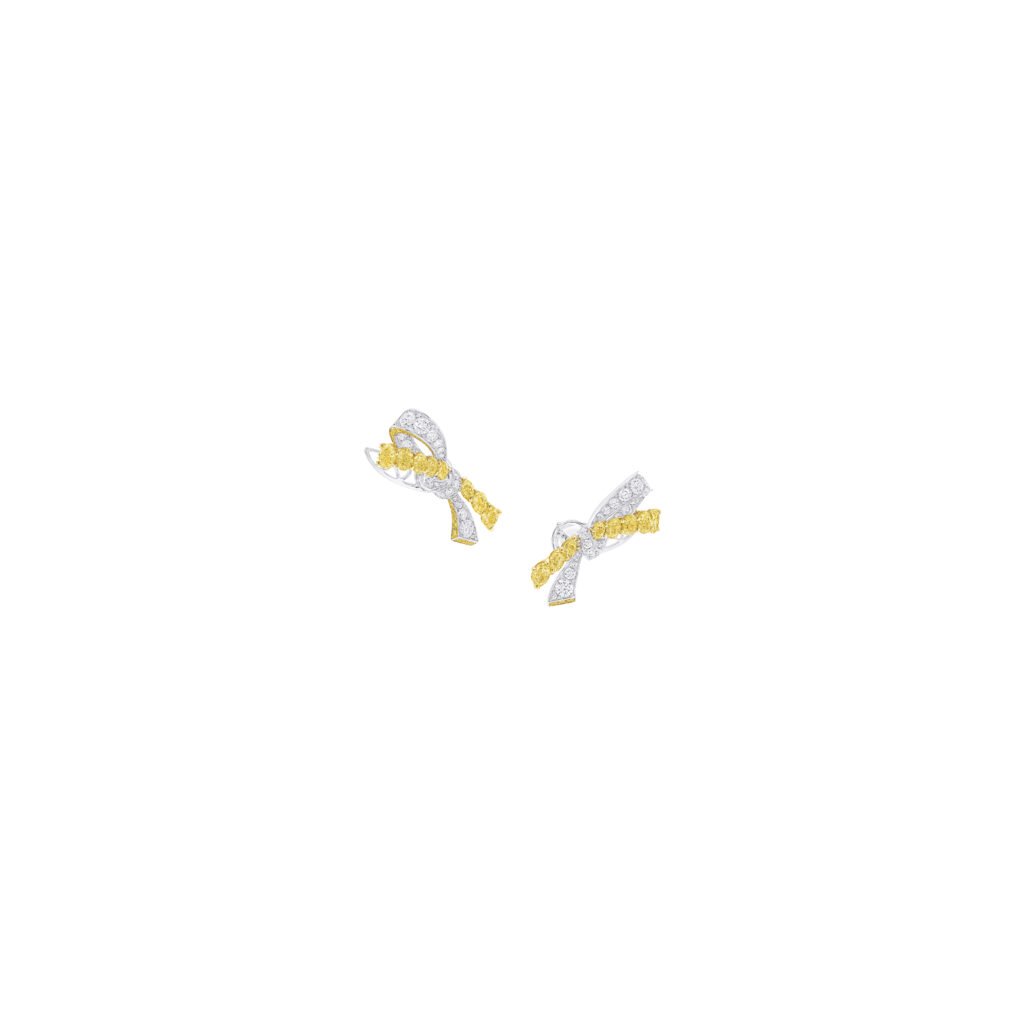
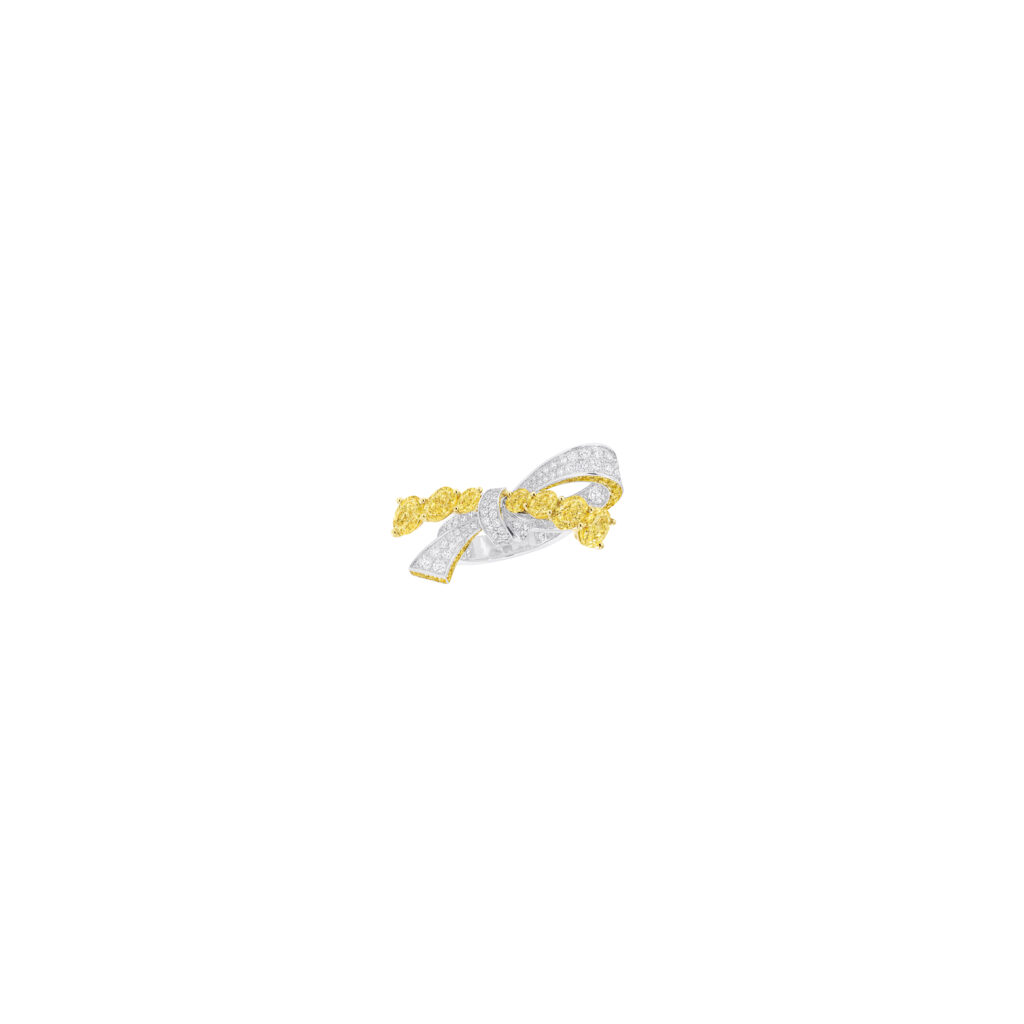
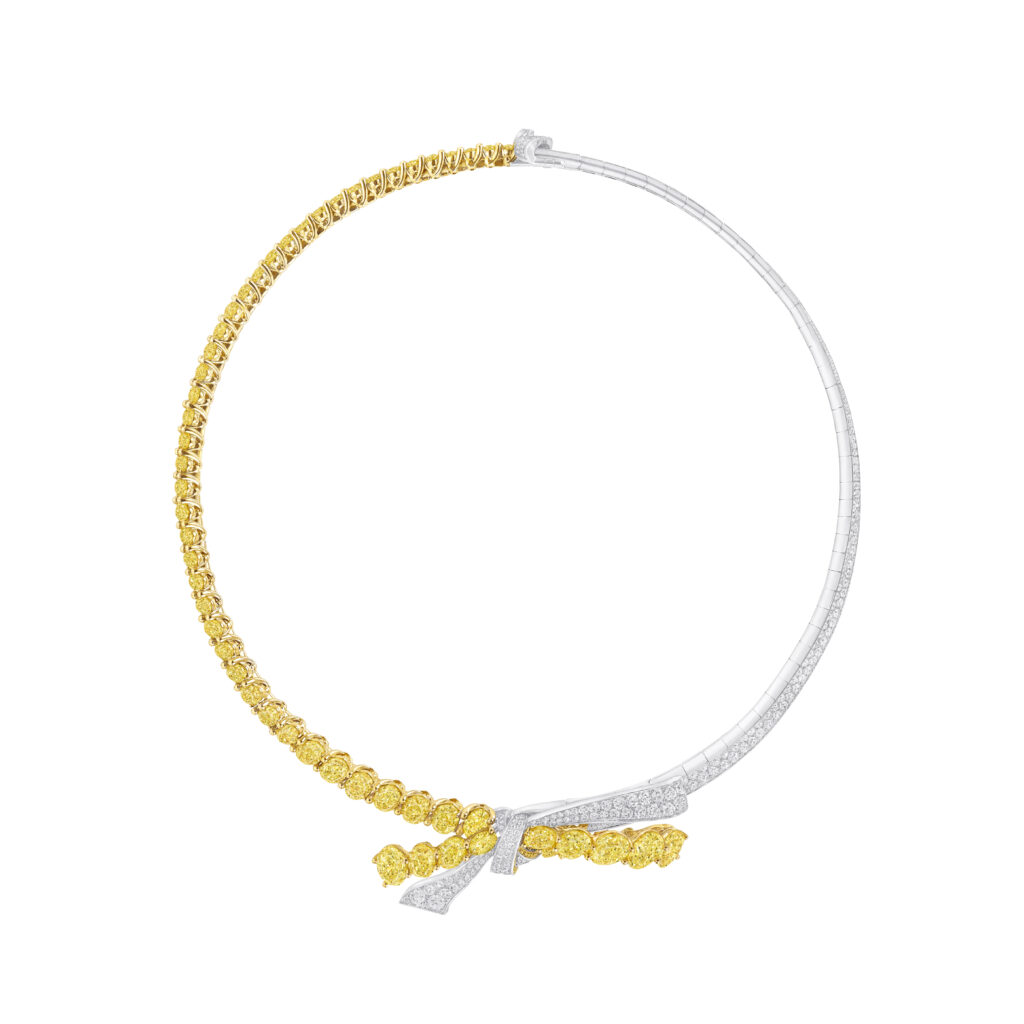
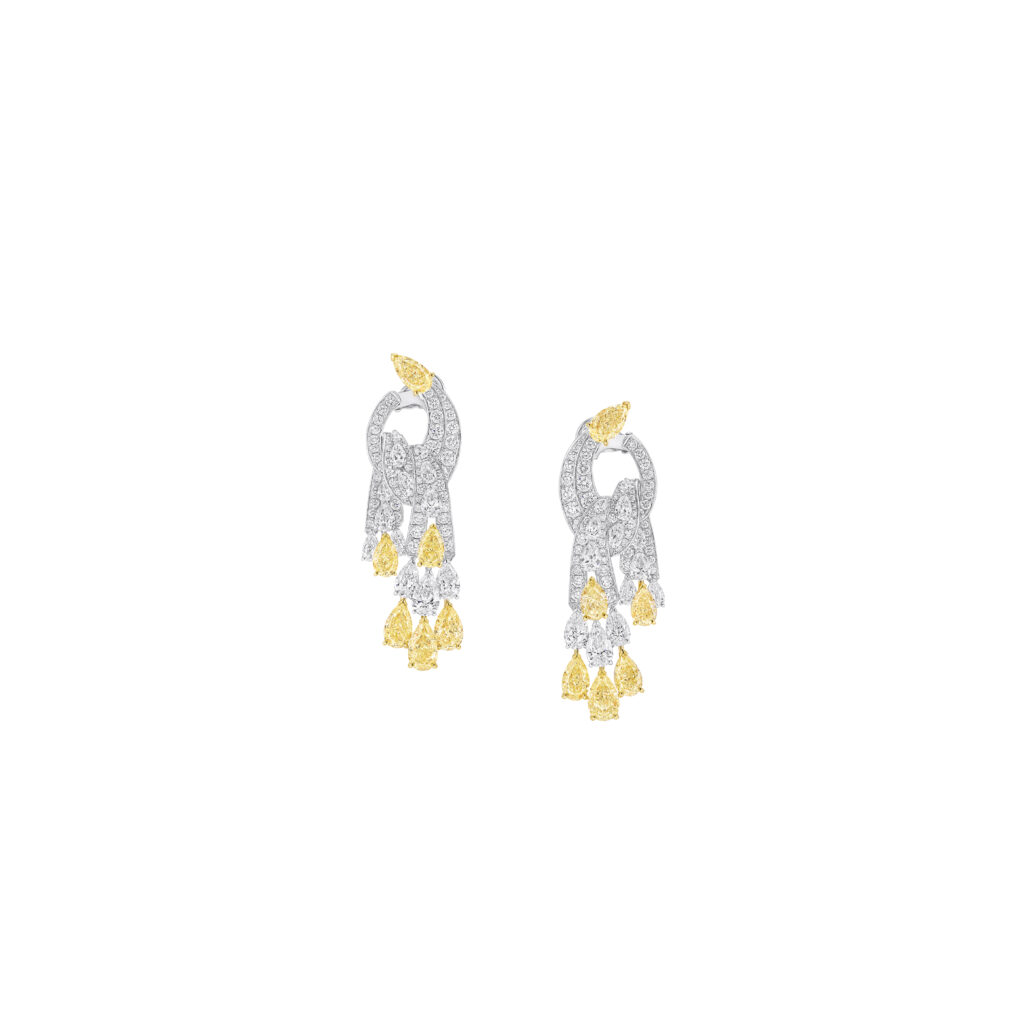
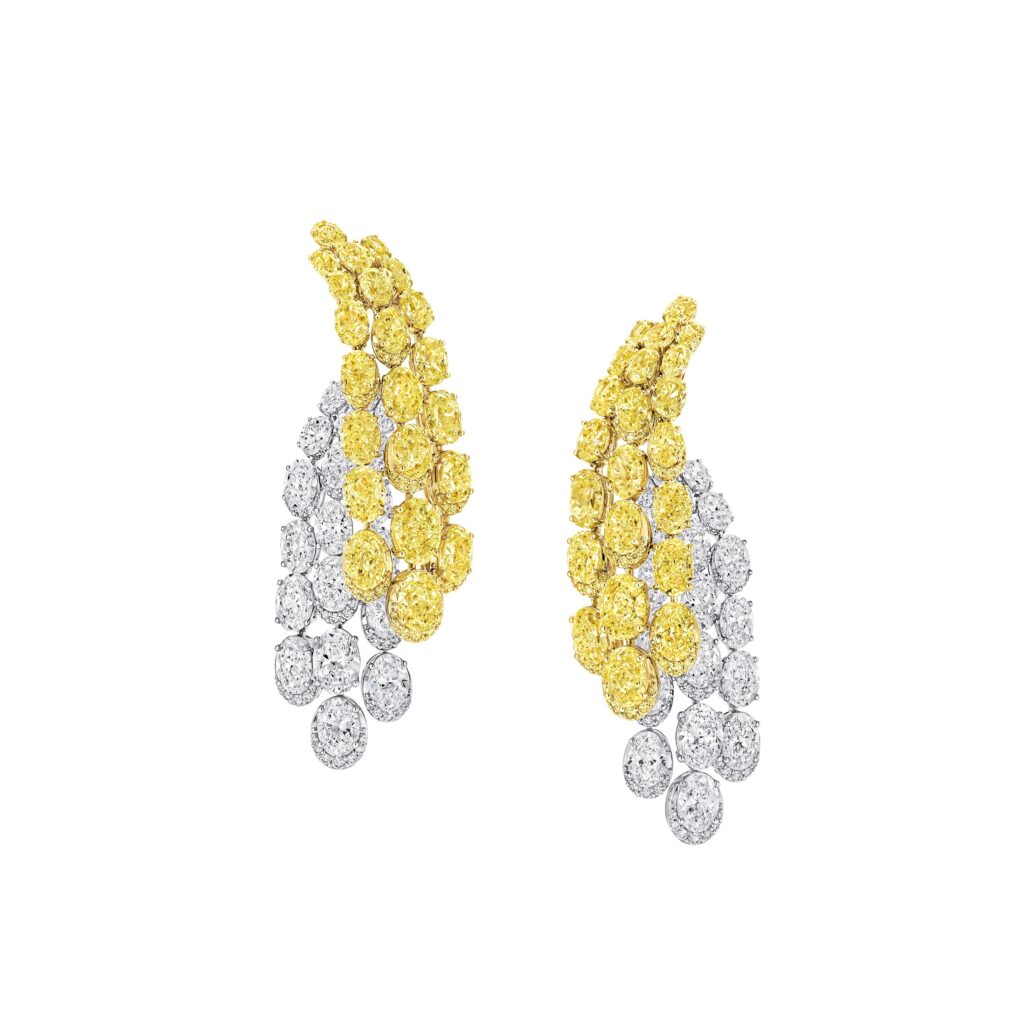
The campaign also features a pair of earrings set with more than sixty-five carats of Fancy Yellow diamonds and oval-cut white diamonds, as well as a set inspired by Tilda’s Bow. But simply piling on carats isn’t enough to create a cultural hierarchy. The cuff stands out because its herringbone pattern provides the stone with a visual foundation and, in a single piece, embodies the House’s approach.
This method is part of a broader history. Founded in 1960, Graff has built its reputation on access to rare gemstones and its ability to preserve their brilliance after cutting and setting. The Lesedi La Rona Graff, a 302.37-carat square emerald-cut diamond, remains the most spectacular example of this mastery. But the new cuff bracelet shows that this tradition of working with gemstones can also give rise to a contemporary style—one that is cleaner and almost abstract.
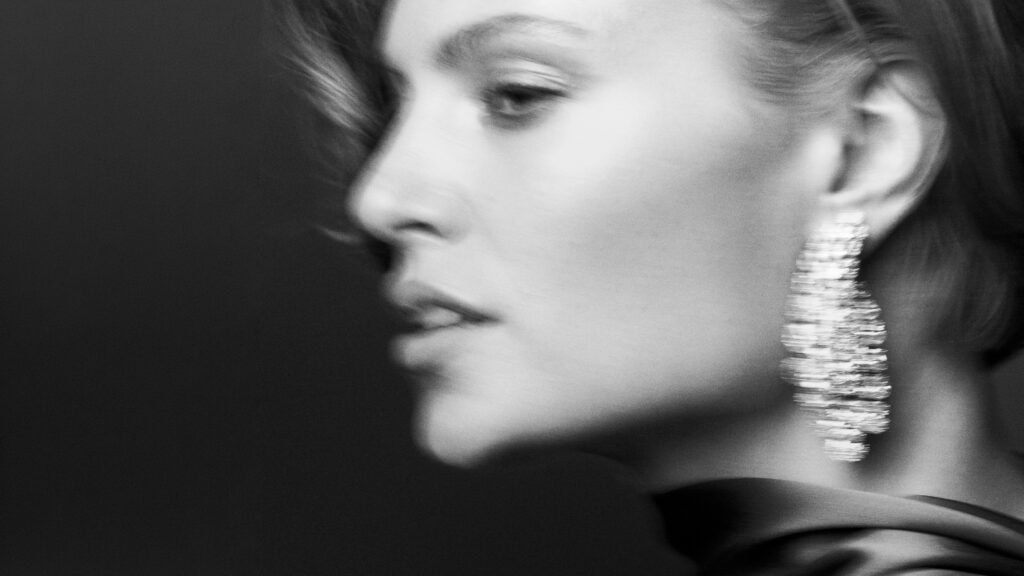
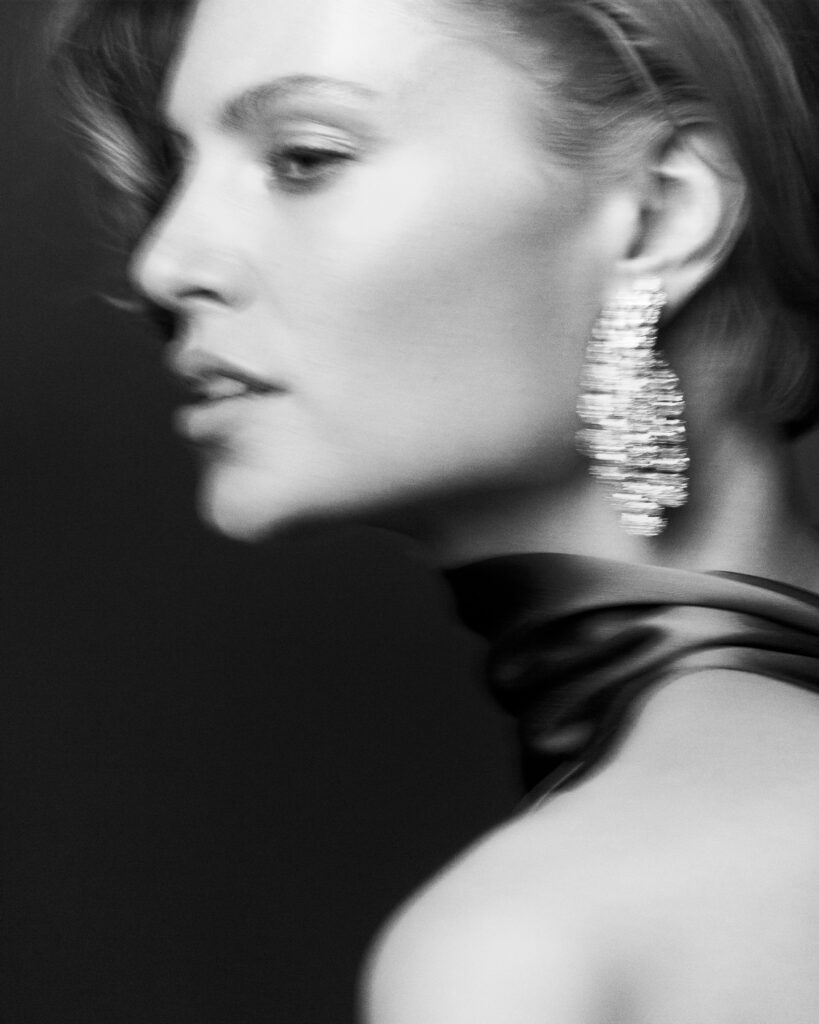
Photographed by Liz Collins with Bibi Breslin, the campaign will be rolled out in two phases, first in August and then in early fall. The image naturally highlights the diamonds. The challenge for Graff will be to continue making visible what is not immediately apparent: the time spent on the design, the decisions regarding the setting, and the work of the artisans that transform an extraordinary stone into a wearable object.





Cette publication est également disponible en :

