
At Homo Faber 2026, Vhernier isn’t just showcasing precious animals. Above all, the House is showcasing a technique that shifts jewelry toward optical sculpture: the layering of rock crystal with colored gemstones. In an industry where illusion is often achieved through cutting or setting, here, color also arises from the interplay of materials.
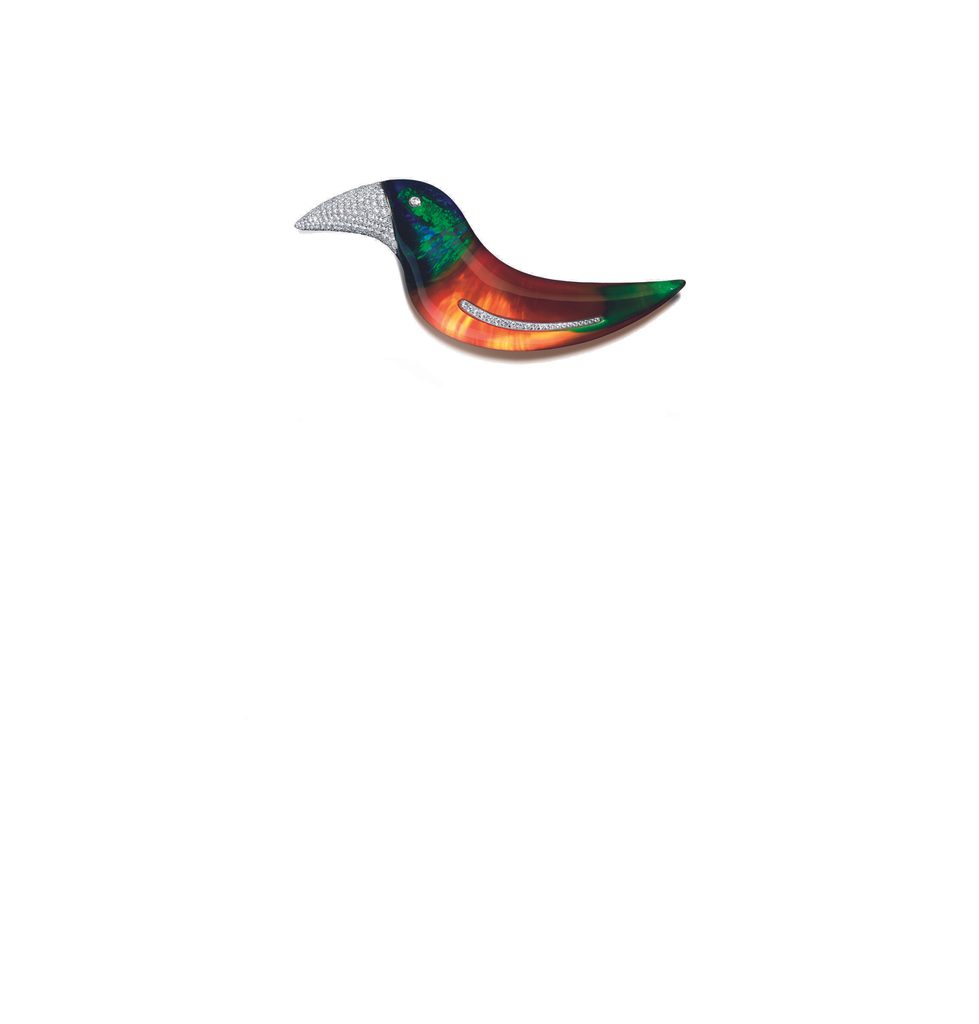
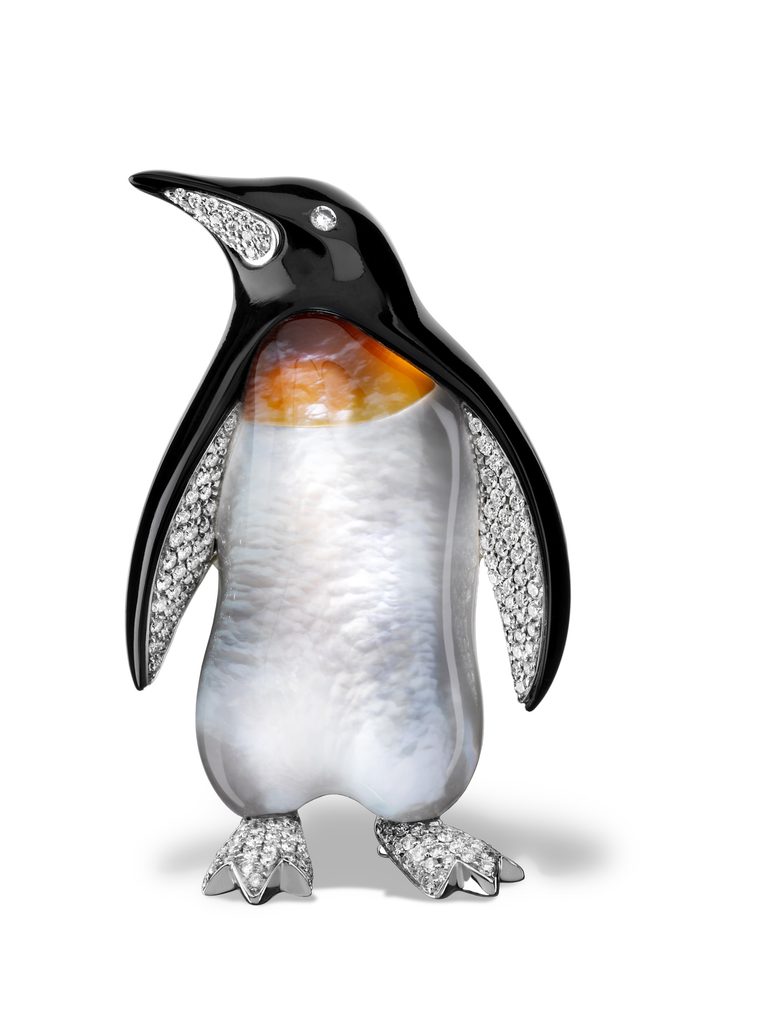
Since 1984, Vhernier has been creating jewelry characterized by clean lines, fluid curves, and sometimes unexpected materials. His animal-themed brooches embody this aesthetic. The frog seems ready to leap; the penguin contrasts a black back with an iridescent belly; the crab and the turtle reflect the shifting hues of the marine world. But the most compelling aspect lies not so much in the bestiary as in the way certain pieces build their chromatic depth.
The technique, known as Trasparenze, is based on a specific principle: a very pure rock crystal, with no visible flaws, is polished into a dome and then placed over a colored stone. Jade, turquoise, lapis lazuli, or mother-of-pearl can thus be encased in this transparent shell. The crystal does not hide the stone; it transforms it. It enhances its depth, shifts its reflections, and lends the piece an almost moist quality, as if the color were emanating from within the object rather than from its surface.
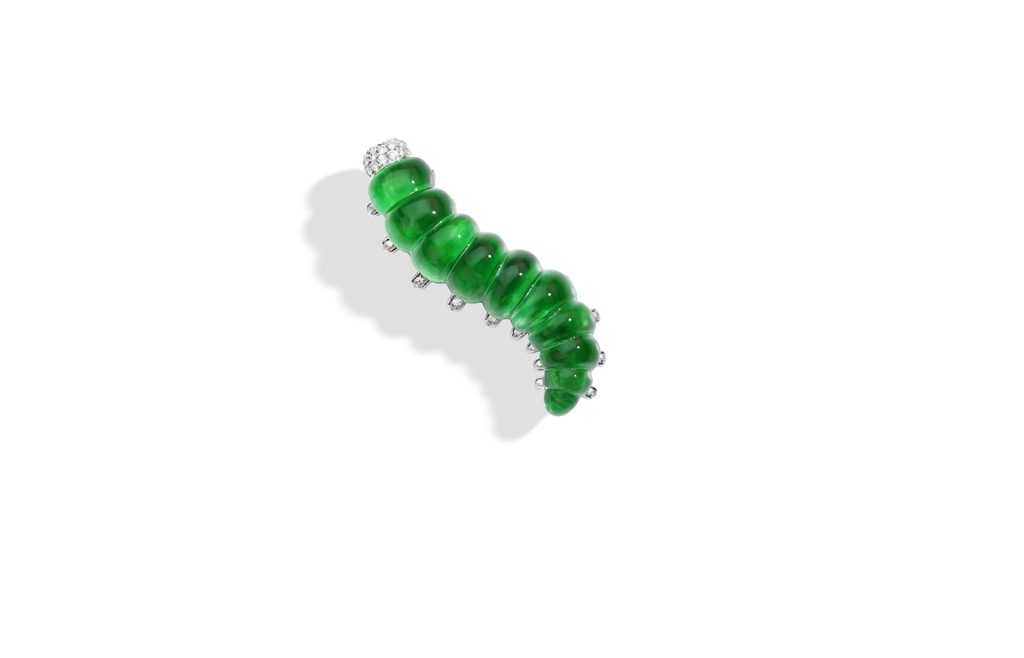
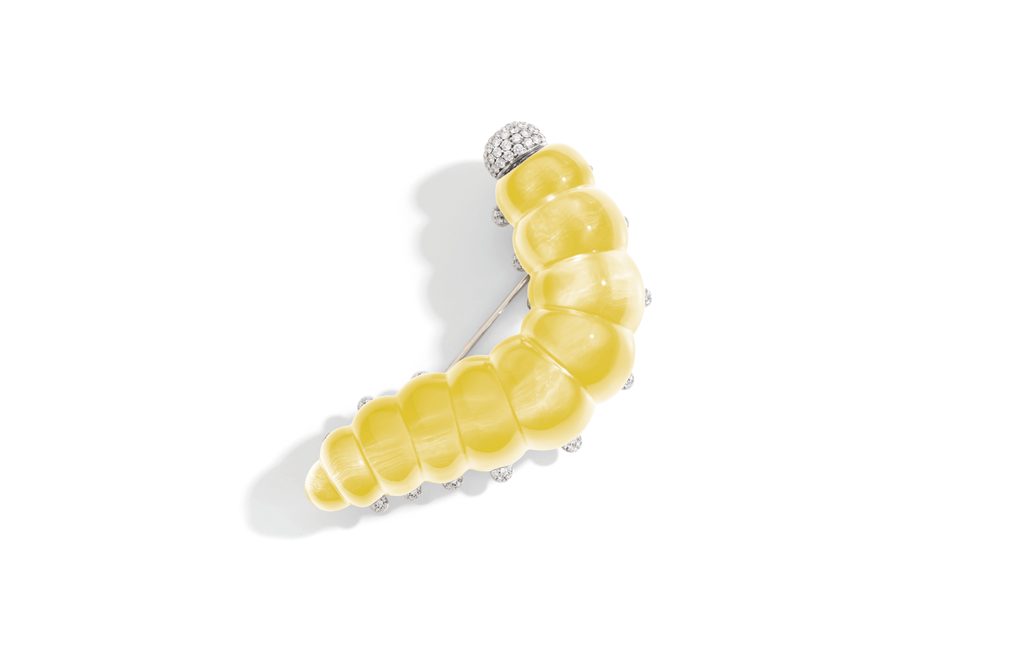
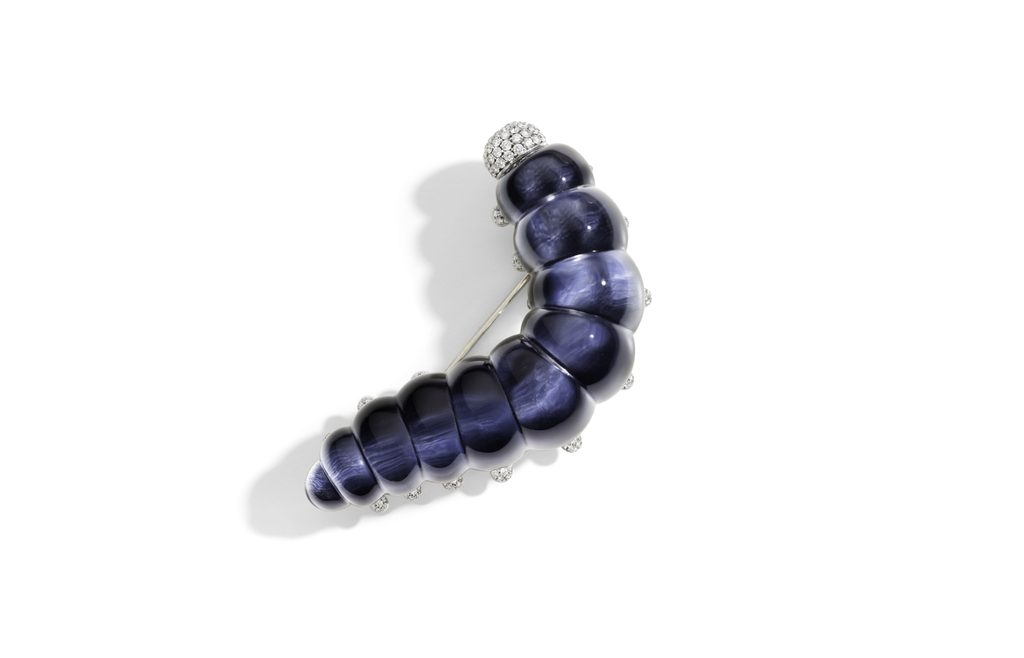
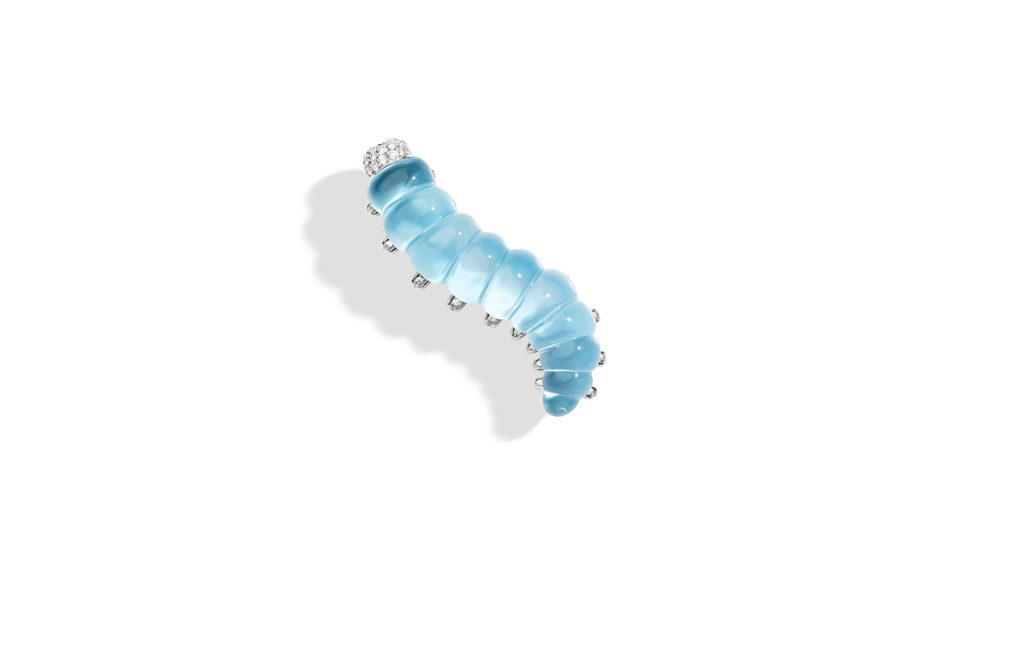
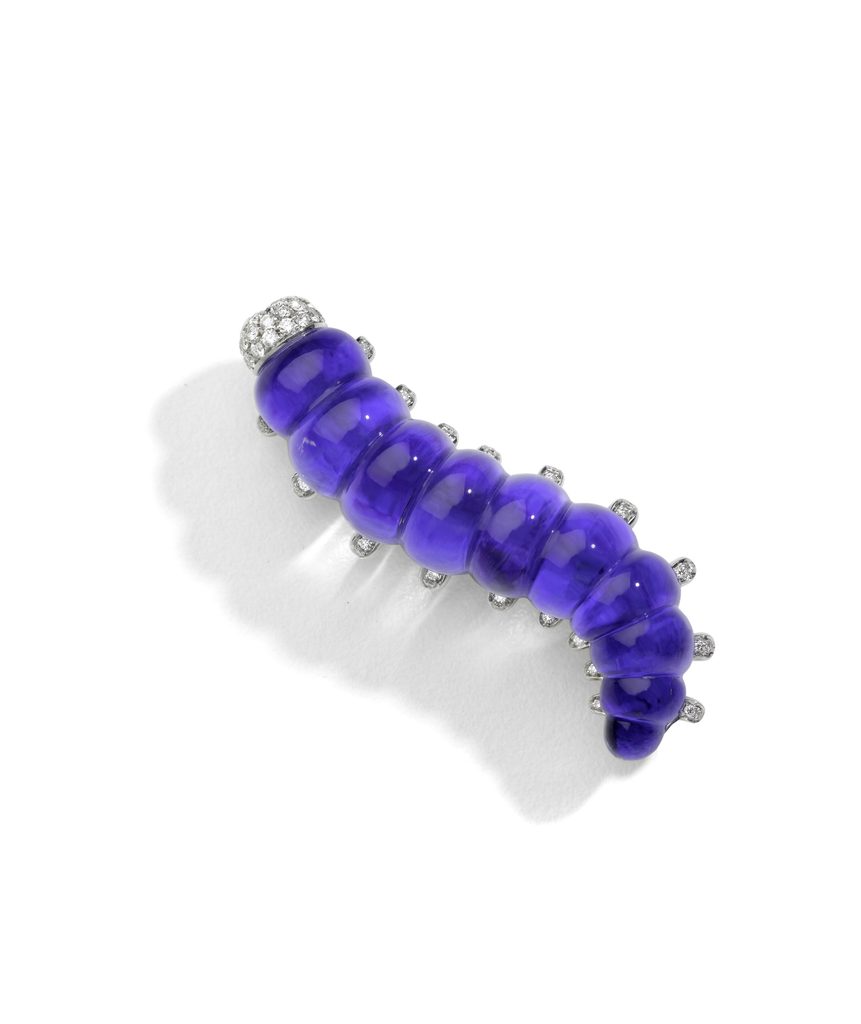
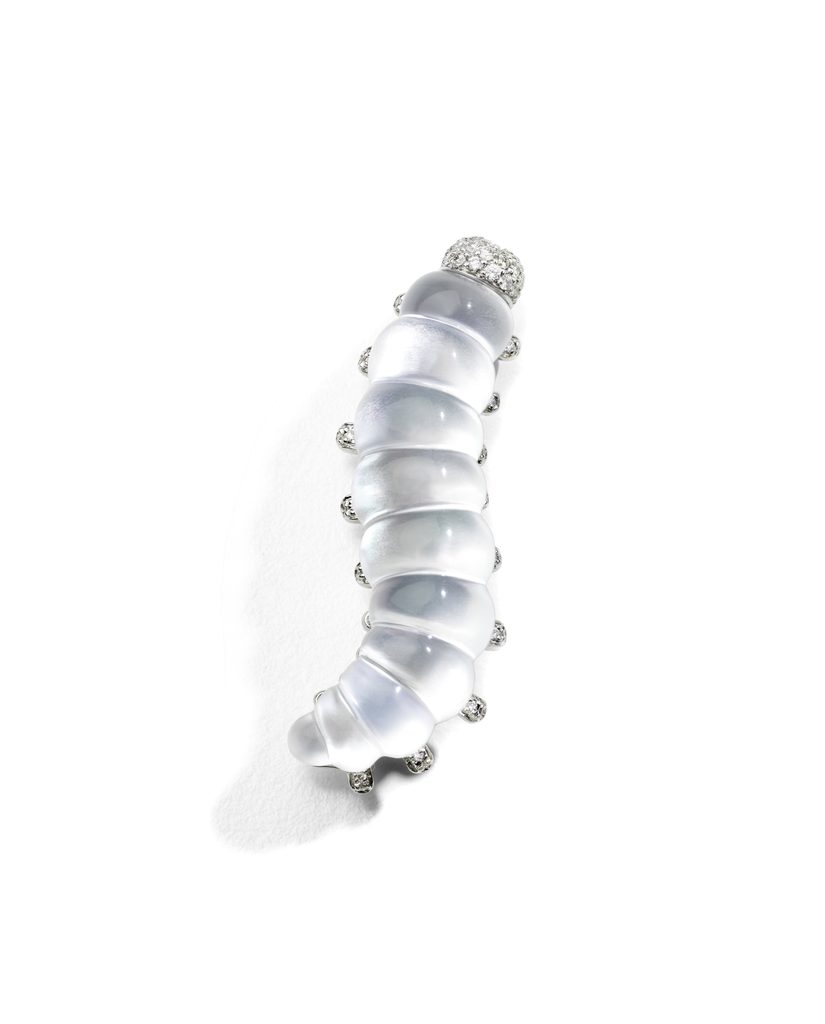
This approach is particularly evident in the *Bruco* series—the Maison’s caterpillar-inspired pieces. Some combine white gold and diamonds with turquoise, lapis lazuli, jade, or mother-of-pearl, always set in rock crystal. This approach is interesting because it does not seek to literally reproduce an animal. Rather, it recreates a sensation: the sheen of a shell, the texture of skin, or light captured within an organic material. The piece of jewelry thus becomes an exploration of perception.
Vhernier’s participation in Homo Faber—running from September 1 through 30, 2026, at the Fondazione Giorgio Cini in Venice—provides a particularly fitting context for this technique. The biennial, organized by the Michelangelo Foundation for Creativity and Craftsmanship, brings together hundreds of artisans around objects in which the human hand, the material, and technical innovation remain visible. For a House that joined the Richemont Group in 2024, exhibiting “Trasparenze” also serves as a reminder that its identity rests not solely on a recognizable silhouette, but on a way of working that is difficult to capture in an image.
In contemporary jewelry, the future of craftsmanship may no longer hinge solely on spectacular complexity. It may also lie in an almost invisible detail: a few millimeters of crystal capable of completely altering the perception of a stone.
Cette publication est également disponible en :

