
For a long time, the hillsides of Cairanne were viewed through the lens of red wine. The whites played a more discreet, almost hidden role there. Yet today, certain vintages tell a different story: that of a southern Rhône wine that seeks balance rather than power.
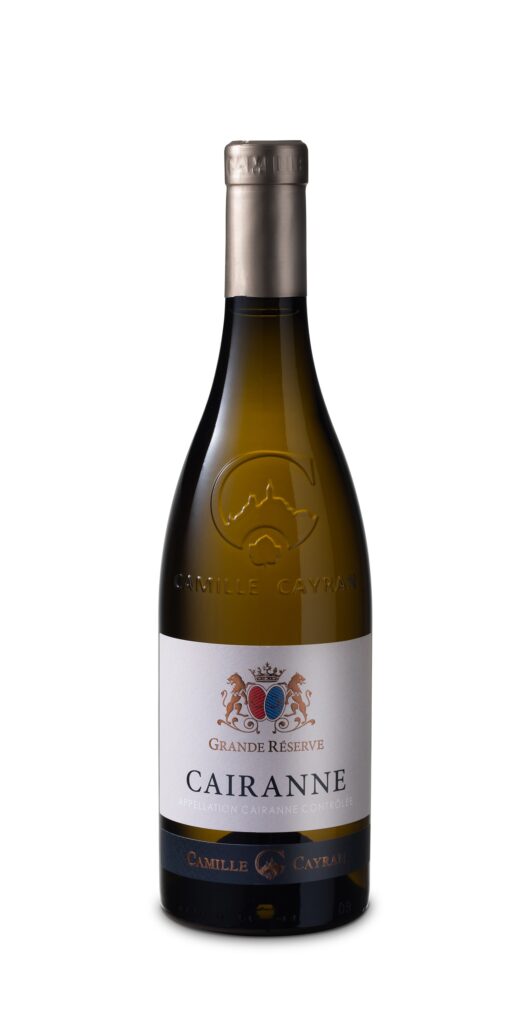
The Cave de Cairanne’s 2019 La Grande Réserve Blanc is part of this evolution. Its blend combines four historic grape varieties from the south: 50 percent White Grenache, complemented by Marsanne, Bourboulenc, and Clairette. This balance reflects both local tradition and a commitment to working within the constraints of the Mediterranean climate.
The story begins with the landscape. The vineyards are located on the Miocene hillsides north of the village of Cairanne. Erosion has shaped a terrain composed of limestone gravel mixed with softer marl. The vines, ranging from twenty-five to forty years old, face south and enjoy constant sunshine. This geology partly explains the mineral tension that many Rhône Valley producers seek today.
The winemaking process reveals another goal: preserving freshness in a naturally bountiful environment. The grapes are harvested by hand early in the morning to minimize temperature fluctuations. After destemming, direct pressing highlights the fruit’s finesse. The juices are then cooled to between four and six degrees before undergoing fermentation at a low temperature, between sixteen and eighteen degrees. Aging on the lees completes the process, adding texture and body without relying on pronounced oak aging.
Details
- Vines between twenty-five and forty years old
- Yield: 38 hl/ha
- Hand-harvested
- Fermentation at 16–18°C
- Aged on lees
- Blend: 50% White Grenache, 20% Bourboulenc, 20% Clairette, 10% Marsanne
In the glass, the wine reveals a profile built around peach, apricot, white flowers, honey, and lemon. But the appeal of this cuvée lies less in its aromatic profile than in the coexistence of two qualities that are often difficult to reconcile in this region: roundness and freshness. Aging on the lees adds depth, while the limestone terroir maintains a more taut backbone.
This quest for balance reflects a broader transformation in the Rhône wine region. White wines are no longer merely table wines meant to be consumed quickly. They have become expressions of the terroir in their own right, capable of embodying both a landscape and a collective savoir-faire.
In Cairanne, this evolution is perhaps one of the most intriguing signs of a wine region that continues to examine its heritage without turning its back on its geography.
Cette publication est également disponible en :

