
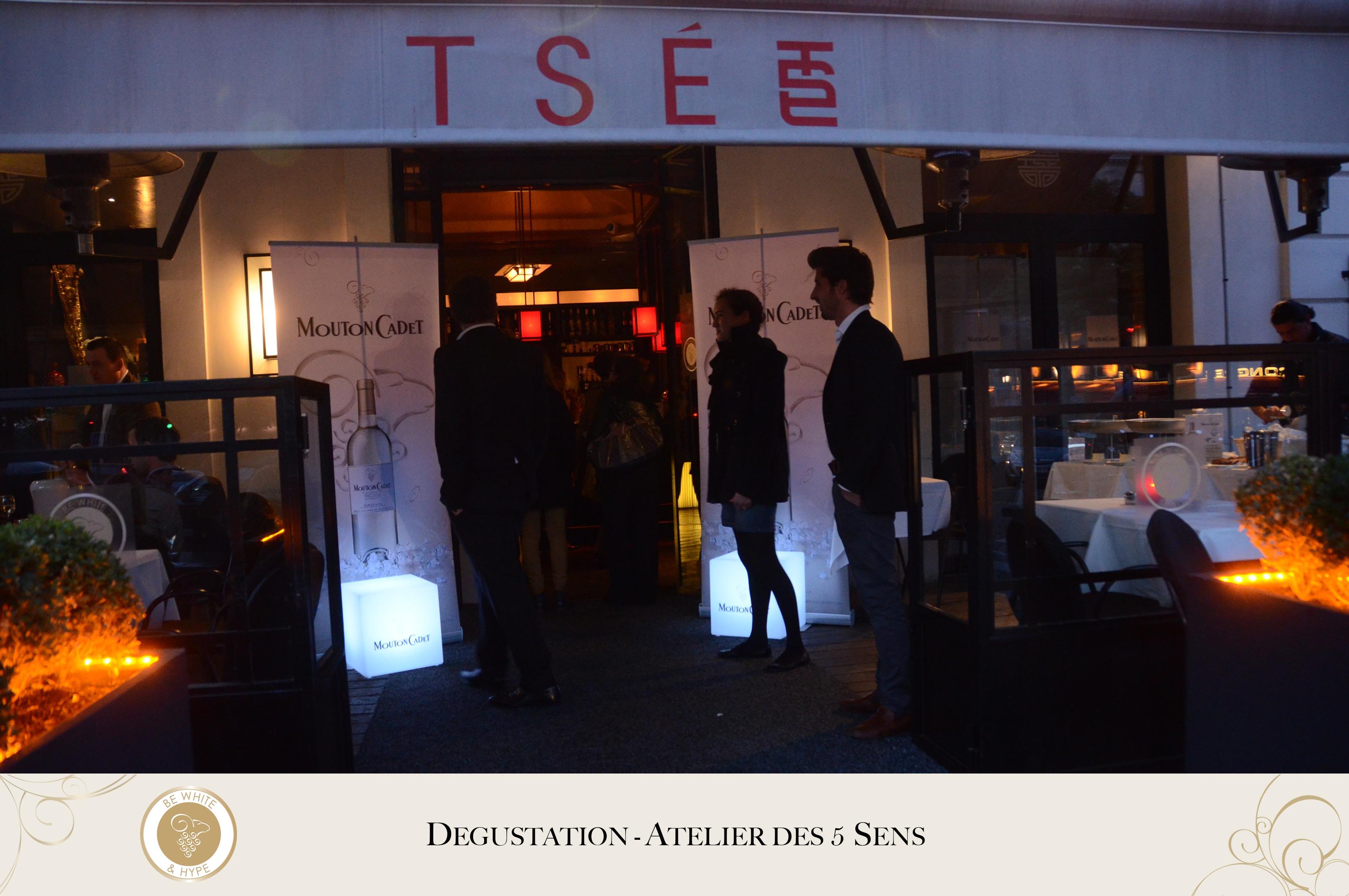
 The prestigious Maison Baron Philippe de Rothschild has organized several Mouton Cadet tastings. Three were held in Paris, in various locations. The aim was to teach or reteach wine-lovers how to taste white and rosé wines through a variety of workshops. Based on the five senses, these workshops were designed to introduce a completely different approach to these famous Bordeaux wines. One of them took place at Tsé.
Sight was required to identify the various types
of Bordeaux soils and terroirs. Limestone, clay-limestone, minerality, guarantee the roundness and freshness of these wines.
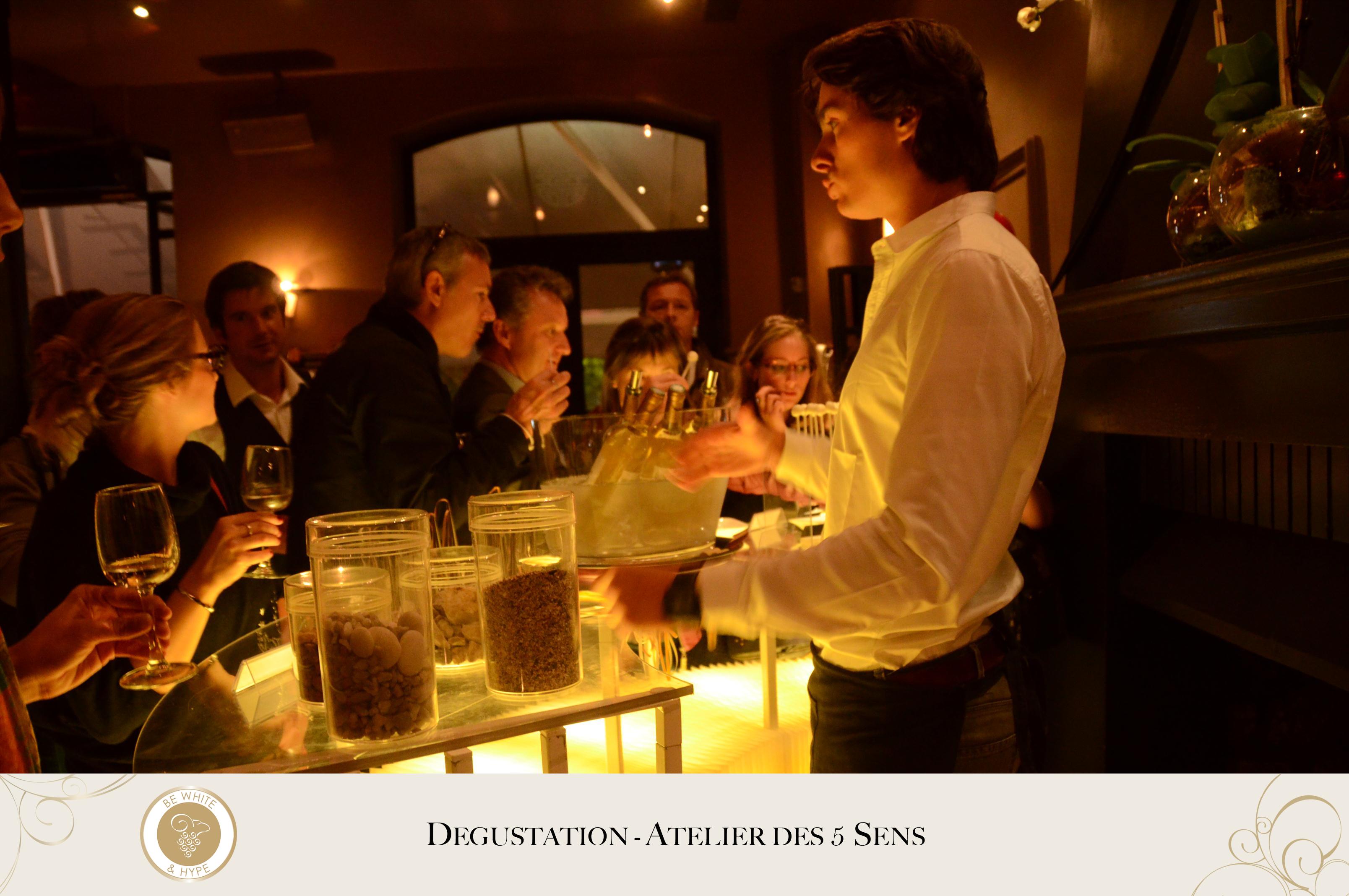
The sense of smell was blindly stimulated. It was possible to inhale the scent of lime blossom, honey, etc. through narrow metal cones. The results were astonishing. 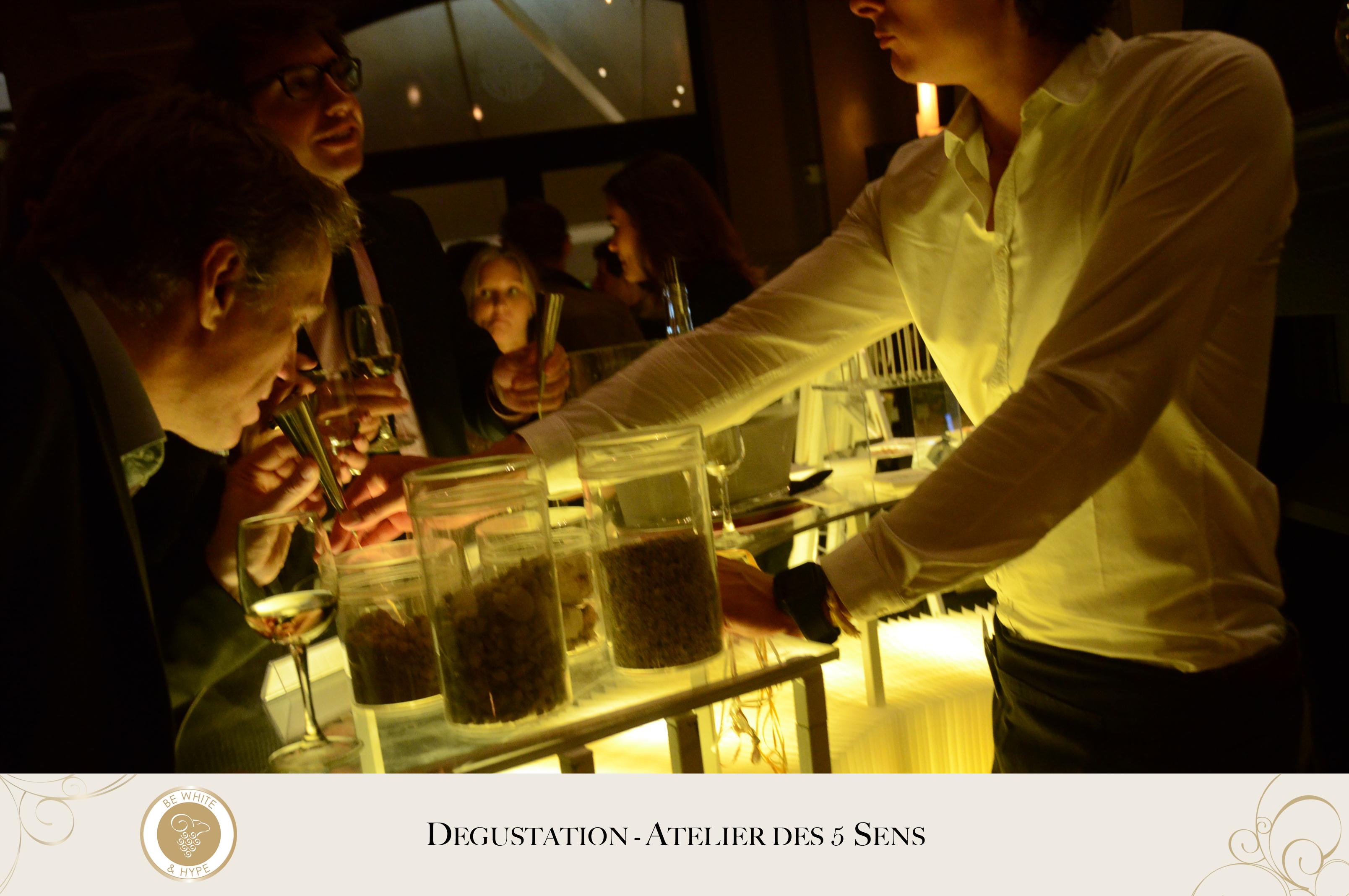 From hesitations to affirmations, contacts were made between the participants. Everyone was attentive to the subtleties revealed.
Taste was refined by tasting delicacies. These were made with cheese, goat’s cheese and mozzarella, and had to be enhanced by other ingredients. 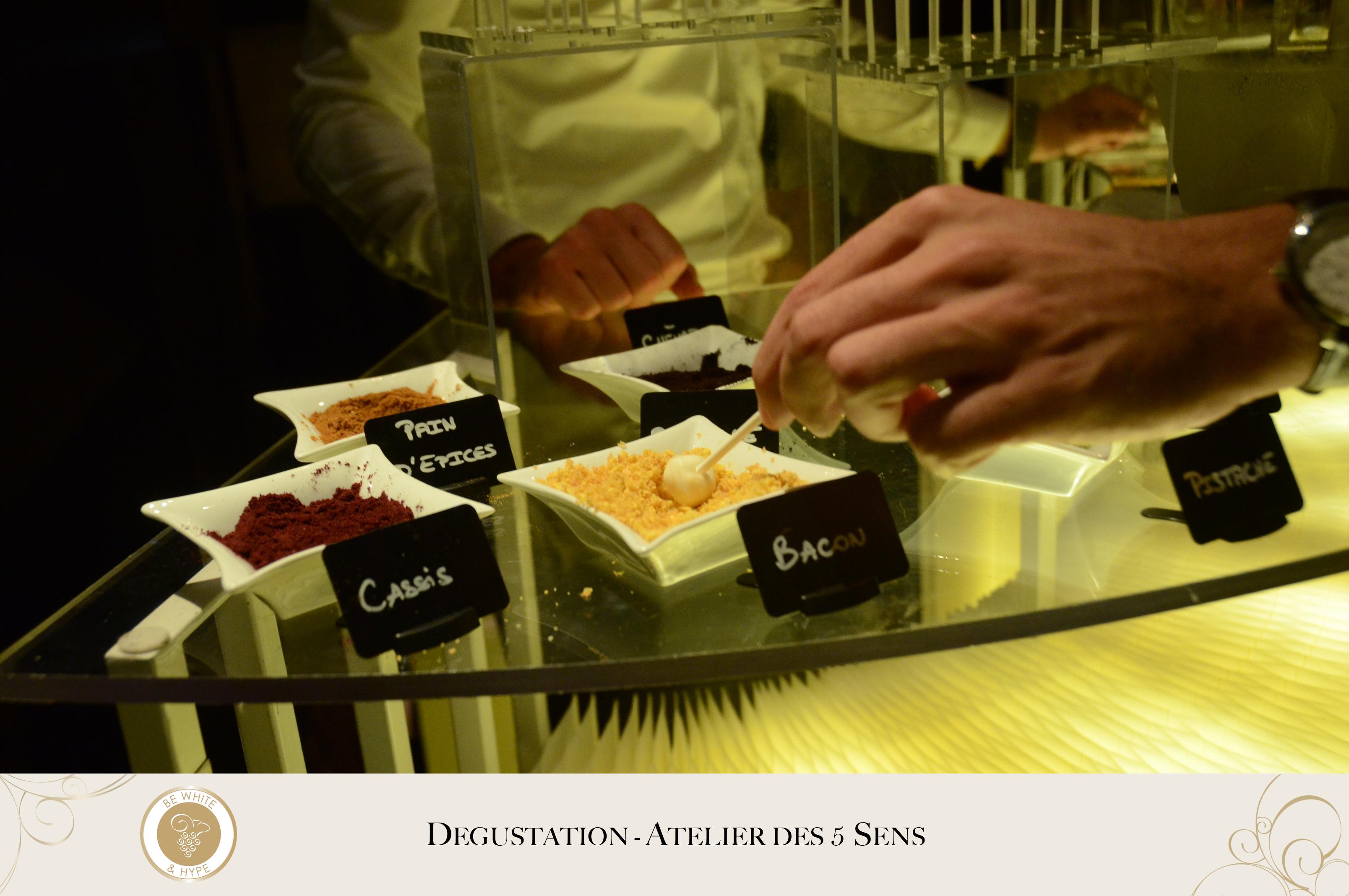 Powdered peanuts, pistachios, gingerbread and others melted onto the dairy product. Very particular nuances emerged in the mouth. Goat’s cheese, with its acidity, prepared the taste buds for the discovery of wine. These techniques considerably facilitated the approach to taste. Notes emerged more easily.
Touch was stimulated by various textures presented in the form of a tactile table. Silk fabric, velvet, bubble wrap, etc., were all designed to reveal the velvety feel of the wine in the mouth. 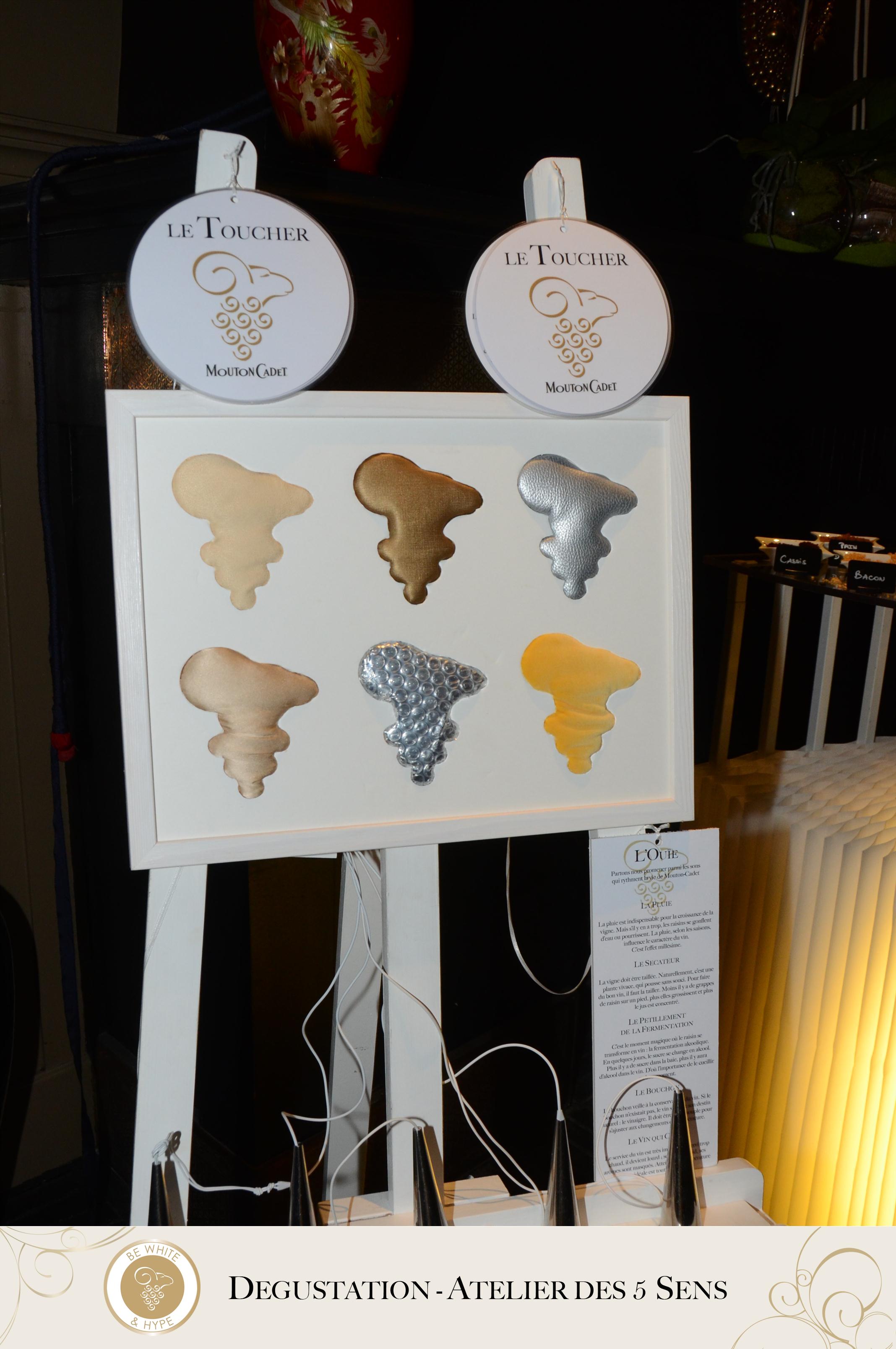
Our ears could hear the typical sounds of Mouton Cadet. Metal cones revealed the sound of rain, essential to vine growth, the sparkle of fermentation, and the extraordinary sound made by the cork when a bottle is opened.
The white was created by Baron Philippe de Rothschild in the 1970s. The grapes are carefully selected from partner winegrowers in the Bordeaux region. The terroir is Entre-deux-Mers, between the Dordogne and Garonne rivers. The soil is clay-limestone. The minerality comes from the limestone. The clay, on the other hand, brings fruitiness and the typical Sauvignon aromas of boxwood and blackcurrant buds. The wine is a blend of Sauvignon (60%), Semillon (30%) and Muscadelle (5%). For the vintage tasted in 2011, flavors of citrus (grapefruit), lime blossom and honey are delicately perceptible. 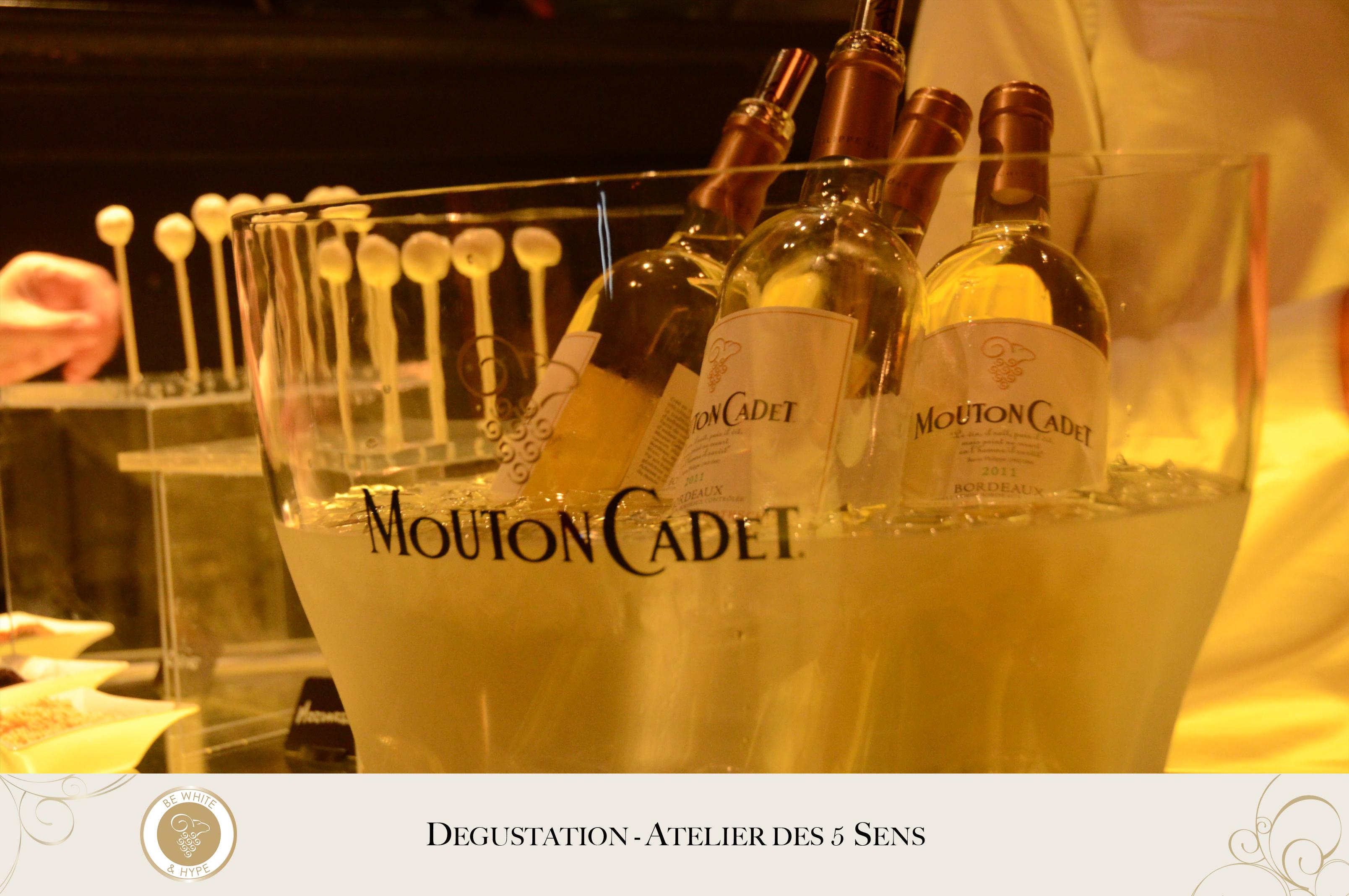
An interesting product.
The rosé is also made from carefully selected grapes from partner winegrowers. The terroir is still Bordeaux, but it’s a little different. The areas concerned are Bordeaux and Cotes de Bordeaux (Cotes de Blaye, de Bourg, Castillon). The clay-limestone terroirs have similar characteristics to the white. Three grape varieties are present. Merlot (65%) brings a touch of redcurrant and raspberry to the palate. Cabernet franc (20%) brings a sensation of roundness and refinement. The Cabernet Sauvignon (15%) gives it a delicate, silky structure.
The 2011 is pleasant to taste. From the first taste, it subtly transcribes notes of red fruit. Raspberry and redcurrant stand out perfectly, for the pleasure of the palate. The wine is very slightly acidic. This makes it even more delicate. Between presence and refined nuances, the wine’s elegance is much appreciated. The aromas have a strong presence on the palate.
The almost initiatory experience was truly inspiring: fun, detailed and packed with information, it lived up to the challenge. It was a reminder of just how closely this prestigious House is linked to gastronomy.
Cette publication est également disponible en :

