
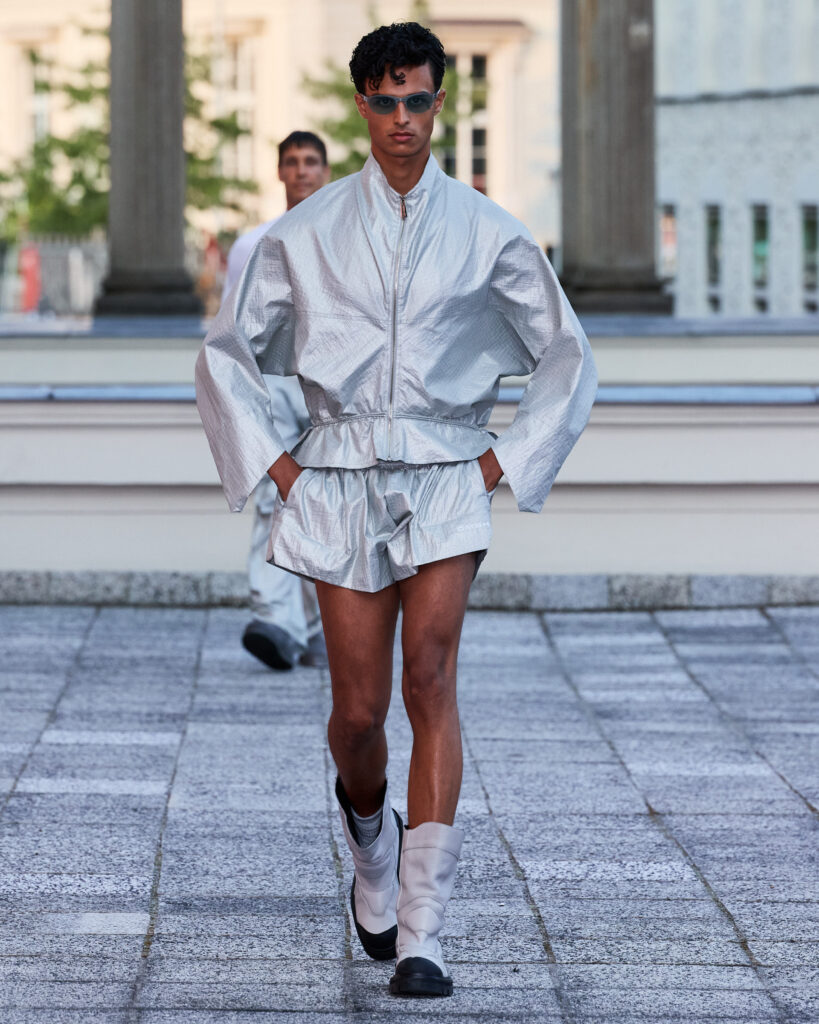
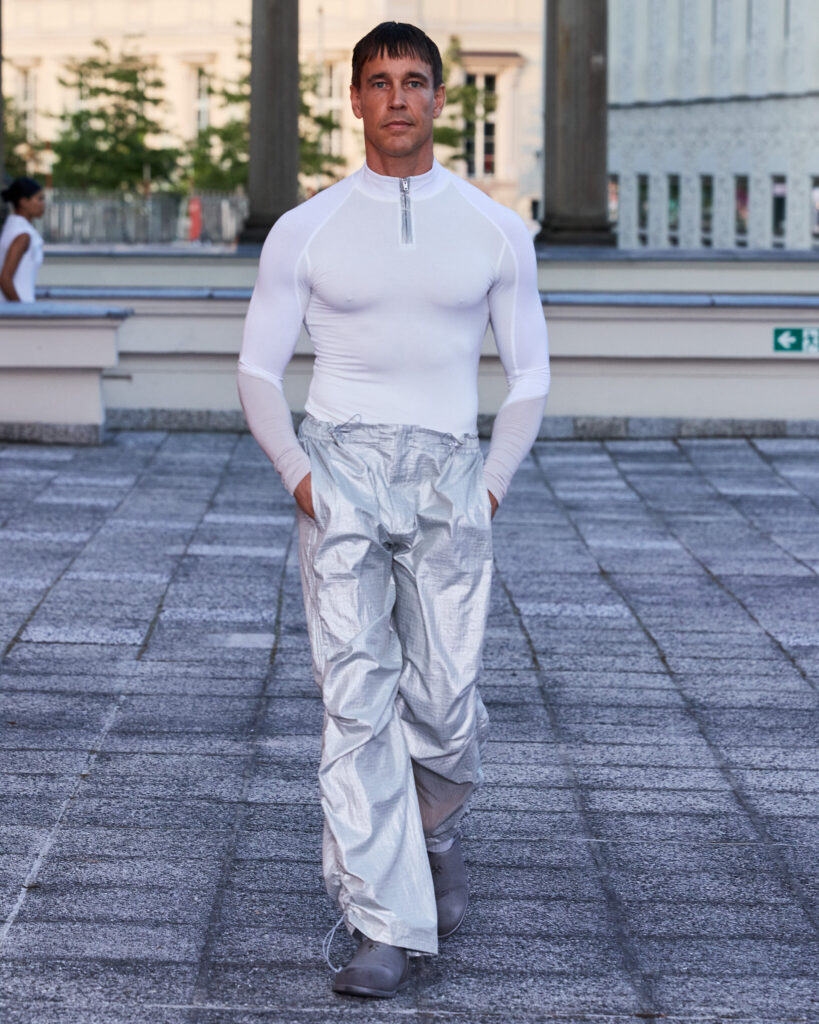
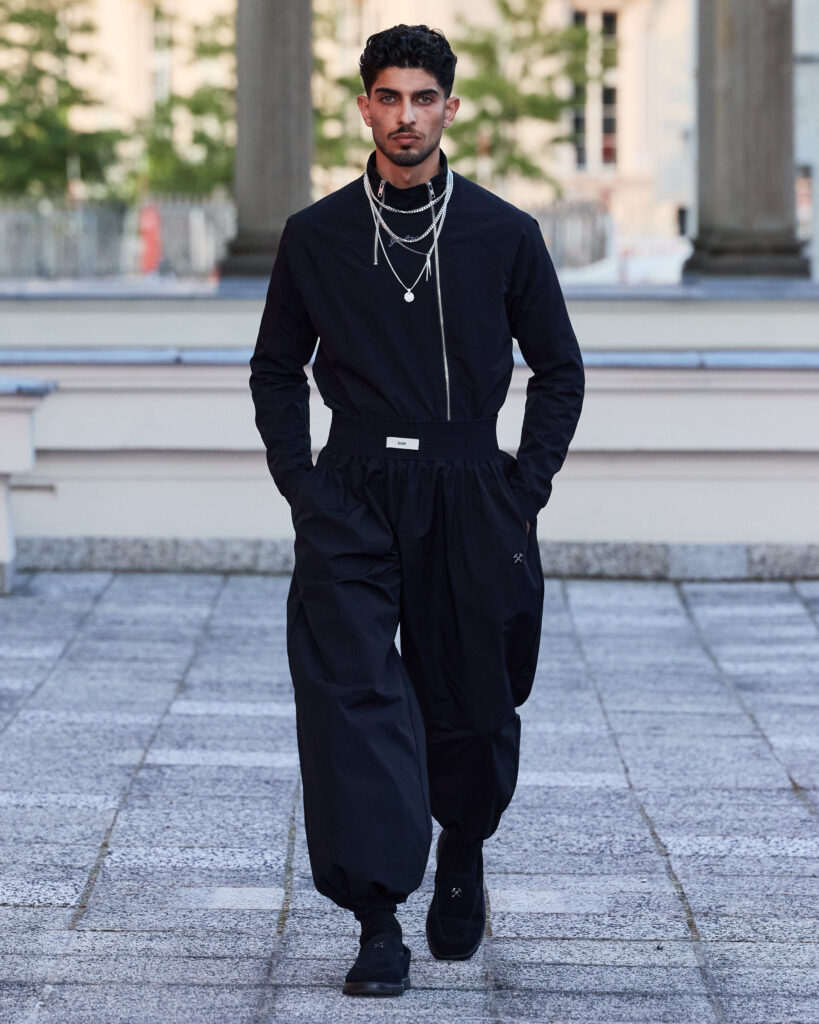
To mark its tenth anniversary, the fashion house GmbH isn’t just presenting yet another men’s and women’s collection at Berlin Fashion Week: it’s unearthing an entire chapter of German fashion history that was systematically erased by the Nazi regime. This gesture raises questions about the increasingly blurred line between a fashion show and an act of remembrance.
There is a history of Berlin fashion that almost no one knows about. In the 1920s, the German capital was home to fashion houses and salons that could rival those in Paris—a vibrant scene largely driven by Jewish designers, tailors, retailers, and clients. The Nazi regime’s rise to power brought this history to a brutal and systematic end: confiscations, exiles, executions. This thriving scene was erased so completely that today, a name like Joe Strassner’s—a pioneer of modern cuts and the first women’s tuxedo, credited in a film alongside Elsa Schiaparelli in 1935—means nothing to anyone, while Schiaparelli’s name remains a universal reference.
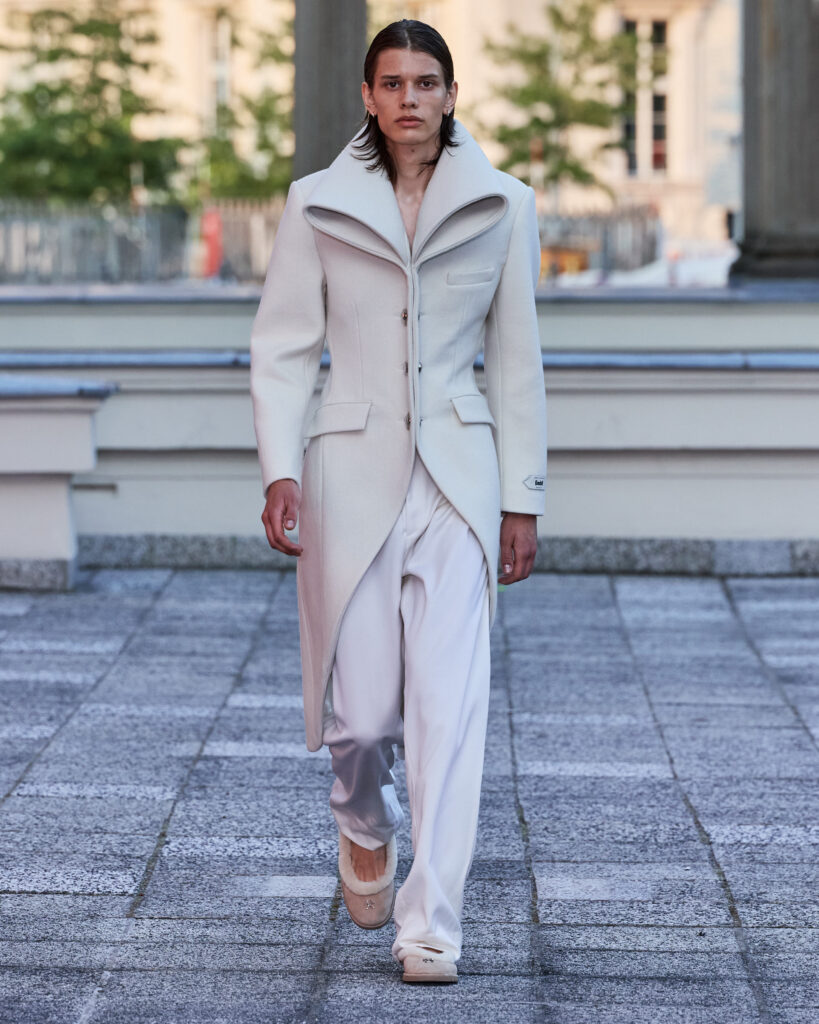
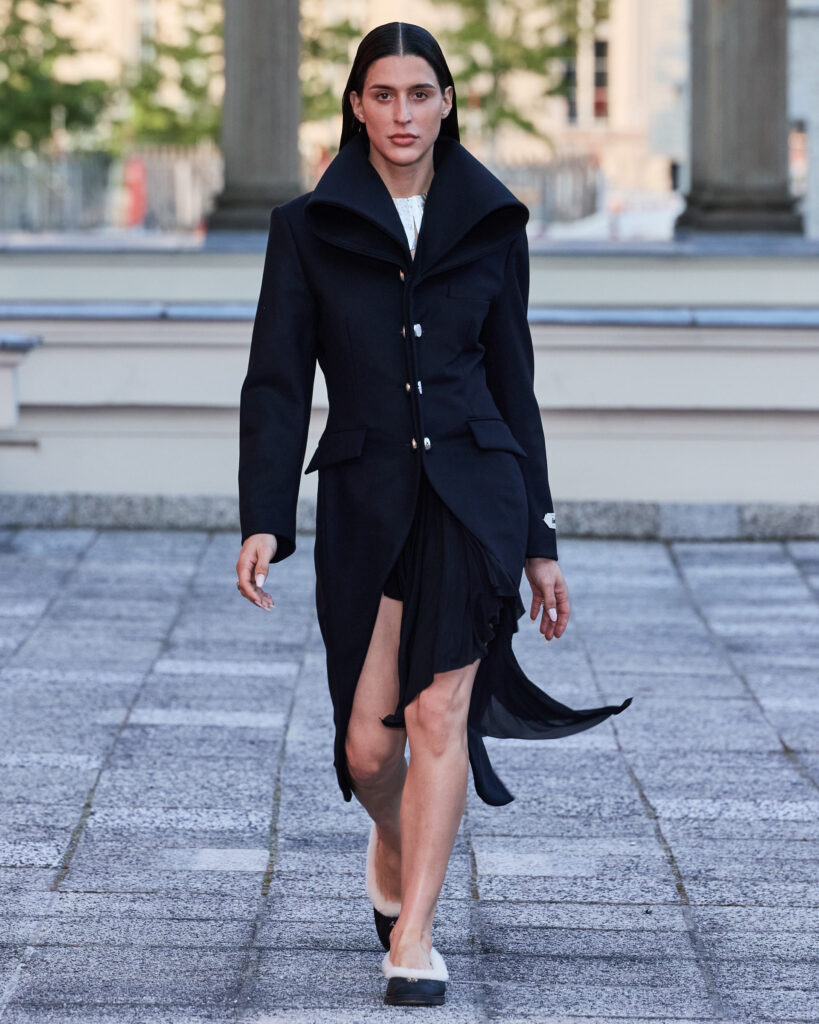
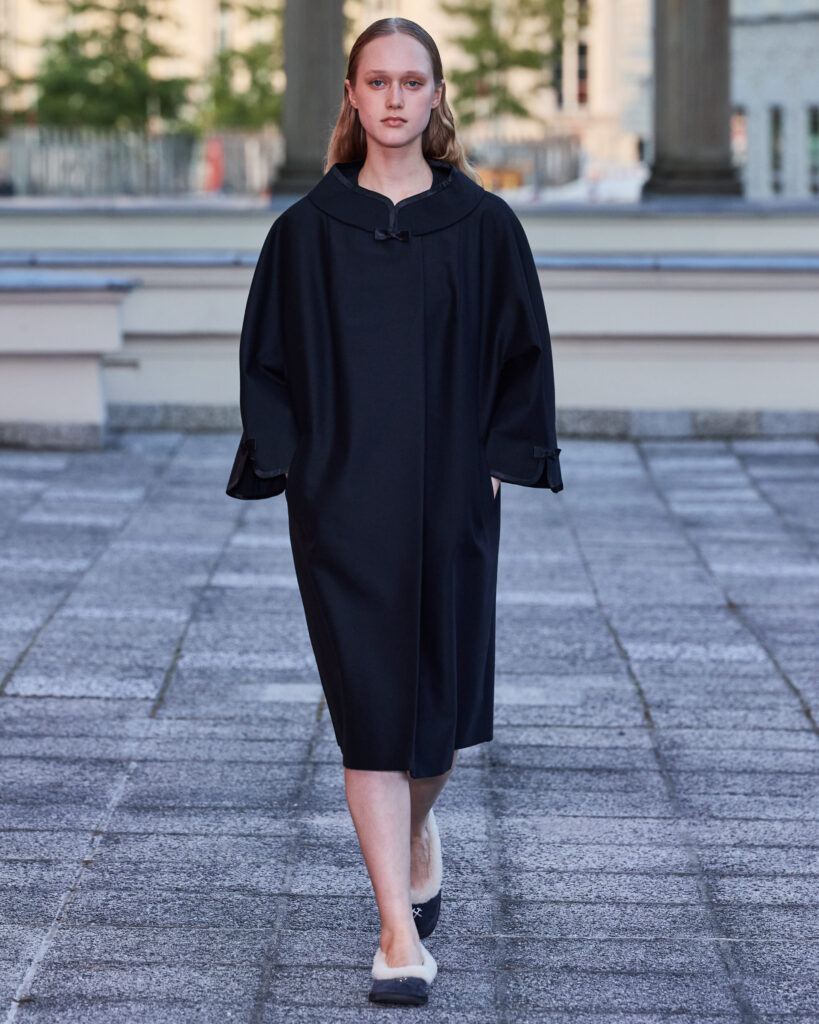
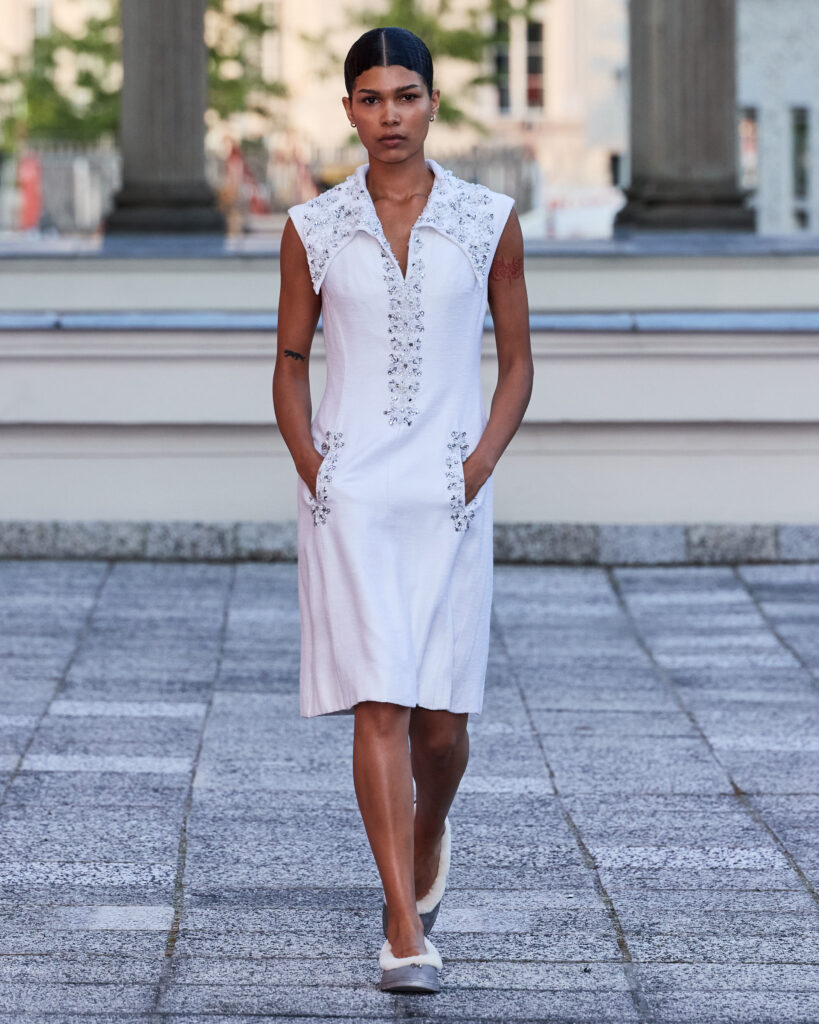
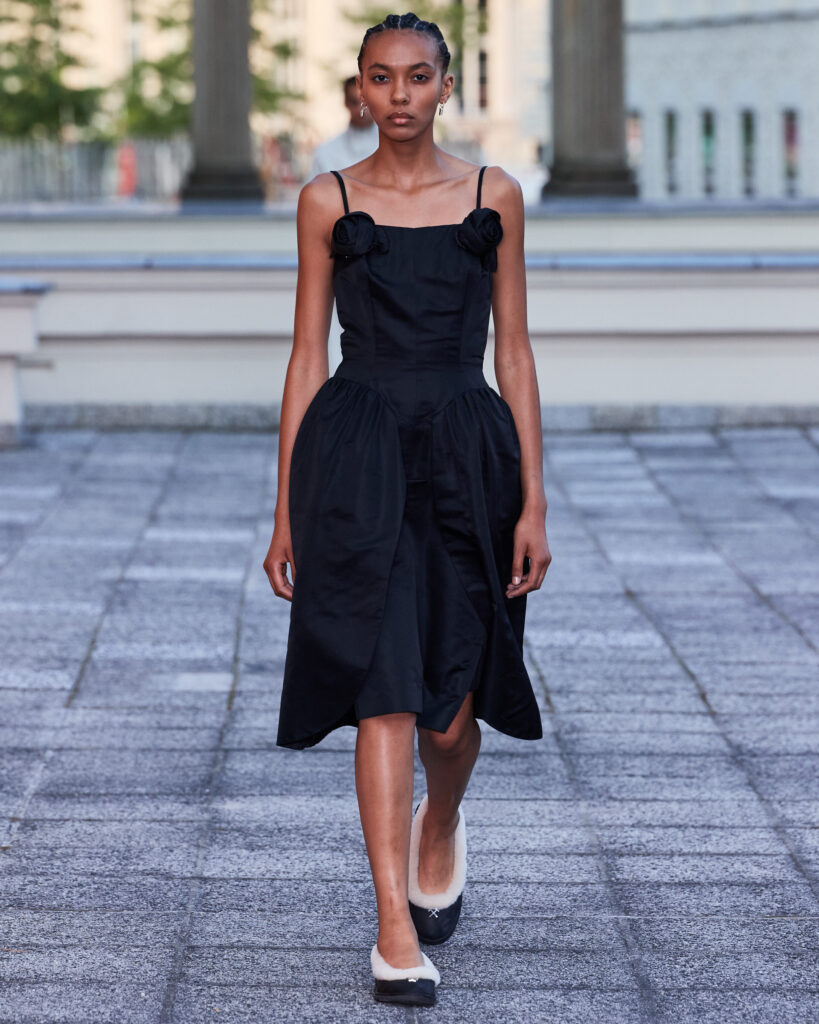
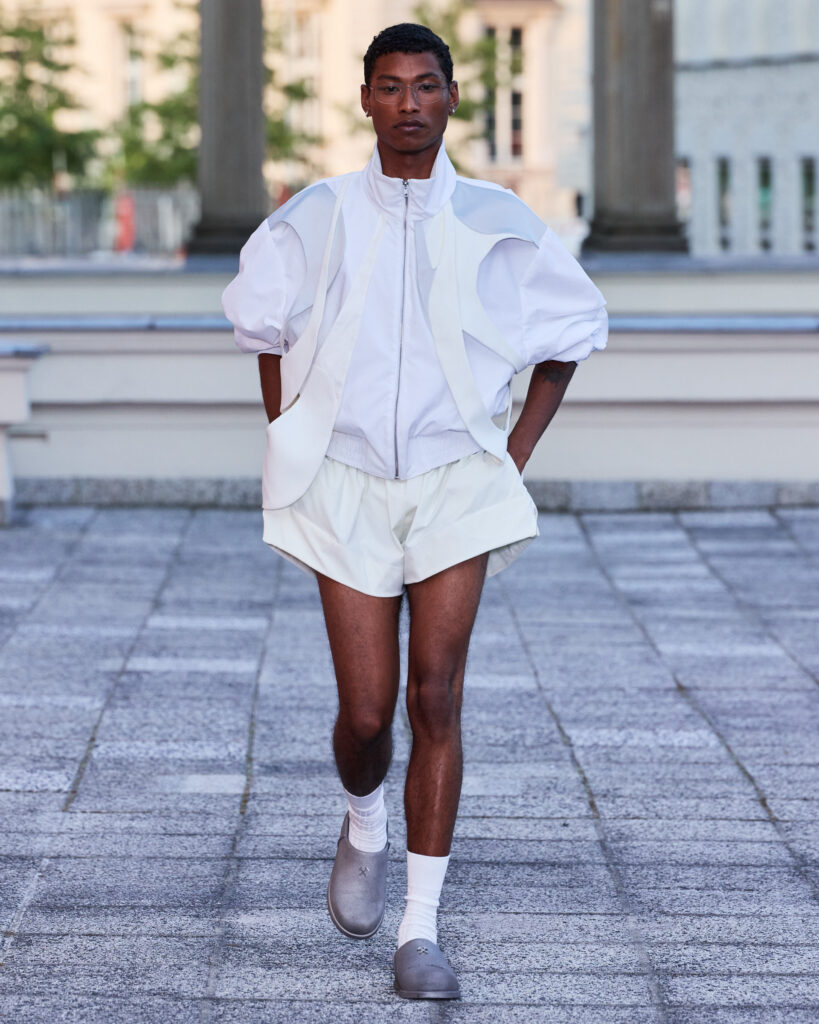
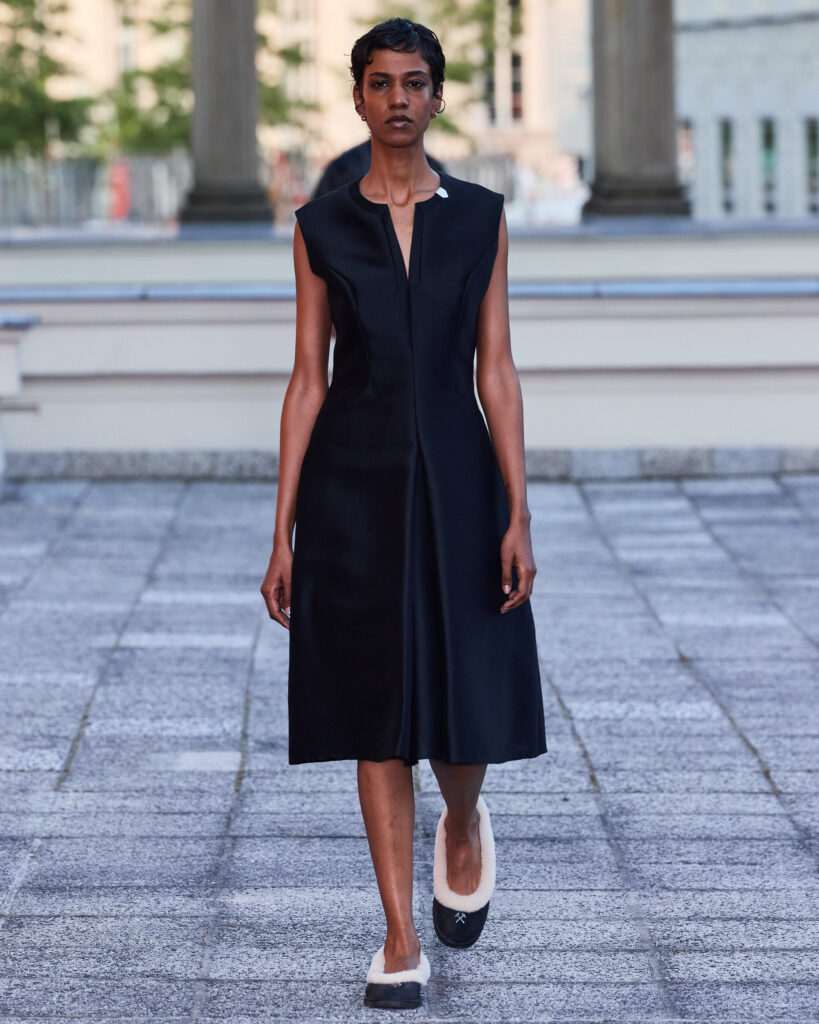
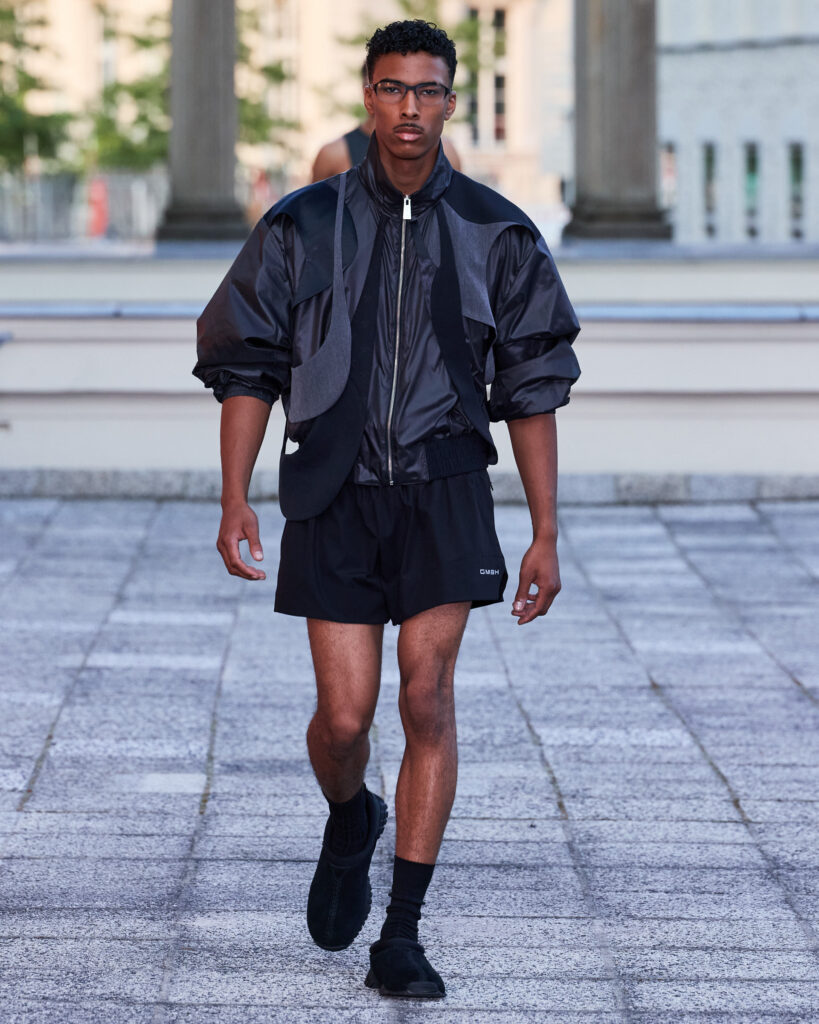
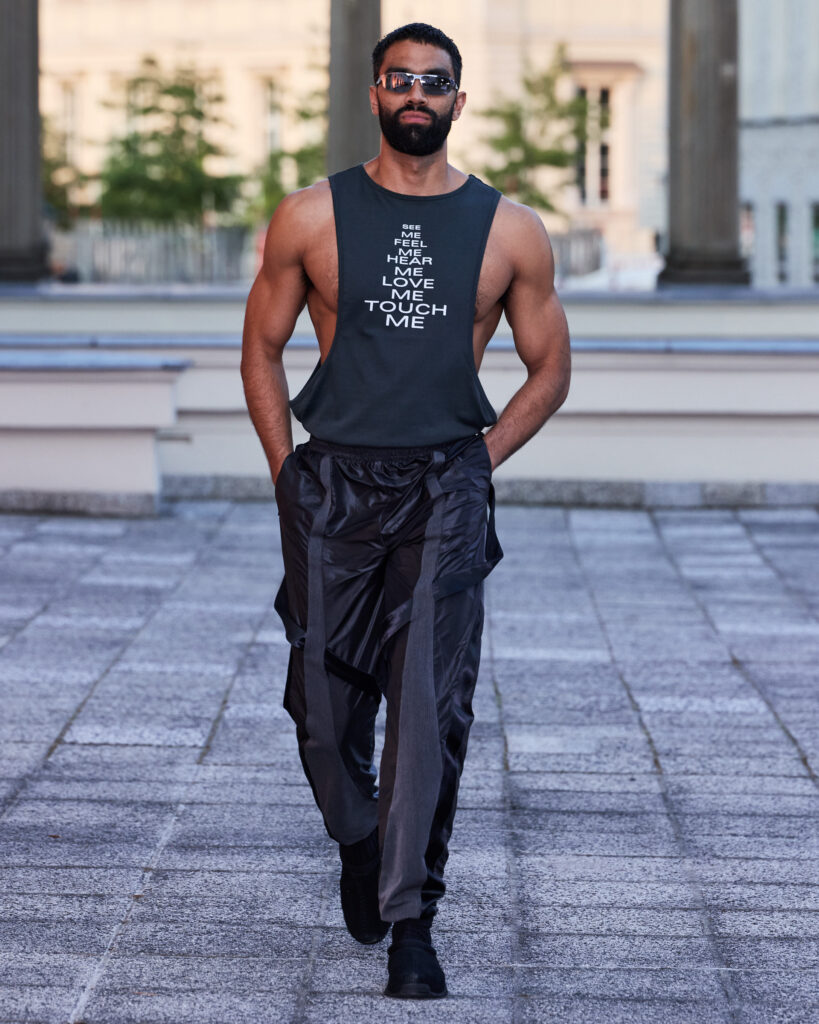
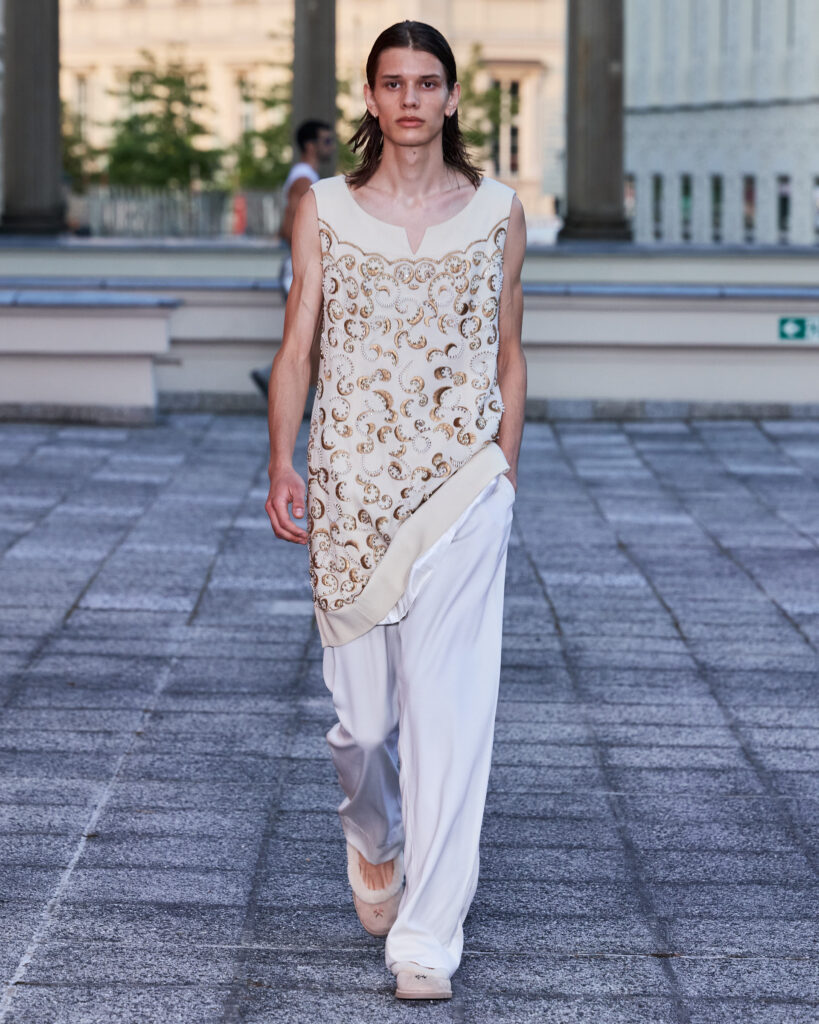
It is this gap that the fashion house GmbH has chosen to address to mark its tenth anniversary. Rather than simply presenting a retrospective of its own history, the creative duo delved into the archives of fashion historian Gesa Kessemeier and the private collection of Julia Schwarz, which contain pieces spanning a century of Berlin fashion. Some of these archival pieces, designed by now largely forgotten designers such as Clara Böhm—whose fashion house operated from 1912 to 1939—were incorporated directly into the runway show, alongside designs from the Winter-Spring 2027 collection.
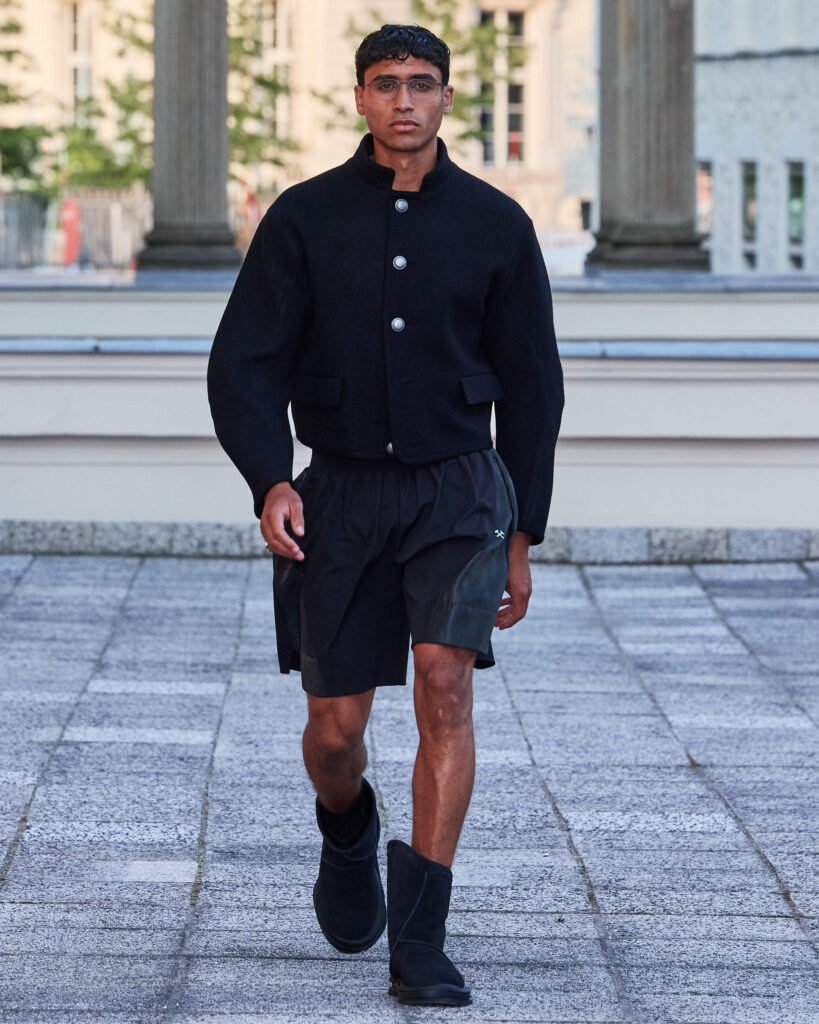
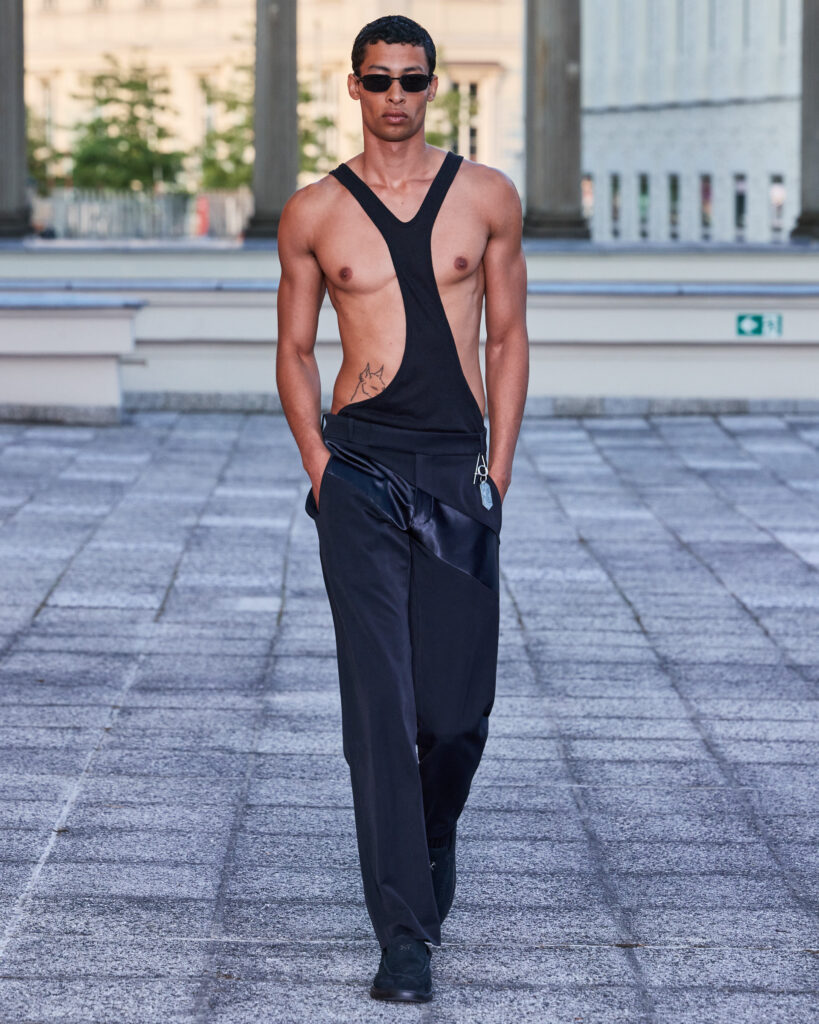
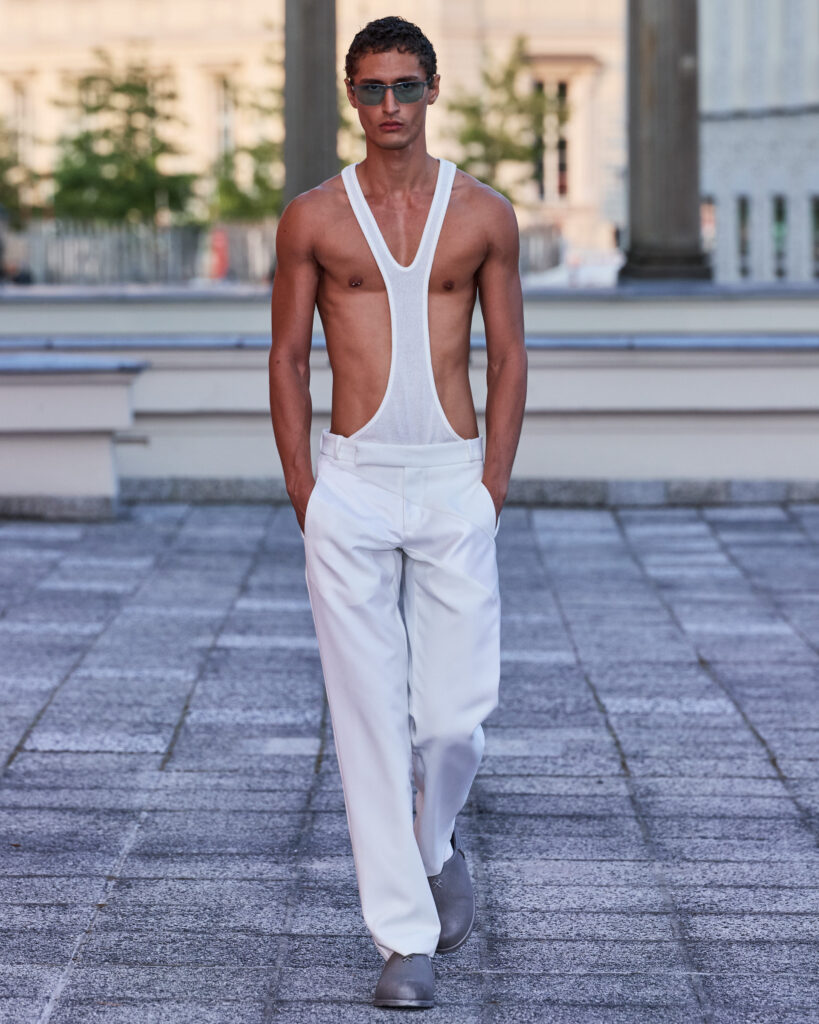
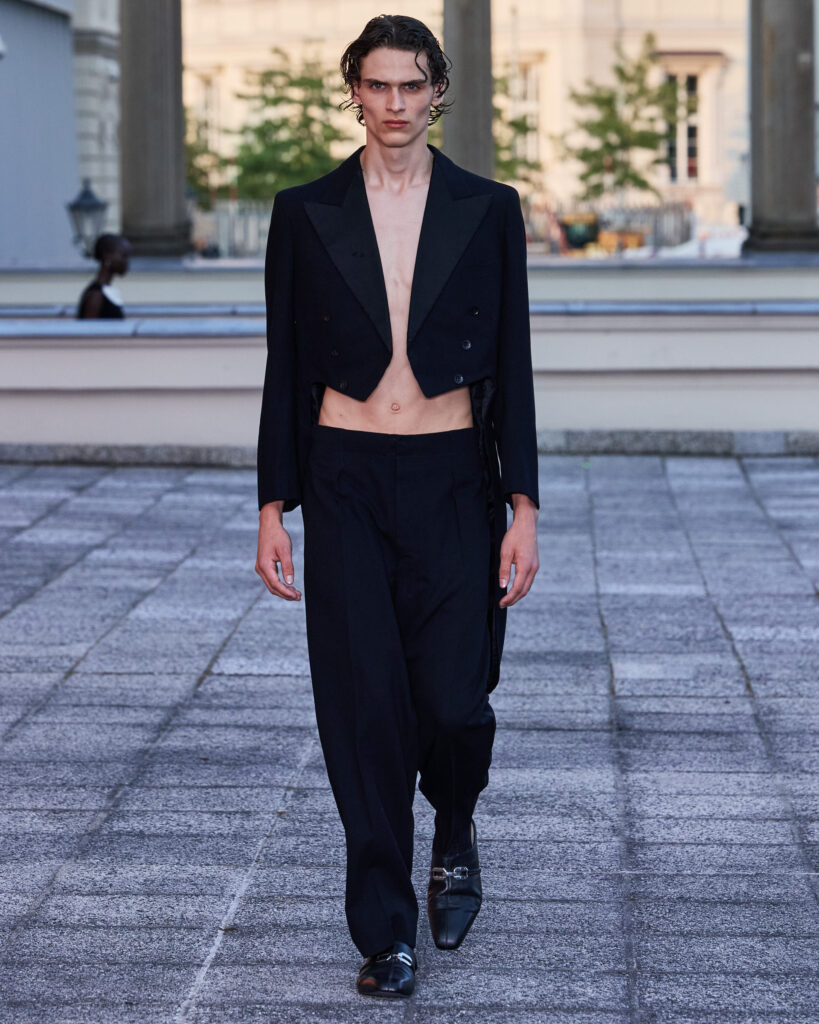
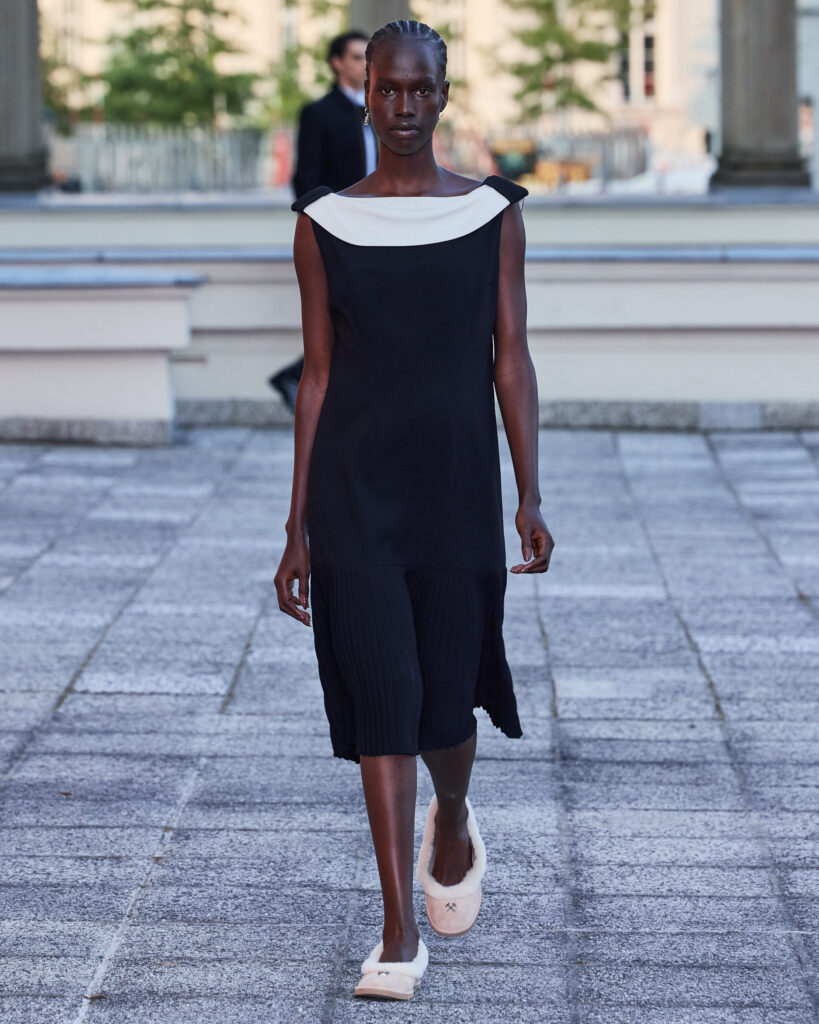
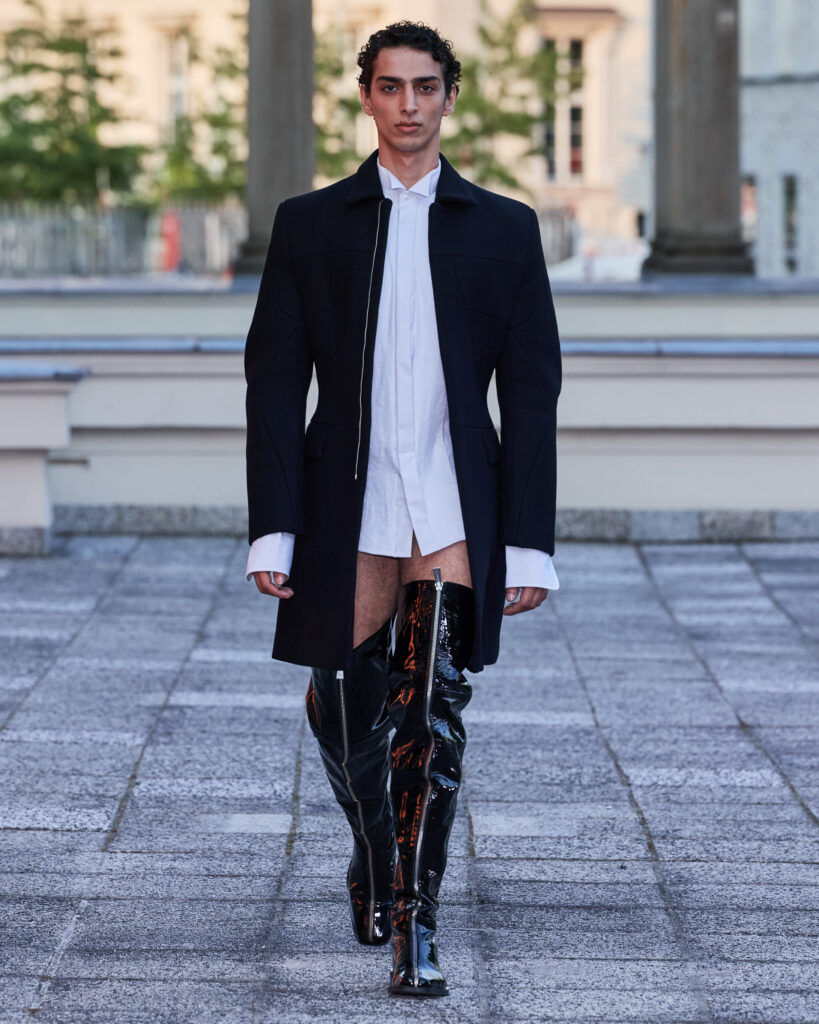
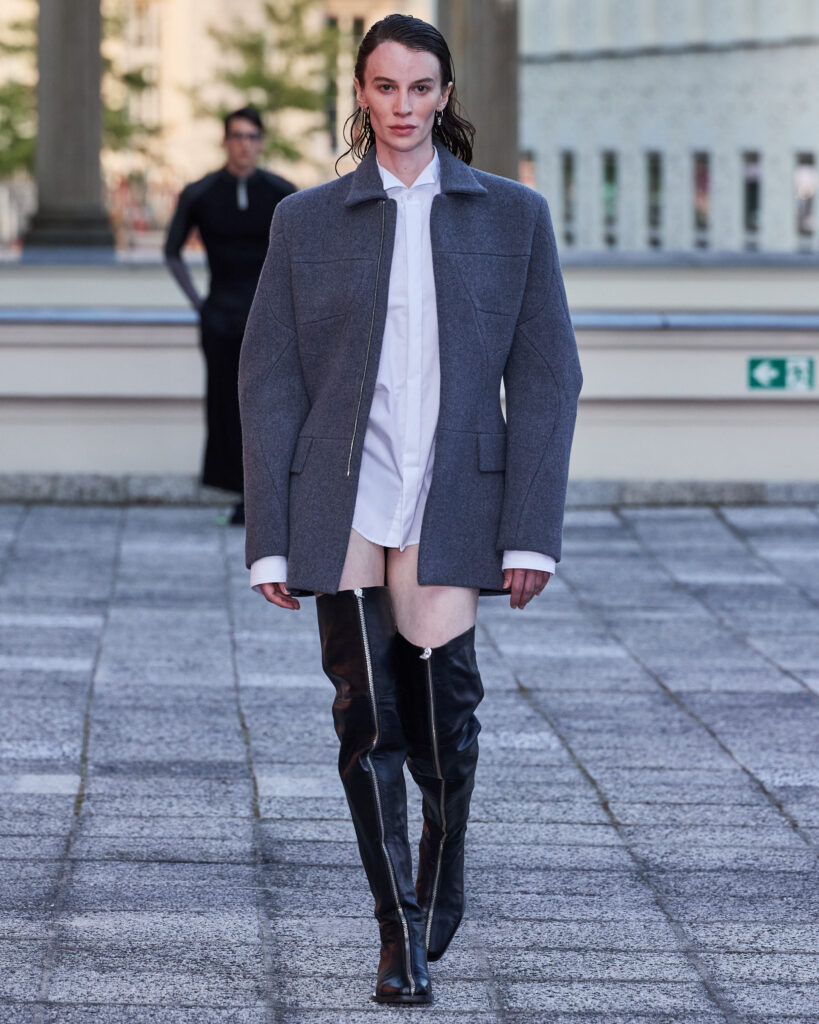
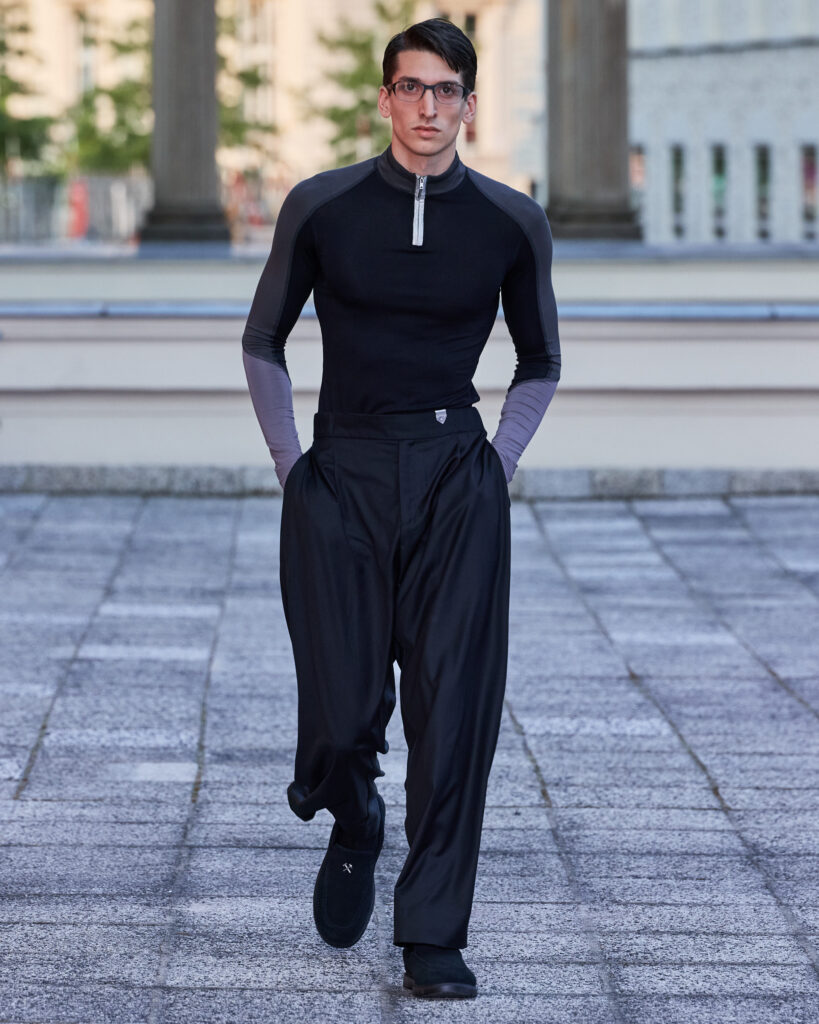
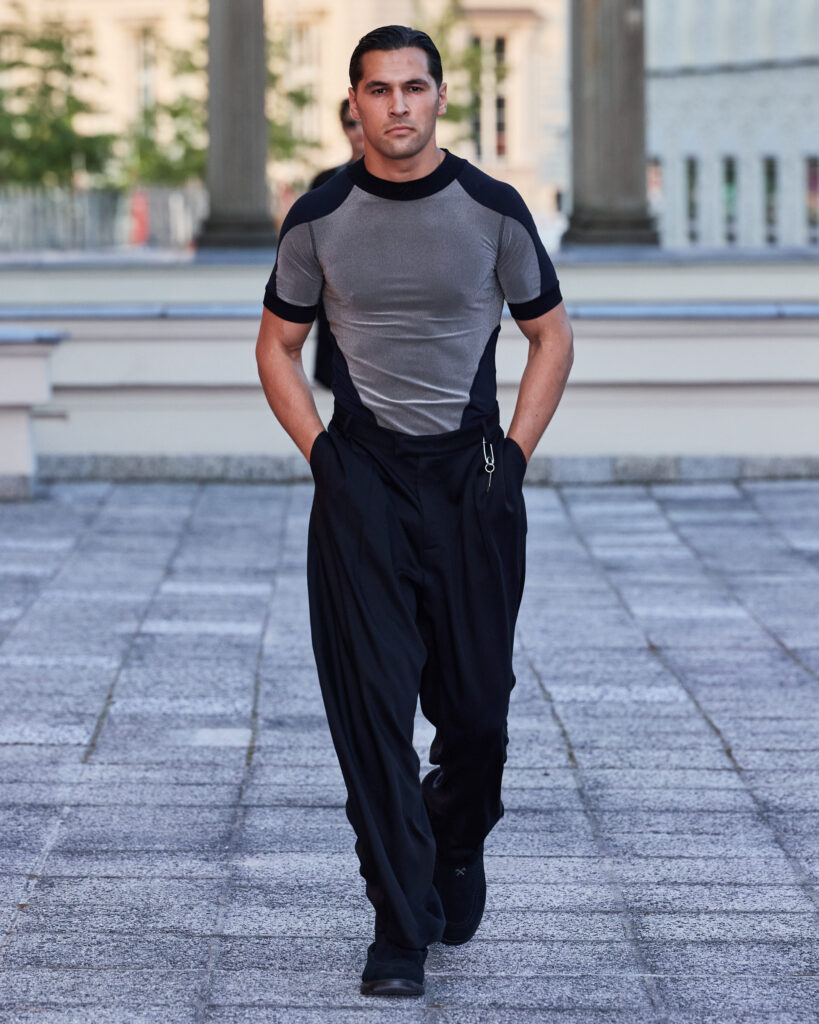
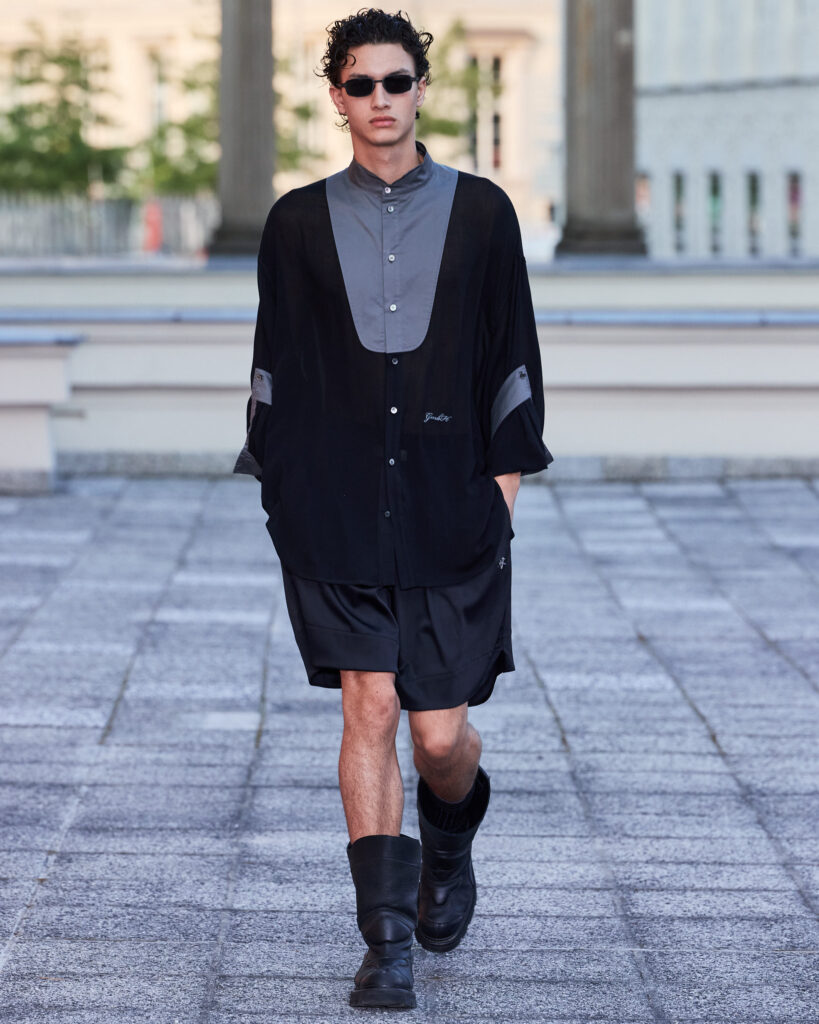
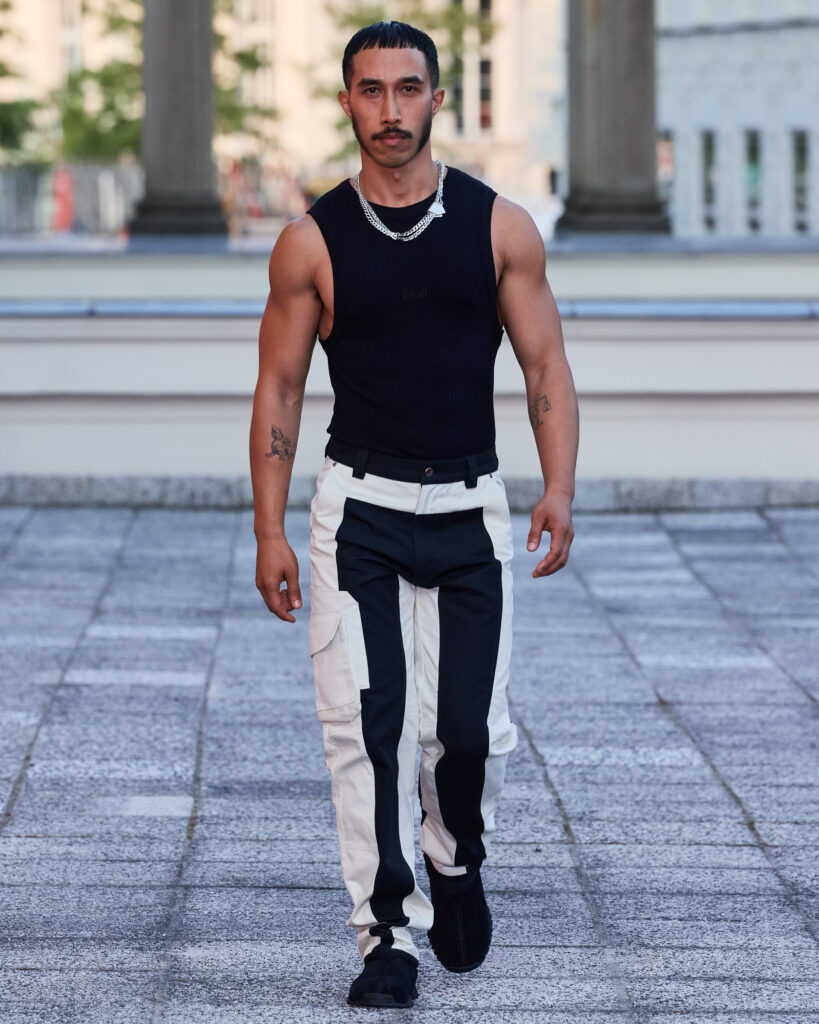
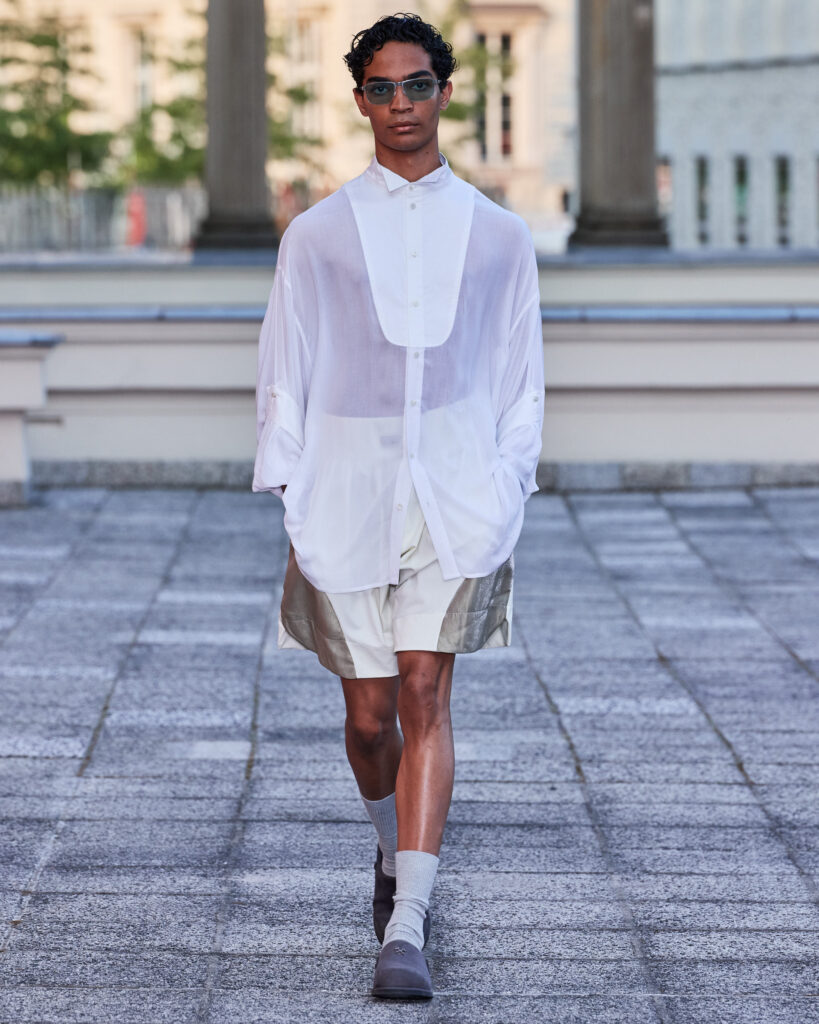
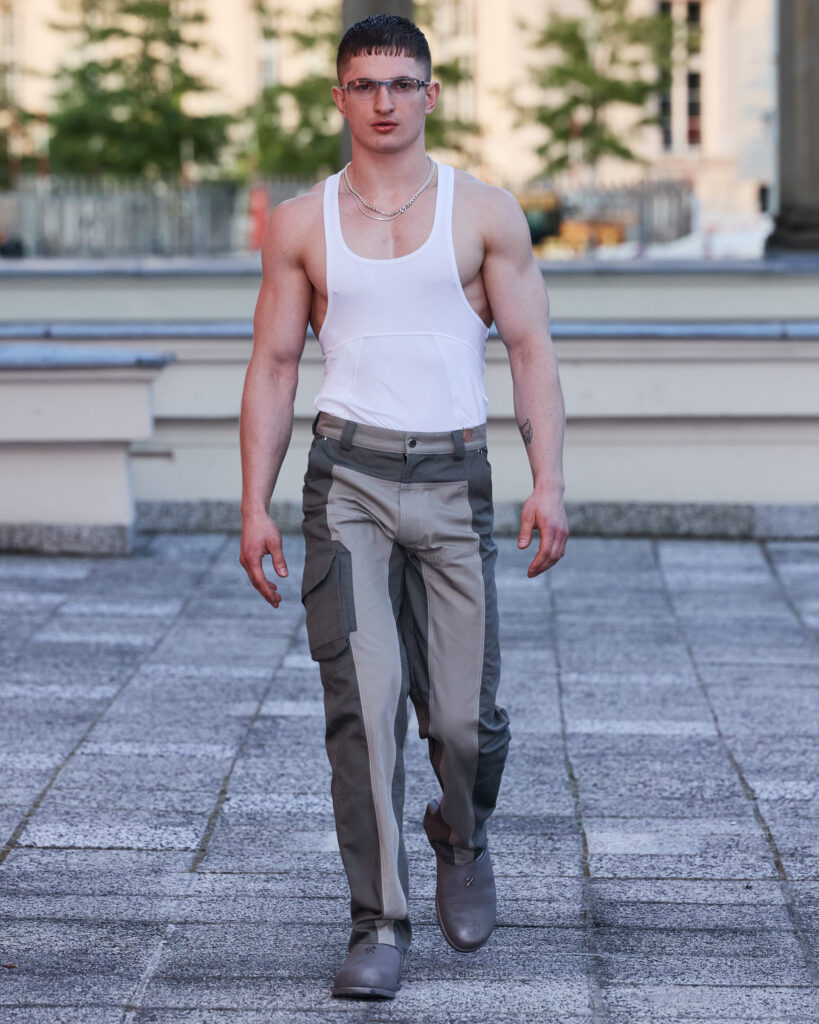
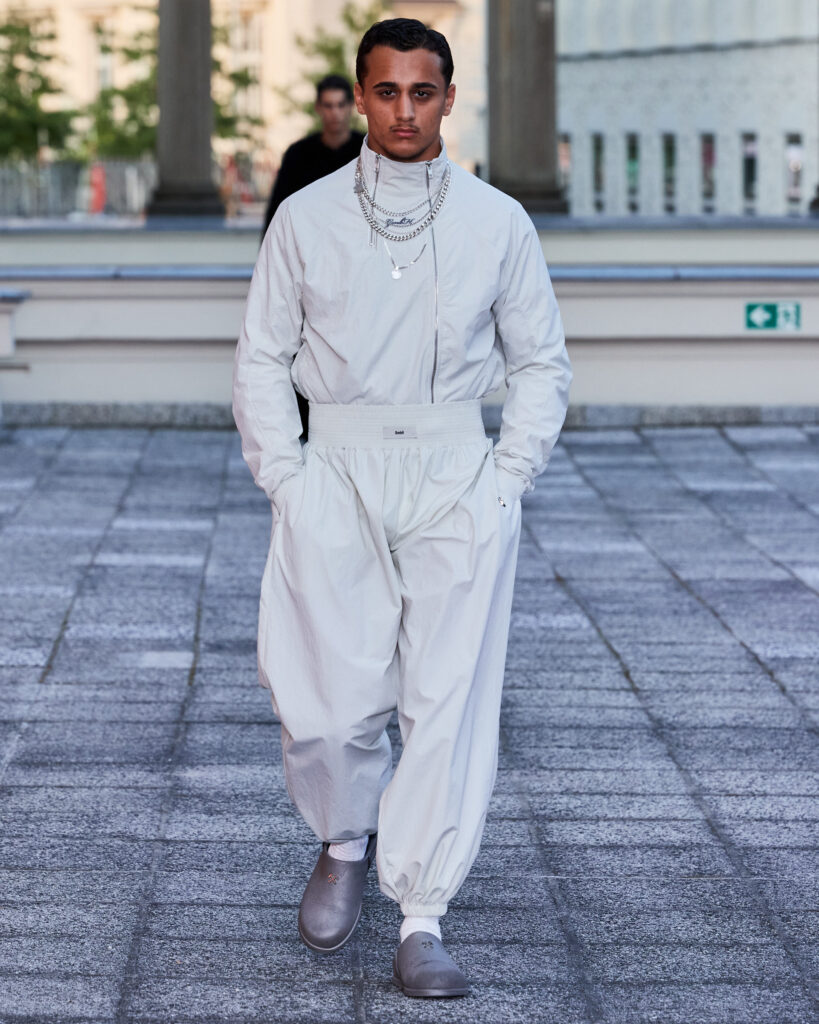
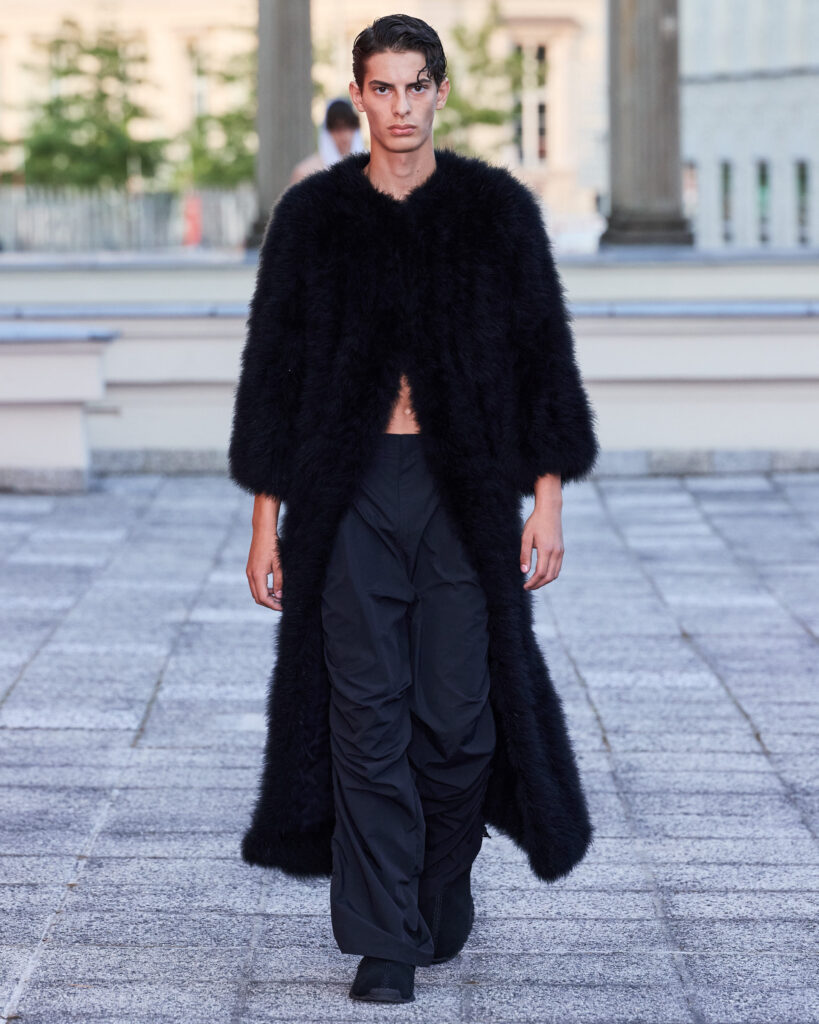
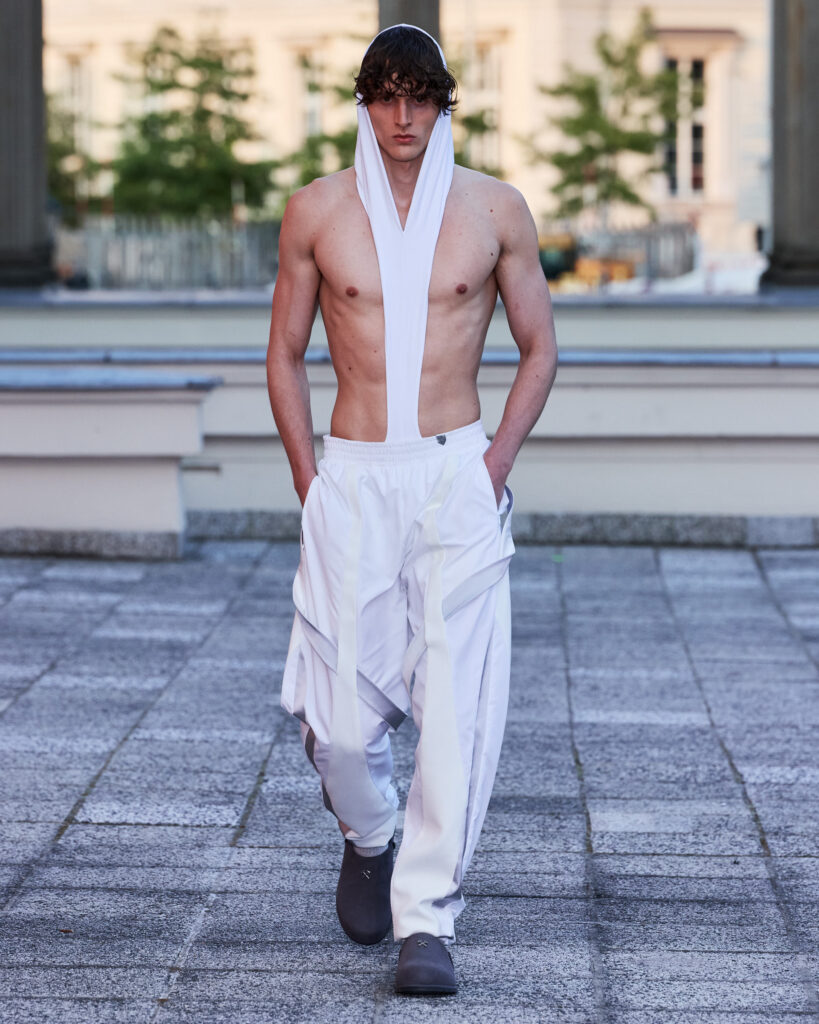
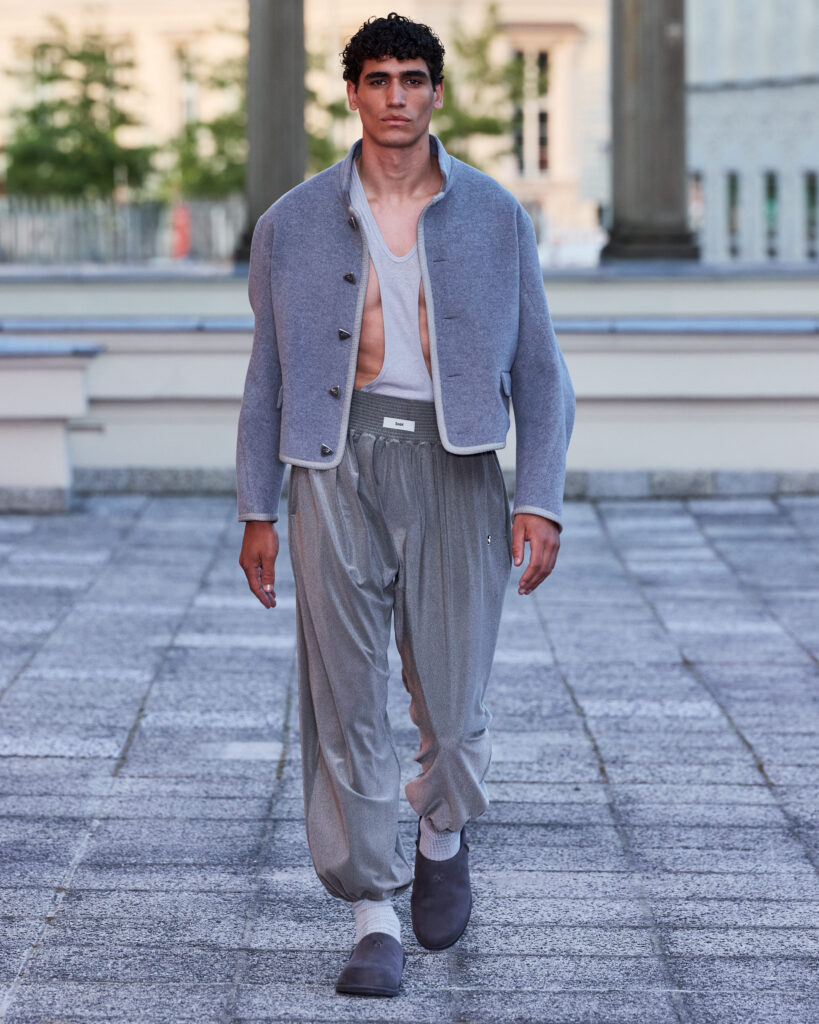
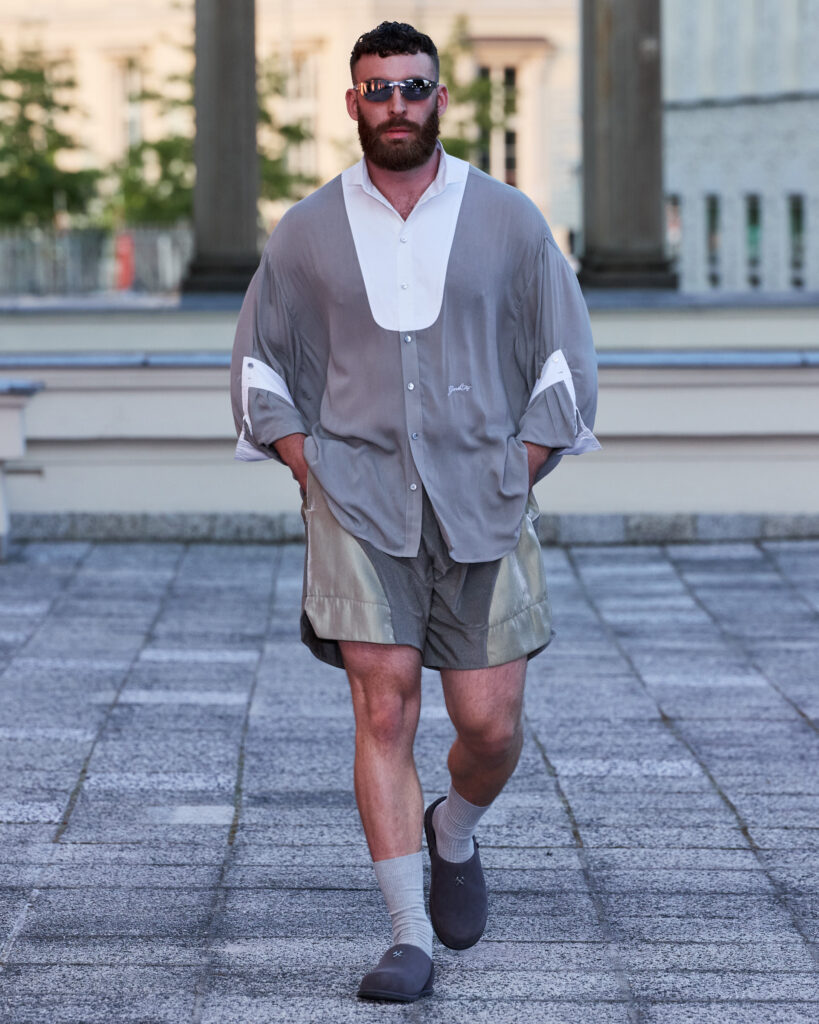
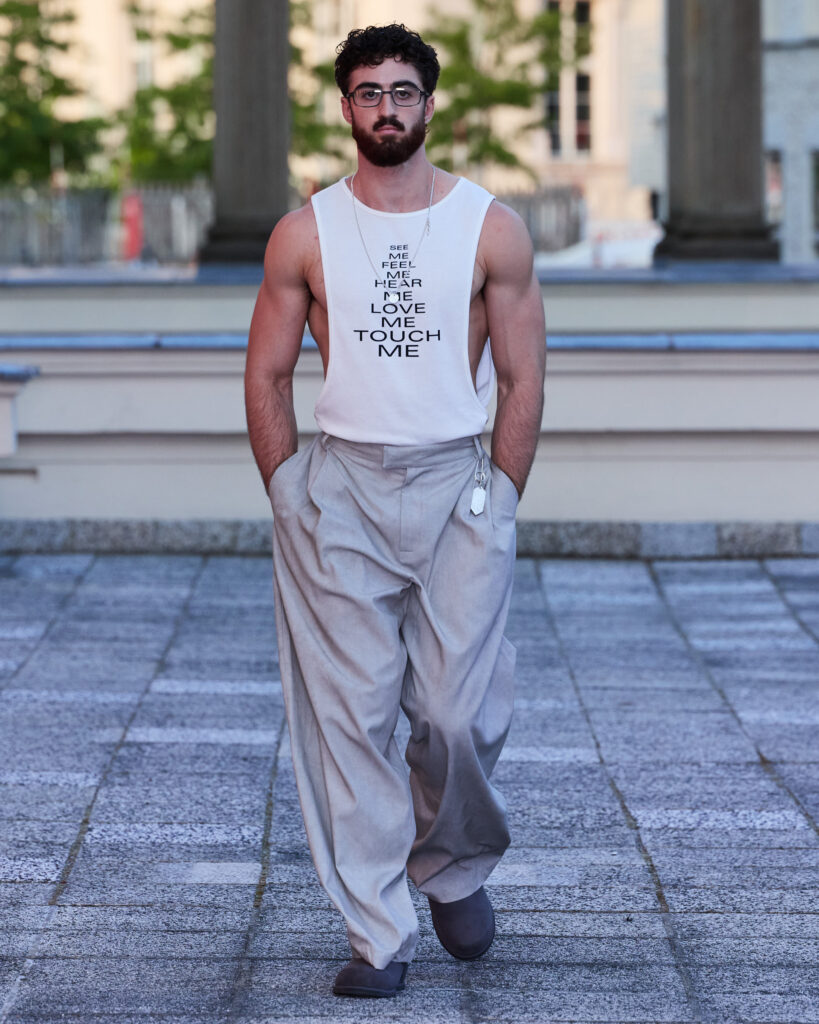
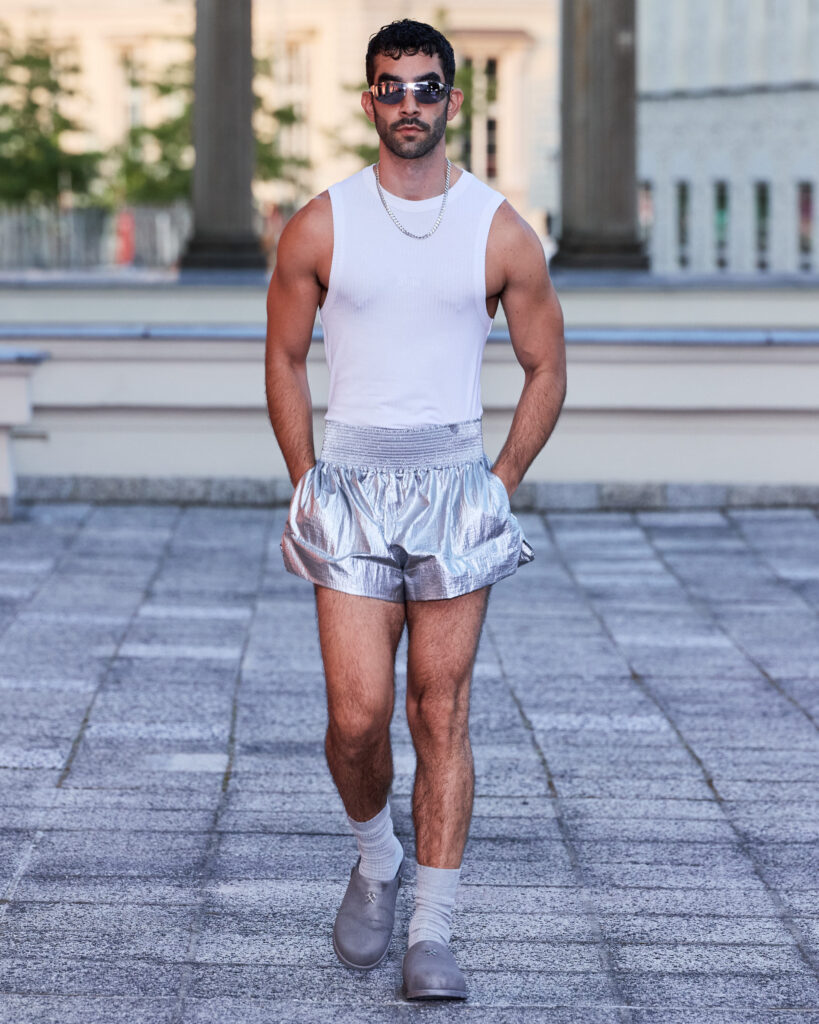
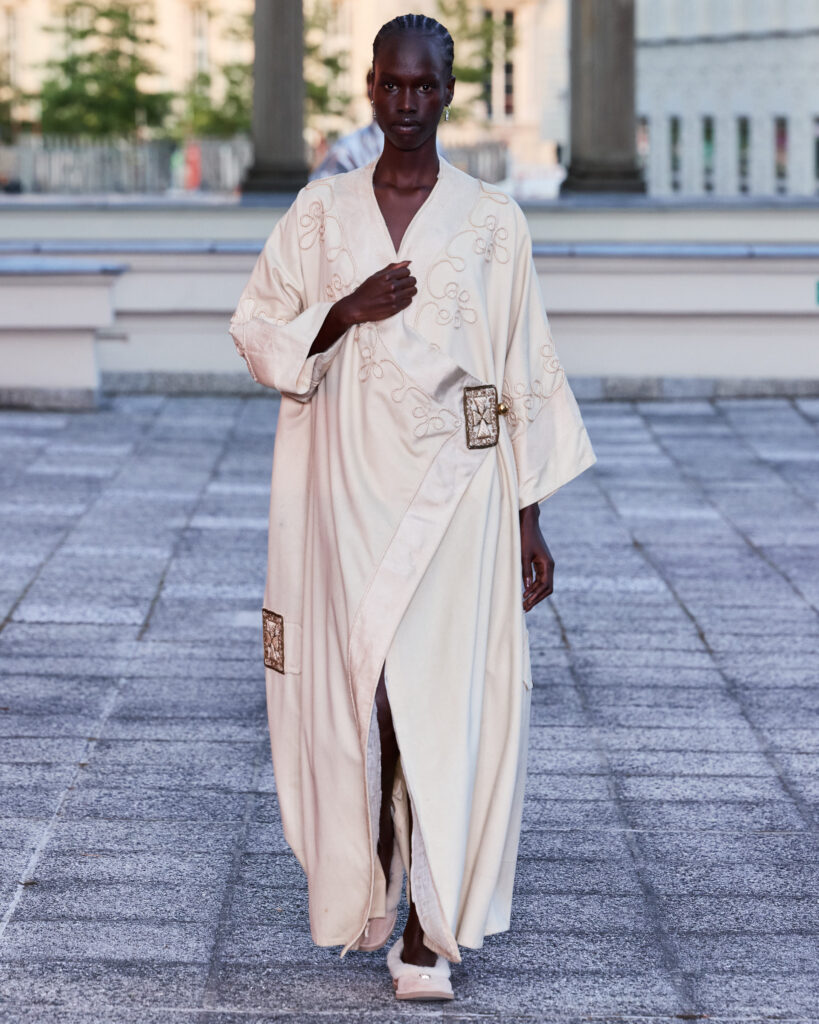
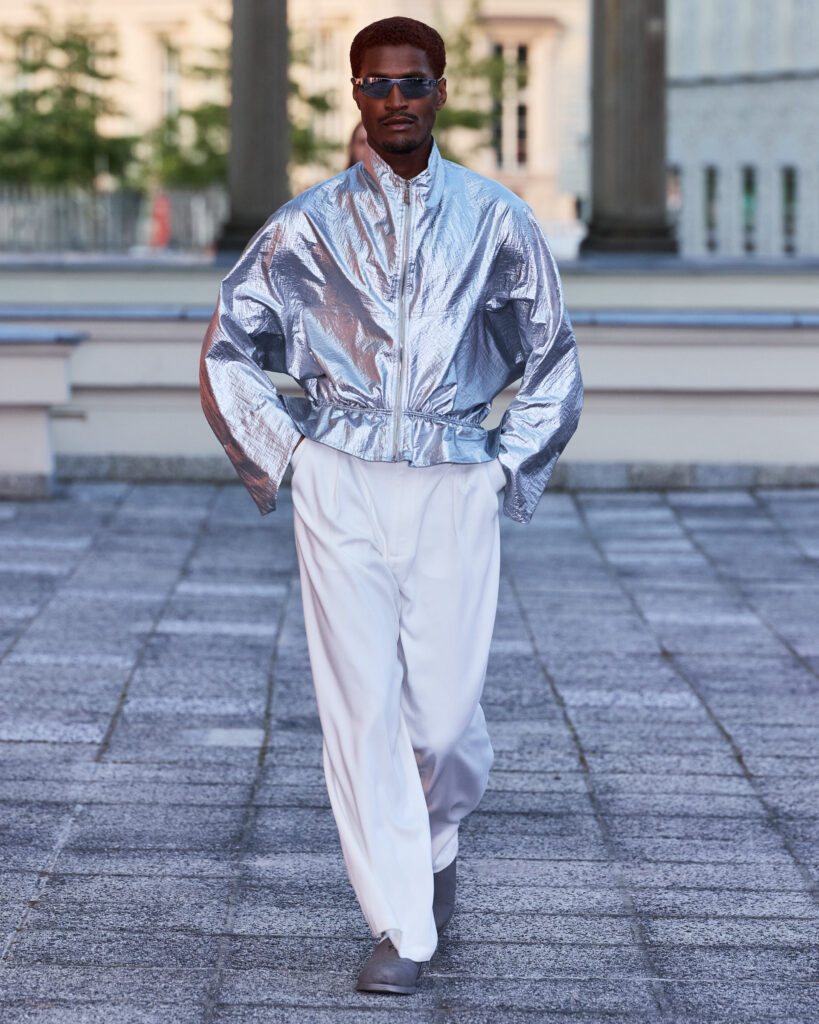
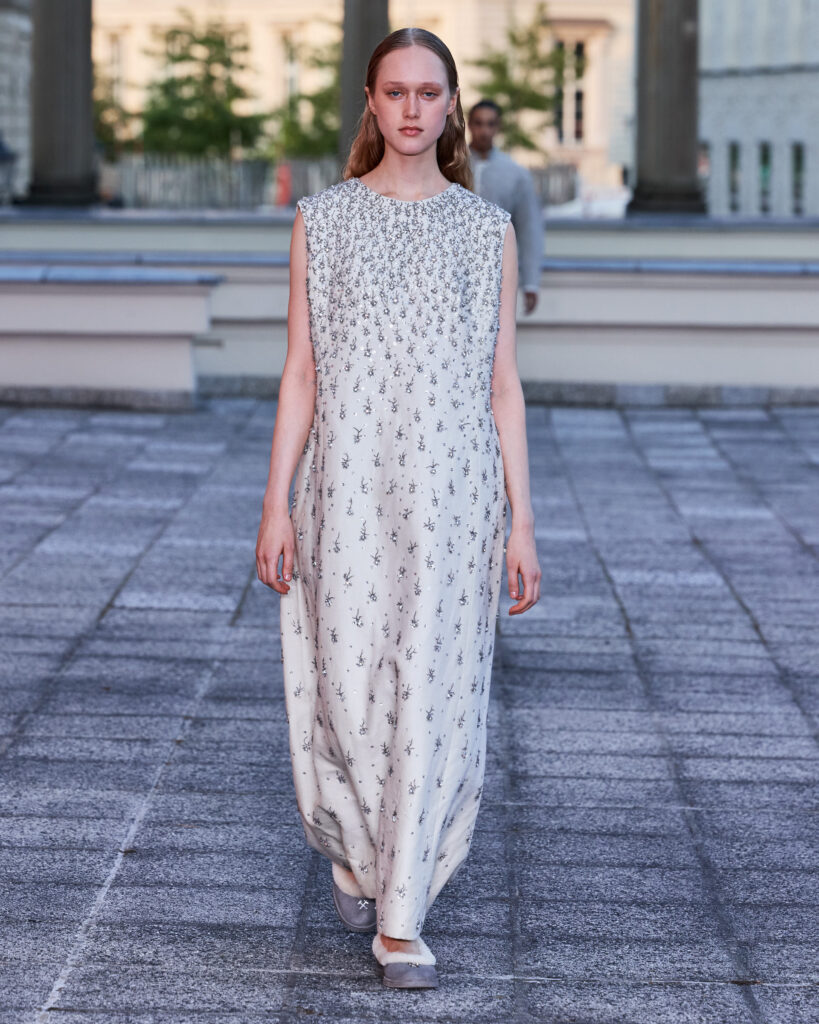
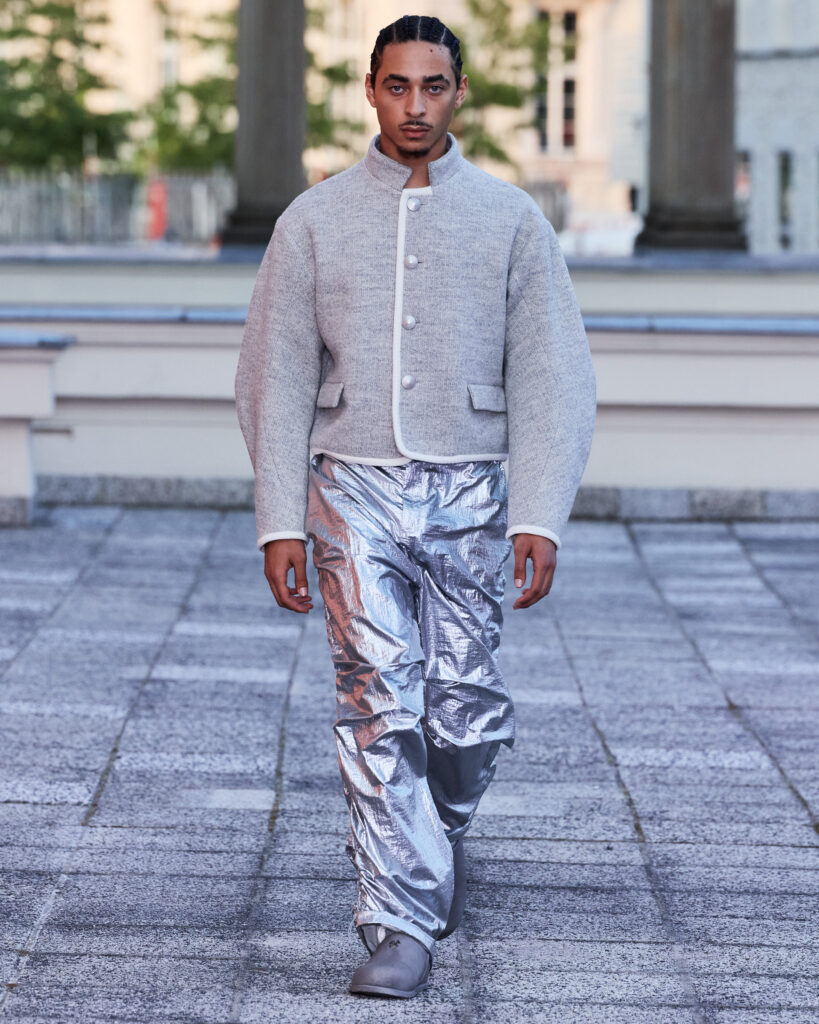
The result is not a polite exercise in historical reference. The collection draws on GmbH’s signature archetypes of structured sportswear—clean cuts that both highlight and protect the body—to infuse them with details borrowed directly from this vanished tradition of couture: a collar taken from a Clara Böhm coat featured in *Die Dame* magazine in 1934, among other more subtle references scattered throughout the silhouettes. The approach openly acknowledges its limitations: as the brand itself writes, no collection can claim to embody a century of history. The fashion show is presented more as an open door, the starting point of a broader project aimed at gaining recognition for fashion as a serious cultural expression in Germany.
This gesture takes on particular significance in the current German political context, which GmbH never shies away from. The brand directly addresses the growing repression targeting minorities and the rise of the far right in the public sphere. Accustomed to being questioned—or even lectured—about its explicit political stance, the brand turns the argument on its head: the story it has just told, in its view, is sufficient to justify why fashion cannot claim to be neutral.
This kind of approach raises a question that goes far beyond the case of GmbH: Is it truly possible to engage in an act of remembrance within the commercial and spectacle-driven context of Fashion Week, without the political gesture ultimately being absorbed by the very system it purports to challenge? The answer likely lies less in the fashion show itself than in what follows—the promise of a “broader project” that the brand has announced but has not yet detailed. In the meantime, GmbH will at least have accomplished a rare feat in the industry: giving a name, a silhouette, and a presence back to designers whom history had deliberately wiped off the map.
Cette publication est également disponible en :

