
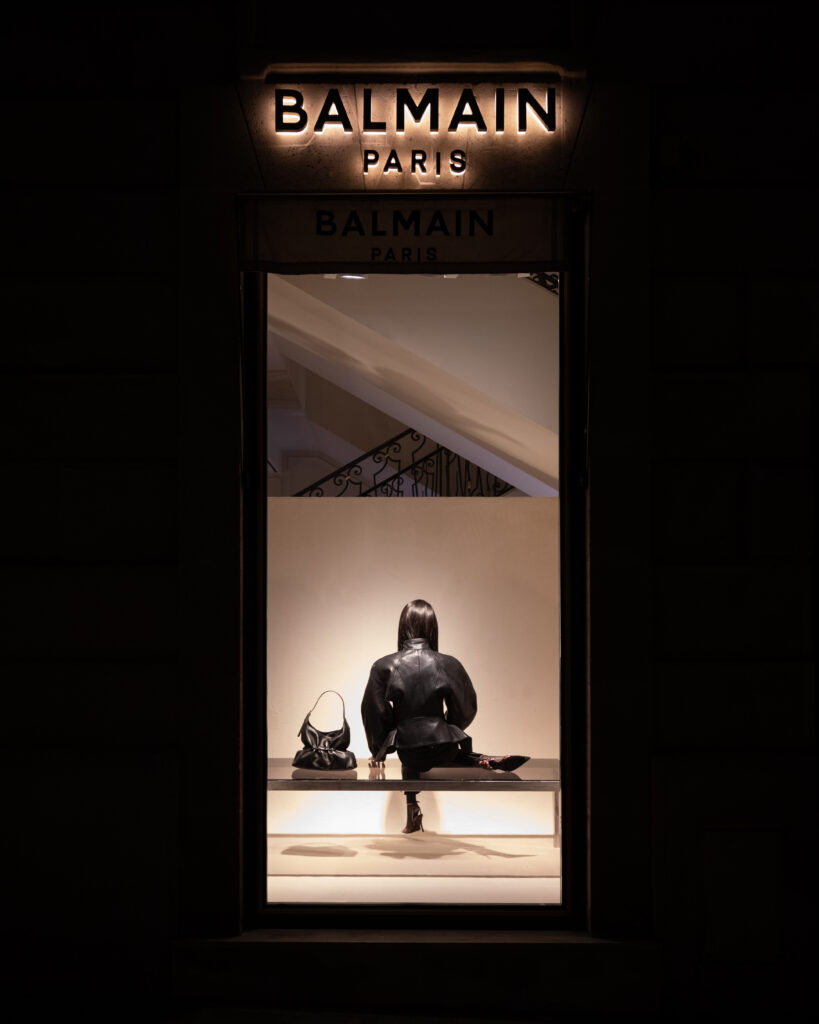
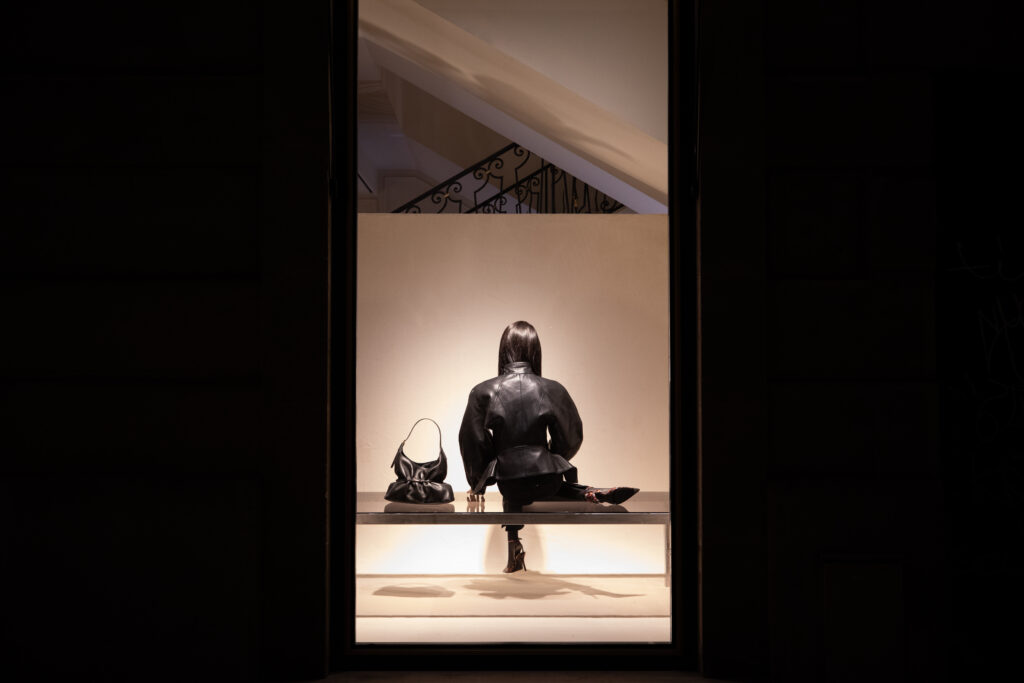
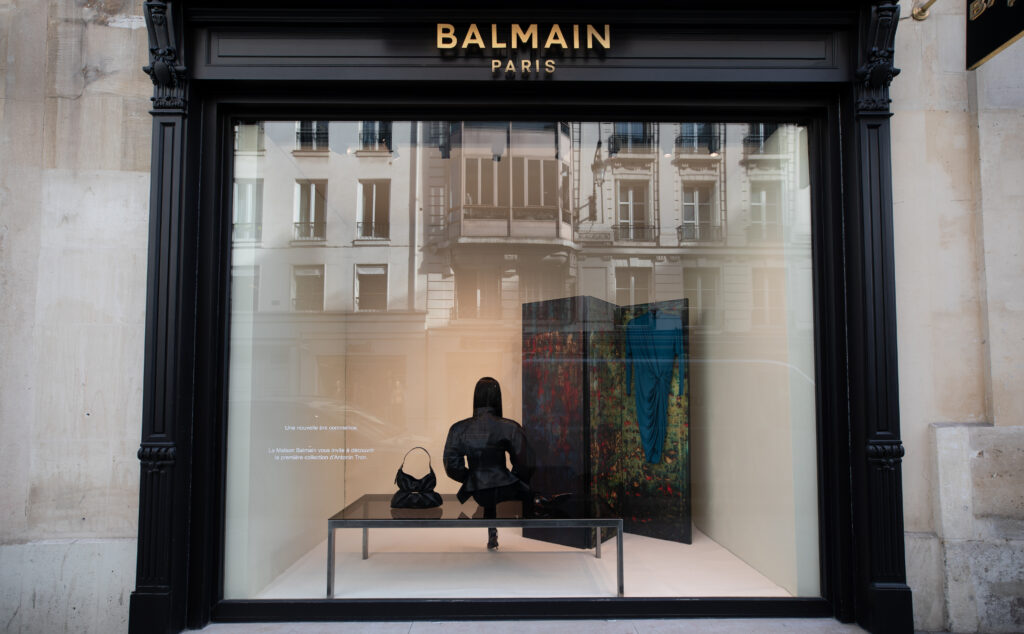
On Rue Saint-Honoré, Balmain’s new installation features no mannequins viewed from the front. A silhouette seen from behind, a bag left on a platform: the fashion house has chosen to convey a sense of departure rather than showcase a collection.
The back rather than the front
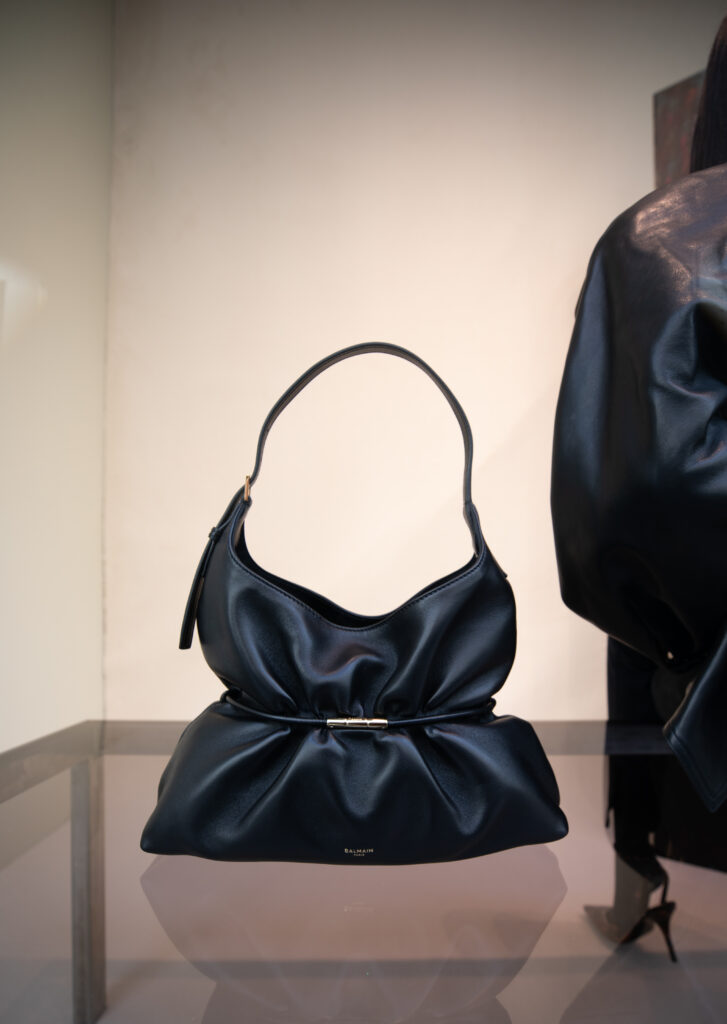
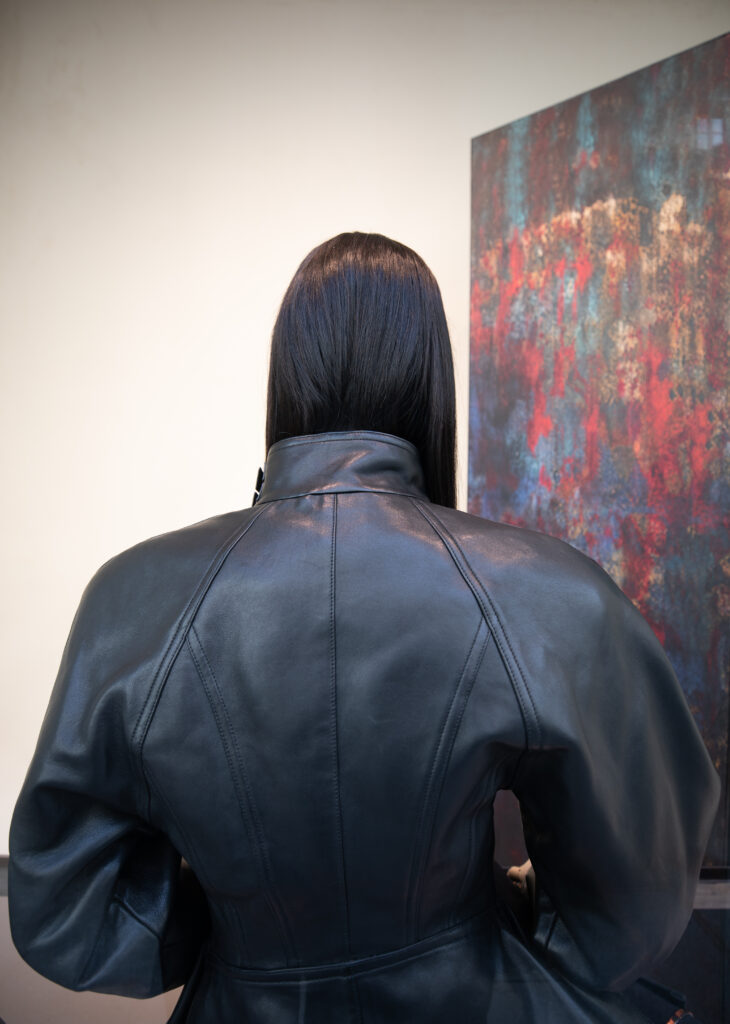
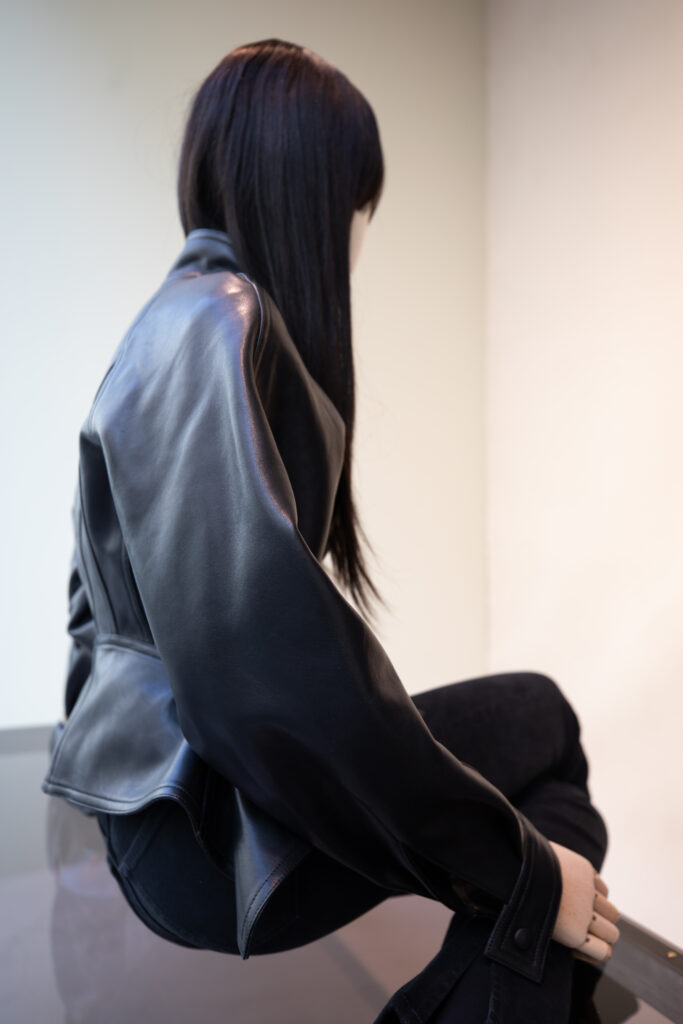
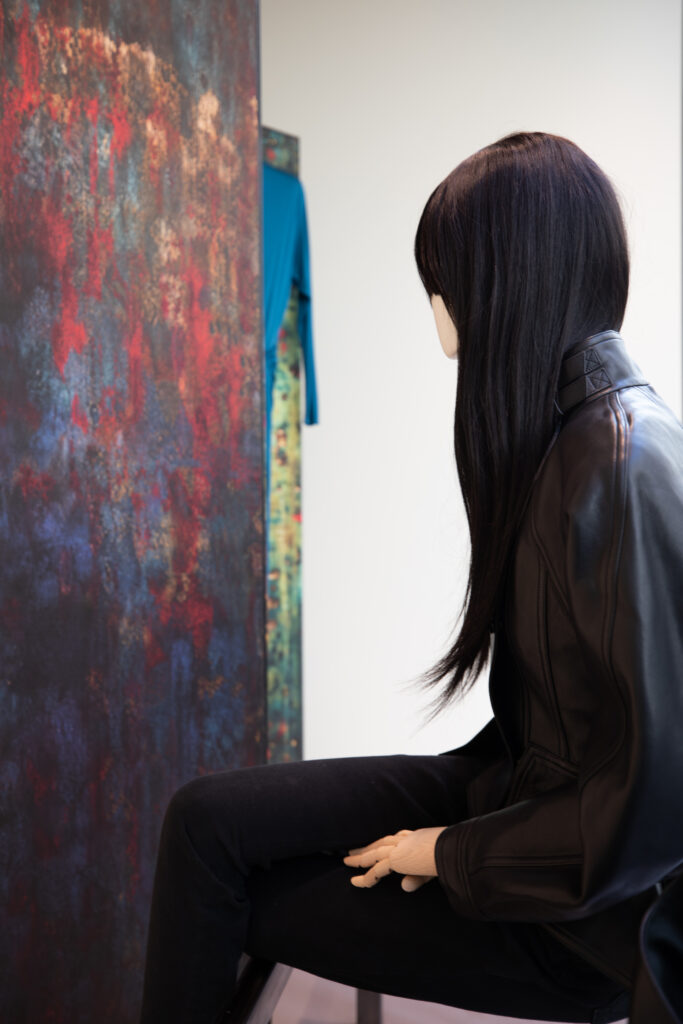
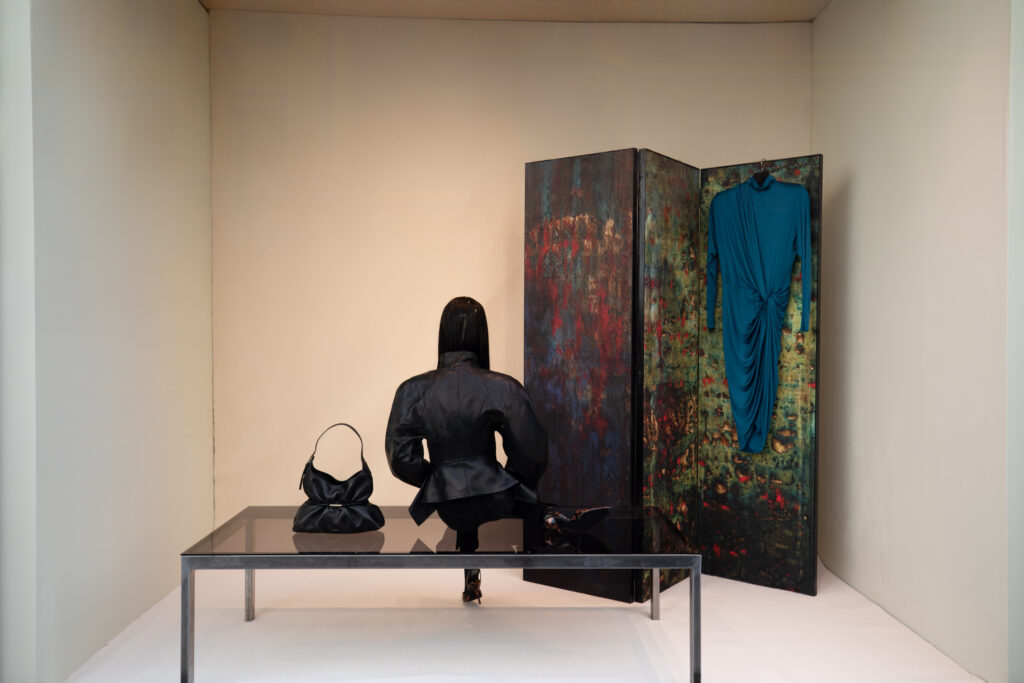
Fashion window displays have long followed a simple formula: presenting the garment from the front, in the best possible light. The installation designed to extend Balmain’s Fall-Winter 2026 campaign breaks with this convention. Created by artist and set designer Jeanne Briand, it features a silhouette seen solely from behind—anonymous yet poised, captured in a moment suspended between intimacy and performance. On the platform she has just left, a bag or a pair of shoes remains: the only visible trace of a departure already made, the final gesture before rejoining the world.
A setting designed to absorb, not reflect
The choice of materials reinforces this economy of gesture. The curved space, entirely covered in off-white carpet, is designed to absorb light rather than reflect it: a way to eliminate any visual distractions and refocus attention solely on the objects left on display. Against this deliberately neutral backdrop, the brand’s craftsmanship gains, by contrast, in resonance rather than in showmanship.
At the center of the composition, a weathered metal platform serves as a pedestal, a table, and a stage all at once. Its weathered surface creates a deliberate tension between permanence and use, between domestic decor and an exhibition setup—an object that appears to have already been used, rather than a piece presented in brand-new condition.
The folding screen, the sole acknowledged link to the archive
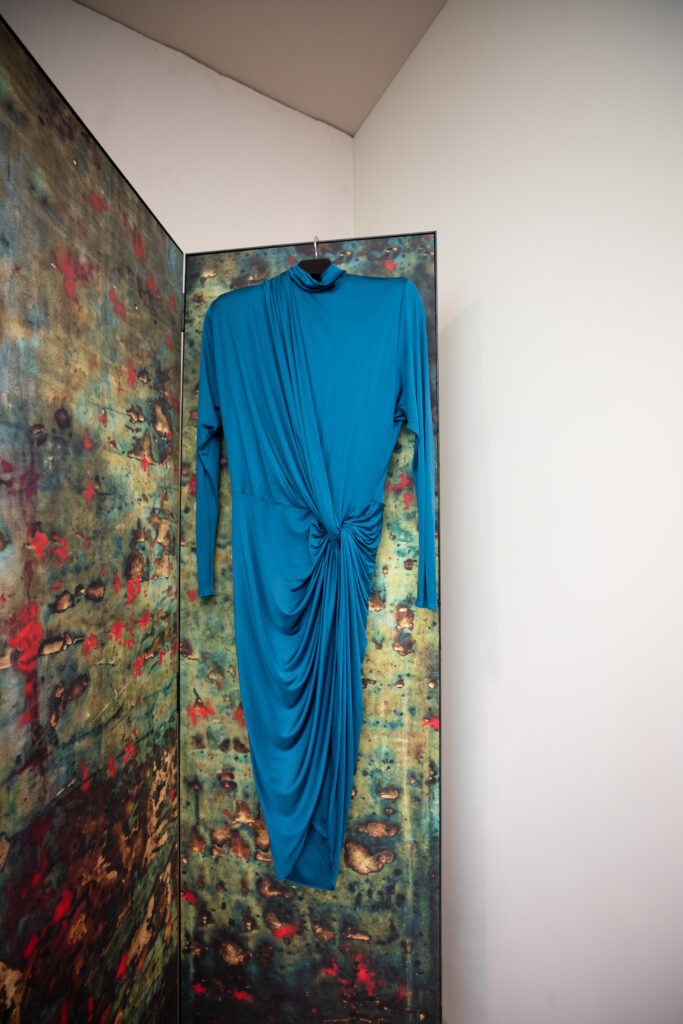
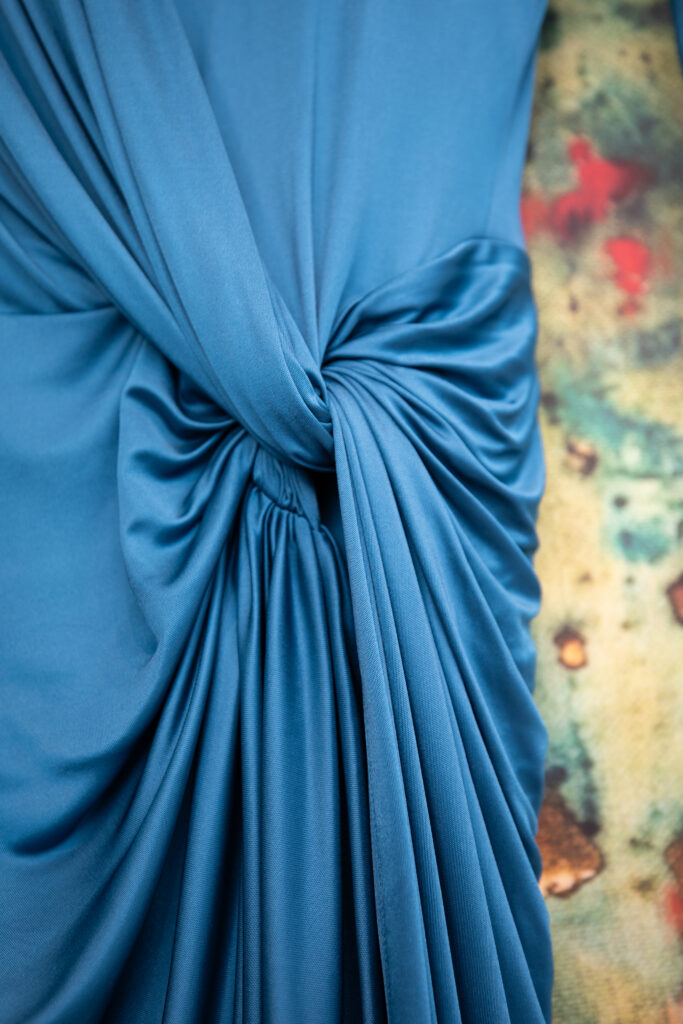
The only element to explicitly claim a historical origin, a printed satin folding screen—designed exclusively using patterns from the house’s archives—encloses the composition and rises like a luminous architectural element. Its reflective surface introduces, into an otherwise matte and subdued setting, the installation’s sole constructed point of light—a deliberate dialogue between the house’s heritage and its contemporary reinvention, rather than a nostalgic reference.
A display case that sells nothing that can be shown
What sets this installation apart from ordinary seasonal window displays is its rejection of spectacle: no item is displayed for its own sake, and no mannequin poses for passersby. The presentation opts for restraint rather than showmanship—a choice that runs counter to the most basic function of the display, since a storefront window is, by definition, a space designed to catch the eye from the street.
It remains to be seen whether this economy of gesture—conceived for a physical installation on Rue Saint-Honoré—will hold up when translated into images on social media, where the silhouette seen from behind and the abandoned object will, this time, have to capture attention without the help of their surrounding setting.
Set Design: Jeanne Briand, artist and set designer.
Materials: off-white, light-absorbing carpet; weathered metal platform.
Printed satin screen featuring motifs from the brand’s archives.
Cette publication est également disponible en :

