
In the Languedoc region, the word “freshness” has become as much a cultural issue as it is a wine-related one.
For several decades now, a new generation of winemakers has been striving to shift the way the South is perceived. It is no longer simply a matter of highlighting the intensity or generosity of the Mediterranean climate, but of demonstrating that these landscapes can also produce wines characterized by balance and complexity.
Maison Lorgeril is among those who have shaped this new vision of the region. Based at the Château de Pennautier since 1620, the family now operates six estates spread across the Languedoc and Roussillon regions. Its guiding principle is clear: to focus on hillsides and high-altitude terroirs in order to slow the ripening process and preserve the grapes’ natural balance.
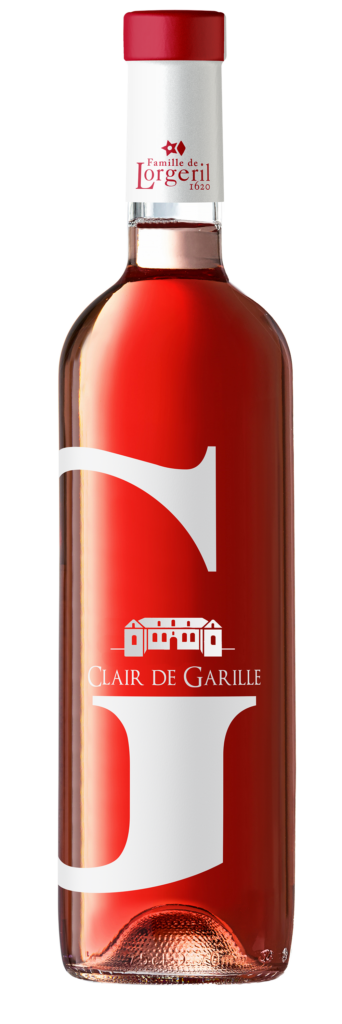
In this vein, Clair de Garille—a new 2025 release under the Pays d’Oc PGI—stands as an accessible embodiment of this philosophy.
This wine is made from a single grape variety: Grenache. It’s an interesting choice, given that this variety is generally associated, in the collective imagination, with powerful Mediterranean reds and full-bodied rosés. Here, the goal is precisely to reveal another facet of its identity.
The grapes come from clay-limestone plots. Harvesting is deliberately done early to preserve the fruit’s natural acidity. After harvest, the grapes are cold-crushed and then fermented at a low temperature. These technical decisions, often invisible to the consumer, profoundly shape the wine’s profile. They limit excessive aromatic extraction and promote a clearer expression of fresh red fruit.
This commitment to precision is no mere afterthought. It is part of a broader initiative led by Maison Lorgeril, whose entire portfolio of vineyards is certified organic and committed to regenerative viticulture practices under the High Environmental Value certification. The long-standing collaboration with Stéphane Derenoncourt also reflects a strong commitment to soil quality and microbial activity.
Detail
- Grape variety: 100 percent Grenache.
- Soil: clay-limestone plots.
- Early harvest to preserve freshness.
- Cold vatting.
- Low-temperature fermentation.
- High Environmental Value Certification.
What sets Clair de Garille apart above all is its cultural positioning. The wine does not seek to showcase spectacular complexity. Rather, it reflects the evolution of an entire region. Whereas Languedoc rosé was once defined solely by its summery character, this generation of wines now asserts a genuine terroir identity.
In the case of Lorgeril, this evolution takes on special significance. A family that has been established in the vineyards for four centuries now uses modern viticultural techniques—plot-by-plot selection, controlled fermentation temperatures, and environmental certifications—to pursue a question that is, ultimately, a very old one: how to preserve balance in a region shaped by the sun.
Clair de Garille is therefore not just another rosé in the Mediterranean landscape. It reflects a deeper transformation in the Languedoc, where the pursuit of freshness has become as much a way of thinking about wine as it is a way of producing it.
Cette publication est également disponible en :

