
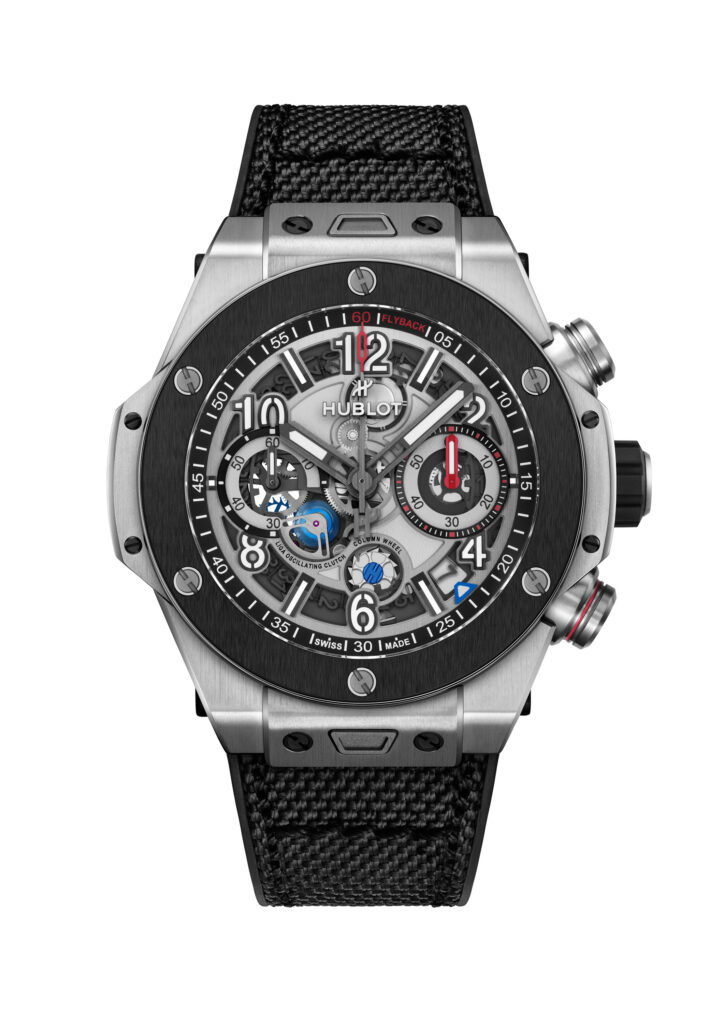
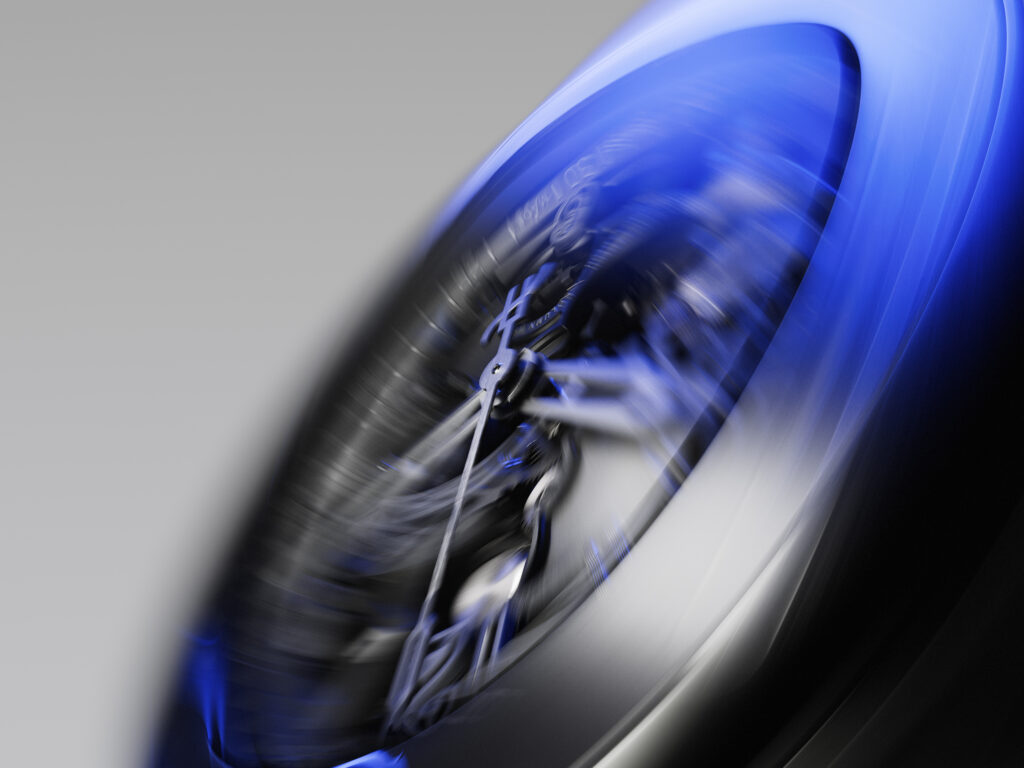
At Hublot, transparency is never about fading into the background. Rather, it serves to shift the focus: from the case to the movement, from the silhouette to the architecture, from the visual effect to the construction. Unveiled in Geneva on April 14, 2026, the Big Bang Reloaded builds on the Big Bang’s twenty-year legacy by returning to the elements that have defined the timepiece since 2005: a 44-mm diameter, a multi-layered case middle, a bezel with visible screws, and that quintessentially Hublot idea that a material is only interesting when it comes into contact with another.
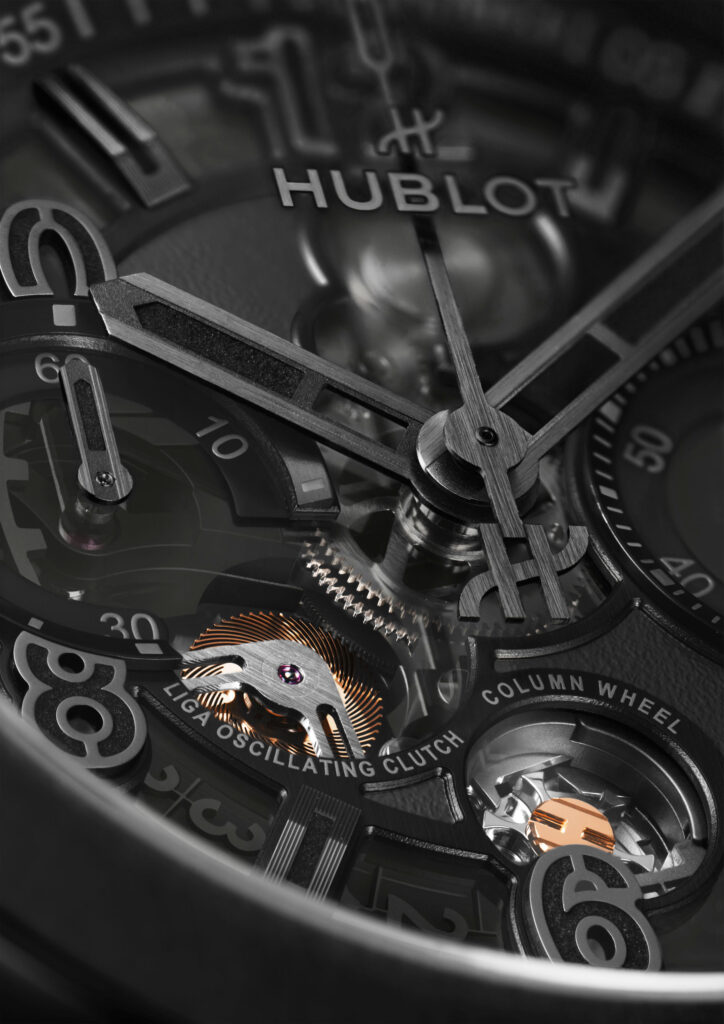
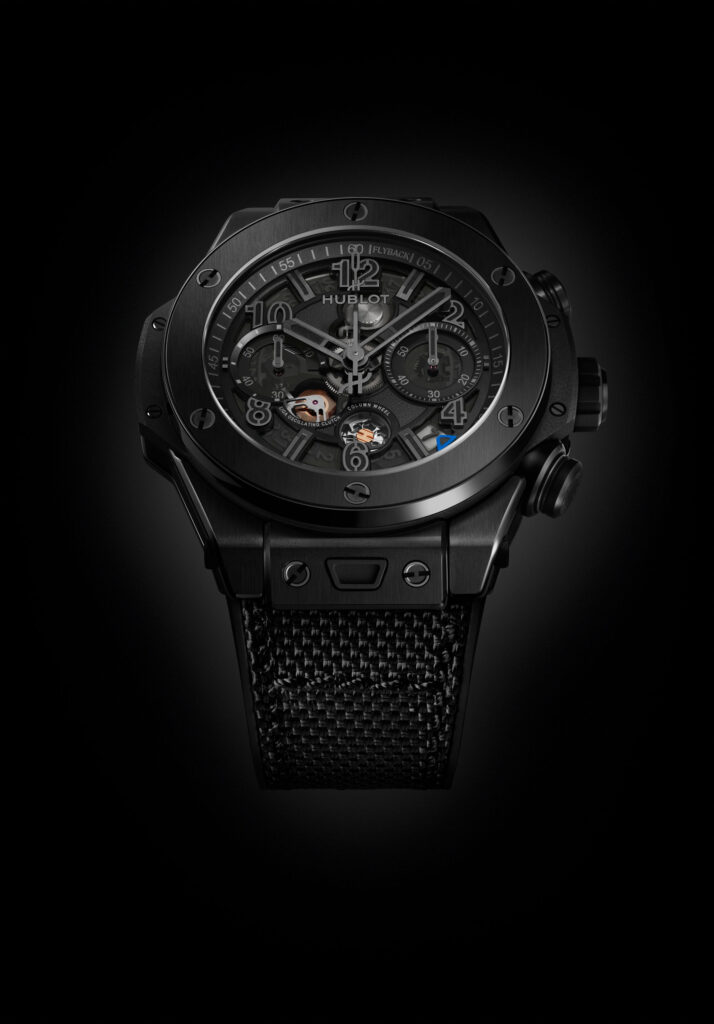
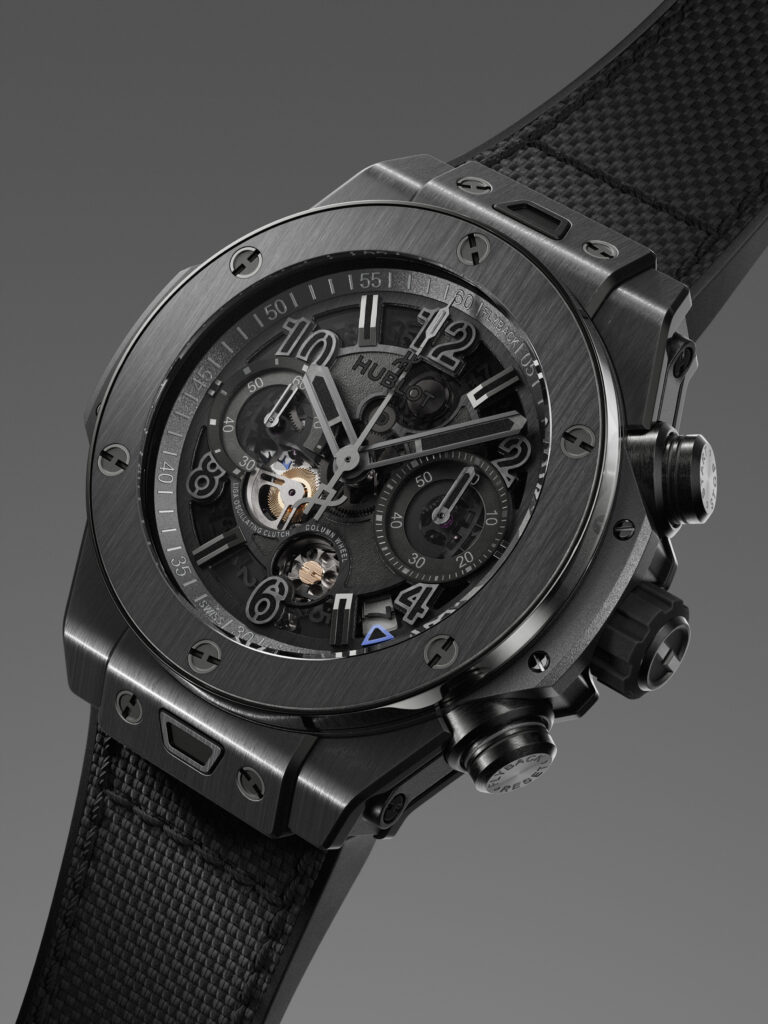
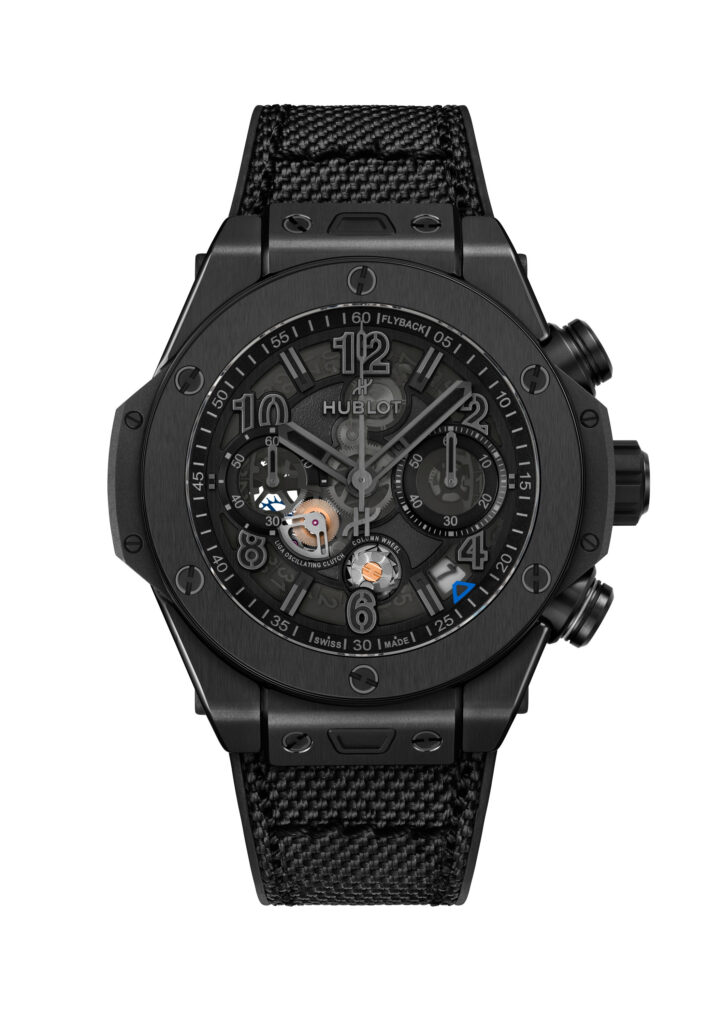
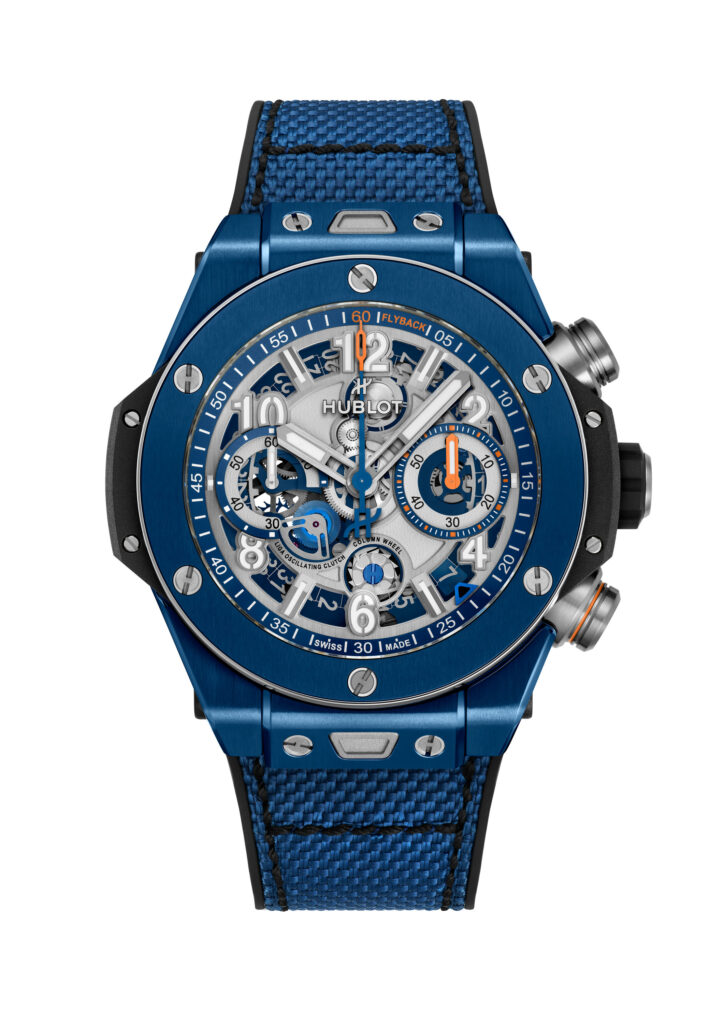
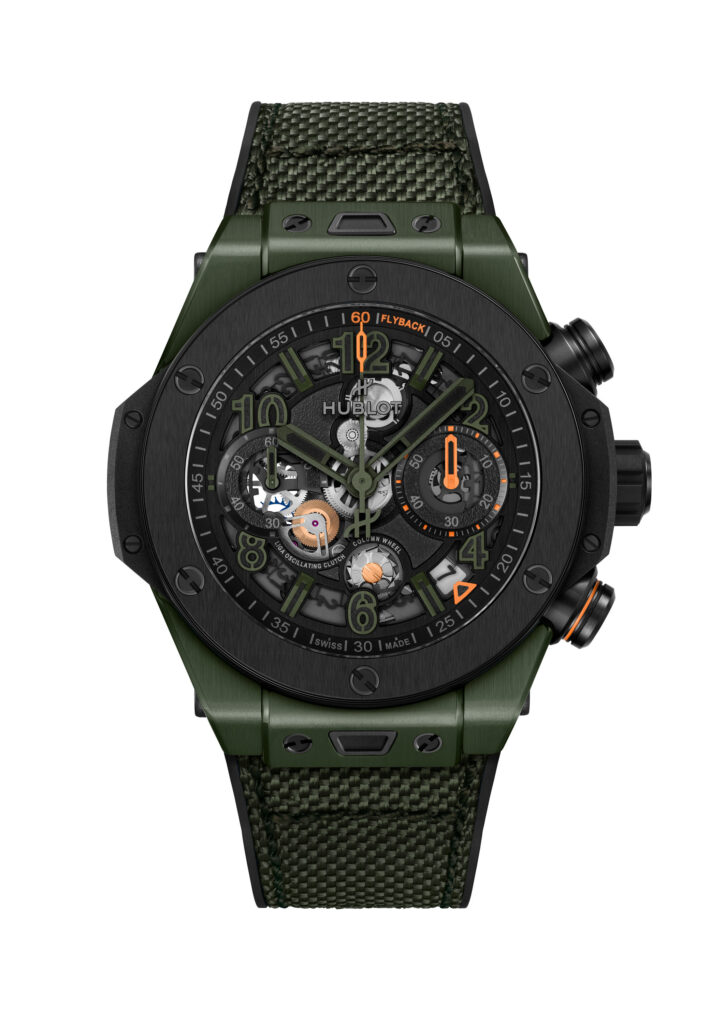
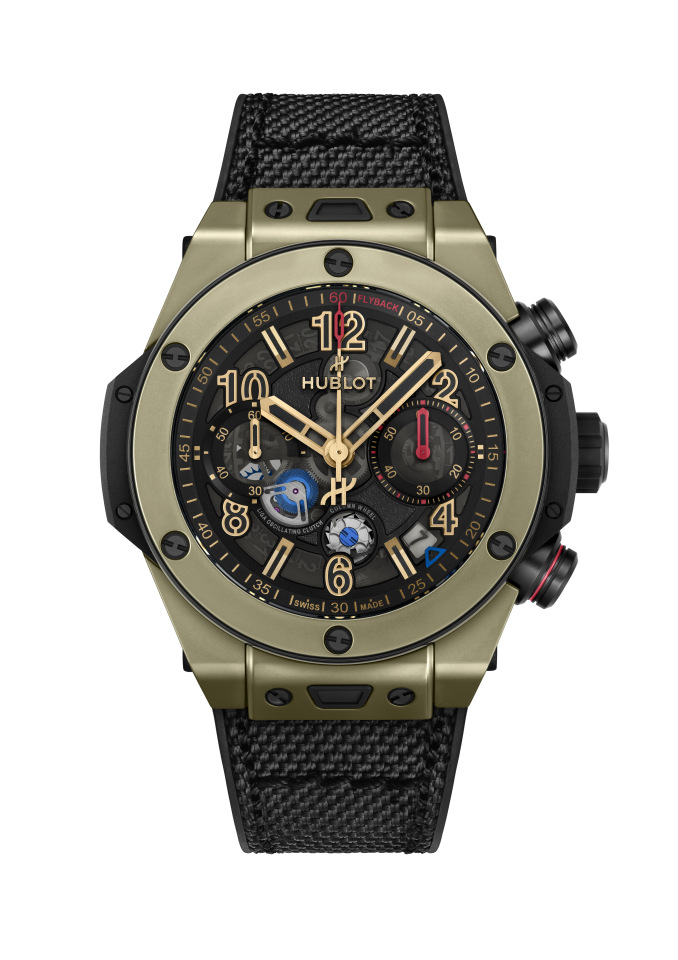
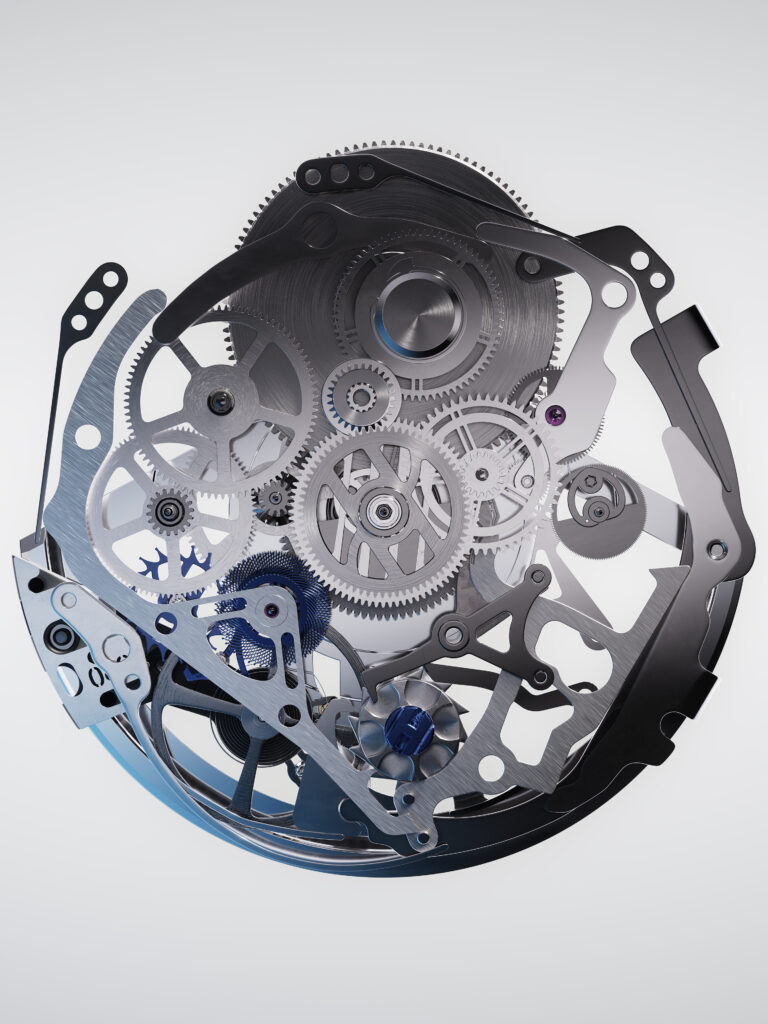
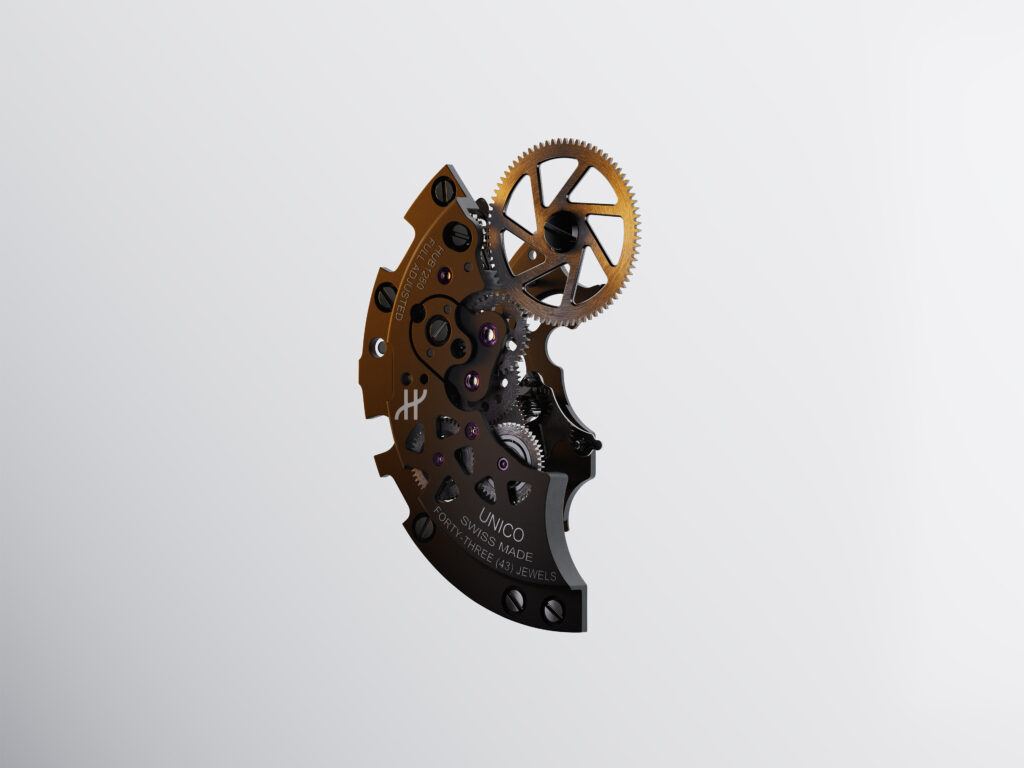
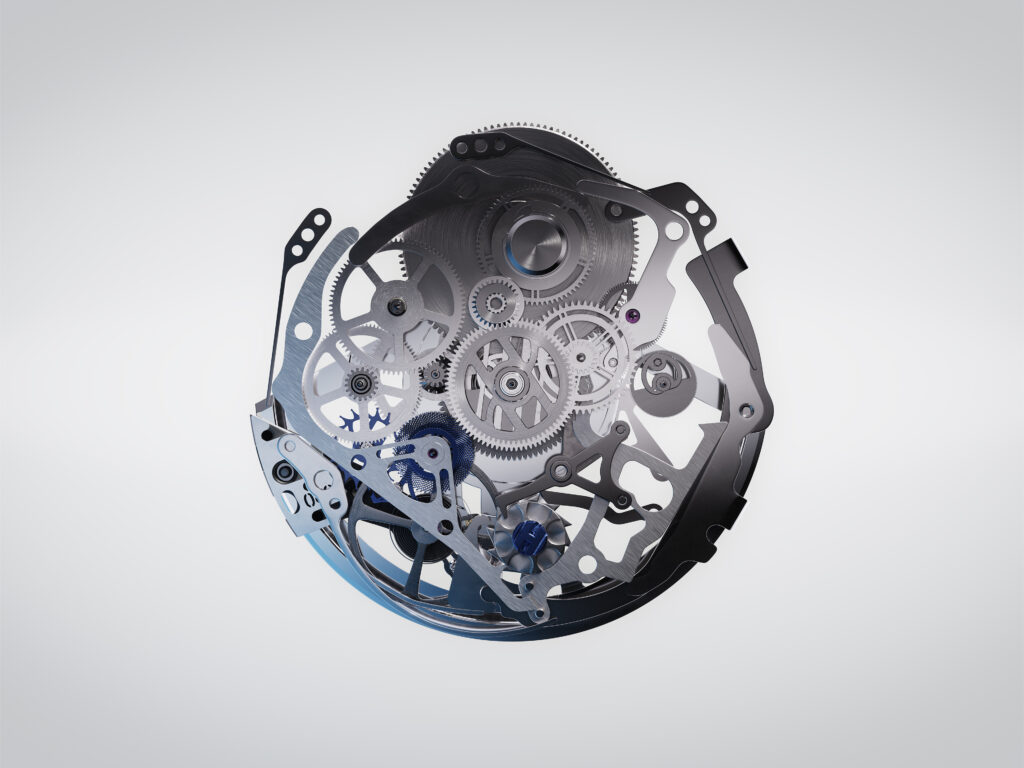
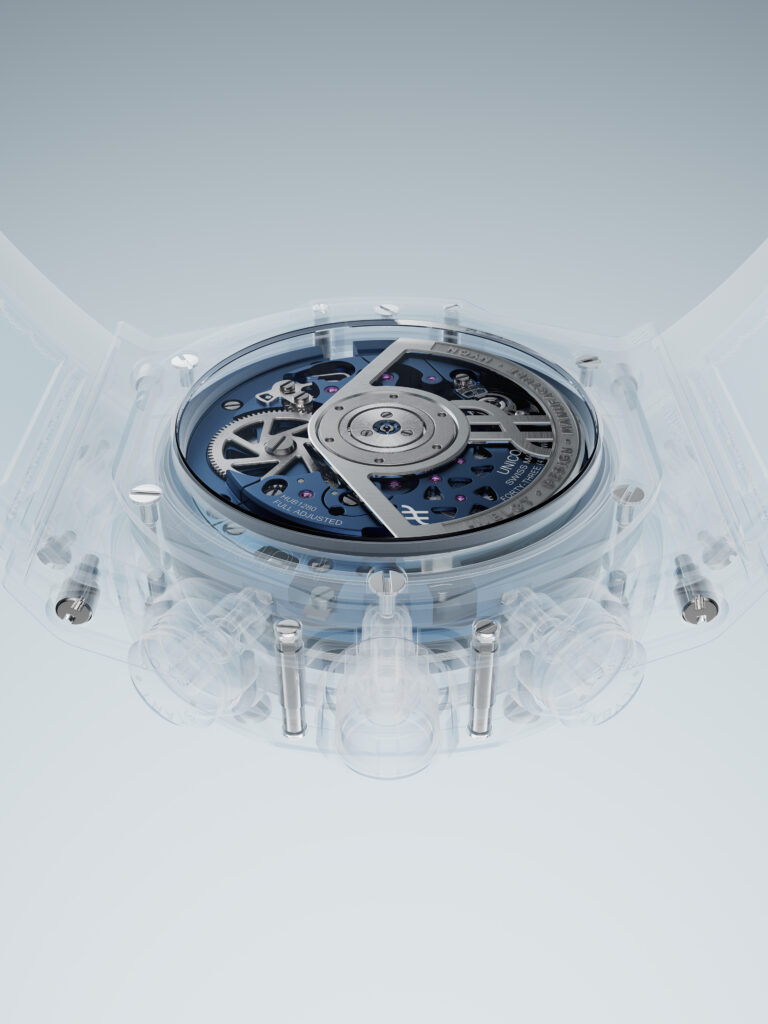
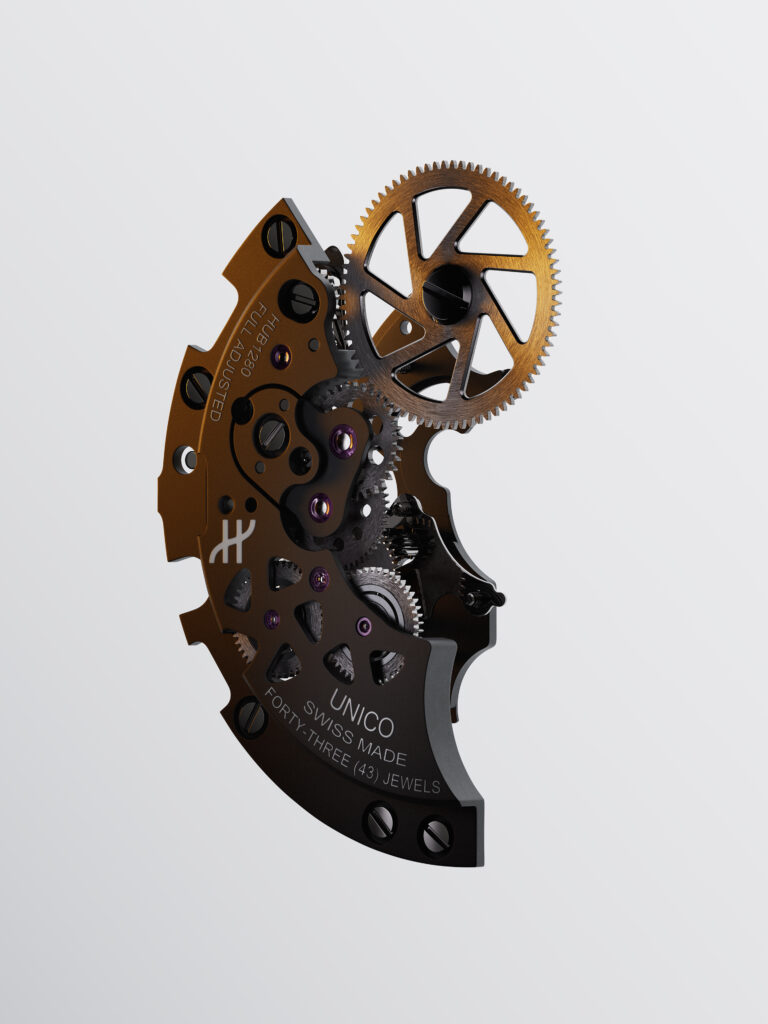
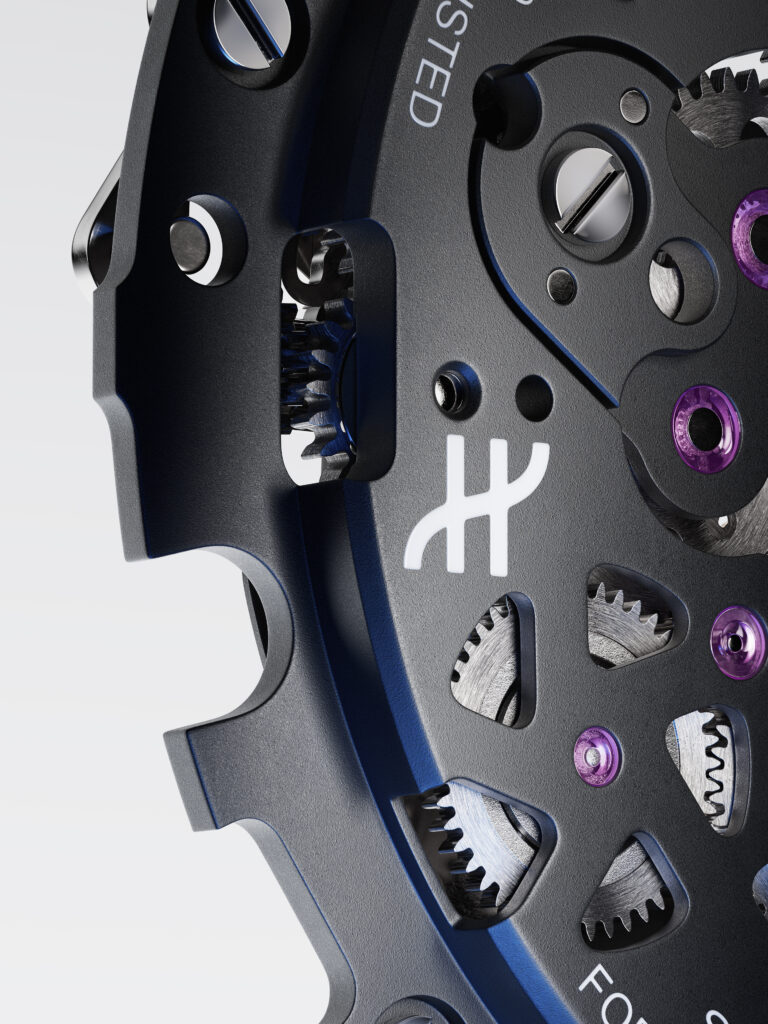
The innovation lies less in a formal break with tradition than in a shift in the center of gravity. Here, the Unico caliber is no longer merely visible—it becomes the focal point. Launched in 2010 as Hublot’s first in-house chronograph, then reworked in 2018 into an integrated movement to combine the base caliber and chronograph module, the Unico is now displayed on the dial side, featuring its column wheel at six o’clock and its dual oscillating clutch at eight o’clock. The brand notes that this movement incorporates five patented innovations: an oscillating clutch with clearance compensation, an anti-chatter system for the chronograph hand, a zero-friction ratchet lock, fine-tuning of the rate, and a highly shock-resistant time-setting mechanism.
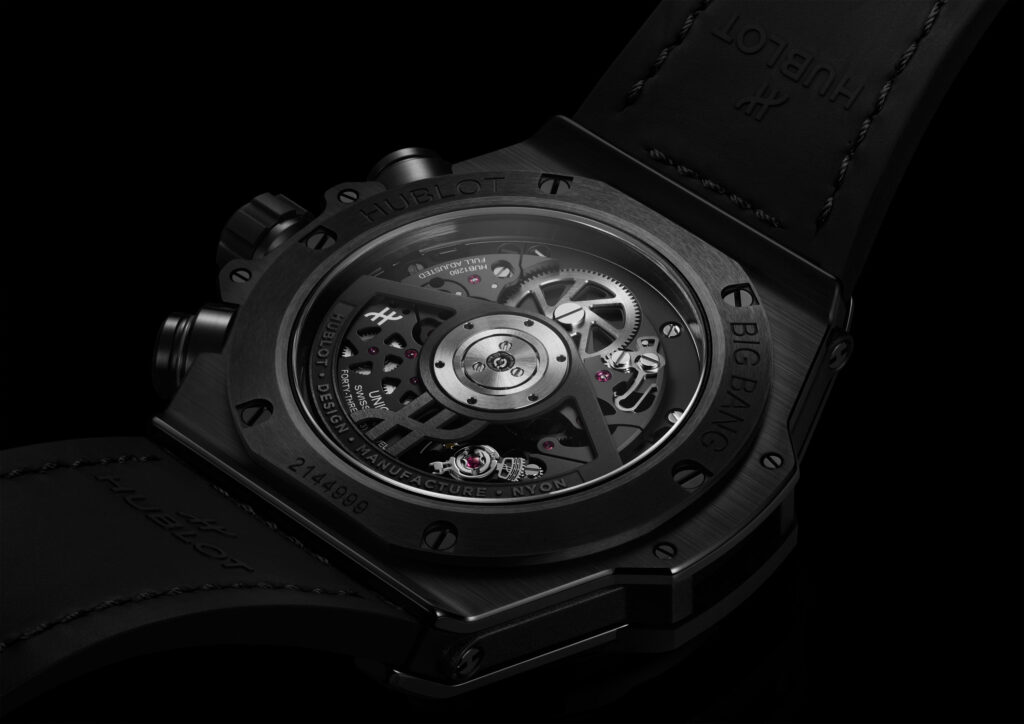
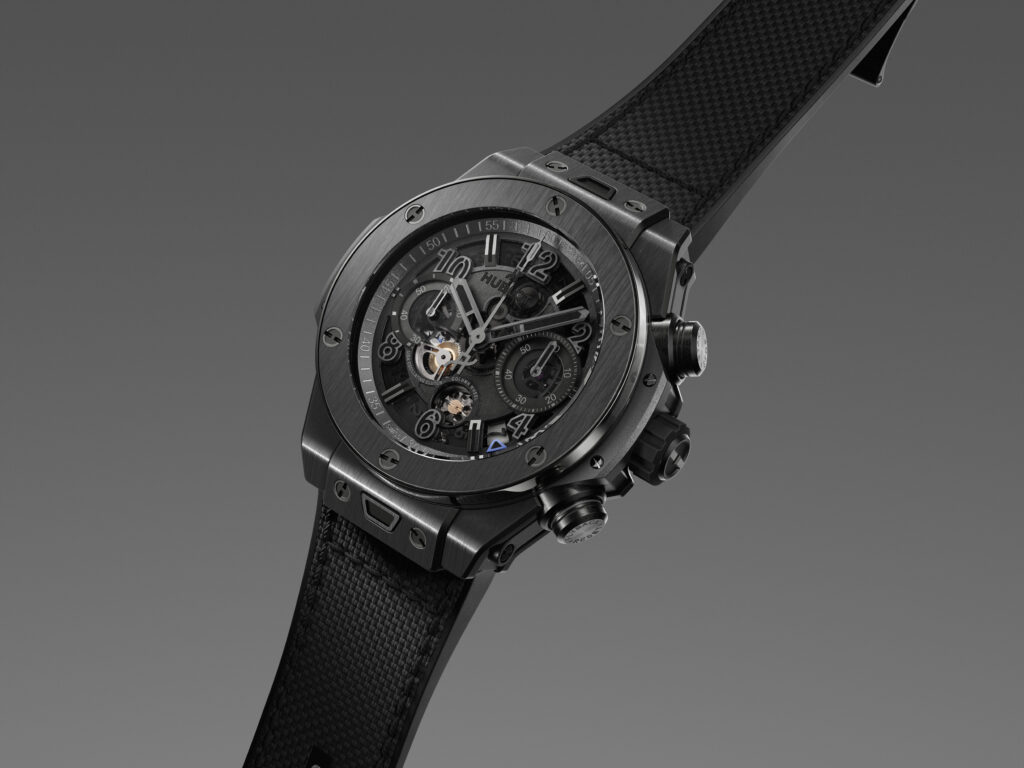
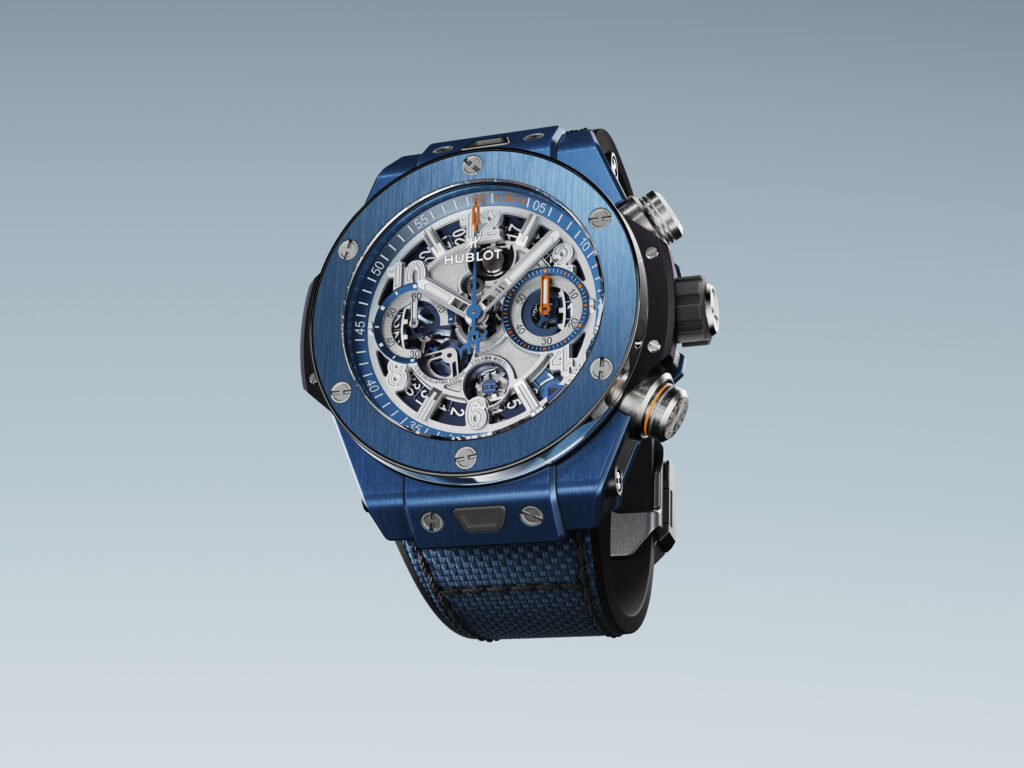
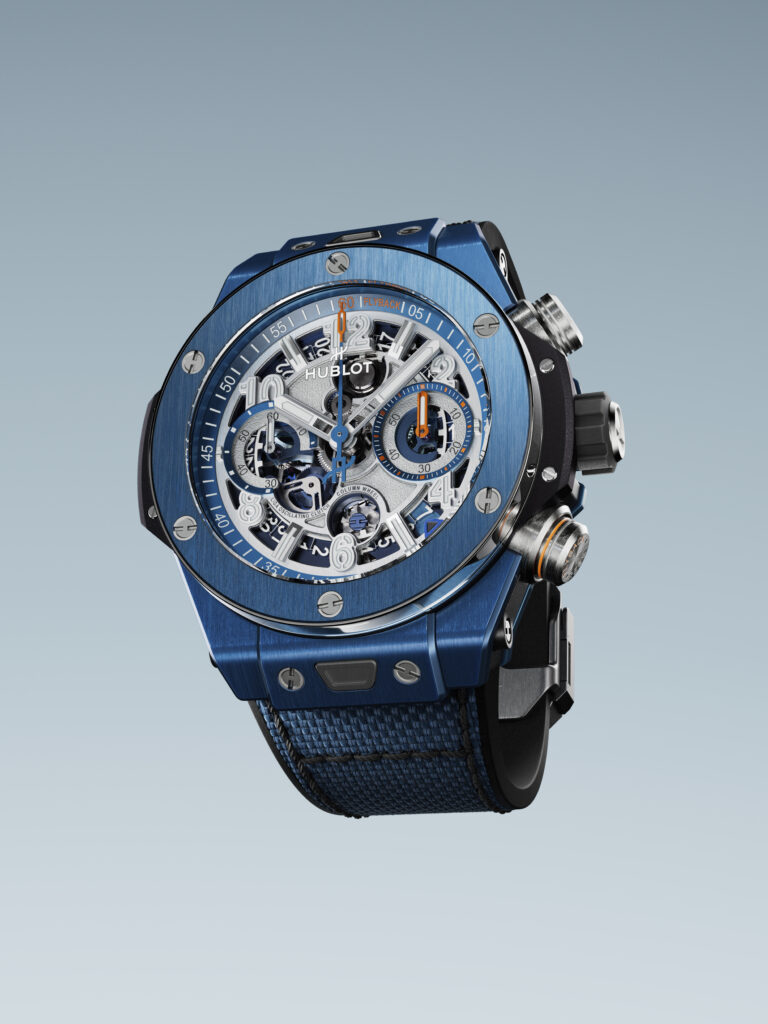
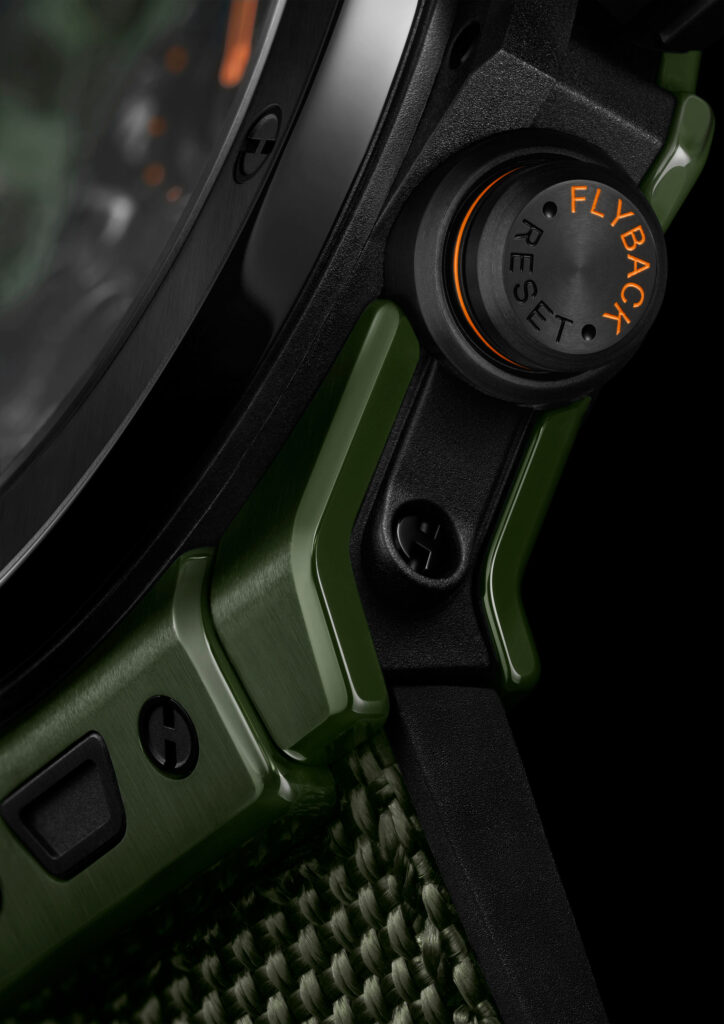
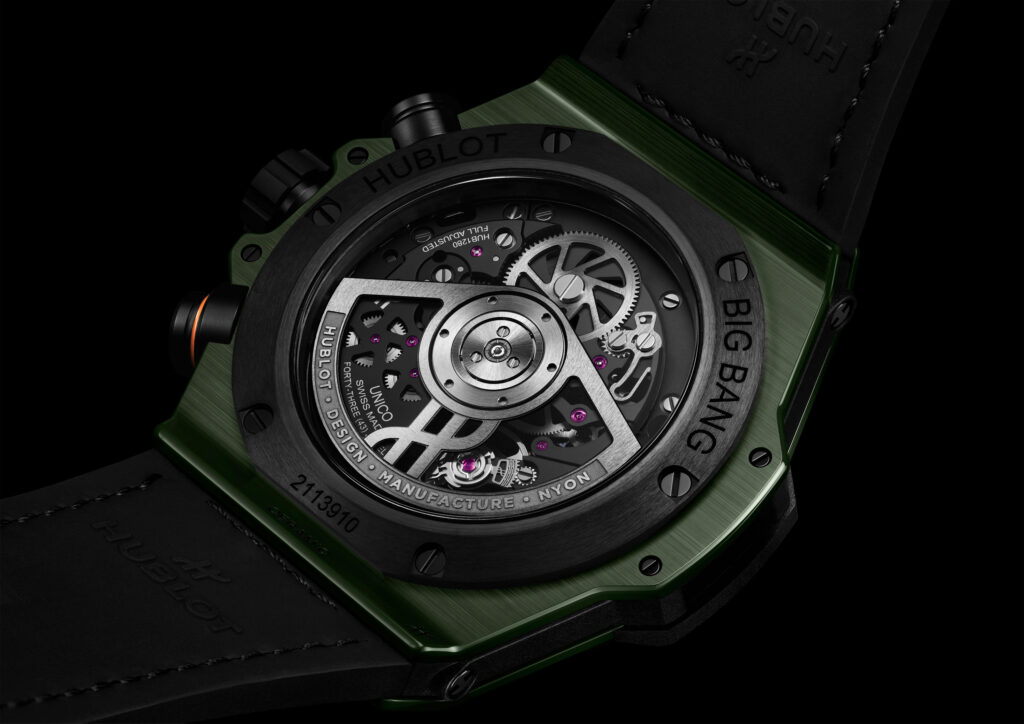
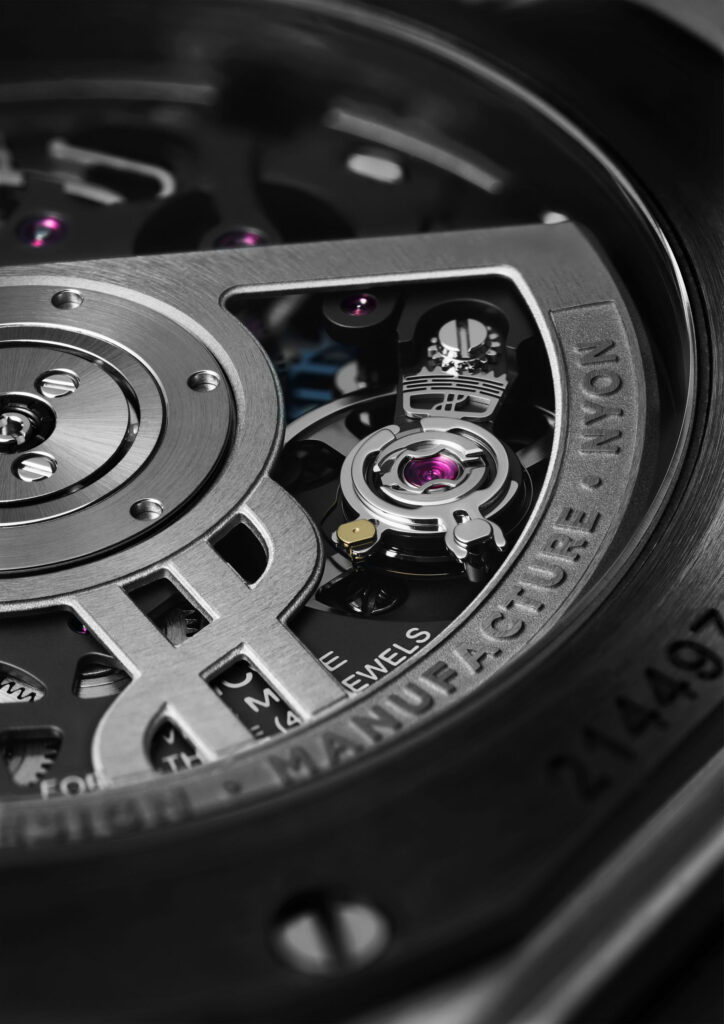
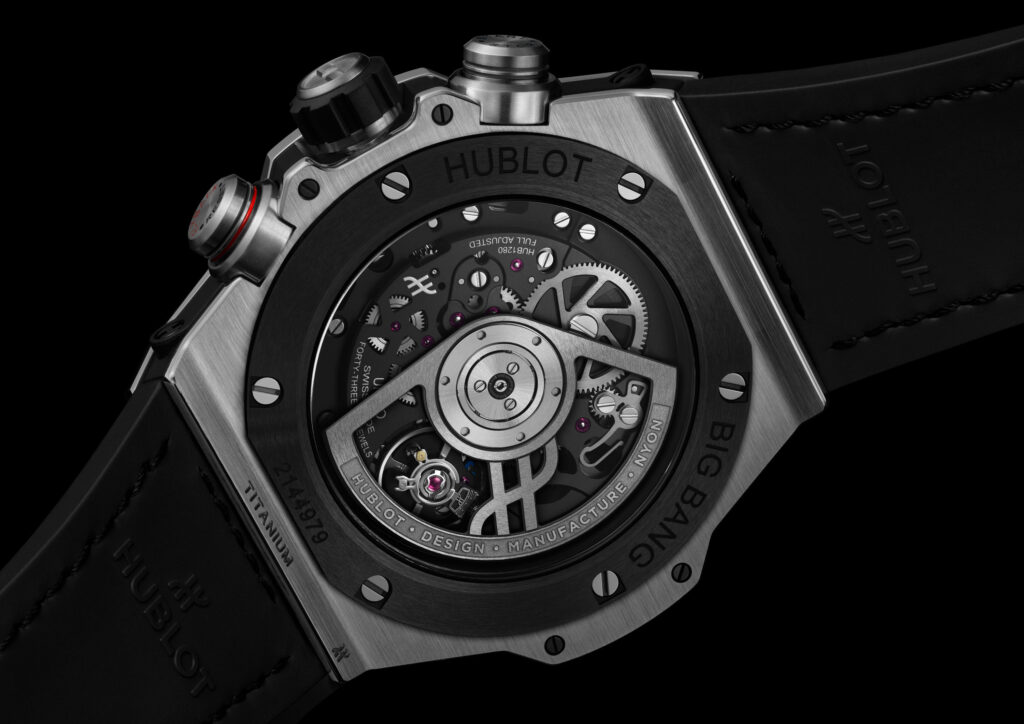
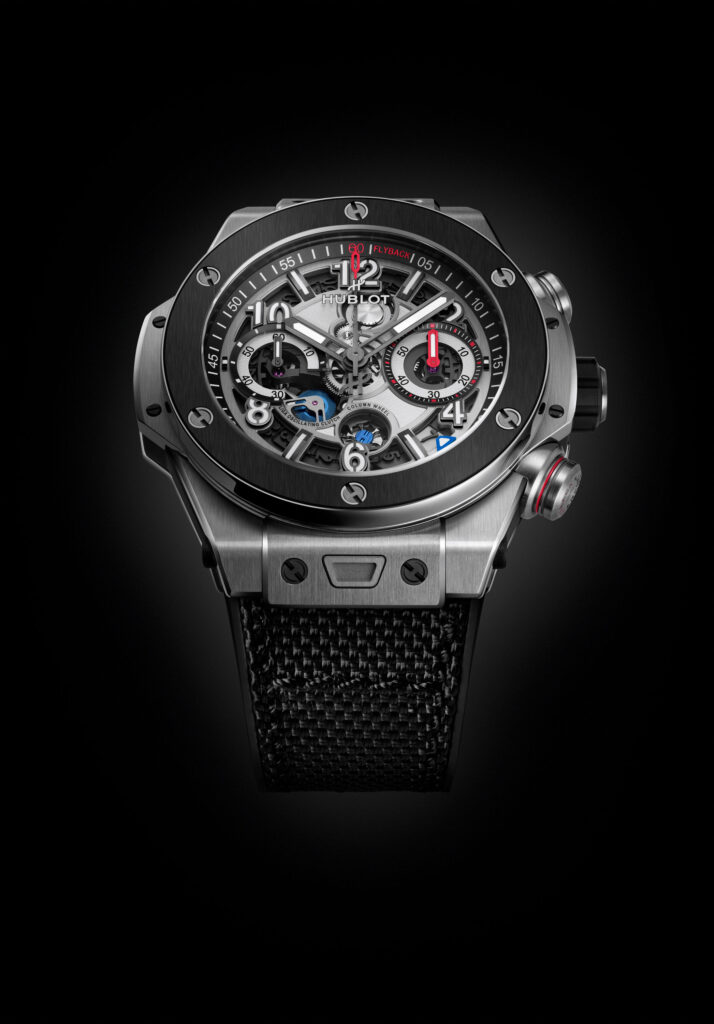
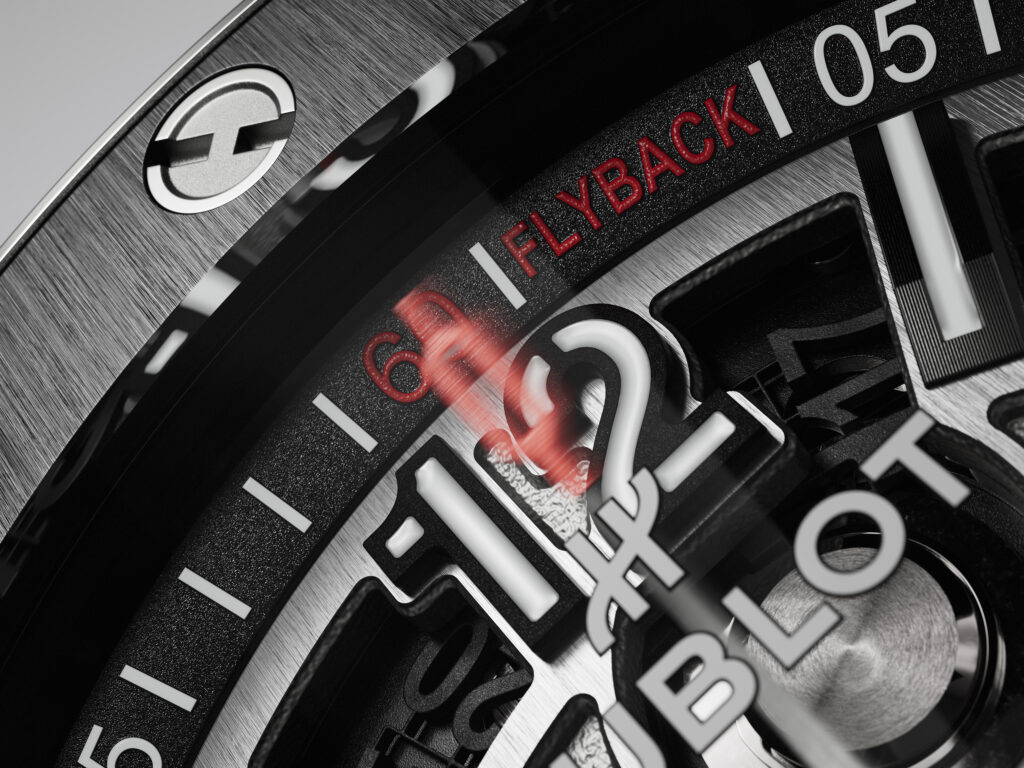
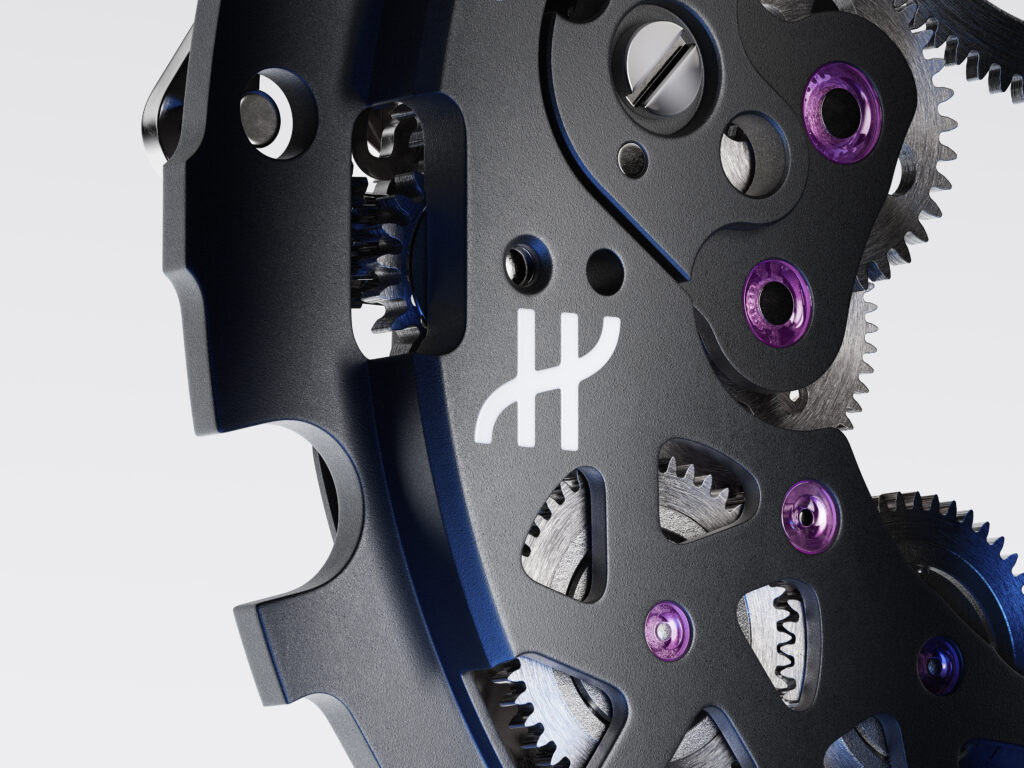
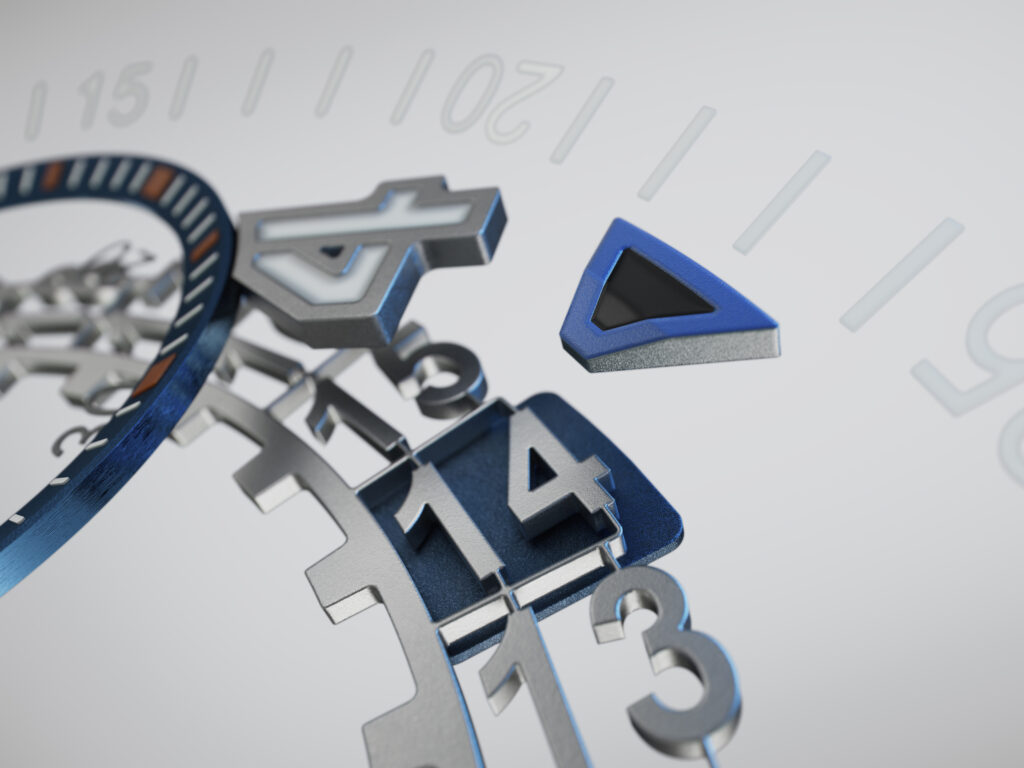
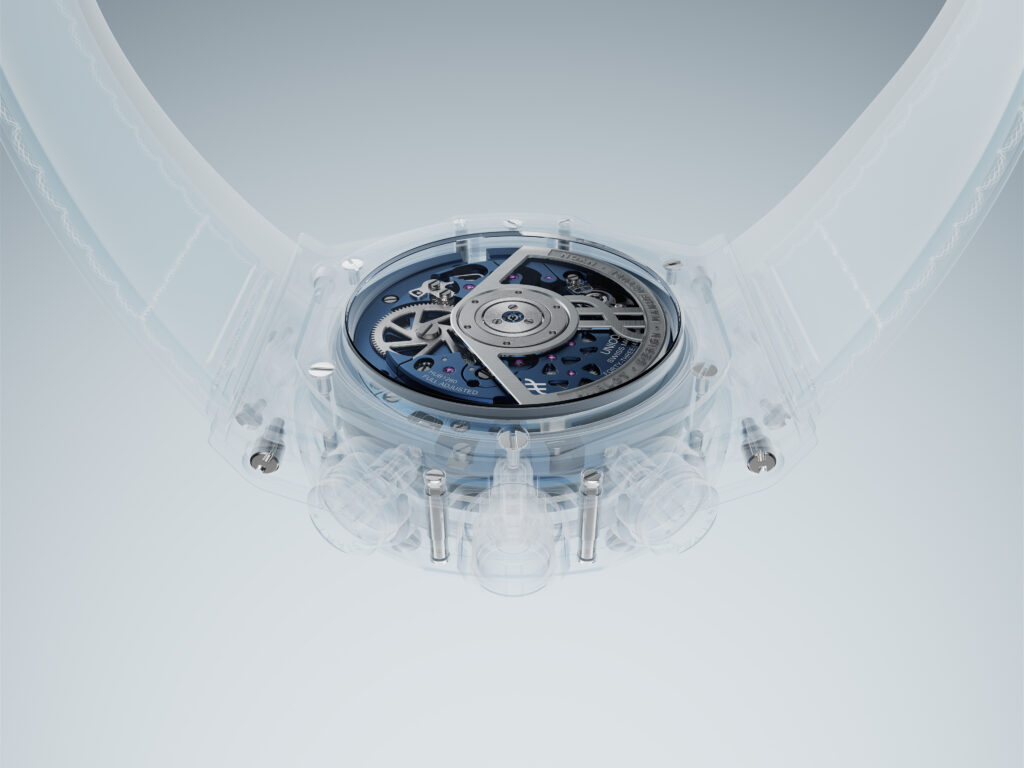
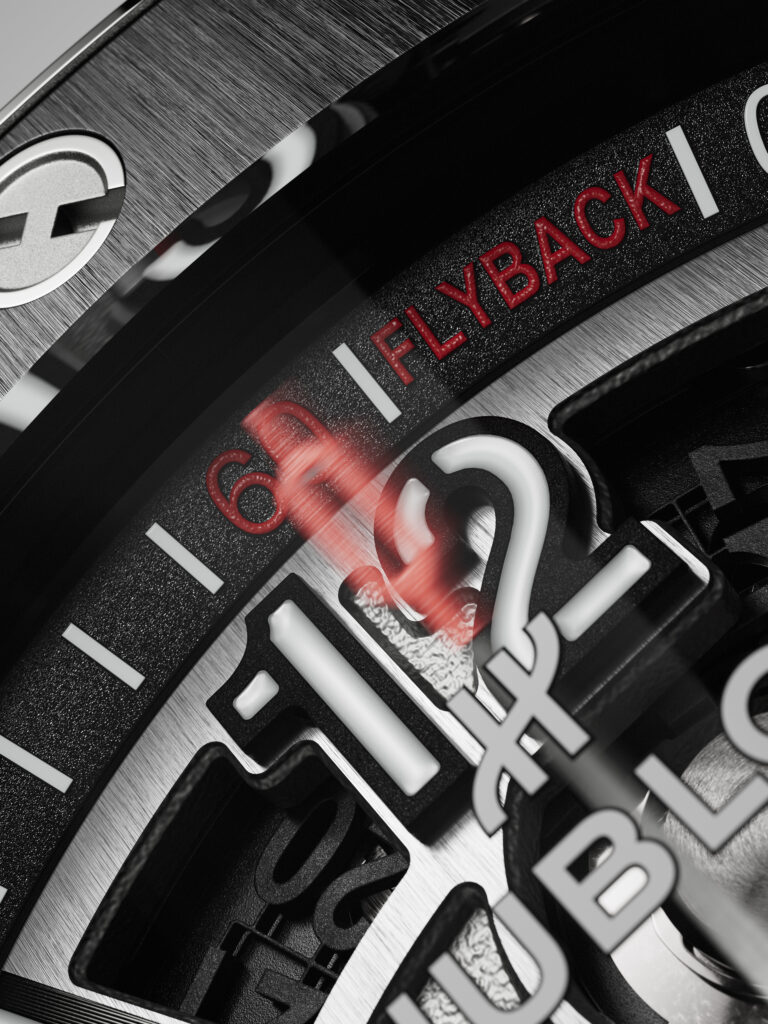
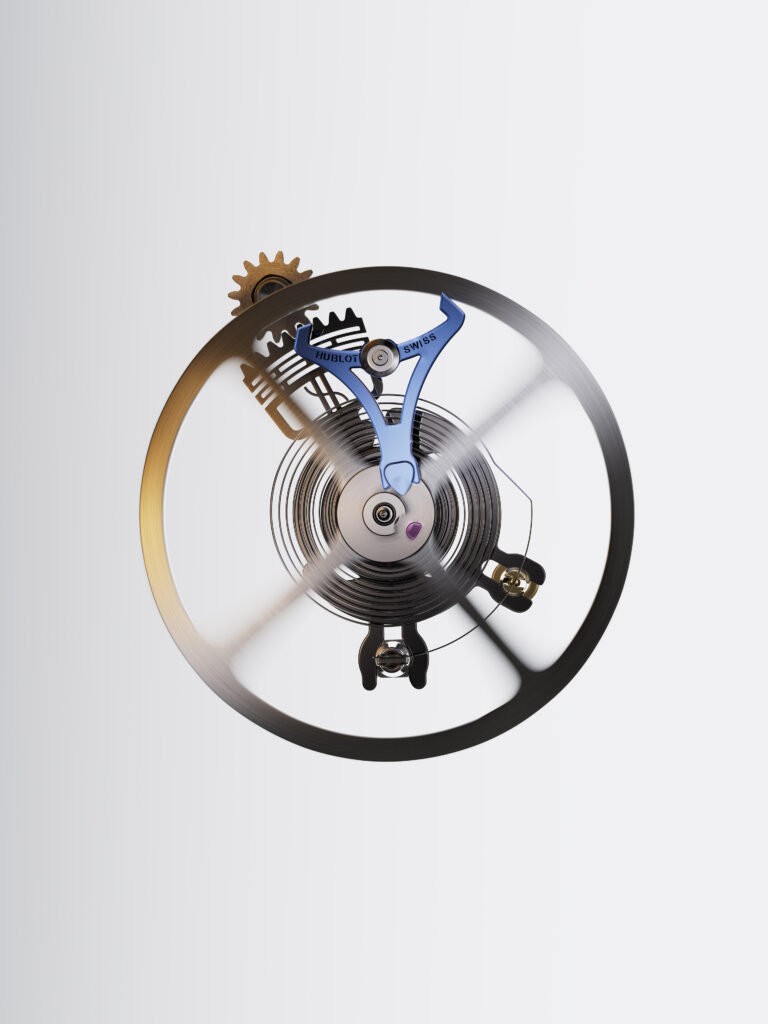
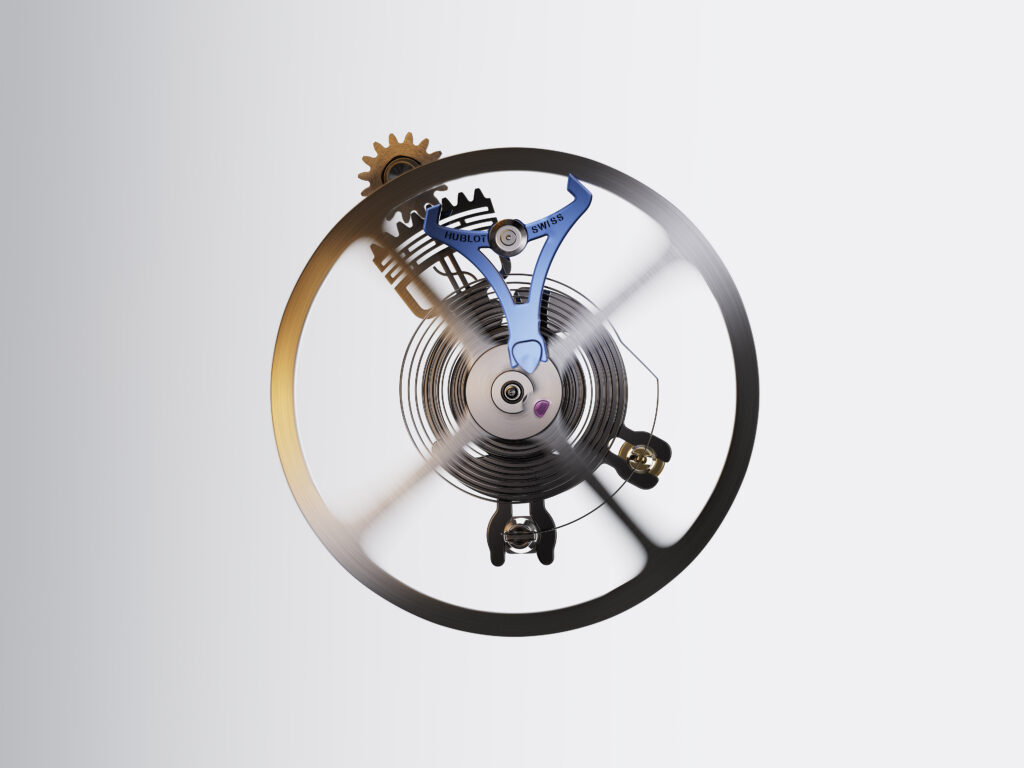
This visible mechanism is what makes the Big Bang Reloaded so appealing. The chronograph sub-dial at 3 o’clock has been redesigned, the date window is positioned between 4 and 5 o’clock, the flyback function is highlighted with colorful accents, and a new chronograph hand enhances the visibility of the movement. On the back, the openworked rotor features a cut-out “H” and the inscription “Hublot. Design. Manufacture. Nyon,” revealing the balance wheel, barrel, and gear train. The art of watchmaking takes on an almost graphic quality, yet never strays from its functional purpose.
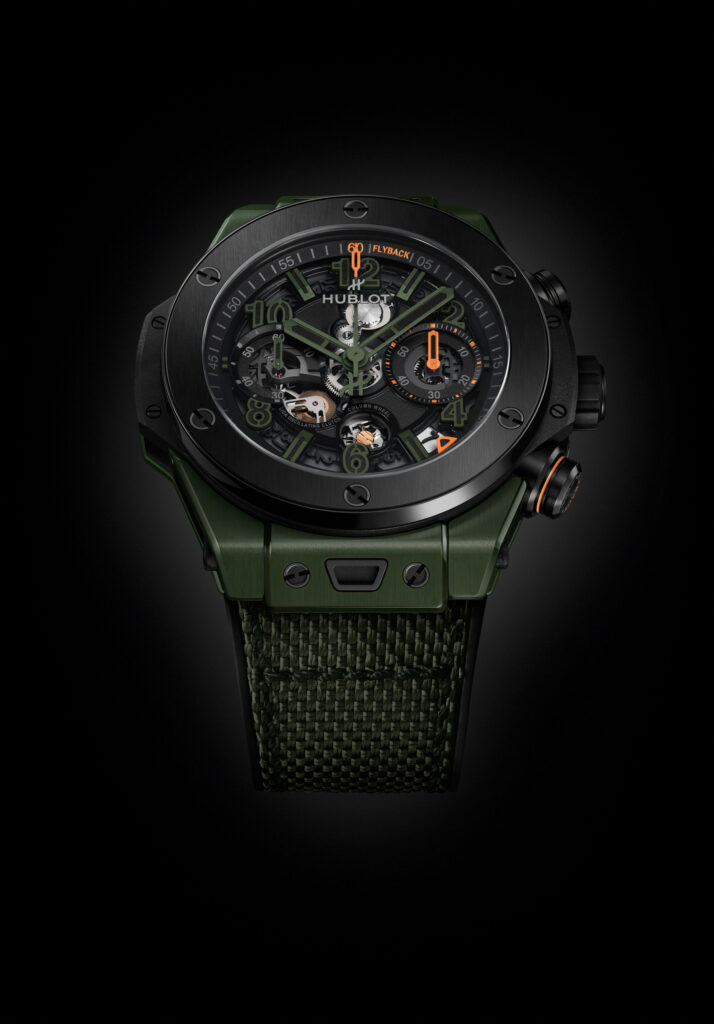
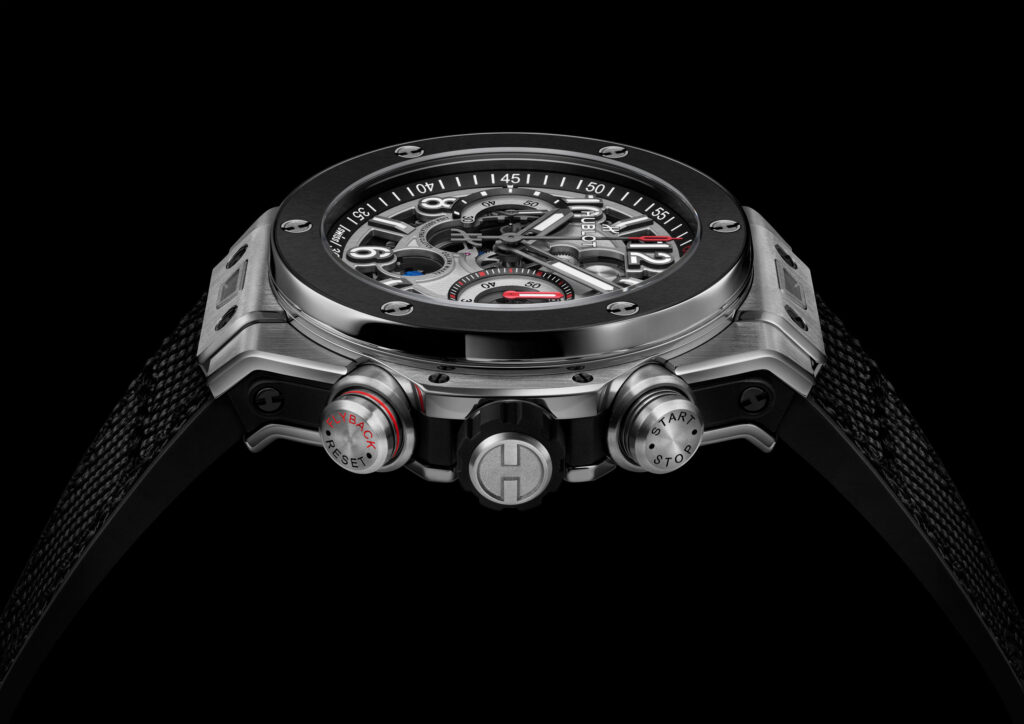
The 44-mm case retains the Big Bang’s DNA while accentuating contrasts with a two-part bezel. This design creates a dialogue between polished finishes, satin-finished surfaces, ceramic, titanium, and Magic Gold. Each watch comes with two straps: one made of textured rubber inspired by fabric, with “H”-shaped stitching; the other made of classic black rubber. The patented One Click system allows you to switch from one to the other without turning the watch into a test of patience.
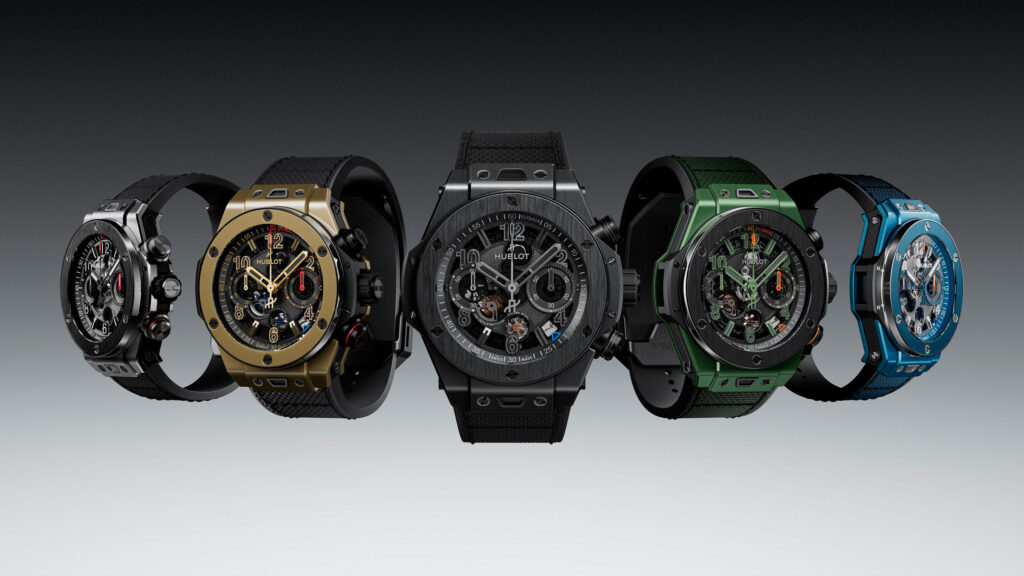
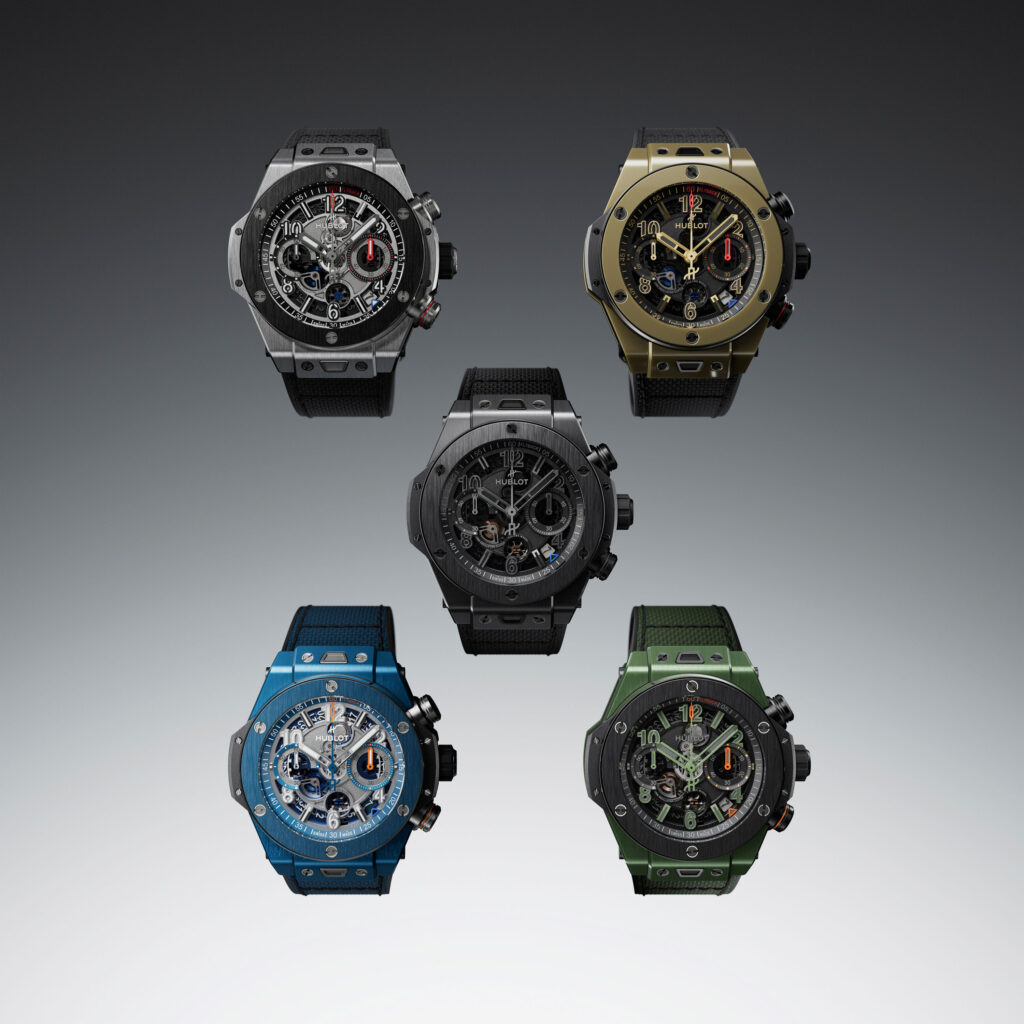
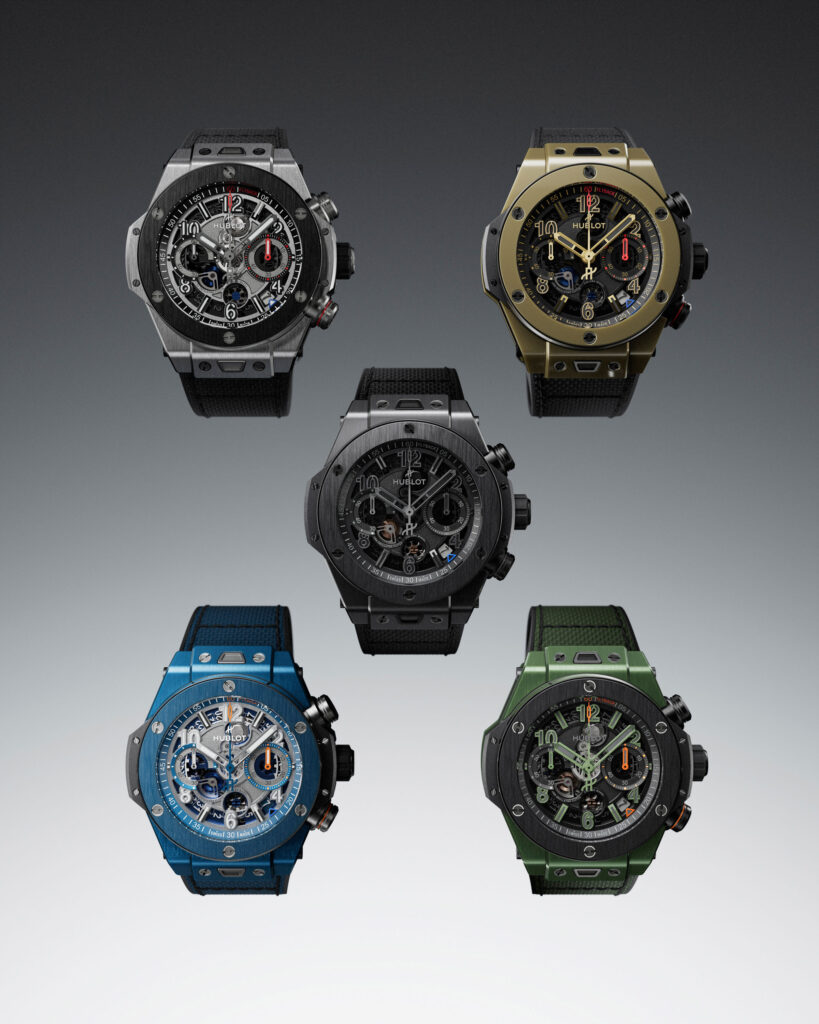
The collection is available in five permanent versions. The first combines polished and satin-finished titanium with a satin-finished black ceramic upper bezel. Three others feature ceramic: All Black, blue, and dark green. The fifth features 18-karat Magic Gold, an alloy introduced by Hublot in 2011 and developed in collaboration with EPFL, which the brand describes as the first scratch-resistant 18-karat gold. Hublot states that this patented material achieves a hardness of nearly 1,000 Vickers, compared to approximately 400 Vickers for standard 18-karat gold.
The choice of materials places the Big Bang Reloaded within an internal timeline: the 20th anniversary of the All Black concept, introduced in 2006, and the 15th anniversary of Magic Gold, unveiled in 2011. Colored ceramic, meanwhile, reaffirms a territory where Hublot has built part of its contemporary aesthetic: not the classic understated elegance of watchmaking, but an almost industrial clarity of the material. The press kit specifies that the high-tech colored ceramic used by the brand is 300 Vickers harder than conventional ceramic.
The Big Bang Reloaded thus poses a question that is quite apt for 2026: what remains of a groundbreaking watch when its groundbreaking nature has become its legacy? Hublot answers by showcasing its own movement. The Big Bang no longer merely attempts to appear as if it were built; it shows exactly how it is built. This may be its most interesting evolution: the boldness no longer lies in its size, but in the way the movement is presented.



Cette publication est également disponible en :

