

105 rue Faubourg St-Honoré was the venue for an interesting tasting of Alsace wines. Organized by the Alsace region and a number of winegrowers, the event highlighted a number of precious beverages. Red, white and rosé wines revealed their seductive qualities. A whole savoir-vivre was glimpsed in small sips.
Over and above the usual grape variety classifications, the wines were listed according to their characteristics. Fresh” wines, proud and bright, are generally made from an Alsace Grand Cru. Intense’ wines are more introspective, evoking undergrowth. The ‘Moelleux’ wines, a must, are delicate, delivering surprising aromas.
Effervescent wines, or Crémants d’Alsace, add an undeniably festive note.
In any case, all 7 Alsace grape varieties were present. Riesling, Pinots (Blanc, Gris, Noir), Sylvaner, Gewürztraminer and Muscat. 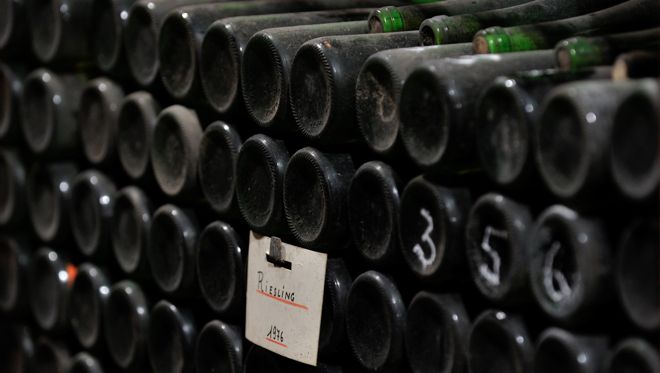 In Alsace, they give the wine its appellation. Thirty or so wines with a wide range of tastes and flavors took us on a journey through this beautiful region. Some superb bottles to be acquired deco cover absolutely. First and foremost, it’s imperative to mention Sylvie Spielmann’s singular Gypse (2010). A subtle blend of pinot noir, blanc and gris, this wine is distinctive. With its intense minerality, it perfectly evokes the terroir on which these vines thrive, a former gypsum quarry. We should also mention a few Rieslings. The Finey-Sohler Riesling (2010), the Winzenberg Riesling Grand Cru (2008). The latter is very mineral, with less roundness on the palate than the former.
A Pinot Gris from François Schmitt is a very fine example. Le Maréchal (2010) comes from the Bollenberg terroir. 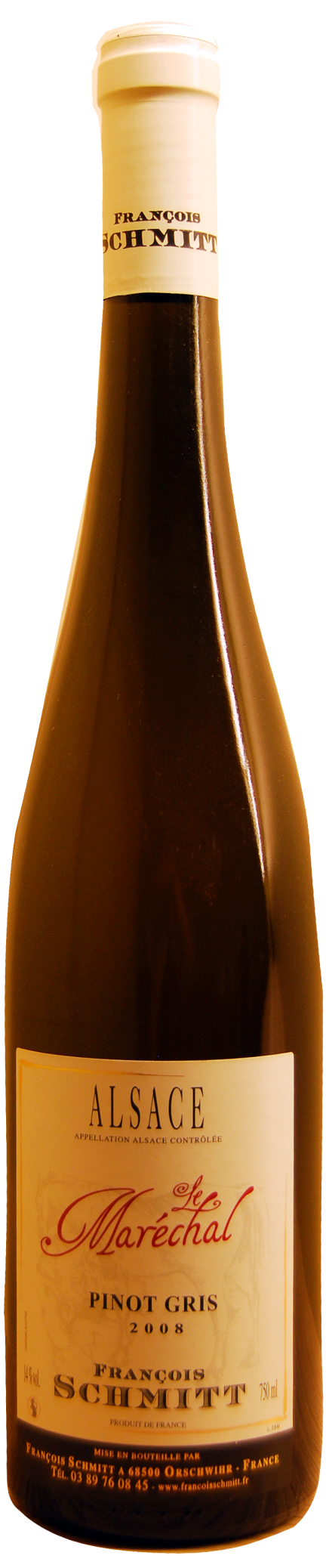 A powerful, subtle wine, it can accompany refined dishes. On the palate, it gradually reveals brioche flavors and an unsuspected fullness.
 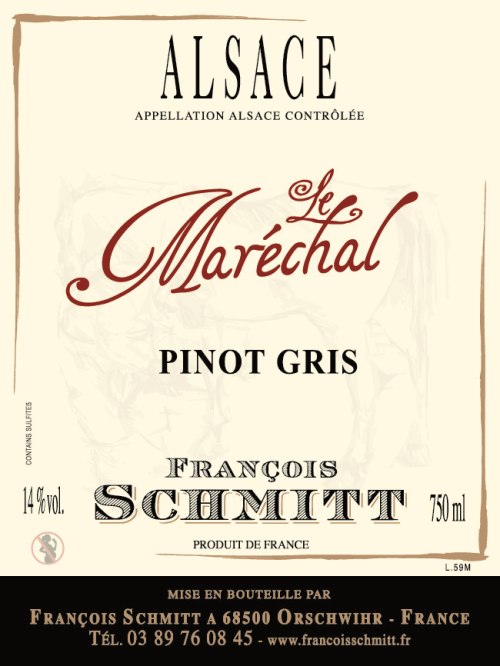 A wine for laying down, it could be even more interesting in a few years’ time. This relatively recent vineyard (1972) offers a wide variety of wines, with particular attention to quality.
Pinot Noirs were also well represented. Bachert Noëlle’s Pinot Noir (2001), for example, has an interesting, prominent blackcurrant flavor. Domaine Lucien Albrecht (Le Pinot Noir Weid 2009) is a real splendor. A delicate taste of Morello cherries, and finally walnuts. Aged in oak barrels, it delivers refined nuances. Traditional winegrowers since 1425, the Albrechts seem to be interested in wine like alchemists. They demonstrate real mastery.
A 2005 Gewürztraminer Vendanges Tardives from Maison Trimbach offered a pleasant perspective on late harvest wines in Alsace. 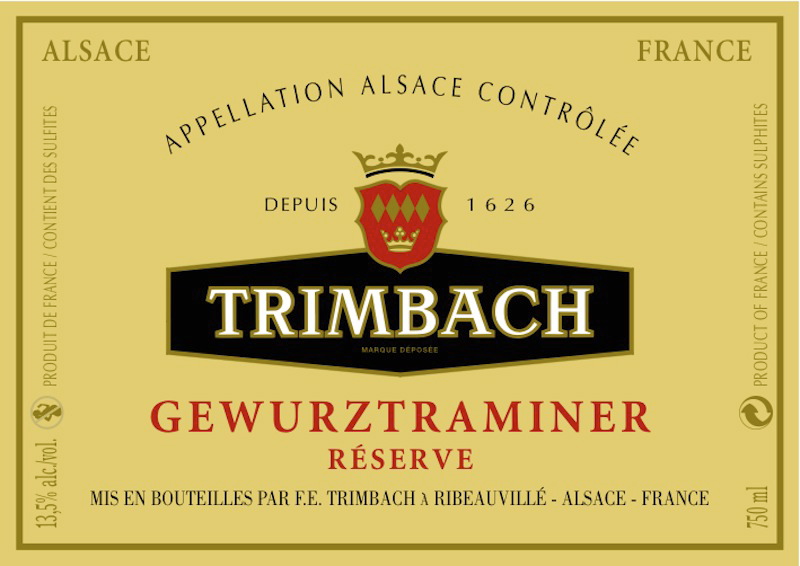
Domaine Jean-Marc Bernhard, Gewürztraminer Grand Cru Mambourg 2009 is a superb success. 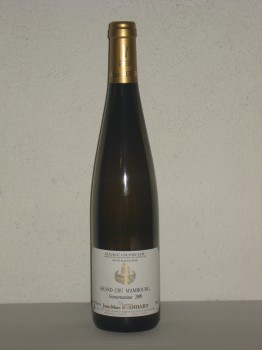 Liquorous, with a mineral background on the palate, it can be savored moment by moment. A hint of citrus (lime, kumquat).
A number of winegrowers were also on hand to perfect the setting. An interview was conducted with one of them, Sylvie Spielmann, a diVINes member. 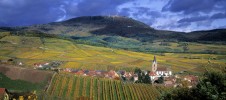
A year ago, you took part in the creation of DiVINes, an association of women involved in wine in Alsace. Did you go through any particular process to choose this appellation?
We launched a kind of proposal competition via our Facebook page.
This one seduced us.
Winegrowers, winemakers, cellarmen, sommeliers – how many Alsatian women have signed up?
Sixty women.
What were your objectives?
We wanted to give these women a platform to express themselves. They can talk about their situations, but they can also help each other. Through Facebook, each of them can ask a question and get a quick and easy answer. Depending on the problem, this can be extremely useful.
We also try to get together before the harvest, etc…
Your other aim is to help people discover wine and your estates. What do you offer in concrete terms?
We organize tastings at our various estates. Themes may vary. Visits to the Musée du Vignoble are also possible. We have recently started welcoming students to our vineyards.
From what age do you welcome them?
The audience can be very young. We regularly work with primary school children.
Do you have any other projects?
Yes, we’re constantly trying to come up with new ideas.
Are you in contact with any other regional winegrowers’ associations?
Yes, the DiVINes are part of the Cercle national des ‘Femmes de vin’. Women from Burgundy, Bordeaux, Languedoc, etc., have a similar approach to ours. We sometimes organize collective events. For example, in June 2011, a joint tasting took place during Vinexpo in Bordeaux.
You’re a winemaker yourself. Can you talk about your Gypse (2010), which is featured in this tasting?
It’s a blend of pinot blanc, gris and noir. The particularity of the terroir is its primary utility. For a century, my family exploited a gypsum quarry here. It was filled in and vines were planted.
The wine is typical, very mineral. Its aromas are atypical
Cette publication est également disponible en :

