
Until January 8, 2011, Galerie des Galeries presents Antidote 6, an exhibition of works by seven French and European artists from the private collection of Ginette Moulin, Chairman of the Supervisory Board of Galeries Lafayette, and her grandson Guillaume Houzé. For the past five years, Antidote has been committed to promoting and presenting the French contemporary art scene by bringing together the works of a dozen emerging and established French artists. As art is in a perpetual state of flux, this year’s Antidote exhibition opens up to the world, and more particularly to Europe, breaking down borders to confront the views of artists from different artistic scenes and highlight their convergence.
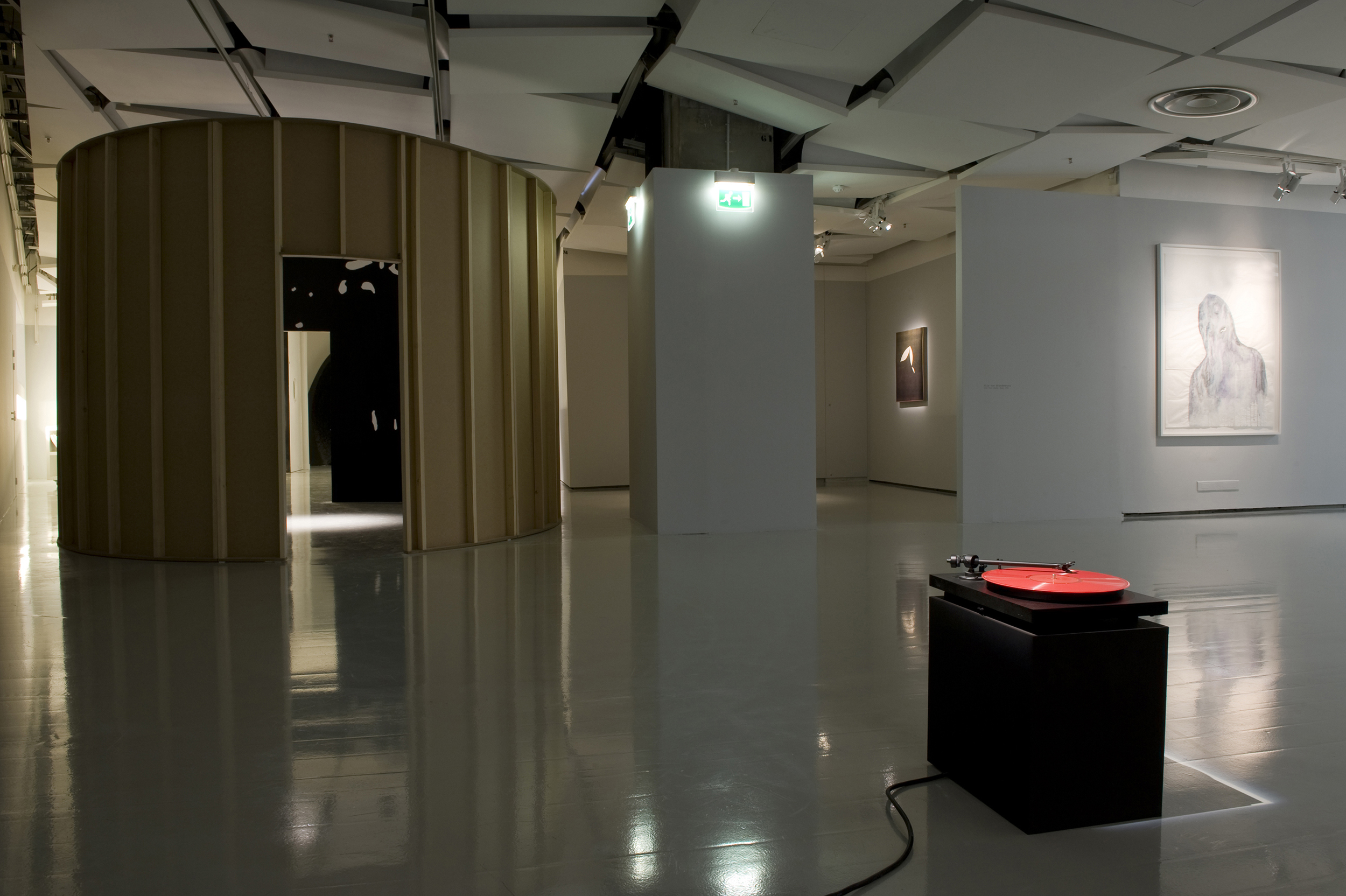
Ulla von Brandenburg Forest III, 2009 Courtesy Art: Concept, Paris Pietro Roccasalva The Skeleton Key (His Latest Flame), 2009 Ulla von Brandenburg Ohne Titel (Maske, Mask), 2006 Courtesy Art: Concept, Paris
For this 6th edition, Galerie des Galeries invites us to take a gentle stroll through the works of artists Victor Man, Pietro Roccasalva, Markus Schinwald, Niels Trannois, Tatiana Trouvé, Ulla Von Brandenburg and Andro Wekua. The selected artists share an introspective world where the splitting of identity is conducive to the invention of new spaces. Paintings, installations and sculptures inhabit the Galerie des Galeries, creating several mental spaces in which each artist is free to share his or her creative bubbling.
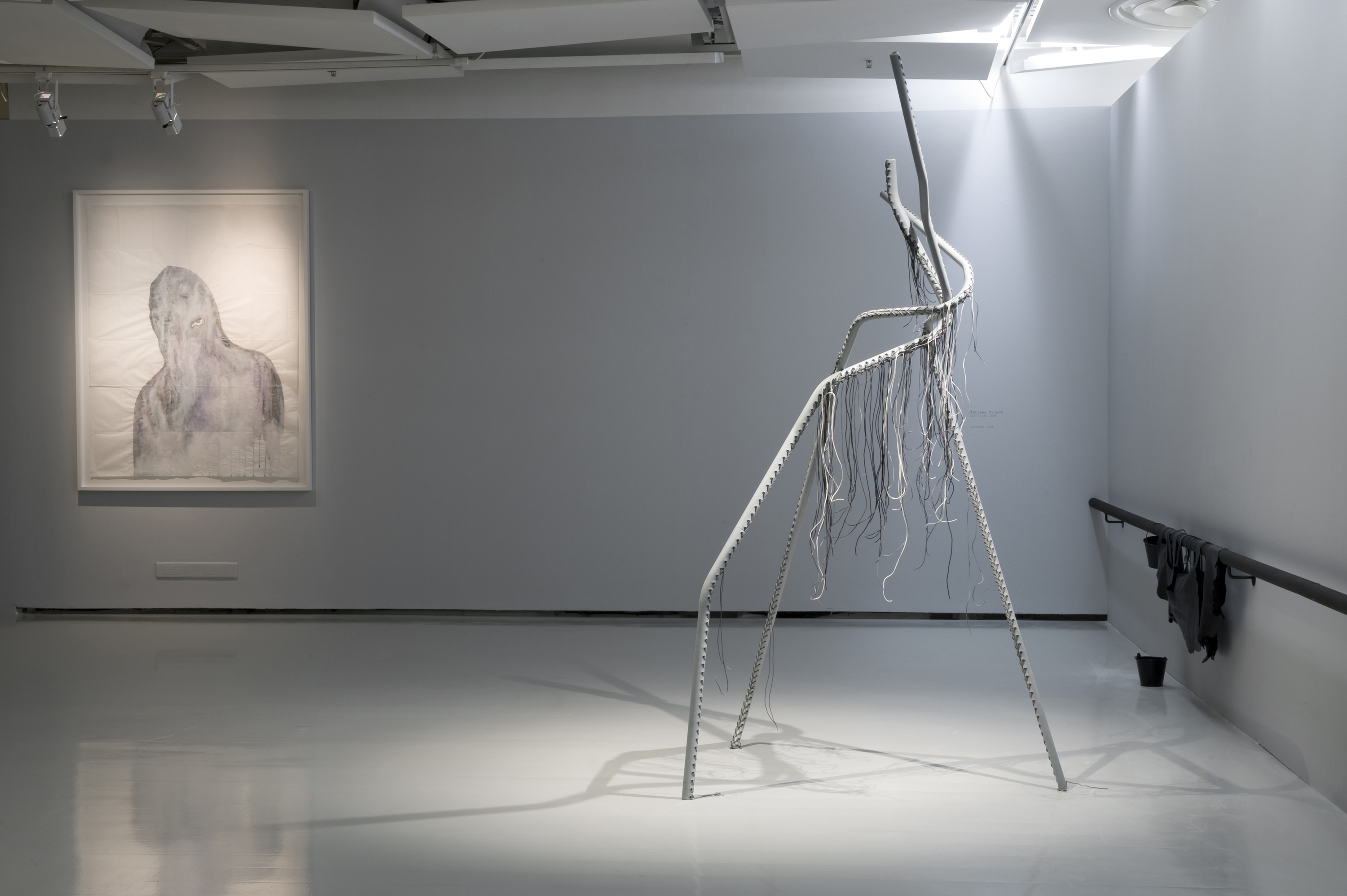
Ulla von Brandenburg Ohne Titel (Maske, Mask), 2006 Courtesy Art: Concept, Paris Tatiana Trouvé Untitled, 2008 Courtesy: J. König Berlin, E. Perrotin Miami. Sans titre, 2008 Courtesy Galerie Emmanuel Perrotin, Paris
Skilfully blending sculptures and drawings, photographs and paintings, videos and performances, each work is characterized by a highly theatrical and sometimes disconcerting mise-en-scène that leaves plenty of room for personal interpretation. Some pieces fascinate and seduce with their color and richness, while others leave one perplexed as the key seems hidden in the depths of the artist’s subconscious. But between abstraction and figuration, the works are characterized above all by their timelessness. Combining biographical elements, artistic references and popular culture, they remind us that history is nothing but a repetition of events and emotions.
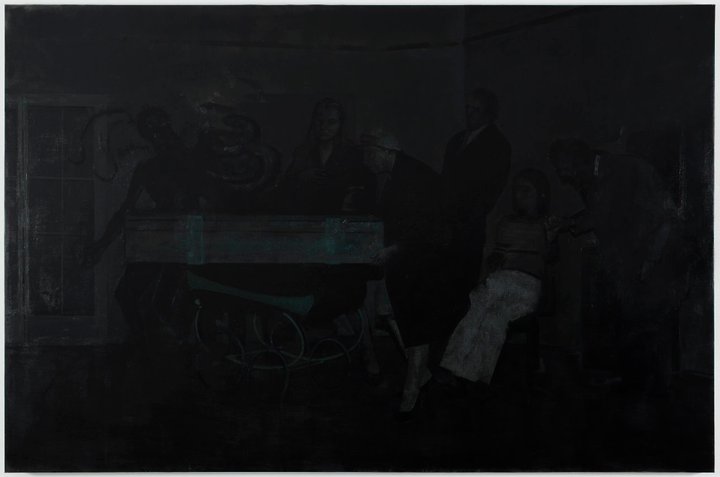
Victor Man The Deposition, 2008 Huille sur lin 193 x 293.4 cm Collection Ginette Moulin / Guillaume Houzé, Paris Courtsesy Gladstone Gallery
Victor Man ‘s painting – La Déposition, 2008 – may be the darkest work in this exhibition, but it is no less rich. Entirely executed in twilight tones, it reveals all its richness as you approach it, the ghostly painting becoming almost mystical, at once revealing and concealing its purpose through its many details. The three women in this bourgeois apartment represent the three Marys of the Bible (Mary, Mary Magdalene and Mary of Cleophas), alongside the bearded man representing Joseph of Arimathea. Can you find the serpent?
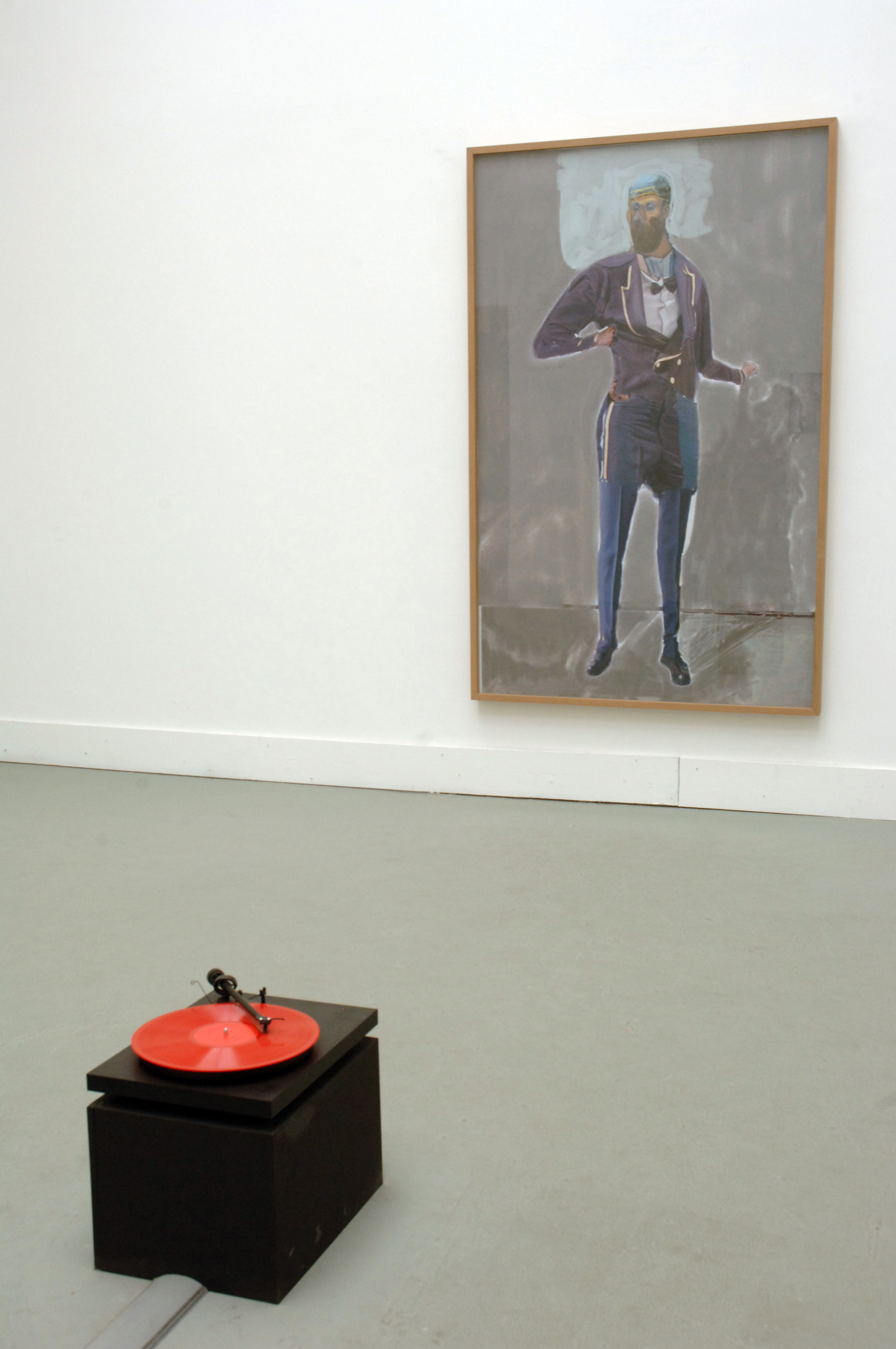
Pietro Roccasalva The Skeleton Key (His Latest Flame), 2009 Huile sur toile, tourne-disque, voix synthétique enregistrée sur disque vinyle dimensions variables Photo: Giorgio Zucchiatti Collection Ginette Moulin / Guillaume Houzé, Paris Courtesy : Fondazione La Biennale di Venezia Courtesy Art: Concept, Paris
Italian artist Pietro Roccasalva ‘s installation – The Skeleton key (His Latest Flame) , 2009 – raises questions about the power of suspending time. Originally composed of six canvases and a gramophone, the installation tells the story of the impossible love affair between a singer Molly Blooms, a fictional character from James Joyce ‘sUlysses , and a lift attendant, a parody of the hero of the film Four Rooms. Having convinced his creator to produce the singer’s first album, the elevator man remains “condemned” to eternally stare at the fruit of this impossible love, a musicless red vinyl on a gramophone. The Antidote exhibition features one of six canvases showing the lifter alone on the canvas, perhaps holding his shadow by the hand, watching the perpetual motion of the gramophone playing the vinyl over and over again.
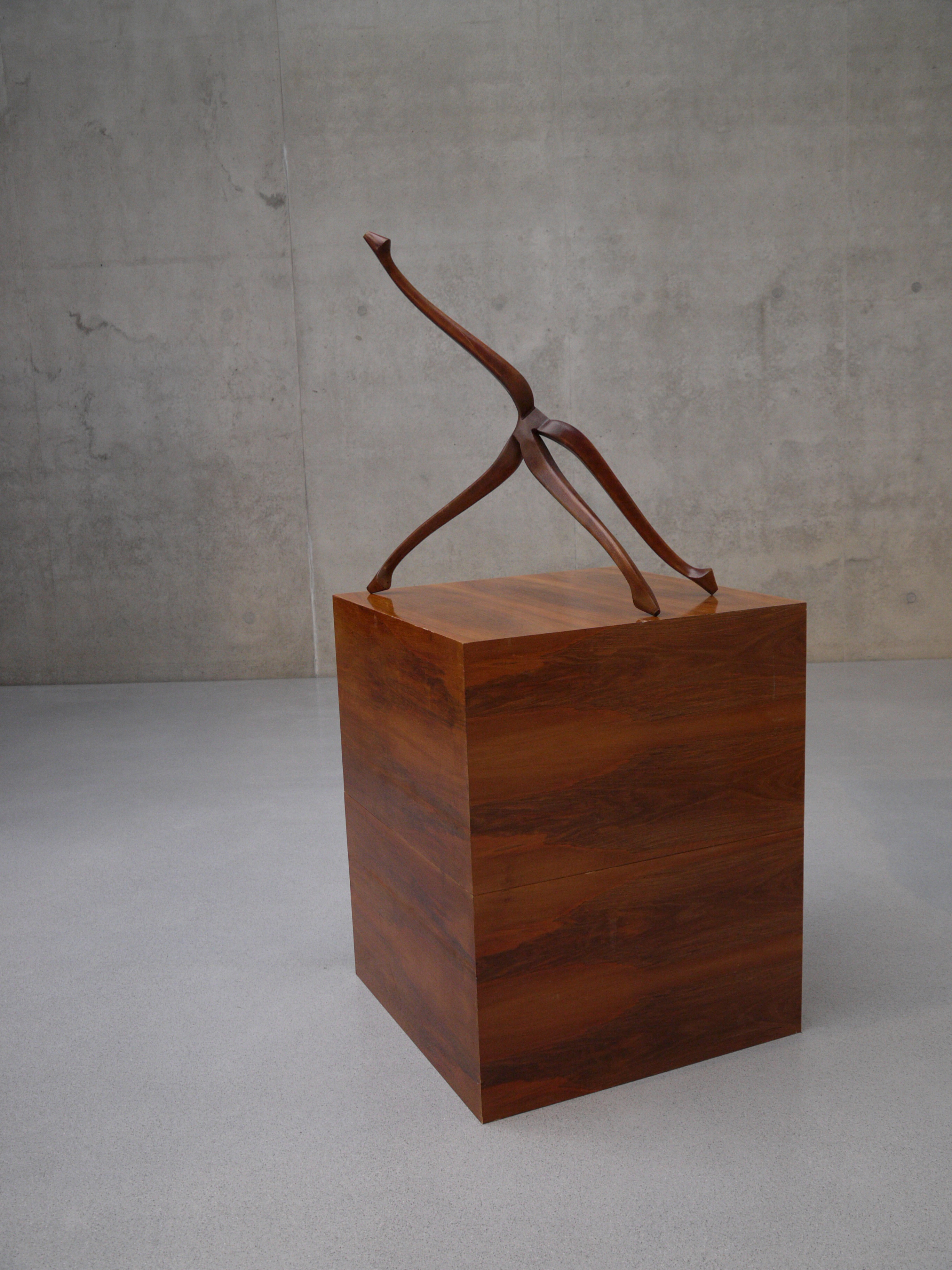
Markus Schinwald Untitled (legs) #09, 2009 Pieds de chaises et socle Hauteur sculpture 57 cm Socle 80 x 80 x 100 cm Collection Ginette Moulin / Guillaume Houzé, Paris Courtesy Markus Schinwald et Yvon Lambert
Markus Schinwald ‘s work raises the question of the body and its interaction with space, shaking up conventions and identities. Blurring the boundaries between the strange and the familiar, the artist presents a number of works with a touch of the bourgeoisie and its share of physical deviances. The sculpture Untitled (legs) #9, 2009 incorporates shapely Chippendale-style chair legs that evoke a kind of extreme arabesque, a pas de deux to the extreme, a reference to the mechanization of the body through dance. Rose, 2009, a more conventional-looking canvas, is part of a series of 19th-century portraits that the Austrian artist has retouched by intervening on the face, adding a mask to the mouth, a sort of giant pustule, without the figure seeming to suffer. The result is a fettered speech, as if the heroine were herself fettered by the hypocrisy of her condition.
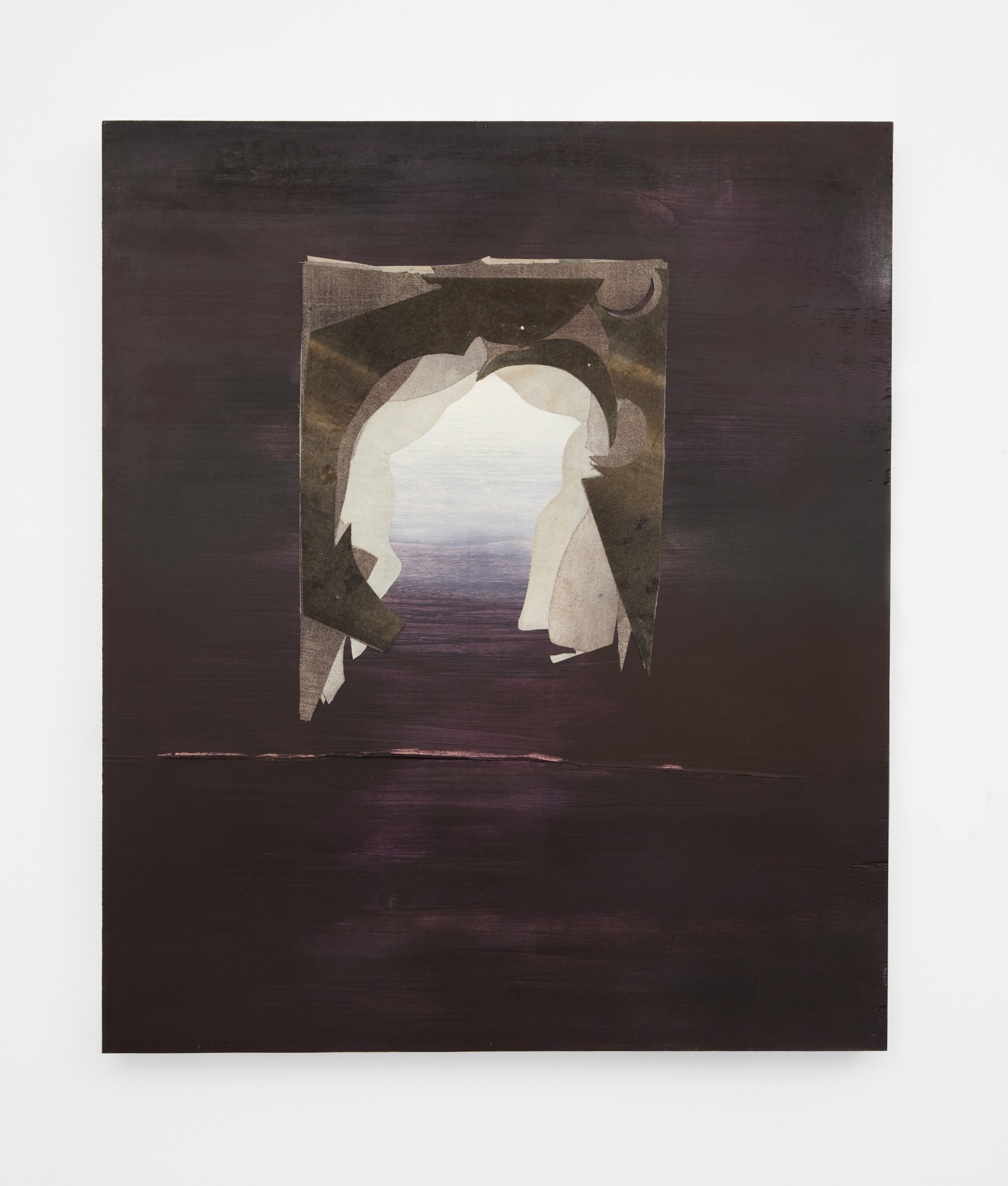
Niels Trannois Revealed inner serendipity, 2009 Huile sur toile sur bois 64,4 x 76,8 cm. Collection Ginette Moulin / Guillaume Houzé, Paris Courtesy Niels Trannois
Niels Trannois ‘s trompe l’œil canvases are imbued with the spirit of surrealism and a genuine poetic quality. At first glance, simple canvases, they quickly reveal themselves to be complex works made of paint, collage and fabric, superimposed decors, cut-outs and woodcuts. Au delà du flash, te fouiller (l’éclisse), 2009/2010 shows an eye, now a planet, watching over an inner or interstellar space. The ambivalent eclipse here obscures a light source but opens up the viewer’s visual field. Revealed inner serendipity, 2009 is a formidable exercise in collage style, with superimposed canvases strongly reminiscent of the successive panels of an old theater set. A window onto the unknown or a gateway to chance discoveries, it lets the viewer’s unconscious wander through the meanders of his thoughts. Vesperal Requiem for Clairwill, 2010, whose title is a tribute to the libertine friend in the Marquis de Sade‘sHistoire de Juliette (1800), is without doubt the French artist’s most abstract work, an oiled black photocopy like an impassive sea, from which a clear cutout in sunlight tones emerges. The shadow of Magritte is not far away.
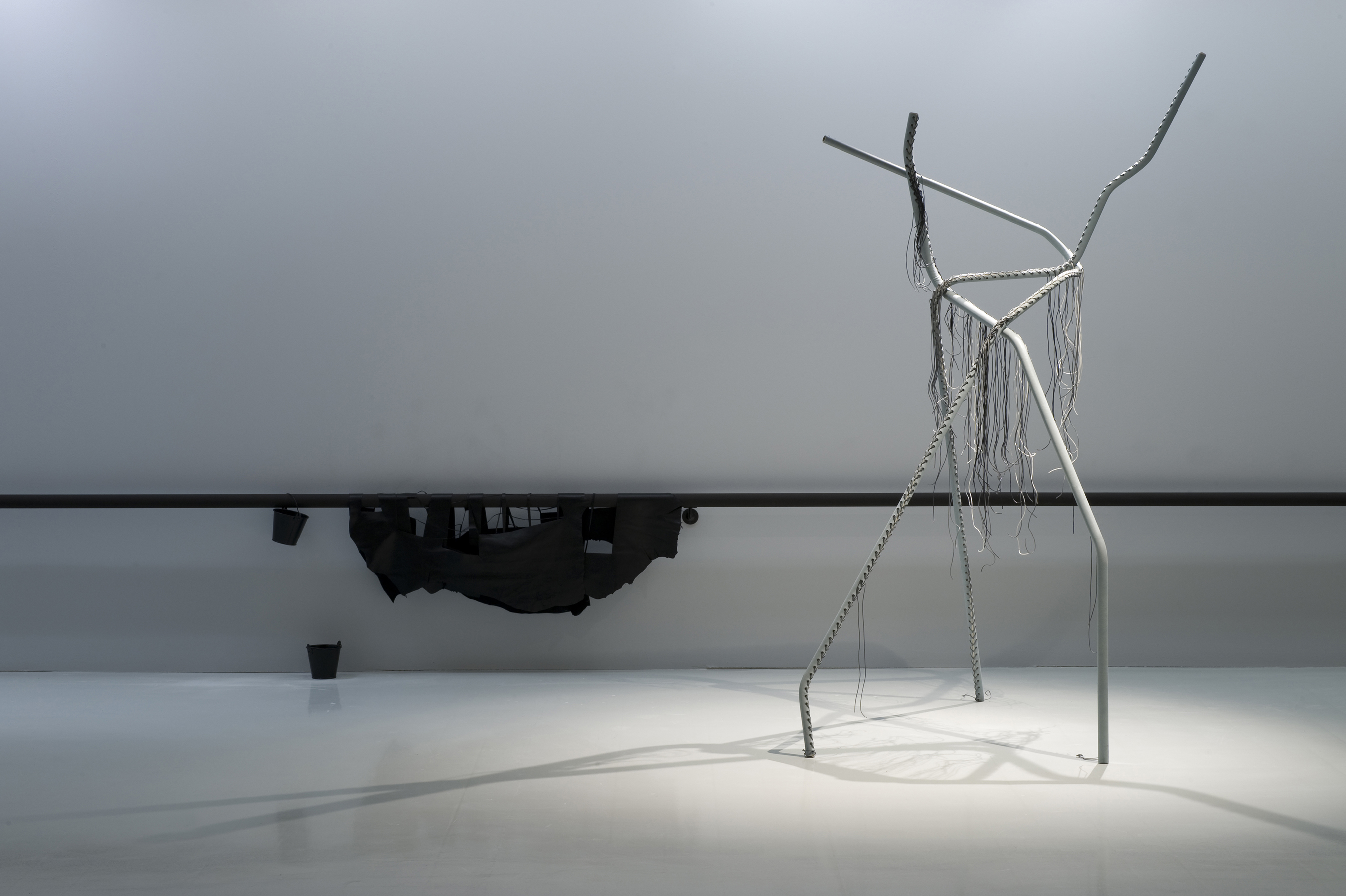
Tatiana Trouvé Premier plan : Untitled, 2008 Courtesy: J. König Berlin, E. Perrotin Miami. Second plan: Sans titre, 2008 Courtesy Galerie Emmanuel Perrotin, Paris
French artist Tatiana Trouvé ‘s installations develop an autonomous universe in the tradition of Marcel Duchamp, using combinations of space, charged materials and architectural skeletons. Untitled 2008, a sort of giant three-legged leather-covered seat with straps or threads, is reminiscent of the lacings on corsets, conjuring up images of an emaciated body. Untitled 2008 is an adaptable black-and-white work, a kind of vessel held on a bar made of large, carefully cut skins.
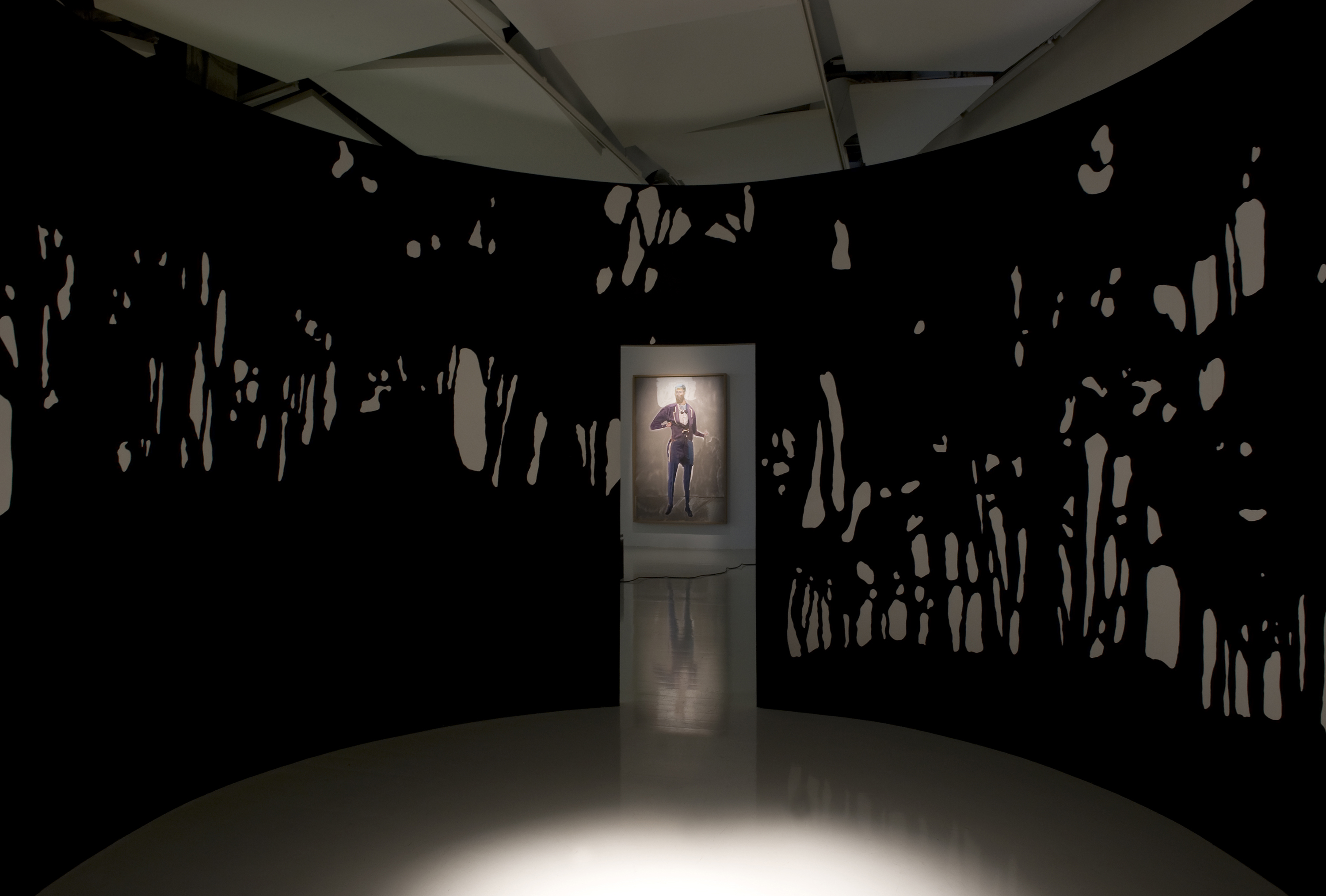
Ulla von Brandenburg Forest III, 2009 Courtesy Art: Concept, Paris Pietro Roccasalva The Skeleton Key (His Latest Flame), 2009 Courtesy Art: Concept, Paris
Theater and scenography shape the work of German artist Ulla Von Branderburg, who offers us Forest III, 2009, a formidable airlock to this exhibition, a window into the work of Pietro Roccasalva. This circular wooden construction plunges the viewer into his unconscious through a visual inspired by task tests, cutting him off from outside noise to take him into his own inner jungle. Ohne Titel (Maske, Mask), 2006 takes us into an unreal world through this immaterial presence, a ghost drawn on tissue paper representing a missing person. By pouring a lot of water over this drawing, the artist lets the faces fade away to reveal the real ghosts of the past.
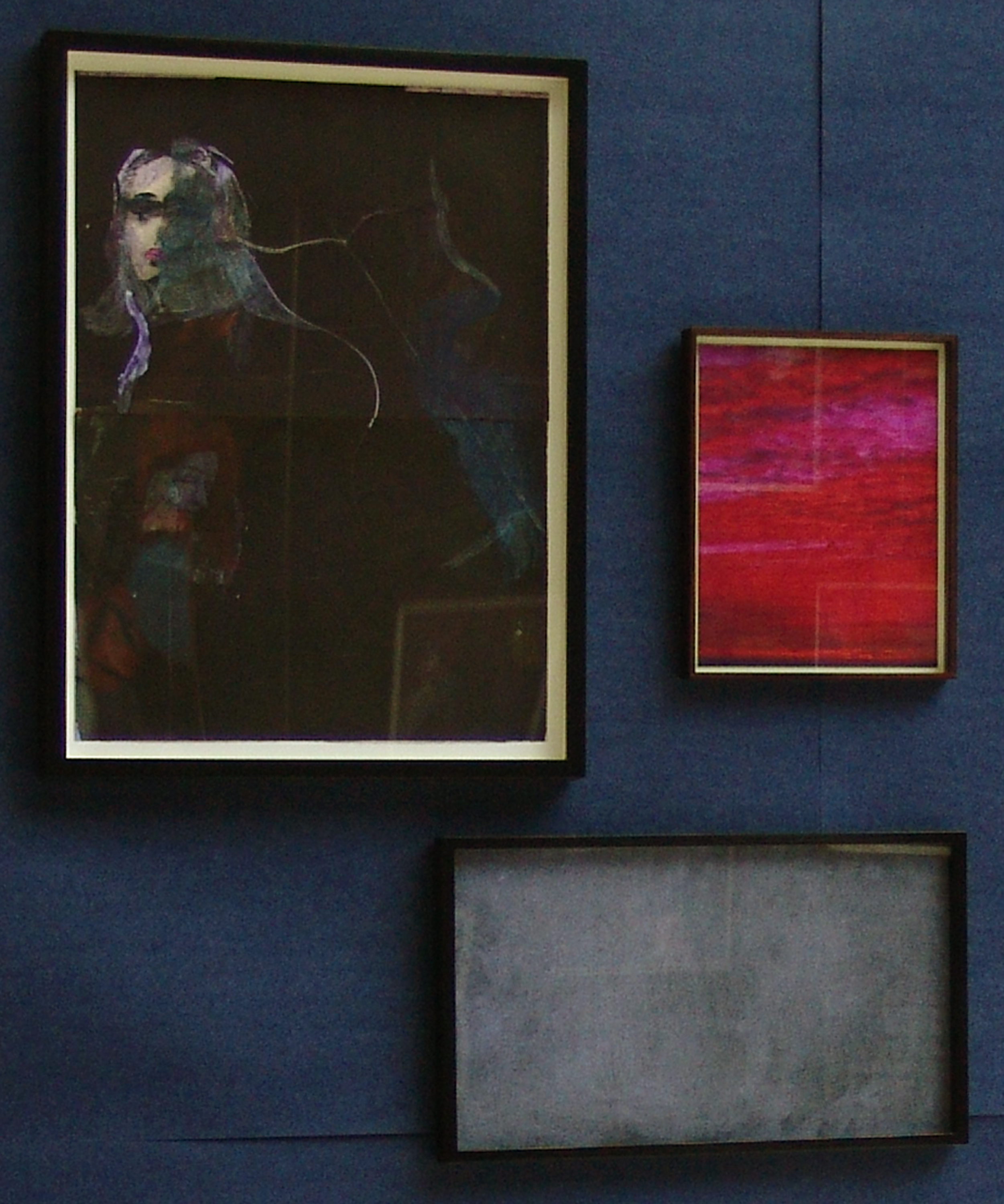
Andro Wekua Spirit, 2006 Œuvre sur papier en trois parties: encre et crayon de couleur sur lithographie, craie sur papier, et encre sur photographie Lithographie: 56.8 x 41.9 cm Dessin: 25.7 x 43.2 cm Photographie: 27.9 x 22.5 cm
Andro Wekua has chosen to take us into his inner world, inhabited by characters from advertising sources or his own, with motionless faces. The Georgian artist’s triptych Spirit, 2006 seems marked by the introspection of these young girls, whose spirits seem to travel from one painting to the next.
Antidote 6, far from pitting young French artists on the contemporary scene against their European counterparts, reveals the common ground between their approaches to the theme of introspection and melancholy. And beyond the artist’s own work, it’s to our own questions that their works refer us, the questions of everyday life, of the passage of time and of our own ghosts, even our own demons.
Galerie des Galeries – 1st floor Galeries Lafayette Coupole
40 boulevard Haussmann 75009 Paris
Open Tuesday to Saturday, 11am to 7pm, except public holidays.
Marie-Odile Radom
Cette publication est également disponible en :

