

The extraordinary lives of Eugène
Isabelle Monnin
JC Lattès
September 2010
17 €
Epinal, Saturday, November 13***,
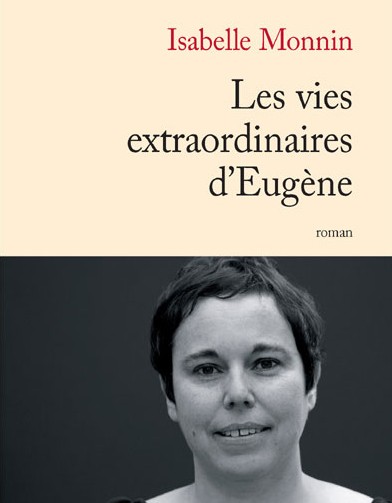
Les vies extraordinaires d'Eugène
Eugene’s story.doc
In the early hours of his seventh day on Earth, a staphylococcus aureus kills Eugène. In shock, the mother loses all speech, and it’s the father, who becomes – overnight – the family’s sole lyricist, who becomes the self-appointed historian of his son’s life. From then on, anyone who has been in contact with Eugène becomes – in a truly addictive & drug-addicted way – a source of interest for this father in his quest for a (very faithful) reconstruction of the 6 days of his son’s existence. The mother, meanwhile, is tirelessly sewing red pants for all of Eugène’s fictitious ages and probable sizes. Since he hardly ever lived, the question arises as to whether Eugène really existed. “What is the scale of history? Does the individual exist by himself or by the set E that contains him at an instant T?” (p. 24). After interviewing the people who had real contact with Eugène, the father sets out to write an account of the life his son might have had, and this first novel stirs things up and hurts. With this in mind, he even goes so far as to meet the director of the nursery to steal the list of children who should have been his son’s classmates. Among them, he wonders about the probability of finding (creating) a first love, a possible best friend… Les vies extraordinaires d’Eugène pulls off a hyper – but hyper – tricky subject more than well, with a soberly lyrical style that never goes off track, while reducing the muted tensions with a touch of humor.
The Story Of The Impossible – Peter Poehl
Bitch shot
“Born very prematurely, at six months’ gestation, he was placed in the intensive care unit at the Montreuil intercommunal hospital. It was in this department that he contracted staphylococcus aureus six days after birth. Despite antibiotics, the doctor was unable to save him. He died of toxic shock in the early hours of the seventh day. It was a Friday. We had him cremated on November 29, 2007. His ashes are at Père Lachaise, the only cemetery in Paris where you can be cremated. We say “his ashes are at Père Lachaise”, but in reality a seven-day-old child is such a small body that when you burn it, there’s nothing left of it, not even a few grams of dust… The truth is, there’s nothing left of our son.” (p. 21-22)
Coup de théâtre
“If no one talks about it, Eugene will be gone. It’s my responsibility as a father to keep him not alive but in existence. He existed. He was there. I can tell you the proof. You think he wasn’t, or that he was nothing? You’re mistaken. There’s a lot more to say about my son, my extraordinary son. It’s my turn to carry him. It’s my conjugal solidarity, my parental authority. I have to fill it with words, like the pediatrician tried to fill it with blood. If I tell it, I’ll (re)give life to my son, and words to his mother. I want to believe it. There’s nothing else I can believe in.” (p. 28)
Coup de grâce
“That’s all I’ve done this year: talk to you and invent you. Leaning over my machine, hands guiding the velvet, I never let myself lose focus. I experienced everything with you, my man in a hurry. Quickly born, barely six months pregnant, but ten fingers, ten toes, that’s it, I can come out… I’m extending you. Premature in everything. You’re constantly fighting against time, to speed up its density. A brilliant inventor, you devise a new time system. Later, you discovered the laws of teleportation. Time and space: your passage on earth upsets the order of things. The world hasn’t been the same since you arrived.” (p. 222)
Elisa Palmer
Cette publication est également disponible en :

