
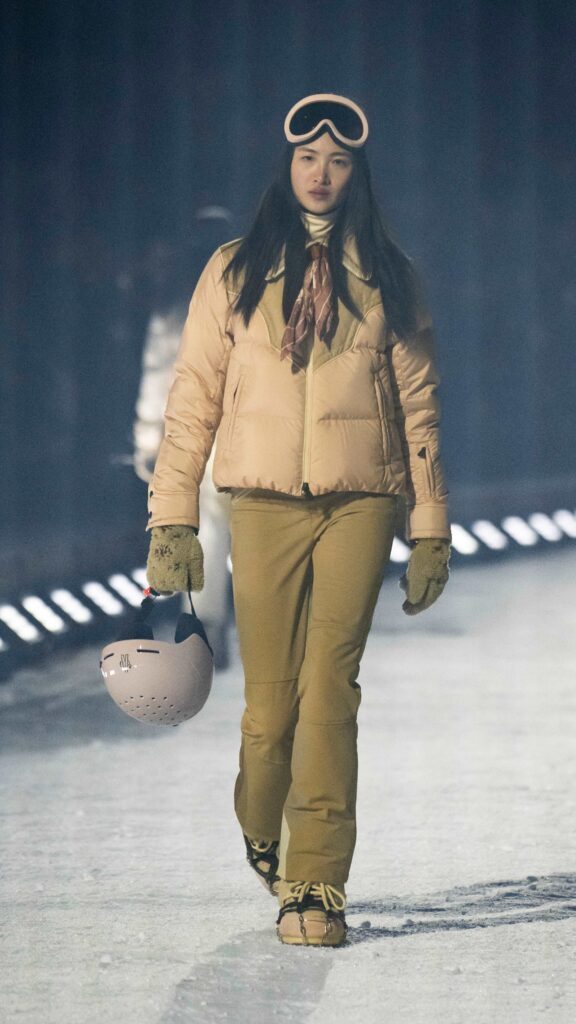
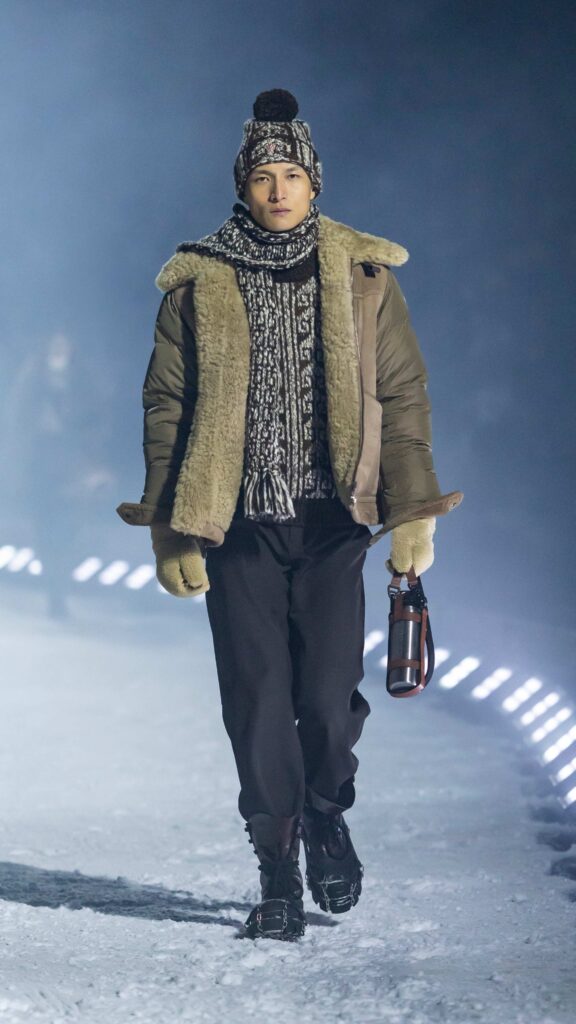
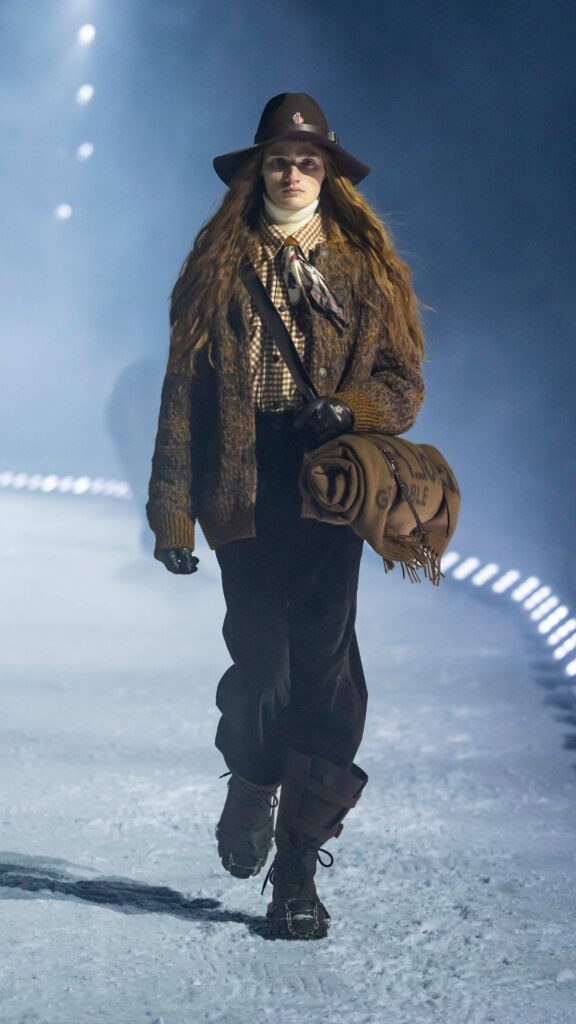
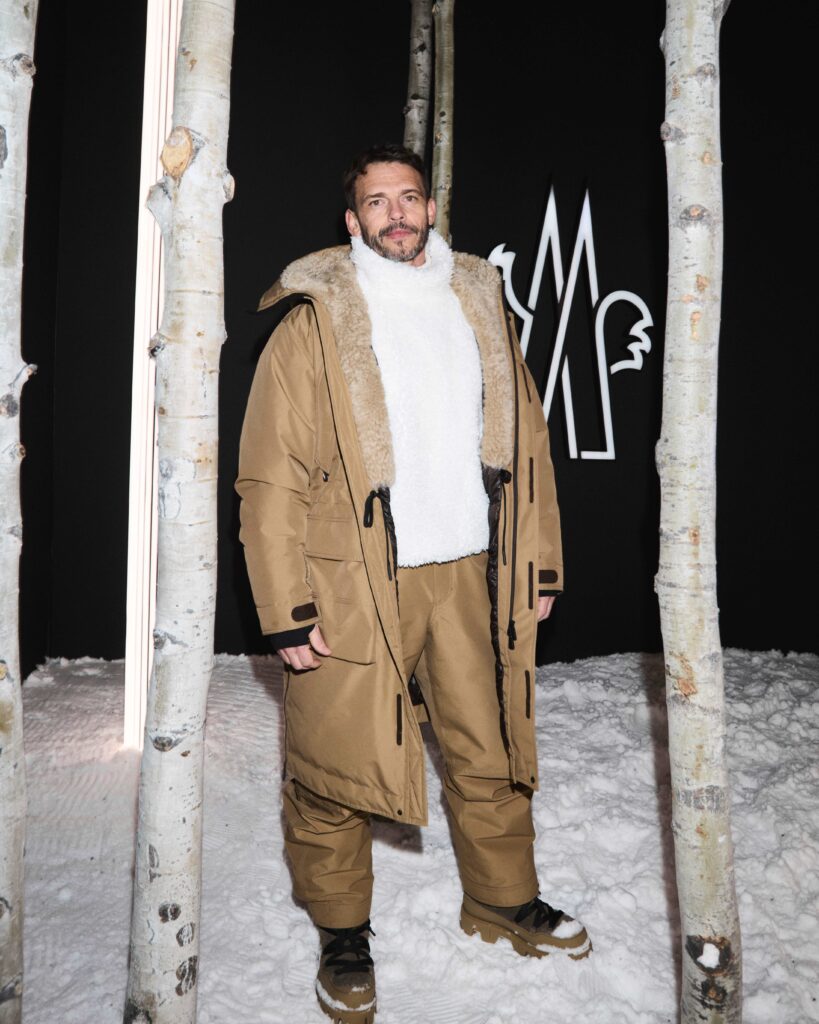
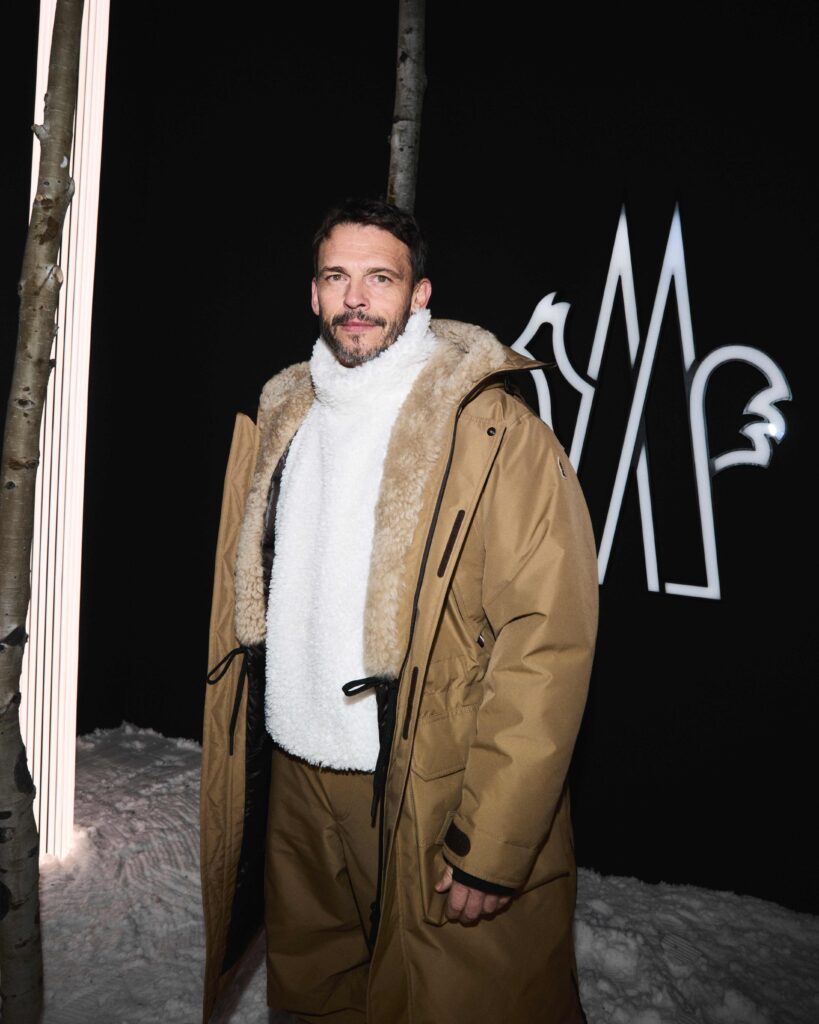
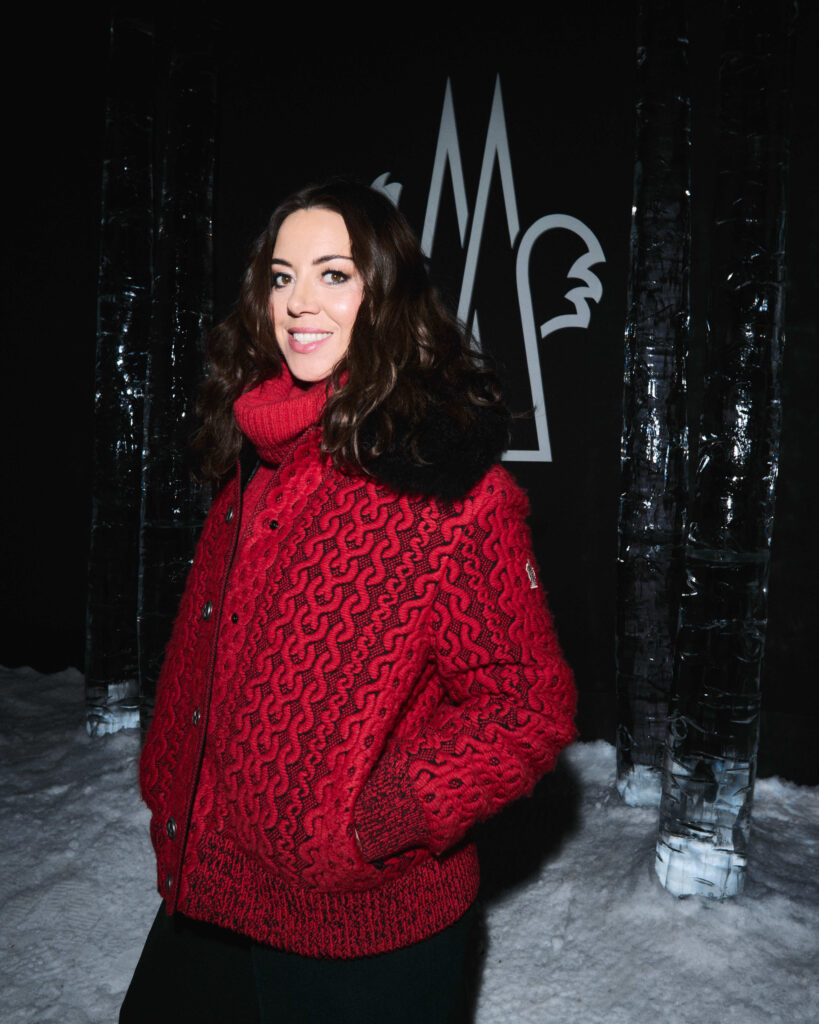
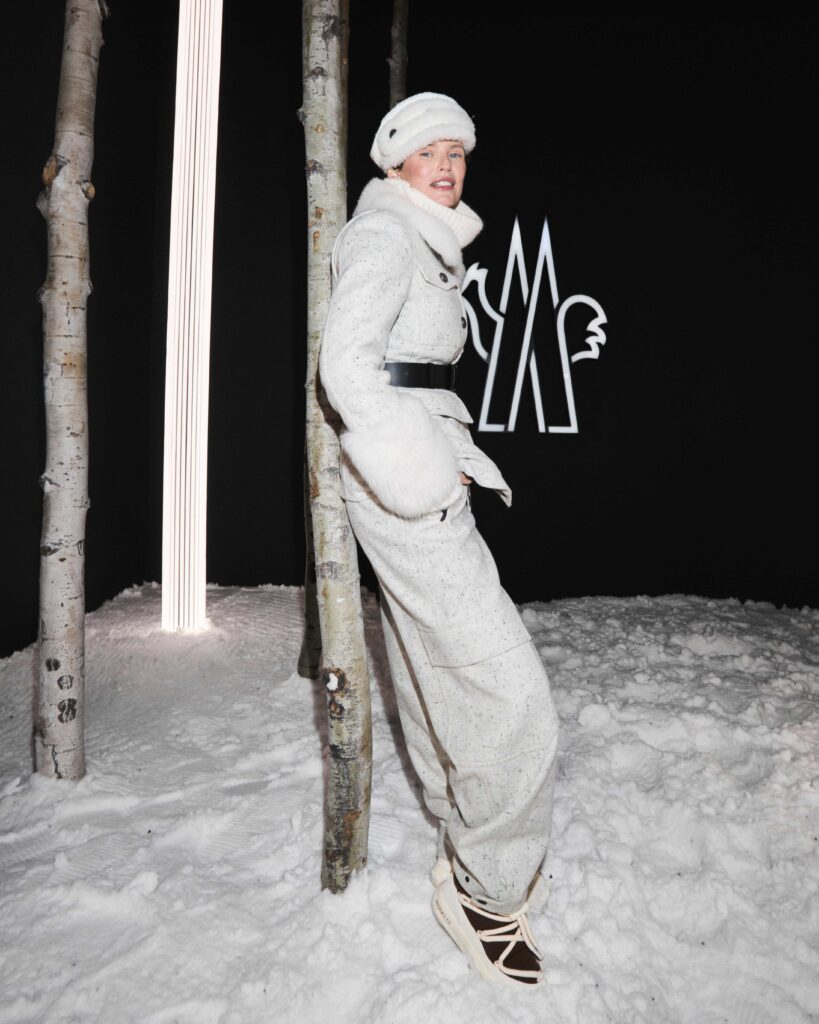
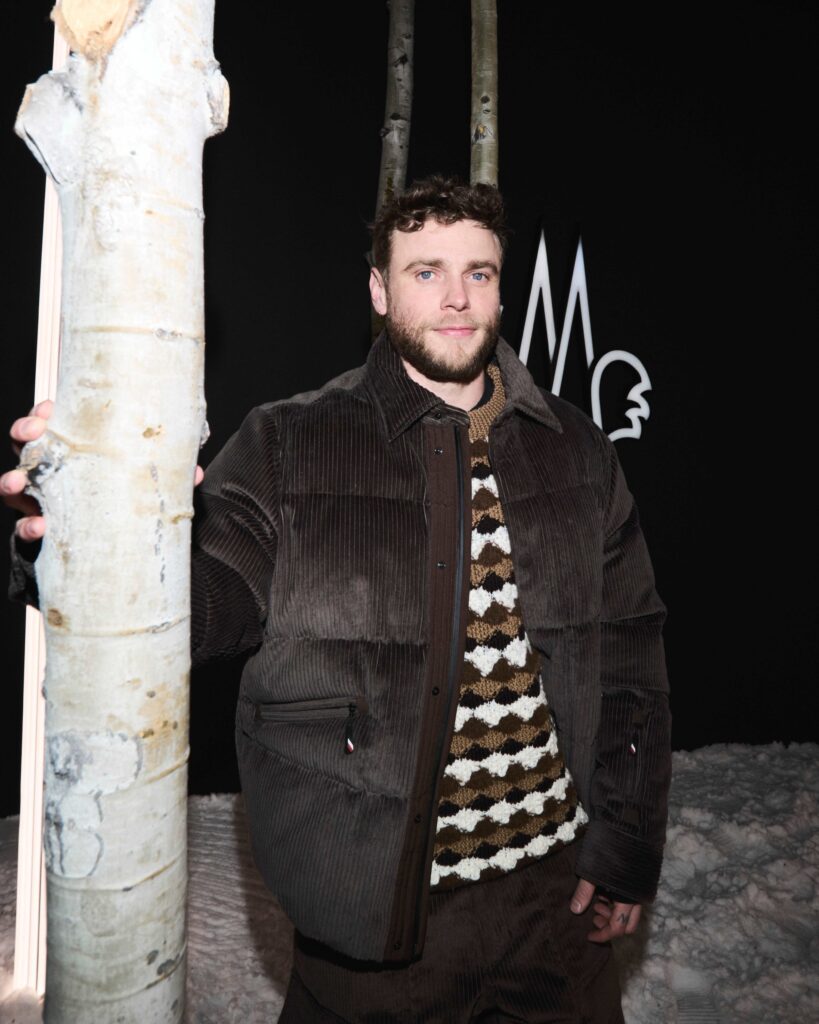
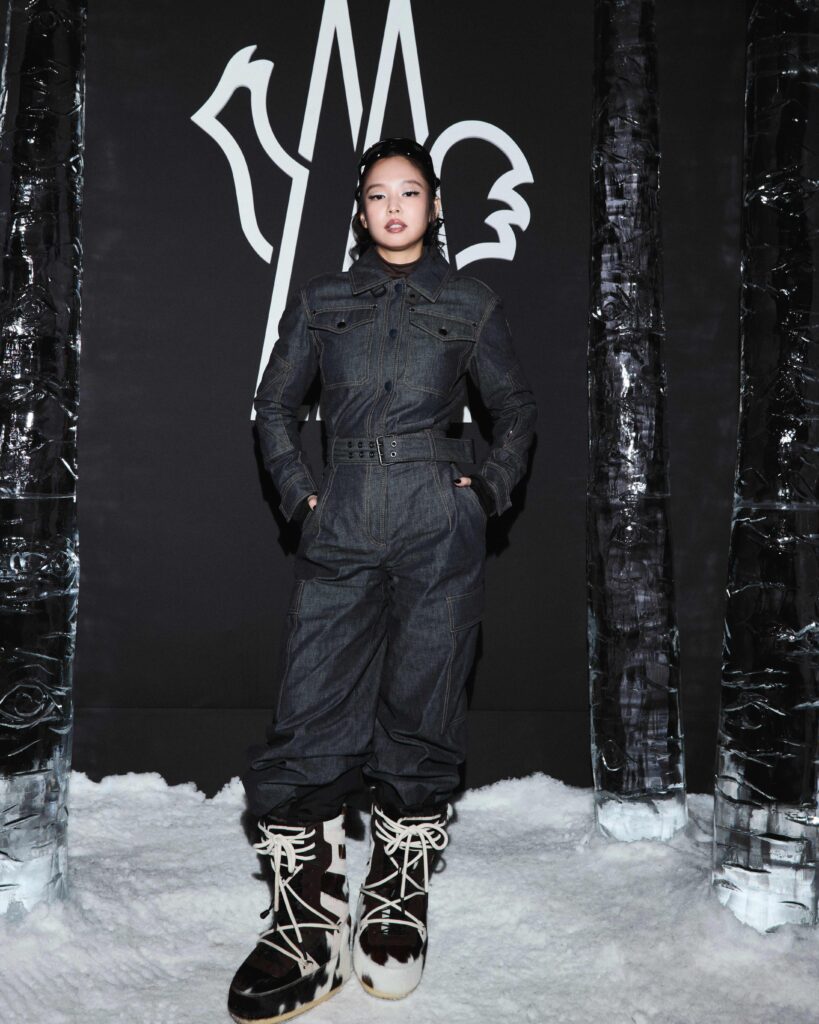
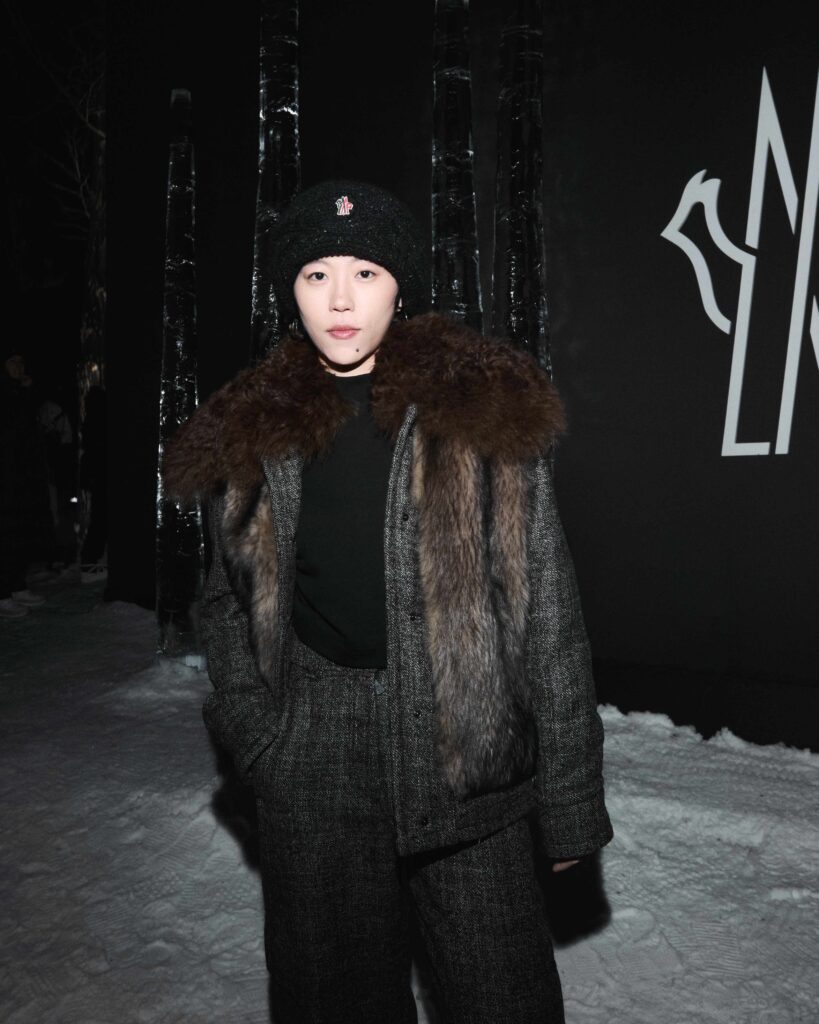
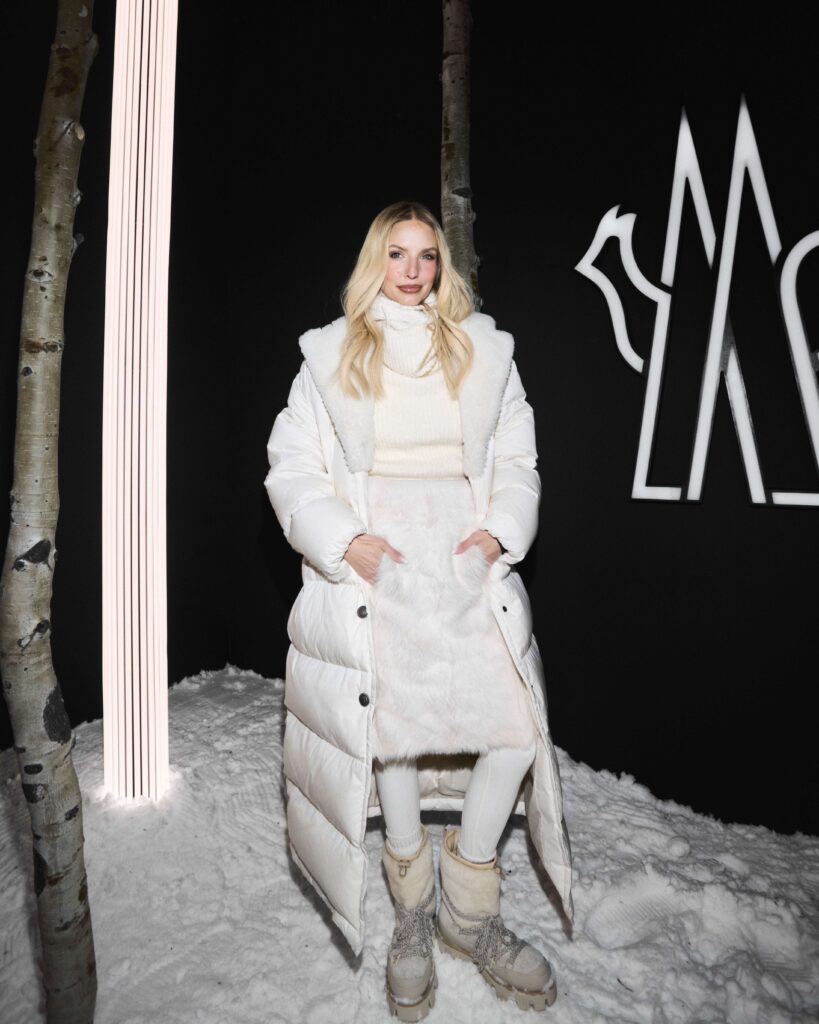
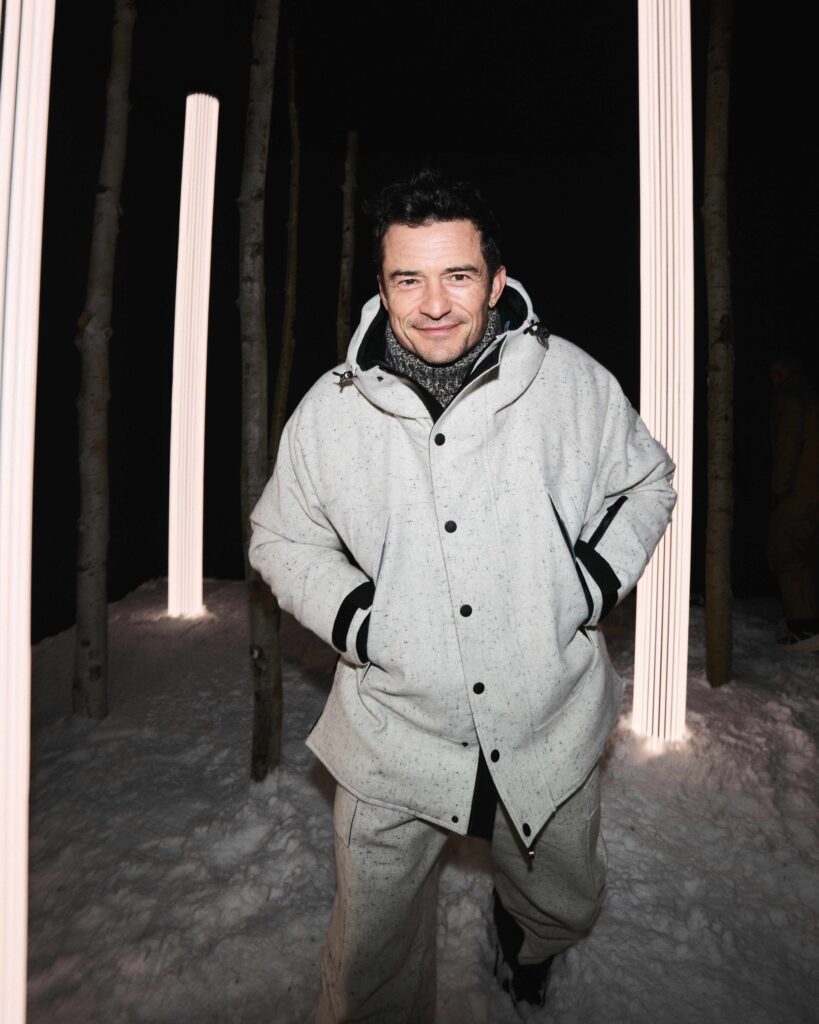
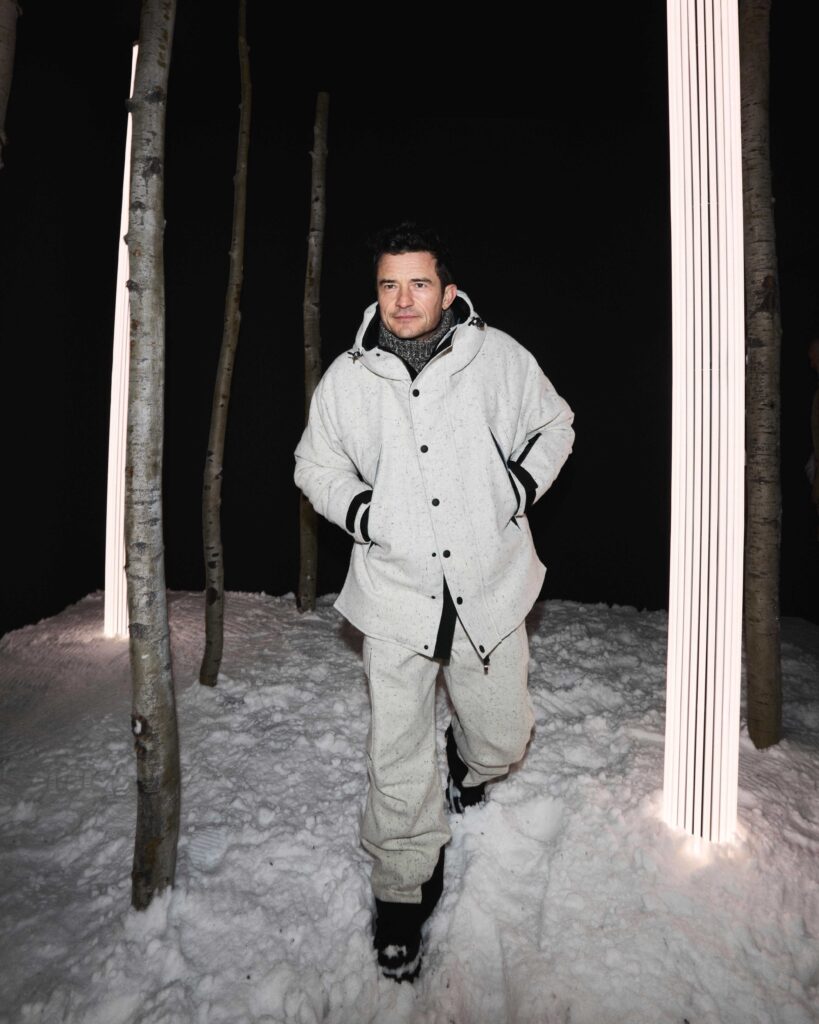
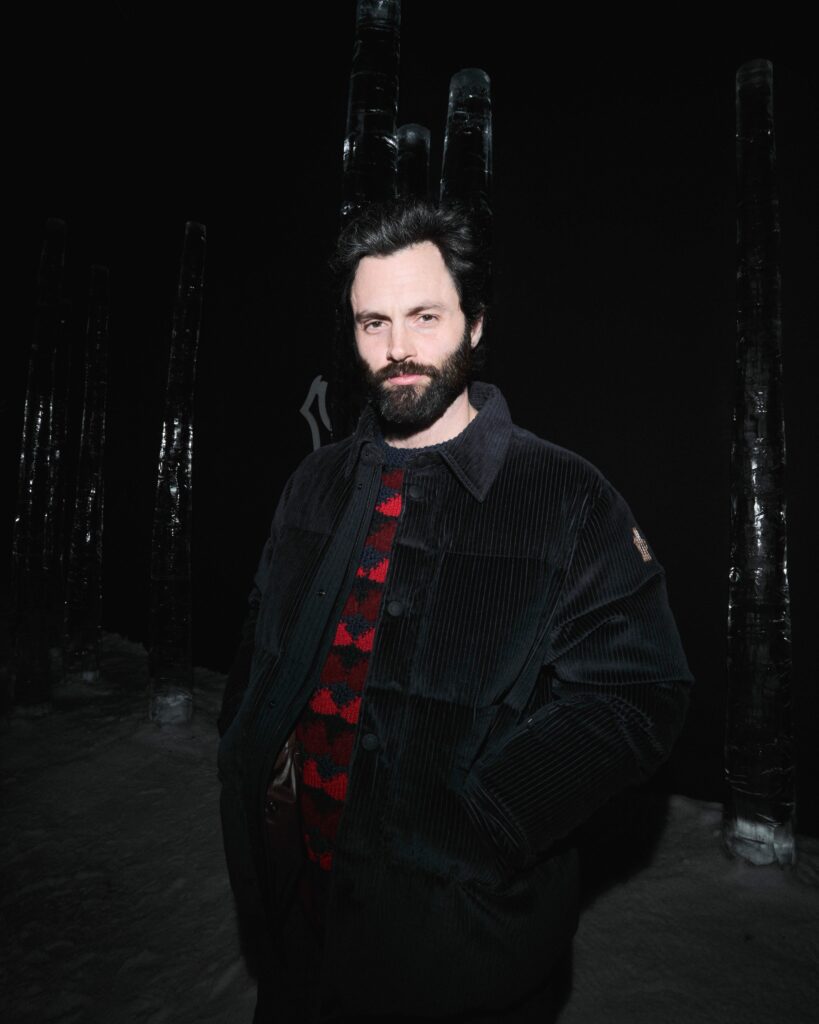
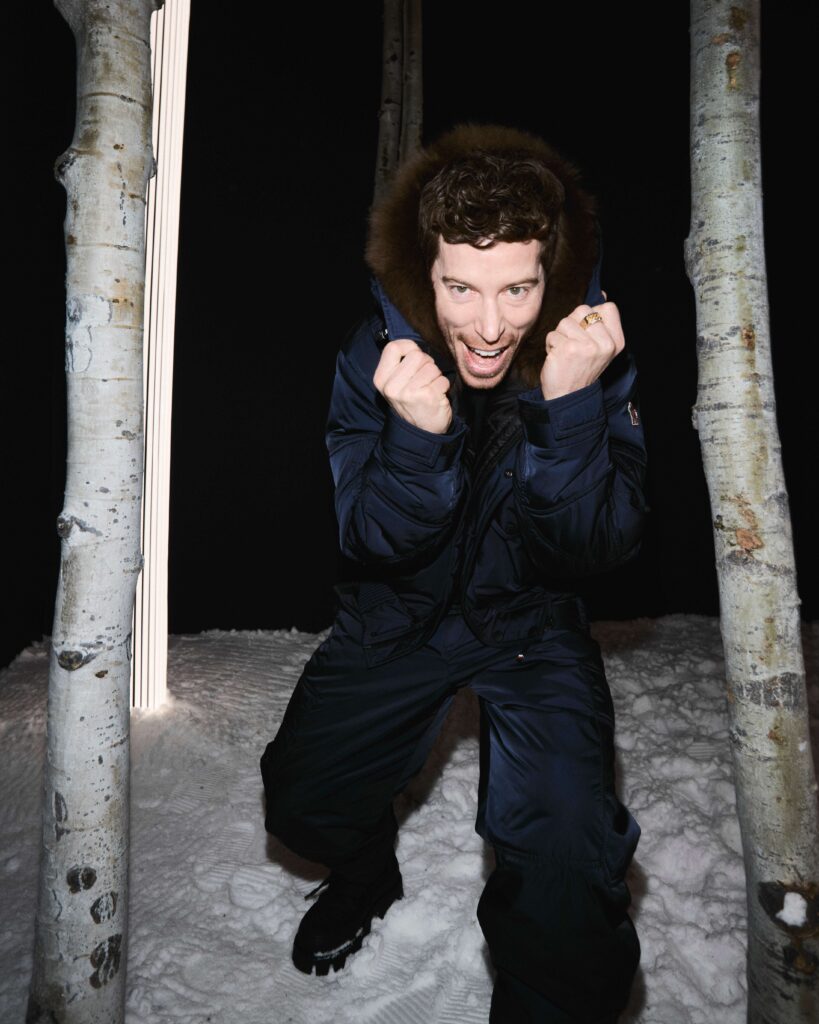
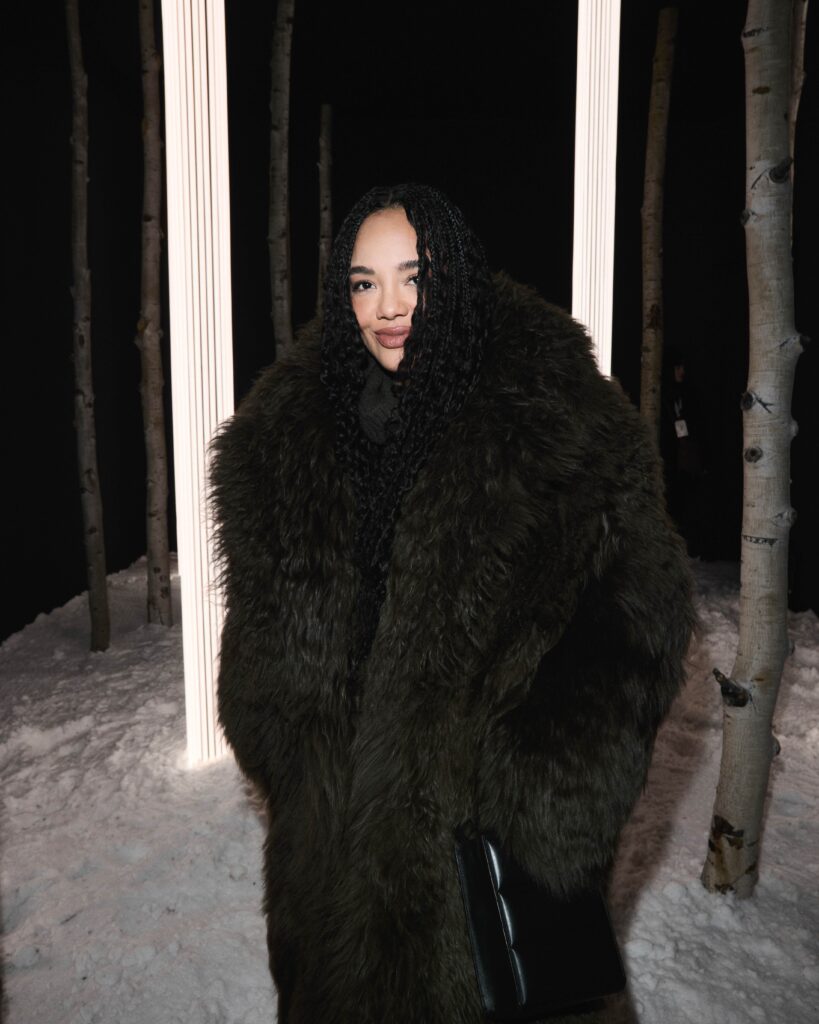
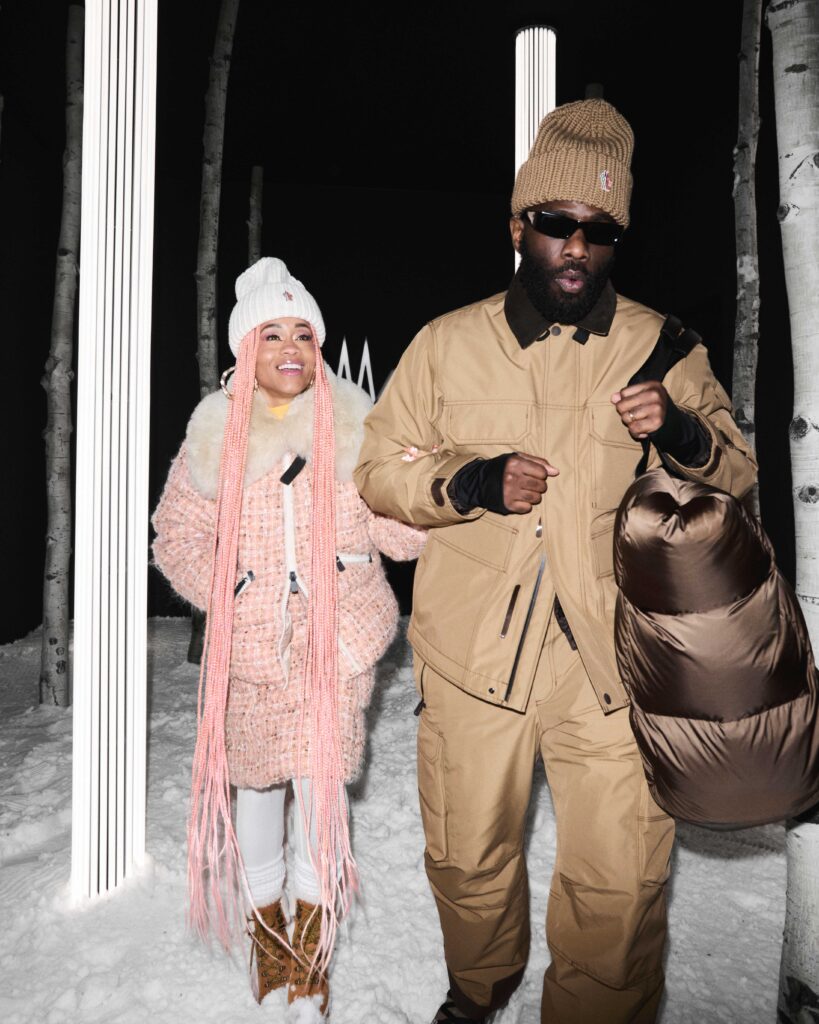
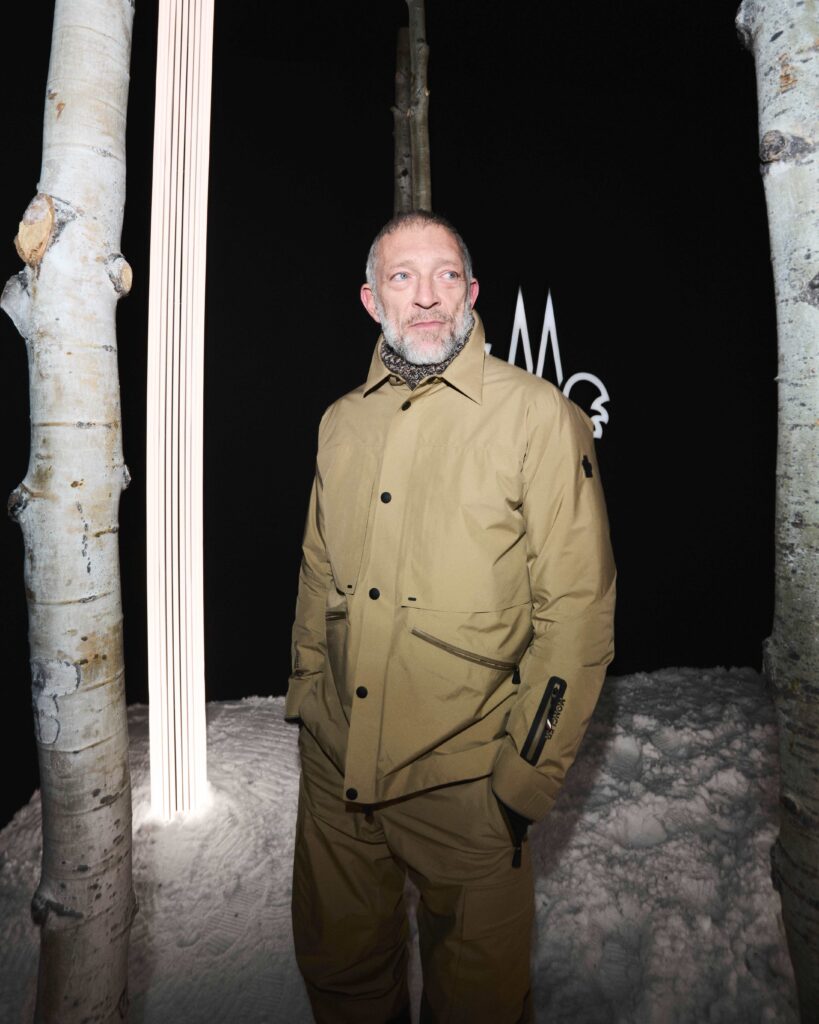
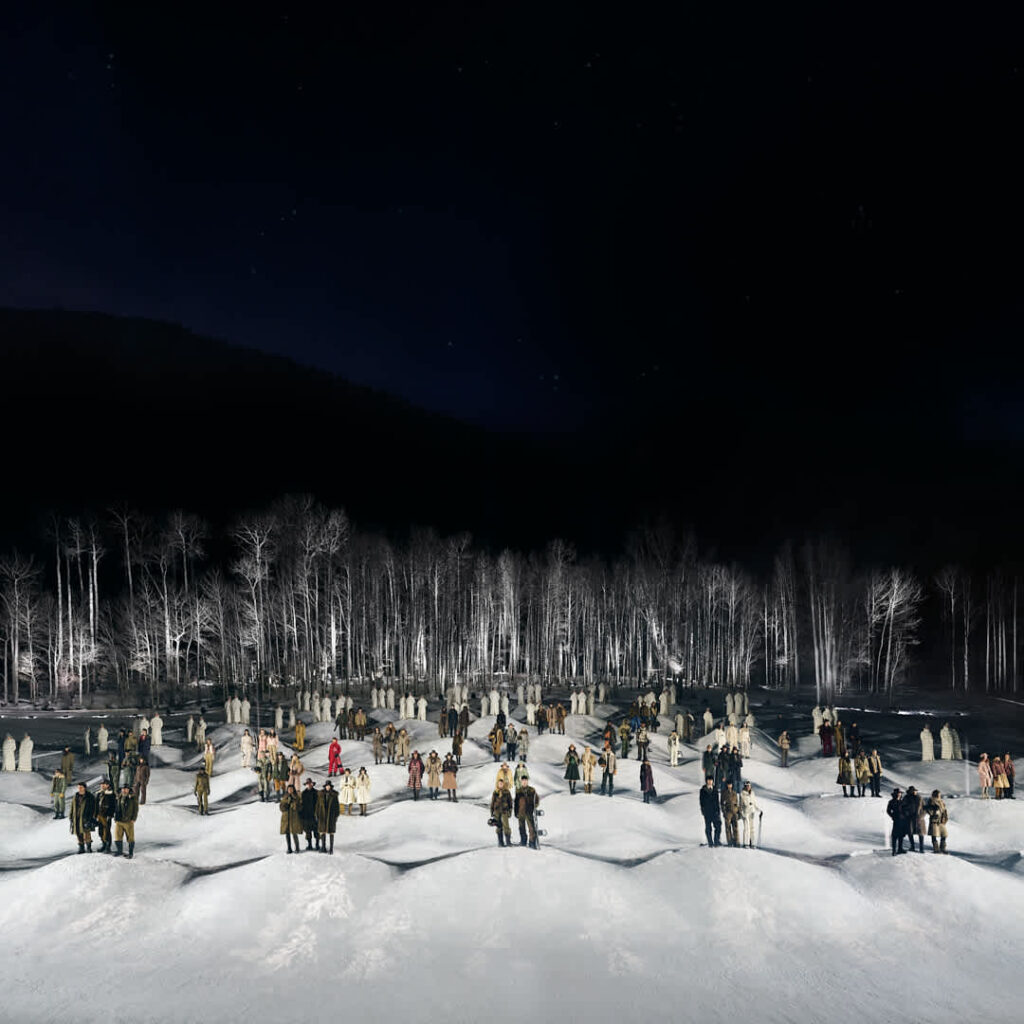
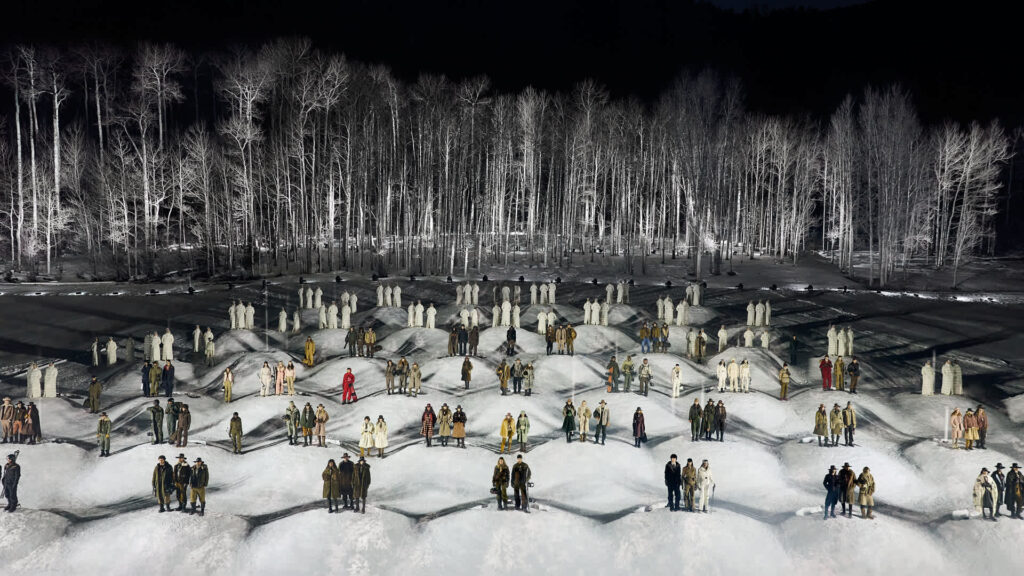
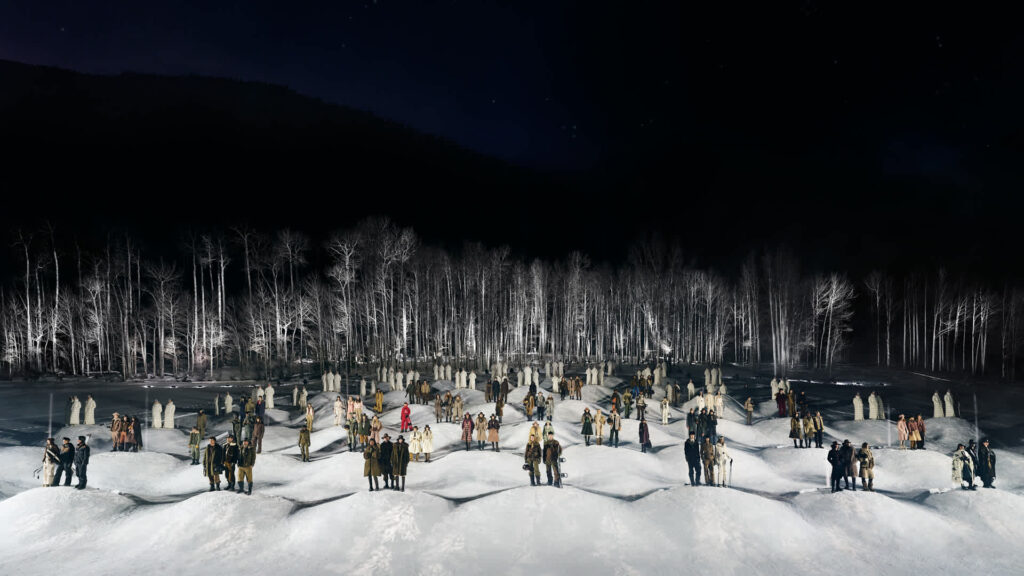
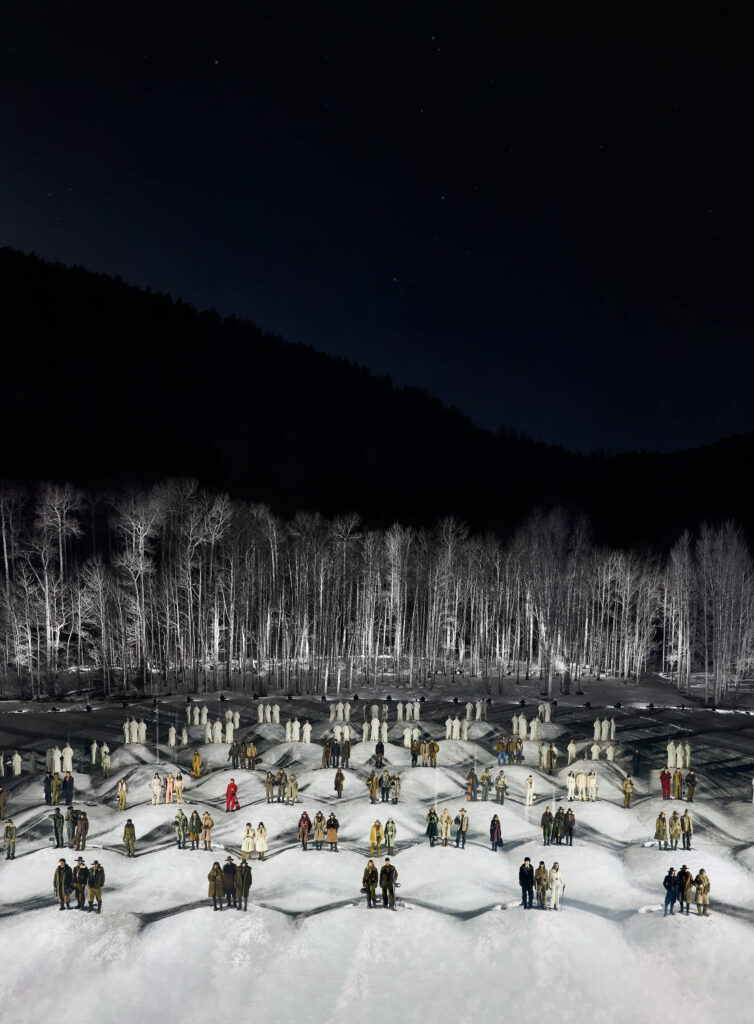
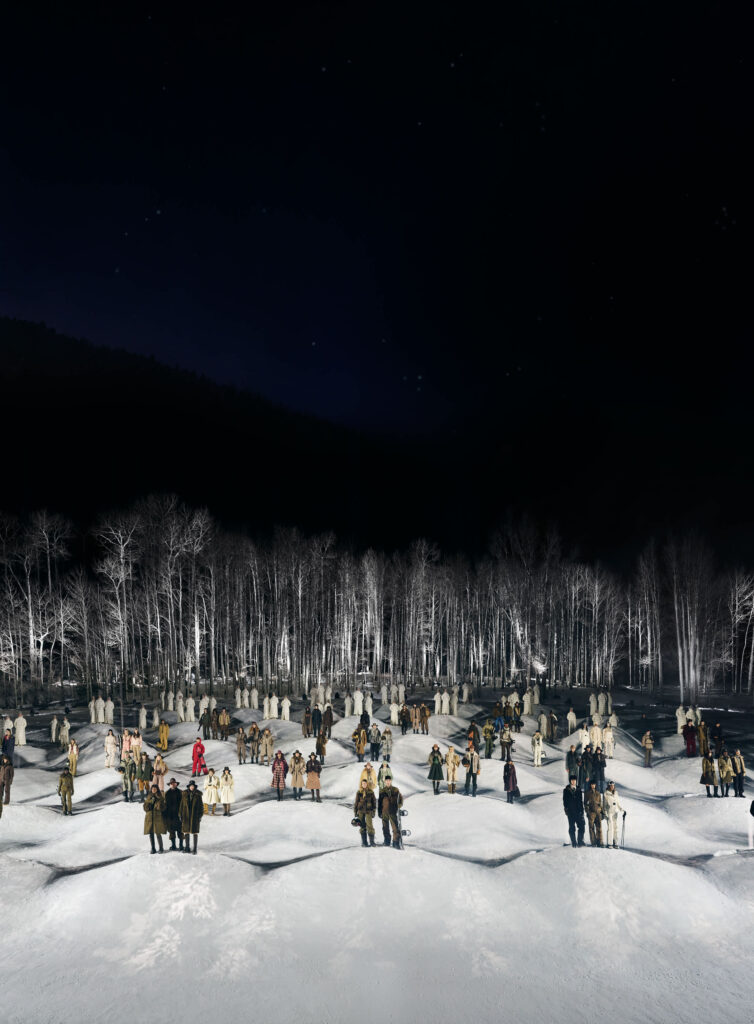
Aspen, Colorado, first of February 2026. Under a full Rocky Mountain moon, the guests of Moncler Grenoble don their helmets and snowmobile through the forest. At the end of the journey: a fashion show on packed snow, luminous projections on the aspens, and a Fall/Winter collection that tells less about a style than about a shared trajectory. That of Moncler, born in Grenoble in 1952 to equip mountain workers, and that of Aspen, a small mining town in Colorado converted at the same time into the capital of skiing, modernist architecture and bohemian chic. Two parallel stories that had never sought to intersect – until that evening.
The choice of Aspen is not anecdotal. While Moncler was manufacturing its first quilted anoraks in the French Alps and equipping the first Himalayan ascents, Aspen was attracting Olympic athletes, writers, exiled Bauhaus architects and Hollywood icons. The mountain became more than just a sports arena: it became a hotbed of ideas, a place where people came to ski as much as to debate, build and create. This dual function – technical performance and cultural refinement – is precisely what Moncler Grenoble stands for today.
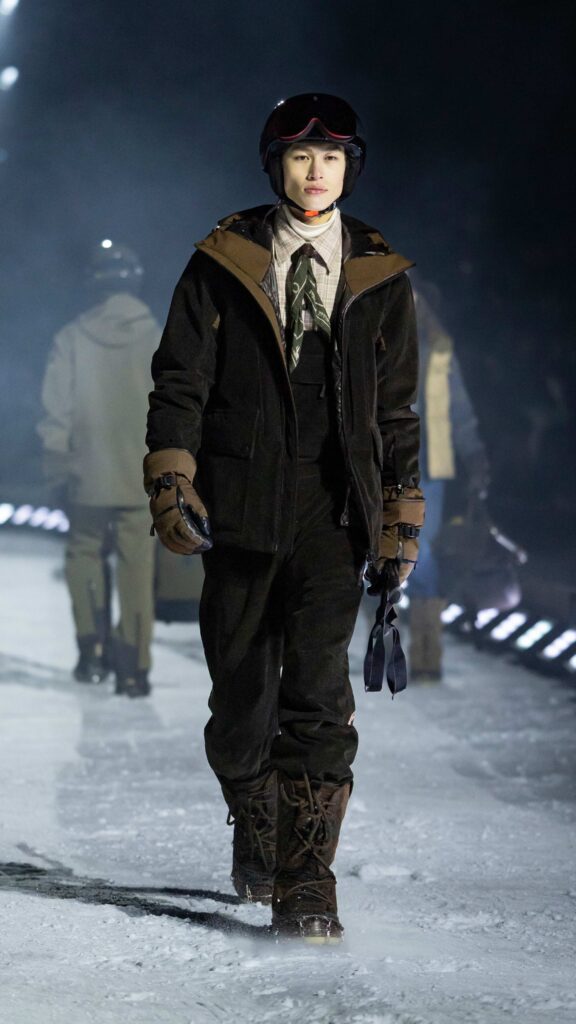
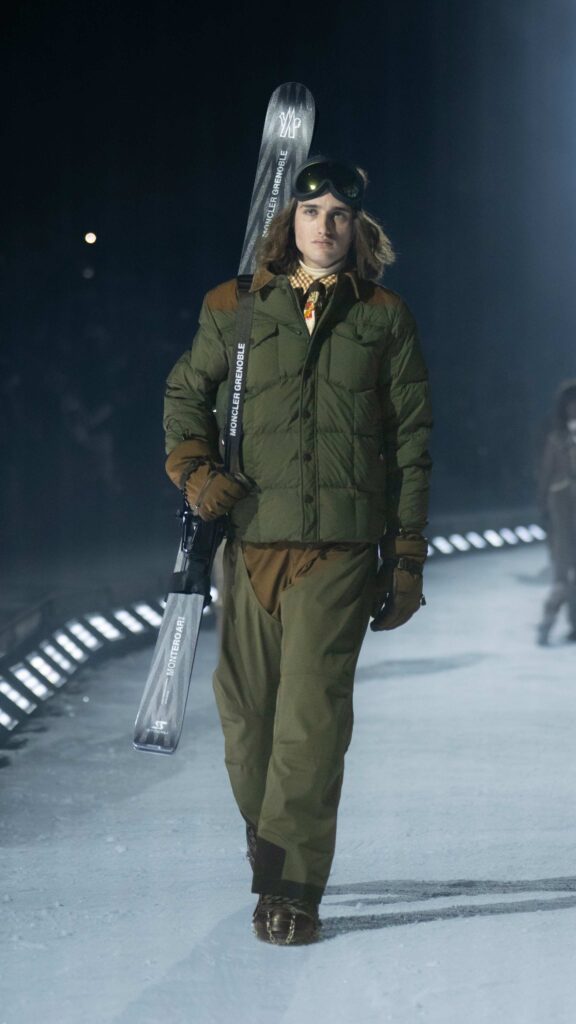
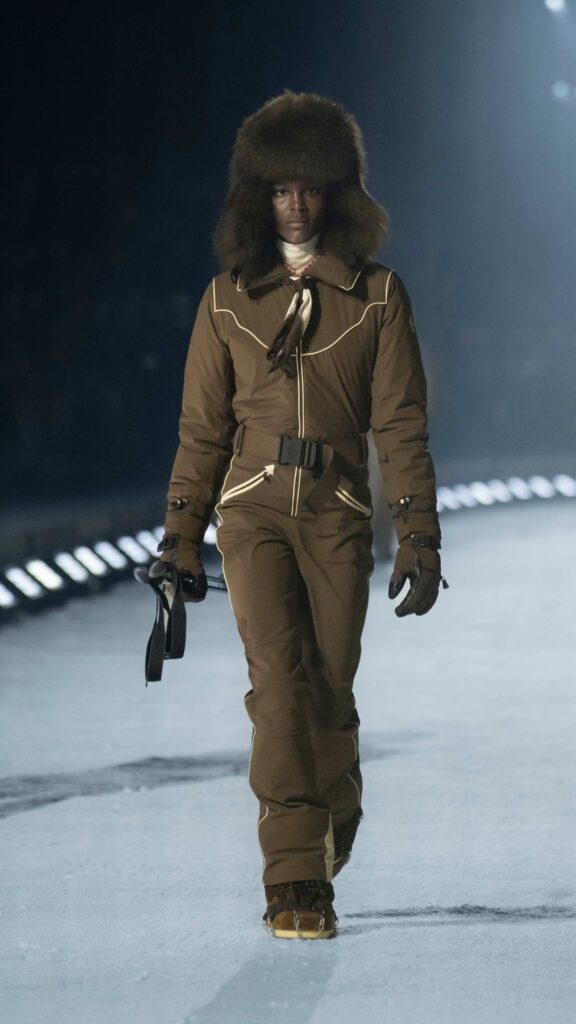
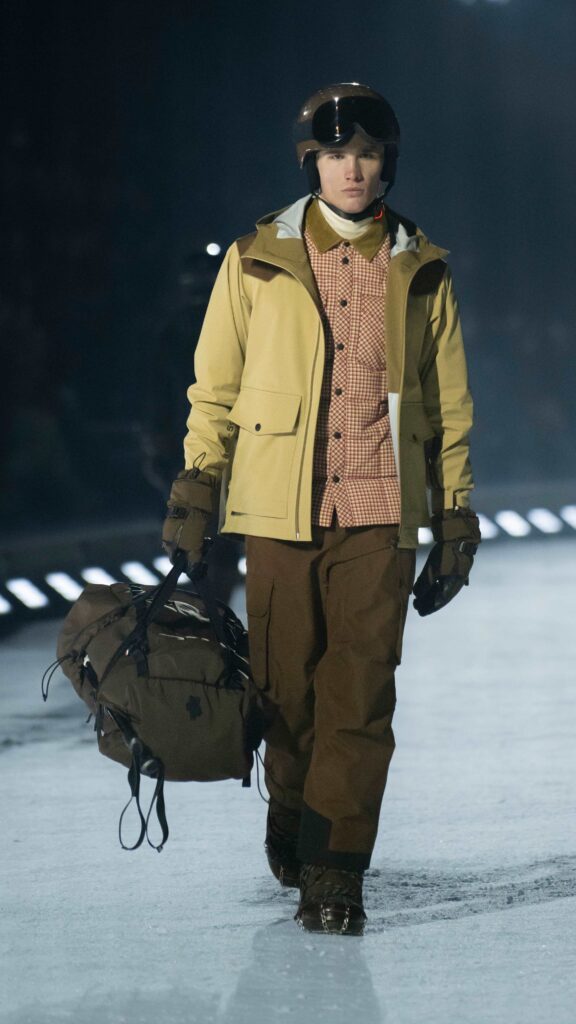
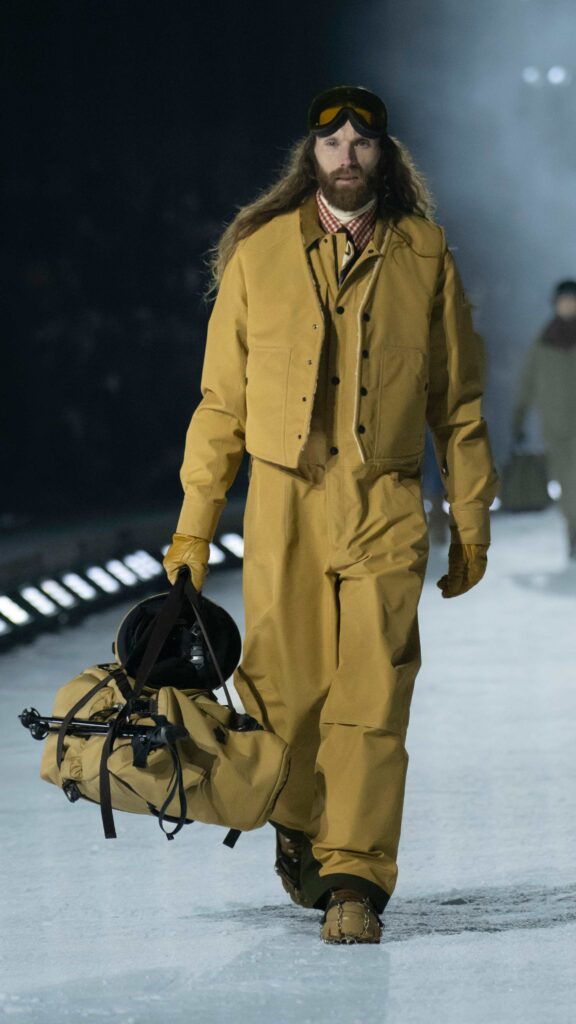
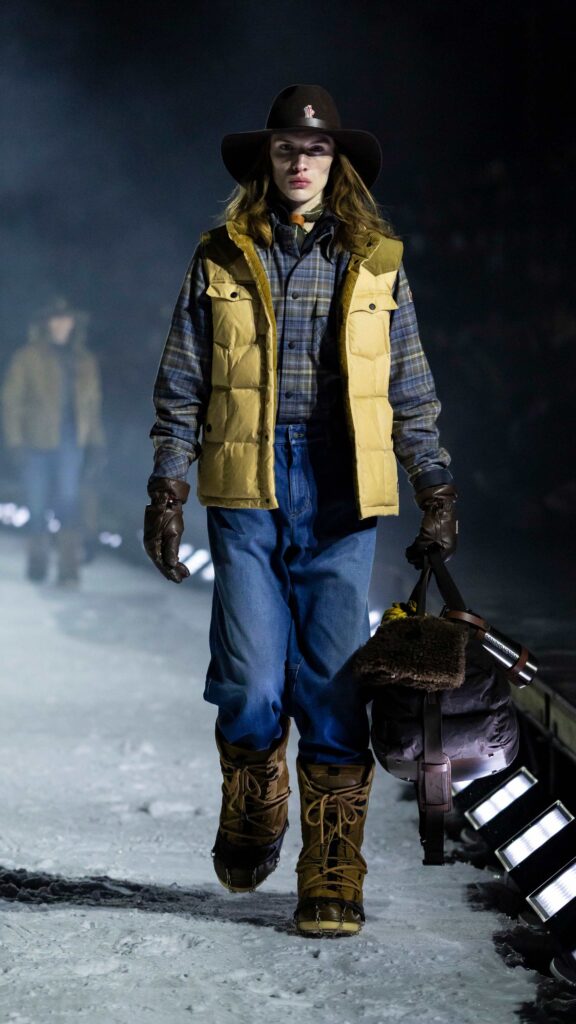
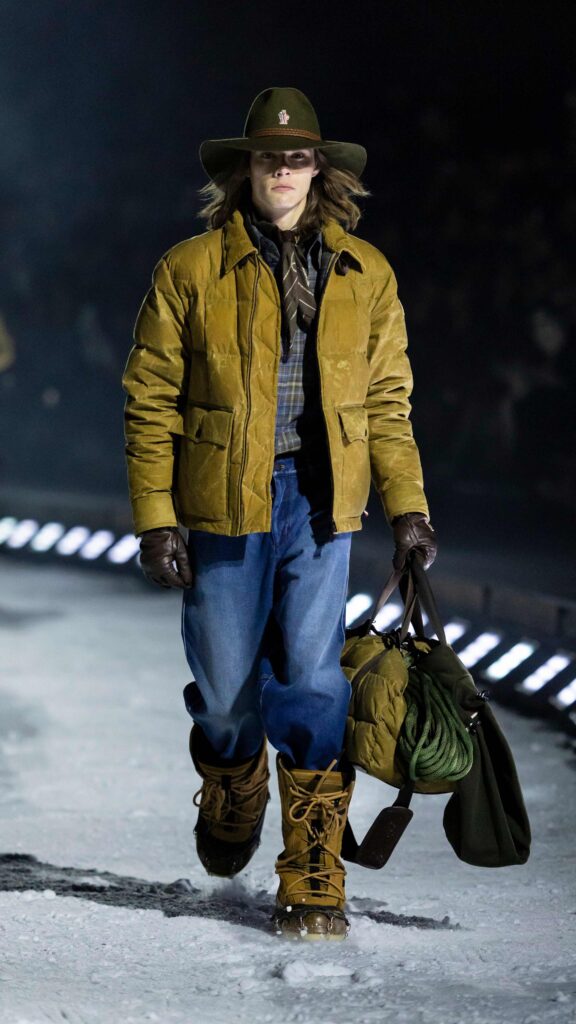
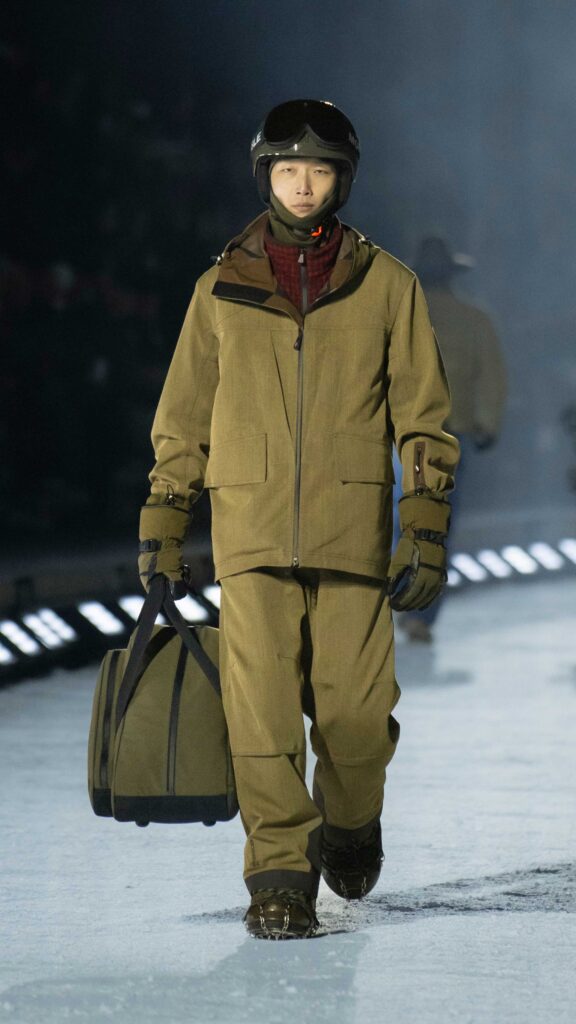
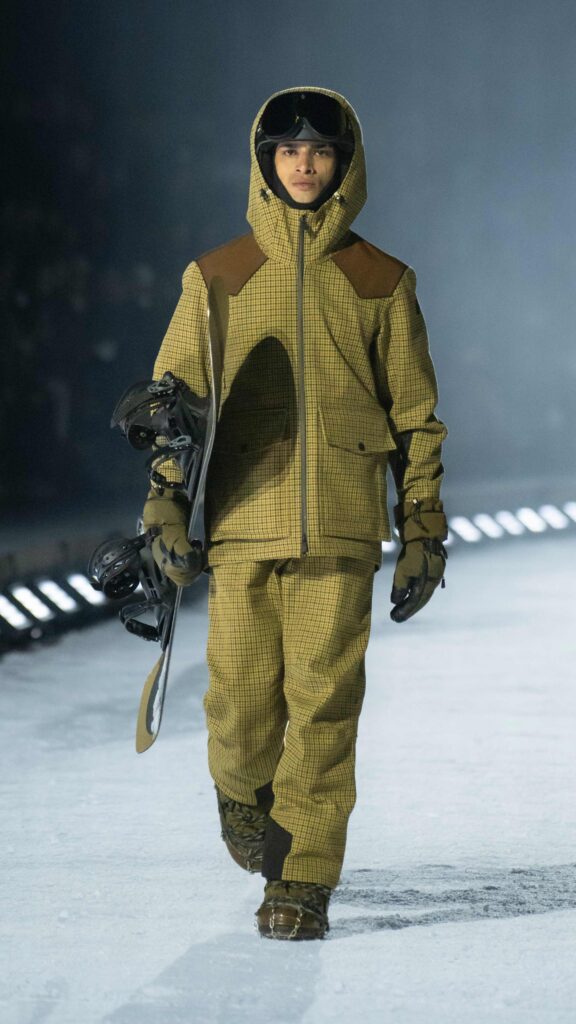
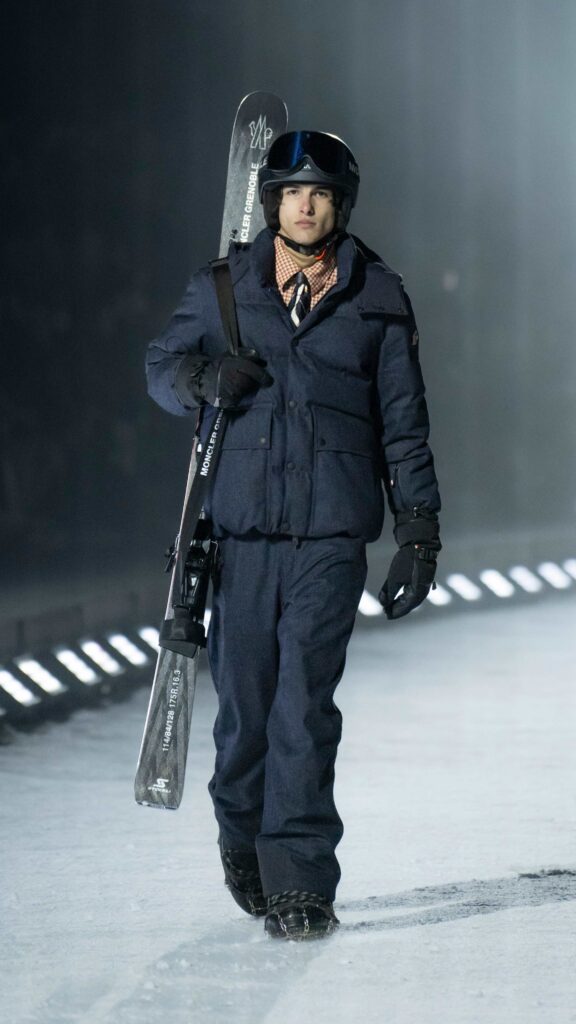
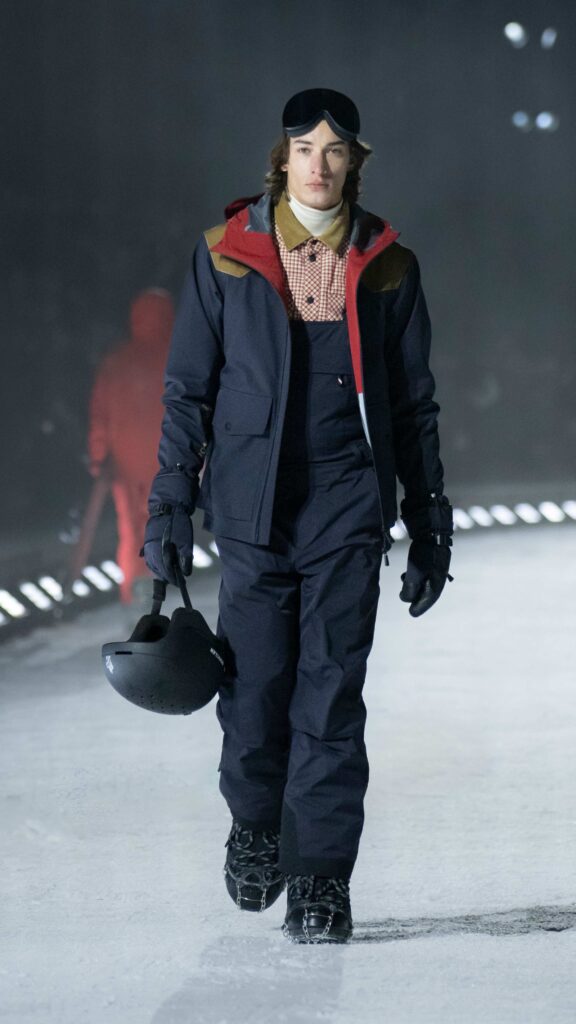
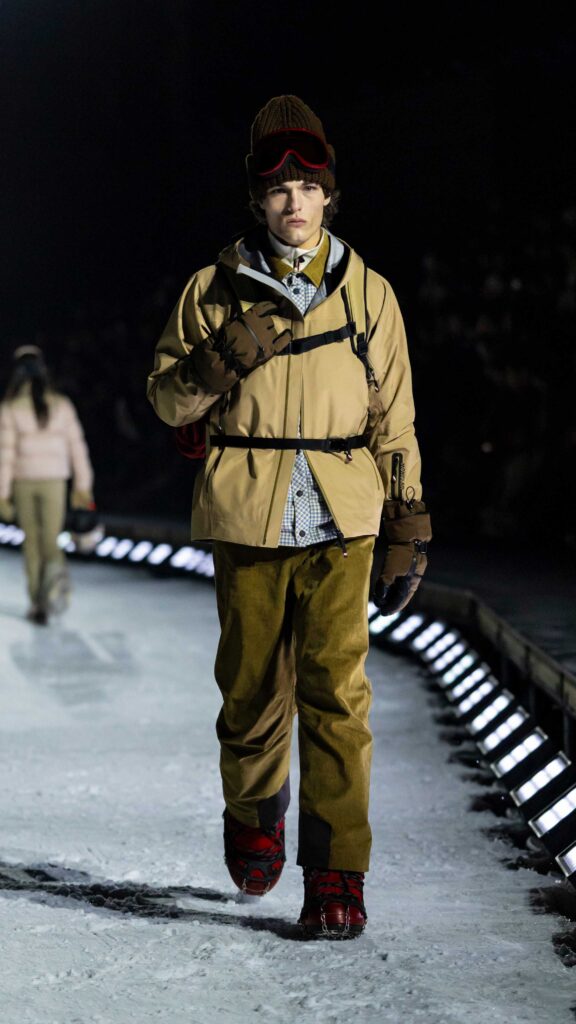
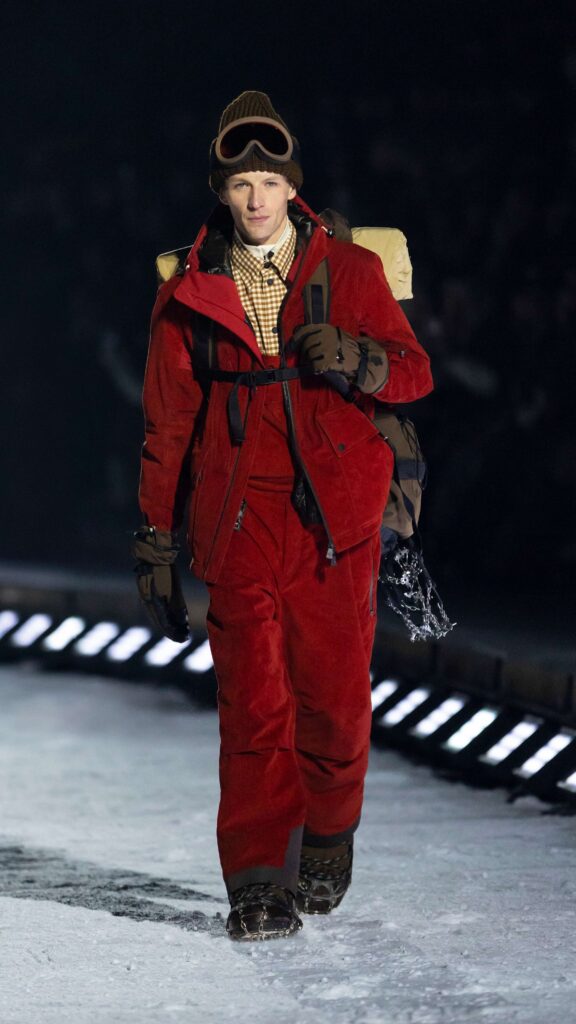
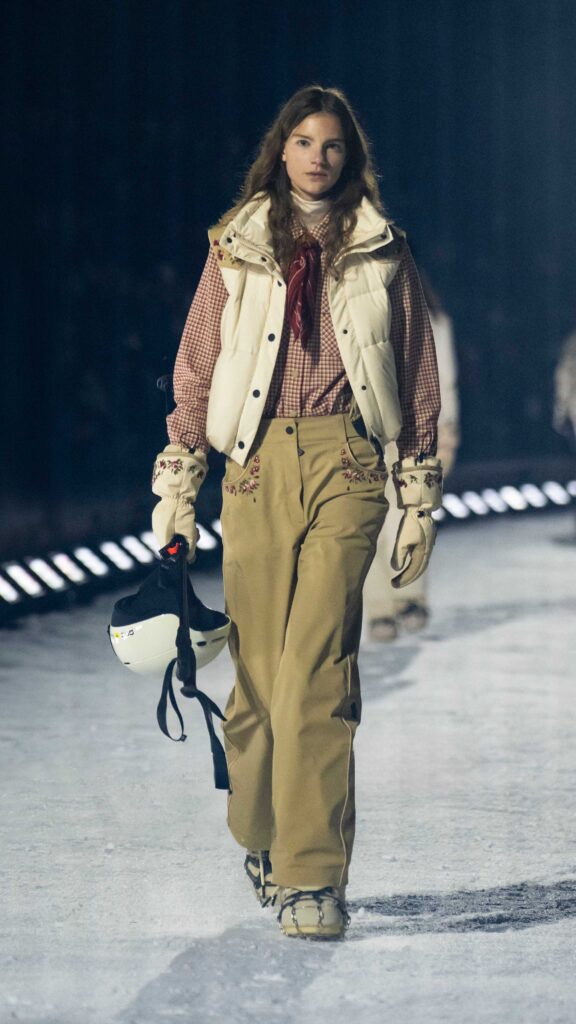
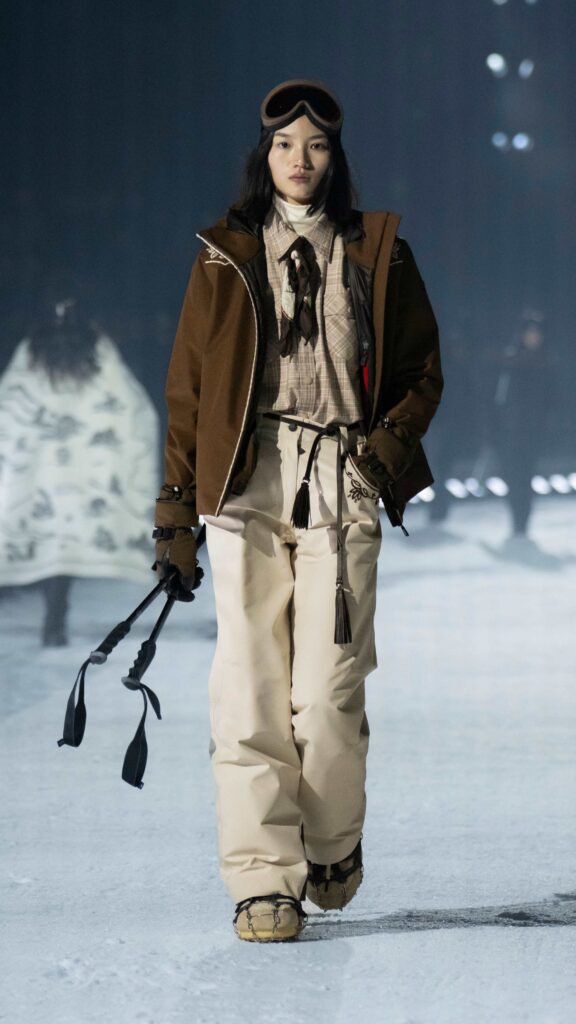
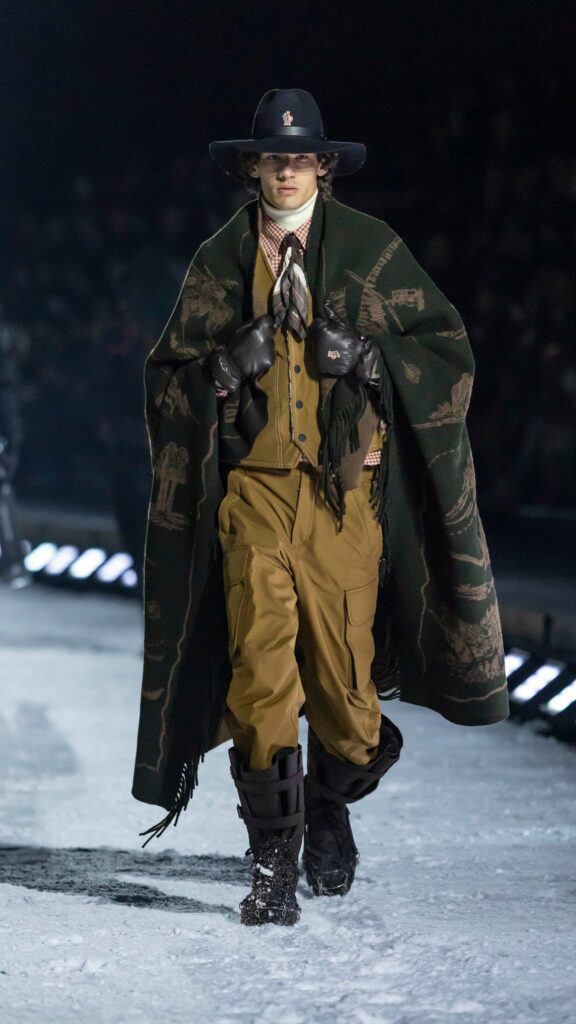
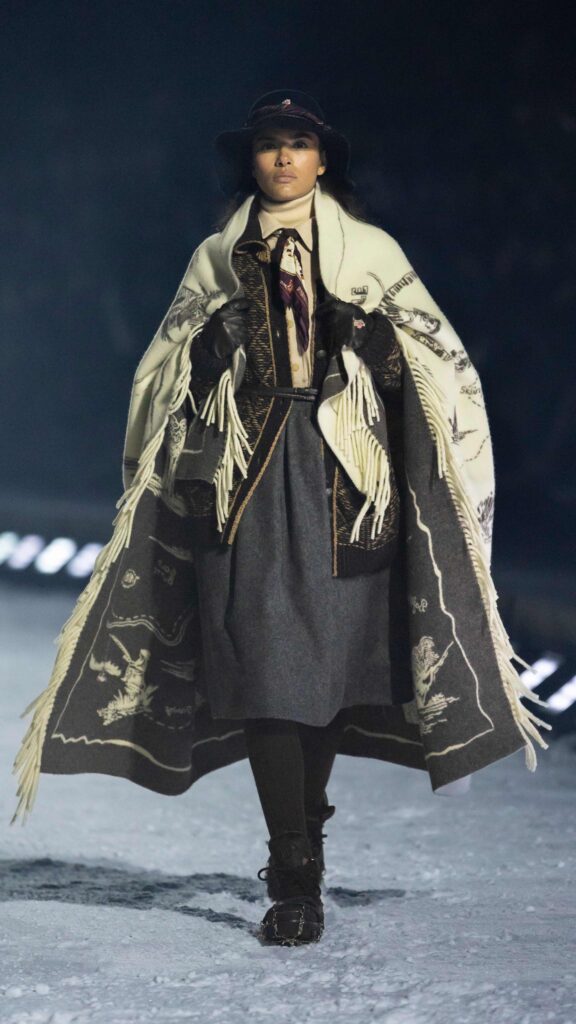
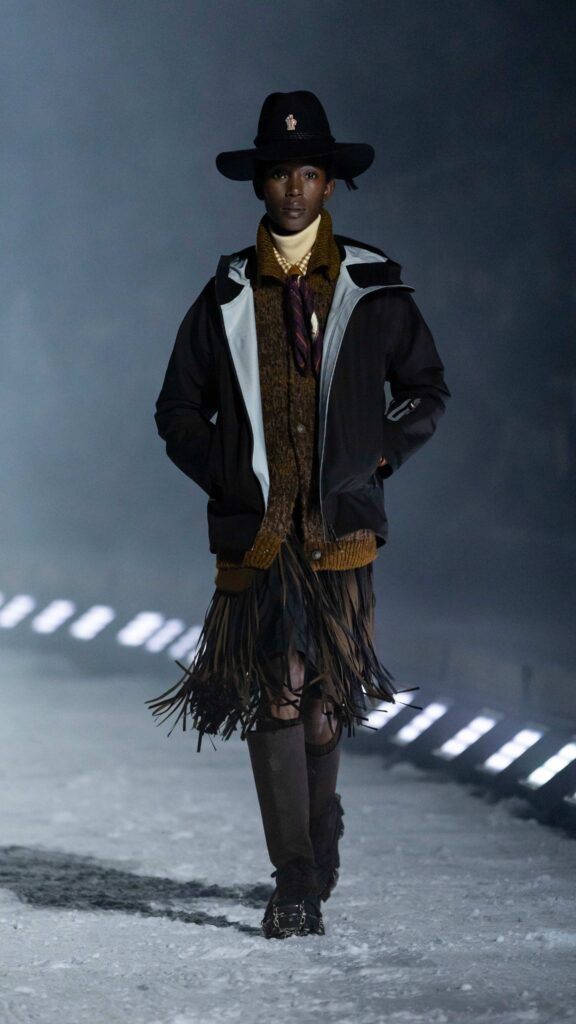
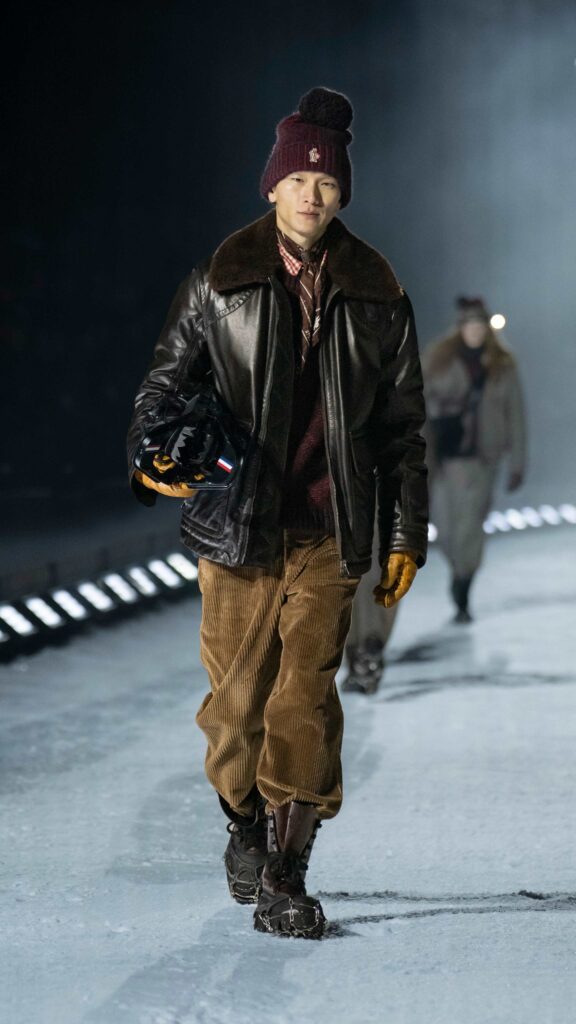
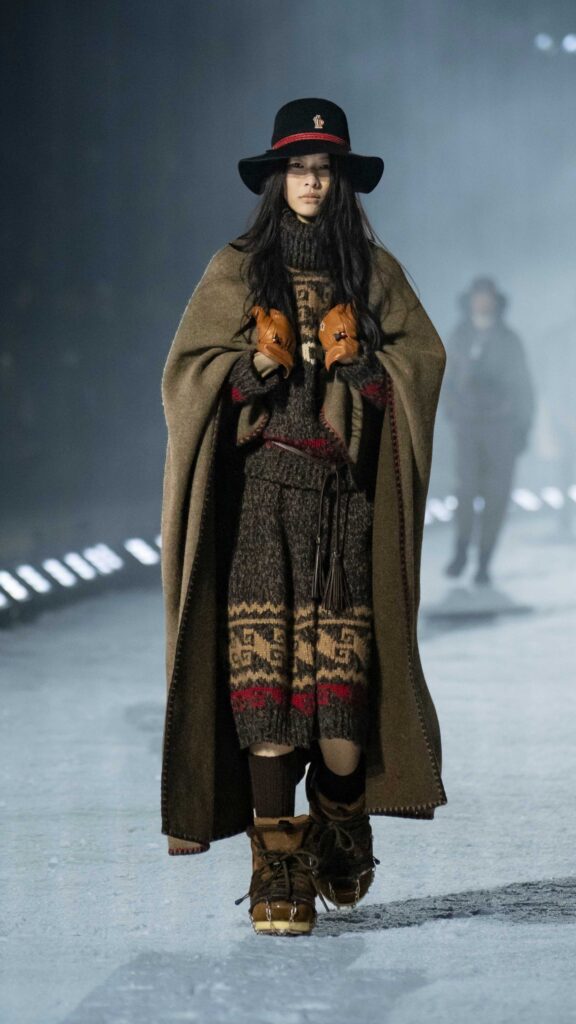
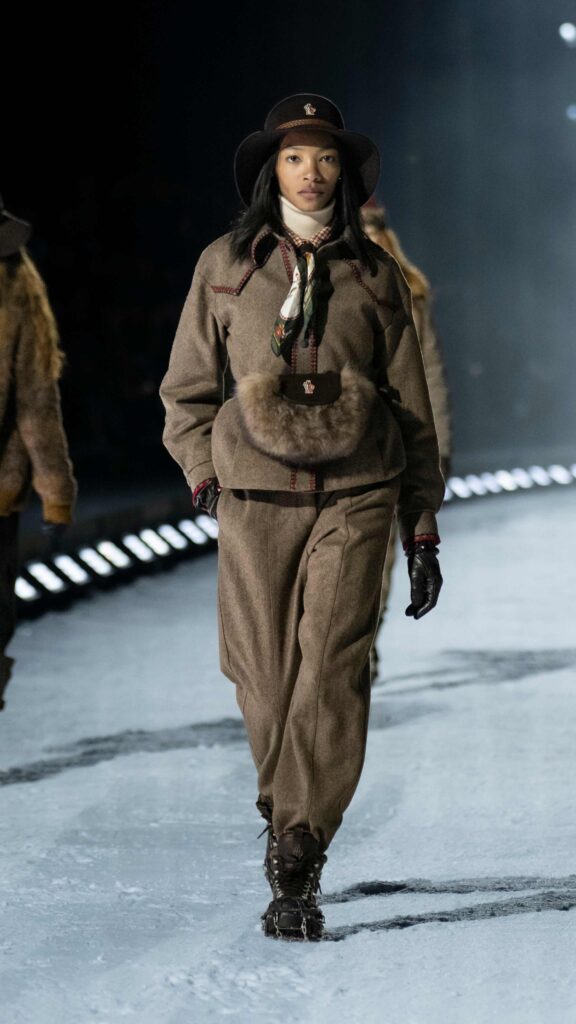
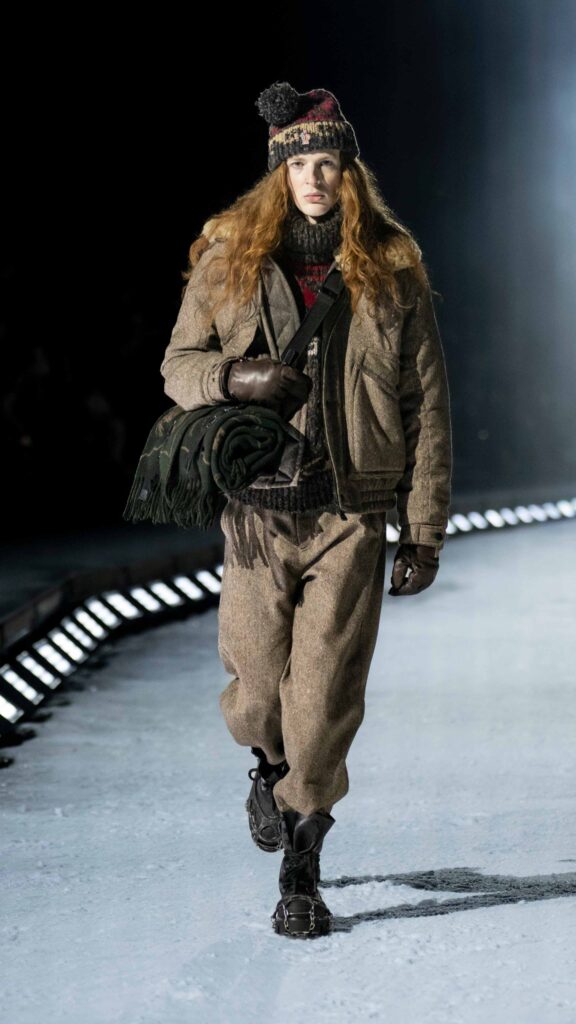
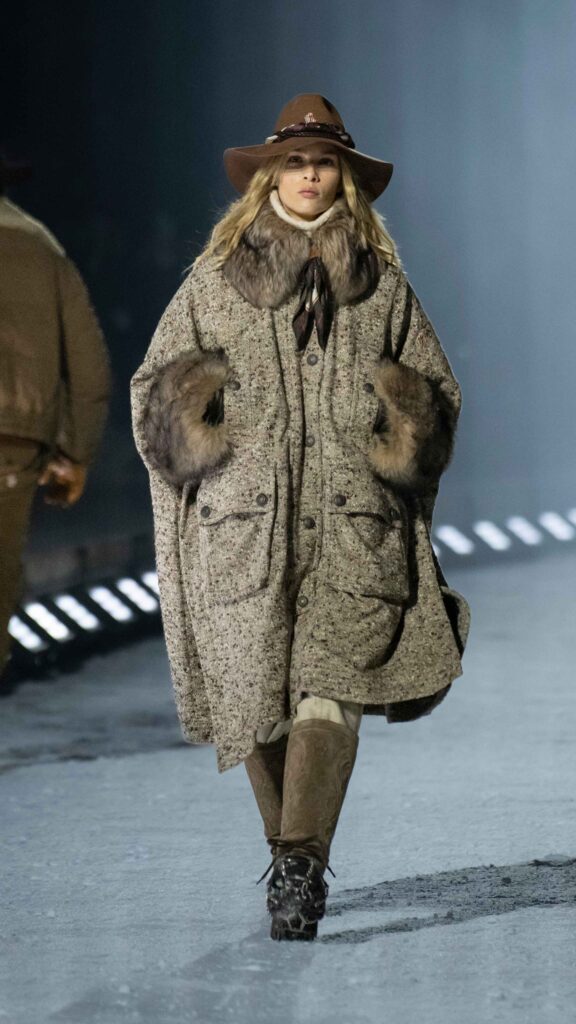
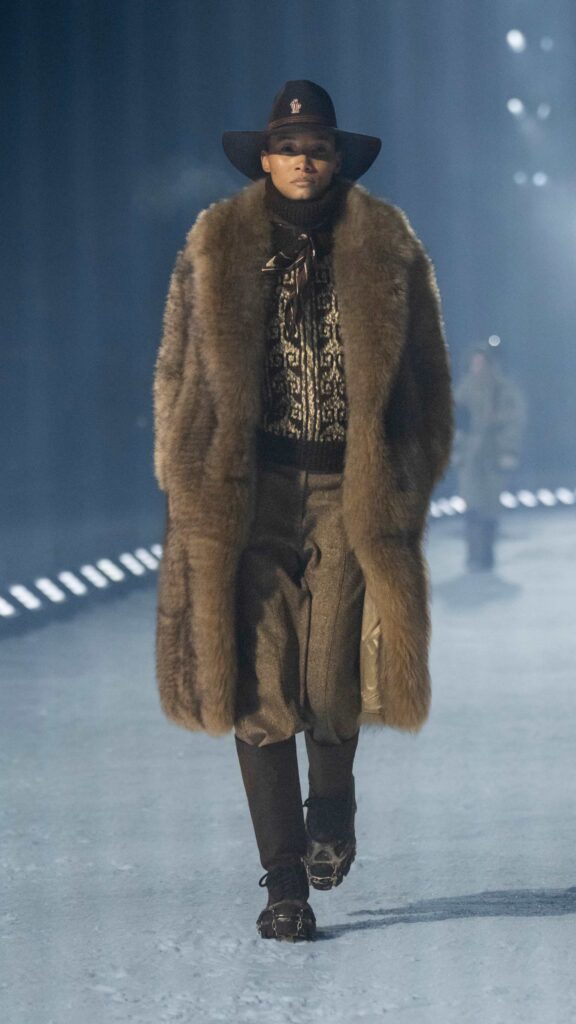
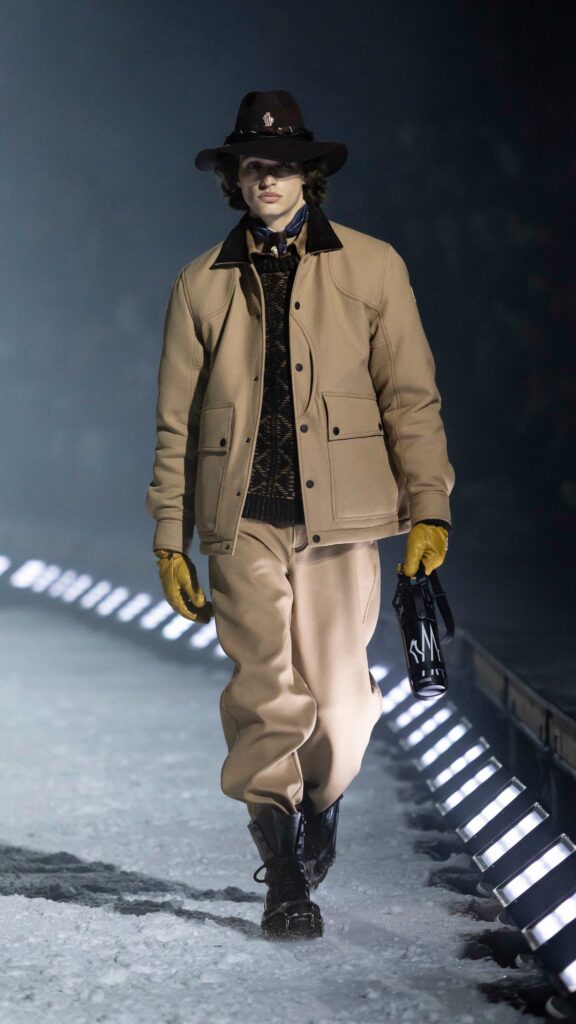
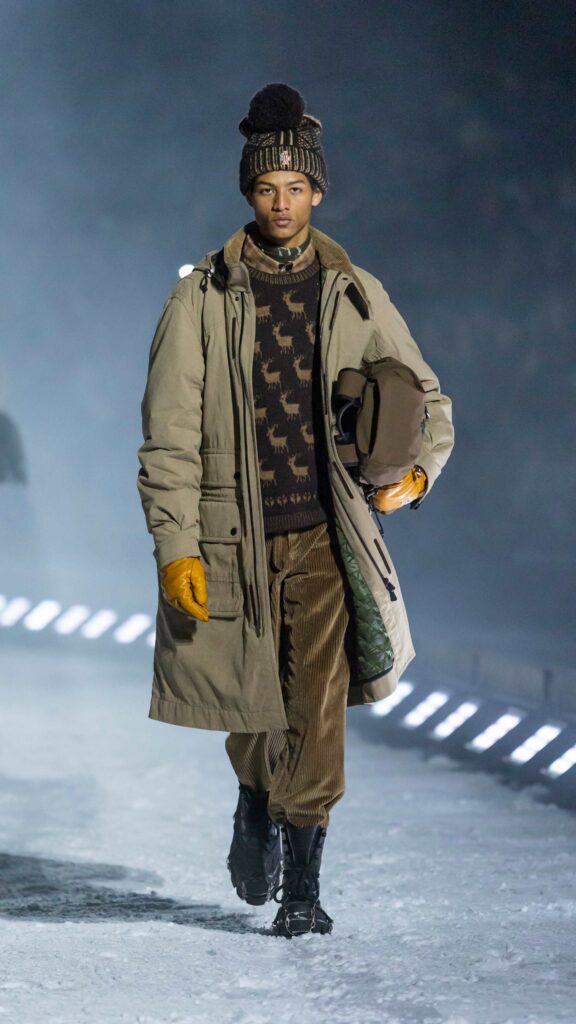
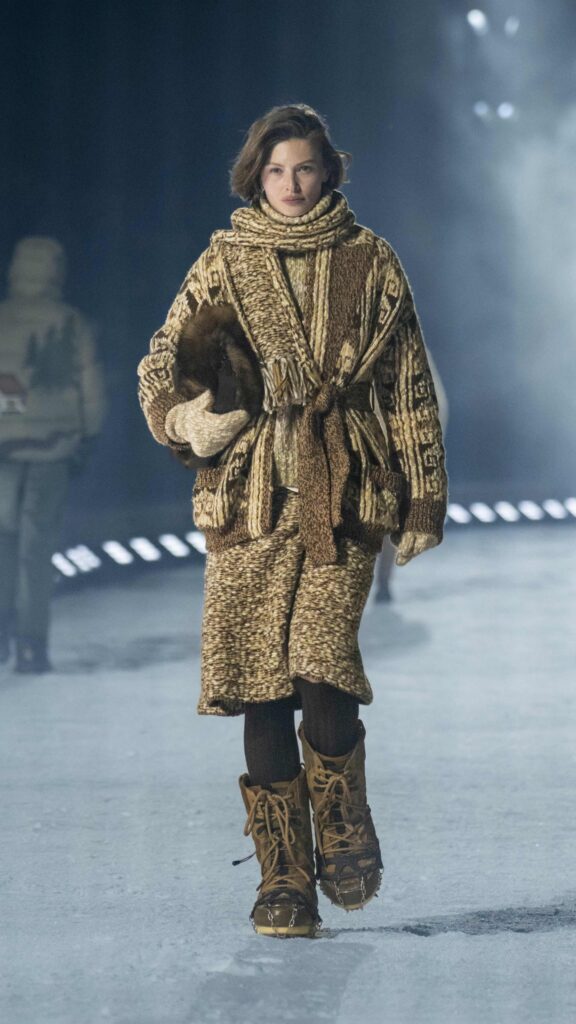
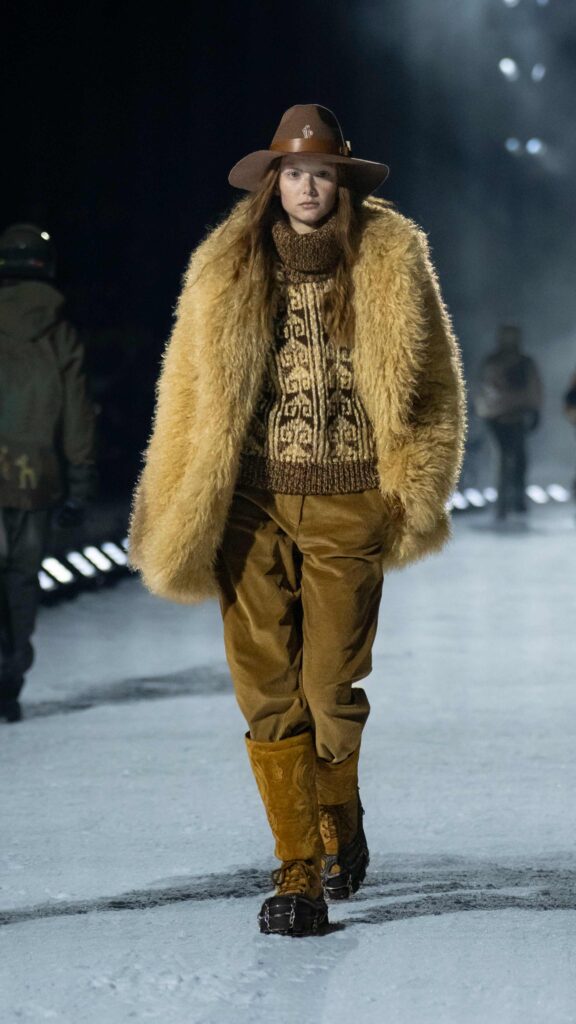
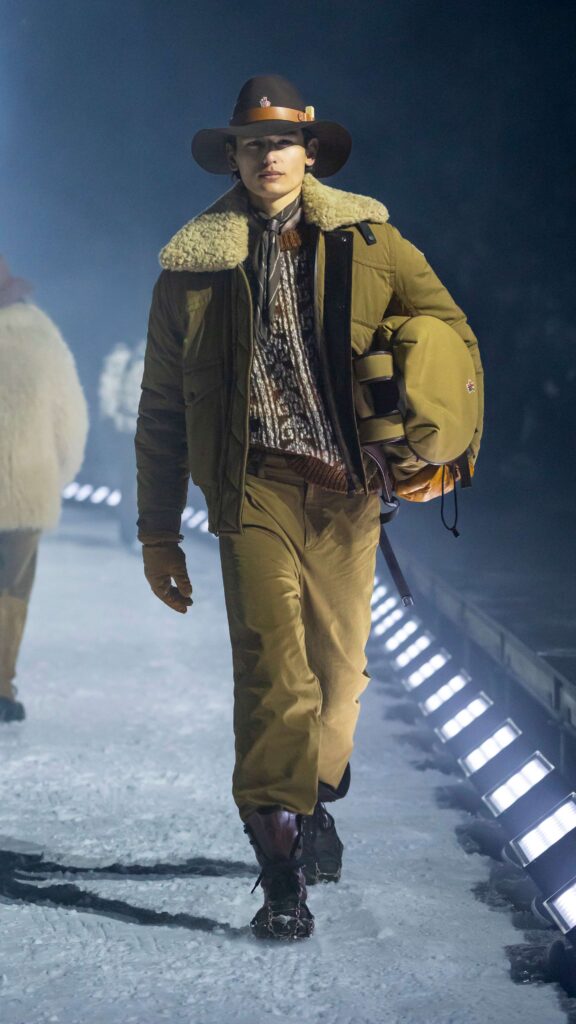
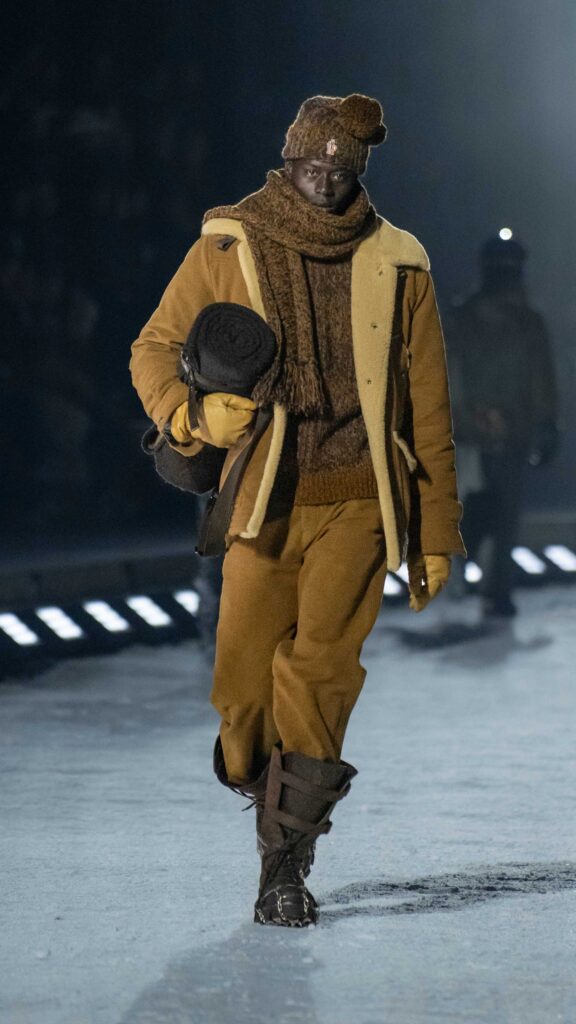
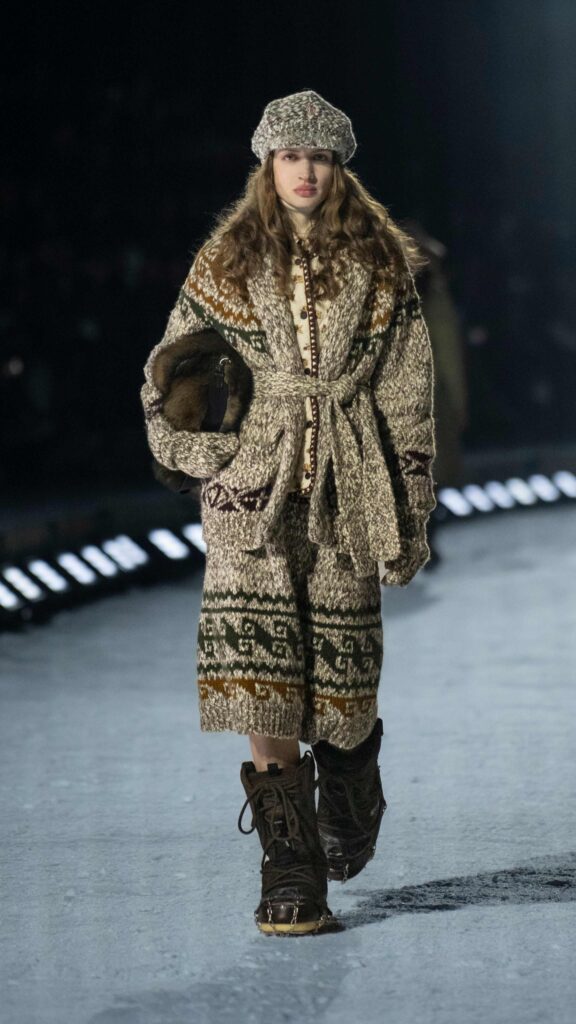
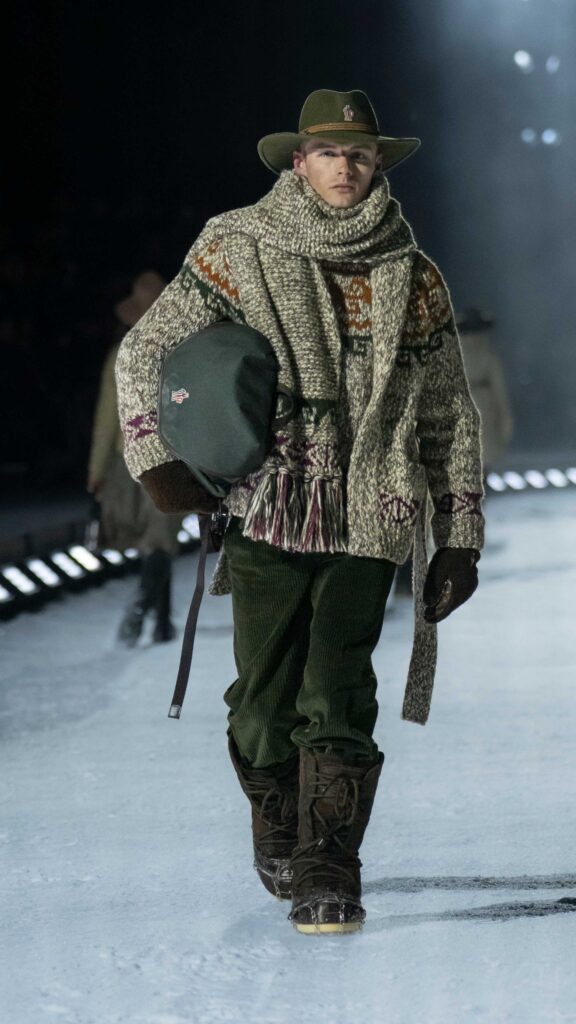
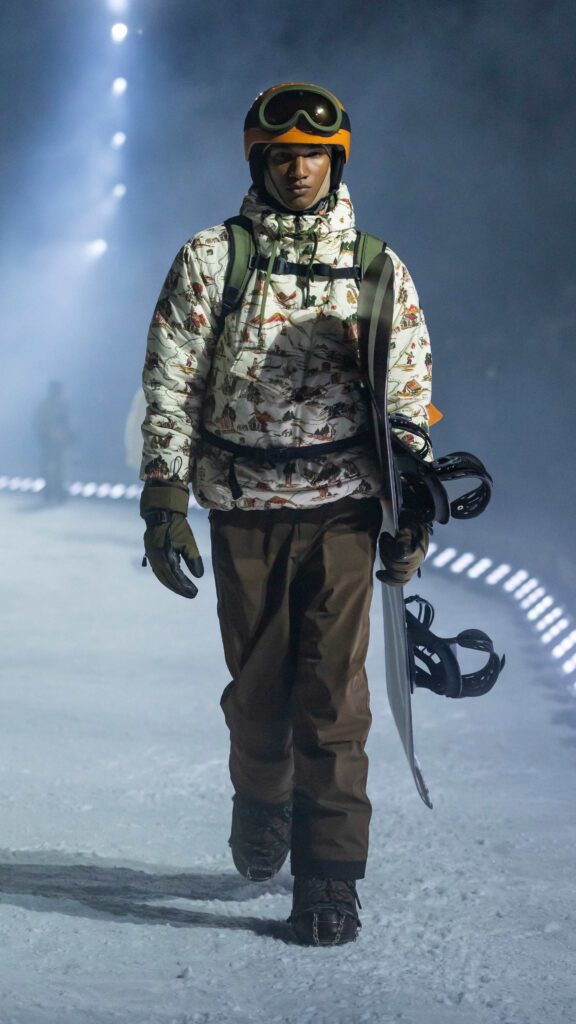
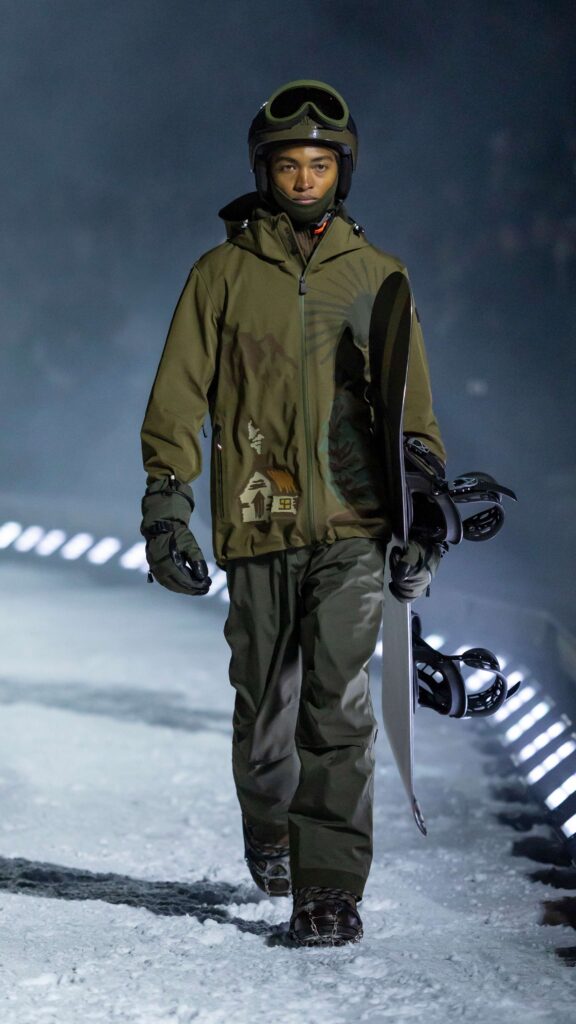
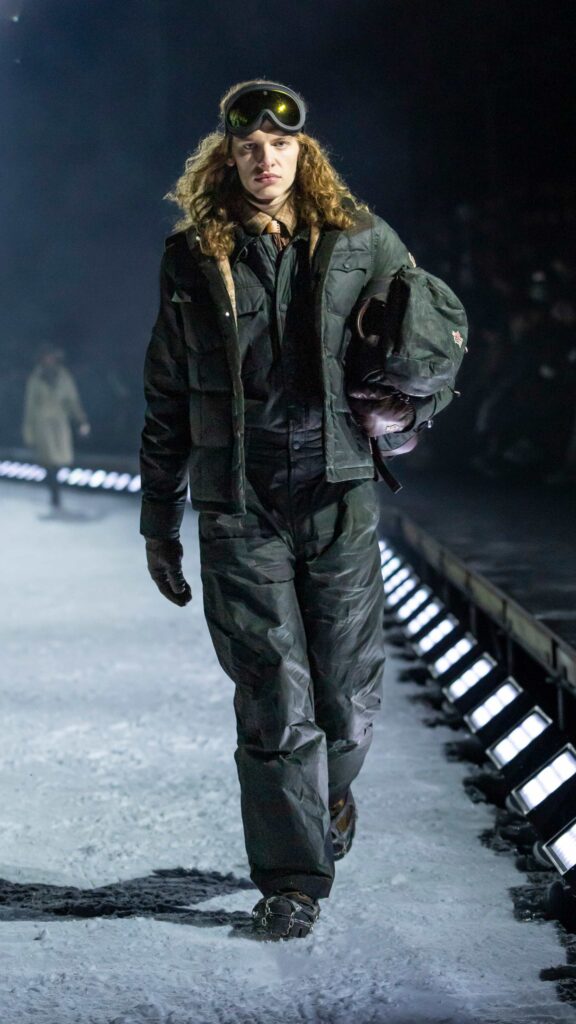
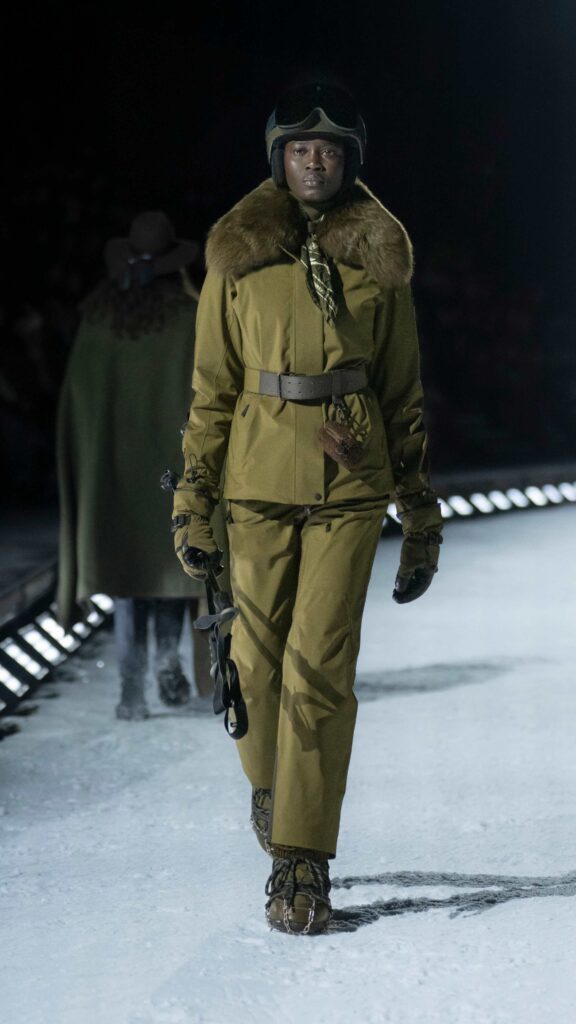
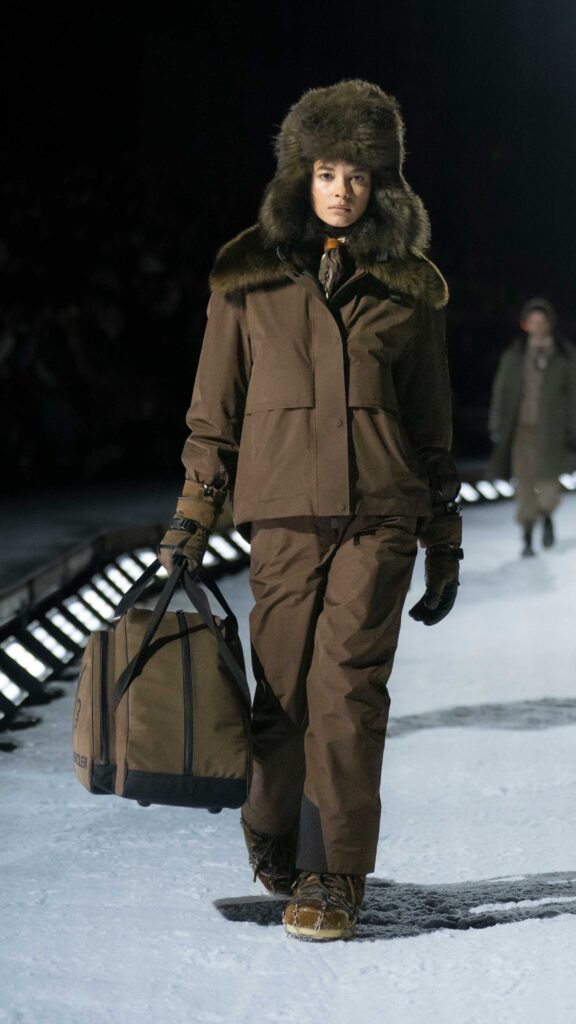
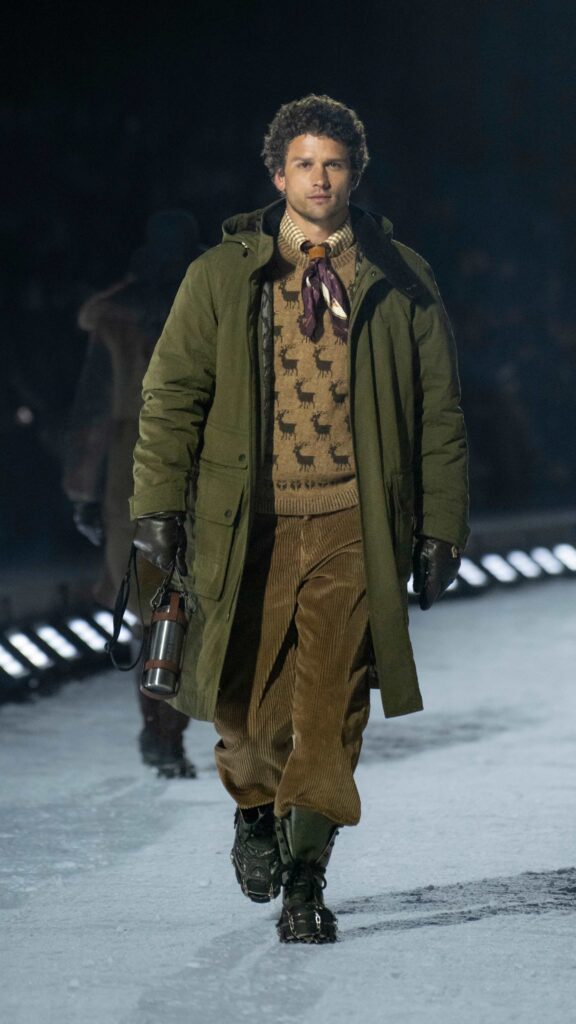
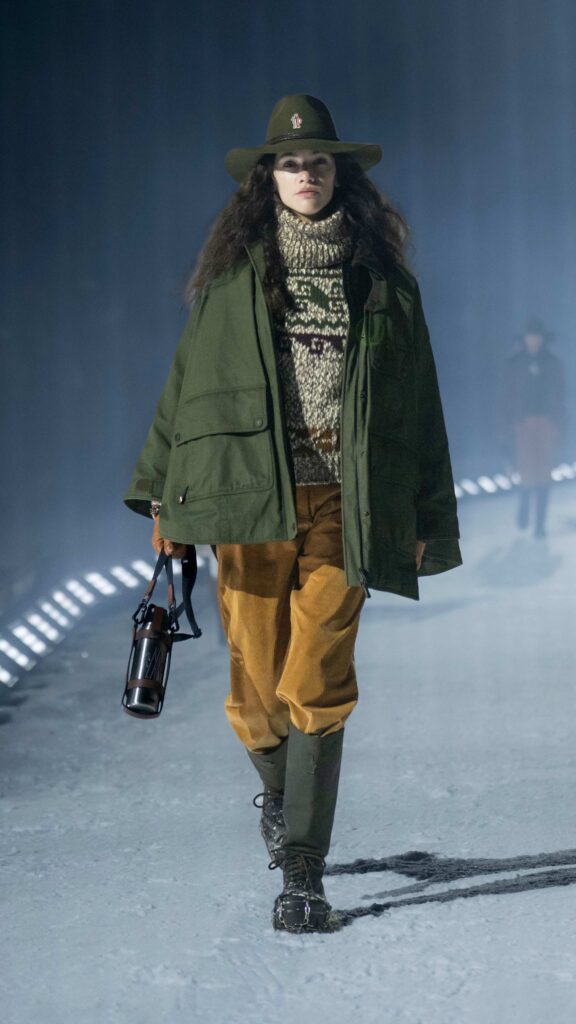
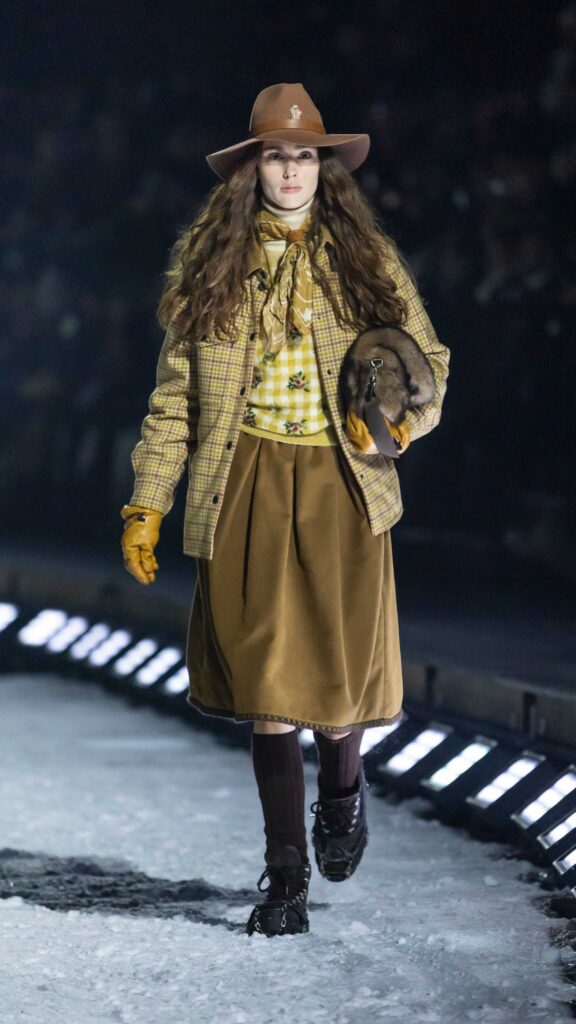
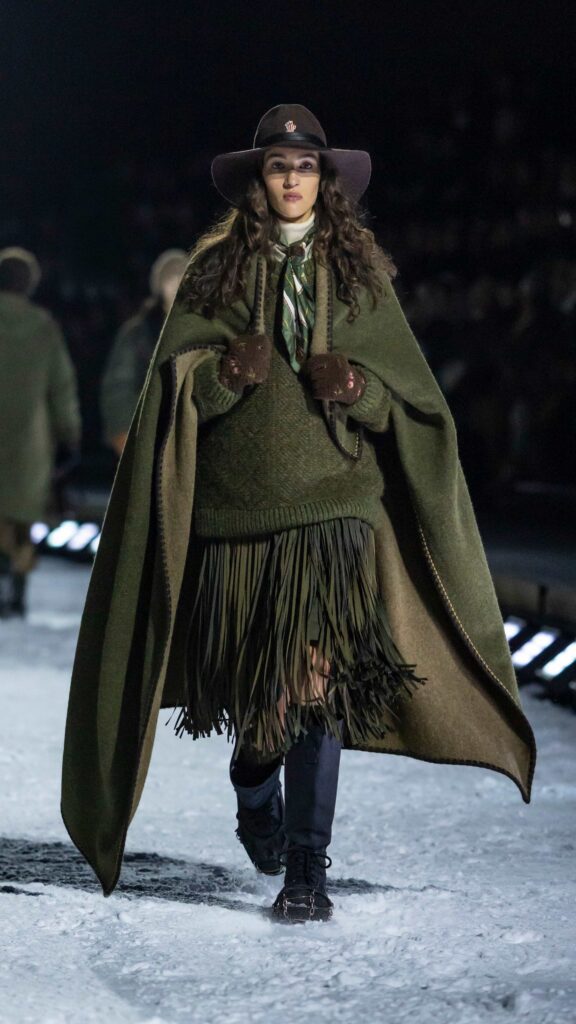
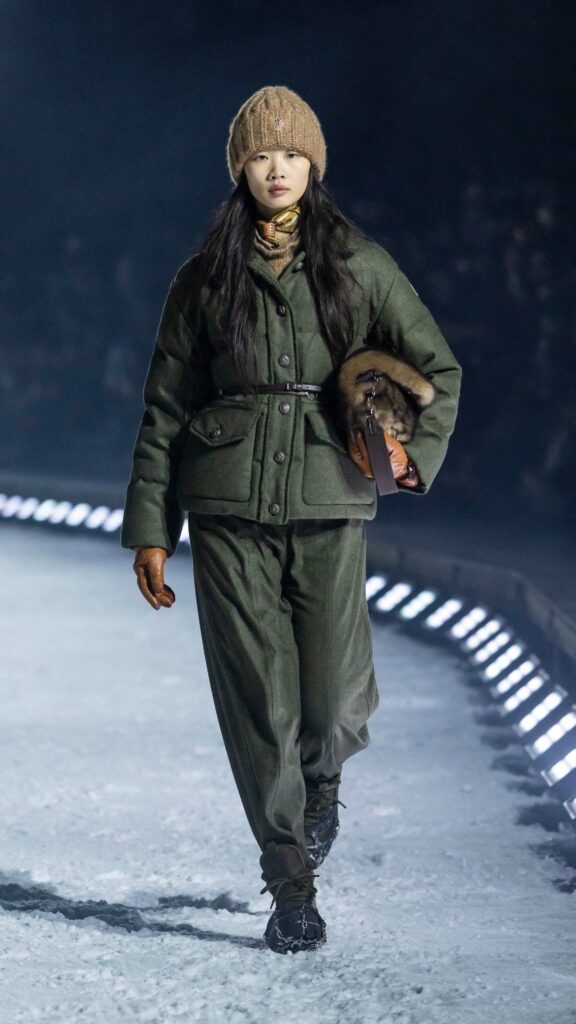
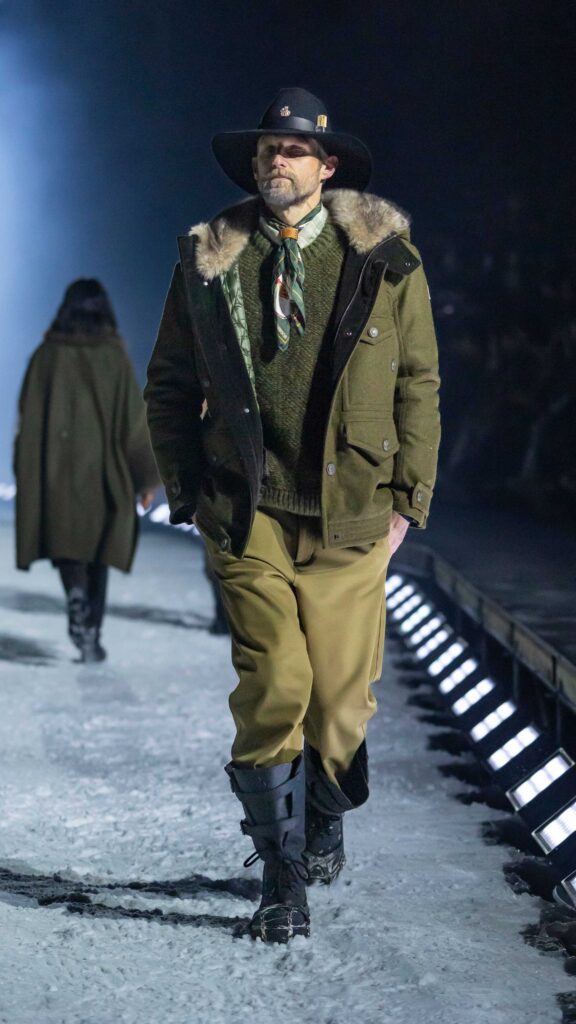
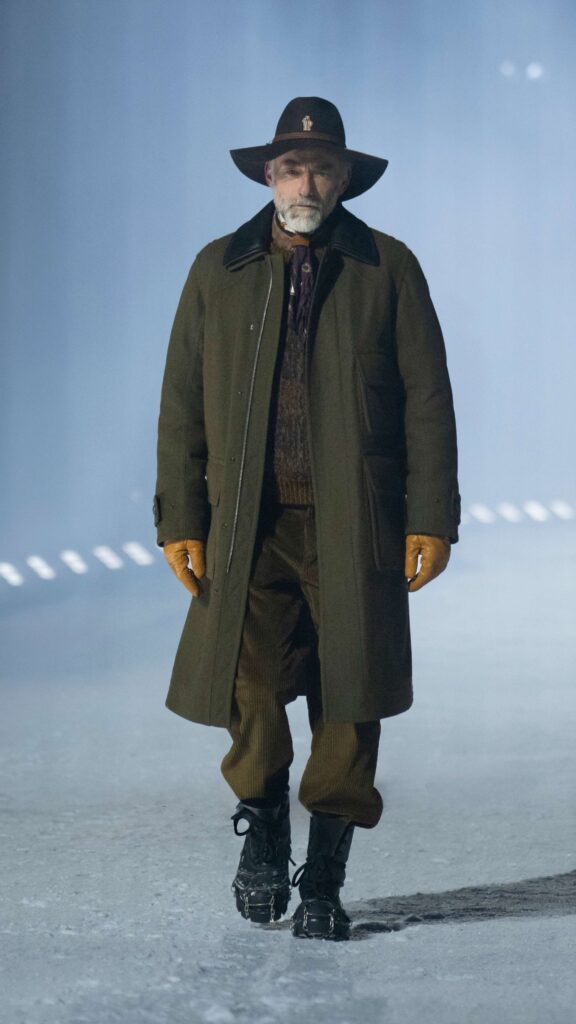
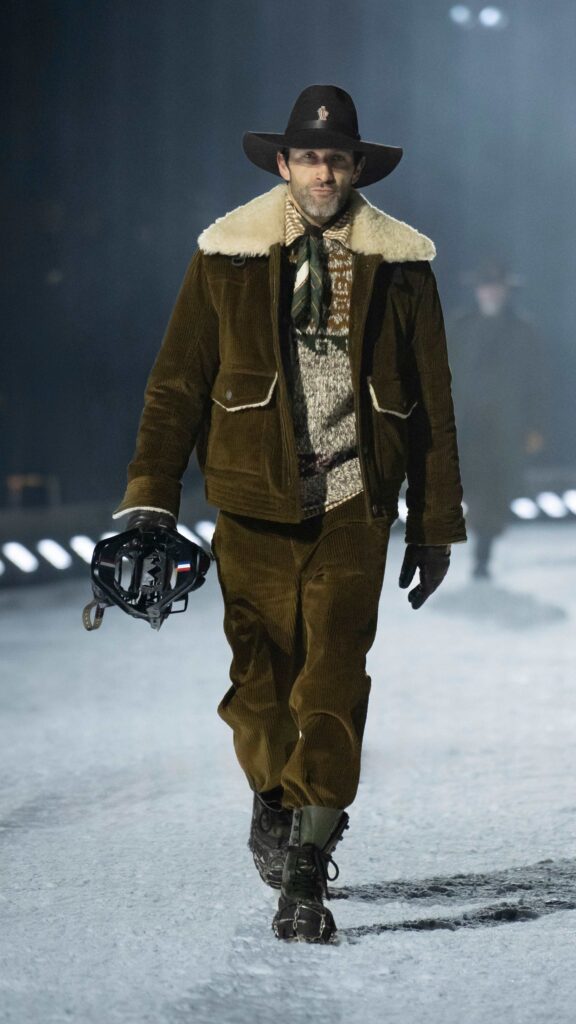
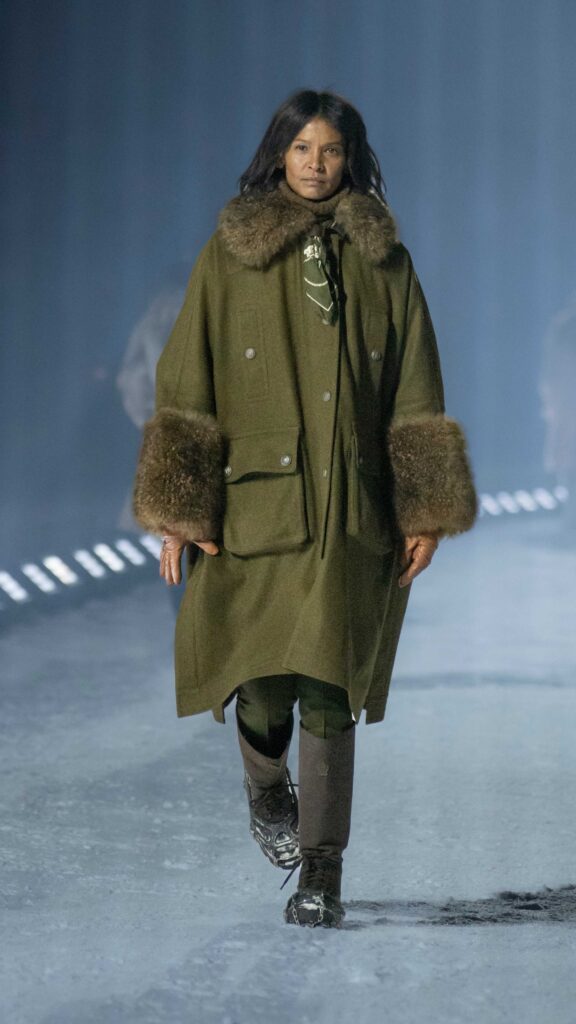
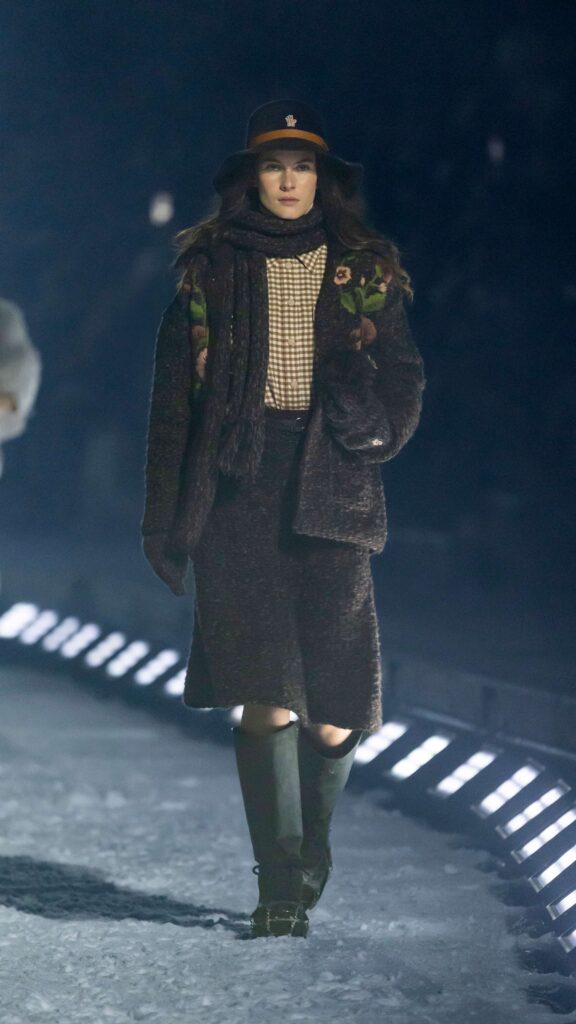
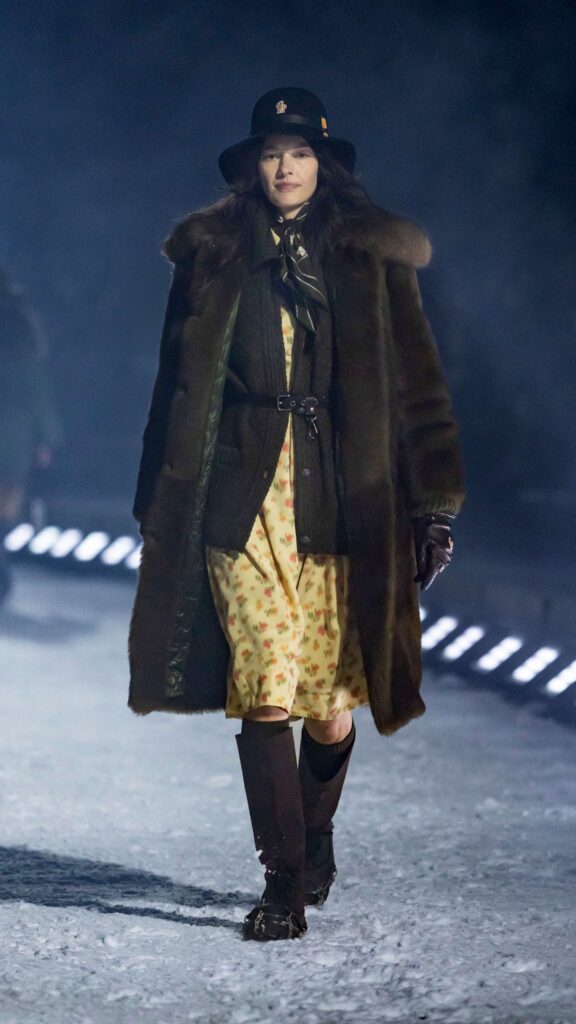
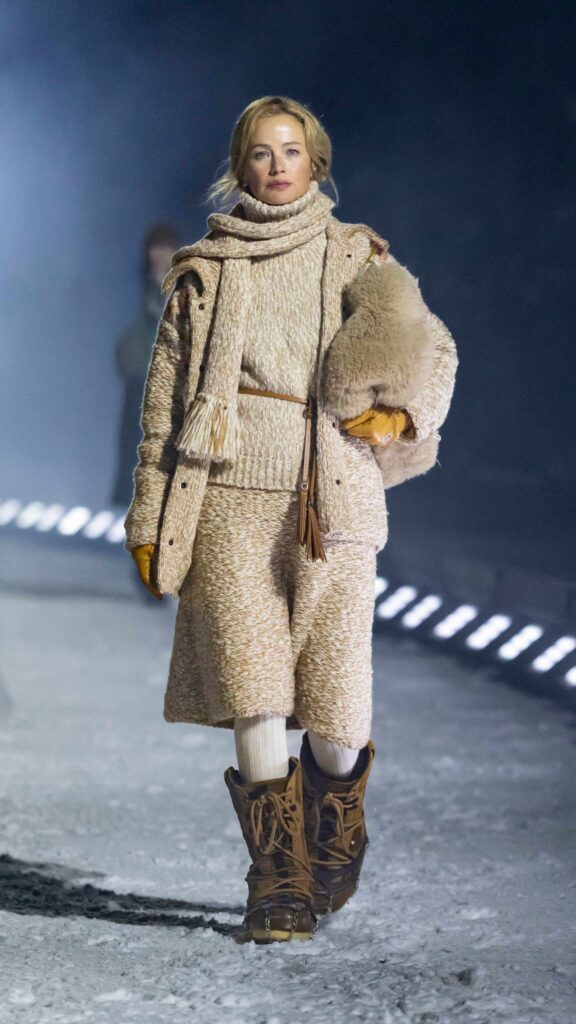
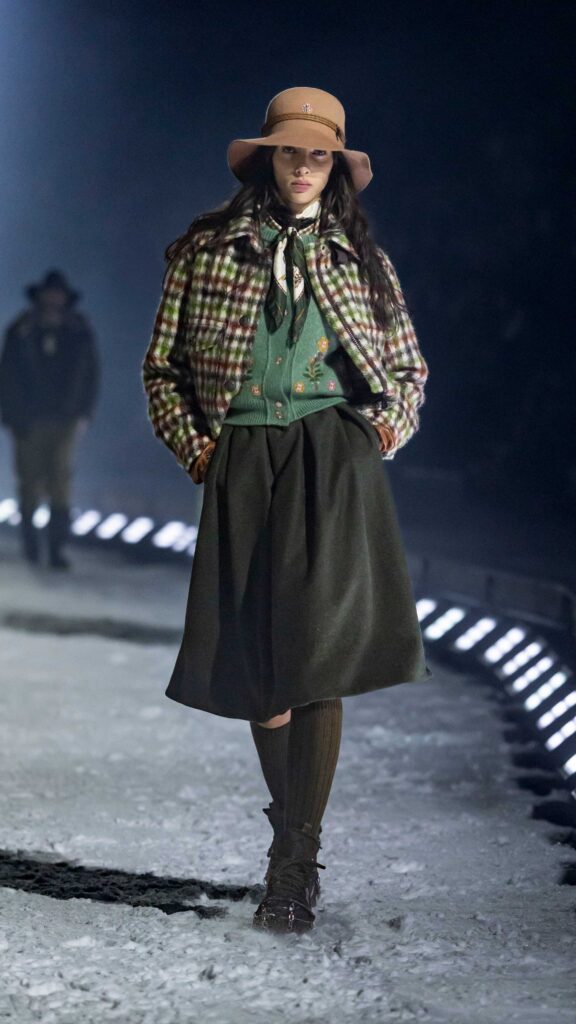
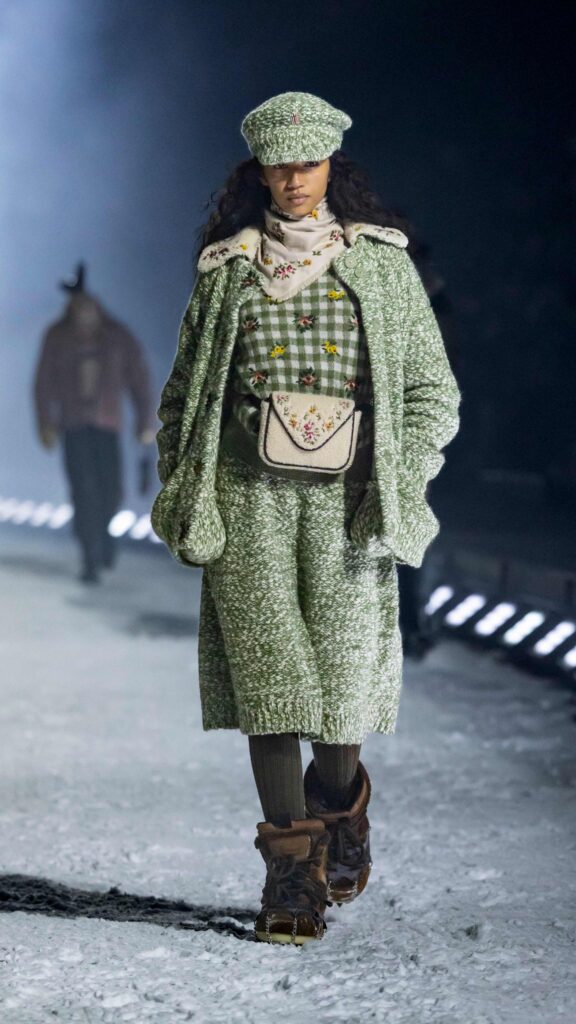
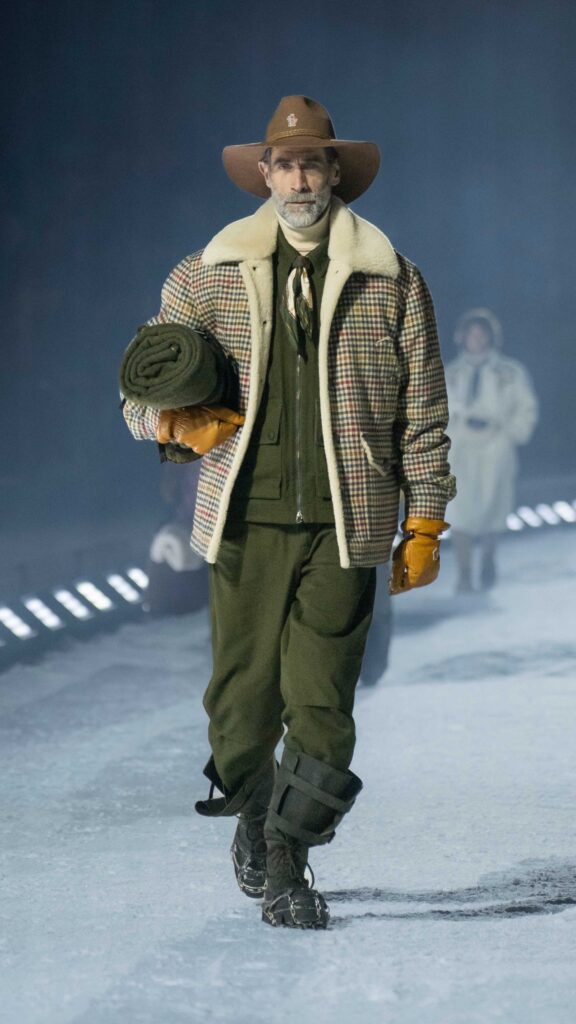
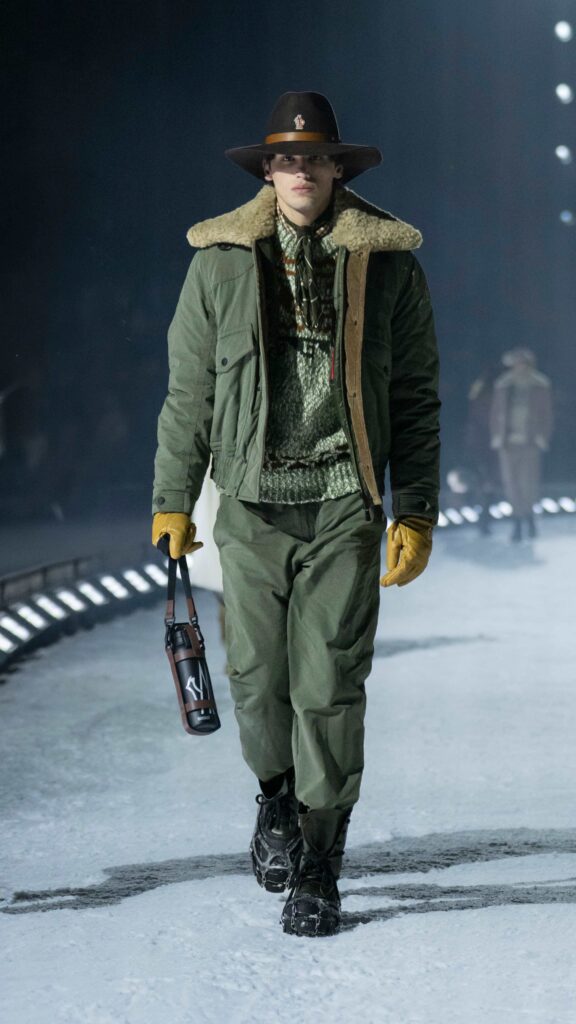
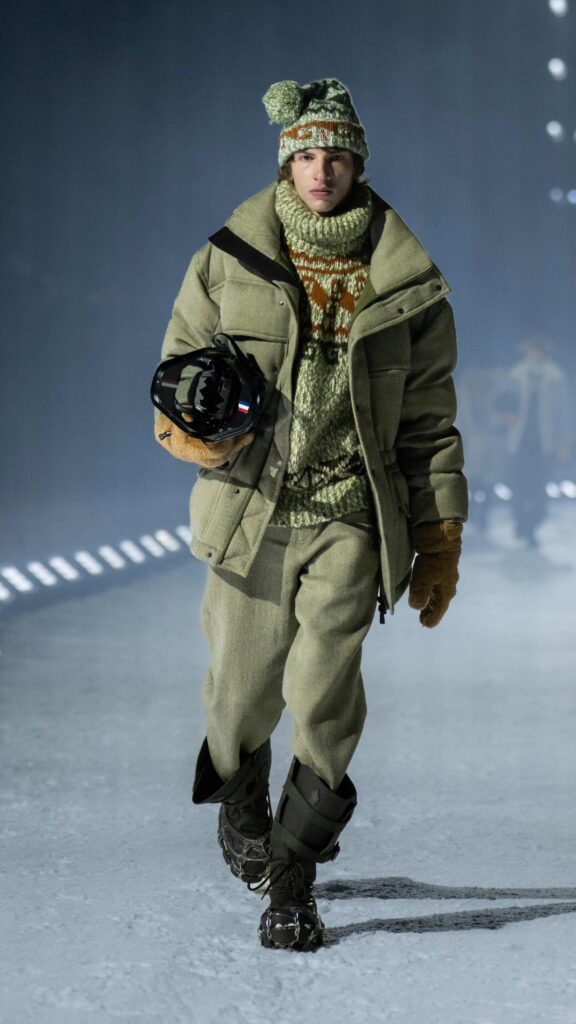
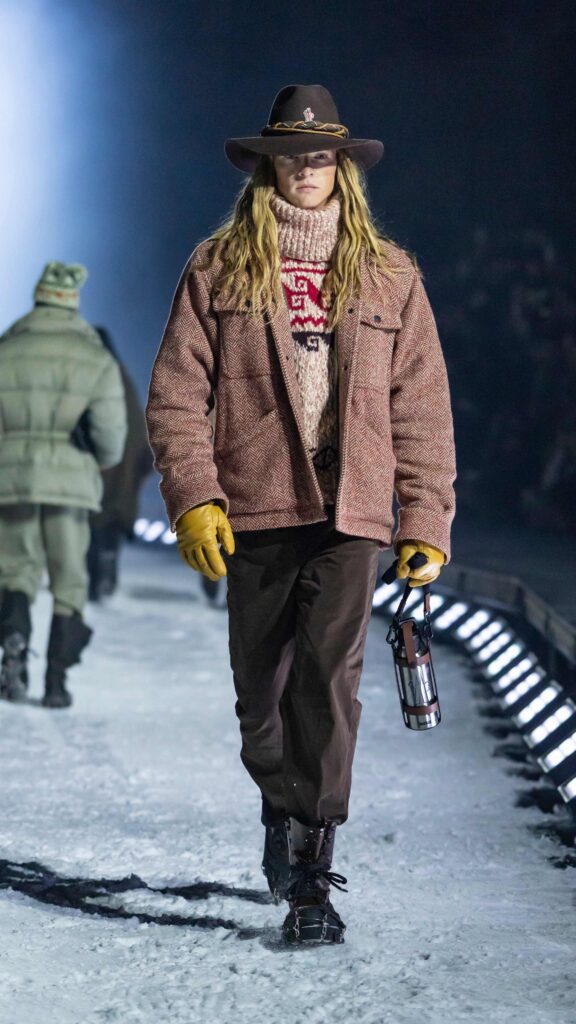
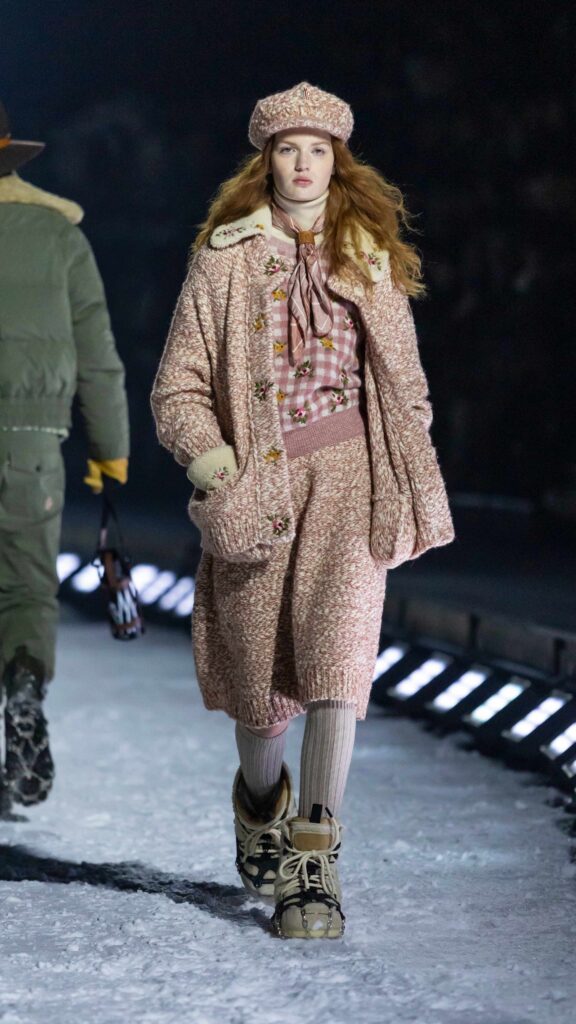
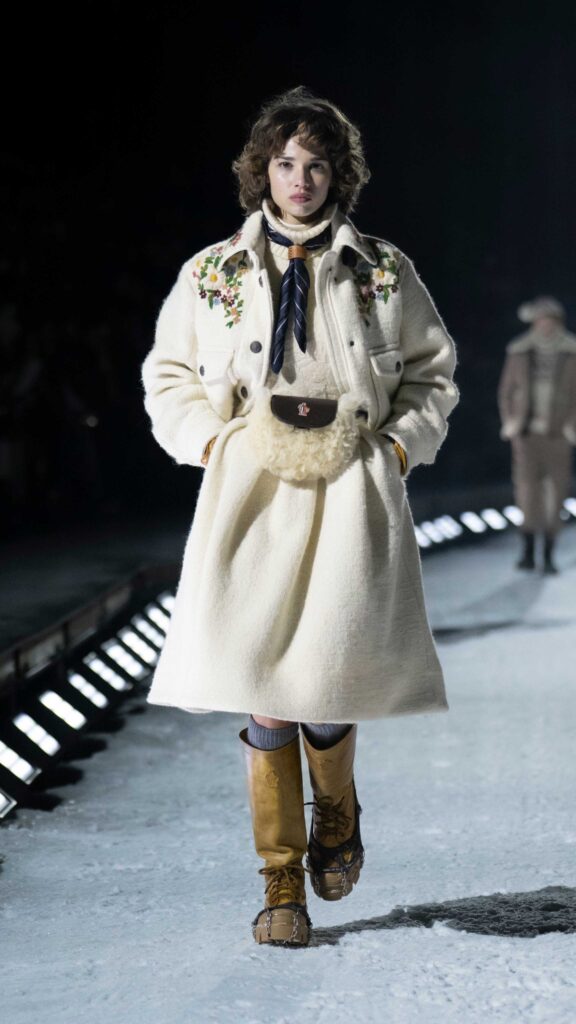
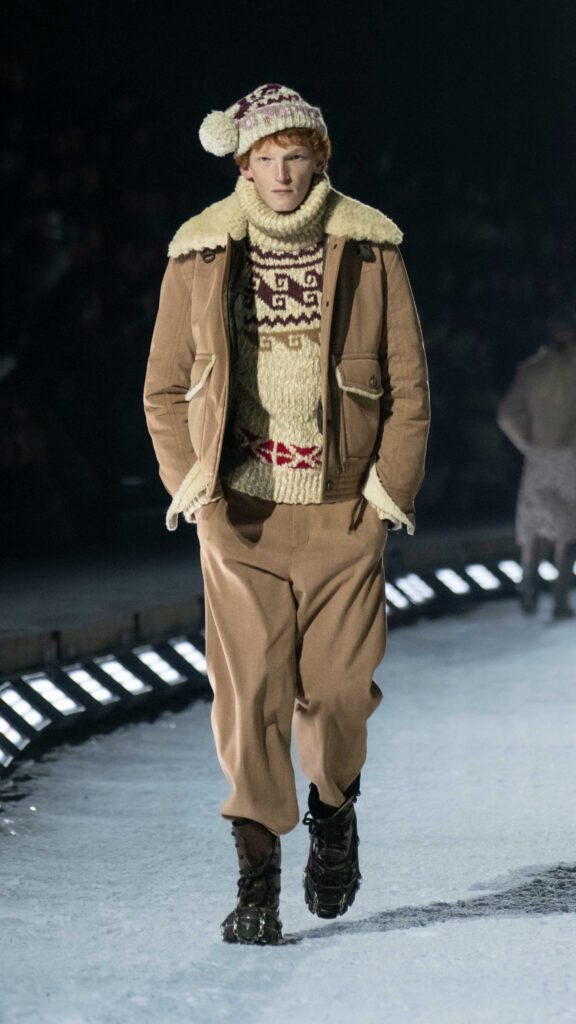
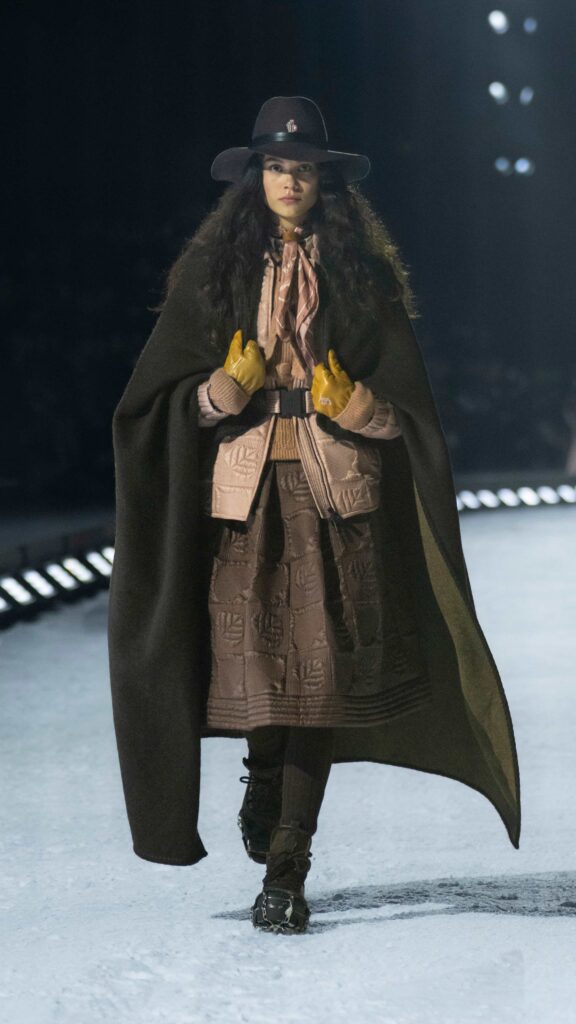
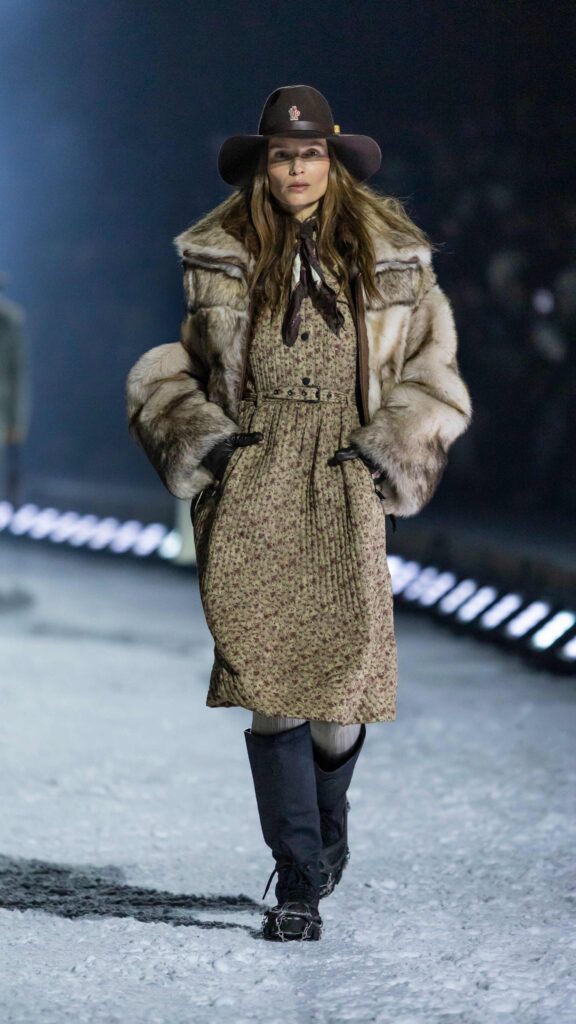
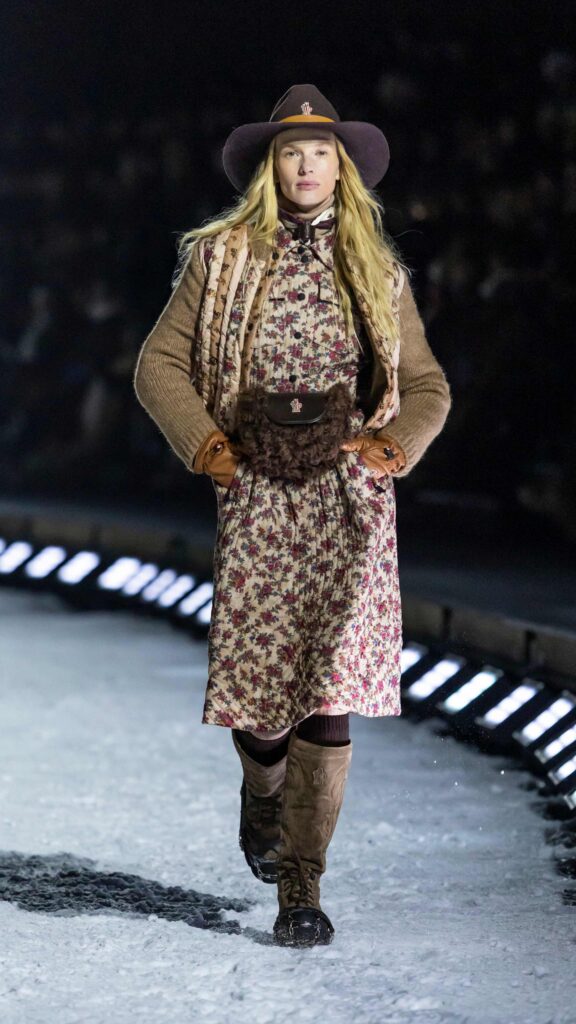
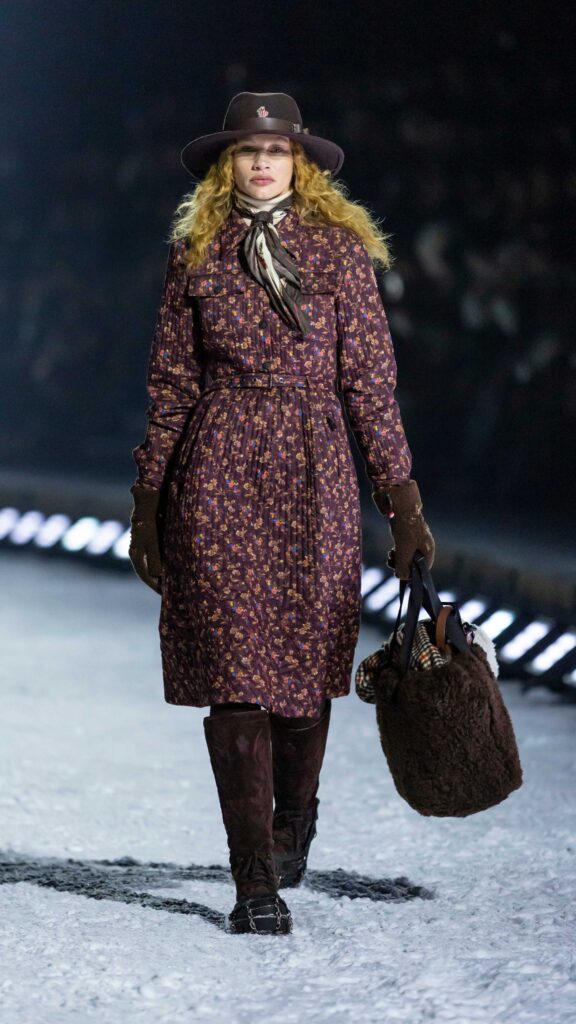
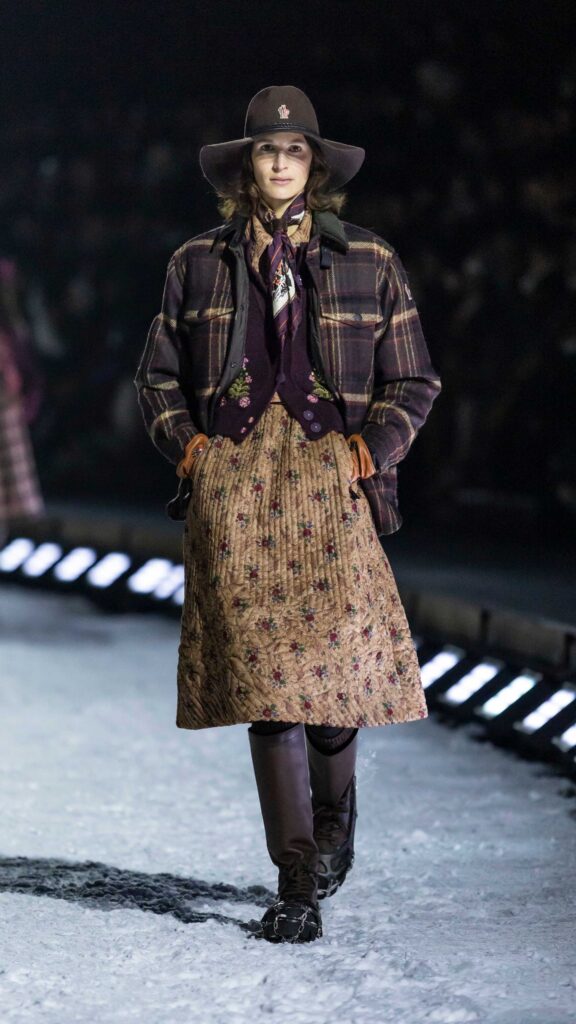
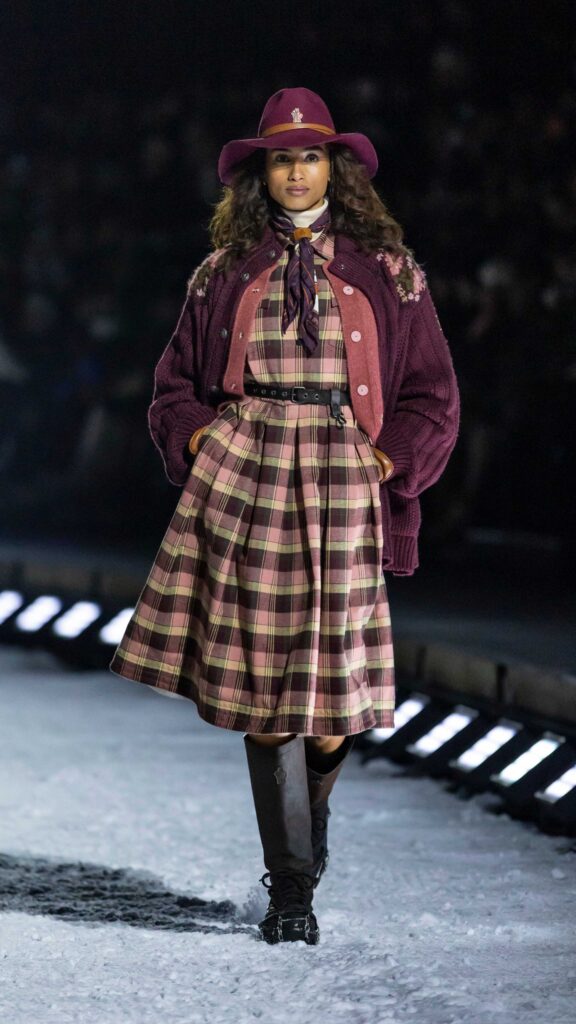
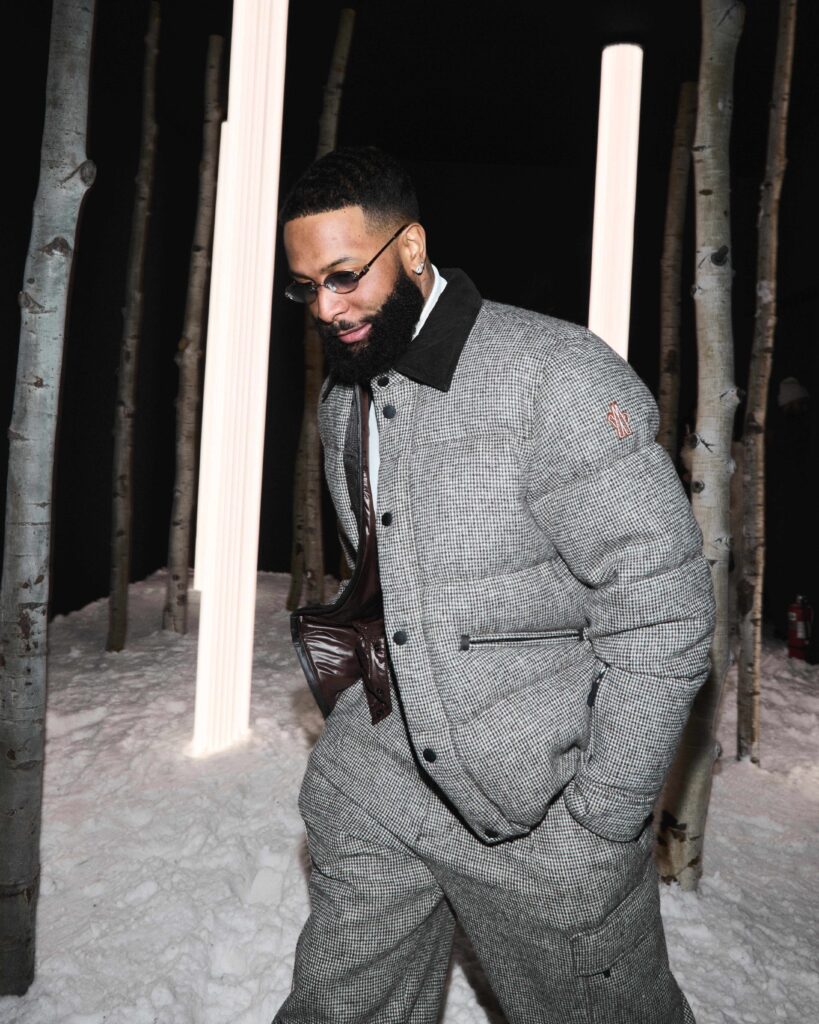
The AW26 collection embodies this convergence through textiles. The loden, a full-wool fabric deeply rooted in European alpine tradition, takes center stage. This material, waterproof without chemical treatment thanks to its fiber density, was worn by Austrian shepherds and Tyrolean forest rangers long before Moncler existed. Next to it, textured tweed – a reinterpretation of Scottish heritage – dialogues with American tartan, a symbol of life between indoors and outdoors in Rocky Mountain cottages. Moncler doesn’t choose between Europe and America: the brand superimposes both vocabularies.
Detail
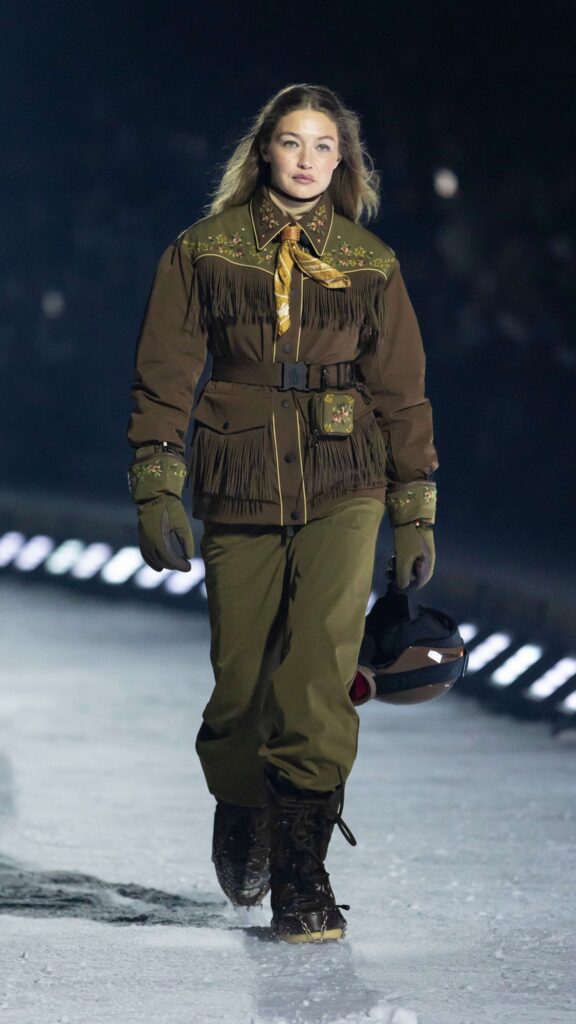
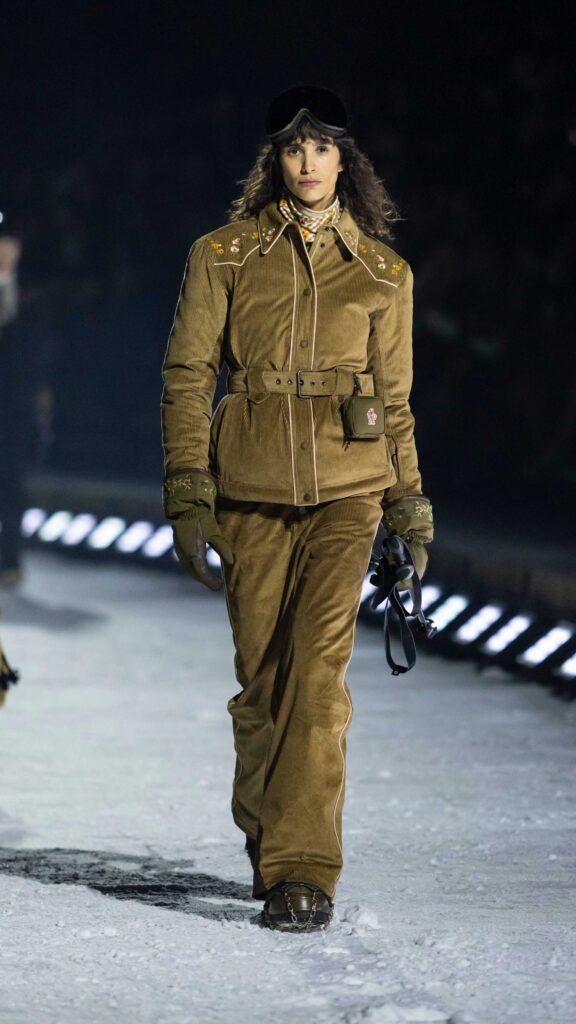
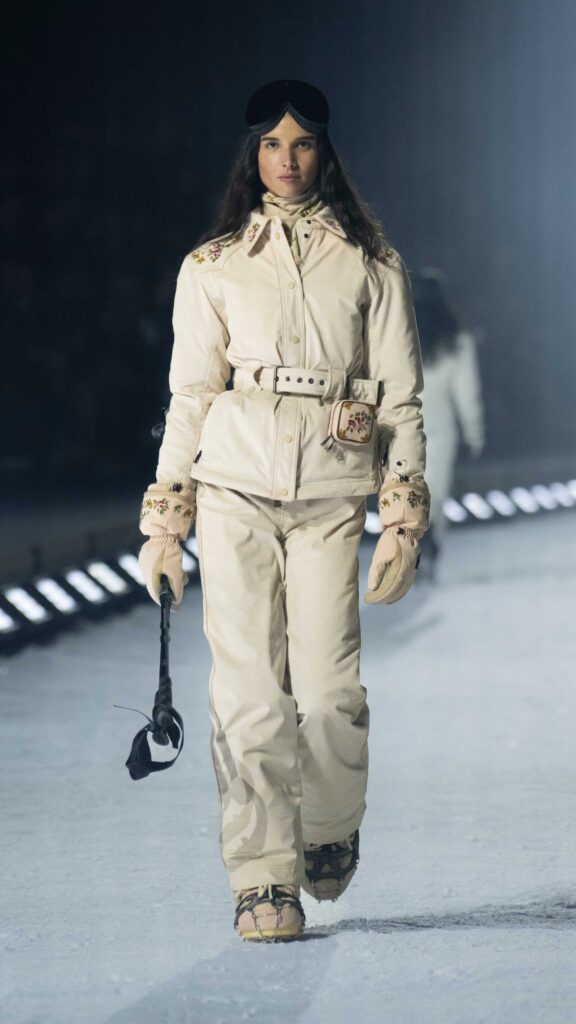
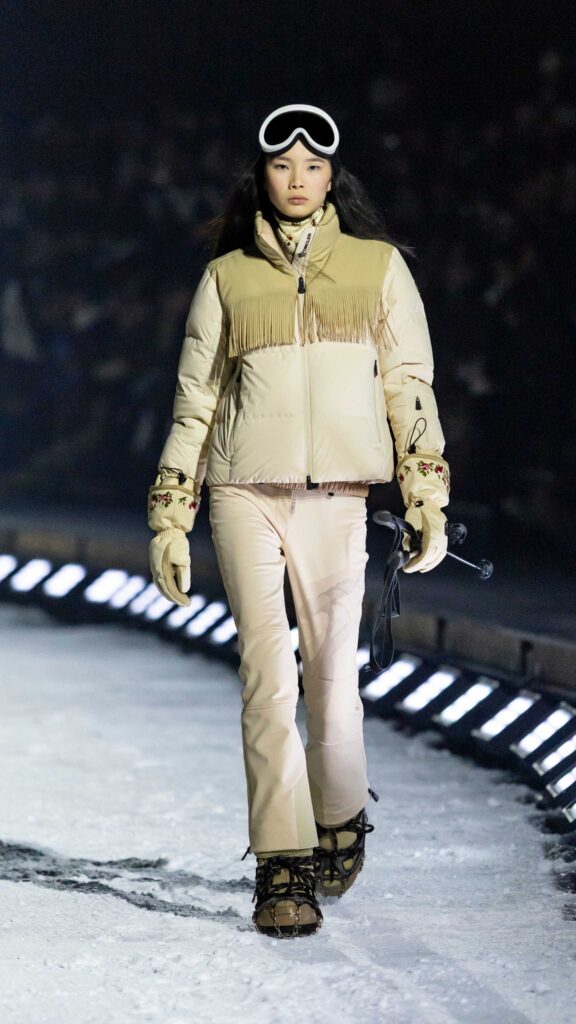
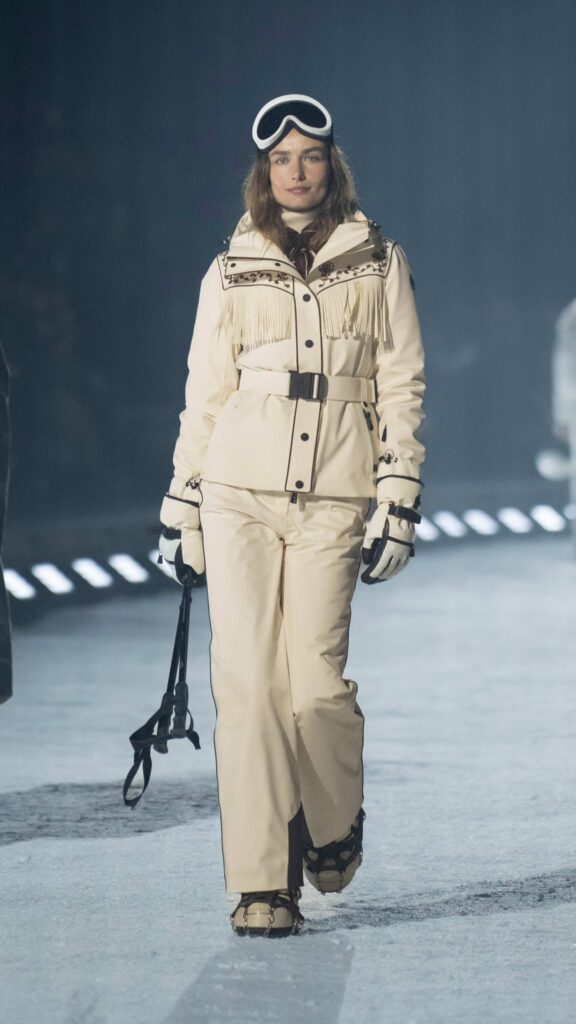
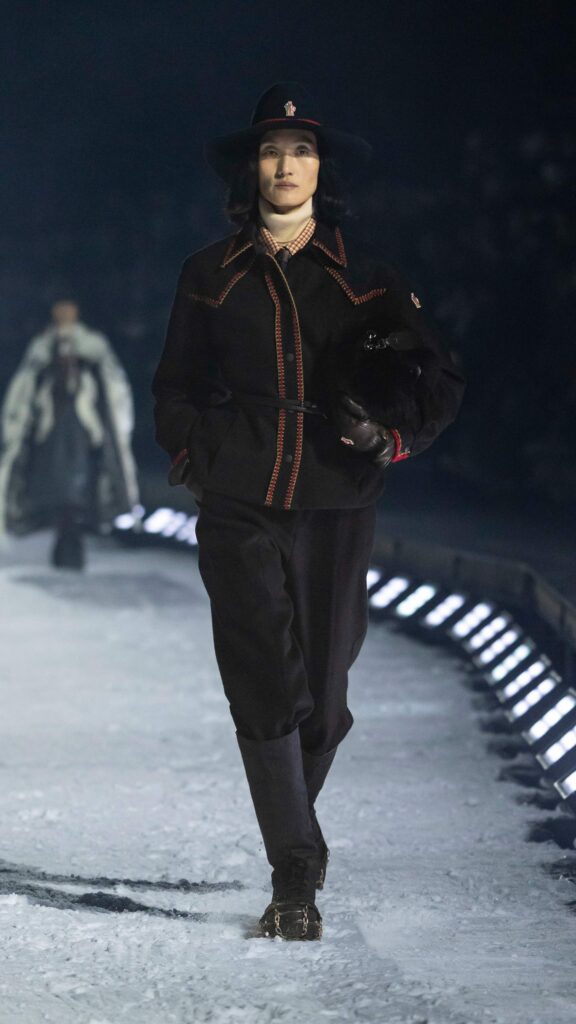
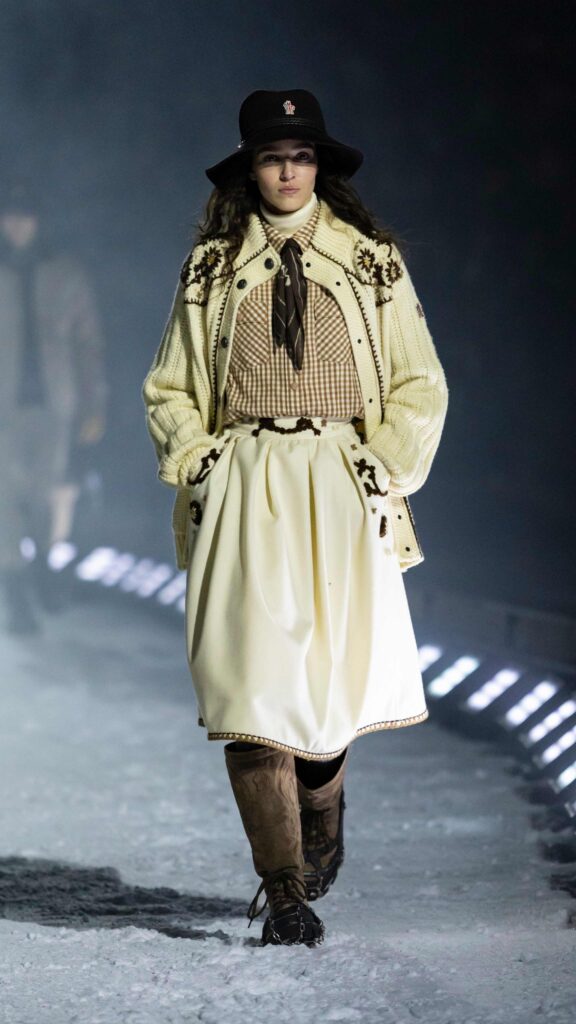
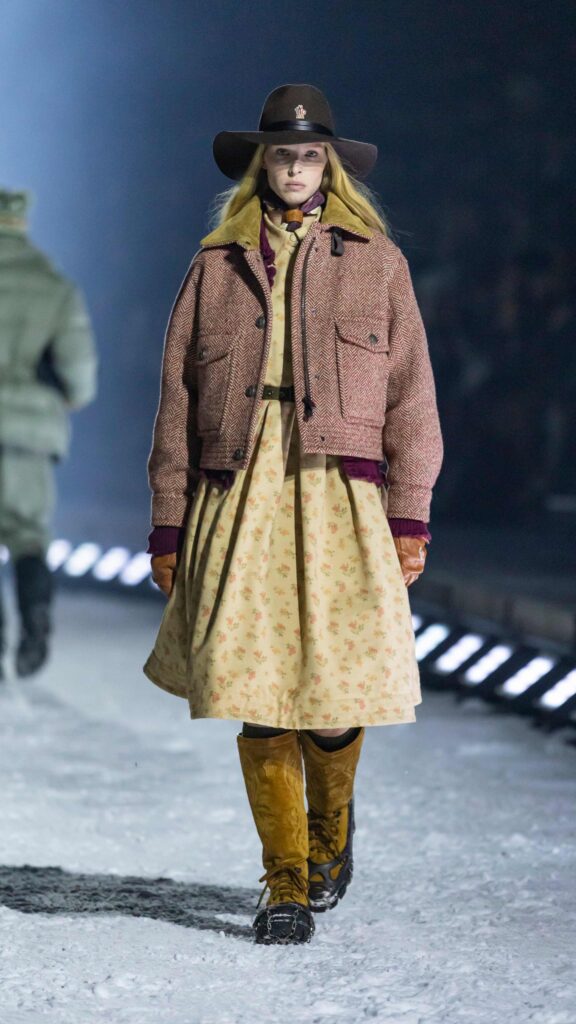
The handmade floral embroideries adorning jacket collars and trouser pockets are inspired by traditional Austrian and Bavarian alpine costumes (Tracht), where each embroidered flower once indicated the wearer’s valley of origin. This needlework, carried out stitch by stitch, takes between eight and twelve hours per piece. Moncler applies it here to loden treated to withstand minus twenty degrees – a rare technical alliance between artisanal know-how and contemporary performance.
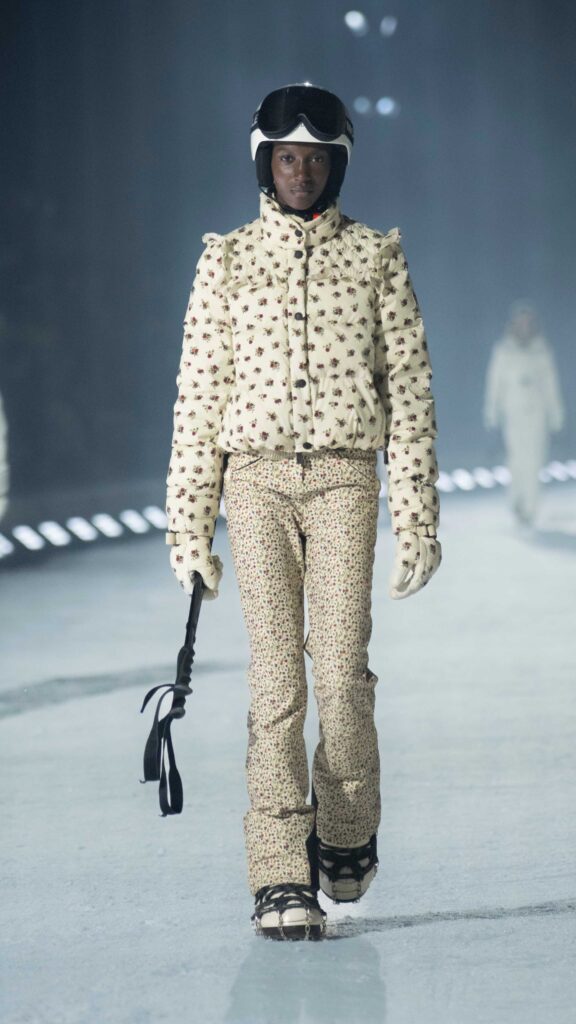
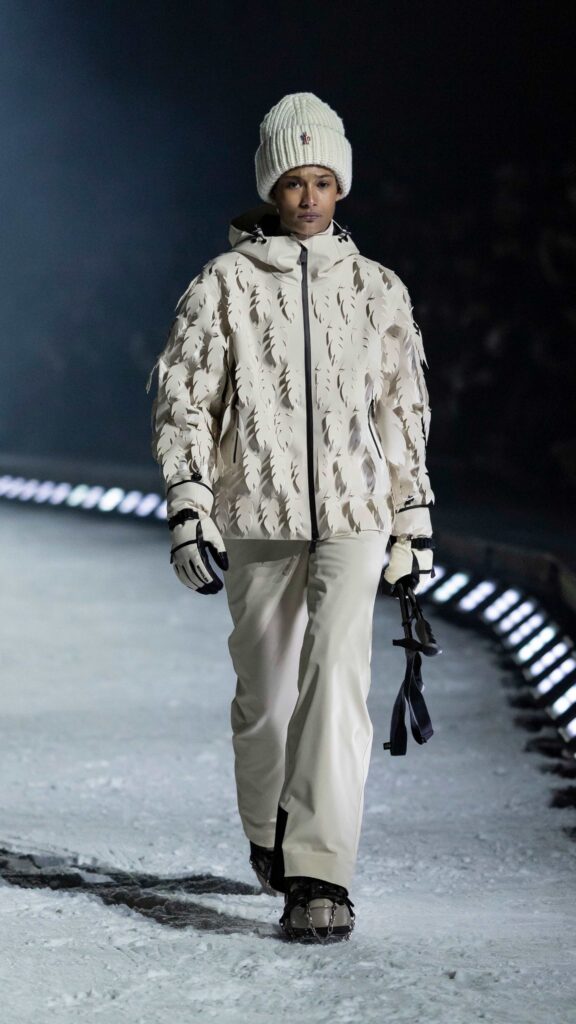
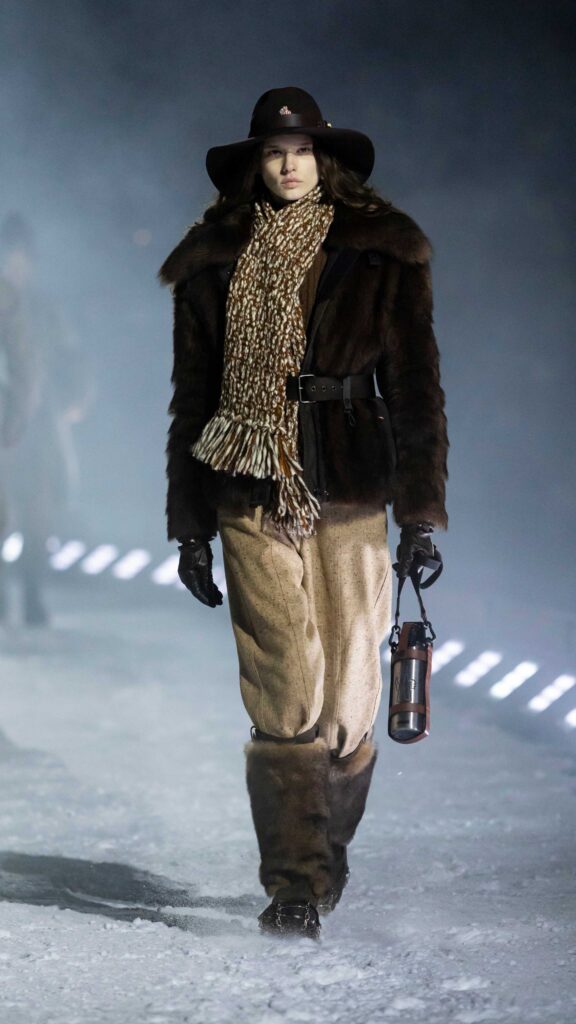
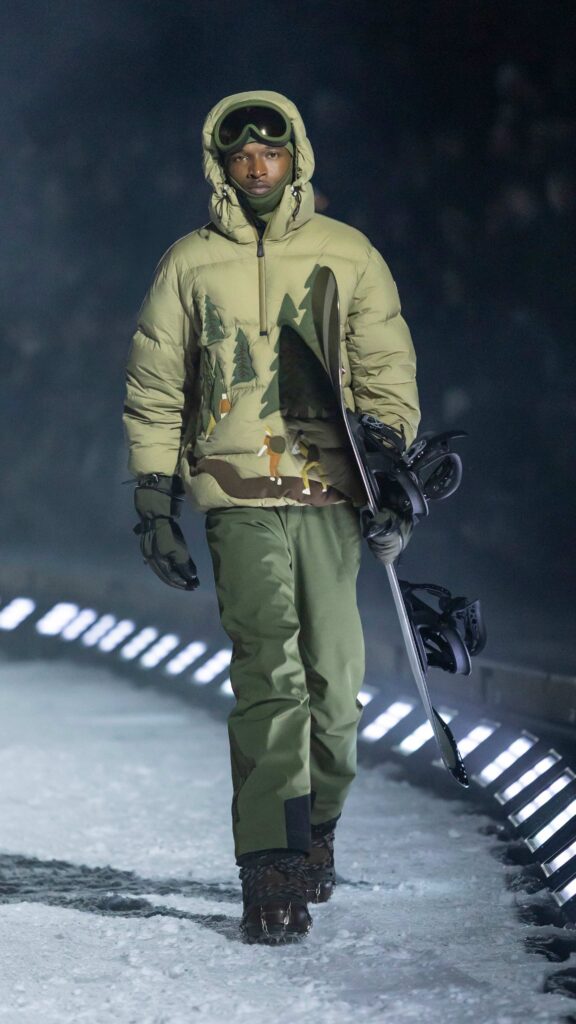
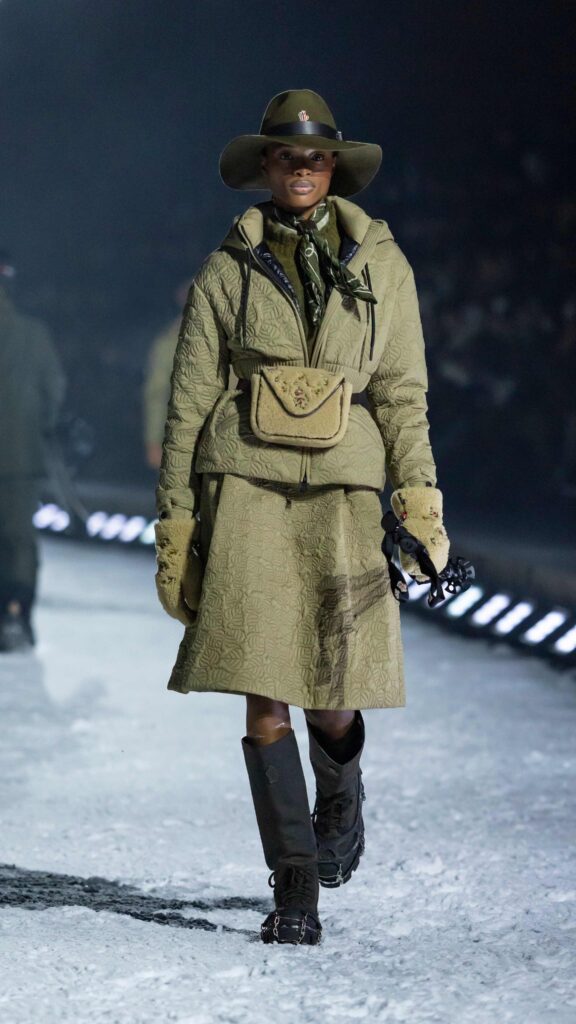
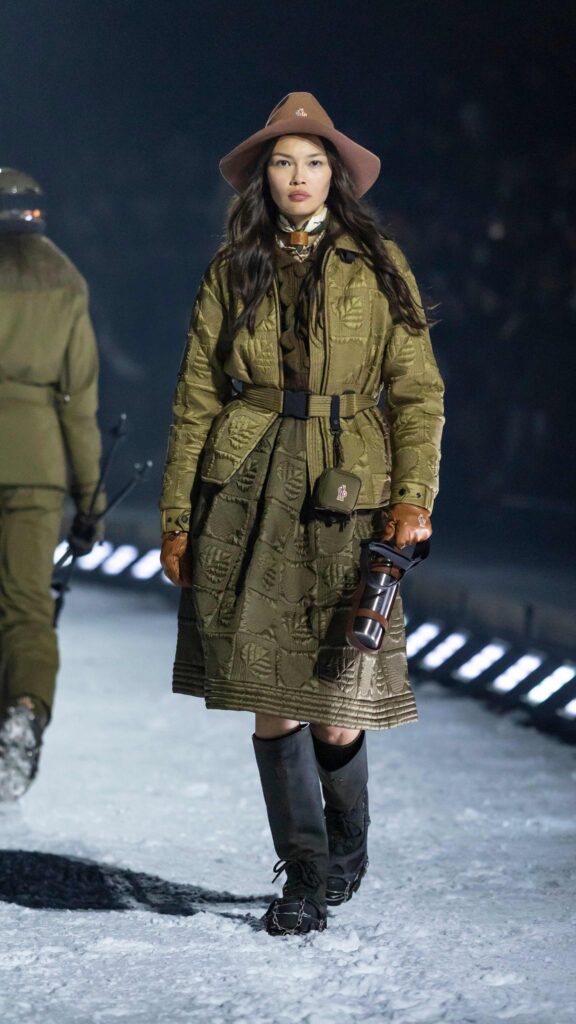
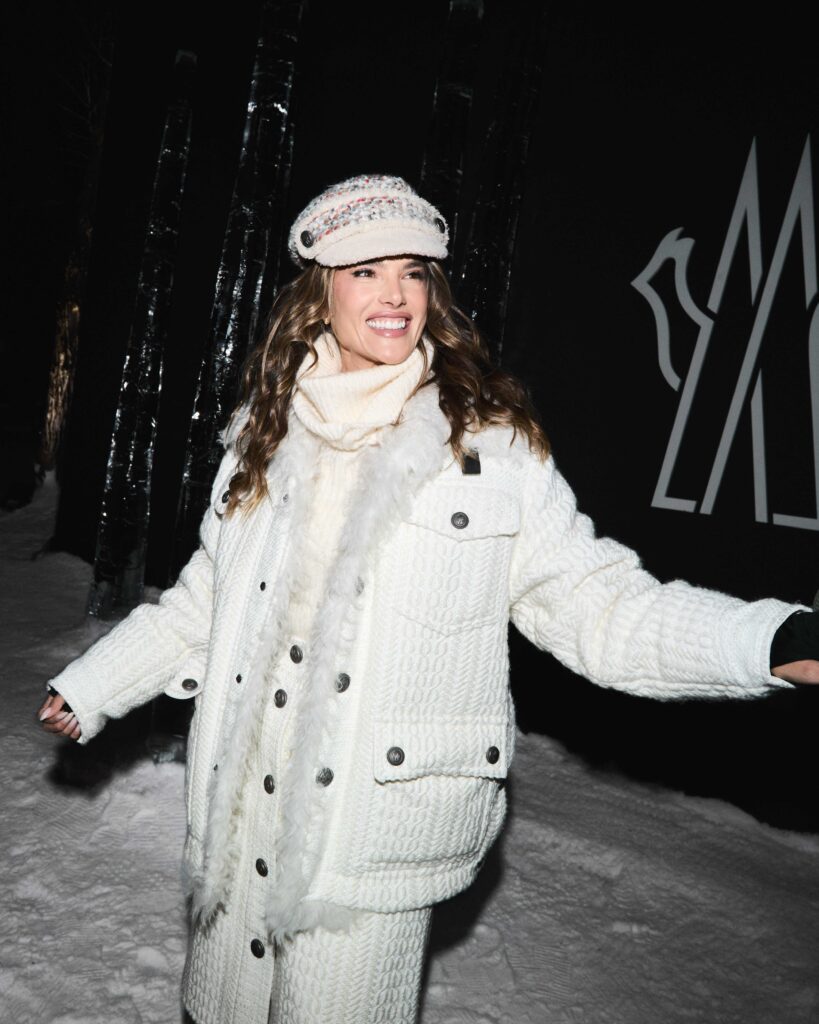
The aspen leaf(Populus tremuloides), Aspen’s emblem (the town takes its name from the tree), is featured in prints, embossed quilting, jacquard knits and laser cut-outs. This botanical detail runs through the entire collection – not as an applied logo, but as a structural motif. It’s even found on a hand-drawn artistic map, deployed on scarves and ski jacket intarsia, that maps Aspen’s places, wildlife and rituals. This narrative approach – telling the story of a territory through its natural symbols rather than slogans – places the collection within a logic of place rather than trend.
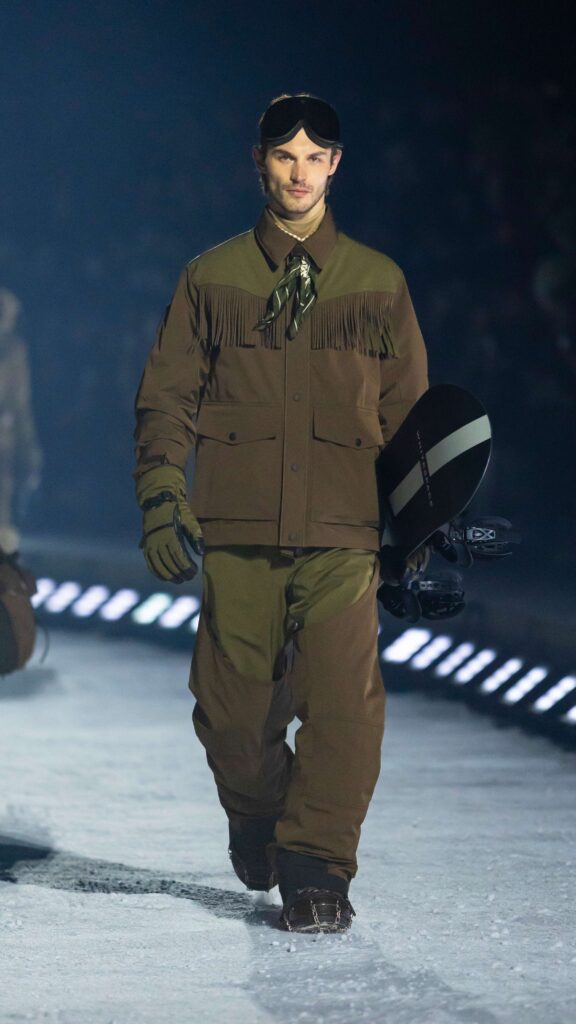
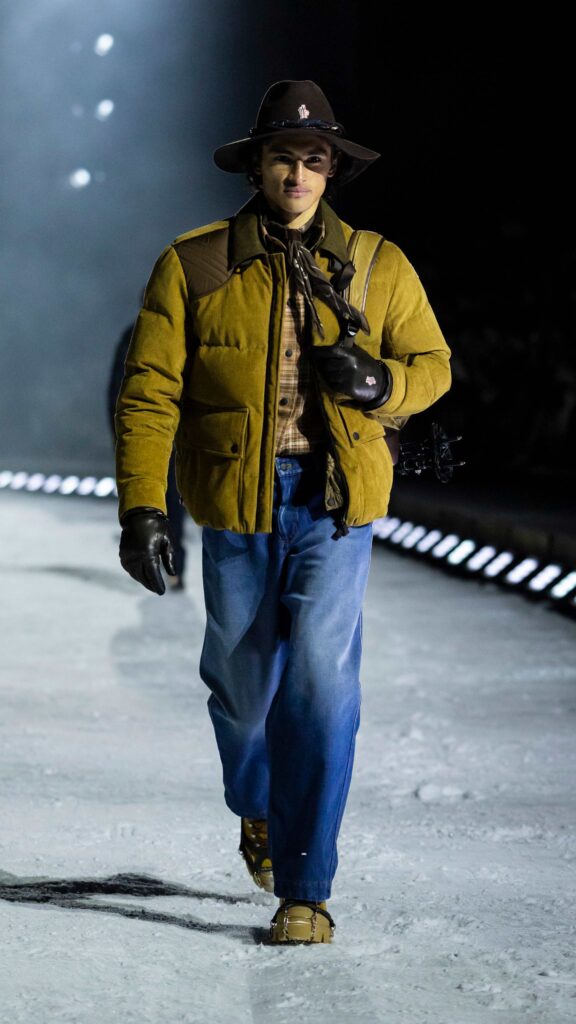
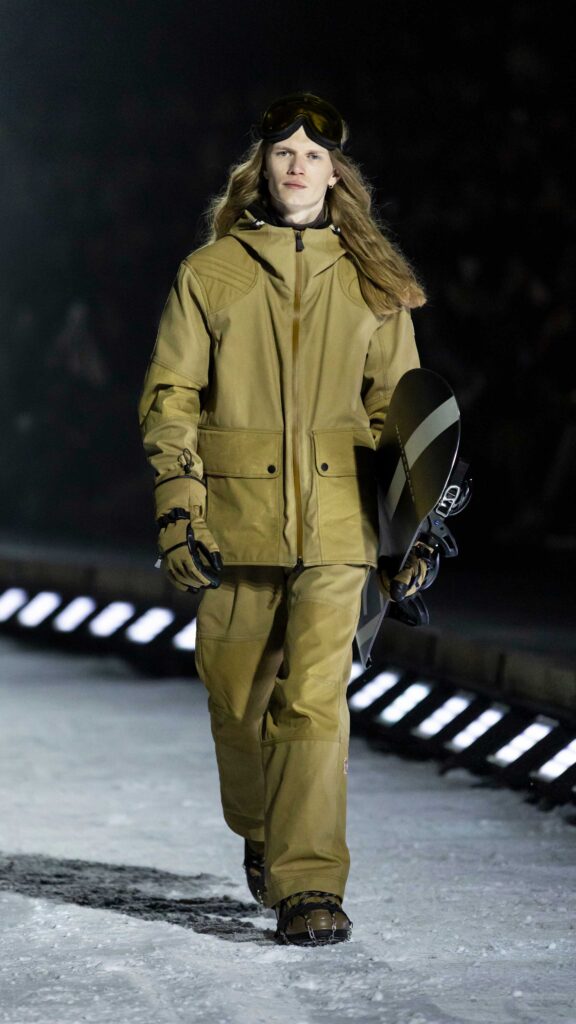
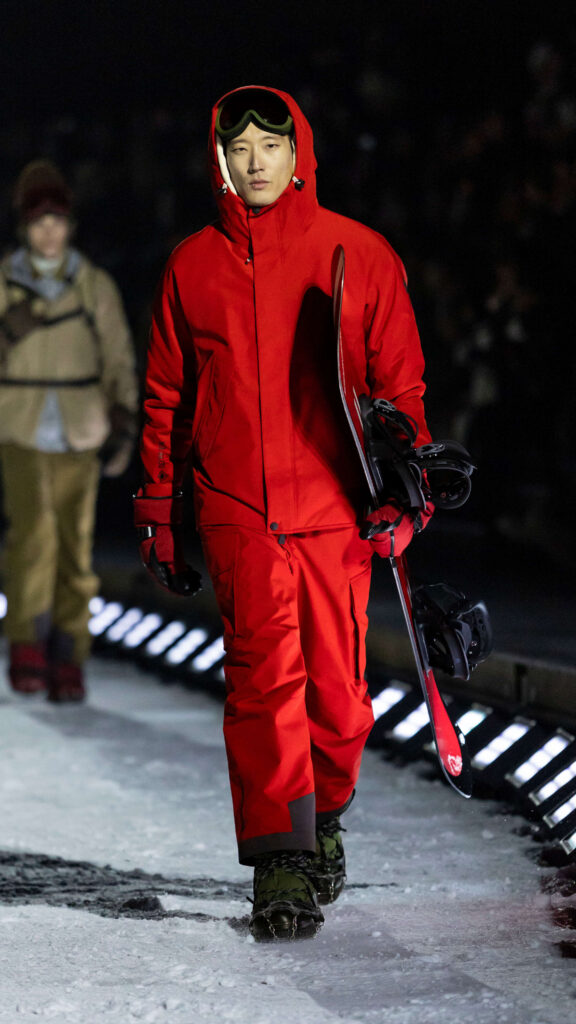
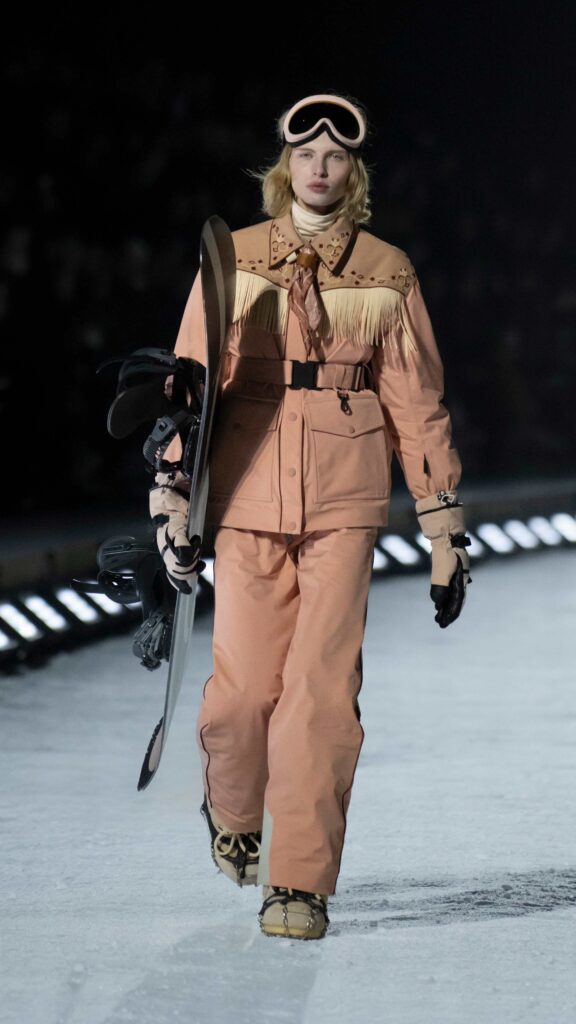
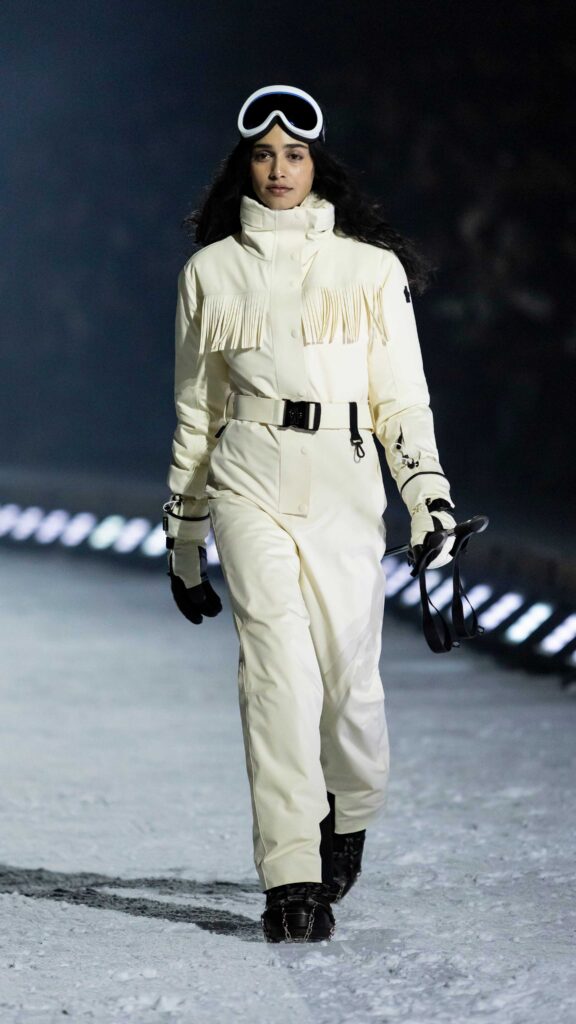
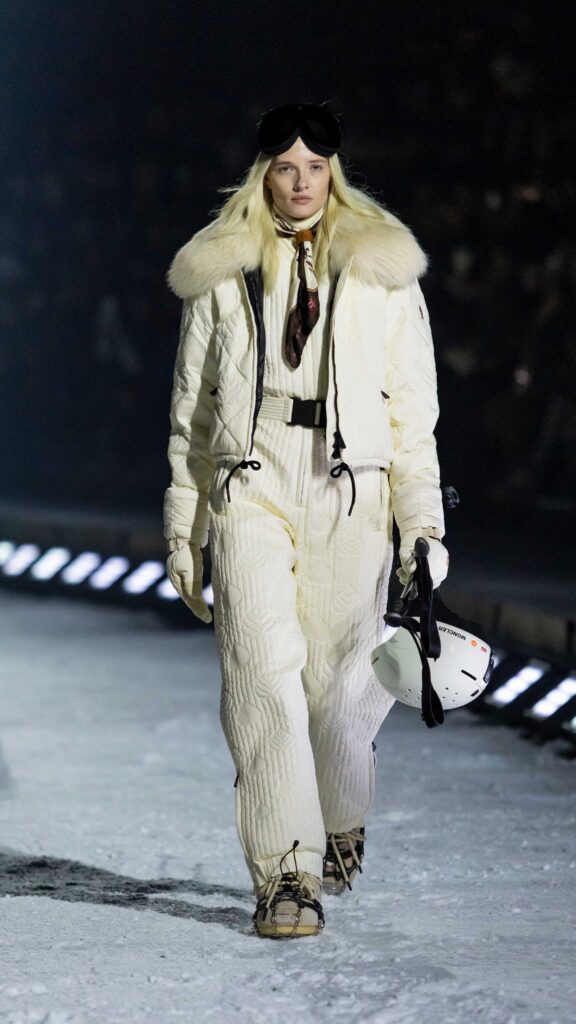
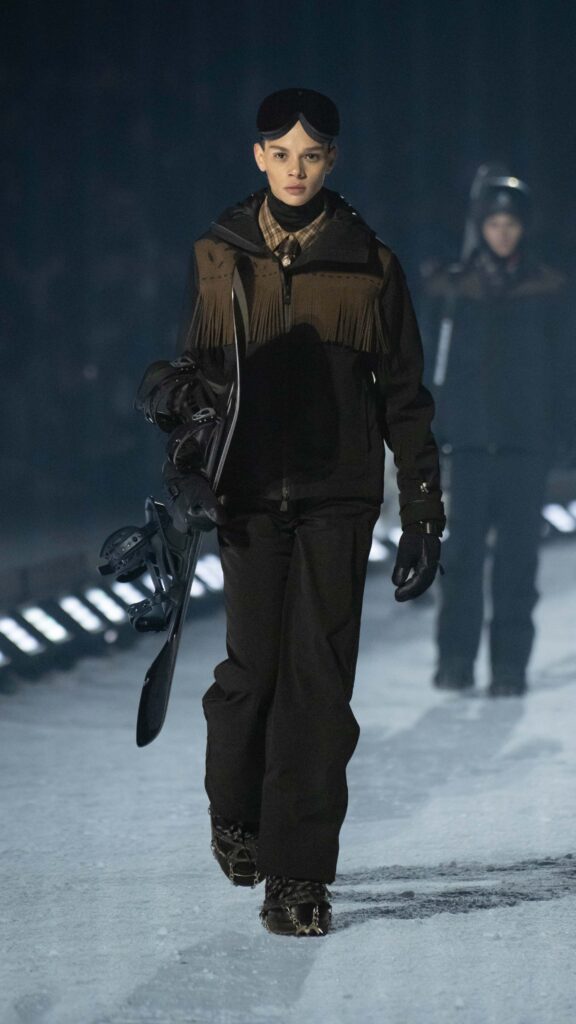
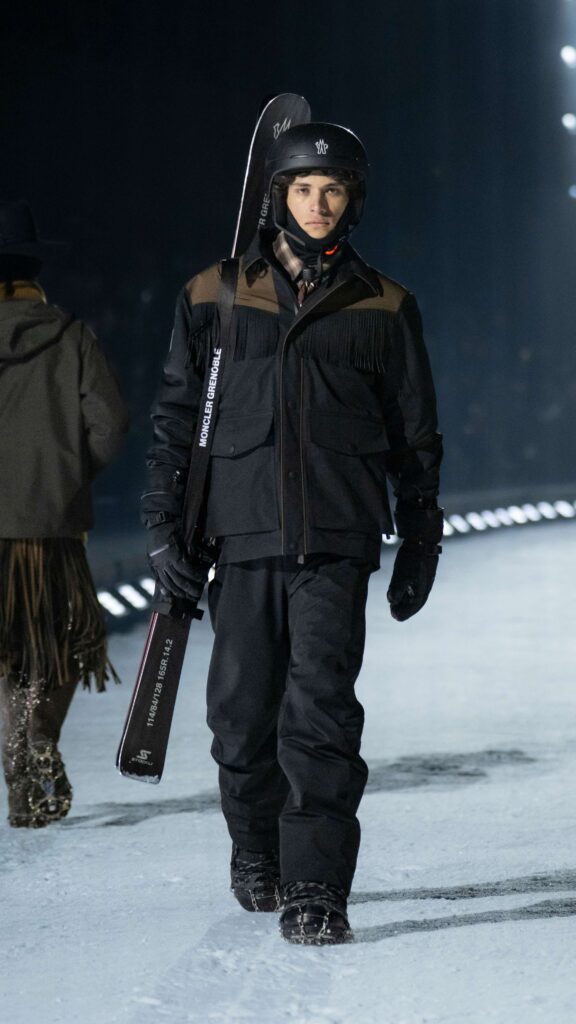
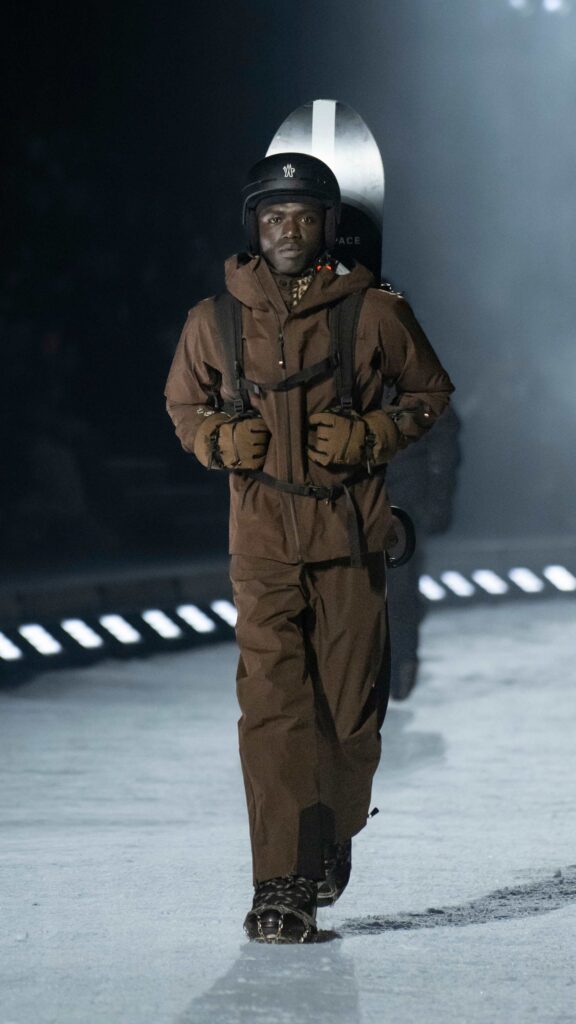
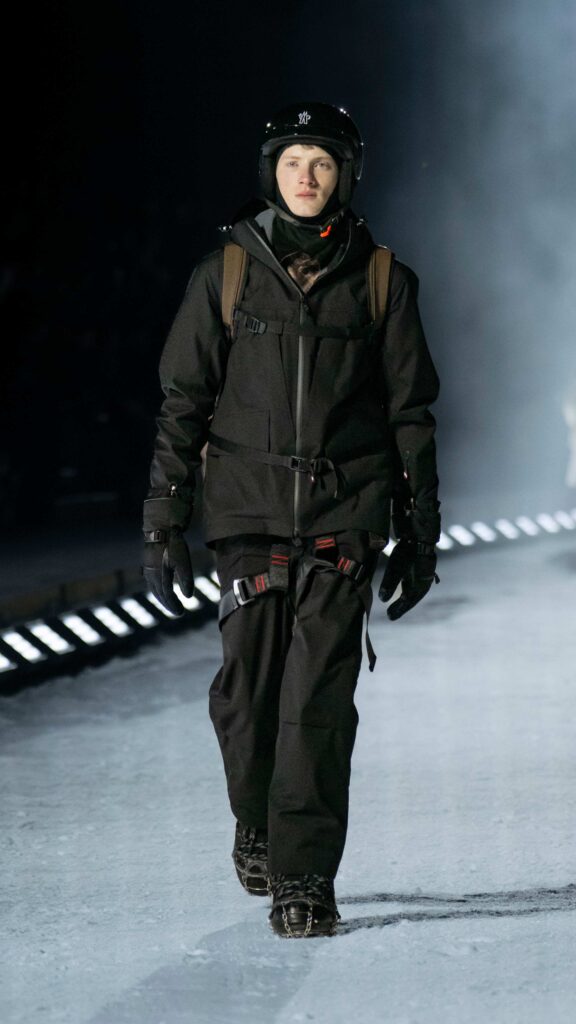
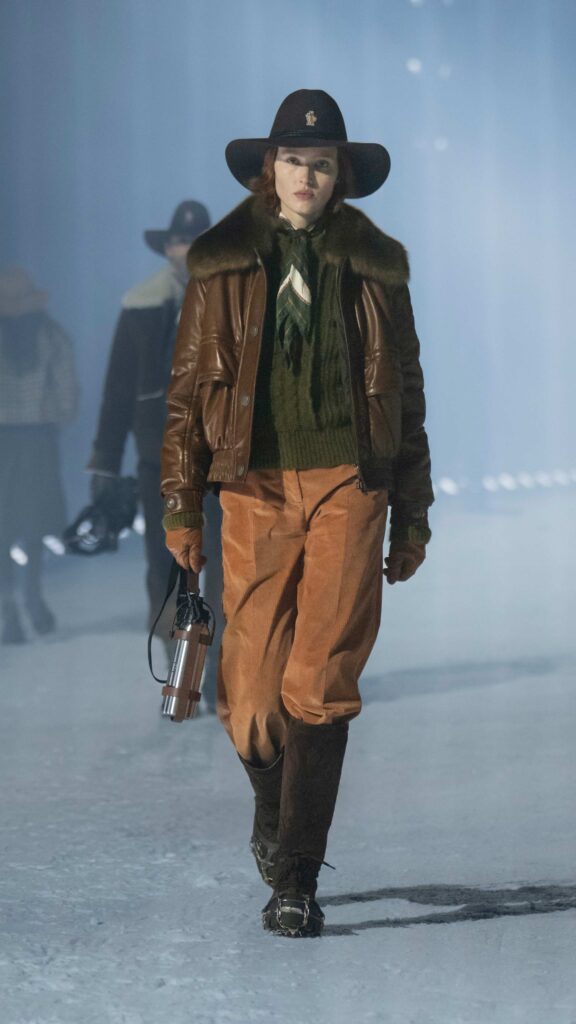
The silhouettes are inspired by America in the 1950s, when the American aesthetic was beginning to influence global fashion. Jackets cinched at the waist, rounded shoulder volumes, western details (piping, laser-cut bangs, reinforced shoulders for carrying skis): Moncler reinvents these codes with down quilting. The era when technical clothing was based on wool, cotton and natural materials is revisited through the brand’s current technicality: waterproof, windproof, breathable fabrics, designed to accompany every movement on extreme terrain.
The renewed collaboration with WHITESPACE, the brand of Shaun White – Olympic snowboarder and Moncler Grenoble ambassador – materializes in a new co-created snowboard color. This alliance between a French luxury house and an American freestyle icon illustrates Moncler’s strategy of never opposing performance and elegance, technique and storytelling.
The flagship store opened in Aspen on the occasion of this collection – the first American store in the Grenoble line – follows the same logic of territorial anchoring. Designed as an “immersive environment inspired by the local landscape”, it extends the experience beyond the garment. Moncler doesn’t just sell down jackets: the brand proposes a vision of mountain life where past and future coexist.
The question remains: does this convergence of European Alpine heritage and American Rocky Mountain culture produce a new style, or a juxtaposition of influences? Tyrolean floral embroidery on technical denim, loden combined with tartan, long-haired woollen skin worn with western details – these are all encounters that work better in storytelling than in pure stylistic coherence. But perhaps this is precisely Moncler Grenoble’s project: to create a “future heritage” (the expression appears in the press kit) by deliberately mixing codes that nothing forced to intersect.
Aspen and Grenoble, 1952. Two mountains, two trajectories, seventy-four years later reunited under a full Colorado moon. What Moncler is celebrating here is not so much a collection as an idea: that the mountain, whether alpine or rocky, remains a territory where performance, culture and elegance can still dialogue without hierarchy.









Cette publication est également disponible en :

