

Always with a view to highlighting fashion, in all its plurality, the museum presents Birds of the Paradise. The exhibition runs until August 2014. It showcases a range of creations created using a delicate medium, the feather.
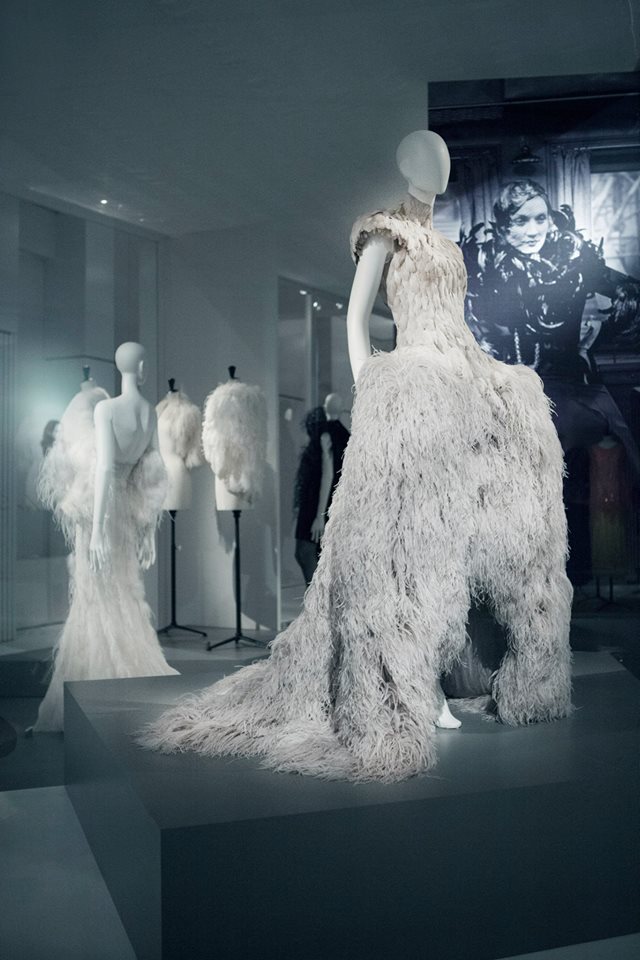
Subtlety of nuance, elegance: this material is a must-have. From one era to the next, from one designer to the next, the interpretation of the material is different. The style evolves, the technique a little, but in the background, the feather, transcended, asserts itself. Initially a protective, insulating plumage for the animal, it undergoes a metamorphosis. Extreme pleasure…
The exhibition begins with an introduction to the various species of birds in common use. Twenty-three naturalized birds from Belgium’s Royal Institute of Natural Sciences and a painting by Melchior d’Hondecoeter are on display. The learning process continues with a focus on the feather-making trade. To this end, a partnership has been set up with Maison Lemarié. Cliché by cliché, the delicate and meticulous work is revealed. The first dress in the exhibition, Métamorphose d’une chrysalide en femme papillon, (Haute Couture P/E 1997), by Thierry Mugler, presents the woman as a bird of paradise.
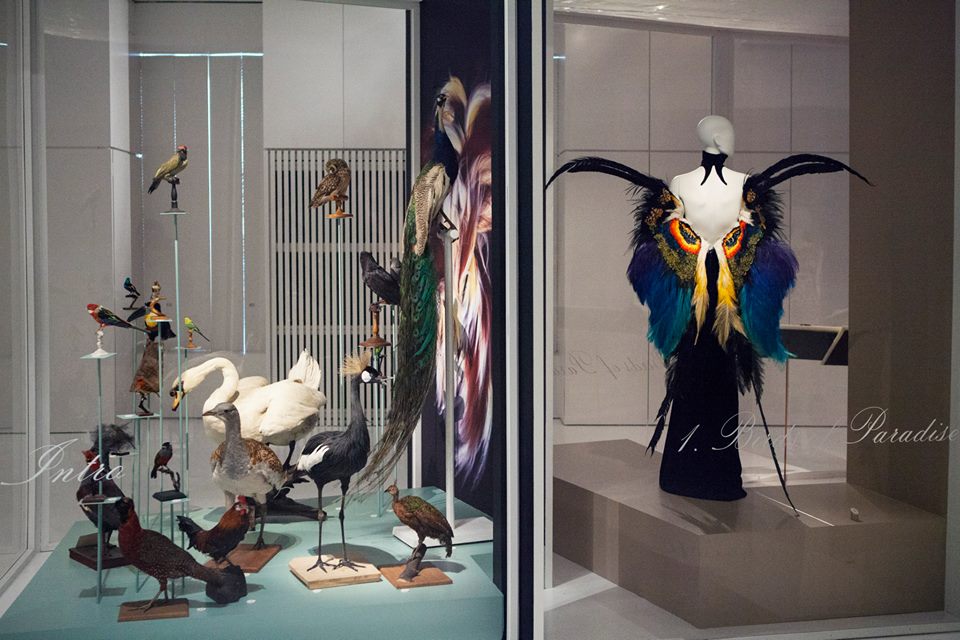
Step by step, some twenty themes are explored. They have been created to explore this magical universe a little further. They relate to types of feather use (fans, borders, trompe l’œil, etc.), to designers (YSL, A Demeulemeester, Irving Penn, etc.), to atypical birds (White and Black Swans, Birds of Paradise, Peacocks, etc.). A special showcase is dedicated to Marlène Dietrich. Dietrich’s swan fur coat is the must-have piece of the exhibition. Presented for the first time in 1957, during one of her public appearances in Las Vegas, it is monumental.
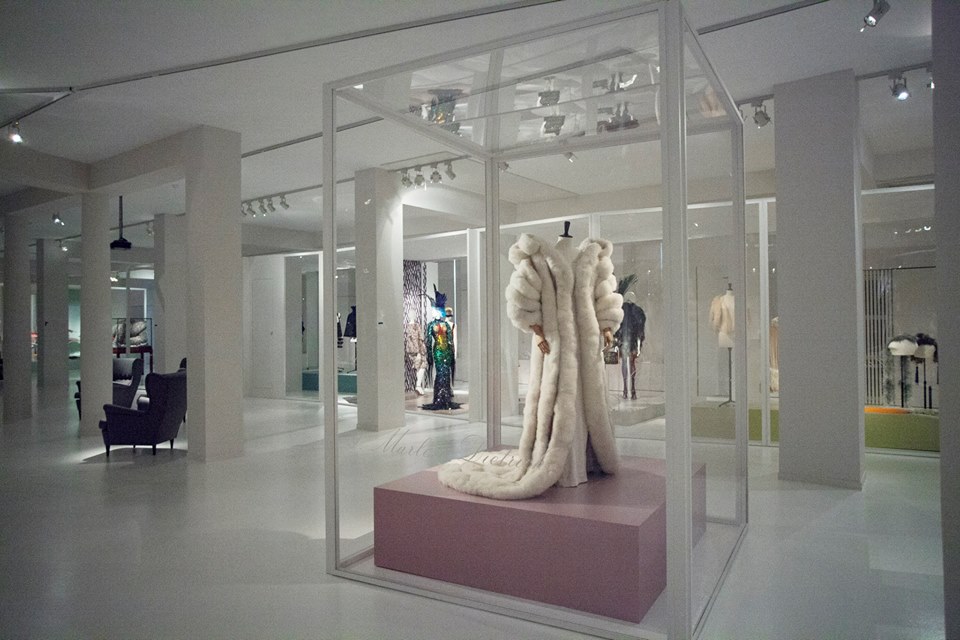
A round collar accentuates the proportions of the upper bust, and a 3.60 m train adds to its beauty. The element is almost immaterial, light and elegant. Three hundred swans were required to create it. Completely in keeping with her roles and her character, the piece is one of excess.
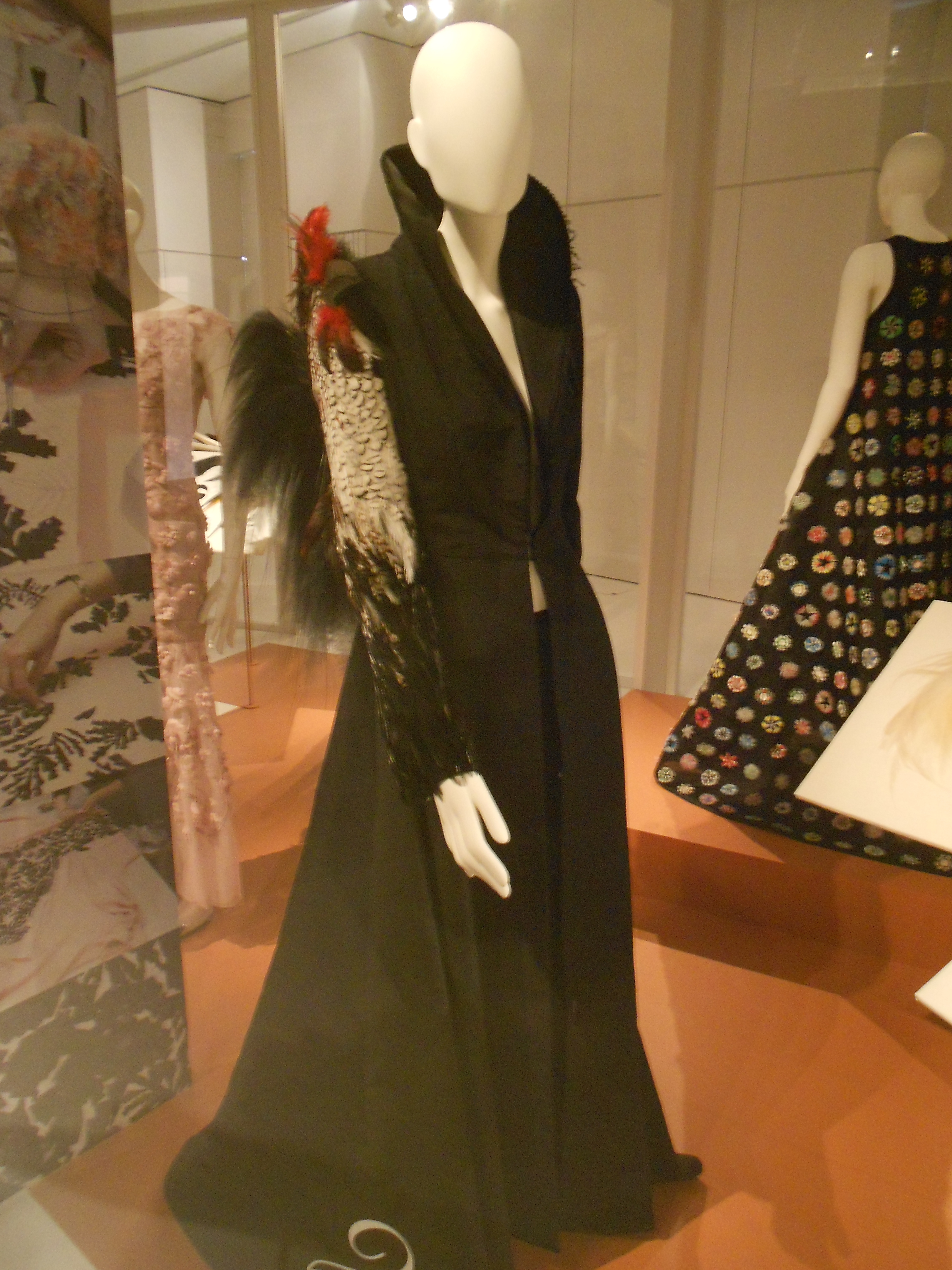
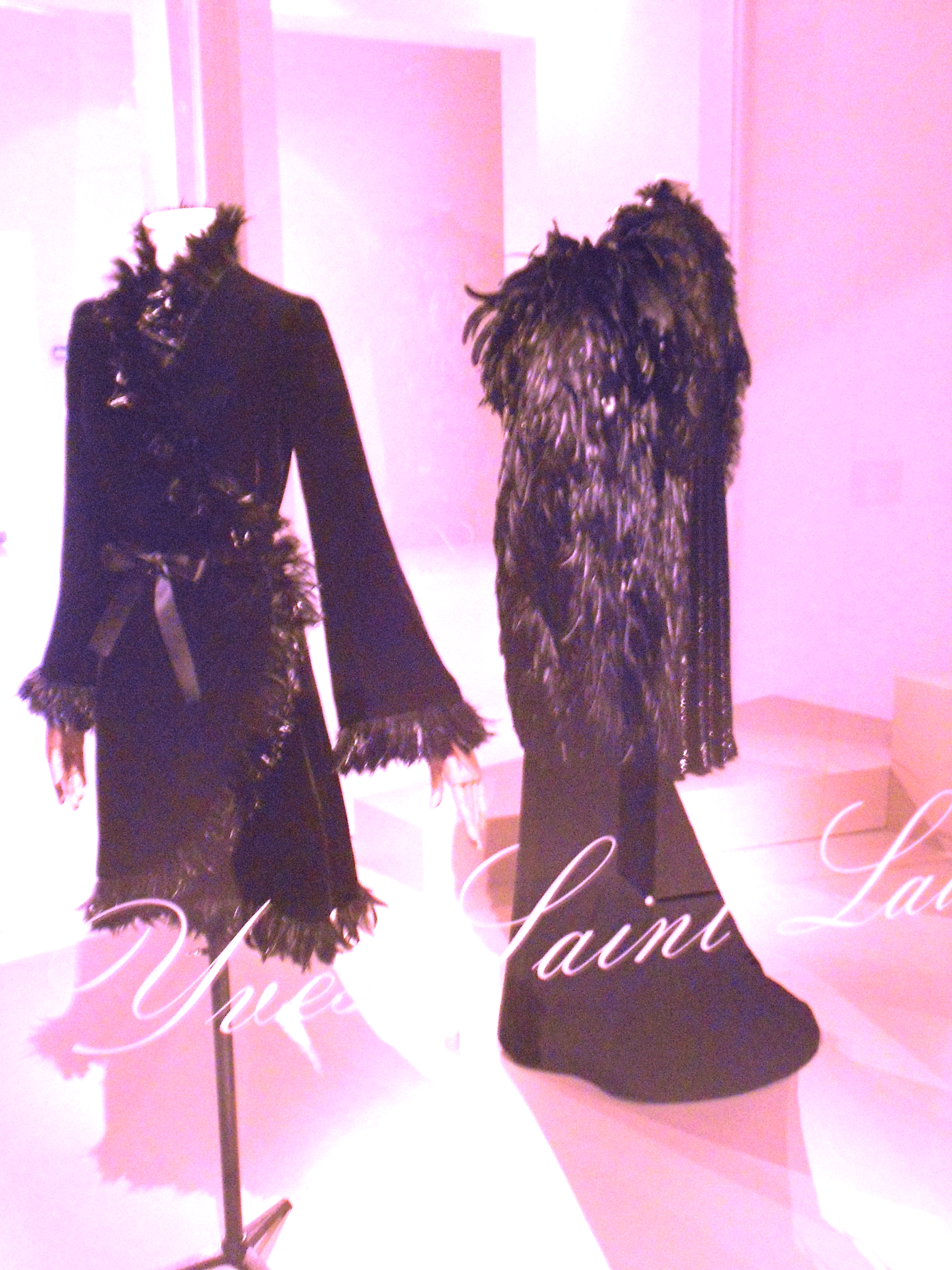
Many designers are represented here. Chanel, Alexander MacQueen, Christian Dior and others demonstrate the breadth of possibilities. YSL’s creations, including his black cock feather capes, reinforce the myth of the bird-woman.
Accessories are no exception to this trend. First and foremost, hats. Hats were early adorned with the material. The 40 models presented here, from the 1930s to the present day, were created by both major fashion houses and anonymous designers. Among the Belgian designers, Elvis Pompilio and Fabienne Delvigne, one reflects eccentricity, the other more classical orders. The feather, a ceremonial headdress, is sometimes tamed, sometimes bristling. Undeniably, it creates volume.
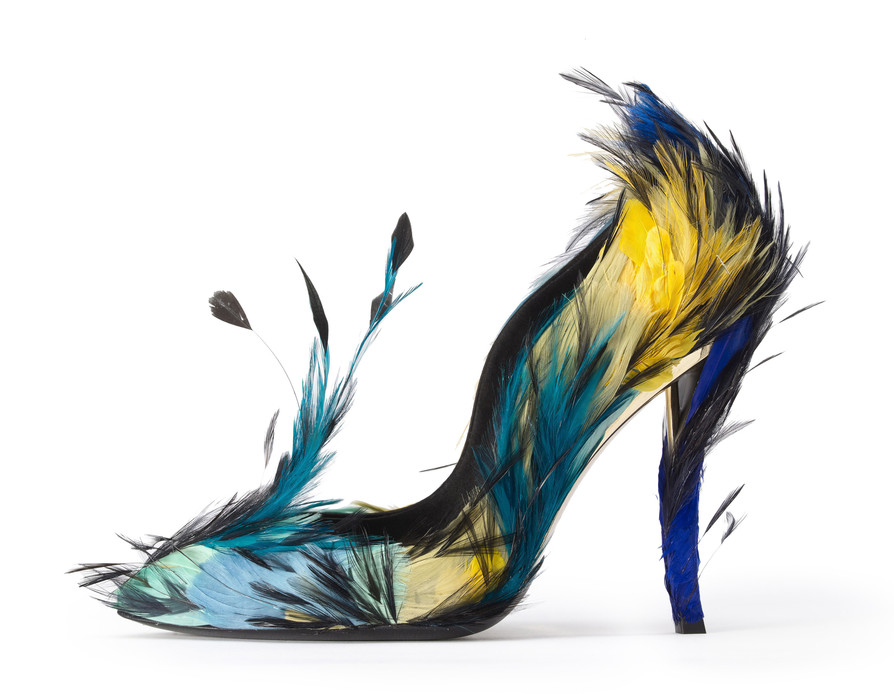
Shoes were similarly invested. As early as the 19th century, feathered edges became commonplace. Both indoor and street shoes were adorned with them. For conservation reasons, it’s not easy to showcase such pieces. Here, the focus is on Roger Vivier. All the creations presented date from the period when Bruno Frisoni took over as artistic director. Licorne sans lecture, Haute Couture P/E 2010, is a leather, plastic and silk satin pump. The upper is decorated with retouched and tinted hen feathers. Prismick poodle, A/H 12-13, a suede and leather pump, is sheathed in ostrich feathers. Elsewhere, heron feathers take over Swanned Sandal, A/H 2008-2009. Blue Angel, in leather combined with silk satin, is adorned with the feathers of dyed hens and pheasants.
The fan is an ideal support. Since the Renaissance, its fortunes have varied. It entertains, it seduces. A set of codes has been established to give the object a different meaning. Fanning oneself in this way, playing with the object, reveals a woman’s rank and subtle desires. The articulated body is made of mother-of-pearl, ivory, tortoiseshell and more. The feather’s volatility, airiness and exuberance make it a first-rate ally. The eagle, ostrich and heron are among the most sought-after birds.
Another showcase tackles a lesser-known aspect of the feather: its graphic reproduction. Reproduced identically or reinterpreted, it has a positive impact on a garment.
Also of note are two Irving Penn photographs. The first, Woman with chicken hat, (1949), captures Lisa Fonssagrives Penn.
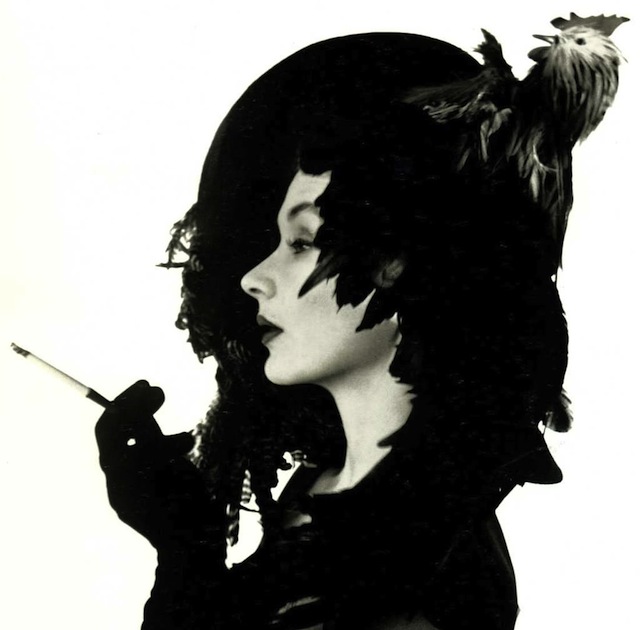
The artist’s wife wears a cock-feathered hat, giving her an assertive, elegant style. In the second, Girl drinking wine, (1949), Jane Russell poses, enjoying a glass of champagne. 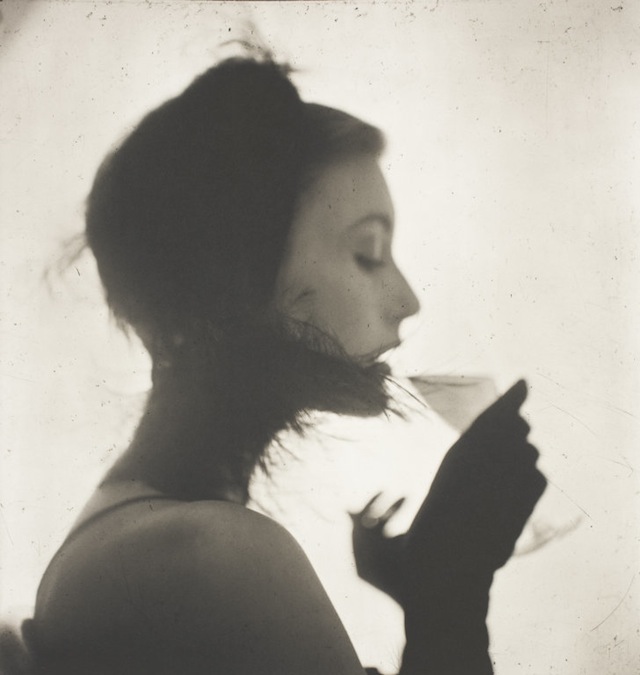 Both images perfectly convey the exceptional aura bestowed by this material.
A progression through time and matter to experience aesthetic and striking moments.
www.momu.be
Photo credits, Le Momu and Boy Kortekaas, Roger Vivier, Sofia LAFAYE
Cette publication est également disponible en :

